
That sudden tightness in your chest hits, and your mind immediately jumps to the worst-case scenario. If you have ever sat on the edge of your bed wondering whether to call 911 or just breathe through it, you are far from alone. Learning how to tell if chest tightness is anxiety or something serious is one of the most common and most frightening questions people face.
Up to 50% of emergency room visits for chest pain turn out to be non-cardiac, meaning the heart is not the culprit. Many of those cases trace back to anxiety, stress, or muscle tension. That statistic should bring some immediate relief, but it does not mean you should ever ignore what your body is telling you.
In this guide, we break down exactly what anxiety chest tightness feels like compared to cardiac chest pain. We cover the warning signs that demand immediate action, the symptoms that differ between men and women, and practical coping techniques you can use the moment tightness strikes.
Important: This article is for educational purposes only. If you are experiencing severe chest pain, pain radiating to your arm or jaw, shortness of breath, or any symptom that feels life-threatening, call 911 immediately. Do not wait to read more.
Table of Contents
What Anxiety Chest Tightness Feels Like
Anxiety chest tightness usually feels sharp, stabbing, or pinching rather than deep and crushing. People describe it differently, but the sensation often centers over a specific spot you can point to with one finger. It may feel like a heavy weight pressing on your chest, a buzzing or vibrating sensation, or a persistent knot that sits right behind the sternum.
Reddit users in anxiety support communities frequently describe the feeling as a “full, heavy sensation” accompanied by an “almost like buzzing” vibration. Others talk about a sinking feeling in the pit of their stomach that pairs with chest discomfort. These descriptions match what clinicians hear from patients dealing with panic attacks and generalized anxiety.
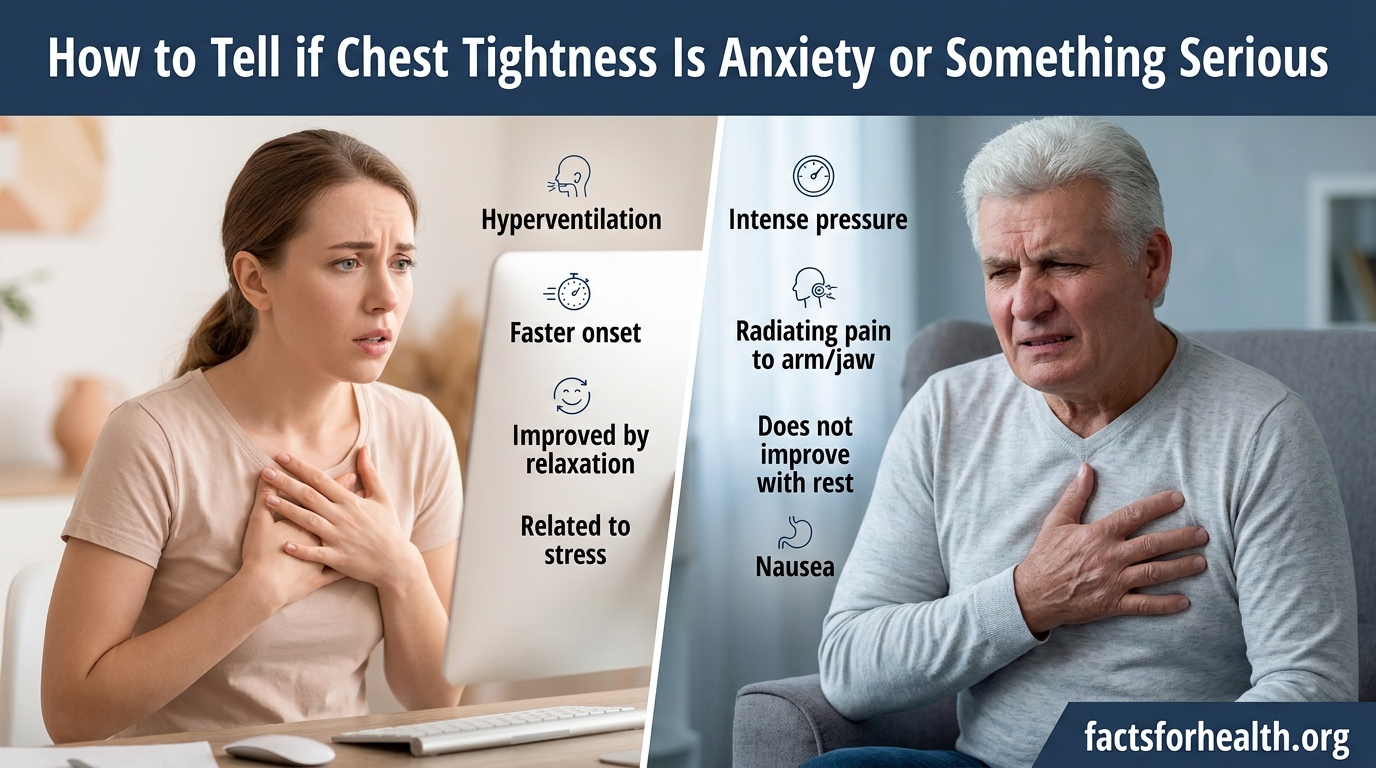
The pain typically peaks within 10 minutes and begins to fade as the anxiety episode subsides. It almost always comes alongside other anxiety symptoms such as a racing heart, rapid breathing, sweating, trembling, dizziness, or a sense of impending doom. You might also feel a strong urge to escape your current situation or a sense of losing control.
Common triggers include acute stress, caffeine, lack of sleep, crowded spaces, conflict, or even something as subtle as holding your breath while scrolling through your phone. If the tightness appears during or right after a stressful event and gradually improves with relaxation, anxiety is the likely explanation.
What Serious Cardiac Chest Pain Feels Like
Cardiac chest pain tends to feel completely different from anxiety-related tightness. Instead of a sharp stab, a heart attack usually produces a deep squeezing, pressure, or crushing sensation. Many survivors describe it as feeling like an elephant is sitting on their chest. The pain is often diffuse, meaning you cannot pinpoint it with a single finger.
The discomfort from a heart attack frequently radiates beyond the chest. You may feel it travel down your left arm, into your jaw, across your back, or even up into your neck. This radiating pattern happens because the nerves that serve the heart share pathways with those areas, so the brain misreads the source of the pain.
Classic heart attack symptoms include:
- Squeezing, pressure, or fullness in the center of the chest lasting more than a few minutes
- Pain radiating to the arm, jaw, neck, back, or stomach
- Shortness of breath with or without chest discomfort
- Cold sweat, nausea, or vomiting
- Sudden lightheadedness or fainting
- An overwhelming sense of doom that does not resolve
Unlike anxiety pain, cardiac pain does not improve when you calm down. It tends to persist or worsen over time, and resting does not bring relief. The onset can happen during physical exertion, but it can also strike at rest, especially in the early morning hours when blood pressure naturally spikes.
Anxiety vs Heart Attack: Key Differences
Telling the difference between anxiety chest pain and heart attack pain comes down to four main factors: the type of pain, how it starts, how long it lasts, and what brings relief. Once you understand these patterns, the distinction becomes much clearer.
Type of pain: Anxiety produces sharp, stabbing, or pinpoint discomfort. Cardiac pain is more often described as squeezing, crushing, or a heavy pressure that spreads across the chest.
Onset: Anxiety chest tightness typically builds quickly during or after a stressful trigger, peaking within 10 minutes. Heart attack pain can come on suddenly or gradually and is not tied to an emotional event.
Duration: Anxiety pain usually peaks and then fades within 20 to 30 minutes as the panic response resolves. Cardiac pain tends to persist, often lasting more than 15 to 20 minutes without improvement and may come and go in waves.
Radiation: Anxiety pain stays localized to the chest area. Heart attack pain frequently radiates to the left arm, jaw, neck, or back.
Response to rest and relaxation: Anxiety chest tightness often eases with deep breathing, distraction, or calming techniques. Cardiac pain does not respond to relaxation and may worsen with physical activity.
One important caveat: these are general patterns, not absolute rules. Some heart attacks present with atypical symptoms, and severe anxiety can sometimes mimic cardiac pain closely enough that even doctors need tests to tell the difference. When in doubt, always seek medical evaluation.
Why Anxiety Causes Chest Tightness
To understand why anxiety produces such intense physical chest symptoms, it helps to look at what happens inside your body during a stress response. When your brain perceives a threat, it activates the fight-or-flight response, flooding your system with adrenaline and cortisol.
This cascade causes several physical changes that directly affect your chest. Your heart rate jumps, sometimes doubling within seconds. Your breathing becomes rapid and shallow, a pattern called hyperventilation that can make your chest feel tight and starved for air even though your oxygen levels are fine.
The muscles in your chest wall, shoulders, and neck also contract as part of this survival response. When these muscles stay tense for minutes or hours, they become sore and cramped. That muscle tension is a primary source of the sharp, aching pain that anxiety sufferers describe. It is real pain from real muscle contraction, not imagined.
Many people ask whether anxiety can cause high blood pressure. The short answer is yes, temporarily. During a panic attack or acute stress episode, blood pressure can spike significantly. However, these spikes are usually transient and resolve once the anxiety passes. Chronic anxiety can contribute to sustained elevations over time, which is one reason managing long-term stress matters for heart health.
Constant Chest Tightness: When Anxiety Persists for Days
One of the most common concerns voiced in anxiety forums is the experience of chest tightness that lingers for days rather than resolving within an hour. People describe a constant, low-grade pressure that never fully goes away, leaving them wondering whether something more serious is happening.
Persistent chest tightness over multiple days can absolutely stem from anxiety. When stress is chronic, the fight-or-flight response stays partially activated. Your chest muscles remain tense, your breathing stays shallow, and your nervous system stays on high alert. The result is a constant background sensation of tightness that flares up during moments of additional stress.
Posture plays a surprisingly large role here. Slouching at a desk, hunching over a phone, or tensing your shoulders while driving all compress the chest muscles and amplify the sensation of tightness. Forum users frequently note that correcting their posture and doing chest-opening stretches provides noticeable relief.
However, constant chest tightness that is new, worsening, or different from your usual anxiety pattern deserves medical evaluation. If you have never had this symptom before, if it is getting progressively worse, or if it comes with shortness of breath, fatigue, or pain during exertion, schedule an appointment with your doctor. Even if it turns out to be anxiety, the peace of mind from a clean cardiac workup is invaluable.
Night-Time Anxiety Chest Tightness
Chest tightness that strikes at night is a uniquely distressing experience. You are lying in the dark, your mind has fewer distractions, and every physical sensation feels magnified. Many people with anxiety report that their chest symptoms are worse at night or that they wake them from sleep.
Several factors contribute to night-time chest tightness. When the day’s distractions fade, your brain has more bandwidth to focus on bodily sensations. A slight heart flutter or minor muscle twinge that you would ignore at noon becomes alarming at midnight. This hypervigilance can actually trigger a full anxiety response, creating a self-fulfilling cycle.
Lying flat can also increase the sensation of chest pressure. If you have any degree of acid reflux, lying down allows stomach acid to creep into the esophagus, producing a burning or tightening sensation that is easily mistaken for anxiety or cardiac pain. This is one reason GERD and anxiety are so frequently confused.
Nocturnal panic attacks are real and affect a significant percentage of people with panic disorder. They jolt you awake with a racing heart, chest tightness, sweating, and a feeling of doom. While terrifying, they are not life-threatening. If night-time chest tightness is disrupting your sleep regularly, talk to a doctor or therapist about treatment options including cognitive behavioral therapy and relaxation training.
Heart Attack Symptoms in Women
Women often experience heart attack symptoms that look nothing like the classic Hollywood chest-clutching scene. This difference leads to dangerous delays in treatment because both patients and healthcare providers may not immediately recognize what is happening.
In women, heart attack pain is more likely to be subtle and diffuse. Instead of crushing chest pressure, women may experience a burning sensation in the chest that mimics indigestion. The discomfort might center in the upper abdomen, lower chest, or back rather than the center of the chest.
When to worry about chest pain as a woman:
- New or unusual chest discomfort, even if it feels mild
- Shortness of breath that occurs without exertion
- Nausea, vomiting, or cold sweats without a clear cause
- Unusual fatigue lasting days, sometimes the only warning sign
- Pain or discomfort in the jaw, neck, back, or one or both arms
- A feeling of pressure or fullness in the upper abdomen
Women are also more likely to experience symptoms in the weeks leading up to a heart attack. Unusual fatigue, sleep disturbances, and shortness of breath may appear days or even weeks before the acute event. If you are a woman experiencing any combination of these symptoms and they feel new or wrong, do not wait. Seek emergency care.
Other Causes of Chest Pain Beyond Anxiety
Anxiety is far from the only non-cardiac cause of chest pain. Several other conditions can produce chest tightness that mimics both anxiety and heart problems. Knowing these possibilities helps you understand why a doctor’s evaluation sometimes involves multiple tests.
GERD and acid reflux: Stomach acid flowing back into the esophagus causes a burning chest pain that can feel remarkably like a heart attack. The pain often worsens after eating, when lying down, or when bending over.
Costochondritis: Inflammation of the cartilage connecting your ribs to your breastbone produces sharp, localized chest pain that worsens with deep breaths, coughing, or pressing on the area. Pressing on the spot and feeling pain reproduce is a strong indicator.
Muscle strain: A pulled chest muscle from heavy lifting, coughing, or sudden movement causes aching pain that worsens with certain motions or deep breathing. The pain is usually reproducible when you move a specific way.
How to tell if chest pain is muscular or lung-related: Muscular pain typically worsens when you press on the area, twist your torso, or take a deep breath. Lung-related pain tends to be sharp and stabbing with each breath, may be accompanied by coughing, and does not change when you press on the chest wall. Conditions like pleurisy, pneumonia, or a pulmonary embolism can produce this type of pain.
If your chest pain changes with position, worsens with a deep breath, or is reproducible by pressing on a specific spot, it is more likely musculoskeletal than cardiac. But only a medical professional can make that determination with certainty.
When to Call 911: Emergency Warning Signs
This is the section that matters most. Knowing when to call 911 can save your life or the life of someone you love. The golden rule of chest pain is simple: when in doubt, call.
Call 911 immediately if you experience any of the following:
- Chest pain or pressure that lasts more than 5 minutes or comes and goes
- Chest discomfort accompanied by shortness of breath, sweating, or nausea
- Pain that radiates to your left arm, jaw, neck, back, or stomach
- Sudden severe chest pain with no obvious cause
- Chest pain during physical exertion that does not stop with rest
- Chest pain with a feeling of doom, dizziness, or fainting
Several risk factors increase the likelihood that chest pain is cardiac. If you have high blood pressure, high cholesterol, diabetes, a family history of heart disease, or if you smoke, you should have a lower threshold for seeking emergency care. Age is also a factor, with risk increasing significantly for men over 45 and women over 55.
The decision between calling 911 and scheduling a regular doctor’s appointment comes down to severity and red flags. If the pain is severe, persistent, radiating, or accompanied by shortness of breath and sweating, call 911. If the pain is mild, intermittent, familiar from past anxiety episodes, and responds to relaxation, scheduling a non-emergency appointment is reasonable.
Emergency medicine doctors would rather see ten people with anxiety than miss one heart attack. Never feel embarrassed about going to the ER for chest pain that turns out to be anxiety. That visit might save your life.
How to Relieve Chest Tightness from Anxiety
Once you are confident your chest tightness is anxiety-related, there are several effective techniques to relieve the sensation quickly. These strategies work by calming the nervous system, relaxing chest muscles, and restoring normal breathing patterns.
Box breathing: Inhale for 4 seconds, hold for 4 seconds, exhale for 4 seconds, hold for 4 seconds. Repeat this cycle 4 to 6 times. This technique activates your parasympathetic nervous system and slows a racing heart.
The 4-7-8 method: Inhale through your nose for 4 seconds, hold for 7 seconds, and exhale slowly through your mouth for 8 seconds. Four rounds of this can significantly reduce chest tightness within minutes.
The 333 grounding rule: This popular forum technique interrupts anxiety spirals. Name three things you see, three sounds you hear, and move three body parts. It pulls your brain out of the fear response and back into the present moment.
Posture correction and stretching: Stand up, roll your shoulders back, open your chest, and take three deep breaths. Gentle chest stretches and shoulder rolls release the muscle tension that contributes to tightness.
Walking: A slow 10-minute walk helps discharge adrenaline and resets your breathing pattern naturally. Forum users consistently rank walking as one of the most effective coping strategies.
For longer-term prevention, regular exercise, adequate sleep, reduced caffeine intake, and stress management practices like meditation all help lower baseline anxiety levels. Some people also find relief from magnesium supplements or Epsom salt baths, which help relax muscle tension, though you should talk to your doctor before starting any supplement.
FAQs
When to worry about chest pain female?
Women should seek emergency care for any new or unusual chest discomfort, even if it feels mild. Women’s heart attack symptoms often differ from men’s and may include burning chest pain, upper abdominal pressure, jaw or back pain, unusual fatigue, nausea, and cold sweats without an obvious cause. If symptoms are new, worsening, or accompanied by shortness of breath, call 911 immediately.
How to get rid of anxious feelings in chest?
Try box breathing (inhale 4 seconds, hold 4, exhale 4, hold 4) for 4 to 6 cycles. Use the 333 grounding rule to interrupt the anxiety spiral. Correct your posture, open your chest with a stretch, and take a slow 10-minute walk. These techniques calm the nervous system, relax chest muscles, and restore normal breathing.
Can anxiety cause high blood pressure?
Yes, anxiety can cause temporary spikes in blood pressure during panic attacks or acute stress episodes. These spikes usually resolve once the anxiety passes. Chronic anxiety can contribute to sustained elevations over time, which is one reason long-term stress management matters for cardiovascular health.
How to tell if chest pain is muscular or lung?
Muscular chest pain typically worsens when you press on the area, twist your torso, or take a deep breath, and it is often reproducible with specific movements. Lung-related pain tends to be sharp and stabbing with each breath, may come with coughing, and does not change when pressing on the chest wall. A doctor can confirm the cause with a physical exam and imaging.
Conclusion
Learning how to tell if chest tightness is anxiety or something serious comes down to recognizing the patterns. Anxiety produces sharp, localized pain that builds with stress and eases with relaxation. Cardiac pain tends to be squeezing, radiating, and unresponsive to calming techniques. When symptoms are new, severe, or accompanied by shortness of breath and sweating, always err on the side of caution and seek emergency care.
If anxiety is the cause, the coping techniques in this guide can help you manage episodes effectively. For ongoing symptoms, talk to a healthcare provider about treatment options. You do not have to live in fear of every chest sensation. With the right knowledge and tools, you can respond with confidence instead of panic.