
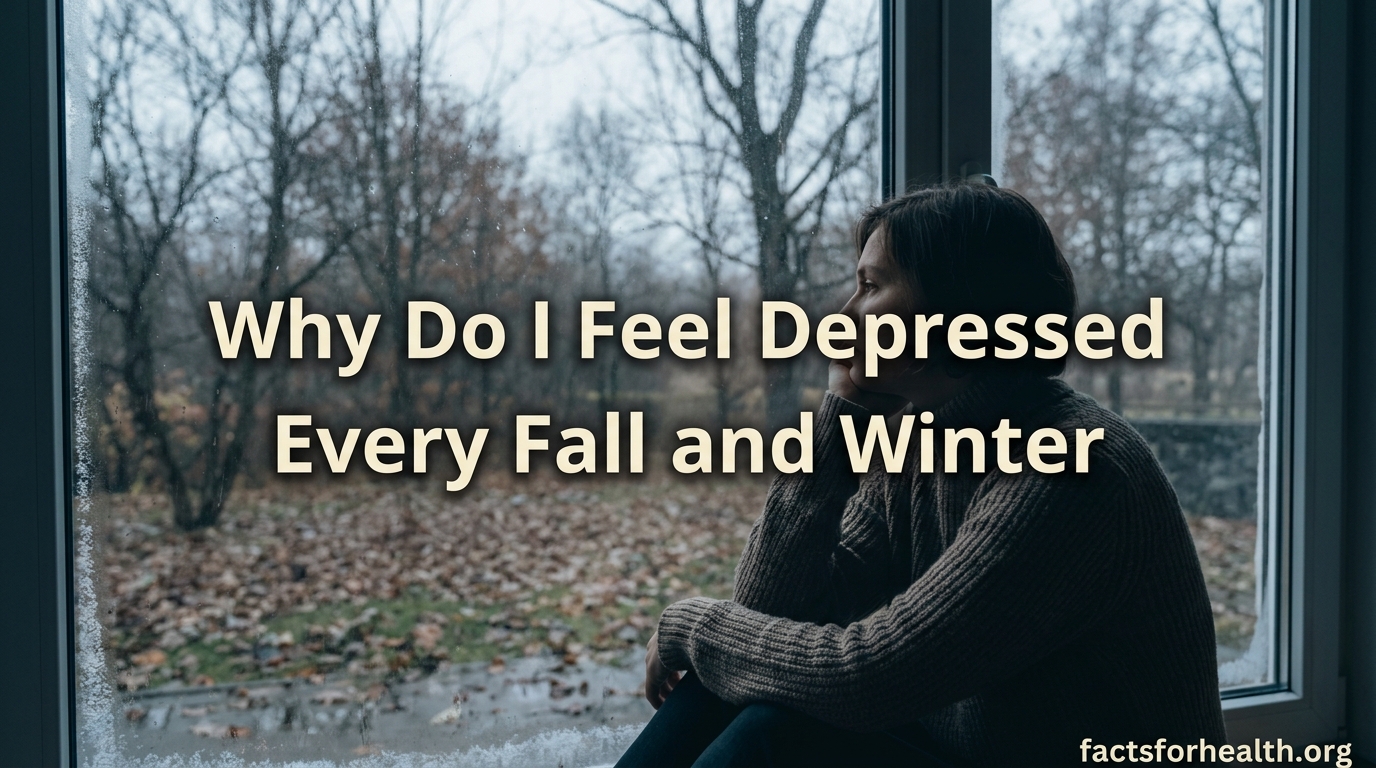
If you find yourself asking why do I feel depressed every fall and winter, you are far from alone. Millions of people experience a noticeable drop in mood, energy, and motivation as the days get shorter and the temperatures drop. This pattern is not a personal failing or a sign of weakness. It has a biological explanation rooted in how your brain and body respond to reduced sunlight.
The clinical name for this condition is Seasonal Affective Disorder, or SAD. It is a recognized form of depression that follows a seasonal pattern, most commonly starting in late fall and lifting in the spring. SAD is linked to changes in how your body produces serotonin and melatonin, two chemicals that regulate mood and sleep. When daylight hours shrink, these systems get disrupted, and your mental health takes a hit.
In this guide, we break down exactly why do I feel depressed every fall and winter, what happens in your brain during the darker months, how to recognize the symptoms, and what actually helps. We also include real experiences from people living with seasonal depression, because knowing others go through the same thing can make a real difference.
One important note before we begin. If you are having thoughts of self-harm or suicide, please reach out for help right now. In the United States, you can call or text 988 to reach the Suicide and Crisis Lifeline, available 24 hours a day. In the UK, call 111. You deserve support, and these resources exist for moments exactly like this one.
Table of Contents
What Is Seasonal Affective Disorder (SAD)?
Seasonal Affective Disorder (SAD) is a type of depression that follows a predictable seasonal pattern. Most people with SAD experience symptoms during the fall and winter months, when daylight is limited. A smaller group experiences what is called summer-pattern SAD, with symptoms appearing during spring and summer instead.
SAD is more than just the winter blues. The winter blues is a general term for feeling a bit sluggish or down during colder months. SAD, on the other hand, is a clinically recognized form of major depression. It can significantly affect your ability to function at work, maintain relationships, and take care of daily responsibilities.
According to the National Institute of Mental Health, SAD is not a separate disorder from major depression. Instead, it is major depressive disorder with a seasonal pattern. This means the diagnostic criteria for depression must be met, and the episodes must follow a seasonal rhythm for at least two consecutive years.
The condition affects an estimated 5 percent of adults in the United States, and it typically lasts about 40 percent of the year. Symptoms are usually mild at first in early fall, intensify during the darkest winter months, and resolve completely once spring arrives.
Why Do I Feel Depressed Every Fall and Winter? The Main Causes
When people ask why do I feel depressed every fall and winter, the answer comes down to biology. Your body runs on internal clocks and chemical messengers that respond directly to light. When the amount of daylight drops in fall and winter, those systems are thrown off balance.
Researchers have identified four main biological factors that drive seasonal depression. These factors do not work in isolation. They interact with each other, which is why SAD can feel so overwhelming when it hits.
1. Reduced Serotonin Production
Serotonin is a neurotransmitter, a brain chemical that helps regulate mood, appetite, and sleep. Sunlight plays a direct role in how your body produces and uses serotonin. When you get less sunlight in the winter months, serotonin activity drops.
Studies using brain imaging have shown that people with SAD actually have lower levels of a transporter protein that clears serotonin from the brain. This difference appears only during winter months in people with SAD, suggesting their serotonin systems are uniquely sensitive to seasonal light changes.
Lower serotonin activity is associated with feelings of sadness, irritability, and carbohydrate cravings. This is one reason people with winter depression often reach for bread, pasta, and sweets during colder months.
2. Increased Melatonin Levels
Melatonin is a hormone that your brain produces in response to darkness. It tells your body it is time to sleep. When the sun sets earlier in winter, your body starts producing melatonin earlier in the day and produces more of it overall.
This excess melatonin leaves many people with SAD feeling constantly drowsy, even after a full night of sleep. It also explains why oversleeping is one of the hallmark symptoms of winter-pattern SAD. Some people sleep two or more hours longer than usual during winter and still wake up exhausted.
3. Disrupted Circadian Rhythm
Your circadian rhythm is your body internal 24-hour clock. It controls when you feel alert, when you feel sleepy, and when various hormones are released. This clock relies heavily on light cues from the environment to stay properly calibrated.
When sunrise shifts later and sunset shifts earlier, your circadian rhythm gets pushed out of alignment. Your body may think it is time to wind down at 4:30 in the afternoon. This mismatch between your internal clock and your daily schedule contributes to the fatigue, low motivation, and mood crashes that define seasonal depression.
4. Vitamin D Deficiency
Vitamin D is sometimes called the sunshine vitamin because your skin produces it when exposed to sunlight. During winter, especially in northern latitudes, most people get far too little sun exposure to maintain healthy vitamin D levels.
Vitamin D helps your body use serotonin effectively. When levels drop, mood can suffer. Research suggests that people with SAD tend to have lower vitamin D levels than the general population, and some studies show that supplementation can improve symptoms, though results are mixed.
The Science Behind Seasonal Depression
To really understand why do I feel depressed every fall and winter, it helps to look at how the brain processes light and translates it into mood. The process starts in a part of your eye called the retina, which contains special cells that detect light even when you are not consciously seeing it.
These light-sensitive cells send signals to a small region of the brain called the suprachiasmatic nucleus, or SCN. The SCN acts as your master biological clock. When it receives strong light signals, it keeps your circadian rhythm running smoothly. When light signals weaken, as they do in winter, the SCN struggles to maintain proper timing.
The SCN communicates with the pineal gland, which controls melatonin production, and influences the raphe nuclei, the brain region responsible for serotonin release. This is why reduced light affects both melatonin and serotonin simultaneously. The two systems are connected through this central clock.
Some researchers also point to a role for vitamin D in this chain. Vitamin D receptors are found throughout the brain, including areas involved in mood regulation. Without adequate vitamin D, the brain may struggle to produce and use serotonin properly, compounding the effects of reduced winter light.
This is also why light therapy works for many people with SAD. By exposing the eyes to bright artificial light, typically 10,000 lux, the SCN receives the signal it needs to keep the circadian rhythm on track. We cover this in more detail in the treatment section below.
Common Symptoms of Fall and Winter Depression
Fall and winter SAD has a distinct symptom profile that differs from typical depression. While major depression often involves insomnia and weight loss, winter-pattern SAD tends to produce the opposite effects. Recognizing these symptoms is the first step toward getting help.
Here are the most common symptoms of fall and winter seasonal depression:
- Persistent low mood lasting most of the day, nearly every day, for two weeks or more
- Oversleeping or difficulty waking up, even after many hours of sleep
- Carbohydrate cravings and increased appetite, especially for starchy and sweet foods
- Weight gain during the winter months that was not intentional
- Heavy, leaden feeling in the arms and legs that makes physical activity feel difficult
- Social withdrawal or a strong desire to hibernate and avoid people
- Low energy and fatigue that does not improve with rest
- Difficulty concentrating on tasks that are normally easy
- Feelings of hopelessness, worthlessness, or guilt
- Loss of interest in activities you usually enjoy
Spring and summer SAD, by contrast, tends to involve insomnia, reduced appetite, weight loss, agitation, and anxiety. The two patterns are almost mirror images of each other, which is why diagnosis requires a doctor to evaluate the seasonal pattern carefully.
If you experience these symptoms for two or more consecutive winters with improvement in spring, it is worth talking to a healthcare provider. SAD is highly treatable, but it rarely goes away on its own without some form of intervention.
Seasonal Depression vs Seasonal Anxiety
Many people wonder whether there is such a thing as seasonal anxiety. The short answer is yes. Some people experience a noticeable increase in anxiety, worry, and panic symptoms during certain seasons, particularly fall and winter.
Seasonal anxiety is thought to involve the same biological mechanisms as SAD, namely disrupted serotonin and circadian rhythm changes. The difference is that instead of primarily feeling depressed and lethargic, people with seasonal anxiety experience heightened nervousness, restlessness, and physical tension.
Some people experience both seasonal depression and seasonal anxiety together. The short days and cold weather that trigger low mood can also trigger anxious thoughts about the dark, isolation, or the pressure of holiday expectations.
Seasonal anxiety is not currently an official separate diagnosis in the DSM-5. However, mental health professionals do recognize seasonal patterns in anxiety symptoms, and the same treatments that help SAD, such as light therapy and cognitive behavioral therapy, often help seasonal anxiety as well.
How SAD Differs From Regular Depression
SAD and major depressive disorder share many symptoms, but there are key differences that matter for treatment. Understanding these differences can help you and your doctor choose the right approach.
The most obvious difference is the timing. Regular depression can strike at any time and has no predictable pattern. SAD, by definition, follows a seasonal cycle. Symptoms appear at roughly the same time each year and lift at roughly the same time as well.
The symptom profile also differs. Regular depression typically causes insomnia and appetite loss. Winter SAD causes oversleeping and overeating, particularly of carbohydrates. Some people describe winter SAD as feeling like their body wants to shut down and hibernate.
Treatment approaches can differ too. While both conditions respond to antidepressants and psychotherapy, SAD has a unique treatment option that regular depression does not. Light therapy, or phototherapy, is specifically effective for seasonal depression because it directly addresses the root cause of reduced light exposure.
Some people have SAD in addition to year-round depression. In these cases, winter can make existing symptoms noticeably worse. This is why tracking your mood across the year can be so valuable for getting an accurate diagnosis.
Risk Factors: Who Develops Seasonal Depression?
SAD does not affect everyone equally. Certain factors increase your likelihood of developing seasonal depression, and understanding your risk profile can help you take preventive action before symptoms become severe.
Here are the main risk factors for seasonal affective disorder:
- Sex: SAD is diagnosed about four times more often in women than in men.
- Age: Younger adults are at higher risk. SAD most commonly begins between ages 18 and 30.
- Geography: The farther you live from the equator, the higher your risk. This is because winter days are shorter at higher latitudes.
- Family history: Having a close relative with SAD or another form of depression increases your risk.
- Existing mental health conditions: People with bipolar disorder or major depression are more likely to develop a seasonal pattern.
- Vitamin D levels: People with low vitamin D may be more susceptible, though this connection is still being studied.
Having one or more risk factors does not mean you will definitely develop SAD. But if you have several, it is worth being proactive about light exposure, mood tracking, and early intervention when fall arrives.
Real Experiences: What People With SAD Actually Feel
Clinical descriptions of SAD are useful, but they do not capture the lived experience. Across online communities like Reddit seasonal depression support groups, thousands of people describe what seasonal depression actually feels like from the inside.
One common theme is the sense that something shifts as the light changes. People describe feeling the darkness in their bodies, not just their minds. Many notice their mood dropping in early fall, sometimes as early as September, before the weather even gets cold.
Loneliness and social withdrawal come up constantly. People describe wanting to cancel plans, avoid friends, and stay under blankets for days. This is not laziness. It is the brain responding to biological signals that say it is time to shut down.
Many people also describe carb cravings and weight gain that feel out of their control. The body is genuinely demanding carbohydrates because low serotonin levels trigger an instinct to eat foods that boost serotonin production temporarily.
Perhaps the most important theme is validation. People who learn that SAD is a real, biological condition often describe a wave of relief. Knowing that there is a name for what they feel, and that it is treatable, can be the first step toward recovery.
Treatment Options and Coping Strategies
The good news about seasonal depression is that it responds well to treatment. Multiple approaches have been shown to work, and many people find that combining strategies produces the best results. Here is how to stop seasonal depression using evidence-based methods.
Light Therapy
Light therapy is the most studied and most effective treatment for winter SAD. It involves sitting near a special light box that emits 10,000 lux of light for 20 to 30 minutes each morning, ideally within an hour of waking up.
The light needs to be bright enough and used consistently. Most people notice improvement within one to two weeks of starting treatment. Light boxes are widely available, but it is important to choose one specifically designed for SAD treatment, not just any bright lamp.
Cognitive Behavioral Therapy (CBT-SAD)
Cognitive behavioral therapy adapted for seasonal affective disorder, called CBT-SAD, is a form of talk therapy that helps you identify and change negative thought patterns associated with winter. Research shows CBT-SAD can be as effective as light therapy, and its benefits may last longer.
CBT-SAD typically includes behavioral activation, which means scheduling enjoyable activities even when you do not feel like doing them. This helps counter the social withdrawal and inactivity that feed depressive symptoms.
Vitamin D Supplementation
Many people with SAD have low vitamin D levels. Some studies suggest that taking a vitamin D supplement can improve symptoms, though the evidence is not as strong as for light therapy or CBT. If you suspect a deficiency, ask your doctor for a simple blood test.
Most adults can safely take between 600 and 2,000 IU per day, but your doctor can recommend the right dose based on your blood levels. Vitamin D is inexpensive and widely available without a prescription.
Medication
For moderate to severe SAD, doctors may prescribe antidepressants. The most commonly prescribed medication for SAD is bupropion, which is FDA-approved specifically for preventing seasonal depressive episodes. Other antidepressants, including SSRIs, may also be effective.
If you take medication for SAD, your doctor may recommend starting it in early fall, before symptoms begin, and stopping in the spring. This preventive approach can stop SAD from taking hold in the first place.
Lifestyle Strategies
Several lifestyle changes can complement formal treatment and help you manage symptoms day to day. These strategies are not a replacement for professional care, but they can make a meaningful difference.
- Get outside daily, even on cloudy days. Natural outdoor light is much brighter than indoor lighting.
- Exercise regularly. Aerobic activity boosts serotonin and endorphins naturally.
- Open curtains and blinds during the day to let in as much natural light as possible.
- Sit near windows when you work or relax indoors.
- Maintain a consistent sleep schedule to help stabilize your circadian rhythm.
- Stay socially connected, even when you want to withdraw. Force yourself to keep plans.
- Consider a dawn simulator, an alarm clock that gradually brightens your room before you wake up.
People in SAD support communities frequently mention that getting outside for even a short walk each day makes a noticeable difference. Combining sunlight exposure with physical activity addresses both the light deficiency and the inactivity that worsen symptoms.
When to See a Doctor
If your seasonal mood changes are interfering with your daily life, it is time to talk to a healthcare provider. You do not need to wait until symptoms become severe. Early intervention can prevent SAD from escalating.
Seek help immediately if you experience any of the following warning signs:
- Thoughts of death or suicide
- Inability to perform daily tasks at work or home
- Increased use of alcohol or drugs to cope
- Symptoms that last more than two weeks without improvement
- Symptoms that are getting progressively worse each year
Your primary care doctor is a good starting point. They can screen for depression, check your vitamin D levels, and refer you to a mental health specialist if needed. Many people also find help through telehealth platforms, which make it easier to access therapy during winter months when leaving the house feels difficult.
If you are in crisis, do not wait for an appointment. Call or text 988 in the United States to reach the Suicide and Crisis Lifeline. In the UK, call 111 or 999 in an emergency. In other countries, contact your local emergency services or a mental health crisis line.
Can Seasonal Depression Be Prevented?
SAD cannot always be prevented entirely, but its severity can often be reduced with proactive steps. If you know you are prone to seasonal depression, the key is to start interventions before symptoms appear rather than waiting until you are already struggling.
Start light therapy in early fall, before the days get noticeably shorter. Begin or continue CBT-SAD sessions in late summer. Ask your doctor about starting medication preventively if you have had significant SAD episodes in previous years.
Maintain your vitamin D levels year-round through a combination of safe sun exposure, diet, and supplementation. Keep exercising regularly, as aerobic activity has been shown to reduce depression risk. Build a strong social support network before winter isolation sets in.
Some people find that planning enjoyable winter activities gives them something to look forward to. Having events, trips, or projects on the calendar can counter the sense that winter is something to merely endure.
Frequently Asked Questions
What is the fall seasonal depression?
Fall seasonal depression, also known as winter-pattern Seasonal Affective Disorder (SAD), is a type of depression that begins in late fall or early winter and resolves in spring. It is caused by reduced sunlight exposure, which disrupts serotonin and melatonin production. Common symptoms include oversleeping, carb cravings, weight gain, fatigue, and social withdrawal.
How to stop seasonal depression?
Seasonal depression can be treated with light therapy (10,000 lux for 20-30 minutes each morning), cognitive behavioral therapy adapted for SAD (CBT-SAD), vitamin D supplementation, prescription antidepressants such as bupropion, and lifestyle changes like daily outdoor walks, regular exercise, and maintaining a consistent sleep schedule. Most people respond best to a combination of these approaches.
What supplements are good for seasonal affective disorder?
Vitamin D is the most commonly recommended supplement for SAD, since many people with the condition have low levels. Some research also suggests that omega-3 fatty acids and St. John’s wort may help with mild depressive symptoms, though St. John’s wort can interact with many medications. Always talk to your doctor before starting any supplement, and ask for a blood test to check your vitamin D level first.
Is there a thing called seasonal anxiety?
Yes, seasonal anxiety is a real phenomenon. Some people experience heightened anxiety, nervousness, and physical tension during certain seasons, particularly fall and winter. It is thought to involve the same biological mechanisms as SAD, including disrupted serotonin and circadian rhythm changes. While it is not currently a separate clinical diagnosis, mental health professionals recognize seasonal patterns in anxiety, and treatments like light therapy and CBT often help.
Conclusion
Understanding why do I feel depressed every fall and winter starts with recognizing that Seasonal Affective Disorder is a real, biological condition driven by reduced sunlight. Your brain chemistry genuinely changes when the days shorten, and the fatigue, low mood, and cravings you feel are not signs of weakness. They are your body responding to a lack of light.
The most important takeaway is that SAD is treatable. Whether you try light therapy, talk to a therapist, get your vitamin D checked, or simply commit to a daily outdoor walk, there are proven ways to feel better. If your symptoms are severe or you have thoughts of self-harm, reach out to a doctor or call 988 right away. Help is available, and you do not have to wait until spring to start feeling like yourself again.