
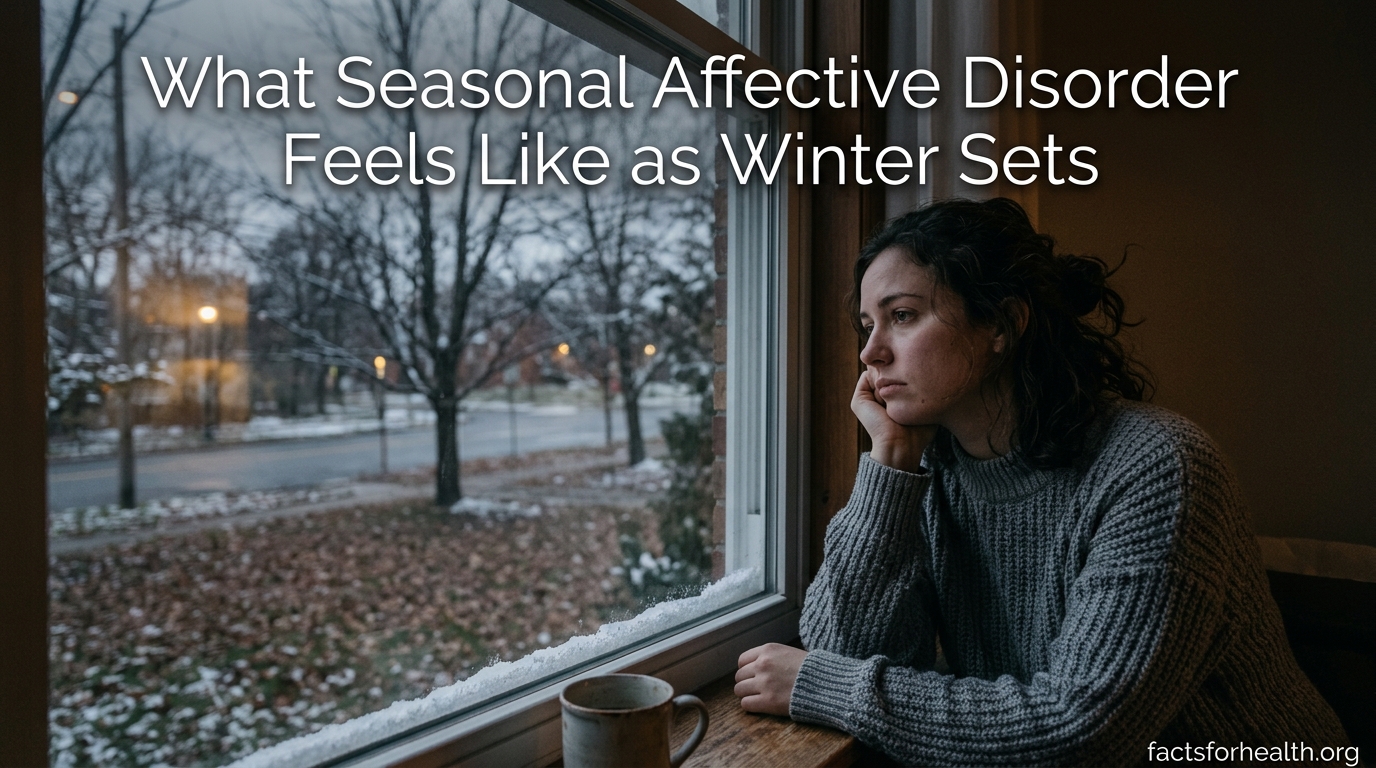
The alarm goes off at 7 a.m., but your body feels like it is midnight. The sun has barely risen, the air outside is gray and cold, and getting out of bed feels like lifting a boulder. For millions of people, this is not just the inconvenience of winter. This is what seasonal affective disorder feels like as winter sets in.
Seasonal affective disorder (SAD) is a recognized form of depression that follows a seasonal pattern. Most commonly, symptoms begin in the fall and intensify through the winter months when daylight hours shrink. It is far more than the casual “winter blues” that everyone occasionally experiences. SAD affects your energy, your mood, your sleep, your appetite, and your ability to engage with daily life.
If you have ever wondered why winter feels emotionally crushing in a way that other seasons do not, this guide will help you understand what is happening. We will walk through what seasonal affective disorder feels like on a day-to-day basis, why it happens, how it differs from other forms of depression, and what you can do about it. You are not imagining these feelings, and you are far from alone.
Table of Contents
What Seasonal Affective Disorder Feels Like: The First Signs
The onset of seasonal affective disorder does not arrive overnight. It creeps in gradually, often beginning in October or November as the clocks fall back and evening light disappears. Many people do not recognize the early signs because they mimic the normal adjustment to colder weather and busier schedules.
The first thing most people notice is a shift in energy. Tasks that felt effortless in July suddenly require significant effort. You might find yourself hitting snooze repeatedly, feeling groggy well into the afternoon, or struggling to muster enthusiasm for activities you usually enjoy.
Sleep patterns begin to change. Unlike typical depression, which often causes insomnia, winter-pattern SAD tends to make people sleep more. You might sleep 10 or 12 hours and still wake up exhausted. This oversleeping is one of the hallmarks that distinguishes SAD from other depressive disorders.
Mood shifts are another early signal. Irritability increases. Small annoyances feel overwhelming. You may notice a persistent low-grade sadness that does not lift even on good days. Friends might comment that you seem “off” or quieter than usual. These changes are subtle at first, but they build as the weeks progress.
The transitional period when winter is setting in is particularly difficult because the symptoms are ambiguous. You might attribute your fatigue to a busy work season, holiday stress, or a passing bug. Recognizing that these changes follow a seasonal pattern is often the first step toward understanding what is happening.
Core Symptoms: The Daily Experience of Winter Depression
Once seasonal affective disorder fully takes hold, the daily experience can feel relentless. People who live with SAD often describe it using vivid, physical language. It feels like wearing a heavy suit of armor that drains every movement. It feels like your brain is operating in slow motion. It feels like being disconnected from the world by a pane of glass.
Morning Heaviness and Daytime Fatigue
Mornings are often the hardest part of the day for someone with SAD. Waking up in the dark, when your circadian rhythm is telling you it is still nighttime, creates a profound sense of heaviness. Getting out of bed can feel like a monumental task.
This fatigue does not improve with coffee or a full night of rest. It is a deep, bone-level exhaustion that persists regardless of how much sleep you get. Many people describe feeling like they want to hibernate, retreating to bed as soon as the sun goes down and dreading the morning before it arrives.
Carbohydrate Cravings and Weight Gain
One of the most distinctive features of winter SAD is the change in appetite. People develop intense cravings for carbohydrates and comfort foods. Bread, pasta, sweets, and starchy foods become almost irresistible.
This is not simply a matter of willpower. The craving for carbohydrates is linked to serotonin production. Your brain is seeking the quick serotonin boost that carbohydrate-rich foods provide. Unfortunately, this pattern often leads to weight gain during winter months, which can compound feelings of low self-worth and frustration.
The Social Withdrawal Spiral
Perhaps the most insidious aspect of what seasonal affective disorder feels like is the pull toward isolation. As energy drops and mood sinks, the desire to socialize fades. Declining invitations becomes habitual. Texts from friends go unanswered for days.
The problem with withdrawal is that it creates a feedback loop. Less social interaction means less emotional support, less accountability, and fewer moments of joy. The isolation deepens the depression, which makes you withdraw further, which deepens the depression again.
People on forums who live with SAD describe this spiral vividly. They talk about watching their phone ring and feeling physically unable to answer. They describe canceling plans they had been looking forward to, then feeling guilty about canceling, then feeling too guilty to reschedule.
Difficulty Concentrating
Cognitive symptoms are a significant but often overlooked part of SAD. Brain fog sets in. Reading a book becomes difficult. Following conversations feels effortful. Work tasks that were routine now take twice as long.
This cognitive slowing can be especially distressing for students and professionals who cannot afford a drop in performance. The gap between what you know you are capable of and what you can actually produce during winter months creates anxiety and self-doubt that feed back into the depressive cycle.
Persistent Sadness and Hopelessness
Beneath all the physical and cognitive symptoms lies a persistent emotional weight. Sadness that does not lift. A sense that nothing will improve. Hopelessness about the future. These feelings are real symptoms of a medical condition, not character flaws or signs of weakness.
Some people describe the emotional experience as feeling numb rather than sad. Colors seem muted. Food tastes bland. Music does not move you the way it used to. This loss of pleasure, called anhedonia, is a core feature of depression and is very common in seasonal affective disorder.
Why Does Winter Make You Feel This Way?
Understanding the biology behind SAD helps separate it from personal failure. What seasonal affective disorder feels like is the direct result of measurable changes in your brain and body chemistry.
Reduced Sunlight and Circadian Rhythm Disruption
Your body operates on an internal clock called the circadian rhythm. This clock is calibrated by light exposure, particularly morning sunlight. When days shorten and sunlight weakens, your circadian rhythm shifts. This disruption affects sleep, hormone production, energy levels, and mood regulation.
Think of your circadian rhythm as an orchestra conductor. When the conductor loses the beat, every section of the orchestra falls out of sync. Sleep, appetite, energy, and mood all depend on this rhythm functioning properly.
Melatonin Overproduction
Melatonin is the hormone that regulates sleep. It is produced in response to darkness and suppressed by light. During winter, longer periods of darkness lead to increased melatonin production. Your body essentially receives a constant signal that it is time to sleep.
This is why SAD causes oversleeping and daytime drowsiness. Your biology is literally telling you to hibernate. The excess melatonin also contributes to the lethargy and low energy that define the winter depression experience.
Serotonin Depletion
Serotonin is a neurotransmitter that regulates mood, appetite, and sleep. Sunlight exposure helps your body maintain healthy serotonin levels. Reduced winter sunlight leads to lower serotonin activity, which directly contributes to depression, carbohydrate cravings, and sleep disturbances.
The carbohydrate cravings so common in SAD are actually your brain’s attempt to boost serotonin naturally. Eating carbohydrates triggers insulin release, which helps tryptophan enter the brain, where it is converted to serotonin. Understanding this mechanism can help you approach cravings with self-compassion rather than guilt.
Vitamin D Connection
Vitamin D is produced when your skin is exposed to sunlight. During winter months, especially in northern latitudes, vitamin D levels drop significantly. Low vitamin D has been linked to depression, and some researchers believe it plays a role in seasonal affective disorder specifically.
While vitamin D supplementation alone is rarely sufficient to treat SAD, addressing deficiency can be one piece of a broader strategy for managing symptoms.
The Social Isolation Spiral: Why SAD Pulls You Away From People
Most medical resources list social withdrawal as a symptom of SAD, but few explain the lived experience of this isolation. Understanding what seasonal affective disorder feels like means understanding the specific way it erodes your social connections.
It starts small. You skip one event because you are tired. A friend texts, and you tell yourself you will respond later. Later becomes tomorrow. Tomorrow becomes next week. Eventually, you realize you have not had a genuine conversation with anyone in weeks.
The isolation feels different from choosing to spend time alone. It is not restful solitude. It is a feeling of being trapped behind an invisible wall. You want connection, but the effort required feels insurmountable. The guilt of withdrawing makes reaching out even harder because you feel like you have to explain your absence.
People who post in SAD support communities describe this spiral in heartbreaking detail. They talk about losing friendships during winter because they stopped showing up. They describe the shame of realizing how long it has been since they left the house for something social.
Breaking this spiral is possible, and it does not require suddenly becoming a social butterfly. The key is maintaining small, low-effort connections. A five-minute phone call. A brief walk with a neighbor. A text that says you are struggling. These tiny acts of connection can prevent the isolation from deepening.
SAD vs Regular Depression: What’s the Difference?
One of the most common questions people ask in forums is how seasonal affective disorder differs from major depressive disorder. The distinction matters because it affects treatment approaches and helps you understand your own experience.
The defining feature of SAD is its seasonal pattern. Symptoms appear during a specific time of year, typically late fall through winter, and remit when the season changes. To be diagnosed with SAD, you must experience this seasonal pattern for at least two consecutive years without any non-seasonal depressive episodes during that period.
Symptom differences are also significant. Major depression typically causes insomnia and appetite loss. Winter SAD causes the opposite. People sleep more and eat more, particularly carbohydrates. This pattern of oversleeping, overeating, and extreme fatigue is sometimes called atypical depression and is characteristic of seasonal affective disorder.
Another difference is predictability. People who have lived with SAD for years can often sense it coming. They recognize the early signs and know that symptoms will follow their seasonal timeline. This predictability, while not making the experience easier, does allow for proactive treatment strategies that begin before symptoms fully develop.
If you experience depressive symptoms year-round that simply worsen in winter, you may have major depressive disorder with a seasonal pattern rather than pure SAD. A mental health professional can help clarify your diagnosis and recommend the most effective treatment approach.
When Are the Worst Months for Seasonal Depression?
For most people with winter-pattern SAD, symptoms follow a predictable timeline. They begin building in October or November, peak in January and February, and begin lifting in March as daylight hours increase.
January is widely considered the hardest month for seasonal depression. The holidays are over, the novelty of winter has faded, and the stretch of cold, dark days ahead feels endless. The combination of post-holiday letdown, ongoing short days, and accumulated months of reduced sunlight creates a perfect storm for SAD symptoms.
February can be equally difficult, particularly in northern climates. By this point, fatigue and isolation have compounded over months. However, some people begin to notice subtle improvement in late February as daylight hours extend past ten hours.
Geographic location plays a major role. People living at higher latitudes, where winter days are shortest, experience higher rates of SAD. In the northern United States and Canada, SAD affects a significantly larger percentage of the population than in southern regions. Even within the same country, moving a few hundred miles north or south can meaningfully change your risk.
Coping Strategies: What Actually Helps With Seasonal Depression
While seasonal affective disorder is a serious condition, it is also one of the most treatable forms of depression. The strategies below are drawn from clinical research and real-world experiences shared by people who live with SAD.
Light Therapy
Light therapy is the most studied and widely recommended treatment for winter SAD. Using a light therapy box that emits 10,000 lux of light for 20 to 30 minutes each morning can significantly reduce symptoms for many people. The light simulates natural sunlight and helps recalibrate your circadian rhythm.
Consistency matters. Using the light box daily, ideally within the first hour of waking, produces the best results. Many people begin light therapy in early fall before symptoms appear, which can prevent SAD from developing at all.
Maximize Natural Light Exposure
Every bit of natural light helps. Take a walk during your lunch break. Open blinds as soon as you wake up. Position your workspace near a window. Even on overcast days, outdoor light is significantly brighter than indoor lighting and provides meaningful benefits.
Morning light exposure is especially valuable because it helps regulate your circadian rhythm. A 20-minute morning walk outside, even in cold weather, can make a measurable difference in your energy and mood throughout the day.
Maintain Social Connection
Given how powerfully isolation worsens SAD, maintaining social bonds is a form of treatment. Schedule regular check-ins with friends and family. Be honest about what you are experiencing. People who care about you want to help, but they cannot help if they do not know what is going on.
Consider joining a support group, whether online or in person. Connecting with others who understand the seasonal depression experience provides validation and practical coping strategies that clinical resources often lack.
Practice Sleep Hygiene
Because SAD disrupts sleep so significantly, protecting your sleep routine is essential. Maintain consistent sleep and wake times, even on weekends. Avoid screens before bed, as blue light further disrupts melatonin production. Create a calming evening routine that signals to your body that it is time to wind down.
Resist the urge to oversleep. While the temptation to stay in bed is powerful, excessive sleep can actually worsen SAD symptoms. Setting a consistent wake time and getting light exposure immediately upon waking helps break the cycle of oversleeping and fatigue.
Seek Professional Help
For many people, self-help strategies are not enough. And that is completely okay. Cognitive behavioral therapy adapted for SAD has shown strong results in clinical trials. Antidepressant medications, particularly SSRIs, can be effective for moderate to severe seasonal depression.
If your symptoms interfere with daily functioning, if you have thoughts of self-harm, or if self-help strategies are not providing relief, please reach out to a mental health professional. Seasonal affective disorder is a medical condition that deserves medical treatment, just like any other health concern.
FAQs
What’s the worst month for seasonal depression?
January is widely considered the worst month for seasonal depression. The holidays have ended, daylight hours are still very short, and months of reduced sunlight have accumulated. February can be equally difficult, but symptoms typically begin improving in March as daylight increases.
What is the saddest season of the year?
Winter is the saddest season for people with seasonal affective disorder, with symptoms peaking in January and February. The combination of short days, cold temperatures, and reduced sunlight exposure creates the conditions that trigger depressive episodes in susceptible individuals.
What time of year does SAD typically start?
SAD typically begins in late fall, around October or November, as daylight hours decrease and clocks fall back. Early signs include increased fatigue, changes in sleep patterns, and mood shifts that gradually intensify through the winter months.
What season is worst for anxiety?
Winter can worsen anxiety for people with seasonal affective disorder due to disrupted sleep, reduced sunlight, and social isolation. However, some people experience increased anxiety during summer months with summer-pattern SAD, which can cause agitation, restlessness, and trouble sleeping.
You Are Not Alone in This
Understanding what seasonal affective disorder feels like is the first step toward managing it. The heavy mornings, the carbohydrate cravings, the social withdrawal, the brain fog. These are all real symptoms of a recognized medical condition that affects millions of people every winter.
SAD is treatable. Light therapy, psychotherapy, medication, and lifestyle changes can all help. The symptoms will lift as spring arrives, but you do not have to simply endure the winter months. If you recognize yourself in this article, reach out to a healthcare provider. Help is available, and you deserve to feel better long before the snow melts.