
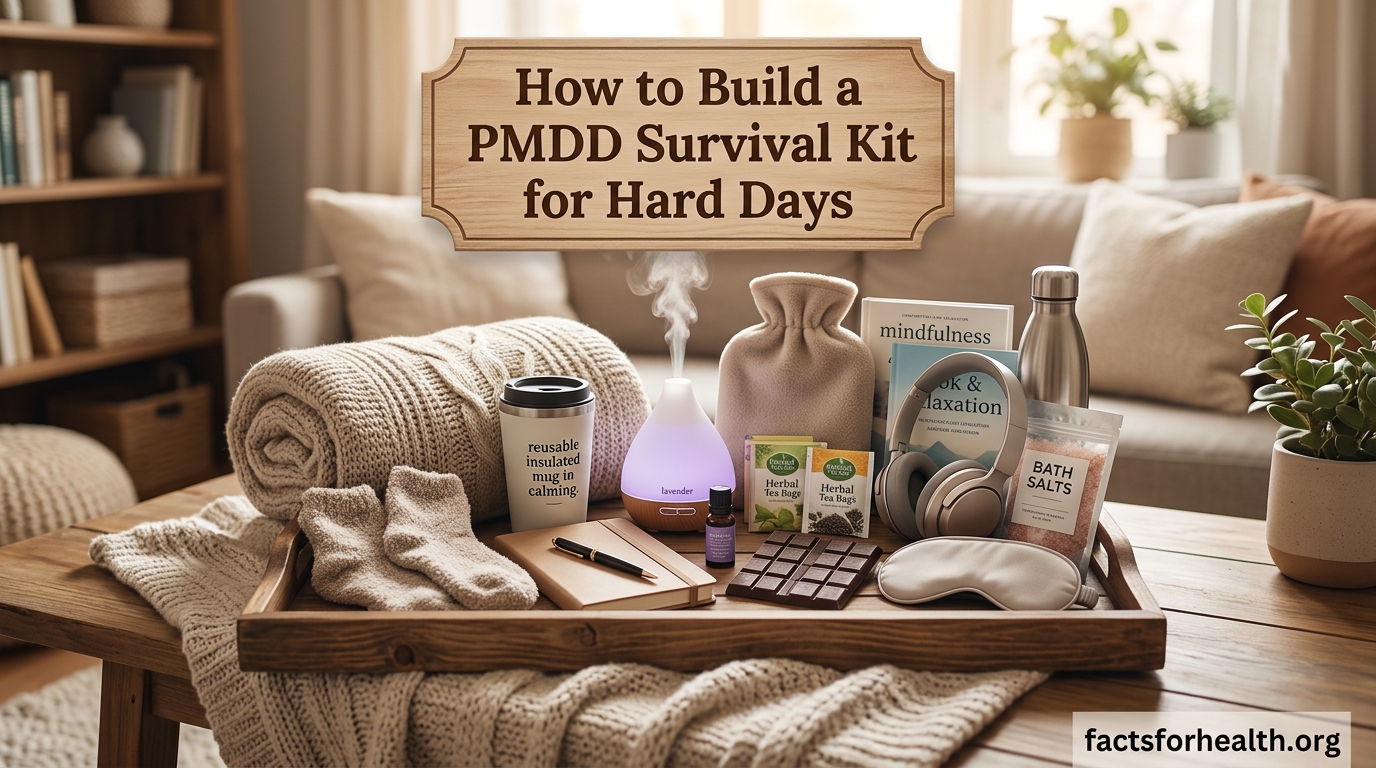
If you have ever found yourself sitting on the bathroom floor two weeks before your period, crying over something that would not normally faze you, you are in the right place. Learning how to build a PMDD survival kit for hard days can change the way you move through the hardest parts of your cycle. I have spent years refining my own kit, and I want to share everything that has actually made a difference.
Premenstrual Dysphoric Disorder (PMDD) affects roughly 5% of women and people with cycles of reproductive age. That number sounds small until you realize it means millions of people experience severe, sometimes debilitating emotional and physical symptoms every single month. The luteal phase, those one to two weeks before menstruation, can feel like a completely different life.
A PMDD survival kit is a pre-assembled collection of tools, comfort items, supplements, and coping strategies that you gather when you feel well. When a hard day hits, you do not have to think. You reach for what you already know works. This guide walks you through building a kit for home, for work, and for public flare-ups, along with the science behind why these tools help.
We will cover the nervous system science, research-backed supplements, symptom-specific recommendations, workplace strategies, and printable checklists. Whether this is your first time building a PMDD toolkit or you are refining one you already have, you will find practical, lived-experience guidance here.
Table of Contents
What Is PMDD and Why a Survival Kit Matters
PMDD (Premenstrual Dysphoric Disorder) is a severe, hormone-based mood disorder that causes intense emotional and physical symptoms during the luteal phase. It is not just bad PMS. PMDD symptoms are severe enough to disrupt work, relationships, and daily functioning, and they consistently appear in the days to two weeks before menstruation.
The key difference between PMS and PMDD comes down to severity and impact. PMS might make you irritable and reach for chocolate. PMDD can trigger suicidal ideation, rage episodes, deep depression, panic attacks, and a sense of losing yourself entirely. Symptoms resolve within a few days after menstruation begins, which is part of what makes PMDD so disorienting. You feel like a different person, and then you are not.
Common PMDD symptoms include severe mood swings, sudden depression, intense anxiety or tension, irritability or rage that feels outside your control, feelings of hopelessness, brain fog, fatigue, changes in appetite and sleep, feeling overwhelmed or out of control, and physical symptoms like breast tenderness, joint or muscle pain, bloating, and headaches.
So why does living with PMDD feel so hard? Because PMDD creates a cyclical pattern where you lose trust in yourself. Every month, the same wave of symptoms returns. You start doubting your own perceptions. You wonder if the way you feel during the luteal phase is the real you, or if the person you are during the follicular phase is real. This uncertainty erodes self-trust over time.
A survival kit matters because it removes decision-making during your worst moments. When PMDD hits, your brain is already overwhelmed by hormonal shifts, intrusive thoughts, and physical discomfort. Asking yourself to problem-solve in that state is like asking someone with a broken leg to run for help. The kit is the help, already waiting.
Think of it this way: you would not wait until a fire starts to look for the extinguisher. A PMDD survival kit is your mental health fire extinguisher, assembled during the follicular phase when your thinking is clear and your nervous system is regulated.
The Science Behind the Survival Kit: Nervous System Regulation
Every item in a PMDD survival kit serves a purpose rooted in nervous system regulation. During the luteal phase, hormonal shifts, particularly in sensitivity to progesterone and its metabolite allopregnanolone, affect GABA receptors in the brain. For people with PMDD, this creates a heightened stress response and reduced ability to calm the nervous system naturally.
This is why PMDD feels like your nervous system is stuck in fight-or-flight mode. Your body is more reactive to stress, less able to return to baseline after an emotional trigger, and more prone to sensory overload. The same lights, sounds, and social demands that feel manageable during the follicular phase can become unbearable during the luteal phase.
Survival kit tools work because they directly target the nervous system. Sensory tools like earplugs and noise-cancelling headphones reduce environmental input, giving your overwhelmed brain fewer signals to process. Weighted blankets and deep pressure stimulate the parasympathetic nervous system, the rest-and-digest mode that counters fight-or-flight. Grounding techniques activate your prefrontal cortex, the part of your brain responsible for rational thinking, which PMDD can temporarily suppress.
Heat therapy, like a heating pad or warm bath, relaxes muscle tension and stimulates blood flow, which helps with cramps and also promotes a sense of physical safety. Aromatherapy taps into the olfactory system, which has direct connections to the limbic system, the emotional center of the brain. Certain scents can trigger a calming response within seconds.
Understanding this science matters because it helps you stop blaming yourself. When you know that your nervous system is biologically more reactive during the luteal phase, you can approach your symptoms with curiosity instead of shame. You are not weak. Your nervous system is doing exactly what the hormones are telling it to do, and your survival kit is how you gently guide it back.
How to Build a PMDD Survival Kit for Hard Days: The Golden Rule
The single most important principle of building a PMDD survival kit is this: build it on a good day. Build it during the follicular phase, the first half of your cycle, when your thinking is clear, your mood is stable, and your nervous system is calm. If you wait until symptoms hit, you will not have the mental energy to gather what you need.
This is not just advice from lived experience. It is consistently the first thing community members on Reddit, bloggers, and therapists emphasize. Building during a good day means you are making decisions from a place of regulation, not overwhelm. You can think clearly about what helps because you are not in the middle of an episode.
Here is a simple 6-step framework for building your kit:
Step 1: Track your symptoms for at least two cycles to identify patterns. Note which symptoms are most disruptive for you personally.
Step 2: During your follicular phase, sit down with a journal and list every tool, item, and strategy that has helped you in the past. Include physical comfort items, emotional coping tools, supplements, and environmental changes.
Step 3: Gather your items physically. Dedicate a specific box, drawer, or bag. The physical container matters because it creates a ritual around your care.
Step 4: Write a letter or note to your future self. This is something multiple community members recommend. Write it from your regulated, clear-thinking self to the version of you who will be struggling in a few weeks.
Step 5: Tell someone. Share your kit with a partner, friend, or roommate. Let them know where it is and how to remind you to use it.
Step 6: Refine after each cycle. Add what worked, remove what did not. Your kit will evolve as you learn more about your own patterns.
Remember that your kit does not need to be perfect or complete on day one. One Reddit user put it perfectly: start with even three things in a little bag. The act of building it is itself an act of self-compassion.
Building Your PMDD Home Survival Kit
Your home survival kit is the comprehensive version, the one you reach for during hell week when you need everything in one place. Organize it by category so you can quickly find what you need without searching. Here are the essential categories and items to include.
Comfort and Physical Relief
These items target the physical discomfort that often accompanies PMDD. A heating pad or hot water bottle is non-negotiable for many people. Cramps, lower back pain, and general muscle tension respond well to consistent heat application. Some people keep multiple heating pads in different locations around the house.
Loose, soft clothing without restrictive waistbands is essential. Many community members specifically recommend sweatpants, soft undershirts without tight bands (especially important for breast tenderness), and oversized shirts. Your body is already hypersensitive to physical sensations during the luteal phase, so anything that presses, scratches, or restricts will amplify your discomfort.
A weighted blanket can provide deep pressure stimulation that calms the nervous system. If a full weighted blanket feels too heavy, try a weighted lap pad or weighted eye mask instead. Epsom salt baths combine heat therapy with magnesium absorption through the skin, which may help with muscle tension and promote relaxation.
Sensory and Grounding Tools
When sensory overload hits, these tools help you dial back the input. Noise-cancelling headphones are one of the most frequently recommended items across forums and expert guides. They allow you to control your auditory environment when every sound feels like too much.
Earplugs offer a more portable option for noise reduction. Keep a pair in your nightstand and another in your bag. An eye mask can block out light when you are especially photosensitive or struggling with migraines.
Fidget tools give your hands something to do when anxiety spikes. Simple items like worry stones, textured rings, or squeeze balls can redirect nervous energy. The key is having them already accessible, not stored somewhere you have to search.
Essential oils or aromatherapy rollers tap into the olfactory-limbic connection. Lavender is widely studied for its calming effects. Some people prefer grounding scents like cedarwood or vetiver. Keep a roller bottle within reach so you can apply it to your wrists or temples when anxiety rises.
Emotional and Mental Support
This category is about giving your brain what it needs when rational thinking feels out of reach. A journal for brain-dumping intrusive thoughts can help you externalize them instead of spiraling. Write it out without filtering, then set it aside.
A letter from your past self, written during a good day, is one of the most powerful items you can include. In it, remind yourself that this will pass, that you are not broken, and that the way you feel right now is temporary. Multiple people in the PMDD community describe this as the single most helpful item in their kit.
Escapism tools matter too. Load up a show you have already watched, so there is comfort in familiarity. Keep a book that is easy to read. Have a playlist ready that matches whatever you need, whether that is sad music for processing emotions or upbeat music for shifting your mood.
Visual reminders on your phone or around the house can help. Some people write sticky notes with affirmations or reminders of their cycle phase. Others use a tattoo or piece of jewelry as a grounding symbol.
Nutrition and Hydration
PMDD often changes your appetite and intensifies cravings, especially for sugar and carbohydrates. Instead of fighting it entirely, stock both nourishing options and comfort foods. Protein bars or protein-rich snacks help stabilize blood sugar, which can affect mood stability.
Pre-made hydration options are a practical hack from the community. Rehydration solution ice cubes, for example, mean you do not have to mix anything when you are exhausted. Just drop one in water. Electrolyte packets serve the same purpose.
Keep comfort foods that do not require preparation. Chocolate is one of the most commonly craved items during PMDD episodes, and allowing yourself to enjoy it without guilt can be part of your care, not a failure of it. The goal is harm reduction and comfort, not perfection.
The Top 10 Essentials for Your Home Kit
If you are building your kit for the first time and want a quick starting list, here are the 10 most essential items:
1. Heating pad or hot water bottle
2. Noise-cancelling headphones or earplugs
3. A letter from your past self
4. Magnesium supplement
5. Weighted blanket or heavy throw
6. Comfortable, loose clothing
7. Hydration packets or pre-made electrolyte cubes
8. Protein-rich snacks
9. Journal and pen
10. Aromatherapy roller or essential oil
Start with these ten and add to them over time based on what your body tells you it needs.
The Portable PMDD Emergency Kit
Your portable emergency kit is a smaller version designed for when you are not at home. This is the kit you take to work, carry in your bag, or keep in your car for public flare-ups. The goal is to have enough tools to get through a difficult moment until you can get somewhere safe.
The concept is similar to what some communities call a doom kit or care kit. It is a small bag, pouch, or container that holds items specifically for managing PMDD symptoms on the go. The key is keeping it small enough that you will actually carry it.
Sensory tools for public spaces: Loop earplugs or foam earplugs reduce noise in overwhelming environments like stores, offices, or public transit. A facial mist can provide a sensory reset when you feel overheated or panicked. Hand lotion with a calming scent gives you something to focus on through touch and smell simultaneously.
Grounding items: A small fidget tool like a worry ring or textured stone fits in a pocket. A grounding card with written reminders, such as breathing exercises or your cycle day, can help you reorient when dissociation sets in.
Nutritional support: Keep protein bars, electrolyte packets, and gum in your kit. Blood sugar crashes during the luteal phase can intensify mood symptoms dramatically. Having something to eat immediately can prevent a bad moment from becoming a full episode.
Physical comfort: A travel-sized heating pad (the adhesive kind that sticks to your skin) can be a lifesaver for cramps at work. Eye drops help with the dry eyes that hormonal shifts can cause. A spare pair of comfortable underwear or a menstrual product prevents a difficult situation from becoming worse.
Emotional anchor: A small photo or note from your past self. Something physical you can hold that reminds you who you are outside of the episode.
The 72-hour survival bag concept that some people reference in relation to PMDD is essentially an extended version of this portable kit. It is designed for a particularly bad episode lasting several days. In addition to the portable items above, it might include a few days of supplements, a change of comfortable clothes, pre-prepared meals or easy snacks, and a list of emergency contacts and crisis resources.
PMDD and the Workplace: Strategies for Getting Through the Work Day
Surviving PMDD at work requires a different approach than surviving it at home. You cannot always control your environment, and you may need to maintain a professional appearance while your nervous system is in overdrive. Here are practical strategies that community members and experts recommend.
Control what you can control. If your workplace allows noise-cancelling headphones, use them. Adjust your screen brightness. Use blue-light filtering glasses. Take your full lunch break and use it to decompress, even if that means sitting in your car in silence for twenty minutes.
Front-load your workload. If you track your cycle, you know when hard days are coming. In the days before your luteal phase begins, tackle the tasks that require the most cognitive effort, complex decision-making, or high-stakes communication. Leave routine, lower-demand tasks for when symptoms are likely to be at their peak.
Have scripts ready. Prepare what you will say if you need to step out, reschedule a meeting, or work from home. Having the words ready removes the decision-making burden in the moment. Something as simple as, I am not feeling well and need to step away for fifteen minutes, is enough.
Keep a desk kit. A small version of your portable kit at your desk can make all the difference. Earplugs, a protein bar, electrolyte packets, facial mist, and a grounding tool take up minimal space but provide immediate relief. You do not need to explain any of it to anyone.
Communicate selectively. You do not owe anyone an explanation of PMDD. If you have a trusted colleague or manager, disclosing can help them support you. If you do not, a generic statement about managing a health condition is sufficient. Protect your privacy while still asking for what you need.
Plan for recovery. If you know a particular work day will fall during your hardest days, plan for nothing afterward. Go home and rest. Do not schedule social events, errands, or demanding chores. Treat getting through the work day as the achievement it is.
Daily Maintenance Tools for the Luteal Phase
A survival kit is not just for acute crisis moments. Daily maintenance during the luteal phase can reduce the severity of symptoms and help you stay ahead of hard days. These are gentle, ongoing practices that support your nervous system throughout the two weeks before your period.
Adjust your expectations. The luteal phase is not the time to start a new project, take on extra commitments, or push yourself hard. Cycle-syncing, the practice of aligning your activity level with your hormonal phase, suggests focusing on maintenance and reflection during the luteal phase rather than growth and expansion.
Prioritize sleep aggressively. Sleep disturbances are a core PMDD symptom, and poor sleep makes every other symptom worse. Create a wind-down routine that signals to your body it is safe to rest. Magnesium before bed, a warm shower, screen-free time, and a cool, dark room all support better sleep quality.
Move gently. Intense exercise during the luteal phase can sometimes worsen symptoms for people with PMDD by adding physical stress to an already taxed system. Instead, focus on gentle movement like walking, restorative yoga, or stretching. The goal is blood flow and nervous system regulation, not calorie burn.
Nourish consistently. Eat at regular intervals to keep blood sugar stable. Include protein, healthy fats, and complex carbohydrates. Blood sugar crashes during the luteal phase can trigger mood crashes that feel indistinguishable from PMDD symptoms themselves.
Limit additional stressors. If possible, avoid scheduling difficult conversations, major decisions, or high-pressure events during the days you know will be hardest. This is not avoidance. It is strategic energy management.
Practice self-compassion daily. This is the hardest and most important maintenance tool. Talk to yourself the way you would talk to a friend who is going through something difficult. PMDD is not a personal failing. It is a medical condition, and treating yourself with kindness during episodes is part of the treatment.
Supplements and Nutrition for PMDD Symptom Relief
Several supplements have research support for PMDD symptom relief. This section is informational, not prescriptive. Always talk to your healthcare provider before starting any supplement, especially if you take other medications.
Calcium. Studies have shown that calcium supplementation can significantly reduce PMDD symptoms, including mood symptoms, bloating, and food cravings. One well-known study found that 1,200 mg of calcium carbonate daily reduced symptom scores by nearly 50% over three months. Calcium works partly through its role in calcium-mediated hormonal activity in the brain.
Vitamin B6 (Pyridoxine). Vitamin B6 is involved in neurotransmitter synthesis, including serotonin and dopamine production. Research suggests that B6 supplementation, particularly at doses of 50-100 mg daily, may help with mood-related PMDD symptoms. Some studies combine B6 with other nutrients for enhanced effects.
Magnesium. Magnesium is one of the most widely recommended supplements in the PMDD community. It plays a role in over 300 enzymatic reactions in the body, including those involved in nervous system regulation. Magnesium glycinate is often preferred for its calming properties and good absorption. Some research supports magnesium supplementation for reducing PMDD-related mood symptoms and fluid retention, particularly when combined with B6.
Omega-3 Fatty Acids. Omega-3s, particularly EPA and DHA, have anti-inflammatory properties and support brain health. Some studies have found that omega-3 supplementation can reduce PMDD symptoms, especially those related to mood and concentration. The evidence is mixed but generally positive, and omega-3s have broad health benefits beyond PMDD.
Vitex (Chasteberry). Vitex agnus-castus is one of the most studied herbs for PMS and PMDD. Some clinical trials suggest it can reduce symptoms including irritability, breast tenderness, and mood changes. It is thought to work by affecting prolactin levels and supporting progesterone activity. Results vary between individuals, and it may take two to three cycles to see effects.
Important caveats: Supplements are not a replacement for medical treatment. If your PMDD symptoms include suicidal ideation, severe depression, or thoughts of self-harm, supplements alone are not sufficient. Please reach out to a healthcare provider. If you are in crisis right now, call or text 988 (in the United States) or contact your local emergency services.
Also, more is not always better. High doses of B6 over long periods can cause nerve toxicity. Calcium supplementation carries risks for some people, particularly related to cardiovascular health. Work with a knowledgeable provider to find the right doses for your body.
PMDD Survival Kits for Different Symptom Profiles
PMDD does not look the same for everyone. Some people experience primarily rage and irritability. Others struggle most with deep depression and hopelessness. Still others deal with intense anxiety, panic, and physical symptoms. Your survival kit should be tailored to your dominant symptom profile.
If Rage and Irritability Are Your Dominant Symptoms
Rage-dominant PMDD can feel terrifying because the anger seems to come from nowhere and feels outside your control. Your survival kit should focus on tools that help you discharge energy safely and reduce sensory input before it accumulates into an explosion.
Include intense physical outlets like a punching bag, resistance bands, or a designated running route. Some people find cold water exposure, like splashing cold water on your face or holding an ice cube, helps reset the nervous system during a rage spike. Noise-cancelling headphones are especially important for reducing the irritants that accumulate into anger.
Pre-write a script for the people close to you. Something like: I am in my luteal phase and feeling very reactive right now. I need some space and I will reach out when I feel calmer. Having this ready means you can send it without having to formulate words in the moment.
If Depression and Hopelessness Are Your Dominant Symptoms
Depression-dominant PMDD can make even basic tasks feel impossible. Your kit should focus on lowering the barrier to care and providing gentle, low-effort comfort.
Include the lowest-effort versions of self-care: dry shampoo for when showering feels like too much, pre-cut fruit or easy-open snacks for when cooking is not possible, and a comfortable spot, whether that is a couch, bed, or blanket fort, that you have designated as your safe space.
The letter from your past self is especially critical for this profile. When depression tells you things will never get better, having written proof from yourself that they always do can be a lifeline. Keep crisis resources visible in your kit, including the 988 Suicide and Crisis Lifeline number.
Include a list of three people you can text when things feel dark. You do not have to explain everything. Even a pre-written text like, Having a hard day, just needed to tell someone, can break the isolation that depression feeds on.
If Anxiety and Panic Are Your Dominant Symptoms
Anxiety-dominant PMDD can manifest as racing thoughts, physical tension, panic attacks, and a sense of impending doom. Your kit should focus on grounding and nervous system regulation tools.
Include a grounding object with a strong texture or temperature. Some people use an ice pack held to the chest, which triggers the mammalian dive reflex and can rapidly reduce heart rate during a panic attack. Others use a textured worry stone or a piece of cold metal jewelry.
Breathing tools are essential. Keep a visual breathing guide on your phone, such as a GIF or app that shows box breathing or 4-7-8 breathing. Having the visual removes the need to count or think during a panic moment.
Aromatherapy can be especially effective for anxiety because of the direct olfactory-limbic pathway. Keep your calming scent accessible and use it at the first sign of anxiety rising, before it peaks.
Tracking Your Symptoms to Stay Ahead of Hard Days
Symptom tracking is the foundation of an effective survival kit because it tells you when to prepare. Without tracking, PMDD can feel unpredictable and random. With tracking, you can see patterns and anticipate hard days before they arrive.
There are several ways to track. Dedicated apps like Me v PMDD, Flo, or Clue can track cycle phases alongside symptom severity. A simple journal works too. The method matters less than the consistency.
Track these key data points for at least two to three cycles:
Cycle day: The day of your menstrual cycle, counted from the first day of your period. PMDD symptoms typically appear between days 14 and 28.
Symptom type and severity: Rate each symptom on a scale of 1-10. Note emotional symptoms (mood, anxiety, irritability), physical symptoms (pain, bloating, fatigue), and cognitive symptoms (brain fog, difficulty concentrating).
Sleep quality: Note how well you slept and any changes in sleep pattern. Sleep disruption often precedes mood symptoms.
Triggers: Did anything specific happen that day that worsened symptoms? This helps you distinguish between PMDD symptoms and situational reactions.
What helped: Note any tool or strategy that provided relief. This builds your personalized evidence base over time.
Once you have two to three cycles of data, look for patterns. You will likely notice that certain days of your cycle are consistently harder than others. You may find that specific symptoms cluster together. Use these patterns to prepare your kit and adjust your schedule before symptoms peak.
Early warning signs vary by person but commonly include sleep disruption, increased sensitivity to light or sound, sudden changes in appetite, a feeling of tension or restlessness, and the first appearance of intrusive or negative thought patterns. When you notice these signs, activate your kit. Do not wait for symptoms to reach their peak.
Managing Intrusive Thoughts During PMDD Episodes
Intrusive thoughts during PMDD can be one of the most frightening symptoms. These are thoughts that feel alien, disturbing, or out of character. They can include catastrophic thinking, irrational fears, sudden doubts about relationships or life decisions, and in severe cases, thoughts of self-harm or suicide.
First, understand what intrusive thoughts are and what they are not. They are not a reflection of your true self or your actual desires. They are a symptom, generated by a brain that is temporarily more reactive due to hormonal shifts. Research suggests that the sensitivity to allopregnanolone during the luteal phase affects the same GABA receptors involved in anxiety disorders.
When an intrusive thought arises, try this reframing approach. Instead of engaging with the thought or trying to push it away, acknowledge it as a symptom. Say to yourself: This is a PMDD thought. It is not me. It will pass when my cycle shifts.
Externalizing thoughts by writing them down can reduce their intensity. When you see them on paper, they often lose some of their power. A journal specifically for intrusive thoughts, kept as part of your survival kit, gives you a safe place to put them.
Talk to someone. Intrusive thoughts thrive in isolation. Having a trusted person who knows about your PMDD, and who you have pre-warned about the types of thoughts you might experience, means you can say, I am having a rough PMDD day, and they understand without requiring detailed explanation.
If intrusive thoughts ever move from passive to active, if you start making plans or feel you might act on thoughts of self-harm, this is a medical emergency. Call 988 or your local crisis line immediately, go to the nearest emergency room, or tell someone who can stay with you. This is not something to manage with a survival kit alone. You deserve professional support.
Building Your PMDD Support Network
A survival kit is deeply personal, but PMDD was never meant to be survived alone. Building a support network is one of the most impactful things you can do, and it is often the hardest. Many people with PMDD describe feeling isolated because friends and family do not understand the severity of what they experience.
Start with one person. Choose someone you trust, whether that is a partner, friend, sibling, or roommate. Tell them about PMDD in simple terms. Explain that during certain days of your cycle, you experience severe symptoms that are biological, not personal. Share your survival kit with them so they know what it is and where you keep it.
Give them specific instructions. People who care about you often want to help but do not know how. Be specific. You might say: During my bad days, please do not ask me to make decisions. If you notice I am struggling, remind me where my kit is. If I seem irritable, give me space without taking it personally.
Create a code word or signal. One blogger describes using a Werewolf Early Alert System with their partner, a lighthearted signal that communicates PMDD is starting without requiring a long explanation. Whether you use humor or a simple text emoji, having a shorthand reduces friction.
Find community. Online communities can provide validation that is hard to find elsewhere. Reddit communities like r/PMDD and r/PMDDxADHD offer spaces where people share lived experiences, practical tips, and mutual support. The International Association for Premenstrual Disorders (IAPMD) offers resources, provider directories, and community connections.
Educate your people. Consider sharing a brief resource about PMDD with the people closest to you. The more they understand that this is a recognized medical condition, not a personality flaw, the better equipped they are to support you without judgment.
Accept that some people will not get it. This is painful but real. Not everyone will understand PMDD, and that is okay. Focus your energy on the people who do try. You do not need everyone to understand. You need a few people who will show up.
When to Seek Professional Help
A survival kit is a self-care tool, not a substitute for medical treatment. If your PMDD symptoms are severe enough to interfere with your daily life, your relationships, or your safety, professional support is essential.
Consider professional help if: Your symptoms cause you to miss work or school regularly. Your relationships are being damaged by PMDD episodes. You experience suicidal thoughts or thoughts of self-harm during the luteal phase. Your symptoms are worsening over time rather than staying stable. Self-care tools are not providing sufficient relief.
Treatment options include: SSRIs (selective serotonin reuptake inhibitors), which are one of the most evidence-based treatments for PMDD. Some people take them continuously, while others take them only during the luteal phase. Oral contraceptives, particularly drospirenone-containing formulations like Yaz, are FDA-approved for PMDD treatment. Cognitive Behavioral Therapy (CBT) can help with coping strategies and cognitive distortions during episodes. Nutritional psychiatry approaches may complement other treatments.
Finding the right provider: Look for a healthcare provider who takes PMDD seriously. Unfortunately, many people with PMDD report being dismissed or minimized by doctors. The IAPMD maintains a provider directory that can help you find professionals experienced with premenstrual disorders. You deserve a provider who listens.
If you are in crisis: Call or text 988 (Suicide and Crisis Lifeline in the United States). Text HOME to 741741 to connect with the Crisis Text Line. If you are outside the United States, contact your local emergency services or crisis line. You do not have to be at the point of acting to reach out. These resources exist for anyone struggling.
FAQs
Why is living with PMDD so hard?
Living with PMDD is hard because it causes severe, cyclical emotional and physical symptoms that disrupt every aspect of daily life. Unlike typical PMS, PMDD can trigger suicidal ideation, rage, deep depression, and panic during the luteal phase. The cyclical nature means symptoms return every month, which can erode self-trust and create uncertainty about which version of yourself is real. PMDD is also widely misunderstood, leaving many people feeling isolated and dismissed.
What is the 72 hour survival bag?
A 72-hour survival bag for PMDD is an extended emergency kit designed for a particularly severe episode lasting several days. It includes everything from your portable emergency kit plus enough supplies for a longer period: multiple days of supplements, pre-prepared or easy snacks, a change of comfortable clothing, extra hygiene products, and a visible list of emergency contacts and crisis resources. The idea is to have everything you need within arm’s reach so you do not have to leave your safe space.
How to survive PMDD at work?
To survive PMDD at work, front-load demanding tasks before your luteal phase begins, keep a small desk kit with earplugs, protein bars, electrolyte packets, and grounding tools, and prepare scripts for when you need to step away or adjust your schedule. Control what you can by using noise-cancelling headphones, adjusting screen brightness, and taking full breaks. Communicate selectively with trusted colleagues, and plan for recovery after the work day with no additional obligations.
What are 10 things you need in a survival kit?
The 10 essential items for a PMDD survival kit are: 1) a heating pad or hot water bottle, 2) noise-cancelling headphones or earplugs, 3) a handwritten letter from your past self, 4) a magnesium supplement, 5) a weighted blanket or heavy throw, 6) loose comfortable clothing without restrictive waistbands, 7) hydration packets or electrolyte cubes, 8) protein-rich snacks, 9) a journal and pen, and 10) an aromatherapy roller or calming essential oil. Start with these ten and personalize over time.
Conclusion
Building a PMDD survival kit for hard days is one of the most powerful acts of self-care you can practice. It means choosing to support your future self before you are in crisis, and it means treating PMDD as the serious medical condition it is rather than something you should just push through.
Remember the golden rule: build your kit on a good day. Start small if you need to. Even three items in a small bag is a beginning. The act of assembling it is itself a statement that you deserve care, even when your brain is telling you otherwise.
Your kit will evolve as you learn more about your own patterns. Some items will become staples. Others will fall away. What matters is that you have something ready, something that reminds you this will pass and that you have tools to get through it.
You are not alone in this. Millions of people navigate PMDD every month, and communities of lived experience are growing. Reach out, track your symptoms, build your kit, and give yourself the compassion you would give anyone you love who was going through something hard.