
If your laundry room has no exterior vent, a ventless dryer can make a dedicated laundry setup possible. These machines collect moisture in a tank or send it to a drain, so they work in apartments, condos, closets, and older homes where ductwork is difficult.
I compared 10 models for this guide using the supplied product specifications, ratings, review counts, and customer-experience summaries. I also considered the concerns that come up repeatedly in appliance forums: long cycles, damp heavy items, regular condenser cleaning, room heat, and repairs after the warranty ends.
The best ventless dryers are not automatically the fastest or cheapest. Heat-pump models are usually more energy efficient and gentler on fabric, while compact combos can be easier to install but trade capacity for convenience. The right choice depends on your electrical circuit, space, household size, and tolerance for maintenance.
Table of Contents
Top 3 Ventless Dryer Picks for 2026
These three picks cover the strongest combinations of capacity, technology, and practical installation. My selections prioritize useful evidence over a single headline feature.

Samsung 5.3 cu. ft. Bespoke AI Laundry Combo
- 5.3 cu. ft. capacity
- 120V operation
- AI wash and dry

Equator 24 inch Compact Combo Washer Dryer
- 1.62 cu. ft. capacity
- 110V operation
- convertible drying
Best Ventless Dryers in 2026 at a Glance
This list includes standalone heat-pump dryers, compact condensing dryers, and all-in-one washer-dryer combos. Check the product type carefully: a combo washes and dries in one drum, but its drying performance and usable capacity may differ from those of a separate dryer.
| Product | Specifications | Action |
|---|---|---|
| Samsung Bespoke AI Laundry Combo |
|
Check Latest Price |
| Equator 24 inch Convertible Combo |
|
Check Latest Price |
| Electrolux ELFE4222AW |
|
Check Latest Price |
 LG DLHC1455W LG DLHC1455W |
|
Check Latest Price |
 Midea 2.7 cu. ft. Washer Dryer Combo Midea 2.7 cu. ft. Washer Dryer Combo |
|
Check Latest Price |
 Kenmore 4.0 cu. ft. Condensing Dryer Kenmore 4.0 cu. ft. Condensing Dryer |
|
Check Latest Price |
 CONTOURE Stackable Dryer CONTOURE Stackable Dryer |
|
Check Latest Price |
 Conserv Compact Combo Conserv Compact Combo |
|
Check Latest Price |
 Midea 4.4 cu. ft. Heat Pump Dryer Midea 4.4 cu. ft. Heat Pump Dryer |
|
Check Latest Price |
 Equator EZ 4700 C Combo Equator EZ 4700 C Combo |
|
Check Latest Price |
1. Samsung Bespoke AI Laundry Combo — Best Overall for One-Drum Laundry
Samsung 5.3 cu. ft. Bespoke AI Laundry Ventless Heat Pump Dryer Combo All-in-One Ultra Capacity Washer with AI Home, Dark Steel, WD53DBA900HZA1
5.3 cu. ft.
120V
AI wash and dry
Pros
- Large ultra capacity
- Standard 120V outlet
- AI Opti Wash and Dry
- ENERGY STAR certified
Cons
- Long full cycles
- Heavy 317 lb unit
- Reported post-warranty reliability concerns
The Samsung WD53DBA900HZA1 is the most compelling all-in-one in this group for someone who wants a full-size laundry footprint without a separate dryer. Its 5.3 cu. ft. drum, 23 washing cycles, Active Steam, Auto Dry, Delicates, Prewash, and Sensor Dry make it more than a basic compact combo.
I would use the 98-minute Super Speed claim as a guide, not a promise for every load. The supplied review summary notes that a full wash-and-dry cycle can take up to six hours, which is typical when a single machine must remove water and then dry the same load.
AI Opti Wash and Dry can reduce the number of decisions you make because it detects soil and fabric conditions and adjusts the settings. The Flex Auto Dispense system, touch controls, and AI Home features also suit a household that wants a highly automated setup.
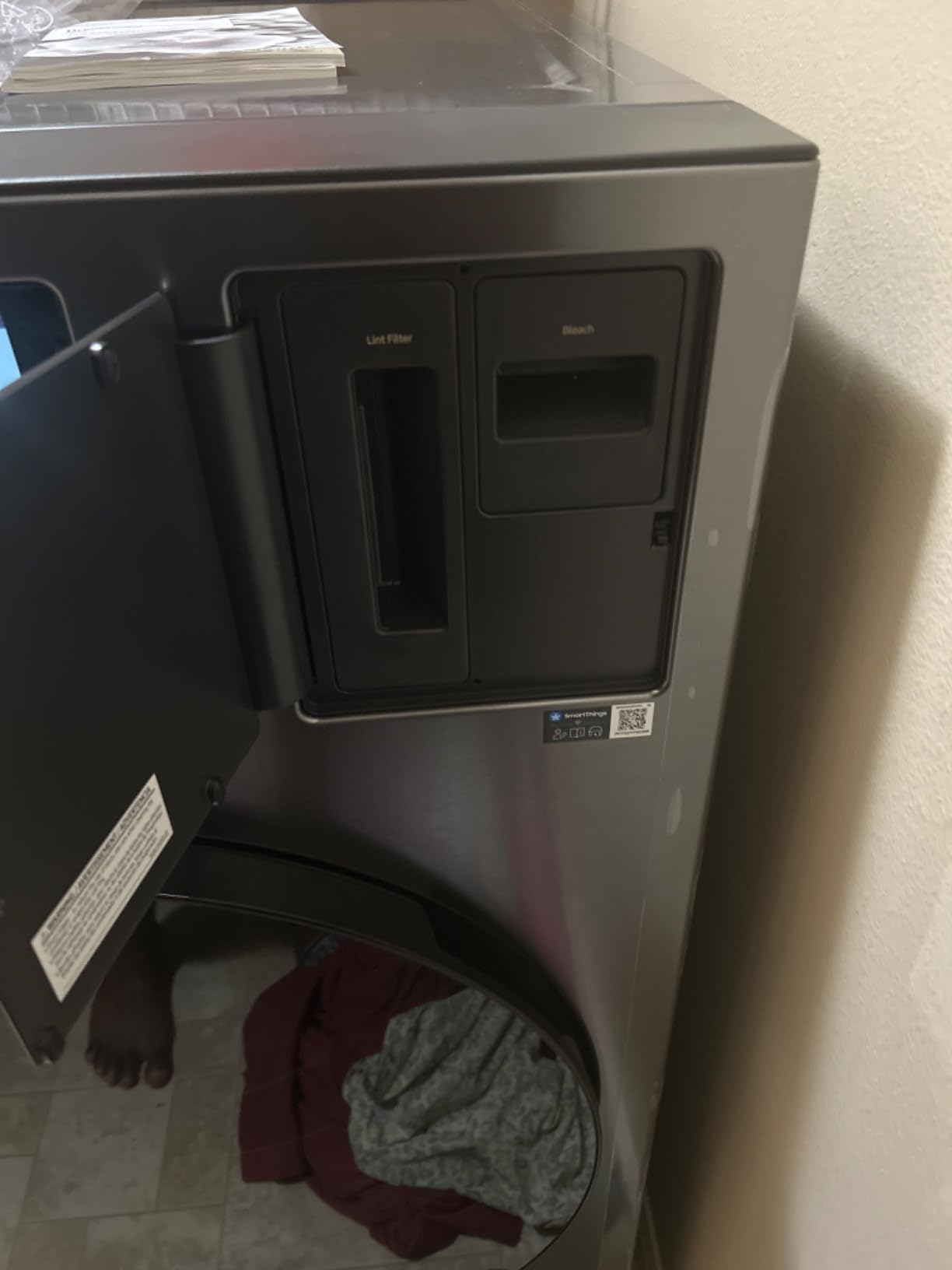
From an ownership perspective, the standard 120V connection is a major practical advantage. The trade-off is weight: at 317 pounds, installation and leveling need planning, and the unit is not an easy DIY move.
Customer feedback in the product file praises the convenience, capacity, installation, and smart functions. It also flags long cycles, heat-exchanger cleaning, and some reliability concerns after the first year, so I would not treat this as a maintenance-free appliance.
Best for a household that values capacity and automation
This is the strongest pick for a couple or small family that wants one machine and has room for a 27-inch-wide unit. It is less attractive for someone who needs rapid turnaround or wants to isolate washing from drying.
Best avoided when repair risk is unacceptable
The one-year parts-and-labor warranty is shorter than the kind of protection I would want for a large appliance with many electronic functions. A separate dryer and washer can be easier to service independently, even if they take more floor space.
2. Equator 24-Inch Convertible Combo — Best Compact Combo for Tight Spaces
Equator 24″ 110V Convertible Compact Combo Washer Dryer, Silver
1.62 cu. ft.
110V
15 wash and dry programs
Pros
- Compact footprint
- Convertible vented or ventless
- 1400 RPM spin
- PET cycle
Cons
- Small load capacity
- Condensation moisture collection
- Some early reliability reports
The Equator EZ 4600 is built around a 24-inch footprint, making it a practical option for an apartment, studio, RV, or tiny home. It gives you a choice between vented and condensing drying, so you can use a duct when available and retain flexibility when a duct is not.
The 1400 RPM spin speed is useful because the washer removes more water before drying. Fifteen wash-and-dry programs, including Heavy, ECO, Quick 20, Baby, Delicate, Wool, and a PET cycle, make it more versatile than a simple RV machine.
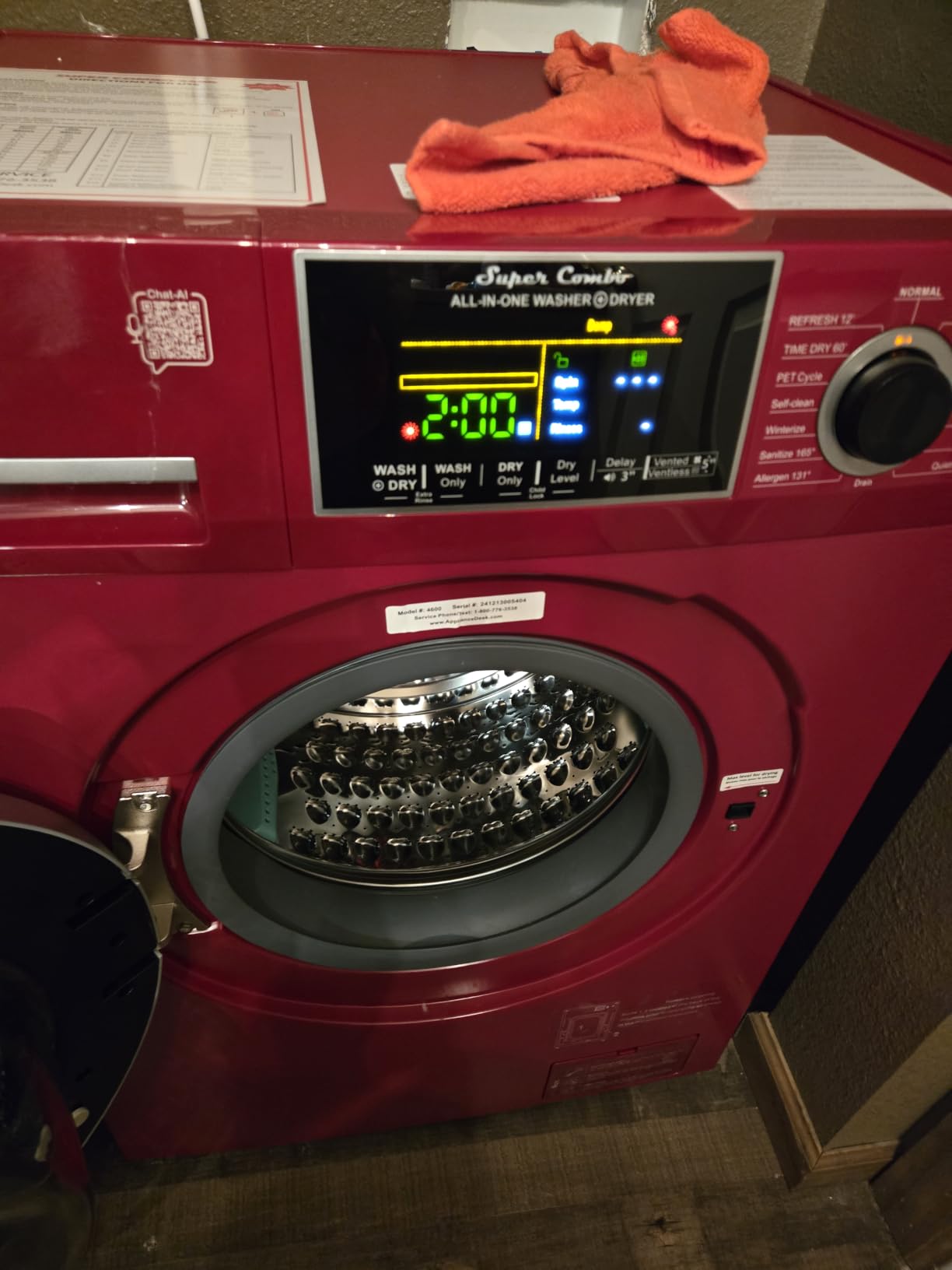
The main limitation is capacity. The supplied data identifies a 1.62 cu. ft. drum and a 15-pound wash rating, and the product guidance says oversized items such as comforters need a larger combo. A queen sheet set is also not a comfortable fit for this class of machine.
Customer summaries praise its washing performance, pet-hair cycle, compact size, and standard-voltage operation. They also report vibration during spinning, inaccurate dry-time estimates, and isolated reports of a unit stopping shortly after purchase.
Best for an RV, studio, or one-person household
I would choose this when every inch matters and laundry loads can stay small. The convertible design is a useful hedge against a future move to a space with a vent.
Best avoided for towels and family-size laundry
If you routinely dry bedding, thick towels, or multiple loads in a day, the 1.62 cu. ft. drum will feel restrictive. Plan around two or more small loads rather than forcing one large load through the cycle.
3. Electrolux ELFE4222AW — Best Compact Standalone Heat-Pump Dryer
Electrolux 24 in. 4.0 cu. ft. Compact Stackable Electric Ventless Dryer in White with Instant Refresh ELFE4222AW
4.0 cu. ft.
12 cycles
Reversible door
Pros
- Compact 4.0 cu. ft. capacity
- ENERGY STAR certified
- Stackable design
- Instant Refresh
Cons
- Only two reviews
- Heating effect in room
- One-year warranty
The Electrolux ELFE4222AW is a standalone 24-inch dryer with a surprisingly roomy 4.0 cu. ft. drum. Unlike a washer-dryer combo, it dedicates its drum to drying, which is a simpler arrangement for someone who already owns a washing machine.
It offers 12 cycles, three temperature settings, a reversible door, and Instant Refresh. The compact width and stackable form factor make it a good candidate for a closet or narrow laundry alcove, while the stainless-steel drum supports everyday fabric care.
The supplied review summary reports effective drying and warns that the machine releases heat into the room. That heat can make a warm room uncomfortable, and the product guidance specifically advises against installation in spaces already around 75°F or higher.
The evidence base is thin: the product has a 4.0 rating from only two reviews. That makes long-term reliability impossible to assess, so I would buy it only after confirming local service coverage and the return policy.
Best for an existing washer and a small laundry room
This is the most focused standalone option in the list for someone who wants a 24-inch dryer without giving up 4.0 cu. ft. of drying space. It is especially sensible when the room can tolerate some heat and the ventless design is necessary.
Best avoided in a hot room or with a low service budget
A hot, poorly ventilated room is a poor match for a dryer that acts like a space heater. I would also hesitate to rely on a one-year warranty for a machine with only two documented customer reviews.
4. LG DLHC1455W — Best Smart 4.2-Cubic-Foot Compact Dryer
LG DLHC1455W 24 in. W 4.2 Cu. Ft. Ventless Stackable Compact Smart Electric Dryer in White with Dual Inverter HeatPump Technology
4.2 cu. ft.
Dual Inverter HeatPump
ThinQ Wi-Fi
Pros
- Good compact capacity
- Humidity sensing
- 14 programs
- Remote monitoring
Cons
- Early failure reports
- Reported shrinkage
- One-year warranty
LG’s DLHC1455W combines a 4.2 cu. ft. drum with Dual Inverter HeatPump technology and a 24-inch width. Sensor Dry, 14 programs, a reversible door, and ThinQ remote controls give it a strong feature set for a small laundry area.
At 127.9 pounds, it is much lighter than a full-size combo and easier to position than many all-in-one machines. I also appreciate the moisture sensor, because a sensor-based cycle can stop when the load reaches the selected dryness instead of running on a fixed timer.
The customer evidence is the warning. The supplied summary reports premature failures under two years, severe shrinkage complaints, warranty-service problems, and one-star ratings in the review distribution. Six reviews are not enough to estimate a brand failure rate, but the pattern is too serious to ignore.
Best for a connected laundry setup with strong ventilation
Choose this only if ThinQ controls and the compact 4.2 cu. ft. capacity solve a specific space problem. I would verify the installation dimensions, especially the 51-inch door-clearance figure, before ordering.
Best avoided if reliability is your first priority
The feature list cannot compensate for reports of early breakdowns and denied warranty claims. I would favor a model with a stronger ownership record unless LG addresses the service history or you receive a substantially better protection plan.
5. Midea 2.7-Cubic-Foot Washer Dryer Combo — Best Budget Combo with 120V Power
Midea Washer Dryer Combo 2.7 Cu.ft 24″ All-in-One Front Load 1400 RPM White
2.7 cu. ft.
120V
14 wash programs
Pros
- Low entry cost
- Standard 120V outlet
- Steam care
- Air Fluff
Cons
- Six-hour wash and dry
- Only two drying options
- Water use and vibration
The Midea MLC27N3AWW is the most budget-conscious combo in the product set and has the largest customer-review sample. Its 2.7 cu. ft. drum, 14 washing programs, 1400 RPM spin speed, steam care, reload function, and eight-hour Air Fluff give it useful features for a one- or two-person home.
The standard 120V connection and ventless design make installation less complicated than a dedicated 240V heat-pump dryer. The product data lists 90 kWh annual energy consumption, although the drying cycle may use more water than the wash cycle and should be planned around your home’s drainage setup.
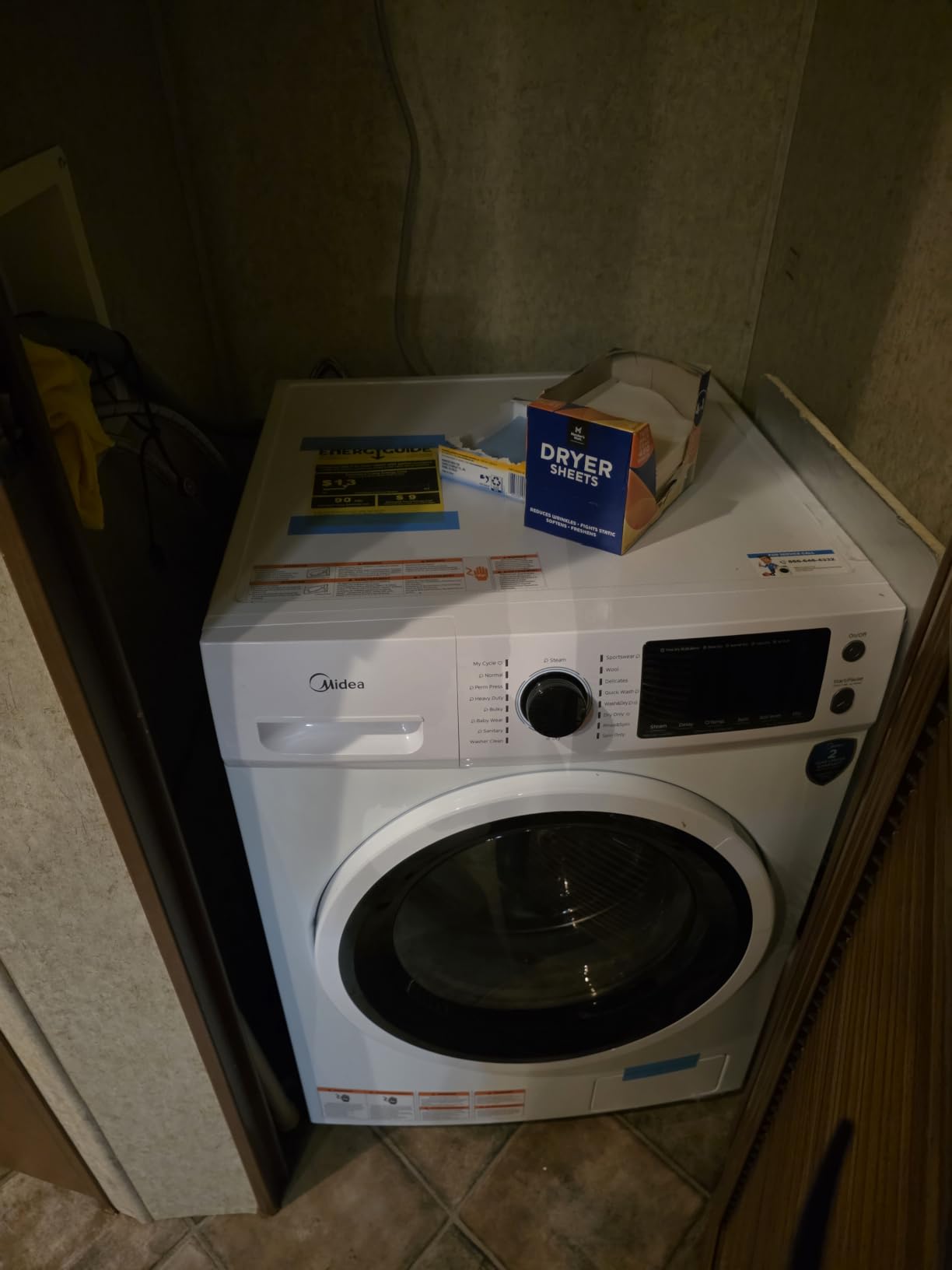
The central compromise is time. The supplied instructions list a four-hour dryer program and a six-hour combined wash-and-dry program, while user summaries mention cycles longer than six hours for some loads. This is a machine for planning ahead, not for finishing a towel load between dinner and bedtime.
Reviewers value the compact footprint, simple outlet requirement, steam care, and overnight cycle. Negative reports include vibration, wet clothing if a cycle is interrupted, documentation problems, and support concerns, so I would read the manual and level the machine carefully.
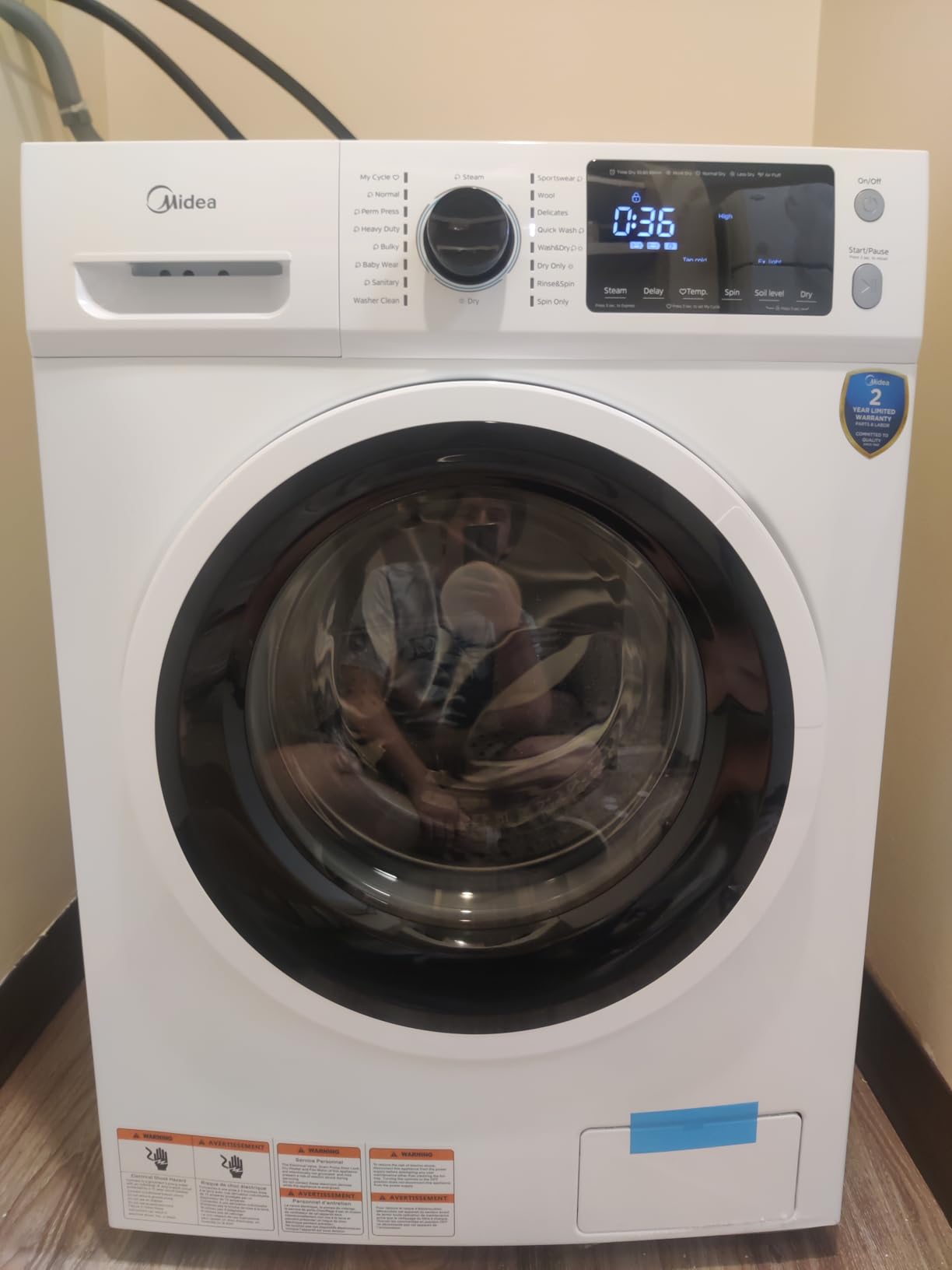
Best for renters and small households
This is a sensible entry point when a standard outlet and no duct are more important than speed. I would recommend it to someone who can start laundry in the evening and accept that drying occupies the drum for hours.
Best avoided for large families or frequent turnaround
The 2.7 cu. ft. capacity and 186-review summary make the constraints clear: it is not a substitute for a full-size separate dryer. Heavy towels, comforters, and repeated daily loads are poor matches.
6. Kenmore 4.0-Cubic-Foot Condensing Dryer — Best Sensor-Drying Compact Standalone
Kenmore 4.0 cu. ft. Ventless Condensing Electric Dryer – White
4.0 cu. ft.
240V
Smart moisture sensing
Pros
- ENERGY STAR certified
- 15 cycles
- Express Dry
- Wrinkle Guard
Cons
- 240V circuit required
- Tank emptying
- Heavy loads may need two cycles
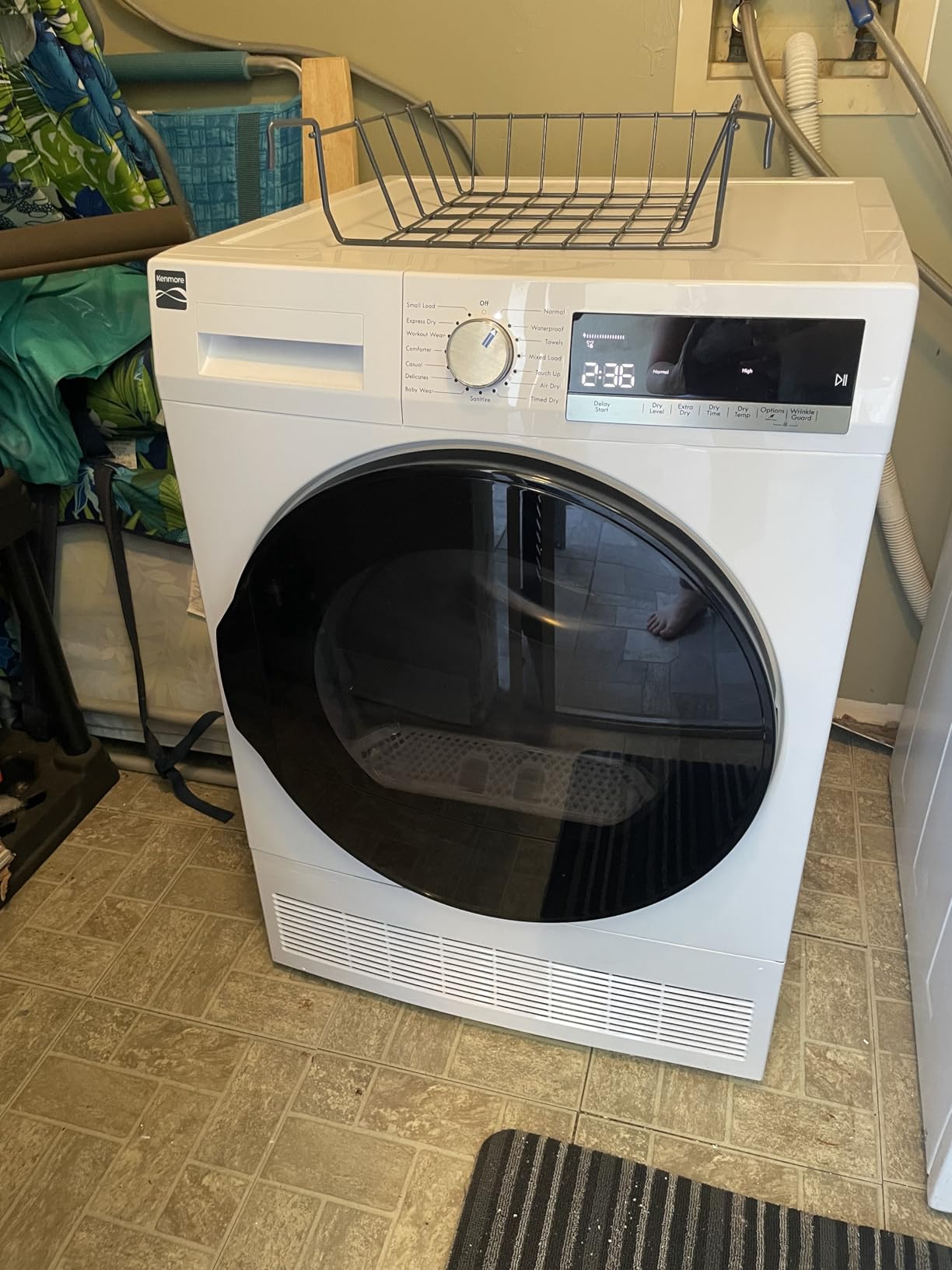
The Kenmore 4.0 cu. ft. dryer is a compact front-load model with no vent requirement. It has 15 cycles, three temperature options, smart moisture sensing, Wrinkle Guard, and an Express Dry cycle described as handling up to three shirts in 12 minutes.
Its 4.0 cu. ft. capacity is useful for a separate dryer, and the reversing door can make a narrow room easier to arrange. I would use the sensor setting for mixed loads, since the sensor can adjust time to the moisture it detects rather than simply running for a fixed interval.
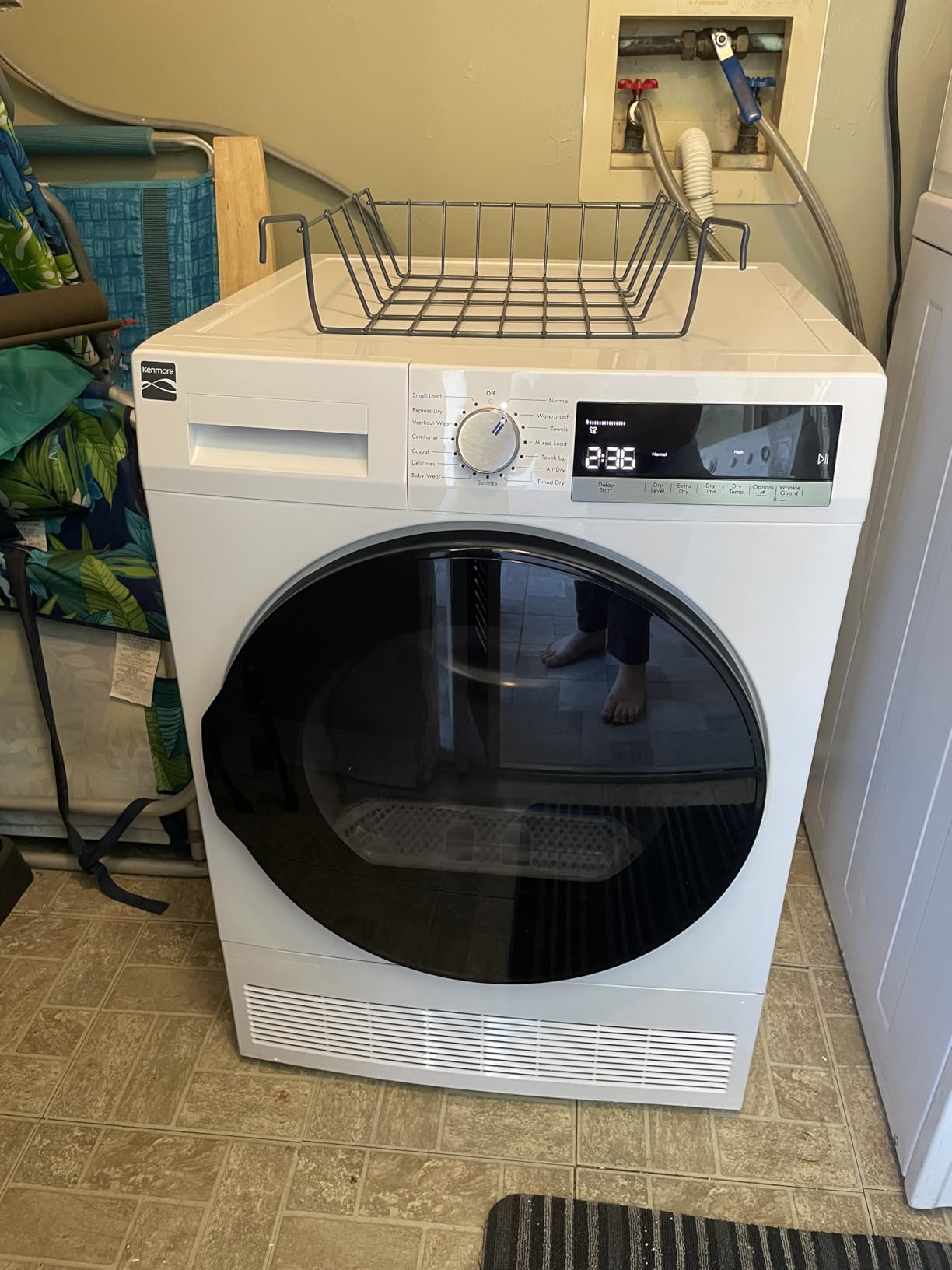
The 240V requirement separates it from the 110V and 120V combos. A tank that needs emptying after each load and a lint filter that needs attention after every use add routine work, while heavy items may need a second cycle.
The supplied review summary includes positive reports about compact design, energy efficiency, and installation flexibility. It also notes overheating reports and mixed reliability, which is why I would check the model’s service history and keep the installation area clear of heat-sensitive materials.
Best for an existing 240V laundry circuit
This is a good candidate if you already have a suitable 240V connection and want a separate, compact dryer. The Express Dry setting is useful for a few shirts, but I would not infer that it can dry a bulky comforter quickly.
Best avoided if you want no hands-on moisture management
Unlike a model connected to a permanent drain, this dryer depends on regular tank emptying and filter cleaning. I would choose a direct-drain or self-cleaning design if that maintenance is likely to be forgotten.
7. CONTOURE DE-1350W — Best 120V Stackable Dryer for an RV
CONTOURE 24 in Stackable Electric Dryer, 13.2 lb Capacity, 120V, White
13.2 lb capacity
120V
4 drying cycles
Pros
- Standard 120V power
- Stainless steel drum
- Stackable design
- Quiet reported operation
Cons
- Only two reviews
- Small loads
- Support hold times
The CONTOURE DE-1350W is aimed at RVs, boats, and other compact living spaces. It runs on 120V, weighs 76.5 pounds, and has a 13.2-pound capacity, four drying cycles, three temperature settings, digital controls, and a reversible door.
Its matching washer is the WH-2700T, and the stackable design helps when you need two machines without a full laundry room. The supplied review summary describes quieter-than-expected operation and good performance for small loads, which fits the intended use case.
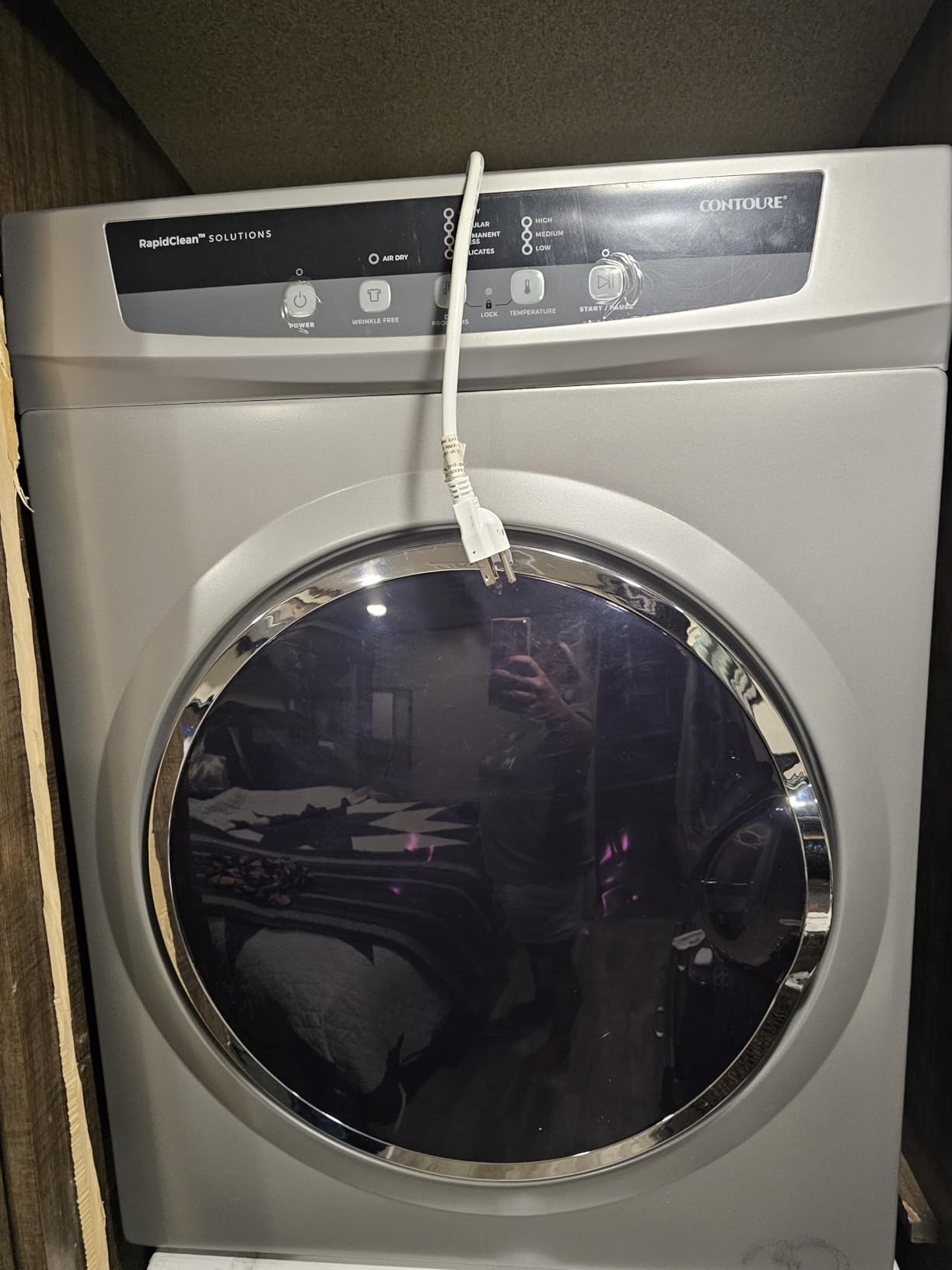
There is almost no long-term evidence here: the product has two reviews and a 3.7 rating. One summarized experience reports long customer-support hold times, so I would confirm parts availability and response expectations before relying on it for regular household use.
This is not the dryer I would choose for towels or bedding. Its value is in a small footprint, standard voltage, and straightforward controls; larger loads are more likely to need extra time or a second cycle.
Best for RV installation and light laundry
It makes sense when a 120V circuit and compact dimensions are non-negotiable. I would pair it with the matching washer only after confirming the complete stack dimensions and ventilation requirements.
Best avoided for primary household laundry
The 13.2-pound capacity, four cycles, and limited reviews make it a niche choice. I would choose a full-size compact dryer for frequent family laundry.
8. Conserv 24-Inch Compact Combo — Best Convertible Combo for Quilts and RV Storage
Conserv 24″ Compact Combo Washer Dryer, Merlot
1.6 cu. ft.
110V
Vented or ventless
Pros
- 110V operation
- 1400 RPM spin
- Winterize cycle
- Quiet under 60 dB
Cons
- Two-to-four-hour drying
- May leave damp clothes
- Two-year warranty but reliability concerns
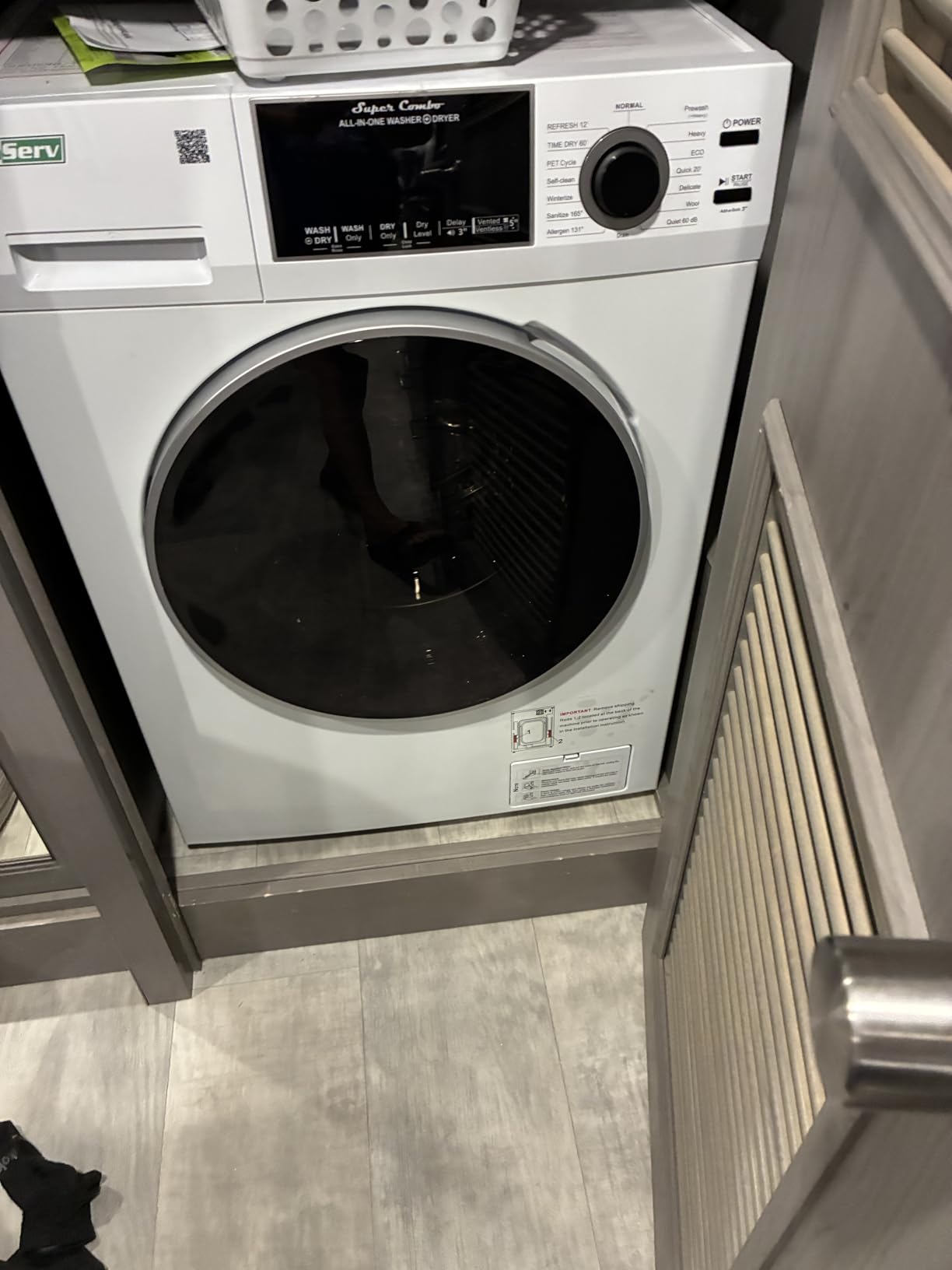
The Conserv 4600 is a small combo with a 1.6 cu. ft. drum, 13-pound capacity, 1400 RPM spin speed, and both vented and ventless drying. It runs on 110V, includes a two-minute winterize cycle for seasonal RV use, and has a Quiet program listed below 60 dB.
Its 8 wash cycles, PET-oriented Equator-style feature set, Sensor Dry, Time Dry, and Refresh Dry give you more control than a basic RV washer-dryer. The reversible door and zero-clearance approach are helpful when the unit sits close to a wall or cabinet.
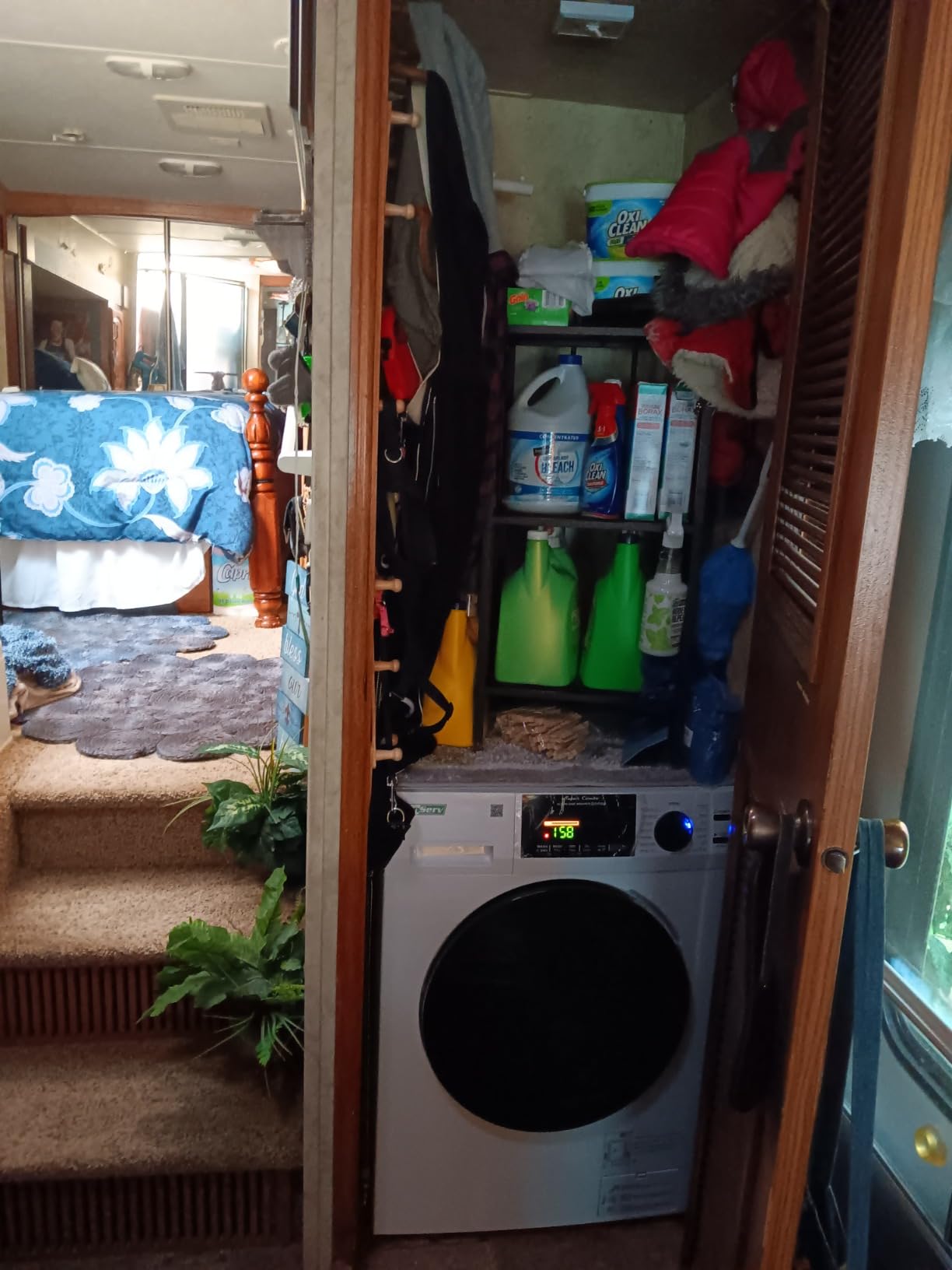
The supplied summary praises the convertible design, quiet operation, customer service, and ability to handle queen- and king-size quilts. It also reports two-to-four-hour drying times, damp clothing in ventless mode, careful load sizing, and some reliability concerns.
That combination tells me the machine can work when you understand its limits, but it is not a set-and-forget solution. I would test a quilt or heavy load on a washable day and keep a backup plan for items that remain slightly damp.
Best for a quiet, flexible RV or small-home setup
The 110V connection and winterize cycle are strong reasons to consider it for seasonal use. Its quiet cycle and convertible drying also help when the laundry area shares living space.
Best avoided for urgent drying
If you need a quick turn between loads, the two-to-four-hour drying window will be frustrating. I would plan a full laundry block rather than starting a load immediately before leaving home.
9. Midea 4.4-Cubic-Foot Heat Pump Dryer — Best Large-Capacity Energy-Focused Standalone
Midea Heat Pump Ventless Front Load Dryer Stackable 4.4 Cu.ft White
4.4 cu. ft.
240V
Heat pump technology
Pros
- Large compact capacity
- ENERGY STAR certified
- Humidity sensor
- Wrinkle Care
Cons
- Reported reliability and support issues
- Power cord not included
- One-year warranty
Midea’s MLE25H7BWW is a 24-inch, 4.4 cu. ft. ventless heat-pump dryer. It uses humidity sensing, low-temperature drying, and 90 minutes of intermittent Wrinkle Care tumbling, while the ENERGY STAR qualification and 28% energy-use reduction claim target efficiency-focused buyers.
Capacity is a strength: at 4.4 cu. ft., it is among the roomiest compact standalone dryers in this comparison. It is stackable with a Midea washer and does not require ventilation, which makes it attractive for a dedicated closet installation.
The drawbacks are practical rather than cosmetic. It requires 240V, does not include a power cord, and the supplied summary reports E50 and E33 error codes, units that do not work out of the box, slow repairs, and weak support experiences.
Best for buyers who prioritize low-temperature drying
Choose this if 4.4 cu. ft. capacity, heat-pump efficiency, and fabric gentleness are the priorities. Confirm that your electrical circuit and installer can supply the correct connection before purchase.
Best avoided unless service support is confirmed
One review summary is not enough to predict a failure rate, but the number of reported service problems deserves weight. I would only buy this after confirming local Midea support, warranty handling, and access to replacement parts.
10. Equator EZ 4700 C — Best Zero-Clearance Built-In Combo
Equator All-in-one Washer Dryer Ventless FULLY BUILTIN 0-CLEARANCE 1.62cf/15lbs 110V 1400RPM
1.62 cu. ft.
110V
15 wash and dry programs
Pros
- Zero-clearance door
- 110V operation
- 1400 RPM spin
- PET cycle
Cons
- Damp-load reports
- Three-hour-plus cycles
- Small capacity
- Reliability concerns
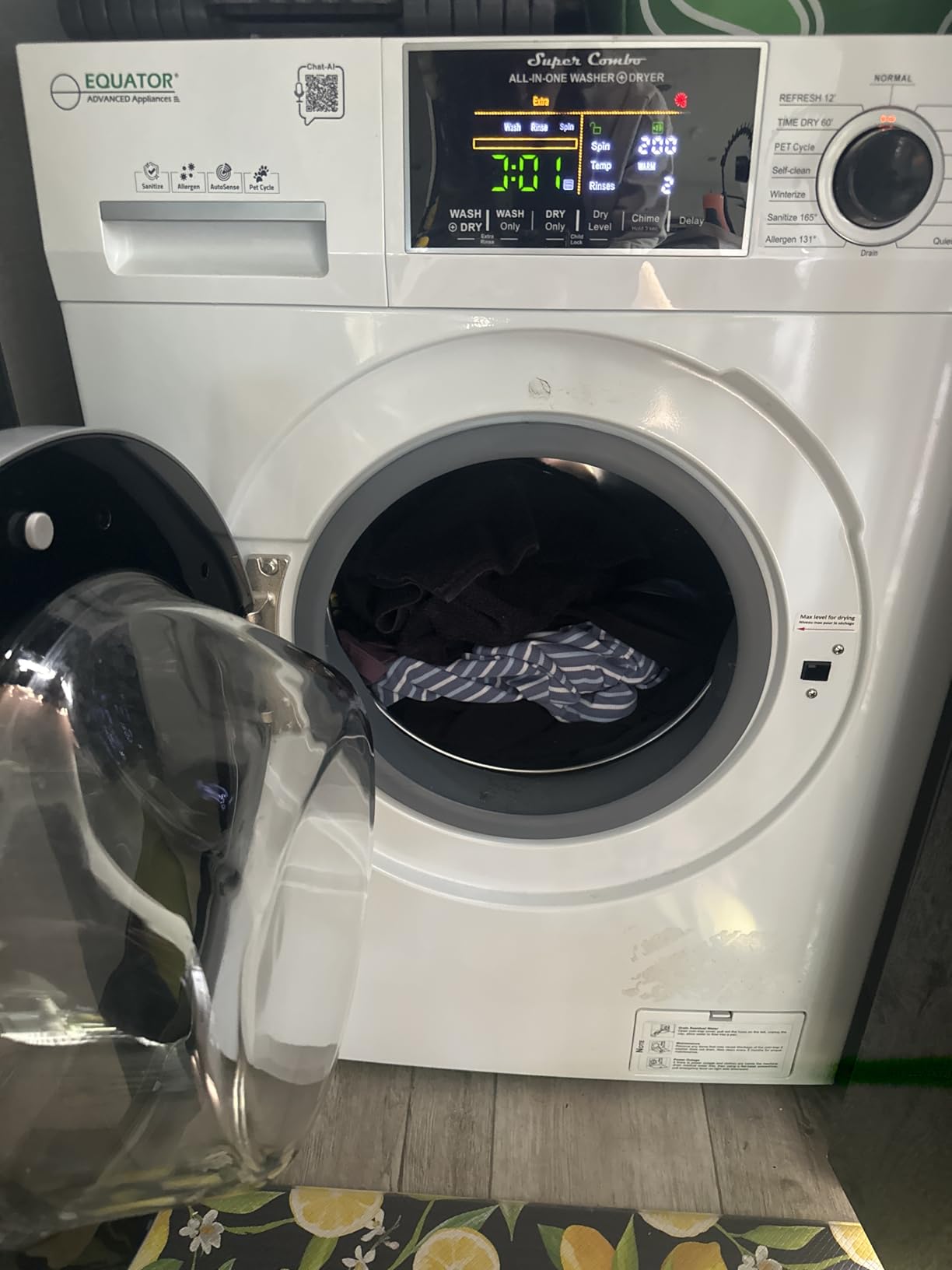
The Equator EZ 4700 C is a fully built-in 1.62 cu. ft. washer-dryer combo for a space where the door must open against a wall. It runs on 110V, uses a stainless-steel drum, spins at 1400 RPM, and offers 15 wash-and-dry programs plus Time Dry, Refresh, and Self Clean.
The 45-degree angled door handle, LED touch controls, PET cycle, and quiet operation around 60 dB make it feel designed for small homes rather than adapted from a full-size machine. It also has a 15-pound wash rating, which helps set realistic expectations for load size.
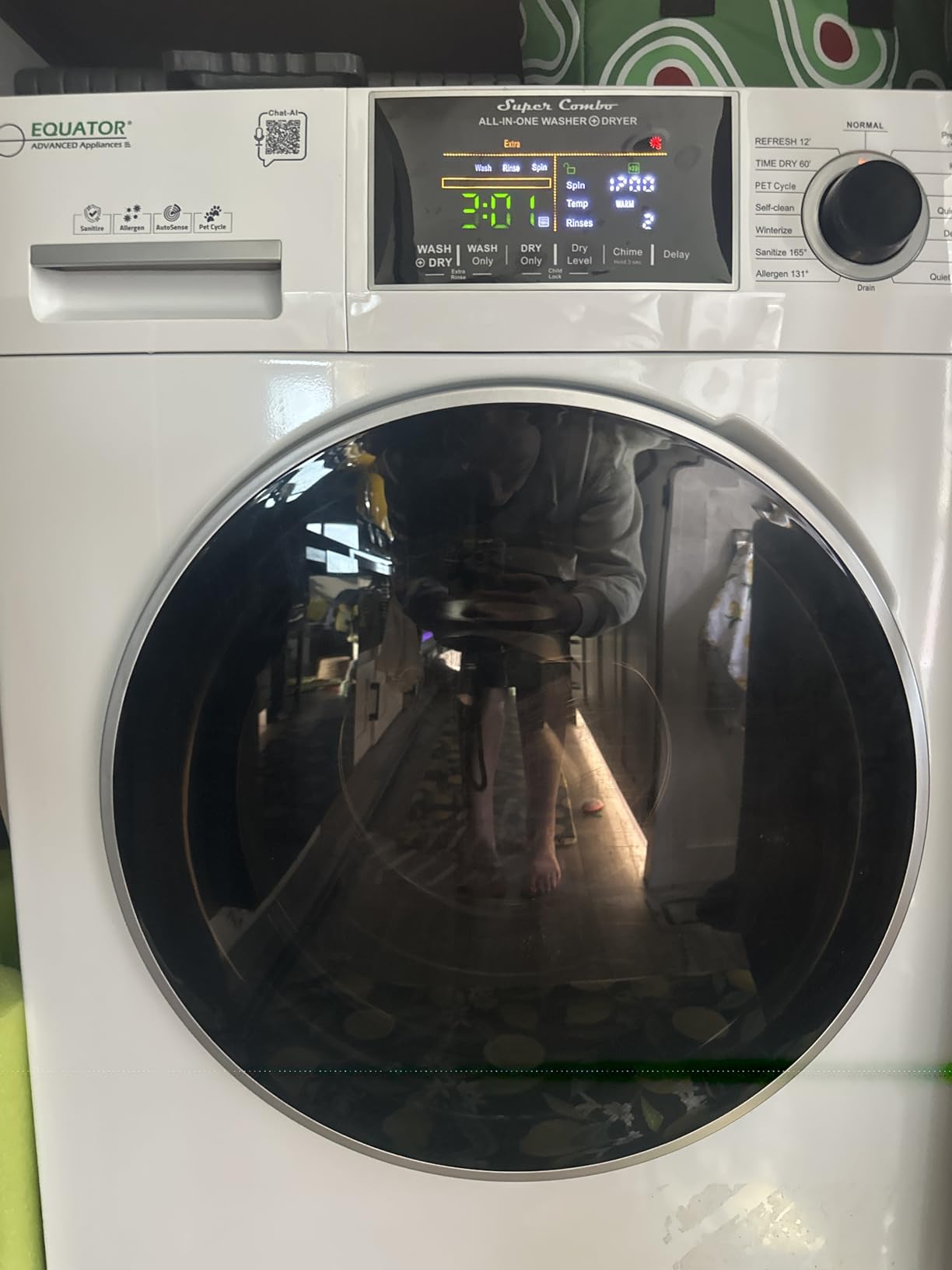
The supplied review summary is candid about the weak point: many customers report clothes remaining damp after a completed cycle, and wash-and-dry cycles can run for more than three hours. Reliability problems, poor warranty service, and a stated warning against towels and heavy items are meaningful limitations.
I would use this for light clothing, pet bedding in small quantities, and loads where you can check dryness before moving on. I would not use it as the only laundry solution for a family that depends on fast, repeated drying.
Best for a built-in niche and light loads
Its zero-clearance design is genuinely useful when a conventional front-load door would hit a wall. The 110V requirement also makes it more approachable for apartments, RVs, and accessory-dwelling units.
Best avoided for heavy fabrics
Customer reports of damp towels and long cycles make heavy fabrics the wrong first test. Start with shirts, underwear, and other light items, and check the load at the end of the cycle.
How Do Ventless Dryers Work?
A ventless dryer removes moisture without sending hot, humid air through an exterior vent. It circulates air through the drum, cools the air so water condenses, and either collects that water in a reservoir or routes it to a drain.
Heat-pump dryers reuse warm air
A heat-pump system compresses and reheats refrigerant, then recirculates the warmed air through the clothes. This generally uses less energy and dries at lower temperatures, which is why heat-pump dryers are often the best choice for efficiency and fabric care.
Condensation dryers use a separate cooling path
A condensation dryer heats the drum air and passes it over a cooler heat exchanger. The condensed water drains or collects in a tank, while the dryer may release more heat into the room; the Electrolux and Kenmore summaries specifically call out this room-heating effect.
Washer-dryer combos add a second job
A combo washes and dries the same load in one drum, so it needs extra time and a carefully sized load. A standalone dryer is generally easier to troubleshoot and keeps the washing and drying functions separate.
What to Check Before Choosing a Ventless Dryer
Start with the installation, not the feature list. A dryer that fits your room but needs an unavailable 240V circuit, drain, or clear airflow path will not be a good purchase.
- Capacity and load type: A 1.6 to 2.7 cu. ft. combo suits light or small-household laundry; a 4.0 to 4.4 cu. ft. standalone dryer gives bulky items more room. Verify whether sheets, quilts, and comforters are realistic before relying on the stated capacity.
- Voltage: Samsung, Midea, Equator, Conserv, and CONTOURE use 110V or 120V power. Electrolux, Kenmore, LG, and the larger Midea heat-pump model require 240V; confirm the outlet and circuit with a qualified installer.
- Moisture handling: Choose a model with a tank or direct-drain option that matches your routine. A full-size household may find a tank more convenient if it is emptied after every load, while a direct drain can reduce handling but requires installation planning.
- Room temperature: Ventless dryers release heat into the room. A warm closet or a room already near 75°F can become uncomfortable, so measure airflow, ventilation, and door clearance before ordering.
- Stackability and service access: Confirm the full height, depth, door swing, and service-clearance requirements. A stackable label does not mean every washer and dryer can be paired; use the manufacturer-approved combination.
Forum users consistently say that a ventless dryer is most satisfying when venting is impossible or energy efficiency matters more than speed. Long-term owners also tend to emphasize regular maintenance, which brings us to the part most buyers underestimate.
Ventless Dryer Maintenance and Troubleshooting
Plan to clean the lint screen after each use and follow the manual’s schedule for the filter, heat exchanger, and condenser. A clogged air path makes drying slower, can leave clothes damp, and may force the machine to run longer.
Empty and inspect the water system
If the dryer uses a reservoir, empty it at the frequency stated in the manual and check that the tank and drain path are seated correctly. A tank warning, damp load, or early cycle stop can be caused by an improperly positioned reservoir or a blocked filter rather than a failed heat pump.
Reduce room heat and improve airflow
Keep the room ventilated, leave the required clearance around the machine, and avoid closing a poorly ventilated closet door during a cycle. If a small room becomes very warm, lower the load size, use a lower-temperature cycle, or move the appliance to a better-ventilated location.
Handle repeated error codes as a service signal
Document the code, cycle type, load size, and whether the issue follows cleaning or a power interruption. Do not repeatedly reset a machine that shows E50, E33, overheating, or repeated shutdowns; contact service and stop using the appliance if there is burning odor, smoke, or a hot electrical smell.
Customer summaries for the Midea and LG models specifically mention error codes and warranty difficulties. That is a reminder to check local service availability before choosing a machine with specialized electronics, especially if you are not near a major service market.
Frequently Asked Questions
Who makes the best ventless dryer?
The strongest choices in this comparison are Samsung for a large all-in-one, Electrolux for a compact standalone dryer, and Midea for a budget-focused model. Miele and Bosch are often discussed by experienced owners for build quality and quiet heat-pump operation, but they are not included in the analyzed product set.
What is the downside of a ventless dryer?
The main downsides are longer drying cycles, smaller capacity on some models, regular lint and heat-exchanger cleaning, and room heat. A tank or drain is still required, and a failed electronic or condensing system can be costly to repair.
Which ventless dryer did Consumer Reports recommend as the best?
The supplied research identifies Consumer Reports as a cited source for clothes-dryer buying guidance but does not provide a specific Consumer Reports model recommendation. Use the current CR dryer ratings and reliability information alongside this product comparison, because recommendations can change as models and test results are updated.
Is it worth getting a ventless dryer?
Yes, when external venting is impossible and you value flexible placement, lower-temperature drying, or energy efficiency. It is less compelling if you need the fastest cycles, routinely dry bulky items, cannot maintain a tank or filters, or want the simplest long-term service setup.
Final Verdict: Which Ventless Dryer Should You Buy?
For the best overall balance, the Samsung Bespoke AI Laundry Combo offers the most capacity and the most ambitious automation, but its 317-pound weight and reported post-warranty concerns make installation and service planning essential. The Equator EZ 4600 is the better small-space choice when 110V operation and a compact footprint matter most.
For a separate dryer, the Electrolux ELFE4222AW is the most straightforward compact-standalone idea in this group, although its limited review history and room heat deserve caution. The Midea 4.4 cu. ft. model offers more capacity, but reliability and support reports make it a riskier choice without strong local service.
My practical advice is to match the machine to your least flexible constraint: standard 110V or 120V power, 240V availability, tank access, room ventilation, and load size. Then choose the model with the best documented ownership experience, not the one with the longest feature list.