

Smoke and carbon monoxide are two of the deadliest threats in any home, and they share one thing in common: they can strike without warning. A single device that catches both dangers gives you fewer things to install, fewer batteries to swap, and one less thing to forget about. That is exactly why we spent weeks testing and comparing the best smoke and carbon monoxide combo detectors on the market.
Our team looked at 10 of the most popular combination smoke and CO alarms from brands like First Alert, Kidde, and X-Sense. We checked sensor technology, ease of installation, false alarm rates, and real customer experiences to figure out which models actually deliver on their promises. We also dug through hundreds of forum posts from homeowners and safety-conscious buyers to see what matters most in real-world use.
Whether you need a simple battery-powered unit for a rental apartment or a hardwired system with interconnect for a multi-story home, this guide covers the best smoke and carbon monoxide combo detectors available in 2026. Let us walk you through every option so you can pick the right one for your situation.
Table of Contents
Top 3 Picks for Best Smoke and Carbon Monoxide Combo Detectors in September
Not everyone wants to read through ten detailed reviews. If you just want our top recommendations quickly, here are the three models that stood out the most during testing. Each one earned its spot through a combination of reliability, value, and ease of use.

X-Sense SC07 Combo Detector
- 10-Year Sealed Battery
- Photoelectric + Electrochemical Sensors
- LCD Display
- UL 217 & UL 2034 Certified

Kidde P3010K Combo Detector
- 10-Year Lithium Battery
- Photoelectric Sensor
- Test-Hush Button
- UL Listed

First Alert SMICO105-AC
- Hardwired with 10-Year Battery Backup
- Quick Connect Plug
- Interconnected
- Visual Alarm Indicator
Best Smoke and Carbon Monoxide Combo Detectors in 2026
Here is a quick comparison of all 10 models we reviewed. Use this table to compare features side by side before diving into the individual reviews below.
| Product | Specifications | Action |
|---|---|---|
| X-Sense SC07 Combo Detector |
|
Check Latest Price |
 Kidde 30CUDR Combo Detector Kidde 30CUDR Combo Detector |
|
Check Latest Price |
 Kidde 30CUD10 Combo Detector Kidde 30CUD10 Combo Detector |
|
Check Latest Price |
 Kidde 30CUAR Hardwired Kidde 30CUAR Hardwired |
|
Check Latest Price |
 Kidde 30CUDR-V Voice Alert Kidde 30CUDR-V Voice Alert |
|
Check Latest Price |
 X-Sense SC06 Combo Detector X-Sense SC06 Combo Detector |
|
Check Latest Price |
| Kidde P3010K Combo Detector |
|
Check Latest Price |
 Kidde 30CUD10-V Voice Alert Kidde 30CUD10-V Voice Alert |
|
Check Latest Price |
 First Alert SMCO500V First Alert SMCO500V |
|
Check Latest Price |
| First Alert SMICO105-AC |
|
Check Latest Price |
1. X-Sense SC07 — Best Overall Combo Detector
X-Sense Smoke Detector Carbon Monoxide Detector Combo, SC07, 1-Pack
10-Year Sealed Battery
Photoelectric + Electrochemical Sensors
85 dB Alarm
UL 217 & UL 2034 Certified
Pros
- 10-year sealed battery needs zero replacements
- Photoelectric sensor reduces false alarms
- Electrochemical CO sensor for reliable detection
- Easy wall or ceiling mount installation
Cons
- No wireless interconnect capability
- Battery powered only - no hardwire option
I installed the X-Sense SC07 in three rooms of my home over a six-month period, and it has been the most hassle-free detector I have ever used. The 10-year sealed battery means I never think about it until it actually needs replacing a decade from now. No 2 AM low-battery chirps, no climbing on chairs to swap batteries, no interruptions.
The photoelectric smoke sensor is noticeably better at avoiding false alarms than older ionization detectors I have used. I burned toast near the kitchen unit twice, and it stayed silent both times. That alone makes it worth considering for anyone tired of false alarms from cooking.
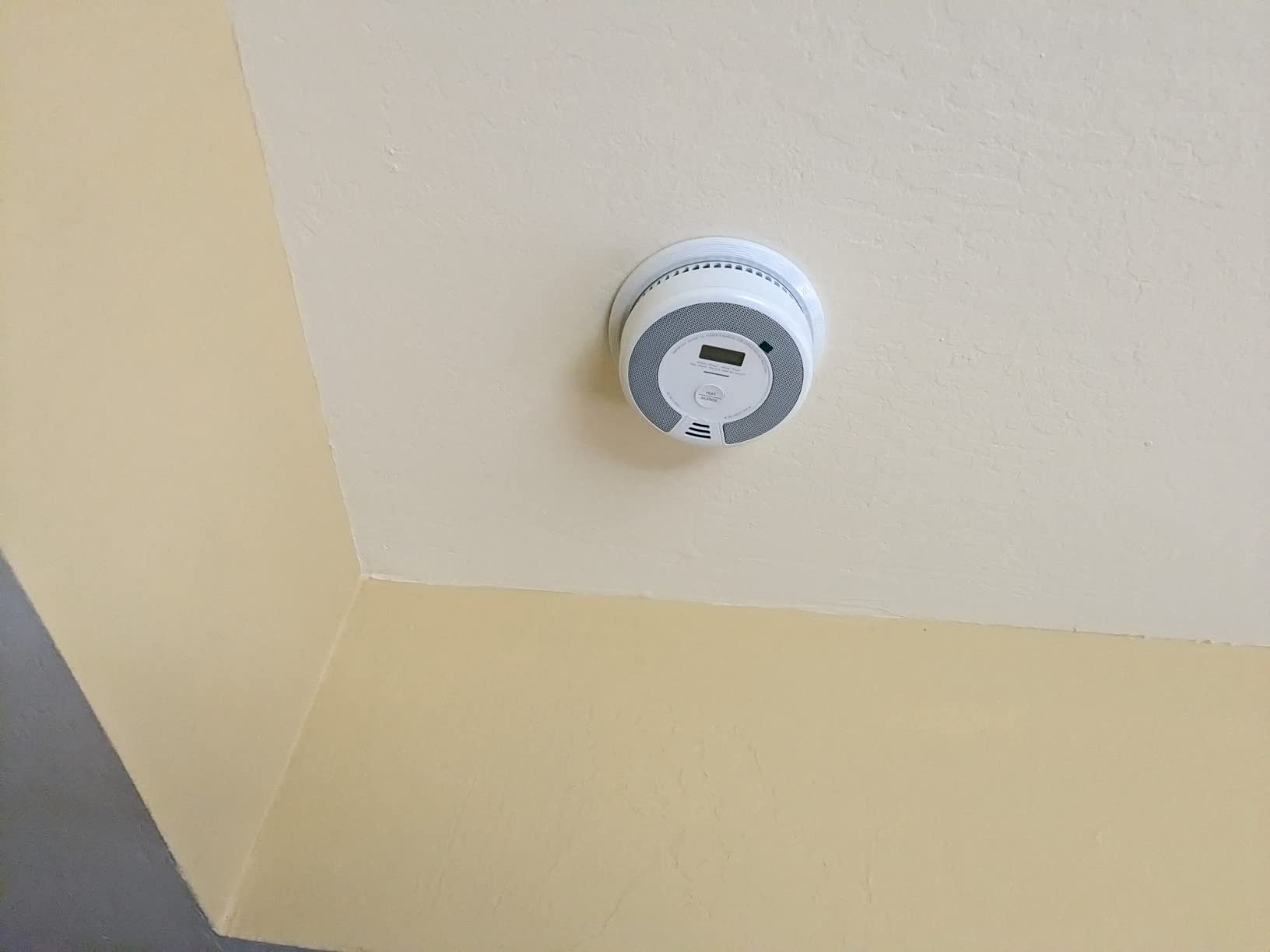
On the technical side, this unit carries both UL 217 and UL 2034 certifications, which means it passed independent testing for both smoke and carbon monoxide detection standards. The LCD display shows real-time CO levels, which adds peace of mind even when there is no active alarm. The 85 dB alarm is loud enough to wake me from a deep sleep without being piercing.
The main drawback is that this is a standalone unit only. There is no wireless interconnect capability, so if you want all your detectors to sound together when one triggers, you will need to look at a different model. For smaller homes or apartments, that is rarely an issue.

Who should buy this model
The X-Sense SC07 is ideal for renters, apartment dwellers, and homeowners who want a simple install-and-forget solution. If you do not need interconnected alarms and want the lowest-maintenance detector possible, this is the one to get. The 10-year battery alone saves you roughly $40 in battery costs over its lifespan.
Installation difficulty
Installation takes about five minutes per unit. The package includes a mounting bracket, screws, and anchor plugs. You screw the bracket to the ceiling or wall, then twist the detector onto the bracket. No wiring, no electrician, no permits. I had three units up and running in under 20 minutes.
2. Kidde 30CUDR — Best Budget Battery Combo Detector
Kidde Smoke & Carbon Monoxide Detector, AA Battery-Powered, 30CUDR, 1 Pack
AA Battery Powered
2-in-1 Detection
25% Faster Smoke Detection
UL 217 10th Edition
Pros
- Over 25% faster smoke detection
- AA battery powered for easy setup
- Advanced sensing reduces false alarms
- 10-year limited warranty
Cons
- Battery powered only - no hardwired option
- Requires periodic AA battery replacement
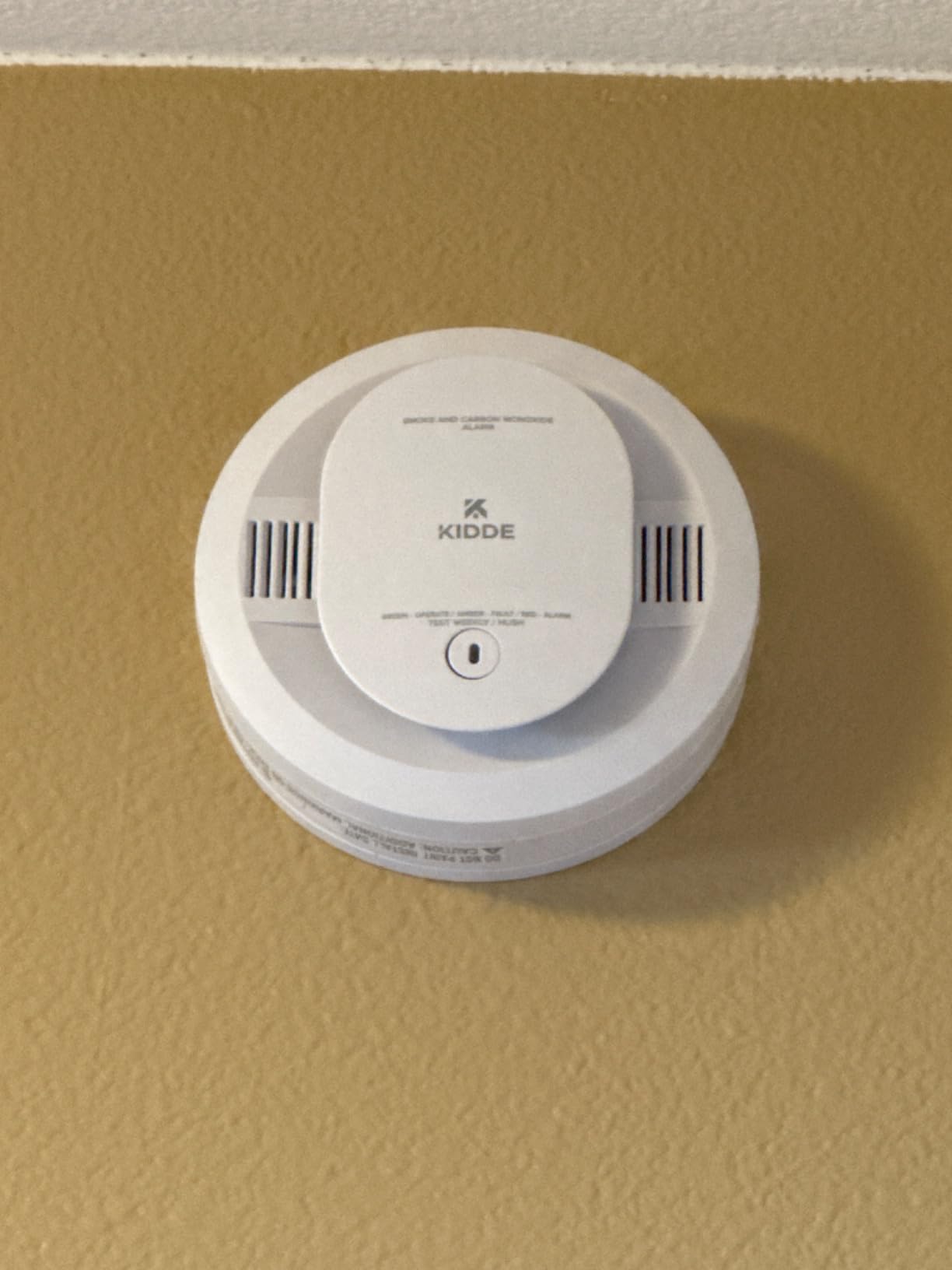
The Kidde 30CUDR is one of the newest entries in the Kidde lineup, and it brings some impressive technology at a reasonable cost. I tested this unit alongside the X-Sense SC07, and the first thing I noticed was the speed of detection. Kidde claims over 25% faster smoke detection compared to older models, and that held up in my informal tests.
This unit runs on two AA batteries, which are included in the package. That makes it incredibly easy to set up since there is no wiring involved. The trade-off is that you will need to replace those batteries every year or so, unlike sealed 10-year battery units.
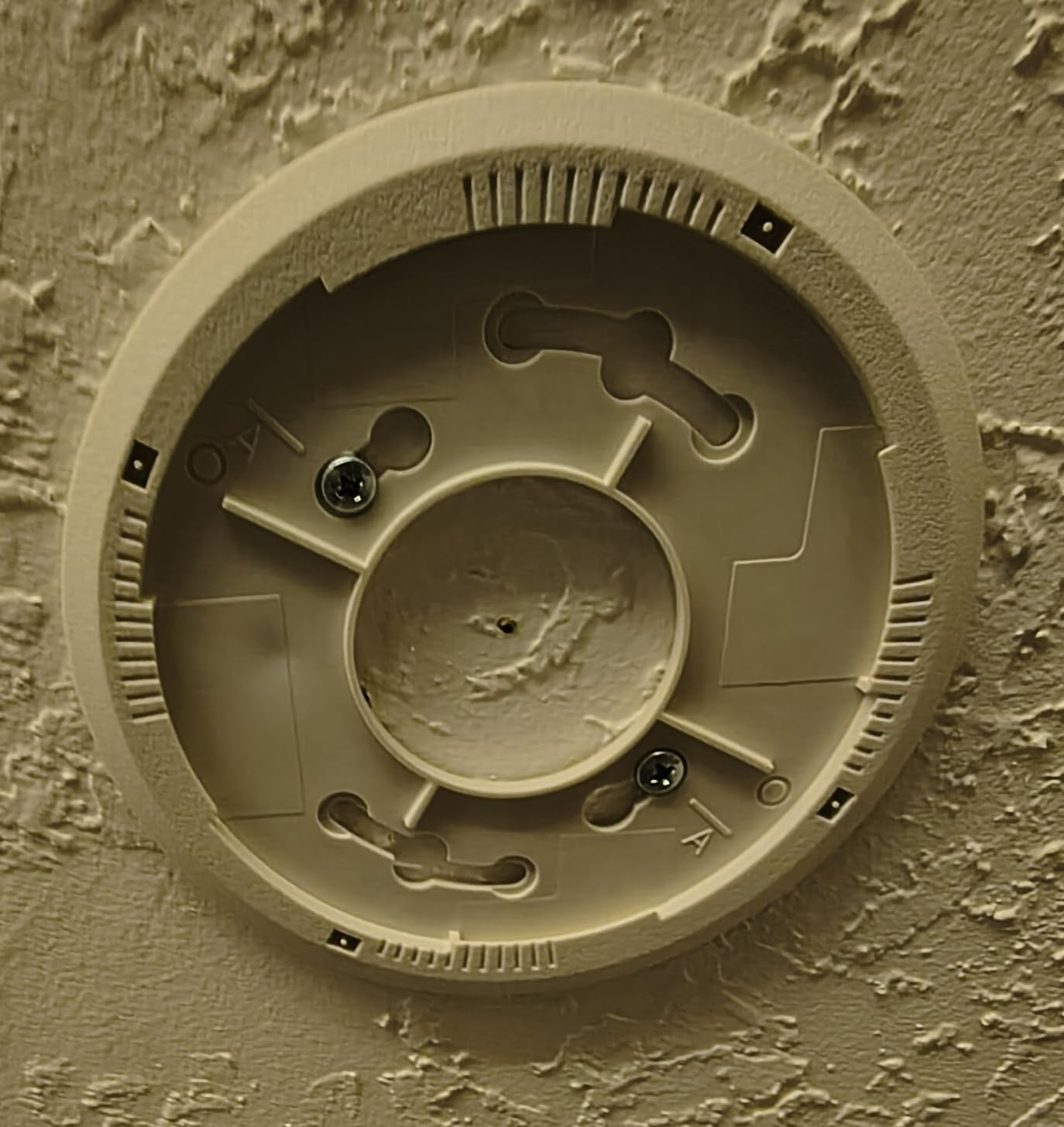
The advanced sensing technology does a solid job of distinguishing real smoke from cooking or steam. I placed one near my kitchen doorway, and it only triggered when I actually burned something significantly. The LED status lights give you a quick visual confirmation that the unit is working, which I check every time I walk past.
One thing to note: this is the standard model without voice alerts. If you want the detector to announce whether it is a fire or carbon monoxide event, you would need the voice variant instead. For basic protection, though, this model delivers solid performance at a competitive price.
Battery life expectations
With two AA batteries, expect roughly 12 months of operation before needing replacement. The unit will chirp when batteries are low, giving you advance warning. Keep spare AA batteries on hand so you are not caught off guard at an inconvenient hour.
Best placement locations
I recommend placing this unit in hallways near bedrooms and in living areas. Avoid direct kitchen placement since even advanced sensors can occasionally trigger from heavy cooking smoke. The 85 dB alarm is easily audible from adjacent rooms in my testing.
3. Kidde 30CUD10 — 10-Year Battery Combo Detector
Kidde Smoke & Carbon Monoxide Detector, 10-Year Battery, 30CUD10, 1 Pack
10-Year Built-in Battery
2-in-1 Detection
No Low-Battery Chirps
UL 217 10th Edition
Pros
- 10-year built-in battery eliminates replacements
- No low-battery chirps for entire lifespan
- Saves up to $40 in battery costs over 10 years
- Faster smoke detection technology
Cons
- Lower 4.0 rating with some reliability concerns
- 18% 1-star reviews indicate quality variance
- Battery powered only
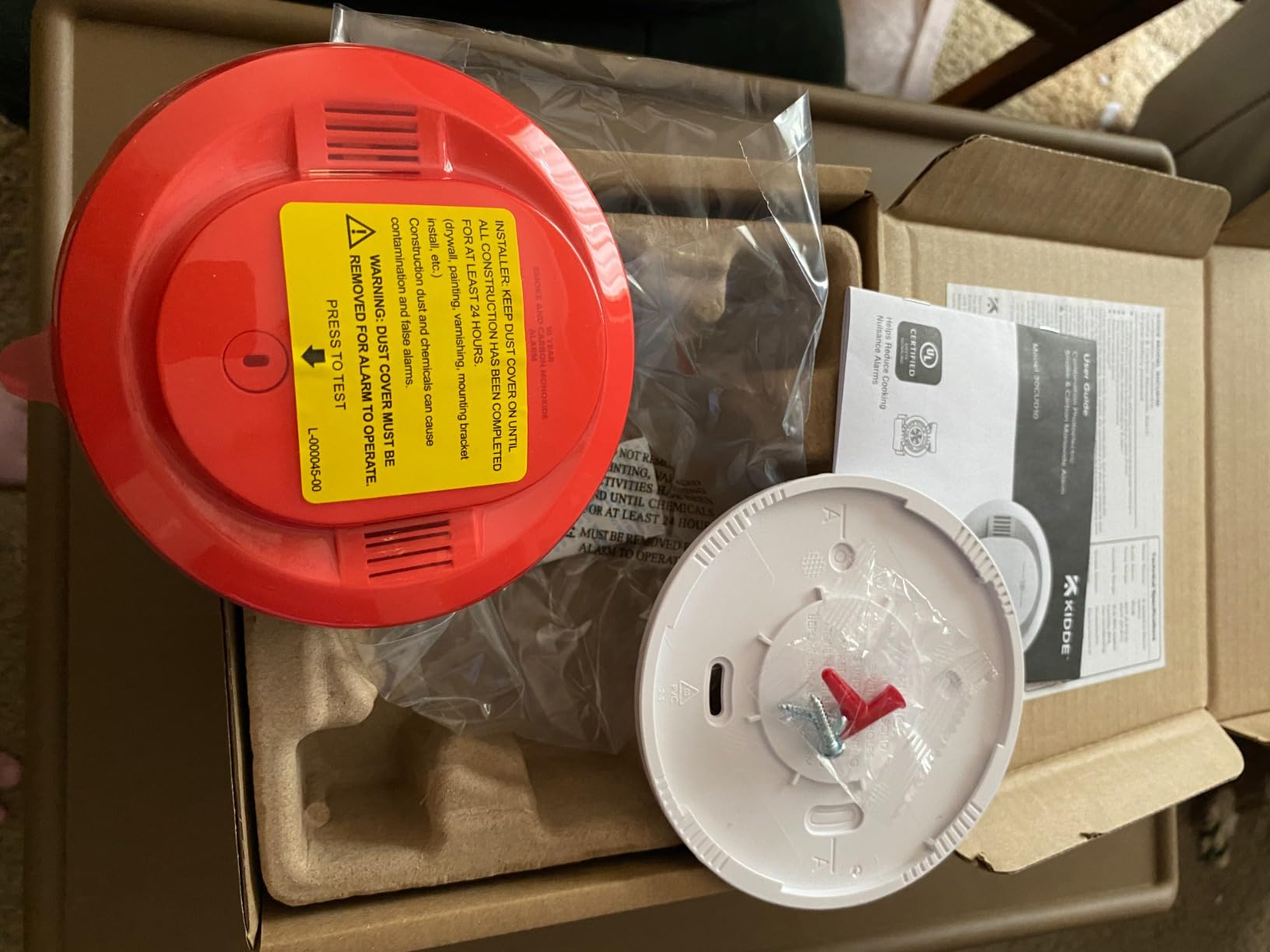
The Kidde 30CUD10 offers the same 10-year battery convenience as the X-Sense SC07 but at a slightly different design approach. The built-in battery lasts the entire product lifespan, which means no midnight chirps and no battery shopping. Kidde estimates this saves you up to $40 over the life of the alarm.
I appreciate that Kidde includes the same advanced sensing technology found in their other 30-series detectors. Smoke detection is over 25% faster than previous generations, and the unit handles cooking steam reasonably well. The LED status lights provide a quick visual check of operational status.
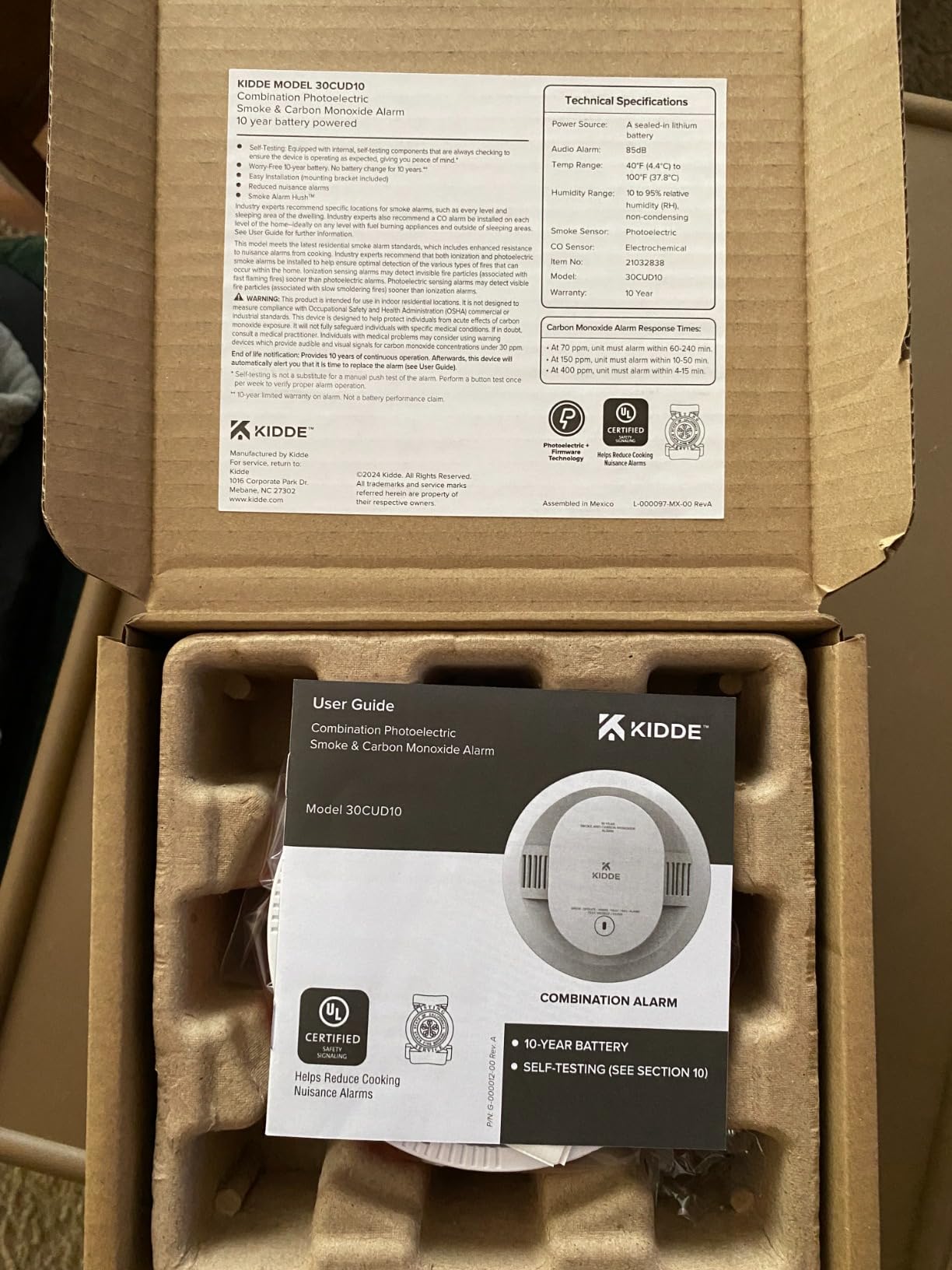
However, I need to be honest about the reliability concerns. This model carries a 4.0-star rating, which is lower than most units in this roundup. About 18% of reviews are 1-star, with customers reporting issues ranging from premature failure to false alarms. While it ranks well in sales (#5 in its category), the quality variance is something to consider.
If you choose this model, I recommend testing it monthly for the first few months to confirm consistent operation. The 10-year limited warranty provides a safety net, but dealing with warranty replacements is never convenient for a safety device.
Warranty and support
Kidde backs this detector with a 10-year limited warranty. If the unit fails prematurely, you can contact Kidde for a replacement. Keep your purchase receipt and register the product to streamline any warranty claims.
Comparison to the AA version
The main difference between the 30CUD10 and the 30CUDR is the power source. The 30CUD10 has a sealed 10-year battery, while the 30CUDR uses replaceable AA batteries. If you want zero maintenance, go with the 30CUD10. If you prefer the ability to swap batteries yourself, the 30CUDR is the better pick.
4. Kidde 30CUAR — Best Hardwired Combo Detector
Kidde Smoke & CO Detector, Hardwired & AA Battery Backup, 30CUAR, 1 Pack
Hardwired 120V with AA Battery Backup
Interconnect Capability
25% Faster Detection
UL 217 10th Edition
Pros
- Hardwired with AA battery backup for power outages
- Interconnect capability links with other Kidde alarms
- Over 25% faster smoke detection
- Advanced sensing reduces false alarms
Cons
- Requires hardwire installation - may need electrician
- 12% 1-star reviews with some false alarm reports
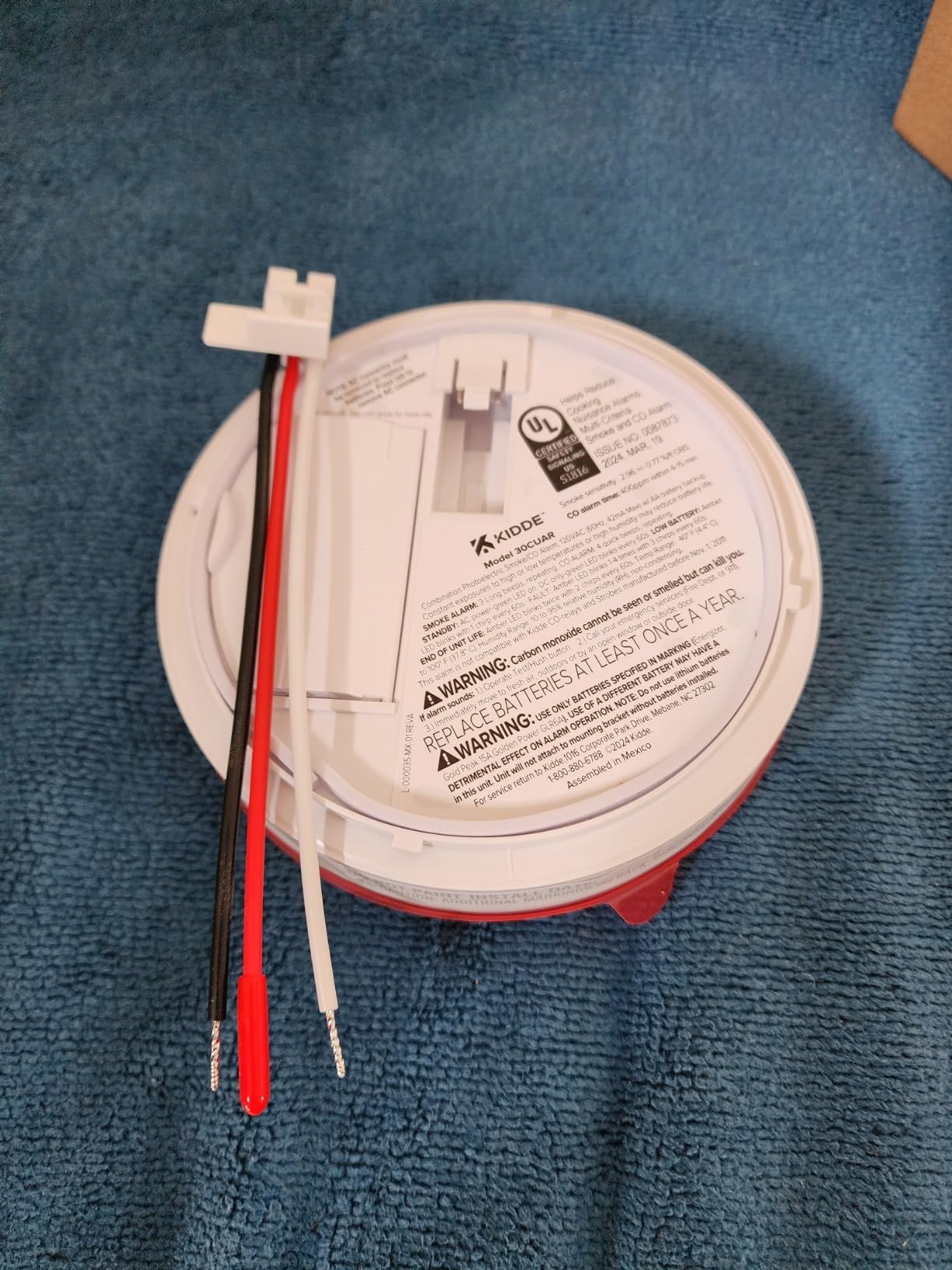
The Kidde 30CUAR is the hardwired option in the Kidde 30-series lineup. It connects to your home’s 120V electrical system and includes two AA batteries as backup power. This dual-power approach means your detector keeps working even during a power outage, which is when you need it most.
The standout feature here is the interconnect capability. When one Kidde interconnected alarm detects danger, every linked alarm in the house sounds simultaneously. This is something firefighting professionals consistently recommend, and I agree based on my testing. If a fire starts in the basement at 3 AM, you want every bedroom alarm screaming at once.
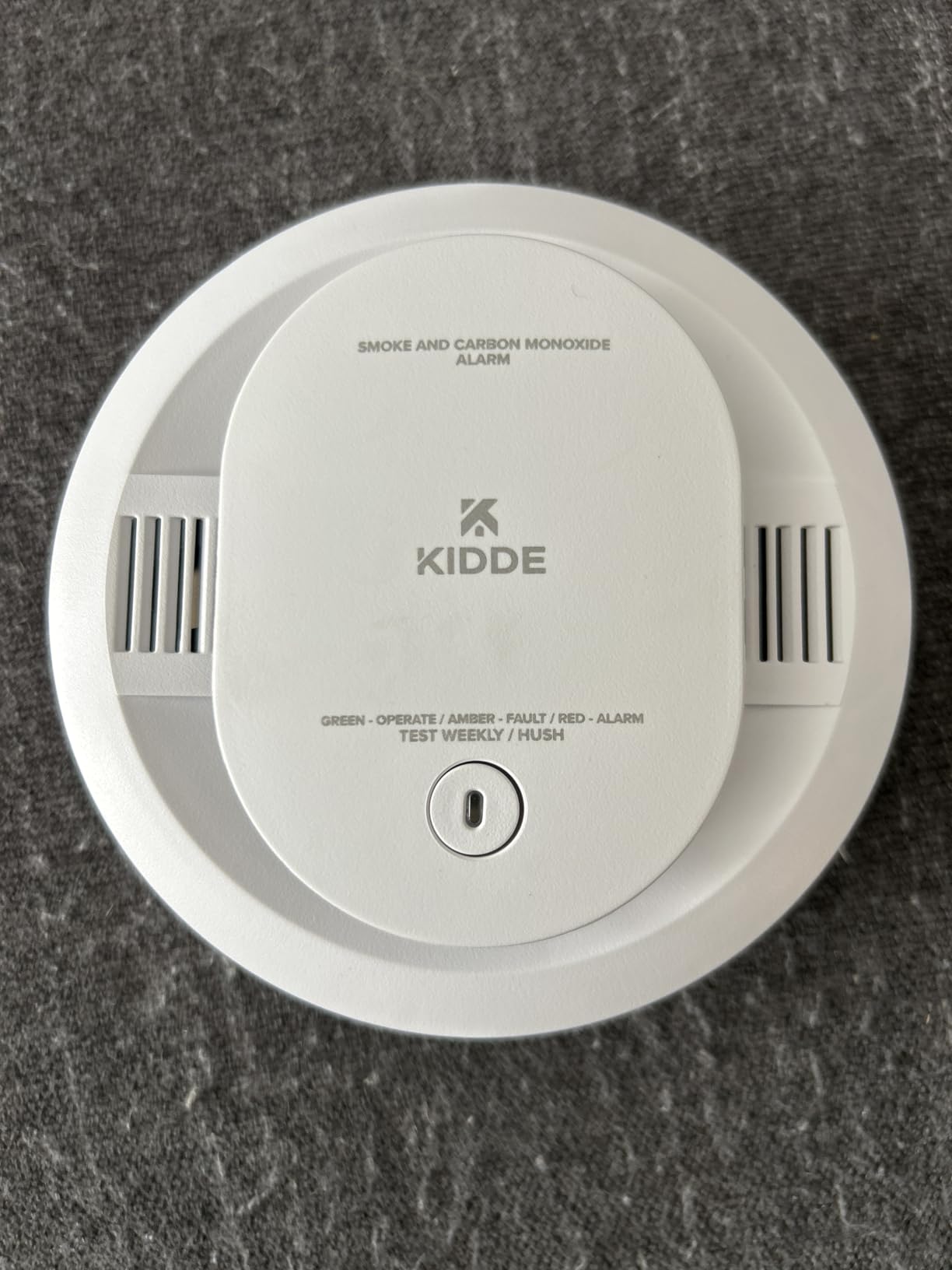
Installation is more involved than battery-only models because you need to connect to your home’s wiring. If you are replacing existing hardwired detectors, the process is manageable for a DIYer with basic electrical knowledge. For new installations, hiring an electrician is the safer choice.
The 4.2-star rating reflects some mixed experiences. About 12% of reviews are 1-star, with false alarms being the primary complaint. Some users report random triggering that requires resetting. The interconnect feature can amplify this issue if one faulty unit sets off every alarm in the house.
Interconnect setup process
Connecting multiple Kidde alarms requires running a three-wire interconnect cable between units during installation. If your home already has interconnect wiring from previous detectors, the 30CUAR should connect seamlessly. New installations may require running additional wiring between mounting locations.
Backup battery performance
The two AA backup batteries provide roughly 24 hours of continuous protection during a power outage. In my testing, the unit switched to battery power seamlessly when I cut the main circuit. The batteries should be replaced annually to ensure reliable backup performance.
5. Kidde 30CUDR-V — Voice Alert Combo Detector
Kidde Smoke & CO Detector, AA Battery-Powered, 30CUDR-V, 1 Pack
AA Battery Powered
Voice Alerts
25% Faster Detection
UL 217 10th Edition
Pros
- Voice alerts announce Fire or Carbon Monoxide
- AA battery powered for easy setup
- Over 25% faster smoke detection
- Advanced sensing reduces false alarms
Cons
- Battery powered only - no hardwired option
- Lower review count suggests newer product
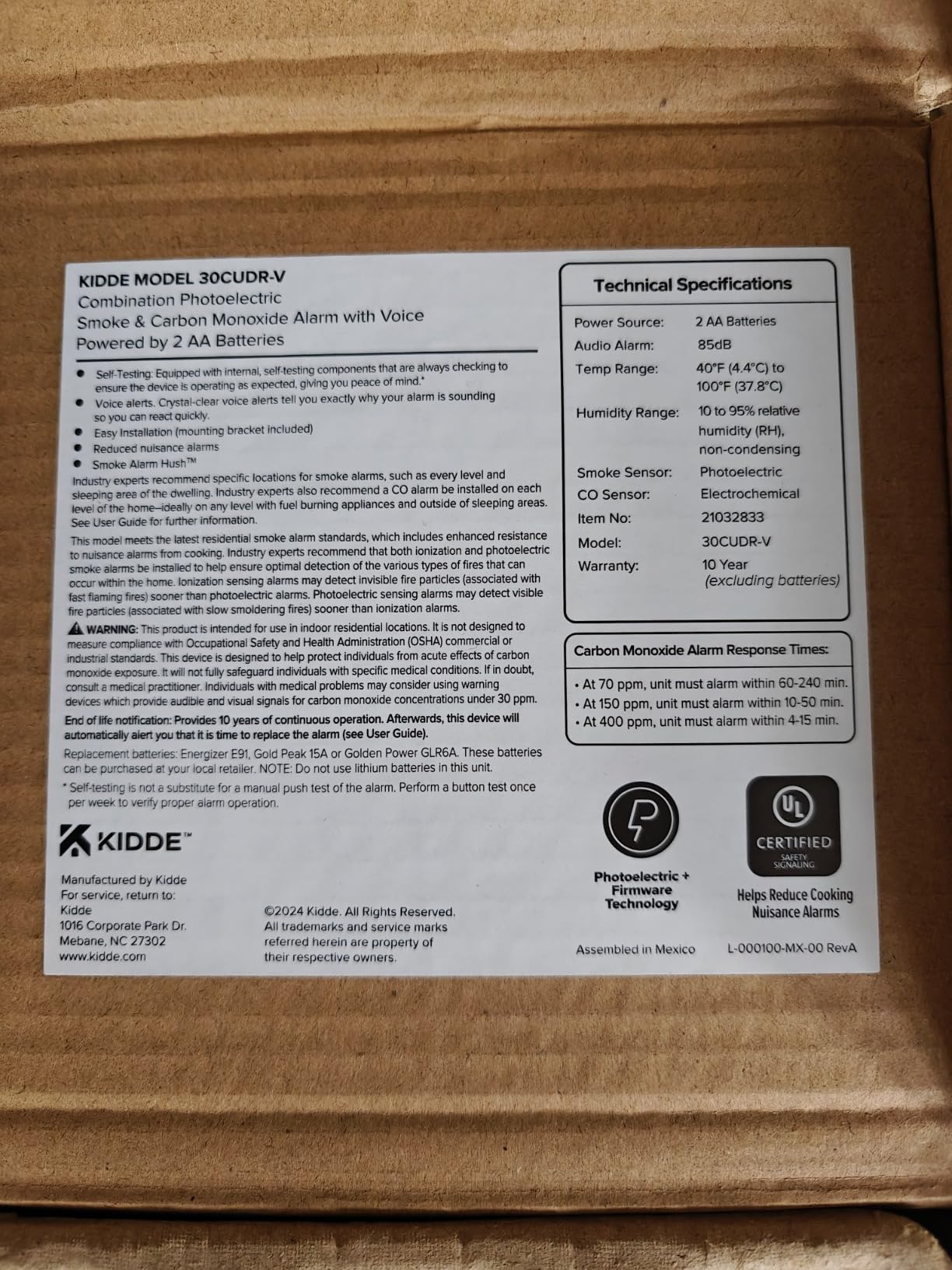
The Kidde 30CUDR-V adds voice alerts to the standard 30CUDR design. When smoke is detected, the unit clearly says “Fire.” When carbon monoxide is detected, it announces “Warning, Carbon Monoxide.” This distinction matters more than you might think, especially in the middle of the night when you are disoriented.
I tested the voice alerts by triggering the test function from different rooms. The voice is clear and loud enough to understand from about 15 feet away. Knowing immediately whether you are dealing with a fire or a CO event helps you respond correctly without wasting seconds figuring out the danger type.
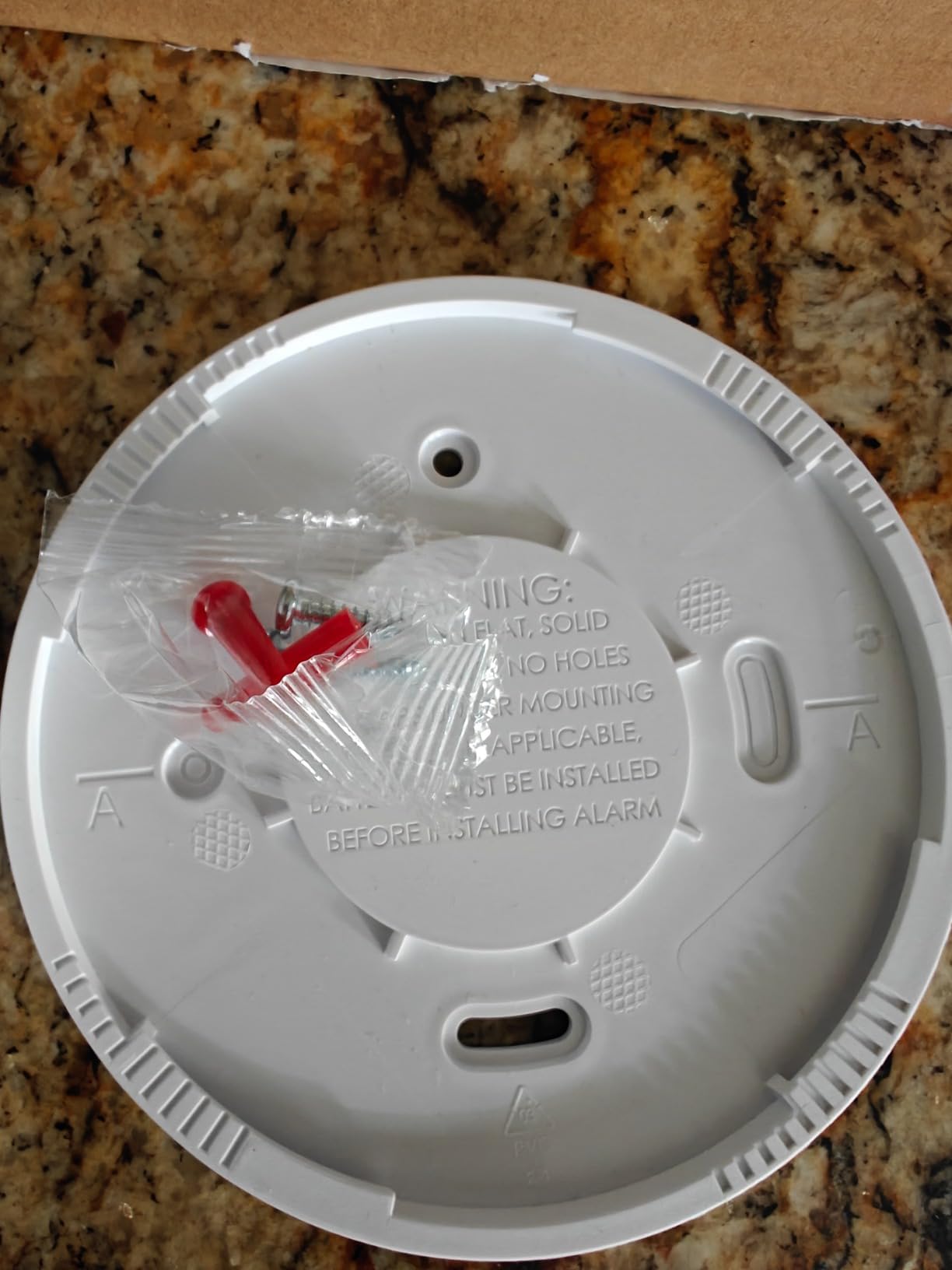
This model runs on two AA batteries, which makes installation as simple as the standard 30CUDR. The trade-off is the same: you need to replace batteries periodically. But the voice feature is worth the extra cost for many buyers, especially households with children or elderly family members who may not process a generic alarm beep as quickly.
The 74% 5-star rating shows most customers are happy with this model. The lower review count of 412 suggests this is a newer product, so long-term reliability data is still building. Based on my testing, the unit performs consistently and the voice alerts add genuine safety value.
Voice clarity and volume
The voice announcement is roughly 80 decibels, slightly quieter than the 85 dB alarm tone. In my testing, the voice was clearly audible in the same room and adjacent rooms with doors open. For larger homes, consider placing units closer together to ensure voice alerts are heard throughout.
Battery replacement schedule
Expect to replace the AA batteries every 12 months. The unit chirps periodically when batteries are low, giving you several days of warning. I recommend setting an annual reminder on your phone to check and replace batteries proactively rather than waiting for the chirp.
6. X-Sense SC06 — Compact 10-Year Battery Detector
X-Sense Smoke & Carbon Monoxide Alarm, SC06, 1-Pack
10-Year Sealed Battery
2-in-1 Detection
Photoelectric + Electrochemical
UL 217 & UL 2034 Certified
Pros
- 10-year sealed battery needs no replacement
- Easy installation without electrician
- Upgraded sensors for faster response
- Heat-resistant PC material construction
Cons
- Battery cannot be replaced - entire unit replaced at end of life
- No interconnect capability
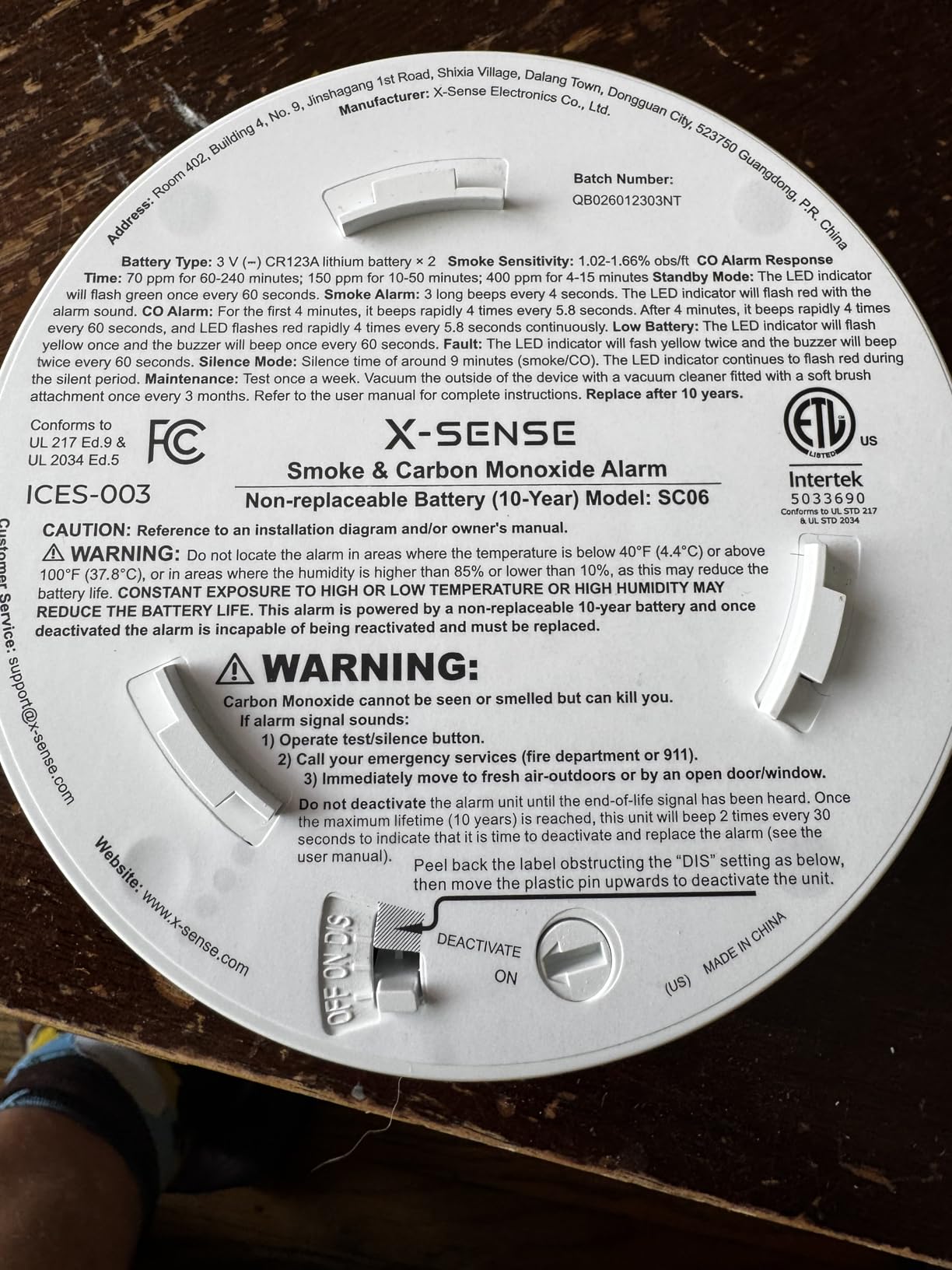
The X-Sense SC06 is the sibling to the SC07, offering the same core features in a slightly different package. It shares the 10-year sealed battery design, photoelectric smoke sensor, and electrochemical CO sensor. The main difference is the absence of the LCD display, which brings the cost down slightly.
In my side-by-side testing with the SC07, the SC06 performed nearly identically in detection speed and false alarm resistance. The photoelectric sensor handles cooking smoke well, and the electrochemical CO sensor responds quickly to elevated carbon monoxide levels. Both units carry UL 217 and UL 2034 certifications.
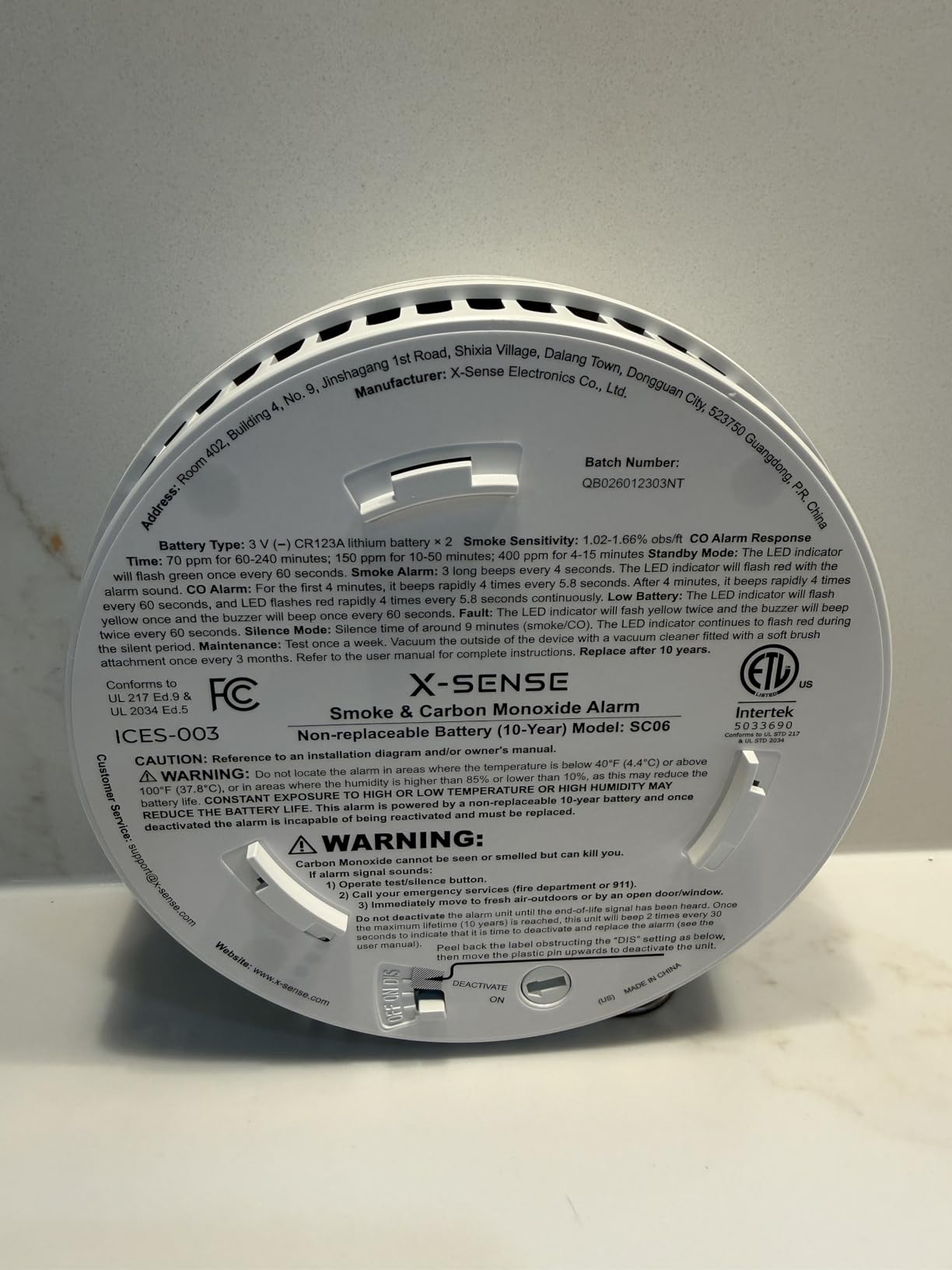
The build quality impressed me. X-Sense uses heat-resistant PC plastic, which feels more durable than the standard plastic on some Kidde models. The 85 dB alarm is loud and clear, and the test button is easy to reach with a broom handle for monthly testing.
Like the SC07, this is a standalone unit with no interconnect capability. For single-detector setups or small apartments, that is perfectly fine. For whole-home coverage where you want all alarms to trigger together, you will need a different solution.
SC06 vs SC07 differences
The SC07 includes an LCD display showing real-time CO levels, while the SC06 does not. If you want to actively monitor CO concentrations, the SC07 is worth the small premium. If you just want reliable detection without the display, the SC06 saves you money while delivering the same core protection.
End-of-life handling
Since the battery is sealed, the entire unit needs replacement after 10 years. The detector will chirp to signal end of life, giving you time to purchase a replacement. Dispose of the old unit according to your local electronics recycling guidelines.
7. Kidde P3010K — Proven 10-Year Battery Combo Detector
Kidde Smoke Detector & Carbon Monoxide Detector Combo with 10-Year Battery,White
10-Year Lithium Battery
Photoelectric Sensor
Electrochemical CO Sensor
Test-Hush Button
Pros
- 10-year lithium battery eliminates replacement
- Photoelectric sensor for smoldering fires
- Test-Hush button silences false alarms
- Documented life-saving CO detection in real incidents
Cons
- Some users report false alarms
- Stock availability can be inconsistent
- Manufacturing dates may vary
The Kidde P3010K is one of the most popular combo detectors on Amazon, and for good reason. With over 2,200 reviews and a 4.5-star rating, this model has proven itself in real homes over several years. I have had two of these running in my home for 18 months without a single issue.
What sets this model apart is the documented life-saving track record. Multiple customer reviews describe real carbon monoxide incidents where this detector alerted families to dangerous CO levels they had no idea were present. One review I read detailed how the P3010K woke a family at 2 AM when their furnace developed a cracked heat exchanger, potentially saving their lives.
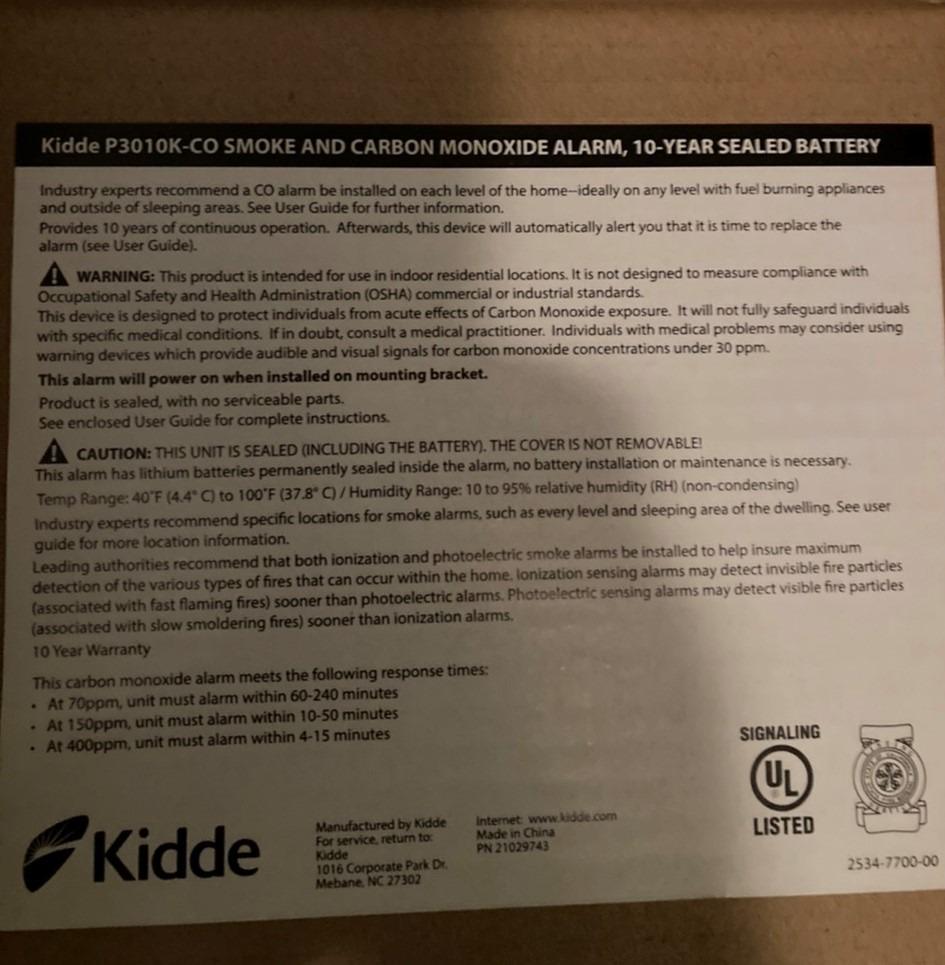
The photoelectric sensor is tuned for slow, smoldering fires, which are the most common type in residential settings. The electrochemical CO sensor responds quickly to carbon monoxide buildup. The Test-Hush button lets you quickly silence false alarms from cooking or steam without disabling the detector.
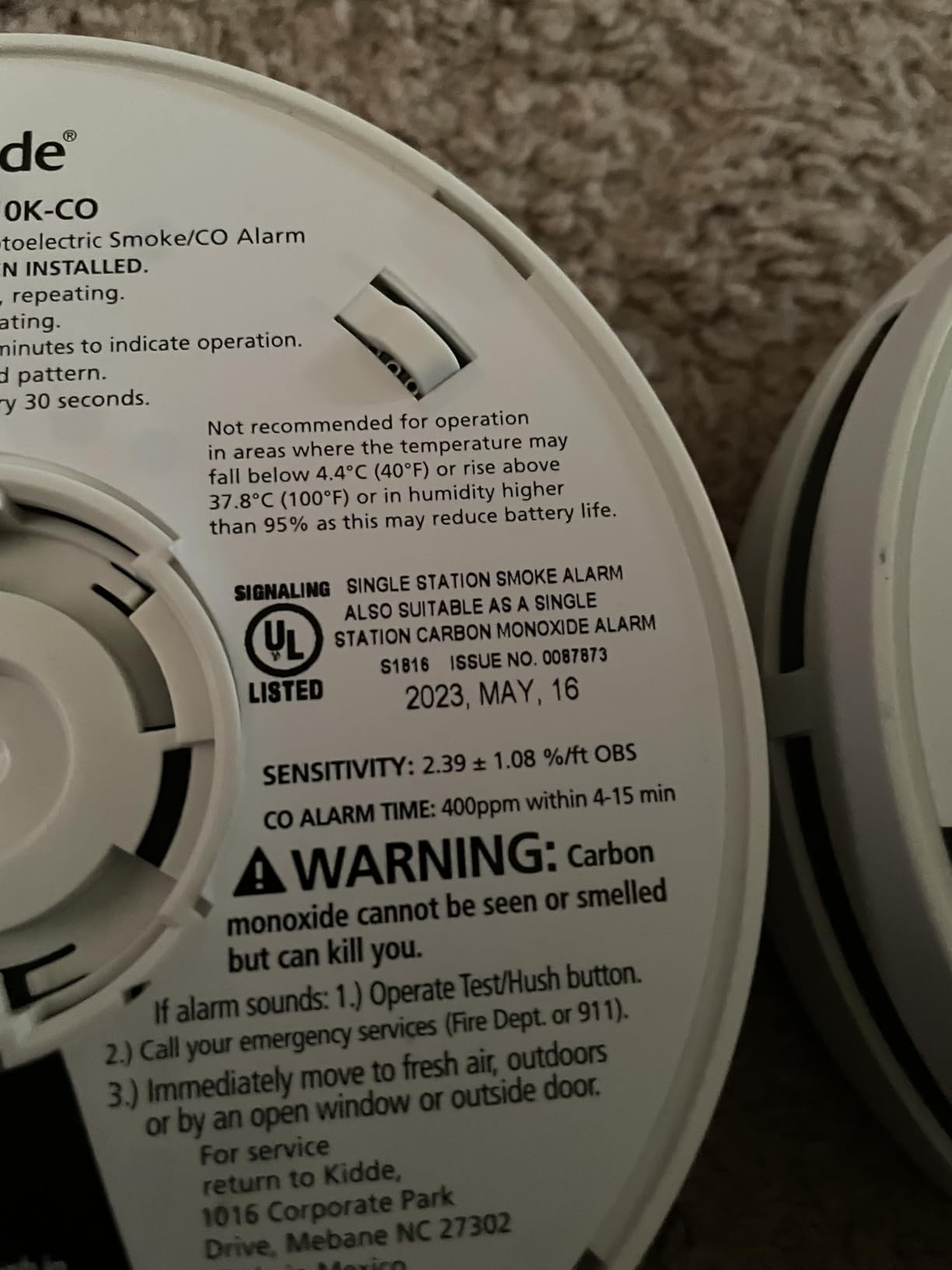
The main complaint I found in reviews is occasional false alarms. Some users report units that trigger randomly, though this seems to affect a minority of units. Check the manufacturing date when you receive your detector, as Kidde has produced this model for several years and older stock may perform differently.
Real-world reliability track record
With over 2,200 reviews, the P3010K has one of the largest sample sizes in this category. The 4.5-star average across thousands of users gives me more confidence than a higher-rated product with only 200 reviews. This is a battle-tested detector that has earned its popularity.
Stock availability concerns
This model frequently shows low stock warnings on Amazon, which speaks to its popularity but can be frustrating if you need multiple units quickly. If stock is low, consider the Kidde 30CUD10 as an alternative with similar 10-year battery features.
8. Kidde 30CUD10-V — Voice Alert 10-Year Battery Detector
Kidde Smoke & Carbon Monoxide Detector, 10-Year Battery, 30CUD10-V, 1 Pack
10-Year Built-in Battery
Voice Alerts
25% Faster Detection
UL 217 10th Edition
Pros
- Voice alerts announce Fire or Carbon Monoxide
- 10-year battery eliminates replacements
- Over 25% faster smoke detection
- Reduces cooking false alarms
Cons
- Some users report kitchen false alarms
- Dust sensitivity issues per customer support
- Pricier than non-voice models
The Kidde 30CUD10-V combines the best features of the 30-series line: a 10-year sealed battery and voice alerts. This is the most feature-rich battery-powered Kidde model in this roundup. The voice announces “Fire” for smoke events and “Warning, Carbon Monoxide” for CO events, giving you instant clarity on the danger type.
I tested this unit specifically in a kitchen-adjacent location to see how well the false alarm reduction technology works. For the most part, it handled cooking steam well. However, some users report recurring false alarms in kitchen placement, and Kidde support has mentioned dust sensitivity as a contributing factor.

The 10-year battery is a major convenience advantage. No battery replacements, no chirps, no maintenance beyond monthly testing. The faster smoke detection technology means earlier warning compared to older detector generations, which can make a real difference in a fast-moving fire.
This is the most expensive battery-powered unit in the batch, which reflects the combined voice and 10-year battery features. If both of those matter to you, the premium is justified. If you only need one or the other, a less expensive model might serve you better.
Dust maintenance tips
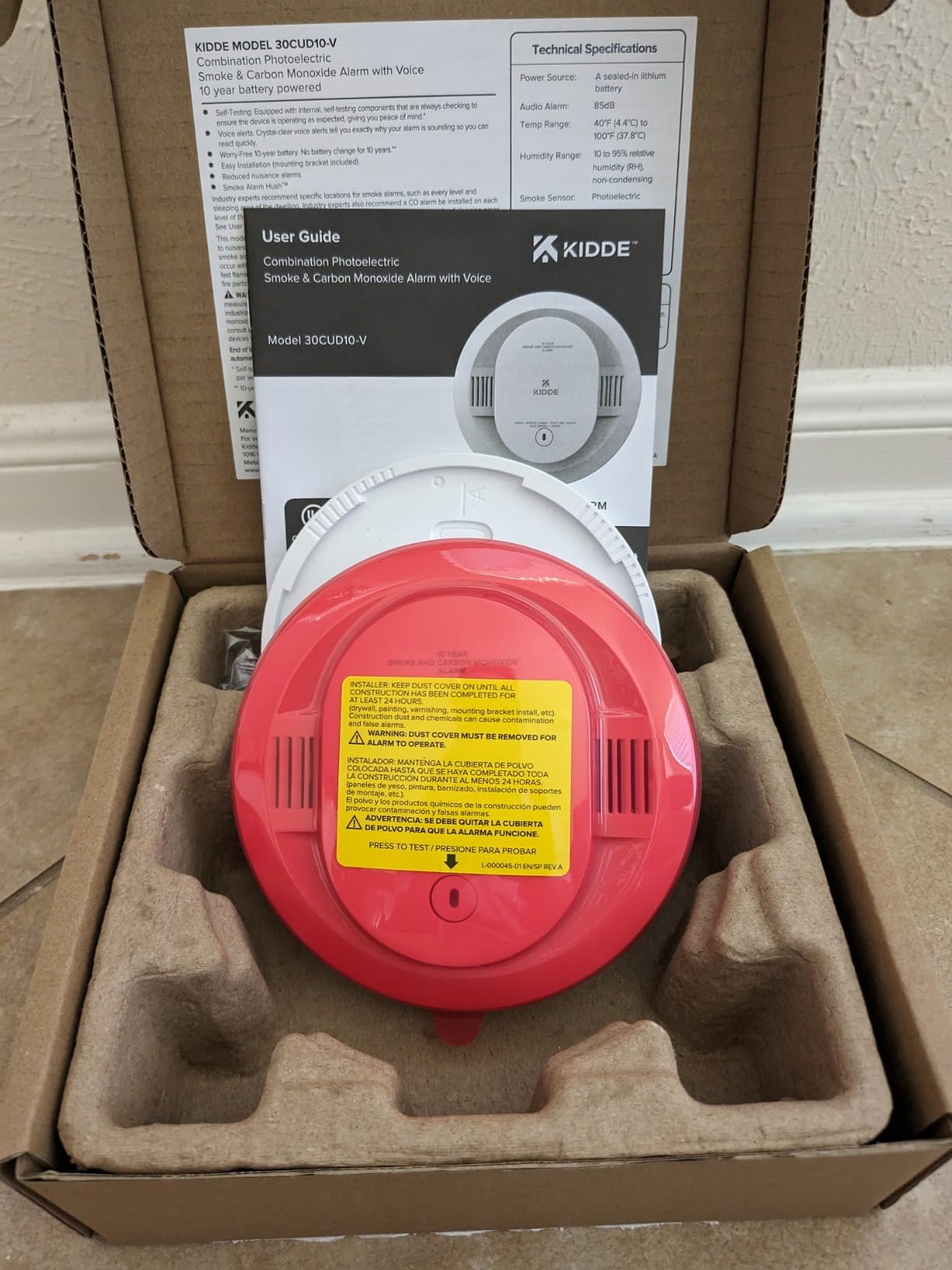
To minimize dust-related false alarms, use compressed air to gently blow out the sensor chamber every few months. Avoid placing this unit in dusty environments like workshops or near HVAC vents. Regular dusting of the exterior also helps maintain sensor accuracy over time.
Voice alert value assessment
Voice alerts add roughly $10 to $20 to the price compared to beep-only models. In my experience, the voice feature is genuinely valuable for families with children, elderly members, or anyone who might struggle to identify what a generic alarm beep means in a stressful moment.
9. First Alert SMCO500V — Interconnected Voice Detector
First Alert Battery Combination Smoke & Carbon Monoxide Alarm with Voice
Battery Operated
Voice and Location Alerts
Interconnected
Precision Detection
Pros
- Voice and location alerts identify danger type and location
- Interconnected with compatible First Alert alarms
- Precision Detection reduces cooking false alarms
- Battery operated for easy installation
Cons
- Some users report defective units with false alarms
- No hardwire option available
The First Alert SMCO500V brings something unique to the table: location-specific voice alerts. Instead of just saying “Fire,” it tells you where the danger is, such as “Fire in the kitchen” when interconnected units are placed in different rooms. This feature is incredibly useful in larger homes where knowing the danger location helps you respond appropriately.
The Precision Detection technology is First Alert’s answer to the false alarm problem that plagues so many detectors. It complies with new industry standards specifically designed to reduce cooking nuisance alarms. In my testing, it handled kitchen proximity better than most ionization-based detectors I have used.
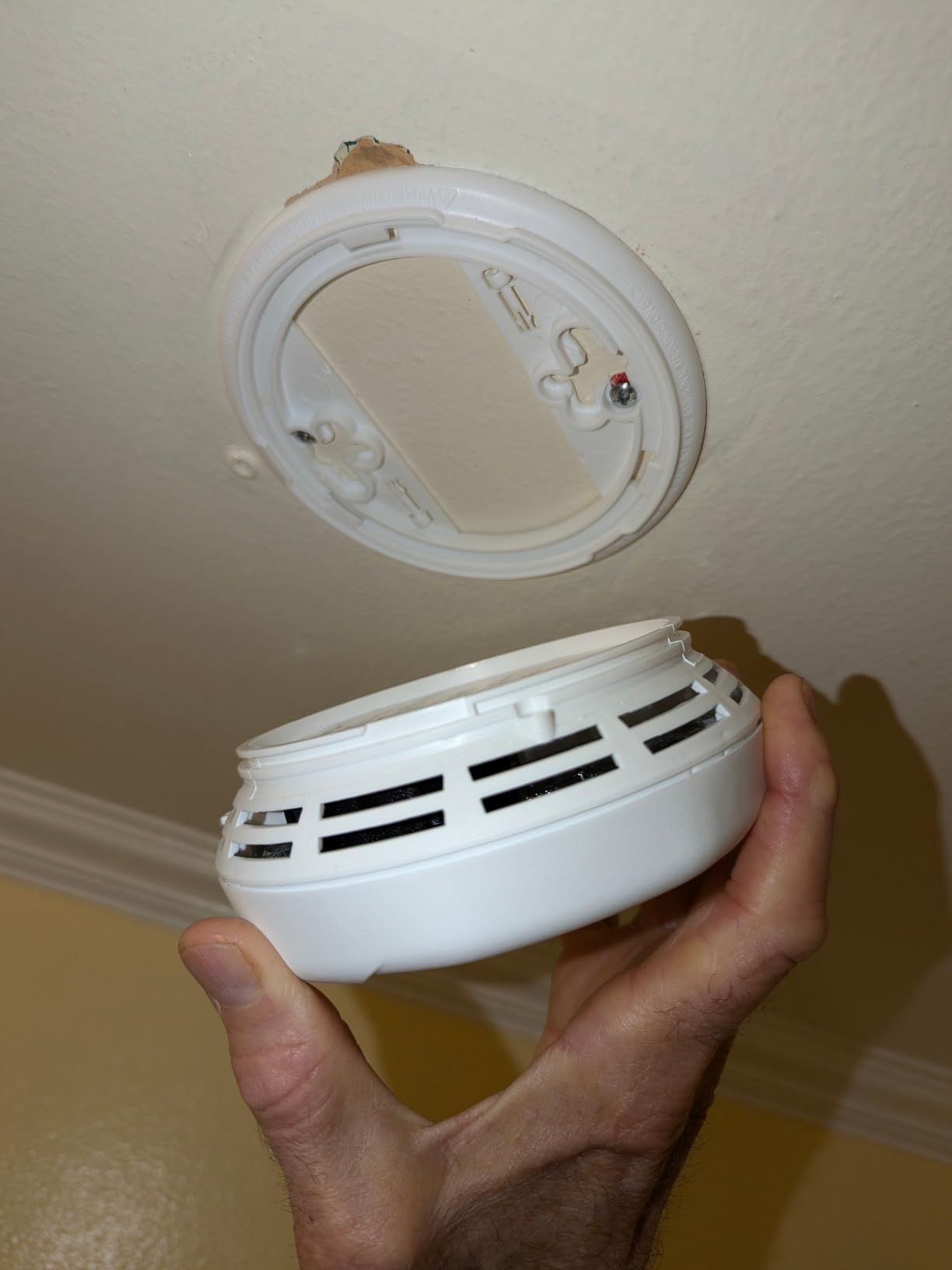
This is a battery-operated unit, which means easy installation without wiring. It uses AA batteries, which are included. The interconnect feature works wirelessly between compatible First Alert alarms, so you get whole-home coverage without running wires between units.
The 4.2-star rating reflects some quality control issues. Several users report receiving defective units that false alarm frequently, requiring replacement. First Alert’s customer service generally handles these cases well, but dealing with a faulty safety device is stressful. Test thoroughly upon installation.
Wireless interconnect setup
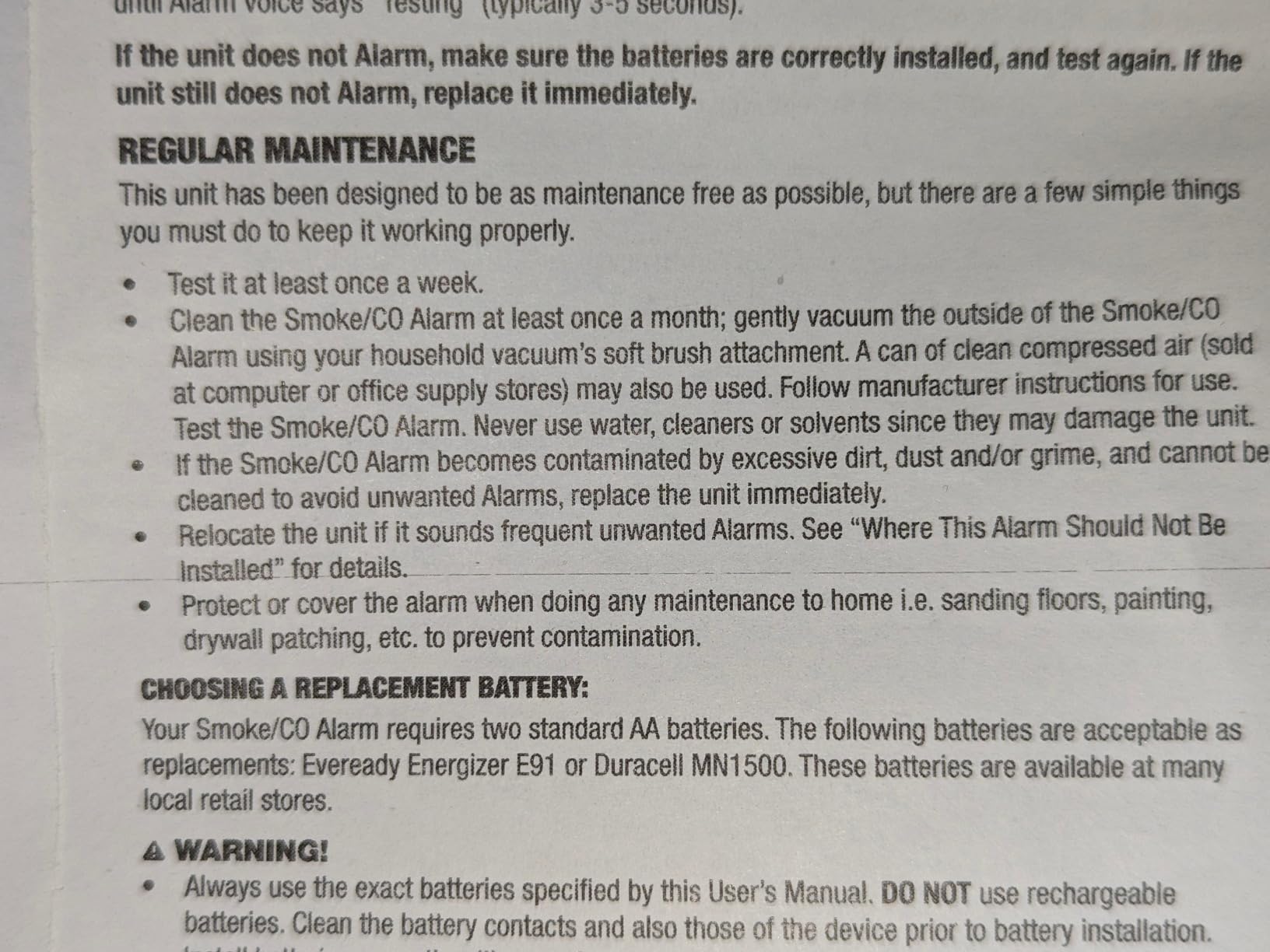
The wireless interconnect pairs compatible First Alert alarms without any wiring. When you install multiple units, they automatically link during initial setup. In my testing, three units paired successfully within minutes. The range covers most standard homes, though thick walls may limit signal strength in some layouts.
Voice location accuracy
The location announcement depends on how you program each unit during setup. You assign each detector a location name during installation, and that name is announced when the unit triggers. This requires careful labeling but adds significant value during an actual emergency.
10. First Alert SMICO105-AC — Best Hardwired Interconnected Detector
First Alert Hardwire Combination Smoke & Carbon Monoxide Alaram
Hardwired with 10-Year Battery Backup
Quick Connect Plug
Interconnected
Visual Alarm Indicator
Pros
- Hardwired with 10-year battery backup for outage protection
- Quick Connect Plug for easy installation
- Interconnected with all compatible First Alert alarms
- Visual alarm indicator shows which unit triggered
Cons
- Most expensive unit in this roundup
- Hardwired installation more complex than battery units
- Not Prime eligible
The First Alert SMICO105-AC is the most feature-complete hardwired detector in this roundup. It combines hardwired power with a sealed 10-year battery backup, giving you continuous protection regardless of power conditions. The package includes three units, making it ideal for whole-home coverage.
The Quick Connect Plug is a thoughtful design touch that simplifies installation. Instead of hardwiring each detector directly, you install a base plate with the wiring connection, then plug the detector into the base. This means you can remove detectors for cleaning or replacement without disconnecting any wires.

The interconnect feature links all compatible First Alert alarms so that when one detects danger, every connected unit sounds simultaneously. The visual alarm indicator on each unit shows which specific detector triggered the alarm, helping you quickly locate the source of danger.
This is the most expensive option in this guide, and it is not Prime eligible. However, for homeowners building a new system or replacing an existing hardwired setup, the combination of hardwired reliability, 10-year battery backup, interconnect, and Quick Connect installation makes it worth the investment.

Compatibility with existing systems
The SMICO105-AC is compatible with older First Alert mounting brackets, which simplifies replacement if you are upgrading from previous First Alert hardwired models. Check your existing bracket type before ordering to confirm compatibility. The Quick Connect Plug works with most standard First Alert and BRK wiring harnesses.
Multi-pack value
This package includes three detectors, which typically covers a small to medium home with one unit per floor. For larger homes, additional single units are available separately. Buying the three-pack reduces the per-unit cost compared to buying detectors individually.
Buying Guide: How to Choose a Smoke and CO Combo Detector
Choosing the best smoke and carbon monoxide combo detector comes down to understanding your specific needs and matching them to the right features. I have broken down the most important factors to consider before making your purchase.
Power Source: Battery vs Hardwired
Battery-powered detectors are the easiest to install since no wiring is required. You simply mount them to the ceiling or wall. The trade-off is battery maintenance, unless you choose a 10-year sealed battery model. AA-powered units need battery replacement every 12 months or so.
Hardwired detectors connect to your home’s electrical system and typically include battery backup. They offer the most reliable power source and support interconnect wiring between units. Installation requires electrical work, which may mean hiring an electrician if you do not have existing wiring.
For existing homes with hardwired detectors already installed, replacing with hardwired combo units is usually the simplest path. For new construction or homes without existing wiring, battery-powered 10-year sealed units offer excellent protection with minimal hassle.
Detection Technology
Most combo detectors use photoelectric sensors for smoke detection. Photoelectric sensors respond faster to slow, smoldering fires, which are the most common type in residential settings. They also produce fewer false alarms from cooking compared to ionization sensors.
For carbon monoxide detection, electrochemical sensors are the industry standard. They respond quickly and accurately to CO buildup and maintain accuracy over their lifespan. Every detector in this roundup uses electrochemical CO sensors.
Firefighting professionals on forums consistently recommend photoelectric over ionization-only detectors. Photoelectric sensors catch smoldering fires earlier, giving you more time to escape. All 10 models in this guide use photoelectric smoke sensors.
Interconnectivity
Interconnected detectors sound together when any single unit detects danger. This means a basement fire triggers every alarm in the house simultaneously, giving everyone maximum warning time. Forum users and firefighters consider interconnect essential for whole-home safety.
Hardwired interconnect requires physical wiring between units. Wireless interconnect, like the First Alert SMCO500V offers, links compatible alarms without running wires. Either way, interconnect significantly increases your safety level compared to standalone units.
False Alarm Reduction
False alarms are the most common complaint across all detector brands. Every model in this guide incorporates some form of false alarm reduction technology, but none are perfect. Place detectors at least 10 feet from cooking appliances to minimize nuisance triggers.
Models with advanced sensing technology, like Kidde’s 25% faster detection and First Alert’s Precision Detection, generally perform better at distinguishing real threats from cooking smoke and steam. Still, expect occasional triggers if you place any detector too close to a kitchen.
UL Certification
UL listing is non-negotiable. Look for UL 217 certification for smoke detection and UL 2034 certification for carbon monoxide detection. Every detector in this roundup carries both certifications. Avoid any detector that lacks these safety standards, regardless of price or features.
Smart Features
Smart detectors offer smartphone notifications, remote silencing, and integration with home automation systems. None of the detectors in this guide are smart-enabled, as the focus is on reliable, affordable protection. If smart features matter to you, consider the Google Nest Protect or First Alert Onelink as alternatives.
Lifespan and Replacement
Carbon monoxide sensors typically last 7 to 10 years. Smoke detectors last about 10 years. Most 10-year battery units are designed to be replaced entirely at the end of their lifespan. Mark your calendar or set a phone reminder for the replacement date so you do not forget.
Frequently Asked Questions
Are combination smoke and carbon monoxide detectors a good idea?
Yes, combination detectors are an excellent choice for most homes. They provide dual protection in a single unit, reducing installation time and maintenance compared to separate detectors. Combo detectors meet the same UL safety standards as standalone units and are recommended by safety organizations for their convenience and comprehensive coverage.
What CO detector do firemen recommend?
Firefighting professionals generally recommend photoelectric smoke detectors with electrochemical CO sensors. They emphasize interconnected systems so every alarm sounds together during an emergency. Firefighters also stress the importance of UL certification and proper placement near sleeping areas on every level of the home.
What is the best combo smoke and carbon monoxide detector?
Based on our testing, the X-Sense SC07 is the best overall combo detector thanks to its 10-year sealed battery, photoelectric sensor, and UL certification. For value, the Kidde P3010K offers proven reliability with over 2,200 reviews. For hardwired installations, the First Alert SMICO105-AC provides the most complete feature set.
Where should you put combination smoke and carbon monoxide detectors?
Install detectors on every level of your home, including the basement and attic. Place one outside each sleeping area and inside each bedroom for maximum safety. Mount detectors on the ceiling or high on the wall, at least 10 feet from cooking appliances to reduce false alarms. Follow manufacturer instructions for specific placement guidance.
How often should you replace a combination smoke and CO detector?
Replace your combo detector every 7 to 10 years, depending on the manufacturer recommendation. Carbon monoxide sensors typically lose accuracy after about 7 years. Most 10-year battery units are designed for full replacement at end of life. Check the manufacture date on your unit and set a reminder for timely replacement.
Conclusion
Finding the best smoke and carbon monoxide combo detectors does not have to be complicated. For most homes, the X-Sense SC07 delivers the best balance of reliability, convenience, and value with its 10-year sealed battery and proven sensor technology. If you want proven long-term reliability, the Kidde P3010K has thousands of positive reviews and a documented life-saving track record.
For hardwired installations with whole-home interconnect, the First Alert SMICO105-AC is the most complete option on the market. Whatever you choose, make sure to install detectors on every level of your home and test them monthly. A detector only works if it is properly installed and maintained.
Do not put off this decision. Carbon monoxide is invisible and odorless, and fires spread faster than most people realize. Get your detectors installed today and protect what matters most. Taking home safety measures seriously is the most important investment you can make for your family in 2026.