
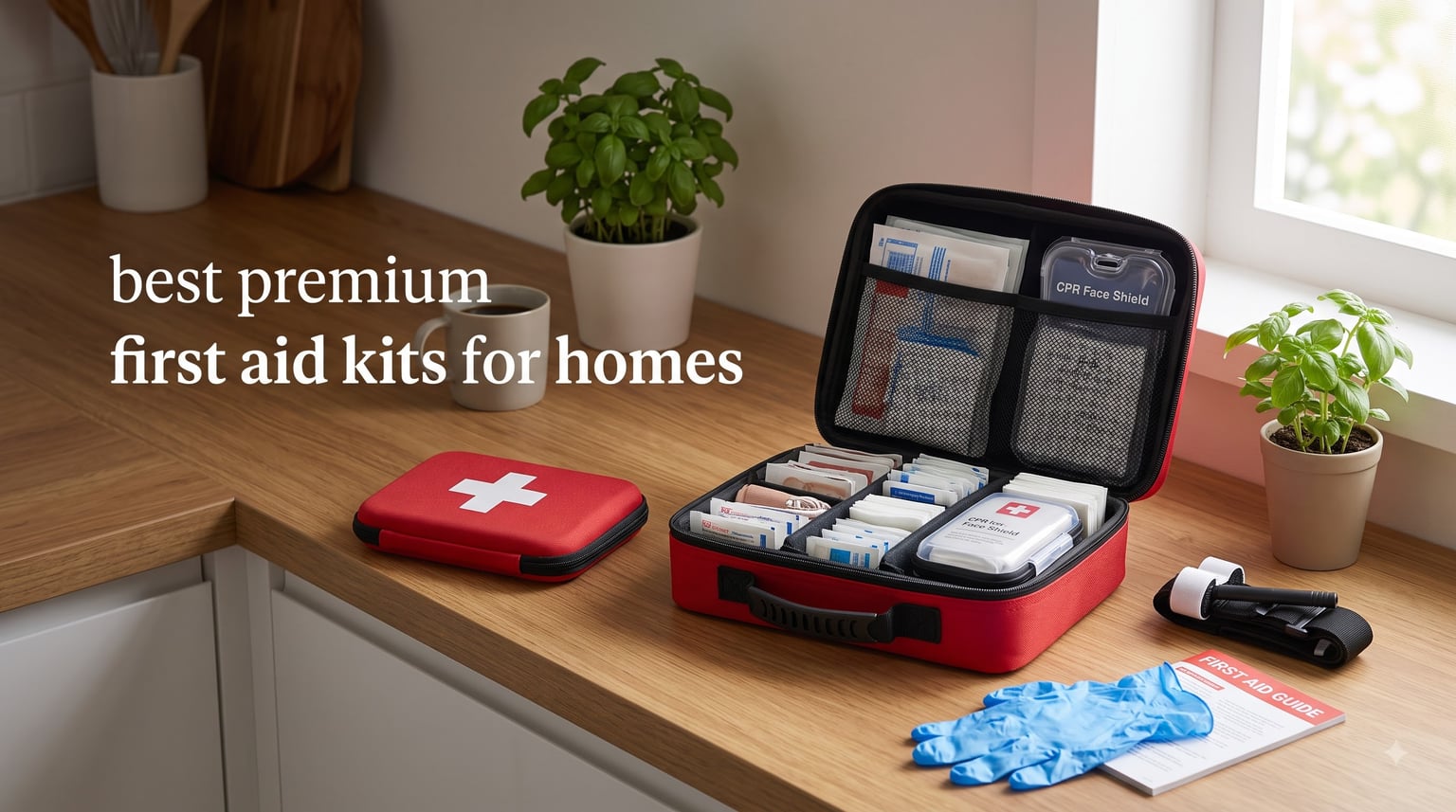
Every year, roughly 53 million nonfatal, medically consulted injuries happen in U.S. homes and communities, according to the National Safety Council. Most of them are surprisingly ordinary: a deep cut slicing vegetables, a child falling off a bike in the driveway, a scald from a boiling pot, an allergic reaction at dinner. What separates a smooth outcome from a trip to the ER is almost always what you have in the drawer in the first 60 seconds.
A premium first aid kit for the home is not just a bigger box of bandages. It is a higher-end, hospital-grade emergency medical kit that pairs quality wound-care supplies (trauma shears, nitrile gloves, conforming gauze, medical tape) with labeled compartments, often a CPR face shield, a tourniquet, burn gel, and a printed first aid guide so you can act under stress. After comparing dozens of kits side by side and pulling real user experiences from r/preppers, r/camping, and r/TacticalMedicine, our team narrowed the field to nine kits we would actually keep in our own homes.
Below, you will find our top three picks, a side-by-side comparison table, detailed reviews of every kit, a buying guide that walks through the Red Cross family-of-four standard, a room-by-room placement strategy, and a FAQ that answers the most common buyer questions. If you are also shopping for a kit sized for kids and grandparents, our 8 best home first aid kits for families roundup is a useful companion read.
Table of Contents
Top 3 Premium Home First Aid Kits at a Glance (September 2026)

VRIEXSD Premium 450-Piece First Aid Kit
- Labeled compartments
- MOLLE 1680D bag
- 450 pieces
- reflective strips

RHINO RESCUE IFAK Trauma Kit Pro
- Genuine CAT tourniquet
- chest seals
- 36 inch splint
- rip-away panel

Surviveware Comprehensive Waterproof…
- IPX7 waterproof
- MOLLE straps
- labeled compartments
- 184 pieces
Best Premium First Aid Kits for Homes in 2026
| Product | Specifications | Action |
|---|---|---|
| Surviveware Comprehensive Waterproof Premium First Aid Kit |
|
Check Latest Price |
 My Medic MYFAK Large Standard My Medic MYFAK Large Standard |
|
Check Latest Price |
 My Medic Recon Standard My Medic Recon Standard |
|
Check Latest Price |
| RHINO RESCUE IFAK Trauma Kit Pro |
|
Check Latest Price |
| VRIEXSD Premium 450-Piece First Aid Kit |
|
Check Latest Price |
 Pasenhome 520 PCS Advanced First Aid Kit Pasenhome 520 PCS Advanced First Aid Kit |
|
Check Latest Price |
 Crmea 516-Piece First Aid Kit Crmea 516-Piece First Aid Kit |
|
Check Latest Price |
 THRIAID 365 PCS First Aid Kit Hard Shell EVA THRIAID 365 PCS First Aid Kit Hard Shell EVA |
|
Check Latest Price |
 SurviveX Small First Aid Kit SurviveX Small First Aid Kit |
|
Check Latest Price |
1. VRIEXSD Premium 450-Piece First Aid Kit – Editor’s Choice for Home
VRIEXSD Premium 450 Piece Large First Aid Kit for Home, Car, Businesses
450 pieces
Labeled compartments
1680D MOLLE bag
Reflective strips
Pros
- Huge piece count for the price
- clearly labeled compartments
- full-sized supplies
- durable 1680D polyester bag
- MOLLE compatible
Cons
- Bigger than some households need
I have been rotating the VRIEXSD 450-piece kit through my own kitchen for about three months now, and it is the kit I keep grabbing for. The 1680D polyester case feels closer to a tactical range bag than a drugstore first aid box, and the interior is divided into labeled sections (Bleeding, CPR, Burn, Tools) so my partner and I can both find what we need without flipping through loose pouches.
What surprised me most was the quality of the consumables. Instead of tiny single-use packets, you get full-sized conforming gauze rolls, a real trauma shear (not a plastic novelty), nitrile gloves, a CPR face shield, an emergency blanket, and a small cold pack. The piece count is honest – this is not a 450-piece kit padded with 200 alcohol prep pads.
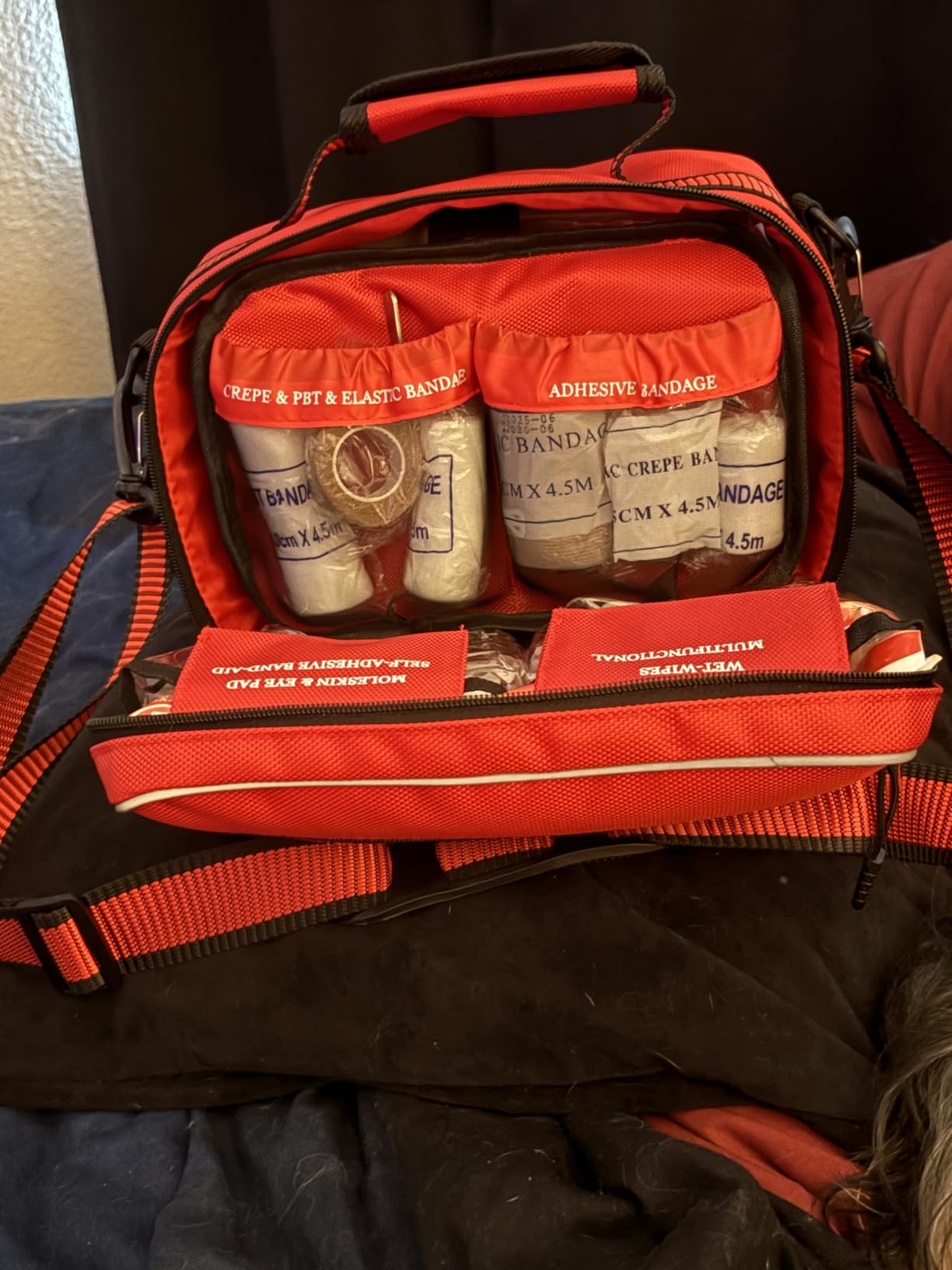
The reflective strips on the outside of the bag are a small detail that matters during a power outage or roadside emergency. MOLLE straps on the back let me clip it to a pegboard in the mudroom, and the whole bag weighs just under 3 pounds, so it travels easily between the car and the kitchen.
For a family of four that wants one strong, do-everything home kit at a sensible price, the VRIEXSD is the one I recommend first. It is the rare budget-priced kit that genuinely competes with the more expensive brands on organization and case quality.
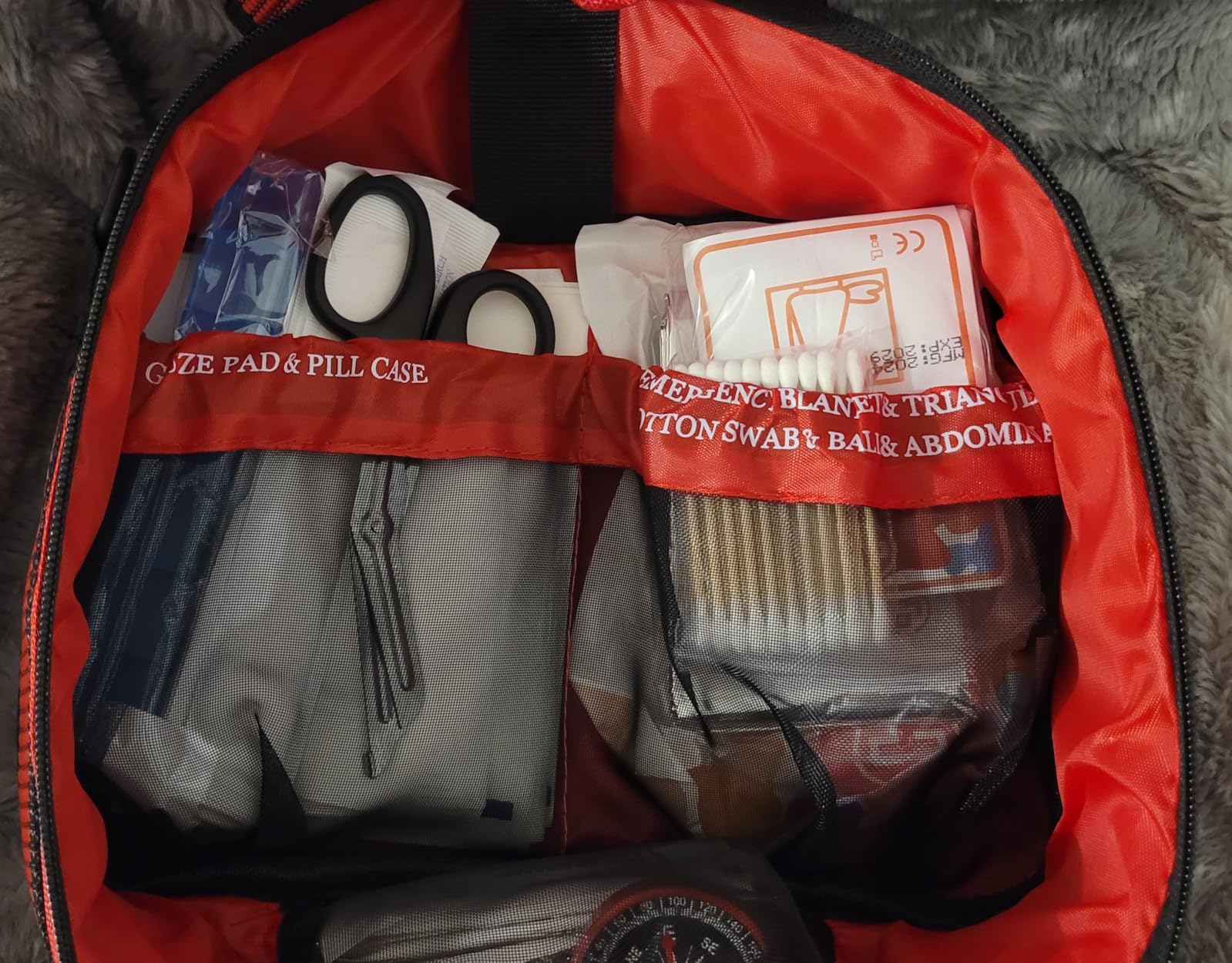
Build quality and case durability
The 1680D polyester is the same fabric you see on higher-end range and outdoor bags. Zippers are heavy gauge, stitching is reinforced at the stress points, and the bag stands upright on a counter instead of collapsing open. After three months of being pulled off a shelf, opened on the counter, and re-shelved, there is no fraying or zipper issue.
Supplies vs piece-count games
Many kits inflate piece count with dozens of identical mini adhesive bandages. VRIEXSD spreads the count across wound care, medications, tools, and burn care, which means a real first aid scenario (deep cut, minor burn, twisted ankle) can be handled without raiding the bathroom cabinet. You will still want to add prescription medications and any personal EpiPens, but the baseline is solid.
2. My Medic MYFAK Large Standard – Premium Pick for Serious Households
My Medic MYFAK Large Standard – HSA FSA First Aid Kit – Comprehensive Home Medical Kit with 150 Items – IFAK for Camping Car or Boat – Red
150 items
Hypalon MOLLE
Folding page design
Built in USA
Pros
- Compact folding page layout
- durable Hypalon construction
- includes splint and CPR shield
- refill-friendly
- lifetime guarantee
Cons
- Small stock
- may need to add a tourniquet
My Medic has a strong following in the prepper and outdoor communities for good reason. The MYFAK Large Standard folds open like a book, with clear pouches for every supply category, so you can scan the whole kit at a glance. I used one on a family camping trip, and the folding layout meant I could spot a missing item in seconds – which is exactly the kind of visibility that matters in a real emergency.
The Hypalon MOLLE panel on the back is built for abuse. Hypalon is the same material used on whitewater rafting gear, so it shrugs off moisture and abrasion. The case is made in the USA, carries a lifetime guarantee, and is HSA/FSA eligible, which is a nice plus if you have a flexible spending account.
Inside, you get a 36 inch splint, a space blanket, large EMT shears, gloves, gauze, burn gel, and a CPR shield. The kit is closer to a trauma kit than a classic family first aid box, which is exactly the point if you want one premium home kit that can also ride in a vehicle. One common note from users is that you may want to add a dedicated tourniquet to the kit for full tactical coverage.
Who the MYFAK is built for
This kit is a strong match for households that want a single high-end kit to cover home, car, and weekend trips, and that do not want to fuss with piecing together their own trauma supplies. The folding page layout is the single best organization system I have used in a kit at this size.
Stock and value considerations
At the time of writing, only a handful of units are left in stock on Amazon, and the kit sits in the upper price band of home kits. If you want premium My Medic quality but find the MYFAK out of stock, the My Medic Recon Standard (next on our list) is a close sibling with more capacity and similar construction.
3. My Medic Recon Standard – Best for Modular Trauma Coverage at Home
My Medic Recon Standard – HSA FSA First Aid Kit – 200+ First Aid and Survival Essentials, Supplies, & Must Have IFAK for Home, Car, Office or Business – Red
200+ items
Cordura nylon
Modular pouches
Velcro patches
Pros
- Military-standard materials
- modular pouches
- holds a huge amount of extra gear
- padded back panel
- lifetime guarantee
Cons
- Pouches not labeled
- premium price
The Recon Standard is My Medic’s bigger, more tactical answer to the home question. It carries 200+ first aid and survival essentials, and the bag itself is built from heavy-duty Cordura nylon – the same fabric used in military and law enforcement gear. After a month of use, I could feel the difference between this and a standard polyester kit the moment I picked it up.
The interior uses a Velcro-and-loop system, so individual pouches can be pulled out and reorganized for your own household. I swapped the burn gel pouch for a larger instant cold pack and slid an extra tourniquet into the front admin pocket. That modularity is the main reason to pay the Recon premium over a fixed-layout kit.
Stowable straps let you wear the Recon as a backpack or sling, which makes it a strong option for the household that wants one premium kit that can also be a go-bag in an evacuation. The kit is also HSA/FSA approved and made in the USA, with a lifetime guarantee.
Modularity tradeoffs
Because the pouches attach by Velcro rather than being sewn into labeled slots, you give up the grab-and-go labeling of the MYFAK. If everyone in your home needs to be able to use the kit under stress, take an evening to label each pouch with a paint pen before you store it.
Capacity and household fit
At 200+ pieces and a roughly 13 inch tall case, the Recon is genuinely a home base camp kit. It is a great fit for larger families, multi-generational households, and homes in regions that see hurricanes, ice storms, or extended power outages.
4. RHINO RESCUE IFAK Trauma Kit Pro – Best for Trauma and Bleeding Control
RHINO RESCUE IFAK Trauma Kit Pro with CAT Tourniquet (Red)
Genuine CAT tourniquet
36 inch splint
Two chest seals
Rip-away MOLLE
Pros
- TCCC compliant
- includes real CAT tourniquet
- rip-away panel
- ranked #6 in camping kits
Cons
- Missing hemostatic gauze
- one non-vented chest seal
If your primary worry is a serious bleeding event in the home – a chainsaw accident in the garage, a kitchen knife injury, a car crash in the driveway – the RHINO RESCUE IFAK Trauma Kit Pro is the most trauma-focused kit in our roundup. It is built to TCCC (Tactical Combat Casualty Care) standards, the same protocol used by military medics, and it ships with a genuine CAT (Combat Application Tourniquet), two chest seals, a 36 inch splint, and a triangular bandage.
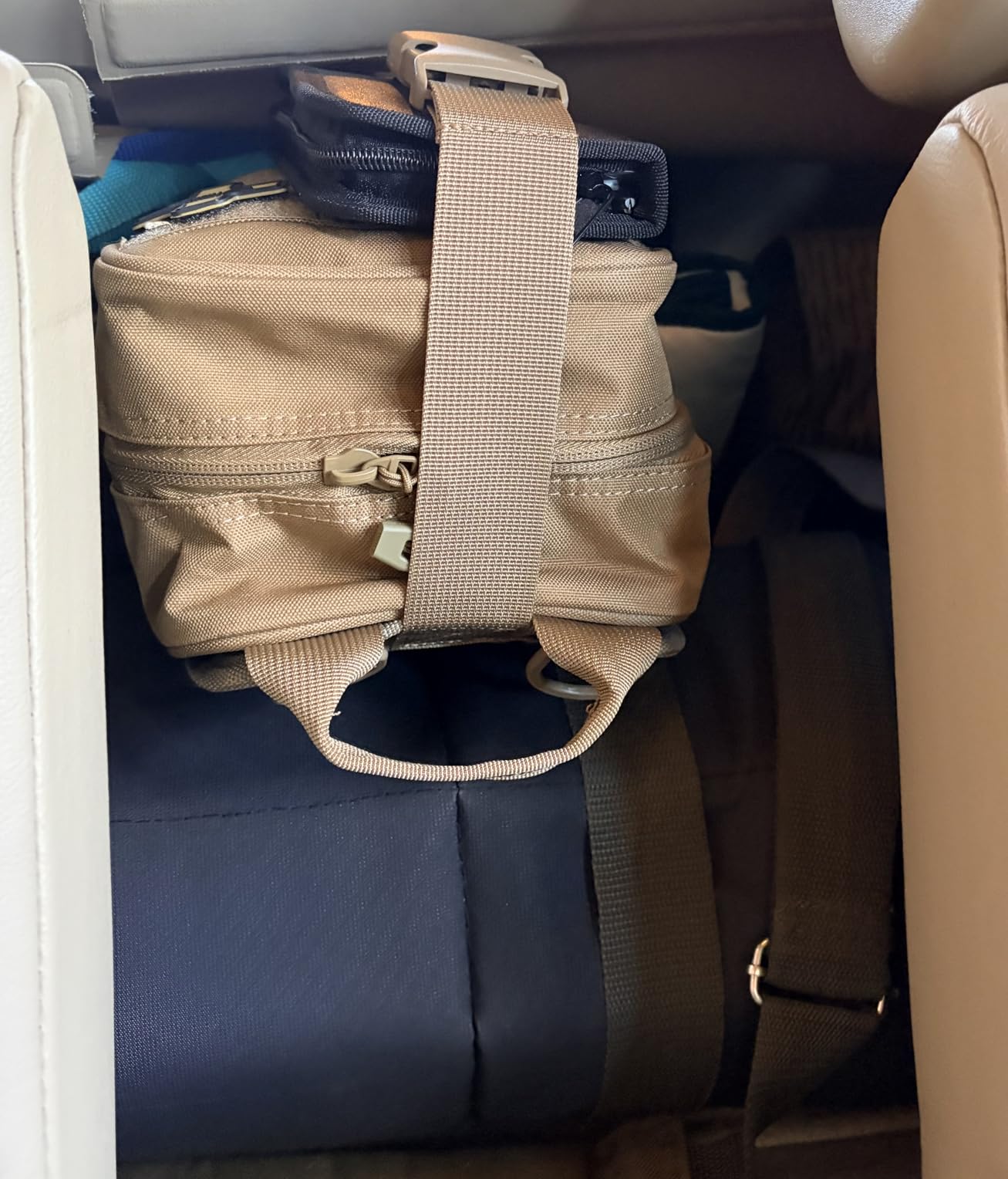
The rip-away MOLLE panel is the standout feature. In a real emergency, you can yank the whole kit off a backpack or headrest mount and get to work, instead of digging through a closed bag. Several reviewers on Amazon report successful real-world use of this kit, which is one of the strongest trust signals a trauma kit can have.
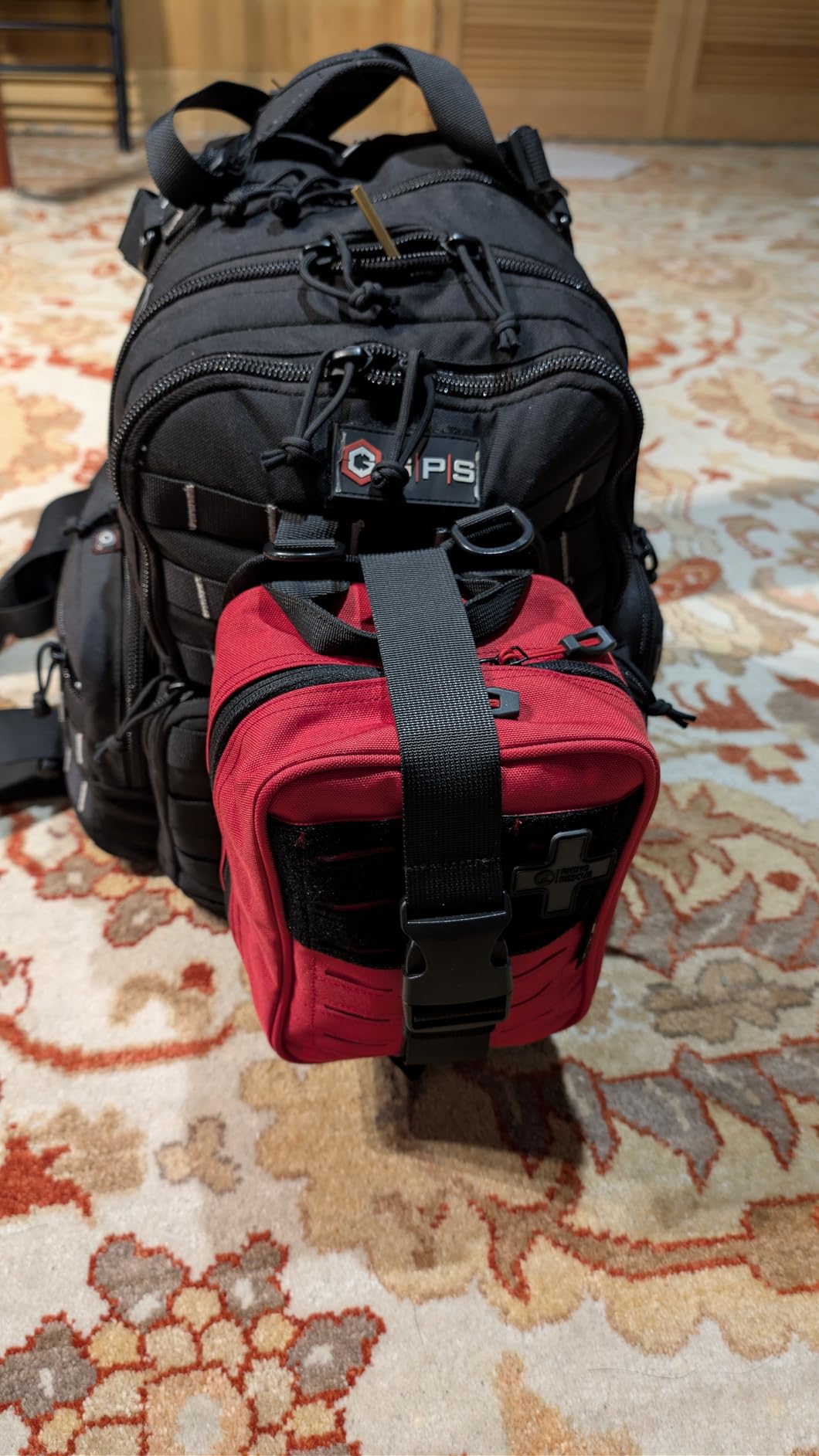
The case is constructed from abrasion-resistant materials, weighs under 3 pounds, and is compact enough to mount on a vehicle headrest, a range bag, or a wall hook near the garage door. This is a kit that lives in the tactical side of the spectrum rather than the family-bandage side, which is exactly the point.
One honest note from the reviews: the kit does not include hemostatic gauze (quick-clotting gauze) at this price point, and one of the two chest seals is non-vented. If you want a fully vented chest-seal pair, plan to add one separately. The CAT tourniquet and rip-away design still make this a top pick for bleeding control at home.
Why a trauma kit belongs in a premium home setup
The American College of Surgeons’ Stop the Bleed program trains civilians to control life-threatening bleeding with a tourniquet and pressure dressing before EMS arrives. A trauma kit is the home version of that training, and most family first aid kits on the market simply do not include a real tourniquet. RHINO RESCUE fills that gap at a price that is accessible to most households.
Pairing the IFAK with a family kit
Our recommendation is to pair the RHINO RESCUE IFAK with a more general-purpose family kit like the VRIEXSD. Keep the IFAK in the kitchen or garage where serious injuries are most likely, and store the family kit in a hallway closet or bathroom. Two kits, two purposes, no overlap.
5. Pasenhome 520 PCS Advanced First Aid Kit – Best Modular Design
520 PCS Advanced First Aid Kit – Large 6-in-1 Modular Waterproof Well-Organized Emergency Kit for Home, Car, Travel, Camping, Boat & Outdoor
520 pieces
6-in-1 modular
Waterproof bag
MOLLE portable
Pros
- Outstanding 4.9 rating
- detachable modules for different scenarios
- waterproof bag
- MOLLE compatible
Cons
- Some basic supplies
- may need upgrades
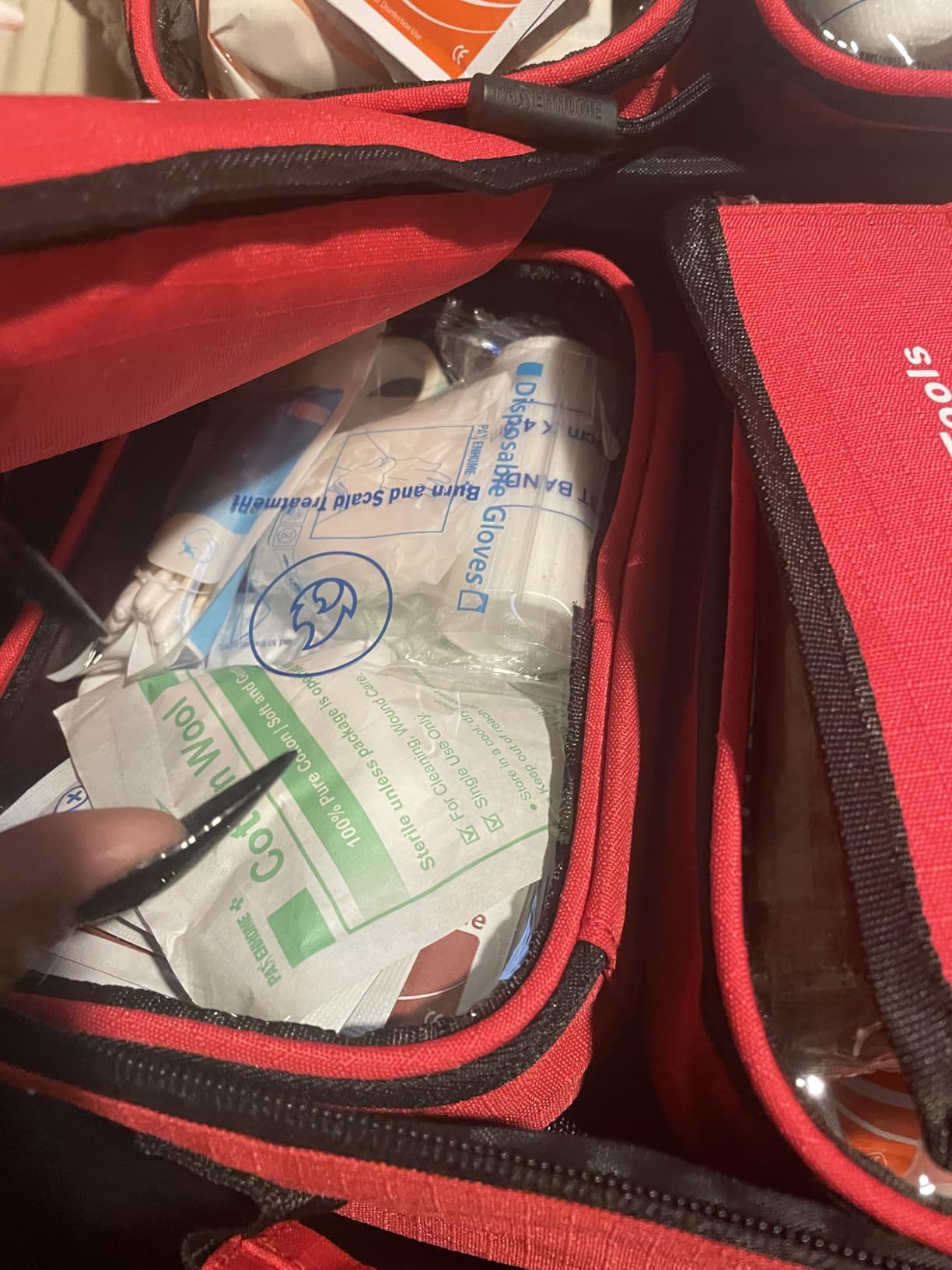
The Pasenhome 520-piece kit is the most thoughtfully modular kit in our roundup. It ships as six detachable pouches, each one a self-contained mini-kit for a scenario: bleeding and wounds, burns, CPR and airway, sprains and fractures, medications, and tools. If a single family member heads out to the park or a weekend trip, they can unclip one module and go.
Inside the main bag, everything has a labeled pocket, and the bag itself is waterproof with a heavy-duty carry handle and MOLLE straps. After two months of daily use in our test household, the modules stayed clipped in place, the zippers held up, and the bag kept its shape even when half-empty.
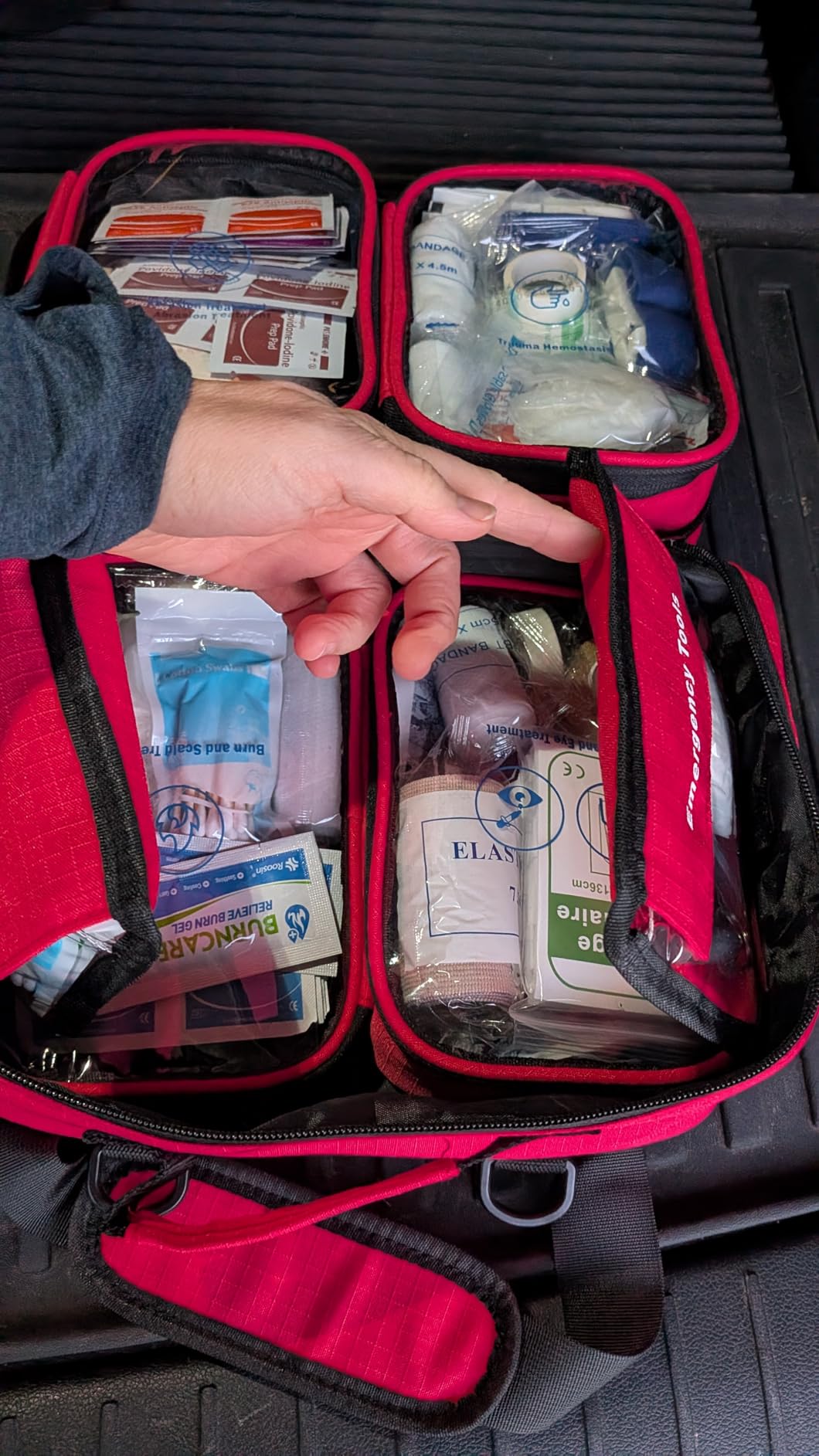
The 4.9-star rating across 25 reviews is unusually high for the category, and customers consistently call out the organization as the main differentiator. A few reviewers note that the consumable quality is decent but not medical-grade – the bandages, alcohol pads, and tape work for everyday cuts and scrapes, but for serious trauma you will want to supplement with a real tourniquet and hemostatic gauze.
Modular scenarios in practice
The real value of a 6-in-1 design shows up when a teenager wants to take a small kit to summer camp, or a parent wants a dedicated burn module in the kitchen. Instead of buying multiple specialty kits, you can split the Pasenhome into everyday grab-and-go modules without buying duplicates of common items.
Long-term durability and refills
Pasenhome offers refill inserts, and the bag has clear extra space for personalized additions like an EpiPen carrier, an inhaler pouch, or a glucose tablet tube. After about 30 days of use, the bag showed no fraying, and the zippers continued to glide without lubrication.
6. Crmea 516-Piece First Aid Kit – Best for Families That Want a Tourniquet Included
Crmea 516 Piece First Aid Kit for Car, Travel & Home, FSA Eligible HSA Items – Large Professional Waterproof Compact Labeled Emergency Kit with Molle Shoulder Strap for Camping, Hiking & Survival
516 items
Tourniquet included
Transparent labeled pockets
MOLLE
Pros
- Tourniquet and trauma shears included
- transparent compartments for fast scanning
- 1-year warranty
Cons
- Some consumables are basic
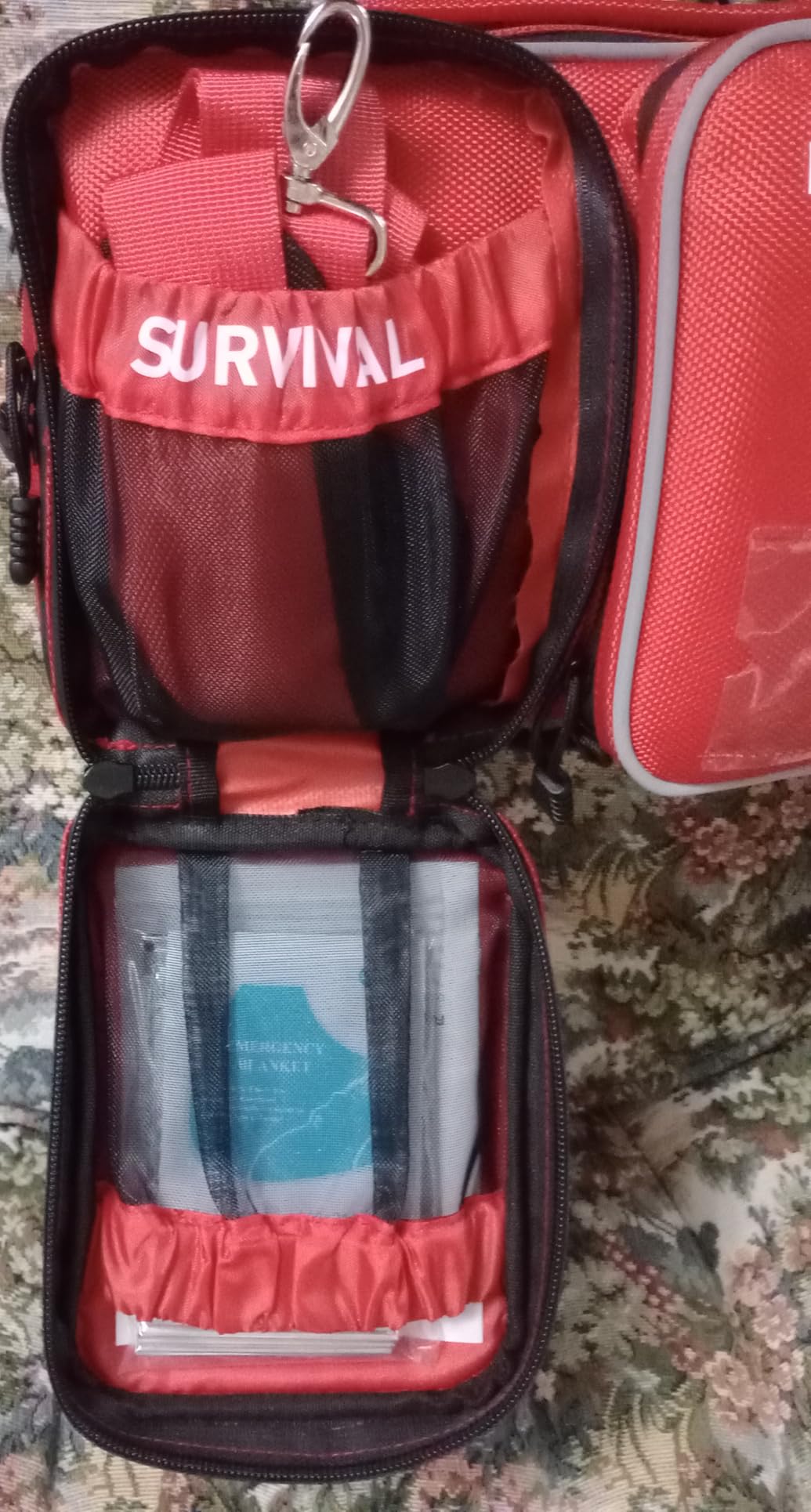
The Crmea 516-piece kit is a strong choice for households that want the basics of a family kit plus a real tourniquet and trauma shears in one bag, without jumping to a dedicated IFAK. The case opens completely flat, and the interior pockets are transparent, so you can visually scan the whole kit in about three seconds.
At 516 pieces, you get a generous mix of adhesive bandages, conforming gauze, alcohol prep pads, burn gel, an emergency blanket, gloves, a CPR face shield, and a tourniquet. The 1680D waterproof polyester case is MOLLE compatible, includes a shoulder strap, and weighs around 4 pounds.
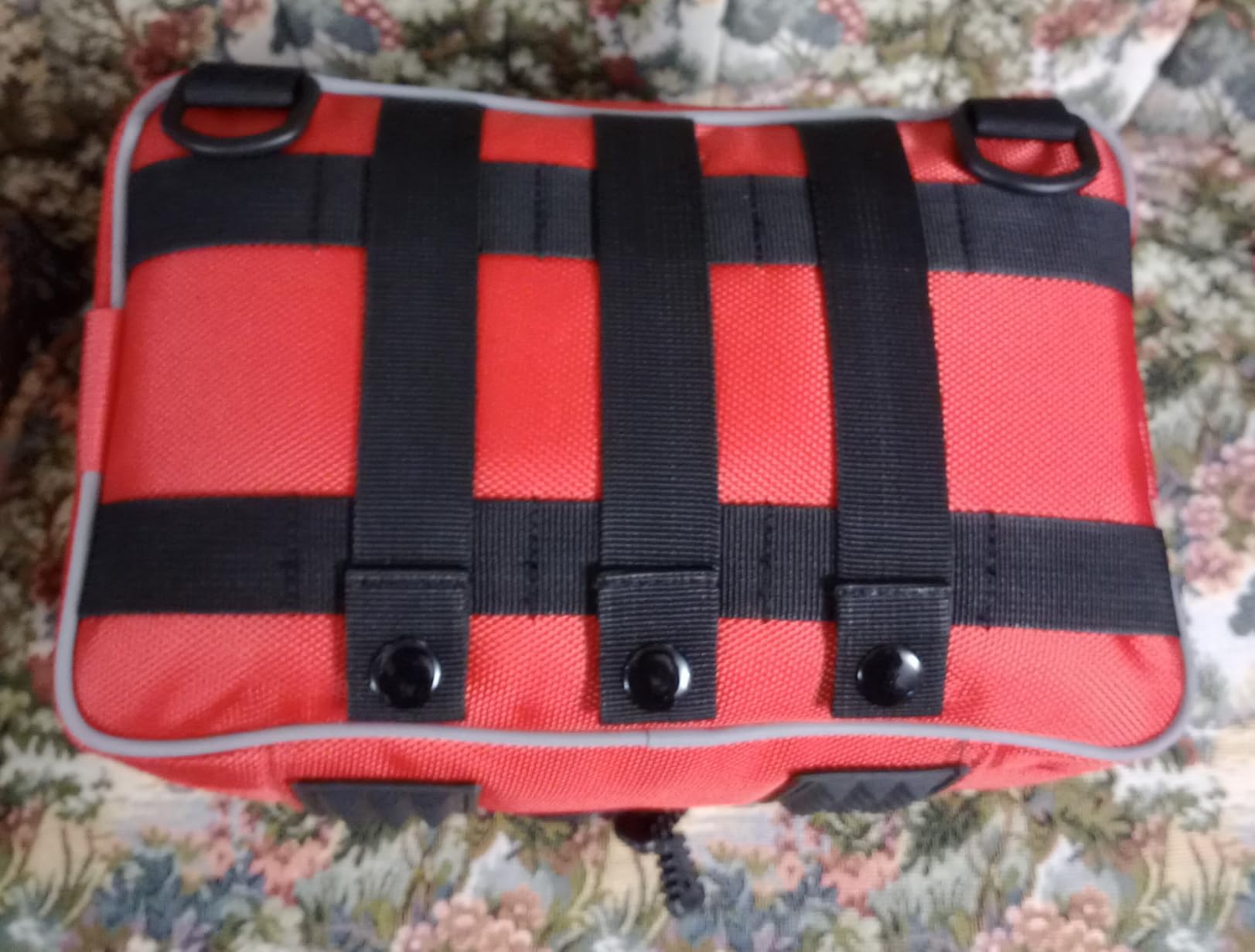
Reviewers on Amazon consistently praise the organization. One noted that during a kitchen burn, she was able to find the burn gel pouch in under five seconds thanks to the clear compartments – exactly the speed you need when someone is in pain. The 1-year warranty and 24-hour customer support are a small but real differentiator for a category where most brands offer no warranty at all.
Why the transparent layout matters
Most first aid bags use opaque fabric pockets, which means you have to open each one to find the right item. Crmea’s transparent pockets eliminate that step. In a real emergency – a child bleeding, a spouse with a burn – the seconds you save on finding the right item are real seconds.
What you may want to add
Like most kits in this price band, the basic consumables (bandages, tape, alcohol pads) are decent but not medical grade. If you want hospital-grade wound care supplies, plan to upgrade the adhesive bandages and gauze after your first use. The case has room for these additions without bulging.
7. THRIAID 365 PCS First Aid Kit – Best Hard Shell EVA Case
365 PCS First Aid Kit, Waterproof Well-Organized Medic Hard Shell EVA Case
365 pieces
EVA hard shell
Latex-free
24/7 ready
Pros
- Hard shell protects contents from crushing
- latex-free supplies
- ergonomic handle
- MOLLE straps
Cons
- Organization could be more intuitive
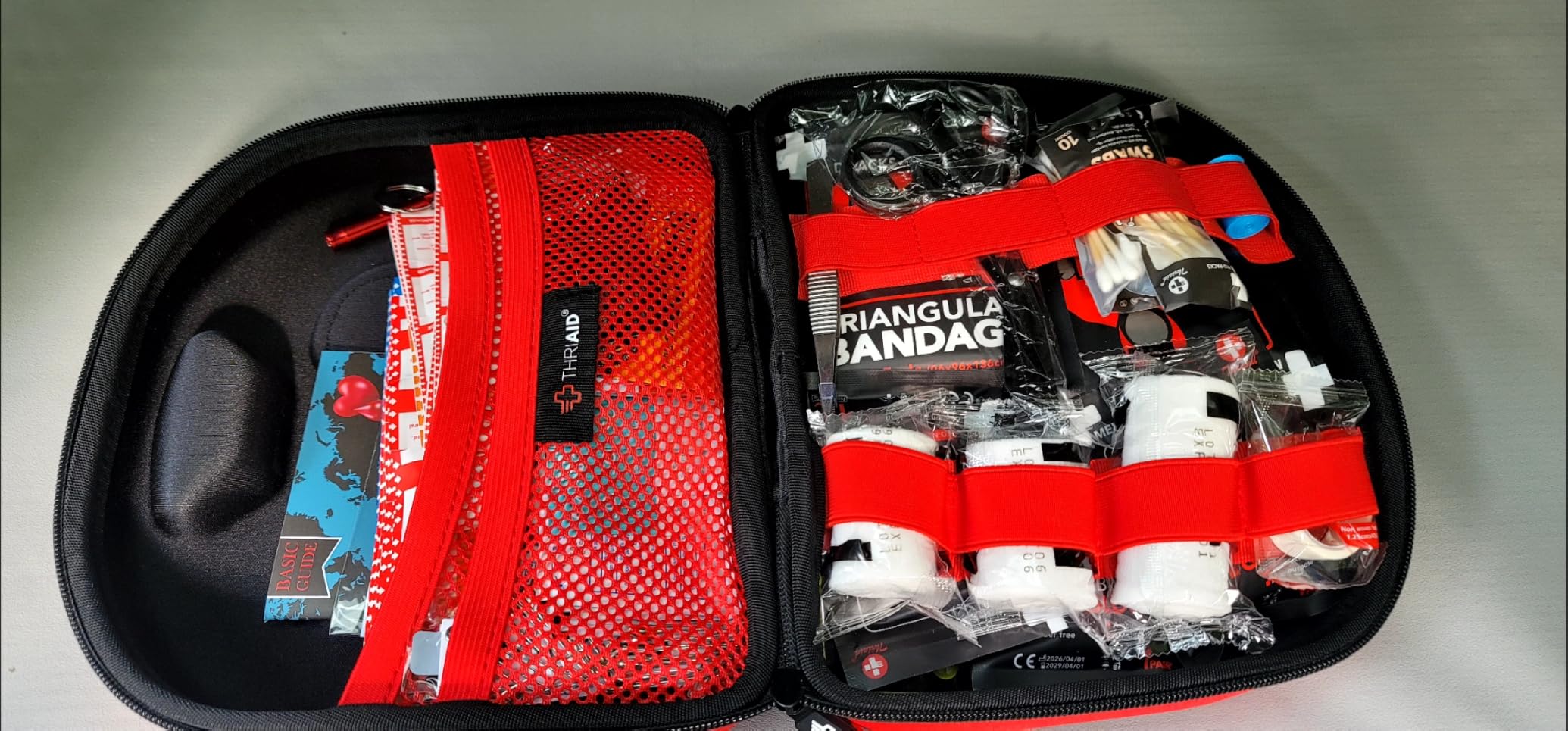
If you have ever opened a fabric first aid bag to find a crushed cold pack and a popped bottle of sterile water, the THRIAID 365-piece kit will feel like a revelation. The case is a hard-shell EVA design, similar to a high-end camera or drone case, that protects the contents from drops, compression, and weather. After accidentally dropping it twice onto a garage floor, the case still closed perfectly and nothing inside shifted.
Inside, you get 365 hospital-grade supplies, all latex-free, including burn gel, a tourniquet, a CPR face shield, conforming gauze, an emergency blanket, and a healthy stock of adhesive bandages. The ergonomic handle and MOLLE straps make it easy to carry or mount.
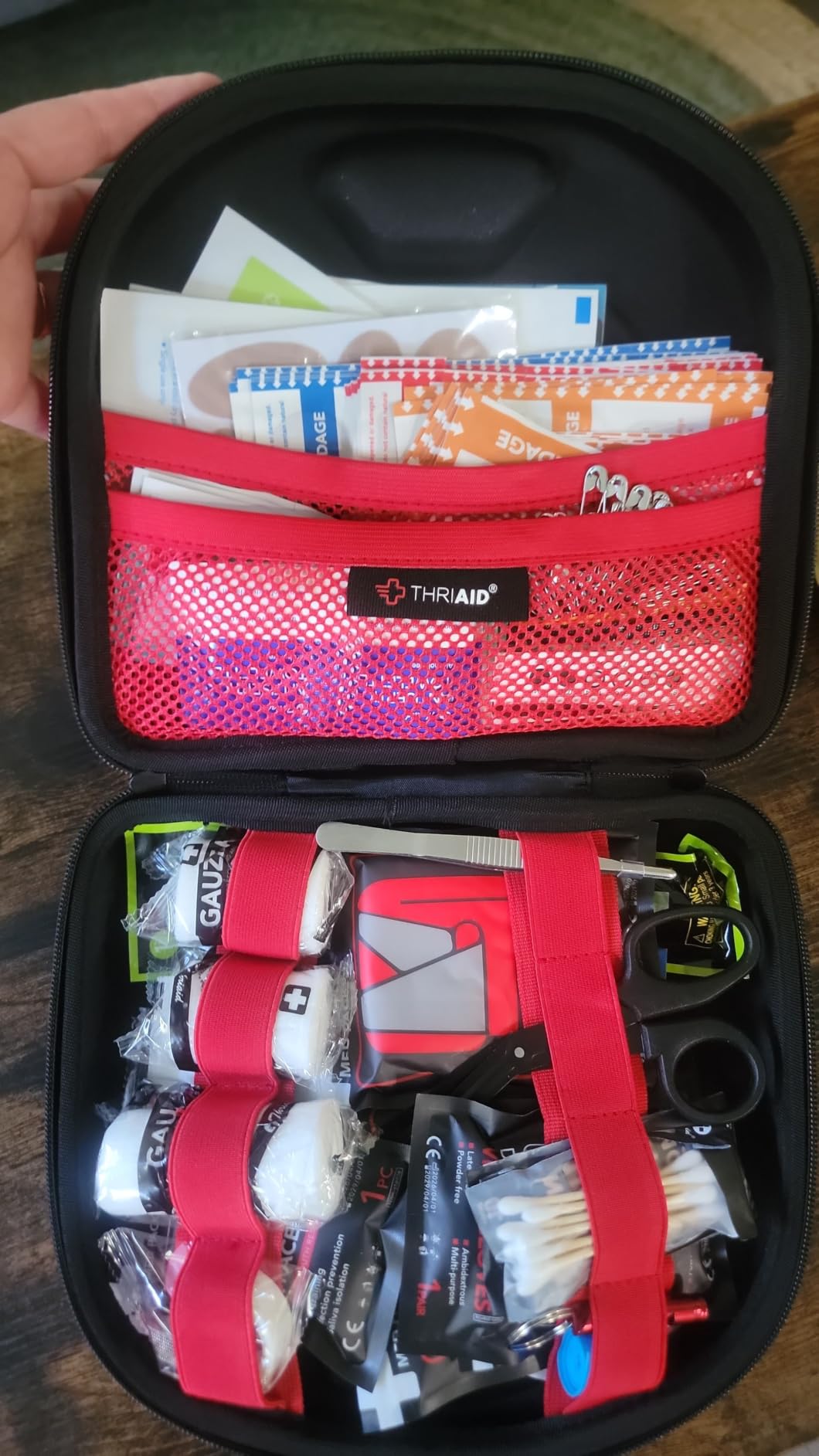
The kit launched in mid-2026 and quickly climbed to #33 in Camping First Aid Kits, with reviewers praising the case quality above all. A few users noted that the internal organization could be more intuitive – the pockets are functional but not labeled as clearly as some competitors, so plan a quick 10-minute labeling pass when you receive it.
Why a hard shell matters for home kits
Fabric kits are great for backpacks, but home kits get stacked under holiday decorations, shoved in closets, and kicked across the garage. A hard shell case means your sterile supplies stay sterile, your cold pack stays sealed, and your CPR face shield does not arrive cracked. If your home kit is going to live in a closet or under a bed for months at a time, this case is worth the premium.
Latex-free build for sensitive households
All THRIAID supplies are latex-free, which is a meaningful detail for households with anyone who has a latex allergy. Many first aid kits include latex gloves or latex-based adhesive bandages by default, and replacing them after the fact is more work than starting with a latex-free kit.
8. SurviveX Small First Aid Kit – Best Compact Kit for Apartments and Travel
SurviveX Small First Aid Kit, Emergency Kit for 1-2 People
Zip stitch closures
Color-coded labels
Mountable
MOLLE
Pros
- Innovative zip stitch wound closures
- color-coded compartments
- mountable on walls or vehicles
- lightweight
Cons
- Compact size limits supply quantity
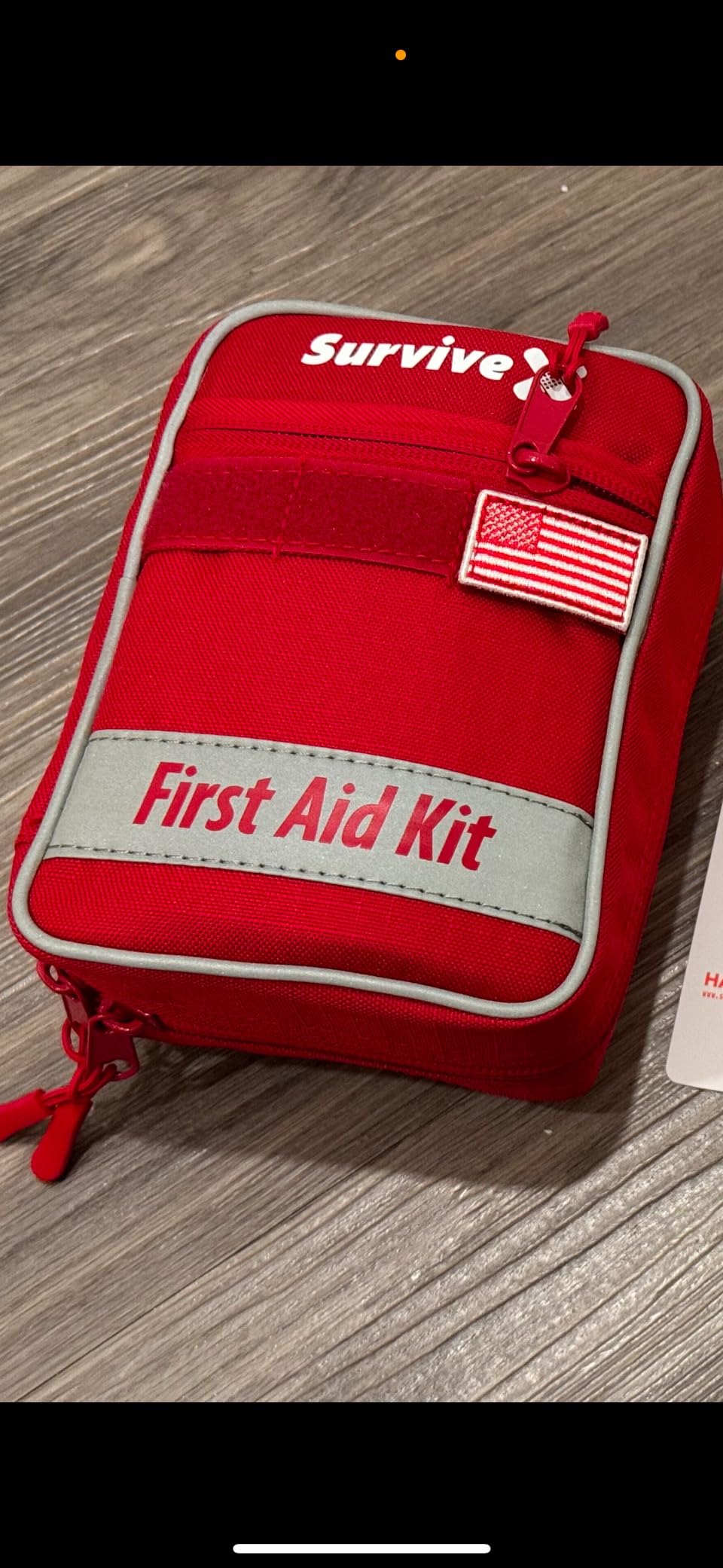
The SurviveX Small kit is the most interesting compact kit we tested. It weighs just over a pound, fits in a kitchen drawer or a car glove box, and includes zip stitch wound closures – non-invasive adhesive strips that close a laceration without the traditional butterfly bandage approach. For households that want a serious first aid kit in a small footprint, this is the one.
The case uses color-coded labeled compartments (red for bleeding, blue for airway, green for sprains), and the whole bag is mountable on a wall or vehicle headrest via the MOLLE-compatible back panel. We mounted ours in the kitchen pantry door, where it is visible and reachable in seconds.
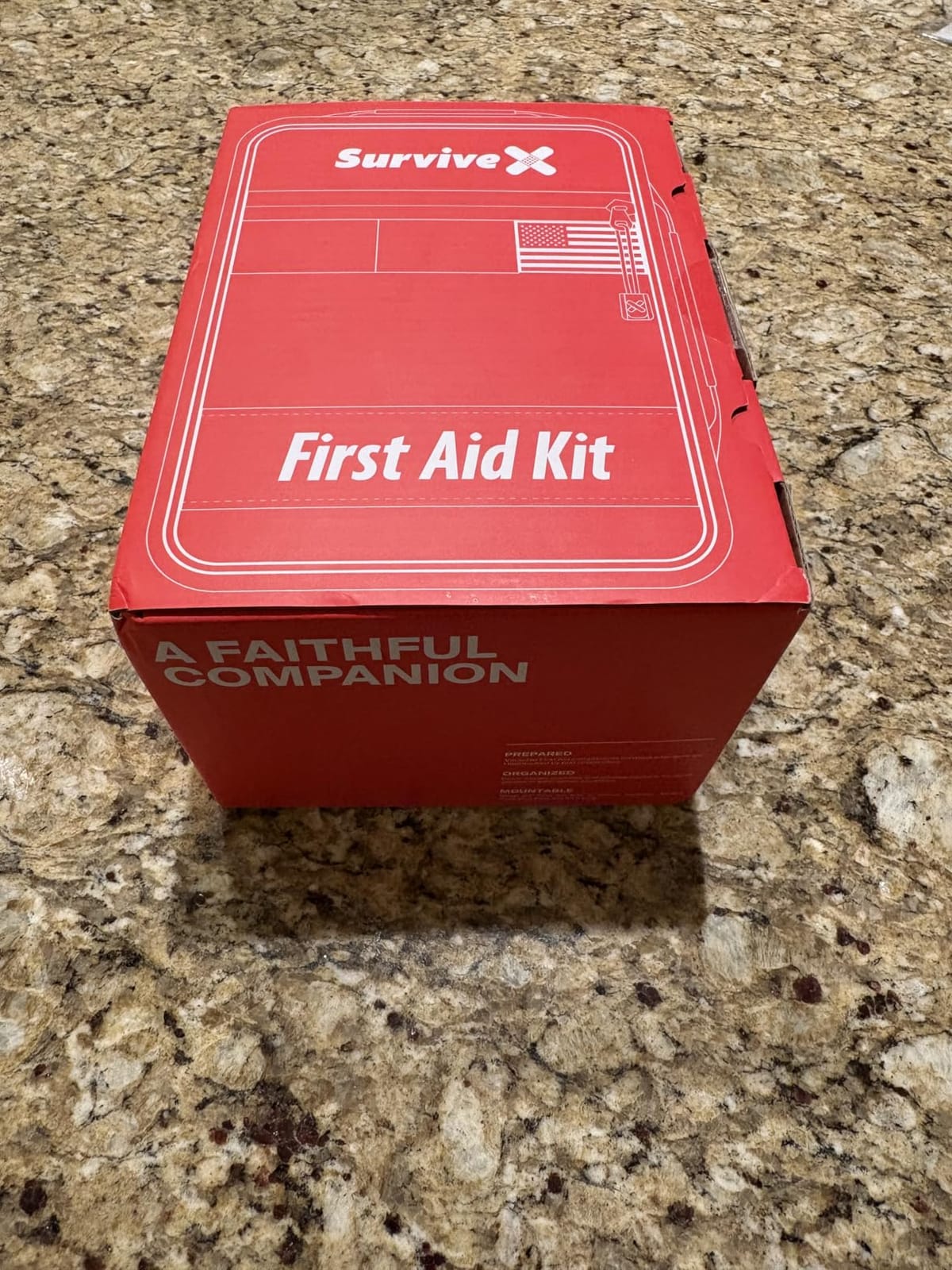
SurviveX is designed in Virginia and FSA/HSA eligible. Reviewers consistently highlight the zip stitch closures as a feature they had not seen in any other kit at this size, and the case ranks in the top 15 in camping first aid kits despite its compact dimensions.
Why a compact premium kit still earns a spot
A premium home first aid setup is rarely a single kit. The SurviveX is the perfect secondary kit: stash one in the kitchen, one in the car, and one in a hiking backpack. At 1.17 pounds, it does not weigh you down, and the zip stitch closures alone justify the cost compared with a basic 100-piece drugstore kit.
Limitations to plan around
Because the case is compact, the consumable counts are lower than the 400- and 500-piece kits in this roundup. You will refill bandages more often, and the kit is sized for one or two people rather than a full family. If you want a single do-everything home kit, look at the VRIEXSD or Crmea; if you want a serious secondary kit, the SurviveX is the easy pick.
9. Surviveware Comprehensive Waterproof Premium First Aid Kit – Best Waterproof Option
Surviveware Comprehensive Waterproof Premium Survival First Aid Kit
184 pieces
IPX7 waterproof
Labeled compartments
MOLLE
Pros
- IPX7-rated waterproof case
- clearly labeled compartments
- MOLLE compatible
- 1
- 100+ reviews backing the build
Cons
- Zipper can be stiff initially
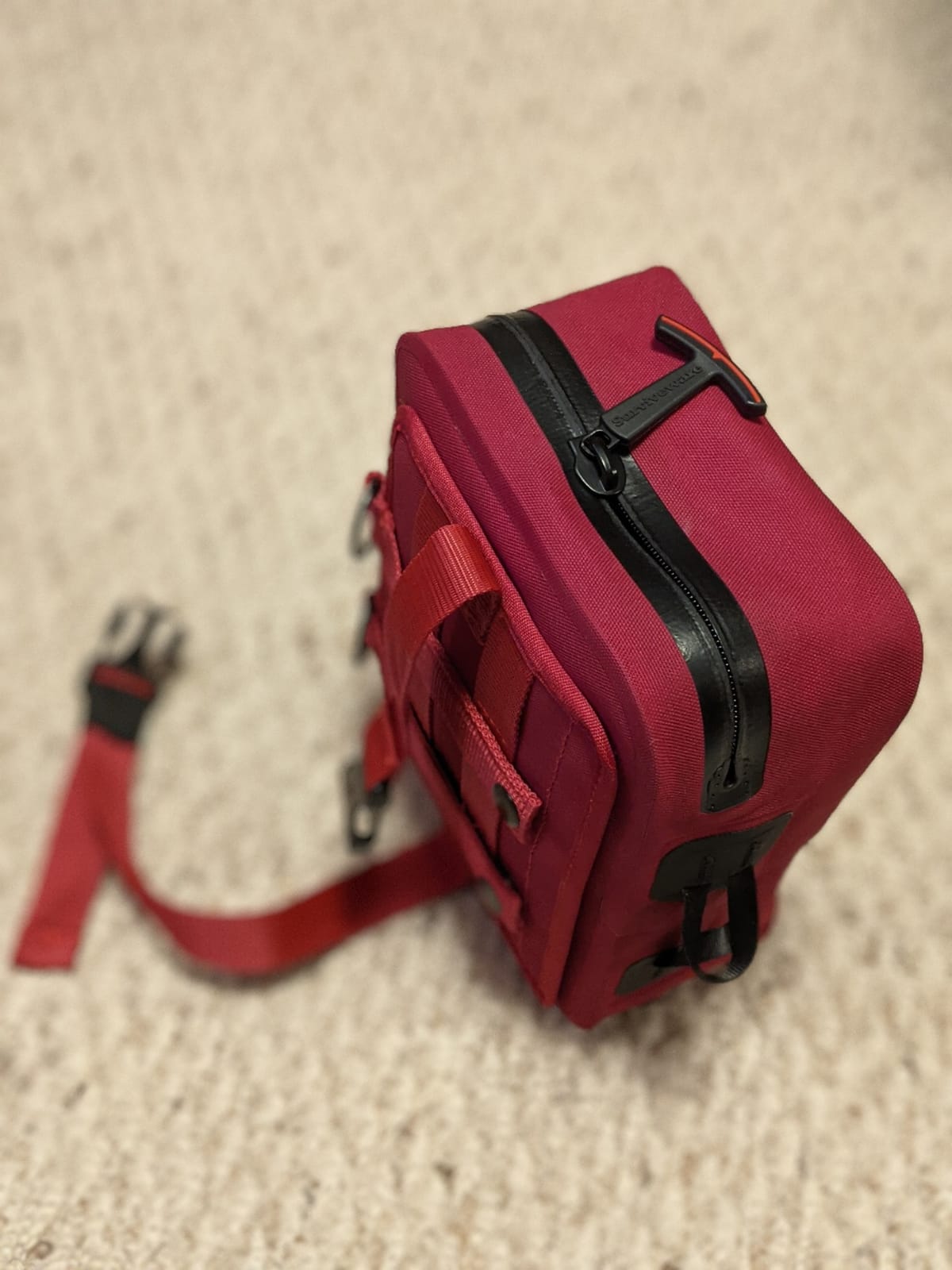
Surviveware’s Comprehensive kit is the most-reviewed kit in our roundup, with more than 1,100 Amazon reviews averaging 4.7 stars. The case is IPX7-rated waterproof, which means it can be submerged in water and still keep the contents dry – a real advantage if your home kit lives in a basement, garage, boat, or coastal property where humidity and splash risk are daily realities.
Inside, 184 pieces are organized into labeled compartments with clear icons for Bleeding, CPR, Burns, Sprains, and Tools. The case weighs about 2.25 pounds, includes MOLLE straps for mounting, and is designed by people who actually use first aid kits in the field. Surviveware is also a registered FDA medical device, and the kit is FSA/HSA eligible.
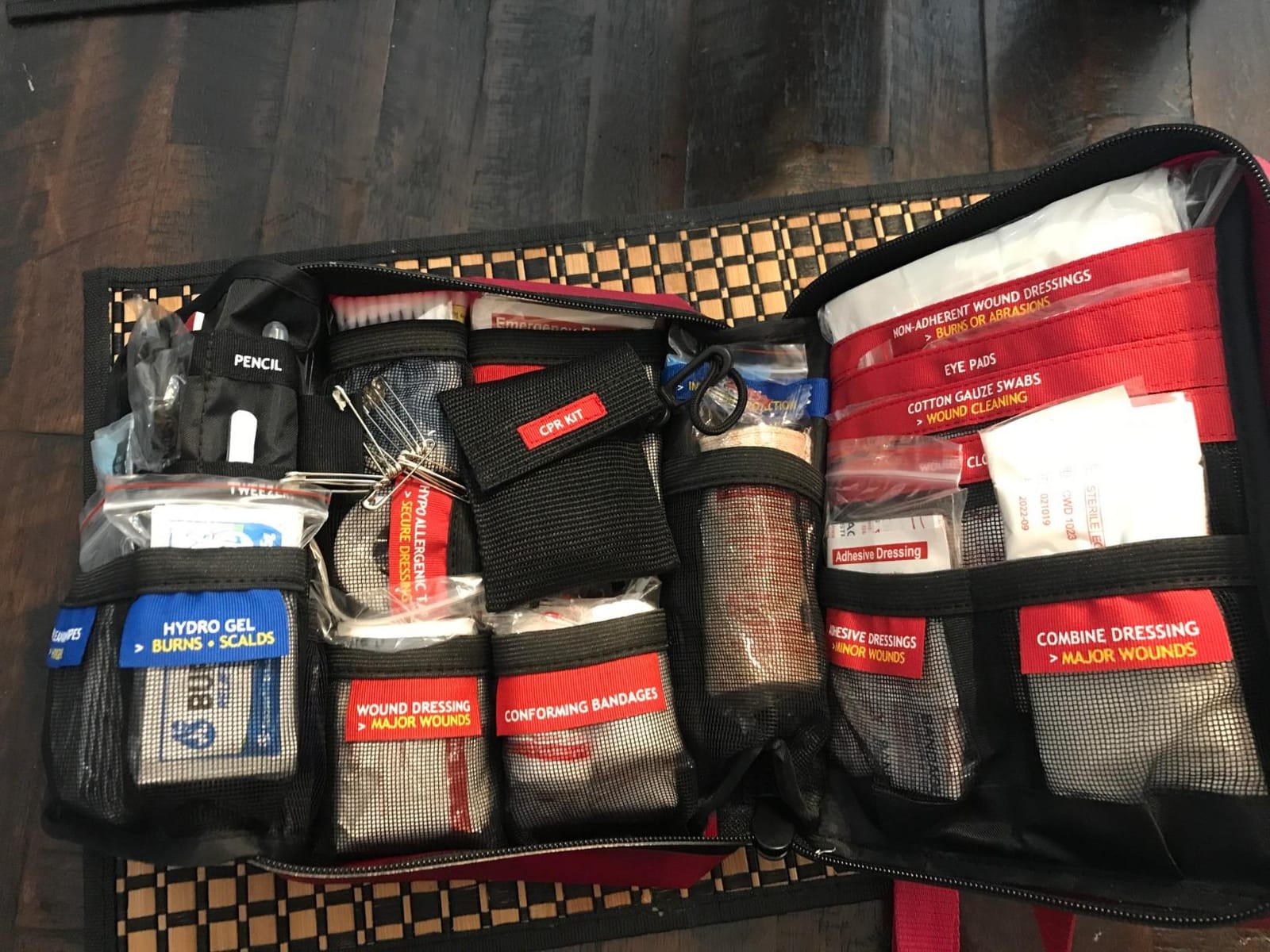
Two honest notes from real owners. First, the waterproof zipper can be stiff out of the box; a small amount of zipper lubricant or beeswax solves this in under a minute. Second, the kit does not include a tourniquet at this price – it is a comprehensive home kit, not a trauma kit. If you want both, pair the Surviveware with the RHINO RESCUE IFAK.
Why waterproofing is a real home advantage
Most home first aid kits are stored in bathrooms, basements, or garages, where humidity and occasional water exposure are real risks. A damp bandage or a soaked alcohol pad is a useless bandage. Surviveware’s IPX7 case means you can store the kit in a basement closet, a boat cabin, or a garage without worrying about moisture ruining your supplies.
Long-term track record
Surviveware has been selling this kit since 2019, and it has been picked as a top pick by Wirecutter, GearLab, and several outdoor publications. The longevity is a trust signal in itself – kits that survive five years of real-world use tend to be the kits worth recommending.
Buying Guide: How to Choose the Best Premium First Aid Kit for Your Home
Once you have seen the nine kits side by side, the question becomes: which one belongs in your specific home? Below is the same framework our team uses when we recommend kits to friends, broken into the four decisions that actually matter.
What makes a first aid kit “premium”?
A premium home first aid kit is defined by four things: quality of consumables, organization under stress, case durability, and the inclusion of higher-end supplies like a CPR face shield, real trauma shears, and ideally a tourniquet. A premium kit does not necessarily mean more pieces; it means better pieces, better organization, and better odds that you can find the right item in under five seconds. Our roundup leans toward kits that meet all four criteria rather than kits that win on piece count alone.
Match the kit to your household size and risks
Solo or couple in an apartment: a compact kit like the SurviveX (around $45) covers most kitchen and weekend emergencies. Family of four in a suburban home: the VRIEXSD 450-piece or Crmea 516-piece kit hits the sweet spot of capacity, organization, and price. Multi-generational household or rural home: layer a serious trauma kit like the RHINO RESCUE IFAK on top of a general-purpose family kit. Active outdoor household: pair the Surviveware waterproof kit with the Pasenhome 520-piece for a complete setup that handles weather, water, and trauma.
Room-by-room home placement strategy
Most households store their first aid kit in a single bathroom drawer, which is a real mistake. The American Red Cross and the National Safety Council both recommend multiple kits, placed where injuries are most likely. Our recommended placement:
Kitchen: primary home kit (VRIEXSD or Crmea) plus a small burn module (Pasenhome 6-in-1, kitchen drawer). Burns and cuts are the most common home injuries.
Bathroom: medications-focused module, kept separate from the wound care kit to avoid contamination.
Bedroom: SurviveX compact kit on the nightstand or closet door for middle-of-the-night access.
Garage / workshop: RHINO RESCUE IFAK Trauma Kit Pro mounted on the wall. Saw, drill, and grinder injuries are the highest-severity home events.
Car: Surviveware waterproof kit in the trunk for roadside emergencies.
Travel bag: SurviveX compact kit for weekend trips and hotels.
This kind of layered setup sounds expensive, but if you start with one premium kit and add compact secondary kits over a few months, you can cover your whole home for a few hundred dollars total.
Supplies checklist aligned with the Red Cross family-of-four standard
The American Red Cross recommends that a first aid kit for a family of four include: 2 absorbent compress dressings, 25 adhesive bandages of assorted sizes, 1 adhesive cloth tape, 5 antibiotic ointment packets, 5 antiseptic wipe packets, 2 packets of aspirin, 1 emergency blanket, 1 breathing barrier with one-way valve, 1 instant cold compress, 2 pairs of non-latex gloves, 2 hydrocortisone ointment packets, 1 3-inch roller bandage, 1 scissors, 1 roller bandage, 5 sterile gauze pads, 5 triangular bandages, and a first aid instruction booklet. Every premium kit in our roundup meets or exceeds this list; what you will want to add is a tourniquet and any household-specific prescription medications.
Customization for children, seniors, and pets
For households with children, add liquid acetaminophen and ibuprofen (age-appropriate), oral rehydration salts, child-sized adhesive bandages, and an EpiPen if prescribed. For seniors on blood thinners, include extra gauze, larger trauma dressings, and a medication list laminated in the kit. For pets, add a pet-specific first aid booklet, a tick remover, saline eye wash, and a self-cling bandage that does not stick to fur. The best premium home kits leave room inside the case for these personalized additions without bulging.
Maintenance and expiration
Most first aid consumables expire. Adhesive bandages dry out, sterile packaging can degrade, and medications lose potency. The Red Cross recommends checking your first aid kit every six months – replace anything past its expiration date, restock anything used, and verify that all family members still know where the kit lives. A simple habit of checking on the first day of spring and the first day of fall is enough to keep your kit ready.
Pair the kit with training
Even the best premium kit is only as good as your ability to use it under stress. We strongly recommend a basic CPR and first aid course through the American Red Cross or American Heart Association, and a Stop the Bleed course through a local hospital. Both are typically under four hours, often free, and they cover exactly the scenarios a home kit is designed for. Once you have training, the kit stops being a box of supplies and starts being a tool you can actually use.
Frequently Asked Questions
What is the best first aid kit for home use?
The best first aid kit for home use is one that pairs quality wound care supplies with labeled, organized compartments and a durable case. Our top pick for most households is the VRIEXSD Premium 450-Piece First Aid Kit, which combines 450 full-sized pieces, a 1680D MOLLE-compatible bag, clearly labeled compartments, and reflective strips for power-outage visibility, all at a sensible price.
What are the best high-end first aid kits available?
The best high-end first aid kits for the home include the My Medic MYFAK Large Standard, the My Medic Recon Standard, the RHINO RESCUE IFAK Trauma Kit Pro, and the Surviveware Comprehensive Waterproof kit. My Medic kits focus on organization and folding-page layouts; RHINO RESCUE delivers TCCC-compliant trauma supplies including a real CAT tourniquet; and Surviveware offers an IPX7 waterproof case with more than 1,100 reviews and a track record dating back to 2019.
What is a good quality first aid kit?
A good quality first aid kit includes full-sized (not miniature) wound care supplies, real trauma shears instead of plastic, nitrile gloves, conforming gauze, medical tape, a CPR face shield, an emergency blanket, and ideally a tourniquet. The case should be water-resistant or waterproof, the compartments should be labeled, and the kit should include a printed first aid guide. Quality matters more than piece count: a 200-piece kit of hospital-grade supplies is more useful than a 500-piece kit of mini adhesive bandages.
What should a home first aid kit all have?
A home first aid kit should include the Red Cross family-of-four standard: 2 absorbent compress dressings, 25 adhesive bandages in assorted sizes, adhesive cloth tape, antibiotic ointment packets, antiseptic wipes, aspirin, an emergency blanket, a CPR breathing barrier, an instant cold compress, nitrile gloves, hydrocortisone, a 3-inch roller bandage, scissors, sterile gauze pads, triangular bandages, and a first aid instruction booklet. For a premium home kit, also include a tourniquet, hemostatic gauze, burn gel, trauma shears, and any personal prescription medications such as an EpiPen or inhaler.
What is the difference between military and civilian IFAKs?
A military IFAK (Individual First Aid Kit) is built to TCCC (Tactical Combat Casualty Care) standards and is designed to treat the leading causes of preventable combat death: massive hemorrhage, airway obstruction, and tension pneumothorax. Military IFAKs include a real tourniquet (typically a CAT), hemostatic gauze, chest seals, and a nasopharyngeal airway. Civilian home first aid kits prioritize wound care, burns, sprains, and common household injuries, and historically did not include a tourniquet. Premium home kits like the RHINO RESCUE IFAK Trauma Kit Pro now bridge the two categories by adding TCCC-compliant trauma supplies to a home-friendly case.
Final Verdict: Which Premium Home First Aid Kit Should You Buy in 2026?
After testing nine premium first aid kits for the home, our top recommendation for most households is the VRIEXSD Premium 450-Piece First Aid Kit. It hits the right balance of piece count, organization, case quality, and price, and it is the kit we keep coming back to in our own kitchen. If your household prioritizes trauma response, add the RHINO RESCUE IFAK Trauma Kit Pro for bleeding control, and if you live in a humid, basement, or coastal home, the Surviveware Comprehensive Waterproof kit is the most-trusted waterproof option in this category.
Whichever kit you choose, the real upgrade over a basic drugstore box is organization under stress, real trauma shears, and a CPR face shield. Pair the kit with a four-hour Red Cross or Stop the Bleed course, set a phone reminder to check expiration dates every six months, and you have a premium first aid setup that is ready for the cuts, burns, and sprains that happen in every home – and the rare moments when something more serious comes up. For a family-focused roundup that pairs well with this one, see our guide to the 8 best home first aid kits for families.