
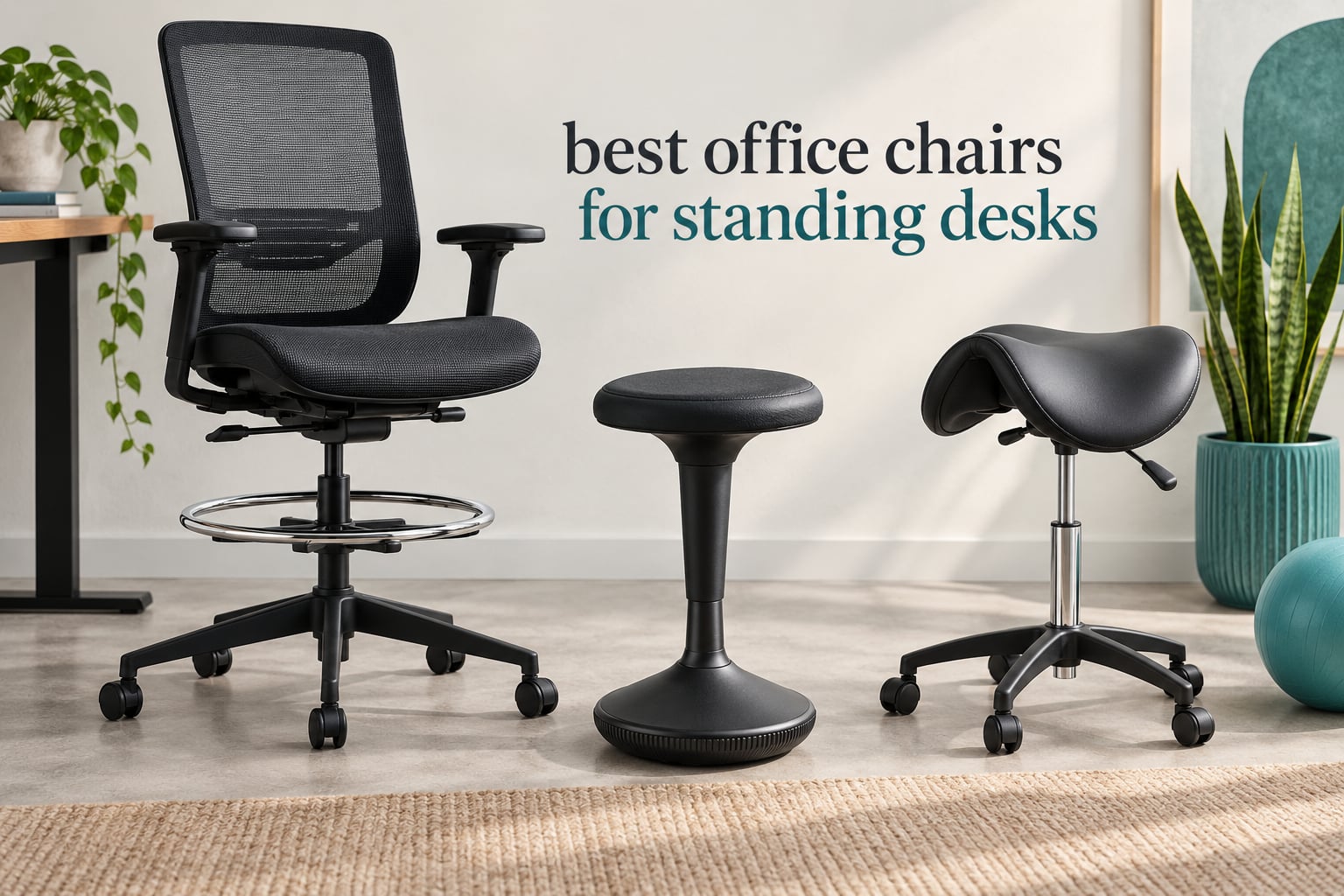
The most common complaint I hear about office chairs for standing desks is not comfort. It is height. People spend weeks choosing a chair by brand, by look and by lumbar support, then discover the seat tops out three inches below the work surface and the whole purchase goes back. Our team has spent the last two months working through seat height ranges, foot ring geometry and weight ratings across ten of the most-reviewed tall and perching seats sold today, and every recommendation below is built around the one number that decides this category: how high the seat actually goes.
Last tested and updated in October 2026. We compared published seat height ranges, foot ring adjustment, base footprint, weight capacity and material choices for all ten chairs, then matched each one against the desk heights people actually work at. Specs come from the manufacturers’ own listings and aggregated buyer reviews, and every pick below carries a numeric range you can hold against your own desk.
Three things came out of that work immediately. Price predicts almost nothing about height in this category, tall versions are frequently rated lower for weight than the standard chair they are based on, and there is a real adjustment period of several weeks before a tall seat stops feeling strange. If you are still deciding on the desk itself, start with our guide to standing desks for short people, because a desk that only travels to 32 inches changes which chairs on this list you should even consider.
Table of Contents
What Kind of Chair Is Best for Using With a Standing Desk?
The best chair for a standing desk depends on whether you fully sit or perch, and on your desk height. A drafting chair is right if you sit fully at a surface between 34 and 42 inches. A leaning sit-stand chair works if you alternate between perching and leaning. An active perching stool suits short perching bursts. Whichever you pick, measure your work surface, subtract 10 to 12 inches, and buy a seat that reaches that number.
That subtraction rule is the whole decision. At a 40 inch surface your feet no longer reach the floor, so the seat has to land around 28 to 30 inches and a foot ring becomes structural rather than decorative. At a 34 inch surface you need roughly 22 to 24 inches, which is where most standard task chairs stop and tall chairs begin.
Beyond that rule, the category splits into three families, and the time you spend at the elevated surface decides which one you want:
Drafting chairs are a normal task chair with an extended gas cylinder and a foot ring. You sit fully, backrest and all. They are the safest choice for anyone who will be at the elevated surface for more than about an hour at a stretch, and they are the only family that works for long typing blocks at standing height.
Leaning and sit-stand chairs tilt with your body so you can perch, lean and pivot between seated and semi-standing. They suit people who want movement rather than a fixed sitting posture. Our selection skews toward drafting chairs and active stools, so if you want that family covered properly, our dedicated ergonomic stool roundup covers the perching side in more depth.
Active perching stools are backless or low-back seats that keep your core engaged. They work well in short bursts and for task-switching, and they are the cheapest way into the category. They are not a substitute for a full task chair on a ten hour day.
Top 3 Picks for Standing Desks in 2026

Office Star DC Series Deluxe Mesh
- Height-adjustable 18.25 inch foot ring
- One-touch pneumatic height
- Mesh back with lumbar support


The Office Star leads the roundup because it is the only chair here that pairs the highest rating in the group with a genuinely long warranty on metal parts, and because its foot ring adjusts across 18.25 inches, which is the widest single-fit span we found. The HYLONE high-back is the pick if airflow matters to you more than footprint. The Primy is the pick if you want the most-reviewed chair in Office Drafting Chairs and value the flip-up arms and adjustable lumbar support.
10 Best Office Chairs for Standing Desks at a Glance (2026)
| Product | Specifications | Action |
|---|---|---|
| Office Star DC Series Deluxe Mesh Back Drafting Chair |
|
Check Latest Price |
| HYLONE High-Back Mesh Drafting Chair |
|
Check Latest Price |
| Primy Tall Drafting Chair with Flip-Up Arms |
|
Check Latest Price |
 Brick Attic Drafting Chair with Detachable Backrest Brick Attic Drafting Chair with Detachable Backrest |
|
Check Latest Price |
 BOLISS 400 lbs High Back Drafting Chair BOLISS 400 lbs High Back Drafting Chair |
|
Check Latest Price |
 Learniture Active Learning Wobble Stool Learniture Active Learning Wobble Stool |
|
Check Latest Price |
 Backerz Standing Desk Wobble Stool Backerz Standing Desk Wobble Stool |
|
Check Latest Price |
 Kensaker Drafting Chair with Locking Foot Ring Kensaker Drafting Chair with Locking Foot Ring |
|
Check Latest Price |
 HYLONE Armless Drafting Chair with Footrest HYLONE Armless Drafting Chair with Footrest |
|
Check Latest Price |
 DUMOS Armless Drafting Chair DUMOS Armless Drafting Chair |
|
Check Latest Price |
1. Office Star DC Series Deluxe Mesh Back Drafting Chair – Best Overall Drafting Chair
Office Star DC Series Deluxe Breathable Mesh Back Ergonomic Drafting Chair with Lumbar Support and Adjustable Footring, Black Fabric
Breathable mesh back
18.25 inch adjustable foot ring
275 lb rating
15 year metal warranty
Pros
- Highest rated at 4.6 stars across 2000+ reviews
- Adjustable 18.25 inch foot ring fits most leg lengths
- One-touch pneumatic seat and back height
- Built-in lumbar with thick foam seat
- Longest warranty on metal parts in this group
Cons
- Armless design gives no forearm support for long typing
- Foot ring can creep downward under pressure
- Seat is supportive rather than plush
This is the chair I keep coming back to because the numbers line up. The seat height listing runs to 35 inches at the top of the model and the foot ring adjusts across 18.25 inches, which means the same chair works whether you are 5 foot 4 or 6 foot 3. The mesh back is a genuine full-height mesh rather than a fabric panel with mesh inserts, and that is the difference between a chair you can wear for six hours and one you cannot.
The foot ring is the part most worth reading the reviews on. Buyers repeatedly note that on some units the ring creeps downward under load, and the fix that owners report working is a firm extra turn on the adjusting screw or a sleeve around the ring itself. That is a five minute fix, not a reason to walk away, but it is worth knowing about before the chair arrives.
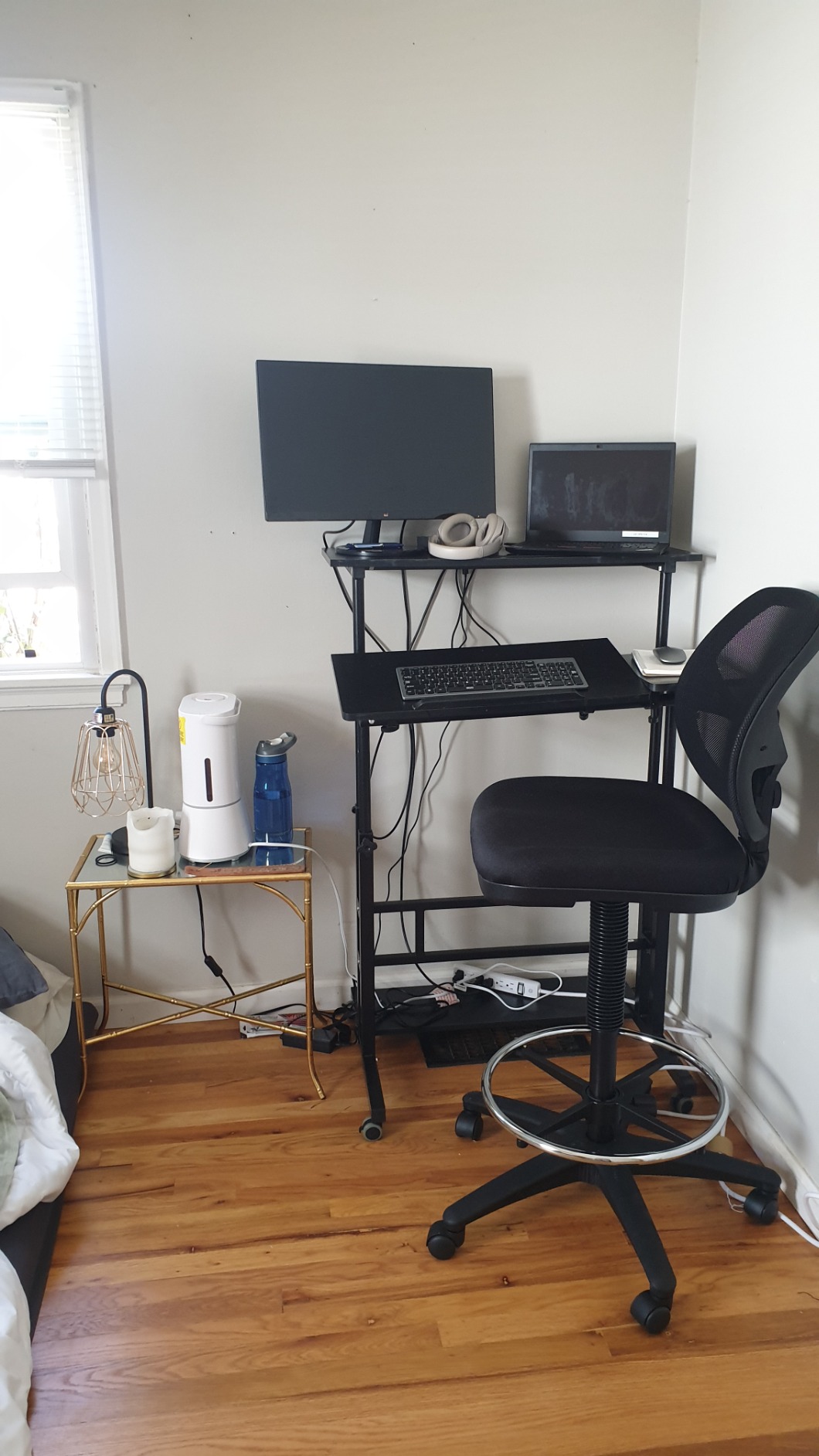
Build quality is the quiet strength. The base is heavy-duty nylon with dual-wheel carpet casters, and the warranty runs 15 years on non-moving metal parts, 5 years on components and 3 years on upholstery and foam. No other chair in this roundup comes close on the metal warranty, and that matters more than most buyers expect when a chair is rated for commercial use.
Assembly is straightforward and the one-touch pneumatic lever means you can change height and back height in a single motion rather than hunting for separate levers under the seat. The padded fabric seat is medium-firm rather than deeply cushioned, which keeps it from feeling spongy after four hours but will not suit someone who wants a plush landing.
Does this reach high enough for a 40 inch standing desk?
Yes for most users. The listed seat height tops out at 35 inches, and the 18.25 inch foot ring span means your feet land properly whether you perch high or sit lower on the same cylinder. If your desk goes above 44 inches, this is no longer the chair you want, and the BOLISS or Brick Attic options on this list reach further.
The armless frame is the real trade-off. There is nothing to rest your forearms on during a long typing block at height, which some people find tiring by mid-afternoon. If you type heavily for hours, the HYLONE high-back at number two is the better match.
Who should skip this chair?
Anyone above the 275 pound rating should look at the heavy-duty pick instead. If your desk never rises above about 32 inches, you do not need a drafting chair at all and a normal task chair will serve you better. And if you plan to move it between rooms regularly, 26 pounds is not a chair you want to lift twice a day.
2. HYLONE High-Back Mesh Drafting Chair – Best for Hot Rooms and Long Days
HYLONE Drafting Chair, Tall Office Chair, High-Back Mesh Standing Desk Stool Chair, Ergonomic Home Office Desk Chair with Adjustable Footrest Ring, Flip-Up Arms, Rolling Swivel Wheels, Black
23.6 inch seat height
19 inch backrest width
300 lb rating
21.4 inch seat depth
Pros
- Full high mesh back gives the best airflow in the group
- Flip-up arms let it slide under a standing desk
- Height-adjustable foot ring
- BIFMA-tested lift with tilt and tilt-tension
- Waterfall edge wood seat board
Cons
- 37 pounds is heavy for occasional moving
- High back can feel overbuilt for shorter users
- Wide base eats floor space
This is the airflow pick. The backrest is a full high-back mesh with built-in lumbar support, running 23.5 inches of interior back height on a 19 inch wide frame, and in a warm room that difference is obvious after the first hour. It is also one of only a few chairs here with a genuine tilt tension control rather than a fixed recline, so you can set the back resistance to your weight.
The armrests flip up through 90 degrees, which matters more in a home office than most people realise. A chair that cannot tuck under the desk becomes a permanent obstacle, and this one disappears when you raise the desk. The gas lift is BIFMA-tested, and the seat sits on an FSC-certified wood board with a waterfall edge that takes pressure off the back of your thighs at height.
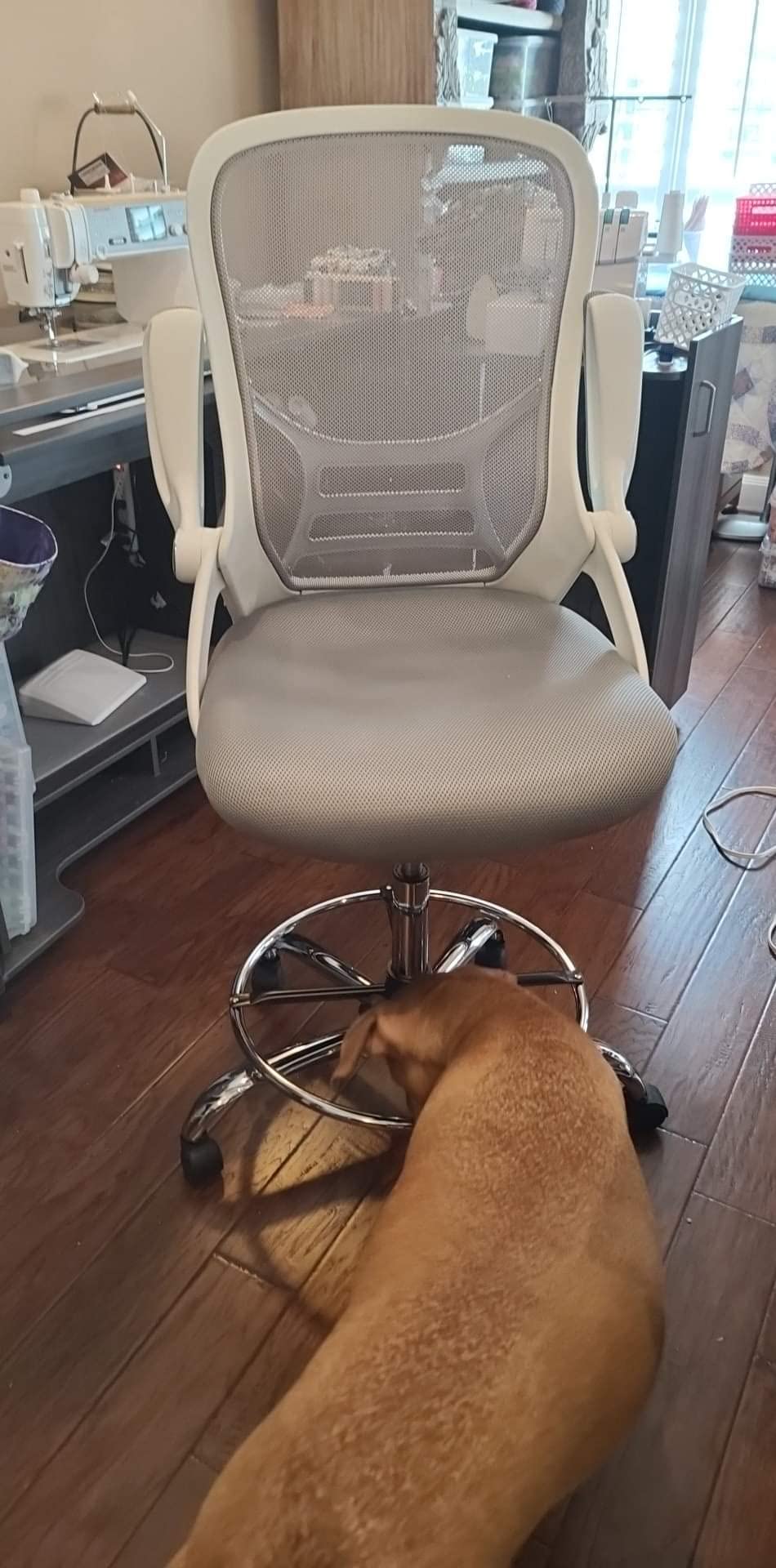
What you give up is compactness. At 37 pounds with a 25.2 inch base, this is a substantial chair, and in a small room it will dominate the corner it lives in. Reviewers also note the high back can feel overbuilt for shorter users, since the extra back height above the lumbar support is not doing anything for a 5 foot 3 frame.
The foot ring adjusts for height, which is the single most useful feature on a tall chair. A fixed ring is the deal breaker that forum buyers complain about most often, and having one that tracks your shin as the seat rises keeps your weight distributed properly instead of hanging on the underside of your thighs.
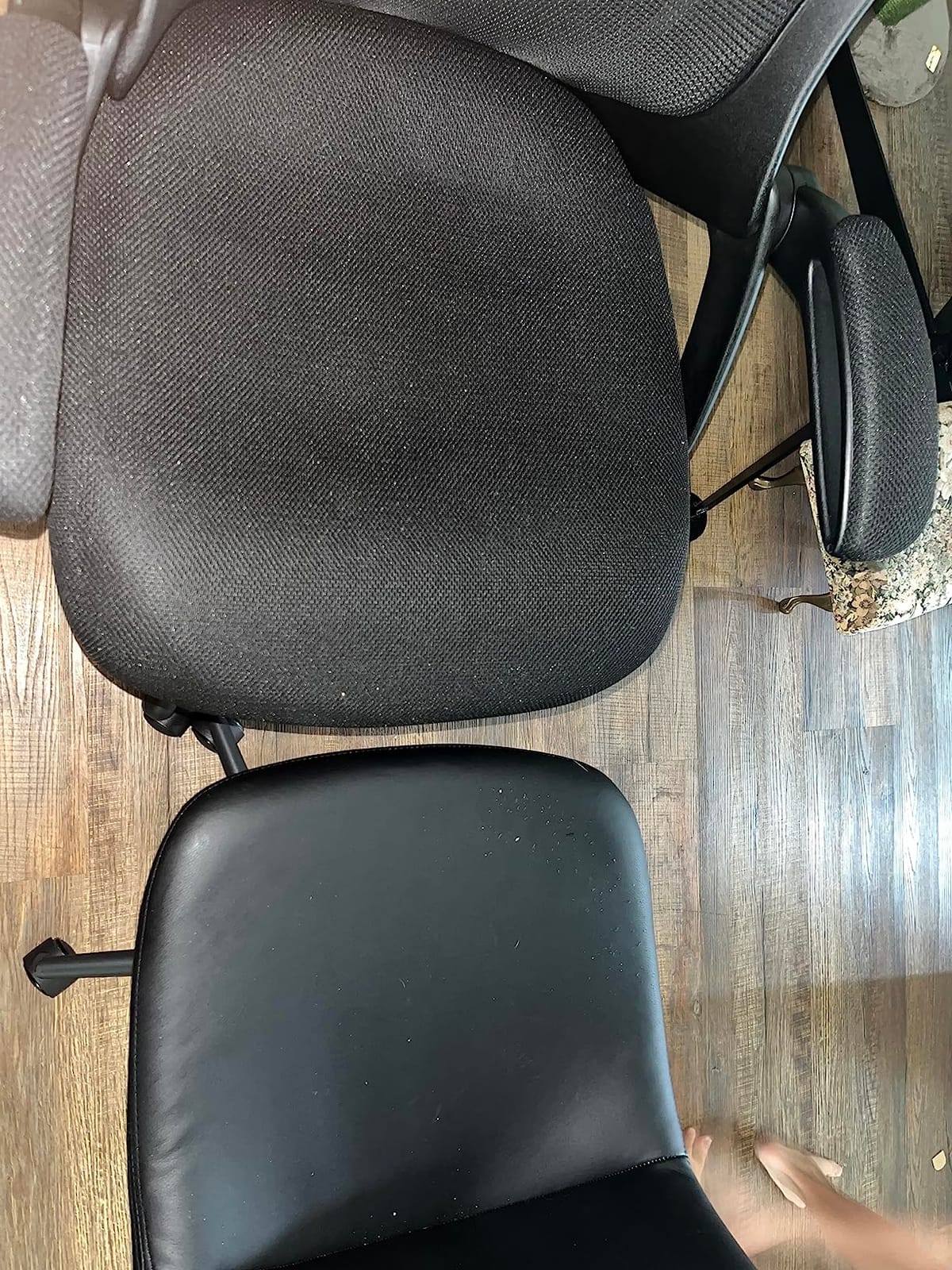
Is the mesh back genuinely comfortable for eight hours?
For most people, yes. The frame is tall and wide enough to support the shoulder blades as well as the lower back, and the tilt tension lets you set the recline resistance rather than living with a fixed angle. Reviewers rate the mesh as the feature they would not give up, and 69 percent of reviews are five star.
The caution is the seat. It uses sponge fill rather than the high-density foam used in the picks further down this list, so if you already prefer a firm seat you will be fine, and if you like a deep cushioned sit you may find it thin over a full day.
How does it compare with the Office Star?
The Office Star has a lower rating but a longer warranty and no arms. This HYLONE has arms, a taller back and better airflow. Choose the Office Star if warranty length and a lighter frame matter most, and choose this one if you run warm or type for long stretches and want forearm support.
3. Primy Tall Drafting Chair with Flip-Up Arms – Best Value Pick
Primy Drafting Chair Tall Office Chair with Flip-up Armrests Executive Ergonomic Computer Standing Desk Chair with Lumbar Support and Adjustable Footrest Ring (Black)
47 cm seat height
250 lb rating
13 kg frame
5 year warranty
Pros
- Most-reviewed chair in Office Drafting Chairs
- Adjustable foot ring reduces leg pressure
- Flip-up arms for full desk clearance
- Breathable mesh with 3 inch foam seat
- Curved backrest with adjustable lumbar
Cons
- 250 lb rating is lower than most drafting chairs here
- Height range not itemised in the spec listing
- Mesh back offers less padding for long blocks
When you line up ten chairs on paper, this one has the deepest evidence base: more than 3,400 reviews and a number one position in the Office Drafting Chairs category. That volume matters, because it means a decade of accumulated feedback about the foot ring, the mesh and the flip-up arms is available to anyone reading before they buy.
Construction is a metal frame with a foam fill, a curved backrest and adjustable lumbar support, on a five-claw base with rolling casters. The seat is listed at 47 centimeters, roughly 18.5 inches, which tells you the cylinder travel is real rather than nominal. Buyers single out the adjustable foot ring as the feature that reduces pressure on the backs of their legs during long perching sessions.
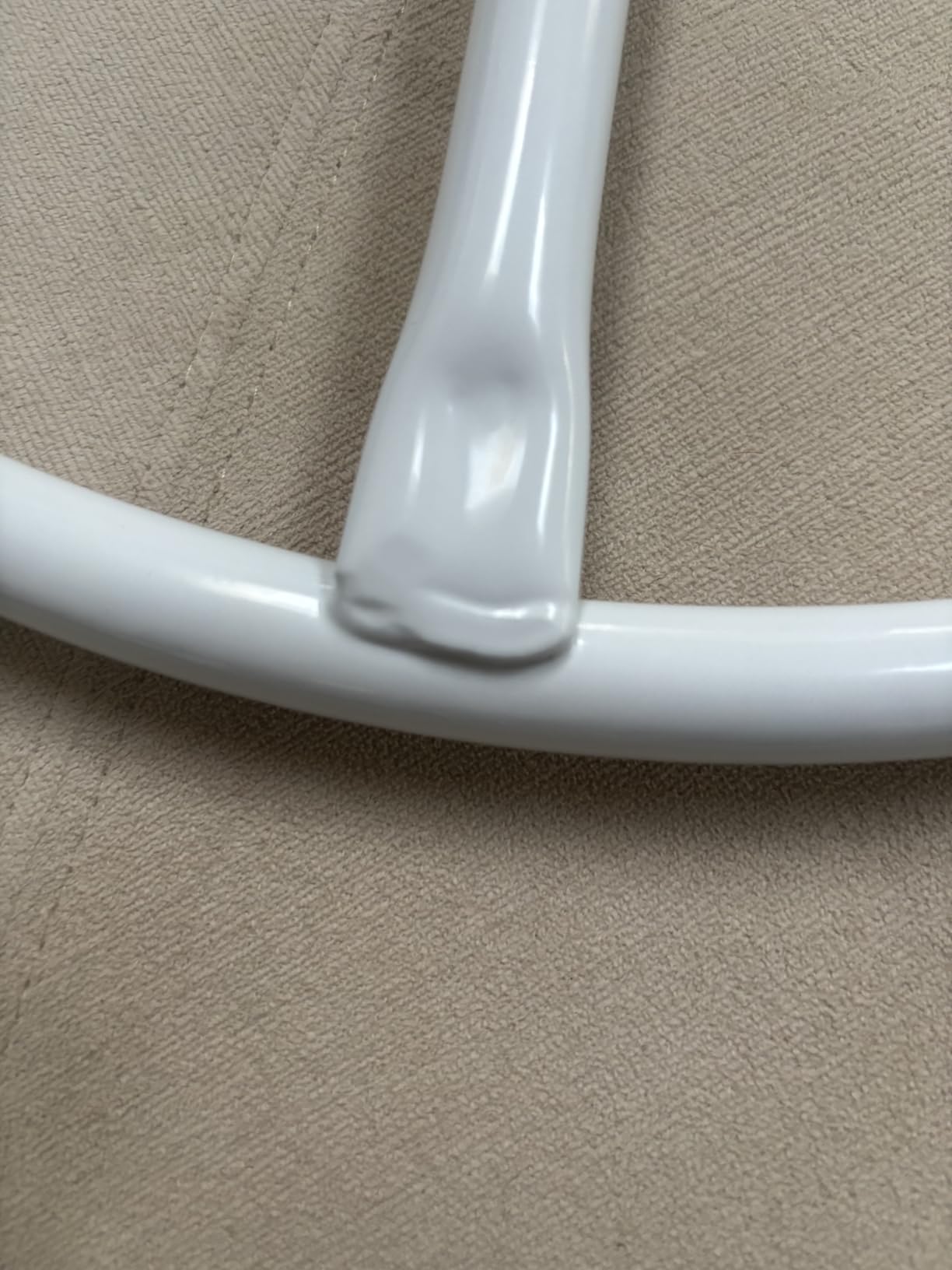
The 90 degree flip-up arms are the feature that changes the footprint. Reviewers mention sliding the chair under the desk and out of the way, which keeps a small home office usable on a sit-stand desk where a fixed-arm chair would block the frame. The five-claw base spreads the load evenly and stays stable, which is the part that matters when you are climbing on and off a tall seat.
Two things temper the recommendation. The 250 pound rating is lower than most of the drafting chairs here, so it is not the pick if you are a heavier user. And the spec listing shows a single height figure rather than a min-to-max range, so treat the exact reach as approximate and confirm it against your desk before ordering.
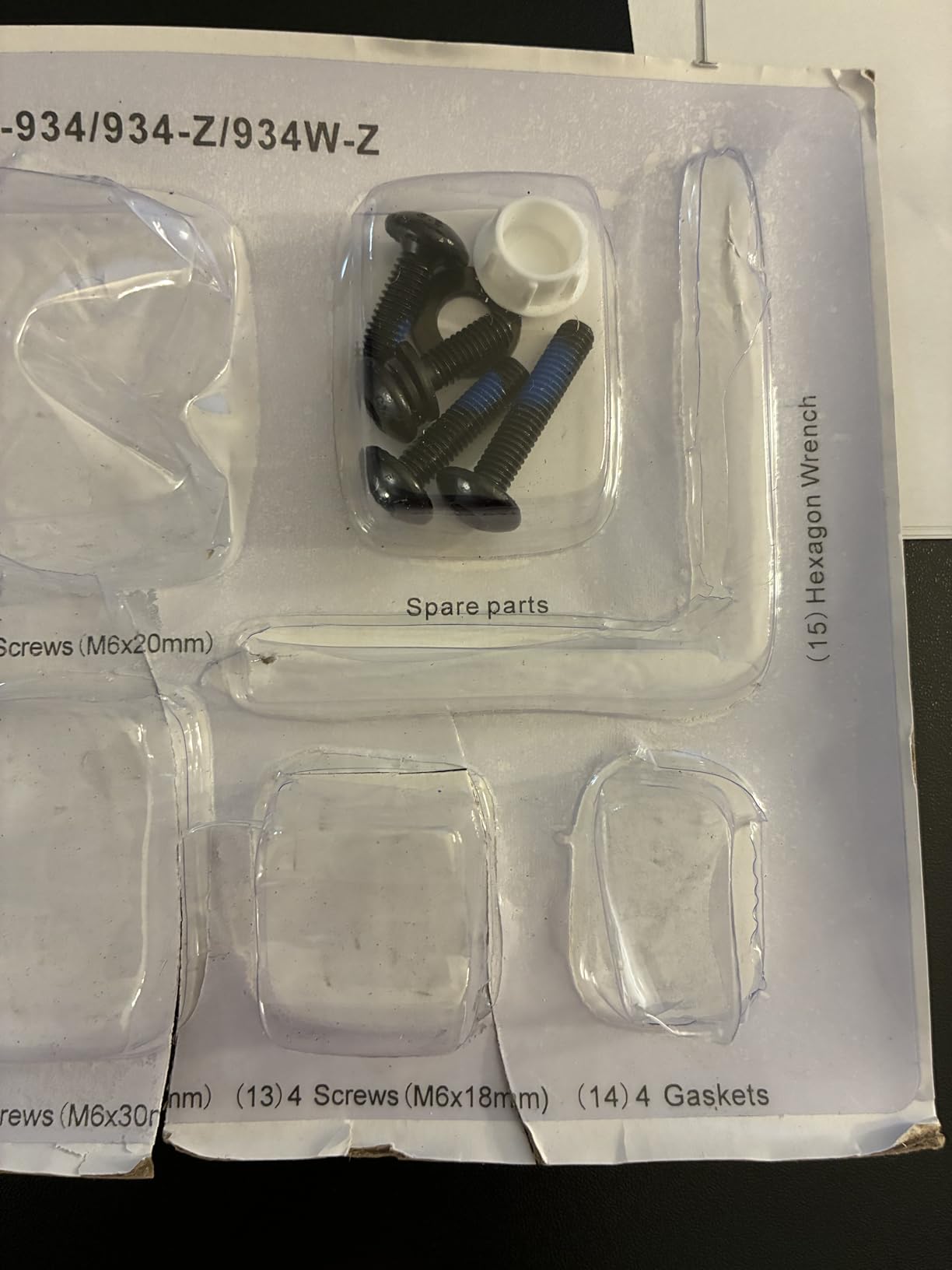
Is this a genuine drafting chair or a tall task chair?
It is a genuine drafting chair. The foot ring adjusts independently of the seat, the cylinder is the extended type, and the base is wide enough to stay put at height. What it is not is a heavy-duty model, and the weight rating is the first thing to check against your own.
The mesh back plus 3 inch high-density foam seat is a sensible combination for ventilation and support. It is not as breathable as the full mesh pick at number two, but it is warmer than a solid upholstered back.
Who should buy this instead of the Office Star?
Buy the Primy if the lowest sensible spend in the category matters more to you than the longest warranty, and if you want the flip-up arms and a curved, lumbar-adjustable back. Stick with the Office Star if you want a 15 year metal warranty and the highest rating in the group. Both reach similar working heights.
4. Brick Attic Drafting Chair with Detachable Backrest – Best for Counter, Salon and Lab Work
Brick Attic Drafting Chair with Backrest – Adjustable Foot Rest Rolling Stool with Wheels, PU Leather Swivel Stool for Office Spa Studio Lab Counter Salon Home Work Bar Kitchen Shop(Black)
33.86 to 41.75 inch height
7.87 inch foot ring range
300 lb rating
15.8 inch seat
Pros
- Removable backrest converts it to a backless stool
- Highest reach of the standard drafting chairs
- PU leather wipes clean for salon and lab use
- 15.8 inch wide seat suits most body sizes
- Base rated to 300 lbs and resists tipping
Cons
- PU leather runs warm in hot conditions
- 23.6 inch base footprint uses real floor space
- No written back height adjustment
This is the tallest standard drafting chair on the list, reaching 41.75 inches at the top of its range. If your desk is one of the fixed-height kinds that never lowers, that reach is the whole reason to buy it, and none of the cheaper chairs here get you there. The foot ring adjusts over a 7.87 inch span, so you can bring it to your leg length once the seat is up.
The detachable backrest is unusual and genuinely useful. Pop it off and you have a backless rolling stool for tasks that need you turned sideways or moving around, which is exactly the workflow in a salon or a lab. Pop it back on and it is a supported drafting chair. Reviewers in service settings pick it for that reason as much as for the height.
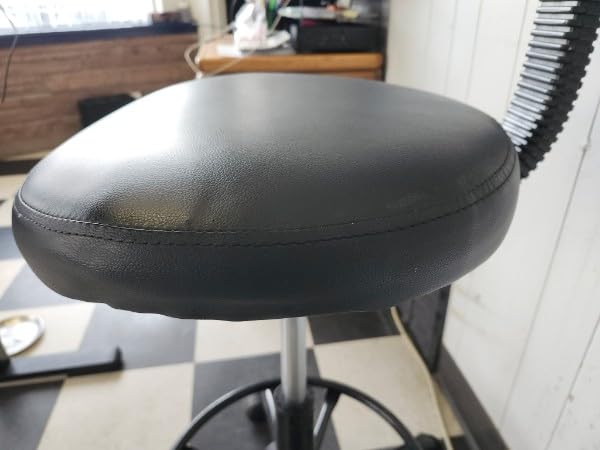
Upholstery is PU leather over a high-density memory foam seat, 15.8 inches wide. That is wider than most and it suits a range of body sizes, but it is not breathable in the way mesh is, so in a warm room you will feel the difference after a couple of hours. For a cool studio or a climate-controlled lab, the wipe-clean surface is worth more.
It sits on a five-star caster base rated to 300 pounds, and reviewers comment that it feels stable rather than tippy at height. The base is 23.6 inches across, which is a real footprint, so measure your knee space before committing if you are working in a corner.
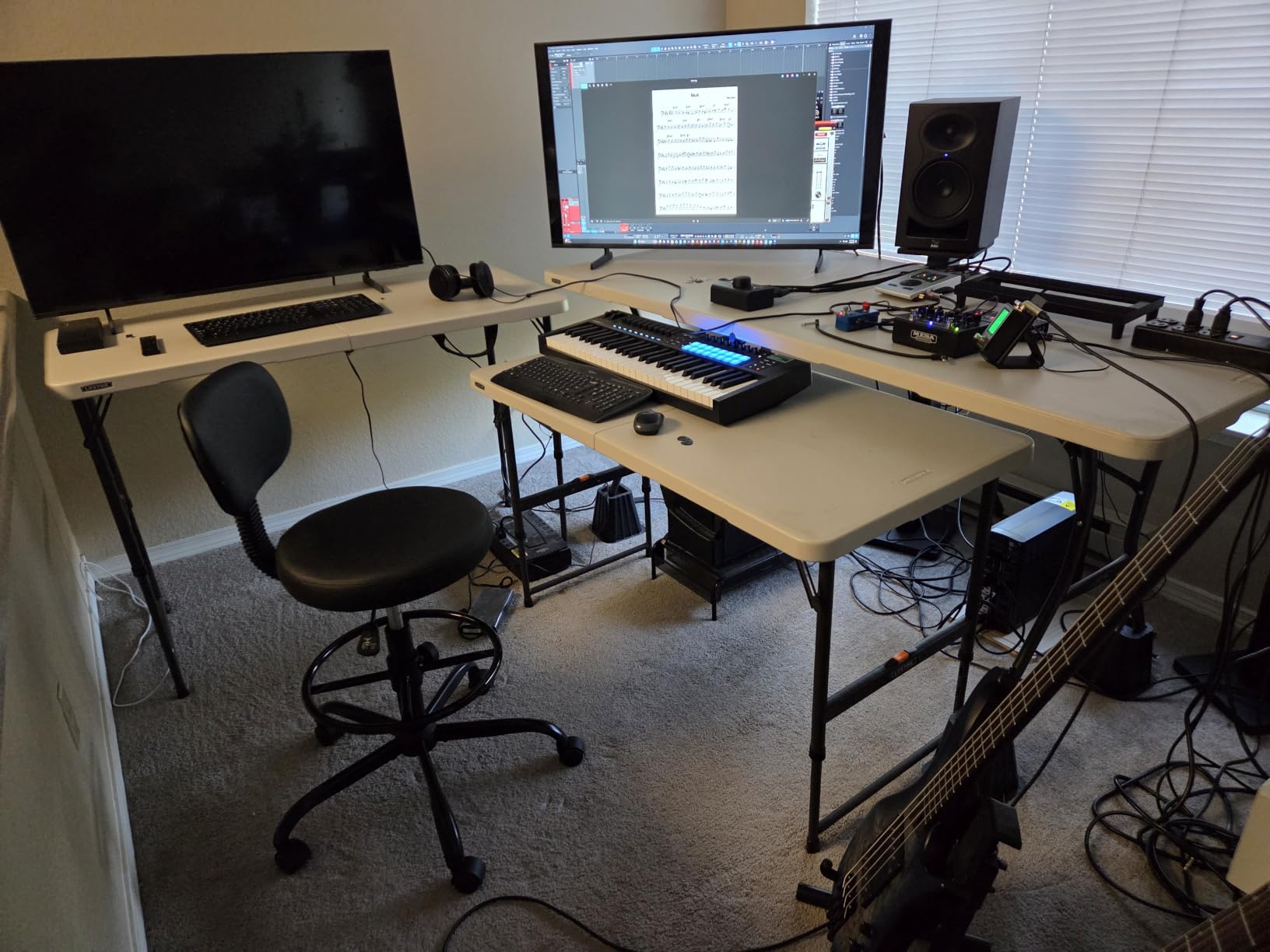
Is the detachable backrest strong enough for daily use?
It is designed for daily removal, and that is the intended use rather than an accident. Buyers describe taking it off for cleaning and for movement-heavy tasks. The trade is that the back support is a separate piece, so you cannot adjust its angle independently of the seat the way you can on a mesh task chair.
The one thing it does not offer is a written back height adjustment range. If you are very tall or very short, that is worth asking about before ordering.
When is this the wrong pick?
If your desk lowers normally and only reaches 34 inches, you are paying for reach you will not use. It is also the wrong choice for a hot room where a mesh back would serve you better, and the wide base is awkward under a small desk.
5. BOLISS 400 lbs High Back Drafting Chair – Best for Heavy Users
BOLISS Drafting Tall Office Chair 400lbs High Back Standing Desk Chair
400 lb capacity
24.8 to 32.1 inch height
46.2 lb chair
7.3 inch hydraulic travel
Pros
- Only 400 lb rated chair in the roundup
- 5 inch molded foam seat resists collapsing
- 3D headrest adjusts through four levels
- Freely adjustable lumbar cushion
- 90 degree flip-up arms for desk clearance
Cons
- Heaviest chair here at 46.2 pounds
- Large base needs real desk clearance
- 2 year warranty is the shortest listed
Almost every chair in this category tops out between 250 and 300 pounds. This one is rated to 400, and that single figure opens the roundup up to a group of users who are otherwise excluded from most of the tall seating on the market. If you have tried tall chairs and found the weight limit is the wall you hit, this is the one that does not have that wall.
The seat is 5 inches of high-resilience molded foam, which is thick enough to resist the compression that makes cheaper foam seats flat within a year. Reviewers with longer tenure single out the seat as the reason it still feels right, and 75 percent of reviews are five star.
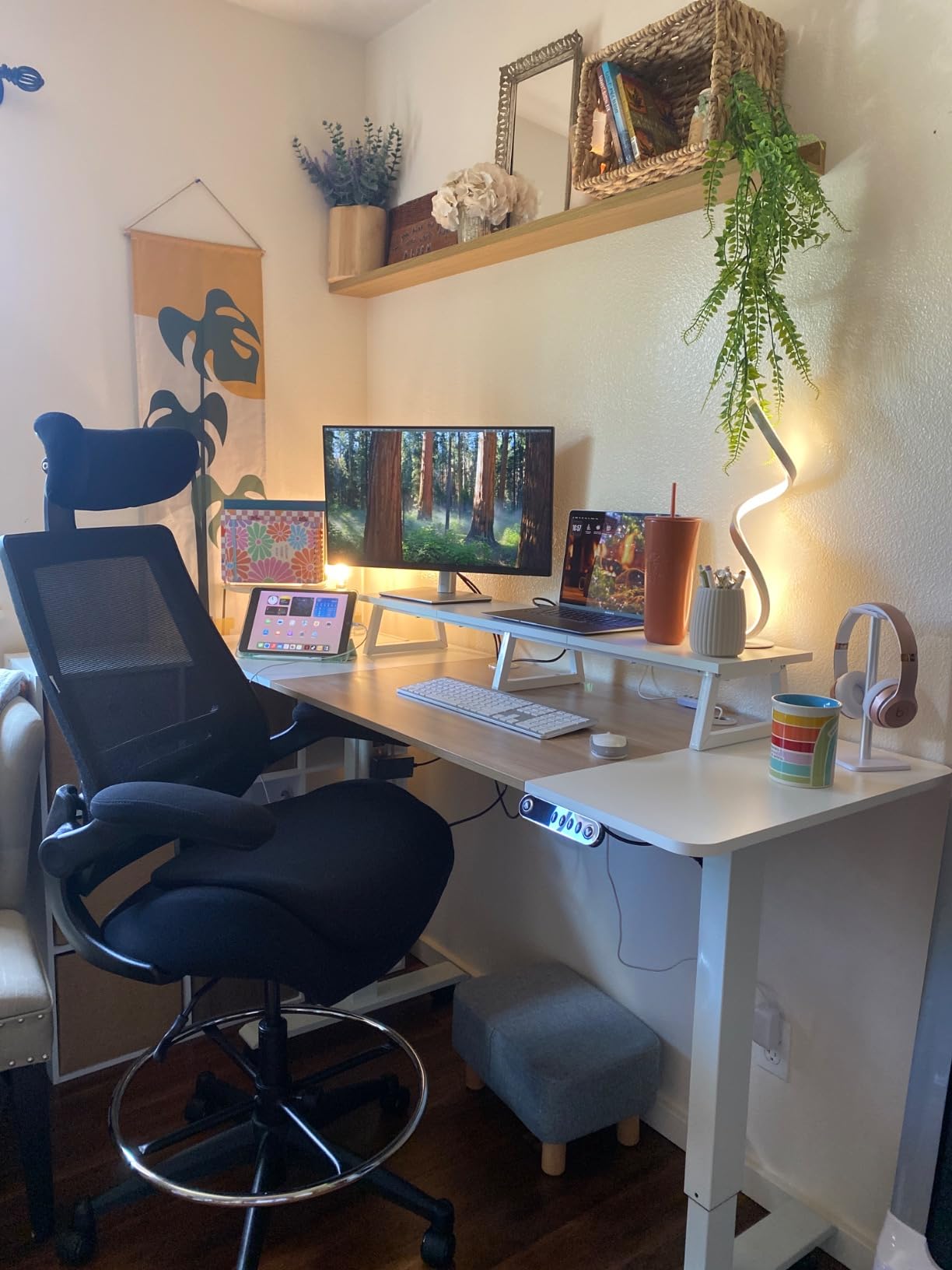
The back is high-density nylon mesh with a 3D headrest that adjusts through four levels, plus a lumbar cushion you can position freely. A headrest on a drafting chair is not standard, and it makes a real difference when you are looking slightly up at a monitor raised to standing height. The hydraulic seat travel is 7.3 inches, from 24.8 to 32.1 inches.
Two honest downsides. At 46.2 pounds this is a two-person lift, and the 27.6 inch base means you need genuine desk clearance or you will be constantly kicking it. The 2 year replacement warranty is also the shortest listed here, which is a fair trade against the build but worth knowing.
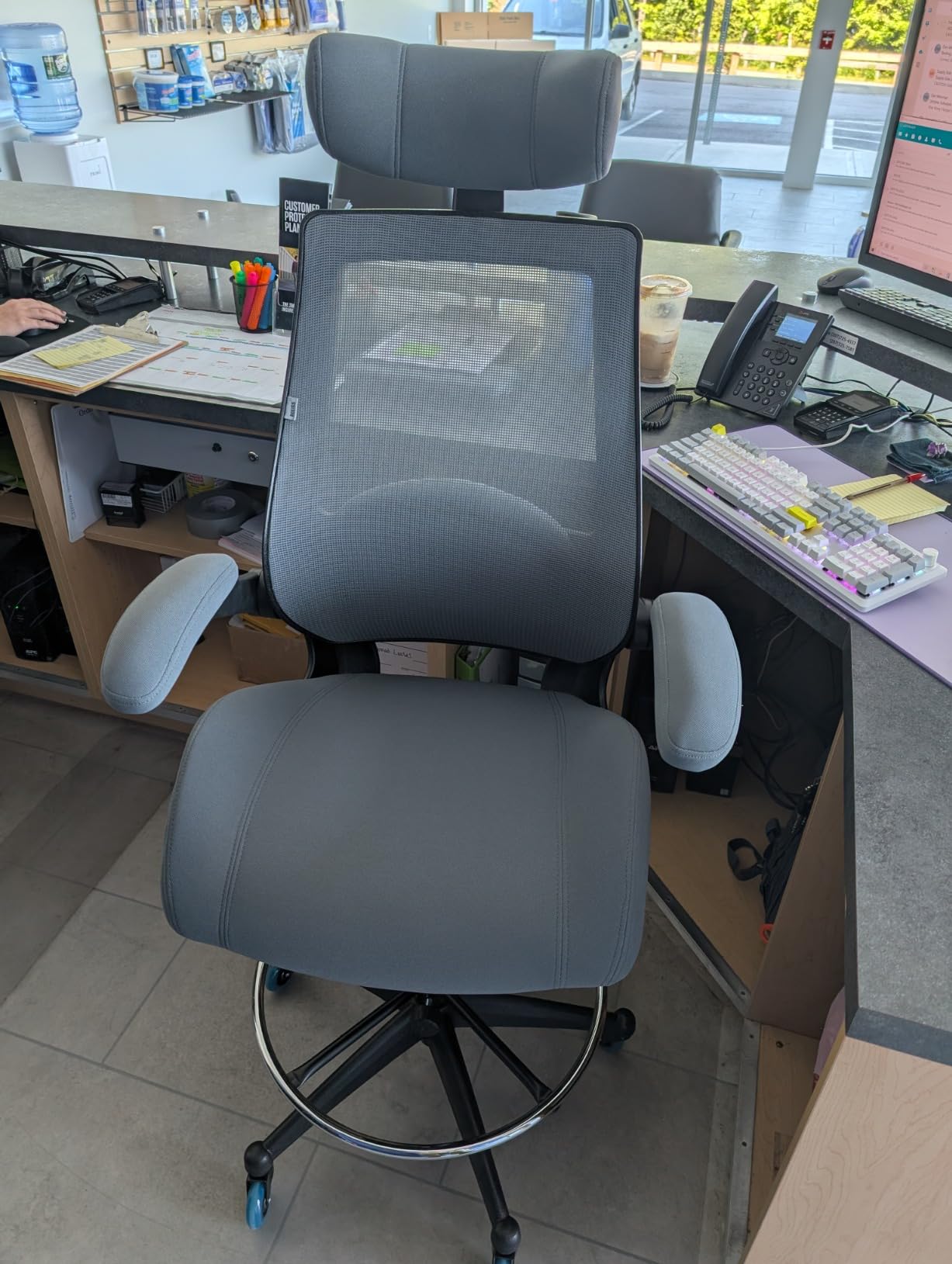
Is 400 pounds a real rating or a marketing number?
It is a real rating on a heavy-duty five-star nylon base, and it is well above what the rest of this category publishes. The reason to believe it is structural: the 5 inch molded foam seat and the oversized chrome foot ring are both sized for a heavier load than a standard chair uses, rather than being the same parts in a bigger box.
What it does not do is extend your reach. The top of the range is 32.1 inches, so if your desk is at 40 inches this chair does not solve your height problem. Pair it with a desk that tops out nearer 34 inches.
Is the extra weight worth it for someone under the limit?
Only if you value the headrest. Under 300 pounds, the lumbar and headrest adjustment on this chair is genuinely better than most of the field, but you are carrying 20 extra pounds of chair for it. Most people under the limit are better served by the HYLONE high-back.
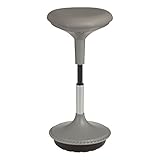
6. Learniture Active Learning Wobble Stool – Best Active Stool for Short Bursts
Learniture Adjustable Height Active Learning Stool for Office Desks and Classrooms, Foam-Padded Backless Wobble Stool with Rocking Motion, Gray
18.5 to 28 inch height
265 lb rating
12.63 inch seat
1 kg listed weight
Pros
- Rocking motion keeps you moving without a backrest
- No assembly required at all
- Pneumatic height covers most standing desks
- Light enough to move between rooms
- Vinyl and polypropylene surfaces wipe clean
Cons
- 28 inch maximum is short for taller desks
- Thin firm cushion rather than padded
- Vinyl feels less premium over long sessions
This is the stool I recommend when someone tells me they want to move more but does not want to spend drafting-chair money. The rocking base keeps you in constant micro-motion, which is the entire point of active seating: your core and hip stabilisers work continuously instead of holding a static sitting posture, and the movement keeps you alert through short work blocks.
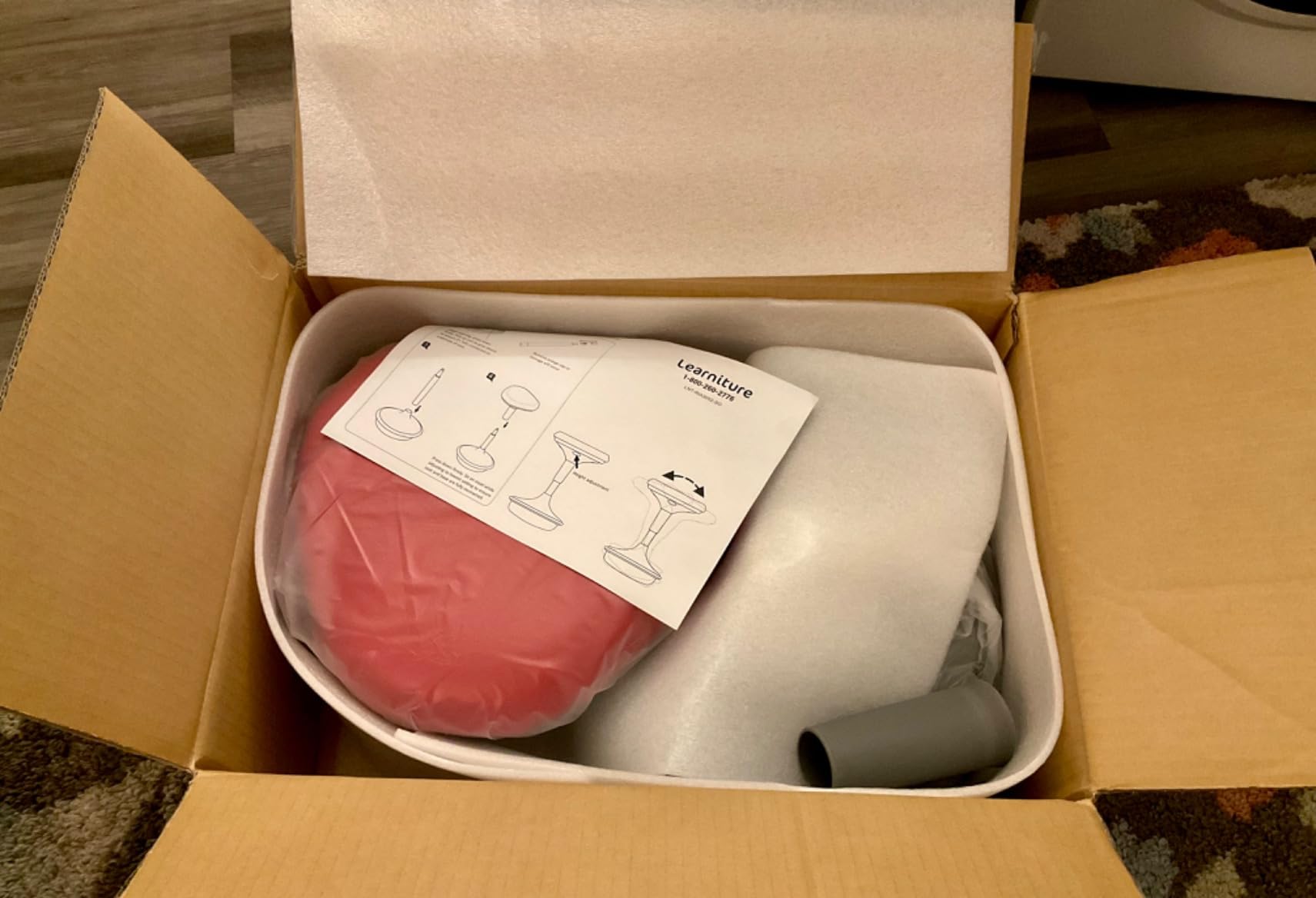
Height runs from 18.5 to 28 inches on a pneumatic gas lift, which covers a standard sit-stand desk at most of its range. There is no assembly at all. You take it out of the box, place it on the floor and adjust the height, which makes it the least frustrating purchase in this roundup and the easiest to move if you are working between a desk and a counter.
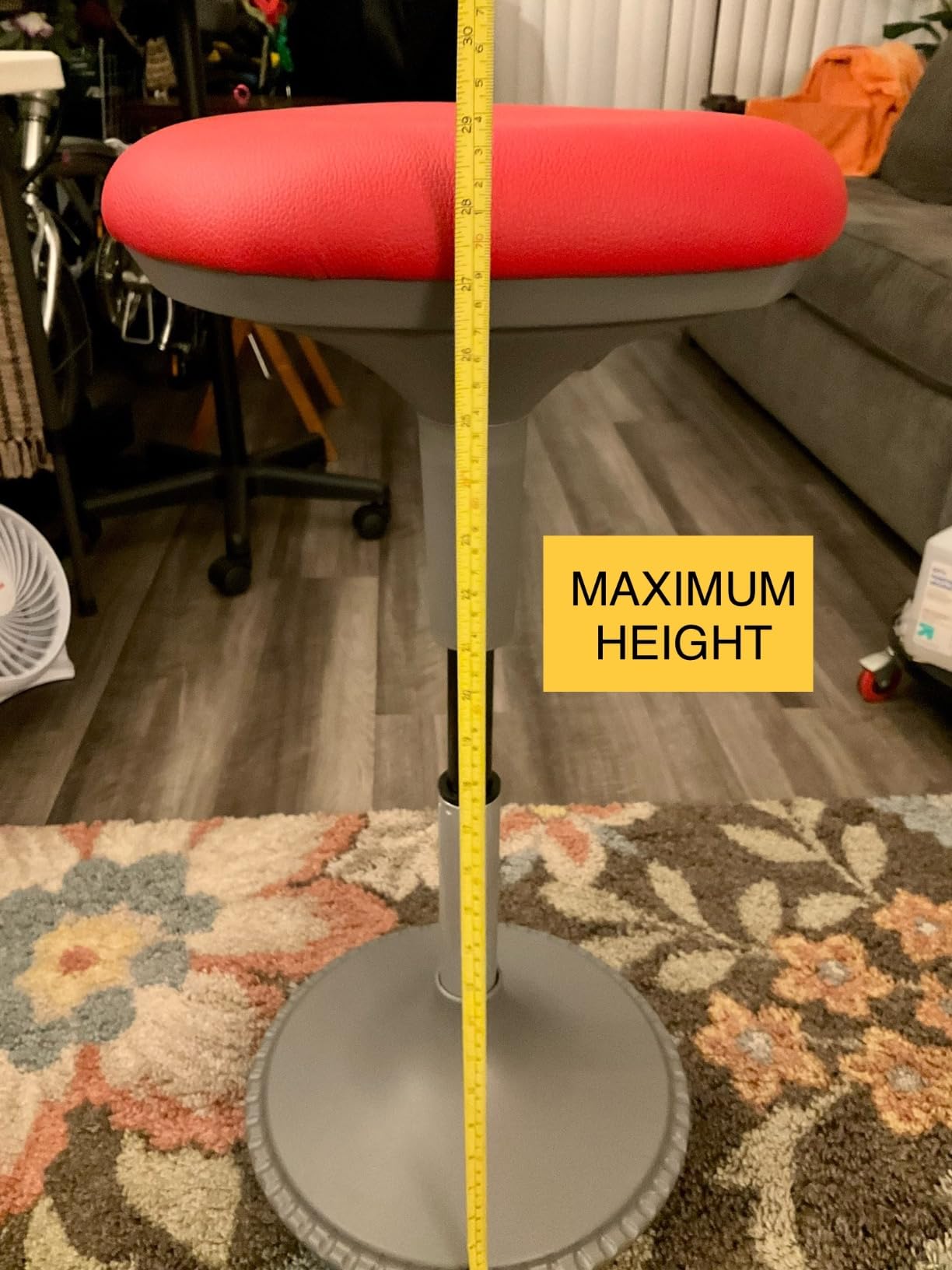
Reviewers credit it with reducing back pain and improving posture, and the rating distribution backs that up, with 69 percent five star. The backless design is deliberate rather than a cost saving, since nothing supports your lower back and therefore nothing lets you slouch. That works when you perch briefly. It does not work for a three hour block, and buyers who try that report the firm cushion catching up with them.
The vinyl over a polypropylene frame wipes clean with a dry cloth and survives a busy classroom or a shared studio. It is a light, cheap, replaceable tool rather than a chair you keep for a decade, and at 4.4 stars from more than 2,100 reviews it holds up as a routine.
Can a wobble stool replace a full office chair?
For perching, yes. For a full day of sitting, no. Buyers consistently describe the stool as the answer for task-switching and short focused bursts, and as something they pair with a normal chair rather than replace. The core engagement is real, but so is the pressure on an unsupported lower back over hours.
The honest comparison is against a cheap marketplace stool. Forum discussion repeatedly finds that an inexpensive alternative solves the same problem for most people who are not sitting in it all day, and this chair earns its place through its 18.5 to 28 inch height range and a more considered seat contour.
What height desk does this actually suit?
Anything up to about 38 inches, since the 28 inch maximum seat leaves a 10 inch gap that a foot ring would normally fill, though this stool has no ring. Past that you are perch-hanging with no foot support, which is uncomfortable for long periods. If your desk goes higher, the Backerz at number seven reaches further.
7. Backerz Standing Desk Wobble Stool – Best for Core Engagement and Small Footprints
Backerz Standing Desk Stool Chair, Height Adjustable Stool 21-31 inch for Office and Classroom, Swivel Stool, Anti-Slip Bottom Ergonomic Wobble Stool with Rocking Motion, Black
21 to 31 inch height
220 lb rating
12.6 inch seat
2.4 inch foam cushion
Pros
- Self-righting rocking base feels stable rather than tippy
- 31 inch maximum reaches most counter heights
- Compact base stores under a desk when lowered
- Light enough to carry between locations
- Non-slip footplate and cycle tested frame
Cons
- Flat seat is uncomfortable for perching at an angle
- Narrow seat lacks padding for larger users
- Lowest rating in the roundup at 4.1 stars
The 21 to 31 inch range is the reason to pick this over the Learniture. It reaches 31 inches at the top, which covers a counter or a raised sit-stand desk that the other stool cannot get to, and it still drops to 21 inches so you are not perched when the desk is low. If you work at a kitchen island part of the day, this is the more capable of the two wobble stools.
The base is the other argument. It rocks and then returns to centre on its own, which is what makes it feel stable rather than tippy, and the low centre of gravity is a real advantage when you are perched at 30 inches. Reviewers consistently describe the self-righting behaviour as the reason the wobble motion feels controlled instead of precarious.
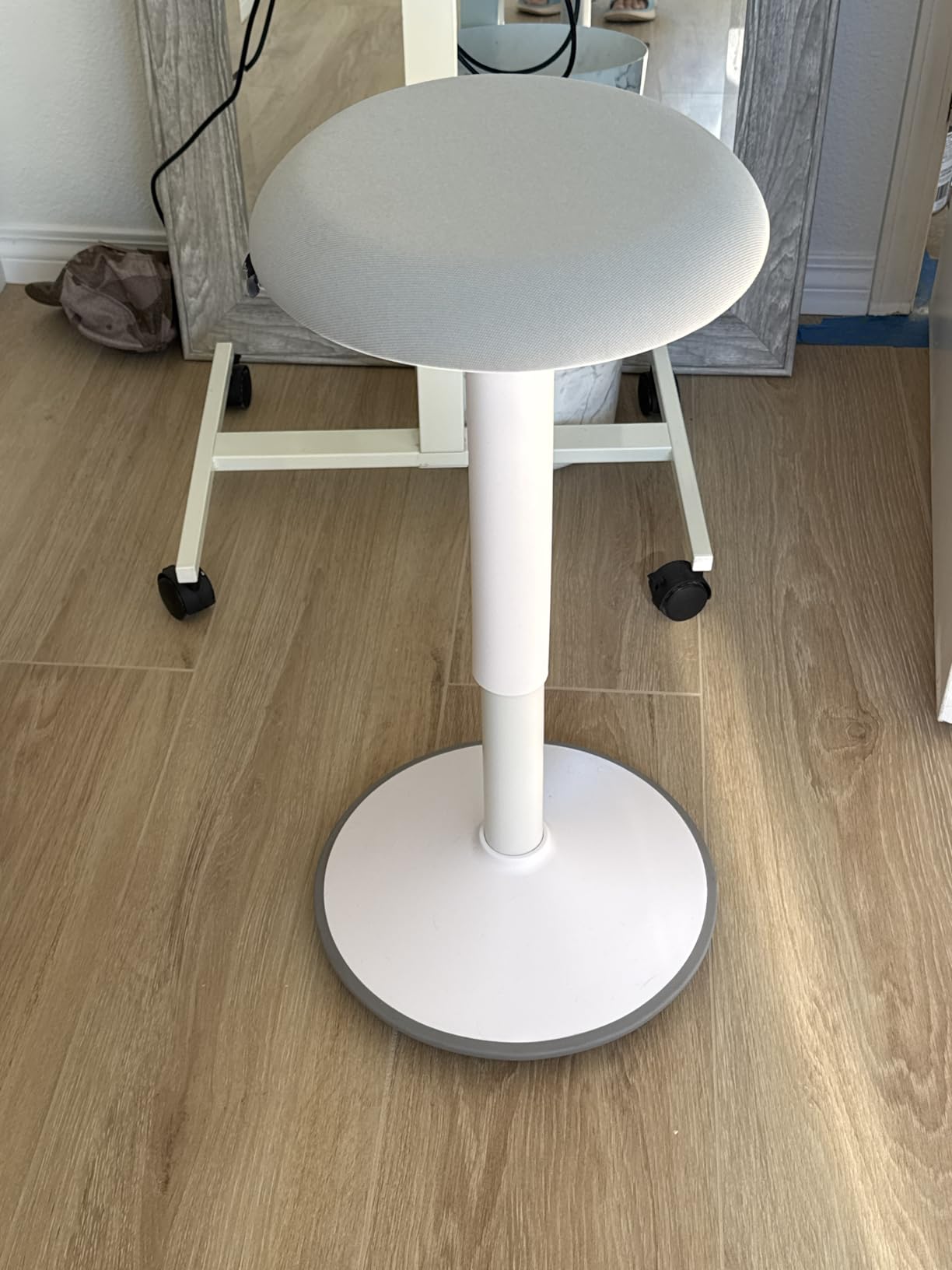
It weighs 6 kilograms, so moving it between a desk and a kitchen counter is a one-handed job, and the compact footprint stores under the desk when the frame is lowered. There is a 2.4 inch molded foam cushion over the top, which sounds generous until you read the complaints.
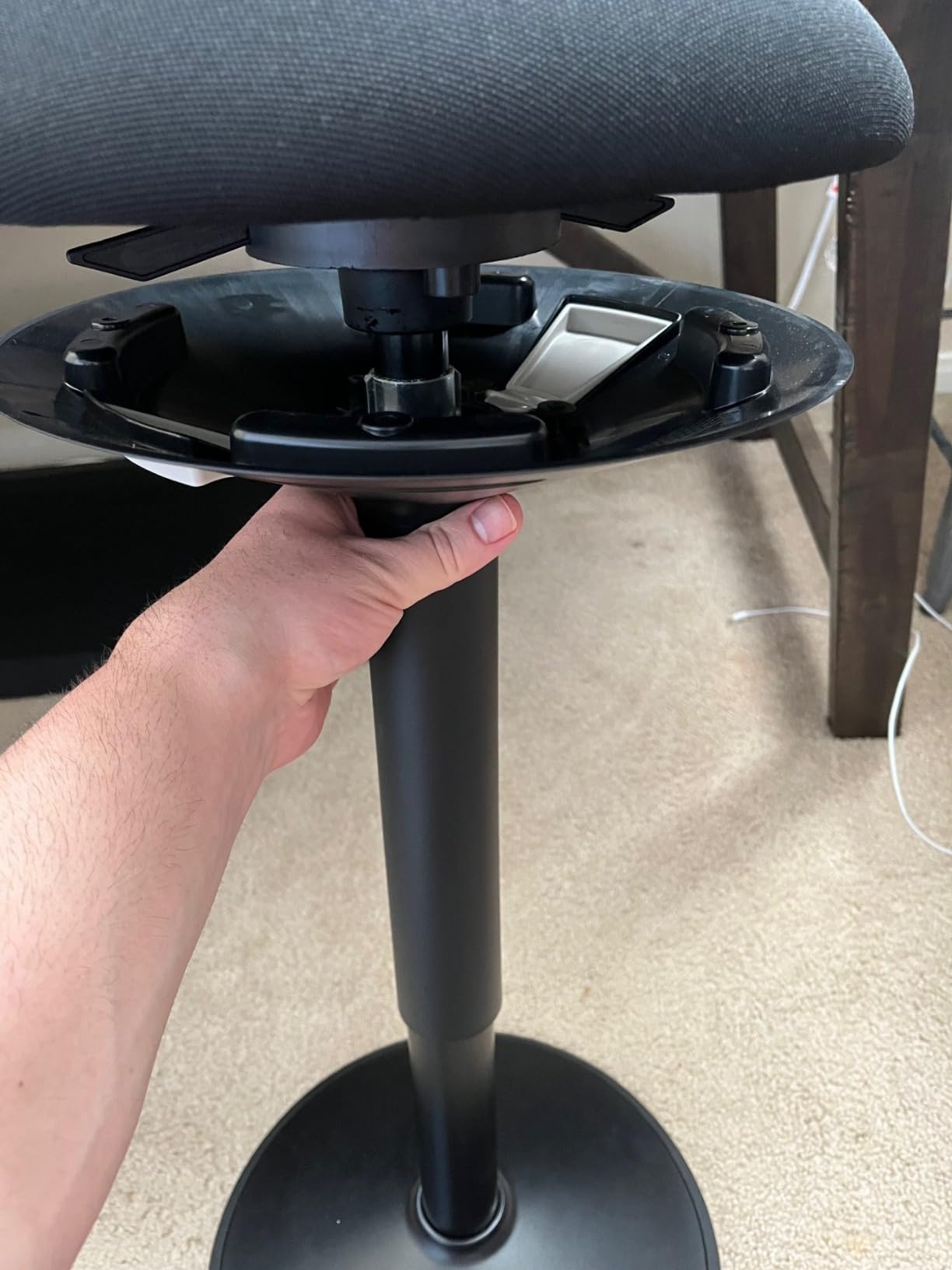
And the complaints are consistent: the seat is narrow at 12.6 inches and the profile is flat, so perching at an angle pulls you forward and gravity does the rest. Several reviewers describe the swivel and fore-aft range of motion as stiff. With 7 percent one-star reviews it is the lowest rated chair in the roundup, and that is a real signal, not a rounding error.
Is the flat seat a real problem?
It depends on how you sit. If you perch on the front edge with your feet on the floor or a ring, a flat seat is fine and even helpful. If you try to sit back at a reclined angle, a contoured or waterfall seat is much better. Larger users will find 12.6 inches too narrow before they find the flatness a problem.
Check the variant carefully when you order. This stool comes in a 21 to 31 inch version and a 16 to 24 inch version, and only the taller one is the right choice for a raised desk.
Who is this stool right for?
Someone who wants active movement, a higher perch than a standard stool allows, and a chair they can carry with one hand between rooms. It is the wrong pick for a long sitting day, for a larger frame, or for anyone who needs foot support that the design does not provide.
8. Kensaker Drafting Chair with Locking Foot Ring – Best for Foot Ring Stability
Kensaker Drafting Chair Tall Office Chair, Ergonomic Standing Desk Chair with Adjustable Foot Ring and Flip-up Armrests, Mesh Computer Chair for Art Studio, 300 LBS, Black
9.45 inch foot ring range
300 lb rating
29.33 inch seat height
Silent PU casters
Pros
- Locking knob stops the foot ring sliding down
- Foot ring adjusts across a 9.45 inch range
- Y-shaped back with 2 inch lumbar height adjustment
- Silent PU casters will not scratch floors
- 90 degree flip-up arms clear the desk
Cons
- 8 percent one-star share is high for the group
- Solid back gives less airflow than full mesh
- 29.8 pounds limits how often you can move it
A foot ring that slides down is the most common complaint in this entire category, and it is a genuinely annoying one because your weight is hanging off it. The Kensaker solves it with a locking knob rather than a friction fit, so once you set the ring it stays where you put it. Reviewers call that out specifically, and it is the reason this chair is on the list despite a smaller review base than most.
Height adjustment runs 7.9 inches with 360 degree swivel, and the foot ring itself adjusts over 9.45 inches, which is one of the wider spans in the roundup. The seat is listed at 29.33 inches, so this chair is built for a surface in the high 30s to low 40s rather than for a desk that barely leaves sitting height.
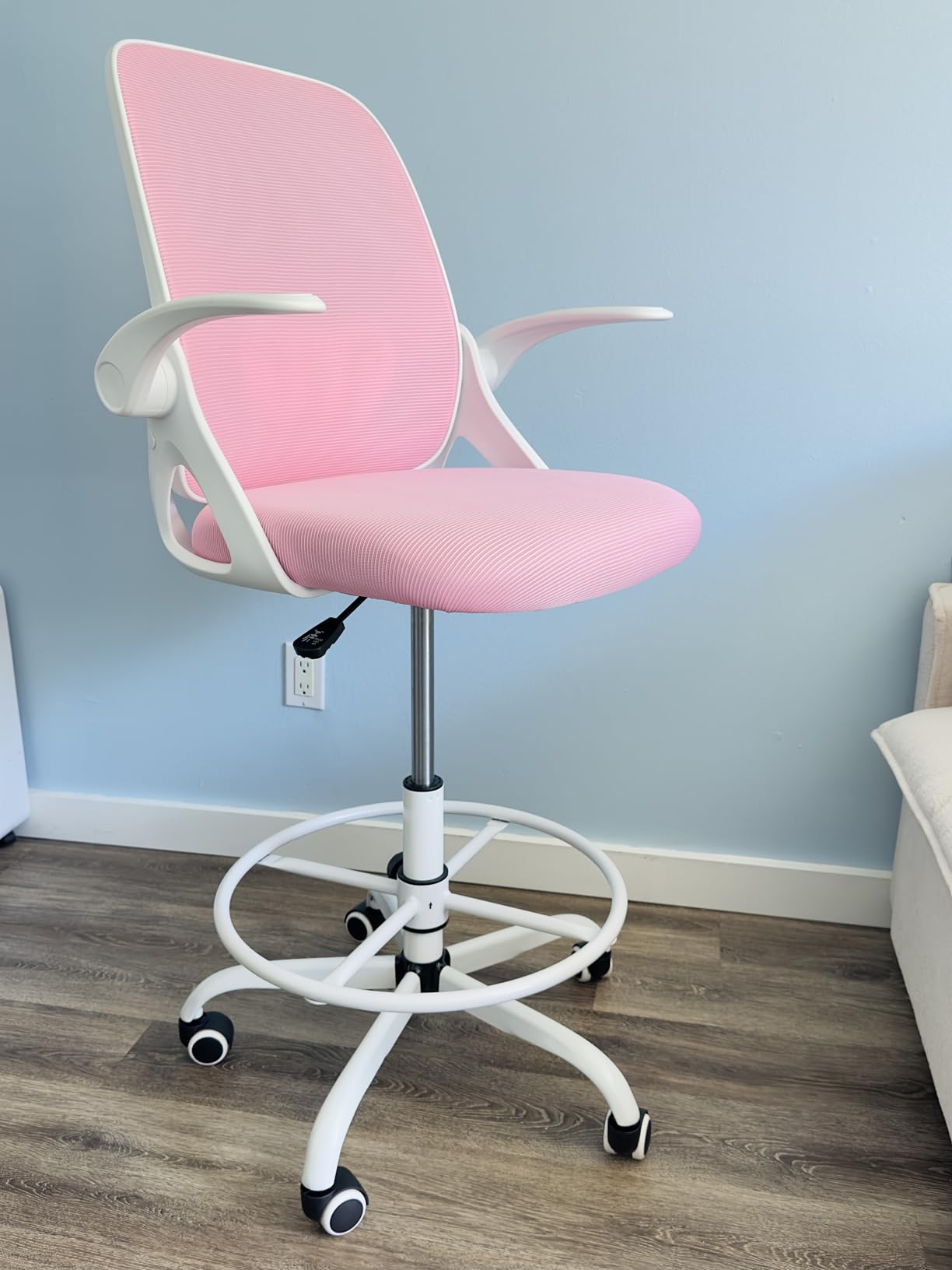
The back is a Y-shaped frame with two inches of vertical lumbar adjustment and dual-layer mesh over a high-density foam seat. The armrests flip up through 90 degrees so the chair clears the desk, and the casters are PU, which means they roll silently and will not scratch a hard floor. That combination of quiet casters and flip-up arms is what makes this practical in a shared room.
Honest downsides: at 4.3 stars with 8 percent one-star reviews, this has the largest share of top-tier complaints in the group. The solid-back frame gives up some airflow against a full mesh back, and at 29.8 pounds it is not a chair you reposition casually.
Does the locking foot ring really solve the slipping problem?
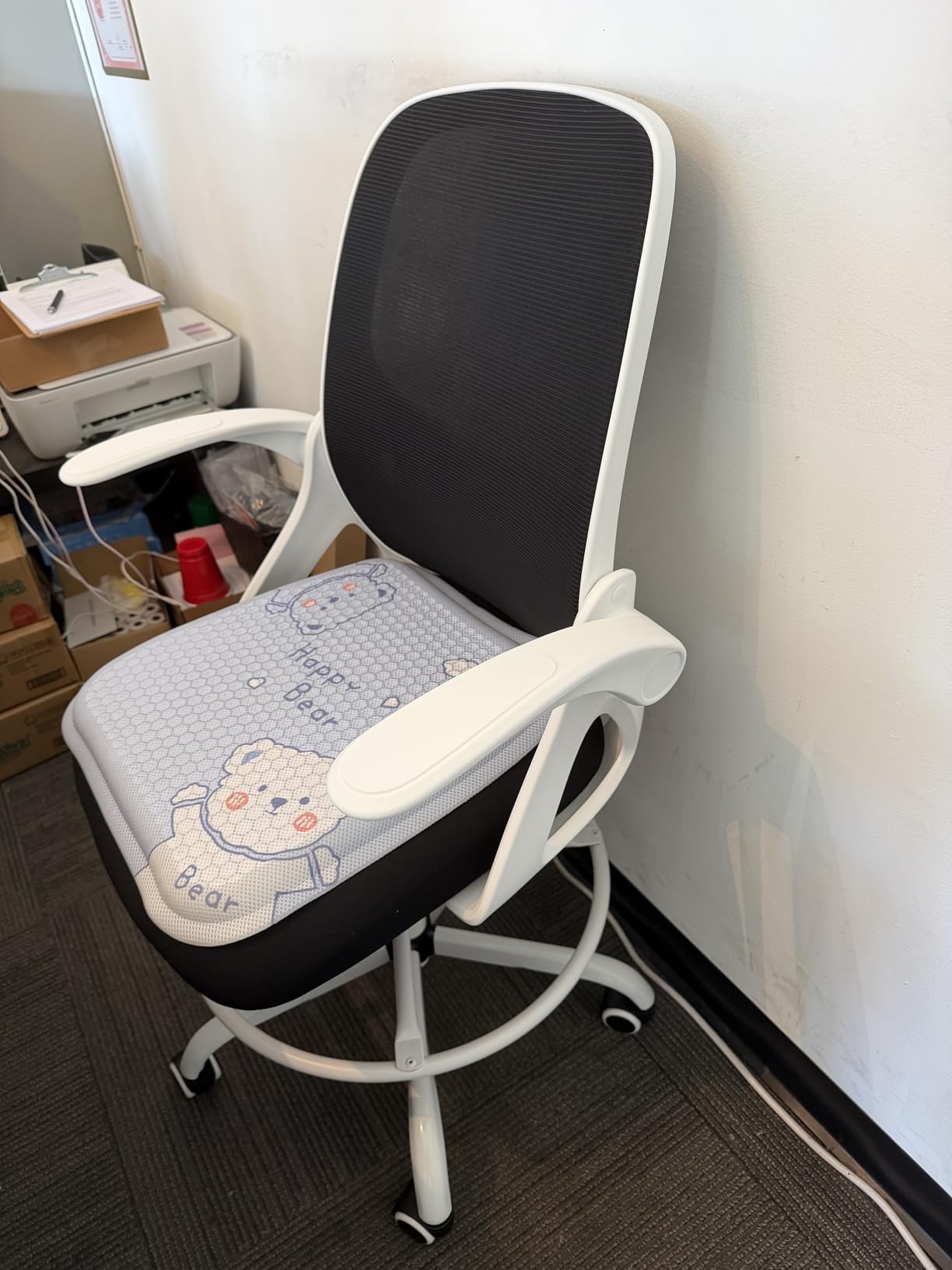
Yes, and that is the whole point of this chair. A friction-fit ring that creeps under load shifts your weight onto the underside of your thighs, which is the exact discomfort a foot ring exists to prevent. A knob that clamps the ring in position removes the failure mode rather than mitigating it.
It is worth checking the ring after the first week of use, since a heavy user tightening a knob can occasionally walk the thread down over time. It is a thirty second adjustment rather than a defect.
How does it compare with the Office Star on foot rings?
They solve the same problem in opposite ways. The Office Star ring travels 18.25 inches, so it can suit almost any leg length at any seat height, but it needs an occasional tightening. The Kensaker ring travels 9.45 inches and locks, which is more repeatable but suits a narrower range of positions. If you change seat height often, look at the Office Star.
9. HYLONE Armless Drafting Chair with Footrest – Best Armless Frame for Tight Rooms
Armless Drafting Chair Tall Office Chair Adjustable Height High Back Ergonomic Desk Chair Drafting Stool Rolling Bar Stools Chairs with Footrest and Wheels
22 inch seat height
280 lb rating
25.6 lb chair
18.7 inch seat depth
Pros
- Armless frame tucks fully under a desk
- Highest five-star share in the group
- BIFMA-tested gas lift with seat tension
- Breathable mesh on FSC-certified wood board
- Foot ring suits bar tables and standing desks
Cons
- Back tension knob reported as ineffective on some units
- Loose hardware and missing washers for some buyers
- Casters roll back on hard floors and can scoot
- Lowest seat setting can still be too high for shorter users
The armless frame is the reason to choose this. No arms means you can pull right up to the desk, put your knees under the surface, and then slide the chair out of the way entirely. In a small room where the chair lives beside the desk rather than under it, that difference is worth more than any lumbar feature.
The other thing that stands out is the review profile. At 77 percent five-star ratings this has the highest share of top ratings in the roundup, and buyers in art studios, music rooms and craft rooms specifically recommend it for those spaces, where a 360 degree swivel and adjustable foot ring let you turn to reach materials without standing.
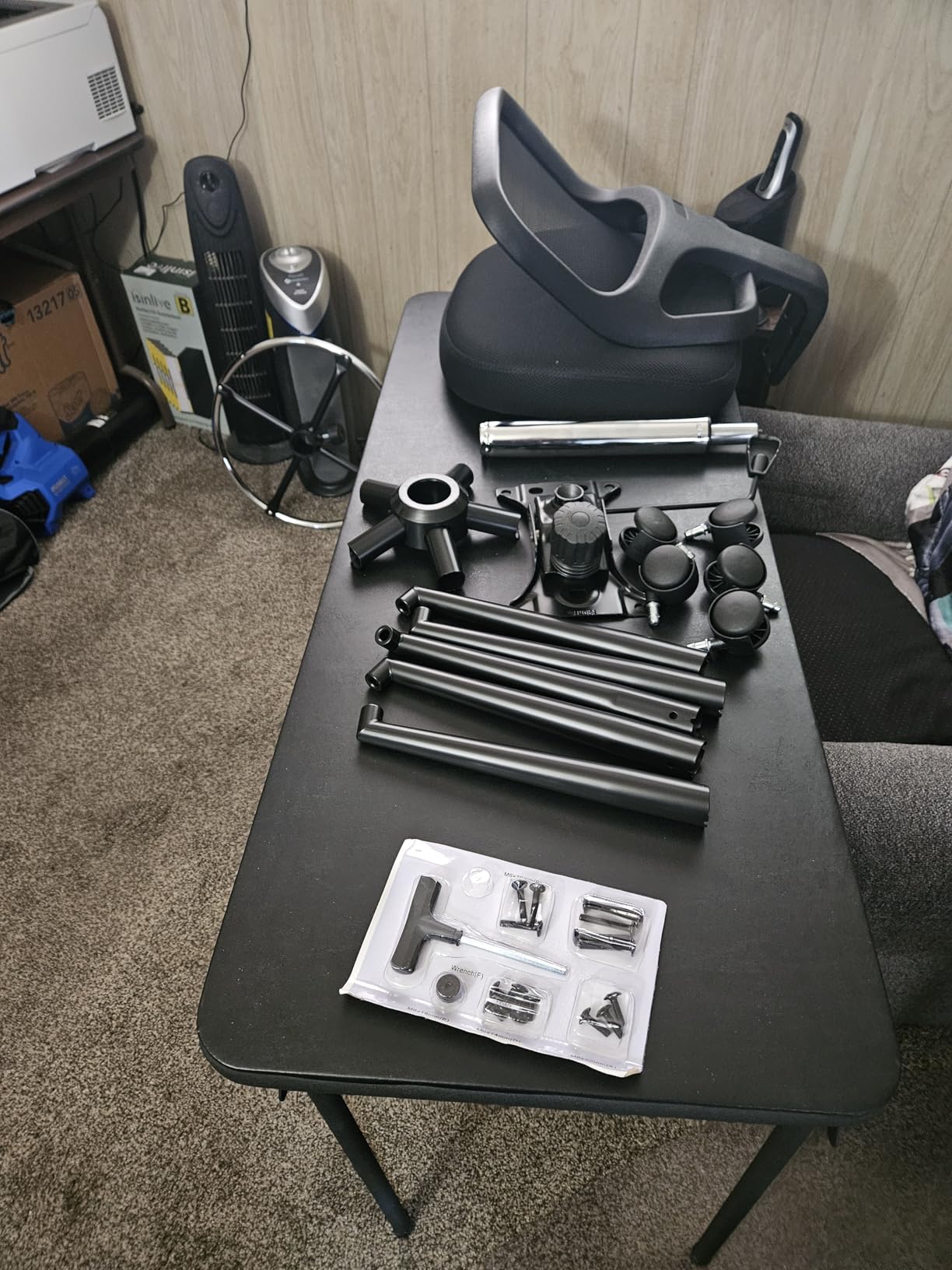
Underneath it is a BIFMA-tested gas lift with seat height and seat tension adjustment, a breathable mesh back and an FSC-certified wood seat board, on nylon dual-wheel casters. The seat height is listed at 22 inches, so this is a chair for a surface in the low-to-mid 30s rather than a full-height counter.
The reported problems are worth reading before you order. At least one reviewer found the back support tension knob did nothing when tightened, another had missing washers and short bolts during assembly, and a few note that the casters roll back on hard floors so the chair scoots away when you sit down. The 12 month warranty is the shortest listed too.
Is an armless drafting chair uncomfortable for long typing?
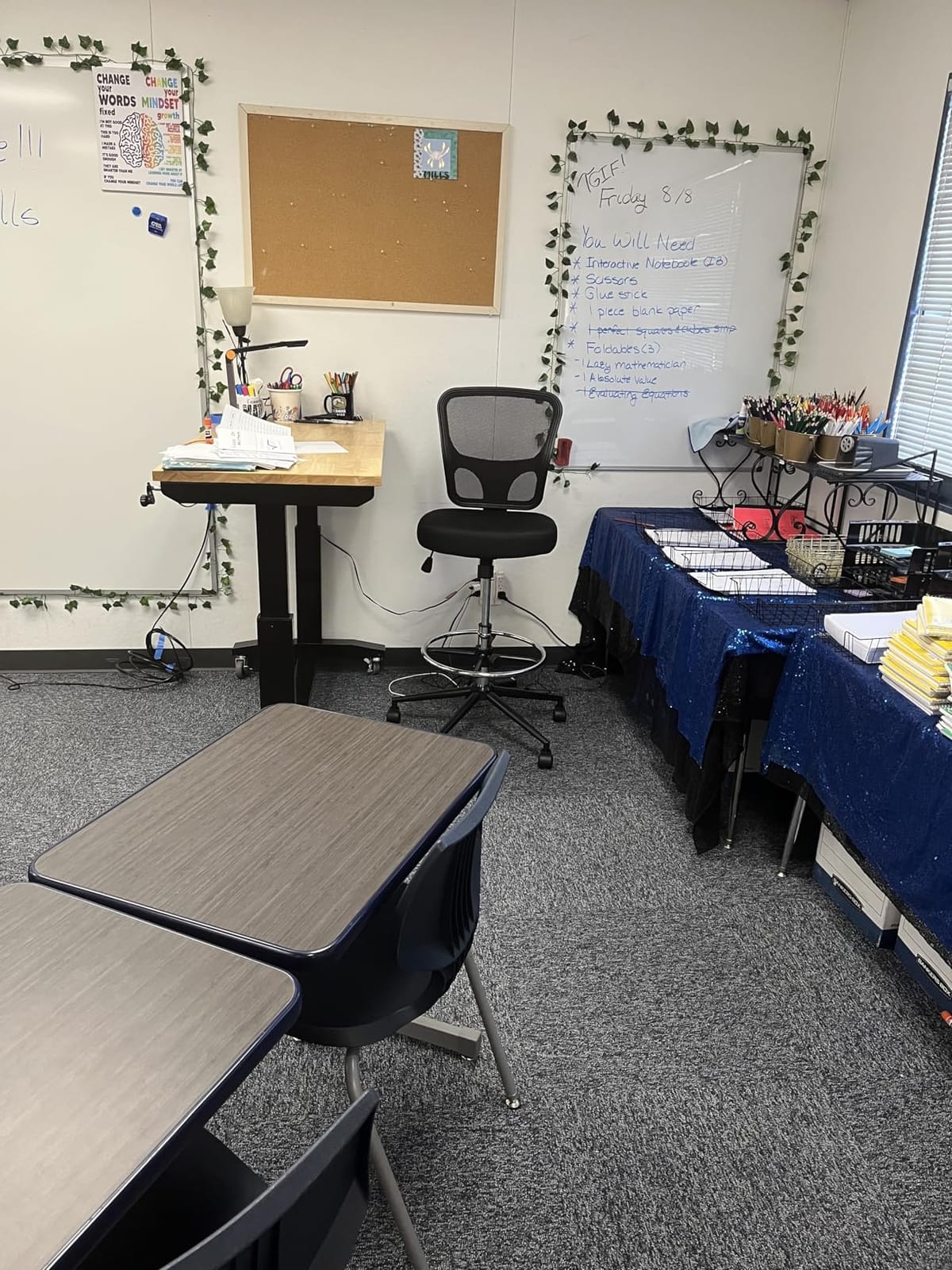
For most people, no. There is no forearm support, but at a raised desk your elbows are already higher and the armrests on a fixed frame often prevent you getting close enough to the keyboard. The people who struggle are those used to a fully supported armrest, and they tend to miss it within an hour.
What you get instead is clearance and swivel freedom, and for drafting or craft work where you turn and reach, that trade usually comes out ahead.
Will this fit a shorter user?
Probably not well. The listed seat height is 22 inches, and reviewers note that even the lowest setting can be too high for shorter frames. If you are under about 5 foot 4, look at a chair with a wider height range, and check your own leg length against the seat height before you commit.
10. DUMOS Armless Drafting Chair – Best Compact Entry for Counter Height
DUMOS Armless Drafting Chair, Standing Desk Chair, Rolling Stool
17.3 to 21.3 inch height
350 lb rating
21.8 lb chair
Synthetic leather seat
Pros
- Entry-level build that still uses a metal base
- Curved backrest follows the spine's natural shape
- Swivels 360 degrees on silent nylon casters
- PU leather over sponge wipes clean easily
- Easiest chair here to move between rooms
Cons
- Height range is lower than every other chair here
- Low continuous back offers less lumbar support
- Synthetic leather runs warm in hot rooms
This is the lowest-cost chair on the list and the one most likely to surprise you, at 4.5 stars from 382 reviews with 76 percent of those at five stars. What you are buying is a genuinely well-made armless chair with a 350 pound metal base and a curved backrest, aimed at counter, studio and lab work rather than at a desk raised to full standing height.
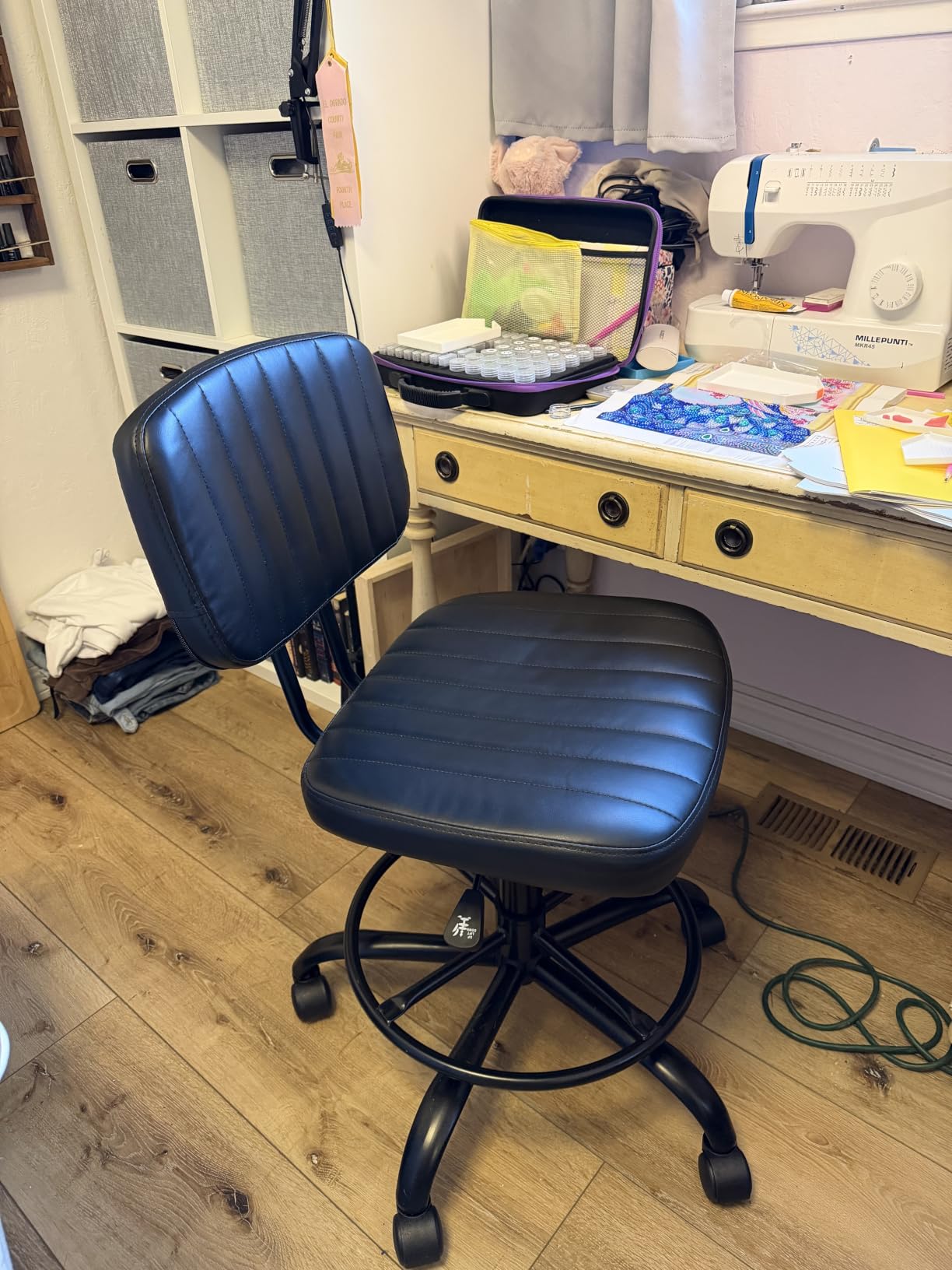
The curved backrest follows the natural shape of the spine and gives lumbar support without a separate cushion, and the seat is synthetic leather over high-density sponge that wipes clean. Five silent nylon casters and a 360 degree swivel make it easy to turn and move. At 21.8 pounds it is also one of the few chairs here you can carry between rooms by yourself.
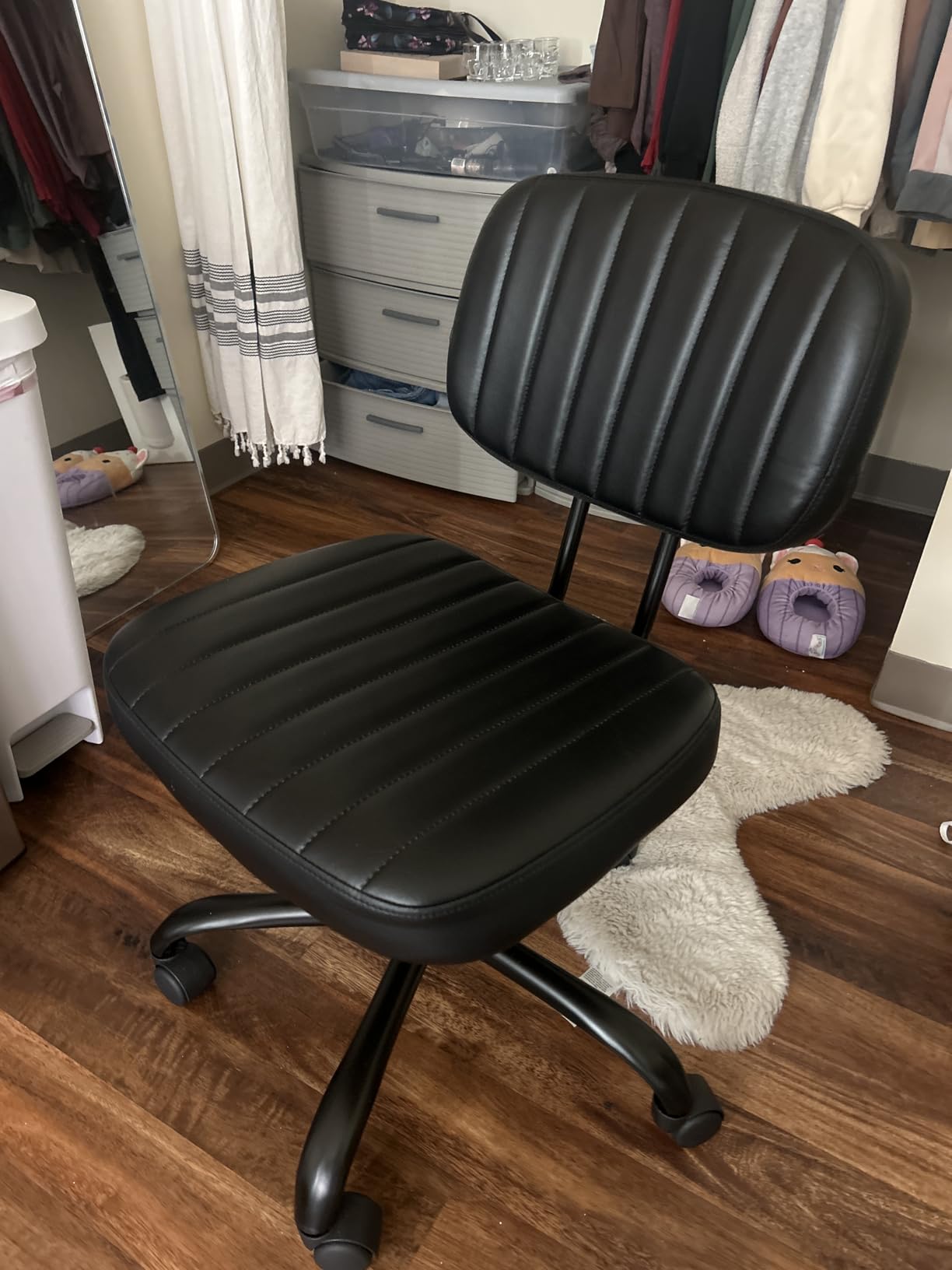
Be clear-eyed about the height though. The gas lift runs 17.3 to 21.3 inches, which is a four inch span and the lowest ceiling of anything in this roundup. That is perfect for a counter at 32 to 34 inches and a poor fit for a sit-stand desk raised to 40. If you are buying for a raised desk, this is not the chair.
The low continuous back does less for lumbar support than a high mesh back, and the synthetic leather is not breathable. In a warm room, or for someone who runs hot, expect to be warmer than you would be on mesh.
Is this chair worth it for a 34 inch counter?
Yes, clearly. The 350 pound base rating is above most drafting chairs here, the curved back is more supportive than the armless mesh alternative at a similar height, and the wipe-clean upholstery suits a kitchen, a studio or a lab. For a fixed counter this is the strongest value on the list.
It is a light-duty answer to a light-duty problem. If your desk rises above 36 inches, keep looking.
Who should skip it?
Anyone with a sit-stand desk that travels to full standing height, anyone who gets hot easily, and anyone who needs lumbar adjustment through a range rather than a fixed curve. The rating is high, but the height range is the binding constraint and it is not negotiable.
How to Choose a Chair for Your Standing Desk
Measure first, subtract 10 to 12 inches, and that is your number
Put a tape measure on the work surface at the height you will actually work at, not the maximum the frame advertises. Subtract 10 to 12 inches and the result is the seat height your chair must reach. A 40 inch surface needs a seat around 28 to 30 inches, a 44 inch surface needs 32 to 34. This single number eliminates most of the list instantly and it costs you nothing to calculate.
Two refinements matter. If you will type for long stretches at height, sit nearer the 10 inch end of that range so your elbows are closer to the surface. If you are mostly reading, calling or switching between tasks, sit nearer the 12 inch end because the extra height gets your head up off your neck.
Height matching: which picks work at your desk height
Here is how the ten chairs on this list sort against the surface heights people actually use:
Desk at 30 to 34 inches: a standard task chair works. Of the picks here, the DUMOS at number ten and the HYLONE armless at number nine are the only ones whose ranges comfortably cover it.
Desk at 36 to 38 inches: the HYLONE high-back, the Office Star, the Primy and the Kensaker all qualify comfortably. This is the most common sit-stand desk working height.
Desk at 40 inches: you need a 28 to 30 inch seat. The Brick Attic, the BOLISS, the Office Star, the Kensaker and the HYLONE high-back fit here.
Desk at 42 inches and above, or a counter that never lowers: the Brick Attic reaches 41.75 inches and is the only chair here that genuinely covers this. Everything else is a compromise.
Perching only, in bursts: the Learniture and Backerz wobble stools cover up to about 38 inches, and both are the cheapest way to test whether active seating works for you at all.
Counter height and bar height are not the same chair
The same model is often built in two taller variants, and the two versions differ in max height and in weight rating. A chair rated for counter height is frequently rated lower at bar height because the extended cylinder and the narrower base carry a higher load further from the floor. Never carry a weight number across from the standard model’s spec page to the tall one. Check the rating on the exact variant you are buying, every time.
The 20-8-2 rule and what it means for your chair
The 20-8-2 rule means sitting for 20 minutes, standing for 8, sitting for 2, then repeating. Which chair you need follows directly from which of those blocks you spend sitting. A 20 minute sit needs a perch stool, since you are up before any foam has compressed. An 8 minute stand needs an anti-fatigue mat and a place to rest one foot, not a chair. A 2 minute reset needs nothing at all. The rule is only useful if you let it pick the chair for you.
Foot rings are load-bearing, not a comfort accessory
Above roughly 26 inches of seat height your feet do not reach the floor, and your weight starts hanging from the underside of your thighs. That is the mechanism behind the leg pressure and numbness people report on tall chairs without a ring. A foot ring takes that load and lets your weight go through your heels. It is also the difference between a chair you can sit in for three hours and one you cannot.
Adjustability is the detail that matters. A fixed ring forces one leg position at every seat height, and reviewers treat a slipping ring as a deal breaker. The picks with a wide, lockable ring span are the Office Star at 18.25 inches, the Kensaker at 9.45 inches with a locking knob, and the Brick Attic at 7.87 inches.
Weight capacity at height, and the stability question
Two traps sit next to each other here. The first is the capacity trap, already described: tall versions are often rated below the standard chair. The second is stability. A seat at 30 inches puts your centre of mass much further from the floor, and a narrow five-claw base with smooth casters can scoot when you sit down. Wide bases, locking casters and rocking self-righting bases all exist to solve this, which is why the Brick Attic’s base and the Backerz’s rocking base are worth paying for.
Climbing on and off a tall seat is where this shows up. Take your weight with your hands on the desk edge, sit down rather than dropping in, and keep the chair on a hard surface when you do. If your floor is carpet, dual-wheel nylon casters roll better than hard single wheels.
Material choice: mesh, PU leather or fabric
Mesh back and foam seat is the best combination for airflow over long sessions, which is why the HYLONE high-back and the Office Star lead on comfort. PU leather and synthetic leather wipe clean and survive salons, labs and kitchens, but they run warm and are uncomfortable in a hot room. Fabric sits in between, breathes better than leather and cleans worse than both. If you run hot, mesh is not negotiable.
Budget for a four to six week break-in
This is the single biggest cause of returns in this category, and it is not a fault. Buyers describe disliking a new tall chair for a month or more before it settles, and a foot ring at an unfamiliar height feels wrong for far longer than a normal chair does. Use your return window deliberately: order it, work in it daily for a full month, adjust the ring and the tilt properly, and only then decide. Do not judge it in week one.
Under-desk treadmills, and who can skip this category
The most enthusiastic advocates for sitting less are pairing a raised desk with an under-desk treadmill, and our picks on walking pads for standing desks cover that route. If you are going to walk rather than stand still, an active perch stool becomes a genuine crossover piece: you sit on it while the pad runs. If you plan to stand still for eight hours, a mat matters more than any chair.
And if your desk lowers to about 30 to 32 inches and you are comfortable in a normal task chair for the seated half of the day, you do not need any of these ten. Save the money. A tall chair is a tool for a desk that spends real time above sitting height, and buying one for a desk that drops to 30 inches solves a problem you do not have.
Frequently Asked Questions
What kind of chair is best for using with a standing desk?
It depends on whether you fully sit or perch. A drafting chair is best if you sit fully at a surface between 34 and 42 inches. A leaning sit-stand chair suits people who alternate between perching and leaning. An active perching stool works for short bursts only. Whichever you choose, measure your work surface, subtract 10 to 12 inches, and buy a seat that reaches that height.
What is the 20-8-2 rule for standing desks?
The 20-8-2 rule means sitting for 20 minutes, standing for 8, sitting for 2, then repeating. It matters for chair choice because the sitting blocks decide what you need: a 20 minute sit needs a perch stool, an 8 minute stand needs an anti-fatigue mat and a foot rest, and a 2 minute reset needs nothing.
What is the best ergonomic stool for a standing desk?
The best active stool has a contoured or waterfall seat, a foot ring, a height range reaching into the mid-to-high 20s, a 360 degree swivel and a wide or self-righting base for stability. The Learniture reaches 28 inches with a padded backless seat, and the Backerz reaches 31 inches on a rocking base that returns to centre on its own.
What is the best desk chair for long hours of sitting?
If you sit eight hours or more at a lowered desk, a full task chair beats every standing-desk-specific chair. The tall variants on this list are built for the elevated part of the day only, because they trade lower support and a narrower base for height. Use your normal task chair sitting down and a drafting chair or perch stool when the desk is up.
How high should my chair be for a standing desk?
Measure your work surface at the height you will work at, then subtract 10 to 12 inches. That result is the seat height you need. Sit nearer the 10 inch end of the range for long typing blocks and nearer the 12 inch end if you mostly read or switch between tasks.
The Bottom Line for Standing Desk Chairs in 2026
Run the number first. Measure your work surface, subtract 10 to 12 inches, and you have narrowed ten chairs to two or three before you read a single review. Among the best office chairs for standing desks in this roundup, the Office Star DC Series is the one to buy for most people: the highest rating in the group, an 18.25 inch foot ring span and a 15 year warranty on metal parts.
Choose the HYLONE high-back mesh if you run warm or want forearm support, the Brick Attic if your desk never lowers or reaches past 40 inches, the BOLISS if you are a heavier user, and the Kensaker if a foot ring that does not slip is your deal breaker. For perching rather than sitting, the Learniture is the proven all-rounder and the Backerz reaches higher.
Give any of them a full month before you decide, adjust the foot ring properly, and remember that a standing desk is a tool for movement, not a posture. If yours lowers to sitting height, your existing task chair is the right answer for half the day and the rest of your budget is better spent elsewhere.