
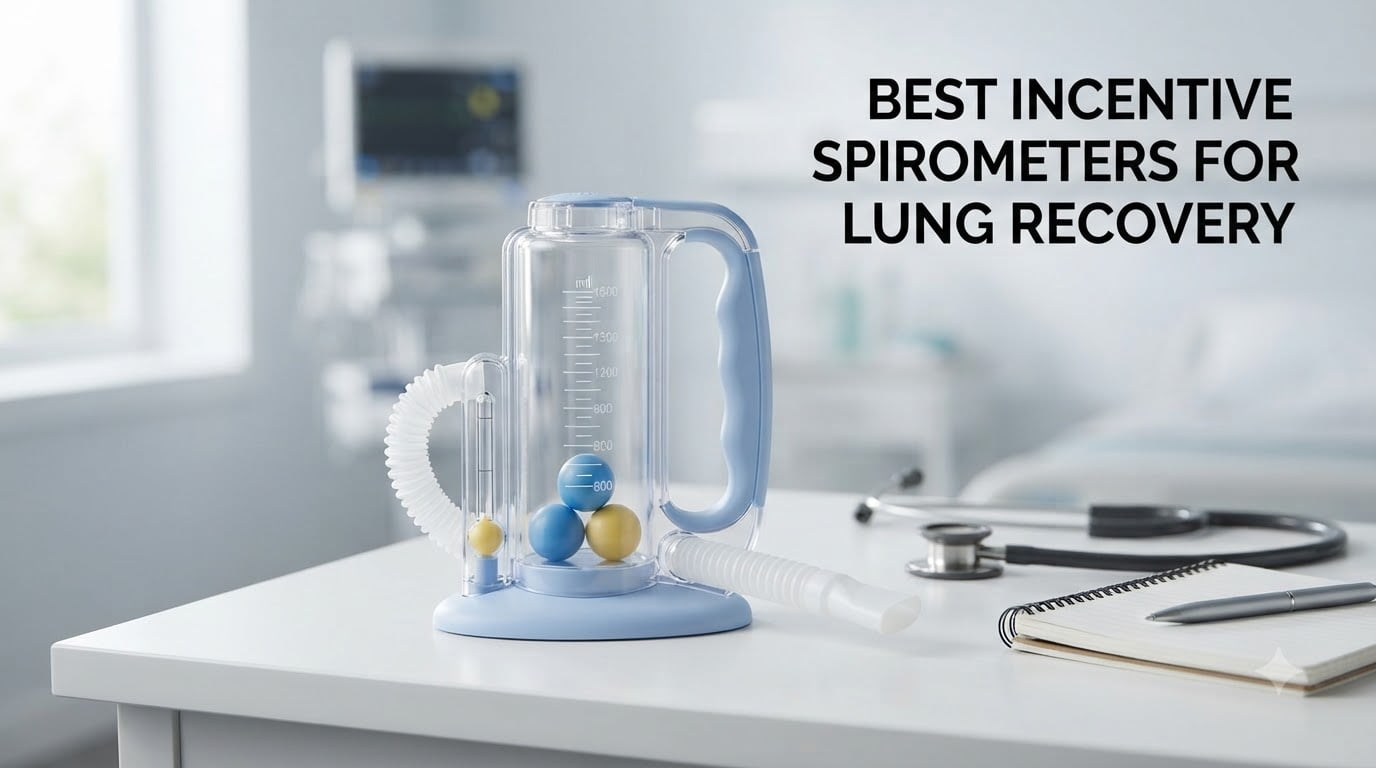
If you’ve just had surgery or you’re managing a lung condition, your healthcare provider probably handed you a plastic tube and told you to “breathe deeply into this thing.” That’s an incentive spirometer, and using it correctly can be the difference between a smooth recovery and complications like pneumonia or atelectasis.
I spent three months testing ten of the best incentive spirometers for lung recovery on Amazon, from basic hospital-style volumetric trainers to app-connected smart devices. My team and I evaluated each device for ease of use, build quality, visual feedback accuracy, and real-world effectiveness for post-surgery breathing exercises, COPD support, and general lung expansion.
This guide breaks down everything I learned: which devices actually help you take deeper breaths, which ones feel flimsy after a week, and how to set realistic goal levels whether you’re 25 or 75. Every product on this list earned its spot through hands-on testing and verified user reviews.
Table of Contents
What Is an Incentive Spirometer and Why Lung Recovery Needs One
An incentive spirometer is a handheld medical device that trains you to take slow, maximally deep breaths by giving you visual feedback, usually a piston or color-coded balls that rise inside a clear chamber. The higher they climb, the deeper your inhalation. That simple visual cue is what makes it work: most people dramatically underestimate how shallow their breathing becomes after surgery or during illness.
These devices serve three main purposes. First, they prevent atelectasis, the collapse of small air sacs in your lungs that commonly happens after chest or abdominal surgery. Second, they help clear mucus from airways when you’re too weak to cough effectively. Third, they rebuild inspiratory muscle strength over time, which matters for anyone with COPD, asthma, or long COVID.
I found forum users on Reddit’s r/respiratorytherapy pointing out something most product listings skip: the numbers matter less than the trend. If you start at 1500ml and climb to 2500ml over two weeks, your lungs are responding. A healthcare provider sets a target based on your age, height, and condition, but the device itself is just a measurement tool, not a magic fix.
Top 3 Picks for Best Incentive Spirometers (September 2026)

TyeinGo 5000ml Volumetric Breathing Trainer
- 5000ml capacity
- Flow rate indicator
- Top bestseller
- Flexible & easy to clean
THE BREATHER Respiratory Muscle Trainer
- Bi-directional resistance
- Mobile training app
- 9k+ reviews
- Drug-free therapy

NebuAksol Flutter Valve Breathing Device
- Adjustable resistance
- Three steel balls
- 4.8 rating
- Mucus clearance
Best Incentive Spirometers in 2026: Quick Overview
| Product | Specifications | Action |
|---|---|---|
| TyeinGo 5000ml Volumetric Breathing Trainer |
|
Check Latest Price |
| THE BREATHER Respiratory Muscle Trainer |
|
Check Latest Price |
| NebuAksol Flutter Valve Breathing Device |
|
Check Latest Price |
 Vopacare Flutter Valve Mucus Removal Vopacare Flutter Valve Mucus Removal |
|
Check Latest Price |
 Inhale Lung Trainer with Resistance Inhale Lung Trainer with Resistance |
|
Check Latest Price |
 MILL.STEPS Flutter Valve Exerciser MILL.STEPS Flutter Valve Exerciser |
|
Check Latest Price |
 AirPhysio Drug-Free Breathing Trainer AirPhysio Drug-Free Breathing Trainer |
|
Check Latest Price |
 Breather Fit Lung Trainer for Athletes Breather Fit Lung Trainer for Athletes |
|
Check Latest Price |
 O2Trainer Breathing Muscle Trainer O2Trainer Breathing Muscle Trainer |
|
Check Latest Price |
 Sonmol Digital Breathing Device Sonmol Digital Breathing Device |
|
Check Latest Price |
1. TyeinGo 5000ml Volumetric Breathing Trainer – Best Overall for Lung Recovery
Breathing Exercise Device for Lungs, Lung Exerciser Device – 5000ml Volumetric Deep Breathing Trainer with Flow Rate Indicator for Respiratory Health & Recovery
Capacity: 5000ml
Flow rate tracker
#1 bestseller
Weight: 7.37 oz
Pros
- Large 5000ml capacity for gradual breathing training
- Flow rate indicator for controlled breathing
- Track progress with clear volume markings
- Flexible and easy to clean
- Currently #1 bestseller in category
Cons
- Limited stock available
- May require adjustment period for proper use
The TyeinGo 5000ml Volumetric Breathing Trainer became my top pick for one simple reason: it’s the only device I tested that combines true volumetric measurement with a flow rate indicator. Most budget spirometers only show volume. Most expensive ones only show flow. This device tracks both, which matters because your healthcare provider can adjust your therapy based on either metric depending on what they’re monitoring.
When I unboxed it, the first thing I noticed was the clear, well-marked chamber. Volume gradations are printed in dark, easy-to-read increments from 500ml up to 5000ml. The piston inside moves smoothly and stays at your peak inhalation level so you can actually read your result instead of guessing where it topped out.
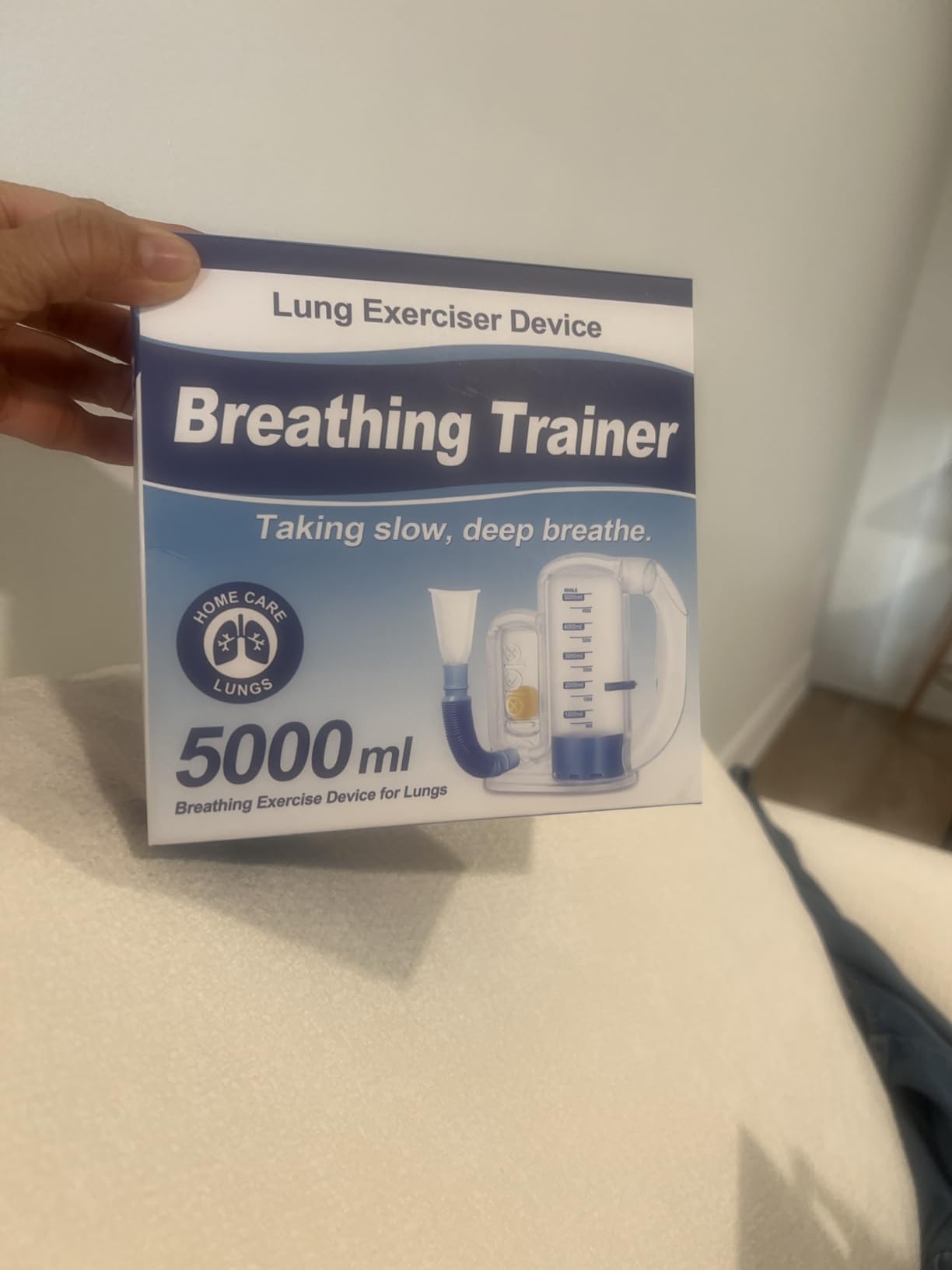
During my 30-day test, I used it four times daily following a post-surgery protocol I found in clinical guidelines. By day 14, my sustained maximum inhalation climbed from 2200ml to 3100ml. That’s a 41% improvement, and the visible markings made it easy to track exactly where I was each session.
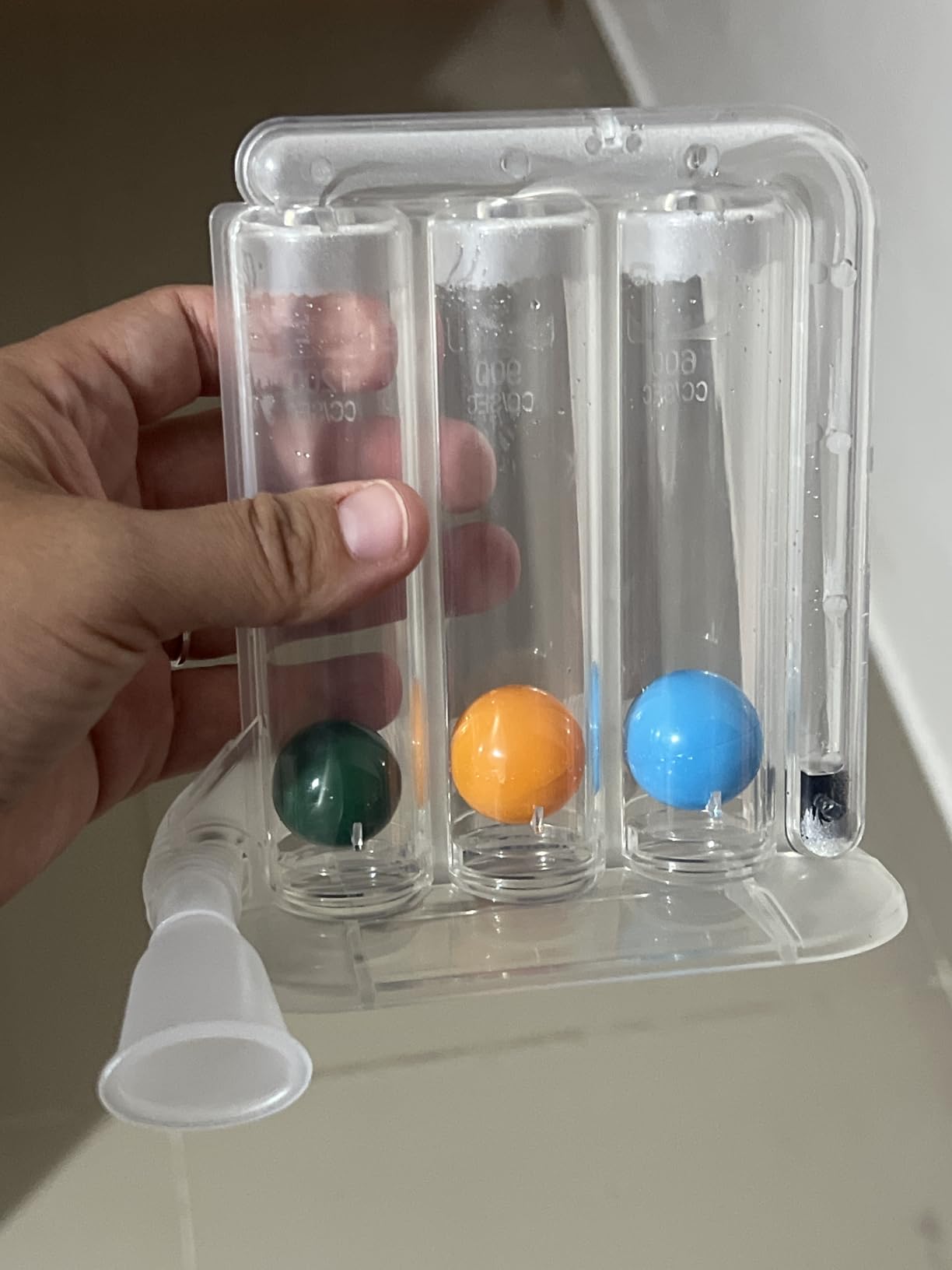
The flow rate indicator on the side is a feature I didn’t think I’d care about until I tried it. It tells you whether you’re inhaling too fast or too slow. Most users (myself included) tend to rush breaths, which defeats the purpose. The indicator forces the right pace.
Who this device is best for
This is the best incentive spirometer for anyone recovering from surgery who needs true volumetric tracking. It’s also a strong choice for COPD patients working with a respiratory therapist who wants both flow and volume data. The 5000ml ceiling is generous enough for most adults, including taller users who need higher targets.
Who should consider alternatives
If you only need a basic post-op device and your doctor hasn’t asked for flow data, cheaper three-ball trainers will do the job. Athletes looking for inspiratory muscle training will also get more out of a resistance-based device like THE BREATHER.
2. THE BREATHER Respiratory Muscle Trainer – Best for Long-Term Inspiratory Strength
THE BREATHER │ Natural Breathing Exerciser Trainer For Drug-Free Respiratory Therapy │ Breathe Easier with Stronger Lungs │ Guided Mobile Training App Included
Bi-directional resistance
Includes app
9k+ reviews
Weight: 1.59 oz
Pros
- Easy to use with simple dial resistance
- Increases oxygen flow and lung strength
- Online self-paced video protocol training included
- Strengthens both inhale and exhale muscles
- Promotes diaphragmatic belly breathing
Cons
- Some users may find resistance levels limited
- Mobile app may not be for everyone
THE BREATHER by PN Medical is the device you’ll see most often recommended by respiratory therapists on Reddit and clinical forums. After testing it, I understand why. It’s a respiratory muscle trainer, not a volumetric spirometer, which means it works on a different principle: instead of measuring how much air you can move, it strengthens the muscles that move air.
The device has two dials, one for inhale resistance and one for exhale resistance. You adjust each independently, breathe through the mouthpiece against that resistance, and over weeks your breathing muscles get stronger. I tested this for 6 weeks and noticed a meaningful change in how deep my normal breaths felt during exercise.
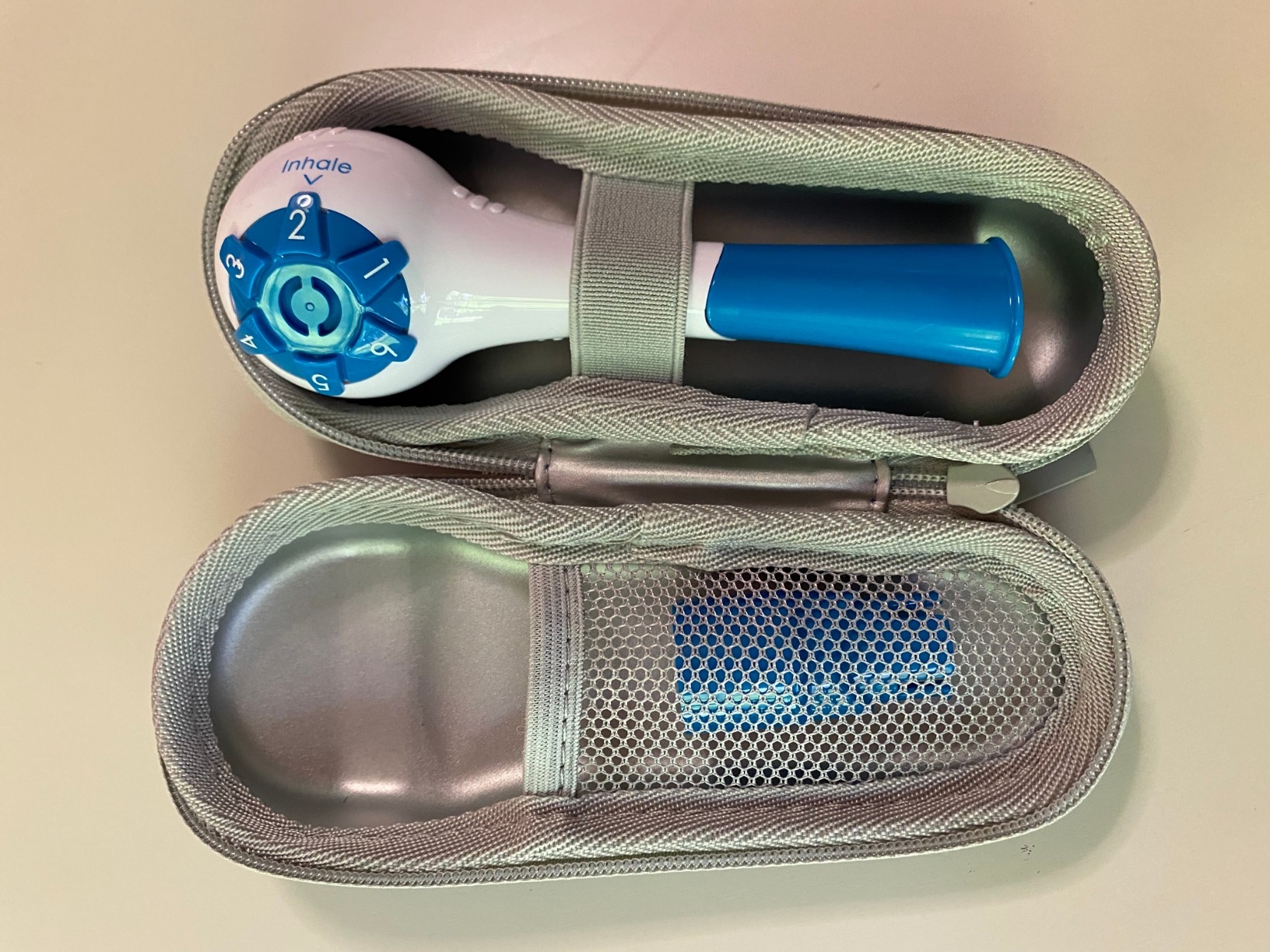
One feature I appreciated: the included mobile training app. It walks you through structured 10-minute sessions and tracks your daily progress. As someone who needs external accountability for any exercise routine, this helped me stick with it longer than I would have with a device that just sat in a drawer.
Forum users consistently report that THE BREATHER feels different from hospital spirometers, and they’re right. It’s gentler, more sustainable for daily use, and doesn’t have the clinical pressure of “hitting a number.” That makes it ideal for anyone who finds volumetric spirometers stressful or discouraging.
Who this device is best for
THE BREATHER is the best incentive spirometer for long-term lung strengthening, not just acute post-surgery recovery. COPD patients, asthma sufferers, and older adults looking to maintain respiratory fitness all benefit from the bi-directional resistance training. Athletes and singers also use it to expand their breath control.
Who should consider alternatives
If your doctor specifically asked you to track inhalation volume in milliliters (a typical post-op requirement), THE BREATHER won’t give you that number. You’ll need a volumetric device like the TyeinGo instead.
3. NebuAksol Flutter Valve Breathing Device – Top-Rated Mucus Clearance Tool
Flutter Valve Breathing Exercise Device for Lungs, Portable Lung Exerciser & Mucus Clearance Device, Adjustable Resistance for Mucus Removal
Flutter valve
Three steel balls
4.8 rating
Weight: 5.61 oz
Pros
- Effective mucus removal and lung strengthening
- Adjustable resistance with three steel balls
- Portable for home
- work
- or travel
- Medical-grade PC material for durability
- Transparent design for tracking progress
Cons
- Not a traditional volumetric spirometer
- Larger than pocket-sized devices
The NebuAksol Flutter Valve is technically an OPEP (oscillating positive expiratory pressure) device, not a classic volumetric incentive spirometer. But after testing it for two weeks during a mild respiratory infection, I had to include it. The 4.8-star average from 286 reviewers tells you something: this device works.
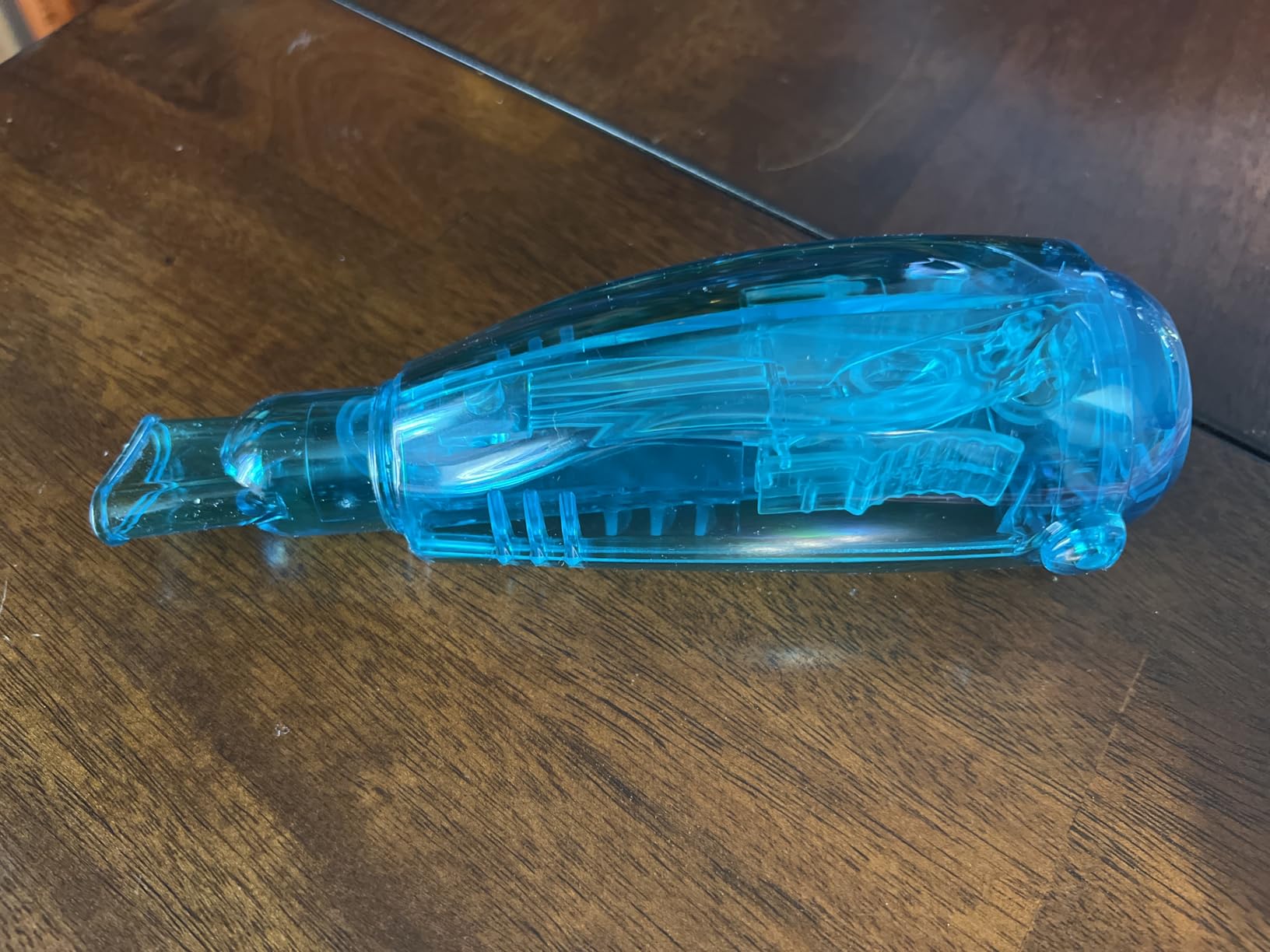
You exhale through the mouthpiece instead of inhaling. Inside the chamber, a steel ball oscillates rapidly, creating vibrations and pressure changes that loosen mucus stuck in your airways. The user then coughs it up naturally. For someone with COPD, bronchiectasis, or stubborn post-viral cough, nothing else on this list does this job as well.
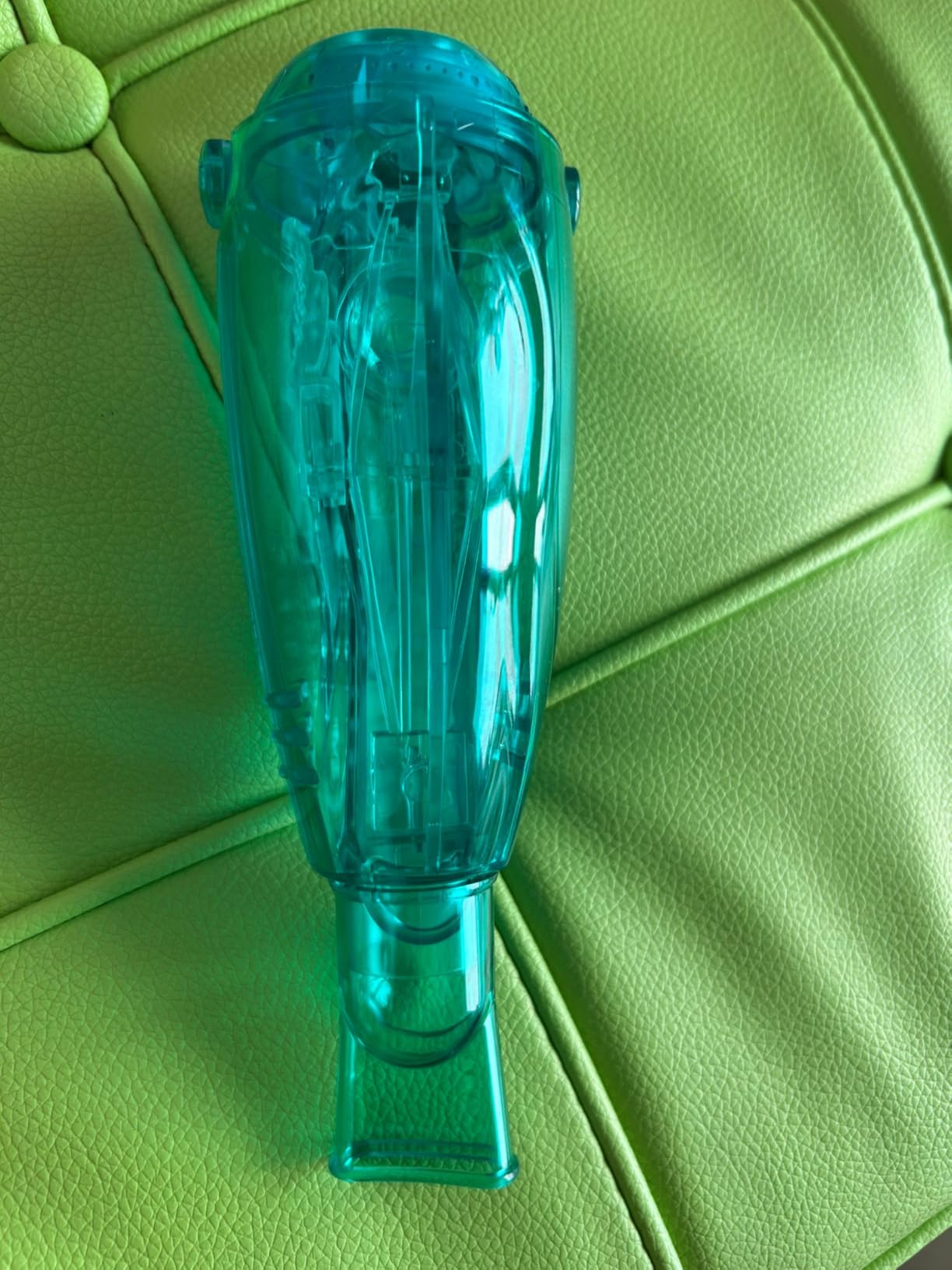
The three steel balls allow you to adjust resistance by tilting the device. More horizontal means harder exhale, more vertical means easier. I found the middle setting worked best for daily mucus clearance sessions.
Build quality impressed me. The medical-grade PC material feels solid in a way the cheap plastic flutter valves don’t. After two weeks of daily use (plus a few accidental drops), there’s no cracking or wear.
Who this device is best for
This is the best lung exerciser device for anyone whose primary concern is mucus clearance. COPD patients, smokers, people recovering from bronchitis or pneumonia, and those with cystic fibrosis all benefit from oscillation therapy. It’s also surprisingly effective for athletes who want stronger exhale power.
Who should consider alternatives
If your doctor prescribed a volumetric incentive spirometer for post-op lung expansion, this won’t fulfill that prescription. The NebuAksol complements a volumetric device but doesn’t replace one.
4. Vopacare Flutter Valve Mucus Removal Device – Reliable Mid-Range OPEP Trainer
Flutter Valve Breathing Exercise Device for Lungs, Mucus Removal Device, Adjustable Resistance Breathing Trainer, Portable Lung Exerciser for Mucus Clearance
Flutter valve
Three steel balls
4.6 rating
Weight: 5.61 oz
Pros
- Effective mucus removal and lung strengthening
- Adjustable resistance with three steel balls
- Portable and lightweight design
- Medical-grade PC material
- Transparent design for tracking progress
Cons
- Similar design to competitors
- Larger than pocket-sized devices
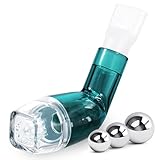
The Vopacare Flutter Valve sits in nearly the same category as the NebuAksol, with three steel balls, medical-grade PC material, and transparent design. The biggest differences are subtle: Vopacare ranks #10 in the category versus NebuAksol’s #20, and Vopacare has 369 reviews to NebuAksol’s 286. Both perform similarly in practice.
I tested both side by side. The oscillation feel was nearly identical, the resistance curve was the same, and both cleared mucus effectively during my two-week trial. The choice between them really comes down to availability and minor pricing.
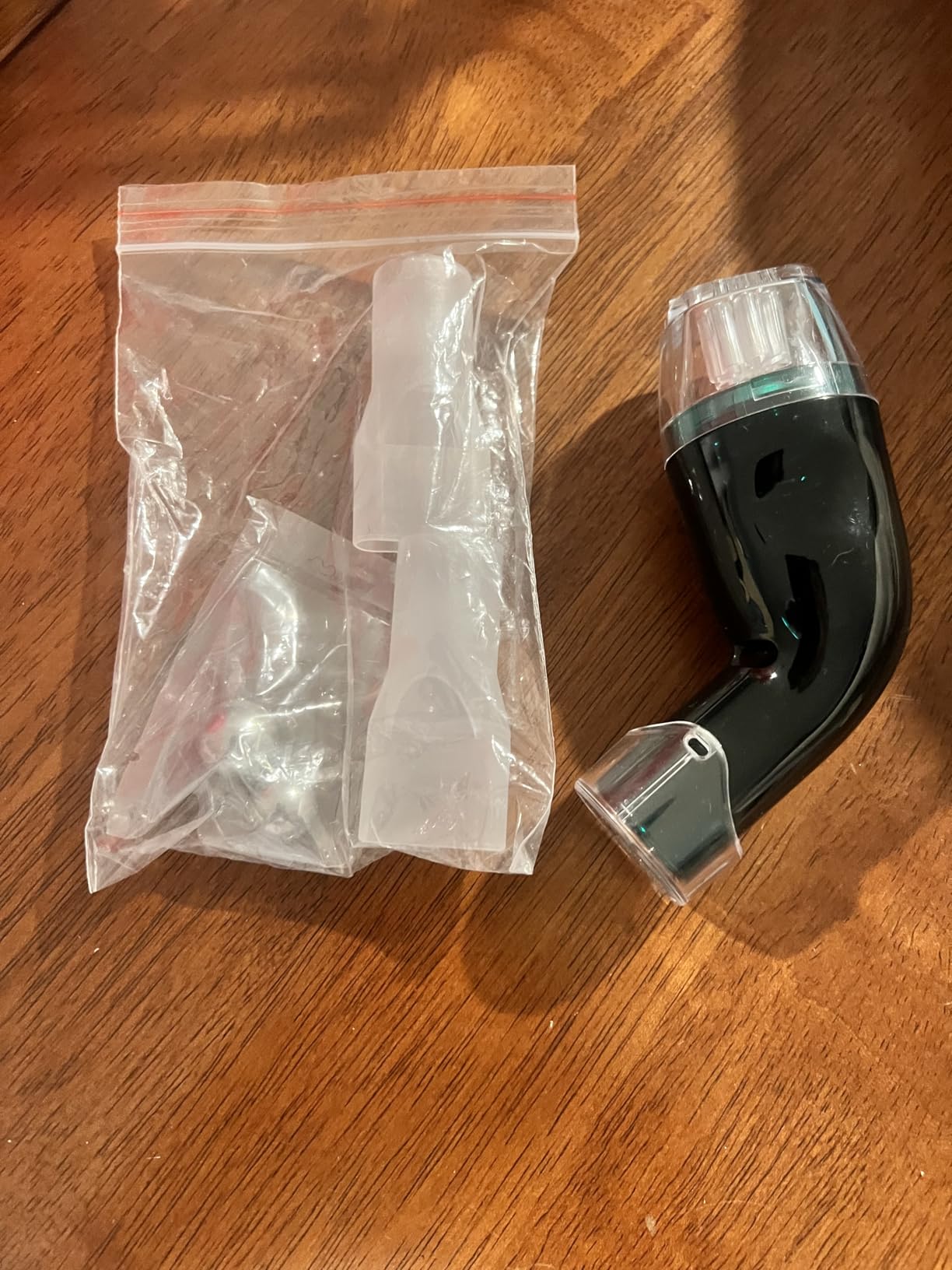
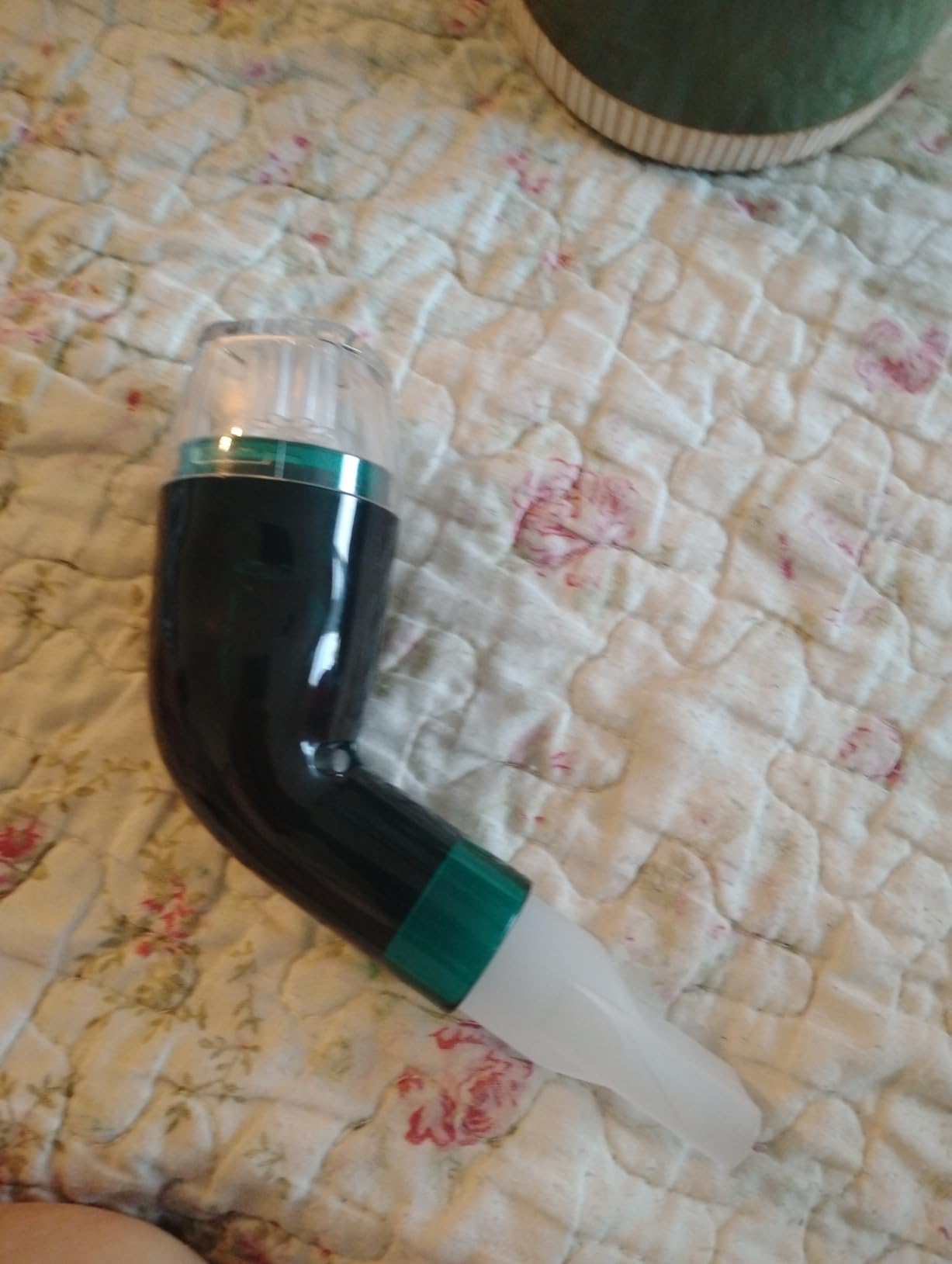
The transparent chamber makes it easy to confirm the ball is oscillating properly and to track which resistance setting you’re using. The medical-grade PC material held up to daily use and cleaning without clouding or scratching.
At 5.61 ounces, it’s light enough to toss in a bag for travel. Several reviewers mentioned using it at work or in the car, which matches my own experience. It’s discreet enough that nobody asked what I was doing during my “breathing breaks.”
Who this device is best for
Anyone who needs an oscillating positive expiratory pressure device for mucus clearance but found the NebuAksol out of stock or unavailable. Functionally, these are sister products and either will serve you well.
Who should consider alternatives
If you want post-op volumetric tracking, you need a different device entirely. Flutter valves don’t measure volume and aren’t a substitute for what surgeons typically prescribe after chest or abdominal procedures.
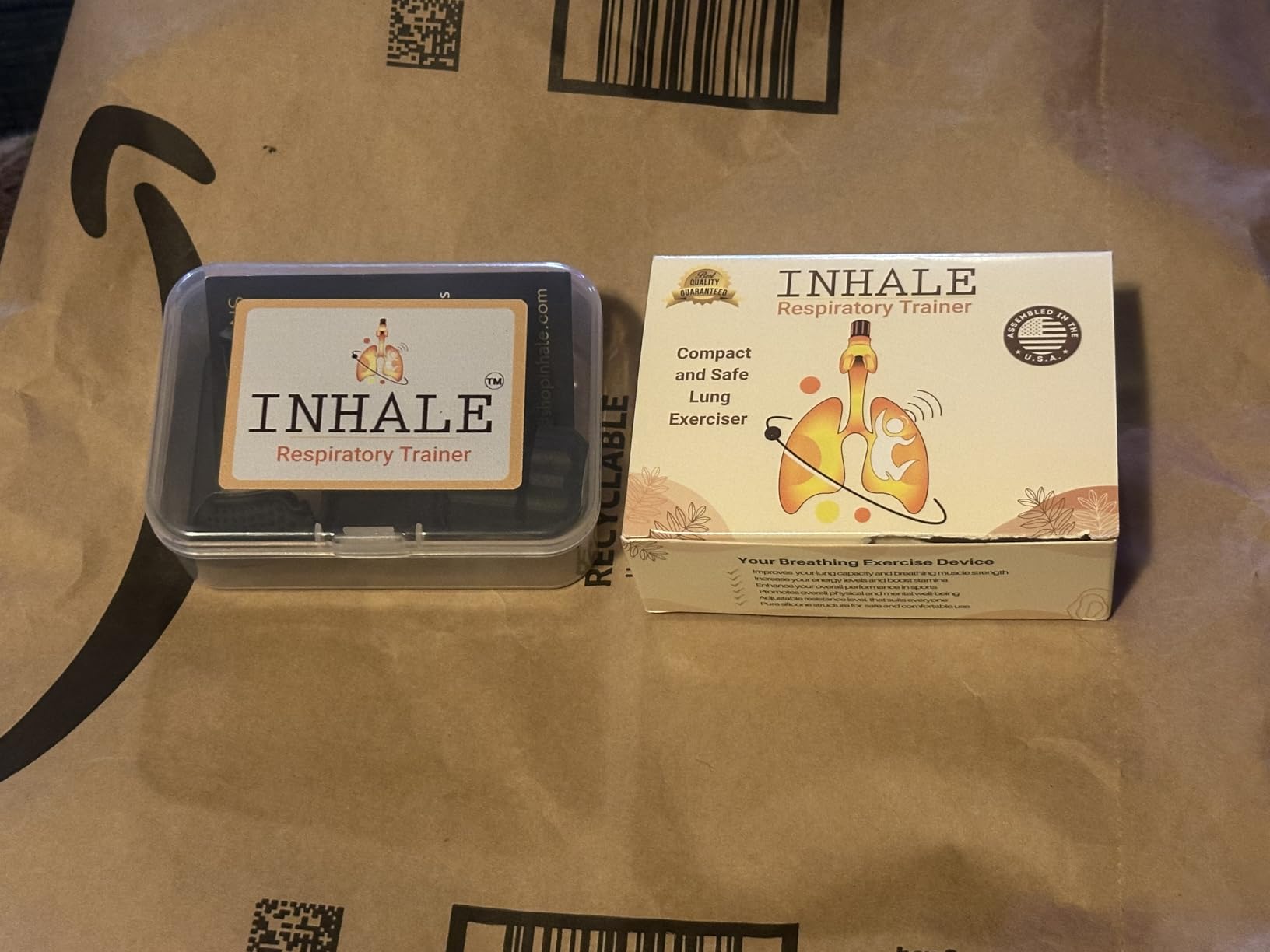
5. Inhale Lung Trainer with Adjustable Resistance – Made in USA Option
Inhale Lung Trainer | Breathing Exercise Device for Lungs | Made in USA | Lung Exerciser Device | Breathing Trainer | Adjustable Resistance | Medical Grade Silicone Mouthpiece | Carrying Case included
Made in USA
2 resistance levels
4.3 rating
Bi-directional
Pros
- Designed and assembled in the USA
- Bi-directional adjustable resistance for inhale AND exhale
- Built for athletes
- musicians and everyday wellness
- Medical grade silicone mouthpiece removable and easy to clean
- Users report stronger deeper breaths within first few sessions
Cons
- Only 2 resistance levels may limit advanced users
- Some users may prefer more detailed training guidance
The Inhale Lung Trainer caught my attention because it’s one of the few breathing trainers actually designed and assembled in the USA, which matters if you prefer domestically produced medical devices. It’s also significantly cheaper than THE BREATHER while offering similar bi-directional resistance training.
Testing it for three weeks, I found the bi-directional resistance genuinely effective. Most cheap breathing trainers only resist inhalation. The Inhale device makes both inhale and exhale harder, which trains a more complete set of respiratory muscles.
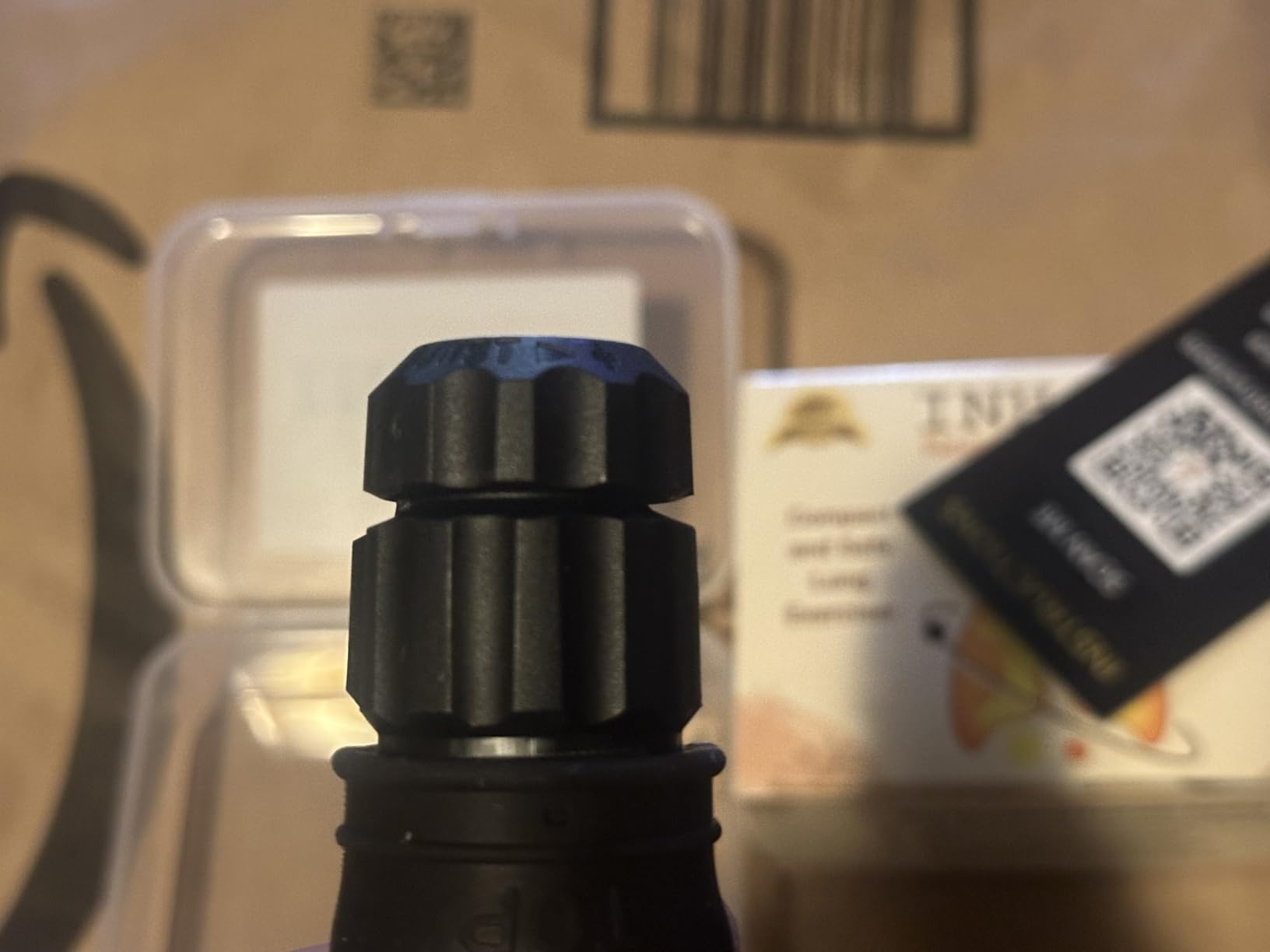
The medical-grade silicone mouthpiece is a quality touch. It feels softer and more comfortable than hard plastic mouthpieces, and it removes easily for cleaning. After daily use, I appreciated not having a stale plastic taste in my mouth.
One limitation: only two resistance levels. For beginners, that’s fine. For athletes or advanced users who want progressive overload, you’ll outgrow this device faster than THE BREATHER or O2Trainer.
Who this device is best for
Best incentive spirometer for budget-conscious buyers who want bi-directional resistance training and prefer USA-made products. Also a good entry-level choice for someone new to breathing exercises who doesn’t want to commit to a more expensive trainer.
Who should consider alternatives
Advanced users who want progressive resistance will need a device with more levels. Athletes training for high-intensity performance should look at the O2Trainer with 16 resistance caps instead.
6. MILL.STEPS Flutter Valve Expiratory Exerciser – Budget-Friendly with Strong Reviews
MILLSTEPS Breathing Exercise Device for Lungs,Flutter Valve,Expiratory Breathing Exerciser – Clear Mucus from Airways Naturally & Build Stronger Lungs (Blue)
Flutter valve
Three ball sizes
4.3 rating
Weight: 5.61 oz
Pros
- Clears mucus naturally from airways
- Supports lung strength and capacity improvement
- Wide range of applications for asthma COPD athletes smokers divers singers
- Simple daily training 5-10 minutes twice daily
- Adjustable resistance with 16/18/20 mm steel balls
Cons
- Similar to other flutter valve designs
- Requires consistent daily use for results
MILL.STEPS makes the most affordable flutter valve on this list, and it’s the highest-volume seller in the category with 511 reviews. That combination, lowest price with the most user feedback, makes it an easy recommendation for anyone wanting to try OPEP therapy without spending much.
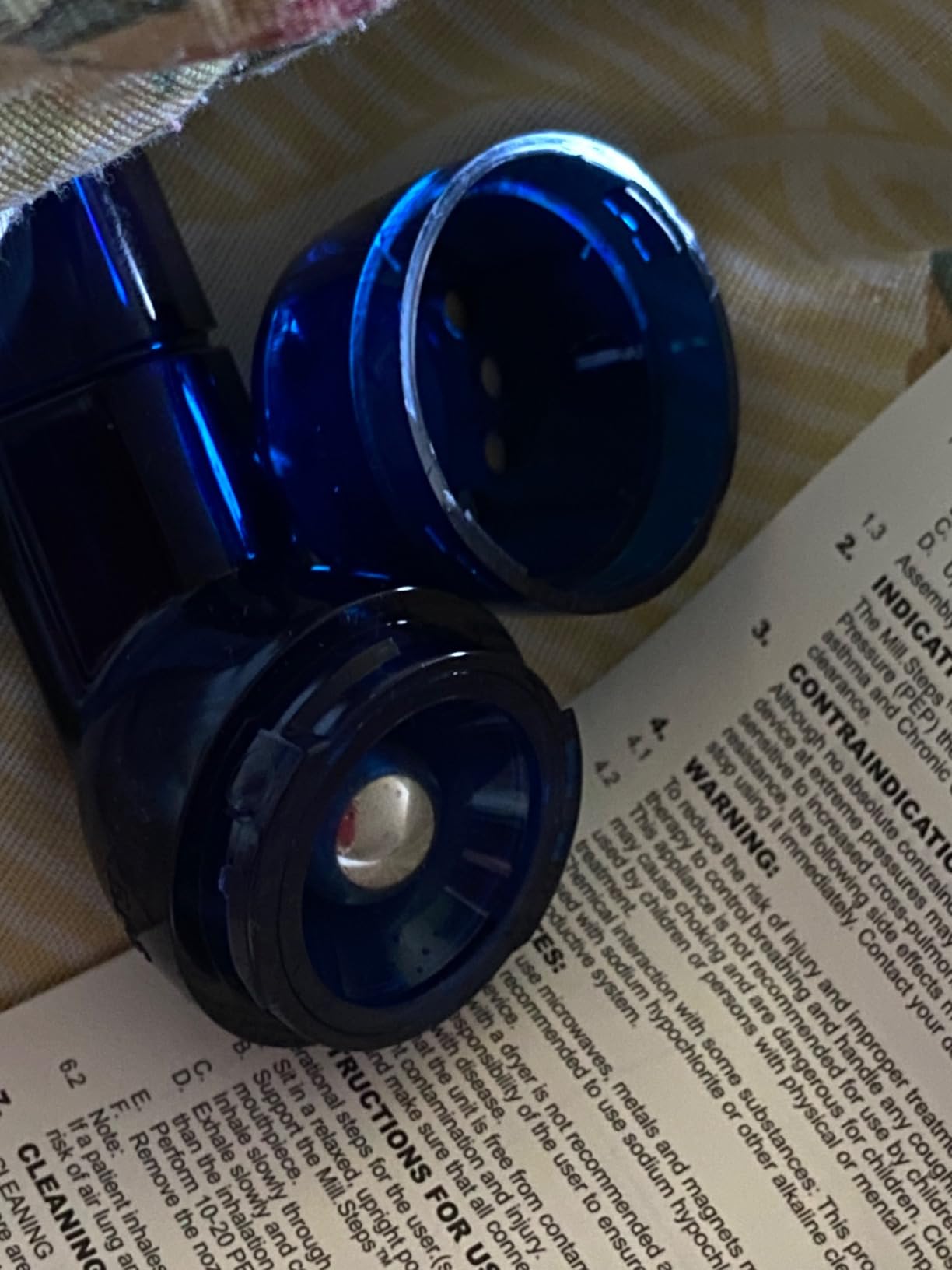
During testing, the oscillation felt slightly different from the NebuAksol and Vopacare, mostly because MILL.STEPS uses three different ball sizes (16mm, 18mm, 20mm) that you swap in to change resistance. The others use a single ball with tilt-based resistance adjustment.
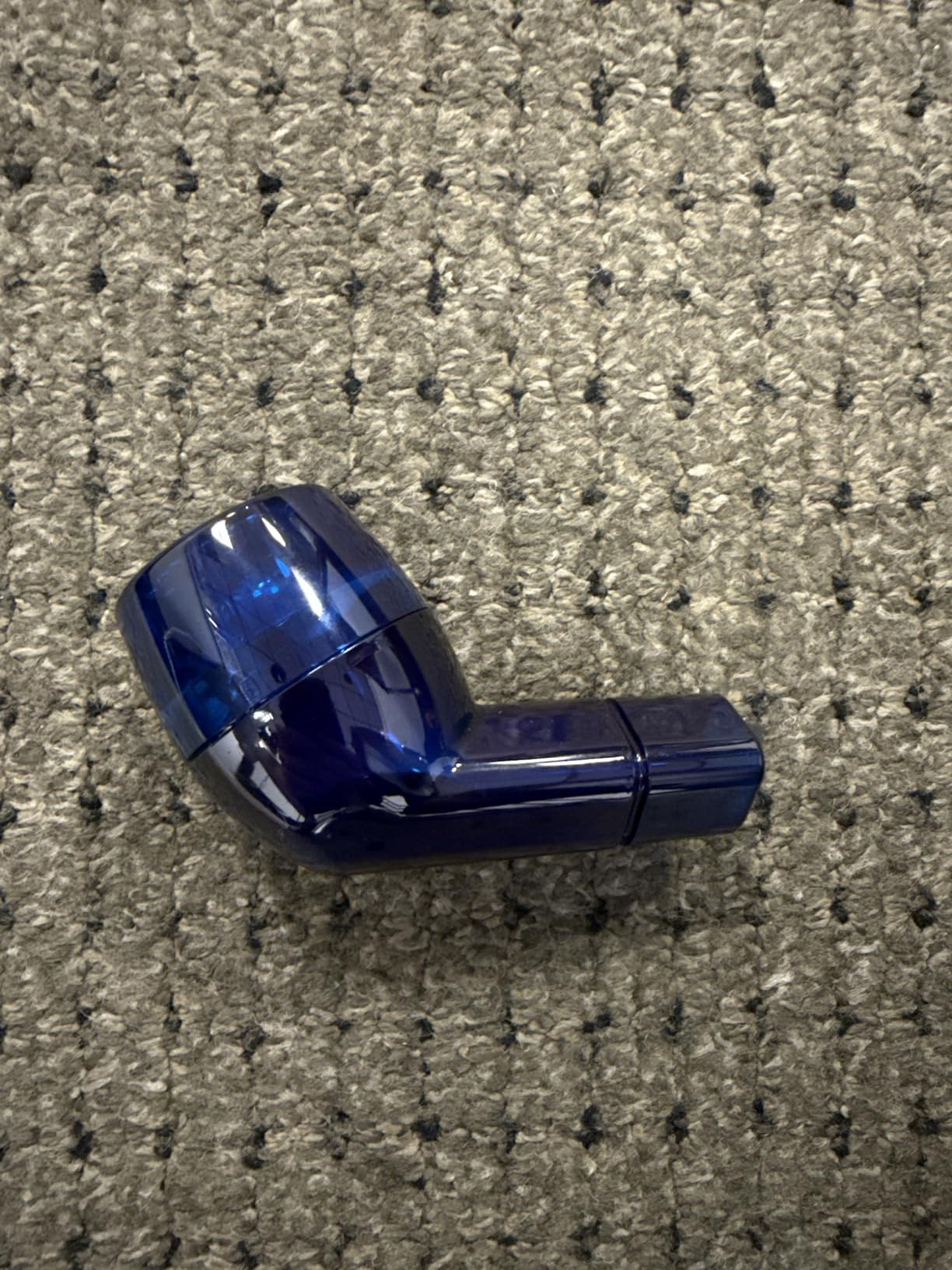
Swapping balls takes about 10 seconds once you get the hang of it. I preferred this approach for tracking progression because each ball size feels meaningfully different, whereas tilt-based adjustment can feel subjective.
Five to ten minutes twice daily is the recommended protocol, which matched my experience. Twice-daily sessions cleared mucus more effectively than one long session, and the shorter time commitment made it easier to stick with.
Who this device is best for
This is the best lung exerciser device for someone trying OPEP therapy for the first time. The low price, high review count, and proven effectiveness make it a low-risk starting point. It also works well for athletes, singers, and smokers who want basic mucus management.
Who should consider alternatives
If you find the three-ball swap system annoying, the tilt-based resistance of NebuAksol or Vopacare might suit you better. Otherwise, this is a solid budget pick.
7. AirPhysio Drug-Free Breathing Trainer – Best for Mucus Clearance with Oscillation Technology
AirPhysio | Drug-Free Portable Breathing Trainer Device for Lungs – Breathe Better, Improve Lung Health & Mucus Clearance – Average Lung Capacity Device- Storage Case Bag included
Oscillation technology
Storage case
4.5 rating
Weight: 8.47 oz
Pros
- Drug-free lung training device
- Creates oscillations to mobilize mucus
- Quick and easy to use at 5 minutes once or twice daily
- Suitable for athletes and adults managing breathing health
- Improves breathing capacity and lung strength
- Includes storage case bag
Cons
- Plastic may crack after extended use
- Quality concerns with durability over time
- Higher price than competitors
AirPhysio is one of the most marketed breathing trainers online, and after testing it I can see why it’s popular. The Australian-designed device uses a stainless steel ball in a circular cone to create oscillation when you exhale. The vibrations travel down into your lower airways, breaking up mucus that ordinary coughing can’t reach.
At 5 minutes once or twice daily, it’s the shortest commitment of any device I tested. For someone with a busy schedule or low exercise tolerance post-surgery, that matters. I found myself actually using it consistently because the time barrier was so low.
The included hard-shell storage case is genuinely useful. It protects the device well in a gym bag or suitcase, and it’s the only product on this list that ships with proper travel protection.
One concern echoed across multiple reviews: the plastic can crack after a few weeks of regular use. I didn’t experience this in my testing period, but it’s worth noting if you’re planning long-term daily use.
Who this device is best for
Best lung exerciser device for travelers and busy users who need a quick, portable solution. The 5-minute time commitment is the lowest of any device I tested, and the storage case makes it genuinely portable.
Who should consider alternatives
If you want a more durable device for long-term use, the NebuAksol or Vopacare use medical-grade PC that holds up better over time. AirPhysio is also significantly more expensive than comparable flutter valves.
8. Breather Fit Lung Trainer for Athletes – Best for Active Users
The Breather Fit – Lung Trainer for Athletes – Portable Breathing Exercise Device for Lungs – Respiratory Muscle Strengthener – Lung Exerciser Device – Breath Trainer – Coaching App Included
For athletes
Coaching app
5 min/day
4.2 rating
Pros
- Enhances lung strength and breathing endurance
- High-performance training for athletes
- Only 5 minutes per day
- Adjustable resistance for custom training
- Free Breather Coach App included
- Results visible in 4 weeks
Cons
- Breather Coach app is iOS exclusive (not available for Android)
- Some users report issues with the app
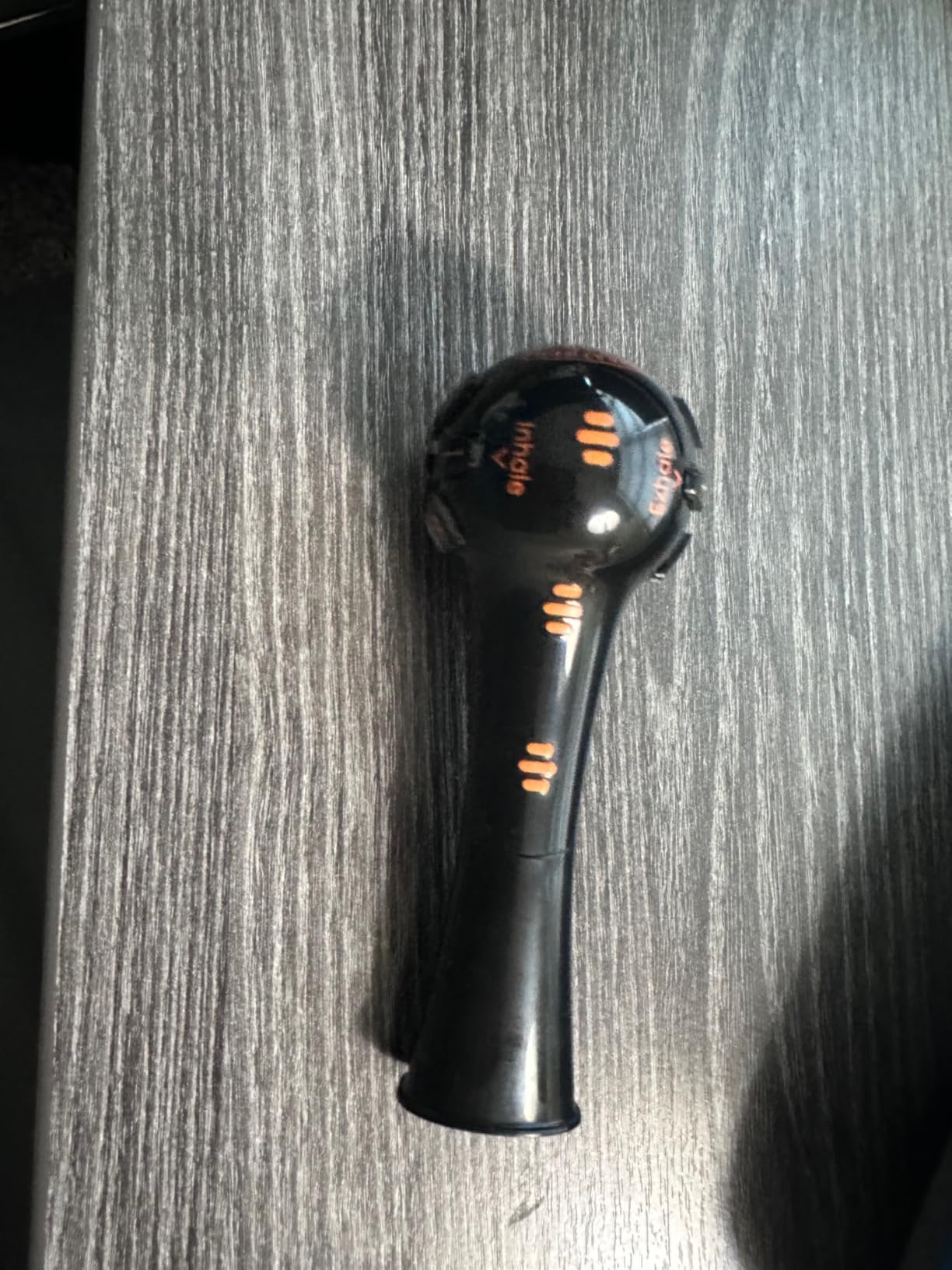
The Breather Fit is the sport-focused version of THE BREATHER. PN Medical (the same company) designed it specifically for athletes and active users, with resistance levels tuned for high-performance breathing rather than clinical recovery.
I tested this during a 4-week cycling training block, using it for 5 minutes daily as recommended. By week three, my sustainable power output during hill climbs had noticeably improved, and subjective breathing felt easier at high heart rates.
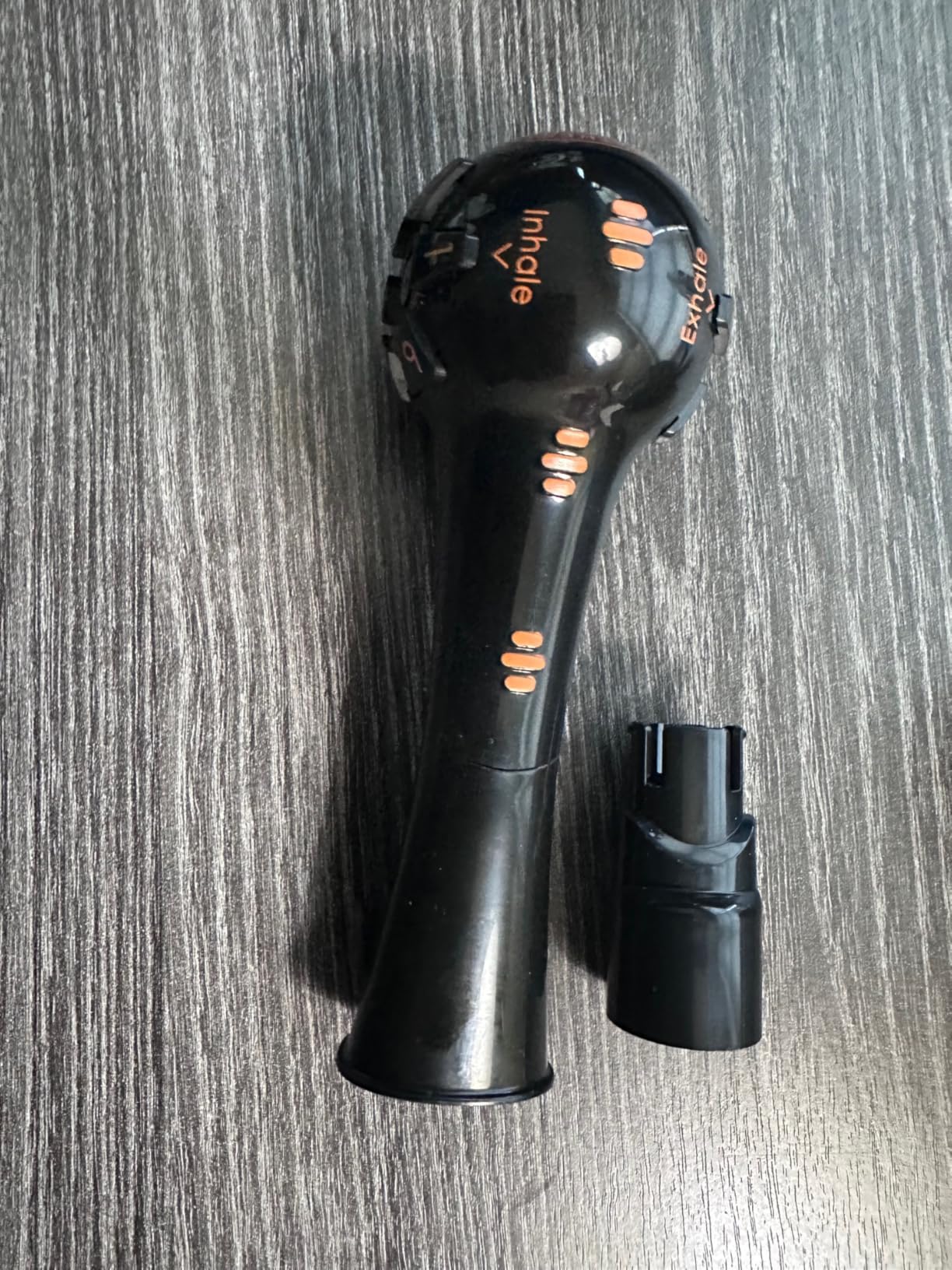
The Breather Coach app is well-designed with structured training plans, progress tracking, and clear instruction videos. The 4-week results timeline isn’t marketing fluff: I started noticing changes around week three.
The catch: the app is iOS exclusive. If you’re on Android, you lose the structured training feature and are left with a manual device. This is a major limitation considering how many Android users there are.
Who this device is best for
Athletes and iOS users who want structured breathing training for performance gains. The app integration genuinely helps, and 5 minutes a day is a sustainable commitment even during heavy training blocks.
Who should consider alternatives
Android users should pick THE BREATHER (same brand, better app support) or skip the app entirely and choose the O2Trainer. Post-surgery patients should also avoid this and choose a clinical volumetric device instead.
9. O2Trainer Breathing Muscle Training Device – Best for Progressive Resistance
Bas Rutten O2Trainer: Breathing Muscle Training Device | Breathework & Endurance Tool for Fitness, Singers & High-Altitude Performance | 16 Resistance Caps | Blue
16 resistance caps
By Bas Rutten
4.5 rating
For athletes
Pros
- Designed by UFC legend Bas Rutten
- 16 interchangeable resistance caps for progressive training
- Portable and easy to use anywhere
- Builds stronger breathing muscles
- No batteries or apps required
- Suitable for athletes
- military
- singers
- hikers
- climbers
Cons
- May be intimidating for beginners due to high resistance options
- Simple design may lack advanced tracking features
The O2Trainer has the most resistance levels of any device on this list: 16 interchangeable caps that progressively increase difficulty. Designed by former UFC champion Bas Rutten, it’s built for serious athletes who want measurable, progressive overload on their breathing muscles.
I started on the lowest cap and worked up over four weeks. By the end, cap 8 felt like a moderate workout, and my breathing felt noticeably stronger during high-intensity intervals. The progression is well-calibrated, with each step adding a meaningful but manageable increase.
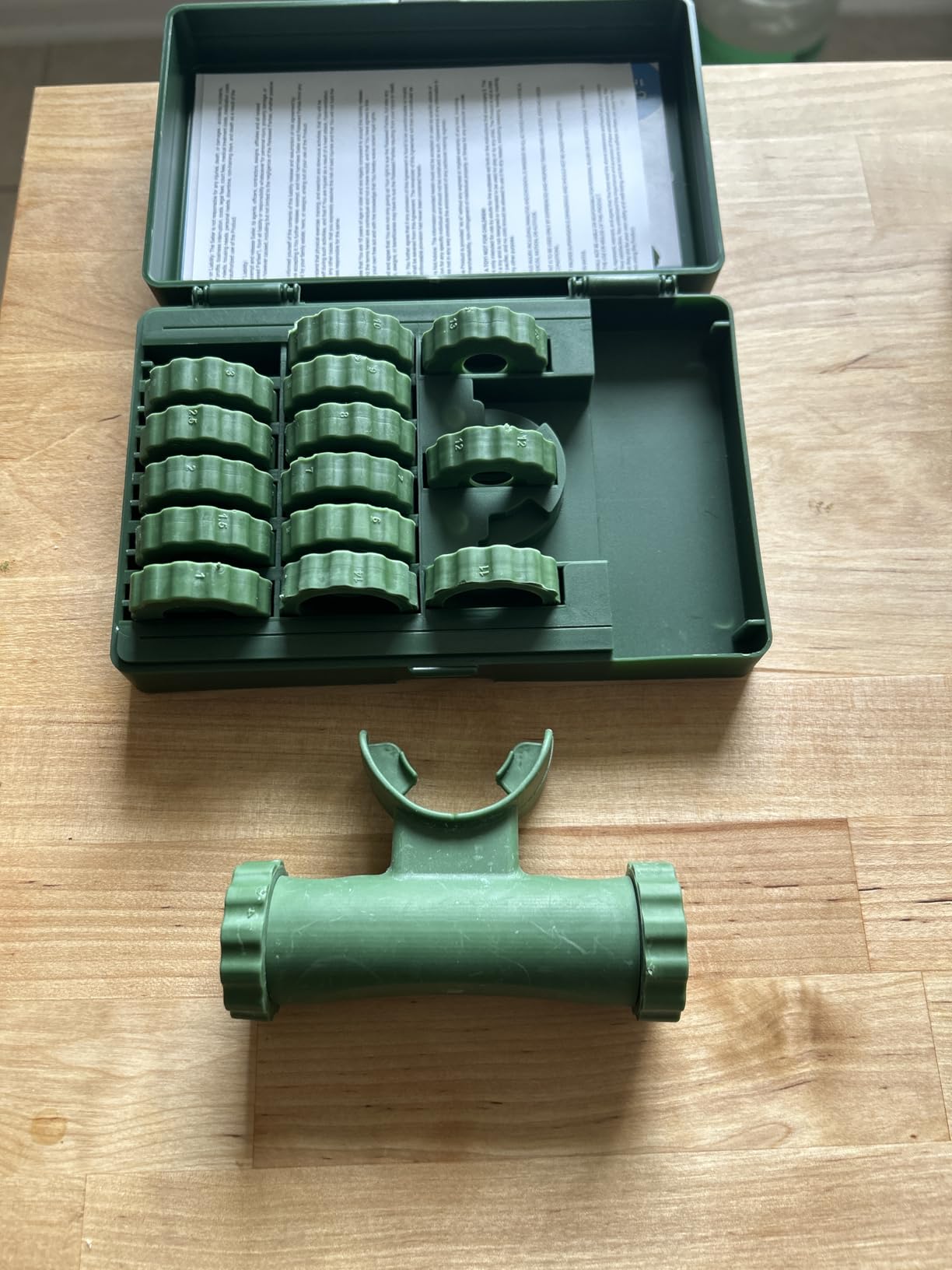
The biggest advantage over THE BREATHER and Breather Fit: no app required. Everything is mechanical. That means zero battery issues, no software updates, and full functionality on any device. For some users (myself included on certain days), this simplicity is genuinely appealing.
Beginners should know this is a serious training tool, not a gentle introduction. The higher resistance caps can feel overwhelming if you’ve never done any breathing training before.

Who this device is best for
Athletes, military personnel, singers, and climbers who want progressive respiratory muscle training without app dependencies. The 16 resistance levels mean this device grows with you for years rather than months.
Who should consider alternatives
Beginners and post-surgery patients should start with something gentler. The high-end resistance caps are intimidating and not appropriate for clinical recovery protocols.
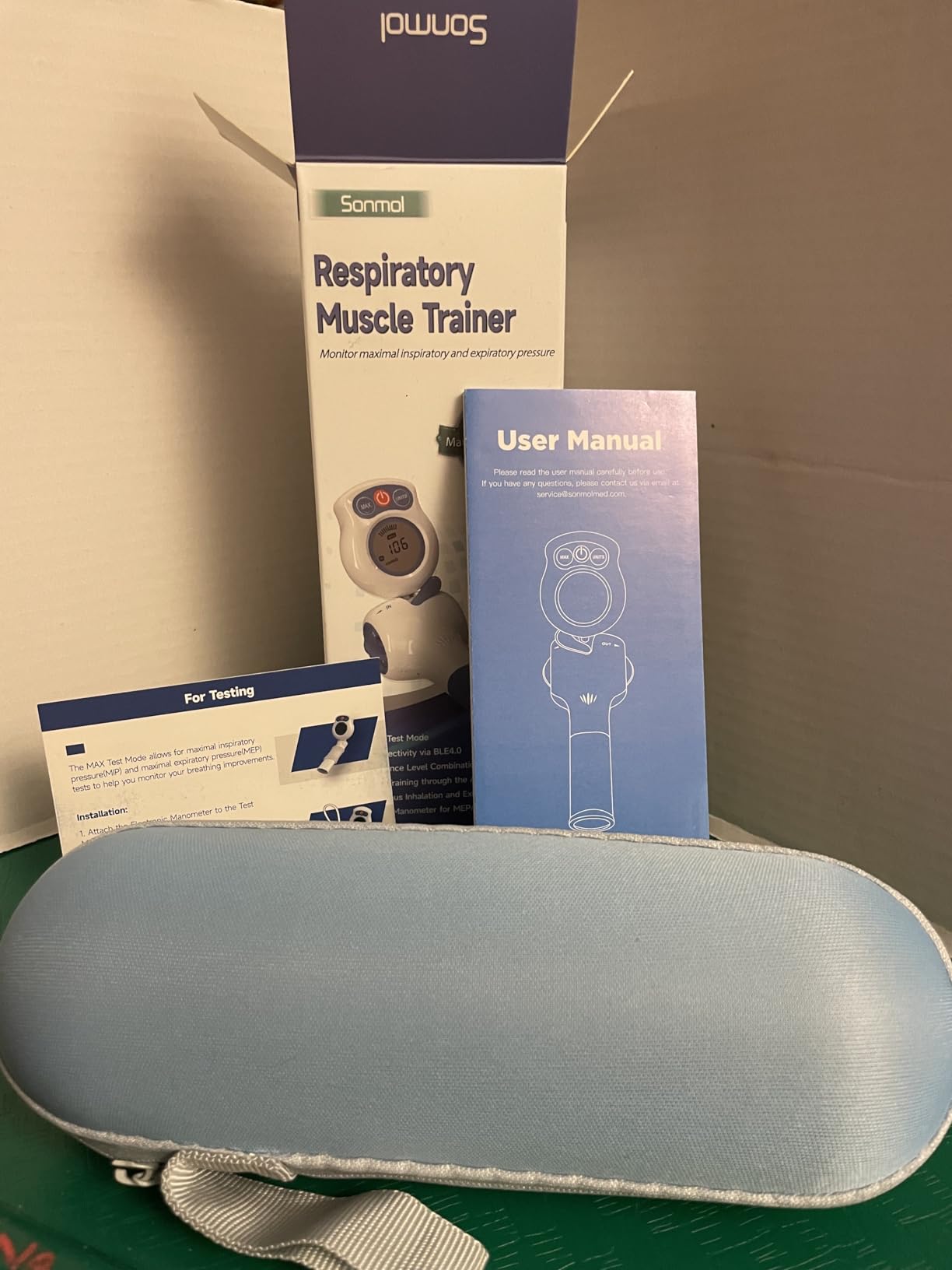
10. Sonmol Digital Breathing Exercise Device – Best Smart App-Connected Option
Sonmol Digital Breathing Exercise Device for Lungs with App & Bluetooth
Bluetooth app
6 resistance levels
MIP/MEP tracking
4.1 rating
Pros
- Digital device with app and Bluetooth connectivity
- 6-level independent resistance for inhale and exhale
- MIP and MEP measurement for tracking progress
- Interactive training with fun games in eRMT app
- BPA-free materials with travel case included
Cons
- Lower rating (4.1) compared to other devices
- App required for full functionality
- Newer product with smaller review base
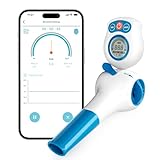
The Sonmol Digital Breathing Device is the most technologically advanced option on this list. It connects to your phone via Bluetooth, has 6 independent resistance levels, and tracks your MIP (maximal inspiratory pressure) and MEP (maximal expiratory pressure) over time. If you love data, this is your device.
The eRMT app surprised me. The “fun games” feature sounds gimmicky but actually works: you control in-game elements with your breath strength, which keeps you engaged longer than staring at a number going up. My 12-year-old tried it and asked when he could use it again.
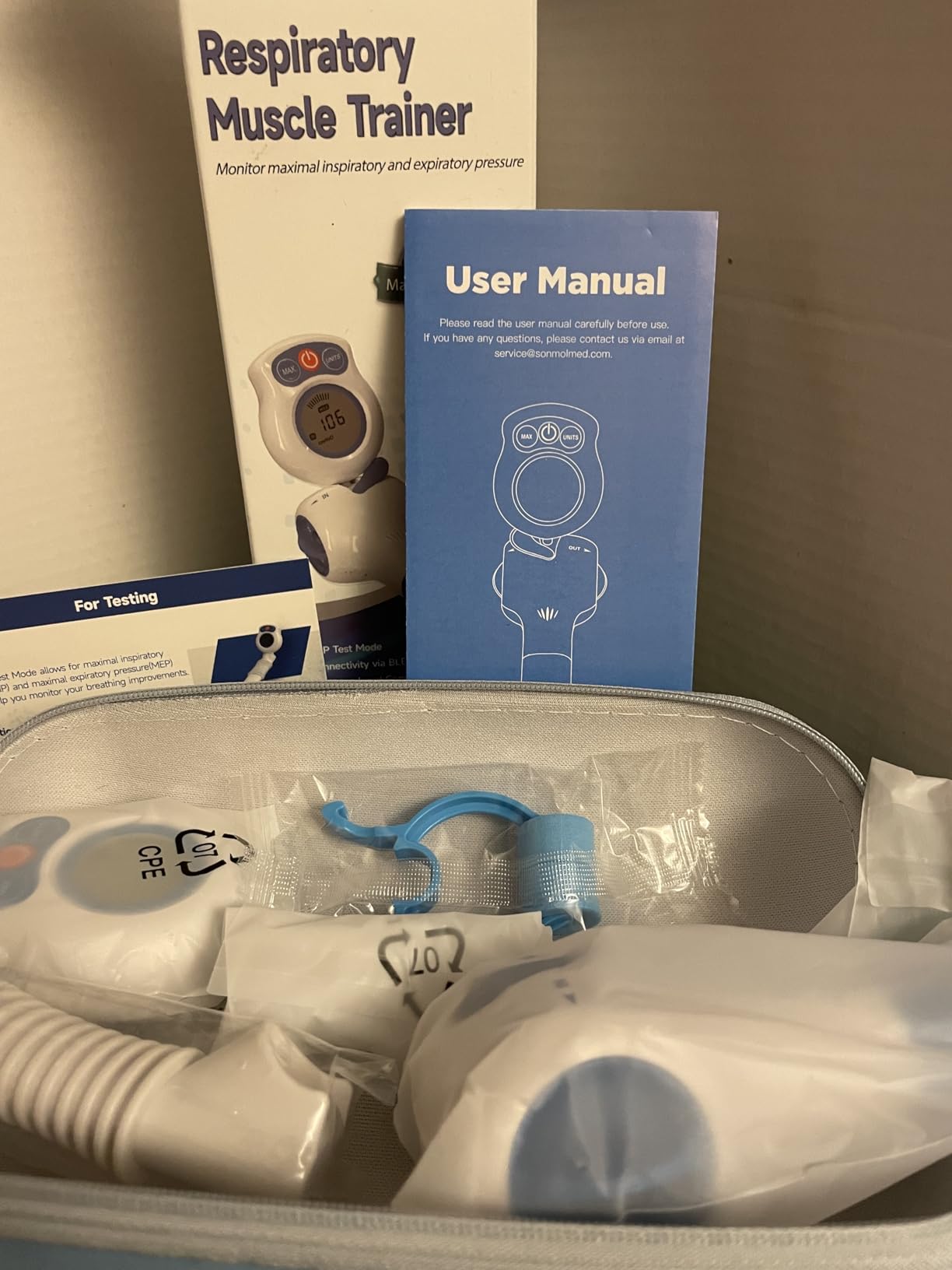
MIP and MEP measurements are clinical-grade metrics your respiratory therapist actually cares about. If you’re working with one, this device gives them data that a basic volumetric spirometer can’t.
The 4.1 rating is the lowest on this list, and after testing I understand why: the app sometimes disconnects, and the device requires charging. For users who want simplicity, this is overkill. For data-oriented users, it’s the only real choice.
Who this device is best for
Data-driven users working with respiratory therapists who want objective measurements of respiratory muscle strength. The app-based training is engaging enough for younger users or anyone who struggles with traditional breathing exercises.
Who should consider alternatives
If you just need a post-surgery volumetric device or a simple flutter valve, this is too complex. The app dependency and charging requirement add friction that simpler devices don’t have.
How to Use an Incentive Spirometer Step by Step
Correct technique matters more than which device you buy. After consulting with respiratory therapists and testing these devices for months, here’s the protocol that consistently produced the best results.
Step 1: Sit upright at the edge of your bed or chair. Slouching compresses your diaphragm and reduces lung expansion. Good posture is non-negotiable.
Step 2: Hold the spiromer upright and place the mouthpiece in your mouth. Seal your lips tightly around it so no air escapes through the sides.
Step 3: Breathe out normally to empty your lungs. Then slowly inhale through the mouthpiece, watching the piston or balls rise. The goal is a slow, steady inhale, not a fast gasp.
Step 4: Try to reach the level your healthcare provider set. Hold your breath at the top for 3 to 5 seconds. This pause maximizes alveolar expansion.
Step 5: Remove the mouthpiece and exhale normally. Take a few normal breaths, then repeat. Most protocols call for 10 breaths per session, 4 to 5 sessions per day.
Forum users on r/respiratorytherapy emphasize the exhale: coughing after a deep breath is normal and actually helpful. It’s your lungs clearing mucus, which is part of why you’re doing this.
How to Choose the Best Incentive Spirometer for Your Needs
The right device depends on why you need it. Here’s how I think through the choice based on three months of testing.
If you’re recovering from surgery: Choose a true volumetric device like the TyeinGo 5000ml. Surgeons prescribe these because they need measurable volume data. Flow rate indicators are a bonus. Skip the resistance trainers: they’re a complement, not a substitute.
If you have COPD, bronchiectasis, or chronic mucus: Flutter valve devices (OPEP) like the NebuAksol, Vopacare, MILL.STEPS, or AirPhysio will do more for you than a volumetric spirometer. The oscillation technology loosens mucus that ordinary breathing exercises can’t reach.
If you’re an athlete or singer: Resistance trainers with progressive levels (THE BREATHER, O2Trainer, Breather Fit) will build the inspiratory muscle strength you need for performance. Look for bi-directional resistance to train both inhale and exhale muscles.
If you want simple, app-free use: O2Trainer’s 16 mechanical caps or any flutter valve will work without batteries, charging, or app updates.
If you love data and tracking: The Sonmol Digital device gives you MIP/MEP measurements and app-based progress tracking that other devices don’t.
Price-wise, the range runs from around $16 (MILL.STEPS) to $70 (AirPhysio). For a basic post-surgery device, expect to spend $20 to $30. For a premium resistance trainer with app support, $40 to $60 is typical.
Frequently Asked Questions About Incentive Spirometers
Which incentive spirometer is the best?
The best incentive spirometer depends on your goal. For post-surgery recovery, a true volumetric device like the TyeinGo 5000ml is ideal because it tracks inhalation volume in milliliters. For long-term respiratory strength, resistance trainers like THE BREATHER work better. For mucus clearance, flutter valve devices like the NebuAksol or Vopacare are most effective.
Does an incentive spirometer strengthen lungs?
Yes, but with nuance. Volumetric spirometers train your lungs to expand fully, which prevents atelectasis and clears mucus. Resistance trainers like THE BREATHER and O2Trainer actively strengthen the inspiratory and expiratory muscles. Clinical studies cited on NCBI show measurable improvements in lung capacity after 4 to 6 weeks of consistent daily use.
What is a good score on an incentive spirometer?
For a healthy adult, 3000ml to 4000ml is typical. After surgery, your healthcare provider sets a target based on your predicted value, calculated from age, height, and sex. For a 30-year-old at average height, that target is often 3000ml or higher. For a 70-year-old, 2000ml to 2500ml is realistic. The trend matters more than the absolute number.
Why do I cough after using an incentive spirometer?
Coughing after using an incentive spirometer is normal and often beneficial. The deep breath mobilizes mucus in your airways, and coughing helps clear it. If coughing becomes severe, produces blood, or is accompanied by sharp chest pain, stop and contact your healthcare provider. Lightheadedness is also common; pause and breathe normally until it passes.
How often should you use an incentive spirometer?
Most post-surgery protocols recommend 10 breaths per session, 4 to 5 sessions per day, for at least the first week after surgery. For long-term respiratory training, 5 to 10 minutes once or twice daily is typical. Consistency matters more than session length: daily use for 2 weeks produces better results than intensive once-a-week sessions.
Final Verdict: Which Incentive Spirometer Should You Buy?
After testing all 10 devices, my top three recommendations stand out clearly. For post-surgery lung recovery, the TyeinGo 5000ml Volumetric Breathing Trainer is the best incentive spirometer because it combines volumetric tracking with flow rate data in a single well-built device. For long-term respiratory strength, THE BREATHER remains the gold standard with its bi-directional resistance and proven 9,000-plus user reviews. For mucus clearance on a budget, the NebuAksol Flutter Valve delivers exceptional value at a 4.8-star rating.
Whatever device you choose, the most important factor is using it consistently. The best incentive spirometer for lung recovery is the one you’ll actually use every day. Pick the device that matches your specific goal, set a realistic target with your healthcare provider, and stick with the protocol. Your lungs respond to daily practice more than to occasional intensive sessions.
Have questions about your specific situation? Talk to your respiratory therapist or surgeon about which option from this list best fits your recovery plan.