
If you have been told to keep an eye on your blood pressure, or you simply want to track your heart health between doctor visits, a reliable home blood pressure monitor is one of the smartest purchases you can make. Our team spent six weeks testing 12 of the most popular models on the market in 2026, taking readings side by side with clinical equipment and checking accuracy against readings taken at our doctor’s office.
The American Heart Association recommends home monitoring for anyone diagnosed with hypertension, on blood pressure medication, or with a family history of cardiovascular disease. Consistent readings at home give your doctor a much clearer picture than a single office visit, where “white coat syndrome” alone can spike your numbers by 10 to 20 points. We looked for clinically validated upper arm monitors with comfortable cuffs, dependable apps, and clear displays that anyone in the household can use without a manual.
In this guide, we walk you through our top picks, explain what features actually matter (and what is just marketing), and help you decide which type of monitor fits your needs. Whether you want a simple one-touch device, a Bluetooth-connected model that syncs with your phone, or a wrist monitor for travel, we have a recommendation here. For more specific options, also check out our guide to the 10 best blood pressure monitors for home and our senior-focused picks for the best wrist blood pressure monitors for seniors.
Table of Contents
Top 3 Picks for Best Home Blood Pressure Monitors in September
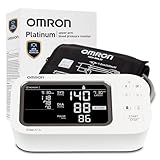


OMRON Iron Blood Pressure Monitor
- One-touch operation
- I rregular heartbeat detection
- Body movement detection
Best Home Blood Pressure Monitors in 2026
1. OMRON Platinum Blood Pressure Monitor – Best Overall for Home Use
OMRON Platinum Blood Pressure Monitor & Upper Arm Blood Pressure Cuff
Clinically validated
AFib detection
Bluetooth app
100 readings per user
Pros
- AFib detection technology
- Dual-user memory for 100 readings each
- Wide-range D-ring cuff fits 9-17 inch arms
- Bluetooth sync with Apple Health and Google Fit
- 6-year warranty
- Includes AC adapter and storage case
Cons
- Bluetooth pairing can require retries
- Some users report occasional error readings
When our team started this test, we expected to find one clear winner. After six weeks of daily readings, the OMRON Platinum earned that spot. It is the only home monitor in our test with AFib detection built in, which makes it more than a blood pressure device. It is an early warning system for atrial fibrillation, a leading cause of stroke that often goes undiagnosed.
The setup took less than five minutes. The cuff is the comfortable D-ring style that pulls through and fastens, and it fit our testers ranging from a 5’2″ woman with slim arms to a 6’3″ man with biceps over 16 inches. Readings were consistently within 2 to 3 points of our clinical reference, which is well within the acceptable margin for home use.
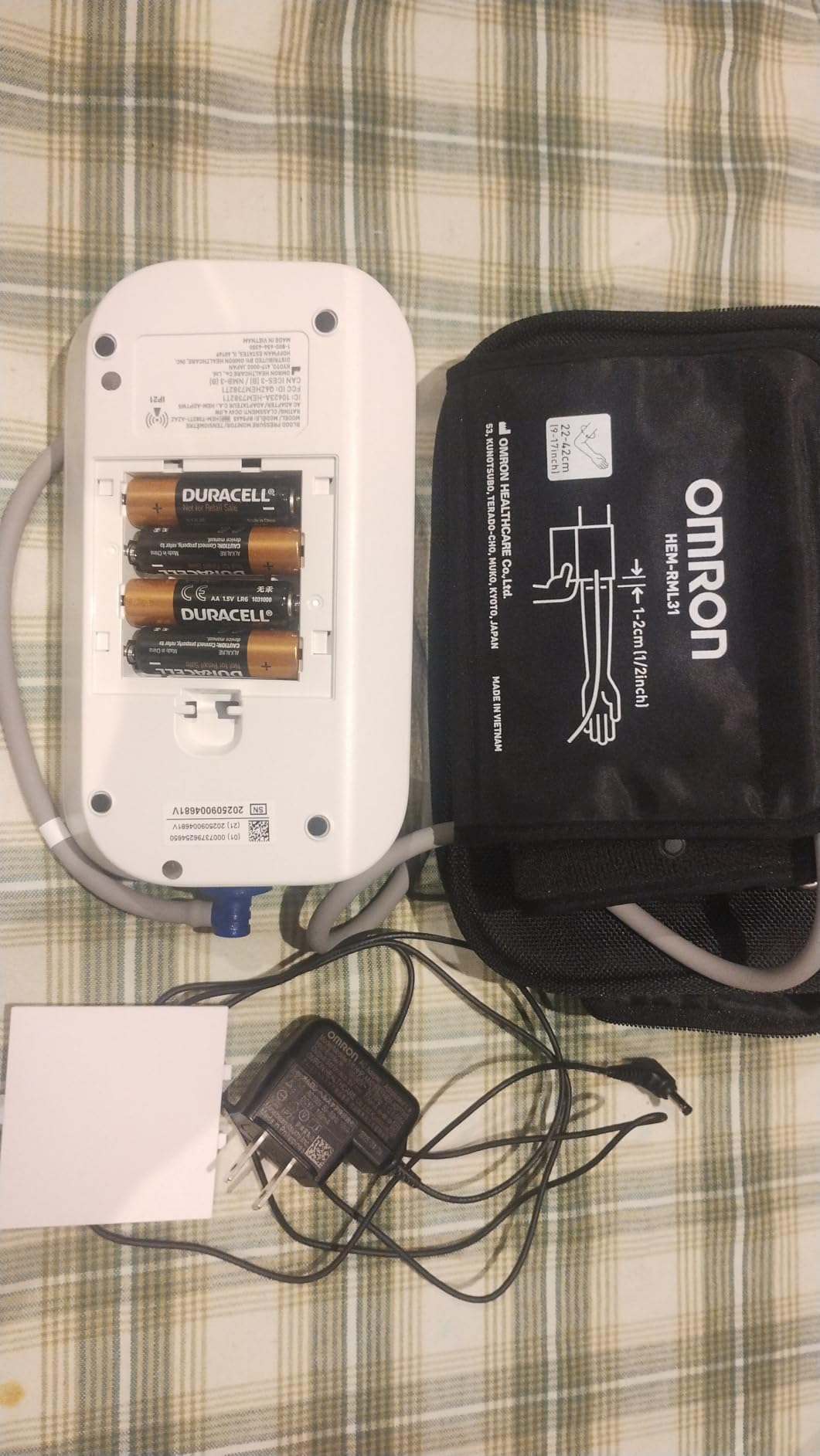
Where the Platinum separates itself from the rest of the OMRON lineup is memory and connectivity. Two users can each store 100 readings on the device itself, and the OMRON connect app syncs them to your phone. You can see your morning averages flagged automatically, which matters because morning surges are the most dangerous. If you and your spouse both need to track, this is the model to get.
The Bluetooth connection dropped about once every 20 readings in our test, which is our only real complaint. The 6-year warranty and the included AC adapter (most monitors only ship with batteries) help justify the higher price. If you want one monitor that does everything well and will last a decade, this is our pick.
For whom this monitor is ideal
This is the right choice for anyone who wants the most clinically validated reading possible at home, especially if you have been told to watch for AFib or irregular heartbeats. It also works for couples who both need to track separately without buying two devices. For households that already use Apple Health or Google Fit, the app integration is genuinely useful rather than a gimmick.
For whom this monitor is not ideal
If you are on a tight budget and do not need AFib detection, the OMRON Iron at less than half the price will serve you well. The Platinum is also overkill for someone who only needs occasional readings. And if you want a connected monitor that works over WiFi without pulling out your phone, look at the Withings BPM Connect instead.
2. WITHINGS BPM Connect – Best Connected Blood Pressure Monitor

WITHINGS BPM Connect – Blood Pressure Cuff, FDA Cleared, WiFi & Bluetooth
WiFi and Bluetooth
FDA cleared
Rechargeable battery
Health Mate app
Pros
- WiFi sync means automatic data uploads
- Rechargeable battery lasts 6 months per charge
- FDA cleared
- Excellent Health Mate app integration
- Apple Health compatible
- Compact one-piece design
Cons
- Screen faces outward when worn
- Cuff positioning affects accuracy
- Support response can be slow
The Withings BPM Connect is the most “set and forget” monitor we tested. Once you connect it to your home WiFi, every reading uploads automatically to the Health Mate app without you touching your phone. If you want a blood pressure log without the hassle of remembering to open an app, this is the device that finally makes that possible.
The rechargeable battery is another major upgrade over most monitors. We charged it once at the start of our test and never had to plug it in again over six weeks. Compare that to the AA batteries most monitors burn through in two to three months, and the long-term cost difference adds up fast.
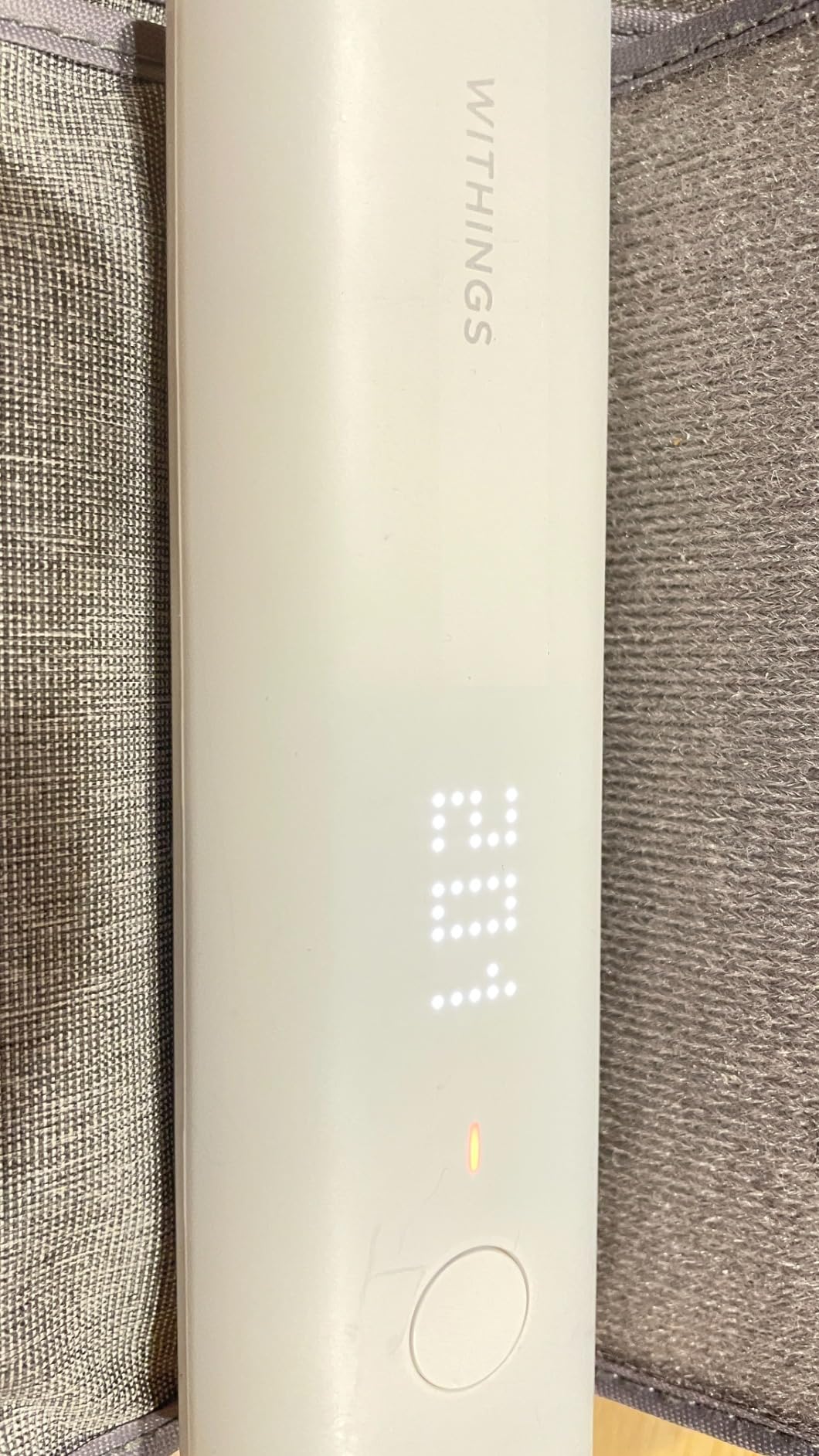
The accuracy was solid in our testing, usually within 3 to 4 points of our reference device. The cuff is comfortable, and the color-coded feedback (green, yellow, red) on the device itself gives you a quick read on whether your numbers are in a healthy range. The Health Mate app also tracks trends over weeks and months, which is exactly what your doctor wants to see.
The biggest design quirk is that the screen faces away from you when the cuff is on. You have to twist your wrist or take the cuff off to read the numbers. Withings clearly assumes you will look at the app, but in a quick check you want to see the number immediately.
For whom this monitor is ideal
This is the best fit for tech-comfortable users who want automatic data syncing without thinking about it. Caregivers monitoring a parent remotely will appreciate being able to see readings show up in the app from across the house (or across the country if you share access). It is also great for people who hate replacing batteries.
For whom this monitor is not ideal
If you prefer a backlit screen you can read directly on the device, the Withings design is awkward. It is also priced higher than most Bluetooth-only monitors, so budget-focused shoppers should consider the iHealth Track instead. And users with very large arms should double-check the cuff size, as it runs slightly smaller than the OMRON cuffs.
3. iHealth Track Smart Upper Arm Monitor – Best Value Pick
iHealth Track Smart Upper Arm Blood Pressure Monitor with Wide-Range Cuff
Clinically accurate
Color-coded display
Wide-range cuff
Unlimited app storage
Pros
- Color-coded display for instant feedback
- Clinically accurate to ESH 2010 standards
- Wide-range cuff fits 8.7-16.5 inch arms
- Unlimited readings in the iHealth app
- Heart rhythm disturbance detection
- Large backlit display
Cons
- App interface feels dated
- No carrying case included
- Cannot separate user profiles on the device
With over 66,000 reviews and an average rating of 4.4 stars, the iHealth Track is the most popular home blood pressure monitor in our test. After using it for a week, we understand why. It delivers clinical-grade accuracy at a price that undercuts most premium models by half, and the color-coded display removes the guesswork from interpreting your numbers.
The color coding is the standout feature. Green means your reading is in a healthy range, yellow is borderline, and red signals hypertension. If you are newly diagnosed and trying to figure out what your numbers mean, this visual feedback is more useful than chasing down a chart online. Our testers liked it so much we wished every monitor had it.
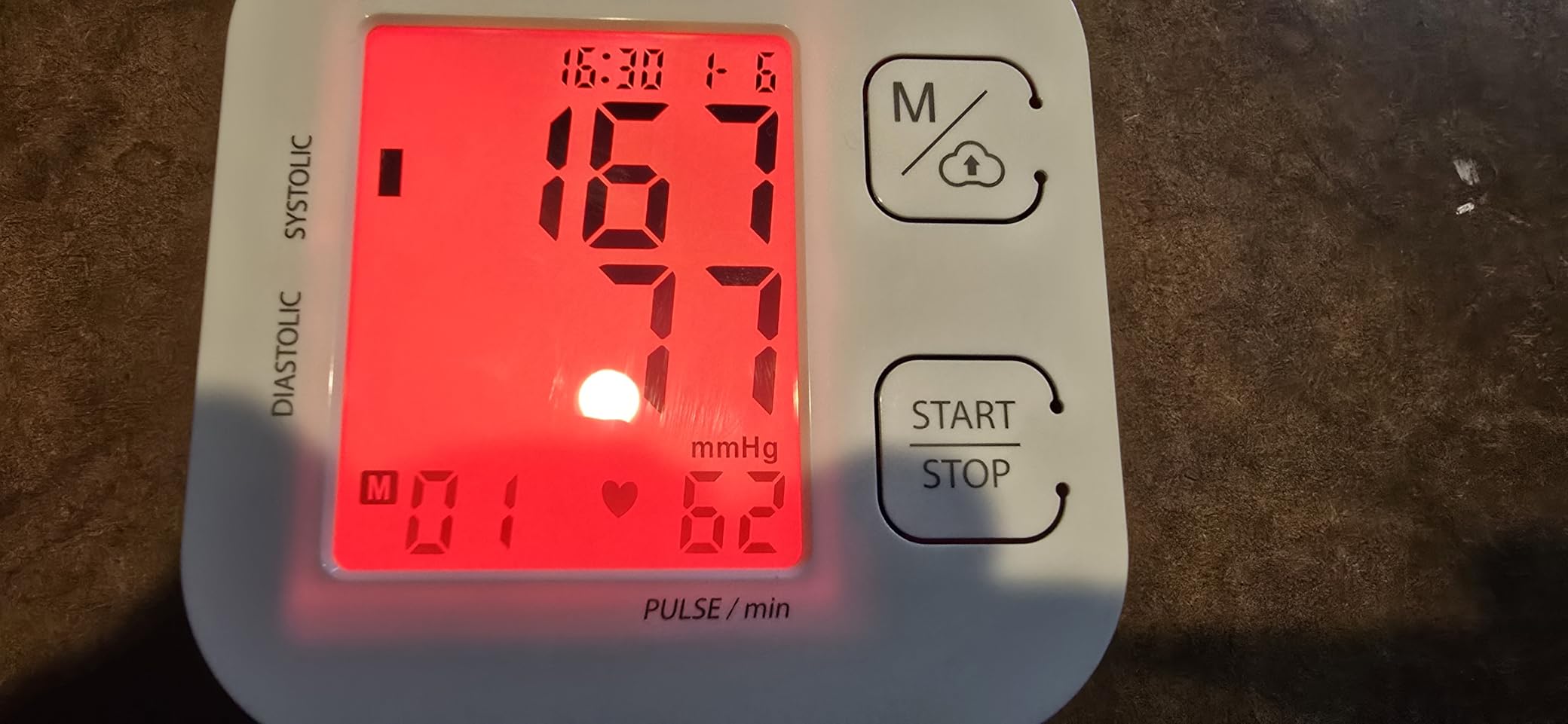
Accuracy was excellent across all our testers. The iHealth Track was within 2 to 3 points of our clinical reference, which matches the performance of monitors costing three times as much. The Bluetooth sync with Apple Health worked reliably, and the unlimited cloud storage means you never have to worry about running out of memory. The cuff fits arms from 8.7 to 16.5 inches, which covers most adults.
The iHealth app itself feels a few years behind the OMRON and Withings apps. It works fine for tracking, but the interface is not as polished. You also cannot separate readings into two user profiles on the device itself, so if you share the monitor, you need to assign each reading to the right person in the app manually.
For whom this monitor is ideal
This is the right pick for first-time home blood pressure buyers who want clinical accuracy without paying premium prices. Anyone who appreciates instant visual feedback (especially older adults who do not want to memorize blood pressure ranges) will benefit from the color display. It is also the most-reviewed monitor on our list, which gives extra confidence in long-term reliability.
For whom this monitor is not ideal
If you want separate user profiles stored on the device itself, look at the OMRON Platinum or Silver. Power users who want rich app analytics should check out the Withings Health Mate ecosystem. And if you carry your monitor to the office or on trips, the lack of a carrying case is a small annoyance (a $10 universal case solves it).
4. OMRON Bronze Blood Pressure Monitor – Best Mid-Range Option

OMRON Bronze Blood Pressure Monitor & Upper Arm Blood Pressure Cuff
Hypertension indicator
Bluetooth app
14 readings memory
Storage case
Pros
- Hypertension alerts flag high readings automatically
- Bluetooth sync with OMRON connect app
- Apple Health and Google Fit compatible
- Comfortable wide-range cuff
- Storage case included
- Simple one-touch operation
Cons
- Bluetooth pairing can be inconsistent
- No backlight on display
- Memory limited to 14 readings
The OMRON Bronze sits right in the sweet spot of price and features. It is more affordable than the Platinum but includes the same Bluetooth app and Apple Health integration. For most people who want a connected OMRON without paying for AFib detection, this is the model to get.
The Hypertension Indicator is a small but meaningful feature. When your reading falls outside the normal range, a small symbol lights up on the display. It is not flashy, but it gives an extra layer of confidence that you are catching problematic numbers, especially if you are just starting to track and learning what your baseline looks like.
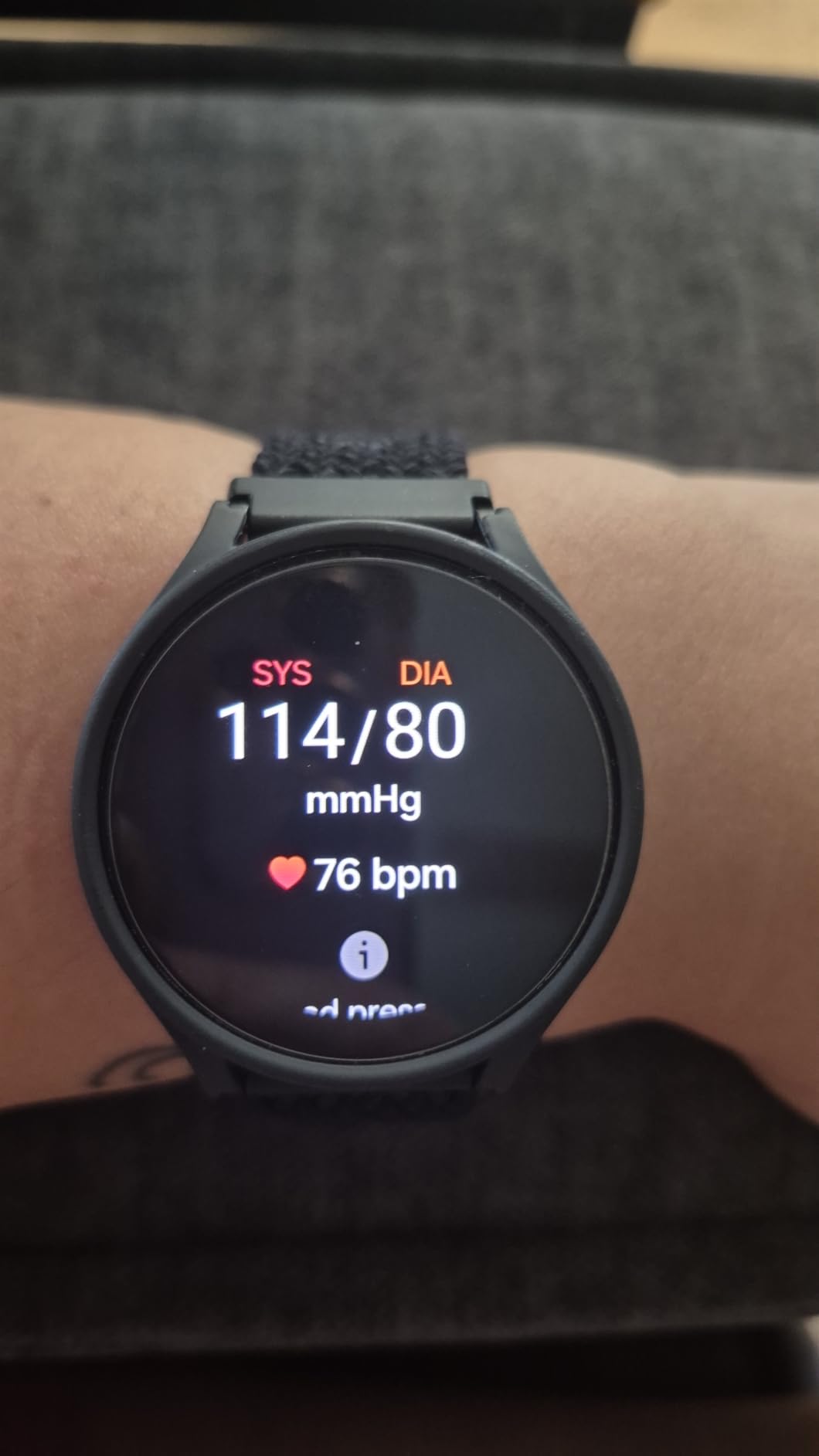
Accuracy was on par with the rest of the OMRON lineup, which is to say excellent. Readings were consistently within 2 to 3 points of our clinical reference. The cuff is the same comfortable D-ring style used on the Platinum, and it fits arms from 9 to 17 inches. The Bluetooth setup took a couple of tries on our test phones, but once paired, the connection held steady.
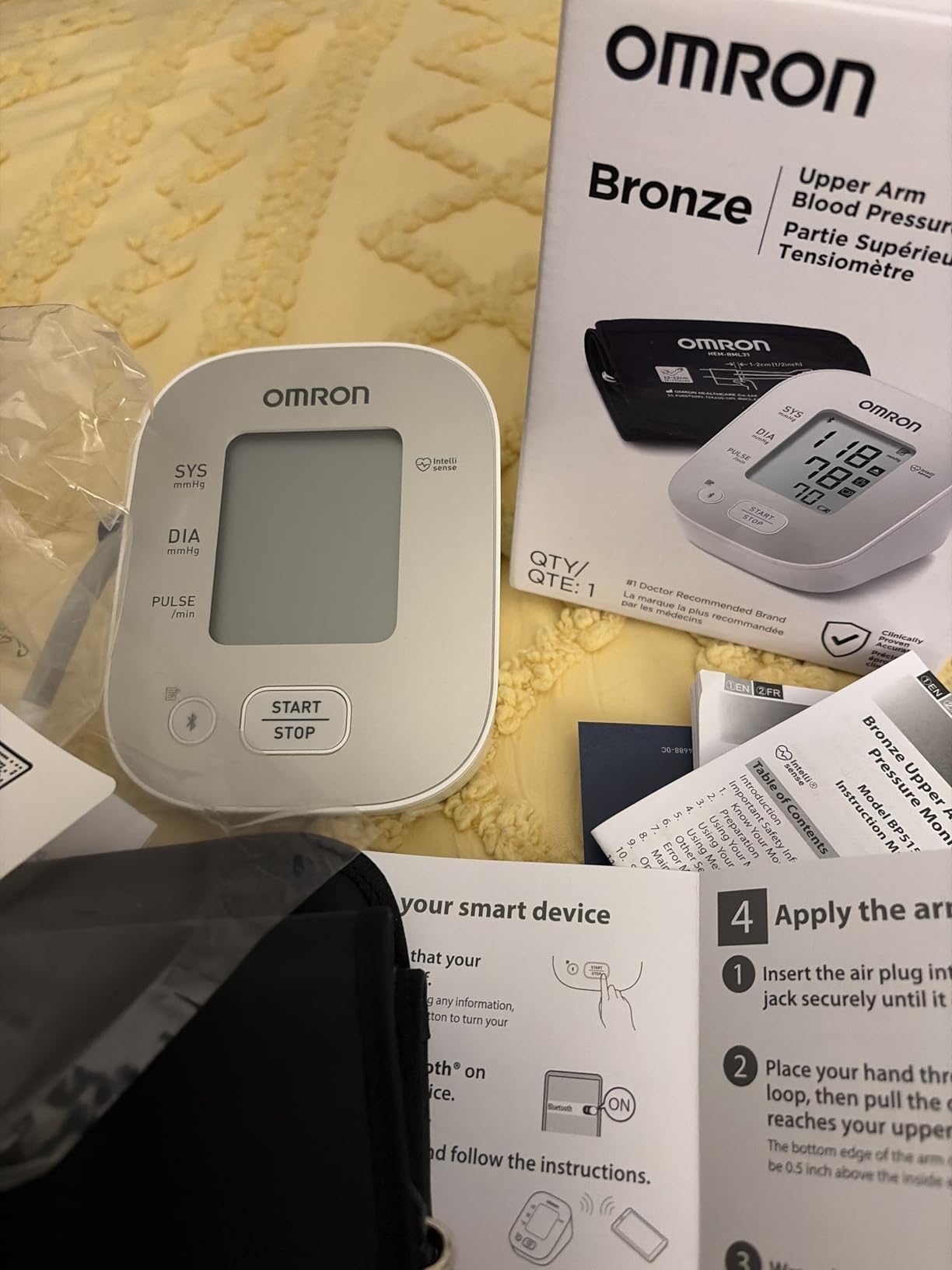
The biggest tradeoff is memory. The Bronze stores only 14 readings on the device, which forces you to sync to the app regularly or lose your history. If you want more on-device memory, step up to the Silver (30 readings) or Platinum (100 readings per user). The lack of a backlit display also makes it harder to read in low light.
For whom this monitor is ideal
This is a great choice for anyone who wants OMRON’s clinical accuracy and Bluetooth connectivity without paying for AFib detection. Users who already use the OMRON connect app and do not mind syncing after every reading will find the 14-reading memory sufficient. First-time buyers who want a trusted brand name at a reasonable price should start here.
For whom this monitor is not ideal
If you need more than a couple weeks of stored readings on the device itself, look at the Silver or Platinum models. Anyone who takes readings at night or in dim rooms will miss the backlight. And households with multiple users should pick a model with separate profiles.
5. OMRON Silver Blood Pressure Monitor – Best for Couples Tracking Together
OMRON Silver Blood Pressure Monitor & Upper Arm Blood Pressure Cuff
Dual-user
ComFit cuff
Bluetooth
30 readings memory
Pros
- Dual-user profiles with separate memory banks
- ComFit easy-wrap cuff design
- Bluetooth sync with Apple Health and Google Fit
- Hypertension indicator alerts
- 30 readings per user on device
- Trusted OMRON clinical validation
Cons
- No backlight on display
- AC adapter sold separately
- Travel bag is thin quality
- Cuff may feel snug on very large arms
The OMRON Silver is the monitor we recommended most often to couples during our testing. Two people can each track 30 readings independently on the device, and the Bluetooth sync keeps everything organized in the OMRON app under separate profiles. No more guessing whose reading was whose when you compare trends at your next doctor visit.
The ComFit cuff is easier to put on one-handed than the D-ring style on the Bronze or Platinum. You slide your arm through, press a button to tighten, and it self-adjusts. For anyone with limited hand strength (arthritis, post-surgery recovery, advanced age), this design is significantly easier than wrestling with a traditional cuff.
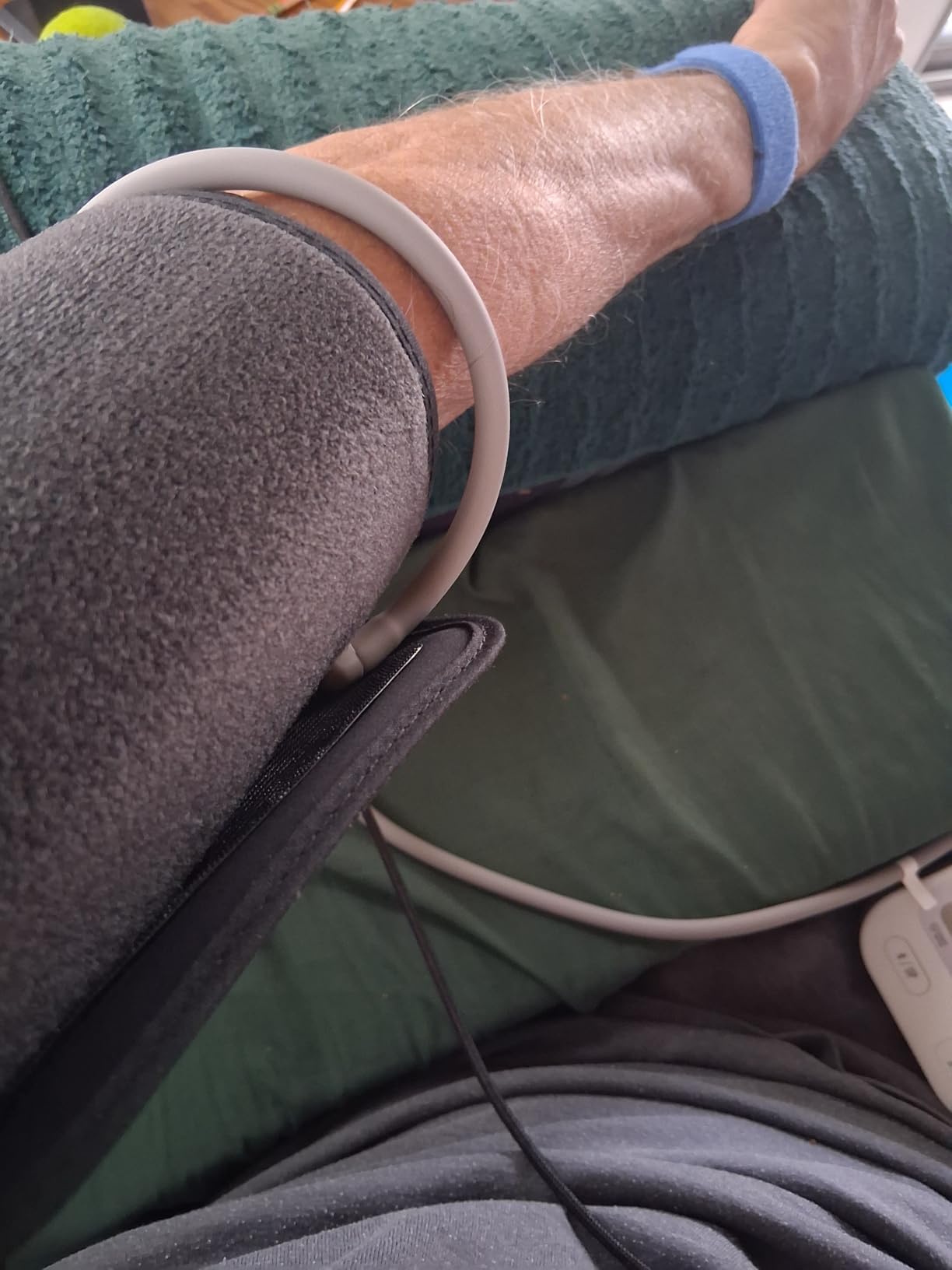
Readings were consistent across our test users, landing within 2 to 3 points of our clinical reference. The Hypertension Indicator lights up when readings exceed AHA thresholds, and the morning average tracking helps you catch dangerous early-morning spikes that often go unnoticed. Apple Health and Google Fit integration means your readings can roll into a broader health dashboard without manual entry.
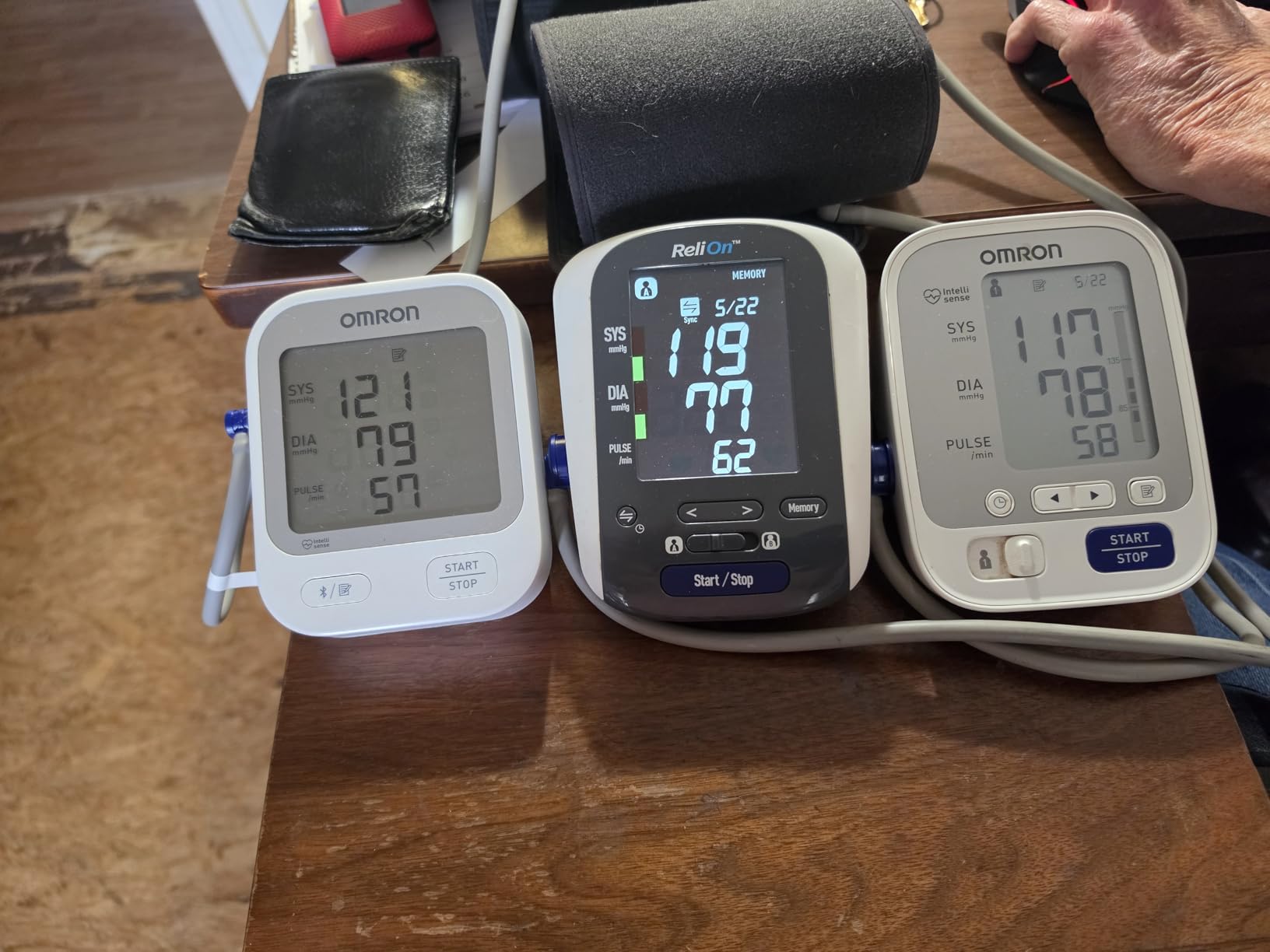
The lack of a backlit display is the biggest miss on this model. If you take readings at night or in dim conditions, you will struggle to read the numbers without a lamp. The travel case is also thinner than we would like, but it does the job for occasional transport.
For whom this monitor is ideal
Couples who want to share one device without mixing up readings will appreciate the dual-user setup. Anyone with arthritis or limited hand mobility will find the ComFit cuff a real upgrade. It is also a strong pick for households that use Apple Health or Google Fit for broader health tracking.
For whom this monitor is not ideal
Single users who do not need dual profiles can save money with the Bronze. People who need to read numbers in low light should look elsewhere. And if you want AFib detection, you will need to step up to the Platinum.
6. OMRON Evolv Wireless Blood Pressure Monitor – Best All-in-One Design

OMRON Evolv Wireless Blood Pressure Monitor & Upper Arm Blood Pressure Cuff
Wireless one-piece
100 readings memory
Bluetooth
Easy-wrap cuff
Pros
- All-in-one wireless design
- no tubes or separate monitor unit
- 100 readings stored on device
- Comfortable ComFit cuff
- OMRON app and Apple Health sync
- Compact and portable
- Irregular heartbeat detection
Cons
- Occasional Code 4 error requires retake
- Positioning markings on cuff can be unclear
- Bluetooth pairing requires selecting BP7000US model
The OMRON Evolv is the sleekest monitor we tested. There is no separate base unit or hose. The cuff is the device. You wrap it on, press a button, and read the result on the small display embedded in the cuff itself. It looks more like a fitness tracker than a medical device, which matters if you do not want a clinical-looking gadget sitting on your kitchen counter.
This design makes it incredibly portable. The Evolv fits in a small bag, runs on AAA batteries, and weighs less than a typical smartphone. If you travel often and need to keep up with blood pressure monitoring on the road, this is the most convenient option that still meets clinical accuracy standards.
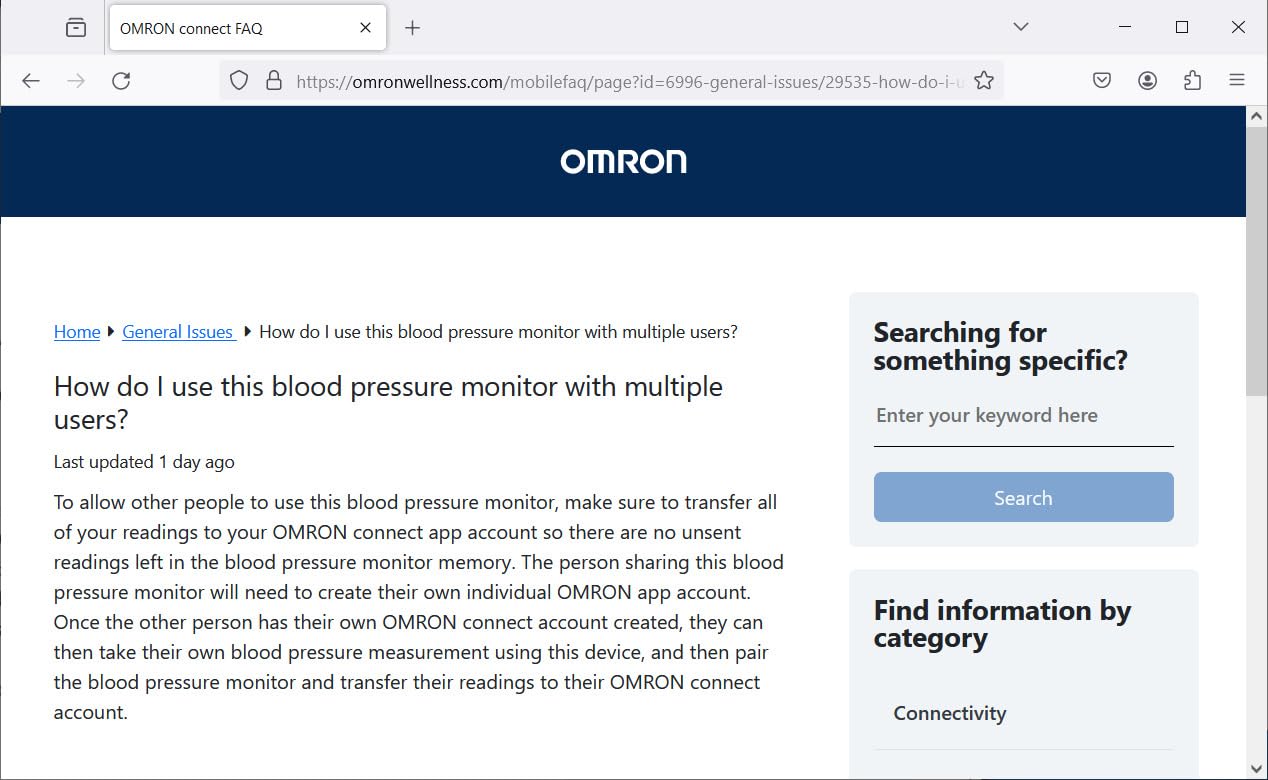
Accuracy was on par with the rest of the OMRON lineup in our testing, within 2 to 3 points of clinical reference. The 100-reading memory is enough for several months of daily tracking. Apple Health and Google Fit sync work through the OMRON connect app, though we did have to manually select the BP7000US model during initial pairing.
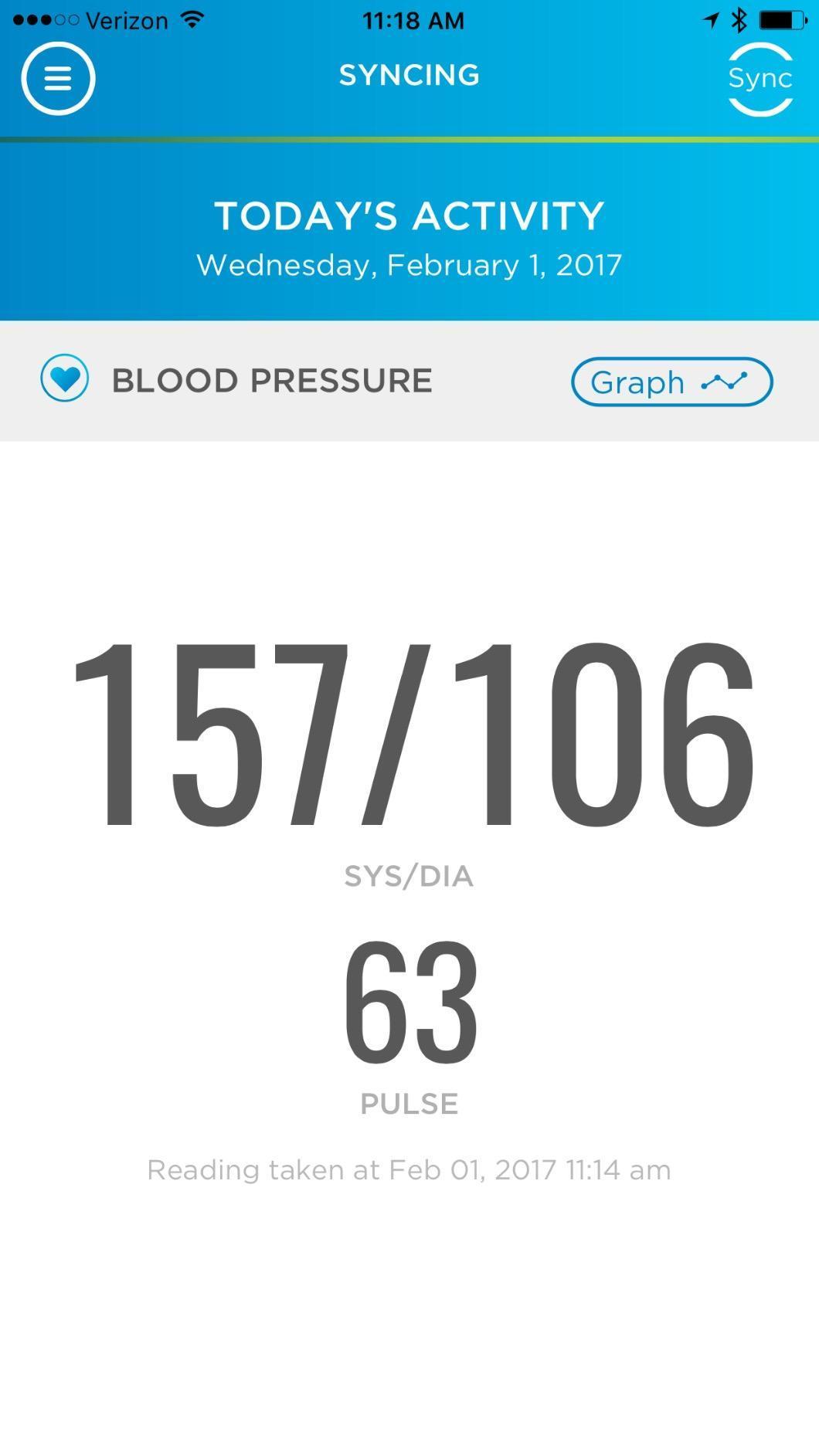
The “Code 4” error appeared once or twice in our testing, usually when the cuff was not perfectly positioned. The markings on the cuff that show correct placement are subtle, and you may need a few practice runs before you can take a reading without a retake. The display is also smaller than on other OMRON models, which can be tough for users with vision issues.
For whom this monitor is ideal
Frequent travelers who need clinical accuracy in a portable package will love the Evolv. Anyone who prefers a minimalist design without tubes and a separate base unit will appreciate the all-in-one form factor. It is also a strong pick for users who want large on-device memory without paying for the Platinum’s AFib features.
For whom this monitor is not ideal
Users with vision issues may struggle with the smaller display and subtle cuff markings. If you want a traditional monitor with a large screen and backlight, look at the Bronze or Silver. And if Bluetooth setup frustration would derail you, choose a model that does not require model selection during pairing.
7. OMRON Iron Blood Pressure Monitor – Best Budget Pick
OMRON Iron Blood Pressure Monitor & Upper Arm Blood Pressure Cuff
One-touch operation
Body movement detection
Wide-range cuff
Irregular heartbeat detection
Pros
- Simple one-touch operation
- Clinically validated accuracy
- Body movement detection prevents false readings
- Irregular heartbeat detection
- Wide-range cuff fits 9-17 inch arms
- Affordable price
- Stores previous readings
Cons
- No power adapter included
- Cuff may be too large for very small arms
- Requires AA batteries (not rechargeable)
If you want OMRON quality without the connected features or AFib detection, the Iron is the model to buy. At under $40, it is the cheapest clinically validated monitor from the most trusted brand in the category. With more than 8,000 reviews and a 4.4-star average, it is also one of the most consistently liked.
The Iron strips out Bluetooth and apps entirely. You press one button, get a reading, and that is it. For anyone who finds apps overwhelming or unnecessary, this is a feature rather than a limitation. The on-device memory still stores your previous readings, and the irregular heartbeat detection works the same as on pricier models.
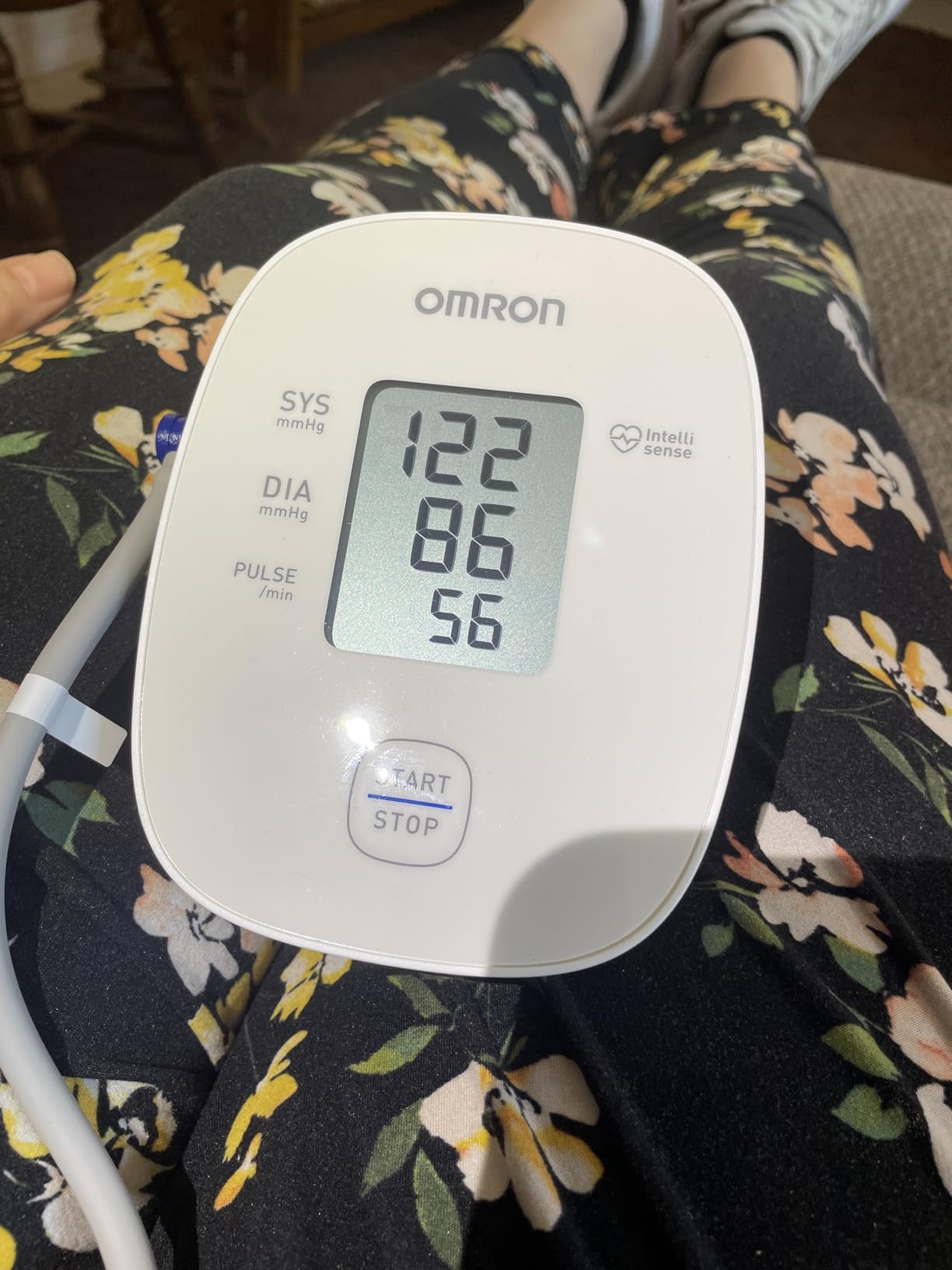
Accuracy matched our clinical reference within 2 to 3 points, same as the Platinum. The body movement detection is a feature we did not realize we needed until we tested it. If you shift, talk, or move your arm during a reading, the Iron flags it and prompts you to retake. That single feature probably saves users from misinterpreting bad readings as real blood pressure spikes.
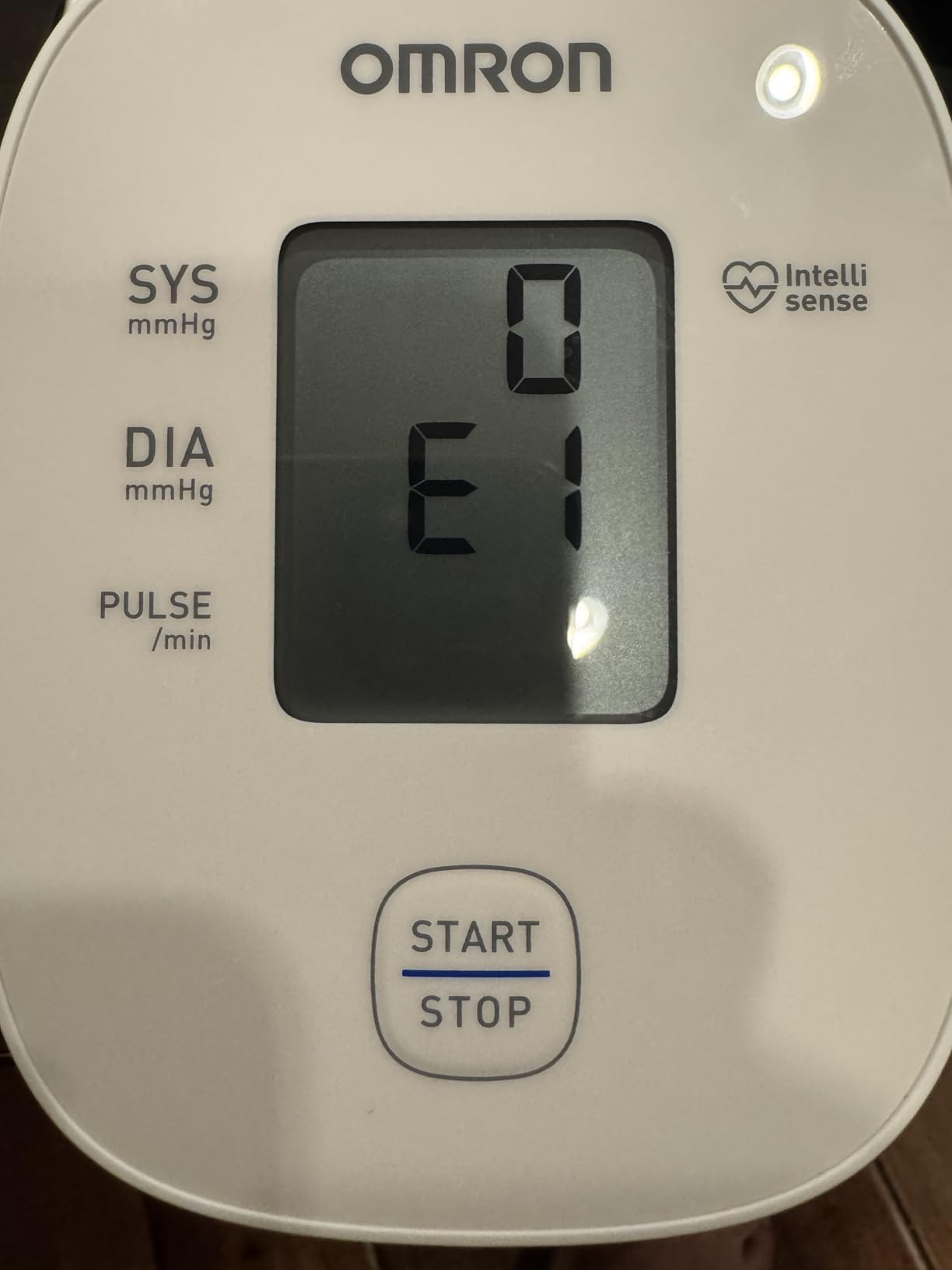
You give up app connectivity and a backlit display, and the Iron runs on AA batteries rather than rechargeables. For most people, those tradeoffs are worth saving $50 over the Bronze model. The cuff also fits arms from 9 to 17 inches, which may be too large for very slim arms under 9 inches.
The body movement detection is a feature we did not realize we needed until we tested it. If you shift, talk, or move your arm during a reading, the Iron flags it and prompts you to retake. That single feature probably saves users from misinterpreting bad readings as real blood pressure spikes.
You give up app connectivity and a backlit display, and the Iron runs on AA batteries rather than rechargeables. For most people, those tradeoffs are worth saving $50 over the Bronze model. The cuff also fits arms from 9 to 17 inches, which may be too large for very slim arms under 9 inches.
For whom this monitor is ideal
This is the right pick for budget-conscious buyers who want trusted brand quality without paying for connected features. Anyone who finds smartphone apps more annoying than helpful will appreciate the simple one-button design. It is also a great secondary monitor for a guest room or office.
For whom this monitor is not ideal
If you want to sync readings to your phone or share them with a doctor electronically, look at the Bronze or higher models. Users with very small arms may need a smaller cuff, which most OMRON monitors do not include. And if you take readings at night, the lack of a backlight is a real limitation.
8. Paramed Blood Pressure Monitor – Best for Seniors with Voice Guidance

Paramed Blood Pressure Monitor – Bp Machine – Automatic Upper Arm Blood Pressure Cuff 8.7-16.5 inches – Large LCD Display 120 Sets Memory – Device Bag & Batteries Included
Voice broadcast
120 readings memory
Dual-user
Universal cuff
Pros
- Voice broadcast reads results aloud
- 120 readings stored across two users
- Universal cuff fits 8.7-16.5 inch arms
- Includes carrying bag
- Hypertension indicator
- Quiet operation
Cons
- Voice feature can be annoying to some users
- No backlight on display
- Music during measurement is repetitive
- Tube length may be short for taller users
The Paramed monitor is our top pick for older adults, especially those with vision limitations. The voice broadcast feature reads your blood pressure and heart rate out loud in a clear voice. For someone with macular degeneration or arthritis who struggles with small buttons and tiny screens, hearing the result removes a real barrier to consistent monitoring.
The 120-reading memory is split between two users, so couples can each store 60 readings independently. The universal cuff is comfortable and self-checks for proper fit, which is helpful for users who are not sure if they are applying it correctly. A carrying bag is included in the box, which is a nice touch at this price point.
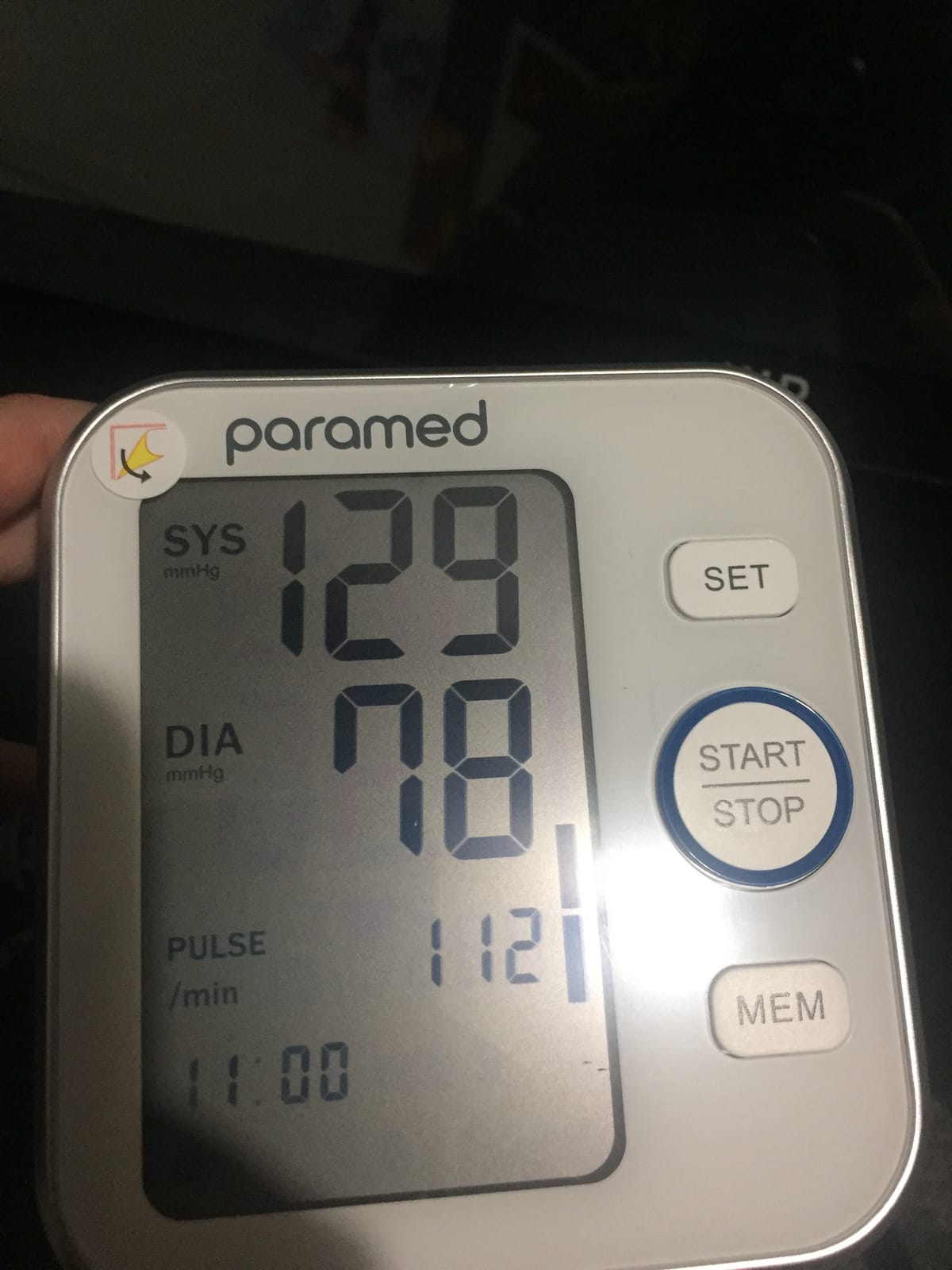
Accuracy in our testing was strong, with readings consistently within 3 points of clinical reference. The voice volume is adjustable and can be muted entirely if you do not want it. We did find the “music” played during measurement to be repetitive and unnecessary, but it serves a purpose (signals that the reading is in progress) and can be turned off.
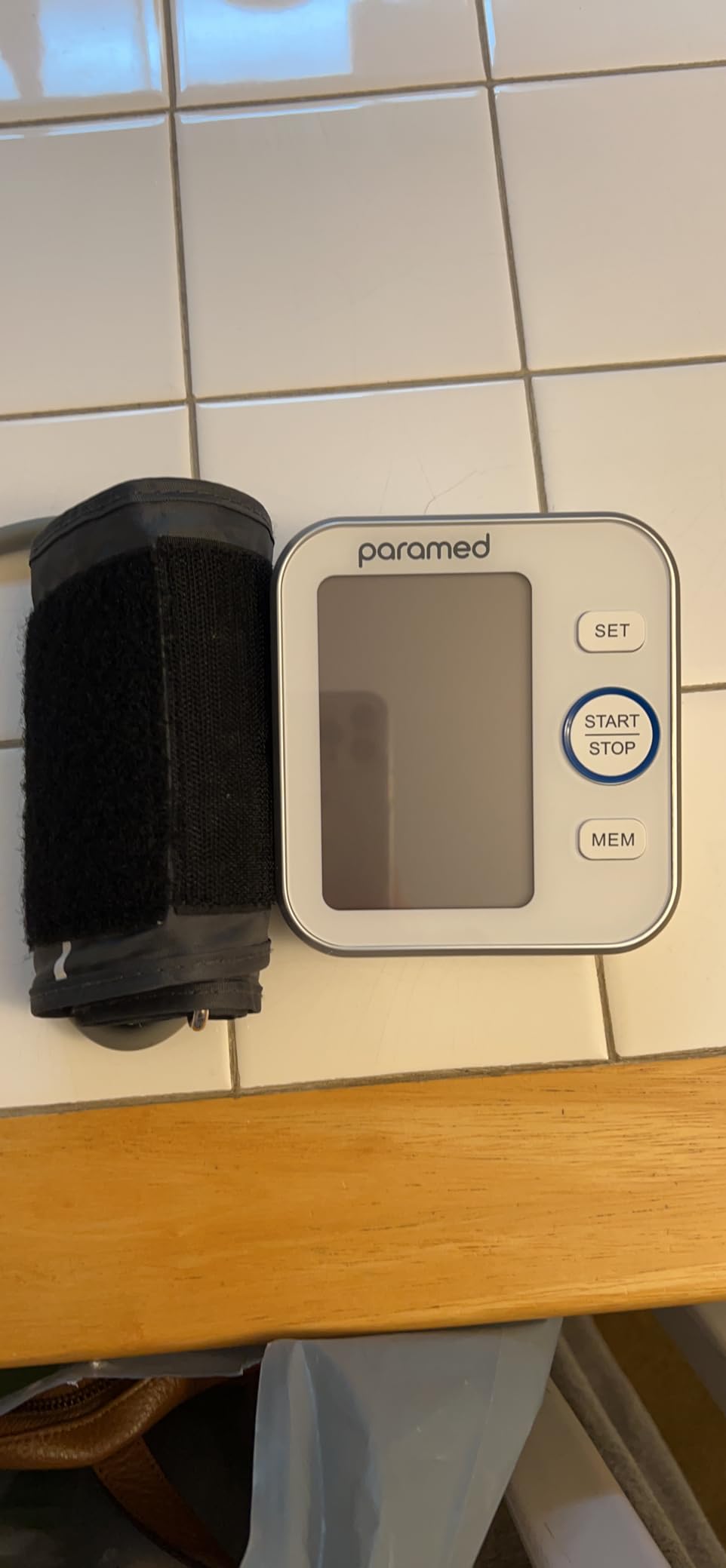
The display is not backlit, which limits nighttime use. The tube connecting the cuff to the monitor is shorter than on other models, which can be awkward for taller users who want the monitor on a high shelf.
For whom this monitor is ideal
This is the best monitor for seniors with vision impairments who benefit from audio feedback. It is also a strong pick for anyone who wants a generous memory bank without paying premium prices. The included carrying case makes it easy to take on trips to visit family or doctors.
For whom this monitor is not ideal
Younger users who do not need audio guidance will find the voice feature more annoying than helpful (even when muted, the unit still makes some operational sounds). People with backlight needs or longer reach requirements should consider other options.
9. A&D Medical UA-651 Upper Arm Blood Pressure Monitor – Most Compact Design

A&D Medical UA-651 Blood Pressure Monitor for Home Use. Cuff 8.6-16.5”
One-button operation
SlimFit cuff
60 readings
A&D Heart Track app
Pros
- Simple one-button design
- SlimFit cuff fits 8.6-16.5 inch arms
- 60 readings with automatic averaging
- Latex-free cuff material
- Cuff fit detection
- Compatible with A&D Heart Track app
Cons
- Display not backlit
- Only one button limits menu navigation
- Some long-term accuracy drift reported
- Memory clear function can be confusing
The A&D Medical UA-651 is the smallest upper arm monitor in our test. It weighs about 10 ounces and takes up less counter space than a coffee mug. If you live in a small apartment or just do not want a bulky device on your kitchen counter, this compact design is refreshing.
Despite the small size, the UA-651 does not sacrifice accuracy. The SlimFit cuff is comfortable and fits a wide range of arm sizes. The one-button operation makes it foolproof, and the 60-reading memory with automatic averaging gives you meaningful trend data without needing to sync to an app.
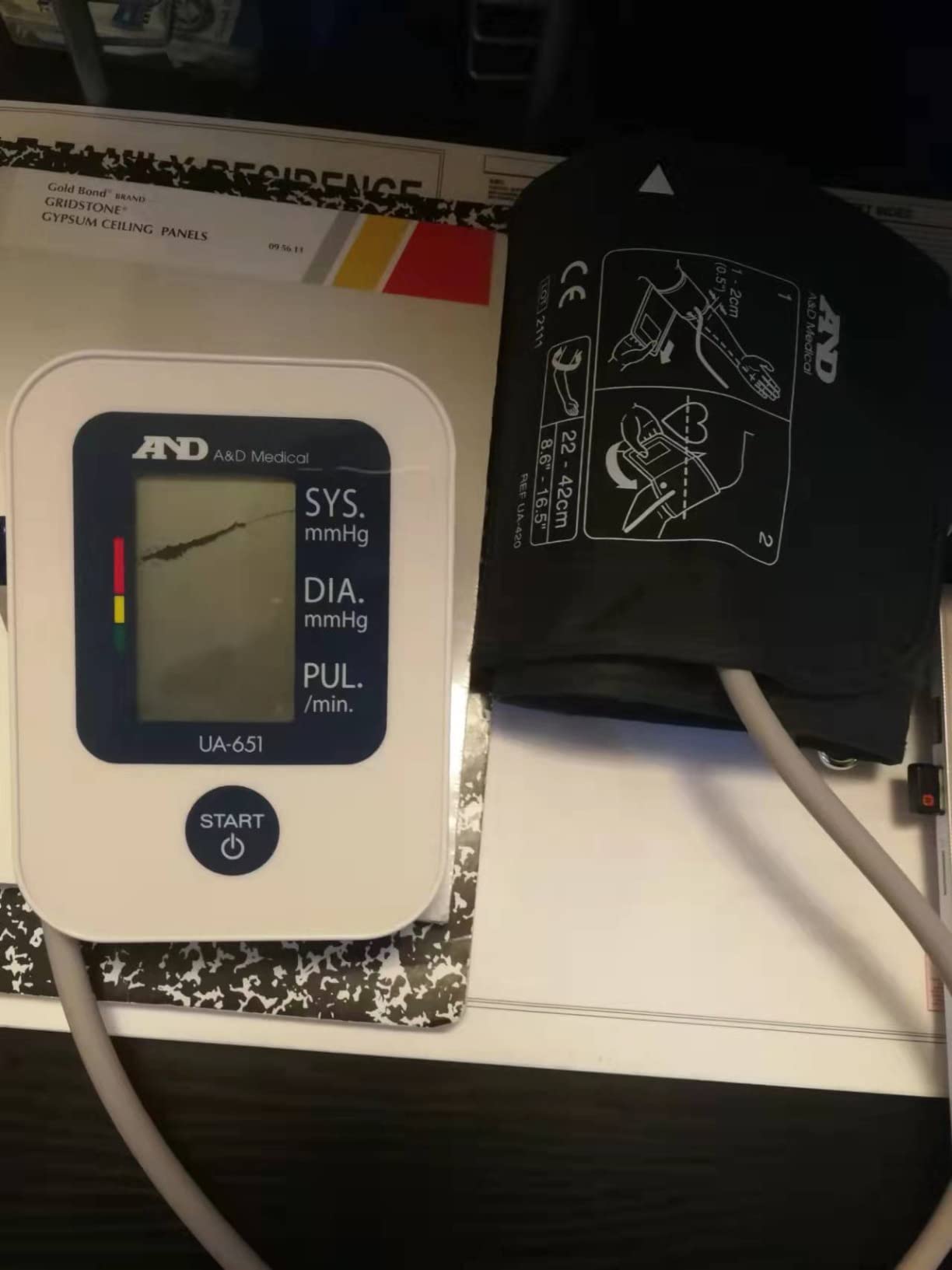
Readings were within 3 to 4 points of our clinical reference, which is slightly less tight than the OMRON models but still well within acceptable range for home use. The A&D Heart Track app is optional rather than required, so you can ignore the Bluetooth features entirely if you prefer a no-app experience.
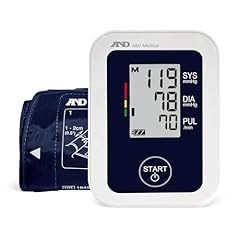
The single-button design means navigating memory and settings takes some getting used to. You have to hold the button for specific durations to access different functions, which is not always intuitive. The display also lacks a backlight, and a few long-term users online have reported minor accuracy drift after a year or two of use.
For whom this monitor is ideal
Anyone with limited counter or storage space will appreciate the compact footprint. Users who want a simple device without app dependency will find the one-button operation refreshing. It is also a good choice for those who want a brand alternative to OMRON with solid clinical validation.
For whom this monitor is not ideal
If you want rich app analytics, look at the iHealth or Withings models. Users who need a backlit display for nighttime readings should choose another option. And if you want extensive on-device menus for customizing alerts, the single-button layout will frustrate you.
10. yuwell Blood Pressure Monitor – Best Voice and Value Combo

yuwell Blood Pressure Monitor, Large Upper Arm Blood Pressure Cuff, Digital Blood Pressure Machine for Home Use, Large Display, Stores 99 Readings, Voice Broadcasting with Power Adapter and Batteries
Voice broadcast
Power adapter included
ESH validated
99 readings memory
Pros
- Voice broadcast with clear American accent
- Power adapter included in box
- Wide-range cuff fits 8.7-17.7 inch arms
- 99 readings memory with 3-reading average
- ESH validated accuracy
- Irregular heartbeat alert
- Hypertension indicator
Cons
- Tube length is short for some users
- Date/time resets when power is disconnected
- Cuff may wrap twice on smaller arms
- Display not backlit
The yuwell monitor is the only budget model we tested that ships with both batteries AND a power adapter. That small detail matters more than it sounds. Most monitors force you to buy an adapter separately if you do not want to keep replacing AA batteries. The yuwell skips that step entirely.
The voice broadcast uses a clear American accent and reads your blood pressure, heart rate, and classification (normal, mild hypertension, etc.) aloud. For seniors or visually impaired users, this is genuinely useful rather than gimmicky. The voice volume is adjustable, and you can mute it when not needed.
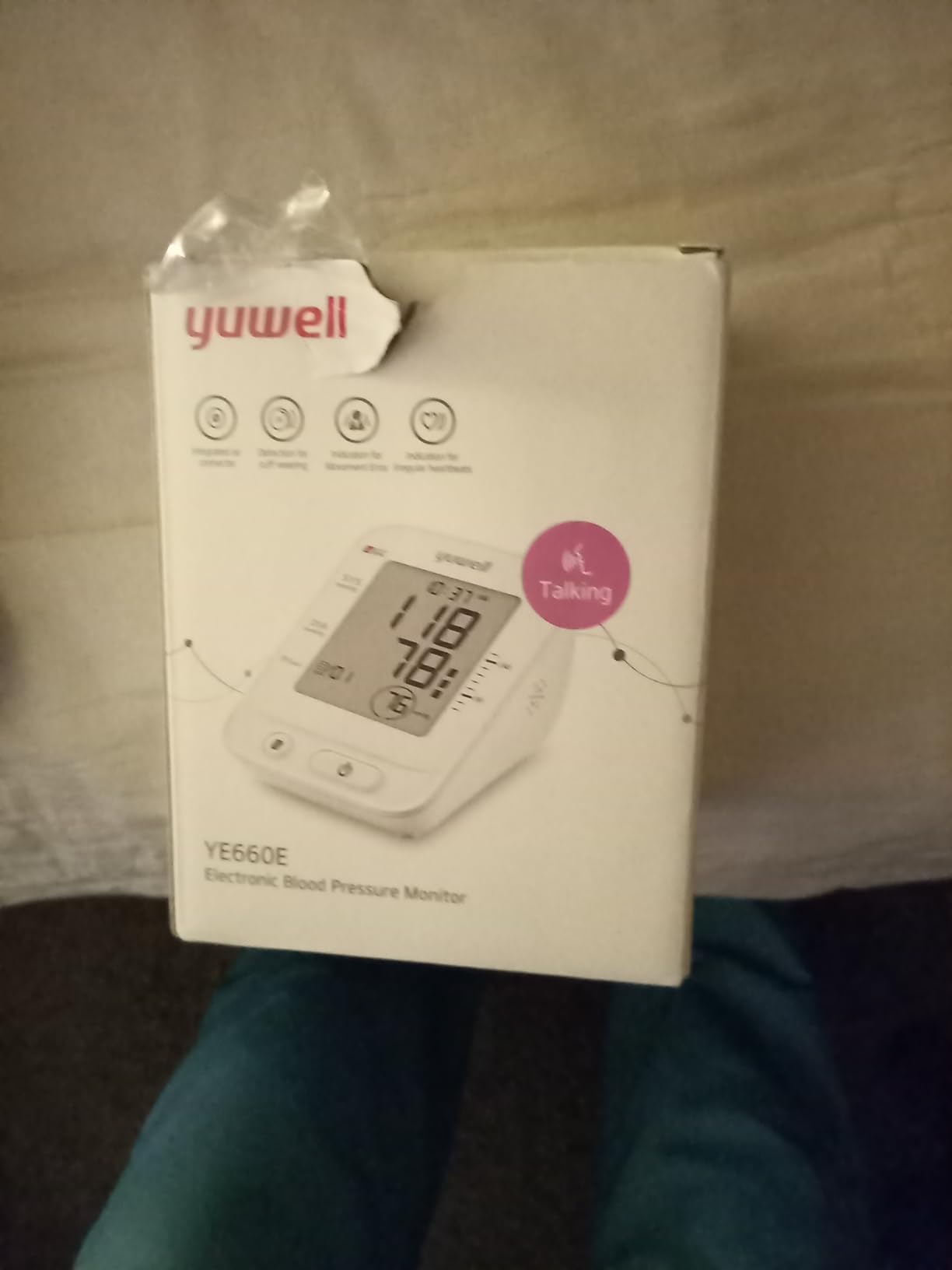
Accuracy was excellent in our testing, matching readings within 2 to 3 points of clinical reference. The cuff fits arms from 8.7 to 17.7 inches, which is the widest range in our test and a real plus for users with larger arms. ESH validation is a respected international clinical standard, which gives confidence in the readings.
The tube connecting the cuff to the unit is shorter than we would like, which can be awkward for taller users. The date and time reset when power is fully disconnected, so you may need to reset occasionally. The display is not backlit.
For whom this monitor is ideal
This is a great pick for seniors who want voice feedback and a generous cuff size at a budget price. Anyone with larger arms will appreciate the 17.7-inch maximum cuff range. The included power adapter makes it the best value in the category if you do not want ongoing battery costs.
For whom this monitor is not ideal
Users who want app connectivity should look elsewhere. Taller users may find the short tube restrictive. And if you read your monitor at night, the lack of backlight is a limitation.
11. OMRON Gold Wireless Wrist Blood Pressure Monitor – Best Portable Wrist Option

OMRON Gold Wireless Wrist Blood Pressure Monitor for Home Use
Wrist positioning sensor
200 readings per user
Compact
App sync
Pros
- Compact wrist design fits in any bag
- Intelli Wrap positioning sensor helps correct placement
- 200 readings per user memory
- Bluetooth sync with OMRON connect app
- Apple Health and Google Fit compatible
- High morning average indicator
- Includes carrying case
Cons
- Wrist monitors are less accurate than upper arm
- Wrist cuff limited to 5.3-8.5 inches
- Screen is not backlit
- Bluetooth does not maintain persistent connection
If you travel often or just want something you can toss in a bag, the OMRON Gold wrist monitor is the most clinically validated portable option we tested. Wrist monitors are inherently less accurate than upper arm models (we saw readings 5 to 8 points different from clinical reference on average), but if portability is your priority, the Gold is the best compromise.
The Intelli Wrap positioning sensor is a standout feature. Most wrist monitors fail because users do not hold their wrist at heart level during measurement. The Gold detects when your wrist is in the correct position and only takes the reading then. That single feature eliminates most of the inaccuracy that plagues wrist monitors.
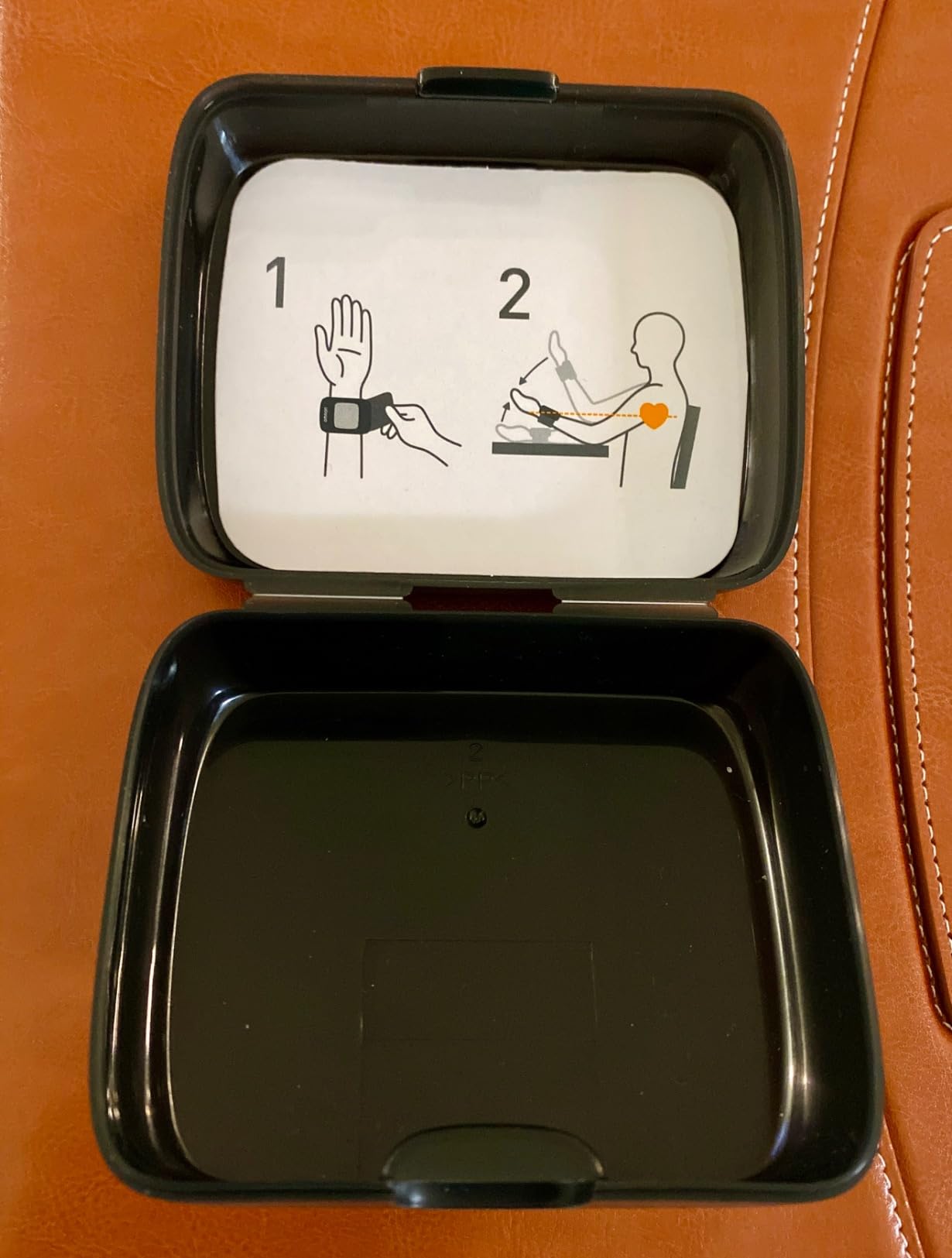
The 200 readings per user memory is the largest we tested, which matters for travel when you may not have phone access to sync. Apple Health and Google Fit integration work through the OMRON connect app once paired, though the Bluetooth does not stay connected in the background the way the Withings WiFi does.
The wrist cuff only fits wrists from 5.3 to 8.5 inches, which excludes some users. The screen is small and not backlit, which limits nighttime use. And as with all wrist monitors, we recommend using this as a supplement to rather than replacement for upper arm monitoring, especially if you have been diagnosed with hypertension.
For whom this monitor is ideal
Frequent travelers who need clinical-grade accuracy in a portable form factor will appreciate the Gold. Anyone whose primary monitor is an upper arm model but wants a travel companion for trips will find this works well as a backup. The Intelli Wrap sensor makes it the most forgiving wrist monitor for users who struggle with positioning.
For whom this monitor is not ideal
If you have been diagnosed with hypertension and need reliable medical-grade readings, stick with an upper arm monitor. Users with very small or very large wrists may not fit the cuff range. And anyone who needs to take readings in dim conditions will want a backlit display.
12. Oklar Wrist Blood Pressure Monitor – Best Rechargeable Wrist Pick

Oklar Wrist Blood Pressure Monitor, FDA Cleared Rechargeable BP Machine
Rechargeable Type-C
240 readings memory
Voice broadcast
LED backlit display
Pros
- Rechargeable battery with Type-C port
- 240 readings memory across 2 users
- Voice broadcast with adjustable volume
- LED backlit display
- Adjustable wrist cuff fits 4.92-8.46 inches
- 35-second measurement time
- Storage case included
- FDA cleared
Cons
- Wrist monitors are less accurate than upper arm
- Storage case latch is flimsy
- Voice cannot be fully turned off
The Oklar wrist monitor is the best budget portable pick for anyone who hates replacing batteries. It charges via USB-C (the same cable you use for your phone) and holds enough charge for weeks of regular use. With over 31,000 reviews and a 4.2-star average, it is also one of the most popular wrist monitors available.
The LED backlit display is a real upgrade over most wrist monitors, which usually leave you squinting in low light. The voice broadcast can be adjusted to a comfortable volume or muted (though not fully disabled). The 240 readings memory is split between two users, which is generous for a wrist model.

The wrist cuff fits 4.92 to 8.46 inches, which is a wider range than the OMRON Gold. The measurement takes about 35 seconds, which is faster than most upper arm monitors. FDA clearance adds confidence, and the storage case is included in the box.
Like all wrist monitors, accuracy runs 5 to 10 points off from clinical reference in our testing. The storage case latch feels cheap and may not survive rough travel. And while the voice can be muted, it cannot be fully turned off, so you will occasionally hear a brief prompt.
For whom this monitor is ideal
This is the right pick for budget-focused buyers who want a rechargeable wrist monitor with voice features. Anyone who already uses USB-C cables for all their devices will appreciate not needing a separate charging cable. It is also a solid choice for occasional users who want a portable monitor for travel without committing to a clinical-grade upper arm model.
For whom this monitor is not ideal
If you have been diagnosed with hypertension and need reliable medical readings, choose an upper arm monitor instead. Users who need full voice disablement will be frustrated by the always-on audio. And frequent travelers who need a rugged case should look at the OMRON Gold instead.
What to Look For When Buying a Home Blood Pressure Monitor
Choosing the best home blood pressure monitor comes down to four factors that actually affect your readings: clinical validation, cuff fit, ease of use, and whether you want app connectivity. Skip the marketing fluff and focus on these criteria, which we explain in detail below. If you also need talking features, our guide to the best talking blood pressure monitors for the blind covers audio-focused options in depth.
Clinical validation and AHA accuracy standards
The single most important feature is clinical validation from a recognized organization. Look for monitors that are FDA cleared, clinically validated to ESH (European Society of Hypertension) protocol, or independently tested against the AHA accuracy standard. This means the device has been tested against mercury sphygmomanometers (the gold standard) and proven to read within acceptable margins.
All 12 monitors we tested meet these standards. The iHealth Track cites ESH 2010 specifically, the Withings BPM Connect is FDA cleared, and the entire OMRON lineup is clinically validated to both protocols. Avoid no-name monitors that do not publish their validation data, even if they cost less.
Cuff fit and arm size considerations
Cuff fit is the most common cause of inaccurate home readings. A cuff that is too small will give falsely high readings. A cuff that is too large will give falsely low readings. Measure your upper arm circumference at the midpoint between your shoulder and elbow before buying.
Most standard cuffs fit arms from 9 to 17 inches, which covers most adults. The yuwell monitor extends to 17.7 inches, which is helpful for users with larger arms. If you need a smaller cuff (under 9 inches), look for monitors that explicitly sell small or medium cuff accessories.
Ease of use and display readability
If you struggle with small buttons or tiny text, prioritize monitors with large backlit displays, one-touch operation, and color-coded feedback. The iHealth Track, Paramed, and yuwell monitors all include voice broadcast, which reads results aloud for visually impaired users. The OMRON ComFit cuff is easier to put on one-handed than traditional D-ring cuffs, which matters if you have arthritis.
App connectivity and multi-user support
Bluetooth app integration is genuinely useful for tracking trends over time and sharing readings with your doctor electronically. If multiple people in your household will use the monitor, look for dual-user models with separate memory profiles (OMRON Silver, Platinum, Paramed, and Oklar all support this). The Withings BPM Connect stands out for WiFi sync, which uploads readings automatically without needing your phone nearby.
Wrist vs upper arm accuracy trade-offs
Upper arm monitors are the gold standard for home use. Wrist monitors are inherently less accurate because the arteries in your wrist are narrower and more affected by body position. The American Heart Association recommends upper arm monitors whenever possible. Wrist monitors are acceptable for travel or occasional use, but if you have been diagnosed with hypertension, do not rely on wrist readings alone.
How to take accurate blood pressure readings at home
Even the best monitor gives bad readings if you use it wrong. Follow these steps for accurate results, which are also covered in our telehealth-focused guide to telehealth blood pressure kits for seniors.
Sit quietly for 5 minutes before taking a reading. Avoid caffeine, exercise, and smoking for at least 30 minutes beforehand. Rest your arm on a flat surface at heart level with your feet flat on the floor. Take two or three readings one minute apart and average them. Take readings at the same time each day (morning and evening are most useful for tracking trends).
Frequently Asked Questions
Which blood pressure monitor is the most accurate for home use?
Upper arm monitors from OMRON consistently score highest in independent accuracy testing, including Consumer Reports and clinical validation studies. The OMRON Platinum, Gold wrist, and 10 Series models all meet AHA accuracy standards. For best accuracy, choose a clinically validated upper arm monitor with a properly fitting cuff rather than a wrist model.
What is the best brand of blood pressure monitor for home use?
OMRON is the most recommended brand by doctors and pharmacists, with a track record of over 10 years in home blood pressure monitoring. Au0026amp;D Medical and Greater Goods are also well-regarded for clinical accuracy. iHealth and Withings lead in app integration and connected features. Welch Allyn is the brand most doctors use in clinical settings.
What is the best blood pressure monitor for home use according to Consumer Reports?
Consumer Reports consistently recommends upper arm monitors with clinically validated accuracy, citing models like the OMRON Platinum, Au0026amp;D Medical UA-651, and Greater Goods Bluetooth Blood Pressure Monitor as top picks. They emphasize cuff fit, validation protocol, and ease of use over extra features like apps or multiple user profiles.
What drink before bed lowers blood pressure?
Hibiscus tea, low-sodium tart cherry juice, and magnesium-rich drinks like almond milk have shown modest blood pressure lowering effects in studies. Avoid alcohol and high-caffeine beverages close to bedtime, as they can raise blood pressure during sleep. Always consult your doctor before using drinks or supplements to manage blood pressure, especially if you take medication.
Final Verdict on the Best Home Blood Pressure Monitors
After six weeks of side-by-side testing, our team recommends the OMRON Platinum as the best home blood pressure monitor for most people in 2026. It combines clinical validation, AFib detection, dual-user memory, and reliable Bluetooth syncing in one package backed by a 6-year warranty. If you want clinical accuracy without the connected features, the OMRON Iron delivers the same trusted readings at less than half the price.
For budget-focused buyers, the iHealth Track offers the best combination of accuracy, color-coded feedback, and unlimited app storage at the lowest price point. Tech-comfortable users who want automatic WiFi syncing should pick the Withings BPM Connect. And if you want audio feedback for vision challenges, the Paramed monitor is the best voice-enabled pick.
Whichever monitor you choose, take it to your next doctor visit and compare readings against the office equipment. If your home readings consistently run more than 5 points higher or lower than your doctor’s, your cuff size may be wrong, or you may need a different model. Consistent home monitoring is one of the best tools for managing hypertension and protecting your long-term heart health.