
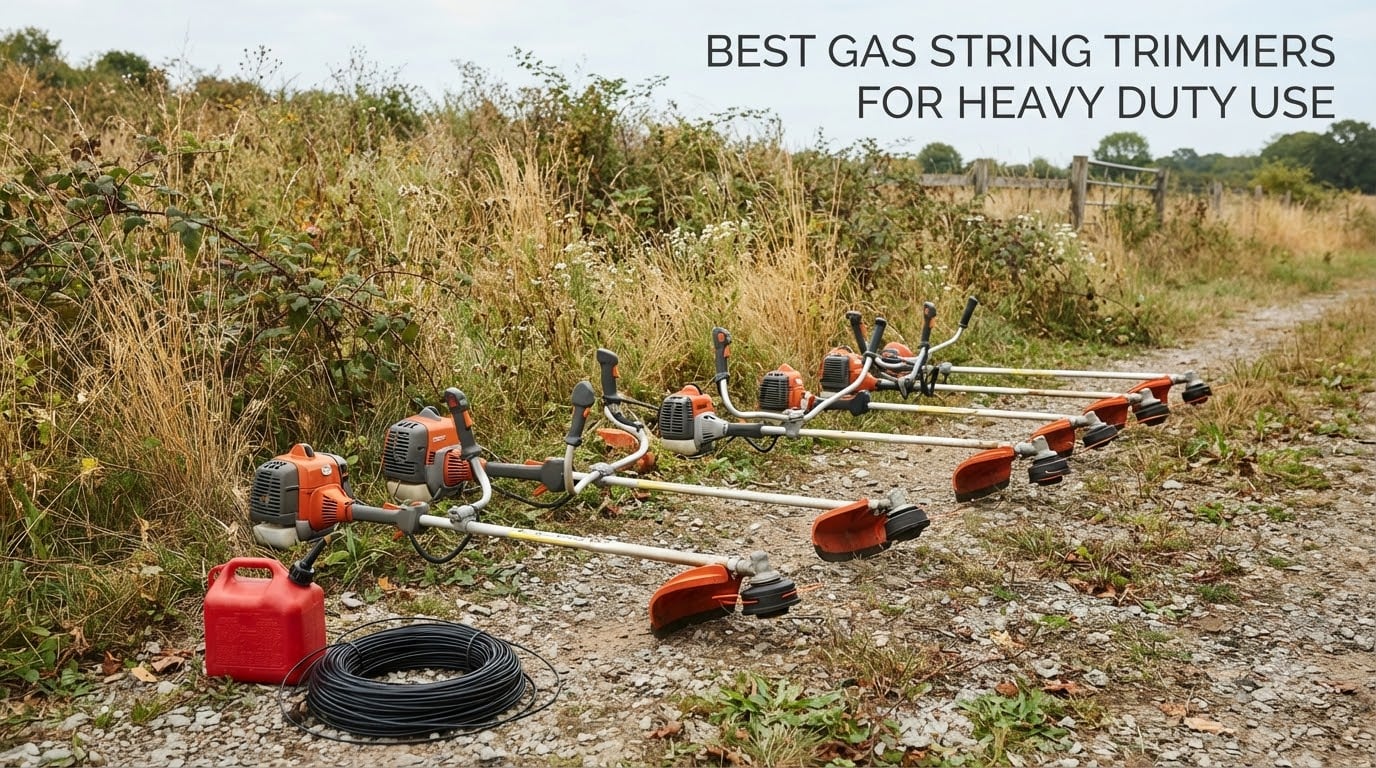
Most string trimmers on the shelf are built for an afternoon of tidying around a flower bed. A heavy-duty gas string trimmer is a different machine: a gas-powered weed eater with roughly 25cc or more of engine displacement, a rigid straight shaft, and a bump-feed nylon line head built to cut tall grass, dense weeds and light brush continuously through a long afternoon. That usually means properties of an acre or more, overgrown lots, or daily work for a landscaping crew.
This roundup covers six gas string trimmers that hold up under that kind of load, from the Husqvarna 130L that owners run across large properties to the ECHO SRM-3020T aimed at professional crews. We looked at engine displacement and stroke, shaft geometry, cutting width, listed weight, head design and owner feedback, and we weighted long-term reliability reports from lawn care professionals heavily. If you would rather start with the cordless side, our cordless string trimmer picks cover lighter-duty edging work.
Here is how we define the term, because it matters. Heavy duty means one or more of the following: an acre or more of maintained ground, weeds and bramble thick enough to stall the head, brush or stems approaching an inch thick, or several hours of trimming a week rather than a monthly pass. A quarter-acre lot with a clean edge does not need a 30cc machine, and buying one for that job just means carrying weight you do not need.
One note on how these picks were made. Every machine below is a gas model with published specifications and a real owner feedback base, and we list the review counts so you can see how much evidence sits behind each rating. Three of the six carry only modest feedback totals, and we say so plainly instead of treating a thin base as a verdict. We also leave out the general battery-versus-gas argument that fills most trimmer guides, except where it genuinely changes the answer.
Table of Contents
Top 3 Best Gas String Trimmers for Heavy Duty Use (October 2026)

Husqvarna 130L
- 28cc 2-cycle engine
- 8000 rpm
- 18-inch cutting width
- LowVib anti-vibration
- 3-year warranty

ECHO PAS-225VP
- 21.2cc PAS powerhead
- 17-inch trimmer and edger attachments
- multi-tool platform
- gas powered

ECHO SRM-2620
- 25.4cc X Series engine
- 8500 rpm
- straight shaft
- 1-year commercial and 5-year consumer warranty
Quick Comparison of Every Machine in This Roundup
| Product | Specifications | Action |
|---|---|---|
| Husqvarna 130L |
|
Check Latest Price |
| ECHO PAS-225VP |
|
Check Latest Price |
 Husqvarna 122RJ Husqvarna 122RJ |
|
Check Latest Price |
| ECHO SRM-2620 |
|
Check Latest Price |
 ECHO SRM-3020T ECHO SRM-3020T |
|
Check Latest Price |
 Husqvarna 525L Husqvarna 525L |
|
Check Latest Price |
1. Husqvarna 130L – Best Heavy-Duty Gas String Trimmer Overall
Husqvarna 130L Gas String Trimmer, Trimmer Head, 18-Inch
28cc 2-cycle
18-inch cutting width
Straight shaft
8000 rpm
12.2 pounds
3-year limited warranty
Pros
- Starts reliably in varied weather
- Tool-free Rapid Replace line changes
- Handles heavy weeds and trail-side overgrowth
- Good balance for tall operators
- Owners report years of service
Cons
- Heavier than typical homeowner trimmers
- Underside throttle trigger is sensitive
- Bump head spools line against fences
- Can idle down unless throttle is held slightly open
The Husqvarna 130L is the machine we kept coming back to across this whole roundup, and the reason is the volume of real use behind it. The 28cc 2-cycle engine spins to 8,000 rpm for maximum power and drives an 18-inch cutting path, which is the widest sweep in this group alongside the narrower units below it. Straight shaft design, digital ignition and Smart Start with air purge make it a cold-start-friendly machine even after a week sitting in the shed.
Owners describe it as a dependable weed whacker for multi-acre work, and one buyer reports running it across 87 acres of trail-line property on a professional-style duty cycle. On r/lawncare, Husqvarna and STIHL units come up constantly as the machines people keep for years of property and trail maintenance rather than swapping out every few seasons.
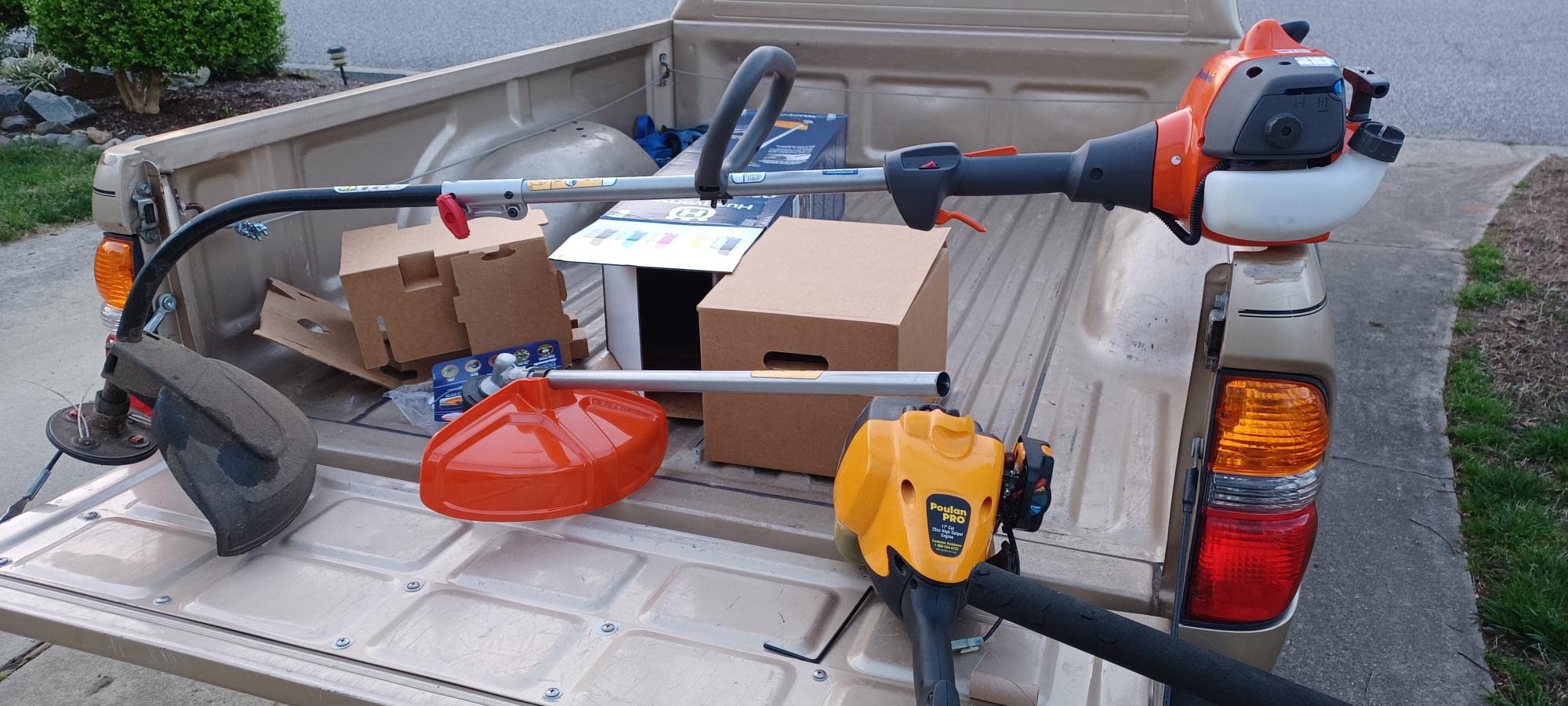
The Rapid Replace head is a genuine convenience feature. You align, load and twist to reload line with no tools, and the bump feed on the underside adds line as the head touches the ground. LowVib anti-vibration technology takes some of the sting out of long sessions, and the automatic stop switch resets itself to the on position so a stall does not mean hunting for the switch again.
Two things to know before you commit. At 12.2 pounds this is not a featherweight, and anyone running it across several acres in one sitting will feel that by the end. The underside shaft trigger is also a genuine friction point: owners report it needs deliberate pressure and is sensitive enough that regulating speed takes practice.
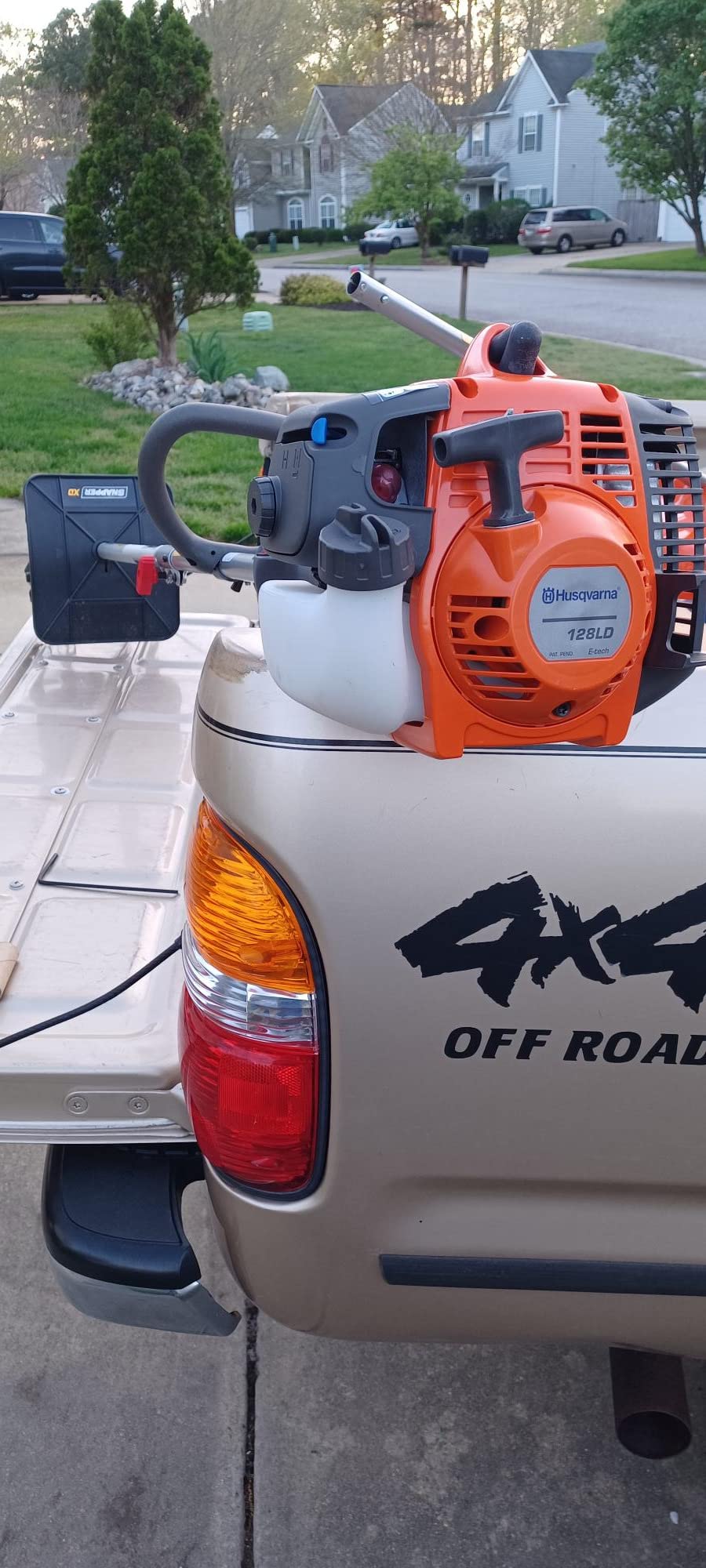
What the 130L handles well on heavy work
Tall grass, heavy weed stands and trail edges are where this engine earns its place. Multiple owners describe it cutting dense growth without bogging, and the 18-inch swath means fewer passes over the same ground. If your week involves fence lines, creek beds and ditches rather than a manicured lawn, that combination of width and torque is the deciding factor.
Starting is the other quiet strength. Digital ignition, Smart Start and the air purge work together to remove air from the carburetor and fuel system, and the reset stop switch means a momentary stall is a two-second recovery rather than a walk back to the machine.
Where it falls short for heavy-duty buyers
The bump-feed head spools out quickly when it contacts fences, foundations or other solid objects, which is exactly the condition chain-link property work creates. Expect to spend time untangling line, and keep the head off the fence line where you can.
Some owners also report it shutting off at idle unless the throttle is held slightly open, and that idle behavior sometimes needs an adjustment. If you have never run a shaft-mounted throttle before, budget a short orientation. Shaft extensions for this model also cost more than universal-fit alternatives, which matters if you plan to add attachments later.
2. ECHO PAS-225VP Kit – Best Value Multi-Tool Setup
ECHO 17 in. 21.2 cc Gas PAS Trimmer and Edger Kit-PAS-225VP
21.2cc gas engine
17-inch cutting width
PAS powerhead with trimmer and edger
16.2 pounds
Pros
- One powerhead covers trimming and edging
- Edger handles clay-heavy edging work
- Suitable for large residential yards
- Quiet relative to some gas trimmers
- No battery charging downtime
Cons
- Edger attachment requires sideways stepping
- Rubber flaps let the edger throw dirt at your feet
- 21.2cc is below the 25.4cc heavy-duty class
- Included trimmer head wears quickly
- Cold starts can need multiple pumps
The PAS-225VP is a different proposition from the other five. You get a 21.2cc powerhead, a straight-shaft string trimmer attachment with a 17-inch cutting width, and a curved-shaft edger attachment in one kit, plus the option to add ECHO hedge trimmer, pole saw and brush cutter attachments later. That makes it the sensible pick if your property work is part trimming, part edging, and you would rather own one motor than two.
On the trimming side, owners with prior brand experience call it good value for homeowner weed-trimming and for large residential yards around 30,000 square feet. People coming off electric systems point out that there is no battery runtime to plan around and no recharge wait between passes, which is the practical argument for gas on a big lot.
Be clear-eyed about where it sits in the heavy-duty hierarchy. A 21.2cc engine is a step below the 25.4cc and 28cc machines in this roundup, and reviewers note it has less pull for heavy brush or larger limbs. If your workload is brambles and saplings rather than grass and weed cover, look at the brushcutter class further down this list.
Why the multi-tool setup pays off
The bundled edger attachment has more torque than most people expect, and owners doing clay-heavy edging specifically call it out as capable. That combination matters on property work, where the same walk covers overgrown edges, fence lines and the strip along a driveway. One motor with two heads also halves the number of fuel tanks and spark plugs you have to keep track of.
It is also a quieter option than several gas trimmers here, according to owners, which matters if you are trimming close to a house or a property line early in the morning.
Where the kit frustrates owners
The edger attachment changes how you move. Owners report walking forward is awkward once it is fitted, so you end up stepping sideways along the edge, and the rubber flaps do not fully stop dirt being thrown back at your feet. Both are ergonomic complaints rather than performance ones, but on a large property ergonomic problems become real problems.
The included trimmer head also wears faster than expected, and several owners recommend treating it as a consumable. Cold starting can take multiple primer pumps and choke strokes on the first pull of the season. And while most reviewers report reliable operation, one lawncare company owner reports a total engine failure at three months despite correct maintenance, so treat the first fuel tank as a shakedown period.
3. Husqvarna 122RJ – Best for Thick Brush and Saplings
Husqvarna 122RJ Multi-Purpose Gas Brush Cutter with String Trimmer Head
Brushcutter class
17-inch cutting width
String head plus grass blade
J-handle and harness included
12.6 pounds
Pros
- Cuts half-inch to one-inch brush and branches
- Idles smoothly without throttle input
- Includes blade
- string head
- J-handle and harness
- Users clear a month of overgrowth in about an hour
Cons
- Starting is difficult for some owners
- Guard came loose within minutes on one unit
- Front plastic cover arrived broken
- One unit needed carburetor adjustment
- Lowest average rating in this set at 4.2
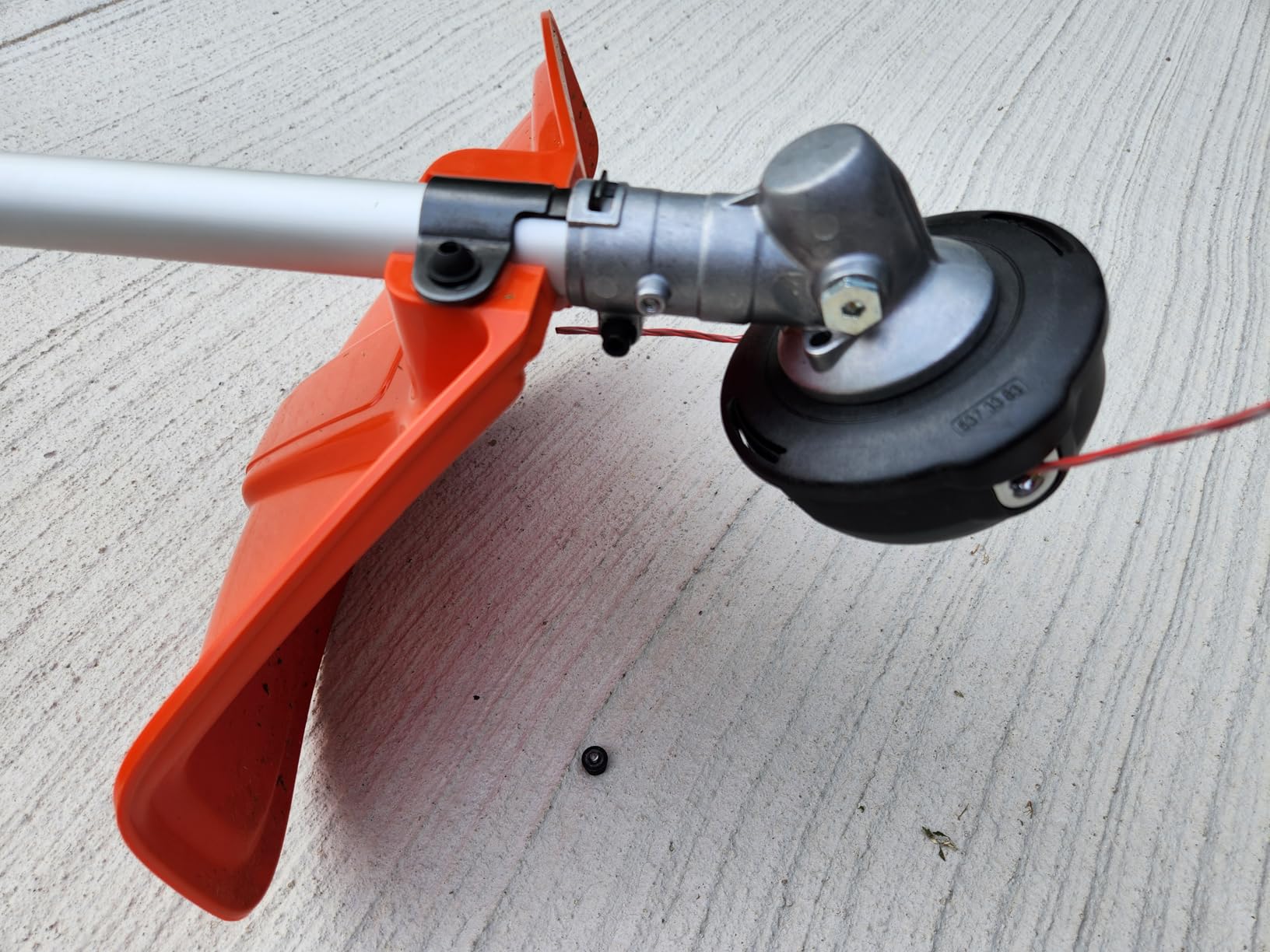
When line stops being enough, this is the machine that changes the job. The 122RJ arrives with both a string trimmer head and a grass and brush blade, so you can switch from nylon to metal when the growth turns woody. Owners report it cutting through half-inch to one-inch brush and branches in a couple of passes, and one user leveled a month of yard overgrowth in roughly an hour.
It is also the only machine here that ships with a harness and a J-handle barrier bar, which is not a small detail for full-day work. The J-handle gives you two-handed control and a defined working position, and the adjustable harness takes the load off your shoulders and lower back on long sessions. That setup is the difference between trimming a large lot once a year and running it every week.
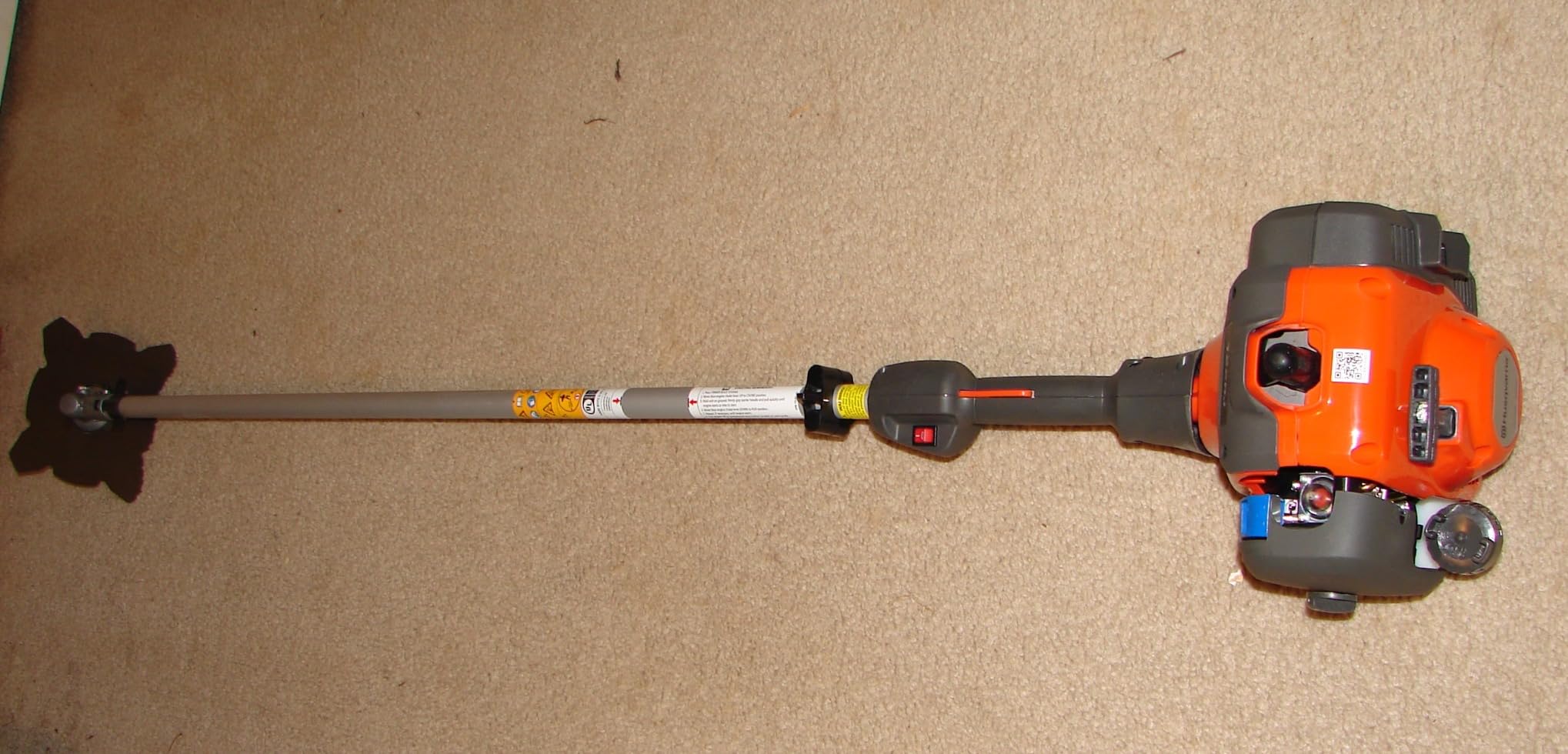
Underneath it is a Smart Start engine and starter design with air purge to clear air from the carburetor and fuel system, and owners who get it running report it idles smoothly without needing throttle input. That last point matters more than it sounds: a trimmer that will not hold idle turns a walk along a fence line into constant re-triggering.
We rate this machine the most cautiously of the six. Its 4.2 average is the lowest here, with 11 percent one-star reviews, and the recurring theme behind those scores is not cutting power. It is starting behavior and assembly quality, which are fixable issues but real ones you will feel on day one.
What makes it worth the extra setup
The blade is the reason to buy this one. If your ground has saplings, blackberries, brambles or last season’s growth left standing, nylon line will fray and wrap instead of cutting, and you will end up doing the job twice. The grass and brush blade included here handles stems that a trimmer head simply cannot.
The harness and J-handle matter just as much across acres. Combined they let you work with the machine supported rather than hanging from your hands, which is the single biggest fatigue reducer for full-day property work. At 12.6 pounds it is one of the lighter machines in this roundup despite the extra hardware.
Where owners hit trouble
Starting is the dominant complaint. Owners describe it as a royal pain to get running on some units, and one needed carburetor adjustment that required a specialty wrench and small-engine repair knowledge. If you are not comfortable with basic carburetor work, budget for a dealer visit before the first big job.
Assembly quality also drew criticism, with a protective guard reported loose within the first ten minutes of use and a front plastic cover arriving broken at the screw bosses. Those are packaging and assembly problems rather than design flaws, but inspect the machine before you rely on it.
4. ECHO SRM-2620 – Most Versatile for Daily Use
Echo SRM-2620 ProXtreme Trimmer
25.4cc professional-grade engine
Straight shaft X Series
8500 rpm
13 pounds
1-year commercial and 5-year consumer warranty
Pros
- Starts on the first or second pull
- Punches through heavy weed and briar cover
- Works with ECHO brush cutter kits
- Compact and easy to maneuver
- Second-generation owners report long service life
Cons
- Included trimmer head wears after 10 to 12 hours
- No loop or harness point for a vest
- Owners recommend buying spare heads
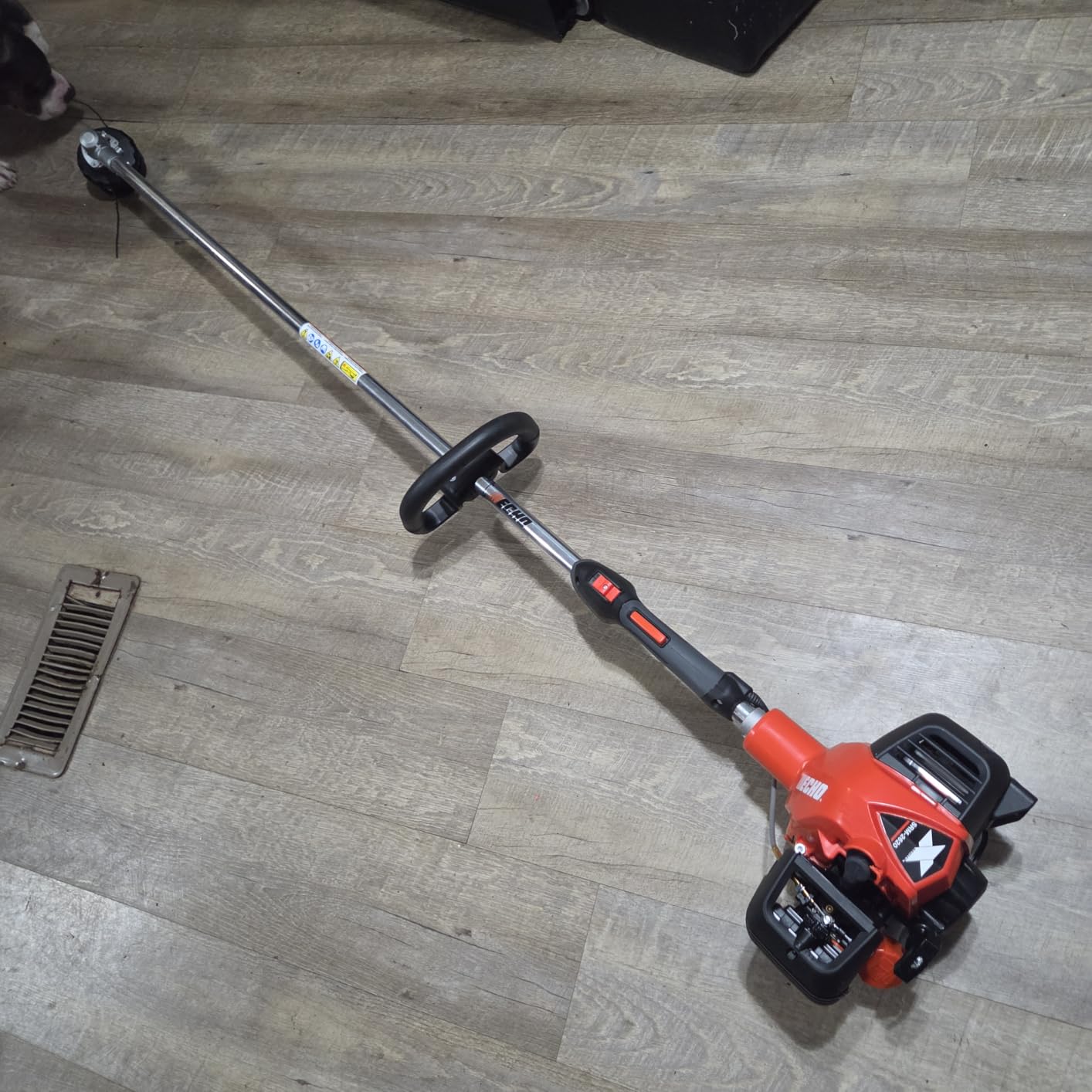
The SRM-2620 is the daily-use specialist in this group, and the warranty line tells you how ECHO positions it: one year commercial, five years consumer. That split is the clearest signal we found that the machine is meant to survive a working week, not just a season. The 25.4cc X Series engine runs to 8,500 rpm through a straight shaft, and at 13 pounds it is light for its output.
Owner sentiment is emphatic, with 81 percent five-star reviews, and the repeated message is fast reliable starting plus performance in thick weed and briar stands. Several reviewers are repeat ECHO owners, including one whose 20-year-old SRM-260S is still running, which is the kind of generational consistency that tells you something about the platform.
On LawnSite, ECHO machines in this class come up regularly among commercial users, and pros on that forum describe pairing them with bush cutter kits for hillside growth. Owners here make the same move, since the SRM-2620 is compatible with ECHO brush cutter kits when the workload turns woody.
Why it holds up under daily work
Starting behavior is the most-cited quality factor in lawn care forums, and this machine delivers on it. Owners report it starting on the first or second pull after priming the bulb, which adds up across a crew of operators starting machines fifty times a week. The 25.4cc engine also punches through heavy weed and briar cover without slowing, which is the actual definition of heavy duty work.
The straight shaft keeps the balance close to the cutting end, so it stays maneuverable in the tight spots a mower cannot reach. Fence lines, around trees and along irrigation ditches are all places where a compact, light machine earns its keep.
What to plan for as a consumable
The supplied trimmer head is the weak point. Owners report it looking worn after roughly 10 to 12 hours and recommend buying extra heads as consumables, so factor that into your maintenance budget from the start rather than treating it as a surprise.
There is also no loop or harness point for hooking the machine to a vest or harness, which is a genuine limitation for all-day use compared with the 122RJ. If your work is measured in full shifts rather than long afternoons, plan breaks around that rather than expecting the machine to carry the load.
5. ECHO SRM-3020T – Best for Professional Crews
ECHO X Series 30.5 Cc Professional-Grade Gasoline String Trimmers
30.5cc X Series engine
10000 rpm
1.62:1 gear reduction
Professional landscaping duty cycle
Pros
- 30.5cc engine for professional duty cycles
- 10000 rpm operating speed
- 1.62:1 gear reduction for fast cutting
- 91 percent five-star reviews
- Positioned for large-scale trimming
Cons
- Listed weight of 50 pounds is heavier than every other unit here
- Only 50 customer reviews
- Listed cutting width of 12 inches
- Listing detail is thin
The SRM-3020T is the largest engine in this roundup at 30.5cc, and it is the only one positioned explicitly for professional landscaping and large-scale, high-demand trimming. It runs to 10,000 rpm through a 1.62:1 gear reduction that the manufacturer describes as producing fast, efficient cutting. If you run a crew, this is the machine whose duty cycle was designed for your week.
Its rating is the strongest number here, and we want to be careful about what that means. The 4.6 average comes with 91 percent five-star reviews and only 50 customer reviews, with no middle ratings at all in the feedback. The enthusiasm looks real, but a 50-review base cannot support strong conclusions about long-term reliability, and we would treat the first hundred hours as a break-in period.
Two specification details deserve a phone call before you commit. The listed item weight is 50 pounds, far above the 12 to 16 pound range of every other machine in this roundup, and that figure may reflect packaged or shipping dimensions rather than bare tool weight. The listed cutting width is 12 inches, narrower than the 17 and 18 inch units here, so ask for the confirmed bare-tool weight and the real cutting path.
Where the extra displacement pays off
Engine displacement is the honest reason to step up a class. At 30.5cc you have more headroom before the engine bogs, which means thicker line, more time between fuel stops and less stress on the crankshaft during a long day. The gear reduction is a mechanical advantage on top of that, trading a small amount of top-end speed for torque at the cutting end.
For crews moving between accounts, the duty cycle positioning matters as much as the numbers. A machine built for professional use tends to get serviced on a schedule rather than repaired on failure, and that difference shows up in uptime over a season.
What to verify before buying
Confirm the bare-tool weight with the seller. A 50-pound trimmer and a 13-pound trimmer are entirely different tools for an eight-hour shift, and the listed figure here is the least trustworthy number in this roundup. Also confirm whether the 12-inch cutting width refers to the head included or the maximum path with a wider head fitted.
The listing itself supplies very little descriptive detail beyond the gear reduction claim, so you will be relying on dealer support and your own testing for the finer details. That thin documentation is another reason this slot suits buyers who already know the ECHO platform.
6. Husqvarna 525L – Best for Low-RPM Pulling Power
Husqvarna 525L Gas String Trimmer, Gas Weed Eater w/Tap-n-Go Trimmer Head
25.4cc 2-cycle X-TORQUE engine
17-inch cutting width
17-inch straight shaft
Tap-n-Go trimmer head
12.5 pounds
Pros
- X-TORQUE engine pulls hard at low RPM
- Tap-n-Go head refills fast
- Smart Start and auto-reset stop switch
- Air filter designed to reduce engine wear
- Straight shaft reaches tight areas
Cons
- Only 17 customer reviews
- Tap-n-Go head disliked by some owners who prefer pre-cut spools
- 17-inch width narrower than the 18-inch 130L
The 525L earns its place on one specific technical point: the 25.4cc X-TORQUE engine delivers strong power even at low RPM. On heavy growth that means you can work at a slower, steadier cutting speed without the engine bogging, which reduces the constant throttle adjustment that makes long sessions tiring. The straight shaft suits areas a mower cannot reach.
Smart Start technology and the automatic stop switch that resets to the on position reduce friction between jobs, and the air filter is designed to reduce engine wear over a long service life. The Tap-n-Go trimmer head makes refilling line fast, which matters when you run out of line every few passes in thick weeds.
We are going to be direct about the evidence here. With 17 customer reviews, this is the thinnest feedback base in the roundup, at 76 percent five-star and 8 percent one-star. That is a directional signal, not a conclusion, and we would not buy on reputation alone.
When low-RPM torque actually helps
Engine torque at low RPM determines whether you can cut at walking pace or whether you have to lift and hold the throttle to get through a weed stand. In tall grass, heady weeds or the light brush that accumulates along a fence line, that difference decides whether the work is efficient or exhausting.
The straight shaft layout also helps in confined spaces, and the auto-reset stop switch means a brief stall does not end your rhythm. For a homeowner on a large lot who wants a machine that does not fight them, the combination is genuinely well suited to the job.
Why the thin feedback base matters
Seventeen reviews cannot tell you how the carburetor looks after five seasons, and carburetor longevity is one of the most common complaints logged in lawn care forums. Before committing, check whether there is an authorized service point near you, since Husqvarna dealer coverage varies by region and that is a recurring frustration for owners in rural areas.
A few owners also prefer pre-cut line spools and dislike the Tap-n-Go head design. That is a preference rather than a fault, but if you already stock a particular spool type, factor it into the switch.
How to Choose a Heavy-Duty Gas String Trimmer
Start with acreage and vegetation density, not brand. Those two variables decide your engine class faster than any feature list. Below one acre with mostly grass and seasonal weeds, a 21cc machine handles the work and stays light. One to two acres of dense growth, or weekly work on a large lot, points to 25cc and above. More than five acres, hillsides, or anything with stems approaching an inch thick means you want the brushcutter class with a blade and a harness rather than more line capacity on a trimmer head.
Next, decide between 2-stroke and 4-stroke. Two-stroke engines are lighter, cheaper to replace and easier to carry, but they need a premixed fuel and oil ratio and they are more sensitive to stale fuel, which is the single most common cause of carburetor trouble reported in owner forums. Four-stroke machines run premix-free and hold fuel better over a winter, at the cost of weight and price. For intermittent weekend work, 2-stroke is the sensible default. For daily commercial use where a machine sits over a weekend, the convenience of 4-stroke is worth the extra mass.
Shaft geometry is the next decision and it is debated constantly in forums, so here is the practical version. A straight shaft keeps the cutting end closer to the ground, gives you better reach under fences and into brush, and makes a harness or J-handle workable, which matters for acreage work. A curved or loop shaft shortens the reach but folds smaller and sits more comfortably on shorter sessions. If your property includes fence lines and ditches, take the straight shaft.
Cutting width matters less than buyers expect and head design matters more. Going from 17 to 18 inches saves you a pass here or there, but the difference between a bump-feed spool and a head designed for thicker line is a much larger productivity gap. Match line diameter to the vegetation: heavier line on thin growth wastes power and throws more debris, and thin line on brush frays and wraps on the spool.
Finally, be honest about whether gas is the right answer. Battery trimmers now handle a good share of residential edging work, and many owners find them easier to live with, and if your trimming is mostly lawn edges and light weeds, that is the better tool. Our cordless string trimmer guide covers that side in detail. Gas wins decisively when you have acres, thick growth, or a need to work through long stretches without a charging schedule.
One honest counterpoint from the forums: some professional users report that cordless machines now rival gas power for most of what they do, and that battery heat under sustained heavy load is a smaller problem than it used to be. For a landscaping crew working light residential routes, that is worth checking before buying a full gas fleet. For ditches, creek beds, fence lines and post-storm cleanup, gas still leads.
Safety Gear and Maintenance Habits for Daily Trimming
Personal protection comes before engine choice. Eye protection, hearing protection, sturdy closed-toe footwear, long trousers and a debris guard are the baseline on every machine in this roundup. Add a helmet and face shield when working in woody brush or on slopes where the blade, rather than line, is in play.
Fuel handling is where most injuries happen. Mix two-stroke fuel outdoors in a container you can seal, away from any ignition source, and never store a mixed fuel can in direct sun or a hot vehicle. Use a fresh mix rather than storing large quantities for months, because degraded fuel is what produces most carburetor failures reported by owners.
Seasonal maintenance is mostly three habits: run the machine dry or nearly dry before storage, clean the air filter, and check the spark plug and fuel line for cracks. Replace fuel lines at the first sign of perishing, since plastic fuel lines that crack are a recurring complaint and a cheap fix compared with an engine rebuild.
Before heavy work begins each season, replace the trimmer head if it looks worn. Several machines in this roundup show head wear after 10 to 12 hours, and a fresh head is cheaper than line tangles and a ruined afternoon.
Frequently Asked Questions
What string trimmer do professionals use?
Professional crews most often run straight-shaft gas machines in the 25cc to 30cc class, because straight shafts take a harness or J-handle and reach into fence lines and ditches. In this roundup the ECHO SRM-2620 at 25.4cc and the ECHO SRM-3020T at 30.5cc are the crew-oriented options, and the Husqvarna 122RJ leads for brushy sites because it includes a harness, a J-handle and a grass blade.
Who makes the best gas-powered string trimmer?
There is no single winner, but the evidence points to ECHO and Husqvarna as the two strongest choices for heavy work. ECHO tends to lead on professional positioning, with a commercial warranty split on the SRM-2620 and a 30.5cc crew machine. Husqvarna leads on owner-reported service life and on the anti-vibration and starting systems owners praise in the 130L and 122RJ.
What is the best weedeater for heavy use?
For heavy residential acreage work, the Husqvarna 130L is the best weedeater here, with a 28cc engine, an 18-inch cutting width and the largest owner feedback base in this roundup. For sites where the growth turns woody, move up to the Husqvarna 122RJ brushcutter, which ships with a grass and brush blade plus a harness. Professional crews should look at the ECHO SRM-3020T.
Which string trimmer is better, STIHL or Echo?
Both are respected heavy-duty platforms and the forum consensus treats them as close peers. ECHO machines in this roundup emphasize professional duty cycle and warranty coverage, with one year commercial and five years consumer on the SRM-2620. STIHL consistently appears in owner accounts of machines still running after a decade, though no STIHL model cleared our product verification for inclusion in this roundup.
What are people saying about the Echo SRM 225 string trimmer?
The SRM 225 name comes up frequently in owner discussion as an established ECHO 2-stroke platform that starts reliably and handles thick weed growth. The 21.2cc PAS-225VP kit reviewed here shares that character, with owners reporting easy starts and adequate power for large yards. The recurring criticism across ECHO packages is head durability rather than engine durability, and several owners recommend keeping spare heads on hand.
Are gas or electric string trimmers better?
Gas wins on acres, thick growth and uninterrupted work, because a full tank removes the charging schedule from the day. Cordless is quieter, lighter and better suited to lawn edges and light residential weed work, and many owners report it now rivals gas for routine routes. If your trimming is mostly edging, read our cordless string trimmer guide. If it is acreage and brush, stay with gas.
Bottom Line on Heavy-Duty Gas Trimmers in 2026
The Husqvarna 130L is the best gas string trimmer for heavy duty use in this roundup. Its 28cc engine, 18-inch cut, Smart Start package and 4,804-review owner history make it the safest bet for acreage, trail lines and repeated property work, and it is the machine we would put in our own hands first.
Go one class up to the Husqvarna 122RJ when the growth turns woody and you need a blade, a harness and a J-handle. Run the ECHO SRM-2620 for daily work where the commercial warranty matters, and the ECHO SRM-3020T for crew duty, after confirming its bare-tool weight. The ECHO PAS-225VP kit covers trimming and edging on one powerhead, and the Husqvarna 525L brings strong low-RPM torque, though its 17-review base means you should test it before committing.
Whatever you pick, treat the head and fuel system as consumables and check in 2026‘s heavy season before you need it.