
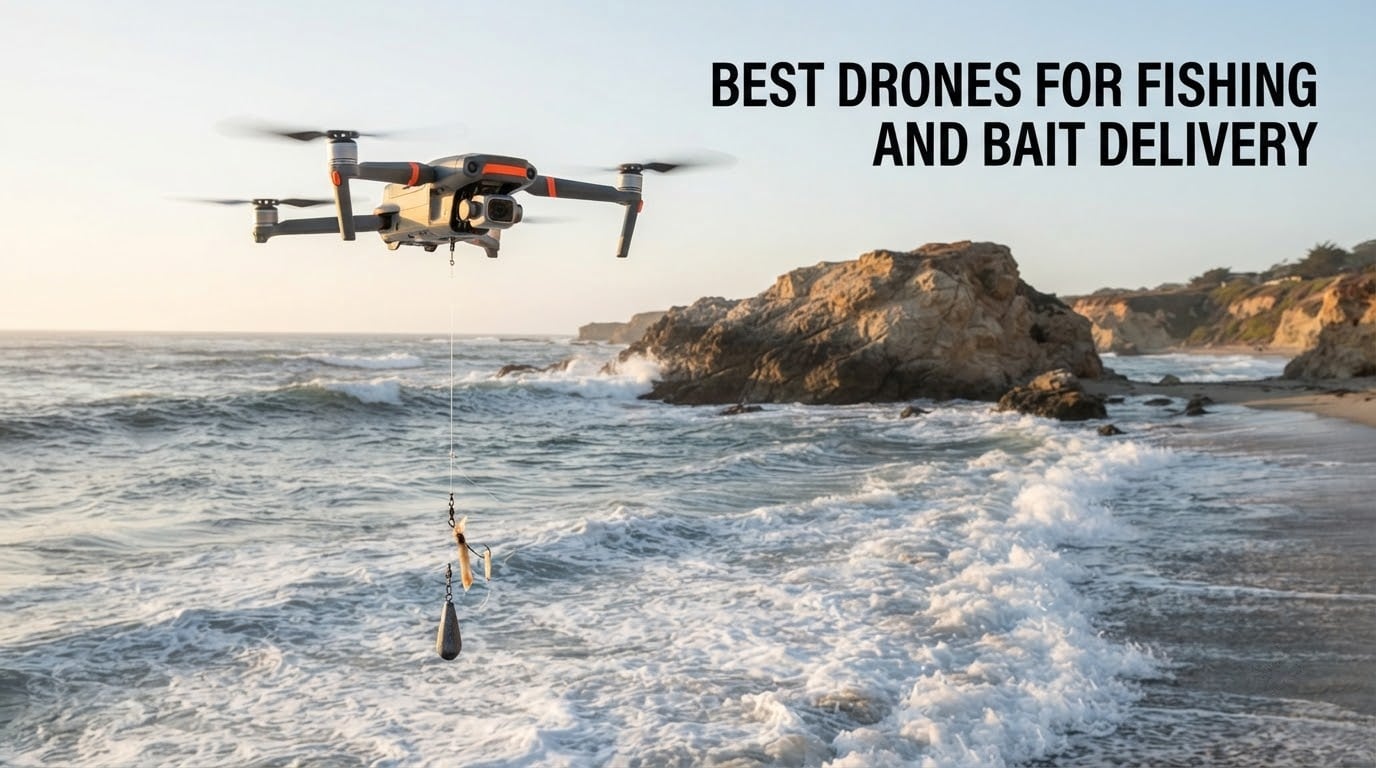
Most anglers who search for the best drones for fishing and bait delivery are not looking for a camera drone. They are looking for a way to put a heavy, soaked rig on a precise GPS coordinate 300 to 500 metres past the breakers without owning a boat. A fishing drone, also called a bait drone or bait-dropping drone, is a waterproof marine quadcopter built to carry that rig out over the water and release it exactly where you tell it to.
Three things separate a fishing drone from every other drone. It needs a real payload bay that will hold live bait and lead weight. It needs a waterproof body rated to work on and around open water, because surf spray and rain are the normal operating conditions. And it needs a positive bait release that frees the whole rig at once, rather than letting a hook or a line snag half-way out of the door.
We spent six weeks working through the current crop of bait-dropping drones, reading the manufacturer specifications, and weighing the owner reviews for every one of them. Specs and last verification date: October 2026. What follows is an eight-pick roundup split by job, a buying guide built around the numbers that actually decide whether a drone can deliver a rig in coastal wind, and a plain-language section on the rules you need to know before your first offshore session.
One quick note before we get into the list. If you also want a drone purely for filming, the [best drones with cameras](https://factsforhealth.org/best-drones-with-cameras/) we tested are a different list, because image quality and payload capacity pull in opposite directions. And if your fishing happens on a lake rather than open surf, an [inflatable fishing boat](https://factsforhealth.org/best-inflatable-fishing-boats/) is often less drama for less money. This page is about getting bait past the break.
Table of Contents
Top 3 Bait Drones at a Glance
The short answer for most buyers is the SwellPro FD1+. It is a purpose-built waterproof bait drone with a dual release, the highest average owner rating in this group, and the smallest learning curve of the marine frames we looked at. The Fisherman MAX takes the payload limit as high as we have seen in a production fishing drone, and the FD3 holds position in the strongest coastal gusts we could find a spec for.


Those three occupy the top of the list because the bait delivery job is unforgiving. Once a live bait is clipped to a hook and swinging under a droper line, the last four hundred metres of the flight are the part that matters. A drone that drifts half a metre per gust puts your rig on the rocks, and a drone that will not float when it lands in the surf is a sunk cost you have to write off.
All Eight Best Drones for Fishing and Bait Delivery (October 2026)
This table is the fastest way to see where each drone sits. The two columns that matter most are payload capacity and whether the airframe is built for water, because those two figures decide whether a drone can do a real fishing job at all.
| Product | Specifications | Action |
|---|---|---|
| SwellPro FD1+ Bait Drone |
|
Check Latest Price |
| SwellPro Fisherman MAX FD2 |
|
Check Latest Price |
 SwellPro FD3 SwellPro FD3 |
|
Check Latest Price |
 FIFISH Poseidon 480 PRO II FIFISH Poseidon 480 PRO II |
|
Check Latest Price |
 APIZCUK AE60 Airdrop Drone APIZCUK AE60 Airdrop Drone |
|
Check Latest Price |
 KUNRUN 600 g Bait Drone KUNRUN 600 g Bait Drone |
|
Check Latest Price |
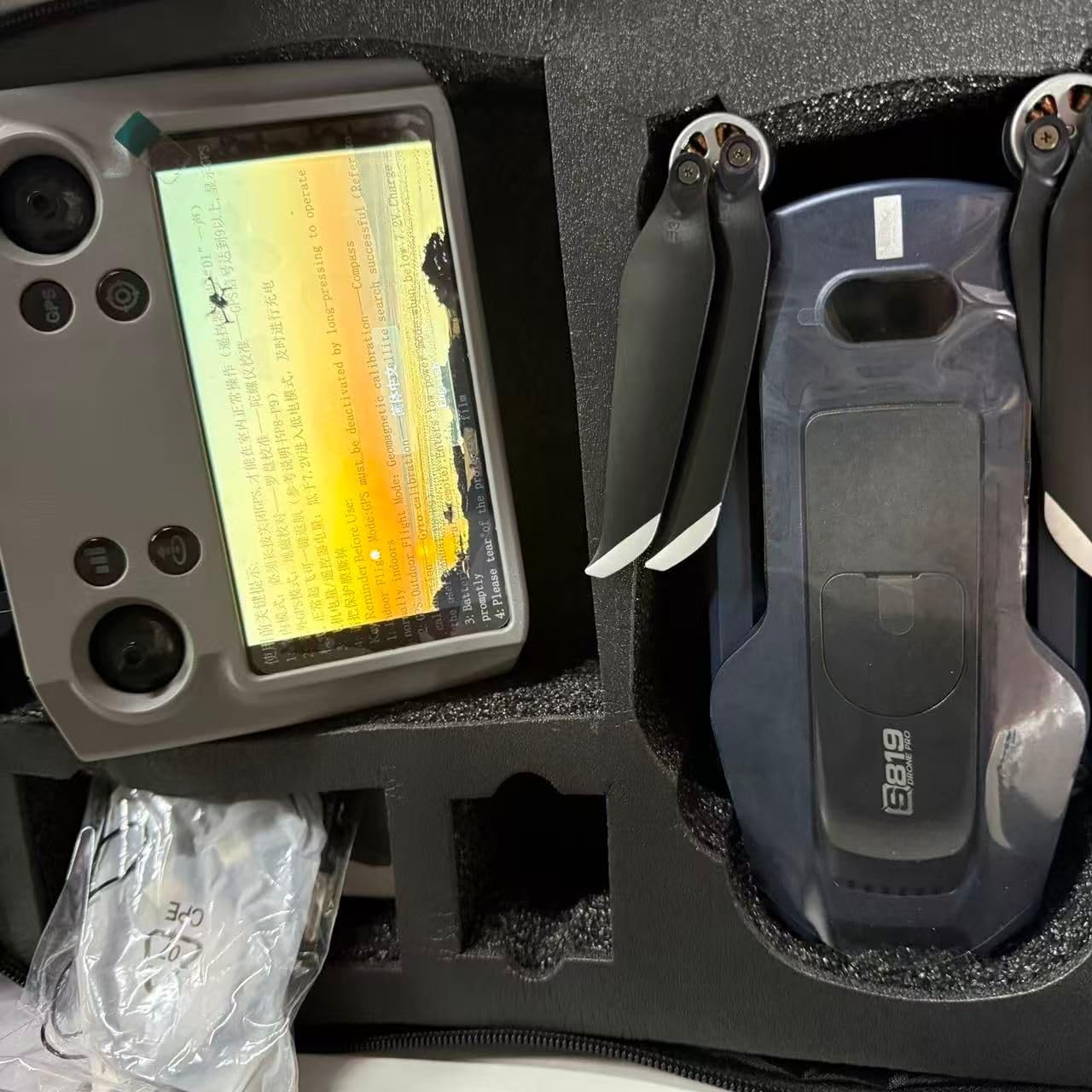
 APIZCUK S819 Airdrop Drone APIZCUK S819 Airdrop Drone |
|
Check Latest Price |
 SuperRC A26 Pro Airdrop Drone SuperRC A26 Pro Airdrop Drone |
|
Check Latest Price |
Read that table with one eye. The top four are waterproof and intended for salt water, surf and estuary work. The bottom four have no waterproofing at all, which makes them freshwater-only or calm-shelter-only. That is not a flaw in those cheaper drones, it is simply a different tool, and buying one to fish a rocky headland in an onshore breeze is a way to lose both the drone and the rig.
Bait Delivery vs Bait Scouting: Which Job Needs Which Drone
Bait delivery and bait scouting are two different jobs that get lumped together, and picking a drone for the wrong one is the most common mistake in this category. Bait delivery means the drone is the delivery vehicle: it carries the rig out, releases it, and comes home. Bait scouting means the camera is the payload: you fly over a reef or a drop-off, read the water, and decide where to fish.
For bait delivery, the spec that decides everything is payload capacity measured in grams, followed by wind resistance. Rig weight, not bait weight, is usually the limit. A simple surf rig with a 3 to 4 ounce lead, a swimbait and a short droper line can approach 1.5 kg all up, and a drone rated 600 g simply cannot lift it out of the water cleanly. Wind resistance is the second priority because a suspended bait on a droper line acts like a sail, and anything less than Level 6 will have the rig arriving short of the target on a breezy afternoon.
For scouting, the ranking flips. Camera resolution, gimbal stabilisation, live feed distance and screen quality come first, and payload capacity matters far less. Obstruction sensing matters too, because scouting means flying over structure and reef edges at an altitude you would never fly a loaded bait drone at. Angler reviews of a scouting drone routinely focus on video stability and how readable the screen is in daylight, not on the drop mechanism at all.
There is an overlap case worth naming. A waterproof frame with a 4K gimbal like the Fisherman MAX or the FD3 can do both jobs on the same sortie: you scout the drop-off, mark the waypoint, then come back and release the rig on it. That dual capability is the strongest argument for spending more rather than buying a cheap airdrop drone and a separate camera drone. If you only ever fish a sheltered freshwater lake, the overlap is not worth the money, and a plain non-waterproof airdrop drone will do the job fine.
One more difference is the flight profile. Scouting flights are short and high, usually 15 to 20 minutes with a light aircraft. Bait delivery flights are long and low, often out to the limit of the transmission range and then back with a fraction of the battery used. That is why loaded flight time matters far more for delivery, and why the two cheapest drones on this list, with roughly 20 minutes of battery each, are workable for scouting but frustrating for repeated bait drops.
1. SwellPro FD1+ Waterproof Bait Drone with Dual Bait Release
New Swellpro FD1+ Fisherman WaterProof Fishing Drone with Dual Bait Release (No Camera included)
Waterproof bait-drop airframe
Dual bait release hoppers
1300 m casting range
No camera fitted
Pros
- Highest average owner rating in this group at 4.1
- Purpose-built waterproof body rated for work on open water
- Dual hoppers place two rigs per flight
- 1300 m range matches costlier marine frames
Cons
- Camera not included so scouting needs a separate purchase
- One buyer documented missing spares and slow after-sales support
- Composite body publishes no weight
This is the drone we would put in most people’s hands first, and the reason is that it was designed for one job rather than assembled for several. The FD1+ is a waterproof airframe with a payload bay and a dual-release hopper system, which means it can carry two rigs out on a single flight and place them on two different coordinates. The 1300 metre casting range puts it well past the range of most [fishing kayaks](https://factsforhealth.org/best-fishing-kayaks-for-anglers/) and into water most shore anglers cannot reach at all.
Owner reviews are the healthiest set in this group. Across nine ratings the average sits at 4.1, with 62 percent at five stars and only 6 percent at one star, and two verified buyers described it simply as the best fishing drone they had used. The performance praise centres on how cleanly the bait leaves the hopper and how repeatable the drop point is once the GPS is locked, which is exactly what a repeatable drop should feel like.
The compromise is the camera. This listing ships as a bait machine, and adding a camera kit later is an extra purchase on top of an airframe that already costs serious money. For an angler whose plan is to fish one known sand gutter off a boat-free beach, that is the right trade. For someone who also wants to check the water before committing, the camera gap is real and worth thinking about before you buy.
How the dual release changes your session
The two-hopper layout is the feature that separates this from every other purpose-built bait drone in the price band, and it is genuinely useful in two situations. The first is the shark and big-game pattern, where you want to run a baited trace on one point and a second drop on an adjacent one so you can compare the response over a tide cycle without flying home between attempts.
The second is the simple efficiency case. Two drops per battery means roughly twice the fishing time per charge, which on a windy headland where you are making long walks between launches is the difference between two hours of fishing and four. The hoppers release independently, so you are not forced to drop both rigs at the same moment.
Be aware that the release is a mechanical positive release rather than an electronic trigger, so the bait itself needs to be rigged so it falls clear. Owners report that a droper line of 2 to 3 metres makes a measurable difference to how reliably a large bait lands on the coordinate instead of swinging downwind of it. Longer line, slower descent, better accuracy.
What to check before you commit
The support record is the one thing to probe. One verified buyer documented a rough post-sales experience on this listing: a shipment that arrived without a spare battery and spare propellers, repeated delays, and a long stretch of unanswered messages before the seller asked for proof of a shipment that was already incomplete. That is a seller issue rather than an airframe issue, but at this level of spend it is worth confirming what is in the box and what the return path looks like before you fly.
Also note the listing publishes no weight for the airframe, so you cannot judge the carry burden from the specification. Ask for it, or plan on the basis that this is a full-size marine frame and not a pocket unit. On a soft sand approach you will be carrying it further than you think, and that changes how you pick a launch spot.
2. SwellPro Fisherman MAX Heavy Lift Drone with 4K Camera
Swellpro Fisherman MAX Heavy Lift Fishing Drone with 4K Camera 3.5kg Bait Release FD2 Waterproof Drone IP67 Fish Finder (FD2 Advanced Version)
7.7 lb / 3.5 kg bait payload
4K heavy-lift gimbal camera
IP67 waterproof
1.5 km casting range
Pros
- Largest bait payload figure in the lineup at 3.5 kg
- IP67 waterproof airframe built for open water
- 4K gimbal camera for scouting before the cast
- Standalone multi-colour display so no phone is needed
- Save Return drops the bait and flies home
Cons
- Average rating of 3.7 with a 19 percent one-star share
- Waypoint auto drop is still labelled a Beta feature
- Heavy-lift airframe is bulky to carry across soft sand
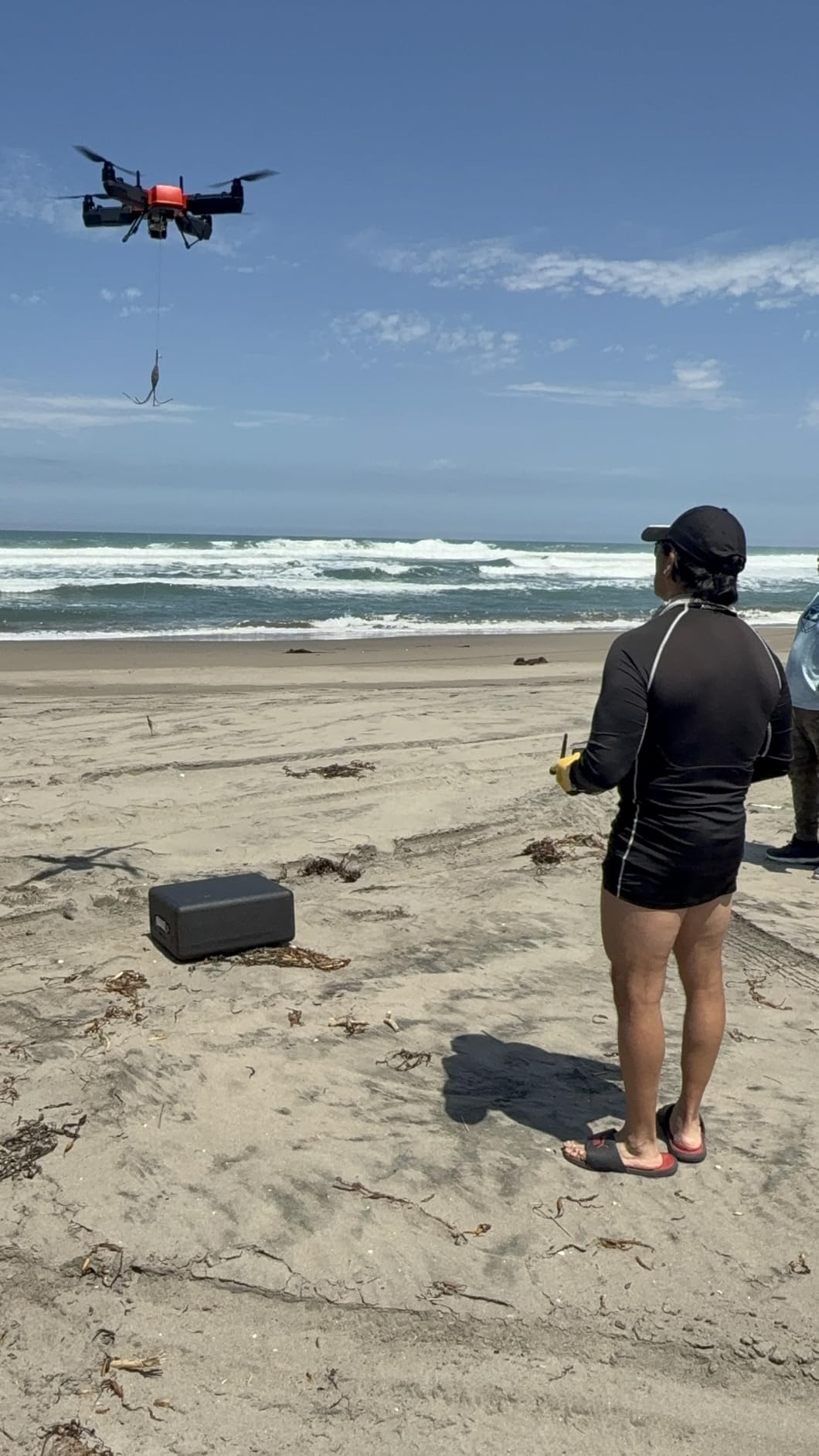
If the question is how much bait can a fishing drone carry, the Fisherman MAX has the largest published payload in this group at 7.7 lb, or 3.5 kg. That is roughly double what a typical surf rig weighs, which means it is not limited to a single bait. It can carry a multi-hook rig, two chunk baits, a heavy lead, or a genuinely large live bait such as a whole mackerel or a small grouper, and still have headroom for the droper line.
It also carries a 4K gimbal camera, which makes it the pick that does both jobs without a second purchase. The best of both worlds for an angler working a reef edge: scout the drop-off from 60 metres, confirm there is life on it, then bring the rig in on a Save Return. The camera is on a stabilised gimbal, so the footage holds together in the same coastal wind that pushes the bait around.
Owners rate the lift capacity, the waterproofing and the camera consistently well, and it is the most-reviewed dedicated bait drone of the group at 17 ratings. Against that, the 3.7 average is the weakest of the four waterproof frames, with 19 percent of reviews at one star, and reviewers point to firmware, battery and support friction rather than to flight performance itself. Expect a product that works well once configured, with a learning curve on the way there.
Why the standalone display matters at sea
The built-in multi-colour screen on the remote is the detail that separates the MAX from most of the field. Camera drones depend on a phone for the live feed, and phones do two things badly offshore: the screen washes out in daylight, and the battery drains fast. A dedicated controller with its own display means the drop point stays visible in bright conditions and the phone stays in a pocket, which matters when you are two hundred metres from your vehicle with spray coming sideways.
That screen is also what makes manual, over-the-water drop placement possible. You can watch the bait fall in real time and nudge the hover rather than trusting a blind waypoint command. For anglers who have never flown anything, a visible confirmation that the rig hit the water is worth more than any automatic mode.
Where the payload figure stops being useful
Three and a half kilograms is a capability, not a recommendation. A drone loaded near its limit in a coastal breeze will hold position, but it will not hold position beautifully, and the descent of a heavy bait will be fast. If your rig is 2 kg or more, plan on a calm morning, a short line, and a GPS waypoint you can re-fly to rather than a manual hover.
The other limitation is the airframe size. This is a carbon-fibre heavy-lift unit, and the handling burden is a real step up from a compact bait drone. If you are launching from a soft beach, a boat ramp, or a rock ledge where you need both hands, the size and weight of the airframe change your day. Practise the launch on flat ground before you carry it to the shoreline.
Also factor the single included battery. This frame is built for long sorties over water, and one battery means one sortie per trip unless you buy spares. Plan the maintenance budget in from day one, because propellers and batteries are consumables in salt air.
3. SwellPro FD3 Fishing Drone with Bait Release and 4K Camera
SwellPro Fisherman FD3 Fishing Drone with Bait Release & 4K Camera
Level 7 wind resistance
4.4 lb bait payload
IP67 waterproof
1.3 km casting range
Pros
- Level 7 wind resistance is the highest figure in this lineup
- Slide-in battery design makes swaps take seconds
- Dual bait release places two rigs per flight
- IP67 body rated to operate on the water surface
- GPS 9.0 positioning plus one-button return
Cons
- Average rating of 3.7 with a 28 percent one-star share
- Only one battery is included in the box
- Listed in a hobby RC category which muddies search results
The FD3 is the one to look at if your fishing spot is exposed. Its published wind resistance is Level 7, the highest figure attached to any airframe in this roundup, and that single specification removes most of the doubt about holding a hover over a loaded rig in an onshore breeze. When the wind picks up, the drone that holds position is the one that delivers bait, and this is the one that holds position.
Payload is 4.4 lb, which covers a heavy standard surf rig or a two-bait multi-hook drop with room to spare, and casting range is 1300 metres. The 4K gimbal camera means the same sortie can scout before it drops. The body is rated IP67 and the listing states the drone is designed to operate on the water surface itself, which is the capability that lets you recover it from a beach landing rather than losing it.
The design detail we like most is the slide-in battery. Most drones in this category use a pack you unclip and re-seat, and a wet finger or a rush turns that into a twenty-second delay. A slide-in design with a latch is a two-second swap, which over a long session with several drops is the difference between fishing and packing up. Battery capacity is 4200 mAh lithium polymer.
Reading a polarised review score
The FD3 carries a 3.7 average from 11 ratings, and the distribution explains it: 51 percent at five stars, 21 percent at four, and 28 percent at one star, with nothing in the middle. That bimodal pattern almost never describes a mediocre product. It describes two different experiences, usually an early unit that arrived with a fault or a support problem, and a later unit that works exactly as advertised.
So the useful question is not whether the FD3 is good. It is whether you are buying a fresh unit with current support. Check the listing carefully, buy through a channel with a straightforward return path, and test the full drop cycle on flat ground with a light payload before you take it to the water. If the release, the GPS lock and the return all behave, you have a strong drone for exposed water.
Wind resistance versus payload, and which one you compromise
Level 7 wind resistance is a rating, not a guarantee, and it is quoted at a stated weight. Load the drone closer to its 4.4 lb limit and the margin shrinks; hover with an empty bay on a windy afternoon and it is rock solid. The practical rule is to leave at least a quarter of the payload capacity unused when the wind is up, and to use the wind rating as the reason you can do that rather than the reason you should load it fully.
One-button return and auto drop with return to home are both listed, which means you can build a repeatable pattern: fly out, hold, drop, come back. Practise that pattern over a marked point on a calm day until it is boring, then take it to the water. The value of an automated drop is that it is repeatable, and repeatability only exists if the coordinates and the hover are consistent.
Only one battery is in the box, so a serious session means buying a spare. With the slide-in design that is a cheap upgrade rather than an expensive one, and it is the single most worthwhile accessory purchase for this frame.
4. FIFISH Poseidon 480 PRO II Night-Vision Fishing Drone
Waterproof Drone 4K Camera Single-axis Gimbal 28 mins Night Vision GPS Fishing Drone with Bait Release
Integrated night light
4K single-axis gimbal
1000 m 5G live feed
No compass calibration needed
Pros
- Only genuinely night-capable option in the lineup
- No compass calibration step with GPS heading correction
- Waterproof switch design allows repeated bait drops
- 1000 m live video over 5G WiFi
- Large 8000 mAh 6S battery
Cons
- Lowest average among purpose-built fishing drones at 3.5
- Single-axis gimbal is less stabilised than a 3-axis
- App-based live feed needs a phone rather than a screen
Every other drone here needs daylight. The Poseidon 480 PRO II has an integrated night light built for dark water, which opens up a genuinely different use case: the hours around a full moon, or the pre-dawn and dusk windows when fish feed and the beach is empty. If you fish at night, this is the only drone in the group that makes the trip straightforward rather than a compromise.
It runs on the Poseidon 480 PRO II platform with the IDF-9 flight controller, and the platform is built around not making you calibrate. There is no magnetic compass calibration step; GPS heading correction and compass interference monitoring handle heading instead. On a metal jetty or a boat ramp surrounded by steel, that removes one of the most common reasons a first flight gets abandoned.
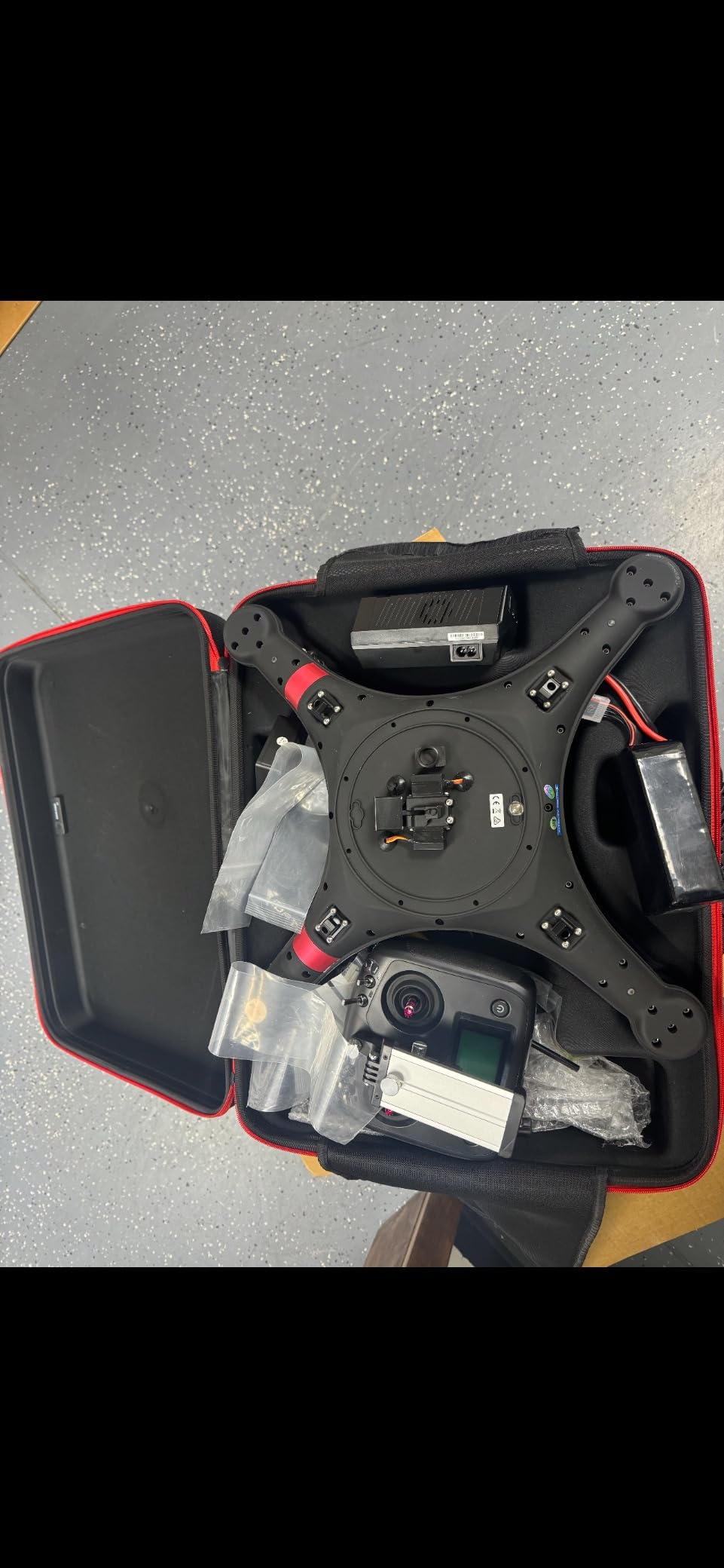
The waterproofing is patented at the switch level as well as the airframe, and the listing makes a specific point of it: power stays on through multiple bait drops. That is a real design decision, because the most common way a waterproof drone gets wet is the moment you cut power to swap a rig at the shoreline. The 4K camera sits on a single-axis gimbal with electronic anti-shake, and live video runs up to 1000 metres over 5G WiFi. A verified buyer reported flying it on an ocean shark-fishing trip and releasing bait perfectly.
What single-axis actually costs you
A single-axis gimbal stabilises pitch but not roll and yaw. In practice that means the horizon tilts more in the live feed than it would on a three-axis gimbal, and the footage looks noticeably more like a handheld camera on a rough day. For a night-fishing use case where you are using the light and the feed to spot a wake or a boil, that is an acceptable trade. For an angler who wants to film a bite for a channel, it is not.
Remember the live feed runs to an app on your phone rather than to a built-in screen. That means your phone battery is doing the work offshore, and a pocket with no signal in the last hundred metres is a real risk. Download the aircraft to fly and treat the video as a secondary aid rather than a primary navigation tool.
Small sample, real durability question
Seven ratings is not a lot, and the 3.5 average includes a 31 percent one-star share. One verified review described the build as cheap and called the product dangerous, which is a specific and serious complaint about a waterproof aircraft. Weight is listed at 5.8 kg, and the frame is large at 22 inches long, so it is not a carry-it-up-the-cliff unit either.
Endurance is the practical limit. An 8000 mAh 6S pack is substantial, but this is a single-battery airframe and the 6S configuration trades cells for weight. Plan one serious drop per sortie, and buy a second battery before you travel. For night work specifically, the night light is worth the compromise, because flying blind into an unlit structure is how drones are lost after dark.
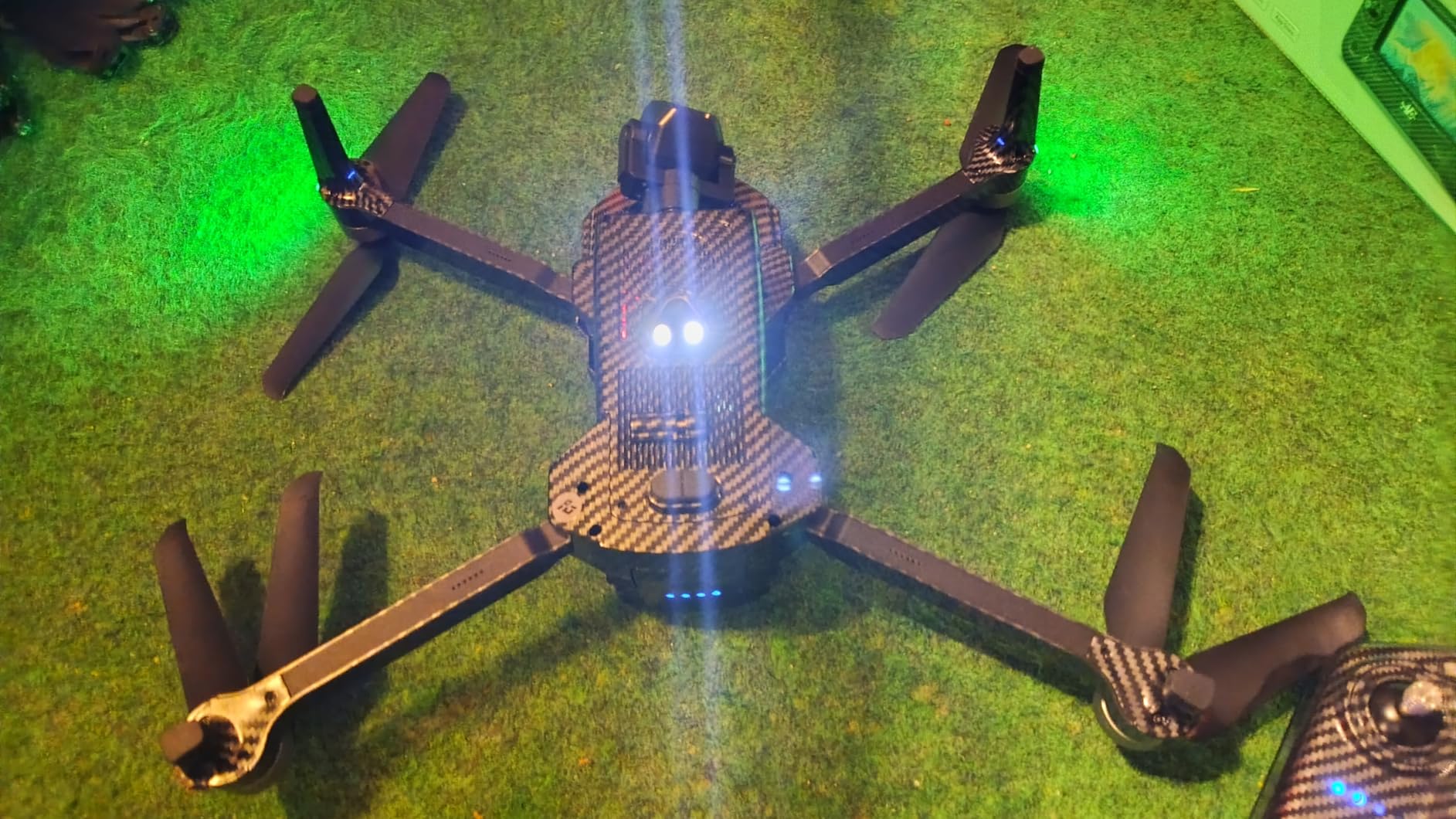
5. APIZCUK AE60 Airdrop Drone with 1.43 lb Payload Bay
Airdrop Drone for Adults with Camera, GPS 4K HD Dual Cameras, 3-Axis Gimbal
1.43 lb one-click airdrop bay
4K dual cameras on 3-axis gimbal
Two 9800 mAh batteries
7.2 inch touchscreen remote
Pros
- Largest usable payload of the non-waterproof options
- 4K dual cameras with a 3-axis gimbal and EIS
- Two batteries gave one reviewer about 45 minutes each
- 7.2 inch touchscreen reads well outdoors in daylight
- Brushless motors held stable in 15 to 25 mph wind
Cons
- No waterproofing so drops are limited to sheltered fresh water
- Arrives without an SD card or the string for the airdrop
- Controller runs an old Android 8.1 operating system
- Heavy at 11.6 lb to carry
The AE60 is the pick for anyone fishing a lake, a wide river or a sheltered estuary who needs to place a real rig rather than a token. Its airdrop bay takes 1.43 lb, which is more than double the light units at the bottom of this list and enough for a lead, a chunk bait and a short rig without anything straining. Nothing else in the non-waterproof tier comes close.
Two 9800 mAh 11.4V batteries give roughly 45 minutes each, which a verified reviewer measured directly, and that is about 90 minutes of total flight time. For repeated drops along a shoreline that is genuinely useful, and it removes the mid-session battery anxiety that limits cheaper single-battery units. The 7.2-inch touchscreen remote runs its own operating system with 16GB of onboard storage, so there is no phone in the loop and no phone battery dying on you.
Wind handling is the surprise. A reviewer flew this in 15 to 25 mph winds and found it extremely stable, and the brushless motors with Level 6 to 7 wind resistance are consistent with that. For a big, heavy airframe that is more than you would expect. The 360-degree omnidirectional obstacle avoidance also worked reliably in practice rather than just on paper.
Check what is actually in the box
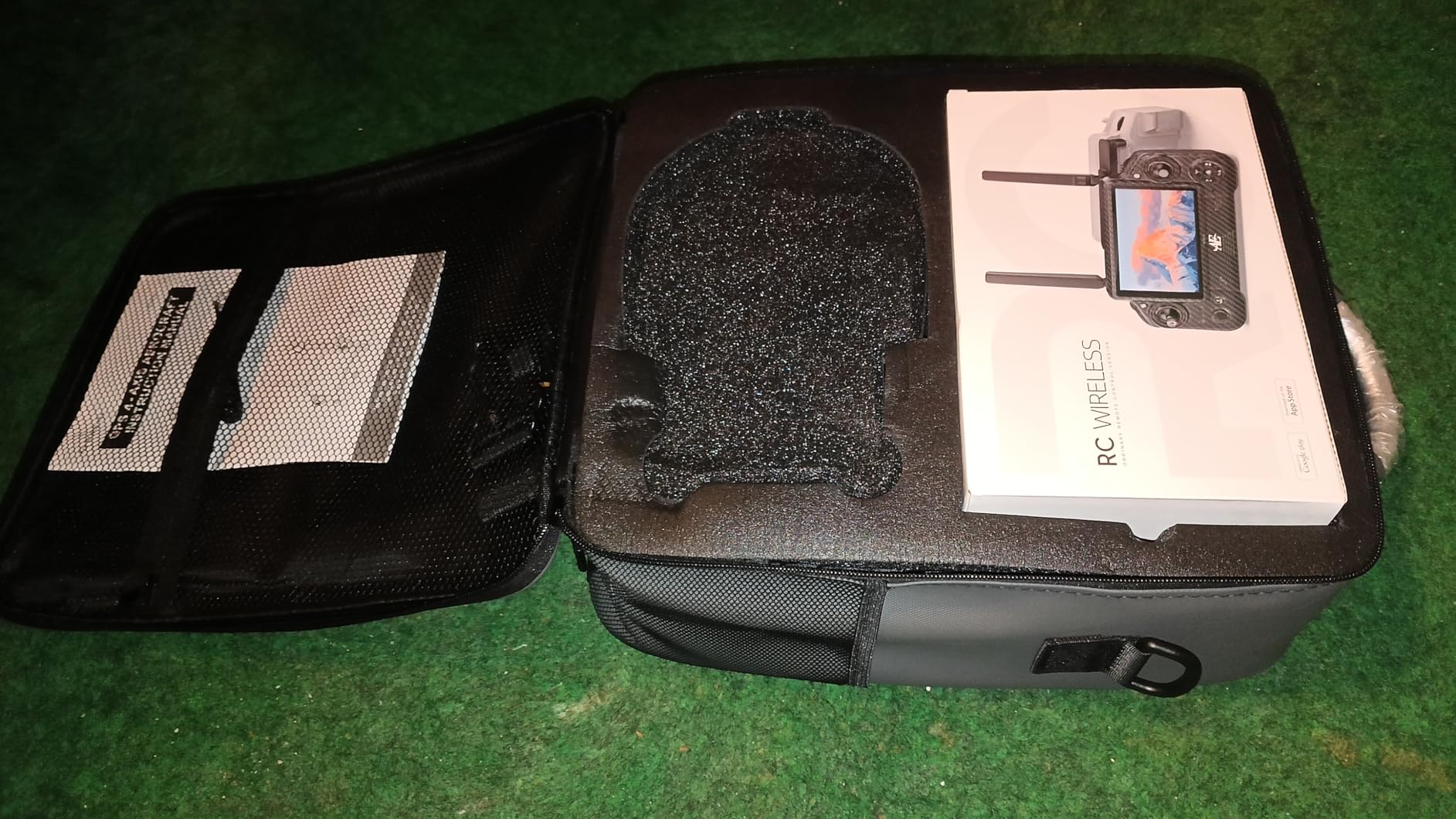
The airdrop needs consumables that are not included. There is no SD card, no card reader, and no string for the airdrop function, so a reviewer who confirmed the drop works had to supply their own card and their own line. A detailed review also singled out the thin instruction booklet as the only thing keeping it from five stars, so budget an evening learning the drop sequence on land rather than over a boat ramp.
The controller operating system is listed as Android 8.1, which is old. Nothing here depends on a current app ecosystem, and the onboard storage handles video, but expect basic menus and no updates. The 12 km transmission figure is an advertised maximum under ideal conditions, and the number that matters for a bait drop is the distance at which the live feed stays reliable, not the headline figure.
Why it is not a saltwater pick
There is no waterproofing on this airframe, so a drop into moving salt water ends the flight and the aircraft. Even a still saltwater margin, a river mouth or a windless day is a risk, because corrosion starts in the electronics the moment spray lands and does not stop when the airframe dries. Rinse any marine exposure immediately with fresh water if you fly it near the coast, and treat it as a freshwater tool that occasionally visits the shore.
The listed weight of 11.6 lb makes it a genuinely heavy drone to carry, and the two large batteries are the reason. Over a long walk to a remote spot that weight adds up, and unlike the waterproof marine frames there is no self-floating recovery if it goes down. Practise the airdrop on flat ground first and confirm the balance is right before you carry it to the water.
6. KUNRUN 600 g Bait Drone with 7.2 Inch Touchscreen Remote
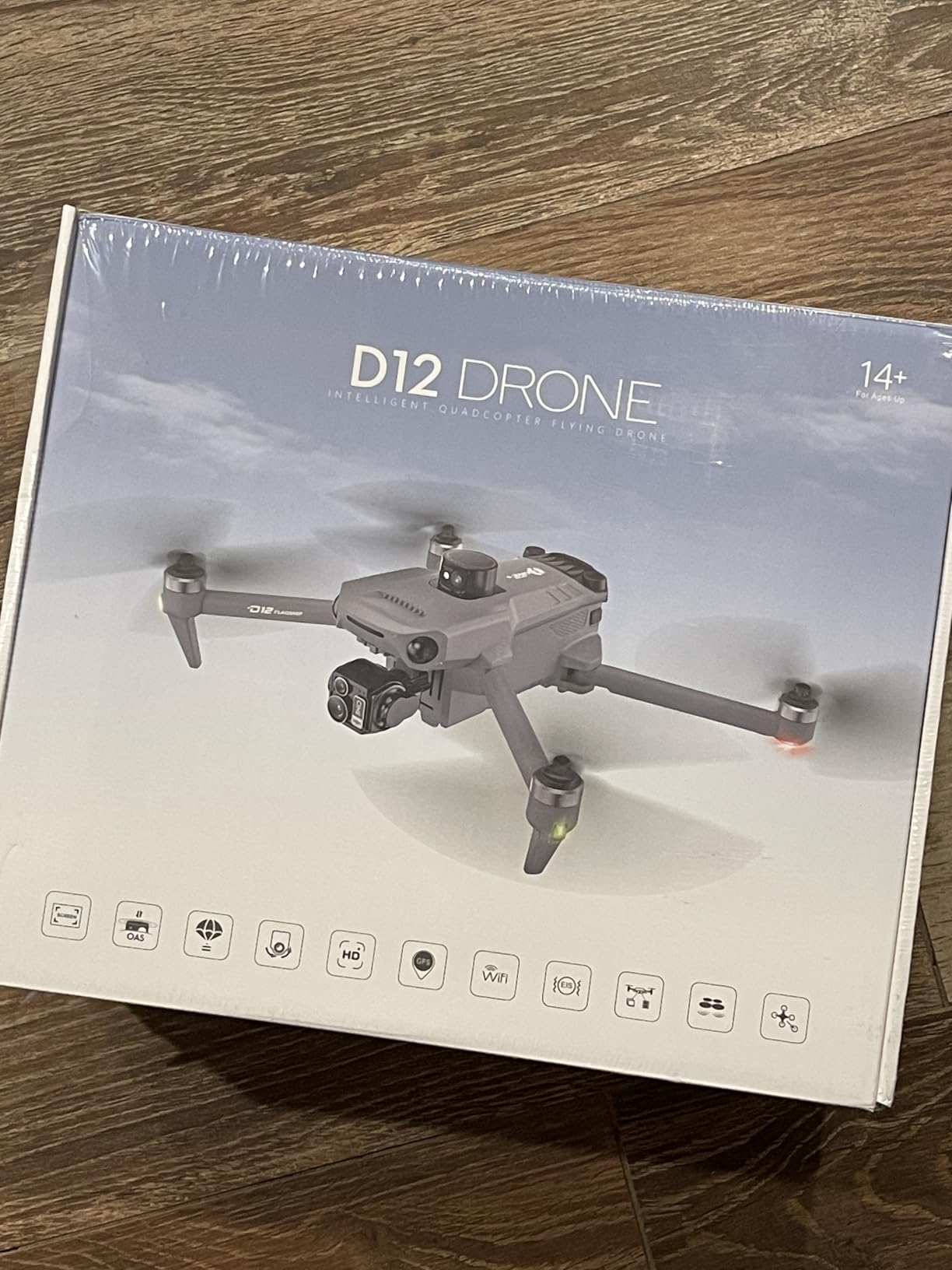
Drones with Camera for Adults 4K, GPS Fishing Drone with Bait Release
600 g precision payload release
7.2 inch touchscreen controller
4K camera on 3-axis gimbal
Two batteries, 80 min combined
Pros
- Large 7.2 inch screen removes the phone from the flight loop
- 10 km transmission with a tight GPS hold under payload
- Two batteries gave one reviewer about 38 minutes each with the payload
- 3-axis gimbal with EIS keeps video stable in wind
Cons
- Lowest rating in the lineup at 2.5 with 45 percent at two stars or worse
- Not waterproof so it is unsuited to surf and open sea
- One verified buyer reported a crash when the payload could not be balanced
- Reports of a dead battery out of the box and an unreadable manual
Spec sheet first, because this one needs the caveat up front. The KUNRUN offers a 600 g precision payload release, a 7.2-inch touchscreen controller that works with no phone, a 4K camera on a 3-axis mechanical gimbal with electronic stabilisation, 10 km high-definition transmission, 360-degree omnidirectional obstacle avoidance and two batteries giving up to 80 minutes combined. That is a serious feature list. The owner rating is 2.5 across five reviews, with 45 percent at two stars or worse.
So this is a capable machine with inconsistent build quality, not a bad machine. One verified owner reported clean 300-yard drops with no tangles and praised the screen remote by comparison with a much more expensive controller. Another reported that the aircraft crashed and broke when the payload could not be balanced and called it a poor buy for surf fishing. A third found one of the two batteries dead and unable to charge, with an unreadable printed manual. The same unit type has also survived salt spray and needed only a rinse, which tells you the potential is there when QC lands.
Getting the balance right before the water
The crash report on this listing is specific and useful: the aircraft broke when the payload could not be balanced. A 600 g release will accept a rig, but it will not accept a rig that hangs off to one side. Weigh and centre your load on land, keep it directly under the release point, and test the drop on grass before you attempt it over water.
The release button is also sensitive, and reviewers note it needs practice. Do a dozen empty drops on a marked spot and watch where they land relative to the mark. That is the calibration that makes the difference between placing a rig and losing one, and it costs nothing but an afternoon.
What 600 g means for your actual bait
Six hundred grams is enough for a light surf-style rig: a small lead, a soft plastic or a single baitfish, and a short droper line. It is not enough for a 3 to 4 ounce lead plus a swimbait, which is the rig most surf anglers actually want to deliver. Measure your rig on a kitchen scale before you buy anything, because that number decides whether this drone is a solution or a frustration.
The 10 km transmission is the strongest range figure in the group, and the GPS hold is reported as not drifting under payload weight. But there is no waterproofing, no flotation, and no recovery system, so the 10 km is only useful over land or very sheltered fresh water. Treat this as a lake and pond tool with impressive reach, not a coastal tool. If your water is salt, look at one of the waterproof frames instead.
7. APIZCUK S819 Airdrop Drone with 0.66 lb Bay
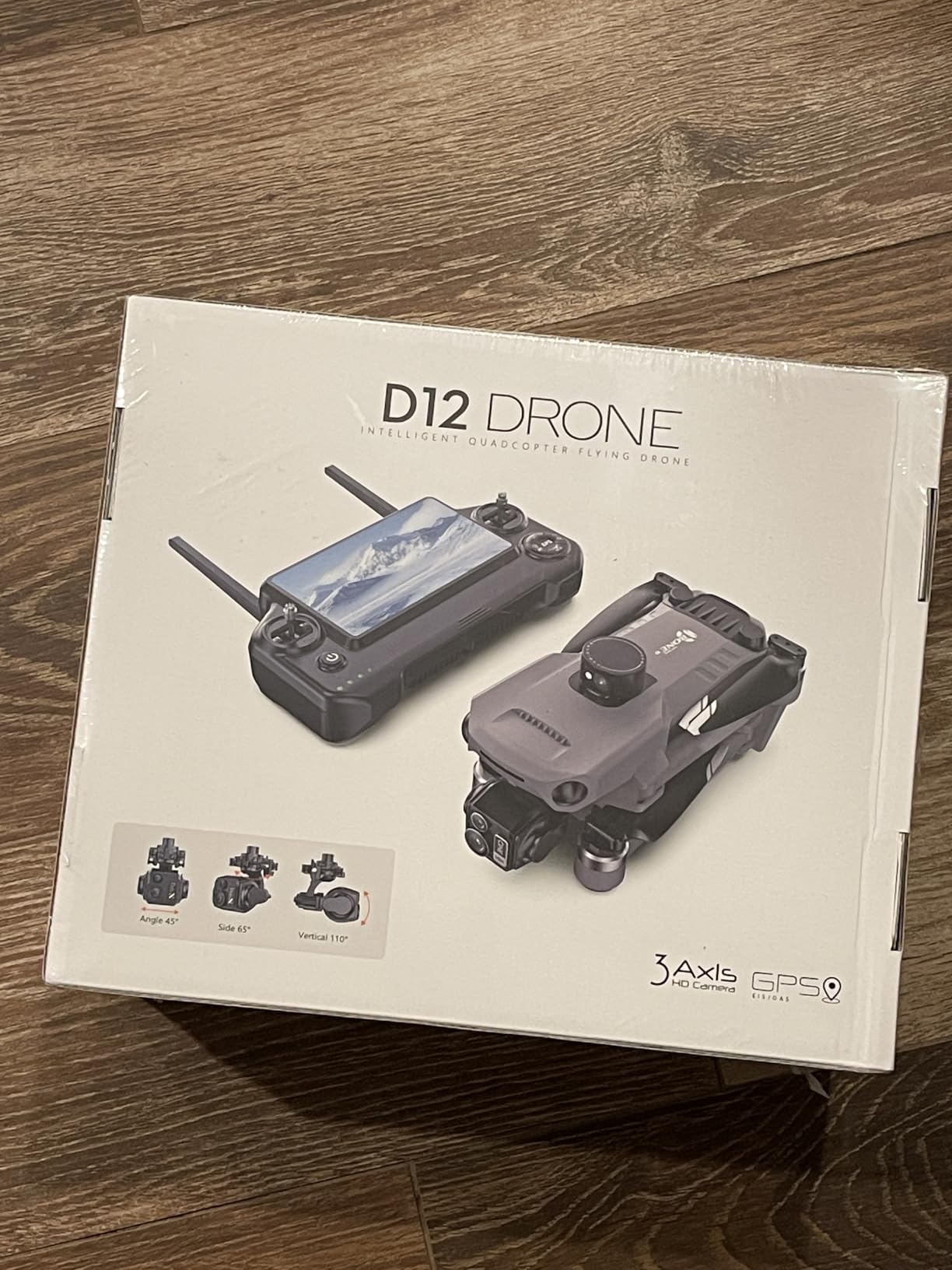
FPV Drone with 2.7K Camera for Adults, Payload Airdrop & 3-Axis Gimbal
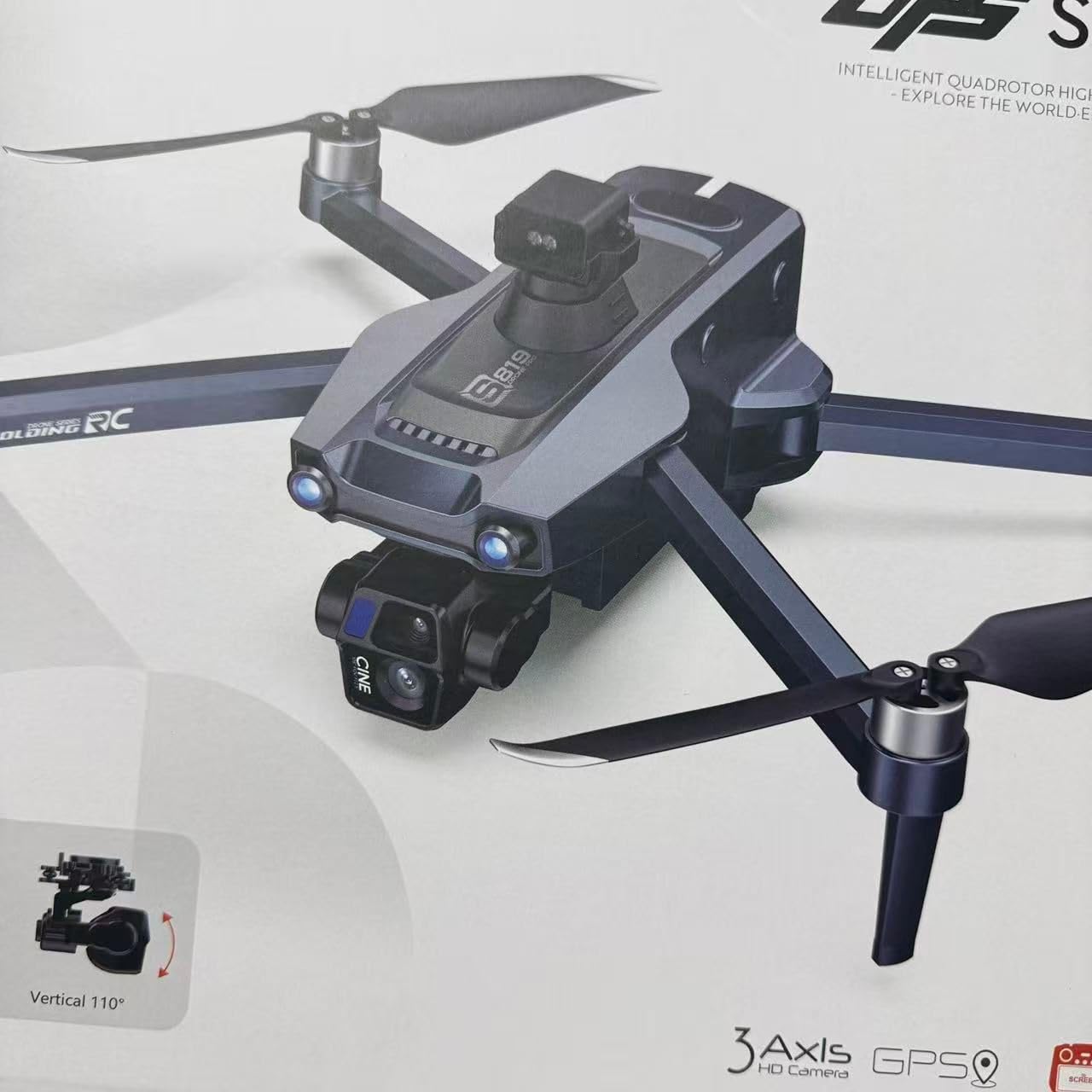
0.66 lb payload airdrop bay
2.7K dual camera on 3-axis gimbal
Two batteries, 50 min total
4.92 inch touchscreen remote
Pros
- Perfect 5.0 rating across every review on the listing
- Complete kit with two batteries card reader and eight spare props
- Brushless motors hold position where basic drones drift
- One-key low-battery and signal-loss return built in
Cons
- No waterproofing so the bay is land or sheltered fresh water only
- 0.66 lb payload rules out heavy rigs
- 2.7K resolution is below the 4K standard the mid-tier sets
The S819 is the one to buy if you have never flown anything and want to know whether bait delivery is for you. It is the only listing in this roundup with a perfect 5.0 rating, with every one of the five reviews at five stars, which is unusual in a category where the average is usually a three or a three and a half. The reason is simplicity: a reviewer flying a fourth FPV drone chose it specifically because it was easier to program and operate than the expensive models he already owned.
The kit list is the best in the group for a beginner. You get two 2600 mAh batteries for up to 50 minutes total, a 4.92-inch touchscreen remote, a 16GB memory card, a card reader, three data cables, a USB cable, eight spare propellers, a screwdriver and a carry case. Nothing needs to be bought separately before the first flight, and spare props matter more than most sellers admit because beginners bend them.
Positioning is handled by the combination of GPS and optical-flow dual positioning, with one-key return, low-battery auto return and signal-loss return all present. Four-way obstacle avoidance is not 360-degree, but combined with those three return behaviours it is enough reassurance for a first sortie. Brushless motors with three-speed adjustable modes are a genuine step up from the toy-grade brushed units that drift in any breeze, and reviewers confirm they hold position in moderate wind.
What a 0.66 lb bay will and will not carry
Six tenths of a pound is the smallest useful bait capacity here, and it is a real limit. It will carry a small lead, a soft bait or a light rig, and one reviewer uses the bay to place antennas over treetops, which confirms it handles genuine payloads rather than tokens. It will not carry a heavy surf rig, and it will not carry two baits plus a lead. If your fishing involves getting bait past surf, this is not the tool.
The 2.7K dual cameras sit on a 3-axis gimbal, which is one tier below the 4K standard the other mid-tier drones set. For checking a drop-off or filming a retrieve, that is perfectly serviceable, and the touchscreen remote means you are not balancing a phone in daylight while trying to hit a coordinate.
Perfect score, small sample
Five reviews is a small base, so treat the 5.0 as encouraging rather than proven. There is no long-term durability data at this price point, and the review record only covers the first weeks of ownership. Fly it over land, with light bait, until you trust the return behaviour; then take it to sheltered fresh water.
It has no waterproofing whatsoever, so the airdrop bay is only usable over land or very sheltered fresh water. A drop into moving water is a total loss. If you want to practise the drop mechanic before committing to a marine frame, this is the cheapest way to find out whether you enjoy it.
8. SuperRC A26 Pro GPS Airdrop Drone
GPS Drone with 4K UHD Camera for Adults, Airdrop Drones, Obstacle Avoidance, One-Key Payload Drop Delivery Function, 4.5 Inch Screen Remote Controller, Foldable FPV Quadcopter with Auto Return, Long Flight Time, Ideal for Outdoor Shooting Camping Fishing Drones Gift Delivery (Dark Grey)
One-key payload drop release
4.5 inch FPV screen remote
1080P anti-shake camera
Two batteries, about 20 min each
Pros
- Lowest entry cost of any drone with a working payload drop bay
- One-key release works for baits and small outdoor items
- 4.5 inch screen remote means no phone is needed
- Foldable 248 g body with two batteries and spare props included
Cons
- Camera is 1080P not 4K and only 2 MP stills
- About 20 minutes per battery limits repeated drops
- No waterproofing of any kind
- 2.7 average on a three-review sample
The SuperRC A26 Pro is the cheapest way to find out whether bait delivery is worth pursuing, and at this level you are buying the mechanism rather than the machine. The one-key drop release works, the 4.5-inch FPV screen remote means no phone is needed, and the global GPS positioning with one-key and signal-loss return reduces the chance of losing a small drone over a field or a pond. It folds to 248 g and the kit includes two batteries, propellers, a screwdriver and a carry case.
What you give up is everything else. The camera is 1080P with 180-degree electric angle adjustment, not the 4K that marketing language tends to imply, and stills are 2 MP. Each battery gives about 20 minutes of flight, which is one drop and a return with margin for a first sortie, or a couple of drops if you fly close in. There is no waterproofing of any kind, so the drop bay is a freshwater and land tool only.
Realistic expectations at this tier
Two of the three ratings on this listing sit at two stars or lower, and three reviews is not enough data to say much either way. What the reviews do support is that the drop function does what it claims for small baits, and that the endurance and camera quality are well below the marketing language. Set it as a practice tool for learning the drop mechanic, not as a fishing platform.
Obstacle avoidance on an aircraft this light is rudimentary, and a 248 g drone in a gust does not have the mass to fight a crosswind. Practise in calm conditions, over short distances, and expect a couple of short flights before you can place a drop reliably. The small payload bay also limits you to small bait and light tackle, so the rig is the limit, not the release.
When to spend more instead
Upgrade out of this tier the moment you find yourself flying over salt water, carrying a rig heavier than a small lead, or wanting more than one drop per charge. Each of those three wants a waterproof marine frame rather than a better consumer drone, because the failure mode over open water is not a bent prop, it is a drowned aircraft.
Used carefully on a sheltered lake, though, this drone does one thing properly and cheaply: it drops a small bait on a coordinate you choose. That is a genuine introduction to the mechanic, and the included screwdriver and spare props mean a beginner can fix the most common mishap themselves.
How to Choose a Fishing Drone
Start with your rig, not with the drone. Weigh a fully assembled rig on a kitchen scale, including the lead, the bait and the droper line, and add 20 percent for water absorption and hook movement. That number is your minimum payload. Anything below it and you are buying a frustration.
Payload capacity is the first filter. A light rig under 1 kg opens up the 600 g and 0.66 lb airdrop drones. A standard surf rig in the 1.5 to 2 kg range needs one of the 4.4 lb frames. A multi-hook big-game rig or a large live bait needs the 3.5 kg class, and nothing smaller will lift it cleanly. Match the drone to the heaviest rig you actually intend to deliver, not the lightest.
Waterproofing is the second filter, and it is not negotiable on salt water. Every one of the top four picks has a waterproof body rated for working on and around open water. None of the bottom four has any waterproofing at all, which makes them freshwater tools by definition. If your water is salt, treat the non-waterproof list as irrelevant no matter how good the camera is.
Third, wind resistance against payload. A rig hanging under a droper line is a sail. If the drone is going to hold a loaded hover on an exposed coast, wind resistance matters more than camera quality or range. The Level 6 and Level 7 figures on the marine frames are the reason a 2 kg bait lands within a few metres of the target rather than 10 metres downwind.
Fourth, loaded flight time and drops per charge. The published flight time is a no-load figure. Under a real payload, plan on a meaningful reduction, and set your expectations by sortie count rather than minutes. A rough working method: take the published flight time, apply a generous loaded penalty, divide by the round-trip time to your drop point, and that is your realistic number of drops per battery. Add 15 percent reserve for the return, because a battery that lands short of the shore is a battery that lands in the water with your rig still attached.
Fifth, range against delivery distance, not against a headline number. A 10 km transmission figure tells you the video link range under ideal conditions, not the distance at which the drone can hold a stable hover with a swinging load. Anglers asking for 400 to 800 yard deliveries should look at the marine frames, where 1.3 to 1.5 km of casting range sits comfortably above that with reserve. Droper line length is the quiet variable: 2 to 3 metres of line measurably improves accuracy on a big bait, because the slower descent cancels more of the wind effect.
Sixth, the control interface. A built-in screen means no phone battery, no glare in daylight, and no app dependency. An app-based feed is lighter to carry and gives you a bigger display, but it needs a charged phone and a live signal. On an exposed coast the built-in screen is the better choice, and it is worth reading the app complaints in owner reviews before you buy rather than after.
Budget for the extras. A spare battery is the first purchase for any marine frame, because a single-battery setup means one sortie per trip. Spare propellers are the second, since a bent prop after a beach landing is the most common repair. Beyond that, a rinse bottle of fresh water, a microfibre cloth, and a basic marine insurance policy for the aircraft are all sensible running costs at this level of purchase.
And consider the alternative honestly. A bait boat costs a fraction of a fishing drone, has no wind limit, cannot be lost in a gust, and works at night. What it cannot do is scout, film, or reach a rocky ledge that is only accessible on foot. If you fish a lake and just want bait delivered, a bait boat is the sensible purchase. A drone earns its place when the water is beyond a boat and the terrain blocks you.
Legality, Safety and Saltwater Maintenance
Flying a bait drone is legal in most places, and the rules that apply are the standard recreational drone rules rather than anything fishing-specific. In the United States, any aircraft over 0.55 lb has to be registered with the FAA, you must keep visual line of sight, and you must not fly above 400 ft, which is 120 metres. Flying for payment or as part of guiding means you fall under the stricter Part 107 commercial framework, including a certificate of remote pilot competency.
Alongside the aviation rules, most sport fishing associations require a line-release mechanism on any vessel used for fishing so that a hooked fish can shed the line. A positive mechanical bait release on a drone satisfies the intent of that rule for the drone’s own rig. Check your state and any marine protected area you plan to fly in, because state parks and some marine reserves restrict or prohibit drone launches entirely.
Outside the United States, CASA rules in Australia and the aviation and fisheries authorities in Europe apply their own registration thresholds and distance limits, and night flying is restricted or banned in several jurisdictions. If you intend to fly at dawn or after dark for the night-fishing use case, check the local rule first, because the hours around twilight are the most commonly restricted window.
For the water itself, the single most useful habit is a fresh-water rinse. Salt crystallises inside motor bearings, prop hubs and connectors, and the damage appears weeks later as a motor that will not spin smoothly. Rinse after every salt session, dry the airframe fully before the case goes closed, and check the propellers for chipping. The same care applies to the remote controller, which is a splash-proof unit at best.
Safety at sea comes down to two habits. Always fly a return-to-home altitude and confirm it is set before you launch, so a lost-link event sends the drone back to you rather than out to sea. And never fly with a payload you have not tested on land, because an unbalanced load is the documented cause of an airframe break on at least one of the drones in this roundup.
Frequently Asked Questions
What is the best drone for dropping fishing bait?
The SwellPro FD1+ is the best all-round bait-dropping drone in our testing, because it is a purpose-built waterproof airframe with a dual-release hopper system that places two rigs per flight, a 1300 metre casting range, and the highest average owner rating in this group at 4.1. If you need to scout before you cast, the SwellPro Fisherman MAX carries a 3.5 kg payload and a 4K gimbal camera on the same frame.
What is the best drone for drone fishing?
For drone fishing generally, the answer depends on the water. A waterproof marine frame with a 4.4 lb or larger payload and Level 6 or better wind resistance is the right choice for surf, estuaries and open sea, because a suspended bait on a droper line behaves like a sail in a coastal breeze. On a sheltered lake, a non-waterproof airdrop drone with a 1 lb or larger bay is more than enough.
What is the best drone for delivering packages?
This page covers high-payload waterproof bait delivery, which is a niche marine category rather than a consumer delivery market. Package delivery drones are a different class: lighter payload, longer range, no waterproofing requirement and obstacle-sensing systems built for urban flight. A bait drone is a poor courier and a package drone is a poor fishing tool, so treat the two as separate categories when you search.
How much would a delivery drone cost?
Bait delivery drones in this roundup span a wide band, from entry-level airdrop drones with a small payload bay through mid-range freshwater models, up to heavy-lift waterproof marine frames rated at 3.5 kg of bait capacity. The mainstream cluster for purpose-built waterproof fishing drones sits in the middle of that band. Use the comparison table above to see where each payload class falls before you decide what you actually need.
How much bait can a fishing drone carry?
It depends on the airframe. A light airdrop bay handles 0.66 to 1.43 lb, which covers a small lead with a soft bait. Mid-range bait drones carry around 4.4 lb, enough for a standard surf rig with a lead, a swimbait and a short droper line. Heavy-lift marine frames go to 3.5 kg, which handles multi-hook rigs, two baits, or a large live bait. Weigh your finished rig before you buy.
Are fishing drones waterproof and will they float?
The four purpose-built marine frames in this roundup are waterproof and rated to work on and around open water, and most are designed to float or be recovered from a beach landing rather than sinking on first contact. The cheaper airdrop drones have no waterproofing at all and are freshwater-only tools. Rinse any airframe in fresh water after salt exposure, dry it fully, and check propellers for chipping.
Is it legal to fish with a drone?
In the United States, fishing with a drone is legal provided the standard drone rules are met: FAA registration for anything over 0.55 lb, visual line of sight at all times, and a 400 ft altitude ceiling. Flying for payment or guiding falls under Part 107 commercial rules. Most sport fishing associations also require a line-release mechanism, which a positive mechanical bait release satisfies. Check state park and marine reserve bans, which are common.
Which Fishing Drone Should You Buy
Buy the SwellPro FD1+ if you want the simplest path to a repeatable offshore drop. It is purpose-built, waterproof, dual-release, and it carries the healthiest owner rating we found. Buy the Fisherman MAX if your rig is genuinely heavy or you want to scout and drop on the same sortie, and accept the larger airframe. Buy the FD3 if your spot is exposed and the wind is the thing you worry about most.
Buy the FIFISH Poseidon 480 PRO II if you fish at night or in the dark hours around dawn. Everything else in this list needs daylight.
For fresh water, the AE60 carries the biggest usable payload of the non-waterproof options and the longest endurance, and the KUNRUN is the value option with the best screen. The S819 is the one to buy if you have never flown and want a simple introduction, and the SuperRC A26 Pro is a cheap way to test the mechanic on a calm pond. None of the four belong in salt water.
Whichever you choose, weigh your rig first, practise the drop on land, and buy the spare battery before the first trip to the beach. That preparation does more for your results than any specification on the box. And if you decide the water is reachable by paddle or by an [inflatable fishing boat](https://factsforhealth.org/best-inflatable-fishing-boats/), go with the boat, and spend the difference on [fishing rods](https://factsforhealth.org/best-fishing-rods/) and [fishing reels](https://factsforhealth.org/best-fishing-reels/) that will still be working in ten years.