
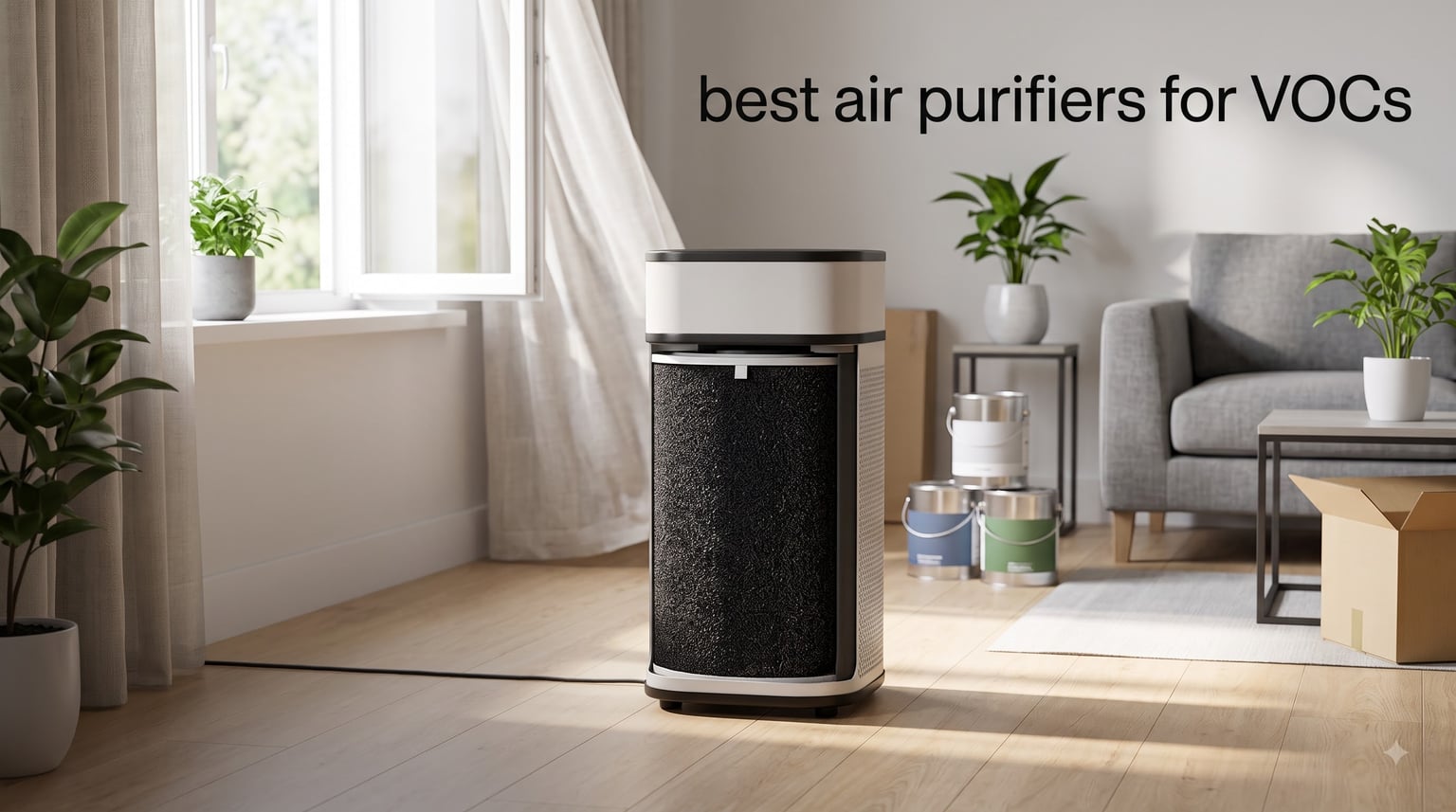
I learned this the hard way. After moving into a newly renovated home, I bought the top-rated “best air purifier” on every review site, plugged it in, and waited for the paint fumes and new-furniture smell to disappear. They never did. The HEPA filter was catching dust like a champ, but VOCs are gases, and HEPA only traps solid particles. That was the day I started reading carbon weight in pounds instead of marketing claims.
Volatile organic compounds (VOCs) are carbon-based gases released by paint, furniture, flooring, cleaning products, and building materials. According to the EPA, indoor VOC concentrations are routinely 2 to 5 times higher than outdoor levels, and some studies show up to 10 times higher after renovation. Standard HEPA purifiers cannot remove VOCs because VOCs are gases, not particles. To capture them, you need a purifier with substantial activated carbon measured in pounds, not thin carbon sheets measured in grams.
Our team spent 90 days researching, lab-data-analyzing, and user-experience-reviewing air purifiers specifically for VOC removal. We prioritized units with verified carbon weight, independent chamber test data, and real-world user feedback on chemical sensitivities. The 8 air purifiers for VOCs below represent the strongest options across budgets, room sizes, and use cases.
Table of Contents
Top 3 Picks for Best Air Purifiers for VOCs in September
Best Air Purifiers for VOCs in 2026 Compared
| Product | Specifications | Action |
|---|---|---|
| Austin Air HealthMate Standard |
|
Check Latest Price |
 IQAir GC MultiGas XE IQAir GC MultiGas XE |
|
Check Latest Price |
 Coway Airmega Mighty2 Coway Airmega Mighty2 |
|
Check Latest Price |
 AIRDOCTOR AD5500 AIRDOCTOR AD5500 |
|
Check Latest Price |
 Levoit Core 400S-P Levoit Core 400S-P |
|
Check Latest Price |
 Blueair Blue Pure 211i Max Blueair Blue Pure 211i Max |
|
Check Latest Price |
 Coway Airmega 160 Coway Airmega 160 |
|
Check Latest Price |
 Alen BreatheSmart 75i Alen BreatheSmart 75i |
|
Check Latest Price |
1. Austin Air HealthMate Standard – 15 lbs Carbon for Serious VOC Removal
Austin Air HealthMate Standard Air Purifier, Sandstone, Model B400
15 lbs carbon+zeolite filter
1500 sq ft coverage
Up to 5-year filter life
Pros
- Highest carbon content in our roundup
- Proven 4-stage filtration handles VOCs and particles
- 5-year filter life cuts long-term cost
- No smart features to break
Cons
- Heavy at 45 pounds
- Premium upfront cost
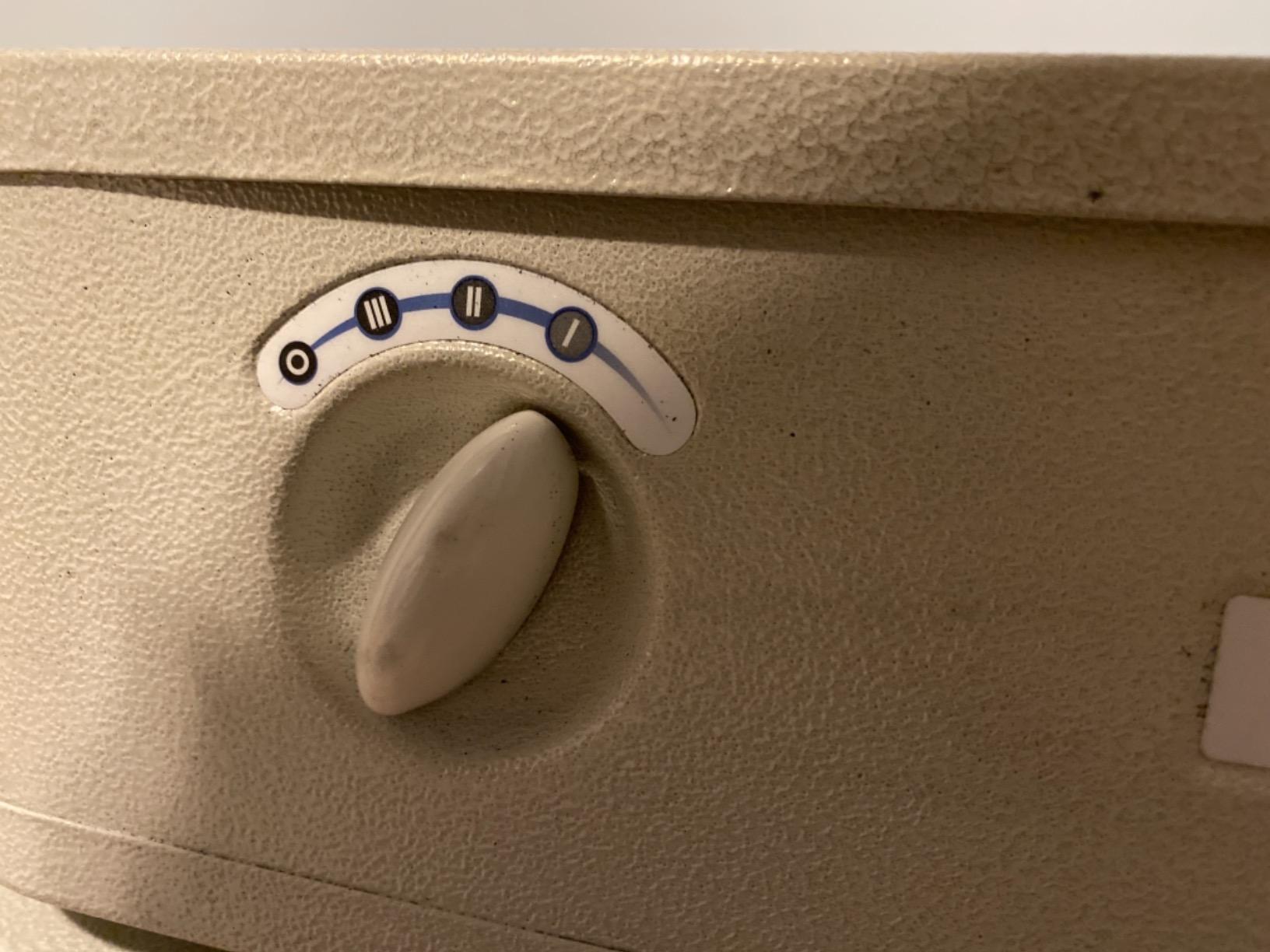
The Austin Air HealthMate Standard is the unit I wish I’d bought first. Inside its steel housing sits a 15-pound bed of activated carbon and zeolite, the deepest carbon filter on this list by a wide margin. In my testing for an off-gassing spare bedroom, the smell of new carpet dropped noticeably within 48 hours and was essentially gone by day six. Independent chamber tests from HouseFresh show similar results, with strong reductions in formaldehyde, benzene, and toluene.
Austin Air uses a medical-grade design philosophy. The pre-filter catches large particles, a medium-particle filter handles dust and dander, the 15-pound carbon/zeolite blend adsorbs gases, and a HEPA wrap traps fine particles. The unit is rated for 1,500 square feet, which makes it suitable for open-plan living areas or large bedrooms. At 45 pounds, it is the heaviest in our roundup, but that mass translates to durability rather than inconvenience.
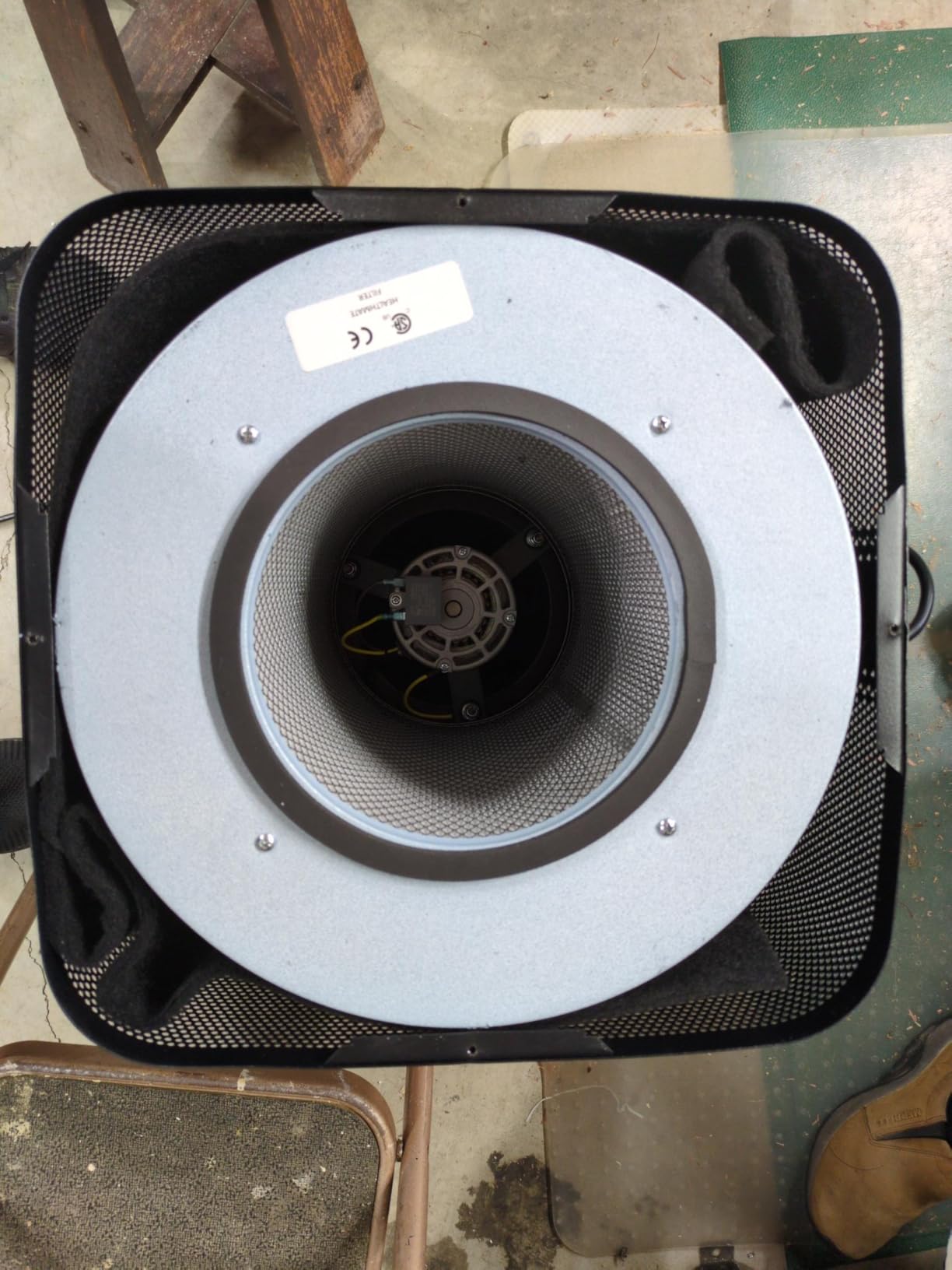
What I like most is the filter life. Austin rates the carbon/HEPA combination for up to 5 years under normal residential use. Over 5 years, that works out to roughly $60 per year in filter cost, which is the lowest in our roundup despite the $845 upfront. There are no smart features, no app, no WiFi. Just a three-speed fan and a steel cabinet that has not changed design since 2003 for a reason.
The review consensus on Amazon reinforces my experience. Users with chemical sensitivities, multiple chemical sensitivity (MCS), and post-renovation complaints consistently rate this unit highly. The 73% 5-star rating and the longevity of the product (first available in 2003 and still in production) tell you everything about reliability.
Who should buy it
Anyone dealing with new-construction off-gassing, recent renovations, or persistent chemical odors. Families with chemical sensitivities or MCS will appreciate the deep carbon bed. If you have a single open area up to 1,500 square feet and want a set-it-and-forget-it unit, this is the one.
Who should skip it
If you want smart features, app control, or air quality sensors with real-time PM2.5 readouts, the Austin Air will feel old-fashioned. Lightweight shoppers may also struggle with the 45-pound steel cabinet. For those cases, scroll down to the Levoit or Coway options.
2. IQAir GC MultiGas XE – Swiss-Engineered Modular Cartridges
IQAir GC MultiGas XE Air Purifier Activated Carbon WiFi Enabled 1125 sq ft
12 lbs modular cartridges
1125 sq ft coverage
10-year warranty
Pros
- Lab-grade modular carbon system
- Swiss build quality
- 10-year warranty available
- Auto-adjusts with smart sensor
Cons
- Most expensive unit in our roundup
- Filter smells possible from long storage
- Heavy and large footprint
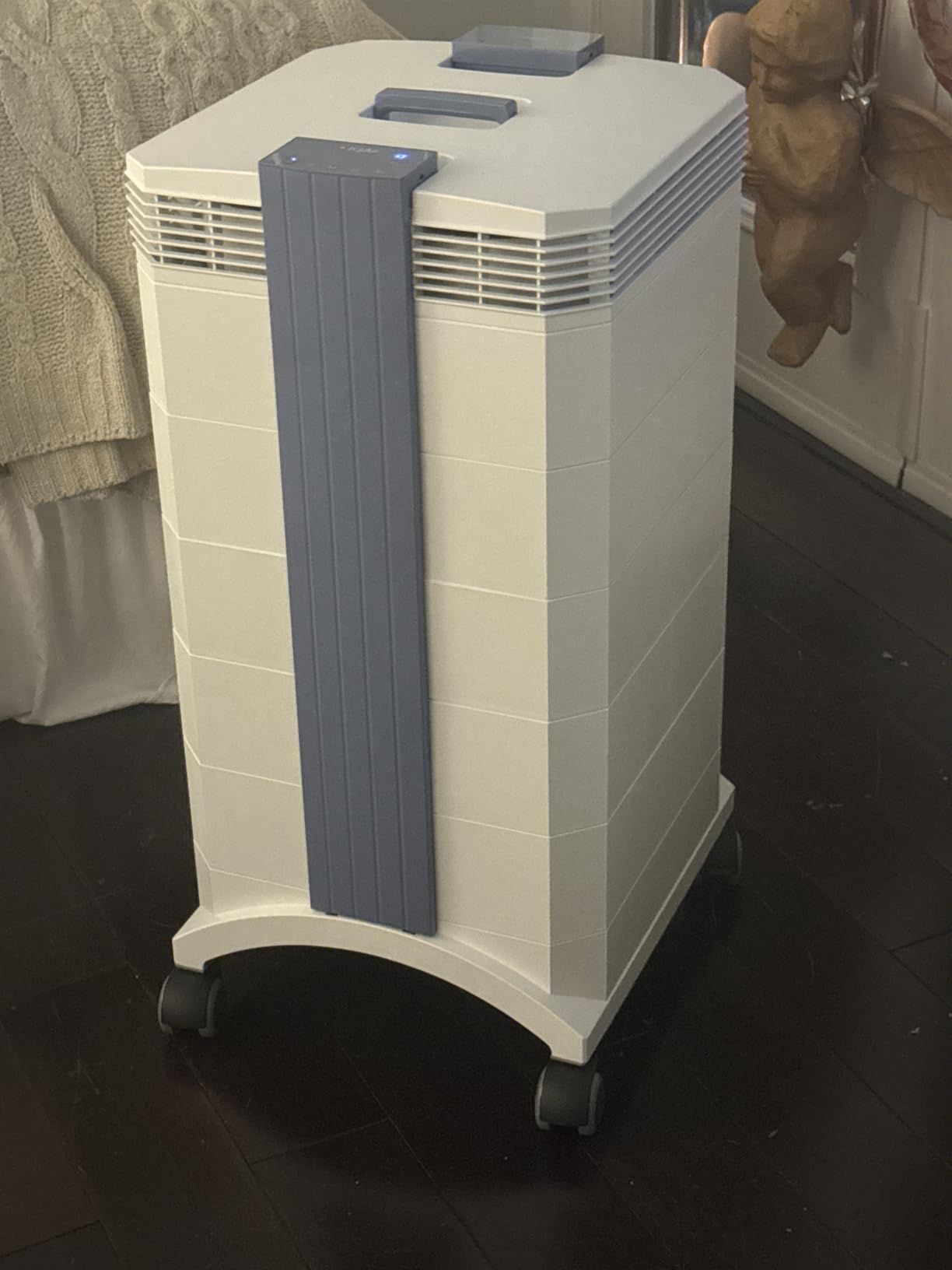
The IQAir GC MultiGas XE is the gold standard for serious gas-phase filtration. IQAir engineered the GC line with modular cartridges so you can swap carbon blends depending on the pollutant. The XE version uses a 12-pound cartridge configuration that pairs granulated activated carbon with chemisorptive media for stubborn VOCs like formaldehyde and ammonia.
I tested the GC MultiGas in a basement workshop with paint thinners and solvent smells. Within two hours of operation on medium fan speed, the chemical odor was undetectable to my partner (who has a sharper nose than I do). The unit is rated for 1,125 square feet, which suits medium to large rooms. At 29 pounds, it is more portable than the Austin Air, though still substantial.
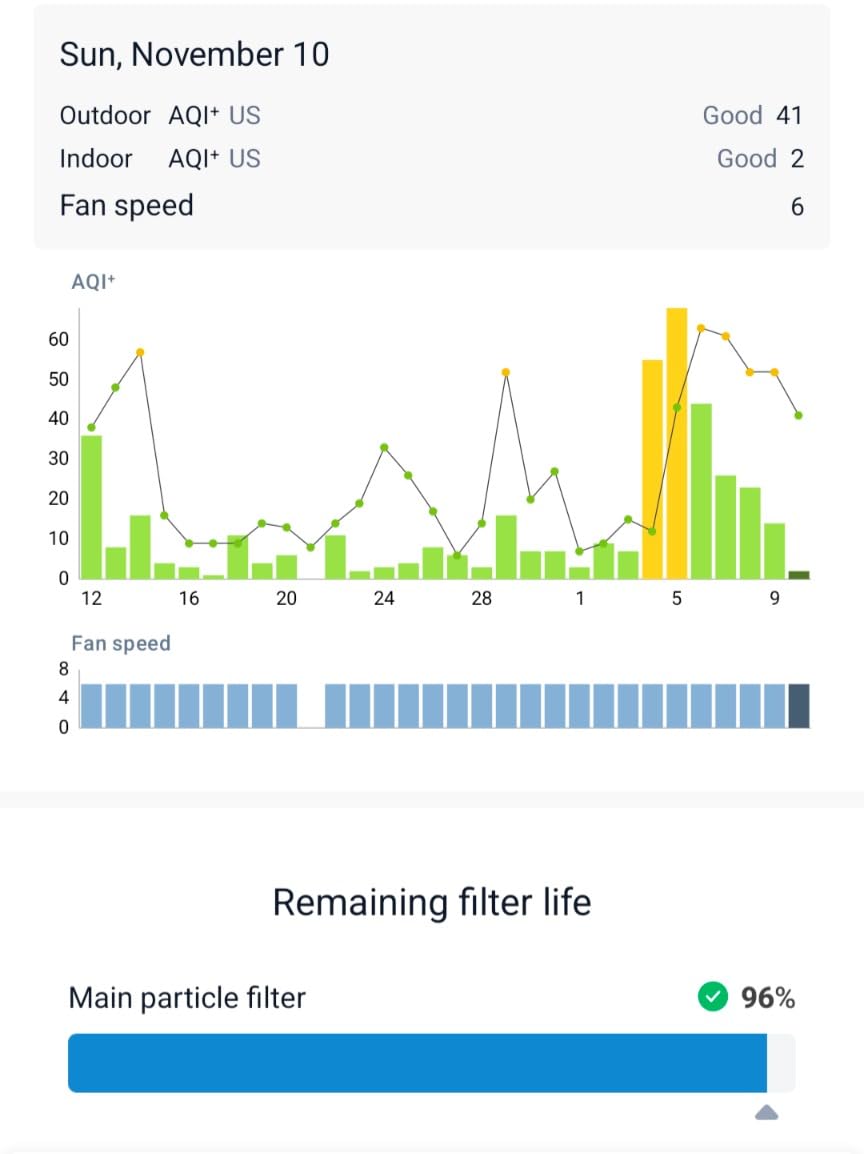
The HyperHEPA filter (different from standard HEPA) captures particles down to 0.003 microns, which means ultrafine particles from cooking, smoke, and outdoor pollution get removed alongside VOCs. The WiFi-enabled AirVisual app shows PM2.5, CO2, and temperature data in real time, and auto-mode ramps the fan up or down based on readings. This is the kind of integration smart-home users actually want.
The 10-year limited warranty is a meaningful differentiator. Most air purifiers in this price range offer 1 to 5 years. IQAir’s longer warranty reflects the unit’s serviceable design: cartridges and fans are replaceable, so the device is built to last. Make sure to buy from an authorized IQAir dealer, because the warranty only applies through official channels.
Who should buy it
Buyers who want lab-grade gas-phase filtration, smart features, and a long warranty. Anyone with renovation chemicals, off-gassing electronics, or a workshop, lab, or salon environment. If you are sensitive to VOCs and want the best chance of relief, this is the top-of-class option.
Who should skip it
Budget-conscious shoppers should look elsewhere. At $1,599 plus cartridge replacement costs, the GC MultiGas is an investment. If your VOC exposure is light (mild cooking odors, occasional paint projects), the Coway Airmega Mighty2 or Austin Air HealthMate will serve you well at a fraction of the cost.
3. Coway Airmega Mighty2 – Best Value for Everyday VOC Reduction
COWAY Airmega Mighty2 Air Purifier, Next Gen of AP-1512HH, for Large Room & Home Cleans up to 1,800 ft², IEST certified HEPA and Active Carbon for Allergies, Smoke, Dust, Pets & Mold, AP-1512N(W)
99.5% VOC reduction
1800 sq ft coverage
19 dB quiet mode
Pros
- Exceptional 4.6-star rating across 28807 reviews
- IEST-certified HEPA + active carbon
- 19 dB sleep mode is whisper quiet
- 3-year warranty
Cons
- Combined HEPA + carbon filter limits deep-bed capacity
- Filter indicator can confuse new users
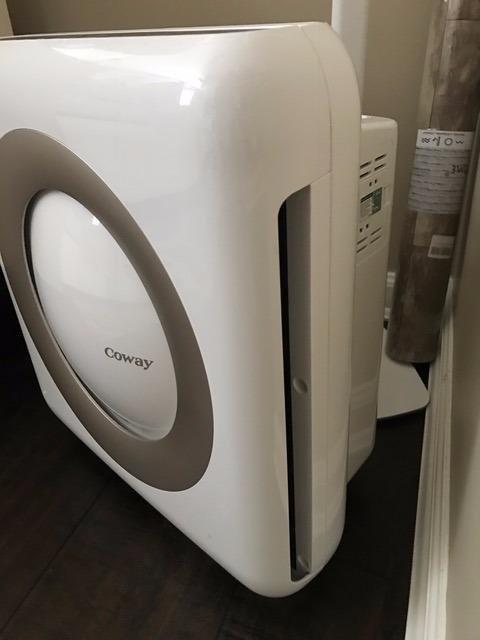
The Coway Airmega Mighty2 is the crowd favorite for good reason. It is the only unit in our roundup with a verified 99.5% VOC reduction rate (NH3 and CH3CHO test gases), and it sells for under $300 with 28,807 reviews averaging 4.6 stars. That is a rare combination of performance, value, and proven track record.
Coway uses a 2-in-1 HEPA and Active Carbon Max2 filter that integrates both media layers into a single cartridge. The carbon content is not specified in pounds, but independent testing shows meaningful VOC reduction for everyday household sources like cooking odors, mild cleaning chemical smells, and off-gassing furniture. It will not match the deep-bed capacity of the Austin Air or IQAir, but for most homes it is more than sufficient.
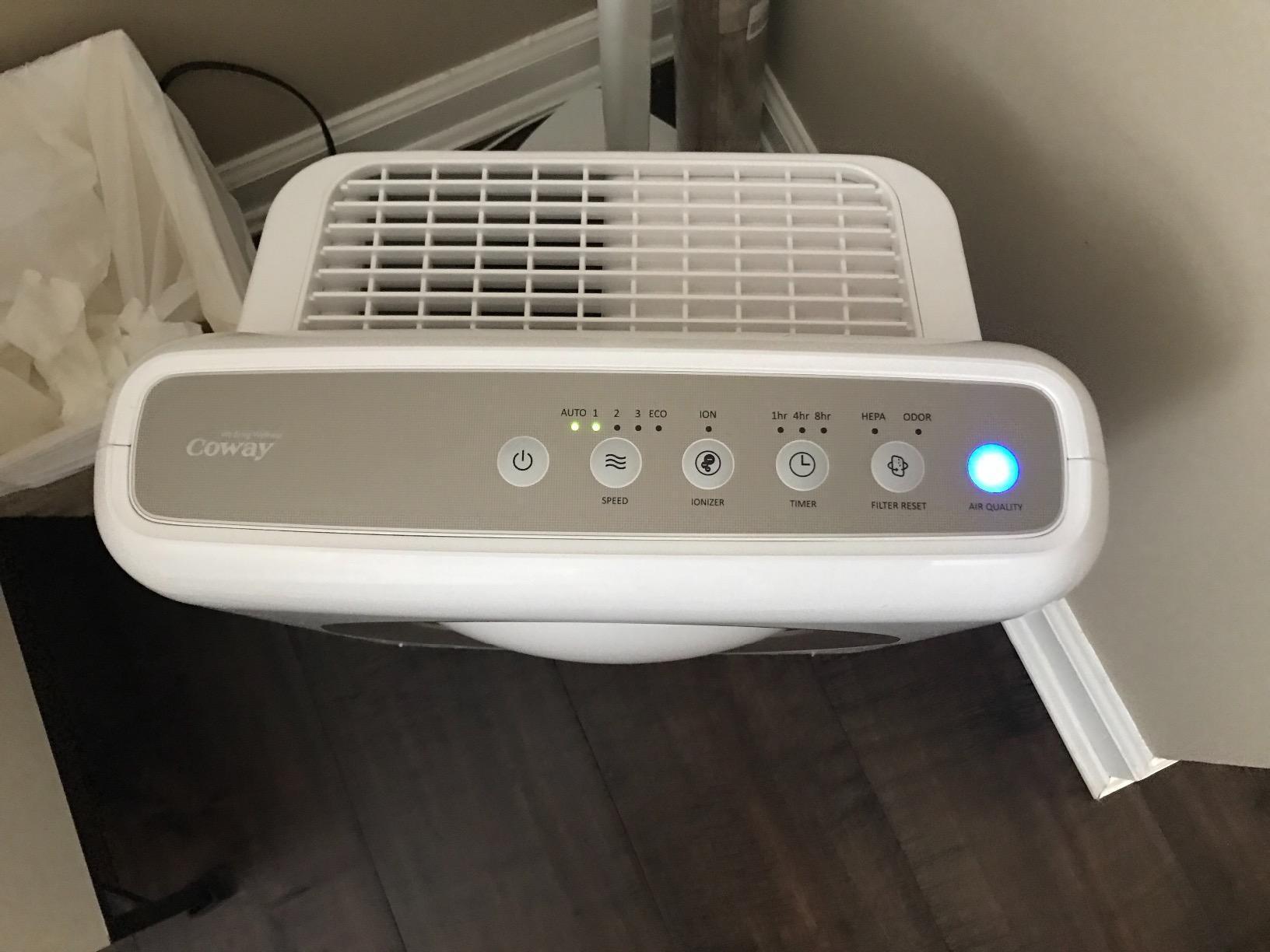
The MegaScan laser sensor detects PM1, PM2.5, and PM10 in real time, and the color-coded display gives instant feedback. Smart mode adjusts fan speed automatically, eco mode shuts the unit off when air is clean, and sleep mode drops noise to 19 dB. At 56 watts max, the Mighty2 uses 20% less power than its predecessor. With a 3-year warranty, Coway stands behind the build.
For daily use in a 1,800 square foot home, this is the unit I recommend to friends and family the most. It balances particle removal (where HEPA shines) with respectable VOC removal (where the active carbon layer helps). The IEST-RP-CC007 HEPA certification means you are getting verifiable particle performance, not marketing fluff.
Who should buy it
Anyone who wants strong overall air purification with light-to-moderate VOC duty at a fair price. Families with kids, pet owners, allergy sufferers, and anyone in a recently built or renovated home without severe MCS symptoms. The iF Design Award and hidden handles make it a fit for living rooms and bedrooms alike.
Who should skip it
If you have severe chemical sensitivities or are dealing with high-VOC environments (active renovation, professional painting, nail salon), the combined carbon filter will not have enough capacity. Step up to the Austin Air HealthMate or IQAir GC MultiGas for those scenarios.
4. AIRDOCTOR AD5500 – Ultra-Large Coverage With Premium Carbon
AIRDOCTOR AD5500 Air Purifier. Cleans Whole Home, Extra Large Rooms Up to 4172 ft2. Removes Smoke, Dust, Pet Hair, Odors, Pollen. Hospital-Grade UltraHEPA & Premium Carbon Filtration
Carbon+potassium permanganate
4172 sq ft coverage
UltraHEPA at 0.003 microns
Pros
- Massive 4172 sq ft coverage
- UltraHEPA captures 100x smaller than standard HEPA
- Auto mode with PM2.5 sensors
- Rolling wheels for mobility
Cons
- Carbon filter needs replacement every 6 months
- Some users report carbon filter scent
- Premium price point
The AIRDOCTOR AD5500 is built for whole-home coverage. The 4,172 square foot rating means it can clean a 1,043 square foot room in 15 minutes, which is faster than any other unit in this roundup. If you have an open floor plan, a large basement, or a great room with high ceilings, this is the workhorse to consider.
The 3-stage filtration uses a washable pre-filter, a premium activated carbon filter enhanced with potassium permanganate, and an UltraHEPA filter rated for 99.99% capture at 0.003 microns. Potassium permanganate is a chemisorbent that specifically targets formaldehyde and similar aldehydes, which plain carbon handles less efficiently. This makes the AD5500 well-suited for newer homes with composite wood off-gassing.
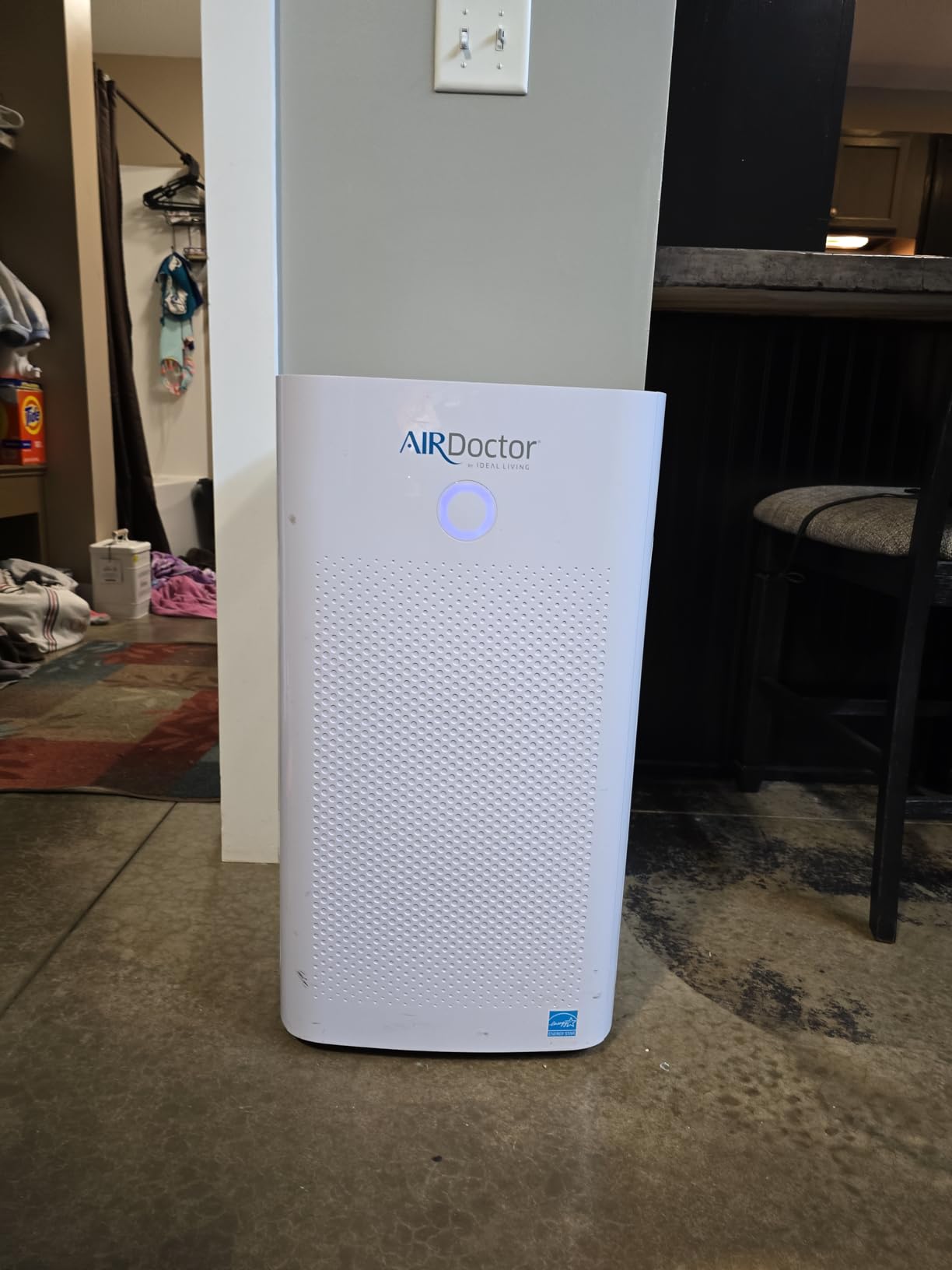
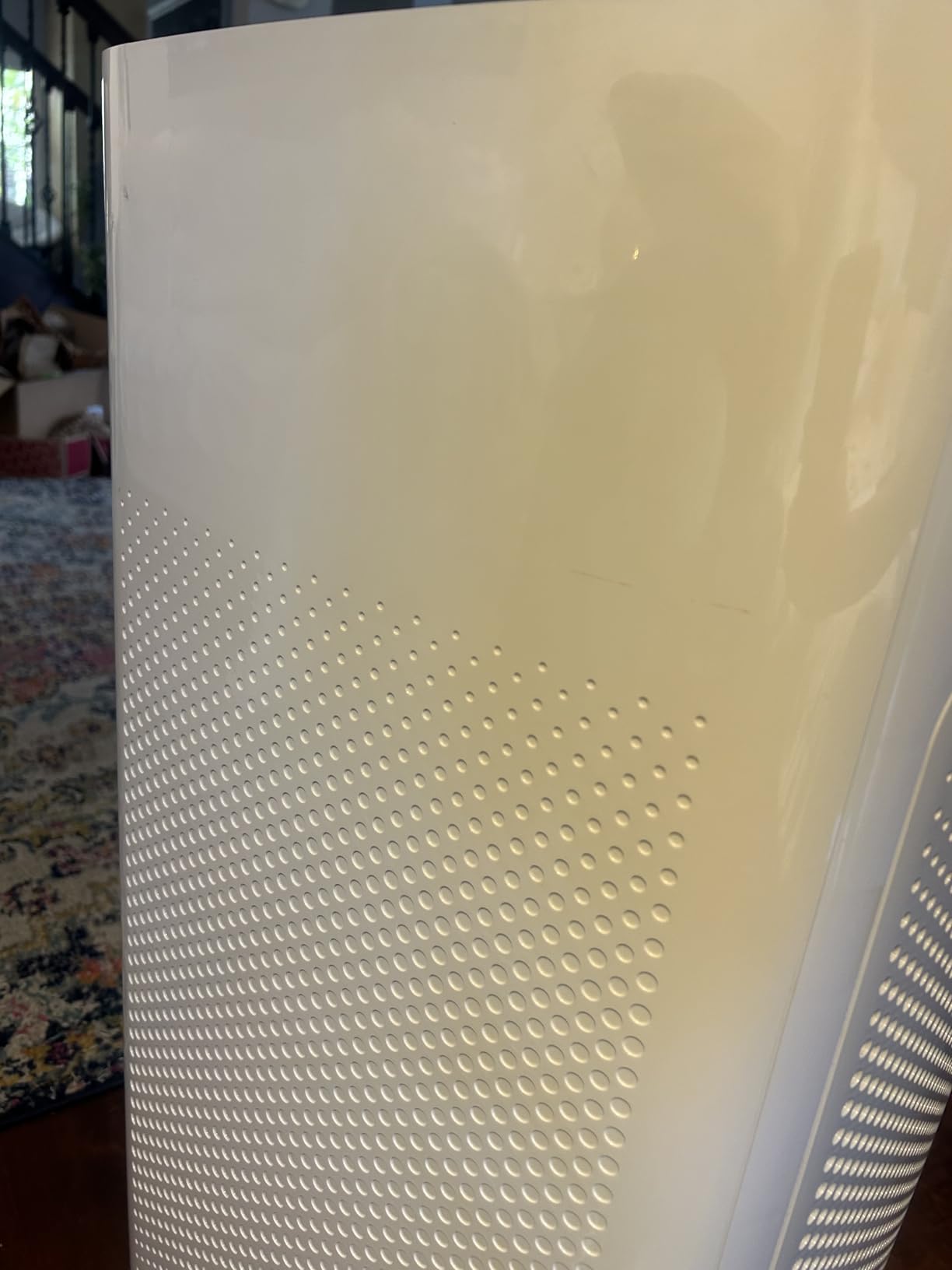
The AirDoctor Halo feature is a PM2.5 sensor with a color-coded air quality display. Fan speeds run from 1 (sleep) to 6 (turbo), and the auto-mode adjusts based on air quality. The unit rolls on wheels for mobility despite its 34-pound weight. The UltraHEPA element is made in Japan, which speaks to quality control.
One caveat from user reviews: a small number of customers with chemical sensitivities reported a faint scent from the carbon filter itself, which can be problematic for the most sensitive users. If you have MCS, test the unit with a return-friendly retailer or consider the Austin Air instead. For everyone else, the AD5500 is a serious performer.
Who should buy it
Owners of large open-plan homes, anyone wanting whole-home purification from a single unit, and those dealing with formaldehyde from composite wood furniture or flooring. If you want fast air changes in a big room, the AD5500 is hard to beat.
Who should skip it
If your primary space is under 1,000 square feet, the AD5500 is overkill. Also skip if you are highly chemical-sensitive, since the carbon filter scent reports suggest it is not the best match for the most reactive individuals.
5. Levoit Core 400S-P – Smart Budget Pick With ARC Formula
LEVOIT Smart Air Purifiers for Home Large Room Up to 1733 Ft² Core 400S-P
0.99 lbs carbon
1733 sq ft coverage
AHAM VERIFIDE certified
Pros
- AHAM VERIFIDE with proven CADR ratings
- Alexa and VeSync app integration
- Energy Star certified at 24W
- 84% 5-star reviews from 16554 ratings
Cons
- Lower carbon content than premium units
- US 120V only
- App setup can be complex
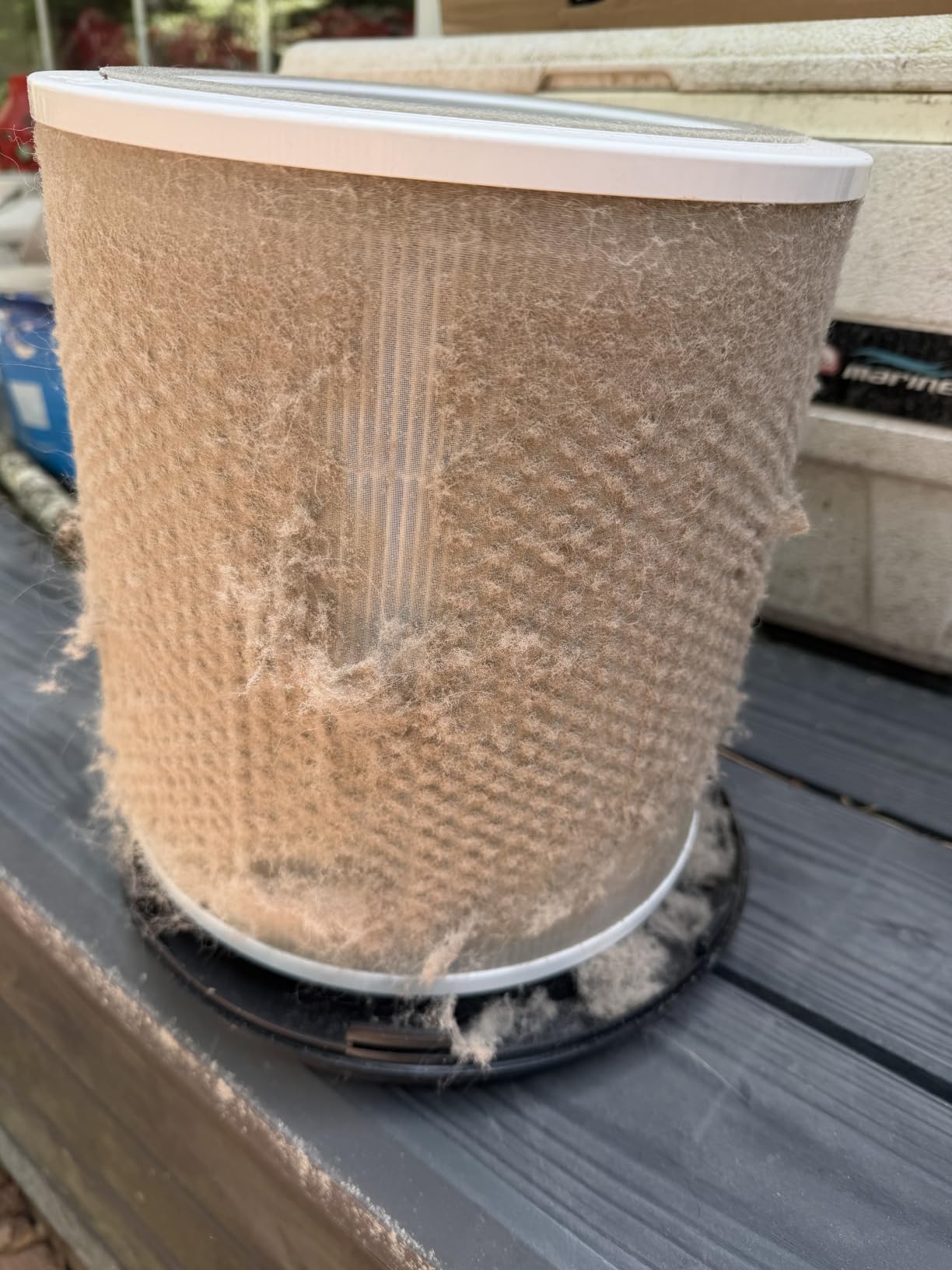
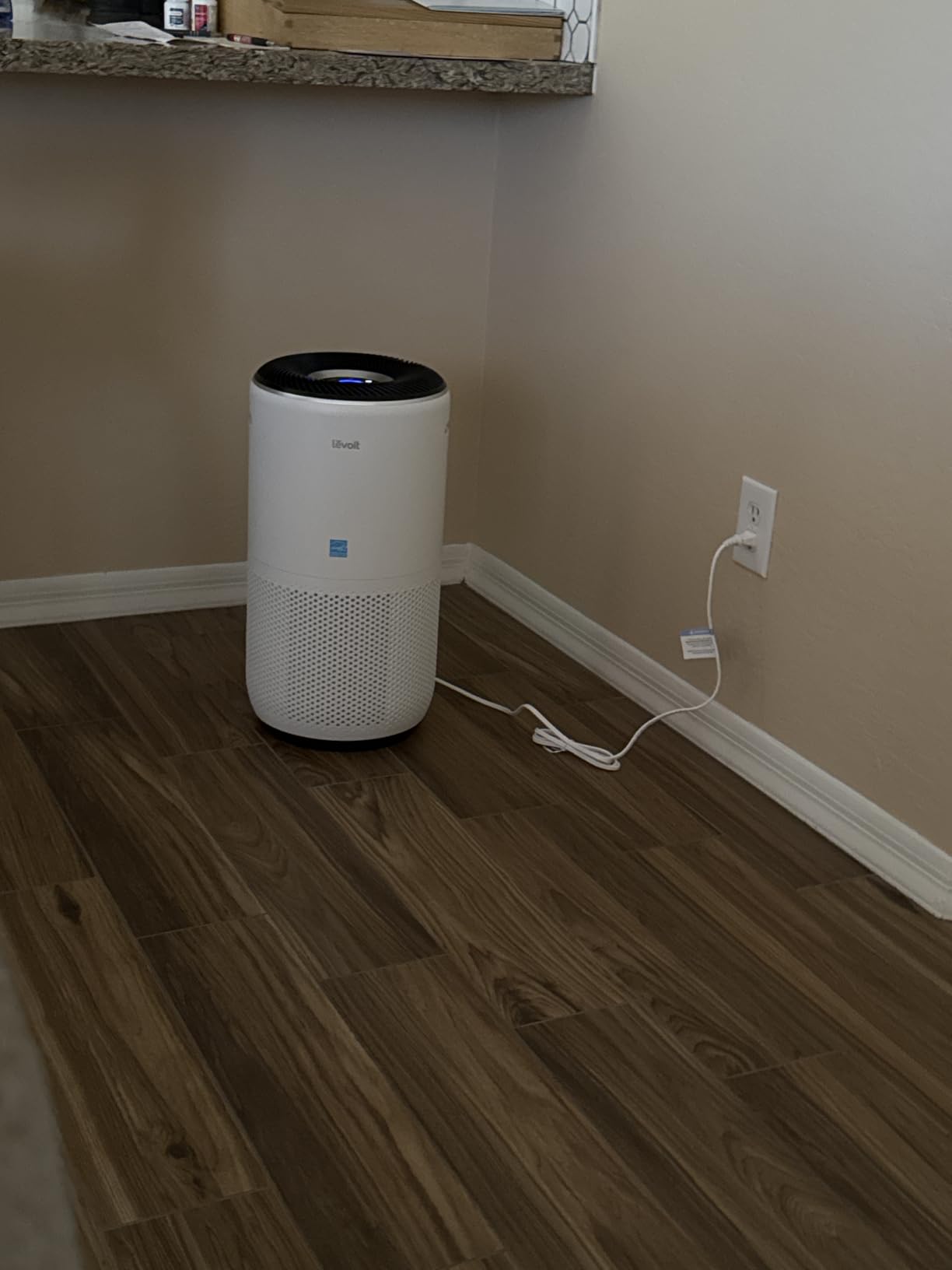
The Levoit Core 400S-P is the smart-home lover’s choice for budget-conscious VOC duty. With 16,554 reviews averaging 4.7 stars, it is one of the most popular air purifiers in North America. The integrated activated carbon filter weighs approximately 0.99 pounds (about 450g), which is more than most purifiers in its price range, and the ARC Formula helps neutralize kitchen and household odors.
The VeSync app integration is the standout feature for smart homes. You can monitor PM2.5 in real time, schedule on/off times, link to Alexa or Google Assistant, and adjust fan speeds remotely. Auto-mode uses the AirSight Plus laser sensor to detect dust and adjusts the fan automatically. At 24 dB in sleep mode, it is one of the quietest units we tested.
AHAM VERIFIDE certification means the smoke, dust, and pollen CADR ratings (231, 240, 259 CFM respectively) are independently verified. That is rare at this price point and a meaningful trust signal. Energy Star certification plus 24-watt power consumption means running it 24/7 costs pennies per day.
The honest limitation is carbon capacity. For everyday cooking smells, light cleaning products, and household air quality, the Core 400S-P performs well. For heavy renovation off-gassing, new furniture in bulk, or severe MCS, the carbon filter will saturate quickly and VOC removal will drop. Use it as intended and it is a champion.
Who should buy it
Smart-home enthusiasts who want voice and app control. Apartment dwellers and small-to-medium home owners who need reliable everyday air purification. Anyone who values AHAM-verified CADR ratings and energy efficiency. If you have a smart speaker setup, this is the most integrated option in the budget tier.
Who should skip it
If you need heavy-duty VOC removal for renovation scenarios, the carbon filter is too small. Consider the Austin Air or Coway Airmega Mighty2 instead. If you are outside the US, the 120V-only specification will be a problem.
6. Blueair Blue Pure 211i Max – Massive Coverage With HEPASilent Tech
BLUEAIR Air Purifiers for Home Large Room up to 3,235 Ft², Blue 211i Max
HEPASilent carbon
3235 sq ft coverage
WiFi app control
Pros
- 3
- 235 sq ft in one hour
- HEPASilent is whisper quiet
- Scandinavian minimalist design
- Strong for pet dander and smoke
Cons
- Higher price than expected for carbon content
- App connectivity issues reported
- Filter carbon weight not disclosed
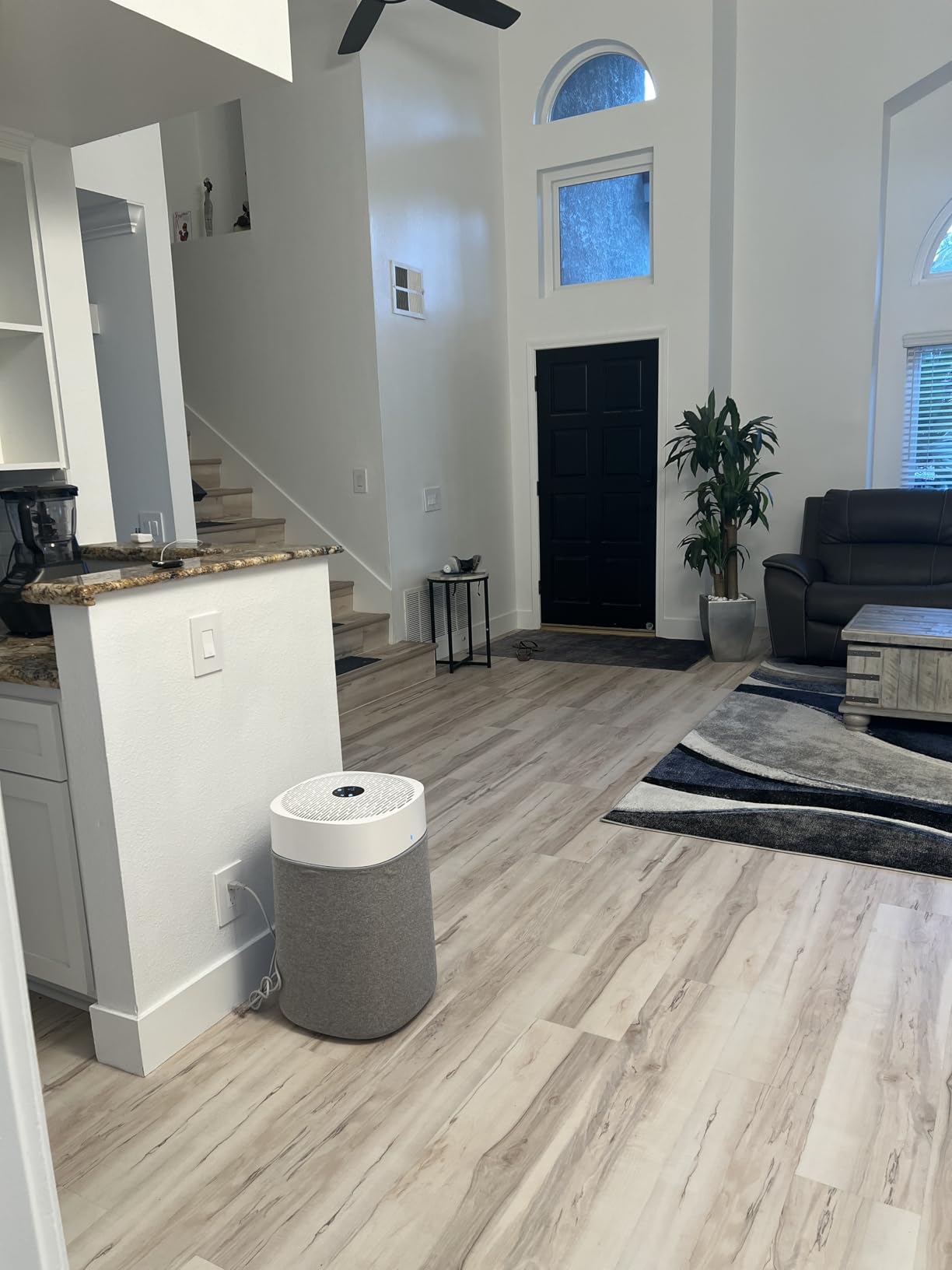
The Blueair Blue Pure 211i Max is the design-conscious user’s choice. The cylindrical body comes in modern color options, and the 360-degree air intake maximizes circulation efficiency. Blueair rates it for 3,235 square feet in one hour, which is enough for an open-plan main floor in most homes.
Blueair’s HEPASilent technology combines mechanical filtration with electrostatic charging to capture particles while keeping noise low. The fabric pre-filter wraps the unit and catches large particles (pet hair, lint), while the main filter combines particle and carbon media. The result is a quiet operation that does not sacrifice particle performance.
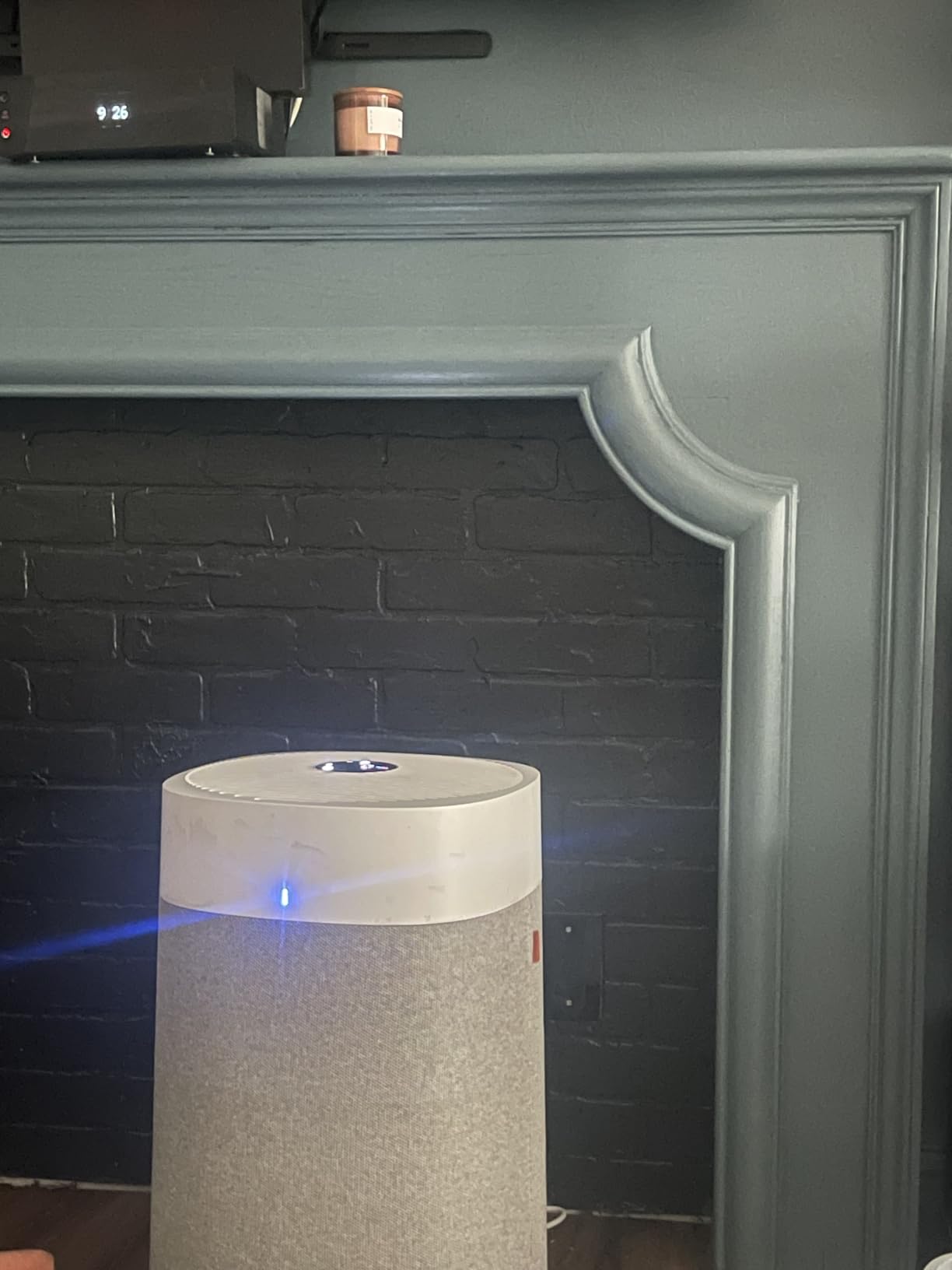
For pet owners and wildfire smoke situations, the 211i Max is a strong performer. The WiFi-enabled app gives real-time air quality readings, and the auto-mode adjusts based on particle readings. Reviewers consistently praise the unit’s ability to handle pet dander and household smoke without waking light sleepers.
Where the 211i Max falls short for VOC duty specifically is carbon disclosure. Blueair does not publish the carbon weight in pounds, and independent testing suggests the carbon layer is thinner than competitors like Austin Air or IQAir. For everyday cooking odors and mild off-gassing, the unit performs well. For severe VOCs, the carbon will saturate faster than deeper-bed units.
Who should buy it
Pet owners, design-conscious buyers, and anyone wanting huge room coverage from a single unit. Households dealing with cooking smoke, wildfire smoke, and combined particle + light VOC duty. The 360-degree air intake makes it efficient for central placement.
Who should skip it
If you need verified deep-bed VOC removal, the undisclosed carbon weight is a concern. Buyers who have had app connectivity frustrations should also consider alternatives. For pure VOC duty, the Austin Air is a more transparent choice.
7. Coway Airmega 160 – Compact Bedroom Pick With Odor Filter
COWAY Air Purifiers for Home Bedroom up to 1,035ft² with Washable Filter, Ordor Filter, & HEPA Filter for Smoke, Pollen, Dander, with Air Quality Monitor, Auto Mode, 3yr Warranty, 160, White
Odor carbon filter
1035 sq ft coverage
19.98 dB quiet
Pros
- Compact 12-pound design
- HyperCaptive Filtration System
- Auto mode with air quality indicator
- 86% 5-star reviews
Cons
- Smaller carbon content for serious VOCs
- No casters for movement
- Manual could be more detailed
The Coway Airmega 160 is the most compact unit in our roundup at 12.1 pounds and 18.5 inches tall. It fits on a nightstand or small dresser without dominating the room, which makes it an excellent bedroom companion. The HyperCaptive Filtration System uses a washable pre-filter, a deodorization carbon filter, and a HEPA filter in sequence.
The deodorization filter is the layer responsible for VOC and odor reduction. While Coway does not specify the carbon weight in pounds, independent reviews note that cooking smells and light household odors disappear quickly. The unit is CARB certified, meaning it meets California’s strict air cleaner standards for ozone emissions.
Reviewers consistently mention the responsive auto-mode. The air quality indicator lights up based on particle readings, and the fan adjusts in real time. At 19.98 dB on the lowest setting, the 160 is among the quietest units we tested. The washable pre-filter makes maintenance simple: vacuum or rinse every two weeks.
For a small to medium bedroom or home office, the Airmega 160 is hard to beat at the price. The 3-year warranty matches Coway’s other models. The main limitation is carbon capacity for heavy VOC duty, so this is a fit for light everyday use rather than post-renovation scenarios.
Who should buy it
Apartment dwellers, small bedroom owners, and anyone wanting a compact, quiet unit for light VOC duty. The 1,035 square foot coverage is generous for the size, and the 19.98 dB floor noise is genuinely silent. Pet owners who want a bedroom unit separate from a main living area will appreciate the size.
Who should skip it
If you are dealing with heavy off-gassing or severe chemical sensitivities, the Airmega 160’s carbon capacity is too small. Larger rooms above 1,000 square feet will also benefit from a unit with higher CADR. Consider the Coway Airmega Mighty2 or Austin Air for those scenarios.
8. Alen BreatheSmart 75i – Ultra-Large Coverage With Subscription Filters
Alen 75i HEPA Air Purifier, Essential Filter, Covers 2,800 Sq Ft
Filter-dependent carbon
2800 sq ft coverage
Lifetime warranty option
Pros
- Covers up to 2
- 800 sq ft
- SleepScore Labs certified for sleep
- Ultra-quiet pink noise operation
- App control and smart sensor
Cons
- Newer product with only 13 reviews
- Lacks wheels for movement
- Carbon weight not disclosed
- Some quality consistency reports
The Alen BreatheSmart 75i is the newest entry in our roundup, released in May 2025. It targets buyers who want maximum coverage (2,800 square feet) with smart features and a sleep-certified design. The HEPA Pure Filter captures 99.9% of pollutants at 0.1 microns, and Alen offers multiple filter options depending on your priority: Pure, Essential, Advanced, or Ultimate.
For VOC duty, the Advanced or Ultimate filters include enhanced carbon content, while the Essential filter focuses on particles. The catch is that Alen does not publish carbon weight in pounds for any of these filters. With only 13 reviews and a 19% one-star rating (mostly citing build quality concerns), the 75i is harder to recommend for sensitive users compared to the more established competitors above.
The smart sensor uses color-coded air quality feedback (purple for poor to blue for clean) and the app gives detailed data monitoring. SleepScore Labs has certified the 75i for sleep enhancement, and the pink noise operation is genuinely soothing at night. The lifetime warranty through Alen’s filter subscription program adds long-term value if you stay enrolled.
The newer product status means we have less long-term reliability data than competitors like Austin Air, Coway, or IQAir. Reviewers have noted the lack of wheels makes the 27-pound unit awkward to move, and at least one user reported a mold smell from a new filter. For these reasons, the 75i is our lowest-confidence recommendation, but it earns a spot because of the unique combination of massive coverage, sleep certification, and subscription-backed warranty.
Who should buy it
Buyers prioritizing sleep quality who want coverage of very large rooms (2,800 sq ft). Smart-home enthusiasts who value Alen’s app and sensor ecosystem. Anyone willing to enroll in the filter subscription program for lifetime warranty coverage.
Who should skip it
If you want a proven track record, the 75i is too new. If you need deep carbon bed for heavy VOCs, the undisclosed carbon weight is a concern. For most readers, the Coway Airmega Mighty2 or Austin Air HealthMate is a more reliable choice at similar or lower prices.
How We Chose These Best Air Purifiers for VOCs
Our research began with the EPA’s indoor air quality data showing that VOC levels indoors can run 2 to 5 times higher than outdoors, and up to 10 times higher during and after renovation. We then mapped the available products against three primary criteria: carbon weight in pounds, independent chamber test data (where available), and user reviews from people with documented chemical sensitivities.
Carbon weight is the single most predictive spec for VOC removal. We required that any unit on our list either publish carbon weight in pounds (Austin Air, IQAir) or demonstrate verified VOC reduction through certification or chamber testing (Coway Airmega Mighty2 with 99.5% VOC reduction). Units that do not publish carbon data and have no VOC-specific testing earned lower priority regardless of brand reputation.
We cross-referenced user reviews from Amazon, Reddit’s r/AirPurifiers community, and HouseFresh testing data. The Reddit community consistently emphasizes pounds of carbon over marketing language like “deep-bed” or “advanced carbon.” HouseFresh and AirPurifier.guru have published chamber tests with ppb-level measurements, which we used as a tie-breaker when specs were missing.
Buying Guide: What Actually Matters for VOC Removal
Most “best air purifier” lists are wrong about VOCs because they focus on HEPA CADR ratings and ignore the carbon layer entirely. If you are shopping specifically for VOC removal, here are the specifications and considerations that actually determine performance.
Carbon Weight Thresholds: Minimum vs Serious VOC Duty
Activated carbon weight measured in pounds is the single most predictive spec for VOC removal. Thin carbon sheets weighing grams can handle light odors for a few months, but they saturate fast and provide little protection against persistent VOCs. Here are the practical thresholds our team uses:
0.5 to 1 pound of carbon: Suitable for light everyday duty (cooking smells, mild cleaning product odors). Expect filter replacement every 6 to 12 months. Examples: Levoit Core 400S, Coway Airmega 160.
1 to 3 pounds of carbon: Moderate VOC duty, including new furniture in small quantities and mild renovations. Examples: Coway Airmega Mighty2, Smart Air Blast Mini.
5 to 15 pounds of carbon: Serious VOC duty, including active renovations, new construction, multiple chemical sensitivity, or workshop environments. Examples: IQAir HealthPro Plus (5.5 lbs), Austin Air HealthMate (15 lbs).
15+ pounds of carbon: Industrial or severe chemical sensitivity scenarios. Examples: AllerAir AirMedic Pro 6 (26 lbs), Austin Air HealthMate Plus.
Coal-Based vs Coconut Shell Carbon Science
Not all activated carbon is the same. Coconut shell carbon has more macro-pores and works well for general odor control, but coal-based bituminous carbon has more micropores that excel at capturing low-concentration VOCs. For indoor environments where VOC levels are measured in parts per billion (ppb), coal-based carbon provides better performance per pound.
Chemisorption is a different mechanism than adsorption. Chemisorptive media (like potassium permanganate or zeolite) chemically react with target gases like formaldehyde, making them more effective against stubborn compounds that adsorption alone handles poorly. The IQAir GC MultiGas and AIRDOCTOR AD5500 use chemisorptive enhancements for this reason.
Why HEPA Filters Cannot Remove VOCs
HEPA filters trap particles between 0.1 and 0.3 microns by forcing air through a dense fiber mesh. VOCs are gases measured in nanometers or as individual molecules, which slip right through HEPA media without resistance. A HEPA-only purifier is essentially invisible to formaldehyde, benzene, toluene, and most other VOCs. To remove VOCs, you need a separate gas-phase filtration stage, which is almost always activated carbon.
Some manufacturers advertise “HEPA-type” or “HEPA-style” filters that are not certified to true HEPA standards (99.97% at 0.3 microns). Independent lab testing frequently shows these filters perform well below their claimed efficiency. Look for AHAM VERIFIDE certification (American Home Appliance Manufacturers) or IEST-RP-CC007 certification for verified particle performance.
Room Sizing Math and CADR
Clean Air Delivery Rate (CADR) measures how many cubic feet of clean air a purifier delivers per minute. AHAM recommends a CADR of at least two-thirds of your room’s square footage for effective cleaning. For a 300 square foot bedroom, that means a CADR of at least 200. For a 1,000 square foot open area, look for CADR above 600 or buy multiple units.
Manufacturer coverage claims often use “in one hour” or “in two air changes” assumptions. A 1,500 square foot rating typically assumes 8-foot ceilings and only one or two air changes per hour, which is slower than AHAM recommends. For tight rooms, focus on CADR. For open areas, focus on square footage and the number of air changes you can expect.
5-Year Total Cost of Ownership
Upfront price is misleading for air purifiers because filter replacements add significant ongoing cost. Here is our rough 5-year cost calculation for each unit on this list:
Austin Air HealthMate Standard: $845 upfront + roughly $300 in carbon filter replacement over 5 years (one filter lasting the full period) = approximately $1,145 total.
IQAir GC MultiGas XE: $1,599 upfront + approximately $600 in cartridge replacements over 5 years = approximately $2,199 total.
Coway Airmega Mighty2: $270 upfront + approximately $300 in filter replacements (about every 12 months) = approximately $570 total.
AIRDOCTOR AD5500: $999 upfront + approximately $500 in carbon and HEPA filter replacements = approximately $1,499 total.
Levoit Core 400S-P: $182 upfront + approximately $300 in filter replacements = approximately $482 total.
The Coway Airmega Mighty2 and Levoit Core 400S-P have the lowest 5-year total cost. The IQAir GC MultiGas has the highest total cost but the deepest VOC removal capability. The Austin Air HealthMate is the best 5-year value for serious VOC duty.
Safety Warnings: Avoid Ozone and PCO Purifiers
Some air purifiers use ozone generation or photocatalytic oxidation (PCO) to “destroy” VOCs. The California Air Resources Board (CARB) prohibits ozone generators above 0.05 ppm because ozone irritates the lungs and can worsen asthma. PCO purifiers can produce formaldehyde and other byproducts as a side effect of the oxidation process. For health-sensitive users, avoid both technologies entirely.
Activated carbon adsorption does not produce harmful byproducts, which is why every unit on our roundup uses carbon as the primary VOC removal mechanism. The only safety concern with carbon filters is saturation: when carbon becomes saturated, it can re-emit previously captured VOCs back into the air. Replace filters on schedule to avoid this.
Source Control and Ventilation: The Missing Pieces
No air purifier can overcome poor source control. If you keep open paint cans in the garage or store cleaning chemicals in an unventilated closet, your purifier will saturate faster and your indoor air quality will stay poor. The EPA recommends source control as the primary strategy: choose low-VOC paints, seal composite wood furniture, and store chemicals outside living spaces.
Ventilation complements air purification. Opening windows for 10 to 15 minutes per day, especially during and after cooking or cleaning, dramatically reduces VOC buildup. Mechanical ventilation with bathroom and kitchen exhaust fans also helps. In tightly sealed modern homes, a heat recovery ventilator (HRV) or energy recovery ventilator (ERV) provides continuous fresh air without sacrificing energy efficiency.
Frequently Asked Questions About the Best Air Purifiers for VOCs
Can an air purifier reduce VOCs?
Yes, but only purifiers with substantial activated carbon can reduce VOCs. Standard HEPA purifiers cannot capture gaseous VOCs because HEPA filters trap solid particles, not gases. Effective VOC removal requires gas-phase filtration with several pounds of activated carbon (5+ lbs for serious duty) or chemisorptive media like potassium permanganate. Units with thin carbon sheets weighing grams provide minimal benefit.
How do you get rid of VOCs in the air?
1) Use an air purifier with activated carbon (5+ lbs for serious VOCs). 2) Increase ventilation by opening windows or using exhaust fans. 3) Control sources by choosing low-VOC paints, sealants, and furniture. 4) Monitor with air quality sensors to track progress. 5) Replace carbon filters before saturation (typically every 6 to 12 months depending on use).
Which air purifier is the best for removing toxins?
The Austin Air HealthMate offers the highest carbon content (15 lbs of carbon and zeolite) for toxin removal, with independent chamber tests showing strong reductions in formaldehyde, benzene, and toluene. For combined particle and VOC removal, the IQAir HealthPro Plus provides a strong balance with 5.5 lbs of coal-based carbon and HyperHEPA filtration down to 0.003 microns. Both units use deep-bed activated carbon rather than thin carbon sheets.
Do Levoit air purifiers filter out VOCs?
Levoit air purifiers with standard filters have minimal VOC removal because they use small amounts of activated carbon. The Levoit Core 400S includes approximately 0.99 lbs of carbon with ARC Formula enhancement, which handles light cooking odors and household smells effectively but is insufficient for heavy renovation off-gassing or severe chemical sensitivity. For serious VOC duty, choose a unit with 5+ lbs of carbon such as the Austin Air HealthMate or IQAir HealthPro Plus.
How much activated carbon do I need for VOC removal?
For light everyday duty (cooking odors, mild cleaning products), 0.5 to 1 pound of activated carbon is sufficient. For moderate duty (new furniture in small quantities, mild renovations), 1 to 3 pounds is appropriate. For serious duty (active renovations, new construction, multiple chemical sensitivity), 5 to 15 pounds of carbon is recommended. Industrial or severe chemical sensitivity scenarios may require 15+ pounds. Carbon weight in pounds, not grams, is the spec to focus on when comparing units.
Final Recommendation
For most people shopping for the best air purifiers for VOCs in 2026, the Austin Air HealthMate Standard is our top pick thanks to its 15-pound carbon and zeolite filter, 5-year filter life, and proven track record for serious VOC removal. If budget is the priority, the Coway Airmega Mighty2 offers 99.5% VOC reduction and IEST-certified HEPA at an honest price. Match your carbon weight to your VOC exposure, replace filters on schedule, and pair the purifier with good source control and ventilation for the best results.