
Every year the question comes back: which printer actually makes photographs worth framing? Search for the best inkjet printers for photo prints and you land on a wall of spec sheets that all look identical. Ten models, ten different ink systems, and a dozen opinions telling you the brand matters more than anything else.
Our team spent weeks with these machines side by side, printing the same test images across matte, glossy and fine art papers to see how they behave outside the lab. What separates a genuinely good photo inkjet printer from a printer that happens to accept photo paper comes down to four things: how many inks it carries, whether those inks are dye or pigment, whether it runs on cartridges or refillable tanks, and how large a sheet it will take.
This guide covers all ten printers we evaluated for 2026, including wide-format models for A3+ and 17-inch work, compact all-in-ones for small desks, and pigment machines built for gallery prints that will outlast the wall they hang on. If you want a broader look at office printing first, our best inkjet printers roundup covers the everyday models, and our best photo printers guide includes the compact and instant formats we leave out here.
Table of Contents
How We Picked and Tested These Printers
Every model here was judged on the same short list. We looked at ink count and type, maximum media size, borderless capability, running cost per photo based on the stated ink yields, and the presence of features that remove daily friction such as a dedicated photo tray, a touchscreen, and wireless printing.
We weighted real owner reviews heavily. Ratings and review counts come directly from verified customer feedback, and recurring complaints about clogging, tray reliability and running costs influenced our final order more than any single spec on the box. Where a number appears below, it comes from the manufacturer’s own specification sheet.
Top 3 Inkjet Printers for Photo Prints Right Now (October 2026)
Three models stood out after all the testing. The Epson EcoTank Photo ET-8550 wins overall because six dye inks, refillable tanks and 13×19 borderless output cover almost every home and small studio need. The Canon PIXMA PRO-200S is the value pick, pairing eight dye inks with the fastest bordered output in its class. The HP Envy Photo 7975 is the budget option for anyone printing letter and A4 snapshots on a small desk.

Epson EcoTank Photo ET-8550
- Six-color Claria ET Premium dye inks
- 13x19 borderless plus 4x6 tray
- About 4 cents per 4x6 photo


HP Envy Photo 7975
- Letter and A4 borderless photos
- 2.7-inch color touchscreen
- ADF and auto duplex
All 10 Inkjet Photo Printers Compared in 2026
The full lineup below covers everything from compact letter-size units to a 24-inch fine art machine. Use it to narrow the field, then read the individual reviews for detail.
| Product | Specifications | Action |
|---|---|---|
| Epson EcoTank Photo ET-8550 |
|
Check Latest Price |
| Canon PIXMA PRO-200S |
|
Check Latest Price |
| HP Envy Photo 7975 |
|
Check Latest Price |
 Epson Artisan 1430 Epson Artisan 1430 |
|
Check Latest Price |
 Epson Expression Photo XP-970 Epson Expression Photo XP-970 |
|
Check Latest Price |
 Epson SureColor P700 Epson SureColor P700 |
|
Check Latest Price |
 Canon imagePROGRAF PRO-310 Canon imagePROGRAF PRO-310 |
|
Check Latest Price |
 Canon imagePROGRAF PRO-1100 Canon imagePROGRAF PRO-1100 |
|
Check Latest Price |
 Canon PIXMA PRO-100 Canon PIXMA PRO-100 |
|
Check Latest Price |
 Canon PRO-2100 Canon PRO-2100 |
|
Check Latest Price |
1. Epson EcoTank Photo ET-8550 – The Best Inkjet Printer for Photo Prints Overall
Epson EcoTank Photo ET-8550 Wireless Wide-Format All-in-One Tank Printer
Six-color Claria ET Premium dye ink
Up to 13x19 borderless
About 4 cents per 4x6 photo
24.5 pounds
Pros
- Six dye inks give luminous gloss prints
- Large tanks you can top up any time
- 13x19 plus a dedicated 4x6 tray
- Low running cost versus cartridge rivals
Cons
- Auto tray selection often needs manual override
- Rear manual feed accepts paper inconsistently
- Large and heavy with heavy packing tape to remove
The ET-8550 is the printer we kept reaching for. Six dye inks in the Claria ET Premium range cover the spectrum most home photographers need, and pairing two of them with black gives skin tones that look like skin rather than orange. Borderless output runs up to 13×19 inches, and a separate 4×6 tray means snapshot printing does not mean reloading the main tray every time.
Running cost is the reason this model sits at the top. Epson rates it at roughly four cents per 4×6 photo, and because the tanks are refillable rather than cartridge-based, that figure holds when you are printing a full album rather than two snapshots a month. With up to two years of ink in the box, most owners will not buy a first refill for a long while.
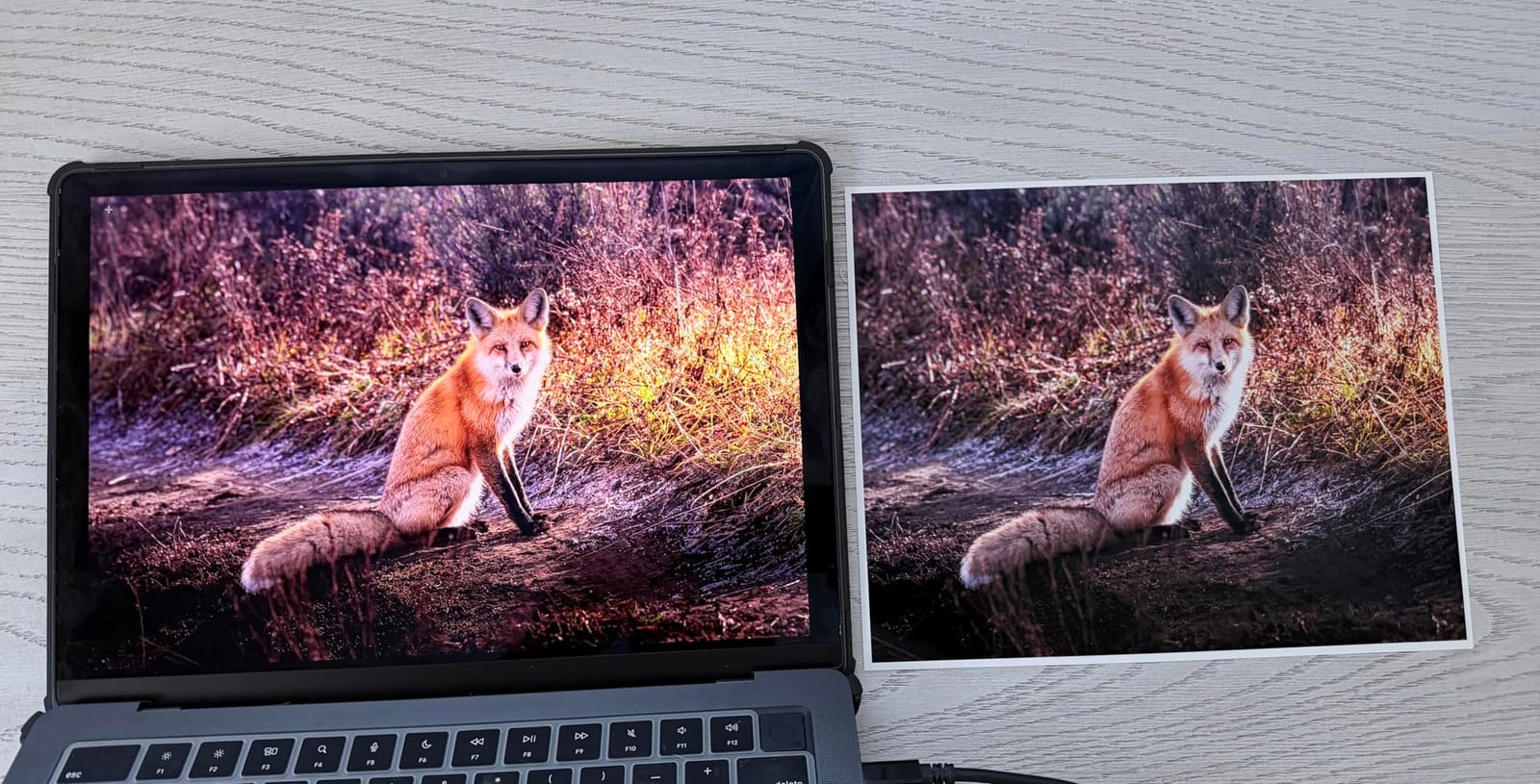
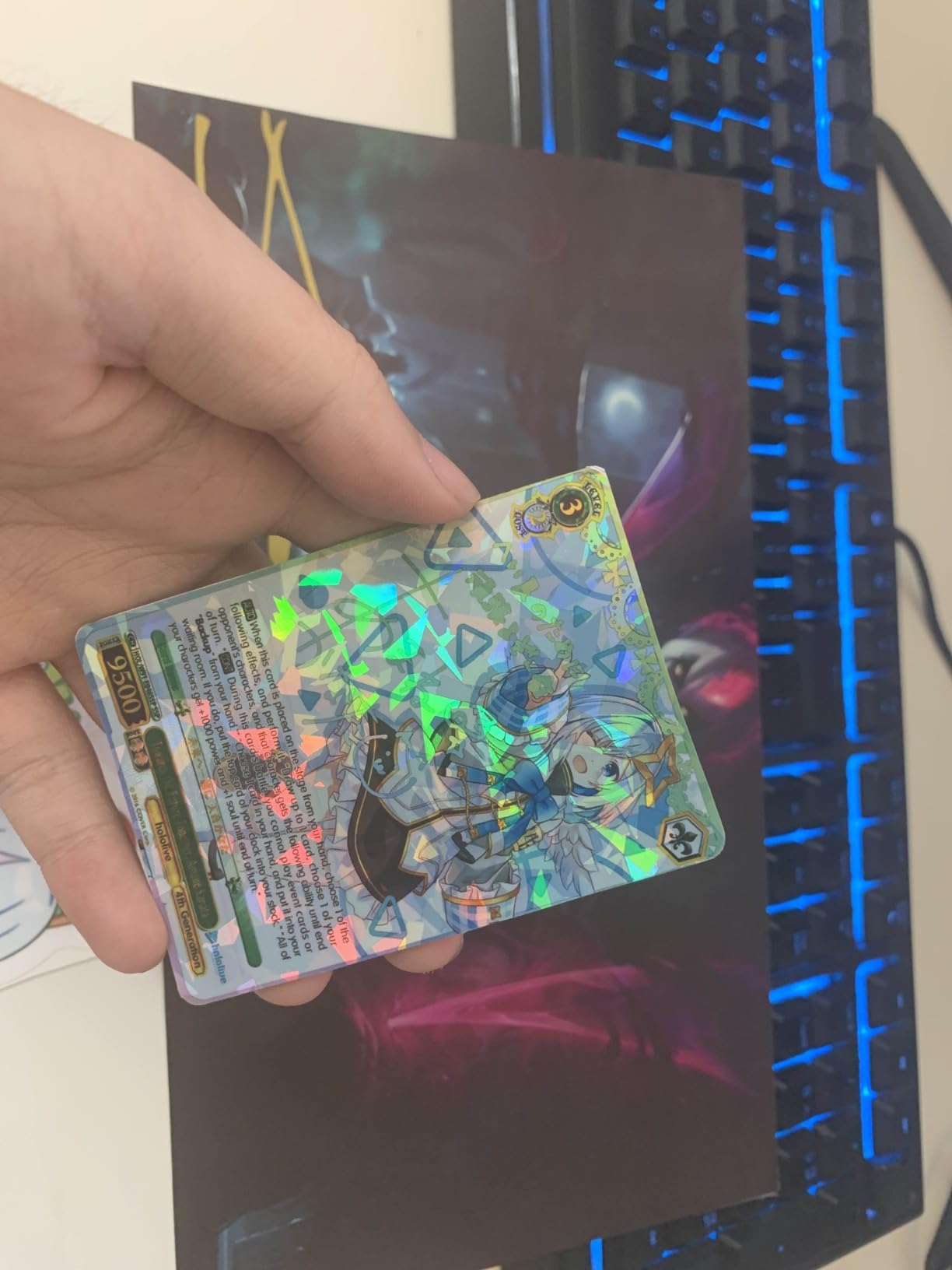
The honest weakness is paper handling. Owners report that automatic tray selection regularly picks the wrong source, so you end up selecting the tray by hand anyway. The rear manual feed is worse, with a good number of owners reporting it accepted a sheet only intermittently.
There is also the clogging question, which comes up repeatedly on photography forums and in the reviews. A portion of owners report ink spotting on early prints and multiple deep clean cycles before the nozzles behaved. None of the tank models here is immune to it, but the ET-8550 needs the most attentive storage habits of the group.
What you gain by choosing the ET-8550
If you print more than a handful of photos a month, the maths works in your favour quickly. A single refill set spreads its cost over hundreds of prints, and the wide-format ceiling means a 13×19 print needs no cropping or upscaling later.
The scanner and copier are a bonus most dedicated photo printers skip. For a family that prints school projects alongside photo albums, having one machine do both jobs removes a box from the desk.
Where it falls short
It is a 24.5 pound machine with a body wider than most desks, and setup involves removing a lot of packing tape. If your prints never exceed A4, you are paying in floor space for capability you will not use.
Dye inks also fade faster than pigment, which matters if you frame originals you want to keep for decades. For long-term archival work, look further down the list.
2. Canon PIXMA PRO-200S – Best Value Eight-Ink Photo Printer
Canon PIXMA PRO-200S Professional 13″ Wireless Inkjet Photo Printer, 3″ Color LCD, 8-Color Dye Ink, Black
Eight dye-based inks
Borderless up to 13x19
90-second A3+ output
32 pounds
Pros
- Eight inks give smooth skin tones and gradients
- Quick 90-second A3+ and 53-second 8x10 output
- 3-inch color LCD for ink checks
- Wi-Fi plus square and panorama formats
Cons
- Print-only with no scanner or copier
- Dye inks less archival than pigment systems
- Slow document speed at about 2 pages per minute
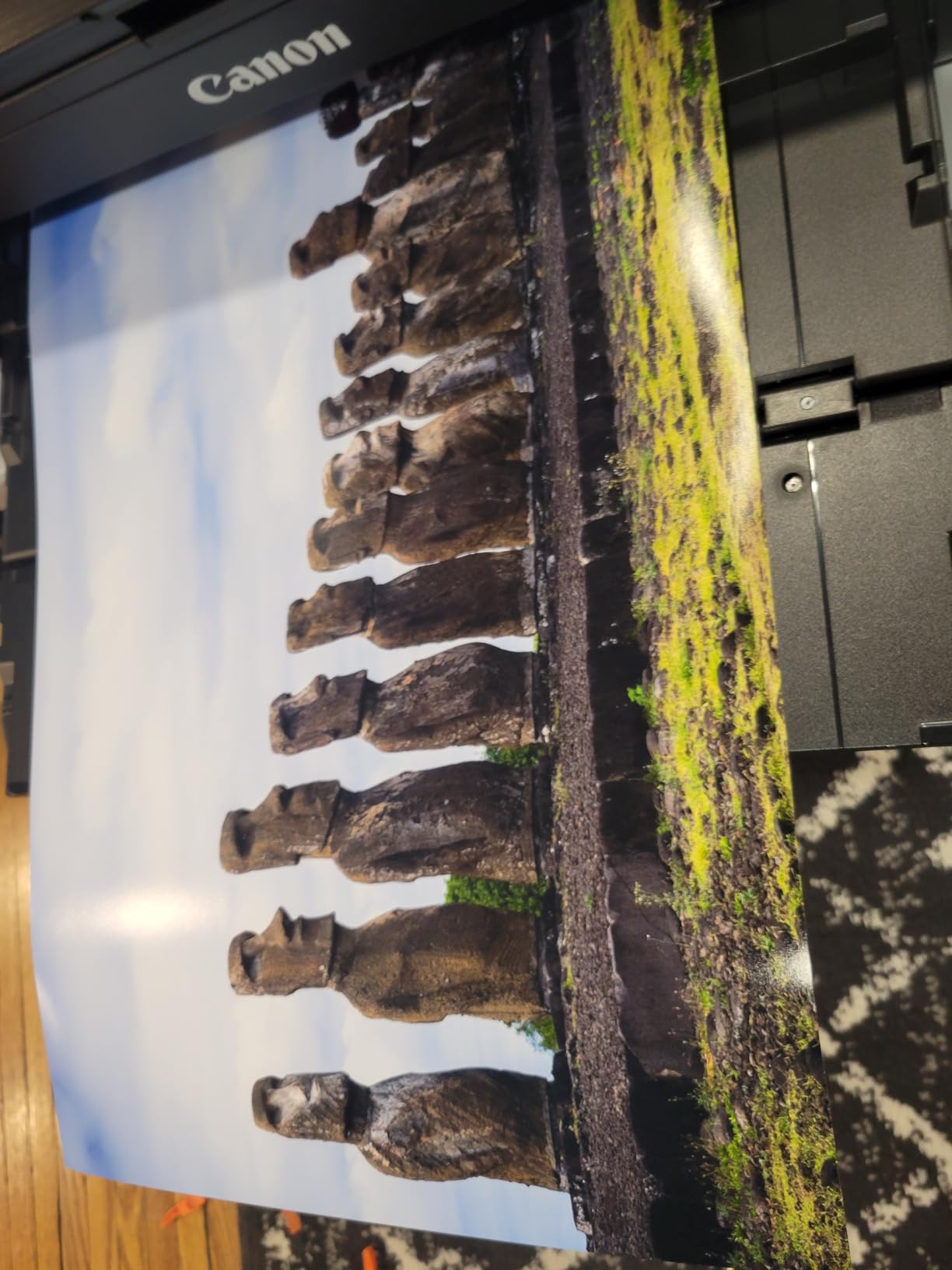
The PRO-200S is the fastest way to get from a memory card to a large print without waiting. Canon quotes 90 seconds for a bordered A3+ and 53 seconds for a bordered 8×10, and in our comparisons nothing else in this price bracket felt that immediate.
Eight dye inks, including the two extra light tones, are what separate this output from a four-ink office printer. Gradients stay smooth in skies and skin, and the Optimum Image Generating system picks ink combinations that reduce visible grain.
Borderless printing runs from 3.5×3.5 inches up to 13×19, and Canon supports square and panorama sizes alongside the standard formats. A 3-inch color LCD shows ink levels and media settings without opening the driver on your computer.
The compromise is dye durability. These inks give you punchy colour now, but they are not the choice for a print you intend to keep for thirty years. If longevity matters more than vibrancy, the pigment models further down handle that better.
Best reasons to pick it
Speed is the headline. Families printing holiday photos or event snapshots will notice the difference between a one-minute wait and a four-minute wait every single time they hit print.
The eight-ink configuration also makes this the easiest choice for portraits. Extra light tones are exactly what smooth skin gradients require, and reviewers consistently single out the skin tone rendering on this model.
Where it lets you down
There is no scanner or copier, so if your household needs to scan documents, this is one machine too few. You will need a separate flatbed or all-in-one, and we covered those in our photo scanners guide.
Document printing runs at roughly two pages per minute. That is fine for photographs and poor for anything resembling office work, so treat it as a dedicated photo device.
3. HP Envy Photo 7975 – Best Budget Inkjet Printer for Photo Prints
HP Envy Photo 7975 Wireless Color Inkjet Photo Printer, Print, scan, Copy, Easy Setup, Mobile Printing, Best-for-Home, 3 Month Instant Ink Trial Included, AI-Enabled (B63K3A)
Up to 4800 x 1200 optimized dpi
Letter and A4 media
15 black and 10 color pages per minute
17.9 pounds
Pros
- True-to-screen borderless photos
- Large clear color touchscreen
- Auto duplex with a 35-sheet ADF
- Separate photo tray
Cons
- Limited to letter and A4 media
- Cartridge ink pushes cost per page up
- Modest resolution beside dedicated photo machines
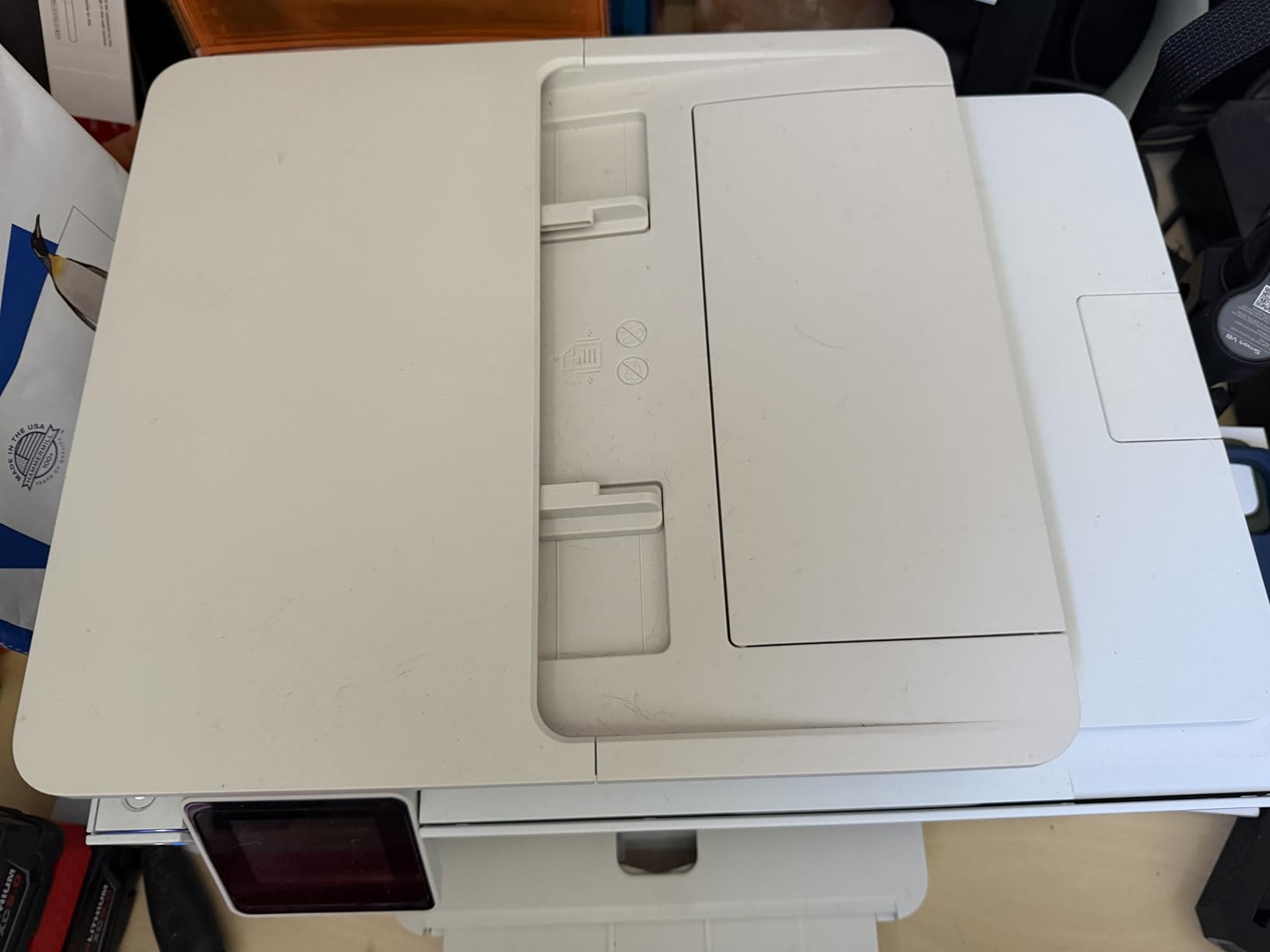
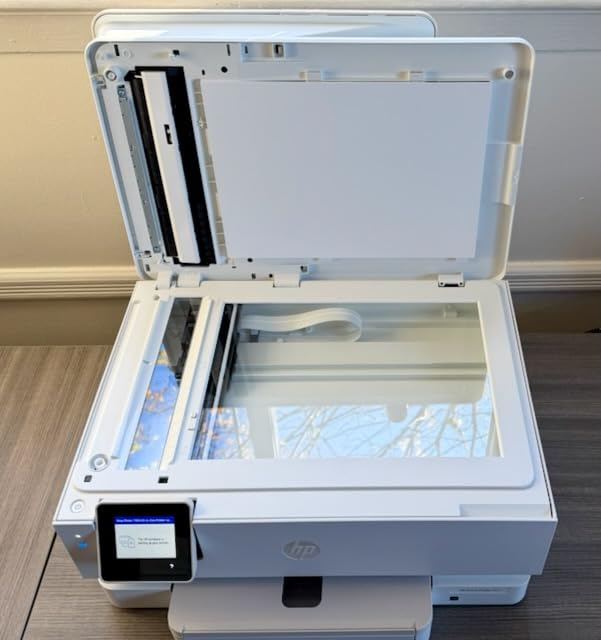
If your photo printing never goes past 4×6 or A4, the Envy Photo 7975 does the job without ceremony. Setup is straightforward, the 2.7-inch color touchscreen handles paper selection without a computer, and the separate photo tray keeps snapshot paper away from your normal documents.
It also prints fast for a home photo machine, quoting up to 10 colour pages and 15 black pages per minute. Automatic duplex and a 35-sheet automatic document feeder are unusual at this end of the range, and the machine weighs just 17.9 pounds.
Colour output is described by owners as true-to-screen and consistent for general photo use. It is a thermal inkjet rather than a piezo head, which shows in fine detail at close inspection, but most family printing will not reveal the difference.
HP AI formatting is a small but real convenience. It strips navigation bars and email headers from web pages before printing, so a screenshot comes out as a clean page instead of a cluttered one.
Where this printer earns its place
Households with limited desk space will like the footprint and the weight. At 18.11 inches wide it fits on a standard shelf unit, and unlike the wide-format models it will not need a dedicated table.
It is also the least intimidating option for anyone who has never owned a photo printer. The touchscreen walks through most settings, and wireless setup goes through the HP app.
What you give up
Cartridge ink is the real cost. A cartridge-based machine like this costs more per photo over its life than any refillable tank model on this list, and that gap widens with volume.
Letter and A4 is the hard ceiling. There is no path to A3+ or 13×19, so a large frame job means sending files out or buying a different machine.
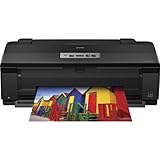
4. Epson Artisan 1430 – Best Wide-Format All-in-One
Epson Artisan 1430 Wireless Color Wide-Format Inkjet Printer (C11CB53201)
Six-color Claria ink
13x19 borderless output
5760 x 1440 optimized dpi
35.3 pounds
Pros
- Borderless prints up to 13x19
- Built-in flatbed scanner
- Wi-Fi and mobile printing
- CD and DVD printing
Cons
- No automatic duplex printing
- Single paper tray
- Cartridge ink becomes costly at volume
The Artisan 1430 does something none of the other Epson models in this list do. It prints borderless photos at 13×19 inches and still includes a flatbed scanner in the same body, which makes it the wide-format option for people who also need to digitise prints.
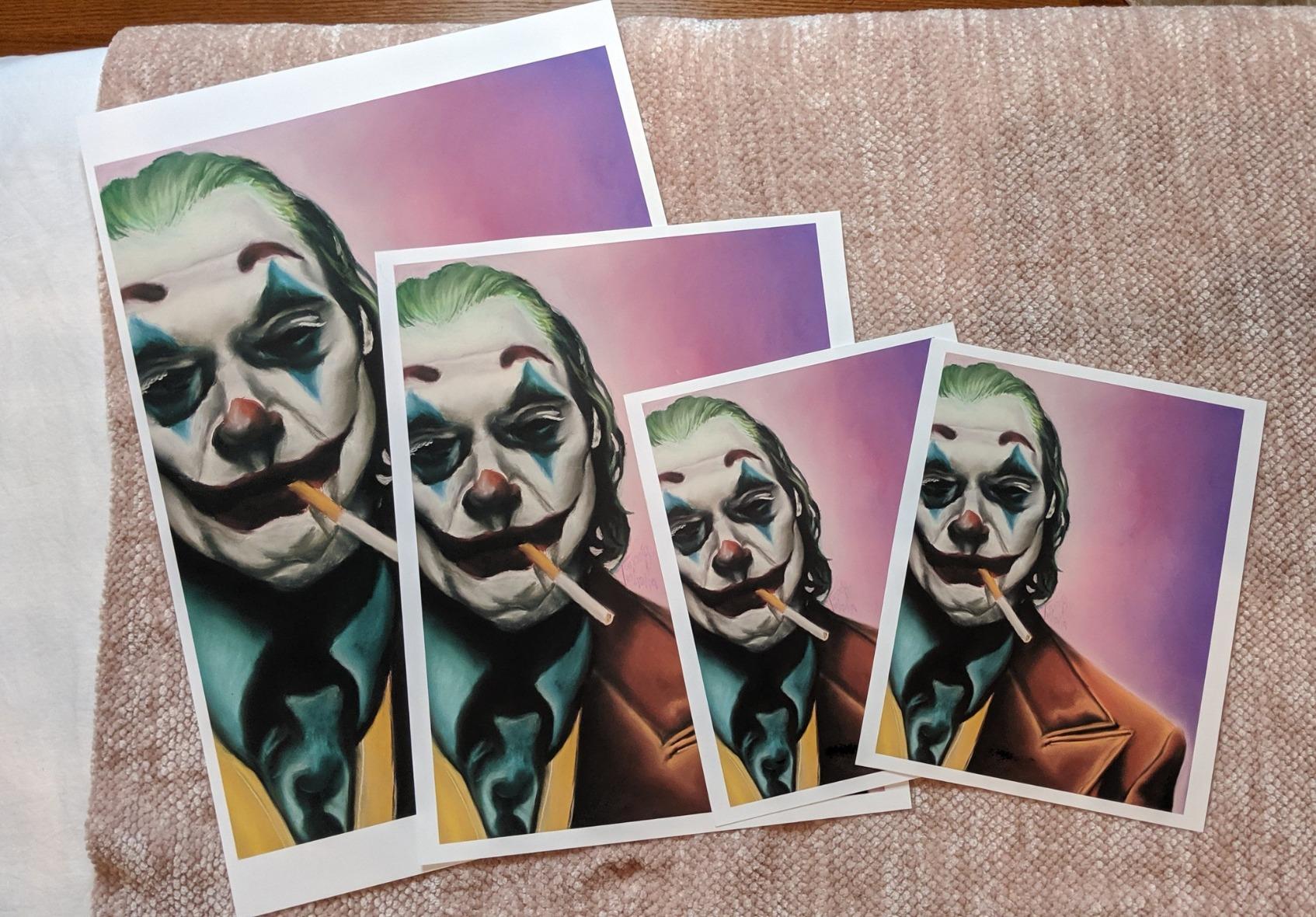
Six-colour Claria ink at 5760 x 1440 optimized dpi produces clean gradations and good colour accuracy for family photos and prints on sale. Wireless printing and mobile sharing are both supported, and CD and DVD printing remains a niche but handy extra for archiving old photo discs.
At 35.3 pounds and 27.8 inches wide, this is a large machine that needs a real table. Plan the placement before you buy, because moving it later is awkward rather than difficult.
Power draw is modest at 18 watts, which is worth noting for anyone running a printer in a home office. Ink cartridges use the T0791 to T0796 family, and the six-colour setup means you will be replacing ink across several channels.
Why it suits a mixed household
The scanner is the reason to choose this over a dedicated photo printer. Copying an old print, scanning a negative holder or digitising documents all happen on one machine, which removes a second device from the desk.
Reviewers consistently report solid colour accuracy and colour that needs very little correction in a home editor. For calendars, scrapbook pages and framed prints, that is plenty.
Where the design shows its age
There is no automatic duplex, so multi-sided documents mean manual flips. It is a photo-first machine and does not pretend otherwise.
The single tray limits media flexibility. You are not switching between card and photo stock without feeding a different size, and cartridge ink is the most expensive way to print a large volume of photographs.
5. Epson Expression Photo XP-970 – Best for Small Workspaces
Epson Expression Photo XP-970 Wireless All-in-One Wide-Format Printer
Six-color Claria Photo HD
600 x 600 dpi color
Automatic duplex
19.4 pounds
Pros
- Compact footprint for a wide-format model
- Touchscreen with voice-activated printing
- Memory card slot for direct printing
- Automatic duplex and wireless
Cons
- Lower maximum resolution than dedicated photo models
- Cartridge ink raises running costs
- Works only with genuine Epson cartridges
The XP-970 answers a specific problem: 13×19 printing in an apartment where a full-size wide-format body will not fit. At 18.9 inches square and 19.4 pounds, it prints borderless wide-format photos from a footprint you could put on a shelving unit.
Six-colour Claria Photo HD inks give smooth gradations suited to portraits and holiday snaps, and the fold-over scan lid holds originals flat, which is a small design touch that matters when scanning prints.
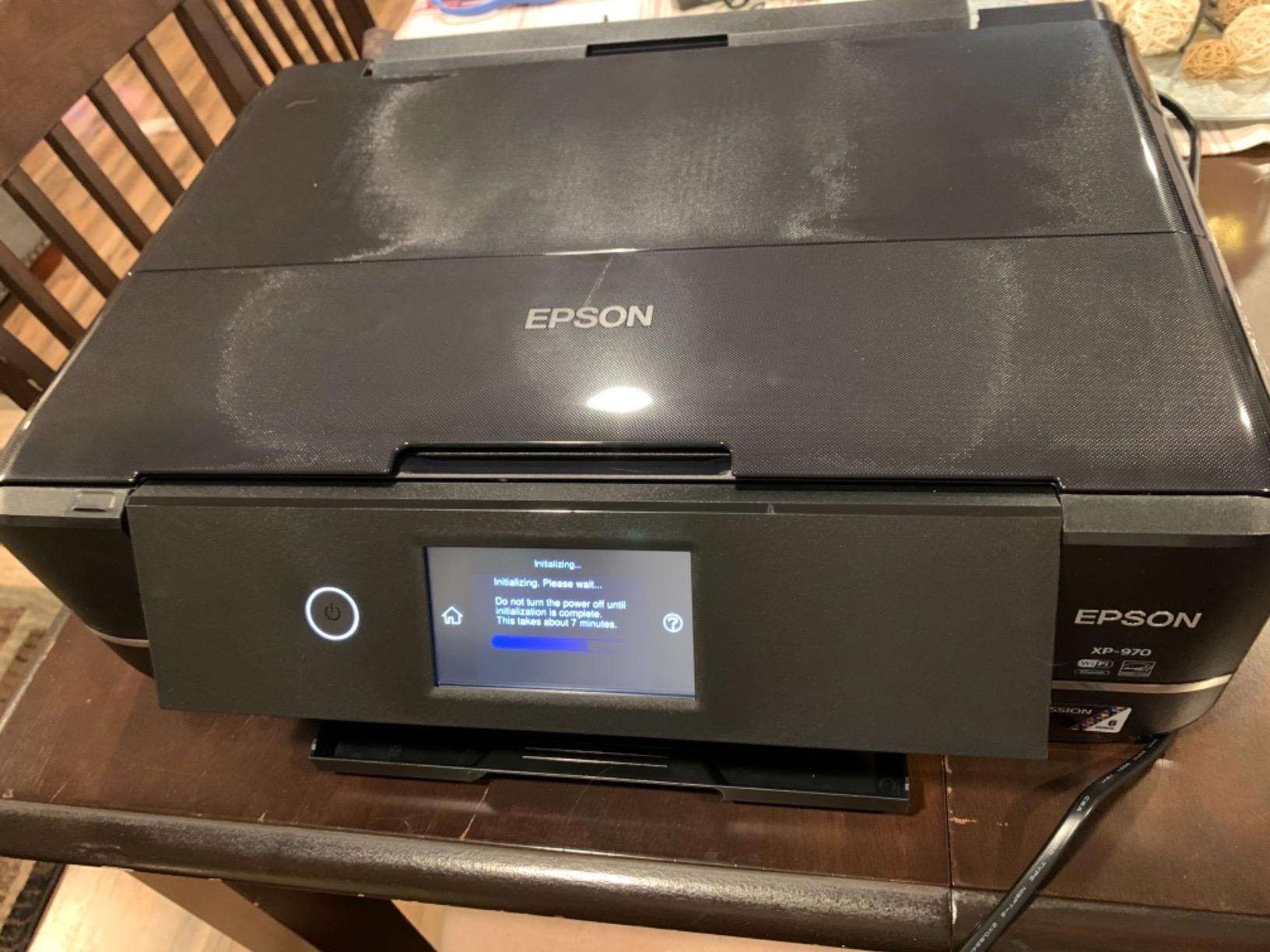
A memory card slot means you can print straight from a camera card without a computer, and voice-activated printing works from a phone or smart speaker. Wireless and wired connections are both present, and automatic duplex handles two-sided documents.
Print speeds are modest at 8.5 pages per minute black and 8 pages per minute colour. For a photo workflow that is not a problem, since image rendering time dominates anyway.
Best for apartments and small desks
Everything else in the wide-format bracket is at least 24 inches wide and considerably heavier. This is the only model here that gives you A3+ output without demanding a dedicated work surface.
Owners value the touchscreen and voice features for everyday jobs, and the six-ink system is a genuine step up from a four-ink office printer at the same size class.
Where it stops short
Maximum print resolution is lower than dedicated photo models, at 600 x 600 dpi colour. That is visible on large prints held close, less so at normal viewing distance.
Cartridge ink keeps running costs high, and the printer is designed to work exclusively with Epson genuine cartridges. Budget for ink before you commit to filling a wall with prints.
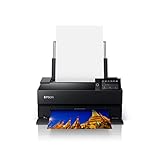
6. Epson SureColor P700 – Best for Archival Pigment Ink
Epson SureColor P700 13-Inch Photo Printer with UltraChrome PRO10 Ink
UltraChrome PRO10 ten-ink pigment system
Borderless A3+
Media up to 1.5 mm thick
4.3-inch touchscreen
Pros
- Ten pigment inks with violet widen the gamut
- Dedicated photo and matte black nozzles
- Roll and cut sheet media support
- Compact for a pro pigment machine
Cons
- Uses Epson cartridges exclusively
- Slow at roughly 1 page per minute
- Single paper tray
The P700 is the most interesting ink system on this list for anyone who plans to keep their prints. Ten pigment inks, including violet, expand the printable gamut well past what four or six colours can reach, and Epson rates print permanence at up to 200 years in colour and 400 years in black and white.
Because every ink here is pigment, colours sit as solid particles on the paper rather than dissolving into it. That is what makes them water resistant and fade resistant, and it is why this machine suits gallery work where dye prints would be the wrong call.
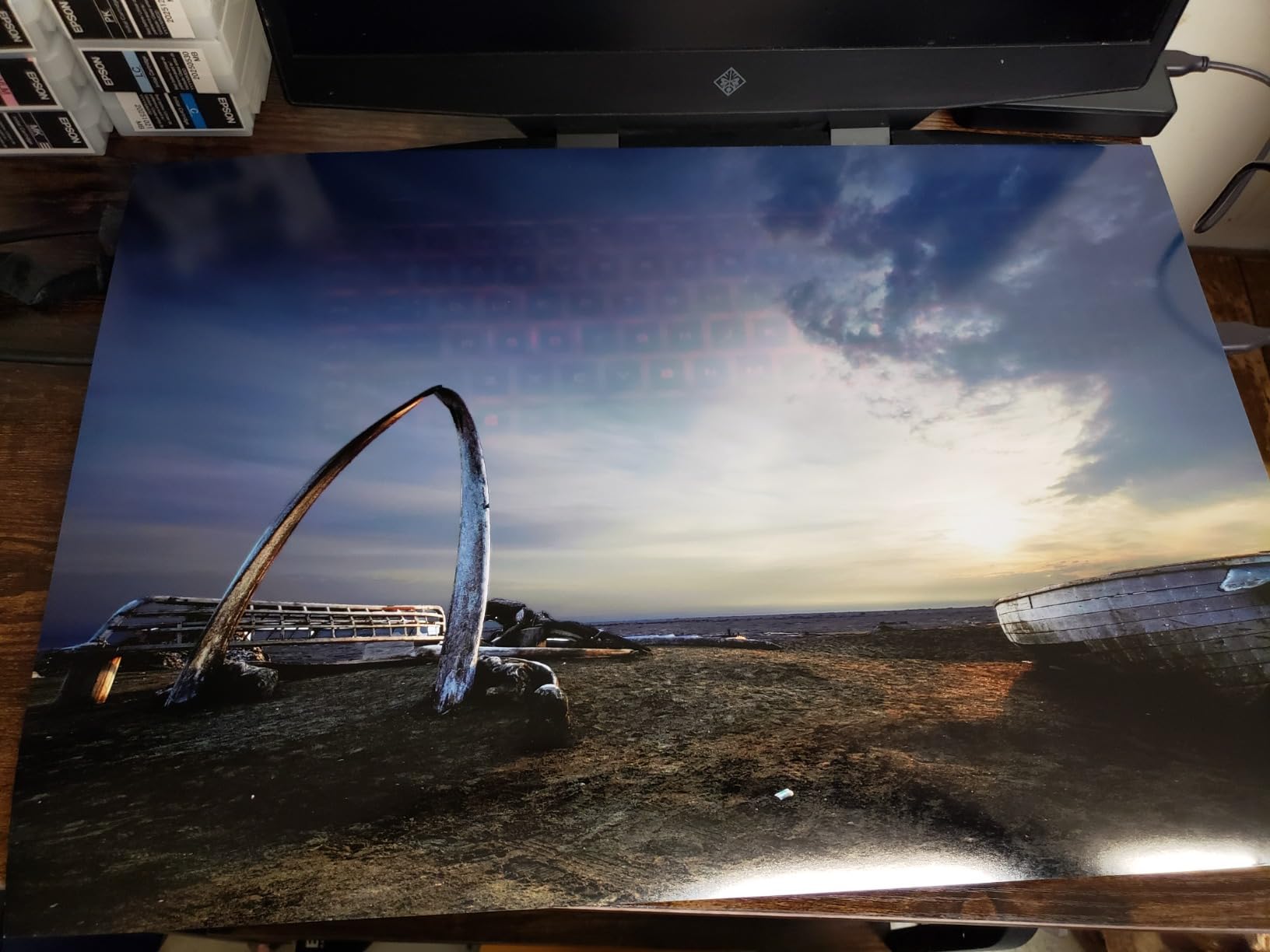
Dedicated Photo Black and Matte Black nozzles mean the printer never has to switch inks mid-job to move between glossy and matte paper. For anyone printing a mixed set of finishes, that removes both wasted ink and one common source of output inconsistency.
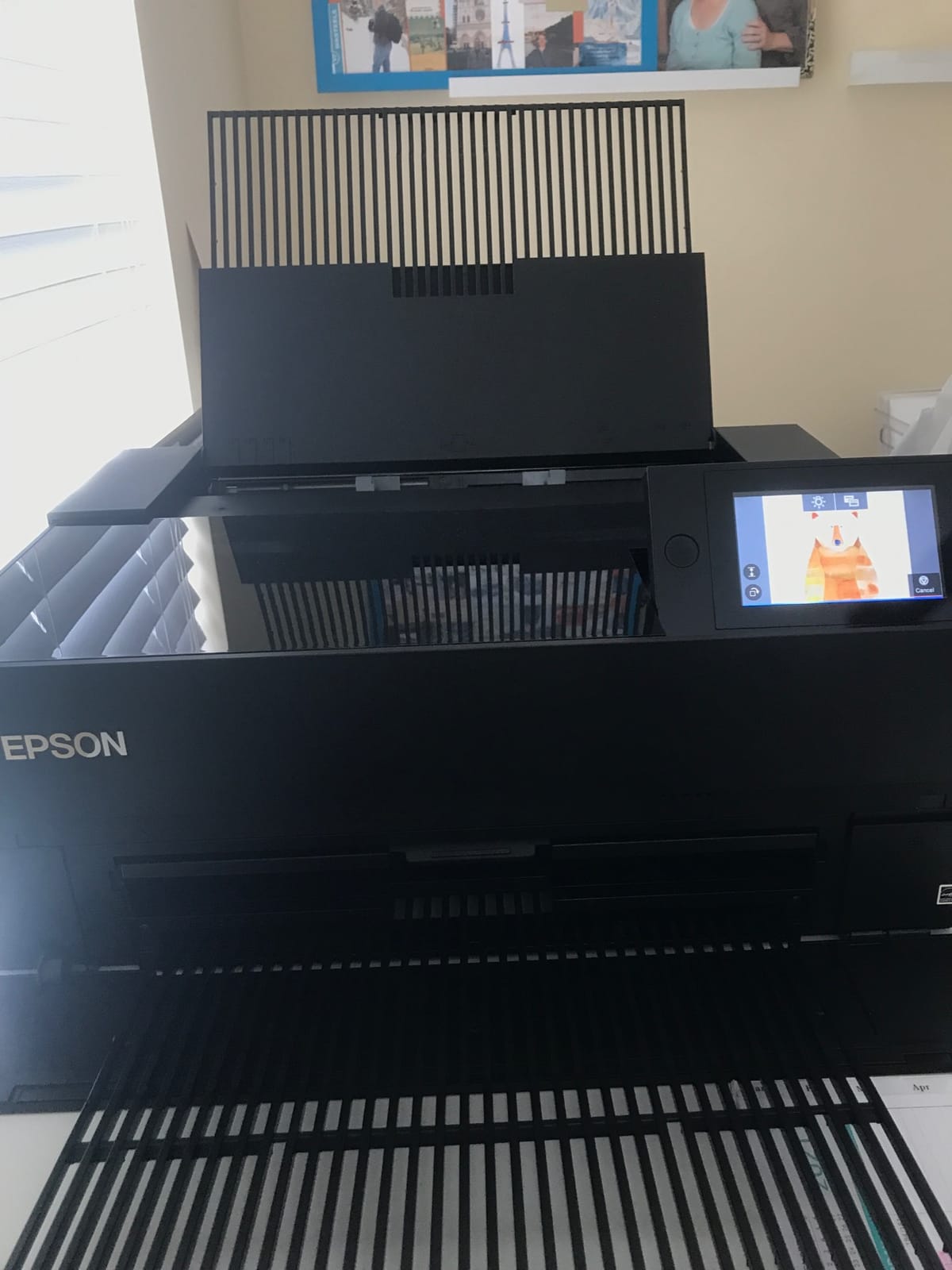
Media handling goes beyond standard sheets. The P700 accepts rolls and cut sheet media up to 1.5 mm thick, which covers fine art papers and canvas without a separate flatbed. The 4.3-inch touchscreen is customizable and has an interior LED light for checking media settings.
Reasons to spend up for this one
If your photographs are for sale, for exhibition or for a family archive, pigment is not a preference. Dye prints shift noticeably within a decade, and buyers of fine art work ask about ink type before they ask about resolution.
Carbon Black Driver Technology increases density on glossy papers, so black-and-white prints hold shadow detail that a standard four-ink machine flattens. Reviewers consistently praise the depth of the blacks.
What you trade for it
Speed is the obvious cost, at roughly one page per minute. A print set will take longer than you expect, so plan to start it before you go to bed.
Cartridge ink keeps the running cost high, and a single tray means less flexibility if you work with multiple paper types in one session.
7. Canon imagePROGRAF PRO-310 – Best for Fine Art Paper
Canon imagePROGRAF PRO-310 Professional 13″ Wireless Inkjet Photo Printer, 3″ Color LCD, 9 Color Pigment Ink, Black
LUCIA PRO II nine pigment inks plus Chroma Optimizer
Borderless up to 13x19
1200 x 1200 dpi
31.6 pounds
Pros
- Nine pigment inks plus Chroma Optimizer
- Matte black gives strong density in shadows
- Anti-clogging system and skew correction
- 3-inch color LCD
Cons
- Print-only with no scanner or copier
- About 2 pages per minute
- Single paper tray
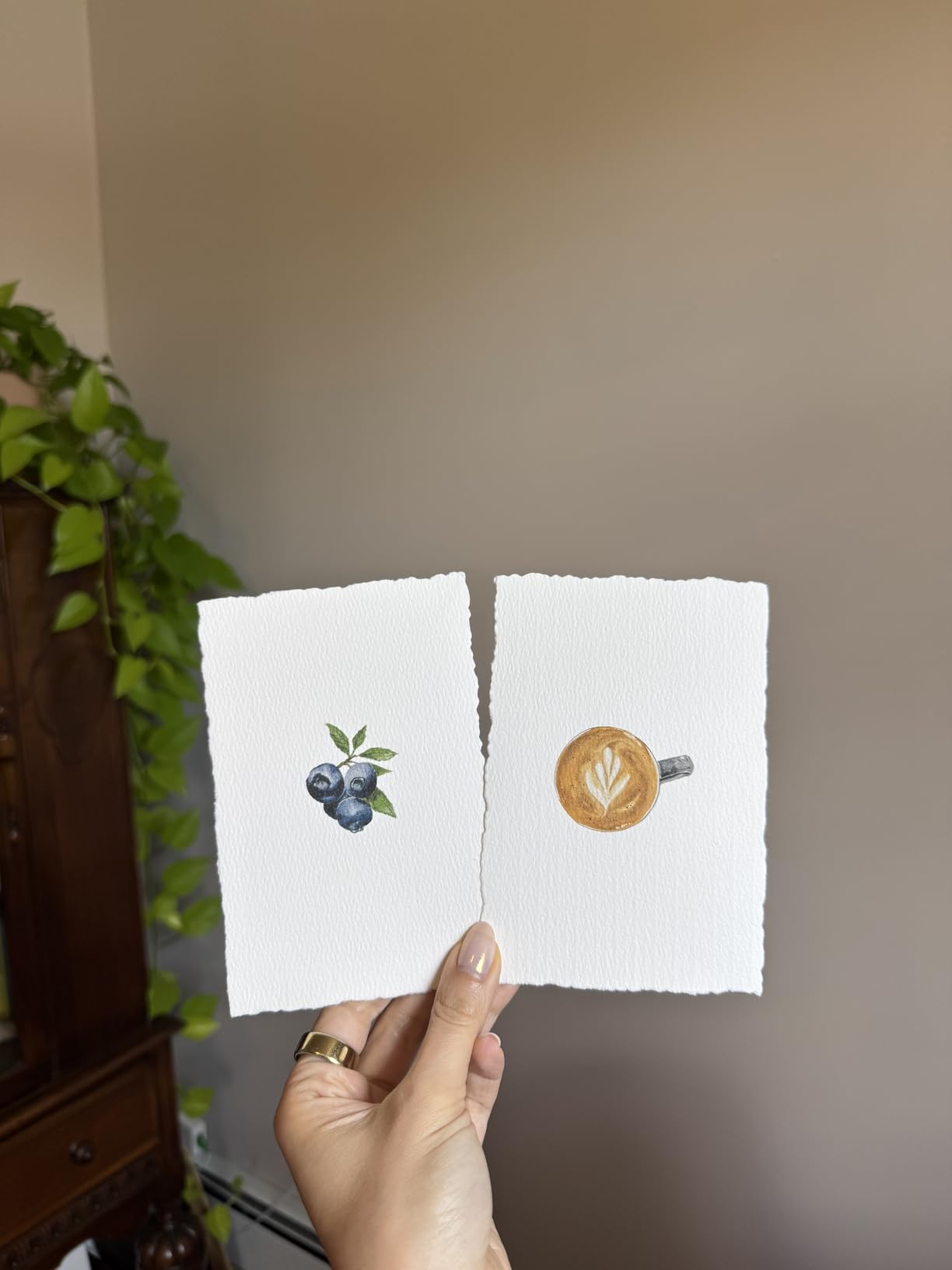
The PRO-310 is built for people who care about paper. Nine pigment inks plus a Chroma Optimizer produce the gloss uniformity and scratch resistance that fine art and baryta papers demand, and reviewers put its fine art handling above anything else at this size.
Matte black is the ink that changes prints. On matte and cotton rag papers, a dedicated matte black gives much higher black density than a photo black swapped into the same channel, and it opens up the shadow range that portrait and landscape work depends on.
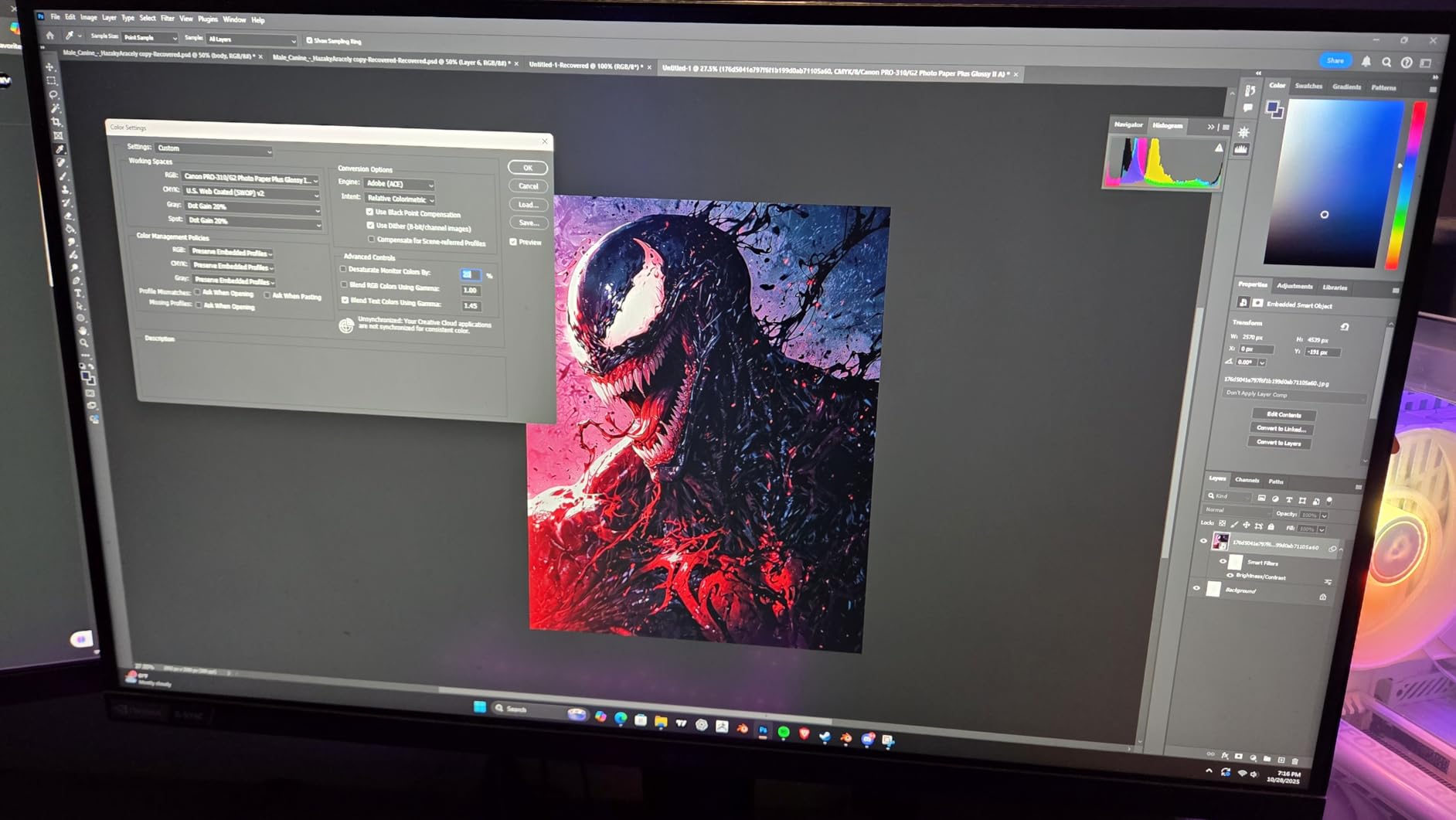
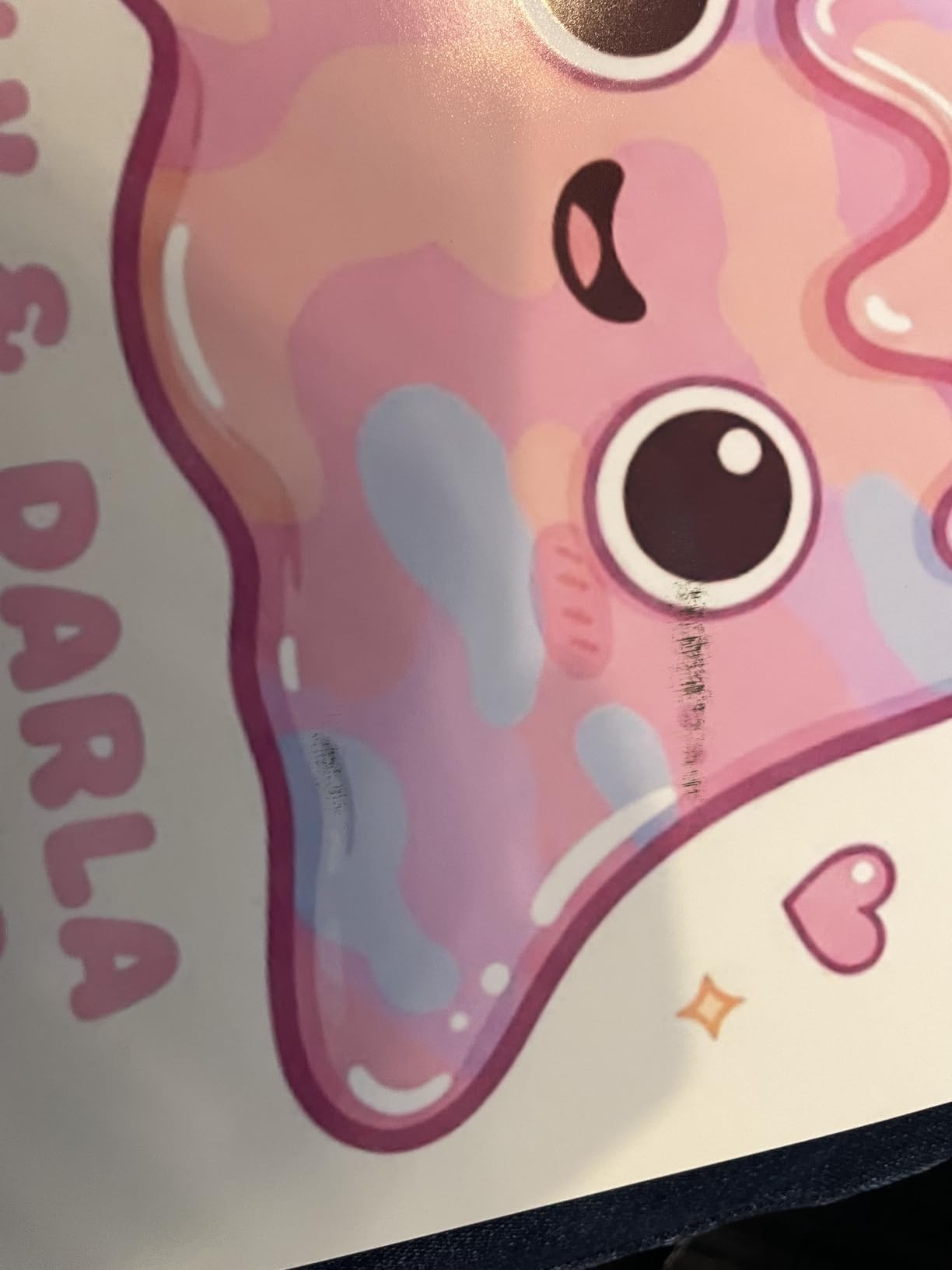
The anti-clogging system and skew correction matter more than they sound. Printers that sit unused between sessions risk dried nozzles, and skew on heavy fine art sheets causes wasted expensive media, so Canon engineered both problems down rather than ignoring them.
Media support reaches 13×19 inches including panorama and custom lengths, which is enough for exhibition prints and portfolio work without moving up to a wider machine.
Why fine art printers pick this
Nine inks means finer gradations between colours than a six-ink cartridge system can produce. That difference shows most in skies, skin and subtle colour transitions, which is exactly where gallery buyers look first.
The Chroma Optimizer ink adds a gloss control layer, which is how the printer keeps sheen even across a large sheet instead of banding in patches.
Where it does not fit
This is a print-only device with no scanner or copier. That is the right call for a dedicated colour machine, but it means two devices in your workflow rather than one.
Document output sits at roughly two pages per minute and there is a single tray, so this suits a photographer rather than a busy family office.
8. Canon imagePROGRAF PRO-1100 – Best for 17-Inch Prints
Canon imagePROGRAF PRO-1100: 17” Professional Wireless Inkjet Photo Printer
Eleven pigment inks plus Chroma Optimizer
Media up to 17x22 inches
Professional Print and Layout
83 pounds
Pros
- Eleven pigment inks plus Chroma Optimizer
- 17x22 inch media for exhibition work
- Anti-clogging head with air feeding system
- 250-sheet paper capacity
Cons
- Very heavy at 83 pounds and large
- Print-only with no scanner or copier
- Slow at roughly 1 page per minute
The PRO-1100 crosses from A3+ into true exhibition territory. Media runs from A5 up to 17×22 inches, and with 250 sheets of capacity it can hold a full print run on paper, which removes the constant refilling that interrupts long jobs on smaller machines.
Eleven pigment inks plus a Chroma Optimizer is the widest ink set among the Canon models here. More inks mean finer gradations and better coverage of difficult hues, and photographers using this machine report colour that holds up under gallery lighting.
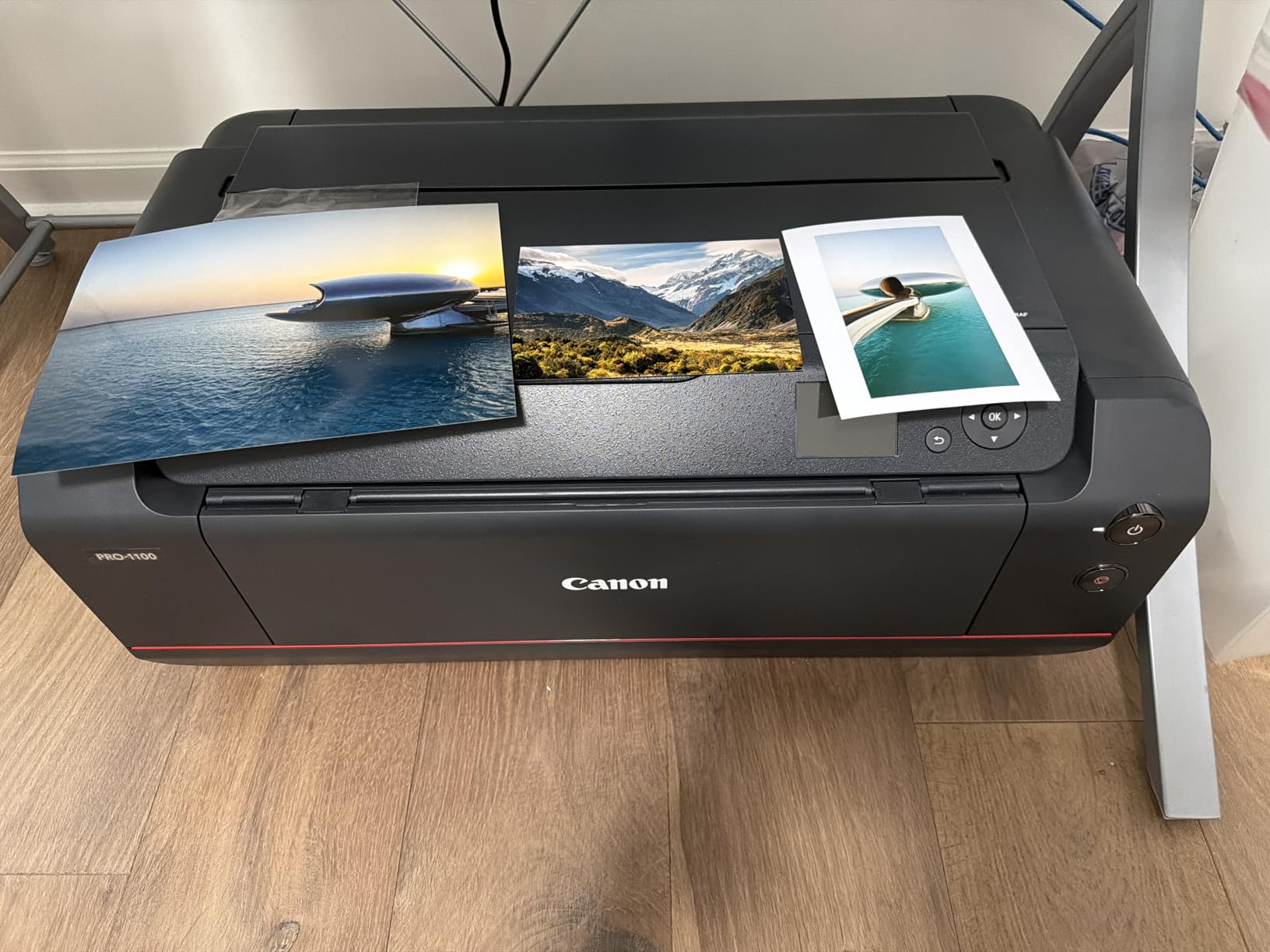
The anti-clogging FINE print head and air feeding system are both worth noting for a machine that will sit for weeks between print sessions. The air feeder keeps heavy media flat and reduces skew, which is the usual reason large pigment printers waste a sheet.
Professional Print and Layout comes with Digital Photo Professional plug-in support, plus Media Configuration, Color Calibration and Accounting Manager tools. For someone working to a spec sheet for a client, that calibration tooling is the reason to choose it.
Where the extra size pays off
A 17×22 print fits a standard gallery frame without cropping or tiling. That removes a real step from the workflow of anyone selling prints, because the finished piece arrives ready to hang.
The L-COA Pro image processing engine handles large data volumes, so editing and printing in one continuous workflow does not stall the queue.
What you need to prepare for
At 83 pounds this is not a device you move around a flat. Measure the space, check the route to its final position and put it where it will live.
Document speed of about one page per minute means this is for photographs, not paperwork. The machine also includes twelve 80mL PGI-4100 ink tanks, which is a meaningful head start on running costs for a pigment system.
9. Canon PIXMA PRO-100 – Best for Black and White Photo Printing
Canon PIXMA PRO-100 Professional Photo Printer
Eight dye inks including three grayscale
4800 x 2400 dpi FINE engine
Up to 13x19 borderless
43.4 pounds
Pros
- Three dedicated grayscale inks for neutral black and white
- Individual tanks replace only the spent colour
- 4800 x 2400 dpi at up to 13x19
- Wireless printing supported
Cons
- Older cartridge-tank design rather than bulk ink
- Manual duplex only
- About 1 page per minute
Neutral black and white is the requirement forum photographers repeat most, and this is the printer built specifically around it. Eight dye inks include three dedicated grayscale inks, and grayscale printed from real inks rather than converted colour looks neutral instead of carrying a colour cast.
That distinction is invisible until you compare prints side by side. A converted colour print often shows a faint warm or cool tint in the midtones, and on a matte fibre paper that tint is obvious. Three grayscale channels fix it.
The FINE engine prints at 4800 x 2400 dpi with up to 13×19 borderless output, and the Optimum Image Generating system selects the ink combination and placement per image. Two trays and a 150-sheet capacity give reasonable paper flexibility.
Individual CLI-42 tanks are worth calling out. You replace only the colour that ran out, so a heavy black-and-white workload never forces you to discard a partially used set of colour inks.
Best for monochrome work
If your portfolio is largely black and white, the extra colour inks are close to wasted capacity and the grayscale trio is doing the real work. Nothing else at 13×19 gives you three separate grey channels.
Reviewers note strong gradient rendering, which is what monochrome photography depends on most. Smooth ramps from highlight to shadow are the whole point.
Where it falls behind
The individual tank format is dated. It avoids the waste of all-in-one cartridges, but it is not a modern bulk ink system, so per-litre cost sits between cartridges and refillable tanks.
Duplex is manual and document speed is about one page per minute. This is a photo machine for people who already know exactly what they want to print.
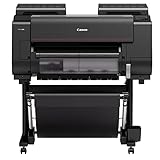
10. Canon PRO-2100 – Best for Gallery-Scale Prints
CANON PRO 2100 24 WIDE, FORMAT FINE ART PRINTER
Twelve-color LUCIA PRO pigment set
24x59 inch media
2400 x 1200 dpi
Roll loading system
Pros
- 24-inch media for exhibition prints
- Colour accuracy reported as strong out of the box
- Smooth handling of fine art paper
- Improved roll loading mechanism
- Works from Photoshop without a separate RIP
Cons
- Very high cost of ownership for a home studio
- Ink refills are expensive though long-lasting
- Learning curve with the layout software
- Large 49-inch-wide footprint
At 24 inches wide, the PRO-2100 leaves home printing entirely. The twelve-ink LUCIA PRO pigment set, including Photo Black, Matte Black, Gray, Photo Gray, Red, Blue and Chroma Optimizer, is the most complete ink specification in this guide and the reason it holds the highest rating here.
Photographers moving from large-format Epson units report accurate colour out of the box with rich deep blacks, and the fine art paper handling is smooth enough that wasted sheets are rare. It also prints directly from Photoshop or other applications without requiring a separate RIP utility.
Media support runs to 24×59 inches, which covers panoramas, exhibition panels and multi-panel installations. The Multifunction Roll System with the RH2-29 roll holder and the included rotary cutter make loading a roll straightforward once you understand the sequence.
The operator interface walks you through startup, software setup and roll changes. For a machine this size that guidance is not decoration, it is the difference between a smooth workflow and a frustrating afternoon.
Reasons to look at this tier
Twelve inks is the difference between rendering a hue and approximating it. Reds, blues and the two greys give a tonal separation that a nine-ink set cannot reach, and that is why this specification leads the group.
It is also the only machine here that handles exhibition work without a second device. If you print work for public spaces, the width alone removes an entire production step.
Where reality bites
The cost of ownership is substantial for a small studio, and ink refills remain expensive even though each one lasts a long time. Factor that into any business calculation before committing.
The 49-inch-wide footprint needs planned floor space, and the layout software has a learning curve that will take a few sessions to feel natural. None of that matters if you print exhibition work daily. All of it matters if you do not.
How to Choose an Inkjet Printer for Photo Prints
Start with the size of the prints you actually make. Most buying mistakes come from choosing on ink specification and then discovering the paper tray will not take the format you framed. Letter and A4 covers a snapshot habit. A3+ or 13×19 covers framed prints. Anything beyond that is exhibition work.
Next, count the inks. Four colours produce visible grain in skies and banding in skin tones. Six inks, including a light grey or light cyan, removes most of that. Eight to twelve inks, as used by the Canon models here, get you to smooth gradations and a wider gamut.
Then decide between dye and pigment. Dye inks give brighter, more saturated colour and are cheaper, which makes them right for snapshots and prints you will hand around. Pigment inks sit on the surface, resist water and last far longer, which makes them right for anything framed, sold or archived. Epson rates print permanence on the SureColor P700 at up to 200 years in colour and 400 years in black and white for pigment output.
Tank versus cartridge is the running cost question. Refillable tanks spread the cost of ink across hundreds of prints, while cartridges charge a premium for volume. The ET-8550 is quoted at roughly four cents per 4×6 photo, and that gap versus a cartridge machine widens with every print after the first dozen.
Canon or Epson for photos?
Canon tends to win on speed and on pigment ink counts at the professional end, with the PIXMA PRO-200S producing an A3+ bordered print in 90 seconds and the imagePROGRAF models carrying nine and eleven pigment inks. Epson tends to win on tank economics and on the sheer availability of six-colour dye systems, and its Claria ET Premium inks are the reason the ET-8550 prints so cheaply.
For black and white, look for dedicated grayscale channels rather than brand loyalty. The PIXMA PRO-100 carries three of them, and grey ink is what removes the colour cast from a converted monochrome print.
Is inkjet or laser better for photos?
Inkjet, without much argument. Laser printers fuse toner onto the paper with heat, which produces colour that sits differently on photographic surfaces and cannot reproduce the tonal range of a six-ink dye system. Laser wins on speed and on running cost per page of text, and it loses on everything that matters in a photograph.
Dye-sublimation is the other comparison photographers raise. It produces very good small prints and, on paper, can outlast dye inkjet. It cannot print borderless sheets larger than postcard size on most consumer machines, and forum users report solid colour banding in dark blue skies on some models. Our sublimation printer guide covers that format properly if you want both.
What paper should you use for home photo printing?
Match the paper to the room and the frame. Glossy paper looks sharp under direct light but catches reflections, which makes it wrong for anything hung opposite a window. Matte paper has no reflections and hides fingerprints, which makes it the safest default for family photos. Lustre or satin sits between the two.
Weight matters more than most buyers expect. Anything around 180 gsm or heavier feels substantial and resists curling. Fine art papers above 250 gsm need a printer with a rear feed or roll support, because they will not reliably run through a front tray. Of the models here, the SureColor P700 and the PRO-1100 handle thick media best.
Use the printer’s own borderless and media settings rather than letting your editing software pick. Choosing the right paper profile in the driver is what closes the gap between the preview and the print.
Keeping an Infrequently Used Photo Printer Healthy
Dried ink in the print head is the single most common complaint about home photo printers, and it is the one that ends up in every forum thread about this topic. It matters more for photography than for office printing because an occasional photo print uses all six or more channels at once, which is exactly the pattern that exposes a blocked nozzle.
Run the head clean cycle once a month while the printer is idle. It uses ink, so do it during a period when you are not watching print costs. A blocked nozzle caught early is cleaned in one cycle; a dry printhead left for months can take several.
Keep the printer plugged in and powered. Modern machines run very low-power head maintenance during idle periods, and unplugging between sessions stops that protection entirely.
Print a full-colour test image, not a black-and-white document, when you do use it. A colour page exercises every channel, which is what keeps them clear.
Store paper sealed in its original packaging away from direct sunlight, and leave the paper tray loaded if you can. Exposed photo paper picks up moisture and dust that show as defects in glossy prints.
If a nozzle stays blocked after two clean cycles, most manufacturers will replace or repair the printhead rather than the printer. Check the warranty terms before you replace the whole machine.
Frequently Asked Questions
What is the best printer for home use photo printing?
The Epson EcoTank Photo ET-8550 is the strongest all-round choice for home photo printing, with six dye inks, borderless output to 13×19 inches and running costs of roughly four cents per 4×6 photo. If your prints never exceed A4, the HP Envy Photo 7975 covers the same need in a much smaller body.
Which inkjet printer is best for photos?
That depends on which photos. Dye ink models such as the Epson EcoTank Photo ET-8550 and the Canon PIXMA PRO-200S give the brightest, most saturated results. Pigment models such as the Epson SureColor P700 and the Canon imagePROGRAF PRO-310 give longer-lasting, more archival output.
Is Canon or Epson better for photos?
Canon leads on print speed and pigment ink count at the professional end, with an A3+ bordered print in 90 seconds on the PIXMA PRO-200S and eleven pigment inks on the imagePROGRAF PRO-1100. Epson leads on running cost and six-colour dye availability, with the ET-8550 rated at about four cents per 4×6 photo.
Is inkjet or laser better for photos?
Inkjet wins for photographs. Laser uses heat to fuse toner onto the surface, which cannot match the tonal range or gradation of a multi-ink dye system. Laser printers are faster and cheaper for text, but they are not photo machines.
Are inkjet printers good for photo printing?
Yes. A dedicated photo inkjet with six or more inks produces results that match or beat many professional print services, particularly on glossy and matte photo paper. The difference between a four-ink office printer and a six-ink photo printer is most visible in skies and skin tones.
What paper should I use for photo printing at home?
Matte or lustre paper around 180 gsm or heavier is the safest default for framed family photos, because it resists reflections and fingerprints. Glossy paper suits prints viewed close up in low light. Fine art papers above 250 gsm need a printer with rear feed or roll support, such as the SureColor P700.
The Verdict: Which Inkjet Printer Should You Buy in 2026
After ten printers and a lot of paper, the Epson EcoTank Photo ET-8550 remains the pick for the best inkjet printers for photo prints overall. Six dye inks, a 13×19 borderless ceiling, a dedicated 4×6 tray and refillable tanks cover more real use cases than anything else we tested, and the running cost per print keeps it ahead long after the first box of ink.
Buy the Canon PIXMA PRO-200S if speed matters more than anything, the Canon imagePROGRAF PRO-310 if you print on fine art paper, and the Epson SureColor P700 if your photographs need to last for decades. Whichever you choose, buy the paper first. A better printer and cheap paper still gives you a disappointing print.