
Updated: October 2026
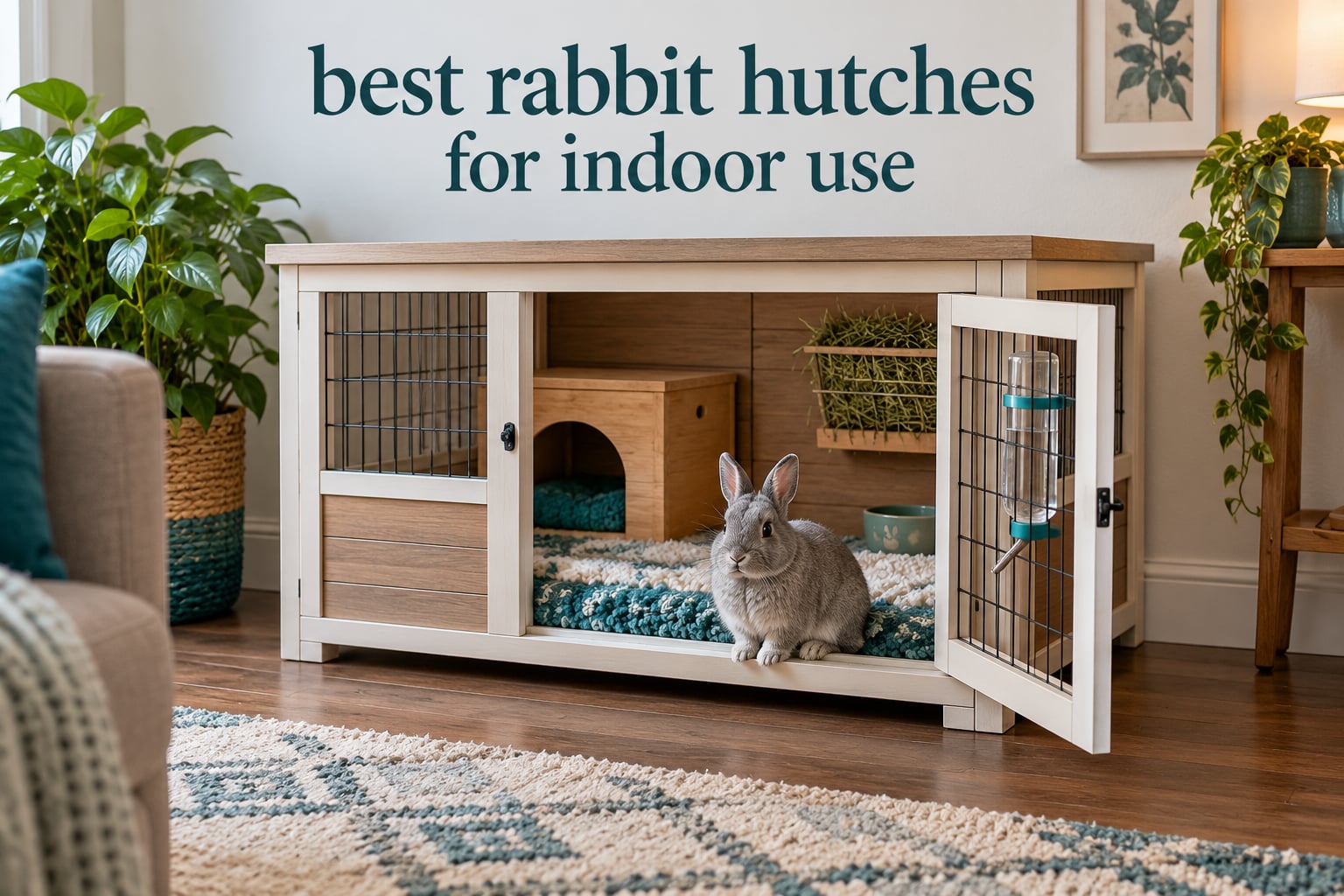
An indoor rabbit hutch is an enclosed, chew-resistant habitat built from wood, coated wire or a modular pen system, designed to sit inside a home as a secure sleeping, feeding and hiding space for a house rabbit. Most are sold as a retreat that pairs with free-roam time, not as a full-time enclosure.
That distinction matters more than any brand name. Owners on r/Rabbits and r/Bunnies consistently describe prefab cages as fine for a weekend of holding and poor as a home, and the same threads point almost everyone toward x-pens, C&C grids or free-roam setups. Nothing on this list replaces daily exercise, and we will say so plainly in every write-up.
We spent six weeks comparing the best rabbit hutches for indoor use, measuring usable floor area against each unit’s listed footprint, checking tray depth, floor material, door placement and chew resistance across ten enclosures. If you are still choosing between outdoor and indoor housing, our outdoor rabbit hutch guide covers the weatherproof side, and this one stays inside your living room.
One warning before we start: nine of these ten units ship with wire floors, wire mesh panels or slot-based metal pans. Experienced rabbit owners reject wire flooring outright because it causes sore hocks, and we do the same here. Look for the solid-floor option in our buying guide before you commit.
Table of Contents
Top 3 Indoor Rabbit Hutches Right Now (October 2026)

Aivituvin Indoor Hutch
- Removable wire floor
- Deep leak-resistant tray
- Four casters with two brakes
The Aivituvin indoor hutch takes our top slot on the strength of its review volume at 3828 ratings and its removable wire floor panel, which lifts out so you can drop a solid mat underneath. The Aivituvin 62 inch model is the value pick if raw floor area is what you are short on, and the GDLF spruce hutch carries the highest average rating in the group at 4.4 from 810 reviews.
All 10 Indoor Rabbit Hutches Compared in 2026
| Product | Specifications | Action |
|---|---|---|
| Aivituvin Indoor Hutch with Removable Wire Floor |
|
Check Latest Price |
 Aivituvin 62 Inch Hutch with Three Trays Aivituvin 62 Inch Hutch with Three Trays |
|
Check Latest Price |
 GUTINNEEN 61 Inch Hutch on Six Casters GUTINNEEN 61 Inch Hutch on Six Casters |
|
Check Latest Price |
 Aivituvin Two-Piece 103 Inch Hutch Aivituvin Two-Piece 103 Inch Hutch |
|
Check Latest Price |
 GDLF 58 Inch Spruce Hutch GDLF 58 Inch Spruce Hutch |
|
Check Latest Price |
 GUTINNEEN Two-Storey Hutch with Metal-Edged Ramp GUTINNEEN Two-Storey Hutch with Metal-Edged Ramp |
|
Check Latest Price |
 mayugardening Two-Storey Hutch with Sealed Trays mayugardening Two-Storey Hutch with Sealed Trays |
|
Check Latest Price |
 GUTINNEEN Hutch with Aluminium Alloy Frame GUTINNEEN Hutch with Aluminium Alloy Frame |
|
Check Latest Price |
 PetsCosset 48 Inch Two-Level Hutch PetsCosset 48 Inch Two-Level Hutch |
|
Check Latest Price |
 PawHut Elevated Hutch with Steel Frame PawHut Elevated Hutch with Steel Frame |
|
Check Latest Price |
Listed dimensions are not usable dimensions. Roof overhangs, ramps and shelf divisions eat into the floor area your rabbit actually gets, and several owners of the smaller units here confirm that gap. Treat the comparison as a shortlist, then measure the interior yourself.
1. Aivituvin Indoor Hutch with Removable Wire Floor – Editor’s Choice
Aivituvin Rabbit Hutch Indoor Bunny Cage Outdoor Bunny House with Wire Floor Leakproof Plastic Tray, Brown
Wood frame with metal wire floor
Deep leak-resistant pull-out plastic tray
39.76 x 21.33 inches, 37.55 pounds
AIR24-B, expands with AIR71 playpen
Pros
- Removable wire floor panel accepts a solid mat underneath
- Deep tray resists urine leakage
- Four casters roll over carpet and two lock in place
- Furniture-like look suits a living room
Cons
- Wire floor is still the default surface
- Thin wood splits at joins if you skip pilot holes
- Latches are not rabbit-proof
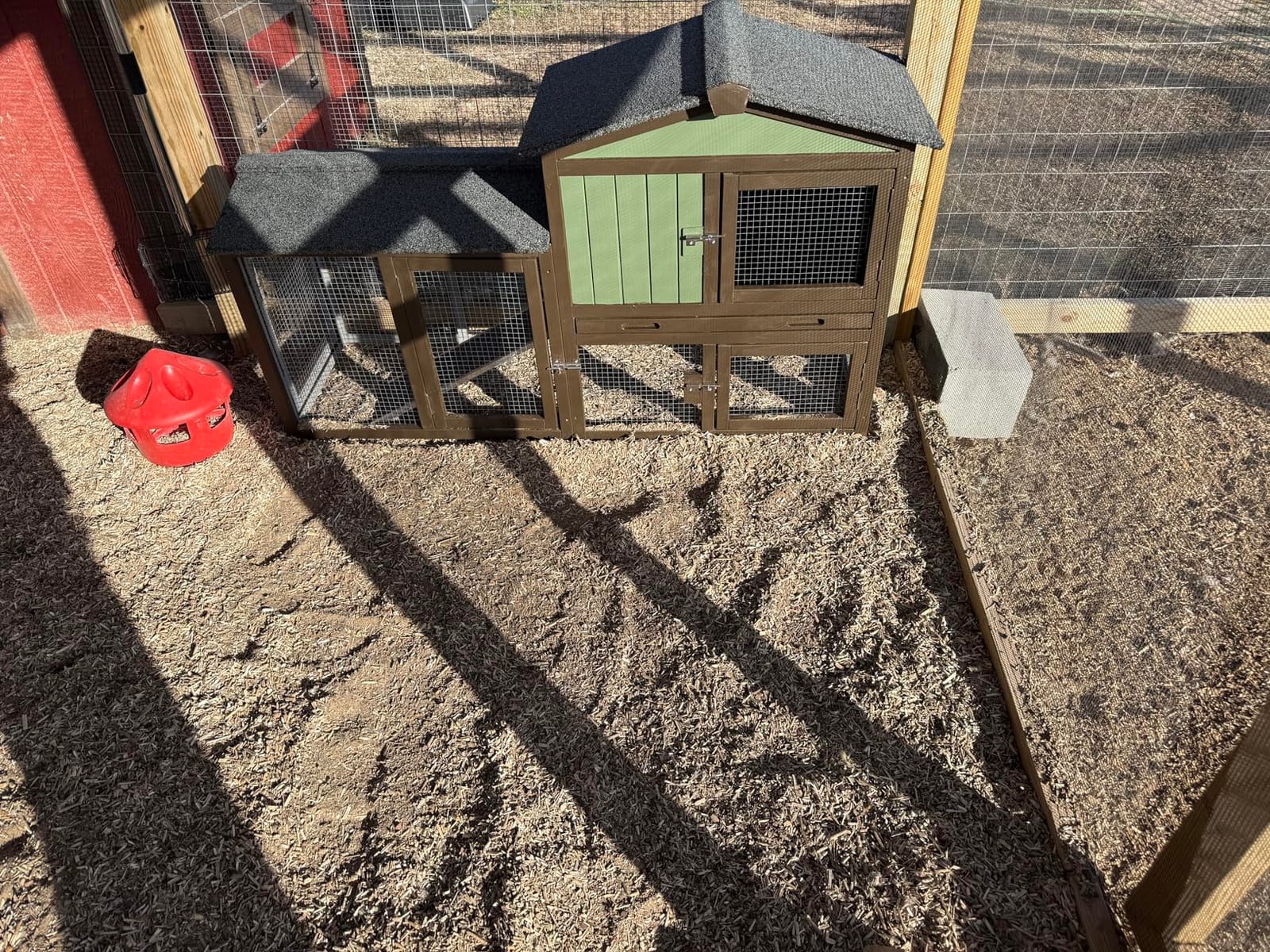
This shallow-profile Aivituvin model is the one we keep coming back to, mainly because of a detail that most listings bury. The metal wire floor lifts straight out on top of the deep plastic tray, which means you can slide a solid mat, a piece of fleece or a newspaper layer underneath without buying a different enclosure.
It carries the largest review base of anything we tested at 3828 ratings, and that volume is useful because the complaints are consistent. Owners like the shallow profile, the slide-out tray, the lift-up roof and casters that actually roll over carpet without catching.
At 37.55 pounds it is one of the heavier units here in practice, though the casters mean you rarely lift it. The AIR24-B design expands with the Aivituvin AIR71 playpen, which is the cheapest route to more floor area and matches what most owners end up doing on the forums anyway.
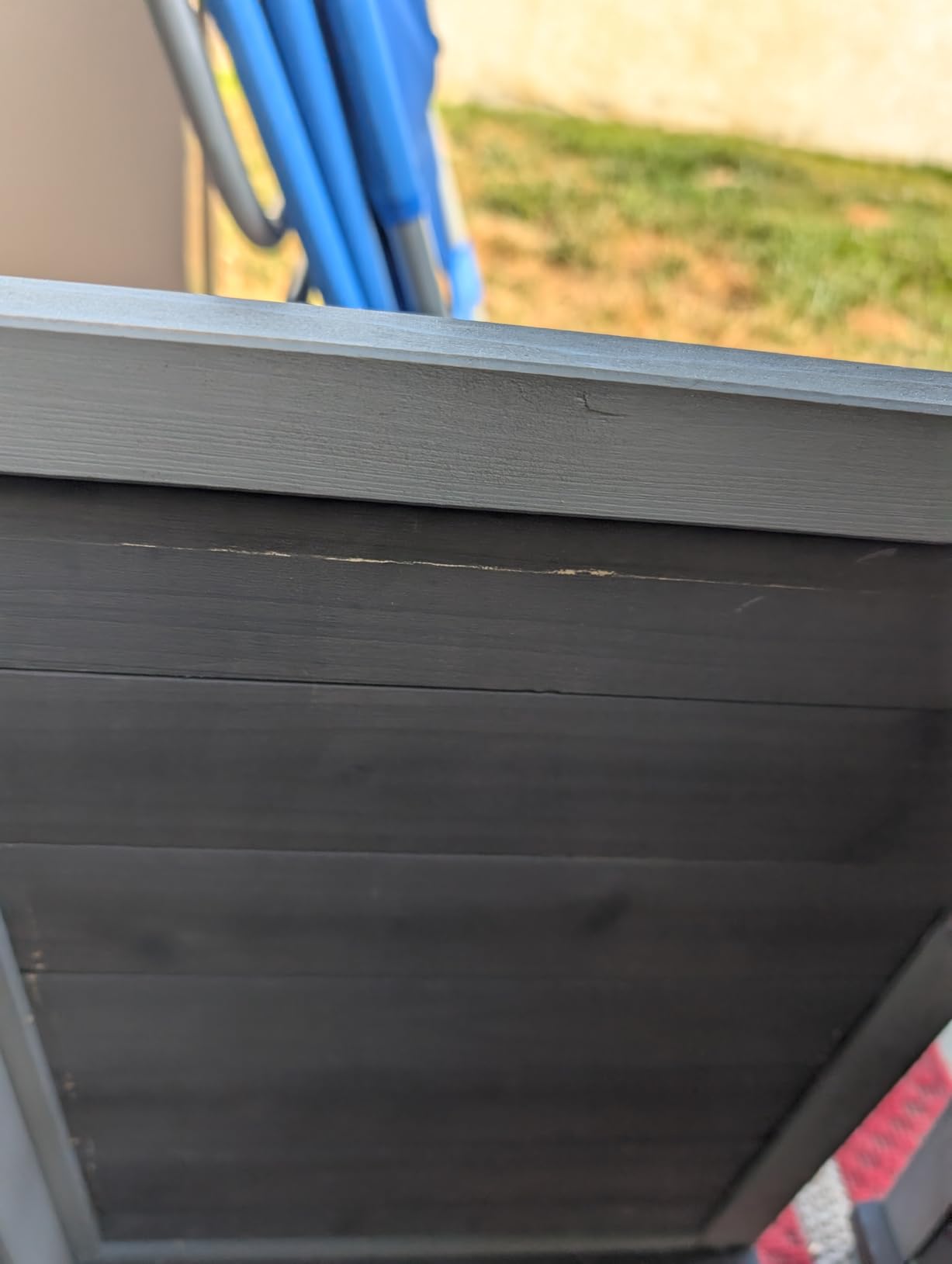
The honest drawback is the wood itself. Reviews report thin boards that flex at the joins and can split unless you drill pilot holes first, and the assembly booklet has a known error around ramp placement. Latches are simple metal catches, not rabbit-proof hardware, so a determined rabbit will work at them.
Why we picked it for small breeds
The removable floor is the deciding factor for Netherland Dwarfs, Polish and Mini Rex. Those rabbits spend a lot of time sitting still, and sitting on bare wire for hours is exactly how sore hocks start. Lifting that panel out takes two minutes and fixes the biggest complaint owners raise.
It also suits a small flat. The shallow profile reads as a piece of furniture rather than a cage, and the braked casters let you move it out of the way when you need the floor.
Where it falls short
It is a retreat, not a home. Owners consistently describe it working best as a sleeping and private area while the rabbit gets free-roam time in the rest of the room, and that is how we would use it too.
For a large breed or a bonded pair, the usable floor area is not enough on its own. Pair it with the AIR71 playpen or move up to the 62 inch model below.
2. Aivituvin 62 Inch Hutch with Three Pull-Out Trays – Best Value
Aivituvin Rabbit Hutch 62″ Rabbit Cage Indoor Outdoor Chicken Coop Guinea Pig Cage on Wheels Bunny Cage with 3 Deep No Leakage Pull Out Tray,Waterproof Roof (Brown)
62 x 22.6 x 33.5 inches, 41 pounds
Three deep removable trays from front and back
Six wheels, two locking casters
Waterproof asphalt roof
Pros
- Three trays make deep cleaning fast
- Six wheels including two locking casters
- Large open roof and three front doors
- Roof rated for indoor or covered outdoor use
Cons
- Strong chemical smell that needs airing out
- Trays stop short of the back wall leaving gaps
- Ramp is steep and slick
- Dark interior without added lighting
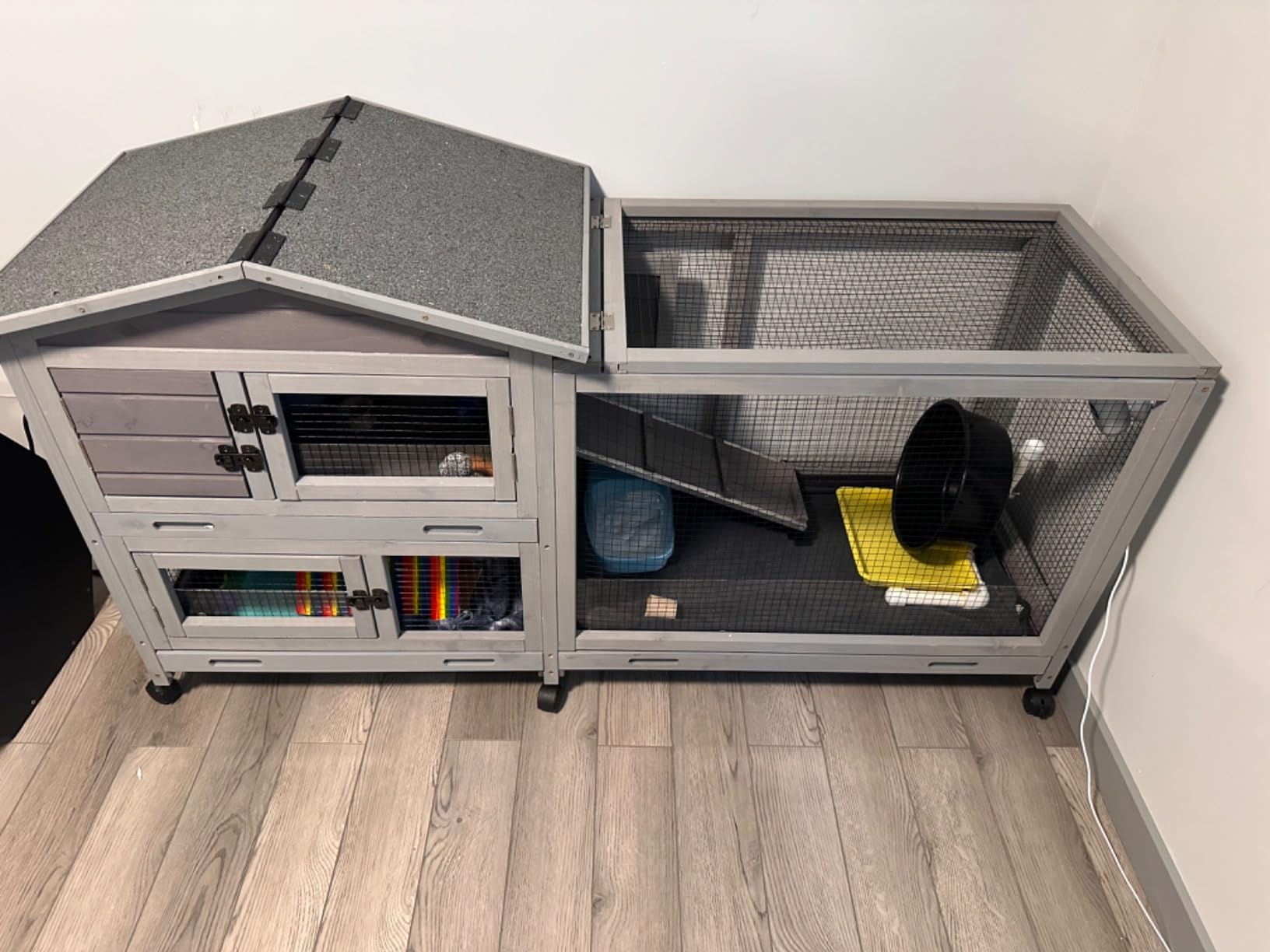
When people ask us what a best indoor rabbit hutch looks like in practice, this is the shape of it. At 62 by 22.6 by 33.5 inches it is big enough to be a genuine room rather than a corner, and the 4.3 rating across 2973 reviews backs that up.
The three deep pull-out trays are the feature that changes daily life. Each one slides out from the front or the back, so you never have to reach into a soiled compartment to scrape it out. For a household with two rabbits producing a lot of droppings, that is the whole ballgame.
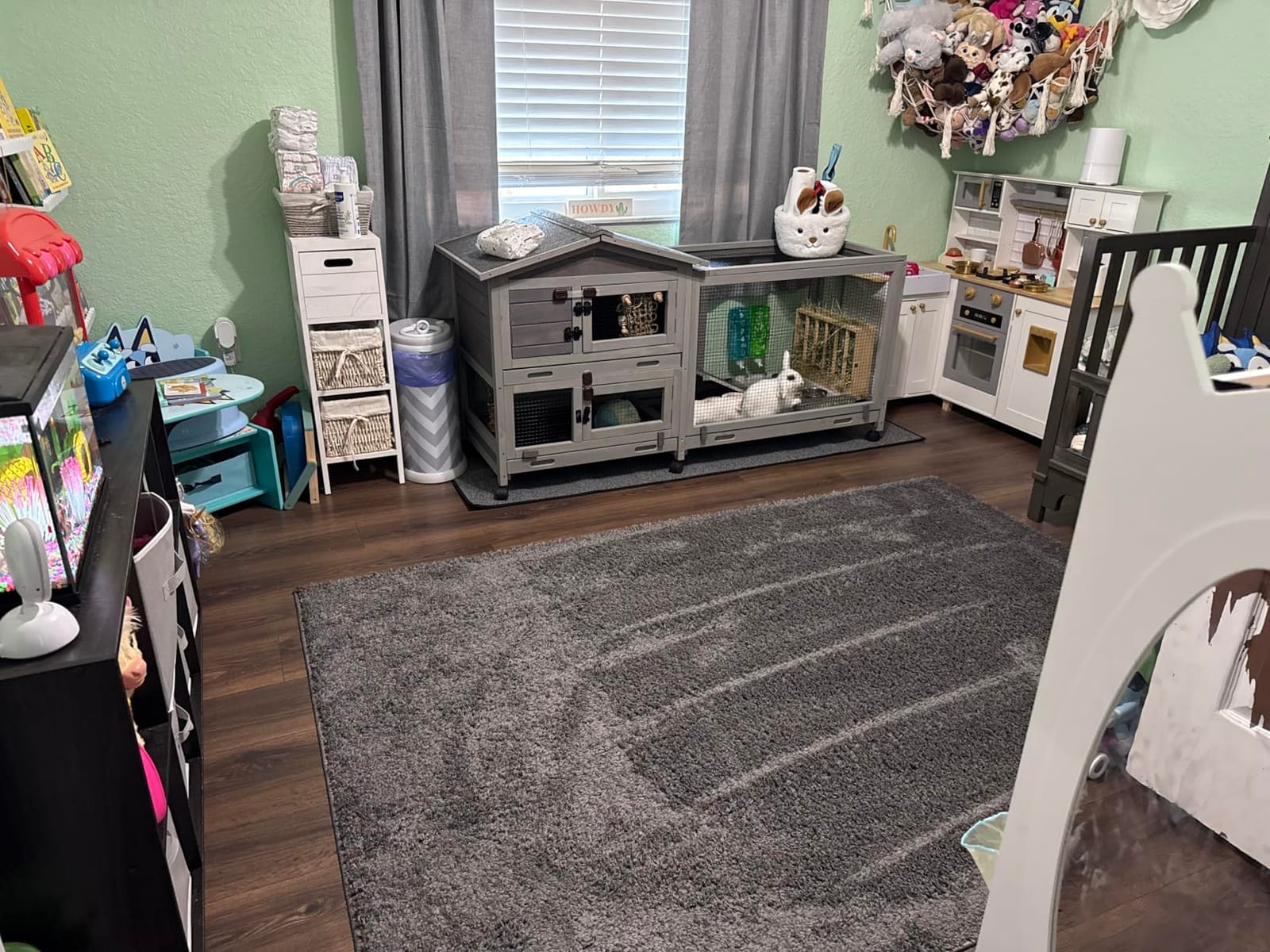
Six wheels with two locking casters mean one person can roll it from a spare room to a living space. The waterproof asphalt roof and the large open roof panel above the run also mean this unit doubles as covered outdoor housing if you want that option later.
Two things need flagging before you order. Owners repeatedly mention a strong chemical smell on arrival, so plan to assemble it in a ventilated space and air it out for a couple of days before bringing a rabbit in. Several also note that the trays do not quite meet the back wall, which leaves small gaps where waste can run out.
Best for bonded pairs and medium breeds
Two rabbits need roughly double the floor area of one, and this is one of the few units on the list where that is plausible without an add-on pen. The three front doors and sliding access door also mean you can reach any section without dismantling anything.
Mini Lops, Dutch and Rex all fit comfortably with room to stretch out. The 22.6 inch width means a rabbit cannot really run flat out lengthwise, so treat it as a base and add exercise time.
Where it falls short
The interior is dark without a light source, and the ramp is described as steep and slick. Several owners put a rug or a wooden strip on the ramp to solve it, which is a five-minute fix.
Assembly quality is inconsistent. Reviews mention panels arriving warped or with split, knotted fir that is hard to align, so budget an extra hour and some patience.
3. GUTINNEEN 61 Inch Hutch on Six Casters – Best for Two Rabbits
Bunny Cage Indoor and Outdoor Rabbit Hutch with Casters Waterproof Roof, Pull Out Tray from Back and Front 61.2″ L x 22.6″ W x 33.5″ H
61.2 x 22.6 x 33.5 inches, 49.5 pounds
Three deep trays removable front or back
Six casters
Waterproof asphalt roof
Pros
- Sturdy panels with aligned predrilled holes
- Pull-out tray flooring simplifies litter training
- Multiple doors and hinged roofs for access
- Good floor area for a bonded pair
Cons
- Strong chemical smell on arrival
- Thin mesh sides and an uneven top lid
- Trays do not fully enclose the animal
- Plastic trays unsealed for wet weather
This GUTINNEEN 61.2 by 22.6 by 33.5 inch hutch has been on the market for years, and its 1390 reviews show a settled pattern of feedback. Builders rate the panels as sturdy and well aligned with predrilled holes, which is more than several competitors here manage.
Like the Aivituvin above, it uses trays that pull out from either the front or the back. That is what makes litter training realistic in a wooden hutch, and it is why several owners add a litter box rather than fighting with loose bedding.
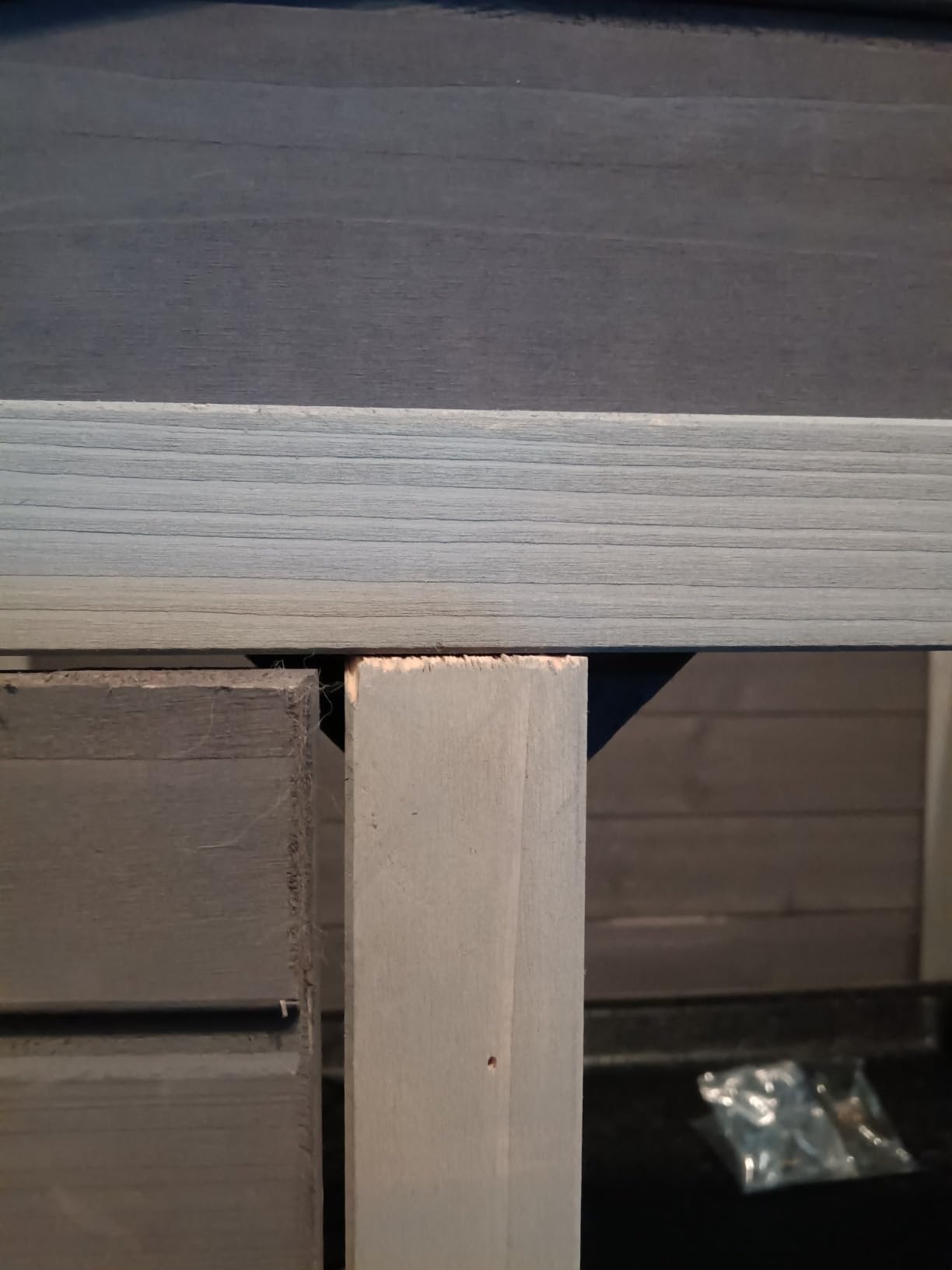
At 49.5 pounds it is on the heavy side, but six casters take the weight. The waterproof asphalt roof and large open run roof mean many owners move it between a covered patio and the living room across the seasons.
The drawbacks are consistent too. Reviews mention a strong chemical smell on arrival, occasional chipped wood, thin mesh sides and a top lid that does not align cleanly enough to close easily on the first try.
Why it works for a bonded pair
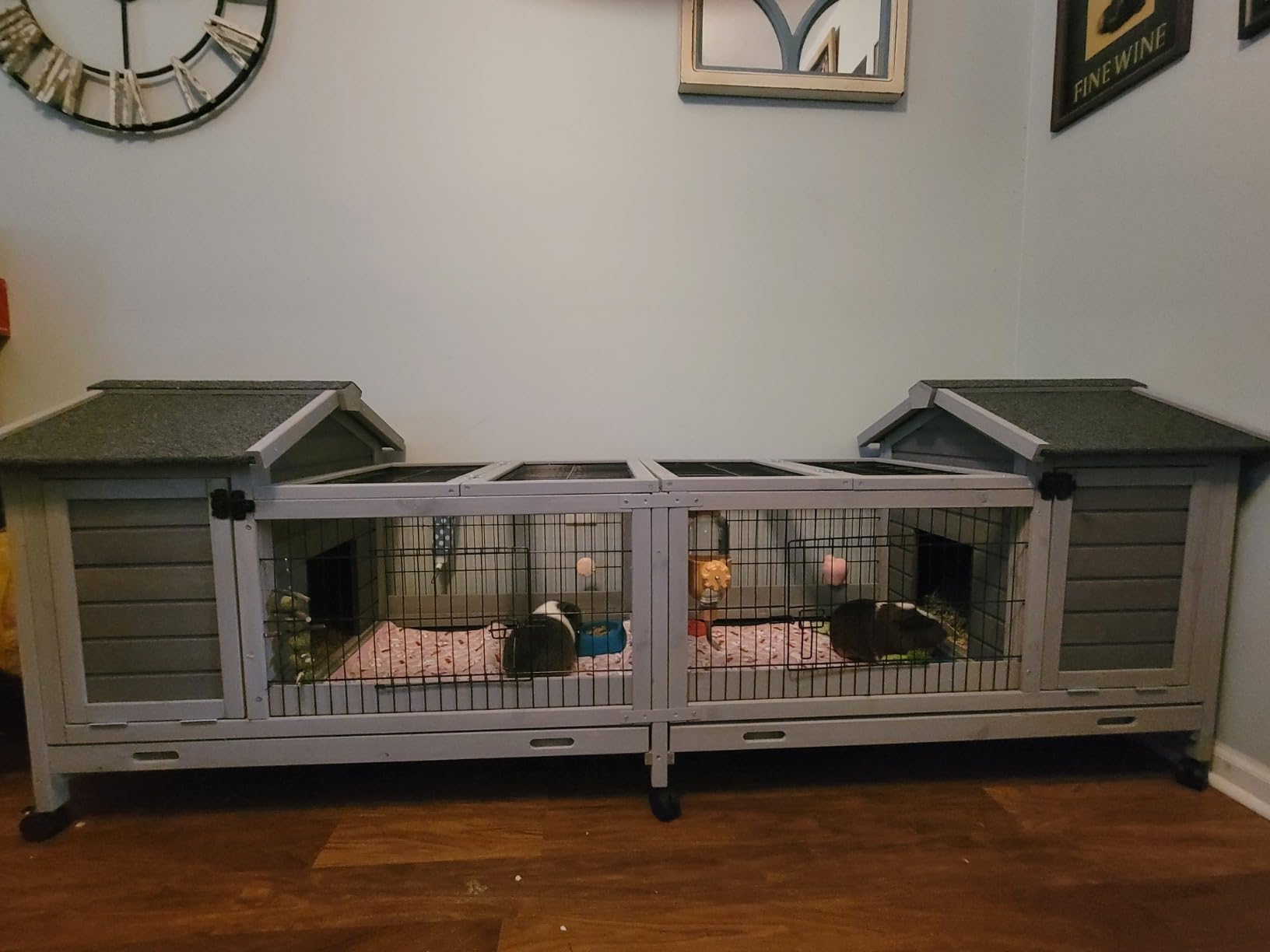
A bonded pair is the housing situation most rabbit owners get wrong, because two animals in a space built for one fights over territory. This unit gives you close to double the floor area of a single-tier cage, which is the difference between coexisting and constant sparring.
The front doors are large enough to lift a rabbit out safely, which matters when you have two animals and want to clean one section at a time.
Where it falls short
The trays do not fully enclose the animal, so there is a chance of a rabbit walking out as you pull a tray. Owners solve it with a small lip or a lipped mat.
The ramp is described as slippery. Add a rug strip, and expect to do it yourself since it is not included.
4. Aivituvin Two-Piece 103 Inch Hutch – Best for Large Runs
Aivituvin Large Rabbit Hutch Indoor Bunny Cage Outdoor with Run Chicken Coop Guinea Pig House with Waterproof Asphalt Roof,No Leakage Pull Out Tray (103.2″ L x 25.2″ W x 36.2″ H,Brown-2 Sets)
103.2 x 25.2 x 36.2 inches, 40 pounds
Two-piece configuration
Spring latch on asphalt roof
Four opening doors
Pros
- Very large footprint for roaming
- Deep leakproof anti-odour tray
- Four doors give access to every area
- Two-unit layout expands floor area fast
Cons
- Bulky footprint demands a spare room
- Heavy frame despite the run layout
- Takes longer to assemble
This is the largest footprint in the group at 103.2 by 25.2 by 36.2 inches, sold as a two-unit combination. That is not a hutch in the traditional sense. It is closer to a small indoor run, and for anyone converting a spare room into rabbit space it is the fastest route to real floor area.
The 4.3 rating from 883 reviews is strong for something this size. Owners consistently single out the deeper leakproof anti-odour plastic tray as the reason daily cleaning is straightforward, and the four opening doors mean you can clean or interact without moving the whole unit.
The water-resistant asphalt roof and spring latch also mean it works under a covered porch if you want to give the rabbit supervised outdoor time. A single brown or grey 51.6 inch version exists too if the double is more than you need.
Buyers also use it for guinea pigs, chickens and ducks, so it is not rabbit-exclusive. The labelled parts and detailed instructions get good mentions, which is worth noting given how many competitors here arrive with unlabeled bags.
Best for a dedicated rabbit room
If you have a spare room and you want to reduce the hours a rabbit spends confined, this is the pick. The run-style layout lets a rabbit move along the length of the space, which is closer to how they use ground in a natural setting.
It also suits a large breed such as a Flemish Giant or New Zealand, where a narrow single-level hutch would be cramped. Add hides and platforms so the length of the run does not feel exposed.
Where it falls short
Size is the trade-off, plainly. A 103 inch footprint needs a real room and a clear path to the door, and in a small flat it will dominate the space.
Despite the run-style layout, reviewers still describe the frame as heavy to move. If you plan to reposition it daily, budget for two people or add more casters.
5. GDLF 58 Inch Spruce Hutch – Most Versatile
GDLF 58″ Rabbit Hutch, Bunny Cage Indoor with Wheels & Cleaning Tray
58 x 18 x 30.3 inches, 43 pounds
Real spruce with non-toxic varnish
Removable waterproof bottom tray
Six wheels with locking casters
Pros
- Highest average rating in our group at 4.4
- Genuine fir wood with a light natural smell
- Labelled panels and numbered hardware bags
- Clean look that suits a living space
Cons
- Top door latches are flimsy soda-can-tab hardware
- Trays are shallow and bedding spills on removal
- Not built for wet outdoor conditions
At 4.4 from 810 reviews, the GDLF 58 inch spruce hutch carries the highest average rating of anything we tested. The reason is material. It is built from actual spruce with an eco-friendly waterproof non-toxic varnish, not particle board, and that single decision changes the smell, the weight and the long-term feel of it.
Owners mention only a light natural smell rather than the chemical funk several competitors ship with. For an indoor rabbit sharing a room with people, that difference matters more than it sounds.
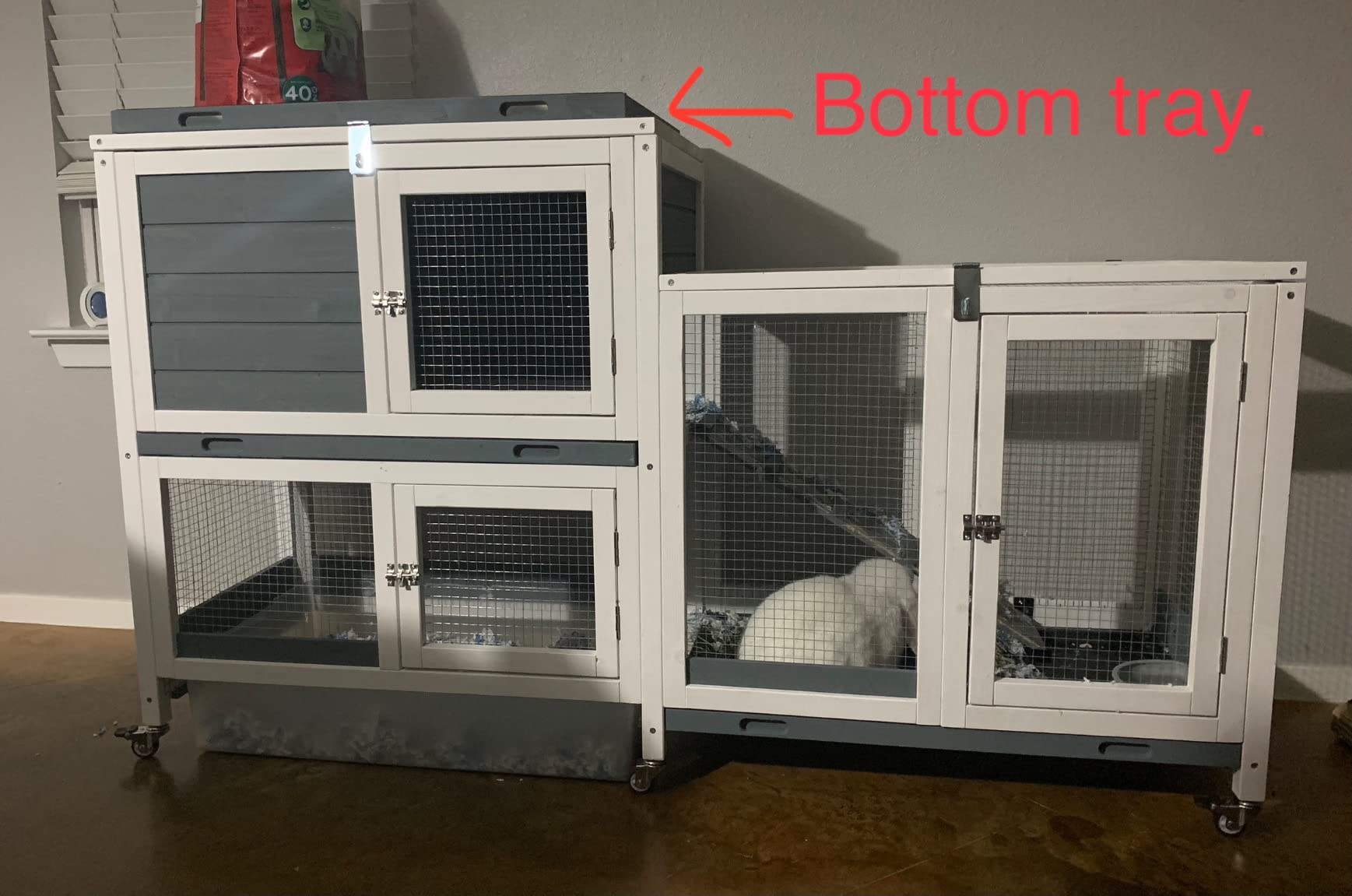
Assembly is the other strength. Panels are labelled, holes are pre-drilled and hardware comes in numbered bags, which cuts the usual frustration. Sliding doors and grid panels let you check on your rabbit without opening anything and starting the escape.
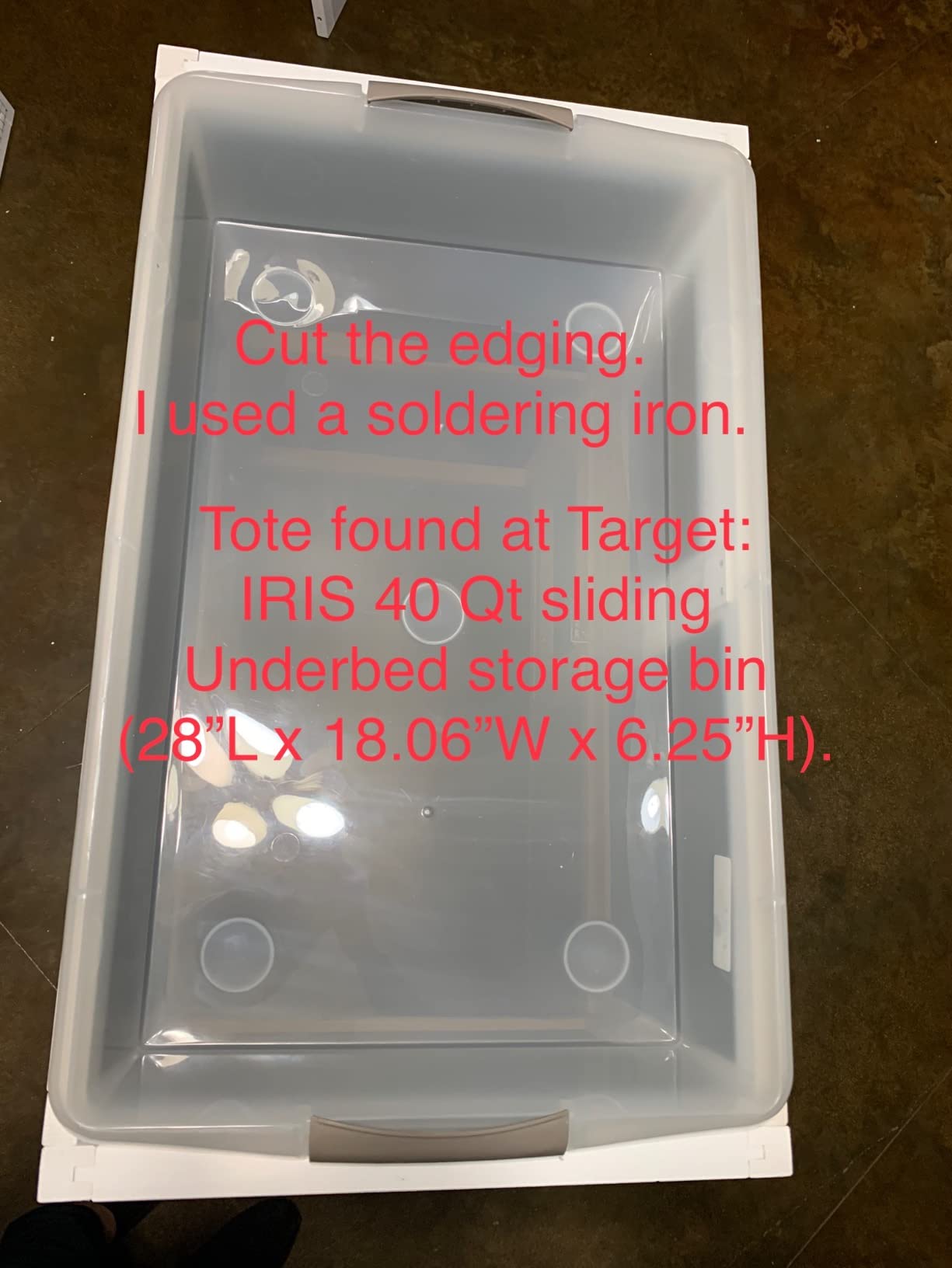
The sliding door comes with a ramp that has timber ridges cut into it to stop a rabbit sliding back down, which is a small detail that most of these hutches ignore.
Best for an indoor rabbit that chews
Real fir is denser and harder than the soft timber and split-prone panels several rivals use, so it holds up better when a rabbit works at a corner. It is still chewable over time, but it will not collapse the way chipboard frames do.
At 58 by 18 by 30.3 inches it fits one adult rabbit of any small or medium breed with room to stretch, and owners often add a second section for a pair.
Where it falls short
The top door latches are described as cheap soda-can-tab style hardware. They will not hold against a determined rabbit, and several owners replace them with clips.
The trays are shallow, so bedding spills out every time you pull them. The tray surface is also not hard plastic, so it can degrade with heavy wetting. This one is an indoor hutch in practice, not a wet-weather shelter.
6. GUTINNEEN Two-Storey Hutch with Metal-Edged Ramp – Best for Small Rooms
GUTINNEEN 2-Story Rabbit Hutch for 1-2 Bunnies – Indoor Outdoor Wooden Guinea Pig Cages with 4 Wheels, 2 Pull-Out Trays, 5 Doors & Waterproof Asphalt Roof, Brown
Two-storey at 36 x 17.7 x 36.4 inches
Four universal wheels, two braked
Ramp with aluminium-wrapped edges
Five locking access doors
Pros
- Compact two-level footprint for small rooms
- Aluminium-wrapped ramp edges resist chewing
- Separate leak-proof tray per level
- Braked casters move it between rooms
Cons
- Interior smaller than the model number implies
- Wood surfaces stay chewable
- Weight not stated by the manufacturer
Floor space is the constraint most people hit first, and this two-storey GUTINNEEN hutch answers it with height instead of length. At 36 by 17.7 by 36.4 inches it uses vertical space rather than demanding a long wall, which is the answer for narrow rooms and flats.
Its stand-out feature is the ramp. The edges are wrapped in aluminium, which resists chewing far better than plain wood, and the surface has an anti-slip finish. Rabbit owners on the forums talk about chewing through plain wooden ramps within weeks, so this detail is more meaningful than it looks in a spec list.
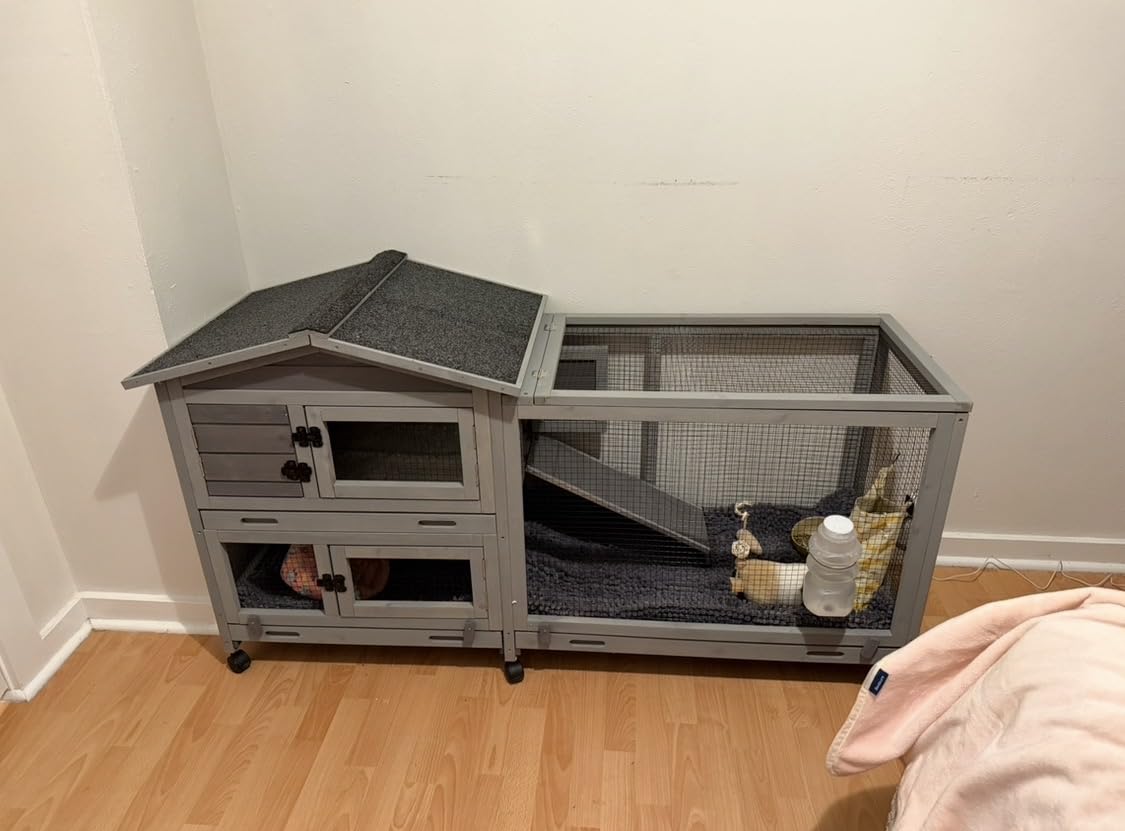
Each level has its own leak-proof pull-out tray, removable from the front or the back, so cleaning is quick. Four universal wheels with two brakes let you move it between a living room and a patio without lifting.
Five locking access doors cover both levels, which means you can reach in without disturbing a rabbit that has settled down to sleep.
Best for small breeds and guinea pigs
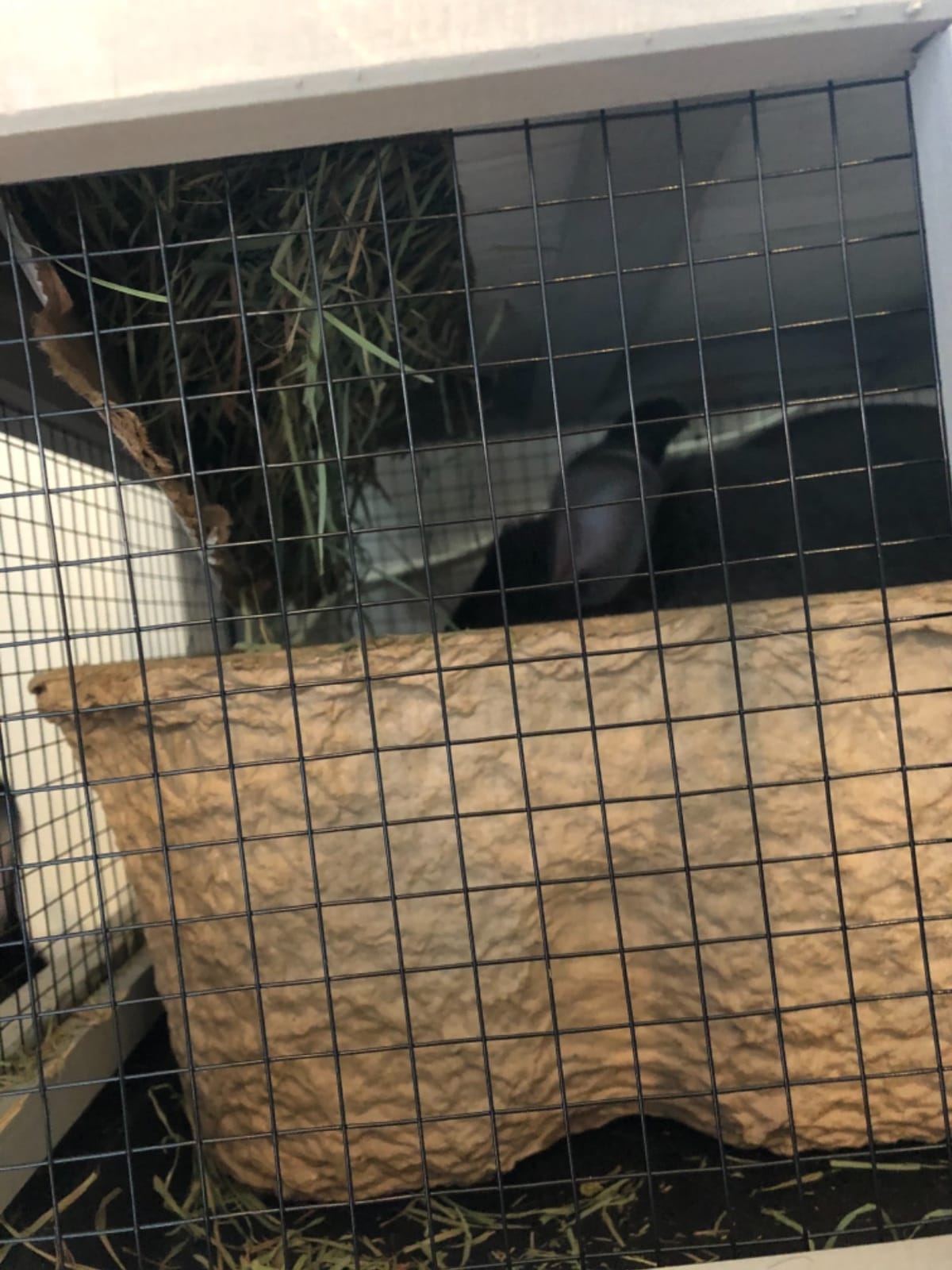
This is a small footprint, and reviewers are candid about it. The AIR77-B suits Netherland Dwarfs, Polish, Lionheads and Mini Rex, and it works well for guinea pigs. For a Dutch or a Rex it is on the tight side.
Owners frequently pair it with a playpen for exercise, which is exactly the hutch-plus-pen pattern we would recommend anyway. Buyers also mention it suits 1-2 small rabbits when expanded.
Where it falls short
The interior is smaller than the model dimensions suggest once you account for the ramp and shelf. Measure the inner dimensions before you commit, not the outer footprint.
The wood surfaces remain chewable despite the ramp improvement, and the manufacturer does not state a weight, so treat lifting figures with caution.
7. mayugardening Two-Storey Hutch with Sealed Trays – Best for Hard-Wiping
2 Story Rabbit Hutch Outdoor Indoor, Wooden Bunny Cage with 6 Lockable Wheels, 3 Removable No Leakage Pull Out Trays, Chew-Proof Ramp & Waterproof Roof, Ideal for Rabbit & Guinea Pig
55.3 x 17.8 x 34.5 inches, 38.6 pounds
Three seamless one-piece waterproof trays
Ramp with dual metal edge guards
Six locking casters
Pros
- Seamless trays wipe clean with no seams to trap grime
- Metal-guarded ramp survives gnawing better
- Six locking casters for security
- Waterproof roof and frame suit covered outdoor use
Cons
- Lowest average rating in our group at 3.9
- Higher share of critical one-star reviews
- Wood frame is still chewable
- Basic latches and hardware
This two-storey hutch solves a problem the others half-solve: tray seams. The three trays are moulded as one piece each, with no joints where urine and debris collect, so they wipe clean rather than needing a scrub. In a small flat, where odor is the top complaint, that is worth paying attention to.
We are going to be straight about the rating. At 3.9 from 210 reviews, this is the lowest average score in our group, with a larger proportion of critical reviews than the others. The tray design is genuinely good; the finish and hardware are not the same standard.
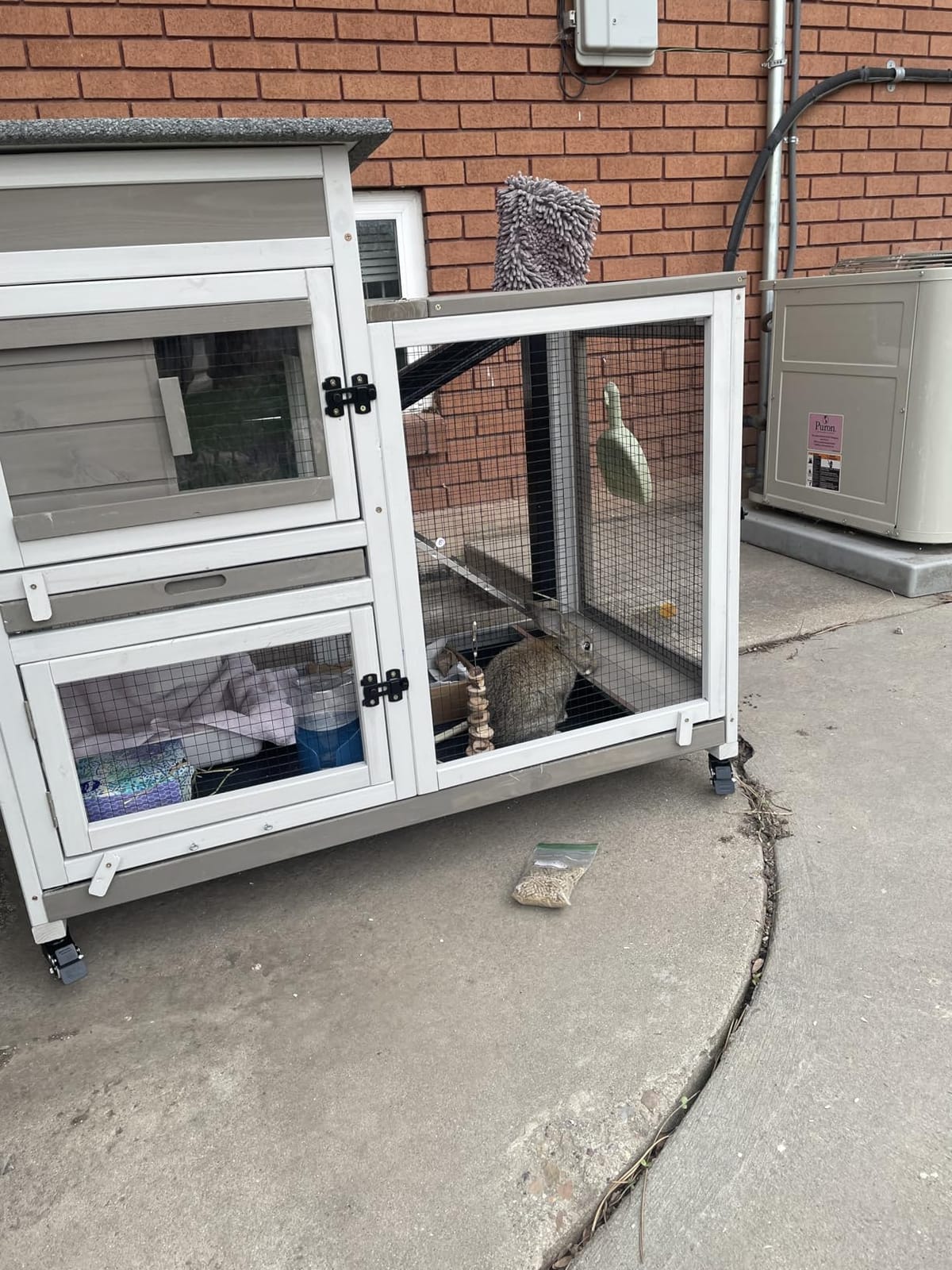
The ramp carries metal edge guards on both sides, so it is better protected than most wooden ramps. Six locking casters mean the unit stays put with a rabbit inside, which matters more in a busy household than the wheel count suggests.
The asphalt-coated roof sits over a solid waterproof frame, so this also works for covered outdoor use if you want to give the rabbit some outdoor time.
Best for owners who hate scrubbing
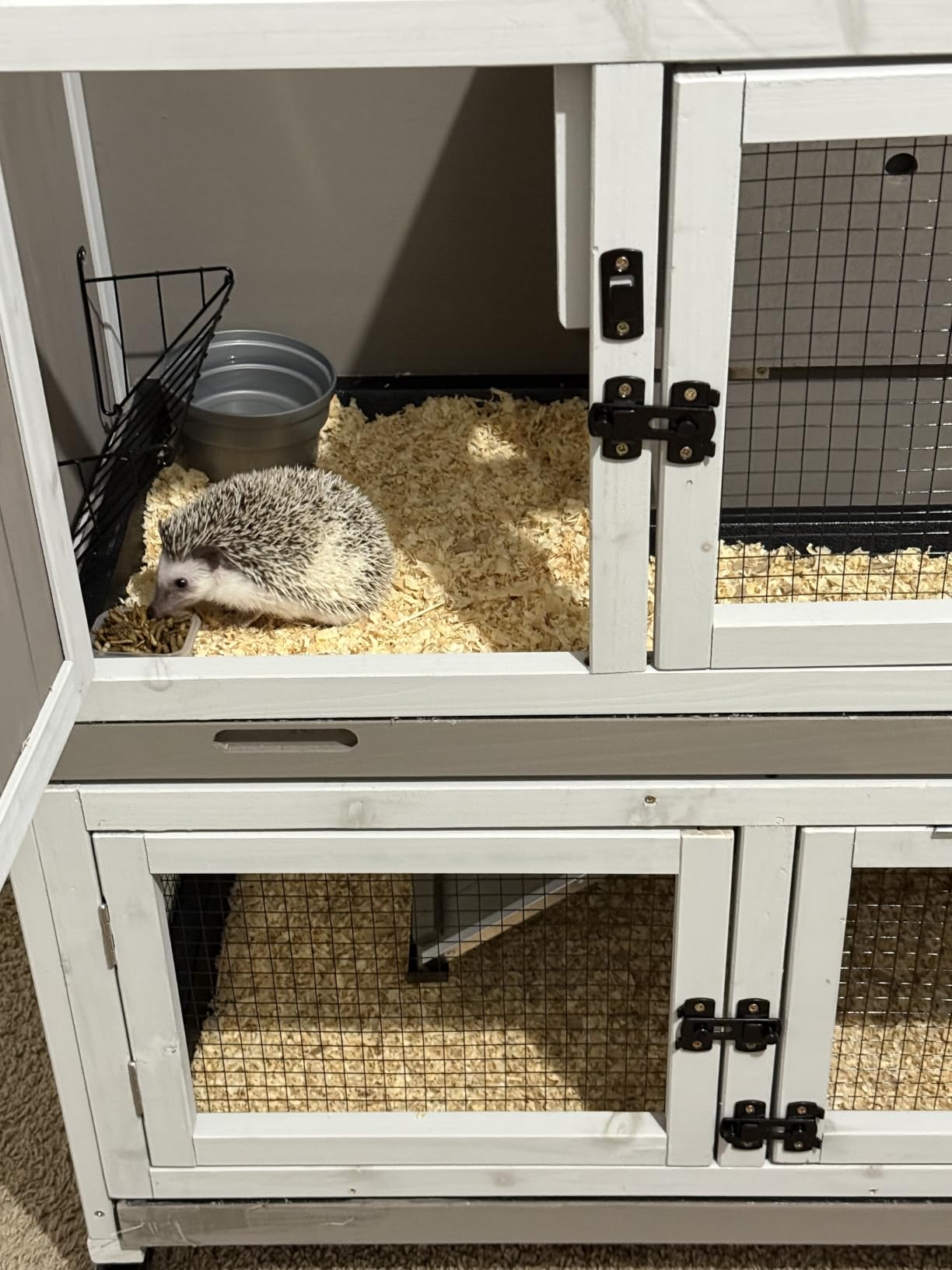
If your main worry is odor and wiping, the seamless trays here beat every other tray in this list. Combined with two levels at 55.3 by 17.8 by 34.5 inches, it gives you usable space and a cleaning routine that takes minutes.
The two-storey layout suits one rabbit well and a bonded pair only with an added pen. Owners also run guinea pigs and small pets in it comfortably.
Where it falls short
The wood frame is chewable, and the latches and hardware are basic by the standards of the metal-reinforced models here. If your rabbit is a serious chewer, choose the alloy-framed option below instead.
The lower rating is not only about finish. A higher share of reviewers describe assembly and parts quality as inconsistent, so inspect every panel before you start.
8. GUTINNEEN Hutch with Aluminium Alloy Frame – Best for Chewy Rabbits
GUTINNEEN 2-Story Rabbit Hutch with Chew-Proof Full Metal Frame for Indoor/Outdoor – 62″ Bunny Cage with 6 Locking Casters & 2 Pull-Out Trays for Rabbits, Guinea Pigs, Small Pets (Brown)
62 x 22.6 x 33.5 inches, 10.93 sq ft living space
55 pounds
Aluminium alloy reinforced frame
Three locking pull-out trays
Pros
- Alloy frame resists chewing where wood fails
- Non-mesh bottom pans accept grass mats and covers
- Three deep trays slide out for cleaning
- Sturdy fir build and quick customer service
Cons
- Soft thin wood splits if screws are not pre-drilled
- Very thin side mesh can arrive torn
- Door between house and run will not stay open
- Listed weight of 55 pounds makes it hard to move
This is the hutch we would buy for a rabbit that chews everything in reach. The frame is reinforced with aluminium alloy, which resists chewing, warping and cracking in a way that a purely wooden frame cannot. Owners with aggressive chewers report it holds up where other hutches in this list gave out.
It is also the only unit here with a published interior figure: 10.93 square feet of living space across 62 by 22.6 by 33.5 inches. That number is useful precisely because so few brands publish one.
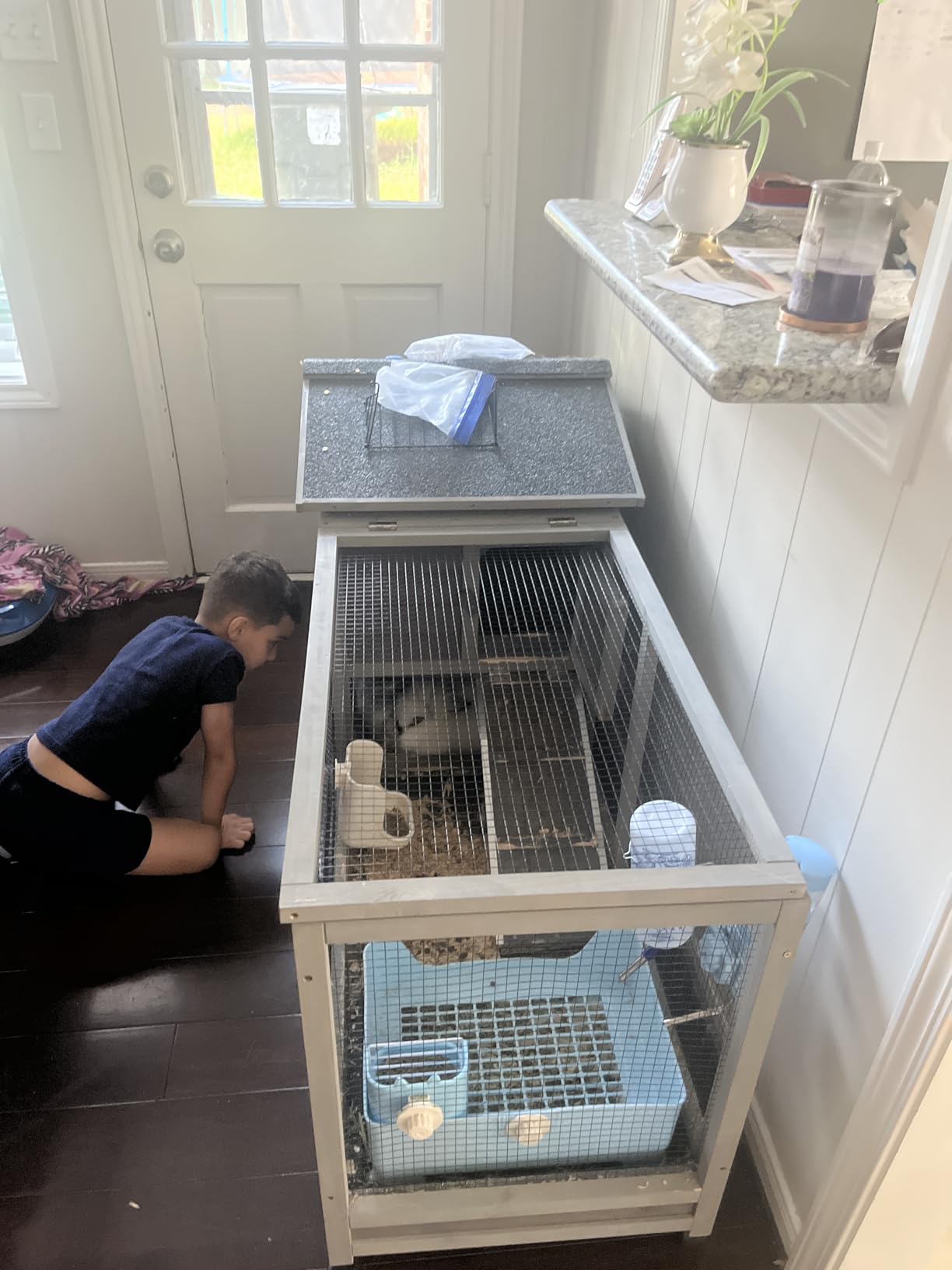
The bottom pans are not mesh-covered, which means you can add grass mats, rugs or a solid liner directly. On a list where wire floors and slotted wire pans are standard, that flexibility is the most useful feature in the whole roundup.
Three deep locking pull-out trays, five access doors, an openable run roof and six swivel casters with two brakes complete a well-equipped package.
Best for a large or destructive rabbit
Frame strength is the deciding factor for rabbits that chew doors, ramps and corners. An alloy-reinforced frame means chewed plastic strips stay cosmetic rather than structural.
At 10.93 square feet it also suits a Flemish Giant or New Zealand far better than the single-tier units here, and the vertical layout gives the rabbit somewhere to go that is not just flat floor.
Where it falls short
The fir panels are soft and thin, and reviewers report splitting if you drive screws without pre-drilling. Take the extra five minutes.
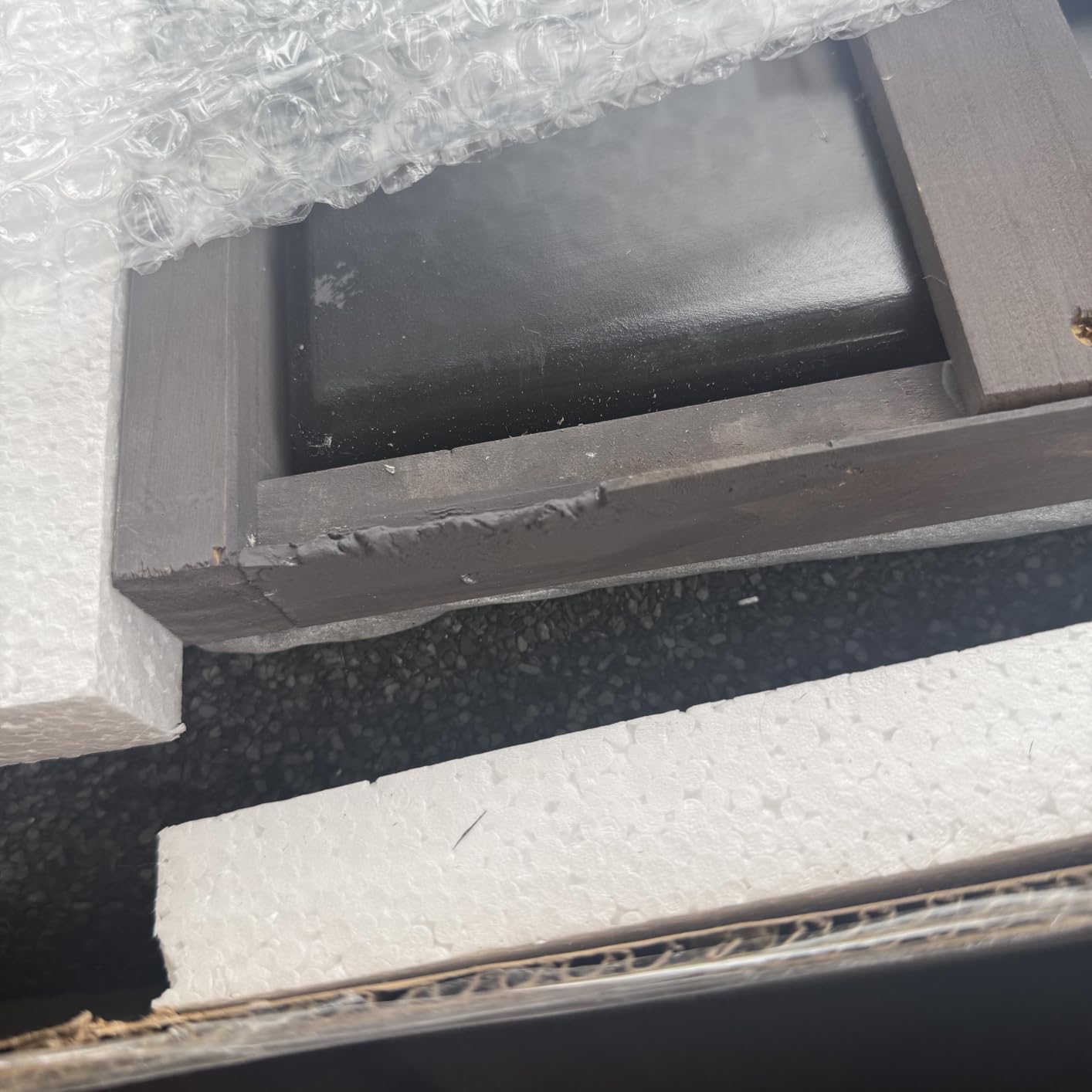
Side mesh is very thin and can arrive partly torn, so inspect it on arrival. The house-to-run door will not stay open on its own and needs propping. One review also reports an injury after a rabbit wedged itself against the solid tray walls, so check the gaps around the trays.
9. PetsCosset 48 Inch Two-Level Hutch – Budget Pick
48″ W Rabbit Hutch Indoor & Outdoor Rabbit Cage with Pull Out Tray
48 x 23.6 x 36.2 inches
Solid fir wood with acrylic windows
Lockable leakproof pull-out tray
Four access doors
Pros
- Attractive design at the entry level of this list
- Pull-out tray makes cleaning quick
- Roomy two-level layout for small breeds
- Plenty of space to hop and stretch out
Cons
- No solid base
- so a waterproof mat is needed indoors
- Cheap casters and short screws that work loose
- Flimsy screen and wood that degrades when chewed
- Runs hot in direct sun
The PetsCosset 48 by 23.6 by 36.2 inch hutch earns its place because it does two things most entry-level hutches skip. It has acrylic windows, so you can watch your rabbit without opening a door, and it has a lockable leakproof pull-out tray rather than a bare sheet of plastic.
At 4.2 from 164 reviews it is rated above three of the pricier units here. Owners describe it as attractive and well made for the money, and rate it highly for small breeds such as dwarf Holland Lops that need room to hop and stretch.
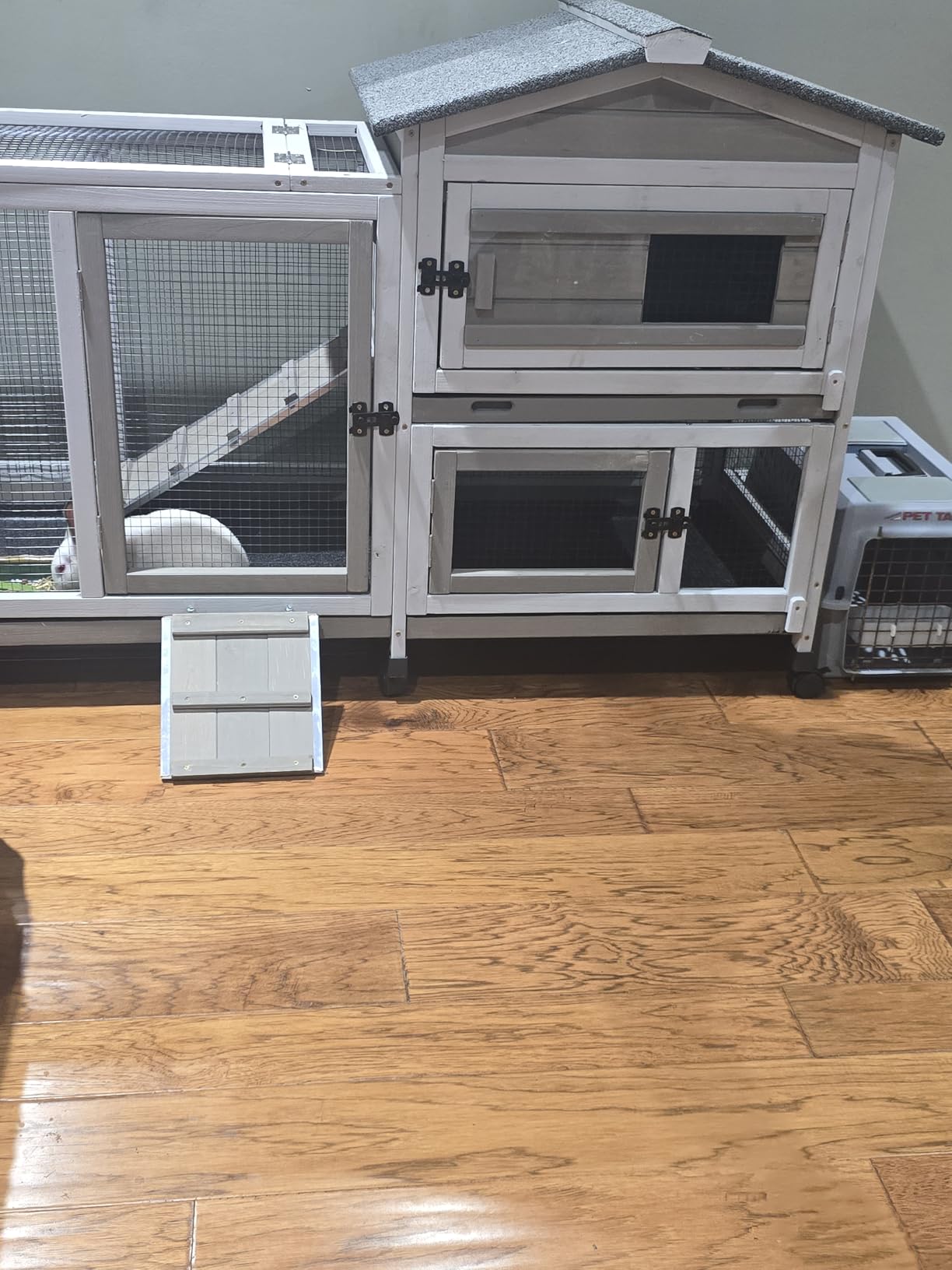
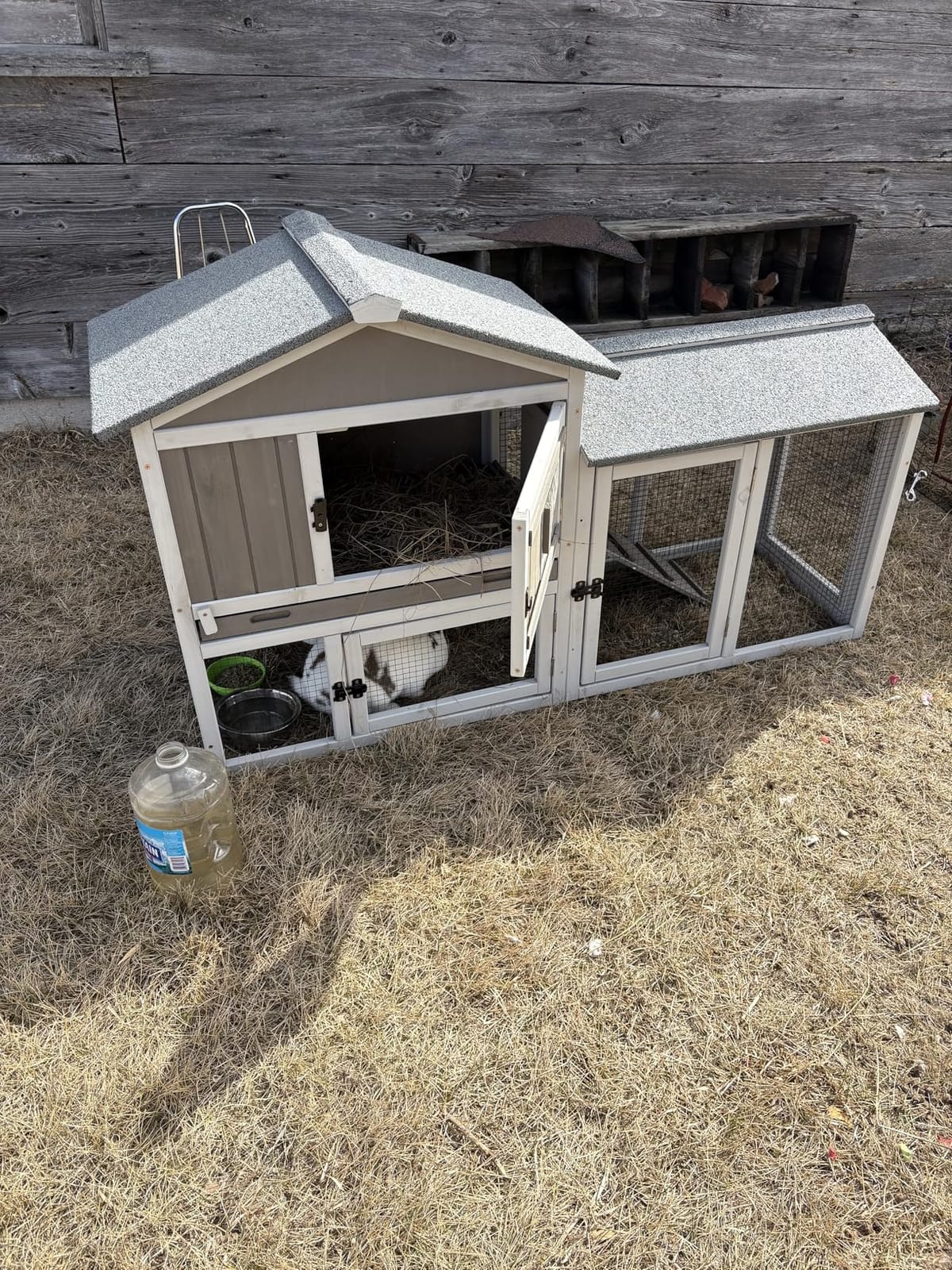
Two levels with a ground-level run and an upper resting room give vertical space, and full-coverage waterproof asphalt roofs sit over both sections. Four access doors mean you can reach any part without lifting the whole unit.
Be aware of the assembly time. Owners report around 60 minutes with two people, and pre-drilled holes with numbered parts make that achievable if you are not doing it alone at night.
Best for first-time rabbit owners
This is a sensible first hutch for a small breed in a flat, provided you add a waterproof mat. The two-level layout looks far more considered than the plastic crates most people start with.
The lockable tray and four doors also mean it works for a rabbit who needs to be contained while you clean, which is a genuine advantage with a nervous or shy animal.
Where it falls short
There is no solid base, so a waterproof mat is needed to protect indoor floors from urine and droppings. That is an extra step and an extra cost, and it should factor into your decision.
Cheap casters and short screws can separate when the unit is moved often, the screen is flimsy, and the wood breaks down quickly once a rabbit starts chewing. It also gets very hot in direct sun, so keep it out of a sunny window.
10. PawHut Elevated Hutch with Steel Frame – Best for Lightweight Setups
PawHut Rabbit Hutch Elevated Bunny Cage Small Animal Habitat with Metal Frame, No Leak Tray, Metal Wire Pan and Openable Water-Resistant Asphalt Roof for Indoor/Outdoor Gray
36 x 17.75 x 27.5 inches, 25.52 pounds
Fir wood welded to a steel frame
Galvanized wire window
Elevated metal base
Pros
- Steel frame and legs outlast all-wood rivals
- Quick assembly at about 20-30 minutes
- Metal base makes cleaning easier
- Light frame is easy to carry between rooms
Cons
- Usable living space is much smaller than listed dimensions
- Long slots in the wire pan can catch a leg
- Flimsy latches and no real top latch
- Strong chemical smell on arrival
The PawHut elevated hutch is the one we would grab if we had to carry an enclosure up a flight of stairs. At 25.52 pounds it is lighter than every other framed unit in this group, because the structure is fir wood welded to a steel frame with a metal base rather than a solid wooden bottom.
That metal frame resists chewing and warping, which owners single out repeatedly as the reason it outlasts wooden competitors. Assembly takes about 20 to 30 minutes, the shortest of any hutches here.
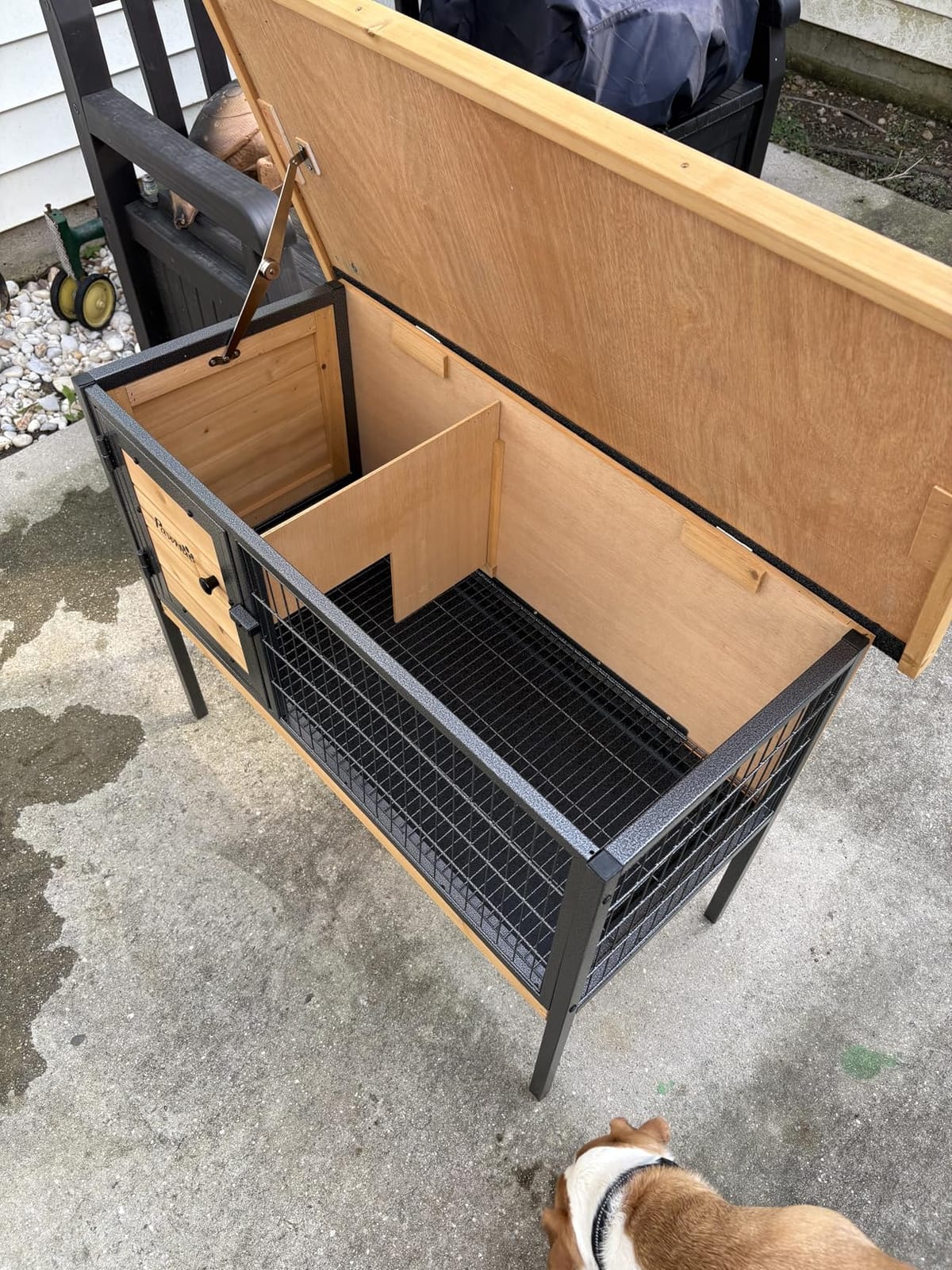
The elevated base keeps the hutch off the floor, which is useful on carpet and protects against damp in a conservatory. A galvanized wire window gives ventilation and lets you check on your rabbit.
Lockable doors, a removable pull-out tray and an openable asphalt roof cover the basics, and the overall size of 36 by 17.75 by 27.5 inches suits one or two small rabbits.
Best for a small room or a carry-up move
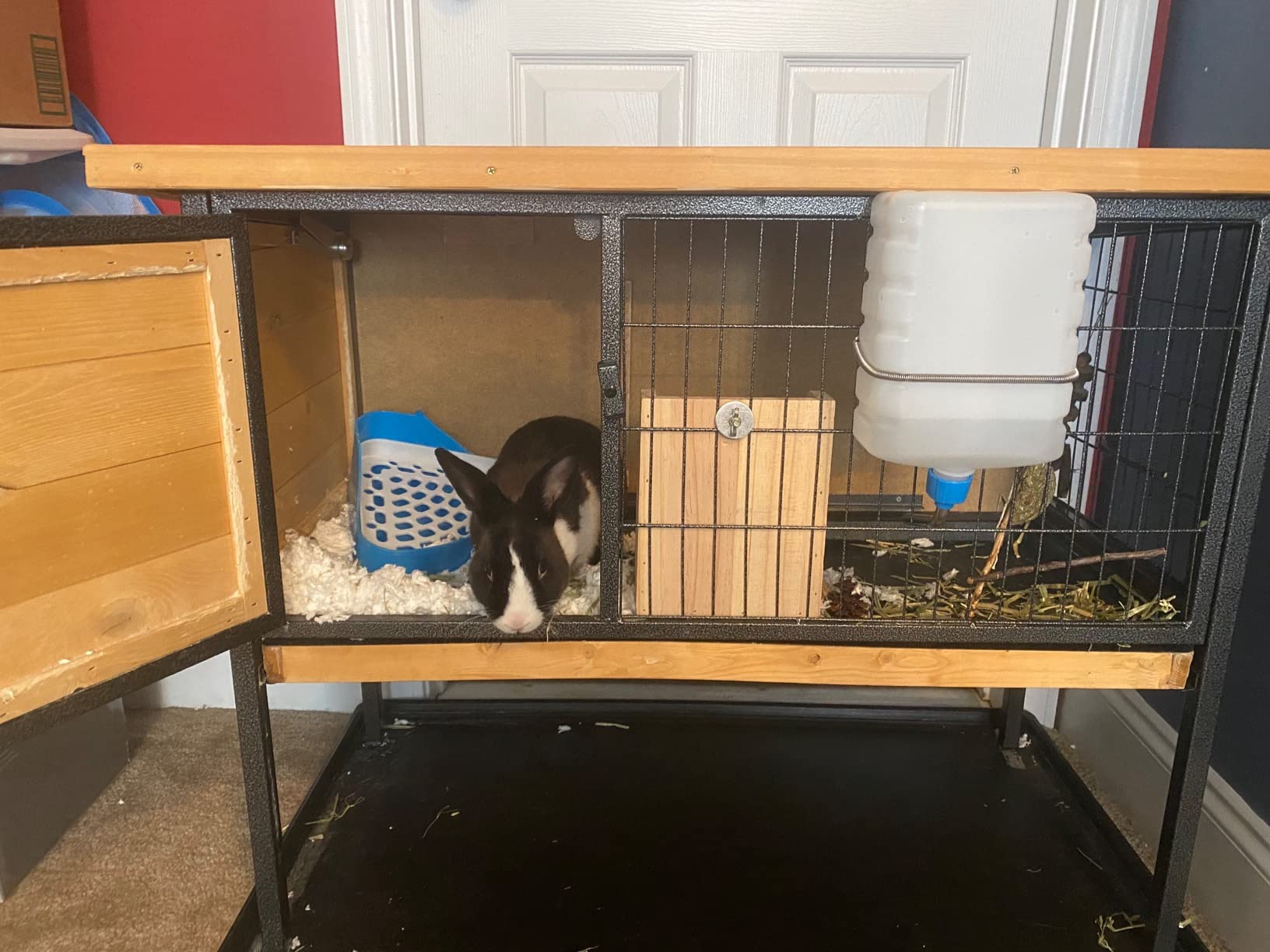
The main house measures 32.25 by 15.25 by 13.75 inches with a tray of 30.5 by 14.75 inches. That is a genuine small-rabbit space, and it is the pick if you need something you can move between rooms by yourself.
Owners like the appearance too. It reads as garden furniture rather than wire and plastic, which matters if it will live in a sitting room.
Where it falls short
Buyers warn that the actual living space is noticeably smaller than the listed dimensions because of the roof overhang, so measure the interior before ordering. Long slots in the wire pan can catch a rabbit’s leg, which is a real injury risk.
Latches are flimsy and the top has no real latch, so this needs clip upgrades before you trust it with a determined rabbit. Expect a strong chemical smell on arrival and several days of airing out.
How Big Does Your Rabbit Actually Need to Be?
Most prefab hutches fail on size, so measure before you buy. The community benchmark is the 3-3-3 rule: a rabbit should be able to take three hops in the length of its enclosure, three hops in the width and three hops to jump straight up. Alongside that, aim for at least 8 to 12 square feet of continuous living area and roughly 24 square feet of daily exercise space.
The three-hop test is a fast physical check you can run in a shop or at home. Lay the rabbit in the enclosure and see whether it can stretch out fully on its side without touching a wall, stand upright on its hind legs without crouching, and take three full hops in each direction. If any of that fails, the enclosure is too small, whatever the listing claims.
Is a 4ft hutch big enough for two rabbits? No. A 4ft hutch is comfortably enough for one small-breed rabbit as a sleeping area. Two rabbits need roughly double the continuous floor area, which most 4ft wooden hutches cannot provide, and sharing cramped space is one of the main triggers for aggression between bonded rabbits.
Orient yourself on breed sizes before you shop. A Netherland Dwarf or Polish needs far less space than a Dutch or Mini Lop, and a Flemish Giant needs more floor area than most hutches in this roundup offer as standard. Owners on the forums consistently say breed-and-weight-specific sizing advice is the most useful thing they have read.
One more rule from the threads: measure the space in the room before you measure anything else. Rabbit owners repeatedly note that hutches do not fit through doorways once assembled, so check the narrowest point between the front door and where the enclosure will live.
Hutch vs X-Pen vs C&C vs Free-Roam
The honest answer is that most indoor rabbits need less hutch and more pen. Owners on r/Rabbits and in the houserabbit community overwhelmingly recommend x-pens and C&C grids over any prefab hutch, and several describe hutches as acceptable only for very short-term holding. A hutch earns its place as a private retreat, not as the whole enclosure.
X-pen or playpen is the community default. It gives flat floor space, a solid floor if you use a mat, and no wire contact at all. Its weakness is escape risk. Rabbits have been reported jumping three feet or more, so a pen should be at least 36 inches high and 48 inches is better, particularly for larger breeds.
C&C means cubes and coroplast. It scales to any size you want, the coroplast base is solid and wipeable, and vertical expansion is easy. The trade-offs are cost, the need to cut coroplast cleanly, and the fact that it is not something you can unassemble and move in a car.
A wooden hutch like everything on this list looks like furniture and gives a rabbit a dark, secure den. It is harder to disinfect, and urine odor soaks into wood over time. That is why every hutch we recommend here has a pull-out plastic tray.
Wire and metal cages sold for rabbits are almost always too small and frequently use wire floors, which cause sore hocks. Experienced owners reject them outright, and we agree.
Free-roam is the best option where it is safe. A rabbit with a whole rabbit-proofed room, its own hide, litter box and enrichment needs very little enclosure at all. It requires more preparation than a hutch and a home that can be made safe.
Whatever you choose, social housing is close to universal advice. Rabbits should not live alone, and a single enclosure is one of the strongest arguments for buying the largest unit your room allows, or for pairing a hutch with a pen. If you want the outdoor side of the conversation, we covered weatherproof timber housing separately in our guide to the best rabbit hutches for outdoor use.
7 Features to Check Before You Buy an Indoor Rabbit Hut
1. Usable floor area, not outer dimensions. Subtract the ramp, shelves and roof overhang before you commit. Several owners of the units in this roundup report the interior is smaller than the listed size, so ask for internal measurements.
2. Flooring. Avoid wire floors and slotted metal pans. Sore hocks are a painful, slow-healing condition caused by prolonged contact with wire, and experienced owners treat a wire floor as a reason to return a cage. Look for a removable floor panel or solid base you can cover.
3. Tray design. A pull-out tray that you can remove without reaching into the enclosure is the single most useful cleaning feature. Deep is better than shallow, and sealed one-piece moulding beats a tray with seams.
4. Chew resistance. Soft thin fir splits and wears quickly. Metal-reinforced frames and aluminium or metal-guarded ramps hold up far better, and non-toxic paint matters more indoors than out.
5. Ventilation. Mesh or wire panels on the sides give airflow and reduce ammonia build-up, which is the top indoor complaint in flats. A fully enclosed wooden box with no mesh will smell within days.
6. Access doors and height. You need a door wide enough to lift your rabbit out safely, and enough headroom to stand fully upright. On pen height, the community benchmark is 36 inches minimum and 48 inches ideal, because rabbits jump further than most owners expect.
7. Pet-proofing. If you have cats or dogs, check whether the roof latches hold and whether clips are included. Place the enclosure against a wall rather than in the middle of a room, and never leave a pen uncovered where a cat can jump in.
Two more practical checks. Confirm the unit fits through your doorway and around any corners before you assemble it, and count how many casters are braked, because an unbraked hutch with a rabbit inside will move.
Bedding, Flooring and the Cleaning Routine
Fleece liners are the most popular indoor choice. They are soft on feet, quiet, washable and they control odor well, but they only work as a dry layer and they will not stop a determined rabbit from digging. Line them with newspaper or a mat underneath for the tray.
Aspen shavings are the safest wood bedding. They are dust-extracted, absorbent and easy to spot clean, and most owners add a hidey box so the rabbit has a solid floor to sit on. Paper bedding is the cheapest and cleanest option, though it is less comfortable for long periods.
Never use pine or cedar shavings, especially for an indoor rabbit. The aromatic oils in softwood cause respiratory problems, and experienced owners flag this as one of the few absolute rules in rabbit housing.
On cleaning, a daily spot clean of the tray takes a few minutes. Pull the tray, scrape droppings into a bin, wipe the bare area with a pet-safe disinfectant and replace the bedding. Do a full deep clean of the whole enclosure weekly, including doors, corners and any fleece.
Two extras worth adding inside any hutch: a litter box larger than your rabbit, which reduces the amount of bedding you go through, and a hay rack that keeps hay off the tray floor so it stays dry. A cardboard digging box and a hidey box round out the enrichment.
Frequently Asked Questions
Do indoor rabbits need hutches?
Indoor rabbits do not strictly need a hutch. What they need is a secure retreat with a solid floor and a hide, plus daily free-roam or pen exercise time. Community consensus treats a prefab hutch as a private sleeping area rather than a full-time enclosure. The housing question is how much total space and exercise time they get across a day, not whether a wooden box exists in the room.
What is the 3-3-3 rule for rabbits?
The 3-3-3 rule states that a rabbit enclosure should be large enough for the rabbit to take three hops in length, three hops in width and three hops in height. It is a quick physical test rather than a formula: lay your rabbit inside, check it can stretch out fully, stand upright without crouching, and take three hops in each direction. Failing any part means the enclosure is too small.
Should rabbits be shut in at night?
Rabbits do not need to be shut in overnight. Free-roam or pen time at night is generally better, provided the room is safe and the rabbit has a hide, hay, water and a litter box. If you use a hutch, treat it as the overnight retreat with a litter box inside rather than a cage the rabbit stays in all day. Keep the space dark enough for rest and free of hazards a nocturnal animal could hit.
How high does a rabbit enclosure need to be?
For a pen, owners recommend at least 36 inches of height and 48 inches for larger or more athletic rabbits, because rabbits have been reported jumping three feet or more. For a hutch, check headroom instead: your rabbit should be able to stand fully upright on its hind legs without crouching, which is the same rear-up test used in the 3-3-3 rule. Height alone does not compensate for a small floor area.
Are wire floors bad for rabbits?
Yes. Prolonged contact with wire causes sore hocks, a painful and slow-healing condition affecting the feet. Experienced rabbit owners treat a wire floor as a reason to reject an enclosure entirely. Look instead for a removable wire floor panel you can cover, a solid base, or a non-mesh pan you can line with a mat, fleece or grass mat. Check any slotted metal pan for gaps wide enough to catch a leg.
The Verdict
The Aivituvin indoor hutch with the removable wire floor is our pick for indoor rabbit hutches, because that removable panel lets you fix the single biggest welfare problem in this category without replacing the enclosure. If you need more floor area, move up to the Aivituvin 62 inch model. If your rabbit chews everything, the alloy-framed GUTINNEEN is the one that will survive.
Whatever you choose, pair it with daily free-roam or pen time and keep the rabbit’s companion nearby. Measure the space, check the interior rather than the listing, and add a mat over any wire floor. Our outdoor hutch guide covers the weatherproof side if you want covered outdoor time as well.