
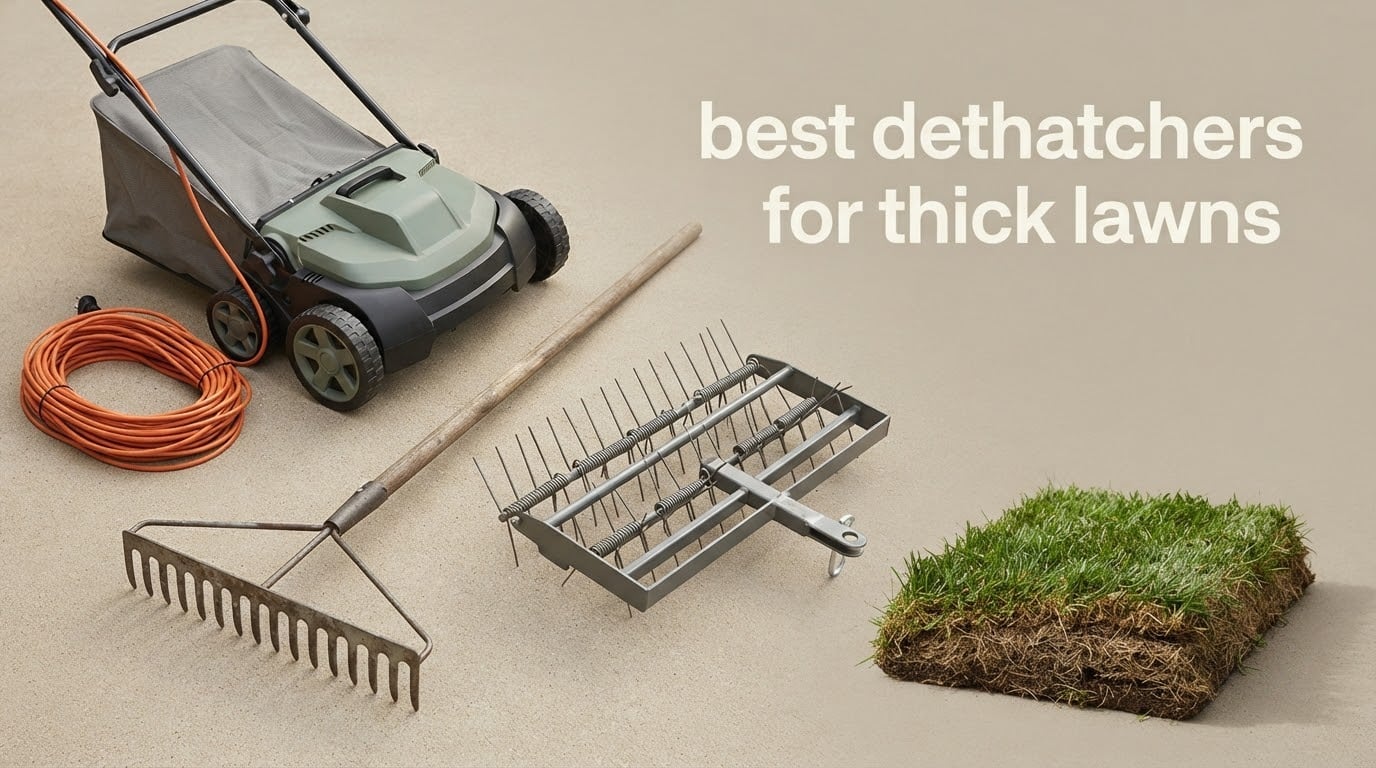
Some lawns feel soft underfoot in a way that has nothing to do with water. You sink a boot heel in, the blades bend flat, and the grass mats into a damp brown layer that stays soggy three days after a rain. That spongy layer is thatch, and a thick one has to come out before anything else you do to your turf will work.
Thatch is the layer of dead grass, stolon mat and organic debris that builds up between your soil surface and the living crown of the turf. It is not automatically a problem. Once it passes roughly half an inch, it starts behaving like a roof: water beads off, air stops reaching the roots, and fertiliser washes into the thatch instead of the soil. Below that line, thatch is doing useful work insulating crowns through winter and returning nutrients as it breaks down. That single fact is why the best dethatchers for thick lawns are the wrong question for a lot of lawns, and the right question for a few.
So we started by measuring. The cut-sod wedge test takes five minutes and tells you whether you have a problem worth solving at all. If your wedge shows a spongy brown band thicker than half an inch, you need a machine, and the machine has to match how deep and how dense that band actually is. If it does not, save the money and go fix the thing underneath.
What follows is a class-by-class breakdown of the ten dethatchers we would consider for a genuinely matted lawn, from a 4.6-pound manual rake up to a 48-inch tow-behind. We cover the two machine classes that most roundups skip entirely, cordless and tow-behind, because a thick lawn on a half-acre or more rules out anything you have to push by hand. We also flag the failure modes owners actually hit: bags that fill after twenty feet, controls that run backwards from a mower, and tines that bend on the first paver.
We will not quote prices here. What changes week to week is the price, and what does not change is whether the motor bogs down in heavy mat. If you are still working out whether your lawn is even a candidate, start with the next section before you read a single pick.
If your lawn also runs on an automated watering schedule, it is worth checking that smart sprinkler controllers for lawns are set to water less often but more deeply, since a matted lawn and shallow daily watering tend to arrive together.
Table of Contents
Measure Your Thatch Before You Buy a Machine
Thatch is the buildup of dead grass, stolons and organic debris between the soil surface and the living crown of the turf. Below about half an inch it insulates crowns and returns nutrients, so there is nothing to fix. Past half an inch it forms a barrier that blocks water, air and nutrients, producing weak, patchy, weed-prone grass. Measure the layer before you shop, because the depth decides the machine.
Here is the test. Cut a one-foot square of sod with a sharp spade and lift it like a book cover, then look at the exposed edge as one solid cross-section rather than a pile of loose blades. Do it in two or three spots, because thatch depth varies more across a single lawn than most people expect.
Water the lawn the day before so the sod cuts cleanly instead of tearing.
Cut a one-foot square about six inches from the edge of the lawn, where thatch usually averages out.
Lift the sod and read the brown band between the dark soil line and the green crown. Measure it with a ruler.
Repeat in a second and third spot. Take the thickest reading, not the average.
Under half an inch means leave it alone and dethatch next season at most. Half an inch to three-quarters means a corded electric walk-behind with real depth adjustment will strip it. Three-quarters of an inch or a dense, spongy mat means you want either a high-output cordless unit or a tow-behind, and you should plan two passes. More than an inch, or anything on half an acre and up, means the honest answer is usually a rented power rake rather than a machine you will store in the shed for eleven months a year.
One warning before you start cutting sod. If your lawn is centipedegrass or St. Augustinegrass, both spread by stolon, you get one pass and one direction. Cross-hatched passes on a stolon lawn shred the runners the plant regenerates from, and the lawn can take a season to come back or never fully recover.
Top 3 Picks for Thick Lawns in 2026

Sun Joe 24V-X2-DTS15
- Brushless 600W cordless motor
- Dual 24V 4.0Ah batteries
- 5 depth positions
- 24-tine and 7-blade reels

Agri-Fab 40-Inch Tow-Behind
- 40 inch working width
- 20 spring steel tines
- Heavy gauge steel deck
- 3 year limited warranty

WEN DT1516
- 15 amp motor at 3300 RPM
- 16 inch clearing path
- 5 depth positions
- 20-blade and 24-tine heads
Those three cover the three situations most homeowners fall into: a battery machine that gets down into a matted lawn without dragging a cable, a 40-inch tow-behind for acreage work, and the corded 2-in-1 most people end up buying when their lawn sits within reach of an outlet. The seven that follow fill in the rest of the map.
All 10 Picks Best Dethatchers for Thick Lawns (October 2026)
| Product | Specifications | Action |
|---|---|---|
| Sun Joe 24V-X2-DTS15 Cordless Dethatcher and Scarifier |
|
Check Latest Price |
| Agri-Fab 40 Inch Tow Behind Dethatcher |
|
Check Latest Price |
| WEN DT1516 15 Amp 2-in-1 Electric Dethatcher |
|
Check Latest Price |
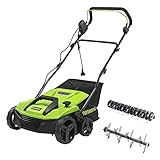 Greenworks 13 Amp 14 Inch Corded Dethatcher Scarifier Greenworks 13 Amp 14 Inch Corded Dethatcher Scarifier |
|
Check Latest Price |
 TIECTOWN LM01 16 Inch 15.5A Dethatcher Scarifier TIECTOWN LM01 16 Inch 15.5A Dethatcher Scarifier |
|
Check Latest Price |
 Walensee 19-Tine Thatch Rake 15 Inch Walensee 19-Tine Thatch Rake 15 Inch |
|
Check Latest Price |
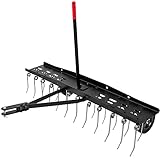 Suchtale 48 Inch Tow Behind Dethatcher Suchtale 48 Inch Tow Behind Dethatcher |
|
Check Latest Price |
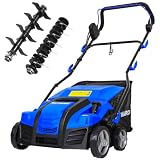 BILT HARD TIA-1002 16 Inch Dethatcher Scarifier BILT HARD TIA-1002 16 Inch Dethatcher Scarifier |
|
Check Latest Price |
 THE GROUNDSKEEPER II 21 Inch Rake THE GROUNDSKEEPER II 21 Inch Rake |
|
Check Latest Price |
 Earthwise DT71613 13 Amp Corded Dethatcher Earthwise DT71613 13 Amp Corded Dethatcher |
|
Check Latest Price |
1. Sun Joe 24V-X2-DTS15 – the cordless pick for a matted lawn with no cable in sight
Sun Joe Cordless Scarifier & Dethatcher with 5 Depth Positions & 600W Brushless Motor, 15-Inch Cutting Width – Heavy-Duty Yard Trimmer Machine for Gardening Care and Lawn Maintenance, 24V-X2-DTS15
Brushless 600W motor
Dual 24V 4.0Ah batteries
5 depth positions -0.375 to 0.4 inch
10.6 gallon bag
Pros
- Brushless 600W motor with dual 24V 4.0Ah batteries
- No extension cord to drag across the lawn
- Switches between 24-tine dethatching and 7-blade scarifying reels
- Five depth positions covering -0.375 to 0.4 inch
- Light enough for one person to maneuver
Cons
- Collection bag fills fast and most owners run it bagless
- Die-cast gear can stop after hitting a rock or paver
- Light plastic build feels thin under very heavy use
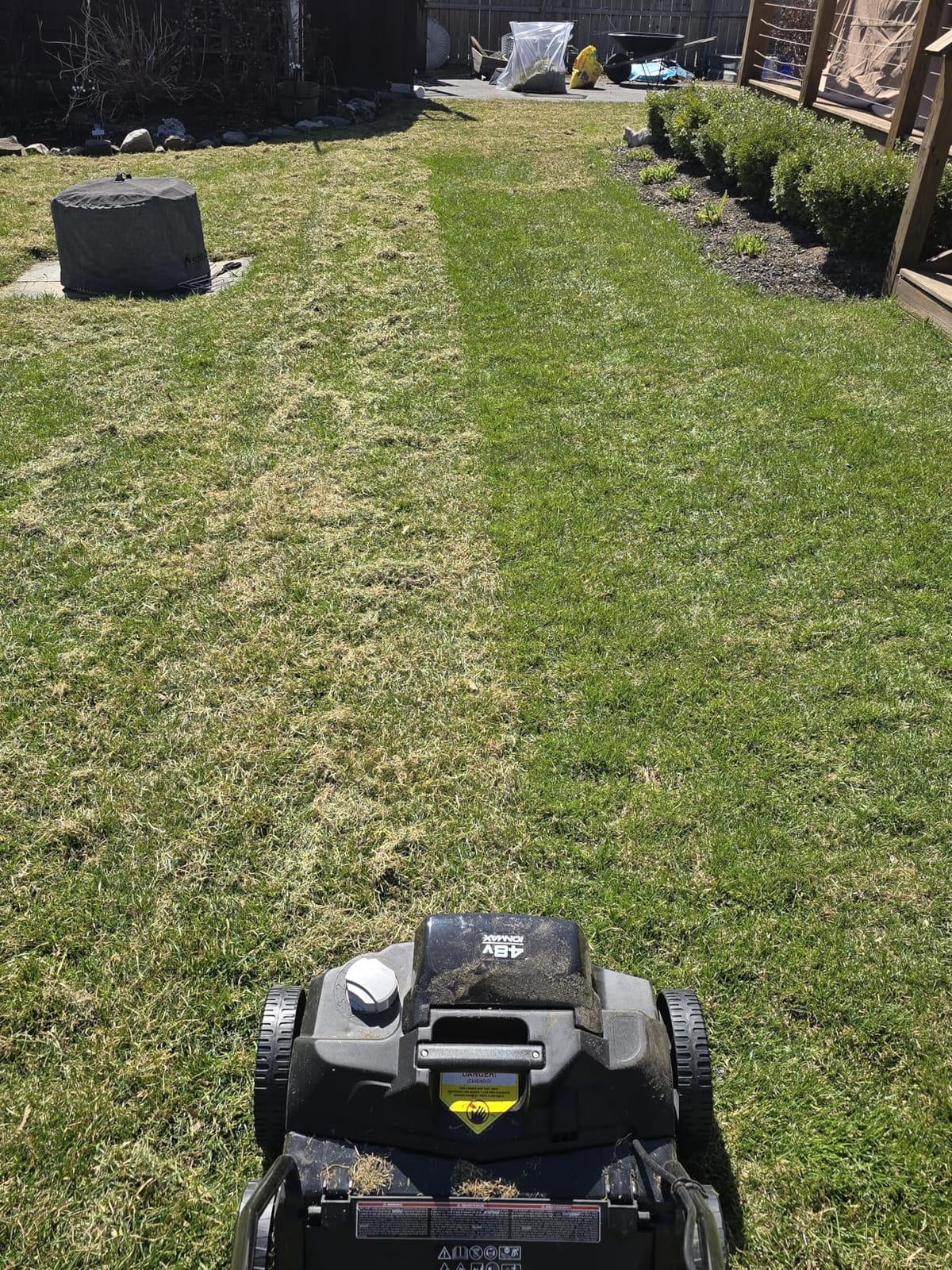
The single biggest reason this is our pick for the best dethatchers for thick lawns is the power-to-cord ratio. A brushless 600W motor on two 24V 4.0Ah batteries gives you 48V of headroom without a cable, and reviewers repeatedly report pulling more debris out of long-neglected lawns with it than they expected from a battery machine.
Two batteries matter more than they sound. A single pack covers most quarter-acre lawns, and the second pack is what lets you finish a half-acre in one sitting instead of stopping halfway across to charge. Runtime on a dense thatch job is shorter than on a light spring cleanup, so plan on the second pack as standard equipment rather than a luxury.
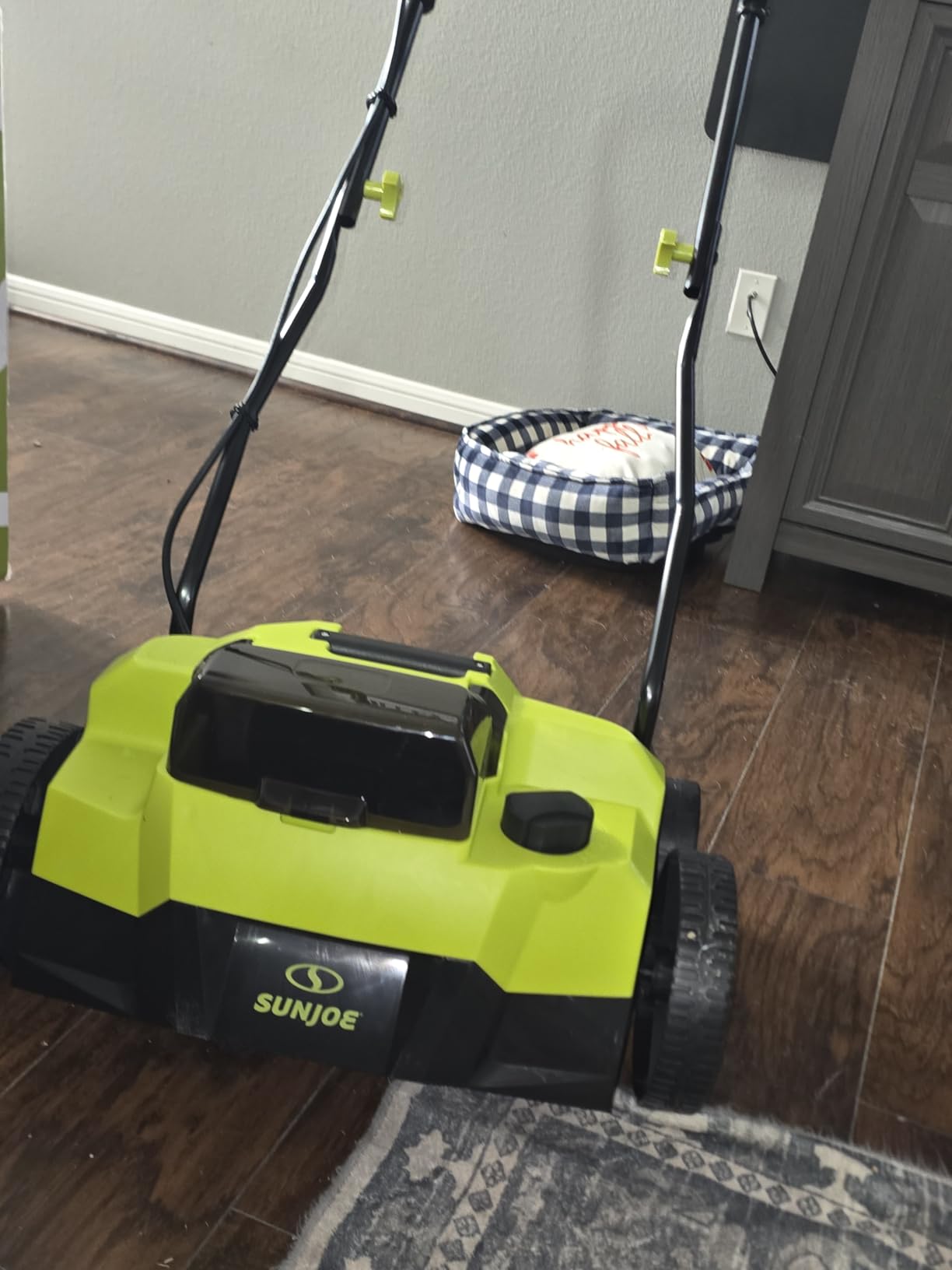
The 2-in-1 reel swap is the part that gets overlooked. It ships with a 24-tine dethatching cylinder and a 7-blade scarifying cylinder, and switching between them is a hands-off release rather than a bolt-and-washer job. On a lawn sitting at three-quarters of an inch, we would comb with tines first and only swap to blades if the mat survives the first pass.
Five depth positions spanning -0.375 to 0.4 inch give more range than most machines in this class. That range is what lets you work shallow on the first pass and deepen on the second without guessing, and it is the single specification that decides how well a dethatcher treats a thick lawn.
Who this dethatcher suits
It suits anyone whose lawn is far from an outlet, or whose last attempt with a corded unit ended with a browned-out motor halfway across the yard. Reviewers on lawn forums repeatedly name Sun Joe as the one to buy for a homeowner, which is a meaningful signal when the review pool runs past 19,000 ratings.
The 10.6-gallon bag is also the largest on this list among the walk-behinds. It still fills up, but it fills later, which means fewer stops in the middle of a pass.
Who should skip it
Skip it if you have a full acre or more. Cordless runtime, even doubled, will not carry you there without a mid-job charge, and the 36.4-pound weight adds up on uneven ground at that scale.
Skip it if your ground has buried rocks or pavers in the dethatch path. Owners do report the die-cast drive gear or cylinder stopping after a hard contact, so walk the route first with a metal detector or clear the obvious offenders.
2. Agri-Fab 40-Inch Tow-Behind – 40 inches of width for an acre of heavy mat
Agri-Fab 45-0294 40in Tow Behind Lawn Dethatcher, 20 Durable Spring Steel Tines Lawn dethatcher, Designed to pull behind Lawn and Garden Tractors, Black
40 inch working width
20 spring steel tines
Heavy gauge steel deck
3 year limited warranty
Pros
- 40 inch width covers big lawns fast when towed
- 20 spring steel tines hold up on matted thatch
- Made in the USA with a heavy gauge steel deck
- Backed by a 3 year limited warranty
Cons
- Assembly takes 1 to 2 hours with confusing instructions
- Drawbar hitch can be too short for some towing points
- No collapsing handle so storage is awkward
This is the machine for the other half of the thick-lawn problem: acreage. A 40-inch reel behind a riding mower covers ground at a rate no walk-behind can approach, and owners with large properties report clearing an acre of heavy thatch in a fraction of the time an electric unit would take.
The 20 spring steel tines are the working end, and the consensus is that they hold up on mat that would fold lighter hardware. Owners also report that adding weight on the drawbar or deck increases bite noticeably, which is useful the first time you set the tines deeper than the manufacturer suggests.
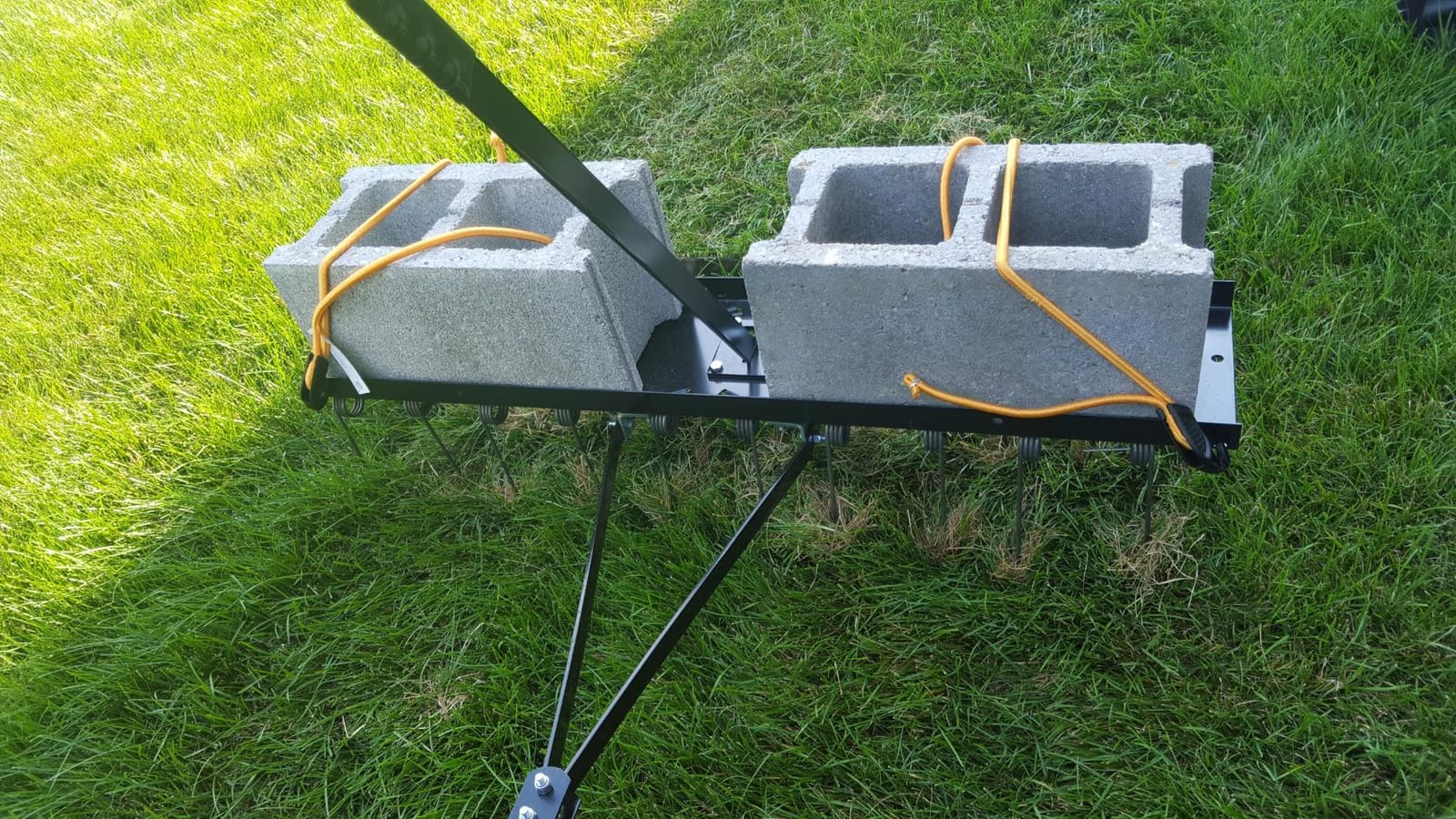
Everything about the build is aimed at durability rather than convenience. Heavy gauge steel deck, steel drawbar, 7-inch by 1-3/8-inch semi-pneumatic tires, and a 3-year limited warranty behind it. It is made in the USA, and owner reports of service are consistently good, including fast replacement of missing parts.
One practical note for anyone planning to use it with a bagging mower. The tines clog with wet thatch, so plan to clear them every few passes rather than at the end of the job. A clogged reel smears the mat back down instead of lifting it out.
Who this dethatcher suits
It suits owners of half an acre to several acres who already own a riding mower or lawn tractor with a working hitch. If you have that tractor, this attachment is a fraction of the cost of the machine already sitting in your shed.
It also suits people who find walking a walk-behind across a big property genuinely unpleasant. The difference between a 40-inch pass and a 14-inch pass over an acre is not a small convenience gain.
Who should skip it
Skip it if you do not already have a tow vehicle. There is no engine, no battery and no handle, so this is not a standalone tool and it is useless on a lawn you reach on foot.
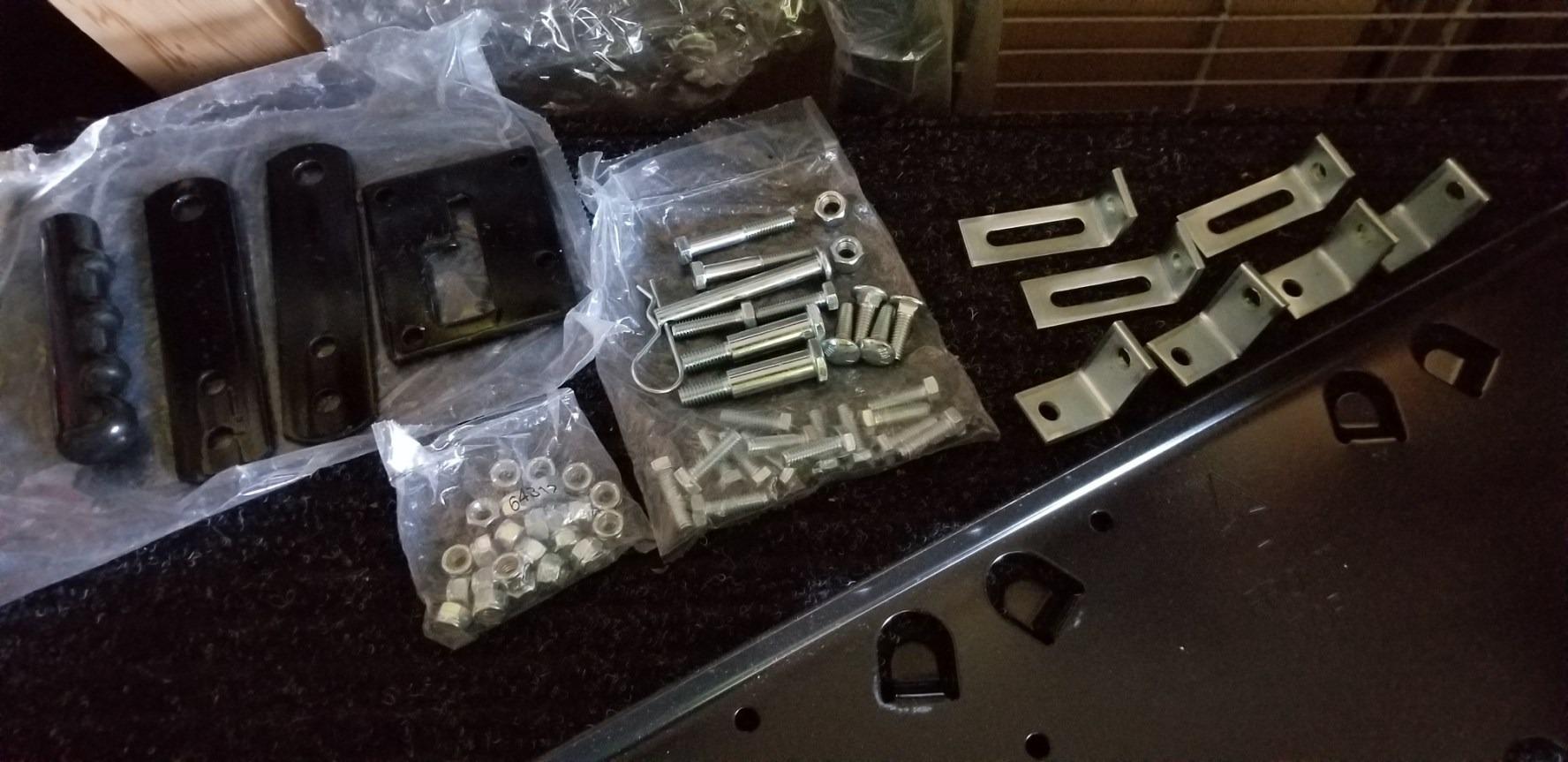
Skip it if you are not prepared for the build. Owners report 1 to 2 hours of assembly with instructions that confuse first-time builders, and some received a missing galvanised bracket. Budget the first afternoon for assembly and check the parts bag before you start.
3. WEN DT1516 – the 15-amp corded 2-in-1 with the widest depth range
WEN DT1516 16-Inch 15-Amp 2-in-1 Electric Dethatcher and Scarifier with Collection Bag, Black
15 amp motor up to 3300 RPM
16 inch clearing path
5 depth positions, plus 1/4 to -1/2 inch
20-blade and 24-tine heads
Pros
- 15 amp motor outmuscles most electric dethatchers
- 20-blade scarifying head and 24-tine head both included
- Five depth positions over a wide plus 1/4 to minus 1/2 inch range
- Automatic overload shutdown protects the motor
- Folds flat and lifts with one arm
Cons
- Collection bag is too small and fills after a short pass
- Scarifier head arrives installed and is aggressive on low settings
- Confusing assembly diagrams
The WEN DT1516 is what most people searching for this topic are actually looking at, and the reason it earns a place is the 15-amp motor running up to 3300 RPM. On a thick mat, the motor having headroom is the difference between the reel lifting debris and the motor dropping RPM until the machine stops.
Depth adjustment is where it separates from the pack. Five positions covering plus 1/4 to minus 1/2 inch is the widest range here, and that negative travel is what lets a tine actually reach down into a compressed mat instead of skimming the surface. On a lawn past half an inch, that is the setting that decides whether one pass is enough.
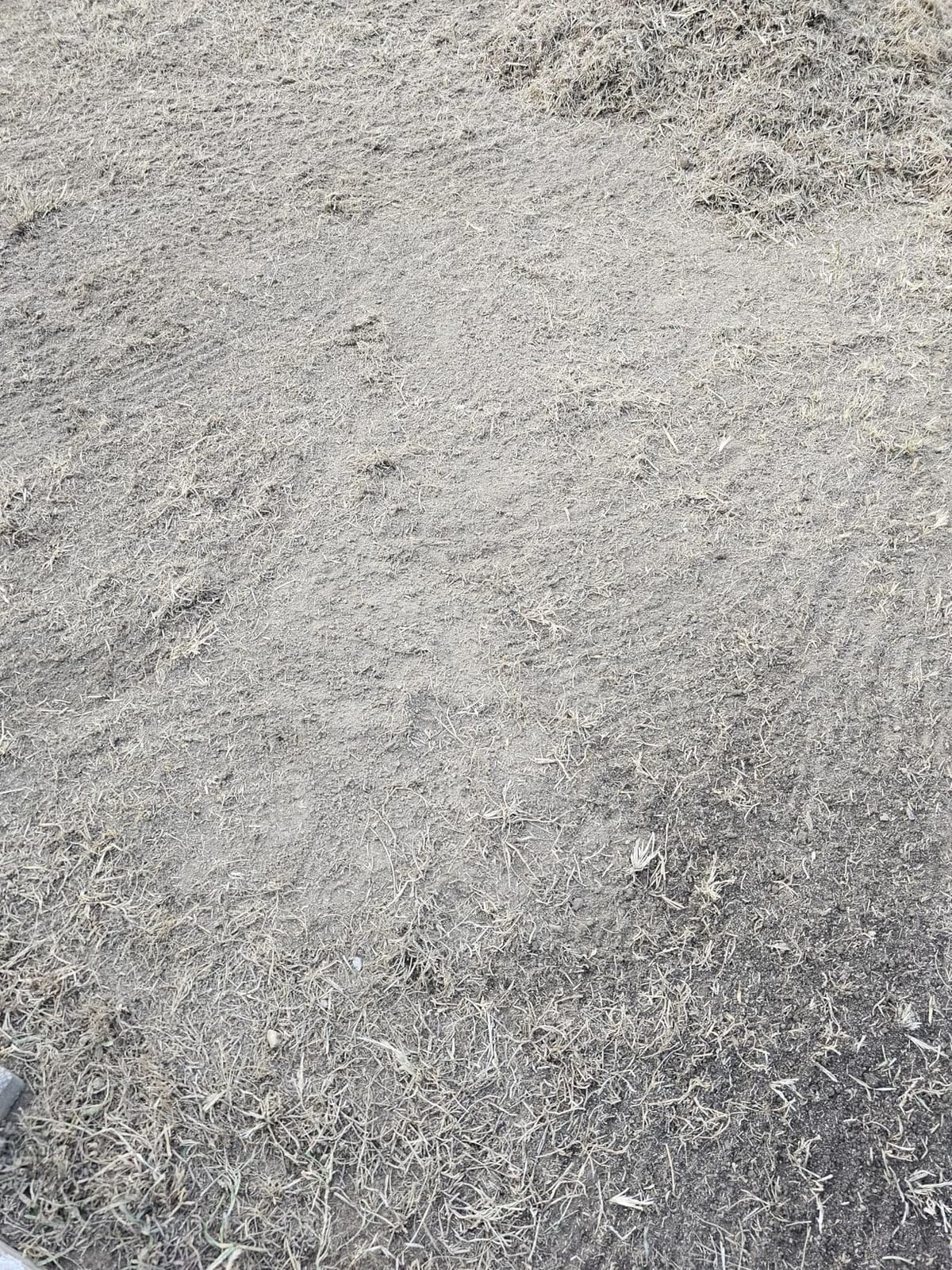
Both reels come in the box, a 20-blade scarifying head and a 24-tine dethatching head, and the unit folds flat for storage. At 33.7 pounds it is heavy enough to feel planted and light enough to lift into a car with one arm.
The automatic overload shutdown is a real feature on a machine expected to meet roots and buried debris. Rather than burning the motor, it cuts out and resets once you clear the obstruction.
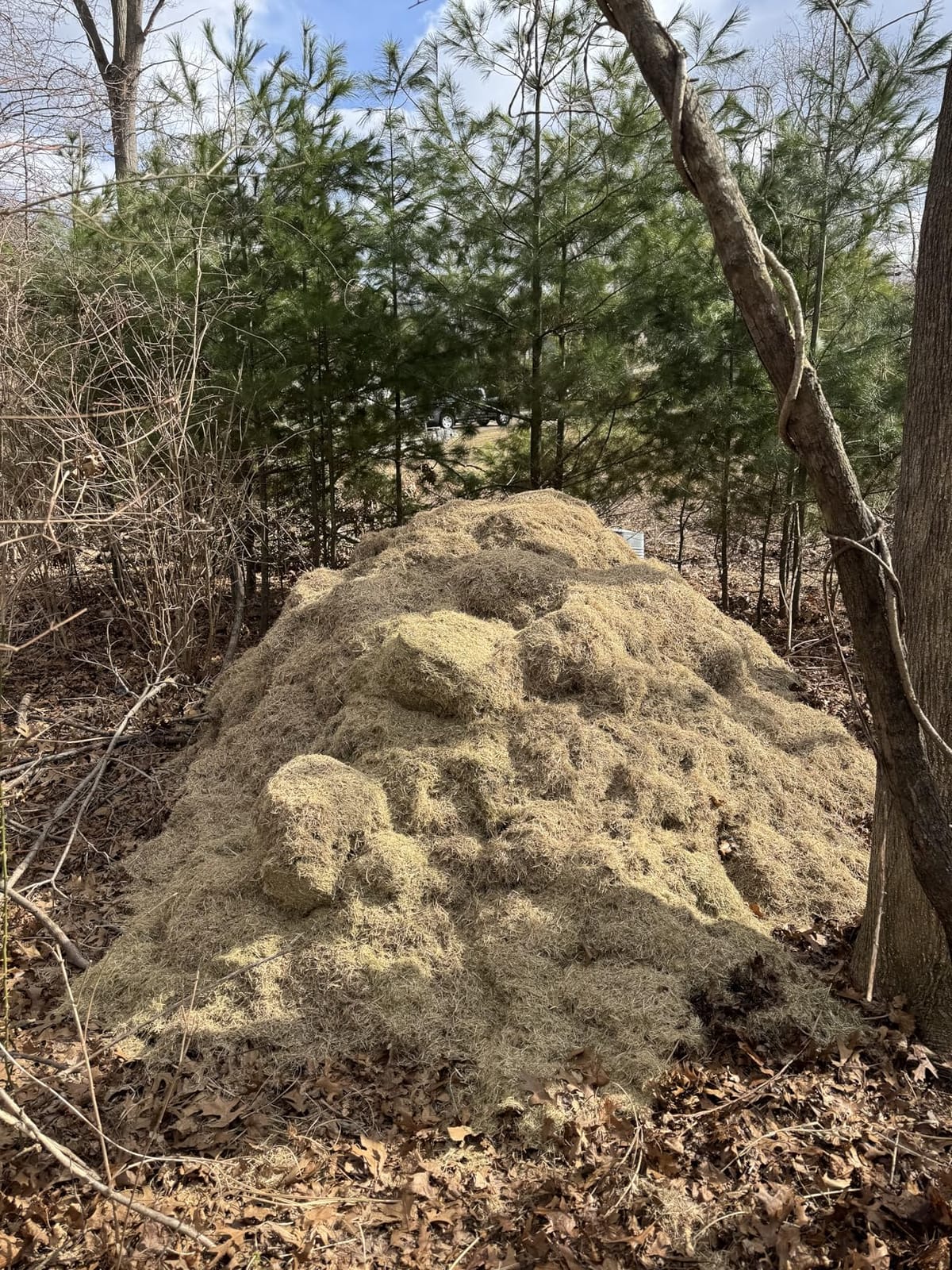
Who this dethatcher suits
It suits owners of a lawn up to about a third of an acre who can run a cord to the work. The 16-inch path is wide for a walk-behind, and the motor is strong enough that a mature mat does not stall it.
Owners frequently report filling multiple contractor bags on lawns that had not been dethatched in years, and many describe it as better value than renting a gas power rake for the same job.
Who should skip it
Skip it if your outlet is far from the lawn or your circuit cannot spare 20 amps. Nearly universal owner advice is to use a 12-gauge extension cord on a dedicated 20-amp circuit; a lighter household extension cord will brown out the motor.
Skip it if you will not check which reel is installed. The scarifier blade ships attached, and reviewers warn it is aggressive enough to scalp a lawn on settings one or two. Fit the tine reel before you start.
4. Greenworks DHA103 – 13 amps, 28 pounds and the cleanest head swap on the list
Greenworks 13 Amp 14-Inch Corded Dethatcher / Scarifier, 2-in-1 Electric Lawn Rake with 3-Position Depth Adjustment & Push-Button Start, Lawn Care Tool for Healthy Yard Maintenance
13 amp motor at 3200 RPM no-load
14 inch clearing path
3 position tine depth
Tool-free head release
Pros
- 13 amp motor strips heavy moss and thatch from large areas
- Under 29 pounds and easy to steer
- Tool-free quick-release between dethatcher and scarifier heads
- Assembles with no tools and includes a cord holder clip
Cons
- Small bag fills after roughly 20 feet of work
- Only 3 depth positions which is fewer than most rivals
- Supplied hex key does not fit properly for head changes
The headline claim from owners here is volume. Multiple reviewers report stripping heavy moss and thatch from three-quarters of an acre, and one cites 8 cubic yards of debris, which suggests a 13-amp corded machine has more real capacity than its spec sheet implies.
At 28.7 pounds it is the second-lightest powered unit in this roundup, and that weight is the quiet advantage on a lawn that is not flat. Turning a 33-pound machine at the end of every row adds up over a long session; this one moves like a mower.
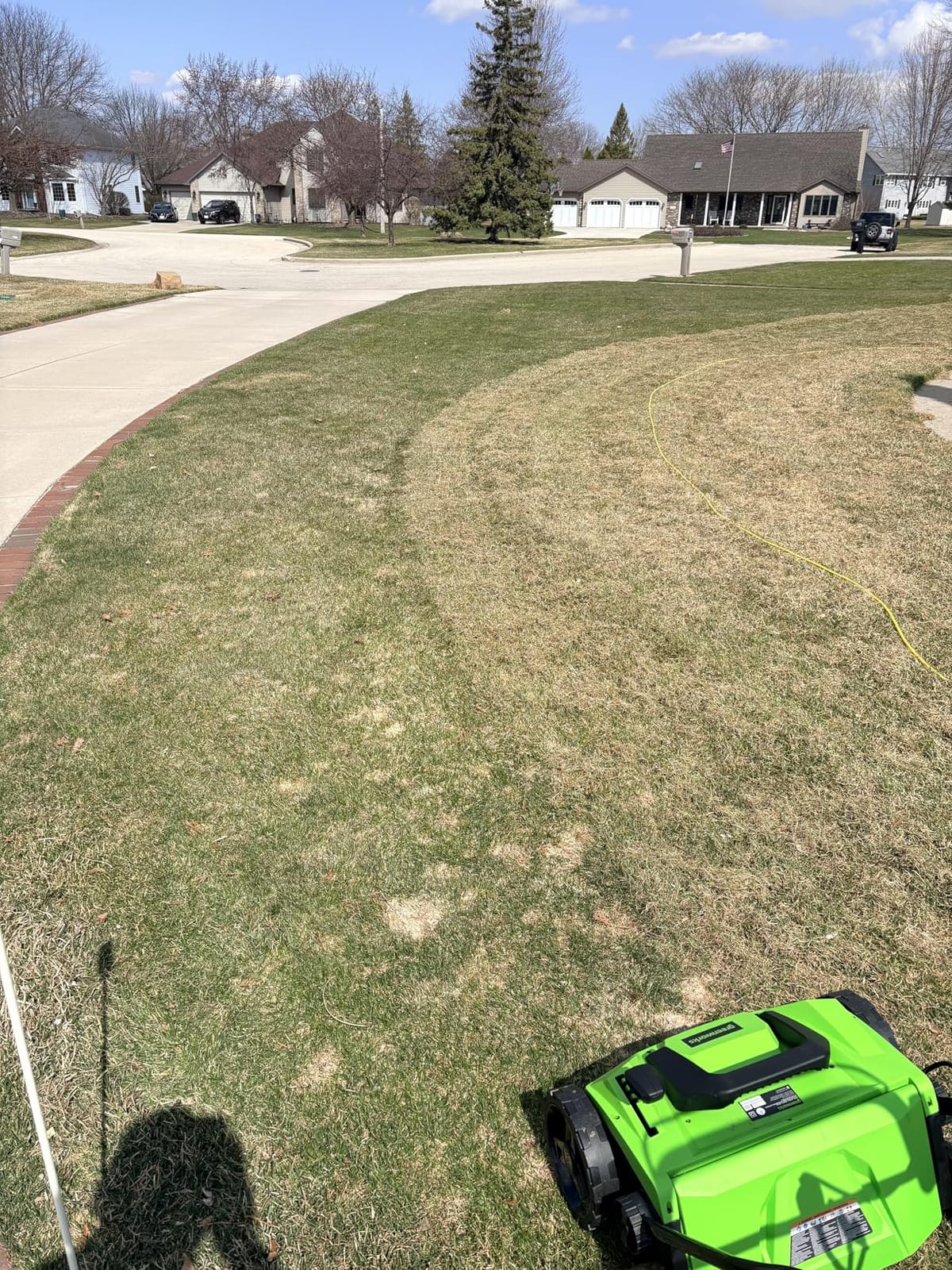
The tool-free quick-release between the dethatcher and scarifier heads is the best-designed mechanism on this list. No bolts, no stored hardware, and you can swap reels in the middle of a job in about the time it takes to walk back to the machine.
The 14-inch path is narrower than the 16-inch units here, which costs you coverage per pass. For most quarter-acre lawns that difference is small enough to accept in exchange for the weight and the swap mechanism.
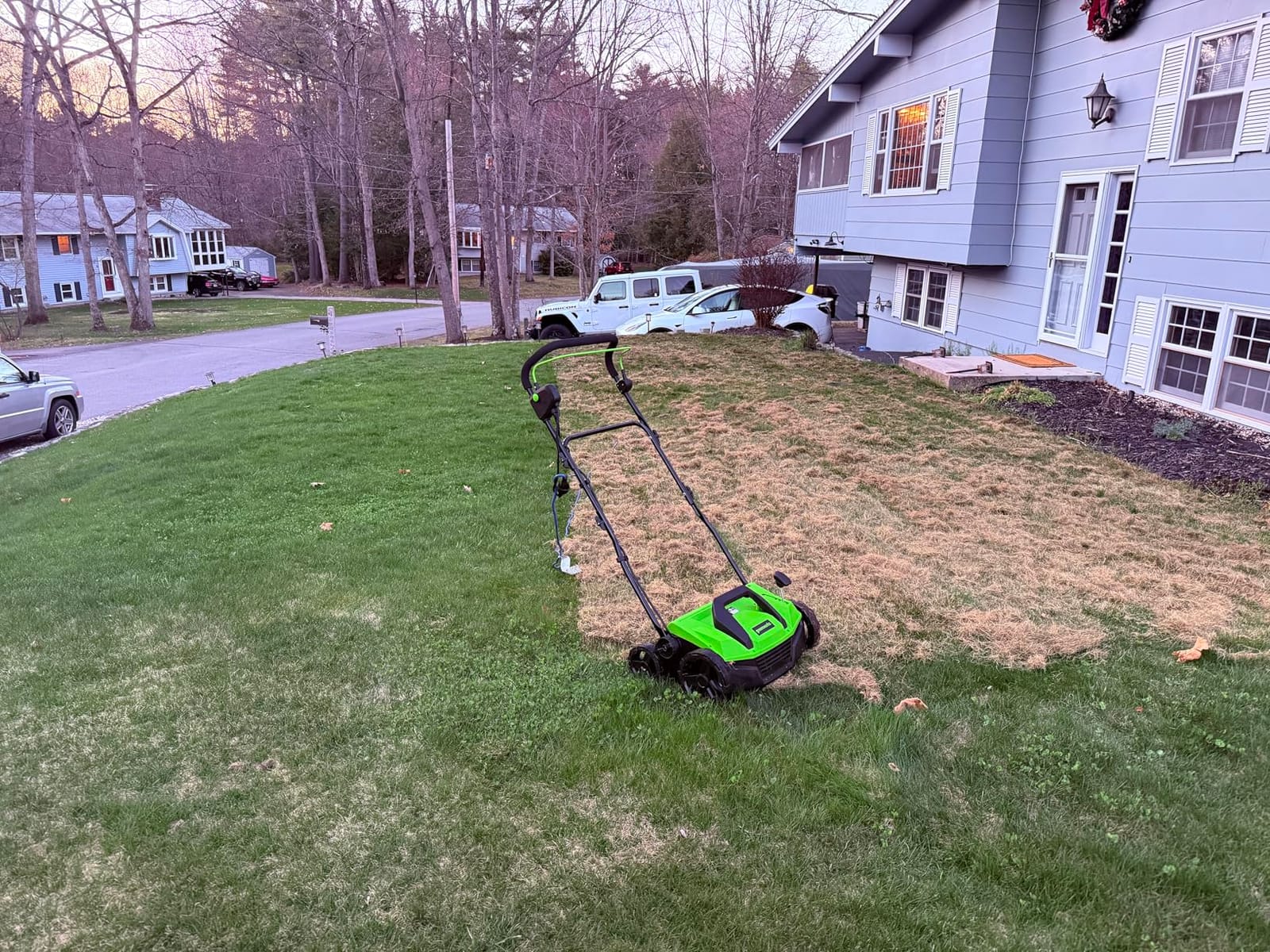
Who this dethatcher suits
It suits owners who want the lightest powered option for a moderate to heavy mat, and people who already own one of the big-ticket mowers and just need something to sit in the same shed. It also suits anyone who would rather assemble nothing at all; it goes together with no tools.
Owners also single it out as good value against big-box rental pricing for a one-time seasonal cleanup.
Who should skip it
Skip it if you need fine depth control. Three positions is the narrowest range in the roundup, and on a genuinely thick mat you want to work shallow on pass one and deeper on pass two.
Skip it if you dislike relearning controls. The lever and switch positions run opposite to most lawnmowers, which is a minor thing once you know and an irritant every time you borrow it. Owners also flag that the included hex key does not fit the head change properly, so bring your own.
5. TIECTOWN LM01 – 3600 RPM and the largest bag in the corded class
TIECTOWN 2026 Upgrade 16-Inch 15.5A Electric Dethatcher & Scarifier, Green
15.5A peak at 3600 RPM
16 inch path
5 depth positions
14.5 gallon removable bag
Pros
- 15.5A peak motor at 3600 RPM is among the strongest in class
- 5 position depth lever plus a 3 position handle rod
- Tool-free quick-release between scarifying and dethatching blades
- 14.5 gallon removable bag is among the biggest available
- Only 30 pounds and the handle folds flat
Cons
- Dethatching tool only with no lawnmower function
- Corded design means managing an extension cord across the lawn
- Less established brand than the big three
On raw output this is the most spec-sheet machine in the corded group. A 15.5-amp peak motor turning 3600 RPM against a 16-inch path gives you more rotational energy per pass than anything else here, and that is the number that decides how fast a mat comes up rather than how fast the machine walks.
The 14.5-gallon removable bag is the practical headline though. Bag size is the single most repeated complaint across dethatcher reviews of every brand, so a machine that comes with one of the largest bags on the market removes the most common interruption from the job.
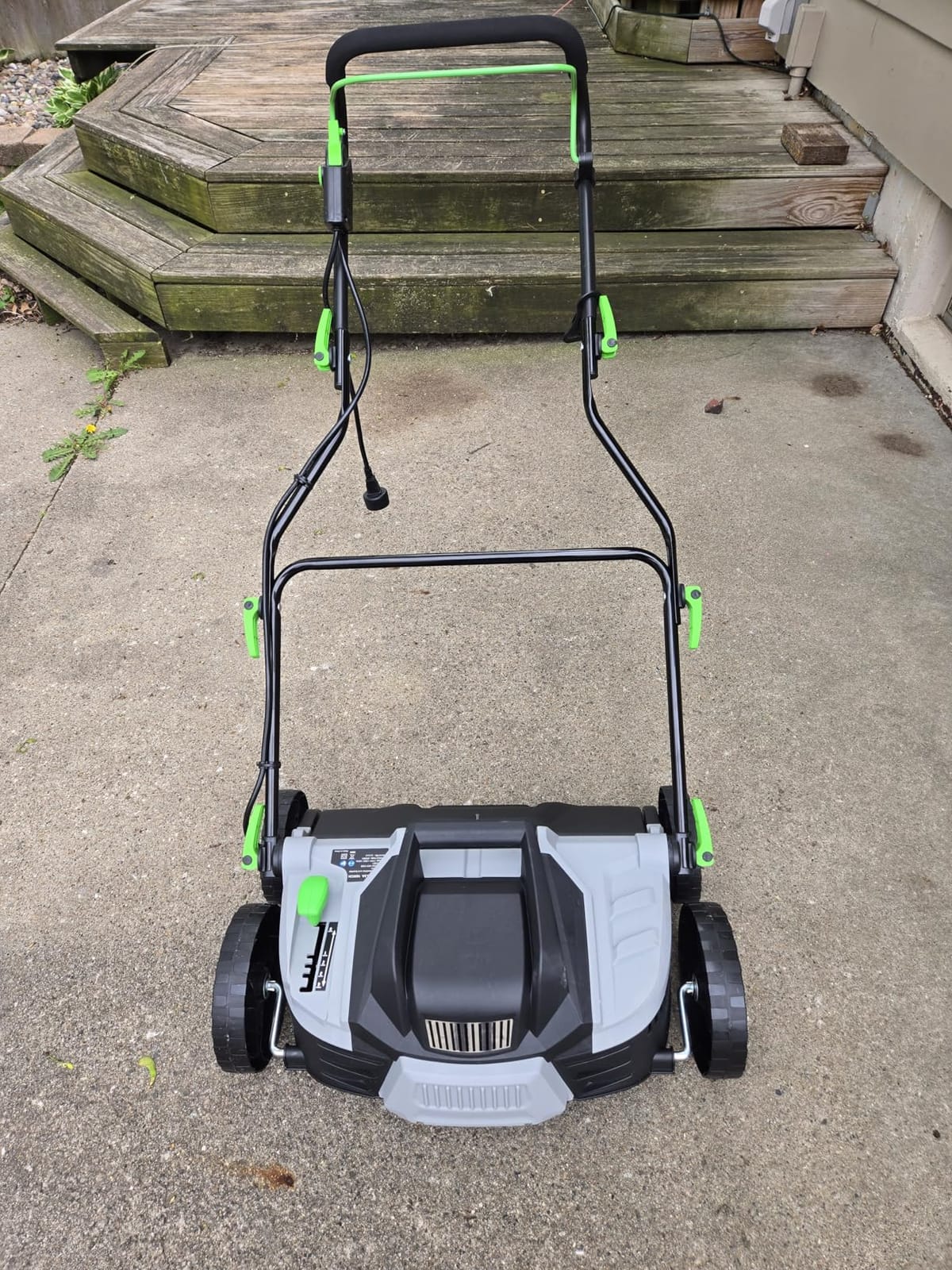
Depth control runs across five positions, with scarifying from -0.47 to 0.24 inch and dethatching from -0.32 to 0.39 inch. That negative range on the dethatch setting is the part that matters for a thick lawn, because it is what puts the tines into the mat instead of on top of it.
A 3-position handle rod means the machine fits both tall and short users, and at 30 pounds with a foldable handle it stores against a wall. The waterproof plug and cord holder are small touches that matter when the cord crosses wet grass.
Who this dethatcher suits
It suits owners who want maximum motor output and who hate stopping to empty a bag. It is also a good fit for two different people sharing one machine, since the handle adjusts rather than being fixed at one height.
Owners commonly recommend running it on a heavy outdoor extension cord, 14 AWG to 50 feet or 12 AWG to 100 feet, specifically to keep the 15-amp motor from browning out at the far end of the lawn.
Who should skip it
Skip it if you want a 2-in-1 that also mows. This is a dethatching and scarifying tool only, with no lawnmower function at all, so you still need a separate mower for the cleanup pass.
Skip it if you need parts support over many seasons. The brand is far less established than Sun Joe, WEN or Greenworks, and for a tool most people buy once a year that matters less, but it is a fair question to ask.
6. Walensee 19-Tine Thatch Rake – the honest manual option for small lawns
Walensee 15-Inch Thatch Rake for Lawn, 19-Tine Dethatcher, 70-Inch Handle
Dual sided 19 tine head
15 inch width
Handle adjusts 40 to 70 inches
4.6 pounds
Pros
- Dual sided head lifts thatch on one side and cultivates on the other
- Handle adjusts to 40 55 or 70 inches to reduce bending
- Only 4.6 pounds with a cushioned non-slip grip
- Quenched manganese steel tines hold up under repeated work
Cons
- Assembly is difficult and the included tools are poor quality
- Handle threads feel cheap and can loosen with extended use
- 15 inch width is narrow compared with powered units
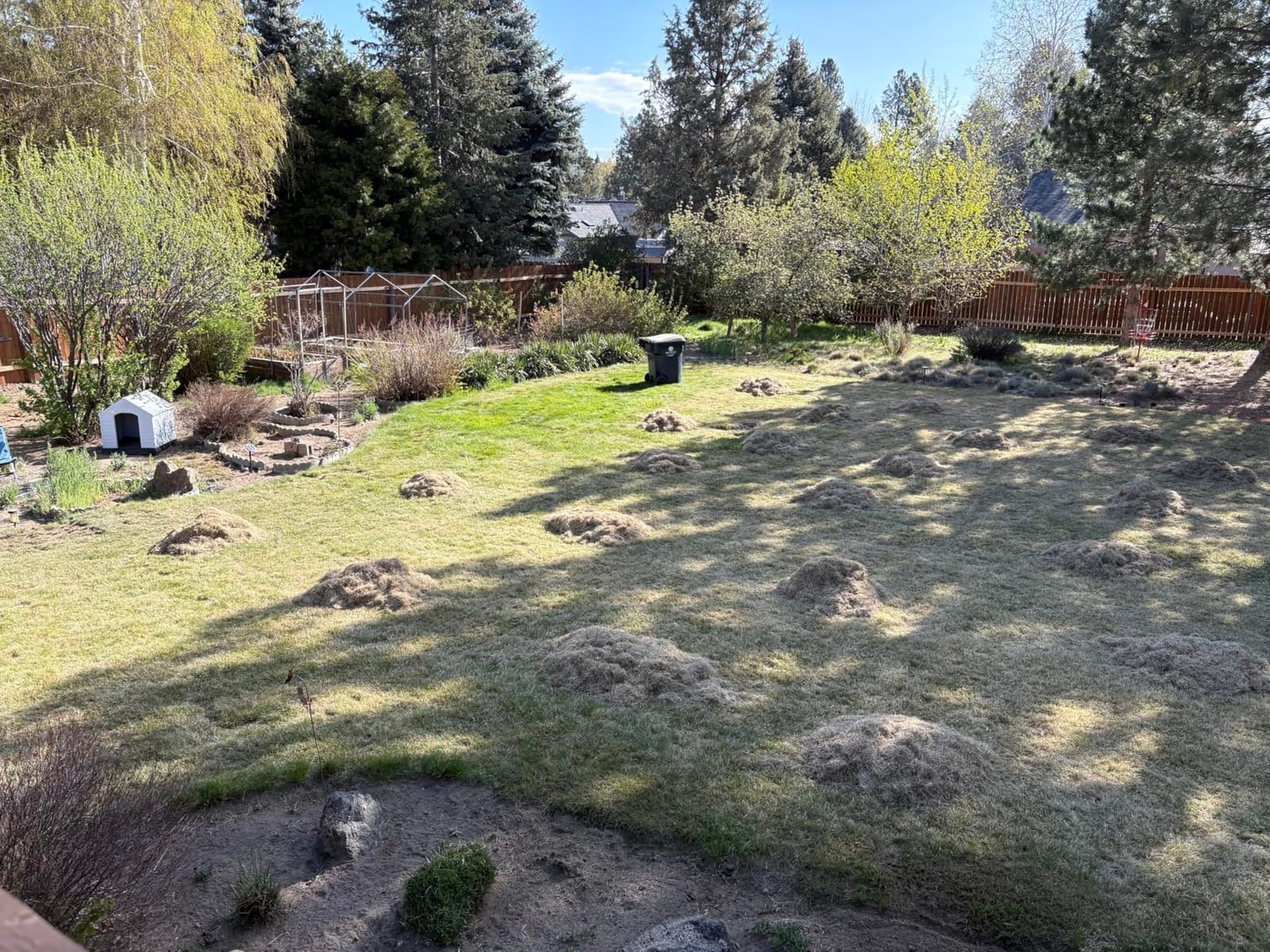
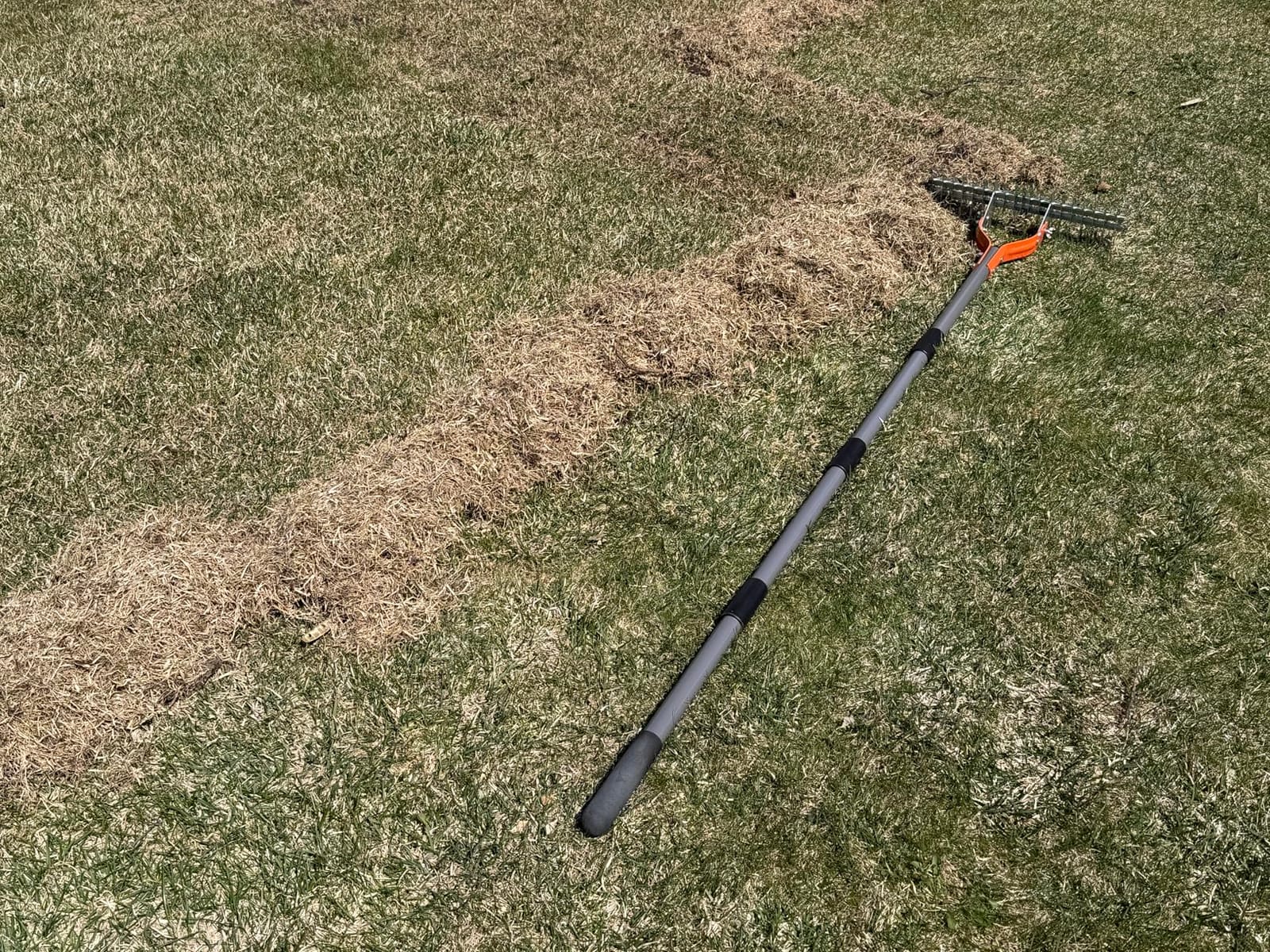
A manual rake is the right answer for a small patch, not a lawn, and we include it here because it is genuinely the correct tool for a 200-square-foot problem area. Owners confirm it pulls real thatch, and the dual-sided 19-tine head means one pass lifts debris while a flipped pass cultivates the topsoil underneath.
The sectional stainless handle that adjusts to 40, 55 or 70 inches is the feature that decides whether this is usable at all. Long enough handle means you pull rather than bend, which is the difference between an afternoon’s work and giving up after twenty minutes.
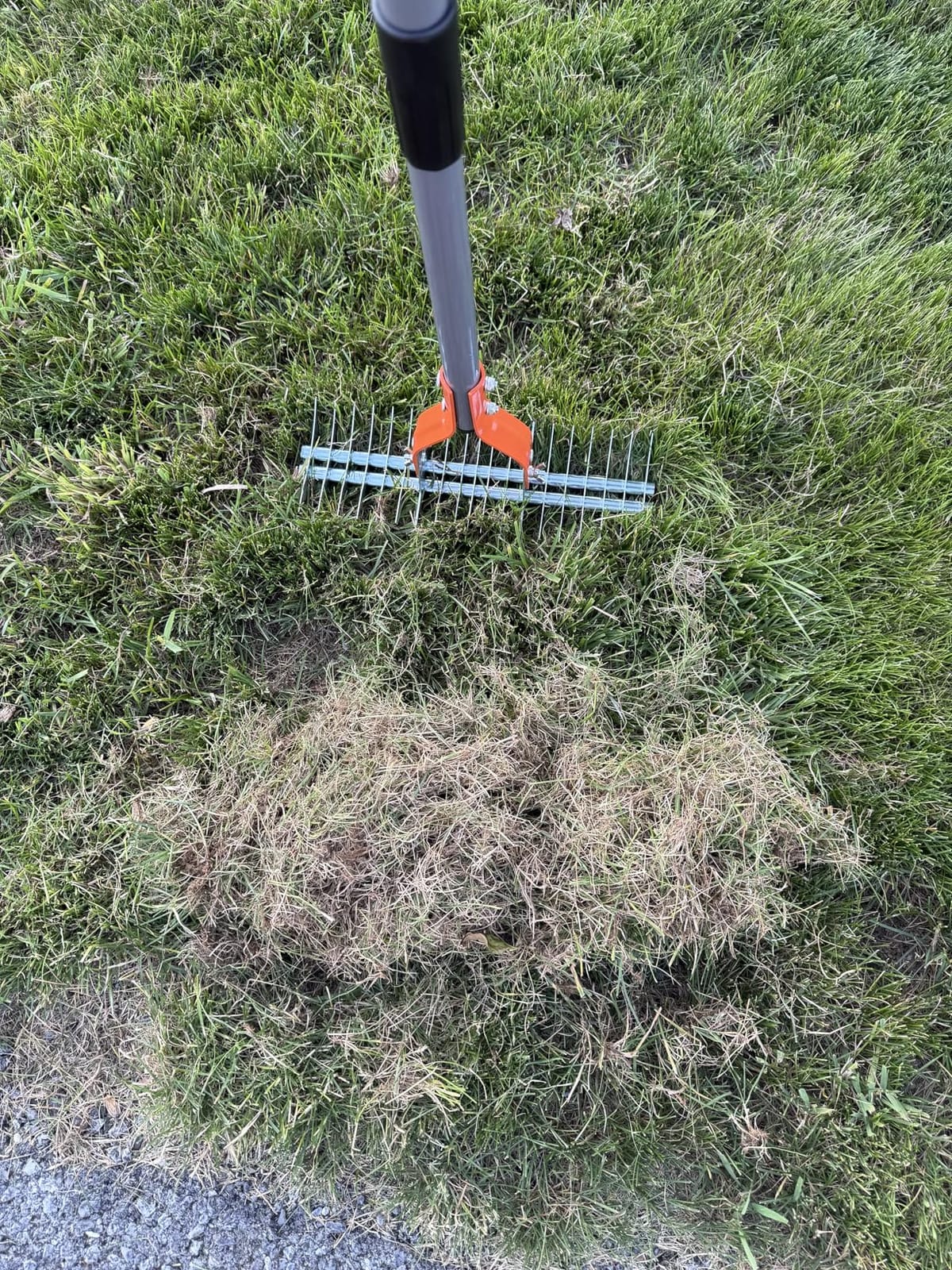
At 4.6 pounds it is the second-lightest thing here, and the cushioned non-slip grip does more for hand comfort than the weight figure suggests. The head is quenched manganese steel with a powder-coated finish, which is why owners report the tines themselves holding up while the hardware around them does not.
Forum experience is worth repeating here because it is the least flattering part of buying this rake. One owner hand-raked 200 square feet in an hour, pulled three to four cubic feet of thatch out, felt it in his back, and decided to buy a powered unit. Manual raking does not scale past a small lawn.
Who this rake suits
It suits owners of a small front patch, a lawn edge along a fence, or a corner that always mats and never gets the full lawn treatment. It also suits anyone who rents equipment badly and wants a tool that needs no fuel, no cord and no battery to store.
It is the cheapest way to find out whether you even like dethatching before committing to a machine.
Who should skip it
Skip it for anything approaching a full lawn. The 15-inch width is narrow, the work rate is a fraction of any powered reel, and the physical cost compounds with each pass.
Skip it if assembly is not something you enjoy. Reviewers repeatedly report missing holes in the bolts and inadequate supplied tools, with the common workaround being a 10 mm socket and locking pliers. The rake is fine; the box it arrives in is not.
7. Suchtale 48-Inch Tow-Behind – bolted replaceable tines and a ballast platform
Suchtale 48 Inch Tow Behind Lawn Dethatcher with 24 Spring Tines
48 inch working width
24 replaceable spring steel tines
70 lb ballast platform
Bearing wheels
Pros
- 48 inch width covers a large lawn very fast when towed
- Powder coated full steel frame resists flaking paint
- Tines are bolted in and heat treated so they can be replaced
- 70 lb ballast platform lets you add weight for deeper bite
Cons
- Transport wheel-raise lever is poorly designed
- Instructions are vague for wheel and handle assembly
- Supplied wrenches are poor quality
Four inches wider than the Agri-Fab at 40 inches, and the difference is what you feel on a property measured in acres rather than square feet. If you are towing behind a tractor rather than a mower, the wider reel and the heavier frame make this the more sensible of the two tow-behinds here.
The design decision we like most is that the 24 tines are bolted in rather than pressed into the reel, and they are heat treated and replaceable. On any machine that meets stones and roots, a bent tine you can swap in five minutes is worth more than a cheaper welded one.
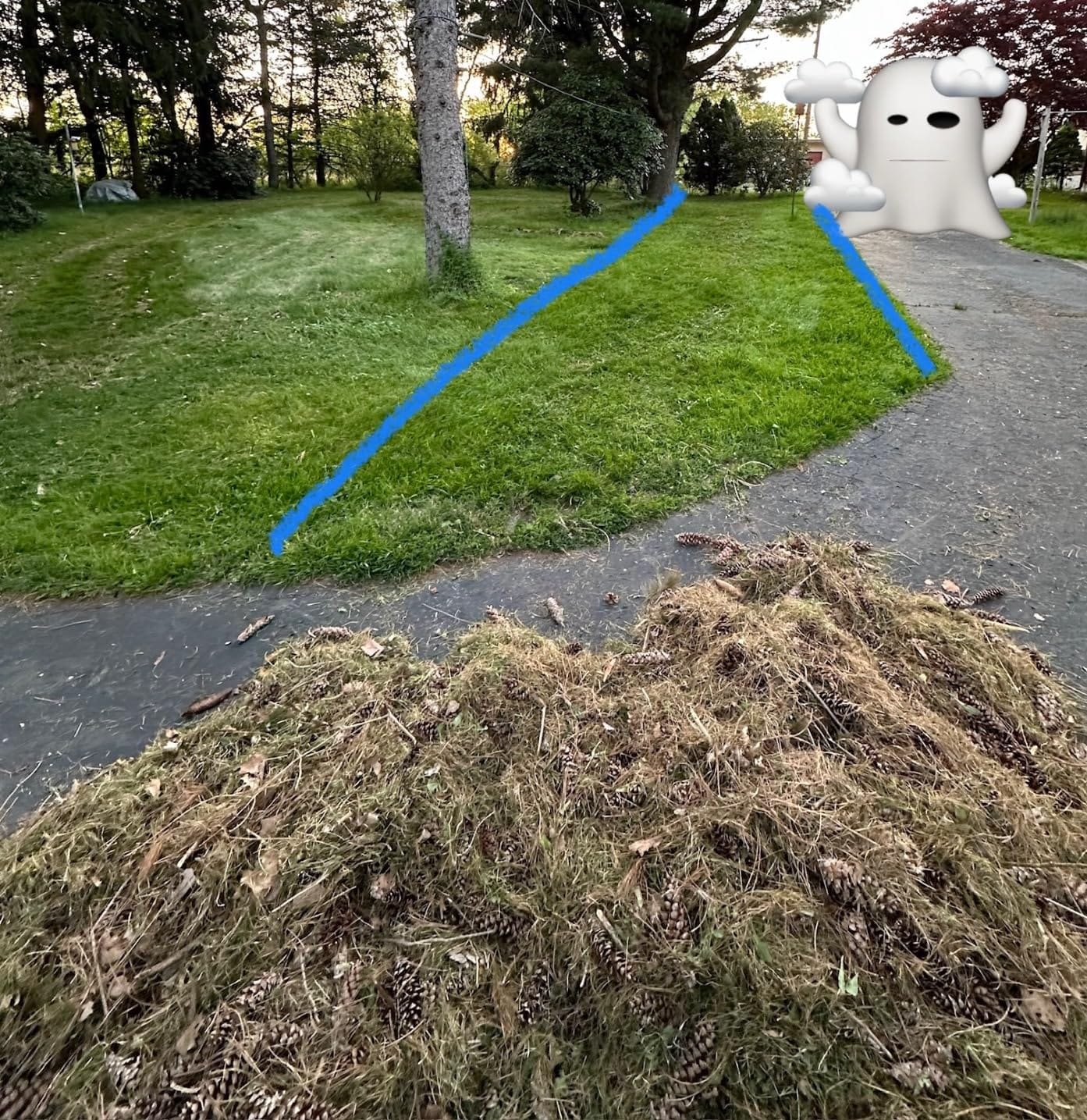
The 70 lb ballast platform is a simple idea that solves the depth problem on a tow-behind. There is no depth lever to adjust, so bite comes from downward pressure, and adding weight on the platform is how you get more of it. Two reviewers report it working without added weight at all, so treat the ballast as a reserve rather than a requirement.
Owners generally find the build better than similarly priced big-box tow-behinds, pointing to the powder coating, solid rubber tread tires and the bolted tines as the differences they noticed after a season.
Who this dethatcher suits
It suits owners of an acre or more who tow with a tractor or ATV rather than a mower. The 48-inch width and the heavy steel frame are built for that load, and the replaceable tines make sense on ground where something will eventually hit one.
It also suits anyone who has been disappointed by paint flaking after one winter. The fully powder-coated frame is the most commonly praised detail in the reviews.
Who should skip it
Skip it if you want to collect grass at the same time. This cannot run alongside a grass collection bag, so on a lawn where you planned to mow and dethatch in one pass, it will not do both.
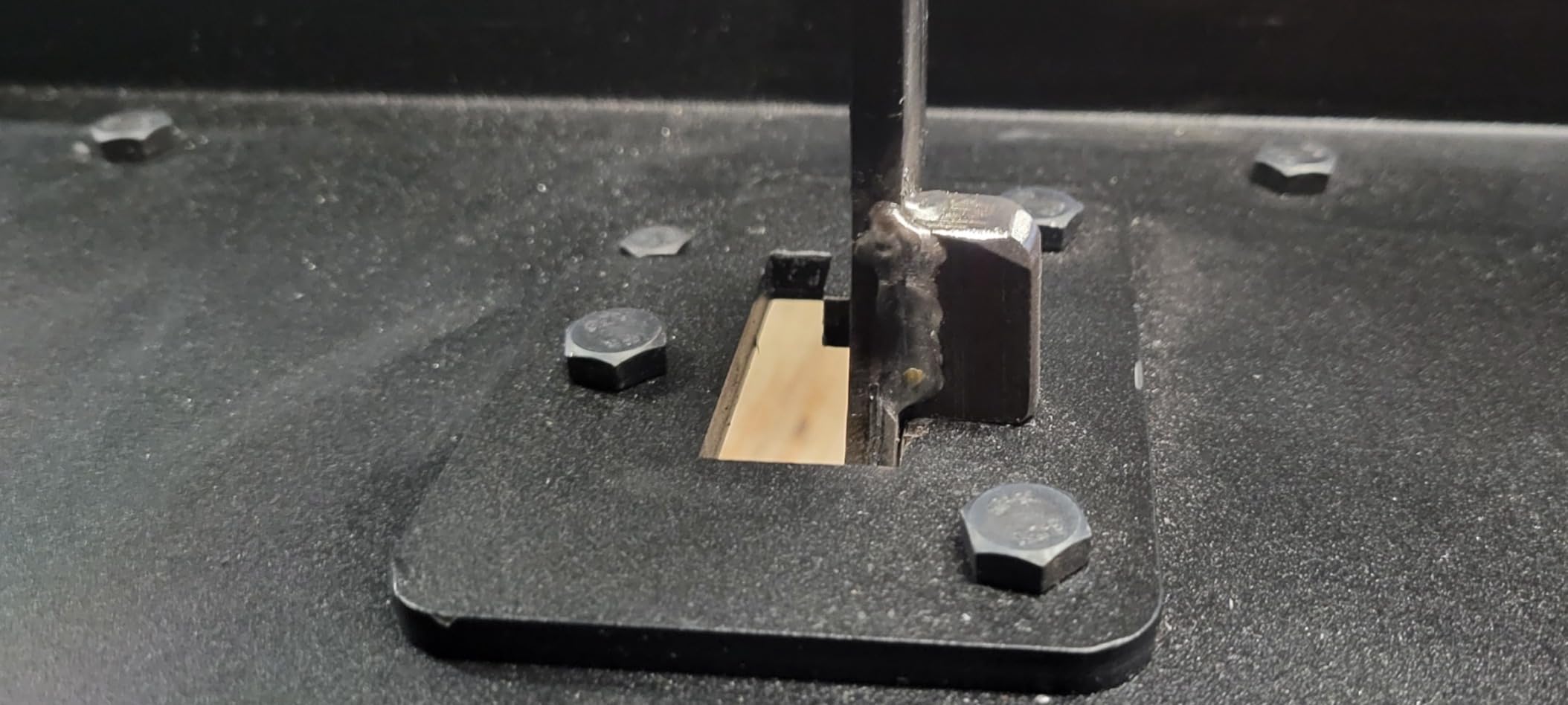
Skip it if you need the machine to store flat. The transport wheel-raise lever is the most repeated complaint in reviews, with one owner reporting a welded modification, and the frame does not fold down.
8. BILT HARD TIA-1002 – the 15-amp copper motor that keeps pulling
BILT HARD 16 Inch Dethatcher Scarifier Electric Powered, 15 Amp Copper Motor, 5-Position Depth Adjustment, 14.5 gal Thatch Bag, 2 in 1 Walk Behind Thatch Removing Machine for Lawn
15 amp copper motor to 3300 RPM
16 inch path
5 depth positions from -0.47 to 0.24 inch
14.5 gal bag
Pros
- 15 amp copper motor holds performance on heavy moss and thatch
- One owner collected 45 bags of debris around 1350 gallons from 7200 sq ft
- Tool-free roller swap and about 30 minutes to assemble
- Folds down for compact storage
- 14.5 gallon bag is among the largest in class
Cons
- Heaviest powered unit here at 57.3 pounds
- Bag backs up quickly with tine-type rotors
- Tines can clog with running bermuda rhizomes
- Cord can be run over if care is not taken
The one review figure worth repeating here describes the motor rather than the marketing. A single owner reported collecting 45 bags of debris, roughly 1350 gallons, from a 7200 square-foot lawn with this machine. That is the kind of throughput that turns a thick-lawn job from a weekend into a morning.
The 15-amp copper motor is the reason. Owners describe it as producing strong, sustained performance on heavy moss and thatch, and several report that one pass over a neglected lawn paid for the machine against a single professional dethatching visit.
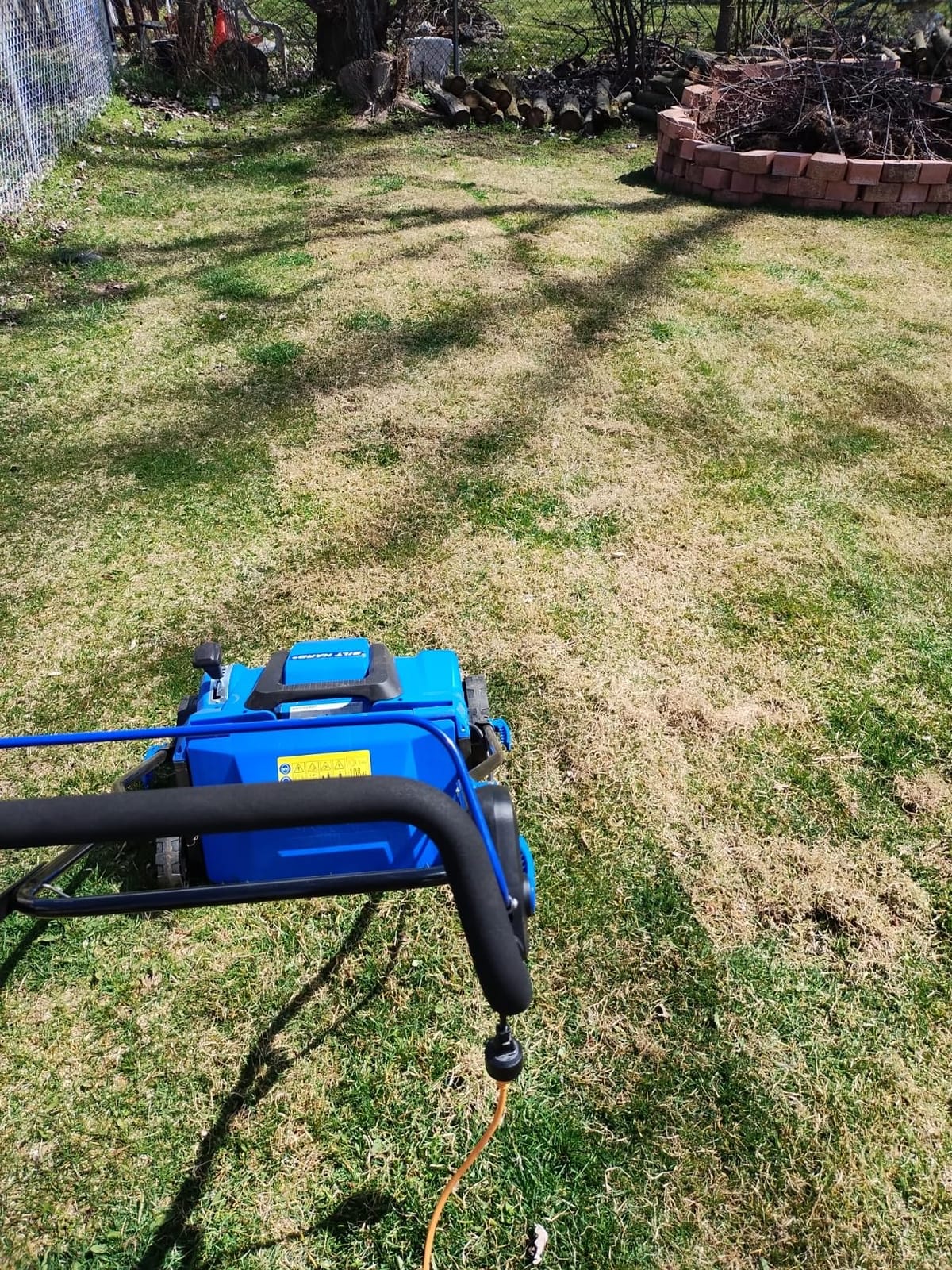
Specification-wise it is well equipped: a 16-blade scarifying roller, a 20 spring-steel tine roller, five depth positions running -0.47 to 0.24 inch, a 14.5-gallon removable bag, and a lock-off switch with overload protection. Roller swaps are tool-free and assembly takes about 30 minutes.
On bermudagrass, though, owners report tines clogging with running rhizomes. If your lawn is a warm-season runner that spreads aggressively, plan to clear the reel more often than you would on a cool-season lawn.
Who this dethatcher suits
It suits owners of a neglected lawn with several years of accumulated mat, where the deciding factor is whether the motor keeps working after the first ten minutes. A 16-inch path and a large bag keep the job moving once it does.
It also suits anyone who wants one machine for both jobs, since the 16-blade scarifier roller is included and swaps without tools.
Who should skip it
Skip it if weight is a factor. At 57.3 pounds it is by a wide margin the heaviest powered unit in this roundup, and getting it across a soft lawn or up a step is a genuine chore.
Skip it if you have a bermuda lawn you intend to dethatch thoroughly. Owners report the bag backing up quickly with tine-type rotors in running thatch, which means more stops than the 14.5-gallon capacity suggests.
9. THE GROUNDSKEEPER II – a 21-inch manual rake owners keep for everything else
THE GROUNDSKEEPER II Rake 55-inch Lightweight Fiberglass Handle, 21-inch Head, Durable Steel Tines for Gardening, De-Thatching or Professional Landscaping
21 inch head with 28 steel torsion tines
55 inch fiberglass handle
2 pounds
Limited lifetime warranty
Pros
- Highest owner rating in this roundup across more than 4100 reviews
- Only 2 pounds which takes real pressure off the back
- Angled spring-loaded steel tines dig in without down pressure
- Self-cleans in one pass when flipped and pulled back
- Handles dethatching plus leaves pine needles and embedded twigs
Cons
- Handle-to-head pin can wear and may need a bolt and nut
- Fixed tine angle digs into gravel and rock beds
- No adjustable head-to-handle angle
- Costs more than an ordinary plastic rake
This is the highest-rated tool in the roundup with more than 4,100 owner reviews behind it, and it earns the rating. It is not a powered dethatcher and will not replace one on a thick lawn, but owners describe it as the best rake they have owned for general yard work, and most keep it long after a powered machine goes back in the shed.
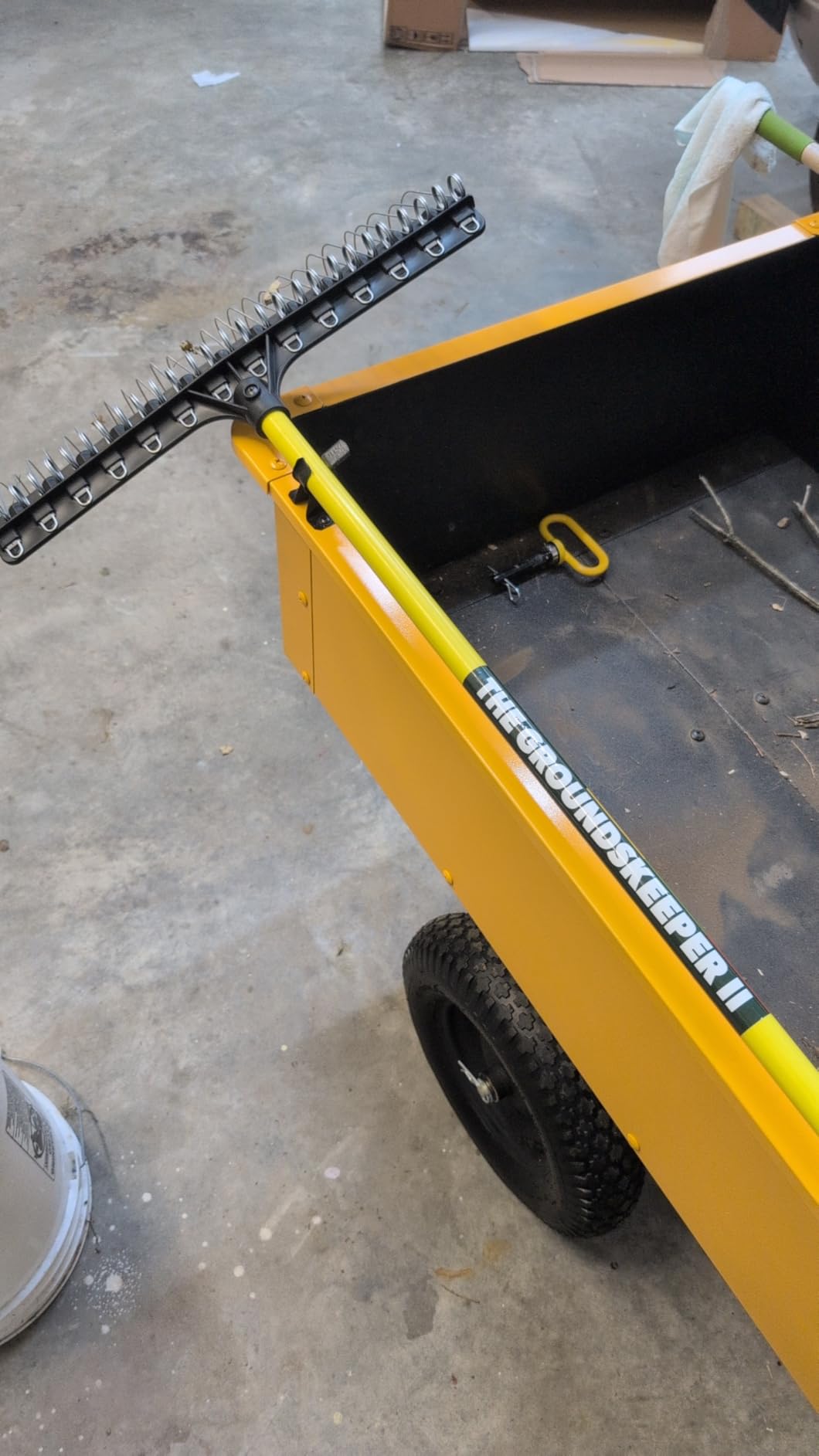
The 28 hardened steel torsion-spring tines are the difference from a flat-tine rake. They are angled and spring-loaded, so they bite into a matted layer without you leaning your weight into the handle, which is why it works on a 21-inch head at only 2 pounds.
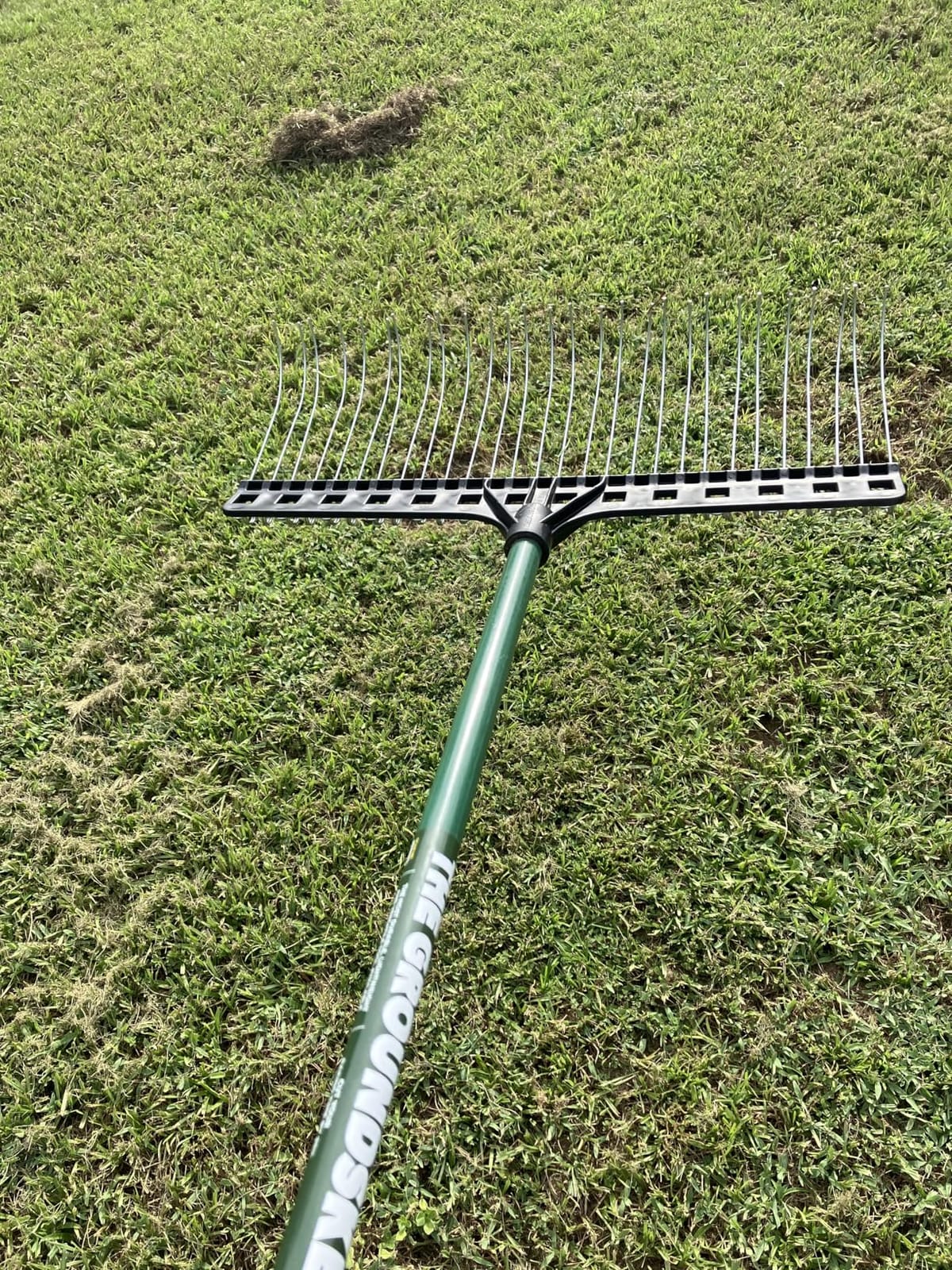
Flip it and pull it toward you and the head self-cleans, throwing the collected debris off the tines. On a 55-inch fiberglass handle with a swivel hanger for storage, it is a tool that gets used year-round for leaves, pine needles and twigs rather than being retired after dethatching season.
The limited lifetime warranty against defects in materials and workmanship is unusual at this end of the market, and the made-in-the-USA build is consistent with owners calling it the most solid thing they own in the shed.
Who this rake suits
It suits owners who want a lawn tool rather than a seasonal machine, and anyone whose thatch problem is confined to a border strip or a shaded corner. At 2 pounds it is also the easiest option for someone with back or joint limitations who should not be pushing a 57-pound walk-behind.
It suits people who already own a powered dethatcher and still want a cheap way to spot-thatch between seasonal jobs.
Who should skip it
Skip it as your only dethatcher on a lawn over roughly a thousand square feet. Hand raking does not scale, and owners who tried it report feeling it within the first hour.
Skip it if you have rock landscaping nearby. The tine angle is fixed and aggressive enough to pull gravel out of a bed, and while some owners fix it with a drilled bolt and nut, that is a modification rather than a feature.
10. Earthwise DT71613 – 45 zinc-plated pins on a plain 13-amp deck
Earthwise DT71613 13-Amp 16-Inch Corded Electric Dethatcher, Green
13 amp motor with bail wire switch
16 inch working width
45 zinc-plated piano wire pins
Working depth -0.4 to 0.4 inch
Pros
- 16 inch width with 45 spring pins gives strong coverage per pass
- 13 amp motor handles matted thatch on mains electricity
- Five depth positions across -0.4 to 0.4 inch
- Zinc-plated piano wire pins resist rust
- No gas oil or winterising
Cons
- Priced above most 15 amp rivals of similar width
- Dethatch only with no scarifying cylinder included
- Corded only so it cannot be used away from an outlet
- Plastic construction
The Earthwise is the simplest machine here and that is its argument. It does one job, combs out thatch with 45 zinc-plated piano wire spring pins across a 16-inch working width, and it needs no fuel, no oil and no winterising.
Forty-five pins is a lot of contact points for a 16-inch reel. Owners who bought it for spring cleanup report that the 13-amp motor and the wider path handle matted thatch effectively, and that the depth lever adjusts smoothly across its range.
The pins are the reason it outlasts machines with heavier-looking but cheaper tines. Zinc-plated piano wire resists rust, and unlike a spring-steel pin that can snap at the coil, piano wire spring pins are credited by owners with staying usable through repeated seasonal jobs.
At 30.4 pounds with 6-inch wheels it steers easily over uneven ground, and the bail wire safety switch is a straightforward one-hand control that works like the one on a mower.
Who this dethatcher suits
It suits owners who already know their thatch is a spring problem and want a comber rather than a cutter. If you only ever want to lift debris and never intend to scarify into the soil, one job done well is a reasonable target.
It also suits anyone tired of winterising a small engine or storing fuel, since there is nothing to service beyond a rinse of the pins.
Who should skip it
Skip it if you expect to scarify at some point. There is no scarifying cylinder included, and buying the extra head later often costs more than choosing a 2-in-1 from the start.
Skip it if your comparison is against the 15-amp machines here. It costs more than several of them while offering a narrower depth range and one fewer reel, so the extra spend buys the pin material rather than capability.
How to Dethatch a Thick Lawn Without Ripping Up the Turf
Even a good machine will damage a lawn if you set it too deep on the first pass. The procedure below is the one we would follow on any lawn sitting past half an inch, and it is less about the machine than about the order you do things in.
Mow first, and mow short. Half the thatch is standing grass clippings on its way to the mat, and cutting low removes that before you start.
Water the lawn a day ahead so the crowns are hydrated and the machine does not rip them out.
Set the depth to your shallowest negative position and run one pass in a single direction only. Cross-hatching is how lawns get scalped.
Empty the debris the way owners actually do: run without the bag and follow with a bagging mower, which clears far more per pass than any collection bag.
Only if mat remains, deepen by one position and repeat in the same direction. Do not go perpendicular for a second pass.
Rake up, water thoroughly, and keep traffic off the lawn while the crowns knit back in.
The empty-and-remow step deserves the emphasis because it is the actual workflow. Every bag on this list is criticised by owners, and the near-universal advice is to detach it and let the mower do the collecting. One owner put the cord-and-bag reality in a single line: it works with a 75-foot 12-gauge cable, and the bag is hilariously small.
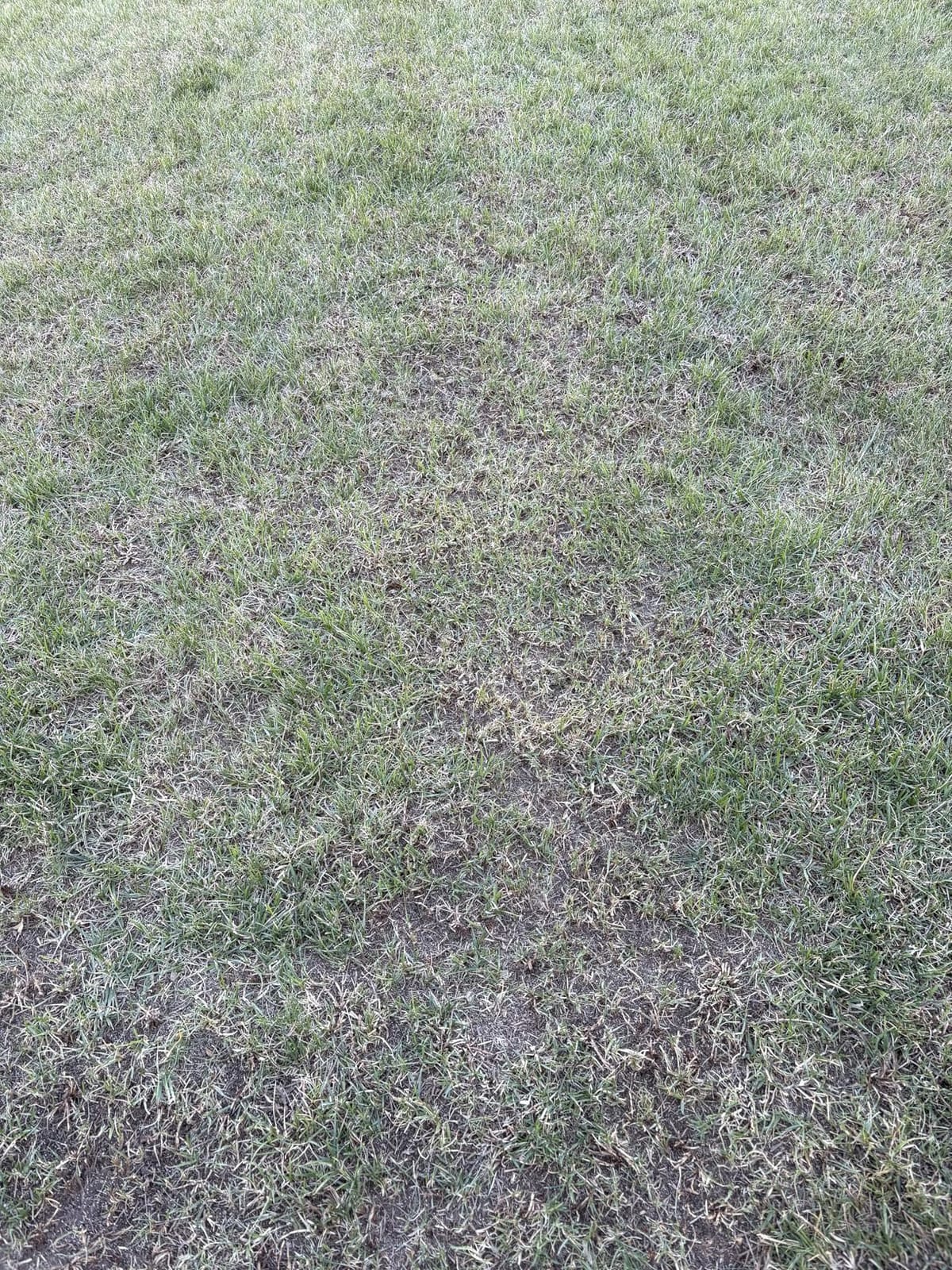
Now the question owners ask most often: why did my dethatcher pull up grass? In almost every case it is depth, not a faulty machine. On a thick lawn the crowns grow upward into the thatch layer to find light, so a tine set into the lower half of the mat is cutting live crown. Raise the setting one position and run the same pass again; the debris you pulled up is mostly mat, and the turf recovers.
Timing matters as much as technique. If you dethatch in early spring on a cool-season lawn, wait until it is actively growing so the crowns can repair in weeks rather than months. If you dethatch before overseeding, do the thatch job first, wait two to three weeks, then seed into the opened surface and keep it watered.
Dethatcher, Scarifier or Aerator: Which One Your Lawn Needs
These three get confused constantly and picking the wrong one means owning the wrong machine for years. A dethatcher’s flexible spring tines comb the thatch layer and drag debris up into a bag. A scarifier replaces those tines with fixed blades that cut shallow vertical grooves through the mat and into the top of the soil.
So do dethatchers cut grass? Not on purpose, but they can. A tine reel set below the crown line will pull living grass out along with the debris, particularly on a lawn that has grown into a thick mat. That is a depth problem, and the fix is a shallower setting rather than a different tool.
An aerator is a third machine entirely. It drives hollow tines into the soil and pulls up plugs, which relieves compaction and opens the soil for water and air without removing thatch. If your lawn is hard, bare in patches and compacted rather than spongy, aeration is the job you need and no dethatcher will do it.
A quick diagnosis. Spongy and mats over after rain means thatch, so dethatch or scarify. Hard and dense with bare patches and poor drainage means compaction, so aerate. Both at once is common on an old neglected lawn, and the correct order is dethatch in the season of active growth, then aerate a few weeks later.
When to Dethatch by Grass Type and Month
Cool-season lawns, meaning fescue, ryegrass and Kentucky bluegrass, are dethatched in late spring after growth has started or in early autumn while the turf is still growing but the heat has dropped. Early spring is the wrong window because the crowns are weak and slow to repair, and mid-summer can stress a lawn that is trying to survive heat.
Warm-season lawns, meaning Bermuda, Zoysia and St. Augustine, are dethatched in late spring once the grass is growing strongly. The grass will recover quickly in warm weather, which is exactly the advantage warm-season turf has over cool-season turf in a spring job.
Then there are the two that get one pass. Centipedegrass and St. Augustinegrass spread by stolon, and the runners that extend the lawn into bare soil live inside the mat. Cross-hatched passes tear those runners apart. Run one direction, at a shallow setting, and accept that a full dethatching is not the job on these lawns; a light comb in early summer is.
If your schedule pairs dethatching with fall work, dethatch first and overseed after. Grass seed needs light, loose contact and moisture to germinate, and a mat left in place is exactly the barrier that stops it. Plan two to three weeks between the two jobs so the disturbed soil can settle.
Dethatching is also a good moment to check your watering schedule. A lawn that mats every single year usually has a compaction or over-feeding problem underneath, and removing the thatch without addressing it simply resets the clock. Pair the job with deep, infrequent watering, and if you use a controller, our guide to smart sprinkler controllers for lawns covers how to set intervals properly.
How to Choose: Depth, Width, Cords and Bags
Depth adjustment is the specification that matters most on a thick lawn. Machines here range from three positions to five, and the range itself matters more than the count: a reel that reaches -0.4 to 0.5 inch below the surface can comb a mat first and cut deeper on the second pass, while a three-position machine often gives you all of the range or none of it. Check the stated depth in inches, not just the number of clicks.
Working width is a time calculation. A 14-inch path is fine on a quarter-acre and tedious on two acres. Tow-behind units here run 40 and 48 inches, and that difference becomes the difference between an afternoon and a weekend once you include turning at every row end.
If you buy a corded machine, the extension cord is part of the machine. Owner advice converges on 12 AWG on a dedicated 20-amp circuit, with owners reporting that a 75-foot 12-gauge cable keeps the motor at full power where lighter cords browned out. A 15-amp motor on a long thin cord loses torque exactly when you are deepest in the mat, which is the worst possible moment. Never run the cord across the path you are cutting, and check it every pass; a cut cord is the fastest way to damage any of these machines.
For cordless, the real economics are simple. A 2.0Ah pack is fine for a light spring cleanup on a small lawn and will not finish a dense thatch job. If you are buying a battery dethatcher for a mat job, buy a second pack rather than a bigger machine, because the machine determines how well the thatch comes up and the packs determine whether you finish.
Bag capacity deserves realism. Bags across this roundup run from small to 14.5 gallons and none is big enough for a thick lawn, which is why nearly every owner runs bagless and follows with a bagging mower. Treat the bag as a tidy-up aid for the walkway pass, not as the main collection method.
Finally, rent versus buy. If you have a half acre or more, or a mat past three-quarters of an inch, a rented power rake from an equipment dealer will cut deeper than any walk-behind here and will cover the ground faster than you can with a machine you have to push. Buy only if you will use it every year. If your lawn mats up annually, the underlying cause is worth solving first, because the cheapest dethatcher is the one you never need to buy twice.
Frequently Asked Questions
Are electric lawn dethatchers any good?
Yes, for most residential lawns. A 13-amp or 15-amp corded unit handles a thatch layer up to about three-quarters of an inch, and the 15-amp machines here are described by owners as matching or beating rented gas power rakes on neglected lawns. The limiting factor is cord gauge, not the motor. Run a 12 AWG extension cord on a dedicated 20-amp circuit or the motor loses torque exactly when the reel is deepest in the mat.
Is a pull behind or electric dethatcher better?
Neither is better; they suit different lawn sizes. A tow-behind covers a 40 or 48 inch swath behind a mower or tractor and is the right choice past half an acre, but it requires a tow vehicle and a hitch. A corded walk-behind covers 14 to 16 inches and needs an outlet within reach. If your lawn is under a third of an acre, electric is easier to store and simpler to manoeuvre around beds and trees.
What is the best battery-powered lawn dethatcher?
Among the cordless options, the 24V-X2-DTS15 stands out for a brushless 600W motor, dual 4.0Ah batteries giving 48V of output, five depth positions from -0.375 to 0.4 inch, and a reel that swaps between 24 tines and 7 blades without tools. Its main limitation is runtime on a large property, so for anything over half an acre plan on a tow-behind or a corded machine instead.
Do dethatchers cut grass?
They are built to comb, not cut, but a tine reel set too deep will pull living turf. On a lawn with thick mat, the crowns grow up into the thatch to find light, so a setting in the lower half of the layer cuts live crown. The fix is a shallower setting on the first pass rather than a different machine. A scarifier is the tool that cuts vertical grooves on purpose.
Do tow behind dethatchers work well?
On acreage, they are the only sensible option. Owners with large properties report clearing an acre of heavy thatch with a 40-inch tow-behind in a fraction of the time a walk-behind would take, and 20 spring steel tines hold up on matted material. Expect 1 to 2 hours of assembly, and clear the tines every few passes because a clogged reel smears the mat back down instead of lifting it out.
How do I know if my lawn has too much thatch?
Cut a one-foot square of sod and lift it like a book cover, then read the brown band between the soil line and the green crown. Under half an inch is normal and beneficial. Past half an inch the layer blocks water, air and nutrients and the grass turns patchy and weed-prone. Take the thickest reading from two or three spots rather than averaging, since depth varies across a lawn.
why did my dethatcher pull up grass
Almost always the depth setting rather than a faulty machine. Thick thatch pushes grass crowns up into the layer, so a reel set into the lower half of the mat tears out live turf. Raise the setting one position and repeat the same pass in the same direction. If it keeps happening, switch to the scarifying reel at its shallowest setting, or comb with tines and follow up with a bagging mower instead.
The Honest Verdict
Measure the sod wedge before anything else. Under half an inch of thatch is not a problem, and no machine on this list will improve a lawn that only needs aeration and less frequent watering.
Past half an inch, the depth adjustment range and the motor’s resistance to bogging decide the outcome. The Sun Joe 24V-X2-DTS15 is our pick for a thick lawn where a cable is a problem, the Agri-Fab 40-inch tow-behind is the answer for acreage, and the WEN DT1516 is the corded workhorse most households end up with. Set the shallowest negative position, run one direction, run bagless and let the mower collect, and pair the job with overseeding two to three weeks later. That sequence is what makes the best dethatchers for thick lawns worth owning rather than worth returning.