
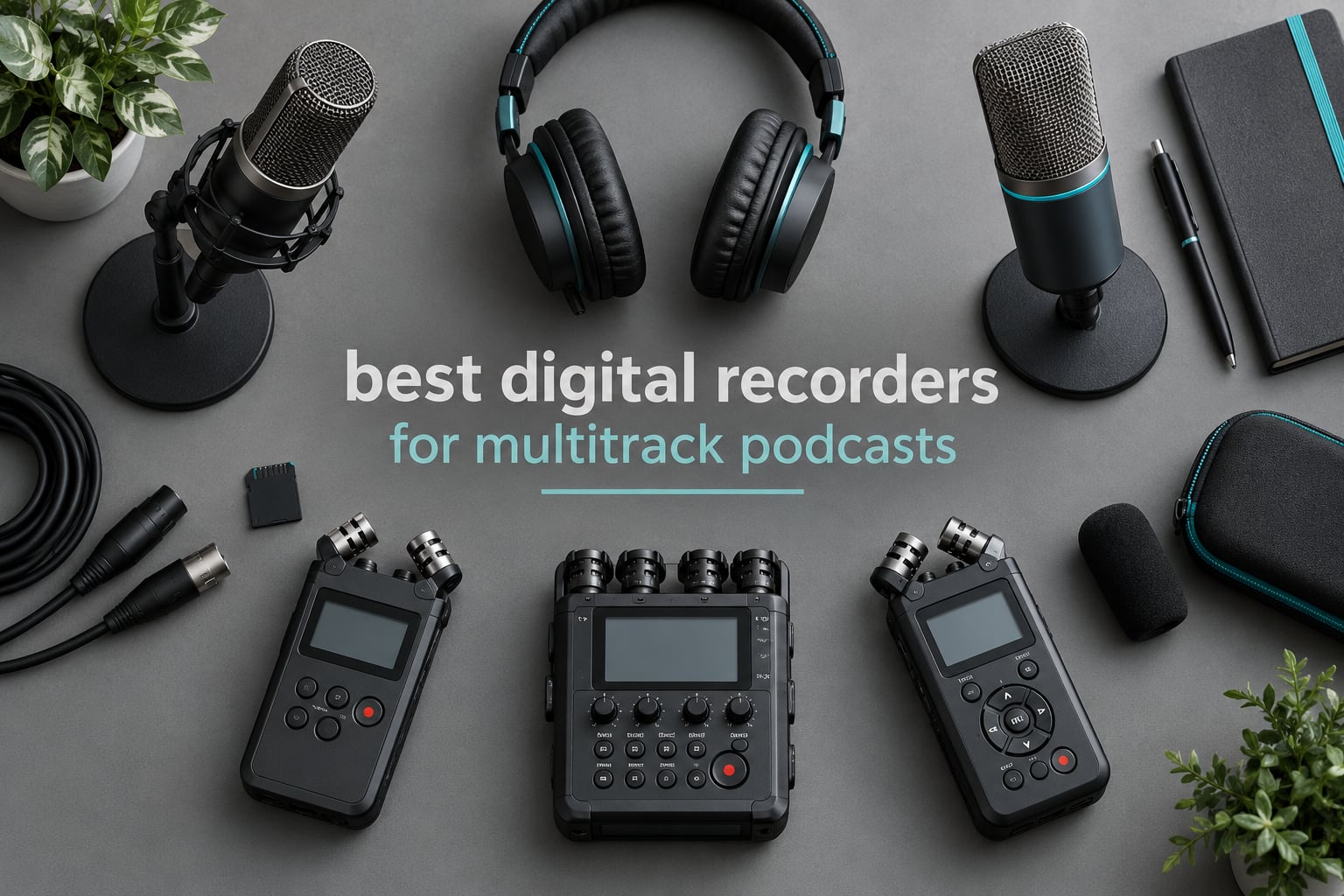
If you record two or more people in the same room, the most useful thing you can buy is a recorder that writes every voice to its own isolated file. That is the entire promise behind the best digital recorders for multitrack podcasts: no computer required, no tangled stereo mix to unpick later, one clean file per speaker that you can level, de-ess and compress independently in post.
We ran these eight units through a podcast-first checklist rather than a musician-first one. Each one had to record four isolated tracks from real XLR microphones, survive a full episode-length session without a computer attached, and give every speaker their own headphone feed. We also weighed what happens when the show goes live and the software crashes, which is where a standalone recorder quietly earns its place.
What follows covers the eight recorders worth your money right now, what each is genuinely good at, and where each one falls short. Prices move constantly, so use the check buttons rather than any number you remember from last month.
Table of Contents
Top 3 Picks for Multitrack Podcast Recording

Zoom PodTrak P4
- 4 XLR inputs with phantom power
- 4 headphone outputs
- 4 sound pads
- Mix-minus for phone calls
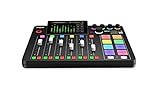
RodeCaster Pro II
- 4 studio preamps
- 8 SMART pads
- Multitrack to microSD or USB
- Broadcast voice presets

Zoom LiveTrak L-8
- 12 simultaneous tracks
- 24-bit/96kHz capture
- 6 clean preamps
- Records to SD and computer at once
The PodTrak P4 wins here because it does the one thing a four-person round table needs, four real mic inputs with four real headphone outputs and a mix-minus channel for callers, without asking you to fight a menu for an hour. The RODEcaster Pro II is the polished all-in-one if you want voice processing built in, and the LiveTrak L-8 is the smarter buy when your panel grows past four people.
All 8 Best Digital Recorders for Multitrack Podcasts (October 2026)
| Product | Specifications | Action |
|---|---|---|
| Zoom PodTrak P4 |
|
Check Latest Price |
| Zoom LiveTrak L-8 |
|
Check Latest Price |
| Rode RØDECaster Pro II |
|
Check Latest Price |
 Tascam Model 12 Tascam Model 12 |
|
Check Latest Price |
 Tascam Mixcast 4 Tascam Mixcast 4 |
|
Check Latest Price |
 Zoom H8 Zoom H8 |
|
Check Latest Price |
 Tascam DR-70D Tascam DR-70D |
|
Check Latest Price |
 Sound Devices MixPre-3 II Sound Devices MixPre-3 II |
|
Check Latest Price |
Two things stand out in that lineup. Only the MixPre-3 II records 32-bit float, which is the one spec on this list that can rescue a blown take, and only the MixPre-3 II, Model 12, L-8 and H8 give you more than three inputs. The rest of the field is squarely built for a two to four person show.
1. Zoom PodTrak P4 – Best Four-Person Recorder Overall
Zoom PodTrak P4 Podcast Recorder with 4 XLR Mic Inputs, 4 Headphone Outputs, Phone & USB Input for Remote Interviews, Sound Pads, 2-In/2-Out USB Audio Interface, Battery Powered
4 XLR inputs with phantom power
4 headphone outputs
4 sound pads
Mix-minus for phone calls
Pros
- Four XLR inputs with roughly 70dB of preamp gain
- Four independent headphone outputs
- Mix-minus for phone and USB call-ins
- Four sound pads recorded to their own tracks
- Compact 130 g body that fits a backpack
Cons
- No compressor or EQ beyond low-cut and limiter
- Records 16-bit/44.1kHz only
- About 3.5 hours on 2 AA batteries
- Light plastic build needs careful handling
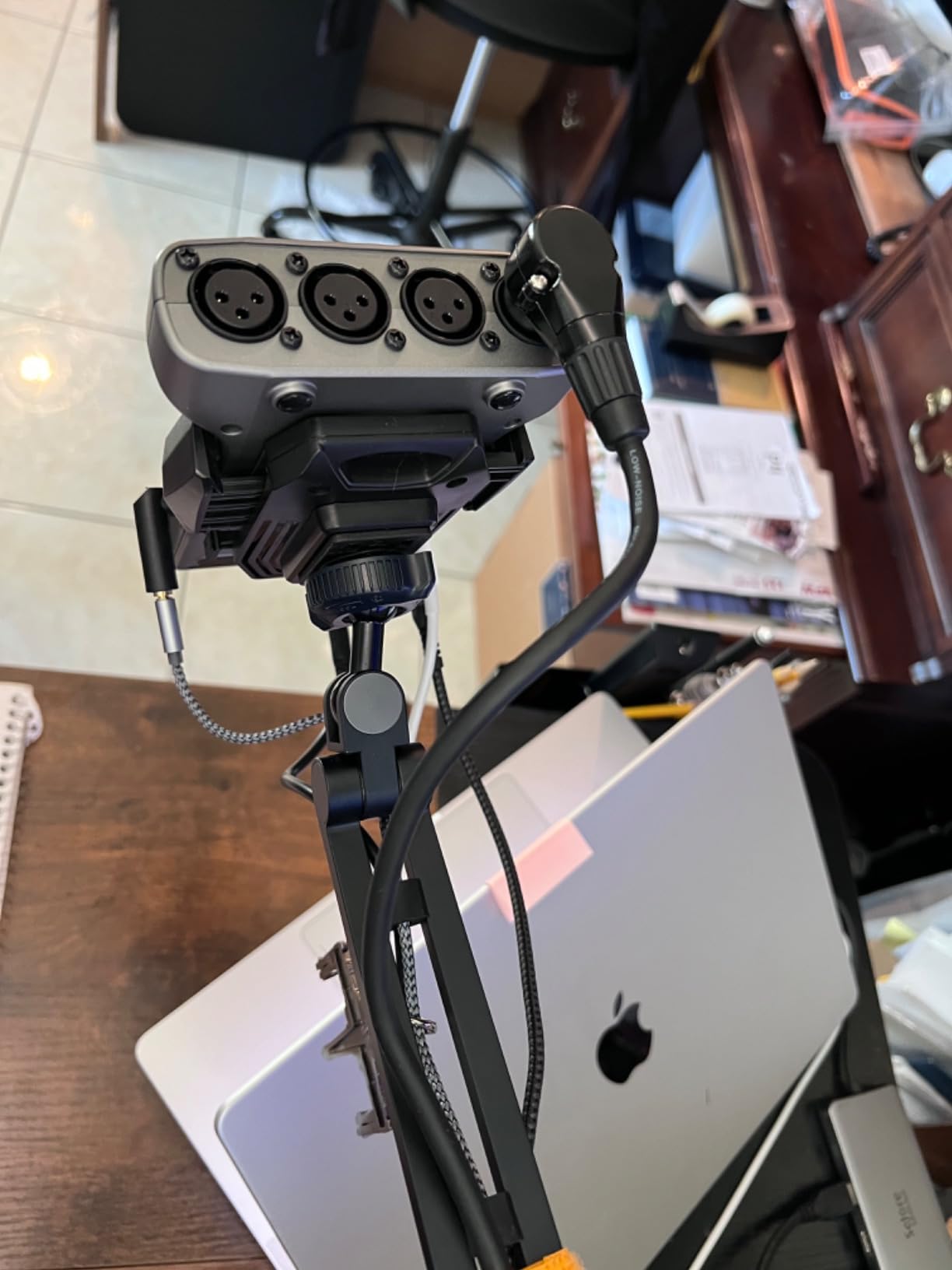
The P4 is the unit we kept coming back to. Four balanced XLR inputs sit across the top, each with its own gain knob rated at about 70dB, so dynamic microphones like an SM58 work without a booster box. Underneath are four separate headphone outputs with individual volume, which is the feature that decides round-table shows: every guest hears themselves and nobody hears the show twice.
Set it up in the order you would run a mixing desk. Person one to input one, person two to input two, and so on, with headphone outputs matched one to one. It takes under five minutes, and the layout explains itself well enough that most people are recording before they read the manual.
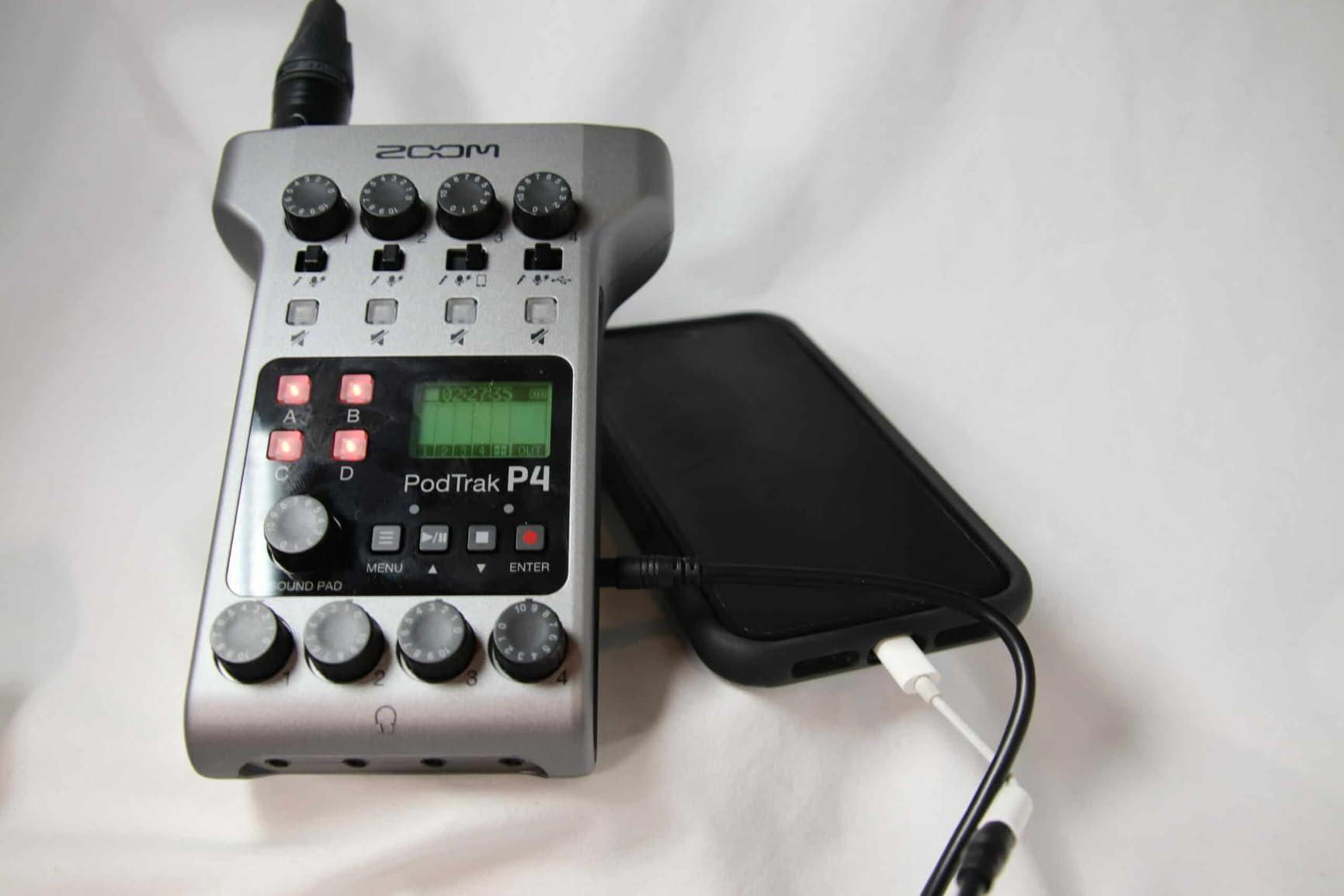
The mix-minus channel is the quiet hero. Plug a phone line into the TRRS jack and the caller hears the show without hearing themselves, which is the feedback problem that ruins most remote interviews. The same trick works over USB when the caller joins from a computer. Four programmable sound pads add music beds, stingers and jingles, and each pad records to its own track so you can drop the effects straight onto the timeline.
It also runs as a two-in, two-out USB audio interface, so the same box can feed a DAW when you want the bigger editing workflow. One catch worth knowing: in interface mode the computer audio is not passed back into the recording, so capture to SD and import the file rather than trying to record the return.
Why it works for a four-person panel
Because four real preamps, four real headphone outs and a mix-minus bus is exactly the specification a round table needs, and almost nothing under this tier offers it. Owners running a three or four person show on the move consistently pair it with two dynamic and two condenser microphones and treat it as the whole rig, with a small interface or recorder as a backup.
The multitrack WAV output is the other reason. Every input and every pad lands on its own track, so an editor can automate levels per speaker and build the final mix in a fraction of the time a summed mix would take.
Where it falls short
Recording is fixed at 16-bit and 44.1kHz. That is fine for spoken word and gives you more than enough headroom for voice, but it rules out the 24-bit/96kHz capture that video and music work often wants, and there is no 32-bit float safety net on this model.
Onboard processing is minimal: a low-cut filter and a limiter, no compressor or EQ, so gain staging and dynamics happen in post. Battery life is the other everyday annoyance. Two AA cells give roughly 3.5 hours, and the screen backlight times out quickly on battery power, so most owners run it from USB power or a power bank during a long session.
2. Zoom LiveTrak L-8 – Best for Panels Larger Than Four
Zoom LiveTrak L-8 Battery Powered Mixer/Recorder for Musicians & Podcasters
12 simultaneous tracks at 24-bit/96kHz
6 preamps at -121dBu noise floor
4 headphone outputs
Records to SD and computer together
Pros
- Captures 12 tracks at 24-bit/96kHz to SD and computer simultaneously
- Six preamps with -121dBu noise floor and up to 54dB of gain
- Four headphone outs with three custom monitor mixes
- 3-band EQ and effects on every channel
- Sound pads and phone input with mix-minus
Cons
- Eight input channels but only six mic preamps
- Bulkier at 1500 g than handheld recorders
- Menu-driven routing takes time to learn
- AC adapter and batteries add to kit size
The L-8 solves the problem the P4 cannot: what happens when a fifth or sixth voice shows up. Six combo preamps with a -121dBu noise floor and up to 54dB of gain feed a mixer that writes 12 tracks simultaneously at 24-bit and 96kHz, straight to SD while also streaming to a connected computer. Having the card and the computer recording the same take at the same time is a real safety net, not a gimmick.
Every channel carries a 3-band EQ and effects, so the raw capture lands closer to finished than it does on a bare field recorder. You can shape a voice in the room and still clean it up later, which shortens edit time on shows where every episode runs long.
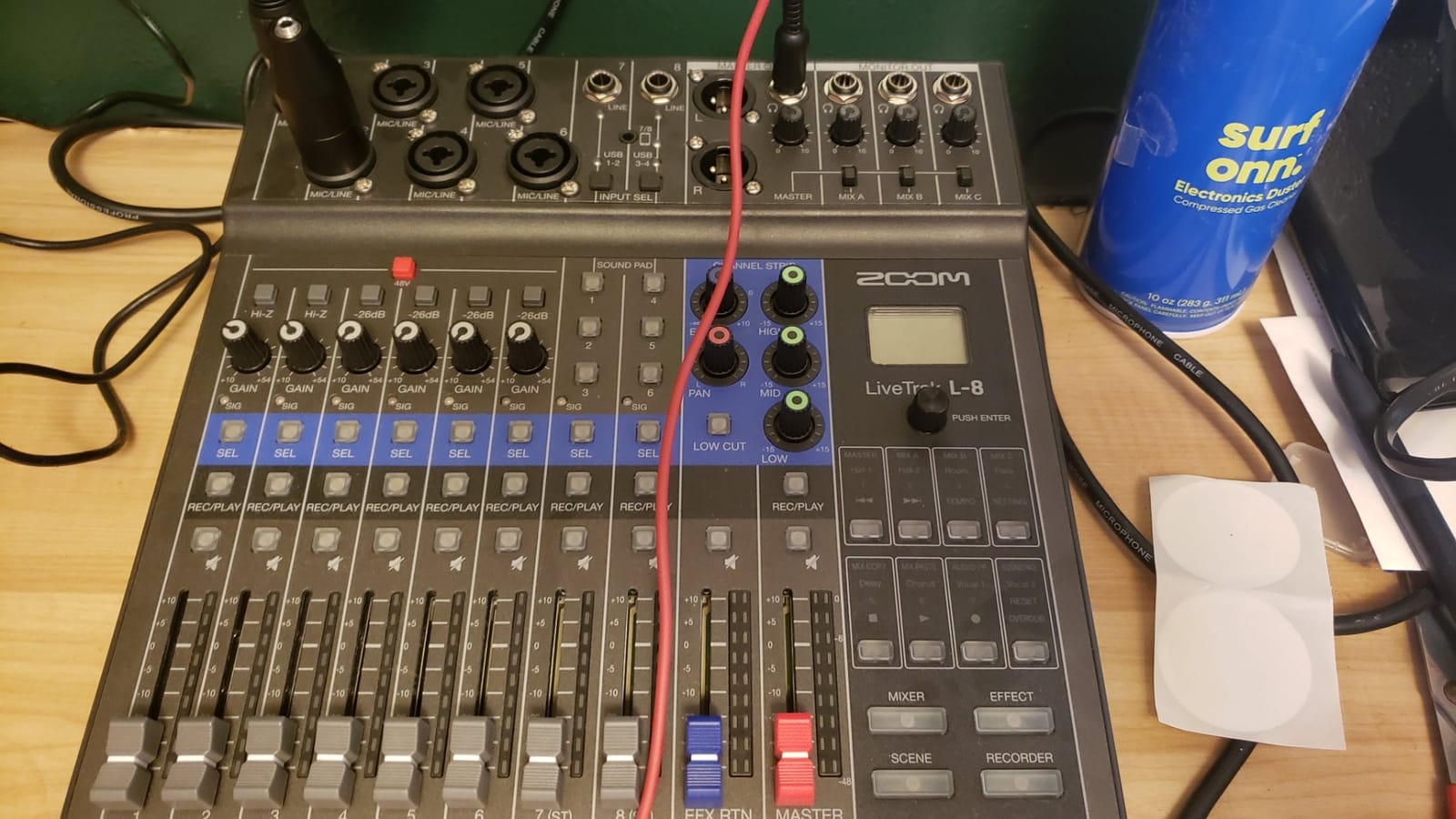
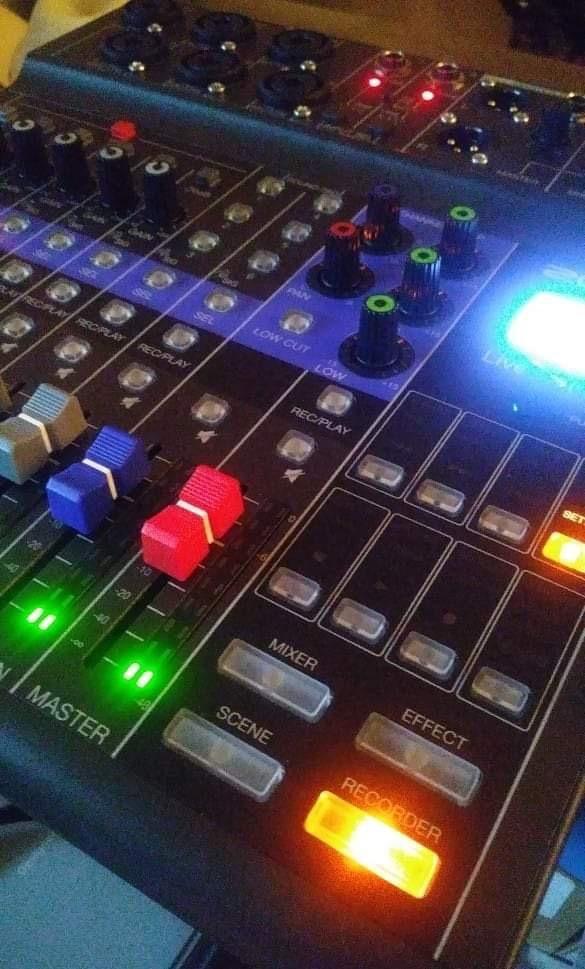
Monitoring is unusually good for this class. Four headphone outputs can carry three different custom mixes, which means a host can hear the guests, an engineer can hear the full mix, and two remote participants can each get their own mix-minus feed without any extra hardware.
The sound pads and phone input complete a podcast rig in a single box. Trigger an intro bed, roll a caller into the mix-minus aux, and record straight to card. Nothing about the workflow requires a computer, though the unit happily acts as a USB interface when you want one.
Why it works for bigger panels and live shows
Six usable preamps is the number that matters. Any show with five or six voices, a live band playing under a host, or a co-hosted stream needs more than the four inputs most podcast recorders offer, and the L-8 delivers them with headphone monitoring to match. Simultaneous SD and USB recording also means a dropped USB connection does not cost you the episode.
The 24-bit/96kHz capture suits creators who also record video or music alongside the show, since the extra resolution is useful when tracks get layered and processed hard.
Where it falls short
The channel count flatters it. There are eight input channels but only six of them are mic preamps, with the remaining two being stereo line inputs, so a fifth and sixth speaker means two fewer stereo sources. Read the spec carefully rather than trusting the headline number.
At 1500 g with a 11.1 inch deep body, this is a table unit that happens to run on batteries, not a bag recorder. The screen is small and the routing is menu-driven, so budget an afternoon with the manual before your first record rather than discovering the routing live on a published episode.
3. RODE RØDECaster Pro II – Best All-in-One Podcast Console
RØDE RØDECaster Pro II All-in-One Audio Production Studio
4 studio preamps
APHEX voice processing
8 SMART pads
Records to microSD, USB or computer
Pros
- Mixer
- interface
- sound board and processing in one desk unit
- Clean high-gain preamps that handle demanding microphones
- Built-in EQ
- compression
- noise gate and de-esser
- Fast touchscreen workflow with 8 programmable SMART pads
- Records multitrack to computer
- microSD or USB and works standalone
- Bluetooth plus two USB-C ports
- Two-year warranty
Cons
- Dense feature set with a steep learning curve
- Some units report USB port 1 failing to connect to computers
- Bluetooth audio can crash on very long sessions
- Multitrack assignment when syncing into a DAW is confusing
- Needs separate microphones
- headphones and a card
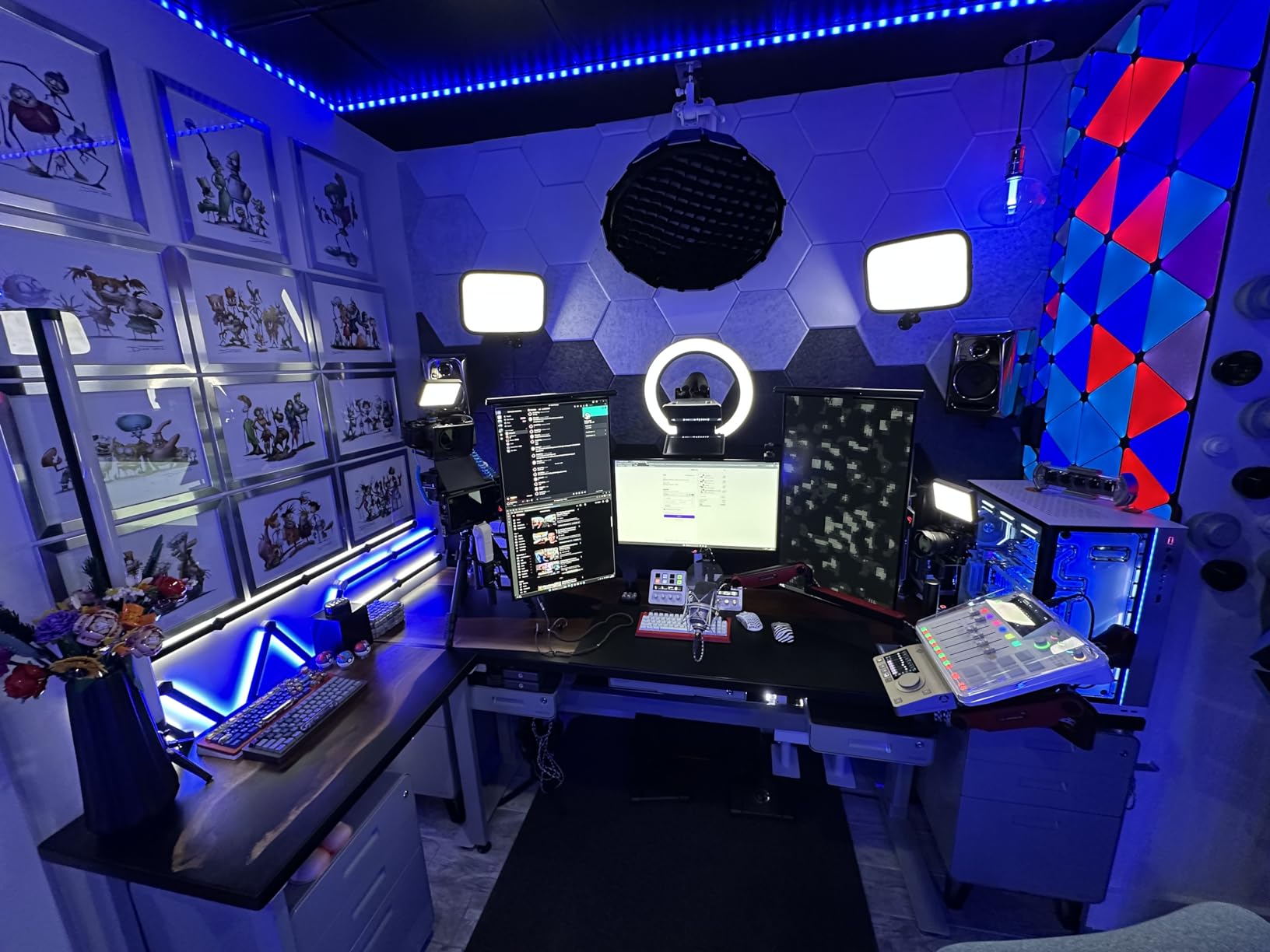
The RODEcaster Pro II is the most complete box on this list. Four studio-grade preamps with enough gain for demanding microphones sit behind a touchscreen, and the APHEX processing chain gives you EQ, compression, noise gate and de-esser in a single tap. For a creator who does not want to open a DAW just to make a voice sound broadcast-ready, that removes a lot of work.
Eight SMART pads trigger intros, stingers, effects and mix-minus phone calls with one press. You can record the pads, the mics and the mix at the same time to computer, microSD or a USB drive, and it runs standalone with no computer attached at all, which makes it a genuinely portable studio desk.
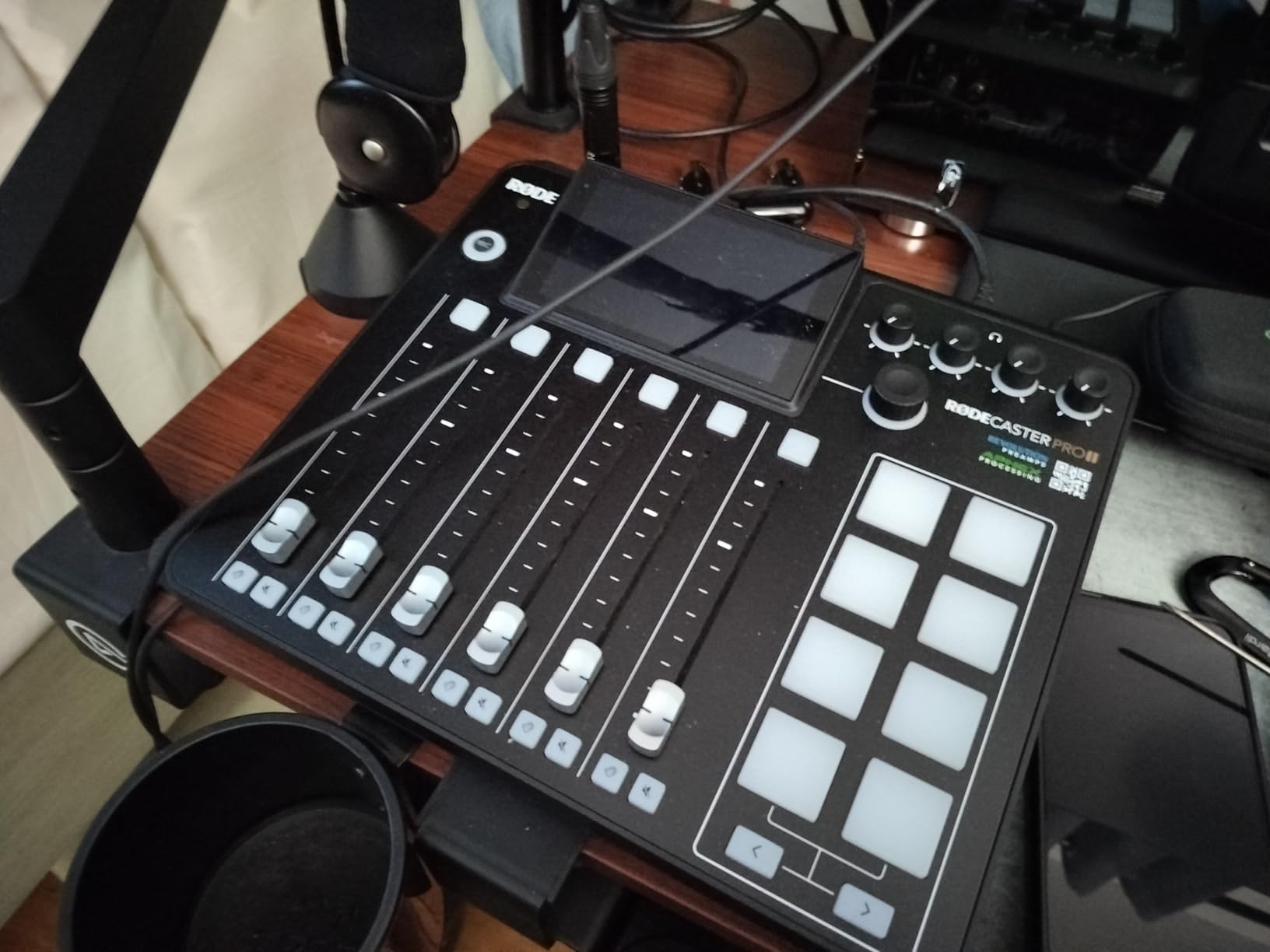
Connectivity is generous. Bluetooth handles a phone call, two USB-C ports let you attach two computers, and Wi-Fi is built in. RODE support has also replaced failed out-of-warranty units for some owners, and the two-year warranty is longer than most competitors offer.
Once you accept the learning curve, the payoff is speed. On a two-person show with a caller dialling in, the whole show runs from the desk: arms the tracks, sets the pads, taps to record, and the files land on the card ready for the editor.
Why it works for a polished two or three person show
Because the processing is genuinely good, not decorative. Owners regularly report the difference in their edit timeline after switching to built-in voice processing, and the pads turn a live show into a one-person job. Bluetooth and mix-minus also cover the remote guest case that most bare recorders leave you to solve with an external box.
Standalone multitrack recording to microSD is the underrated feature. If the computer crashes mid-session or the streaming software fails, the card still has the isolated tracks.
Where it falls short
Density is the main issue. There are a great many options packed into a small screen, and it takes real time to learn where they live. If you like hardware faders and simple signal flow, this is the opposite of what you want.
The complaints worth weighing are reliability-related. A share of owners report USB port 1 failing to connect to computers, tablets or hubs and having to fall back to port 2, and some report a unit arriving dead or Bluetooth audio dropping after several hours and needing a restart. A minority also find the multitrack assignment confusing when syncing into a DAW, so budget time to map the files.
4. Tascam Model 12 – Best for Large Rooms and Many Voices
Tascam Model 12 All-in-One 12-track Digital Multitrack Mixing and Recording Studio, Mixer, USB Audio Interface and DAW Controller
12 input modules
12 in / 10 out USB interface
1-knob compressor per channel
Dual headphone outputs
Pros
- Handles 12 mic or line inputs
- mixing
- recording and DAW control in one box
- One-knob compressor and 3-band EQ on every input module
- 12-in/10-out interface removes the need for a separate audio interface
- Dual headphone outputs with per-user volume and source selection
- Onboard MIDI and tap-tempo click
Cons
- Large 13.3 lb desktop footprint with no battery option
- Corded electric power only
- Processing is simple one-knob types
- Menus and screens feel dated beside touch competitors
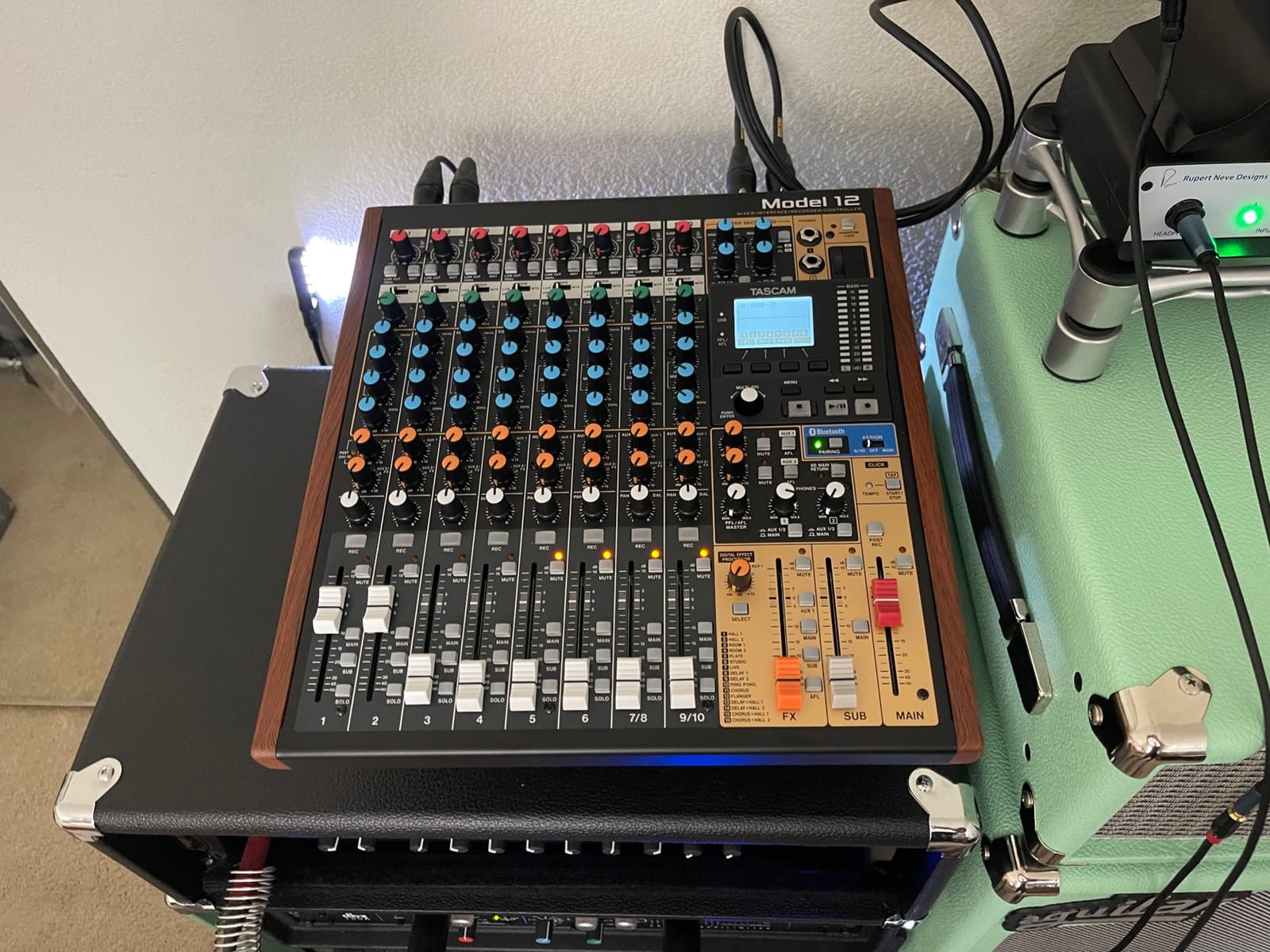
The Model 12 is built for a room rather than a backpack. Twelve input modules cover a big round table, a small ensemble, or a show with several remote feeds patched in, and every module carries a one-knob compressor and a 3-band EQ so you can balance voices quickly without leaving the desk.
What makes it unusual is the 12-in, 10-out USB audio interface built in. Tracking into a DAW no longer needs a second device, and the surface doubles as a DAW control surface. Two headphone outputs with individual volume and source selection let an engineer and a host monitor differently at the same time.
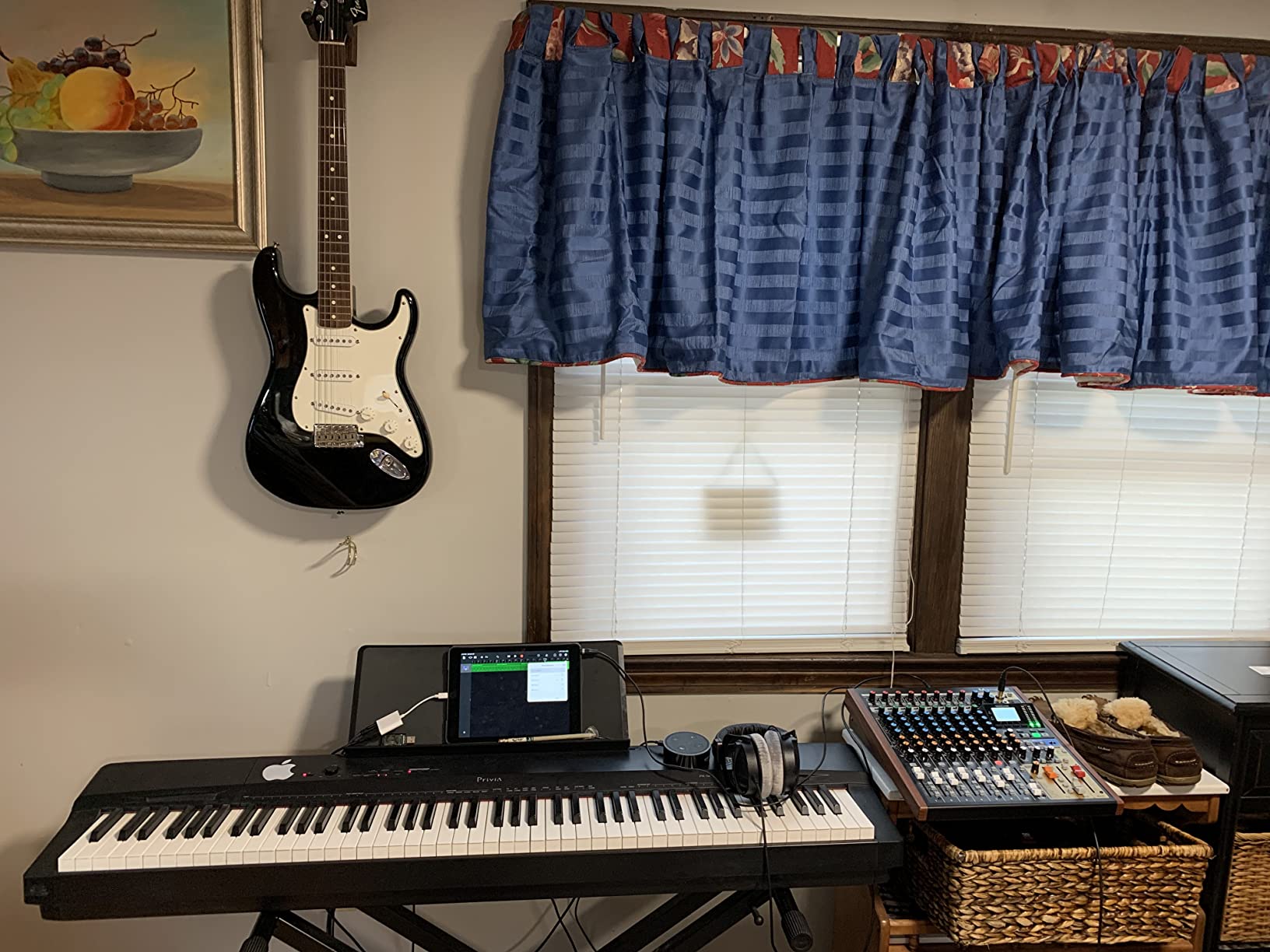
Onboard MIDI and a tap-tempo click output are details usually reserved for music consoles, and both prove genuinely useful when a musical bed or a live segment is part of the format. It records to SD and stays fully independent of a computer. If your show also involves tracking keys or scoring alongside the conversation, our guide to the best digital pianos covers that side of the setup.
For a producer who wants the physical fader surface and the channel count, this is the most capable recorder here. Twelve channels in one box is simply something the smaller podcast units cannot offer.
Why it works for bigger production rooms
Because twelve inputs with per-channel processing, two monitor paths and a built-in interface replace what would otherwise be a mixer, an interface and a recorder bought separately. That consolidation is where the value sits, especially for anyone who also records instruments or scores.
The dual headphone outputs suit a two-person control room, and the click output makes it straightforward to record a live segment against a fixed tempo without a second click source.
Where it falls short
It is a desk instrument. At 13.3 lb and 18 by 16 inches it stays where it is put, and there is no battery option at all, so every recording is tied to mains power. Podcasters who shoot on location will find that a deal breaker.
The processing is deliberately simple: one-knob compressor and three-band EQ per module, with more flexibility coming from the DAW side. Menus and screens also feel dated next to the touchscreen units on this list, which adds clicks to every adjustment.
5. Tascam Mixcast 4 – Best for Sound Design and Live Shows
TASCAM Mixcast 4 Podcast Streaming Mixer, Recorder, and USB Audio Interface — Four XLR/TRS Mic Inputs, Touch Screen and Editing Software Included
4 XLR/TRS inputs
4 individual headphone outputs
14-track SD recording
8 banks of illuminated sound pads
Pros
- Four XLR/TRS mic inputs and four headphone outputs
- Records 14 tracks to SD while streaming over USB
- Eight banks of illuminated assignable sound pads
- Aux input with mix-minus for phone callers
- Bluetooth input and USB connectivity for guest sources
- Tascam Podcast Editor included for post
Cons
- Post-editing workflow still needs the bundled desktop software
- Not portable: corded power and a 2.55 kg footprint
- About 9 percent one-star rating reflects a minority of setup or reliability issues
- Touchscreen workflow is less flexible than hardware faders for live mixing
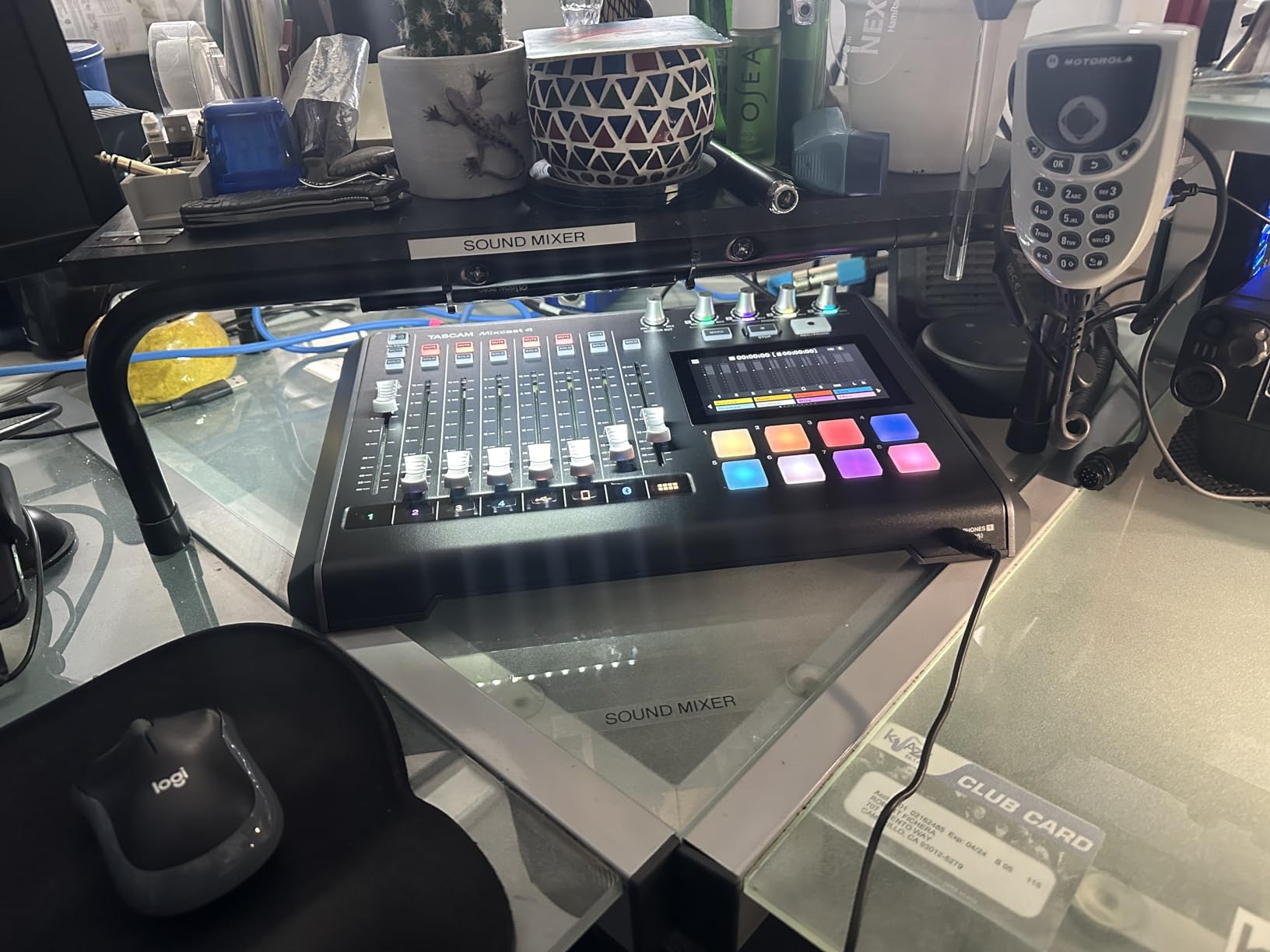
The Mixcast 4 is purpose-built for a podcast and behaves like it. Four XLR/TRS mic inputs and four individual headphone outputs are the whole round table in one unit, and it records 14 tracks directly to its own SD card while streaming over USB at the same time.
The sound pad banks are the feature people remember. Eight banks of illuminated, fully assignable pads trigger music beds, jingles and effects mid-show, and the aux input includes mix-minus so a phone caller can join without hearing themselves echo back. Bluetooth input opens up phone and guest sources too.
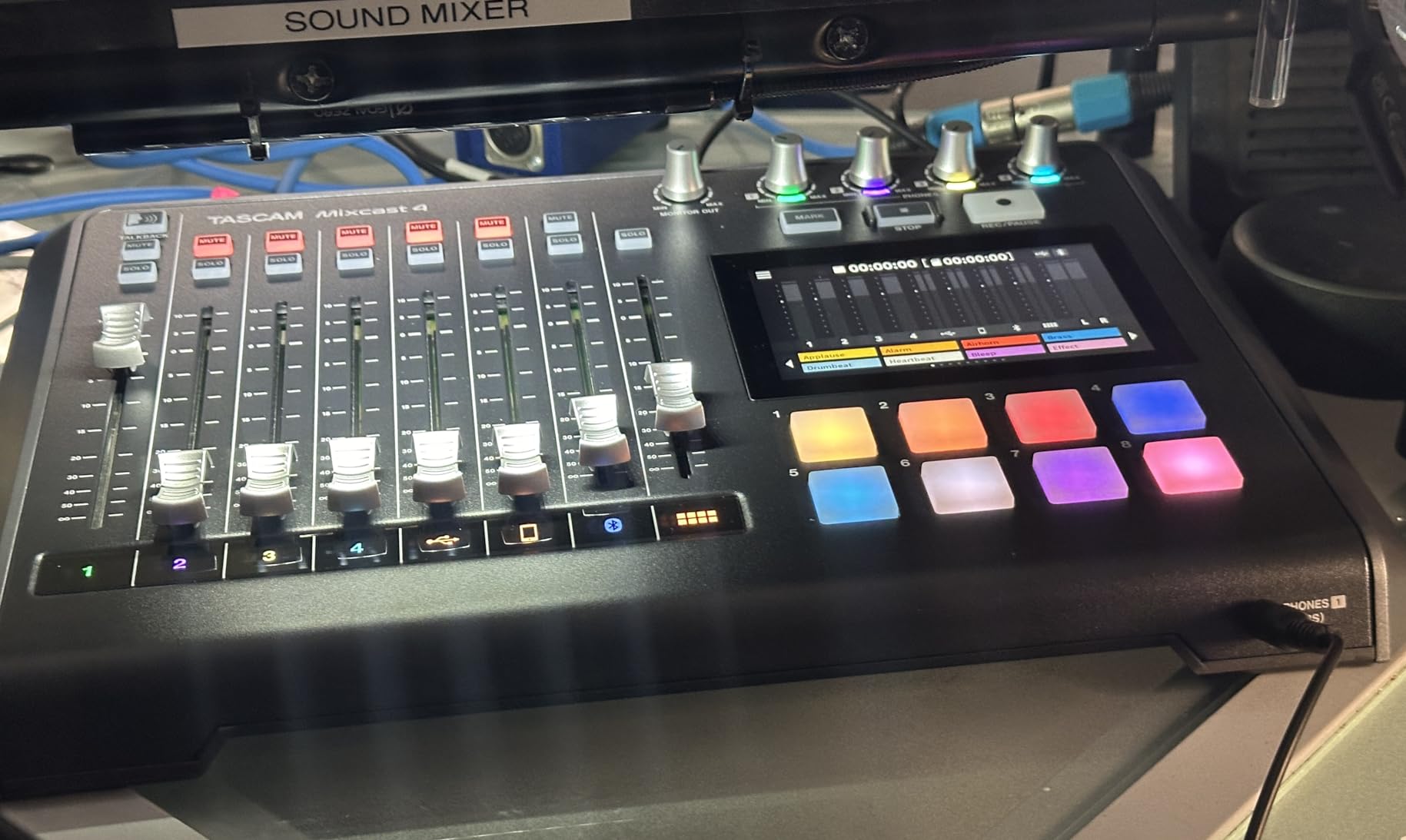
Tascam Podcast Editor is included, which handles editing, track arming and sound effect assignment. It keeps post-production simple for creators who do not already live in a DAW, and the touch screen keeps day-to-day operation quick.
The mix-minus combined with 14-track capture also makes it a decent safety layer. If the streaming platform drops, the card still has every isolated track and the show mix.
Why it works for live and produced shows
Because a touch of a pad triggers music and a single aux channel handles a caller, which compresses a two-person live operation into one pair of hands. Recording 14 tracks to card while streaming means the broadcast and the archive are independent.
Four independent headphone outputs also mean guests can be monitored properly rather than sharing a single mix, which is where round-table audio usually goes wrong.
Where it falls short
Post-editing still routes through the bundled desktop software. That keeps it simple for newcomers but feels limiting if you plan to move to Audacity, Descript or a full DAW for longer episodes, and it adds a dependency the bare recorders do not have.
It is not portable: corded power and a 2.55 kg footprint keep it on the desk. Roughly 9 percent of ratings are one star, which points to a minority of units with setup or reliability complaints, and the screen-based workflow is less precise than real faders when you have to mix a live show quickly.
6. Zoom H8 – Best for Location and Video Work
Zoom – H8-8-Track Recorder – USB Interface
Up to 12 simultaneous tracks
24-bit/96kHz WAV and MP3
XYH-6 capsule included
12-in/2-out USB interface
Pros
- Records up to 12 simultaneous tracks at 24-bit/96kHz
- Included XYH-6 X/Y capsule captures ambience without extra microphones
- 4 XLR plus 2 combo inputs give room for a guest panel
- Bass filter
- compressor and limiter with a podcast mode
- 2-inch colour touch screen in a 484 g body
- Runs on 4 AA batteries or USB power
- 12-in/2-out USB interface for PC
- Mac or iPad
Cons
- Menu structure and track arming take practice to learn
- Only two true XLR mic inputs for a four-person round table
- AD-17 adapter and BTA-1 Bluetooth adapter are not included
- Small track buttons are slow for live work
The H8 is the most flexible machine here because it is not only a podcast recorder. It captures up to 12 simultaneous tracks at 24-bit/96kHz in WAV or MP3, includes the XYH-6 X/Y capsule in the box, and carries PODCAST, MUSIC and EXTERIOR recording modes. That makes it equally at home capturing room tone on location or tracking a voiceover.
Input count is generous: 4 XLR mic inputs plus 2 XLR and jack combo inputs with a mic and Hi-Z switch. That is enough headroom for a small panel or a couple of musicians, and the pad and Hi-Z switches are welcome for instrument work.
It runs on 4 AA batteries, USB power or the optional AD-17 adapter, records to SD, SDHC and SDXC cards up to 512GB, and doubles as a 12-in/2-out USB interface for PC, Mac or iPad. In a bag with a couple of microphones, it is a complete mobile rig.
Why it works for hybrid creators
If your episodes also involve video, the H8 covers both sides. 24-bit/96kHz WAV is BWF compatible, so editors can sync it to camera audio, and 512GB card support means long field days without swapping media. The included capsule means you can capture ambience on location without buying another microphone.
The dedicated podcast mode sets sensible levels for spoken word, and the onboard bass filter, compressor and limiter give a usable safety net before post.
Where it falls short
Only two of the inputs are true XLR mic inputs, which is thin for a four-person round table. The screen is 2 inches and the track buttons are small, so fast live adjustments take longer than on a unit with real controls.
There is a genuine learning curve in the menu structure and track arming process, and two useful accessories are not included: the AD-17 power adapter and the BTA-1 Bluetooth adapter for wireless control.
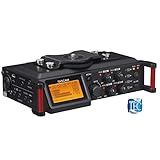
7. Tascam DR-70D – Best for Recording Straight to Camera
TASCAM 4-Channel Portable Audio Recorder for Videographers, 4 Combo XLR/TRS Inputs, 2 Internal Mics, Limiter, HP Filter (DR-70D)
4 balanced XLR/TRS inputs
HDDA preamps with 64dB gain
Dual Recording safety track
Camera in and out
Pros
- Four balanced combo inputs with per-input gain and 64dB of range
- Writes four discrete mono files that drop straight into an editor
- Metal and plastic chassis with mounts above and below the camera
- Two built-in omnidirectional microphones plus camera in and out
- Dual Recording makes a lower-level safety track
- Each input can be armed
- panned or soloed
- Light 1.2 lb body
Cons
- Only low-cut filter and limiter
- no compressor or MP3 export
- Secondary connections are 3.5mm rather than 1/4 inch
- Very picky about which memory cards you use
- Stiff per-channel knobs
- Small 1.5 inch screen
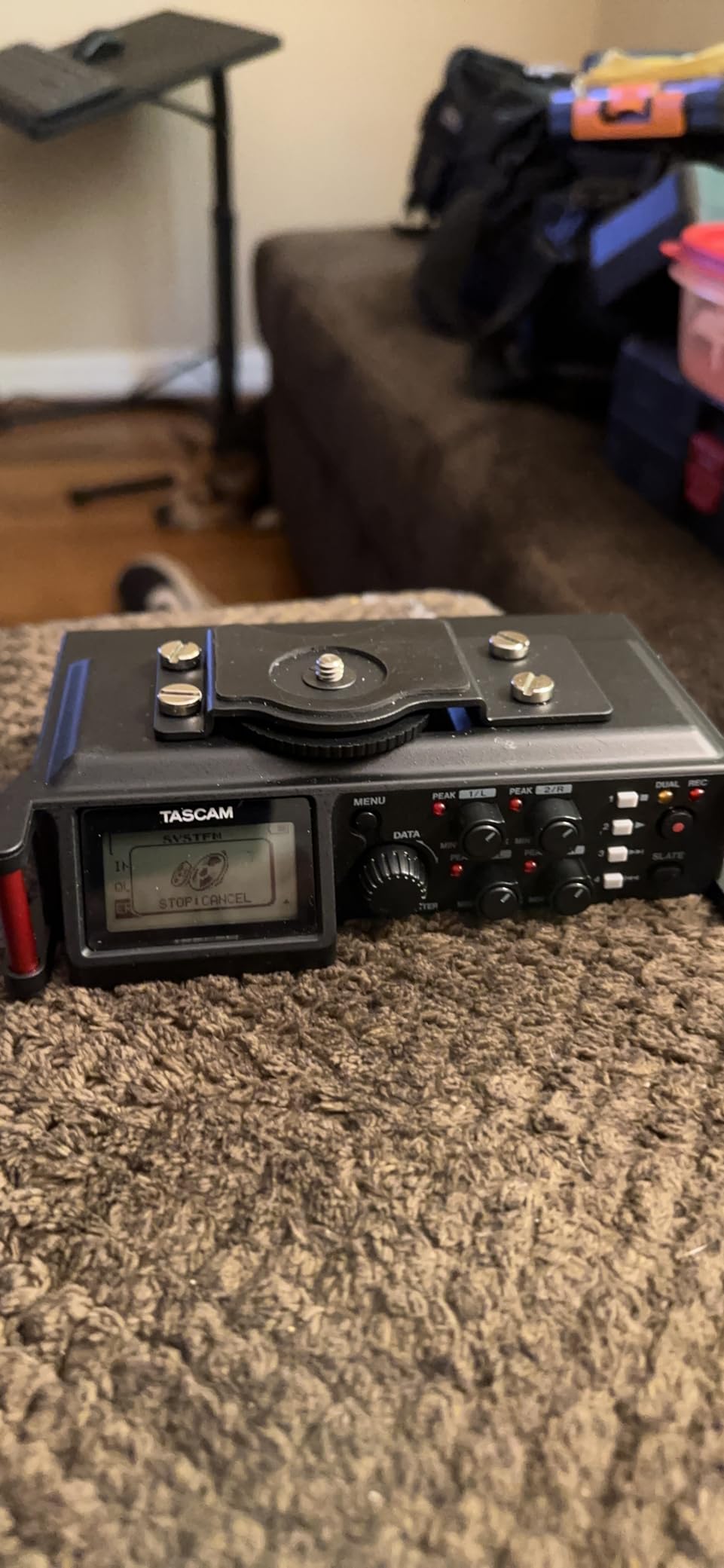
The DR-70D was designed for filmmakers, and it shows. Four balanced XLR/TRS combo inputs with independent gain and 64dB of HDDA preamp range record to SD, SDHC or SDXC media up to 128GB, and each channel writes its own discrete mono file. Those files drop straight onto four timeline tracks in an editor with no splitting and no panning guesswork.
Dual Recording is the feature that saves takes. It writes a second safety copy at a lower level alongside the main file, so a moment where a guest shouts into the mic no longer costs you the segment. Add the four input channels, and you have five safety nets running at once.
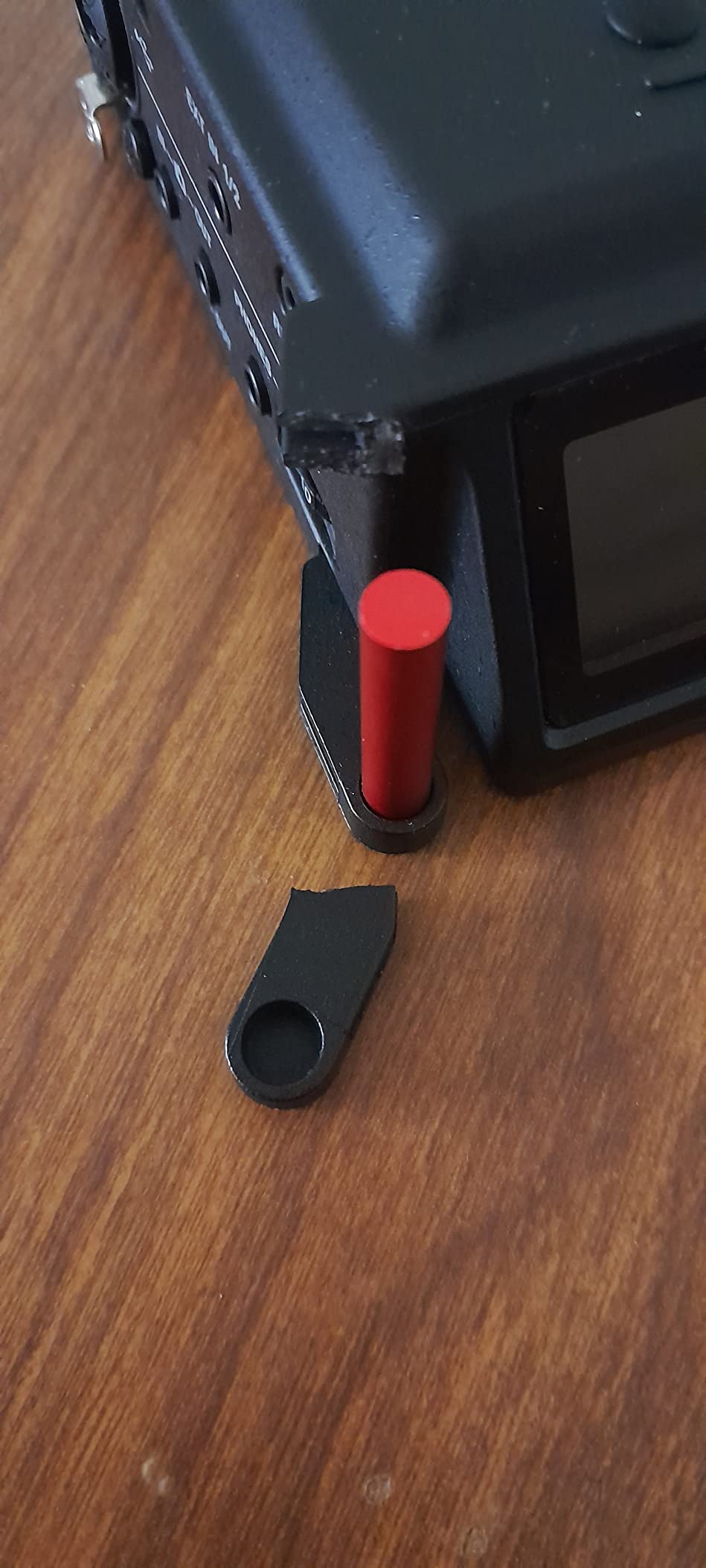
Camera integration is the other half. It mounts above or below a rig on the threaded holes, has camera in and out alongside a line output, and two built-in omnidirectional microphones capture sound on set when no XLR cable reaches the action. Battery or USB powered at 1.2 lb, it hangs on a sling for long days.
Each input can be armed, panned, phantom-powered or soloed, so unused ports do not waste card space on empty files. That is a small thing that matters on a six-hour shoot.
Why it works for production sound
Because four discrete files with a lower-level backup track is the arrangement most editors want when they receive camera audio. Low-noise HDDA preamps handle quiet dialogue, and the 64dB of gain range covers everything from a whisper to a close-miked shout without a booster.
It is also cheap insurance. Several owners run it purely as a backup safety recorder next to a mixer-based session, which costs nothing extra in workflow and protects against a failed interface or a dropped stream.
Where it falls short
Processing stops at a low-cut filter and a limiter. There is no compressor and no MP3 export, so it is a WAV-only recorder and all dynamics work happens in post.
Secondary connections are 3.5mm rather than 1/4 inch, which means adapting headphones or a boom cable. It is also very picky about memory cards, with non-recommended cards throwing file write errors, so buy a card from the compatibility list. The 1.5 inch screen feels dated, and the per-channel knobs are stiff for larger hands.
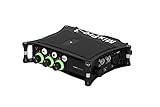
8. Sound Devices MixPre-3 II – Best for 32-Bit Float Safety
Sound Devices MixPre-3 II Portable 32-Bit Float Multichannel Audio Recorder/Mixer, and USB Audio Interface
3 Kashmir preamps
32-bit float capture
Built-in 3x2 mixer
LTC timecode with HDMI trigger
Pros
- Three extremely low-noise Kashmir preamps
- 32-bit float recording captures hot or quiet sources without clipping
- Built-in 3x2 mixer writes a stereo mix alongside ISO tracks
- 5-in/2-out USB-C interface streams 32-bit float to a computer
- Internal LTC timecode plus HDMI record triggering
- Light 1.1 lb and compact
- Two-year warranty
Cons
- Only three mic preamps
- so it is not a four person roundtable out of the box
- Touchscreen menus are dense and take practice
- Small screen and limited physical controls for live work
- No pads or one-touch processing
The MixPre-3 II is the only recorder on this list that records 32-bit float, and that single spec changes how you work. Because the files are written in floating point format, a badly set gain that would clip a conventional recorder can simply be pulled back in an editor without any quality loss. For one-person shows recording straight to SD, that removes the single most common failure mode.
The three Kashmir preamps are among the quietest available, and each has an adjustable limiter for the sources that still need one. A built-in 3 by 2 mixer creates a stereo mix while still recording isolated tracks, giving you both a safety mix and per-speaker files in a single pass.
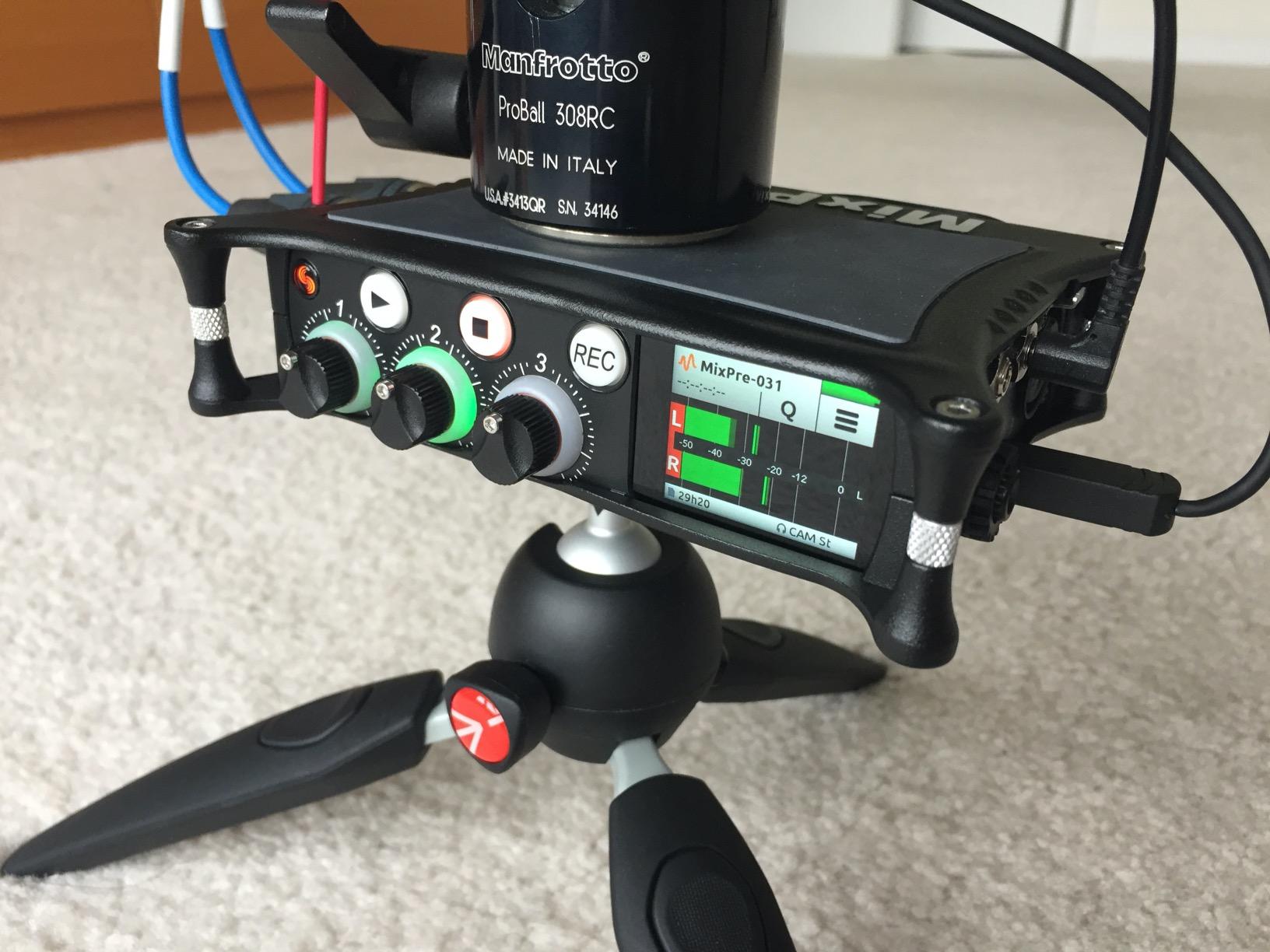
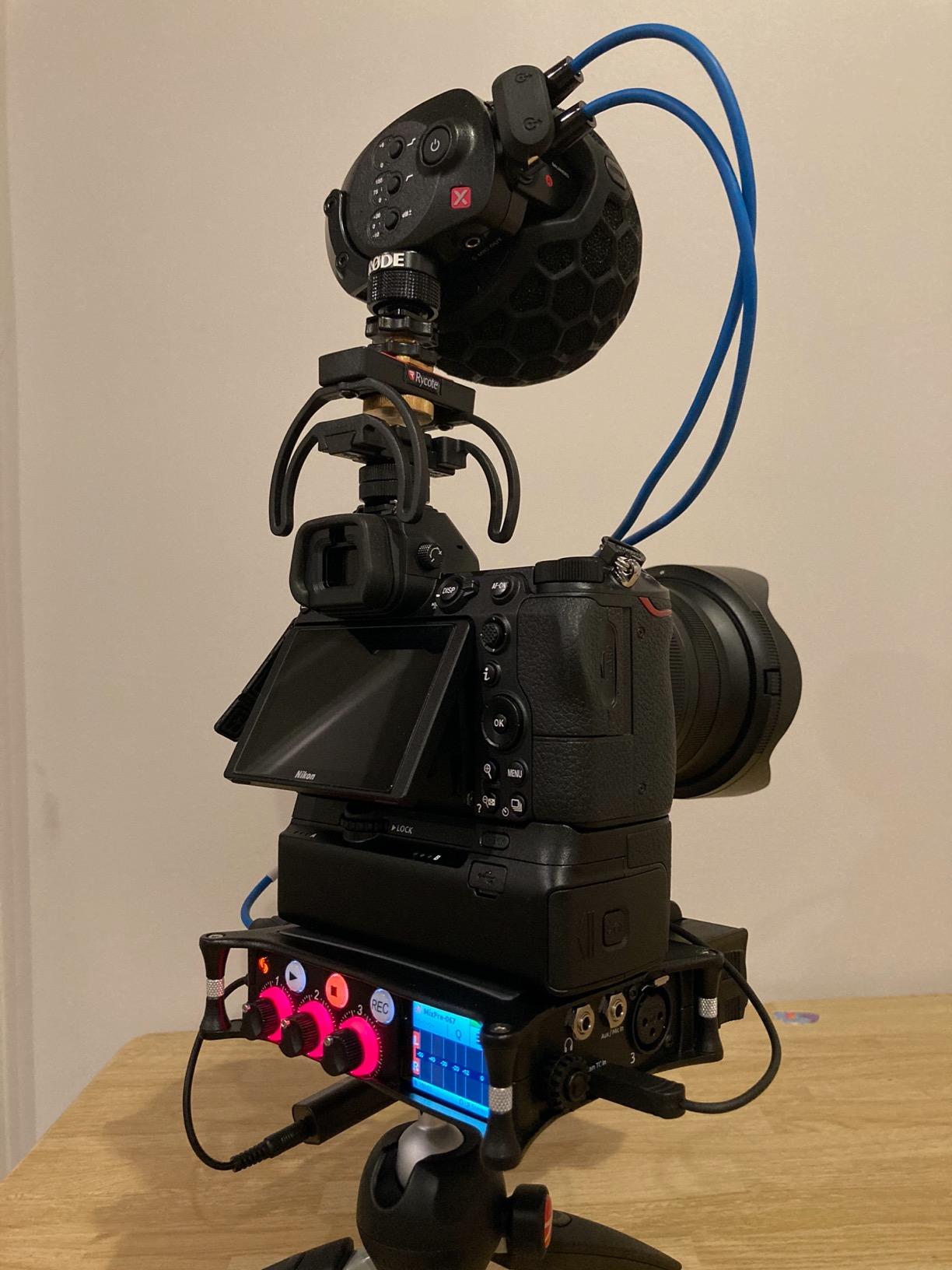
For video work it has an internal LTC timecode generator with timecode in and out, plus timecode and record triggering over HDMI. Combined with the 5-in, 2-out USB-C interface streaming 32-bit float to a computer, it slots into a proper production chain rather than standing beside it.
At 1.1 lb it is small and light enough for bag work, and it carries a two-year warranty, which is the longest on this list.
Why it works for solo and two-person shows
Because 32-bit float plus three ultra-low-noise preamps means you can set conservative levels, worry about it later, and recover the take. That is a real insurance policy for a creator recording without a second person watching the meters, and for anyone who has lost an episode to clipping.
The built-in mixer also makes it useful as a small two-person rig, with a stereo safety mix written next to the isolated tracks.
Where it falls short
Three mic preamps is the limit. It is not a four-person round table solution without an extra interface, which puts it behind the PodTrak P4 and Mixcast 4 for exactly the setups most people search for.
The touchscreen menus are dense and small, with few physical controls for fast live adjustments, and there are no pads or one-touch voice processing. You also need to learn the layout before a live session rather than during one, and you still have to buy microphones, headphones and a card.
What Multitrack Podcast Recording Actually Means
Multitrack means each microphone writes to its own audio file. Four speakers, four XLR inputs, four mono WAV files sitting side by side on the SD card. In your editor you can drop them on four timeline tracks, automate levels, and fix one voice without touching the other three. If the guest coughs or the air conditioner kicks on, you pull that one track down instead of re-recording the whole episode.
The alternative is a single stereo mixdown. Every voice is summed into two channels before it ever reaches your computer, and once that is done the mix is permanent. That is why forum threads about splitting one mixdown into individual voices come up so often: it is manual, fiddly, and it rarely sounds as good as a track recorded on its own.
Channels, inputs, and simultaneous tracks are not the same number
This is the single biggest source of confusion in recorder spec sheets. Inputs are physical jacks you can plug into. Channels are mixer strips, which might be a line or stereo channel rather than a mic preamp. Simultaneous tracks are the files the machine actually writes while you record. A unit can advertise eight channels and only give you six microphone preamps, which is exactly the case with the LiveTrak L-8: six combo inputs plus two stereo inputs means six voices, not eight.
Some recorders also add a stereo mixdown track, so four mic inputs can produce five files at once. The RODEcaster Pro II, L-8 and MixPre-3 II all write a mix alongside the isolated tracks, which is a genuinely useful safety net if a headphone feed is accidentally fed back during the take.
Phantom power, capsules, and why they change your buying decision
Phantom power is the 48V supply condenser microphones need. Dynamic microphones such as an SM58 or an SM7B do not. If you already own dynamic mics, any recorder with real preamp gain will work, and you can skip phantom power entirely. If you plan to buy large-diaphragm condensers, put phantom power near the top of your list, because plugging one into a jack with no power gives you thin, quiet audio that no amount of editing fixes.
The Zoom H8 and the DR-70D also ship with built-in microphones. On the H8 that is an X/Y capsule that captures ambience and room tone around a conversation, which is handy when you are on location. On the DR-70D the pair of built-in omnidirectional mics make it a two-mic recorder before you ever connect anything.
How to Choose a Recorder for Multitrack Podcasts
Start by counting voices, then counting preamps, because those two numbers are often different. Two-person interviews are covered by anything with three inputs. A three or four person panel needs four true XLR inputs plus four headphone outputs, which is what separates the PodTrak P4 and Mixcast 4 from the field recorders on this list. Five or six voices push you toward the LiveTrak L-8 or the Model 12, where the channel count actually converts into microphone positions.
Next, decide how you will monitor. Shared headphone monitoring is the most common compromise in podcast rooms and it causes guests to talk over each other. Four independent outputs, which the P4, L-8, Mixcast 4 and RODEcaster all provide, fix that problem for a few dollars more than a single-output recorder.
Then check bit depth and sample rate against your editing software. 16-bit at 44.1kHz, which is the PodTrak P4’s only format, is perfectly adequate for spoken word. 24-bit at 96kHz on the L-8, H8 and DR-70D gives more room for heavy processing and video sync. 32-bit float on the MixPre-3 II removes clipping as a permanent failure.
Phantom power decides the next question: condenser or dynamic microphones. Condensers need it, dynamics do not. Every unit on this list except the bare recorders supplies it, but the amount of preamp gain varies, so check the figure. Roughly 60dB or more covers quiet large-diaphragm condensers without an inline booster, and forum threads about thin, noisy audio are usually a gain or phantom power problem rather than a microphone problem.
Mix-minus is the feature remote interviews depend on. It routes a caller or remote feed back without their own voice, which is the difference between a clean call-in and instant feedback. The PodTrak P4, L-8, Mixcast 4 and RODEcaster Pro II all handle it, with the Mixcast 4 and RODEcaster doing it through a dedicated aux or pad.
Storage planning matters more than people expect at 24-bit and 96kHz across several tracks. The DR-70D supports cards up to 128GB and the H8 up to 512GB, so check the maximum for your unit before you buy media and format the card in the recorder rather than on a computer. Multitrack files grow with the number of speakers, so a long episode with a full panel fills a card far faster than a single-voice session.
Finally, decide whether you need the recorder to also work as a USB interface. The P4, L-8, Mixcast 4, H8, Model 12 and MixPre-3 II all double as interfaces, which lets you start in hardware and move to a DAW later. Note the P4’s behaviour: computer audio is not passed back into the recording in interface mode, so record to SD and import.
A recorder also solves a problem a USB interface cannot: it keeps recording when the computer does not. Running a cheap standalone recorder purely as a backup track alongside a computer-based session is the cheapest insurance in podcasting, and a genuine forum recommendation among creators who have lost an episode to a crash or a dropped connection. If you want a single-voice device instead for interviews, memos or voice notes, our guide to the best voice recorders covers that category, and the best dictation recorders roundup goes deeper on hands-free note taking.
Frequently Asked Questions
What are the best recorders for podcasts?
The best recorders for podcasts are the Zoom PodTrak P4 for four-person panels, the RODE RØDECaster Pro II for a polished all-in-one desk, and the Zoom LiveTrak L-8 when you need more than four microphones. Each writes an isolated file per speaker and works with no computer attached.
What is the best digital multitrack recorder?
The best digital multitrack recorder for most podcasters is the Zoom PodTrak P4. It has four XLR mic inputs with phantom power, four independent headphone outputs, four sound pads and mix-minus for phone callers. For clipping-proof capture, the Sound Devices MixPre-3 II records 32-bit float but only has three preamps.
What is the best audio recorder for podcasting?
The best audio recorder for podcasting depends on how many people speak in the room. Two to four voices need four XLR inputs and four headphone outputs, which the Zoom PodTrak P4 provides. Five or more voices need more preamps, so the Zoom LiveTrak L-8 with six combo preamps is the step up.
How many tracks do I need for a 3 person podcast?
For a 3 person podcast you need three isolated tracks, plus room for a caller or music bed if you use one. A recorder with four XLR inputs and four headphone outputs covers that comfortably and leaves a spare channel. Every unit on this list writes each microphone to its own file.
Do I need XLR inputs for podcasting?
You need XLR inputs if you own or plan to buy condenser or dynamic broadcast microphones, which is the case for almost every serious podcast. XLR carries balanced audio and phantom power for condensers. If you only use a laptop microphone or a phone, a cheap USB interface is enough, but you lose isolated tracks and reliability.
What is mix-minus and do I need it?
Mix-minus sends a remote caller or guest their own feed without their own voice, which stops the feedback loop that makes remote interviews unusable. You need it whenever a phone caller, Bluetooth guest or USB return joins the show. The PodTrak P4, LiveTrak L-8, Mixcast 4 and RODEcaster Pro II all include it.
The Verdict for 2026
The Zoom PodTrak P4 is our pick for the best digital recorders for multitrack podcasts because it matches the most common show shape: four speakers, four microphones, four headphone feeds and a mix-minus channel for callers, in a box you can carry. Move up to the LiveTrak L-8 or Model 12 when a fifth or sixth voice joins, and pick the RODEcaster Pro II when you would rather not open a DAW at all.
Whichever you choose, buy the microphones and headphones to match, confirm the card capacity your unit supports, and set conservative levels. A recorder keeps recording when your computer does not, so make that first episode on the hardware and keep the software as a second layer.