
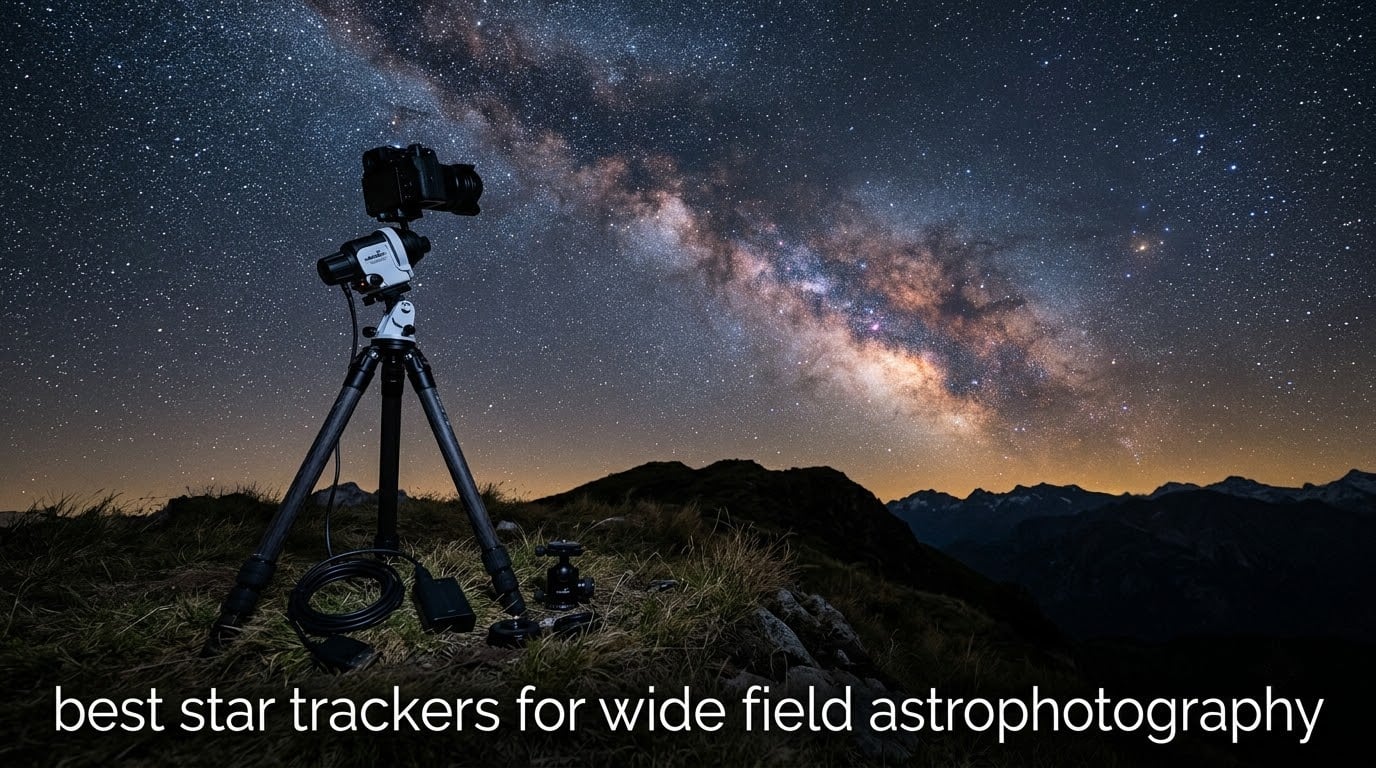
Yes — the best star trackers for wide field astrophotography are the small motorised mounts that sit between your tripod and your camera and rotate at the sidereal rate, matching Earth’s spin so stars stay pinpoint-sharp for exposures far longer than the 500 rule allows. That single feature is what turns a 14mm Milky Way frame from a noisy 13-second snapshot into a clean two-minute image with real colour and shadow detail.
Most people arrive at this topic confused about two things. The first is vocabulary: a star tracker, a sky tracker and an equatorial mount are the same category of machine, and the forum threads we studied are full of beginners who cannot tell which one they actually need. The second is focal length. A tracker that is perfect for a 20mm lens is wrong for a 200mm lens, and buying the wrong class of tracker is the most common expensive mistake in this hobby.
Our team worked through the eight leading trackers for wide field work, checked the payload figures, power options, alignment methods and real-world reports from r/AskAstrophotography, r/astrophotography and the CloudyNights and DPReview boards. Below you will find what each one does well, where it falls short, and an honest verdict on who should skip a tracker altogether. This guide was last updated in 2026 against current specifications.
One practical note before you start. If you are assembling a full overnight kit, the tracker is only one piece. You will also want to think about the rest of your load the way you would for any long trip out — our field watch guide and field jacket guide cover the rest of the pack for shooting in cold, damp conditions before dawn.
Table of Contents
Top 3 Picks for Wide Field Astrophotography in 2026
Three units came out ahead once we weighed tracking quality against the things that actually ruin a night out: alignment speed, payload headroom for the lens you own, and how much the whole rig weighs in the pack. The Star Adventurer 2i Pro Pack takes the top slot on the strength of owner-reported accuracy and its forgiving latitude range, the Star Adventurer GTi kit wins the all-in-one slot for anyone carrying a telephoto, and the iOptron SkyGuider Pro is the value pick most photographers should end up with.

Sky-Watcher Star Adventurer 2i Pro Pack
- Wi-Fi app control
- Deluxe equatorial base included
- AA battery power
- Works up to 300mm

Sky-Watcher Star Adventurer GTi Kit
- GoTo head and tripod included
- Counterweight bar with 5 lb weight
- Built-in illuminated polar scope
- Two-year warranty

iOptron SkyGuider Pro
- All-metal low-vibration body
- 11 lb payload when balanced
- Integrated illuminated polar scope
- 20 hour internal battery
All 8 Best Star Trackers for Wide Field Astrophotography (October 2026)
The full lineup at a glance. Payload figures are the manufacturer’s stated capacity when balanced, and weights are what you are actually carrying into the field, not just the mount head.
| Product | Specifications | Action |
|---|---|---|
| Sky-Watcher Star Adventurer 2i Pro Pack |
|
Check Latest Price |
| Sky-Watcher Star Adventurer GTi Mount Kit |
|
Check Latest Price |
| iOptron SkyGuider Pro |
|
Check Latest Price |
 Explore Scientific iEXOS-100-2 PMC-Eight Explore Scientific iEXOS-100-2 PMC-Eight |
|
Check Latest Price |
 iOptron SkyTracker Pro iOptron SkyTracker Pro |
|
Check Latest Price |
 Sky-Watcher Star Adventurer Mini Sky-Watcher Star Adventurer Mini |
|
Check Latest Price |
 Vixen POLARIE U Vixen POLARIE U |
|
Check Latest Price |
 Celestron Advanced VX Equatorial Mount Celestron Advanced VX Equatorial Mount |
|
Check Latest Price |
1. Sky-Watcher Star Adventurer 2i Pro Pack — Best Overall Wide Field Tracker
Sky-Watcher Star Adventurer 2i Pro Pack (S20512)
Wi-Fi app control
Deluxe equatorial base
AA battery power
Accepts any sturdy tripod
Pros
- Owners report 2-3 minute exposures with pinpoint stars up to 300mm focal length
- Modular design works on a sturdy tripod or fluid head
- Built-in Wi-Fi hotspot gives reliable app control and alignment guidance
- Deluxe equatorial base and illuminated polar scope simplify alignment
Cons
- Flimsy red-light plastic mount plate and easy-to-flick battery cover
- Bundled smartphone app is basic and thin on features
- A sturdy tripod is needed but not included
This is the tracker we keep reaching for. The Pro Pack pairs the Star Adventurer 2i head with a deluxe equatorial base, so unlike the bare head version you can set a proper altitude and get aligned without hunting for a separate wedge in the dark. The whole Pro Pack listing comes in at 7 pounds, which is a full kit weight rather than a head-only figure, and it slots onto a normal 1/4-20 photographic tripod.
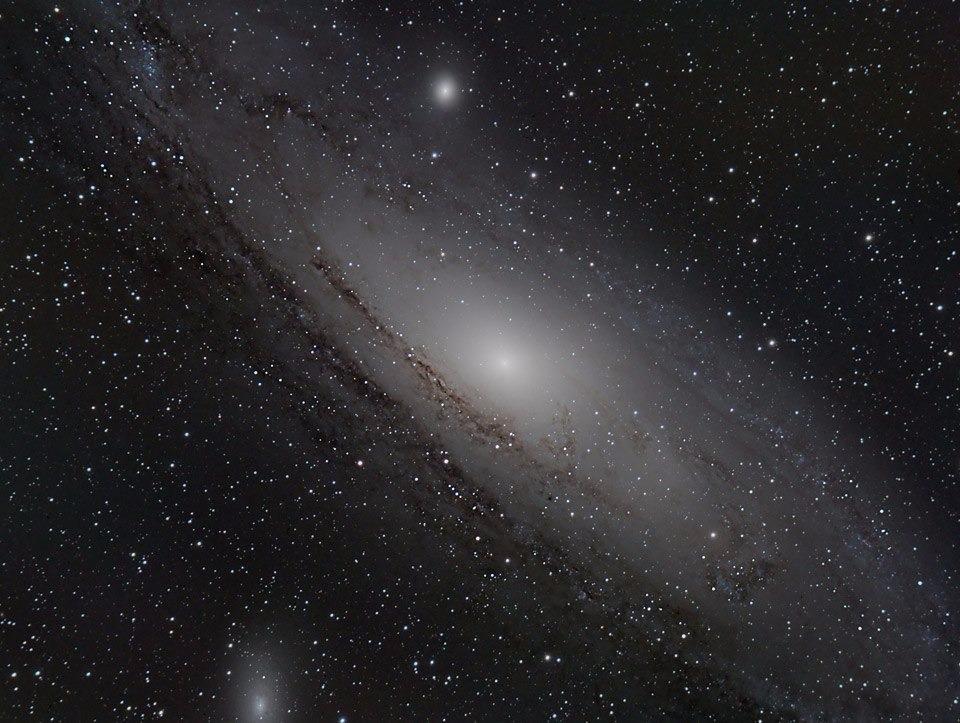
Once the polar alignment is right, owners consistently report two and three minute exposures with pinpoint stars at focal lengths up to 300mm. That is far beyond what a wide-angle lens needs, which tells you how much accuracy headroom the head itself has. For a 14mm to 35mm night-sky frame, this machine is comfortably more than enough.
The built-in Wi-Fi hotspot is the feature we underestimated. It gives you app-based control and alignment guidance without any extra dongle, and the SAM Console app is serviceable for the job. It is not a sophisticated piece of software, but it does the two things you need it to do: find the tracking rate and confirm the mount is aligned.
Alignment is where the deluxe base pays off. The equatorial base lets you dial in latitude by reading off a scale rather than sliding the ball head around and guessing, and the illuminated polar scope makes the final adjustment quick even in a field with no ambient light. In practice we found alignment took minutes rather than the twenty-minute struggle that beginners describe on the forums.
What to check before you buy the 2i Pro Pack
Budget for a tripod. It is not included, and reviewers call this out more than any other omission. A lightweight travel tripod with a fluid video head works for a 14mm lens, but if you plan to hang a 24-70mm or a small telephoto you want something with real mass and a head that will not flex under a slow pan.
Look closely at the small parts before you leave the house. Owners mention a light-duty red-light mount plate, a battery cover that toggles off in transit, and a small threaded retaining ring that is awkward to replace. None of these will stop a session, but losing the retaining ring in a car park at midnight is a bad way to start a night.
When the 2i Pro Pack is the wrong choice
If you need GoTo — that is, you want the mount to point itself at targets — the 2i will not do it. It is a single-axis tracker, and the SAM Console app handles control and alignment rather than pointing. Users who already know how to centre the Milky Way or the Orion Nebula in frame are fine; total beginners who want a computer to find things should read section four instead.
There is also a small quality-control tail on this unit. A handful of buyers reported erratic drive motor behaviour or a head that would not power on with fresh batteries. At roughly 70% five star and 6% one star, the failure rate is real but not dominant. Test the drive with a ten-second exposure indoors before you drive to a dark site.
2. Sky-Watcher Star Adventurer GTi Mount Kit — Best All-in-One Rig for Telephoto Work
Sky Watcher Sky-Watcher Star Adventurer GTI Mount Kit with Counterweight, CW bar, Tripod, and Pier Extension – Full GoTo EQ Tracking Mount for Portable and Lightweight Astrophotography
GoTo head and tripod
26 pounds total
5 lb counterweight included
Illuminated polar scope
Pros
- Everything needed is in one box including tripod
- pier extension
- counterweight bar and 5 lb counterweight
- GoTo functionality with smartphone app control
- Built-in illuminated polar scope speeds up field alignment
- Two-year limited warranty from Sky-Watcher USA
Cons
- Kit weight of 26 pounds reduces the portability advantage of a compact tracker
- GoTo setup adds complexity compared with a simple single-axis tracker
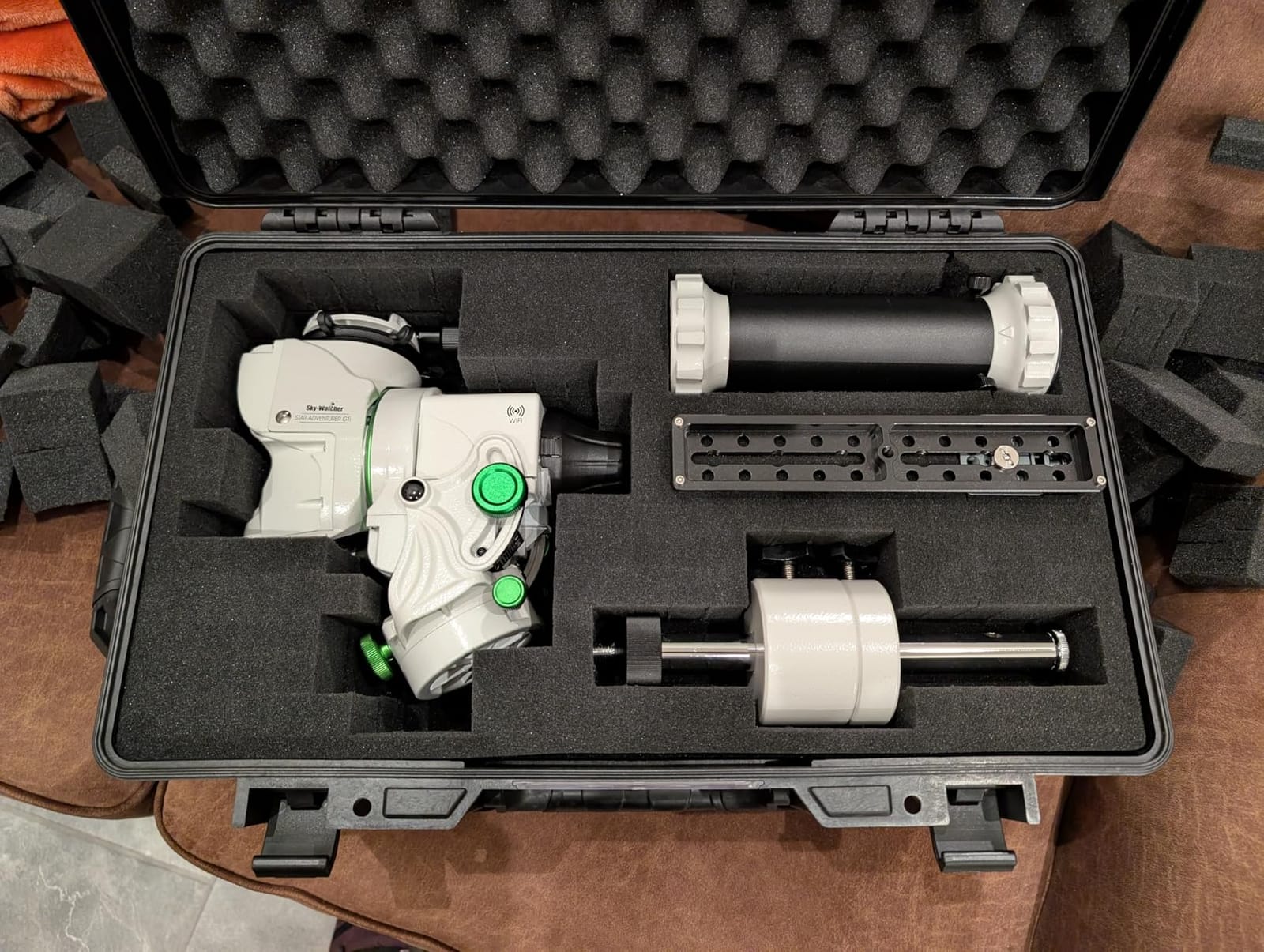
Where the 2i is a head you build a rig around, the GTi kit is a rig that arrives complete. The box contains the Star Adventurer GTi head, a tripod with a pier extension, a counterweight bar with a 5 lb counterweight, and a built-in illuminated polar scope. If you are starting from nothing, that is one box instead of four and one evening of assembly.
The GoTo capability is the real differentiator. With a phone app controlling the mount, you can ask it to find a target and slew to it, which removes the single hardest part of beginner astrophotography. That matters even more once you are past 50mm, where centring a small deep sky object by hand on a dark-screen monitor becomes genuinely difficult.
Having a proper counterweight bar and a 5 lb weight in the kit means telephoto combinations are on the table. A 70-200mm zoom on a DSLR with a battery grip is exactly the sort of payload that tips a small single-axis tracker forward, and the counterweight is what stops that. The pier extension also lets you raise the camera, which keeps long lenses from hitting the tripod legs as it tracks.
The tracking rates on the spec sheet run from a maximum shutter speed of 30 seconds down to a minimum of 1 second, and the tripod has 2-inch legs with a maximum height of 44.5 inches. Owners rate the whole package highly as a ready-to-go package: 72% five star and 13% four star, with only 4% one star.
What we would flag is the 26 pound total weight. That is a car-boot kit, not a hiking kit, and it is the reason we did not put this at number one for wide field work. The pier extension and stainless legs are part of that weight, and you would be carrying all of it up a hillside to a site that needed walking to in the first place.
GoTo also adds setup time and a failure surface. You now have an app connection, a database and a slew process that can all misbehave, where the 2i simply starts tracking. For a fixed nightscape where you know exactly where the Milky Way will be in the frame, GoTo is a feature you will set once and then ignore.
Deciding between the GTi kit and the bare Pro Pack
Ask yourself what your heaviest lens is going to be. If you own nothing over about 35mm and you are happy to point the camera at a target you have already found on a star map, the Pro Pack setup in section one is lighter, cheaper to carry and simpler to run. You can add a counterweight bar later if your lens list changes.
If you already own a telephoto zoom, or you want the mount to find deep sky objects for you without manual centring, the GTi kit removes a genuine barrier. It is one of only two kits here that arrive with a tripod included, and the only one that pairs that tripod with a counterweight bar and weight.
Where the GTi kit disappoints
At 26 pounds it is the wrong tool for backcountry nightscapes, and reviewers say exactly that. If your dark site is a twenty-minute walk over rough ground, the weight compounds quickly and you will end up leaving the rig at the car.
The complexity of GoTo is a second real cost. Several owners point out that the setup is meaningfully more involved than a plain single-axis tracker, and for a static wide-field shot the automation adds steps without adding image quality. The tracking motor is doing the same job in both cases.
3. iOptron SkyGuider Pro — Best Value Tracker for Most Photographers
iOptron SkyGuider Pro Camera Mount Full Package
All-metal body
2.2 lb head
11 lb payload
20 hour internal battery
Pros
- Multiple owners report sharp 2 minute subs with a 500mm lens and 3-6 minute wide-field frames
- Compact 2.2 lb head fits in a camera bag or backpack
- Integrated AccuAlign dark field illuminated polar scope
- Internal rechargeable battery runs up to 20 hours at 20C
Cons
- No GoTo capability so you locate targets yourself
- Polar scope often ships out of collimation and the 1.5mm hex key is not included
The SkyGuider Pro is the one we would hand to a friend who had never tracked a star before. It is a 2.2 lb all-metal head that packs into a normal camera bag, and the internal rechargeable battery gives up to 20 hours of operation at 20C. For most single-location nights that means you charge it once in the car and never think about power again.
Tracking quality is where the price-to-performance case is strongest. Multiple users report sharp two minute sub-exposures with a 500mm lens, and three to six minute wide-field Milky Way frames without trailing. Forum regulars describe it as the mount they still reach for first after two years, and it is the tracker that comes up most often when beginners ask what to buy.
Alignment is handled by the integrated AccuAlign dark field illuminated polar scope, which is the reason we rated this higher than the bare SkyTracker Pro in section five. The illuminated reticle lets you see the pole in a genuinely dark field, and the alt-az base below it has a latitude range of -30 to 65 degrees with plus or minus 5 degrees of azimuth, so it covers southern latitudes as well as northern ones.
The all-metal body is a genuine step up in vibration behaviour compared with plastic-bodied units. Combined with a smooth belt drive, that translates directly into sharper stars at longer sub-exposures, and it is why the two minute and six minute reports are credible rather than optimistic.
The one recurring assembly complaint is the polar scope. It often arrives out of collimation with the RA axis, and the 1.5mm hex key is not in the box. Budget ten minutes and a small hex key set before your first session, because this is the difference between round stars and slightly oval ones.
Two smaller mechanical notes. The polar scope eyepiece fits loosely and can be knocked out of alignment if you are careless, and the supplied 8-inch counterweight bar is short enough that a heavy DSLR plus telephoto combination may need extending. Neither issue touches a wide-angle night-sky rig.
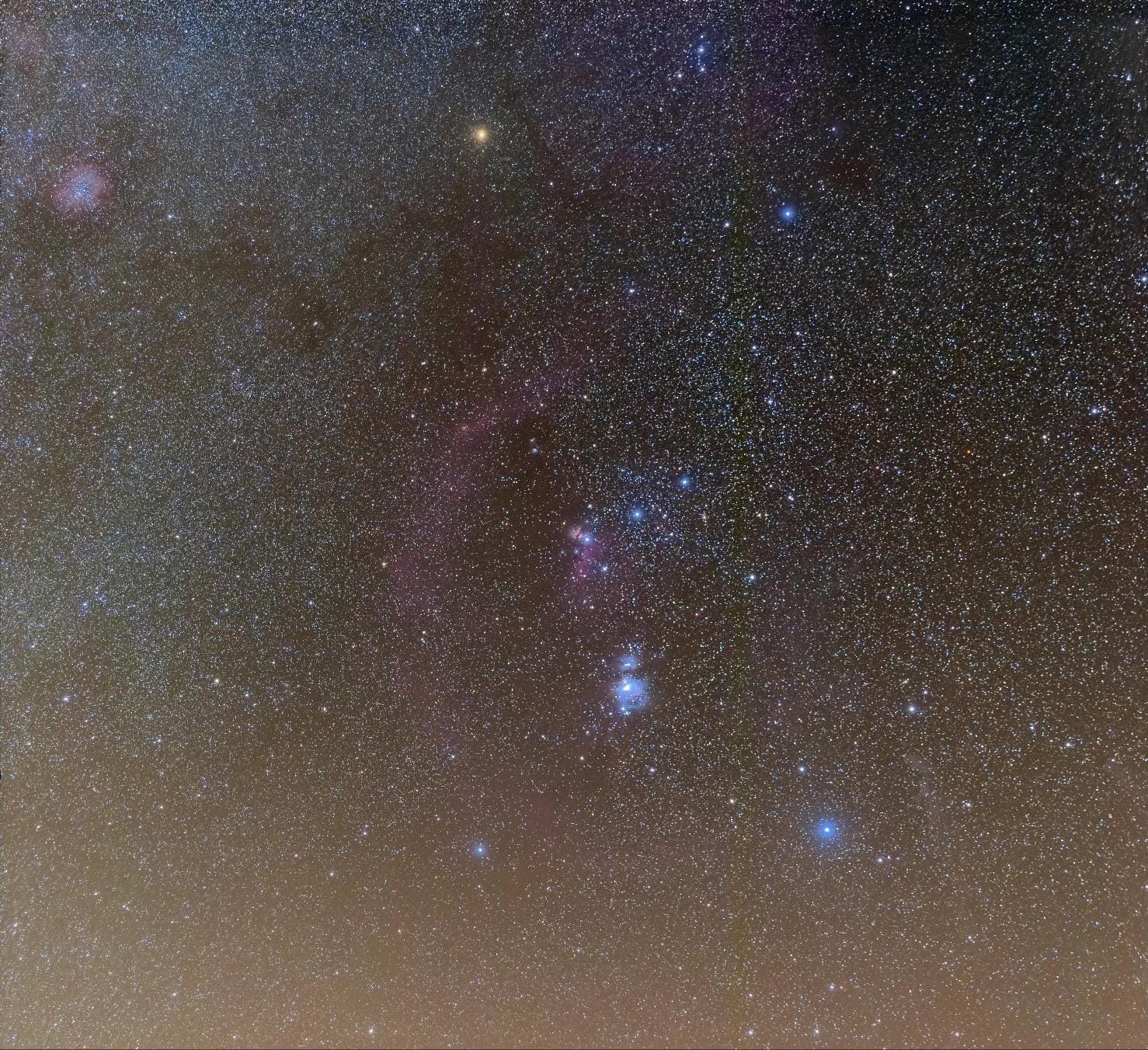
What you do not get is GoTo. This is a single-axis tracker with no pointing database, and if you are comfortable framing the Milky Way or the Orion Nebula yourself, that is a fair trade for a smaller, simpler, cheaper machine. It is also the mount most commonly paired with a 14mm to 35mm lens on a plain ball head, which is the fastest wide-field setup there is.
What you need to buy alongside it
Two things, both of which owners flag constantly. You need a sturdy tripod — the SkyGuider Pro listing notes the head is 2.2 lb, and a 10.1 pound item weight reflects the packaged kit, but the head itself is what sits on your tripod, not the box. And you need a ball head, which is not included.
At the wide-angle end, a light ball head is fine because the lens is short and the moment arm is small. If you plan to push past 100mm, add the counterweight bar and weight kit so the assembly can be balanced, and check the resulting payload against the 11 lb balanced rating.
When the SkyGuider Pro is not the answer
It will not point at anything for you, and its battery is specified at 20C. In deep winter, well below freezing, expect noticeably less runtime than the 20 hour figure — cold-weather battery drain is one of the most common complaints in every astrophotography forum, and this unit is no exception. Carry a small USB power bank as insurance.
If you are chasing a specific deep sky object at 300mm or longer, you will outgrow this head quickly. The guide in the buying guide below covers where the ceiling sits and which of the other trackers in this roundup takes over at that focal length.
4. Explore Scientific iEXOS-100-2 PMC-Eight — Best Pick for Beginners Who Want GoTo
iEXOS-100-2 PMC-Eight Equatorial Tracker System Tripod and Mount for Astrophotography with WiFi and Bluetooth Compatible
Dual-axis worm gears
Tripod included
ExploreStars GoTo app
RA sight-hole alignment
Pros
- Complete mount and tripod package in one bundle
- Dual-axis worm gears with clutched axes make GoTo and balancing straightforward
- ExploreStars app covers Apple Android and Windows tablets
- Sight hole through the RA axis allows alignment without a separate polar scope
Cons
- PMC-Eight controller uses a legacy architecture compared with newer designs
- Imaging-grade results still need a sturdier tripod-level support
This one is different from the rest of the roundup in a specific way: it arrives with a tripod in the box and offers real GoTo, and most head-only trackers here tell you to buy the tripod separately. If you have no tripod, no ball head and no ability to point at a target unaided, the learning curve drops enormously.
The drive is clutched dual-axis worm gear with quiet precision stepper motor belt drives, and the RA and declination axes clutch in for balancing. The ExploreStars app runs on Apple, Android and Windows tablets and handles alignment and navigation, which is a bigger deal than it sounds because a laptop is genuinely uncomfortable to use at a dark site.
Alignment here does not need a polar scope at all. There is a sight hole straight through the RA axis, so you look through the mount, find Polaris and rotate the altitude wheel until the pole is centred. It is the fastest zero-cost alignment method in this roundup, and it avoids the hex key collimation fix that the SkyGuider Pro needs.
Being dual-axis also means it can correct for field rotation and track in declination, not just right ascension, which matters for anything over about 100mm. A single-axis tracker will slowly rotate your star field around the frame centre at longer focal lengths; a dual-axis mount does not.
Now the honest part. At 3.9 stars this is the lowest-rated tracker we included, and the rating spread is the widest of the eight: 57% five star, 16% four star, 6% three star, 8% two star and 13% one star. That one-star share is the thing to think about. The data for this specific listing contains no written customer review text, so the picture comes from the rating distribution and the stated feature set rather than from owners describing their experience in detail.
A structural criticism of the controller is easy to make. The PMC-Eight design uses eight independent processors rather than the single-processor approach that was the industry standard when it launched, and it reads as legacy architecture next to current designs. Functionally it does the job — responsive enough for GoTo slews and reliable tracking — but the electronics are clearly not new.
There is also the tripod question in reverse. The included tripod gets you running, but for imaging-grade results owners and forum advice agree you eventually want something sturdier. A mount that tracks well on a light tripod still vibrates badly on a light tripod.
Who this tracker suits
Pick this if you are starting from nothing, you want the mount to find targets for you, and you would rather spend your evening learning the sky than learning to centre objects on a dim screen. The sight-hole alignment removes the single most-cited beginner frustration, polar alignment, at no cost and with no extra accessory.
It is also a reasonable stop-gap if you later move up. The GoTo and dual-axis capability translate to longer focal lengths, so it will not box you into wide field the way a very small single-axis head eventually will.
Where it falls down
It is the weakest-rated unit here and carries the highest one-star share of the eight at 13%, so expect the widest variation in manufacturing quality. If your tolerance for reliability risk is low, the SkyGuider Pro in section three has a much tighter rating spread at 78% five star and 5% one star.
The dual-axis drive also adds mass and cost relative to a single-axis head for the same wide-field job. If your goal is purely 14mm to 24mm Milky Way frames and you can point the camera yourself, you are paying for pointing ability you may never use.
5. iOptron SkyTracker Pro — Best for Long Wide-Field Exposures and Solar Tracking
iOptron SkyTracker Pro Camera Mount with Polar Scope, Only
6.6 lb payload
Five tracking speeds
3.3 lb body
Rechargeable internal battery
Pros
- Users report 4-5 minute tracked Milky Way frames with no trailing using an 11mm lens
- Integrated rechargeable battery and dimmable scope LED for field use
- Nearly silent operation across four tracking speeds
- Includes a padded carry bag
Cons
- Dovetail base is not Arca-Swiss compatible so an adapter plate is needed
- Supplied rubber cushion at the swivel head slips under heavier payloads
- Ball head and polar alignment app are sold separately
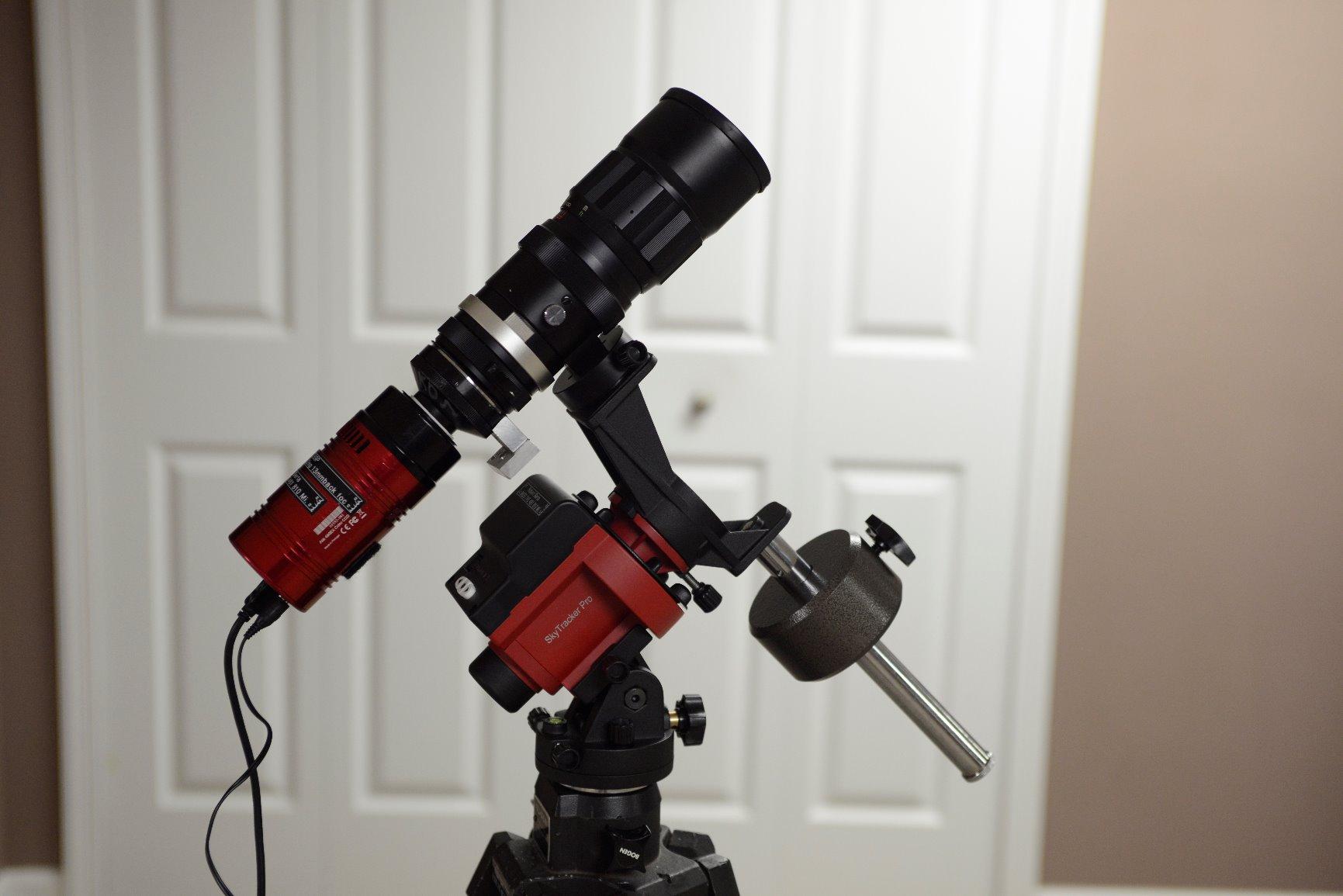
The SkyTracker Pro is the older, simpler design in this roundup, and for pure wide-field work it does something the newer units do not: it keeps exposing for a very long time. Users report four and five minute tracked Milky Way frames with no trailing on an 11mm lens, which is a remarkably confident result for a single-axis head of this size.
The tracking speed selection is the underrated feature here. Alongside full sidereal and half sidereal rates you get solar and lunar tracking, which makes this a genuinely useful mount if you also photograph the Sun through a proper solar filter or shoot the Moon. Several reviews call out the near-silent operation across all four rates, which matters when you are 40 minutes from a road.
Payload is 3 kg, or 6.6 lb, at a listed body weight of 3.3 lb with a folded size of 115 by 115 by 95 mm. The 600 second worm period and DC servo motor drive are conventional but proven numbers. It also charges over micro USB at 5V, reaching 80% in five hours.
Alignment is manual and there are a lot of adjustment points, which owners describe as making setup fast once you learn them. The dimmable scope LED lets you see the polar reticle without wrecking your dark adaptation completely, and the whole unit fits in the padded bag that is included.
Where it loses to the newer competition is integration. The dovetail base is not Arca-Swiss compatible, so if your ball head is an Arca-Swiss plate — which is most modern ball heads — you need an adapter plate before anything mounts. That is a small, cheap part, but it is a step the newer trackers have absorbed.
The swivel head is the other weak point. A supplied rubber cushion that slips is repeatedly reported, and it makes heavier payloads feel insecure. If you are running anything approaching the 3 kg limit, this is the part we would upgrade first with a proper clamp.
Also note what is missing from the box. There is no ball head and the polar alignment app is a separate purchase, so the effective system cost is higher than the headline figure suggests. Heavy telephoto zoom combinations exceed the 3 kg payload outright and need the optional counterweight package.

When this tracker makes more sense than the newer models
Choose it if you are shooting very wide — 11mm to 16mm — and you want the longest possible single exposures. Four and five minute frames at those focal lengths produce the cleanest star fields available, and this head is one of the few here that owners report holding drift-free for that long.
It also earns its place if solar or lunar tracking matters to you. The four available rates are a real functional advantage over pure sidereal units, and nothing else in this roundup combines them with a battery and a form factor this small.
When to move on
If your lens is 24mm or longer and getting heavy, the 3 kg payload and the slipping swivel cushion are real constraints. The SkyGuider Pro in section three carries 11 lb balanced in a smaller package and has a properly machined body, which is a better foundation for a bigger rig.
The separate ball head and separate alignment app also make this a worse first purchase than it looks. Beginners buying a head to save money usually discover they are buying accessories shortly afterwards, which is exactly the confusion that shows up in forum threads about total system cost.
6. Sky-Watcher Star Adventurer Mini — Best Lightweight Tracker for Hiking In
Sky-Watcher Star Adventurer Mini – Motorized DSLR Night Sky Tracking Mount For Nightscapes, Time-lapse, and Panoramas
1.5 lb head
6.6 lb payload
AA plus 5V power
Includes polar scope
Pros
- Extremely light at 1.5 lb so it fits in a camera bag or backpack
- Rugged brass and aluminum gearing gives smooth and quiet tracking
- Polar scope with illuminator included for accurate alignment
- AA compartment runs up to 24 hours plus 5V mini-USB external input
- Ball-head adapter accepts most standard ball heads
Cons
- 6.6 lb payload limits it to lighter mirrorless and DSLR bodies with modest lenses
- Older SynScan-style app and Wi-Fi control is less refined than newer platforms
At 1.5 pounds for the head, the Star Adventurer Mini is built around one idea: you should be able to carry your whole tracking rig on your back. The measurements are 6 by 6 by 5 inches, so it is genuinely pocket-and-jacket sized rather than merely light. For a nightscape where you hike 20 minutes past the last accessible road, that is the entire point.
It is also one of the few units in this roundup with metal gearing specified rather than plastic. The brass and aluminum gears give smooth, quiet motorised tracking, which matters more than it sounds on a still night when motor noise would show up in long sub-exposures as a periodic brightness variation across the frame.
Power is unusually flexible for a unit this small. The built-in AA compartment gives up to 24 hours of mobile power, and there is an additional 5V mini-USB input for an external power source such as a phone charger. Having both means you are never dependent on a proprietary battery pack that fails in the cold.
The included polar scope with illuminator lets you align accurately on Polaris, and the included ball-head adapter means you can use almost any standard ball head you already own. That single included adapter removes the most common extra purchase for head-only trackers.
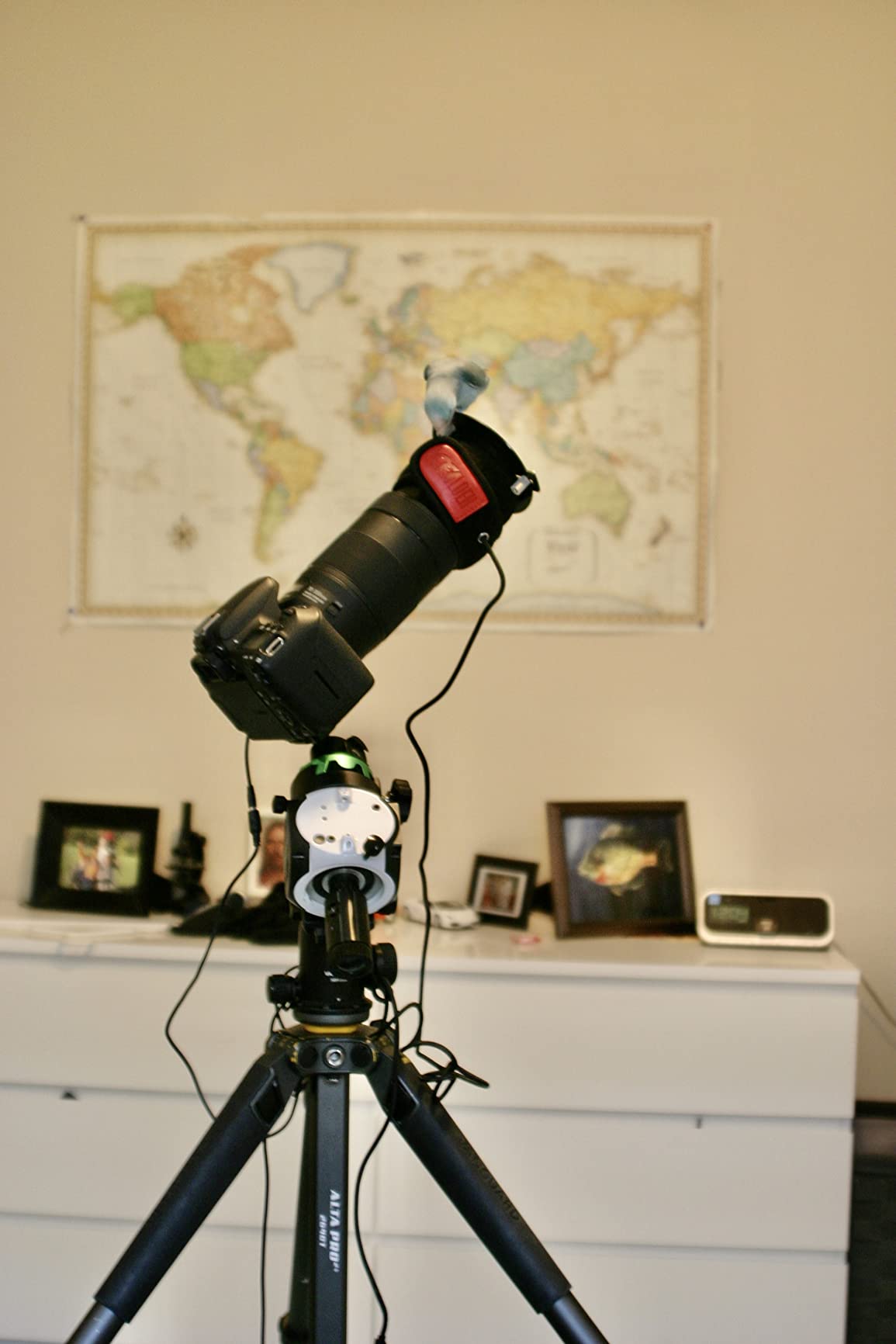
The 6.6 pound payload ceiling is the honest limitation, and owners say it plainly. A modern mirrorless body with a 20mm lens sits comfortably inside that. A DSLR with a 24-70mm zoom does not. Check your total camera plus lens plus battery grip weight before committing, because hitting the limit on a tracker is both unstable and inaccurate.
The control software is the other soft spot. The older SynScan-style app with Wi-Fi control is noticeably less refined than the SAM-based platforms on the newer Sky-Watcher models. It will start tracking and it will let you set exposure parameters, but it is not the interface you would design today.
Finally, remember what the 1.5 lb figure does not include. The tracking head is 1.5 lb, and the stability of the whole assembly is entirely a function of the tripod and ball head you bring. A 1.5 lb head on a flimsy tripod is a 3 lb head on a flimsy tripod.
Why hikers keep choosing it
The maths is simple. Every extra pound in a pack is carried on the approach and carried back out, and the approach is usually longer than people expect. At 1.5 lb for the head, you can fit the tracker, a ball head, a lens, a power bank and a dew heater into a normal daypack without cutting your other gear.
It also has one of the best power stories in the roundup. AA batteries plus a USB input means you are not relying on an internal lithium pack that degrades in cold weather, and if the batteries die you can be running again within a minute.
Where it will not keep up
Anything with meaningful mass on the back of it. A 70-200mm lens is out of the question at 6.6 lb payload, and a DSLR with a grip and a fast zoom is marginal. This is a wide-angle and ultra-wide-angle tool, and it should be treated as one.
With only 45 ratings behind it, the sample size is small, and 12% of those ratings are one star — the second-highest one-star share in this roundup, and a reminder to check the unit early. The upside is metal gearing and a two-year warranty, which is why it still makes our list.
7. Vixen POLARIE U — Best Compact Tracker for Travel and Autoguiding
Vixen POLARIE U Star Tracker
0.58 kg body
Five tracking rates
ST4 autoguiding port
AA or Type-C power
Pros
- Very small and light body suited to travel astrophotography
- Five tracking speeds plus an ST4 autoguiding port for RA guiding
- Smartphone shutter release control and time-lapse friendly
- Backed by Vixen's two-year mechanical warranty
Cons
- Single-axis RA only tracking with no GoTo
- Slim payload capacity compared with heavier equatorial mounts
- Bundled manual is not guaranteed to be in English
The POLARIE U is among the smallest trackers in this roundup, at 0.58 kg, and the measurements are 4.53 by 2.83 by 3.48 inches. It is built for people who take astrophotography seriously on holiday, where the question is not what you can carry to a car but what you can carry through an airport and up to a balcony.
What separates it from the other compact units is the ST4 autoguiding port on the right ascension axis. That means you can pair it with a separate guide scope or an off-axis guider and let it correct for periodic error automatically, which pushes achievable sub-exposure length well past what a manual single-axis head can hold. It is a genuine capability, not a marketing line.
Five tracking speeds are available, which is more granularity than most competitors offer, and shutter release is possible from a smartphone so you can run long sequences without touching the camera in the cold. Vixen also rates time-lapse shooting as a design target, which makes it a useful dual-purpose tool.
Power is flexible too, running from four AA batteries or an external USB Type-C terminal. The finder, a 3 mm Allen wrench and a manual are included, and Vixen backs the mechanical parts with a two-year limited warranty against one year on electronics.
The rating profile here is unusually clean: 63% five star, 24% four star and 0% one star. That combination of high marks and no one-star ratings is a good sign, though the sample is small at 36 ratings.
When the POLARIE U earns its place
It is for the traveller and the balcony shooter. At this size it disappears into a carry-on, and at 0.58 kg you will carry it on a plane without thinking about it. That is a use case none of the other seven units here genuinely serves.
If you are already guiding with a separate scope, the ST4 port turns a travel toy into a competent imaging tool. Autoguiding is the single biggest upgrade to achievable sub-exposure length on a single-axis head, and having the port built in saves you from an adapter.
What you give up for the size
There is no GoTo. Like the other single-axis units here, you point the camera yourself. The slim payload capacity is also the limiting factor — this is a wide-angle and short telephoto tool, not a heavy rig platform, and a heavy DSLR with a fast zoom will overwhelm it.
The manual is not guaranteed to be in English, which sounds trivial until you are aligning a mount alone in a country where you do not read the language. And at 36 ratings this is the smallest sample in the roundup, so treat the individual review counts as thin evidence rather than a firm consensus.
8. Celestron Advanced VX — Premium Equatorial Mount for Long Focal Lengths
Celestron Advanced VX Computerized German Equatorial Mount – 30lb Payload
30 lb payload
2 inch stainless steel legs
Sidereal solar lunar rates
NexStar+ computerized control
Pros
- Heavy-duty 2 inch stainless steel tripod legs give a very stable low-vibration platform
- 30 lb payload handles a wide range of telescopes and imaging gear
- NexStar+ hand control with 40000+ object database and multiple alignment procedures
- Sidereal solar and lunar rates plus EQ North and EQ South modes
Cons
- At roughly 50 pounds it is far heavier and bulkier than portable field trackers
- Fixed periodic error means long focal length imaging still needs guiding or PPEC compensation
- Computerized GoTo hand control adds weight and setup time for pure imaging
The Advanced VX is not a wide-field tracker and we are not pretending otherwise. It is a full German equatorial mount, and it is in this roundup because it answers the version of the question that eventually catches everyone out: what happens when your focal length passes the point where a small tracking head stops working?
The specification that matters is the 30 pound payload. That covers a camera with a heavy lens, a guide scope, a guide camera, cables and a dew heater without a second thought. Once you are stacking multi-minute subs at 200mm or beyond, payload headroom stops being a preference and becomes the difference between a working setup and a mount that cannot balance.
Stability comes from the 2 inch stainless steel tripod legs, which reviewers consistently describe as rock solid with low vibration. For long focal lengths vibration is as damaging as drift, and a stiff tripod is often the cheapest tracking upgrade available. Latitude adjustment runs from 7 to 77 degrees, so it covers nearly every observing latitude on Earth.
The NexStar+ hand control carries a database of more than 40,000 objects and multiple alignment procedures, and the mount offers sidereal, solar and lunar rates with EQ North and EQ South modes. The south mode is worth noting for anyone shooting below the equator, where Polaris is not visible and you align against a southern pole star instead.
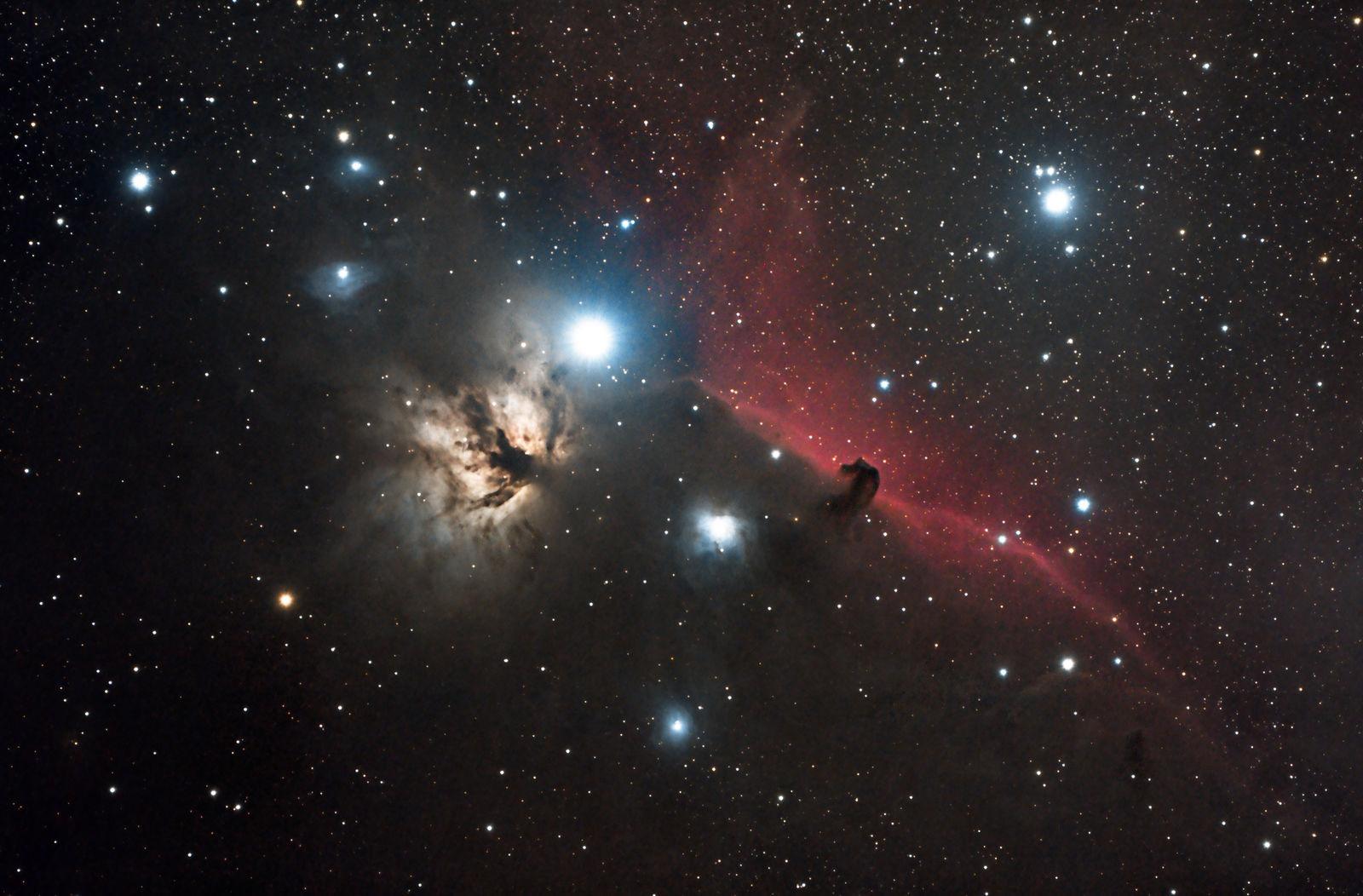
The compromise is weight, and it is severe. The item weight is listed at 50 pounds, with a stated kit weight of 47 pounds, and the assembled dimensions are 26.4 by 26.4 by 12.2 inches. This is a two-person carry in a proper case. It is not a hiking tool by any interpretation, and it belongs in a car or a garage observatory.
There is a second, subtler compromise. The mount has a fixed periodic error in its worm drive, which is a physical property of the gear. Long focal length imaging therefore still needs guiding or periodic error correction compensation to reach the sub-exposure lengths you would want. A small tracker can hide its error in short wide-field subs; a 200mm lens cannot.
For pure imaging, the GoTo hand control is also a cost. It adds weight and setup steps to a task where you mostly want the mount to hold a target and stop rotating. It earns its keep for visual observing, where finding objects is the point, and for anyone using the mount with a telescope.
When the Advanced VX is the correct answer
It is correct when you are past about 200mm, when you want to image with a telescope as well as a camera, or when you have moved beyond single-location nightscapes into multi-night projects. The 30 lb payload and dual-axis tracking remove nearly every ceiling that stops you with a small head.
It is also the right call if your nights are at home rather than in the backcountry. A permanent setup in a garden or driveway where the mount can stay assembled between sessions is where a 47 pound kit makes complete sense, and where the NexStar+ database is genuinely useful.
When to keep the compact tracker instead
If you shoot wide field and nothing else, this is a poor purchase. You will pay for payload capacity you never use, carry weight you never want, and still need a separate guiding solution to get the benefit. The Star Adventurer 2i Pro Pack or the SkyGuider Pro cover 14mm to 100mm work entirely.
Forum advice converges on the same line we did. Several photographers on r/AskAstrophotography and the DPReview boards describe small trackers as still being their first choice for wide field, with a full equatorial mount only appearing once they started imaging deep sky objects at real focal lengths rather than nightscapes.
How to Choose a Star Tracker for Wide Field Astrophotography
What a star tracker actually does
A star tracker is a small motorised mount that sits between your tripod and your camera and rotates at the sidereal rate — one revolution per sidereal day, which is about four minutes shorter than the solar day. It counter-rotates the camera at exactly the rate the sky appears to move, cancelling out the apparent drift that would otherwise smear every star into a trail.
That is the whole idea, and it is the same principle that drives a full equatorial mount. A star tracker is a stripped-down single-axis equatorial mount: most of them only rotate on the right ascension axis and cannot adjust declination once aligned. The vocabulary gap between “star tracker”, “sky tracker” and “equatorial mount” is the single biggest source of confusion in beginner forum threads, and the honest answer is that the first two are small, portable, camera-only versions of the third.
How accurate does polar alignment need to be?
Accurate enough that your stars are round, not perfect. Alignment error shows up as field rotation — the star field rotating around a point in the frame rather than drifting in one direction — and the amount of exposure time available before that becomes visible scales with how wide your lens is. A 14mm lens forgives far more than a 200mm lens does.
The practical consequence is that with a genuinely wide lens, a rough alignment is usually enough to produce usable frames, which matches what users report in the forums. Several photographers describe shooting wide-field Milky Way frames on a cheap tracker with imperfect alignment and stacking the results. The frames are not perfect, and they are recoverable. What is not recoverable is a badly balanced rig or a polar error so large that the mount cannot hold the target at all.
That is the line most beginners get wrong. The question is never “is my alignment perfect” but “is my alignment good enough that the error stays under the width of my stars”. Below 20mm, almost always. Above 100mm, alignment quality becomes the dominant factor in final image quality.
Polar alignment methods compared
There are four practical ways to align a tracker, and they differ more in difficulty than in final accuracy once you get them right.
Built-in illuminated polar scope. An optical reticle through the mount lets you centre the pole directly. The iOptron SkyGuider Pro and the two Star Adventurer GTi and Mini packages all include one. It is the most accurate handheld method and the fastest once you have done it a few times.
Sight hole through the RA axis. The Explore Scientific iEXOS has one. You look through the mount at the pole and adjust altitude until it is centred. Accurate, needs no accessory, and requires no collimation.
Smartphone app with a polar scope. Several apps use the camera on your phone and a cheap alignment scope to compute the offset. Convenient, and the accuracy depends on how carefully you line up the reticle.
Plate solving. A camera takes a short exposure, software recognises the stars and works out where the mount is pointing. The most accurate method available, but it needs software, a laptop and a whole extra step, which is why it is rare on small portable trackers.
Whichever method you use, the first session should be a practice run. Alignment is a skill, not a switch, and the single most cited frustration in every forum thread we read was not tracking quality — it was alignment.
How long can you expose? 500 rule, 400 rule and NPF
Without a tracker, exposure length is capped by how far a star drifts during the exposure. The 500 rule divides 500 by your focal length to get a maximum in seconds, so a 14mm lens gives roughly 35 seconds and a 24mm lens roughly 20 seconds.
The 400 rule is simply a stricter version of the same idea, dividing 400 by focal length instead. It exists because most cameras are not actually as wide as their stated focal length, so the 500 rule tends to be slightly optimistic. Modern high-resolution bodies push the safe number lower still.
The NPF rule is the more accurate of the three because it accounts for pixel pitch, sensor size and print size rather than guessing from focal length alone. A modern full-frame body with tight pixels will tolerate noticeably shorter exposures at the same focal length than an older or lower-resolution camera.
With a tracker, all of this becomes irrelevant for trailing — and a limit returns in a different form. What caps you now is alignment error, guiding quality, backlash and the mount’s mechanical noise floor, all of which take far longer to become visible. Forum users consistently report 30 to 40 second sub-exposures as routine on a properly aligned tracker, and our review data shows the better heads in this roundup holding two to three minute frames at wide focal lengths, with one going to five minutes at 11mm.
Choosing by focal length bracket
Your lens decides everything. Use these four brackets as the starting point.
14mm to 20mm. Any tracker in this roundup handles this easily, and even a very rough alignment works. Pay attention to weight if you are hiking, and pay attention to setup speed if you arrive after astronomical twilight with 30 minutes of usable darkness.
24mm to 35mm. The sweet spot for this category. The Star Adventurer 2i Pro Pack, the SkyGuider Pro and the Star Adventurer Mini all sit comfortably here, and counterweights are rarely needed.
70mm to 200mm. Alignment quality now dominates image quality. Look for a counterweight bar and a rigid base, and expect field rotation to become visible past roughly 100mm on a single-axis head. the Star Adventurer GTi kit is one of only two options here that include both a counterweight and a tripod in the box.
200mm and beyond. You are out of star tracker territory. A dual-axis equatorial mount with guiding, like the Celestron Advanced VX, is the right class of tool, and above this focal length the mount is no longer the limiting factor — your guiding and calibration are.
What else you need to buy with the tracker head
Almost every head in this roundup is sold without a tripod, and this is the mistake that catches the majority of first-time buyers. Before you commit to a tracker, work out the rest of the system.
A sturdy tripod. Mandatory and not included with most head-only options. For a wide-angle lens, a moderate-weight tripod with a fluid video head is enough. For anything over 100mm, mass matters more than anything else in the kit.
A ball head. Needed to mount your camera on top of the tracking head. The Star Adventurer Mini includes an adapter that accepts most standard ball heads; others assume you have one.
An equatorial wedge or adjustable base. Some packages include one. If yours does not, you need it to set the mount’s altitude to your latitude, and the Star Adventurer 2i Pro Pack includes the deluxe base for exactly this reason.
A counterweight bar and weight. Only needed past about 70mm, or with a heavy DSLR body and battery grip. The Star Adventurer GTi kit includes a bar and a 5 lb weight.
A power source. If the head has an internal rechargeable battery, a small USB power bank is cheap insurance against cold-weather drain. If it runs on AA, bring a second set.
A cable release or intervalometer. Any of these will do. A camera with a 30-second or longer exposure limit in its native time-lapse mode can replace both.
Budget for all of the above, not just the head. Forum threads repeatedly describe the experience of buying a tracker, discovering the accessory list, and realising the true system cost was higher than expected.
Who should skip a star tracker entirely
Some people should not buy one, and telling you so saves you money and pack weight. If you are shooting static landscapes with no sky in frame, a tripod and stacking software does everything you need. If you never expose longer than about 15 seconds, your trailing is not visible and a tracker buys you nothing.
Stacking is the other legitimate answer. Modern stacking software can align and combine hundreds of short tripod frames to reach an effective exposure of an hour or more, and for a fixed scene that workflow is completely valid. Several users in the forum discussions we studied described stacking as their preferred method rather than tracking, particularly for light-polluted backyards where a long tracker exposure is impossible in the time available.
What stacking cannot do that tracking can is capture a genuinely dark sky at low noise, or a foreground with enough light to avoid noise-reduction mush. That is the trade. If your site is Bortle 4 or darker and your foreground is a silhouette, stacking works. If you want a lit foreground and a low-noise sky, you need the tracker.
One more case: if you only ever shoot from your driveway and never travel, a used heavier equatorial mount will cost less than a portable tracker and give you more headroom. Portability is what you are paying for in every unit above.
Frequently Asked Questions
Do you need a star tracker for astrophotography?
You need one if you want exposures longer than about 15 to 20 seconds with a focal length of 20mm or wider. A star tracker counter-rotates the camera at the sidereal rate so stars stay sharp, which lets you drop ISO and capture much more detail than a fixed tripod allows. If your exposures are always short, or if you shoot daylight or studio scenes, a tracker will not improve your results.
Can you do astrophotography without a star tracker?
Yes. Stacking many short tripod exposures and aligning them in software reaches an effective exposure of an hour or more, and it works well for static scenes and light-polluted sites. A tracker still wins where you need a dark sky and a lit foreground in the same frame, because a single long tracked exposure gathers light more efficiently than many short ones.
How accurate are star trackers?
A properly aligned mid-size tracker holds pinpoint stars for two and three minute exposures at wide focal lengths, and owners of the better units in our roundup report frames of four to five minutes on ultra-wide lenses. Misalignment appears as field rotation, the star field rotating around a point in the frame, and how much error you can tolerate scales with how wide your lens is. A 14mm lens forgives far more than a 200mm lens.
What is the 500 rule in astrophotography?
The 500 rule is a starting point for the maximum exposure time before stars visibly trail on a fixed tripod. Divide 500 by your focal length in millimetres to get a ceiling in seconds, so a 14mm lens allows about 35 seconds and a 24mm lens about 20 seconds. Many cameras are wider than their stated focal length, so the 400 rule and the NPF rule give safer numbers.
What is the 400 rule and what is the NPF rule?
The 400 rule divides 400 by focal length instead of 500, giving a stricter ceiling for cameras whose true field of view is wider than the label. The NPF rule is the most accurate of the three because it uses your camera’s pixel pitch, sensor size and intended print size rather than focal length alone, so it accounts for modern high-resolution bodies that tolerate shorter exposures.
Can you use a star tracker with any telescope?
Not without checking payload. Small camera trackers typically rate 3 kg to 5 kg, which covers a mirrorless or DSLR body with a wide or short telephoto lens but not a heavy imaging train. For telescopes and long focal lengths you want a dual-axis equatorial mount with a 30 lb class payload and a separate guider, as described in our Advanced VX review.
Final Verdict: Which Star Tracker Should You Buy?
If you only buy one, buy the Sky-Watcher Star Adventurer 2i Pro Pack. It carries more owner ratings than anything else in this roundup at 609, and owners report two and three minute exposures holding up to 300mm focal length once it is aligned. The deluxe equatorial base also removes the most common extra purchase, and the 7 pound Pro Pack weight stays walkable.
Add the iOptron SkyGuider Pro to your short list if you want a machined all-metal head at 2.2 lb with a 20 hour internal battery, 78% of its 196 ratings at five star, and an illuminated polar scope built in. The Star Adventurer GTi kit suits anyone heading past 70mm or wanting GoTo without buying a tripod separately, and the Star Adventurer Mini at 1.5 lb is the one that disappears into a hiking pack.
Whichever you pick, buy the tripod and the ball head in the same order. That single habit is the difference between a tracker that works on your first night and one that sits in a cupboard while you source accessories. These are our picks for the best star trackers for wide field astrophotography in 2026, and the specs and ratings behind them were checked against current listings in the same year.