
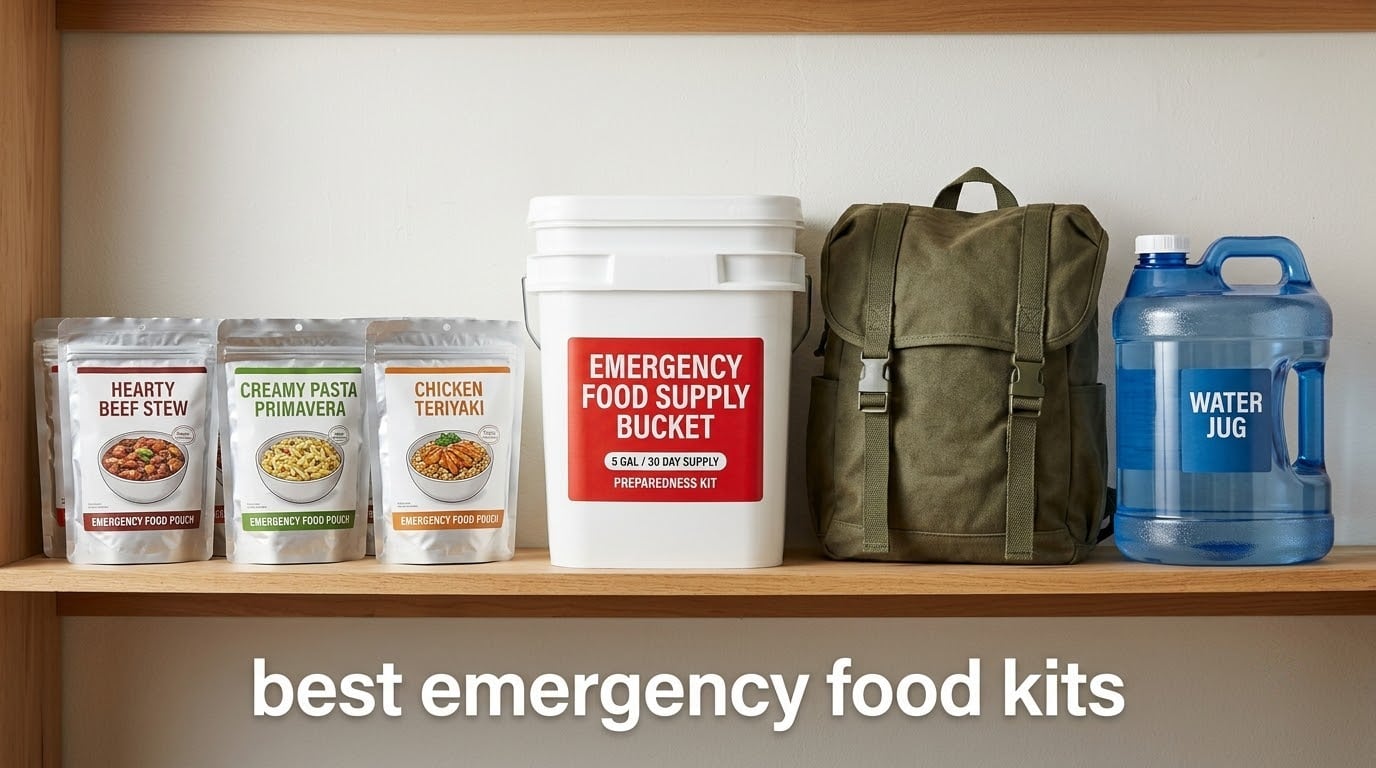
Three days after a hurricane knocks out power and running water, nobody wants to be rehydrating a freeze-dried entree with a cup of rainwater. That is the gap between an emergency food kit that gets opened in a real crisis and one that gets shoved in a closet, and it is the gap this roundup is built to close.
We went through the best emergency food kits on the market and did the math nobody on the packaging does. How many of those advertised servings are actual full days of food? How much water does it take to prepare the whole kit? Can you reseal a pouch after you open it? And does it still taste like food after the third week? If you want the wider picture of household readiness, our household emergency preparedness kit guide and emergency preparedness kit roundup cover the non-food half of a kit.
What follows is 12 picks spanning 72-hour starter kits, week-long grab bags, 120-serving pantry buckets, a bulk vegetable pail, a no-cook MRE case and a few meal components that fill holes most kits leave. Every rating and review count below is copied straight from the listing, and every serving figure comes from the manufacturer. Where the marketing claim and the real number disagree, we say so.
One quick word before we start: an emergency food kit is a supplement, not a replacement. Freeze-dried meals are meant to sit alongside canned goods, water and a garden, not to be the only thing in the cupboard. Our first aid kit guide covers the medical side of the same conversation.
Table of Contents
Top 3 Picks for Best Emergency Food Kits in 2026

Mountain House Meal Assortment Bucket
- 24 servings from 12 pouches
- 30-year taste guarantee
- Add water and eat from the pouch


Emergency Food Kits in 2026 at a Glance
All 12 kits below are in the same table so you can compare the numbers side by side. Serving counts are as listed by the manufacturer, water needs are the manufacturer or reviewer stated amounts, and the prep column tells you whether you need a fire at all.
| Product | Specifications | Action |
|---|---|---|
| Mountain House Meal Assortment Bucket |
|
Check Latest Price |
| ReadyWise 72-Hour Kit |
|
Check Latest Price |
| Ready Hour 120-Serving Entree Bucket |
|
Check Latest Price |
 4Patriots 72-Hour Survival Food Kit 4Patriots 72-Hour Survival Food Kit |
|
Check Latest Price |
 Ready Hour Fruit and Veggie Mix Ready Hour Fruit and Veggie Mix |
|
Check Latest Price |
 ReadyWise 7-Day Grab Bag ReadyWise 7-Day Grab Bag |
|
Check Latest Price |
 ReadyWise 104-Serving Variety Bucket ReadyWise 104-Serving Variety Bucket |
|
Check Latest Price |
 Augason Farms Vegetable Medley Pail Augason Farms Vegetable Medley Pail |
|
Check Latest Price |
 US Standard MRE Variety Pack of 24 US Standard MRE Variety Pack of 24 |
|
Check Latest Price |
 Legacy 32-Serving Emergency Bucket Legacy 32-Serving Emergency Bucket |
|
Check Latest Price |
 4Patriots 128-Serving Entree Kit 4Patriots 128-Serving Entree Kit |
|
Check Latest Price |
 Ready Hour Black Bean Burger Mix Ready Hour Black Bean Burger Mix |
|
Check Latest Price |
What Is the Best Emergency Food Kit?
The best emergency food kit is the Mountain House Meal Assortment Bucket, 12 pouches and 24 servings that rehydrate in under ten minutes and eat straight from the pouch. For a tight budget the ReadyWise 72-Hour Kit covers three days for one person. Bigger households want the Ready Hour 120-serving bucket, and anyone without water should look at an MRE case instead.
That answer depends on three things most shopping guides skip: whether you can cook, whether you have water, and whether you will actually eat it. Here is the short version of who each one of our top picks suits.
- Best overall: Mountain House Meal Assortment Bucket, for the best taste and the shortest prep of any freeze-dried kit we covered.
- Best value: ReadyWise 72-Hour Kit, 30 servings in a 3-pound bucket with an up-to-25-year shelf life.
- Best for a family: Ready Hour 120-Serving Entree Bucket, 22 resealable pouches in a flood-safe pail.
- Best first purchase: 4Patriots 72-Hour Survival Food Kit, a small 20-serving kit that works as a taste test before you scale up.
- Best with no water at all: the US Standard MRE variety pack of 24, 1,000 to 1,300 calories per meal, no cooking required.
- Best for a vehicle go-kit: the ReadyWise 7-Day Grab Bag, a strapped bag with 60 servings and room left over for gear.
1. Mountain House Meal Assortment Bucket – Best Overall
Mountain House Classic Meal Assortment Bucket Freeze Dried Backpacking & Camping Food 24 Servings
12 pouches, 24 servings
30-year taste guarantee
Eat from pouch in under 10 min
18 cups water for full kit
Pros
- Best-tasting emergency food in this roundup
- Eats straight from the pouch with no pot
- Lightweight 3-pound bucket
- 30-year taste guarantee
- Shellfish free and no artificial colors
Cons
- Serving math is confusing at 12 pouches for 24 servings
- Every pouch needs water to rehydrate
- Heavier and costlier per serving than a small kit
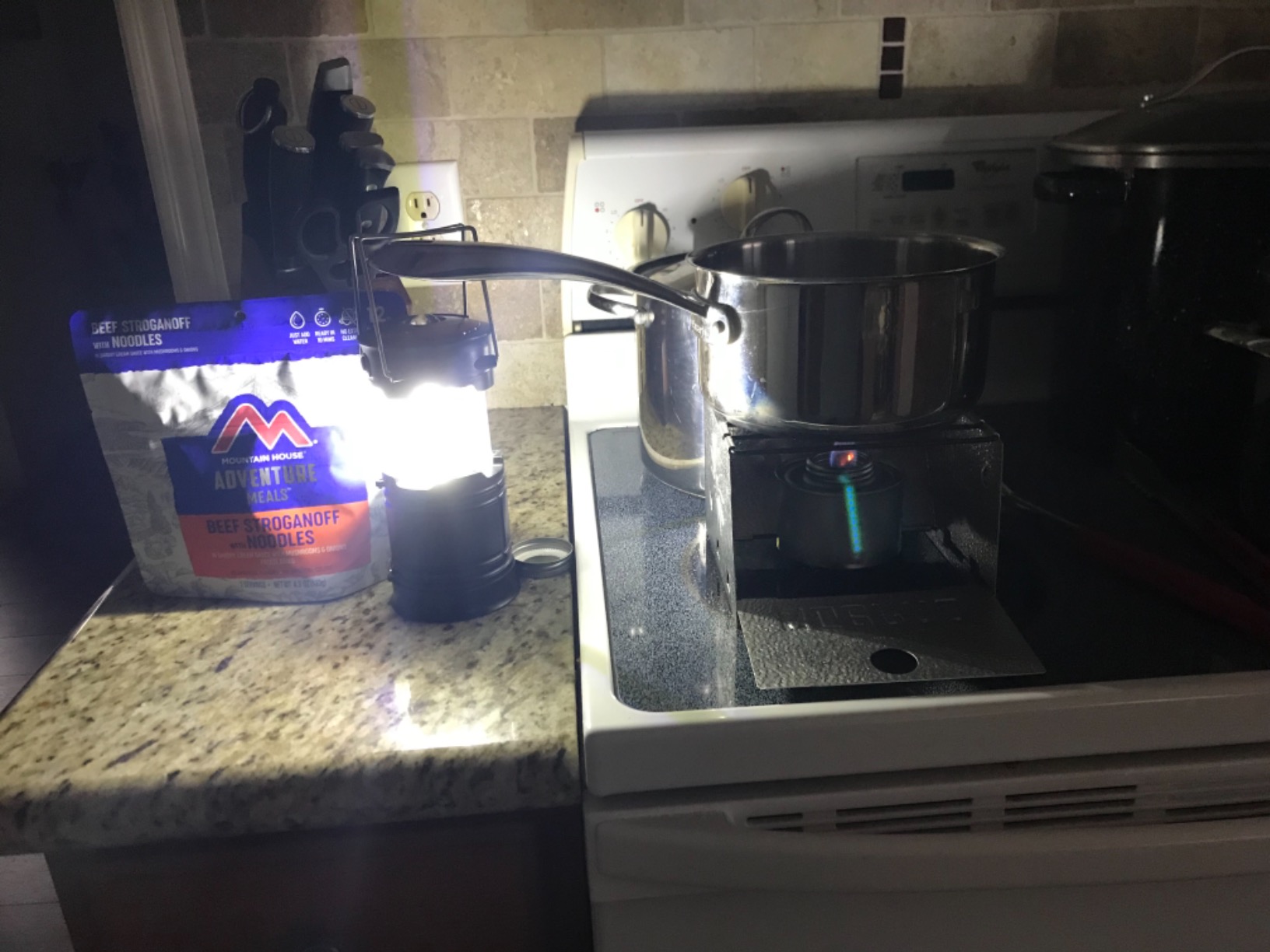
This is the kit I recommend to people who are worried about taste. Mountain House has been freeze-drying food since 1969 and the meals here are the comfort-food end of the range: Beef Stew, Beef Stroganoff with Noodles, Granola with Milk and Blueberries, Spaghetti with Beef Marinara and Chicken Fried Rice. That is a real difference after week three, when a bucket of oatmeal and rice starts to feel like a punishment.
The practical reason it tops my list is prep. You add water, wait, and eat from the pouch. No pot, no stove, no cleanup. The listing states 18 cups of water to prepare every meal in the kit, which is the only published figure in this entire roundup and the one number I would plan around.
The serving count trips people up. Twelve pouches are listed as 24 total servings, because most pouches here split into two portions. If you plan one pouch per person per meal, the math works. If you plan by individual serving, you run out of the bucket faster than you expect, and that is the single most common complaint reviewers report about the packaging.
At 4.8 stars across 4,439 reviews with 82% five-star ratings, this is the highest-rated kit in the group. The bucket weighs 3.0 pounds and measures about 12 by 10 by 12 inches, and the pouches are recyclable through TerraCycle. My only structural complaint is the listed 5.52-pound shipping weight, which is a bit heavy to carry on foot.
How much water this kit actually needs
Eighteen cups, or a little over four gallons, to prepare all 24 servings. That works out to roughly three-quarters of a cup per serving, which is a little less than the one-cup rule of thumb most freeze-dried brands use. Hot water speeds things up, but cold water works and is what you will be using in most outages.
Plan for one gallon of clean water per person per day for drinking, and treat the kit’s 18 cups as separate. A household of two rehydrating a full bucket across several meals will not get through that on a normal tap supply alone.
Who should skip it
If you need food with zero water, this is the wrong bucket. Every pouch requires rehydration, and while the pouch-eating design avoids a pot, it does not avoid a water supply. In a scenario where water is the thing that failed first, an MRE case is the better call.
It is also a 12-meal kit at heart. For a family of four that is three days of lunches, not three days of total food, and you will need to pair it with a separate breakfast and water plan. If your household eats a lot of dairy, note the pouch mixes include a whey milk alternative and a granola with milk that are not suitable for the strictest dairy-free diets.
2. ReadyWise 72-Hour Kit, 30 Servings – Budget Pick
READYWISE Emergency Food Supply Meals 72 Hour Survival Kit, 30 Servings
30 servings, freeze-dried
Up to 25-year shelf life
3-pound bucket with handles
Just add water
Pros
- Very low entry point for a three-day supply
- Compact and light enough for a car or go bag
- Six sizes from 72 hours to 12 months
- Individually packaged pouches
- Rated 4.5 across 5602 reviews
Cons
- About six servings per pouch makes portioning awkward
- Meals taste like standard grocery-store macaroni and rice
- Instructions cook a whole pouch rather than one serving
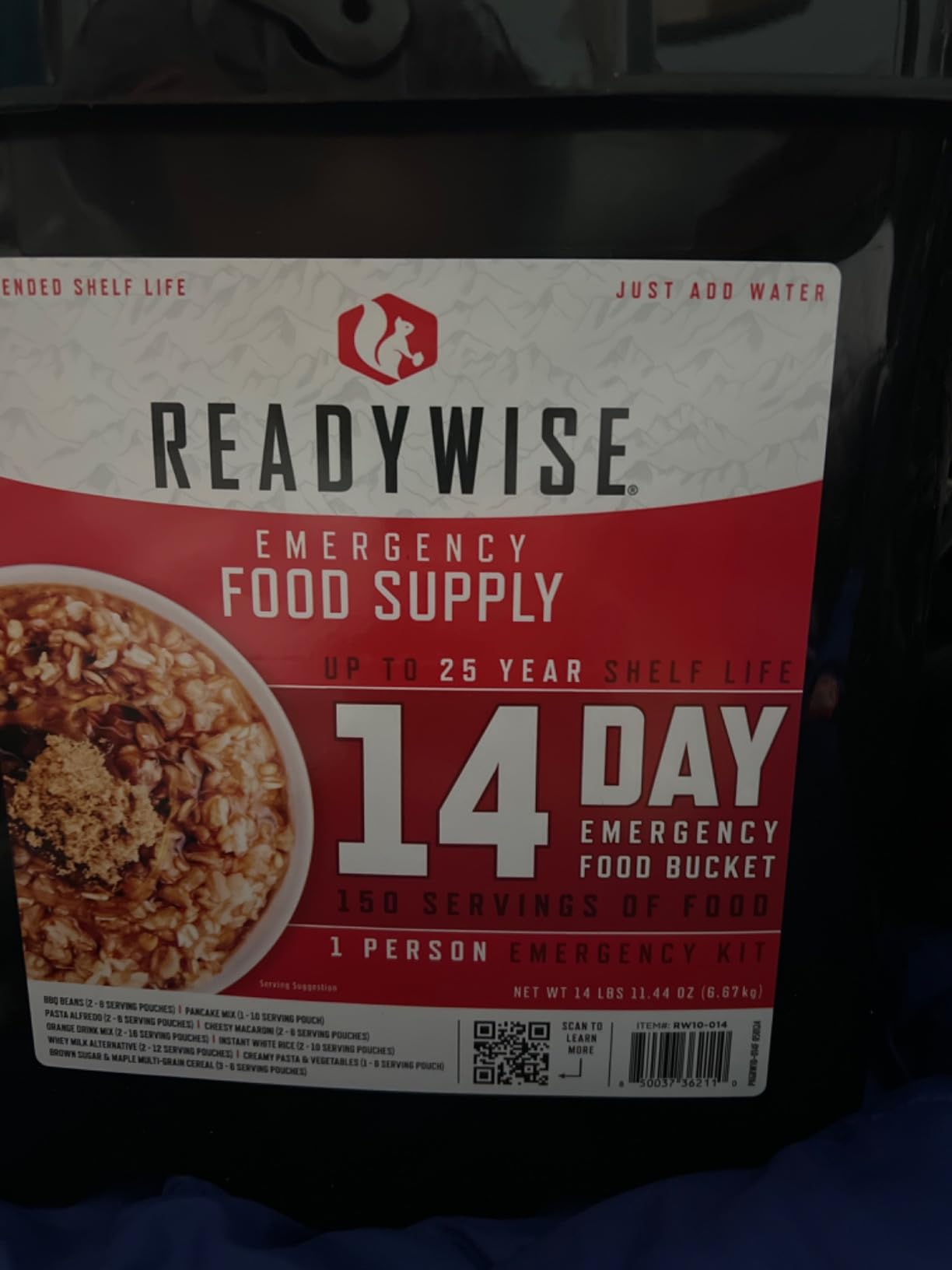
This is the kit I tell people to buy first, mainly because it is the smallest commitment in the lineup that still comes from a name you will see again. ReadyWise (Wise Food Company) sells the same line in 72-hour, one-week, 14-day, one-month, three-month, six-month and 12-month versions, so scaling up later is a one-click move instead of a research project.
The 72-hour bucket holds 30 servings of freeze-dried meals including Cheesy Macaroni and a Whey Milk Alternative. It weighs 3 pounds and measures about 20.5 by 16 by 10.75 inches, with carrying handles on the bucket. The listing calls for an up-to-25-year shelf life with no refrigeration.
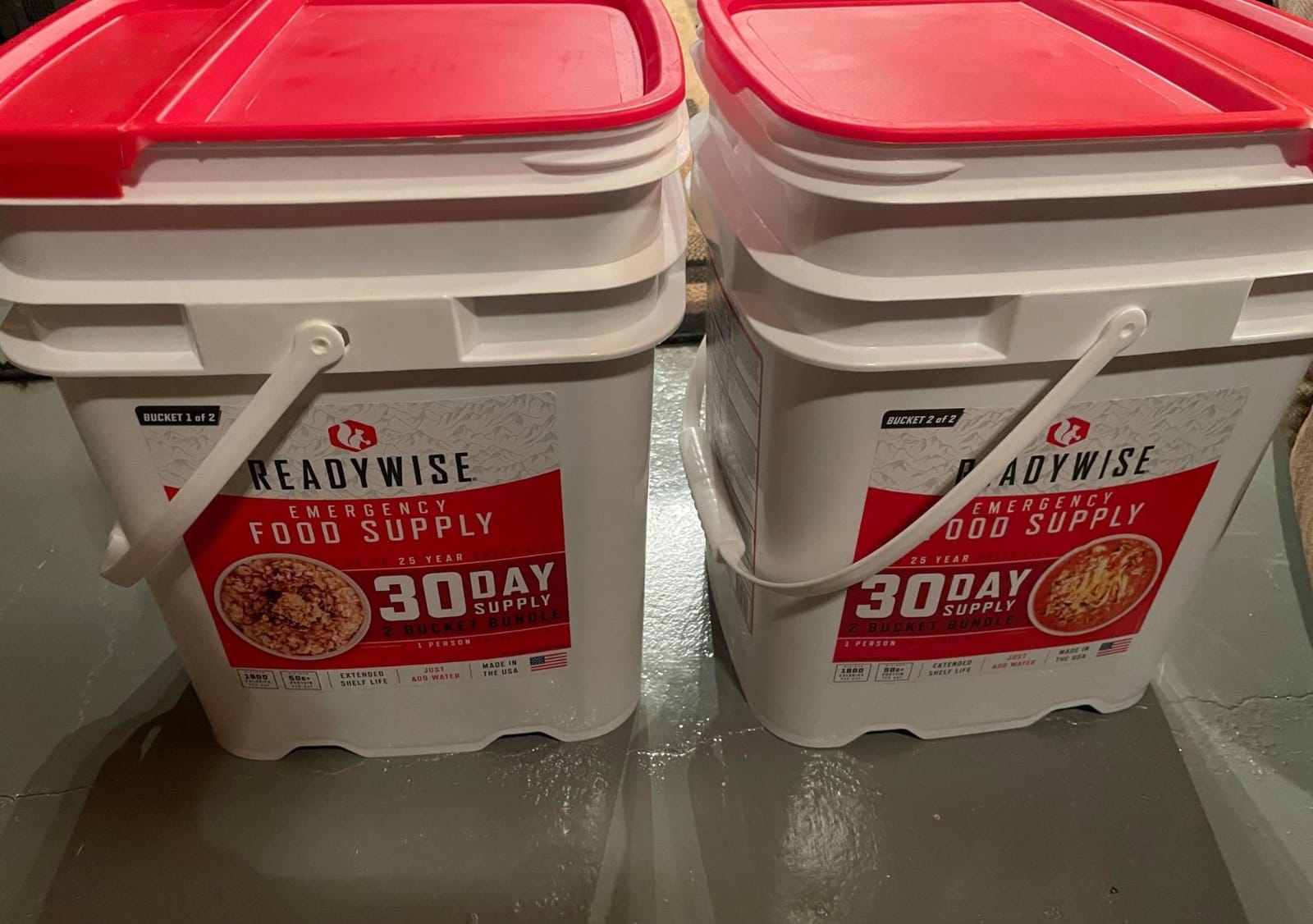
Here is where the marketing math starts to fray. Thirty servings is not thirty meals, because each pouch holds about six servings. If you are portioning for two adults and two kids, the bucket is closer to seven or eight actual meals once you divide them realistically. Several reviewers make the same point, and others describe the meals as similar to store-brand macaroni, rice and oatmeal, which is fair rather than a dealbreaker.
What you get for the money is a lot of shelf life in a small footprint. The design also holds up well in a go bag, which is why I picked it over larger kits for a vehicle kit. At 4.5 stars and 5,602 reviews, it sits at number 2 in the Emergency Food Supplies category, which tells you how many people have made the same purchase.
Whether the pouch size works for your household
Six servings per pouch is the deciding detail. Families who eat together can pour one pouch into bowls and eat in two rounds, which stretches the kit further than the headline number suggests. Singles and couples will find that a single pouch is a much larger commitment than one person needs, and opened portions do not reseal.
If your household is two adults, a second bucket is the practical move, and the up-to-25-year shelf life means you are not on a clock. Store them in separate locations so one flood or fire does not take both.
Where the flavor falls short
The honest weakness is taste expectation. This is budget freeze-dried food and it reads like it. Reviewers comparing it to the Mountain House bucket above describe ReadyWise as more plain and more grain-based, with the macaroni drawing the most criticism of the range.
There is also no resealable inner bag, so once a pouch is open, plan to eat the whole thing. For a short 72-hour scenario that is fine. For a longer event it starts to matter, which is why the Ready Hour bucket below ranks so high for large households.
3. Ready Hour 120-Serving Entree Bucket – Best for Large Households
Ready Hour 120 Serving Entree Bucket-Freeze Dried Emergency Food Supply-Survival Meals with Long Shelf Life-Prepper Essentials for Disaster, Camping, Hiking, or Outdoor Use
Up to 120 servings,22 resealable pouches,20-pound flood-safe pail
Made in Salt Lake City
Pros
- Largest serving count in a single portable pail
- 22 resealable pouches so partial use works
- Good enough to eat in normal life
- Made in the USA
- No refrigeration required
Cons
- 20-pound bucket is not realistic for a foot evacuation
- Bulk water required to rehydrate the meals
- Store in a cool dry place or the claim is void
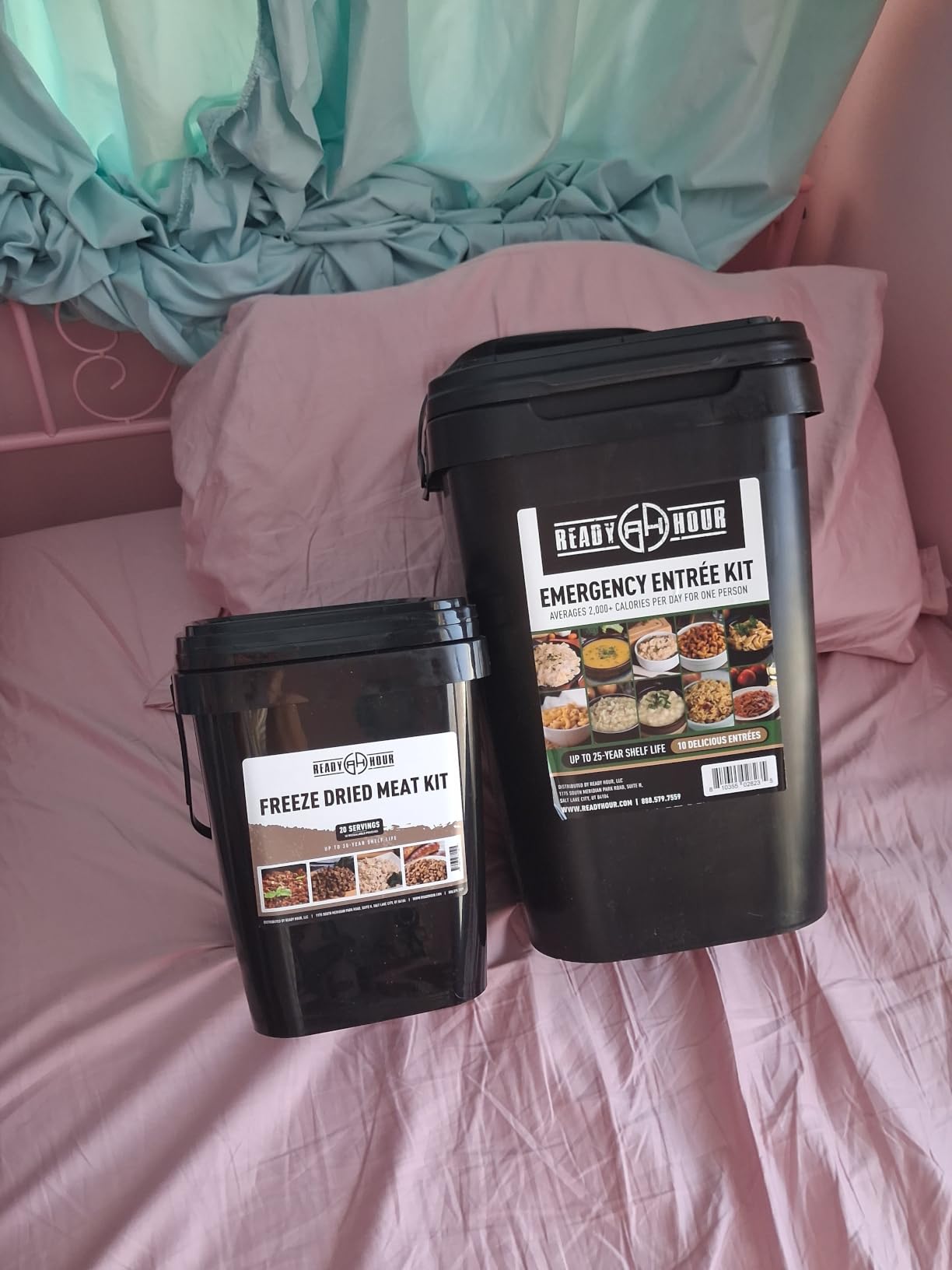
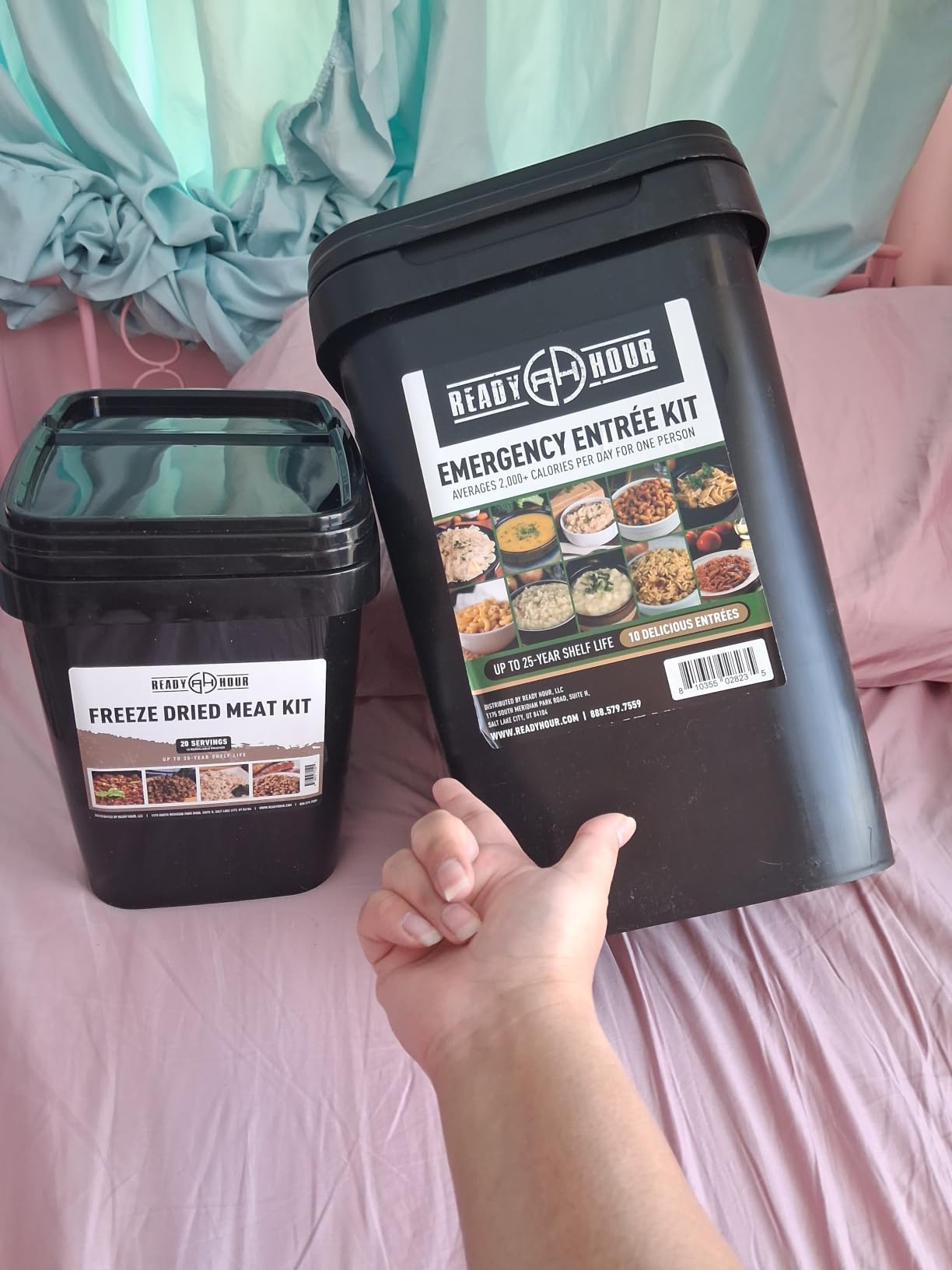
A 120-serving bucket sounds generous until you do the calorie math, and this is the kit where that lesson lands hardest. It holds up to 120 total servings across 22 resealable pouches in a flood-safe bucket with a handle, and at 20 pounds it is a pantry item rather than a grab-and-go bag.
What makes this one stand out from other big buckets is the resealability. Twenty-two pouches means you can open one, eat part of it, seal it back and use the rest next week, and the listing says resealed pouches keep up to a year. Most competitors in this roundup hand you multi-serving Mylar bags you cannot close.
At 4.6 stars from 2,730 reviews with 78% five-star ratings, the satisfaction level is high, and reviewers repeatedly say the meals are good enough for everyday eating rather than strictly emergency use. That matters more than people expect, because you should taste-test anything you plan to depend on.
The flood-safe container with a handle is genuinely useful if your risk is water rather than wind. It is manufactured and packed in Salt Lake City, Utah, requires no refrigeration, and the manufacturer is explicit that it should be kept in a cool, dry environment. The pail measures about 15.75 by 11.72 by 9.82 inches.
How much water 120 servings really takes
There is no published figure for this bucket, so use the industry standard of roughly one cup per serving. That puts rehydrating all 120 servings at around 7.5 gallons. For a family of four eating three meals a day, that is roughly 10 days of full-kit consumption, and it is a lot of water to move.
Store your water separately and treat it as a separate supply line. A food kit without a matching water plan creates exactly the thirst and calorie problem the kit was supposed to solve.
Where the serving count misleads
One hundred and twenty servings at freeze-dried calorie density is closer to 13 or 14 real days for one adult eating 2,000 calories a day, not 120 days. For a family of four, the realistic full-day coverage is closer to three weeks. Buyers expecting four months of coverage from this bucket will be disappointed, and reviewers who complain most are usually the ones who planned on the headline number.
The 20-pound weight is the other limit. If your plan is to walk out of an evacuation zone, this is the wrong container. Buy single-serving or resealable smaller kits for the go bag and keep this one where you shelter.
4. 4Patriots 72-Hour Survival Food Kit – Best First Purchase
4Patriots 72-Hour Survival Food Kit: Emergency Food Supply Designed to Last 25 Years, 20 Servings
20 servings, about 4,800 calories
Triple-layer Mylar, oxygen absorber
Ready in about 15 minutes
Pros
- Small
- cheap way to test emergency food you will actually eat
- Seven kit sizes from starter to one year
- Variety reviewers genuinely praise
- Lightweight enough to stash anywhere
Cons
- 4 to 8 servings per pouch with no resealable inner bag
- About 1600 calories per day which is below a full daily need
- Some reviewers say the pouches do not match the product photos
Forum advice that keeps showing up in r/preppers threads is simple: try before you buy in bulk. This is the kit that advice is describing. At 20 servings it is the smallest real entree kit here, and it costs little enough that you can find out whether your household will eat freeze-dried meals at all before committing to a 4-week order.
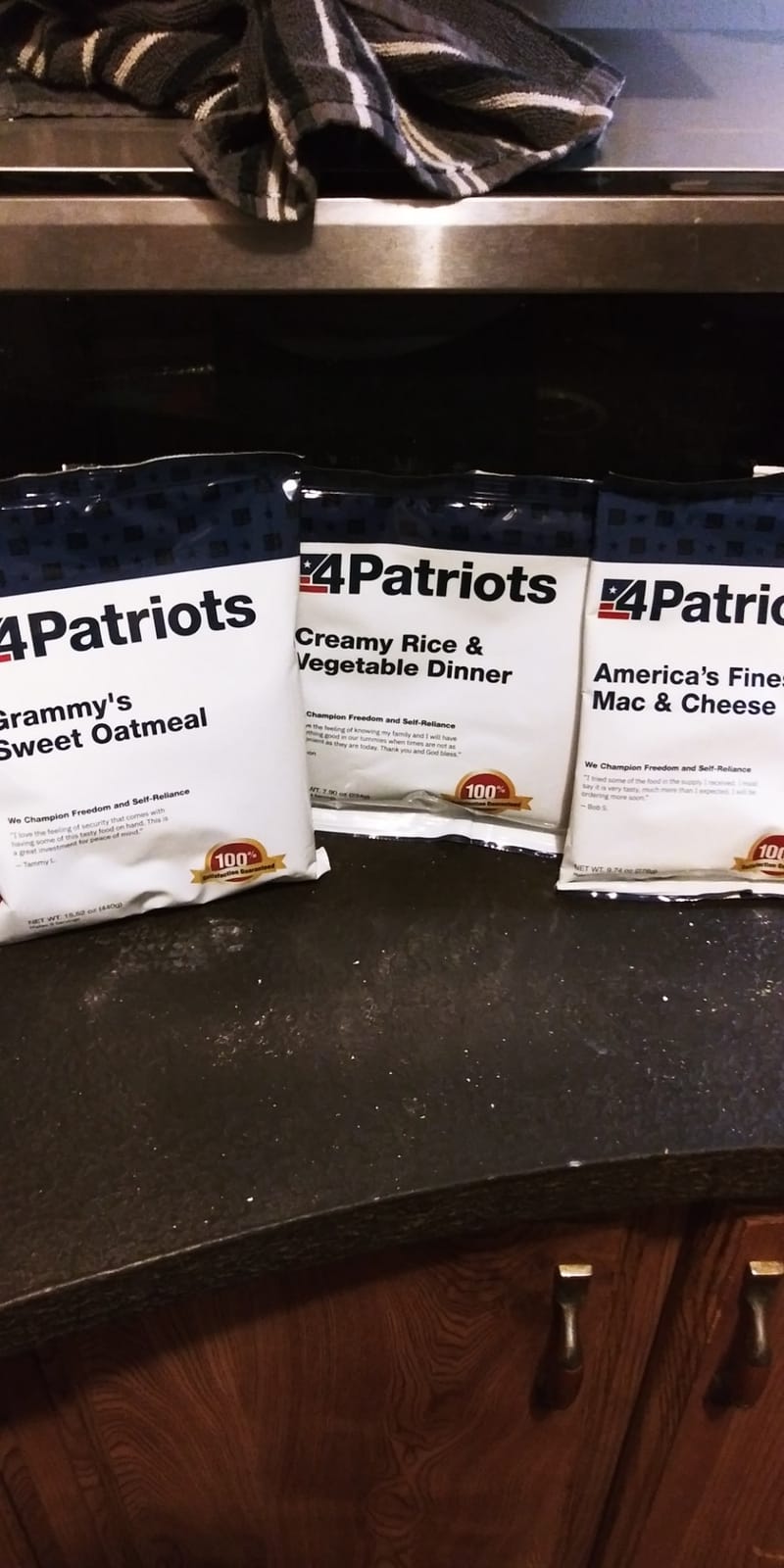
Packaging is triple-layer Mylar with a high-capacity oxygen absorber, and the manufacturer states the kit is designed to last 25 years when stored below 75F. Meals include Creamy Rice and Vegetable Dinner, Mac and Cheese and Sweet Oatmeal, and prep is about 15 minutes: add boiling water, simmer and serve.
The most useful number on this listing is also the least flattering. The manufacturer lists 20 servings averaging 4,800 total calories, which works out to about 1,600 calories per day for three days. That is below a full daily requirement for most adults, and it is the reason the kit is better framed as a three-day buffer than as three days of complete nutrition.
Ratings sit at 4.4 across 2,804 reviews with 70% five-star ratings, and the most common structural complaint is the pouch format again. Four to eight servings per pouch with no resealable inner bag makes strict rationing awkward, and a few reviewers report the actual pouches look different from the product photos.
Whether the calorie target is enough
At 1,600 calories a day, an adult is running a deficit, which matters when the event is longer than a weekend. The same manufacturer sells 4-week, 6-month and one-year versions of this kit, so if you like the food, the natural upgrade path is a bigger bucket from the same product line rather than a different brand you have to re-research.
Pair this with ready-to-eat calorie dense items if you want to close the gap. A handful of nuts or energy bars per person per day covers the shortfall without needing more prep.
What to check before you scale up
Look at the pouch count, not the serving count. If a kit gives you multi-serving pouches with no reseal, every time you open one you should plan to finish it. In a household of two that is fine. In a household of five it wastes food you cannot put back.
Also confirm the storage ceiling. The 25-year claim here is explicitly conditioned on storage below 75F, and in a garage or attic in a hot climate you will not meet it. Our roadside emergency kit guide covers the vehicle-storage mistakes that ruin these shelf-life claims.
5. Ready Hour Fruit and Veggie Mix – Best for Nut-Free and Vegetarian Diets
Ready Hour, Fruit & Veggie Mix, Non-Perishable Freeze-Dried Food, 30-Year Shelf Life, Portable Emergency and Adventure Food Supply, Durable Flood Safe Container, 56 Servings
56 servings, seven resealable pouches
30-year shelf life
Freeze-dried fruit and vegetables
Pros
- Edible dry as a crunchy snack or rehydrated
- Tree-nut-free and vegetarian friendly
- Small bucket that fits an existing go tote
- Seven resealable pouches
- 30-year shelf life
Cons
- Container is smaller than the serving count implies
- Mix leans heavily on fruit with one pouch of broccoli
- Not a standalone meal and needs a main to be a ration
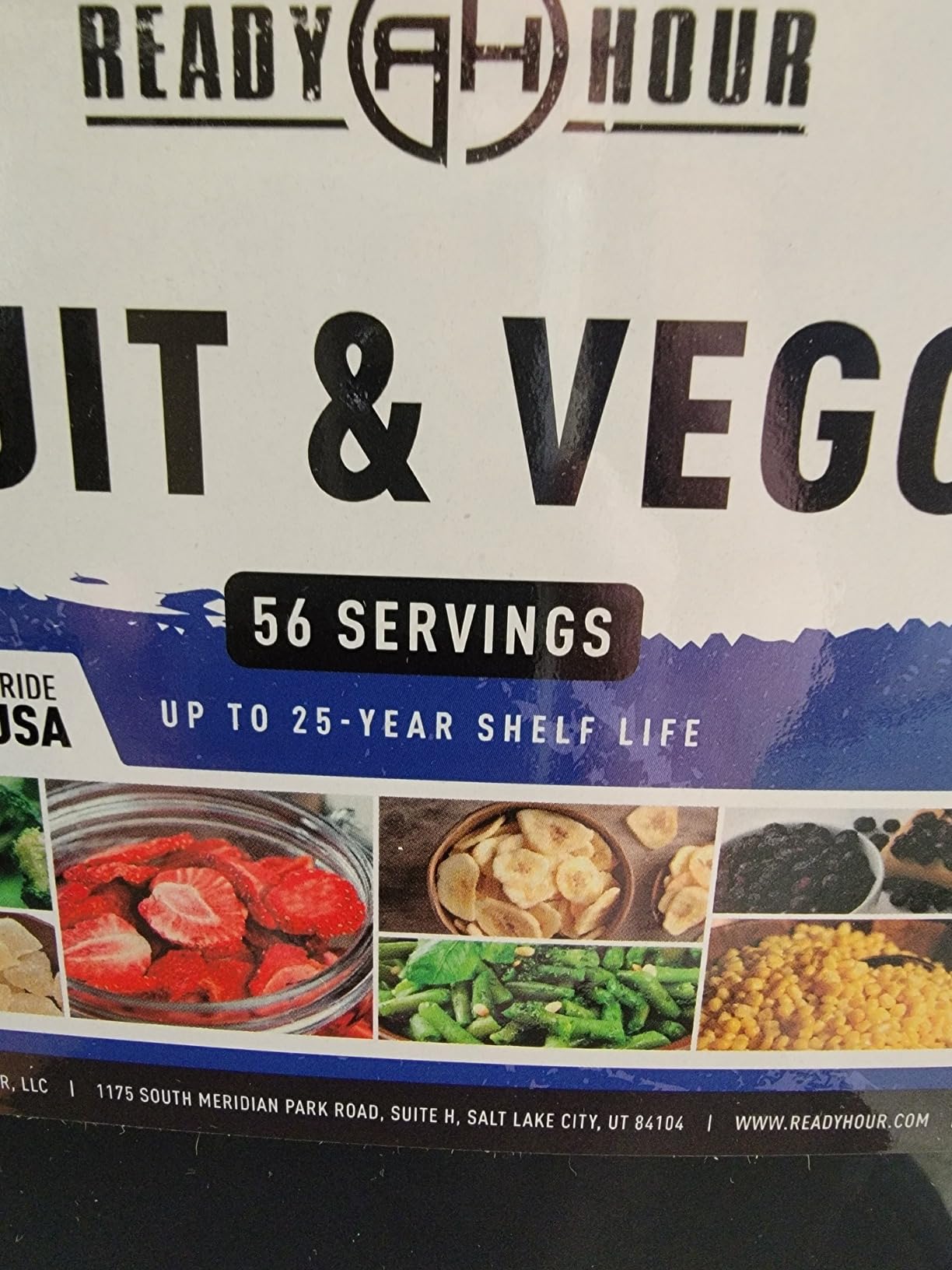
Most entree kits are entrées and nothing else. This one fills the produce gap, and it does it in a way that works when you have no stove. Seven resealable pouches hold 56 servings of freeze-dried fruit and vegetables including corn, strawberries and broccoli, with a 30-year shelf life and no refrigeration required.
What I like most is that the pouches can be eaten dry. That makes this the rare emergency food that works in a genuinely no-cook, no-water scenario. Reviewers who taste-test emergency food report this mix genuinely tastes good out of the bag, which is a low bar most freeze-dried vegetables fail.
At 4.5 stars from 2,466 reviews with 76% five-star ratings, the product holds up, and the recurring theme in reviews is nut safety. It is tree-nut-free and vegetarian-friendly, so it is a practical add for households with a nut allergy where a standard entree kit may not be safe for everyone.
The bucket measures about 9.8 by 9.49 by 7.99 inches and lists a 10-ounce unit weight, which is the source of the most common complaint: people open it expecting a large pail and find a small tub. It also is not balanced on its own. Six of the seven pouches are dried fruit and one is broccoli, so it is a supplement to mains, not a substitute.
How to use it in a real ration
Think of it as the vegetable course and the snack. Add a handful of rehydrated corn or broccoli to any entree from the buckets above and you have a plate instead of a pile of calories. Eaten dry, the strawberries and corn work as a portable snack that needs no water at all, which is genuinely rare in this category.
Because the pouches reseal, you can open one, eat part of it and put the rest back, and the listing says resealed pouches keep up to a year. That makes it the easiest kit here to ration across a long event.
Who should not rely on it alone
Anyone counting on this for full meals will come up short on protein and calories, since it is fruit and vegetables. It also does not cover sodium or carbohydrate needs during heavy physical work, which is where the MRE case in this roundup earns its place.
Vegetarians and nut-allergic households will find this the easiest item in the lineup to add without cross-contamination worries, and it stacks neatly inside a go tote alongside a smaller entree kit rather than competing for space.
6. ReadyWise 7-Day Grab Bag – Best for a Vehicle Go-Kit
READYWISE Emergency Food Survival Supply 7 Day Grab Bag, 60 Servings
60 servings in a strapped grab bag
Up to 25-year shelf life
Breakfasts and entrees included
Pros
- Genuinely portable with an adjustable shoulder strap
- Room inside for gear as well as food
- A full week of food in a compact bag
- Breakfast items included not just entrees
Cons
- Cheesy macaroni draws mediocre taste reviews
- Needs more water and cleanup than pouch-eaten meals
- Smaller review base than the bucket versions
A bucket is a shelter-in-place purchase. This is the bug-out version. The ReadyWise 7-Day Grab Bag holds 60 servings of freeze-dried breakfasts and entrees in a tactical-inspired bag with an adjustable shoulder strap, and the listing specifically notes there is room in the bag for additional gear.
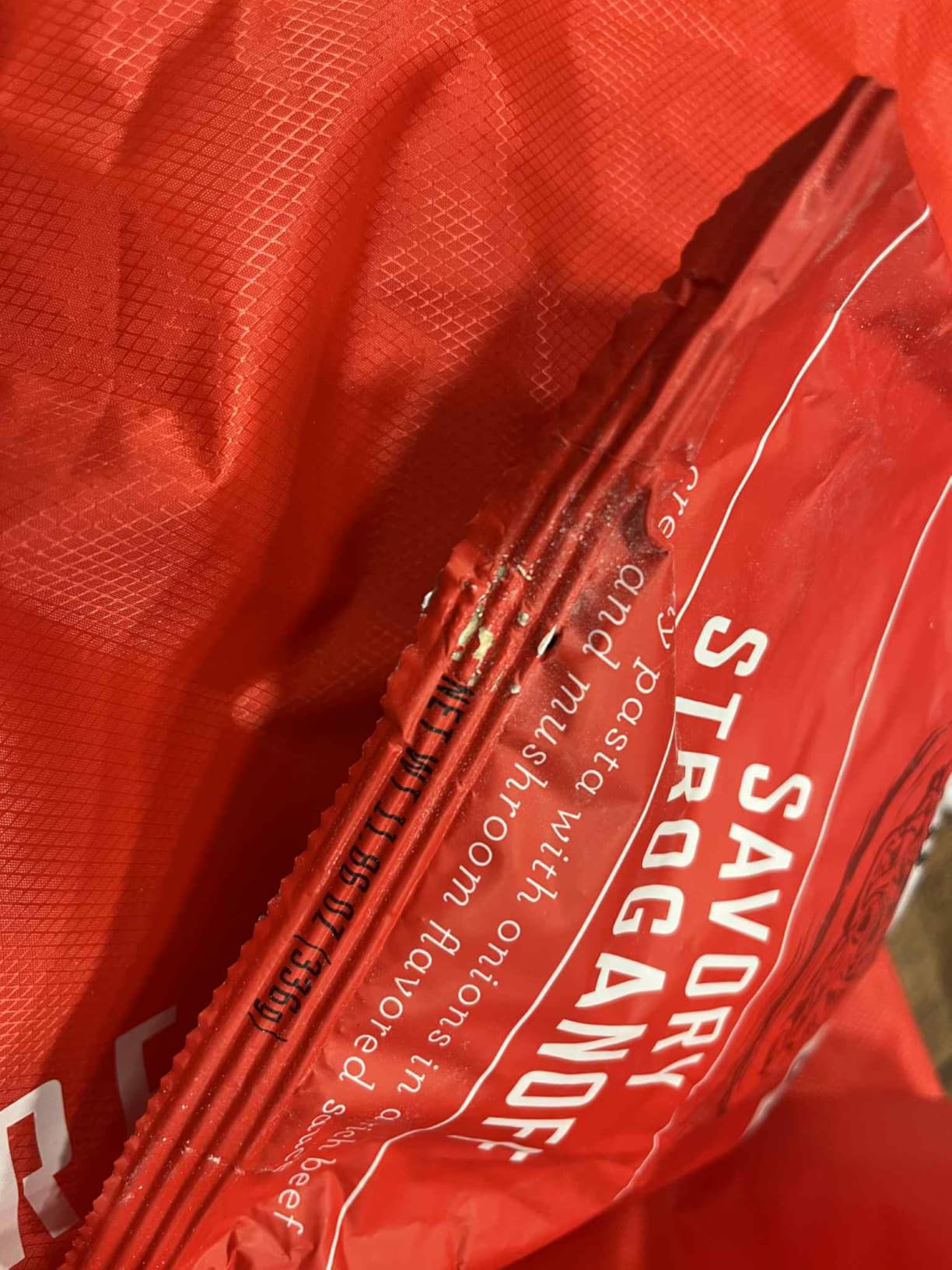
That empty space is the reason to buy this version instead of unpacking a bucket into a duffel. A week of food plus water plus a change of clothes plus a first aid kit is a go bag. Six flavor options include Cheesy Macaroni, Creamy Pasta and Vegetables, Potatoes and Chicken Flavored Pot Pie, Savory Stroganoff, Teriyaki Rice and a Brown Sugar and Maple Multi-Grain Cereal.
Including actual breakfasts is a real differentiator. Most emergency food is entree-only, which means you end up eating a savory dinner at 7am and a sweet cereal at 9pm, and that mismatch is a genuine morale problem in a long event.
The bag weighs 3 pounds and measures about 18.15 by 8.78 by 6.93 inches, which fits behind a seat or in a trunk without taking up real estate. Shelf life is up to 25 years and prep is just add hot water, so it is shelf-stable in a vehicle for years at a time if you keep the interior dry.
What to store alongside it in the car
A vehicle kit needs a different mix than a pantry kit. Add water, a manual can opener, a light source and a first aid kit, and keep the food in the bag rather than loose so you are not unpacking 60 pouches in the rain. Our trauma kit roundup covers the medical items that belong in the same bag.
Check the vehicle temperature rather than trusting the shelf life. A car in summer can exceed the storage conditions these claims assume, and a parked car in winter drops just as far. A vehicle kit with a 25-year claim is a claim about the packaging, not about a hot car in July.
Where the taste falls short
The cheesy macaroni is the item reviewers single out, and the general taste feedback on this listing is mixed rather than glowing. If you know your household dislikes processed cheese flavor, order a single pouch before buying the full bag, or pair it with the fruit mix above to break up the meal.
It also needs more cleanup than a pouch-eaten meal because the portions are larger. In a bug-out scenario where water is scarce, a kit you eat standing over the bag saves a meaningful amount of your water supply.
7. ReadyWise 104-Serving Variety Bucket – Best for Pantry Stacking
READYWISE Emergency Food Survival Supply, 104 Servings, Variety Bucket
104 servings, up to 25-year shelf life
Split lid doubles as a tray
7.5-pound stackable bucket
Pros
- The most-reviewed kit in this roundup at 10502 ratings
- Split lid doubles as a serving tray and food holder
- 104 servings give real depth to a stockpile
- Stackable bucket stores efficiently
Cons
- Meals need water and a cooking vessel rather than pouch eating
- Calorie density per serving is modest
- One of the few buckets here without resealable pouches
This is the bucket I would stack in a closet and forget about for five years. It holds 104 servings of freeze-dried meals with an up-to-25-year shelf life, and the design detail that keeps coming up in reviews is the split lid that doubles as a serving tray and food holder, so you do not need a separate plate when the power is off.
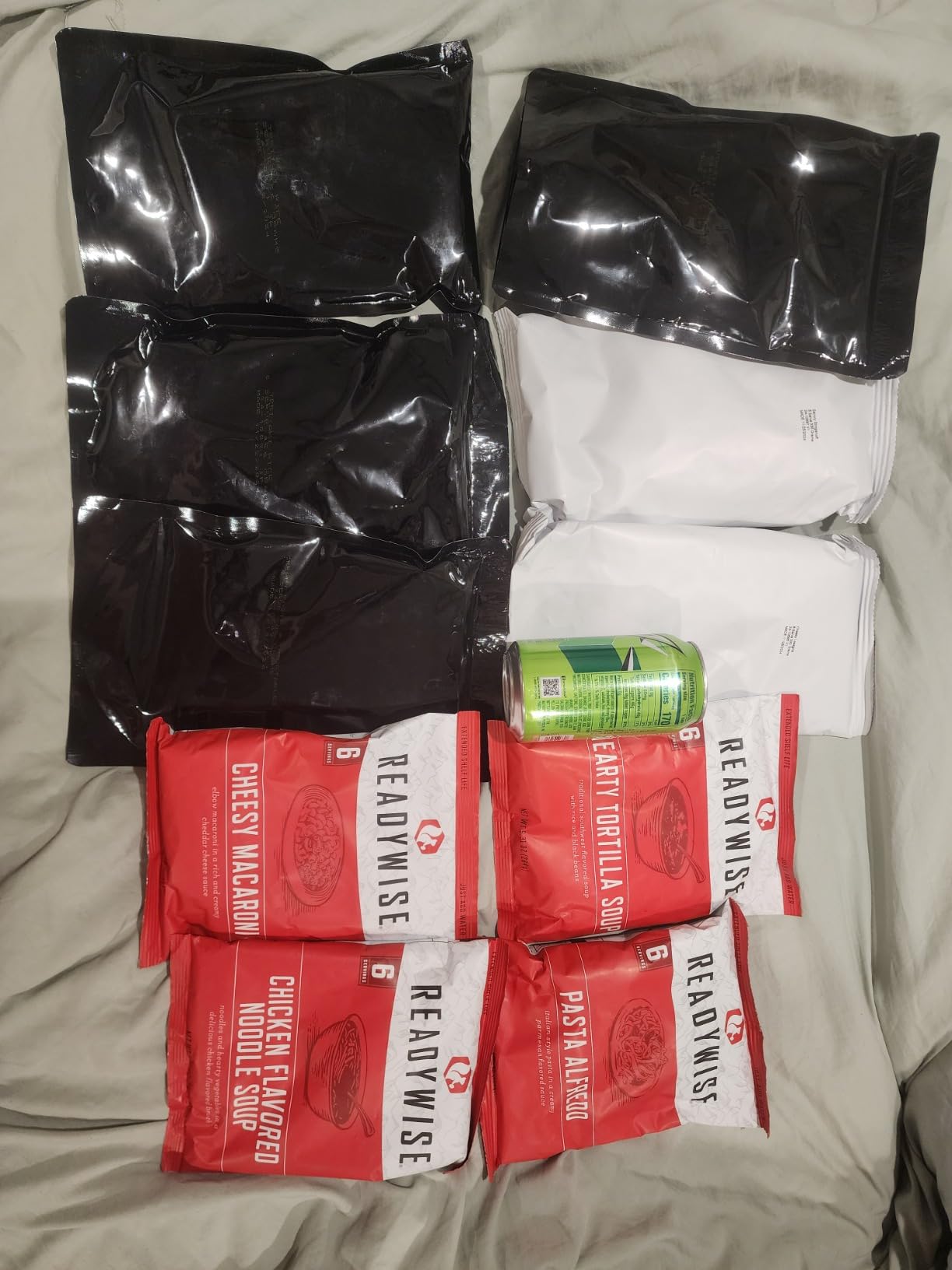
The variety pack includes freeze-dried banana chips, pasta alfredo, tomato basil soup and a whey milk alternative, alongside the usual entrees. It weighs 7.5 pounds and stands about 9.7 by 9.7 by 13.5 inches, tall enough to stack with another bucket above it and short enough for a standard pantry shelf.
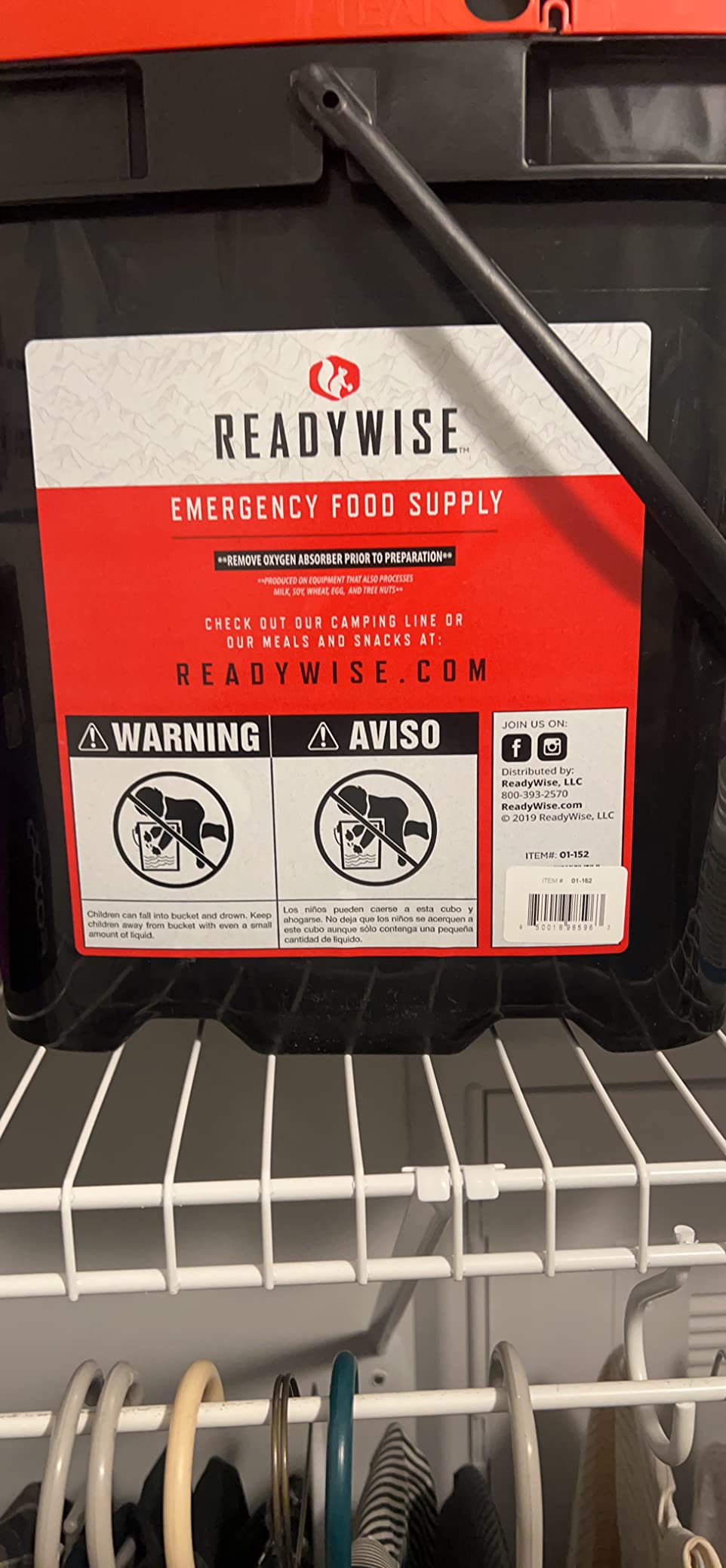
At 4.5 stars across 10,502 reviews, this is the most-reviewed product in this roundup by a wide margin, and it ranks third in Camping Freeze-Dried Food. That volume of feedback is why I trust the storage description: the box arrives intact, the buckets stack and nothing leaks, which is the unglamorous part of preparedness that actually matters.
The honest drawback is that the meals are not pouch-ready. Reviewers consistently note you need added water and a vessel rather than eating from the bag, and the calorie density per serving is modest next to kits that publish total calories. Treat it as a base layer of calories you will supplement.
Whether the stackable design earns its keep
Yes, if you are storing more than one. A 104-serving bucket at 7.5 pounds is a shelf load, and the vertical footprint means a second bucket goes on top instead of beside it. The tray lid also turns a bucket into a serving station, which removes one item from a bug-in supply list.
The test to apply is whether your pantry is dry and temperature-stable. These claims assume cool, dark storage, and a closet next to a water heater in a humid climate is the wrong room. Our full preparedness kit guide walks through where to stage supplies by room.
Who should buy a different bucket
If resealability matters to you, pick a Ready Hour or Legacy alternative instead. This bucket uses multi-serving pouches you cannot close, so every pouch you open should be finished in one sitting. For a family of two, that is a normal meal. For a family of five, it is a problem.
Anyone who needs a no-water, no-cook option should also pass, since every meal here goes in a pot. Use the MRE case for that role and this bucket for the days after.
8. Augason Farms Vegetable Medley Pail – Best Bulk Add-On
Augason Farms Vegetable Medley Blend Emergency Food Supply, 778 Servings
778 servings in a 4-gallon pail
25-year shelf life
Soak in water then cook over heat
Pros
- Largest serving count of any kit here
- Rehydrates well and reviewers say it tastes fresh
- 10 to 30 minutes to reconstitute
- Reusable number 10 cans with resealable plastic lids
- Low in fat salt carbs and calories
Cons
- Requires cooking over heat after soaking
- Potato-heavy blend that some find bland
- 4-gallon pail is bulkier than the listing photos suggest
Nobody finishes 778 servings in a weekend. This pail is a long-term pantry component, not a kit you grab on the way out, and treating it that way is why it belongs in a serious stockpile. It is a 4-gallon pail of dehydrated vegetables with a 25-year shelf life, and the blend is potatoes, carrots, onions, celery, red and green peppers and cabbage.
Preparation is soak in water, then cook over direct heat, with roughly 10 to 30 minutes to reconstitute. The manufacturer is explicit that no advanced cooking equipment or skills are needed, which is accurate for a camp stove or a hot plate but not for a scenario with no heat source at all.
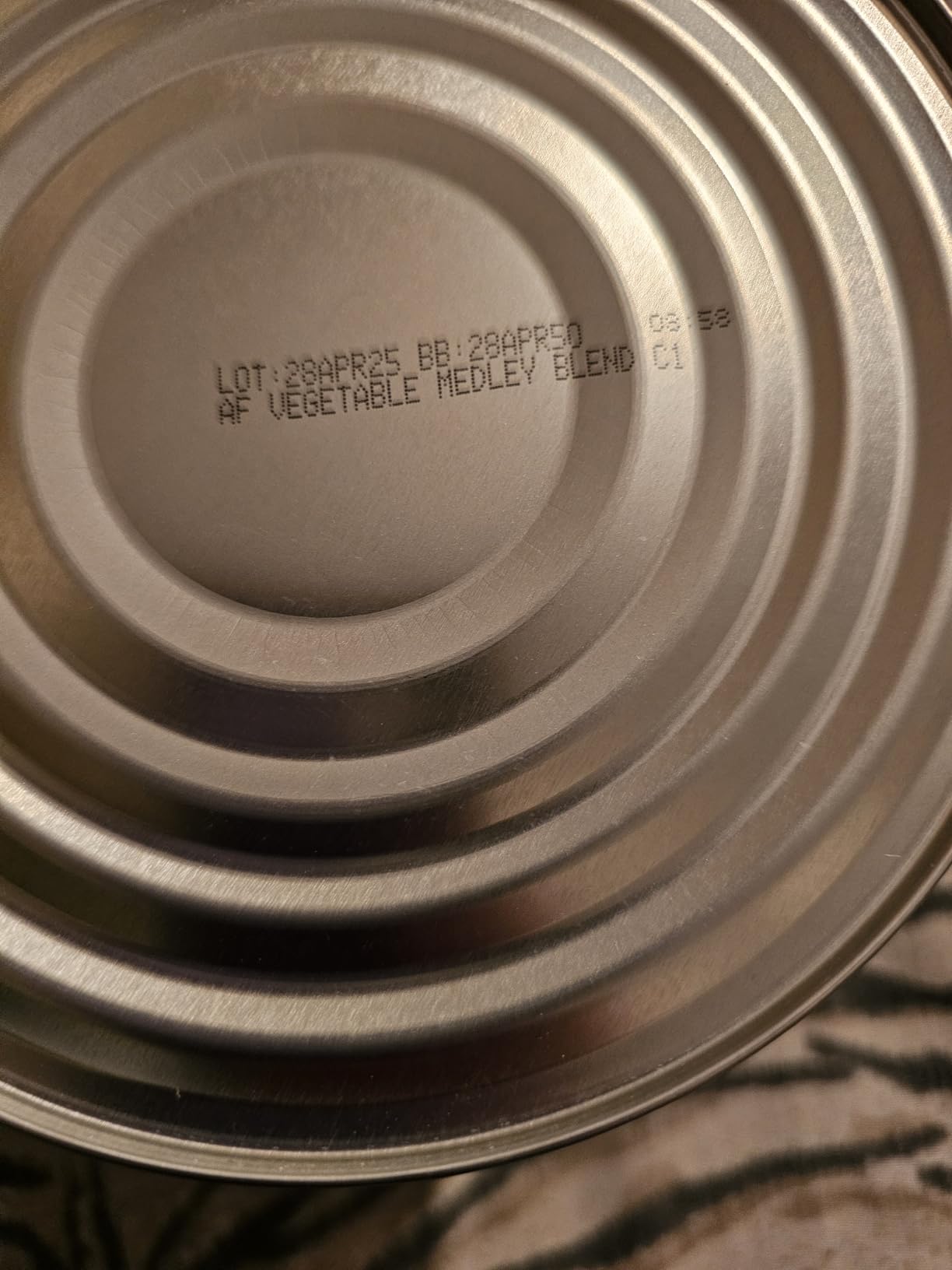
At 4.6 stars from 9,773 reviews with 79% five-star ratings, this is one of the best-reviewed products in the category. Buyers describe repeat purchasing, which tells you the rehydration quality holds up. The vegetables rehydrate well and reviewers say it is hard to tell they are freeze-dried, and several note the nutrition profile is low in fat, salt, carbs and calories, which makes it easy to balance a heavier entree kit.
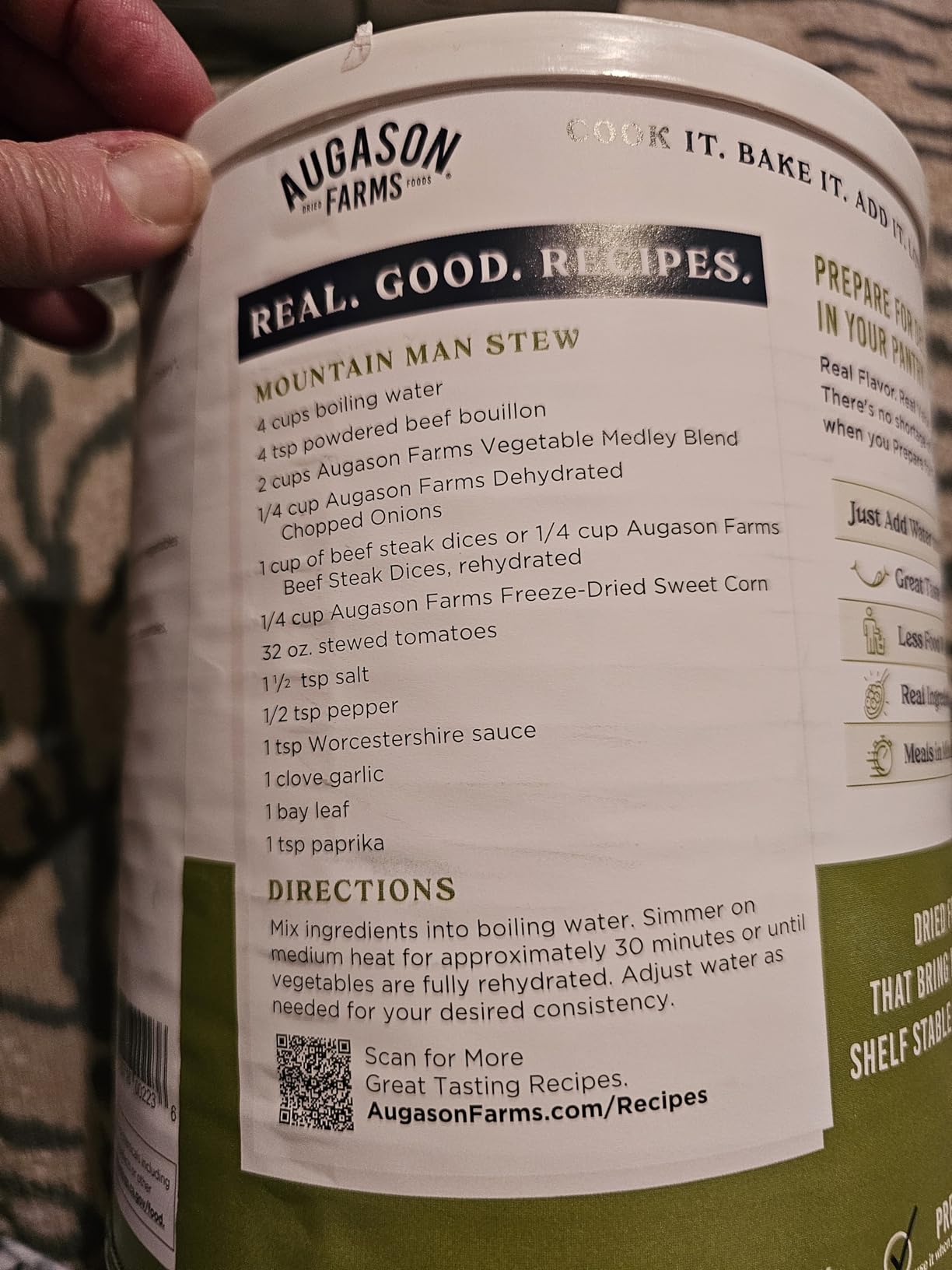
The container does the work here. The pail comes in reusable number 10 cans with resealable plastic lids, so you open one can, use what you need and close the rest, which is a genuinely practical detail that most Mylar-only kits cannot match.
Why bulk vegetables beat bulk entrees
Because they are a cooking ingredient, not a meal. These go into soups, stews, casseroles, pasta, rice, noodles and stir-fry, so a handful of servings stretches a pot of rice into something that feels like dinner. That is how 778 servings becomes a plausible year-plus of meals instead of a number on a label.
Pairing it with the 104-serving entree bucket above is the combination I would build. The entrees cover the meal slot, the vegetables add bulk, fiber and volume, and both use the same just-add-water-and-heat method.
What to watch out for
The blend is heavy on potatoes, which several reviewers find bland on their own. Treat it as a base that needs stock, seasoning or a cheese powder, not as a finished side dish. If you want variety, Augason also sells a Stew Blend version in 12-pound and smaller packs.
At 13.83 pounds and 10 by 10 by 13.75 inches, this is a real object to move. It also cannot be eaten cold, so it fails entirely in a no-heat scenario, which is exactly the case the MRE case below covers.
9. US Standard MRE Variety Pack of 24 – Best No-Cook Option
2026 Inspection MRE, U.S. MRE Meals, Emergency Supplies, Emergency Food Supply, Survival Food w/Flameless Heater, Ready Meals (Variety Pack of 24) – (A & B Case Fresh Stock) MREs have 10 Year Shelf Life From Inspection Date – 2023 Pack / 2026 Inspection
24 MRE meals, 1000-1300 calories each
10-year shelf life
No cooking or refrigeration
Pros
- Ready to eat with no water cooking or refrigeration
- High calorie density at 1000 to 1300 calories per meal
- Individually packaged so one meal per person per day is easy
- Waterproof packaging
- 81% five-star ratings
Cons
- 10-year shelf life is shorter than the freeze-dried kits
- Heavier and bulkier per calorie than freeze-dried options
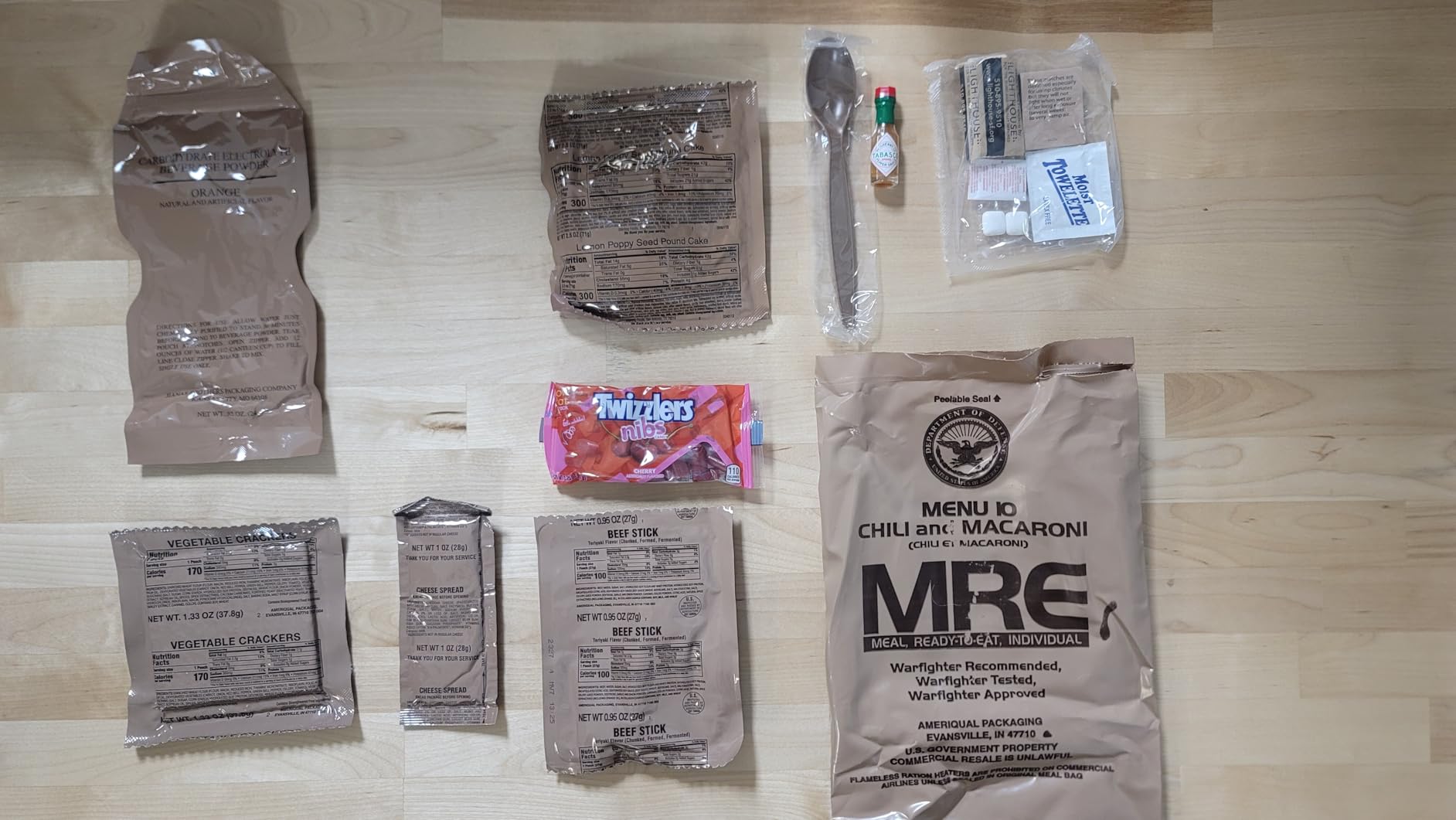
If your real fear is that water and power fail, this is the kit that keeps working. These are 24 individually packaged MRE meals built to U.S. military standards, spanning A and B case menus, and you eat them cold out of the bag. No water, no stove, no fuel.
Each meal packs an entree, a side or bread, a dessert and an accessory pack, and delivers 1,000 to 1,300 calories. Some meals include a flameless ration heater, which is a self-contained chemical warmer that needs only the sealed pouch, so hot food is still possible without a flame.
That calorie range is the reason this is in the roundup. The 4Patriots 72-hour kit delivers about 1,600 calories a day. One MRE is more than half a full daily requirement in a single meal you can eat standing up, which is the cleanest answer to the serving-count-versus-real-calories problem.
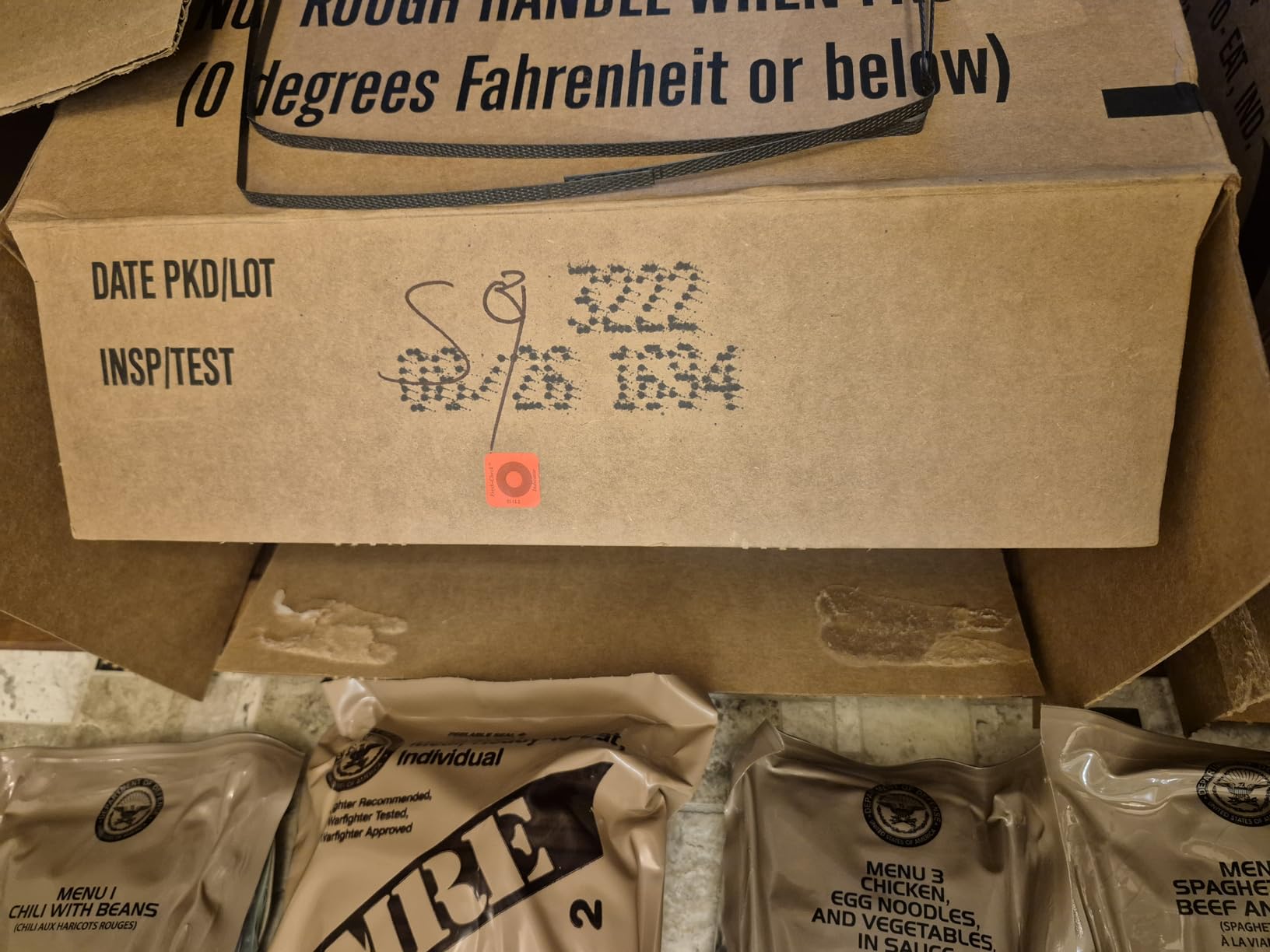
Ratings are 4.6 from 1,112 reviews with 81% five-star ratings, among the strongest five-star distributions in this group. Shelf life is 10 years from the inspection date, which is shorter than the 25 to 30 year claims on the freeze-dried buckets, and the pack is waterproof for a reason.
What to buy alongside it
Water, a manual can opener and a knife or spoon. MREs are sealed and self-contained, so the opener is not strictly needed, but you still need drinkable water and something to eat the food with. A short freeze-dried supplement covers the gap between meals.
Keep the case rotating. With a 10-year inspection window, write the date on the box and work through it before it ages out, because unlike freeze-dried food you will eventually reach the end of the window while the rest of your stockpile is still good.
Where MREs lose to freeze-dried kits
Weight and volume. At roughly 12 pounds for 24 meals, you are carrying significantly more food than an equivalent calorie count in freeze-dried form, and that matters in a go bag. Taste also plateaus fast. Military MREs are designed for nutrition and logistics rather than enjoyment, and forum users consistently describe them as sustaining rather than appetizing.
For most households, the sensible split is MREs for the first three to seven days of an evacuation and freeze-dried buckets for everything after. The shorter shelf life here is irrelevant if you rotate the case.
10. Legacy 32-Serving Emergency Bucket – Best Taste per Serving
Legacy Food Storage 32 Serving Emergency Food Supply Bucket, 8 Entrees, 12,440 Total Calories, Shelf Stable Lunch & Dinner, Freeze Dried Survival Meals for MRE Camping, Hiking, Prepping
32 servings and 8 entrees,12,440 total calories
Mylar pouches with oxygen absorbers
Up to 25-year shelf life
Pros
- Taste and texture reviewers rate well above typical survival rations
- About 12440 total calories in a 32-serving bucket
- Eight different entrees for real variety
- Formulated without added MSG or high fructose corn syrup
Cons
- Four-serving pouches with no resealable top
- Needs 6 to 7.5 cups of boiling water and a pot
- Some preparations come out soupier than expected
Legacy is the one here that publishes a total calorie count on the front of the listing, and at roughly 12,440 calories across 32 servings that works out to about 389 calories a serving. Compare that to the general freeze-dried range and the density is genuinely competitive, which is why this bucket shows up on calorie-per-serving lists despite its lower star rating.
The meals are 8 entree options in multi-serving Mylar pouches with oxygen absorbers, in a durable stackable bucket, with an up-to-25-year shelf life in recommended conditions. The formula is free of added MSG, high fructose corn syrup and trans fats, which matters more than it sounds for anyone eating the same meals daily for weeks.
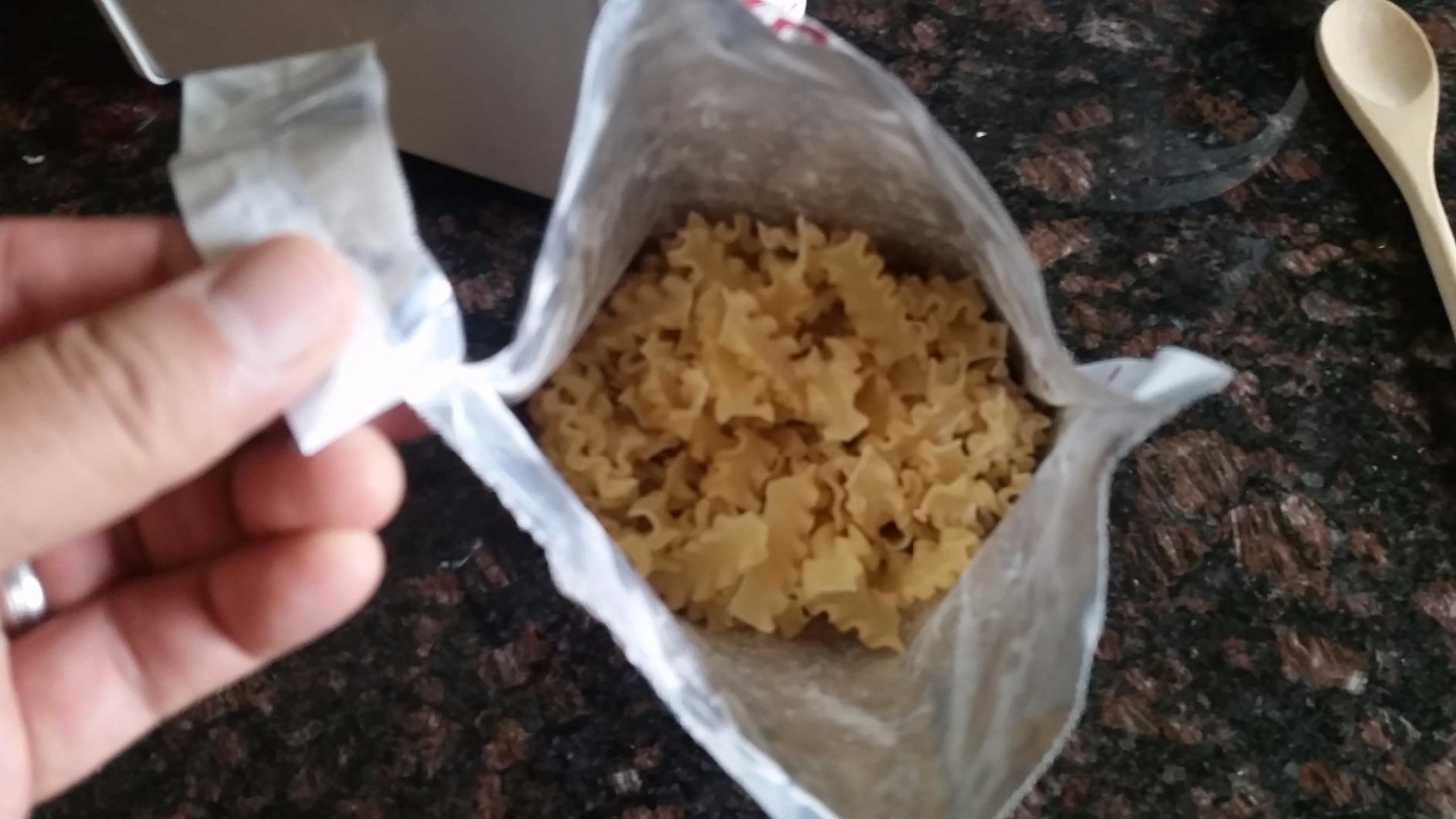
At 4.3 stars from 430 reviews, this is the lowest-rated kit in the roundup and the one with the most one and two-star feedback at 8%. The complaints are consistent and all about packaging rather than quality of the food, and reviewers who taste the meals describe the flavor and texture as noticeably better than typical survival rations.
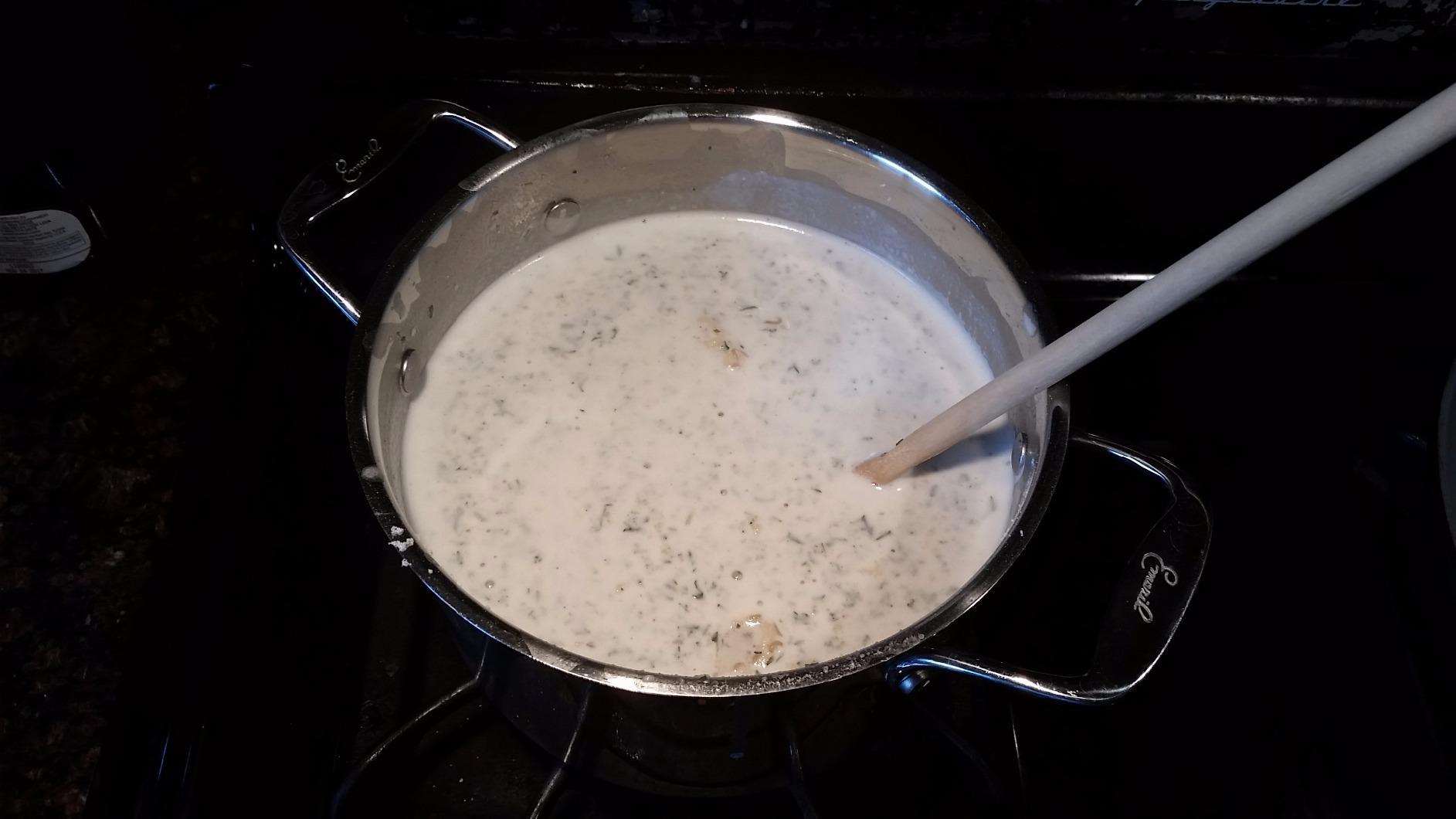
Prep is the real friction. Each pouch makes 6 to 7.5 cups and needs boiling water and a pot, which is fine in a home bug-in scenario and impractical in a backcountry or true evacuation. Reviewers also note that preparations can come out more soupy than expected and that the instructions do not always cook noodles all the way through.
Whether the calorie figure is the deciding factor
For a one-person three-day scenario, 12,440 calories is genuinely strong. It is closer to a full three days of eating than most 30-serving kits, because 32 servings at 389 calories adds up. A 120-serving bucket sounds larger but delivers far less total energy per pound of pantry space.
For a family of four it is not enough, and that is the point reviewers make. Twelve thousand calories across four people for three days is about 1,040 calories each per day, which is a deficit. Buy the 60-serving or 120-serving variant of this same product for a bigger household.
Who should look elsewhere
Anyone who needs a no-cook or no-water ration, and anyone who hates wasting food. Four-serving pouches with no resealable top means you commit to cooking all four servings at once, and if your household is one or two people, that is a lot of repeated meals from the same pouch.
Customer service gets credit where products fall short: reviewers report responsive support when a pouch arrived damaged. That is worth noting at 4.3 stars, where the problems are packaging rather than product failure.
11. 4Patriots 128-Serving Entree Kit – Best Calorie Count
4Patriots Emergency Entree Food Kit – 128 Servings, Tasty Freeze-Dried MRE Survival Meals, 25 Year Shelf Life
128 servings and 31,600 total calories
Triple-layer Mylar oxygen absorbers
Ready in about 15 minutes
Pros
- 31600 calories across 128 servings
- Tastes good enough to eat as a normal meal
- Meals with powdered milk or cheese base rate better
- Hand-packed in the USA
- Compact enough for under a bed or a pantry rack
Cons
- High sodium across the range
- Some instructions call for an oven step
- Needs 9.5 cups of water or more per pouch plus a large pot
- Some meals are plain without added spices
This bucket publishes the biggest calorie number in the roundup: 31,600 calories across 128 servings, or about 247 calories a serving. Whether that is the best or worst thing depends on your event length. For a household trying to cover weeks on a fixed volume of food, that density is the whole argument.
Packaging is triple-layer disaster-resistant Mylar with oxygen absorbers, with a 25-year shelf life and prep in about 15 minutes from boiling water. Recipes include Nonna’s Secret Recipe Spaghetti, Cheesy Chili Mac, Hearty Stroganoff, Mac and Cheese, Fireside Stew and Frank’s Favorite Alfredo. It is hand-packed in the USA with batch quality control.
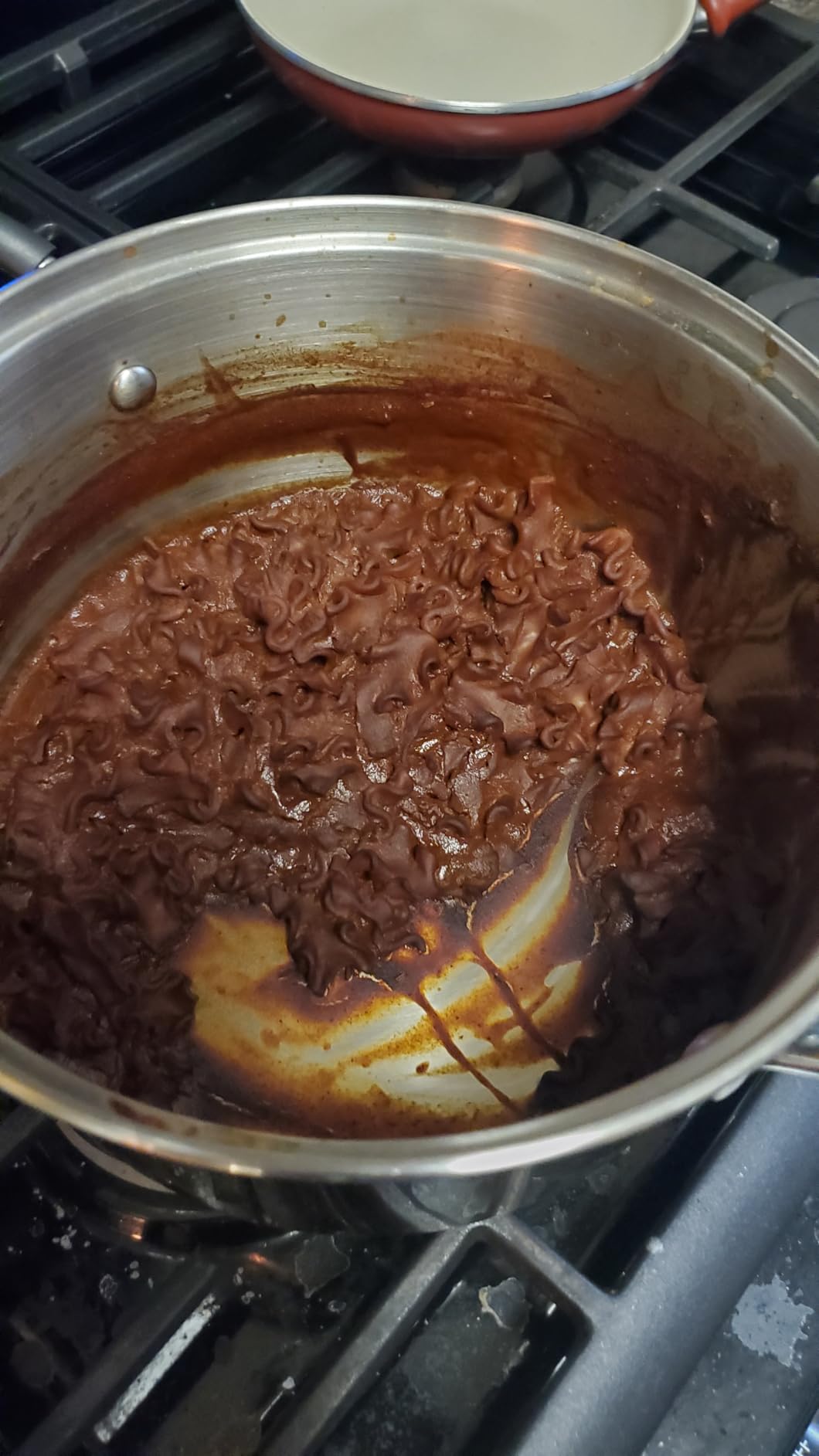
At 4.5 stars from 132 reviews, this is the thinnest review base in the roundup, and detailed testers rate individual meals nearer 3 out of 5 as prepared. That is honest: the food is functional and well-packed, but this is a newer listing and the taste feedback is not yet as settled as the Mountain House or ReadyWise numbers.
What testers do agree on is that spices make a measurable difference. Reviewers who added hot sauce, cheese or no-salt vegetables report a meaningfully better meal, and that is a useful tip for any bland freeze-dried entree. The sodium level is high across the range, which matters for anyone monitoring it.
Why the water requirement matters here
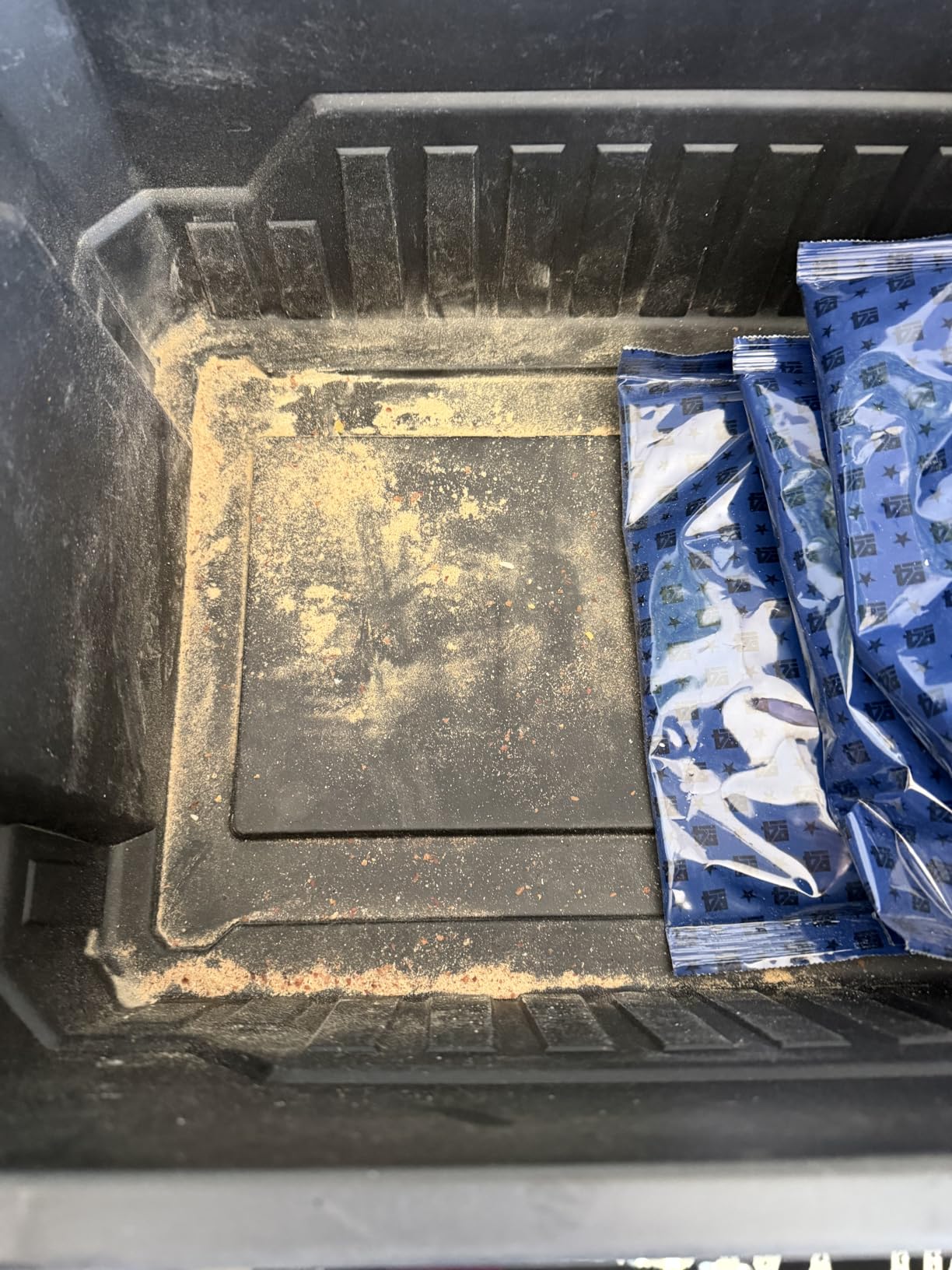
Each pouch makes 10 to 12 cups of prepared food and needs 9.5 cups of water or more plus a large pot. Across 128 servings that is a very large volume of water, and in a bug-in scenario you are boiling it rather than pouring cold water into a pouch. Bring your own pot or accept a much longer cook.
One recipe, Broccoli Bake, calls for an oven step, which is impractical in an emergency. In a home with a working kitchen, the entire bucket is a normal pantry item. In a scenario without power, that recipe is out.
When this bucket makes sense
Long-term sheltering with a kitchen. If you are building a year-plus pantry rather than a three-day kit, 31,600 calories in a 22.2-pound package is efficient, and the compact dimensions of 20.5 by 14.75 by 8.38 inches mean it fits under a bed or on a pantry rack.
It is a poor choice for a first purchase, a go bag, or a no-water scenario, and with only 132 reviews you are buying on specification rather than on a long history of buyer feedback. Test a small kit from the same line first if taste is going to decide whether you actually eat it.
12. Ready Hour Black Bean Burger Mix – Best for Vegan and Nut-Free Diets
Ready Hour, Black Bean Burger Mix, Real Non-Perishable Recipe, 25-Year Shelf Life, Emergency and Adventure Food Supply, Includes 10 Resealable Pouches, 60 Servings
60 servings and 10 resealable pouches
Vegan black beans rice and oats
25-year shelf life
Pros
- Flavor converts even dedicated meat eaters
- Pouches reseal properly so partial mixes can be saved
- Fast prep at 1-1/8 cups hot water and about 5 minutes
- Vegan made from black beans rice and oats
- Quadruple-wrapped pouching system
Cons
- Runs a bit salty and on the dry side
- Container is smaller than the 60-serving claim implies
- More a meal component than a complete entree
The most common complaint about emergency food is that it tastes like nothing. This mix is the counterexample. It is a black bean burger mix made from black beans, rice and oats, it is vegan, and reviewers who assumed it would taste like a compromise report being converted by the seasoning.
Ten resealable pouches hold up to 60 servings in a flood-safe bucket with a handle, with a 25-year shelf life and no refrigeration required. The pouching is quadruple-wrapped rather than triple-layer, and the bucket is made in Salt Lake City, Utah.
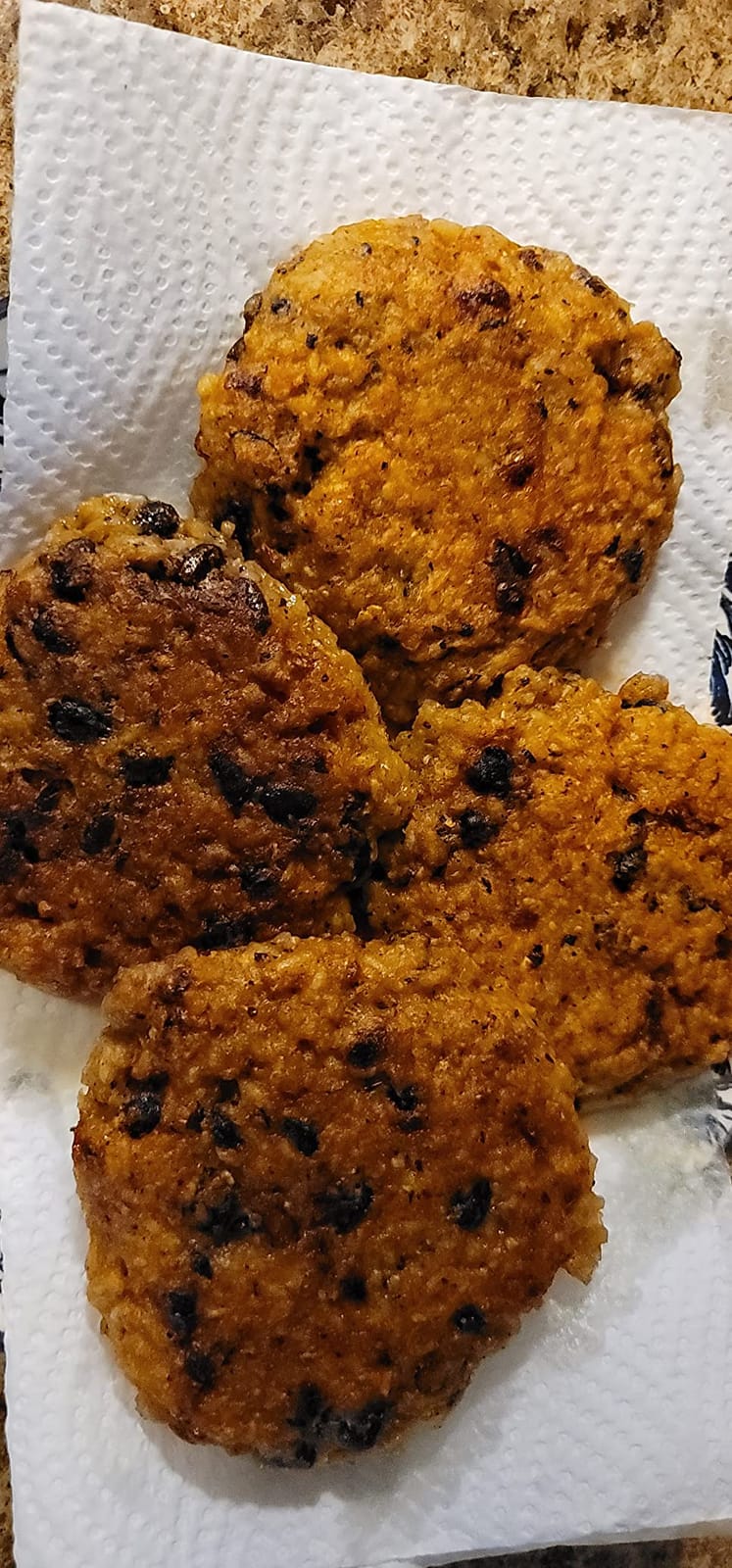
Prep is the easiest on this list: add 1-1/8 cups of hot water, reseal the pouch and let it sit about five minutes. No heat source, no pot, no stove, and the reseal means you can make a partial batch and keep the rest intact. That combination of low water, fast prep and resealability is rare.
At 4.6 stars from 696 reviews, it holds up well. The consistent gripes are saltiness and dryness, and the suggestion to add a little extra water or some ketchup solves both. The bucket is 5.34 pounds and measures about 9.96 by 9.92 by 8.43 inches, smaller than a 60-serving claim suggests.
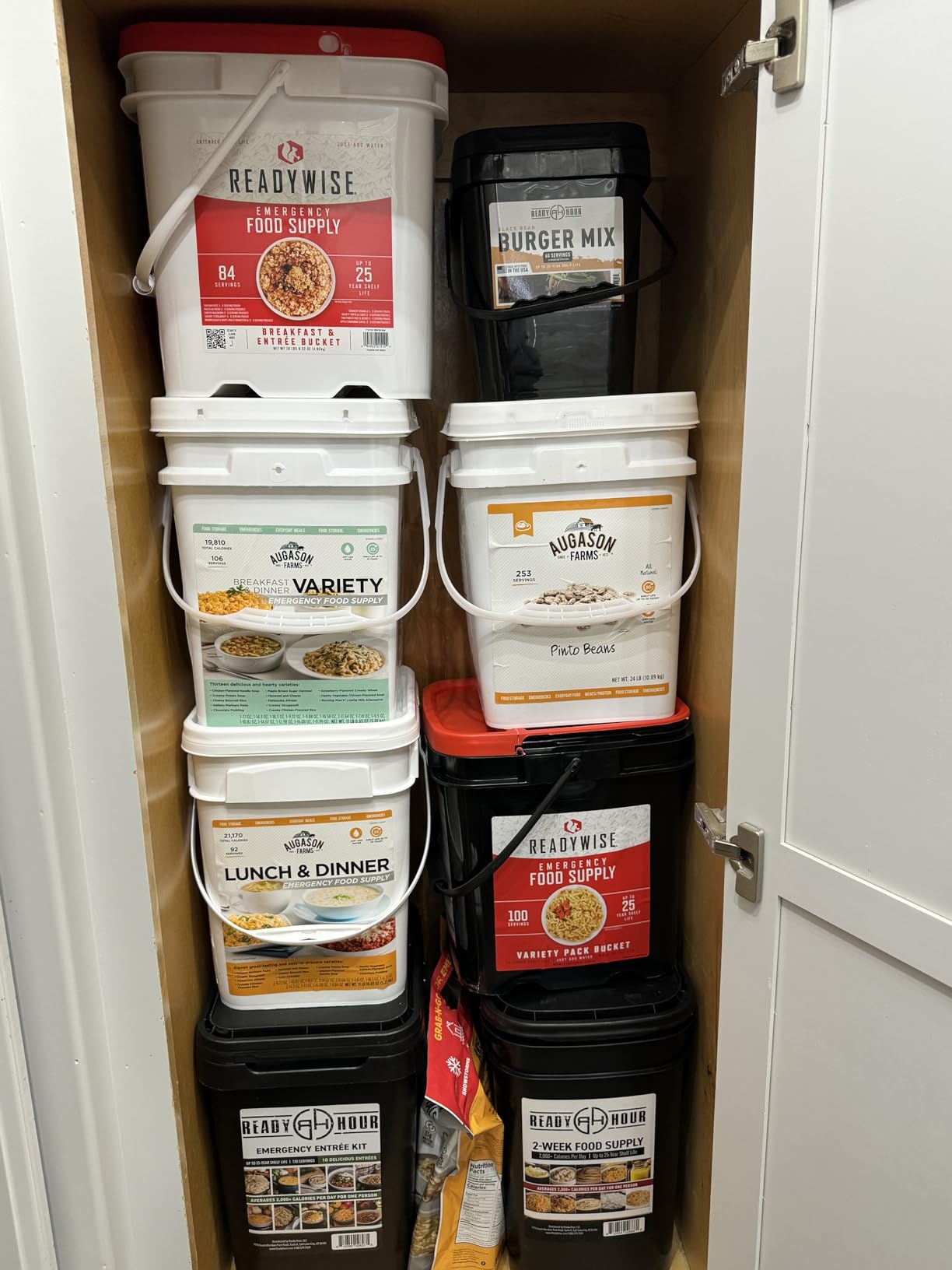
How to turn it into a full meal
Add the Ready Hour fruit and veggie mix from earlier in this list and the black bean mix becomes a plate instead of a side. Rehydrated corn and the dry fruit both work, and together you have protein, carbohydrate and produce in a pouch you can eat with a spoon.
It also pairs well as a base under a heavier entree, which stretches a smaller protein bucket. Think of it as a foundation rather than a standalone meal, and note that the serving count assumes a portion size that a hungry adult may double.
Who should buy something else
Anyone who cannot eat soy, rice or oats, and anyone monitoring sodium who is already using a high-salt entree kit. Reviewers flag the mix as running a bit salty, and doubling a salty entree with a salty mix is a poor pairing.
It is also a dry mix, so it needs water even in the easy scenario, which keeps it just behind a true MRE for no-water planning. For vegan households it is the strongest pick in the roundup, and the resealable pouches make it the easiest to ration across a long event.
How Much Water Do Emergency Food Kits Require?
Most freeze-dried meals need roughly one cup of water per serving, so a 120-serving bucket needs around 7.5 gallons to prepare. The Mountain House 12-pouch bucket publishes a figure of 18 cups for all 24 servings, which is the only manufacturer water claim in this roundup and works out to under a cup per serving.
Treat this as separate from drinking water. Plan at least one gallon per person per day for drinking, and another source for cooking, because the meal water is not optional. If you have no way to purify water, buy ready-to-eat options such as the MRE case or dry-eating pouches for the first days.
Also count your pot and fuel. Kits that need boiling water for 9.5 cups per pouch, like the 4Patriots 128-serving bucket, need a heat source for longer than you think, and that is a separate failure point from the food itself.
Serving Counts vs Real Days of Food
A serving is not a meal. Manufacturers count a portion, but a 2,000-calorie day for an adult needs roughly three to six of those portions depending on density, and that is where advertised serving counts stop translating into days of food.
Worked example: a 120-serving bucket at freeze-dried density is realistically 13 to 14 real days for one adult at 2,000 calories a day, not 120 days. The 4Patriots 72-hour kit publishes this openly at about 4,800 total calories, or 1,600 a day, which is below a full daily need.
The reverse is true for MREs. One 1,000 to 1,300 calorie MRE meal is more than half a day’s eating in a single item, which is why the no-cook option is the best calorie story in this roundup despite its shorter shelf life. Compare total published calories, not serving counts, when you compare kits.
How to Store Emergency Food Buckets Long Term
Store between 50F and 70F, in the dark, somewhere dry. That range is the assumption underneath every 25-year and 30-year shelf-life claim in this roundup, and 4Patriots states its claim explicitly for storage below 75F. Hot garages, humid basements and vehicle trunks all fall outside it.
Humidity is the real failure mode. A thread titled An Emergency Food Supply Bucket Gone Wrong on r/preppers reports moisture collecting at the bottom of sealed buckets, and that is exactly the condition that voids a shelf-life claim. If your storage area is a basement that takes on dampness, add a desiccant or move the pails upstairs.
Favor resealable pouches when you can. Ready Hour, 4Patriots and Legacy all ship multi-serving Mylar bags, and the difference between closing a pouch for next week and re-bagging leftovers with a fresh oxygen absorber is meaningful at month three of an event.
What to Look for Before Buying an Emergency Food Kit
Work through these eight criteria in order, and most of the disappointment people report online disappears before the first delivery.
- Coverage duration matched to your real plan. A 72-hour kit is a buffer for a power cut or a short evacuation. Month and longer kits are pantry supplies. Decide whether you are bugging in or bugging out, because they need different food.
- Ready-to-eat versus rehydratable. If water or fuel could be unavailable, buy at least some food that needs neither. A no-cook case is not a luxury, it is the part of the plan that still works when everything else fails.
- Total calories, not servings. Ask the manufacturer for total calories in the kit and divide by 2,000 per adult per day. If they do not publish it, assume a lower density and add ready-to-eat items.
- Water per serving. Roughly one cup per serving for freeze-dried meals. Multiply by servings and check it against the water you can actually carry or store.
- Protein and what you will add to reach it. A Legacy customer on a forum thread hit protein targets by adding freeze-dried diced chicken, egg powder and supplements to a base kit. Calories alone will not keep you functional during heavy work.
- Resealable packaging. Multi-serving pouches you cannot close force you to cook and eat everything at once. Single-serving or resealable pouches let you stretch a kit across days.
- Storage conditions you can actually meet. If you have no dark, dry, temperature-stable room, the shelf life is marketing regardless of what the label says.
- A sample before a bulk order. Try a single pouch or a small kit first. Forum consensus is unanimous on this, and a 20-serving trial kit costs far less than discovering a meal you will not eat.
How much to stockpile per person
Scale by duration, using 2,000 to 2,400 calories a day as the baseline for an adult. A 72-hour buffer is about 6,000 to 7,000 calories, roughly 20 to 30 entree portions, which is what the 4Patriots 20-serving kit targets.
A week is around 14,000 to 17,000 calories. A month is closer to 60,000 to 72,000. At three months and beyond, stop thinking in kits and start building tiers, which is the framework forum communities actually use: short-term food from your fridge, freezer and garden, mid-term canned and dried goods with a shelf life of a few years, and long-term commercially prepared freeze-dried or dry-canned food in the 10 to 30 year range.
Add the non-food items that nobody thinks about: iodized salt, a multivitamin, a manual can opener and a water filter. Vitamin C deficiency over a long event is a real risk, and the fix costs almost nothing compared with a bucket.
What not to put in an emergency kit
Skip anything that needs refrigeration, anything that requires a working stove when you may not have one, and heavily salted foods that make you thirstier while water is the scarce resource. Also skip food nobody in the household will eat, and rotate what you buy by purchase date so you are using the oldest stock first.
One last habit that costs nothing: write the date on every bucket when it arrives. Six months from now you will not remember which one you bought first, and rotation is what turns a stockpile into food you can actually eat.
Frequently Asked Questions
How much food should I stockpile per person?
Plan on 2,000 to 2,400 calories per adult per day. A 72-hour buffer is about 6,000 to 7,000 calories, roughly 20 to 30 entree portions. One week is around 14,000 to 17,000 calories, and one month is 60,000 to 72,000. Beyond three months, build tiers instead of buying more kits: short-term food from your kitchen, mid-term canned and dried goods, and long-term freeze-dried supplies.
How much water do emergency food kits require?
Most freeze-dried meals need roughly one cup of water per serving, so a 120-serving bucket needs around 7.5 gallons to prepare. The Mountain House 12-pouch bucket publishes 18 cups for all 24 servings. Plan drinking water separately at about one gallon per person per day, and keep ready-to-eat options such as MREs for situations where no water is available.
Which is better, Mountain House or ReadyWise?
Mountain House wins on taste and prep: its meals rehydrate in under 10 minutes and you can eat straight from the pouch, rated 4.8 across 4,439 reviews. ReadyWise wins on value and range: the 104-serving bucket is the most-reviewed kit in this roundup with 10,502 ratings, and the same line sells from 72 hours to 12 months. Choose Mountain House if taste matters, ReadyWise if coverage does.
How long does ReadyWise emergency food supply last?
ReadyWise lists an up-to-25-year shelf life across its emergency food line, including the 72-hour kit, the 7-day grab bag and the 104-serving variety bucket. That figure assumes cool, dry, dark storage roughly between 50F and 70F. Once a pouch is opened, the remaining contents should be used promptly unless the pouch is resealable.
Are the advertised serving counts real meals?
A serving is a portion, not a full meal. A 120-serving bucket is realistically 13 to 14 real days for one adult eating 2,000 calories a day. The 4Patriots 72-hour kit is transparent about this, listing about 4,800 total calories, or 1,600 per day. Compare total published calories per kit rather than counting servings, and add ready-to-eat items to close any gap.
What not to put in an emergency kit?
Skip food that needs refrigeration, food that requires a working stove, and heavily salted items that increase thirst when water is already scarce. Avoid anything your household will not actually eat. Store iodized salt, a multivitamin and a manual can opener alongside the food, and label every bucket with its purchase date so you rotate the oldest stock first.
The Bottom Line
There is no single best emergency food kit, but there is a right order of operations. Start with a small kit you will actually eat, like the 4Patriots 72-hour set or the ReadyWise 72-hour bucket, and store it where you can reach it quickly. The Mountain House Meal Assortment Bucket is the one I recommend if you want the best taste and the shortest prep in the category.
Then build in tiers rather than buying one enormous bucket. Short-term food comes from your kitchen, mid-term from canned and dry goods you rotate, and long-term from commercially prepared freeze-dried kits stored cool and dark. Add ready-to-eat calories for the first week, water and purification, iodized salt and a multivitamin, and a manual can opener. That is a complete plan, and the best emergency food kits we covered are the part of it you will be glad to eat at hour seventy-two.