
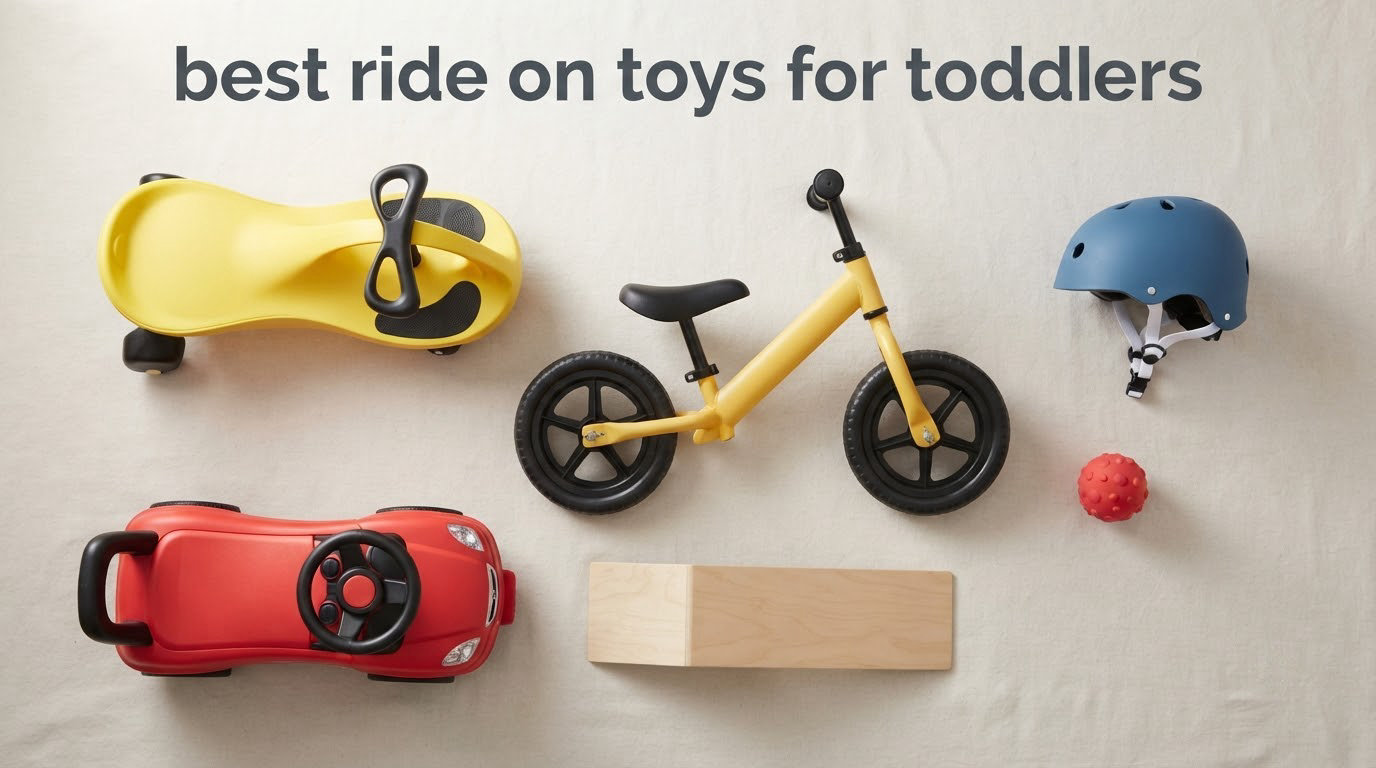
A ride-on toy is any wheeled toy a toddler sits on and moves under their own power: a push buggy with a parent handle, a foot-to-floor scooter, a balance bike, a pedal trike, or a battery-powered car. The right one for your child is decided by three variables, not by how expensive it is: how well they walk today, whether the toy lives indoors or outdoors, and how much room you have.
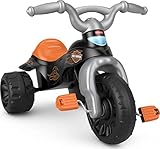
If you want the single best all-round answer, the Fisher-Price Tough Trike is the pick we keep coming back to. It holds a 55-pound weight limit, carries 26,000+ reviews, and works for any child who can already pedal confidently. For a child still finding their feet, skip it and start at the balance bikes and push cars lower down.
For what it is worth, ride-on toys are one of the few toddler toys that get used every single day, and the reason is not the electronics. It is the practice. A child pushing a ride-on across a hallway is balancing, steering, shifting weight and judging distance, all at once. Those are the same building blocks that make a tricycle possible two years later.
One quick note: if you landed here searching for toys for car rides in the family car, those are travel seats and back-seat straps, a completely different category. Everything below is for wheels on the floor or the ground.
We compared 12 of the highest-reviewed ride-on toys for toddlers available right now, grouped them by walking milestone, and pulled the specs straight from the manufacturer listings. Nothing here is sponsored.
Table of Contents
Top 3 Picks for the Best Ride On Toys for Toddlers (October 2026)

Little Tikes Cozy Coupe
- Two modes: pushed or foot-powered
- Ages 18 months-5 years
- Max 50 lb
- Working doors and horn
All 12 Picks Compared Side by Side in 2026
| Product | Specifications | Action |
|---|---|---|
| Fisher-Price Tough Trike |
|
Check Latest Price |
| Little Tikes Cozy Coupe |
|
Check Latest Price |
 Step2 Whisper Ride II Step2 Whisper Ride II |
|
Check Latest Price |
| SEREED Balance Bike |
|
Check Latest Price |
 Little Tikes T-Rex Cozy Coupe Little Tikes T-Rex Cozy Coupe |
|
Check Latest Price |
 Step2 Push Around Buggy Step2 Push Around Buggy |
|
Check Latest Price |
 John Deere Sit N Scoot Tractor John Deere Sit N Scoot Tractor |
|
Check Latest Price |
 Little Tikes Push and Ride Racer Little Tikes Push and Ride Racer |
|
Check Latest Price |
 newyoo TR007 5-in-1 Tricycle newyoo TR007 5-in-1 Tricycle |
|
Check Latest Price |
 Kiddieland My First Minnie Plane Kiddieland My First Minnie Plane |
|
Check Latest Price |
 Radio Flyer Creativity Car Radio Flyer Creativity Car |
|
Check Latest Price |
 Radio Flyer Scoot About Radio Flyer Scoot About |
|
Check Latest Price |
1. Fisher-Price Harley-Davidson Tough Trike: The Best Pedal Ride-On for Confident Toddlers
Fisher-Price Harley-Davidson Tough Trike Toddler Toy, Max 55 lb
Kid-powered trike
Ages 24 months-5 years
Max 55 lb
28 x 18 x 20 inch
Pros
- Sturdy wide-wheelbase frame
- Easy-grip handlebars and large pedals
- Lift-up seat hides a storage compartment
- Harley-Davidson styling kids recognise
Cons
- Assembly can require real force and a hammer
- Storage seat pops off easily
- Pedals out of reach before about 3 years
This is the one we put in front of parents who want a single toy that does the most. It is a pedal trike, so the child supplies all the power, which removes batteries, chargers and speed questions from the conversation entirely.
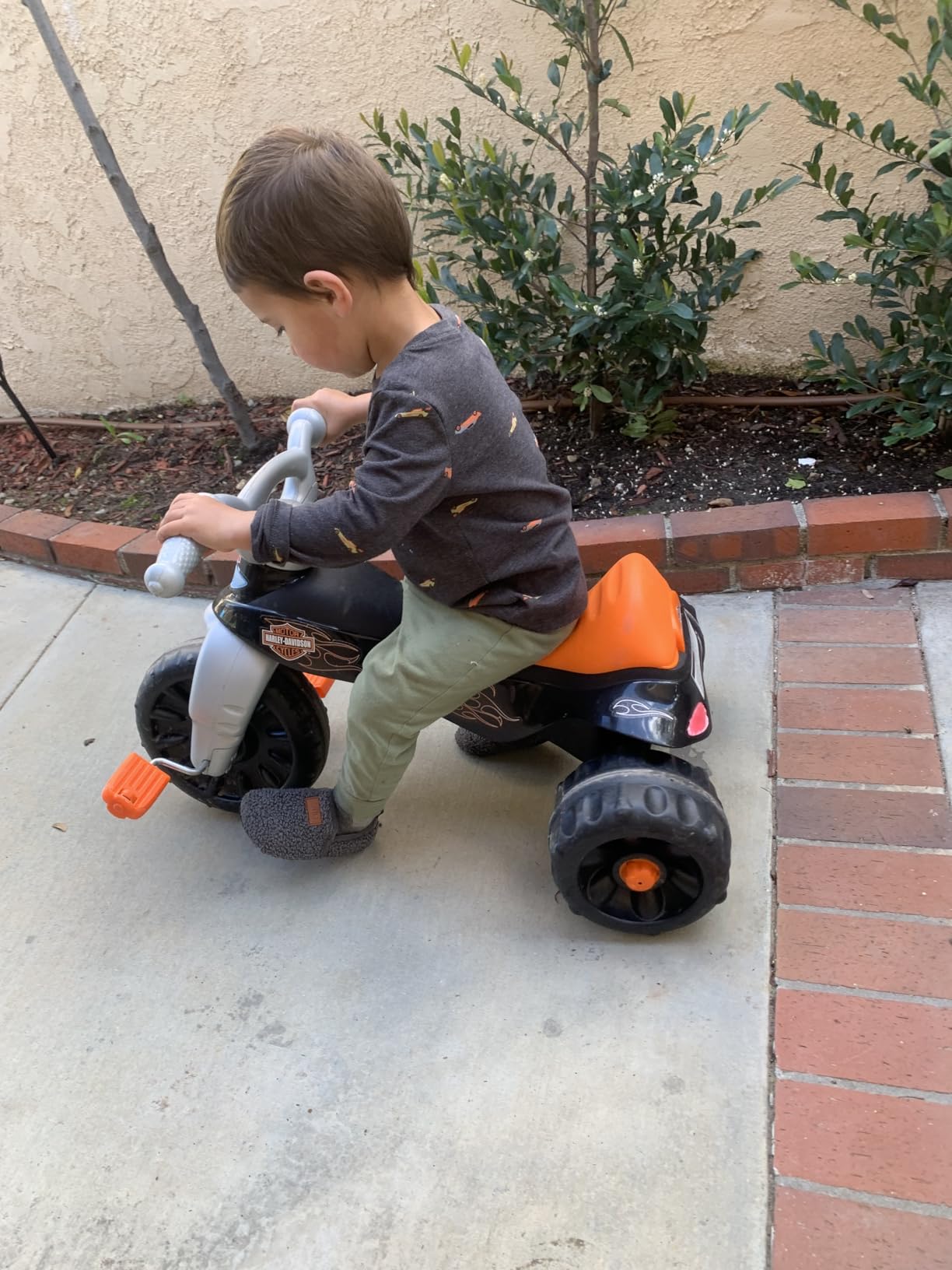
Weighing 7.5 pounds, it is light enough for an adult to reposition but heavy enough to stay planted when a two-year-old leans on the handlebars. The wide wheel base is the reason it does not wobble on a gravel path.
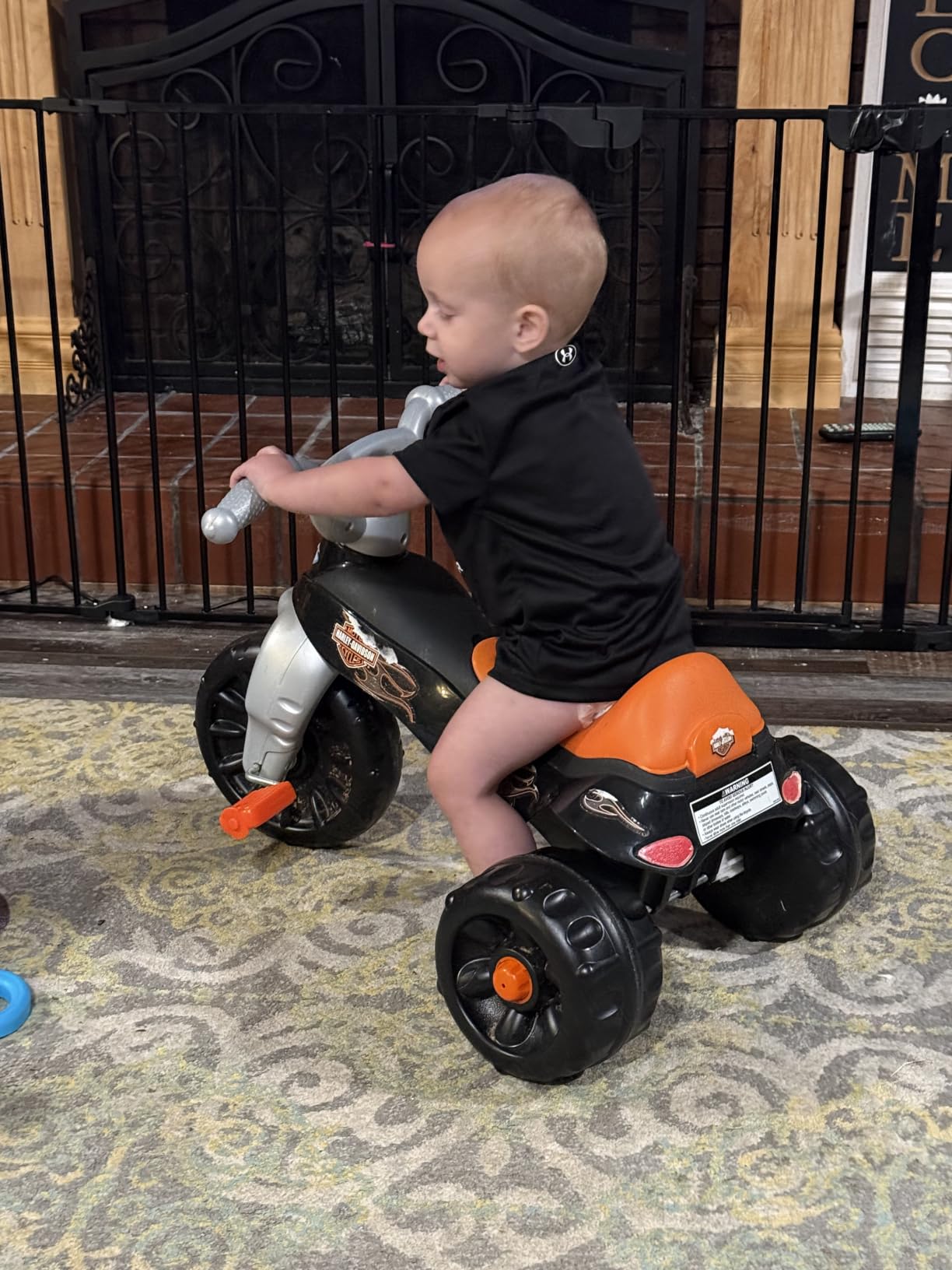
The rugged-tread tires are a real distinction. Most plastic wheels on a ride-on this size are smooth and slip on anything other than a smooth path, and these are built for off-road pedaling as the manufacturer describes it.
Parents consistently rate it 4.7 stars across more than 26,000 reviews, which makes it the most heavily reviewed ride-on in this list by a wide margin. The lift-up seat is the feature other reviewers mention most: it turns the whole rear half into a bin for snacks, a water bottle, or a small toy.
What to check before you buy
Assembly is the one genuine problem. Owners report that parts resist fitting and occasionally need a hammer, so build it when you are not in a hurry, and check every piece is seated before handing it over. The second thing to know is pedal reach: the manufacturer rates it from 24 months, but the pedals are tight for a child under three. Treat it as a three-year-plus toy if your toddler is short.
Where it works best
This is an outdoor toy. It handles driveways, garden paths and grass, and it is sturdy enough to survive the park. Indoors it will feel enormous and take up most of a living room, so we would not put it on hard floors. The 55-pound capacity is the highest in this roundup, which means it keeps working long past the toddler years.
2. Little Tikes Cozy Coupe: The Best Two-in-One Push and Ride-On
Little Tikes Cozy Coupe
Plastic body
Ages 18 months-5 years
Max 50 lb
29.5 x 16.5 x 33.5 inch
Pros
- Removable floorboard switches pushed to foot-powered
- Working doors
- horn and ignition
- 360 degree front wheels
- Trunk and cup-holder storage
Cons
- Snap-together parts need force to assemble
- Decorative stickers peel off
- Noisy on hard sidewalks
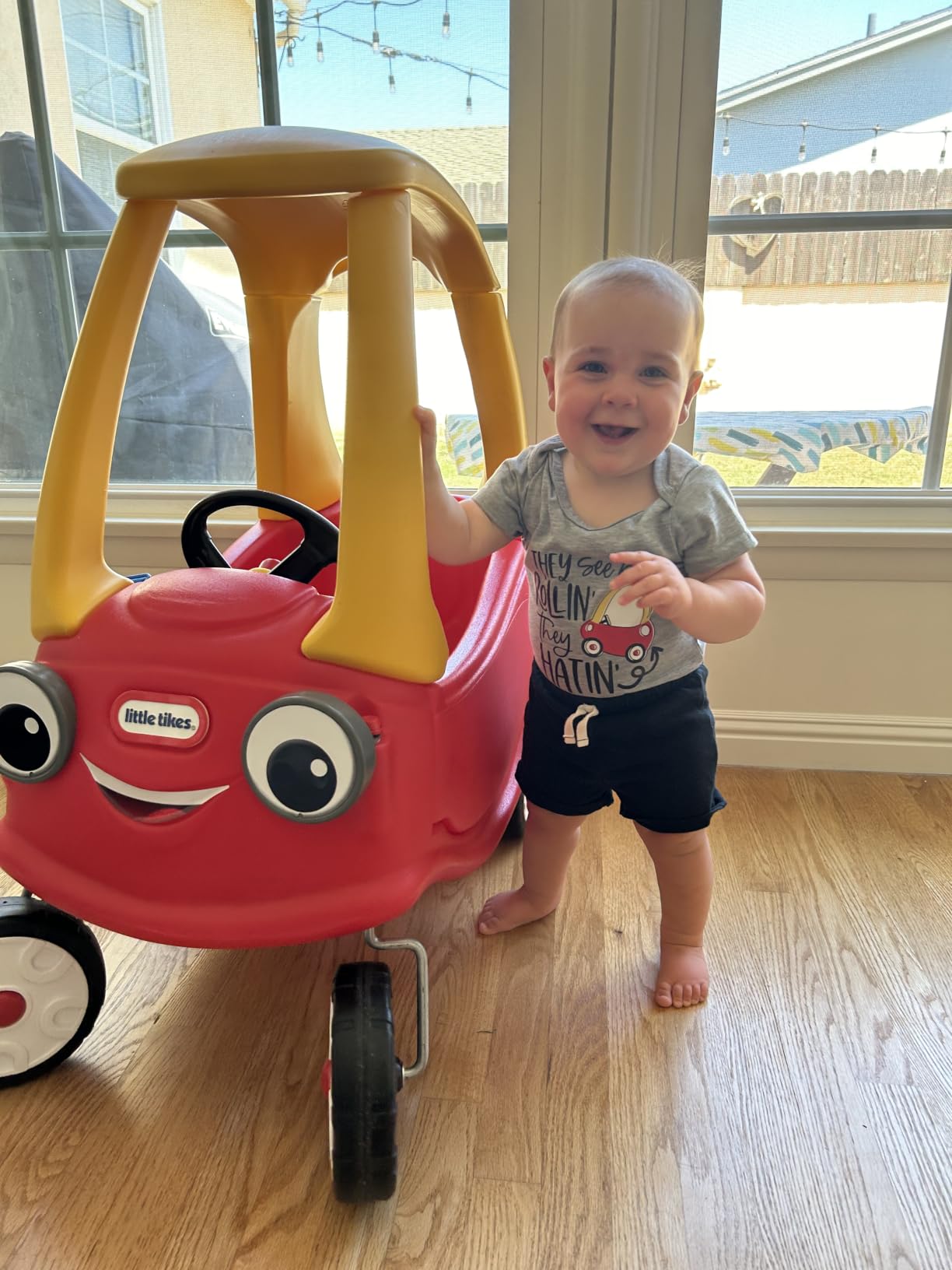
The Cozy Coupe has sold more units than anything else in the push ride-on category, and the reason is the removable floorboard. With the floorboard in, you push it like a stroller. Take the floorboard out and the child propels it with their feet. One toy covers the gap between a buggy and a pedal trike.
We like the fact that nothing on it is electronic. There is no battery to fail, no charger to lose, and nothing to charge overnight before a trip to the park.
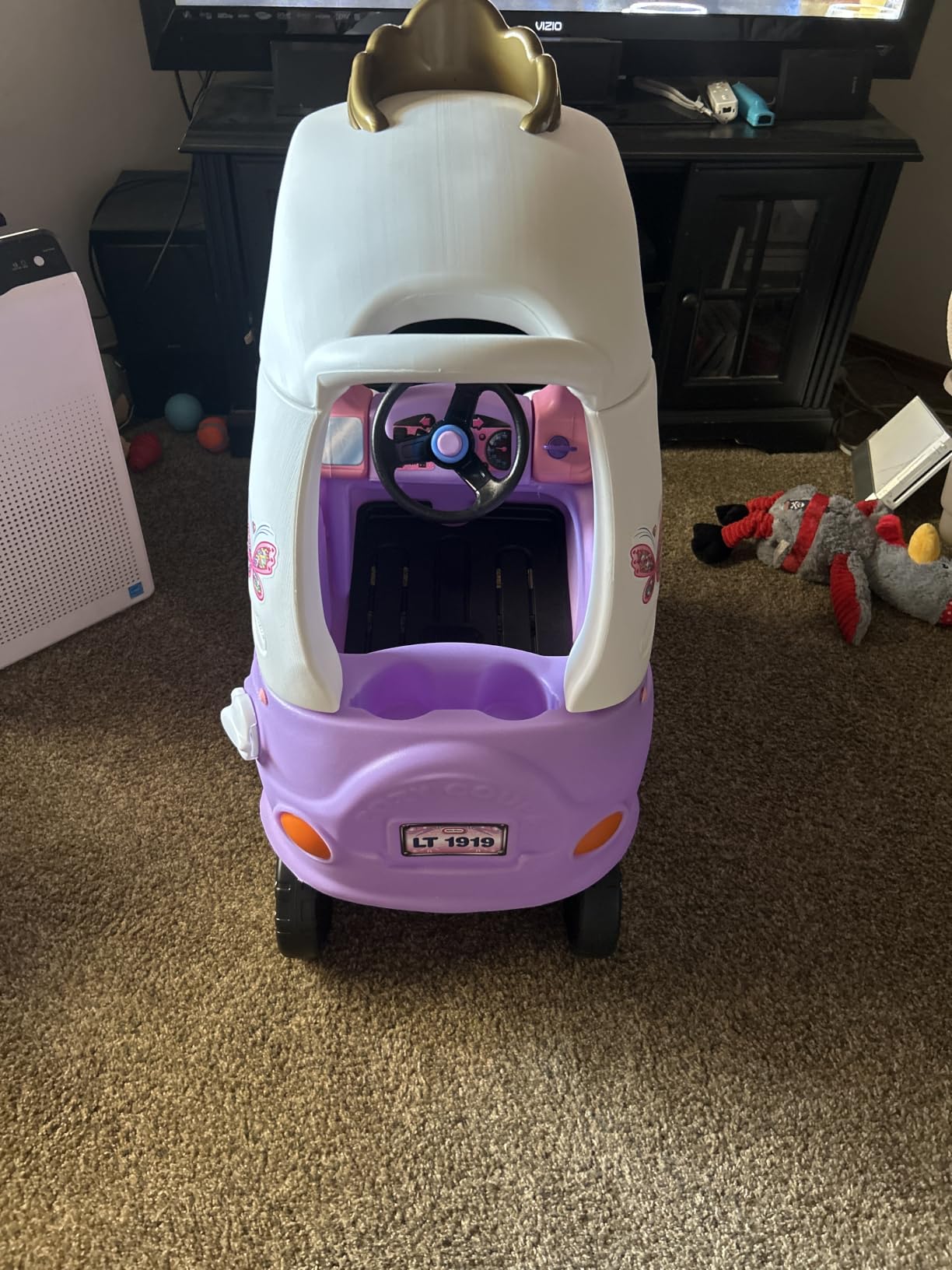
At 17.7 pounds it is the second-heaviest thing in this roundup, which is realistic for a plastic body that survives years of use. The front wheels spin 360 degrees, so turning in a tight hallway is easier than most push cars manage.
It sits at 4.6 stars from more than 17,000 reviews. Reviewers repeatedly describe children playing with the same one for years, which is the strongest longevity signal we can find in customer data.
What to check before you buy
The plastic body snaps together and the joints are stiff enough to be frustrating for an adult assembling it alone. Sticker backing also tears during assembly, and the decals peel off in sun and heat. Neither affects how it rides, but both are the first things customers complain about.
Where it works best
Rugged tires mean it handles a driveway, a path or a carpeted living room. The one caution is noise: the wheels and the opening door are audible on a hard floor, so neighbours in an apartment should try it before committing. The 50-pound limit covers every normal toddler.
3. Step2 Whisper Ride II: The Best Push Car for Long Walks
Step2 Whisper Ride II Kids Push Car, Ride-On Car with Seat Belt and Horn, Quick Fold Handle, Stroller Alternative, Toddlers and Preschoolers Ages 18+ Months, Blue
Whisper-ride wheels
Ages 18-48 months
Max 50 lb
45.5 x 19 x 34 inch
Pros
- Exceptionally quiet wheels
- Extra-wide parent grip handle
- Roomy cabin with cup holders
- Folding handle for storage
Cons
- Picture-only instructions
- Handle unscrews to remove
- Fixed front wheels need lifting to turn
If your daily routine involves long walks or a lot of pushing, this is the one. The whisper-ride wheels are the whole point: they roll without the rumble most plastic push cars produce, which makes it the quietest option here and the one most parents describe as comfortable to push for an hour.
The extra-wide rear grip is the other feature worth calling out. It sits high and wide enough that an adult does not have to hunch over, which is the difference between a push car you use and one that ends up in the garage.
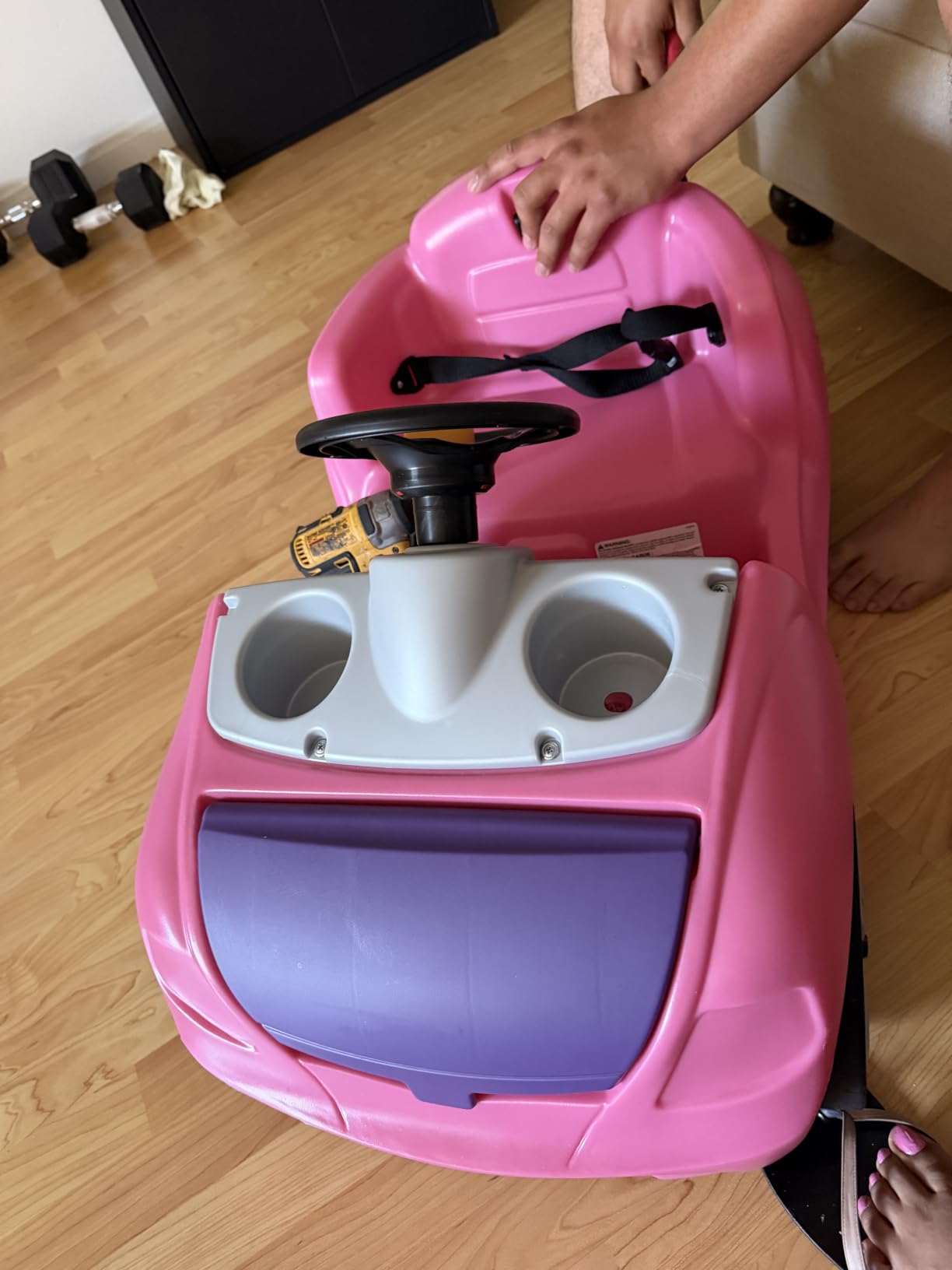
Double-walled plastic resists fading and cracking, and the cabin has a surprising amount of room. Cup holders on the dashboard plus under-hood storage means snacks, wipes and a small bottle all have a home.
At 4.6 stars across more than 16,600 reviews, the Whisper Ride II is one of the best-reviewed push cars made. Step2 also backs it with a two-year limited warranty, which is longer than most of this list offers.

What to check before you buy
The instructions are pictures with no words, and reviewers consistently put assembly time at one to two hours. Build it with the manual website open on a phone. Two further details: the handle has to be unscrewed rather than quick-released, and the front wheels are fixed, so you turn by lifting the front slightly and pushing down on the handle.
Where it works best
Smooth paths, pavements, indoor floors and park paths. It is large, so measure your doorways first. Because the wheels are quiet, this is also the most bearable push car to use in a shared hallway or near a sleeping sibling.
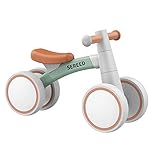
4. SEREED Baby Balance Bike: The Best First Ride-On at 12 Months
SEREED Baby Balance Bike for 1 Year Old Boy Girl, First Birthday Gift Toy
Four wheels, no pedals
Ages 12-24 months
Max 55 lb
Weighs 3.5 lb
Pros
- Four wheels stop a beginner tipping over
- Enclosed EVA wheels are floor-safe and silent
- Light enough for parents to carry
- Quick assembly
Cons
- Some delivered units do not match the listing
- Seat and foot-to-floor design needs a walking child
- Small parts limit rough outdoor use
A balance bike has no pedals and no motor. The child sits and pushes with their feet, exactly as they already learned to move across a floor. That makes it the most natural first ride-on in this roundup for a one-year-old who is walking but not yet ready for anything with a fixed frame and a steering wheel.
The four-wheel layout is the real design decision here. Two wheels tip; four wheels do not, and a 135-degree steering limit with gravity steering makes it almost impossible to flip this thing over.
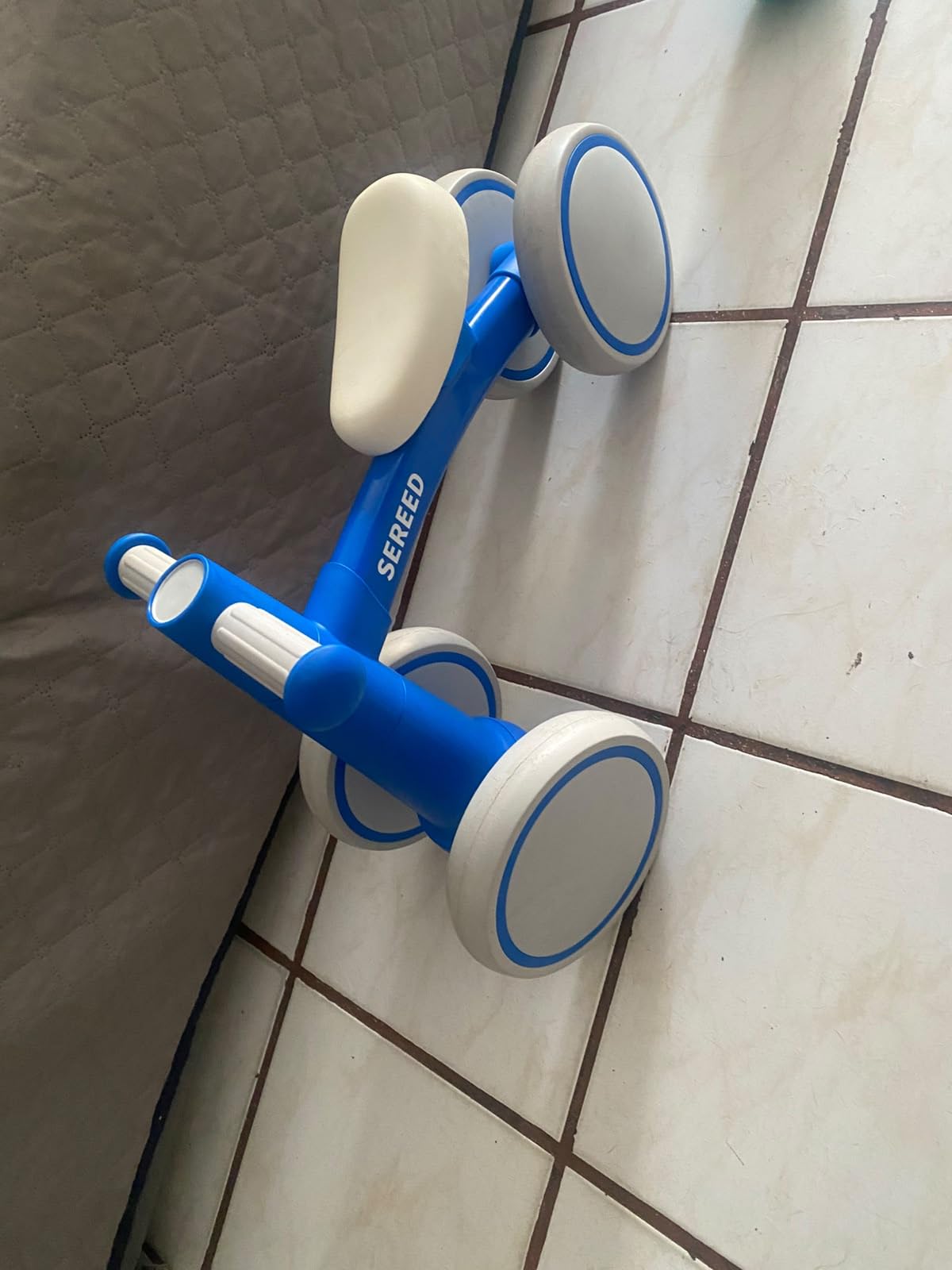
It is the highest-rated product we looked at, at 4.8 stars from more than 16,800 reviews, and the lightest at 3.5 pounds. A parent can pick it up with one hand, which matters when you are managing a toddler who does not want to get down.
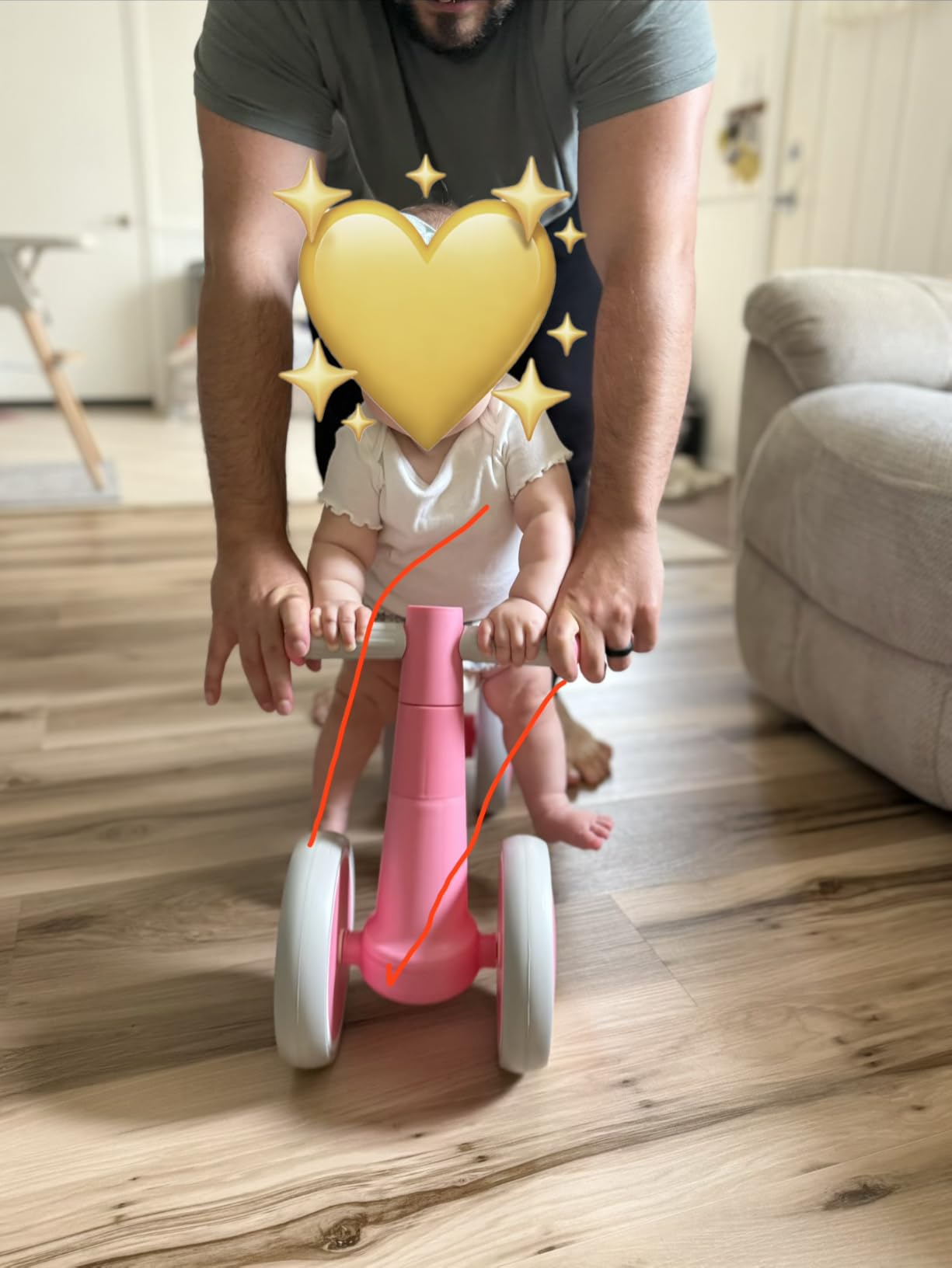
One detail parents appreciate more than they expect: the wheels are fully enclosed EVA foam. They roll silently and they will not mark a hardwood floor, so this is the most indoor-safe ride-on here.
What to check before you buy
The manufacturer lists it from 12 to 24 months, and the soft padded seat means a child who is not yet walking will still need a push. Some buyers report that the unit they received did not match the listing photos, so check the packaging on arrival and start the return window immediately if something is off.
Where it works best
Indoor hard floors and low-pile carpet, plus smooth paths. The small plastic parts and light frame mean it is not a toy for gravel, mud or a rough yard. If your child will mostly play outside on grass, look at a sturdier trike instead.
5. Little Tikes T-Rex Cozy Coupe: The Best Cozy Coupe for Dinosaur Fans
Little Tikes T-Rex Cozy Coupe – (Amazon Exclusive)
Dinosaur themed
Ages 18 months-5 years
Max 50 lb
29.5 x 16.5 x 36 inch
Pros
- Same durable Cozy Coupe platform
- Roof handle makes pushing easy
- Removable floorboard for two modes
- Horn
- key
- cup holders and trunk
Cons
- Dinosaur theme limits appeal if your child prefers a car
- Same stiff snap-together assembly as the standard model
This is the Cozy Coupe chassis with dinosaur spikes, decals and a subject character, aimed squarely at the child who is currently obsessed with anything that lived in the Cretaceous. Mechanically it is the same proven platform, so everything in the pick above applies.
The addition here is a rooftop parent handle, which makes the pushed mode easier to control than the standard version. It is a genuinely useful addition for a 15-month-old who weighs almost nothing but still wobbles.
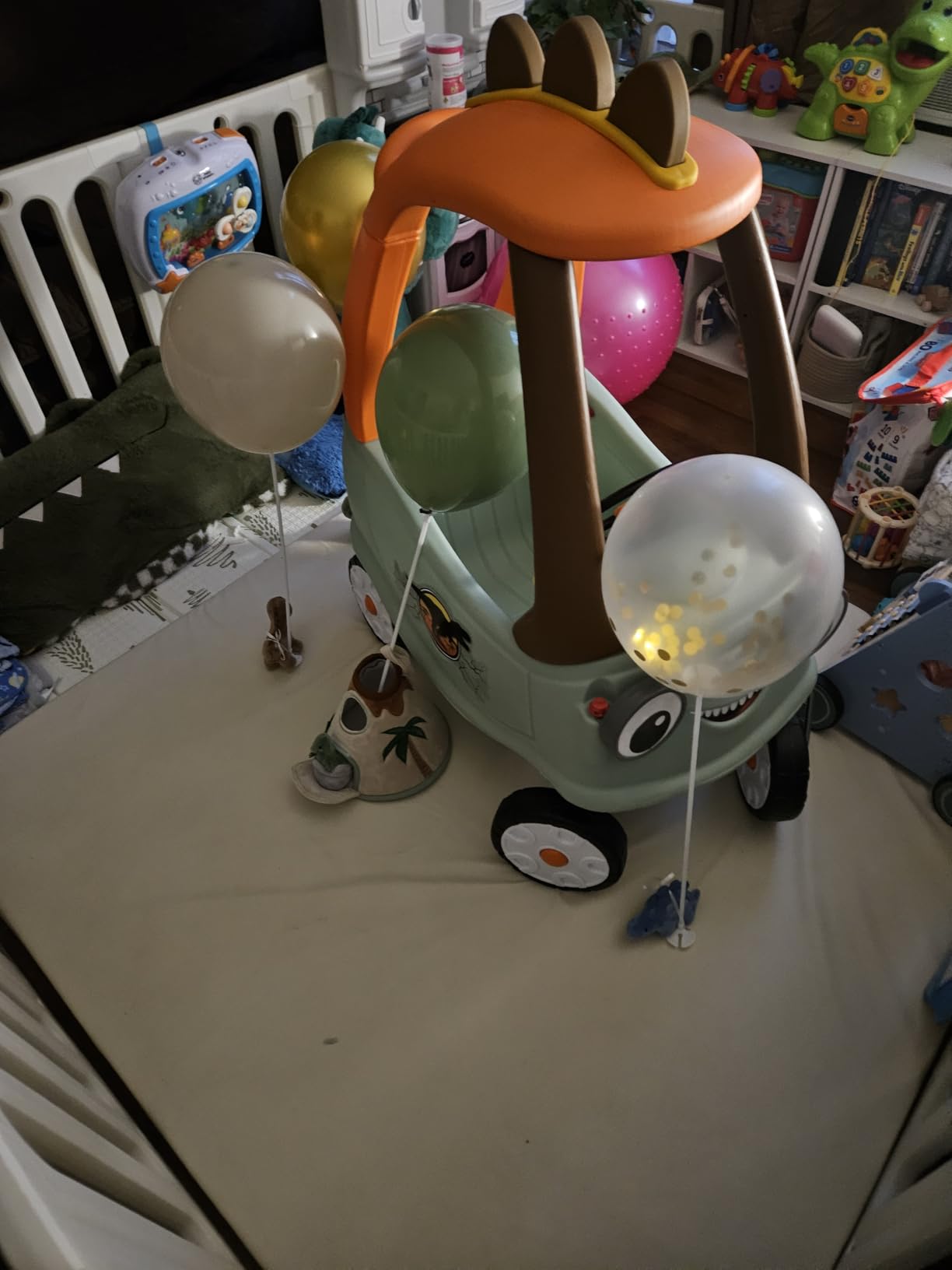
It holds 4.6 stars from nearly 13,200 reviews, so the dinosaur edition is not a novelty downgrade. Parents describe the same durability, the same two-in-one floorboard switch and the same enthusiastic role play as the original.
Front wheels spin 360 degrees, which makes indoor turns manageable, and the trunk stores toys. The 50-pound limit is standard for the category.
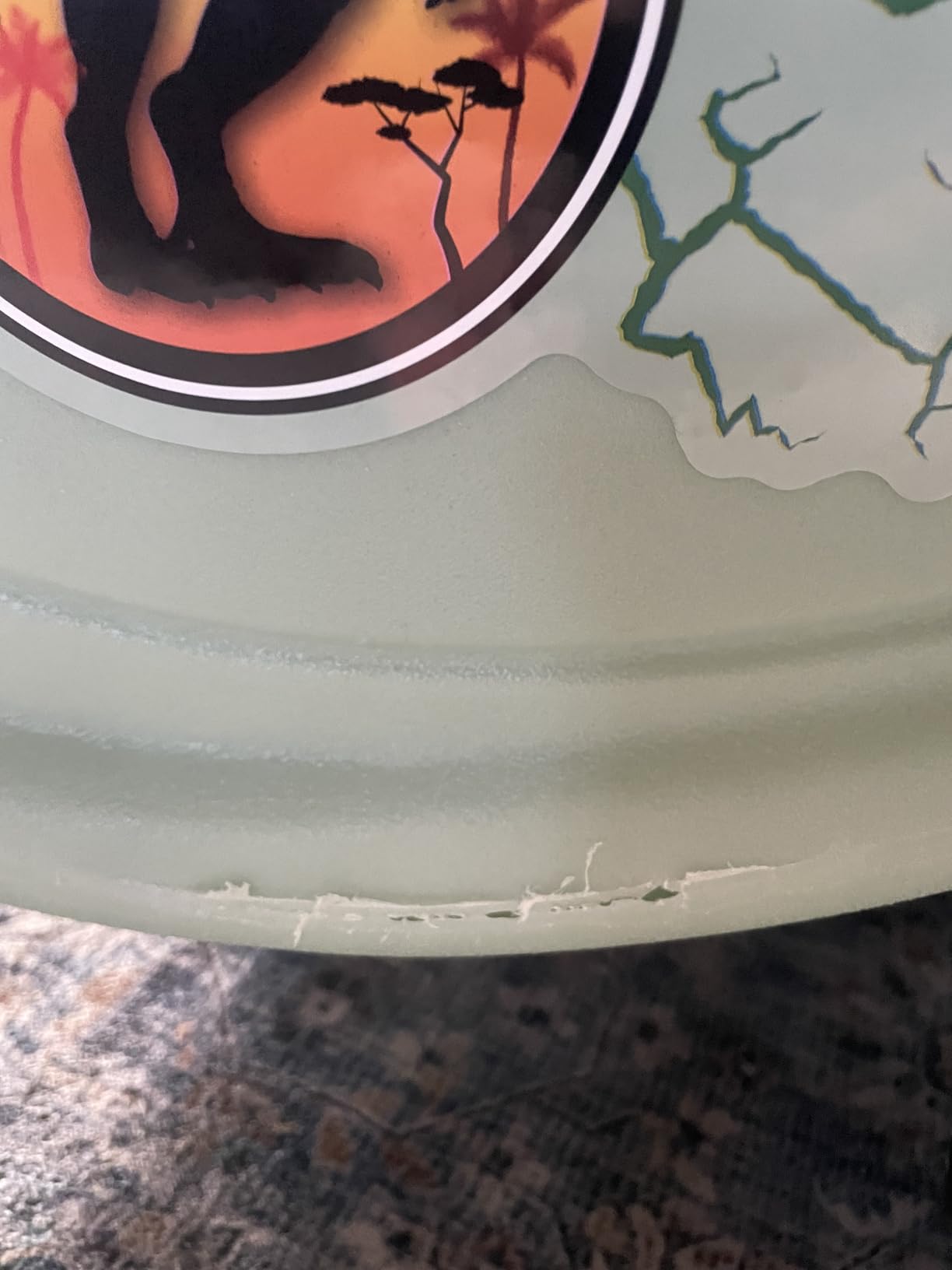
What to check before you buy
Only one thing really: whether your child wants a dinosaur. That is a genuine decision gate rather than a minor preference, and it is the single reason to choose this over the standard Cozy Coupe. Assembly carries the same stiff snap-together complaints as the rest of the range.
Where it works best
Same answer as the standard Cozy Coupe: hard floors, paths and driveways. Durable indoor and outdoor tires, but the roof handle raises the overall height, so check doorways if you plan to keep it indoors over winter.
6. Step2 Push Around Buggy: The Best Push Car for Park Days
Step2 Push Around Buggy Kids Push Car, Ride On Toy, Stroller Substitute, Includes Seat Belt & Horn, Made of Durable Plastic, Max Weight 50 lbs., For Toddlers 1.5-4 Years Old, Pink
Folding handle
Ages 19 months-3 years
Max 50 lb
43.5 x 17.75 x 34.5 inch
Pros
- Double-walled plastic survives heavy park use
- Adjustable harness keeps the child secure
- Under-hood storage and cup holders
- Easy to assemble and wipe clean
Cons
- Tires wear on gravel and grass
- Handle angle tires out tall parents
- Some units arrive with a missing screw
This is the rugged, no-nonsense push car. It is shorter in the cabin than the Whisper Ride II, which means it is quicker to load a squirming toddler into, and it carries the same adjustable harness, horn and steering wheel.
At 4.7 stars from close to 9,900 reviews, it is one of the highest-rated products in the roundup, and the reviews are unusually specific about durability: parents describe splash pads, playgrounds and paths without complaint.
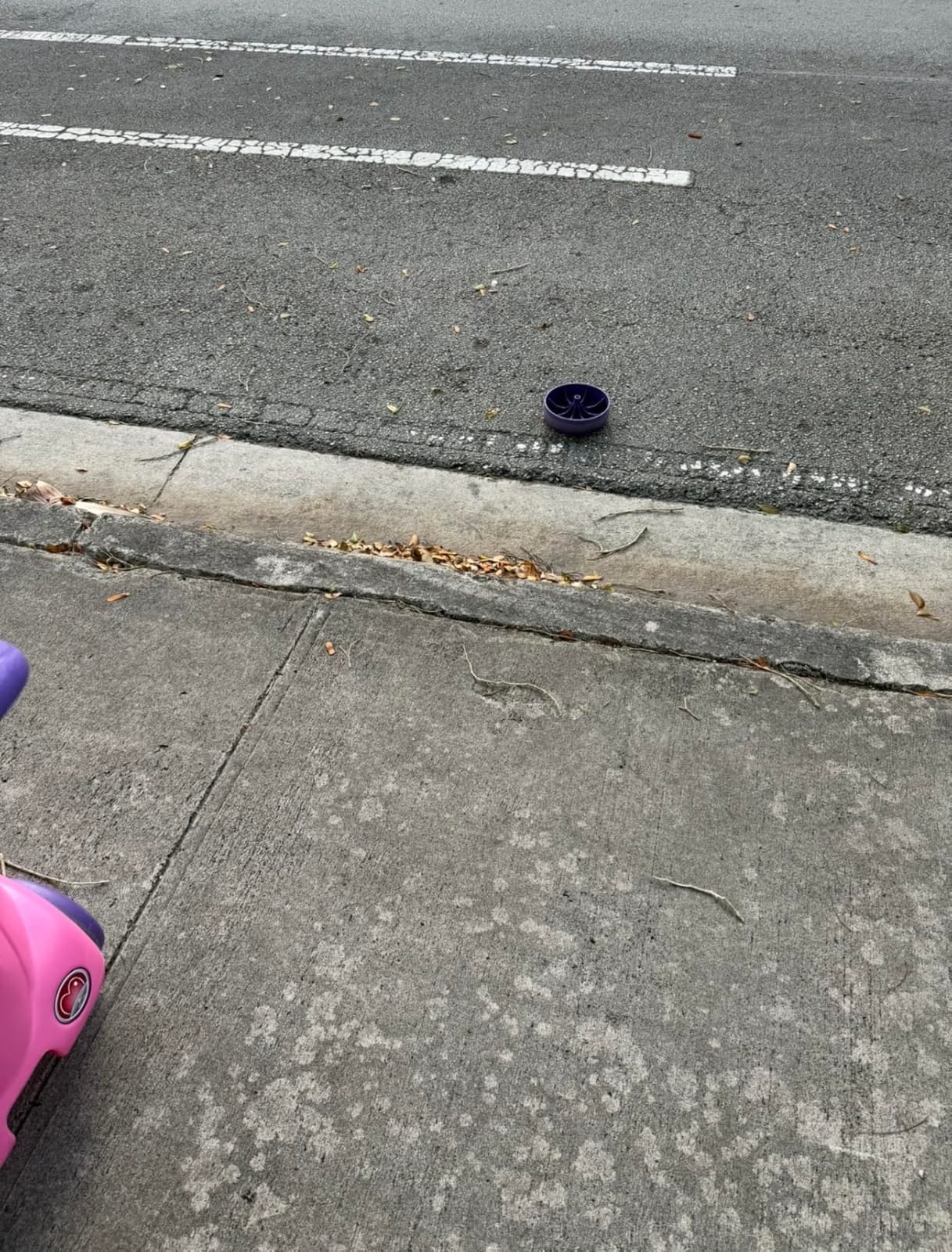
The double-walled construction is why. It is the same material approach as the Whisper Ride and it resists chipping and cracking, which matters for a toy that lives in a car boot and gets dragged over playground surfaces.
There is a 2-year warranty listed in the box contents, and the under-hood compartment plus cup holders are genuinely useful for a full day out.
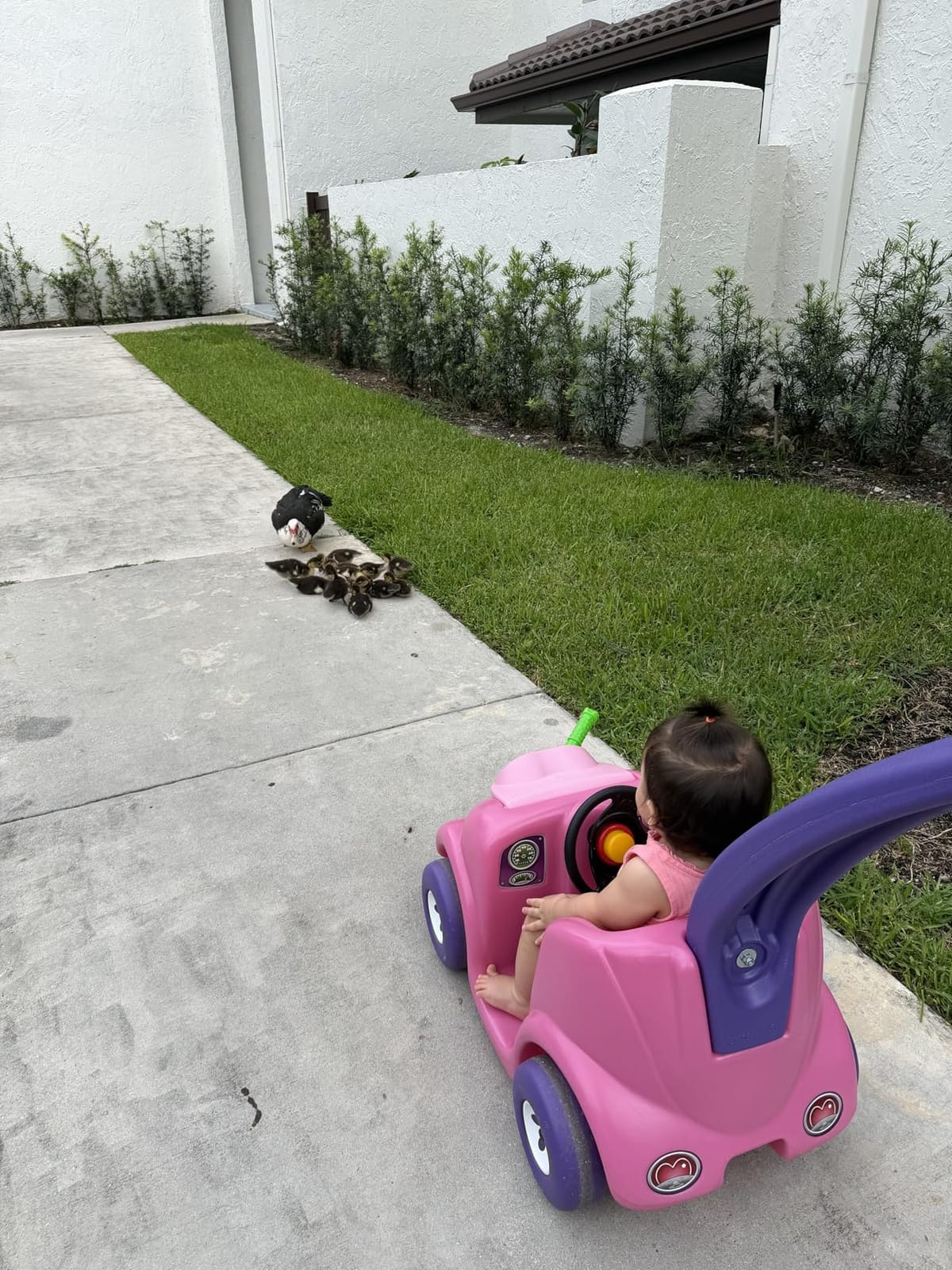
What to check before you buy
The tires are the honest limitation. Reviews are clear that they wear faster off paved surfaces and are not designed for gravel or grass. If your routes are unpaved, this is the wrong push car. Also count the hardware before assembly, since a small number of units have arrived with a screw missing.
Where it works best
Paved park paths, promenades, hard floors and smooth driveways. A taller parent may find the handle angle tiring over a long push, so check the height against your own posture before committing.
7. John Deere Sit N Scoot Tractor: The Best Lightweight Indoor Scooter
John Deere Ride On Toys Sit ‘N Scoot Activity Tractor for Kids Ages 18 Months and Up, Green
Foot-to-floor
Ages 18-36 months
Max 60 lb
3.9 lb
21 x 12 x 16.5 inch
Pros
- Only 3.9 lb
- so a parent can move it easily
- Assembles in minutes with clear instructions
- Officially licensed John Deere styling
- Steers around indoor corners
Cons
- Smaller than buyers expect
- Front wheels can work loose and wobble
- Turns poorly on hard tile
- Decals come off outdoors
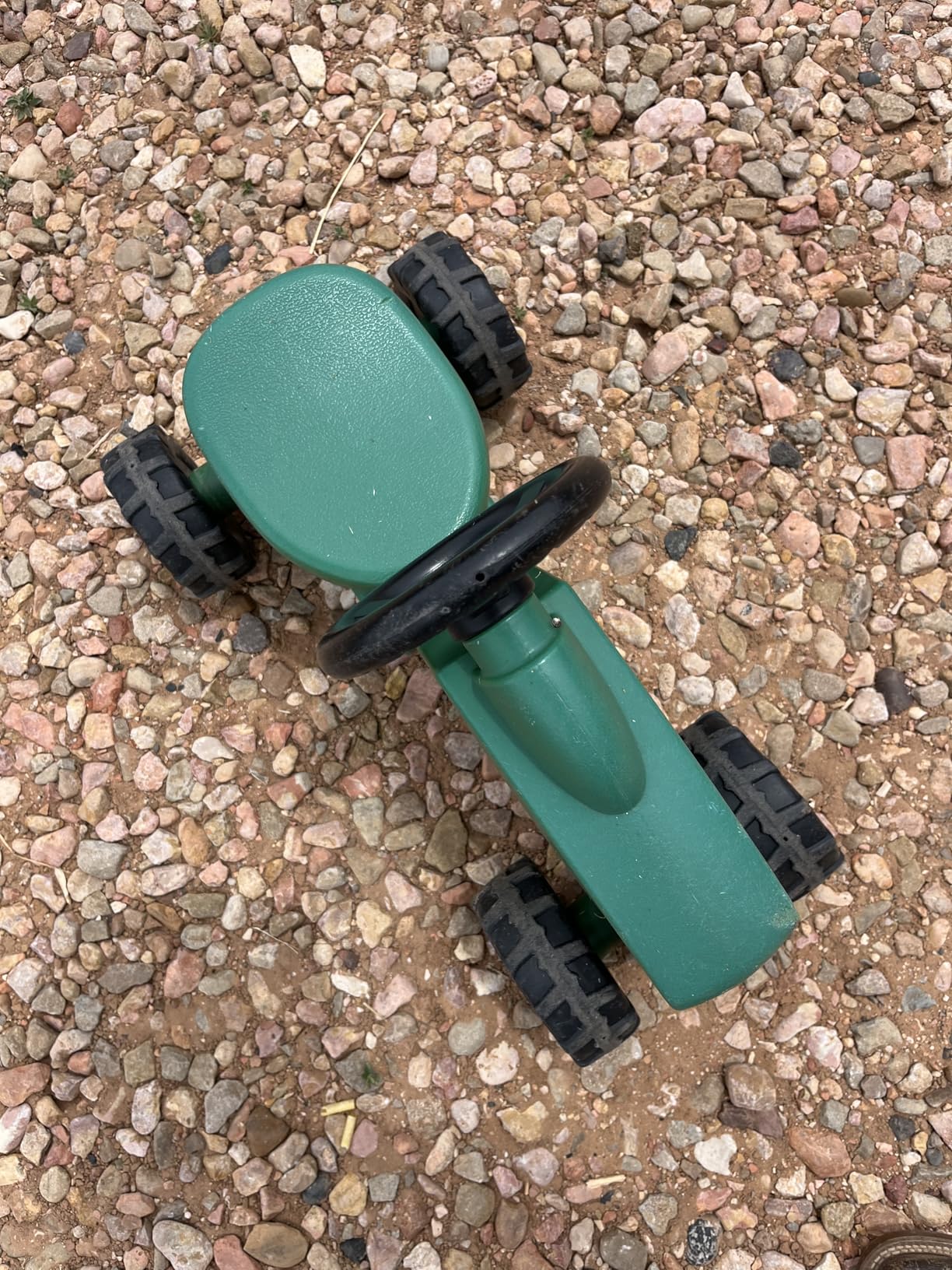
This is a sit-and-scoot tractor: no pedals, no push handle, just a low foot-to-floor seat and a wide wheelbase. A child who has learned to scoot will be driving it in about ten minutes, and because it weighs 3.9 pounds, an adult can move it out of the way single-handed.
That weight is the distinguishing feature here. It is the only ride-on in this roundup light enough to live in a small flat, and the 60-pound weight capacity is the highest in the list.
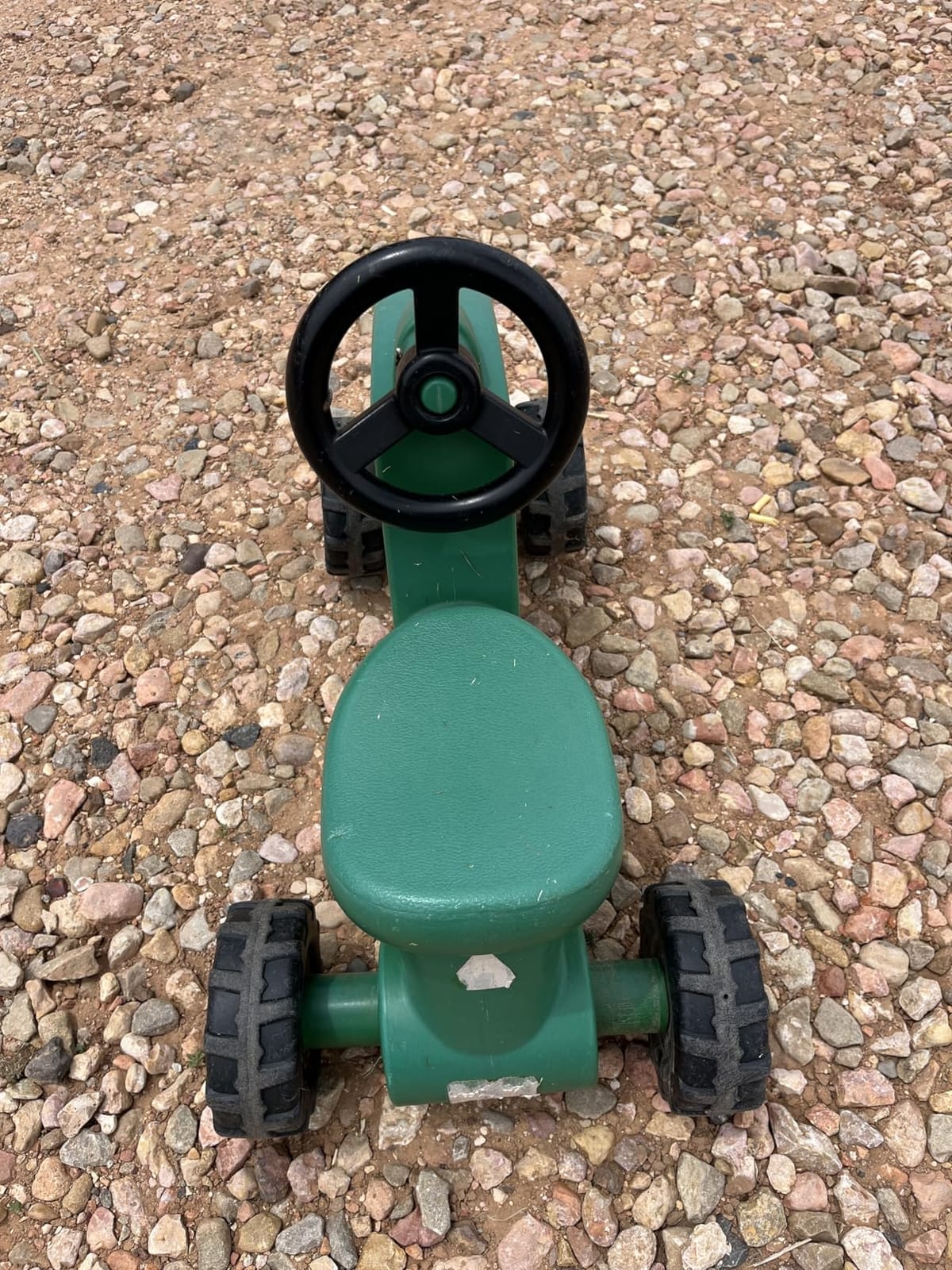
Assembly is genuinely quick, which is worth saying because several toys in this roundup are not. The official John Deere licensing is what a lot of buyers are actually paying for, and parents say the farm detailing holds up well.
It rates 4.4 stars from more than 9,700 reviews, the lowest average in this roundup, but the complaints are narrow and mechanical rather than fundamental.
What to check before you buy
Size is the thing to measure. It is 21 inches long and buyers are routinely surprised by how small it looks in photographs. The other recurring issues are the hardware: front wheels can work loose in the axle and wobble, and they sometimes do not turn well on hard tile.
Where it works best
Indoor floors and a smooth yard or path. It is not built for grass, and the decals degrade with outdoor use. Treat it as the living-room and living-room-adjacent choice.
8. Little Tikes Push and Ride Racer: The Best Ride-On That Starts at 9 Months
Little Tikes Push and Ride Racer – (Amazon Exclusive), 22″L x 10″W x 17″H with screws
Push bar then ride-on
Ages 9 months-3 years
Max 50 lb
22 x 10 x 17 inch
Pros
- Doubles as a push walker and a foot-powered ride-on
- Low seat a 9-month-old can mount
- Sturdy and well balanced on carpet and wood
- First car many families buy
Cons
- Assembly is very difficult and may need a hammer
- Weak instructions
- Footwell cramped for taller toddlers
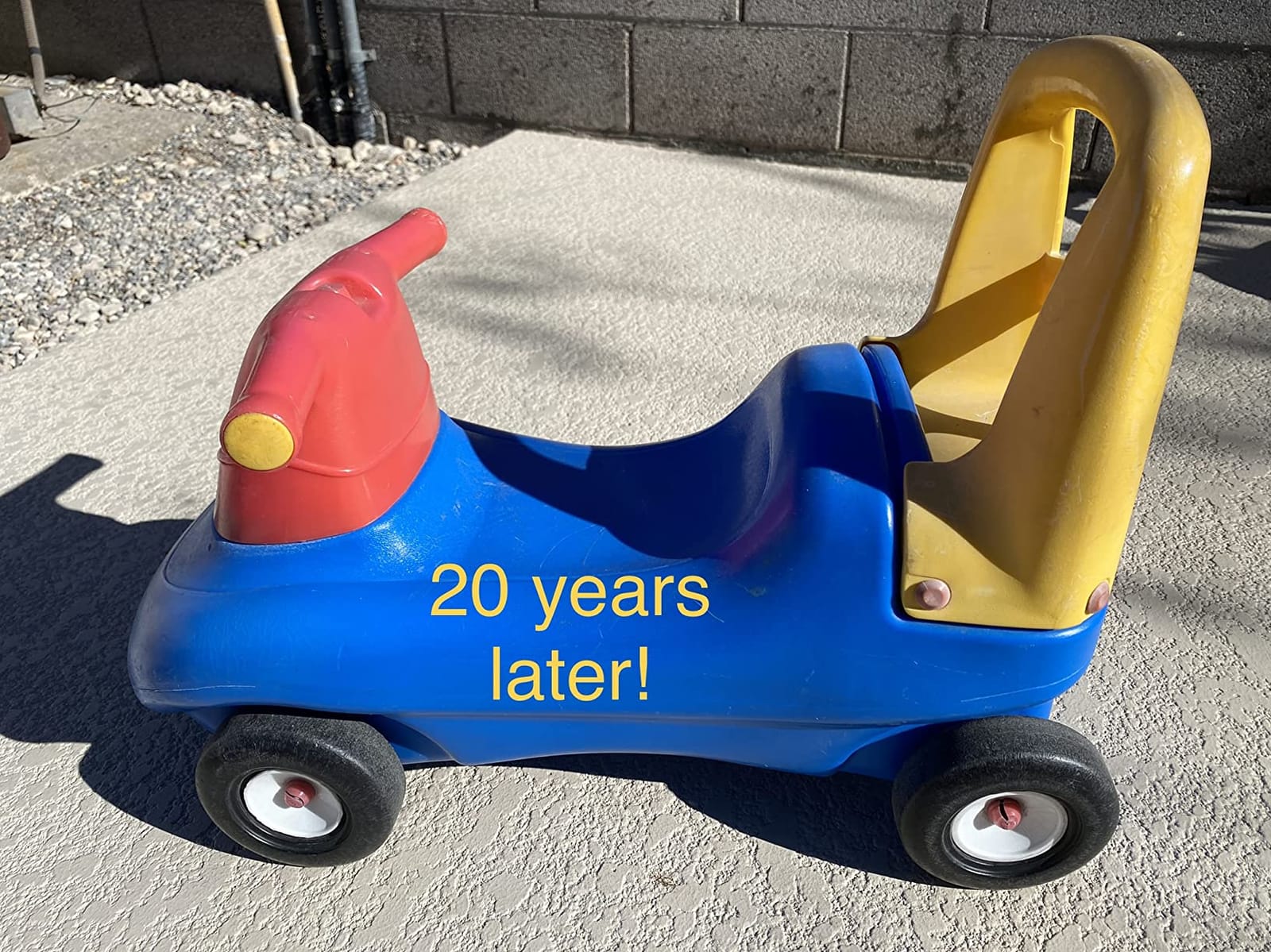
The Push and Ride Racer is the oldest idea in this roundup and still the one that starts earliest. The kid-sized rear handle folds down to become a push bar, so a baby who cannot yet walk can be pushed along in it, and once they can walk, they push themselves with their feet from the same seat.
It is 22 inches long, which makes it the most compact full-size ride-on here, and the low seat height means a 9-month-old can climb on without help. The high back and sturdy handles give a new walker something to hold.
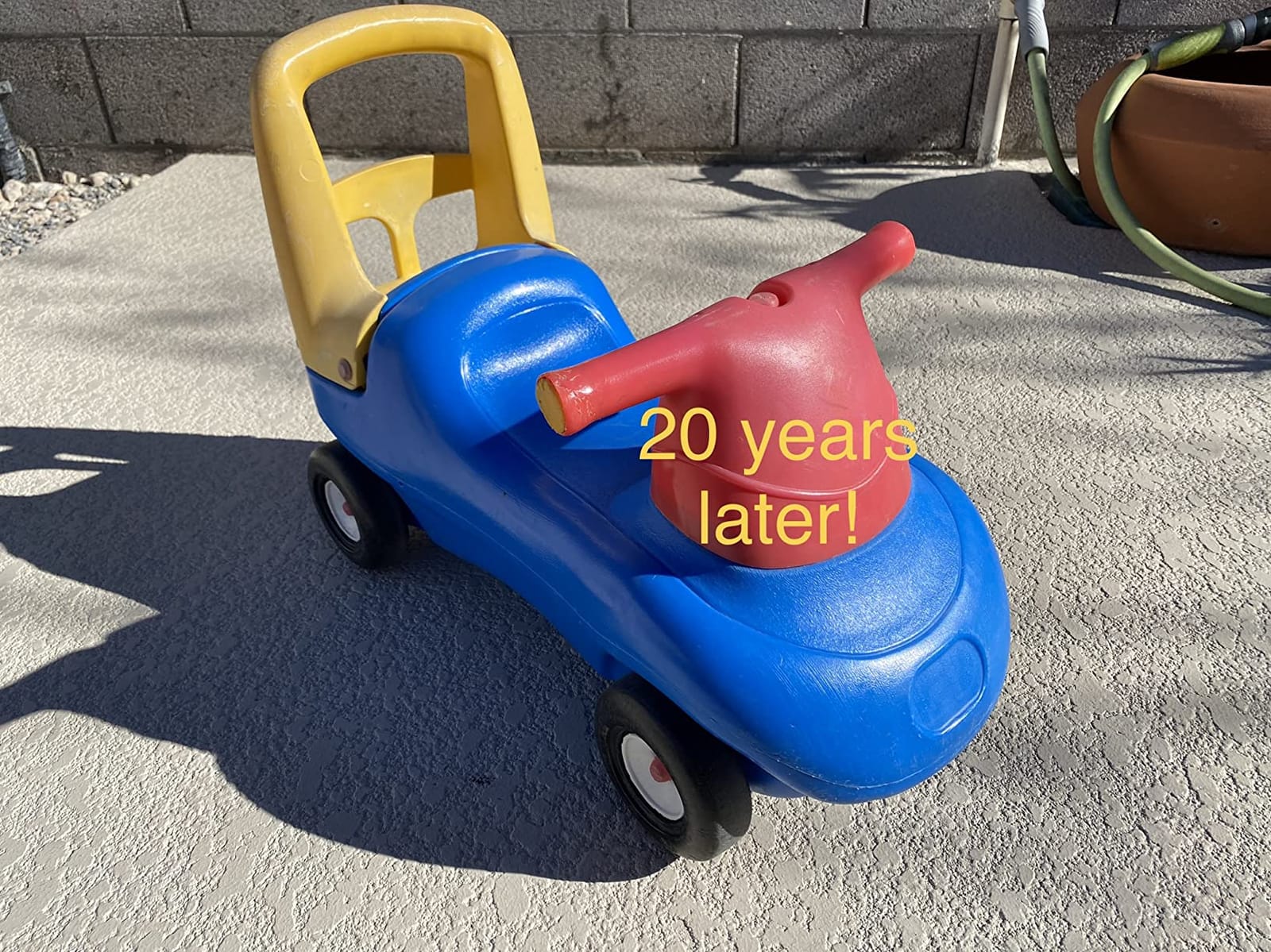
More than 5,400 reviews at 4.4 stars, with reviewers describing it as a dependable first car that families often re-buy for a second child. That re-buy pattern is why you see it on so many secondhand lists.
The plastic is durable enough for carpet and hardwood, which is most of what a first ride-on actually sees.
What to check before you buy
Assembly is the standout problem and the one complaint repeated in nearly every review: the pieces need real force and often a hammer, and the instructions are thin. If you are not comfortable with snap-together plastic, budget an evening or skip this one.
Where it works best
Best for a child on the younger end of the range, and best indoors where the small footprint does not dominate a room. Taller toddlers find the footwell cramped, so expect to move up at around three.
9. newyoo TR007 5-in-1 Tricycle: The Best Ride-On That Grows With Your Child
newyoo TR007 5-in-1 Tricycle for Toddlers 1-3, Toddler Bike, Birthday Gift
Five modes
Ages 12 months-3 years
Max 35 lb
Carbon steel, 9.7 lb
Pros
- Five convertible modes from 12 months to 3 years
- Push handlebar steers and brakes
- Adjustable handlebar
- seat and pedals
- Carbon steel frame with EVA wheels
Cons
- Heaviest and bulkiest option here
- 35 lb limit is lower than most competitors
- Mode conversion takes practice
Most ride-ons age out in a year. This one converts through five modes: push tricycle, push balance bike, tricycle, balance bike, then a pedal bike. One product can genuinely follow a child from their first birthday to their third.
The rotating 135-degree push handlebar is a safety feature rather than a convenience. It steers and brakes, so a parent can slow the child on a slope or a path rather than relying on the child’s judgement.
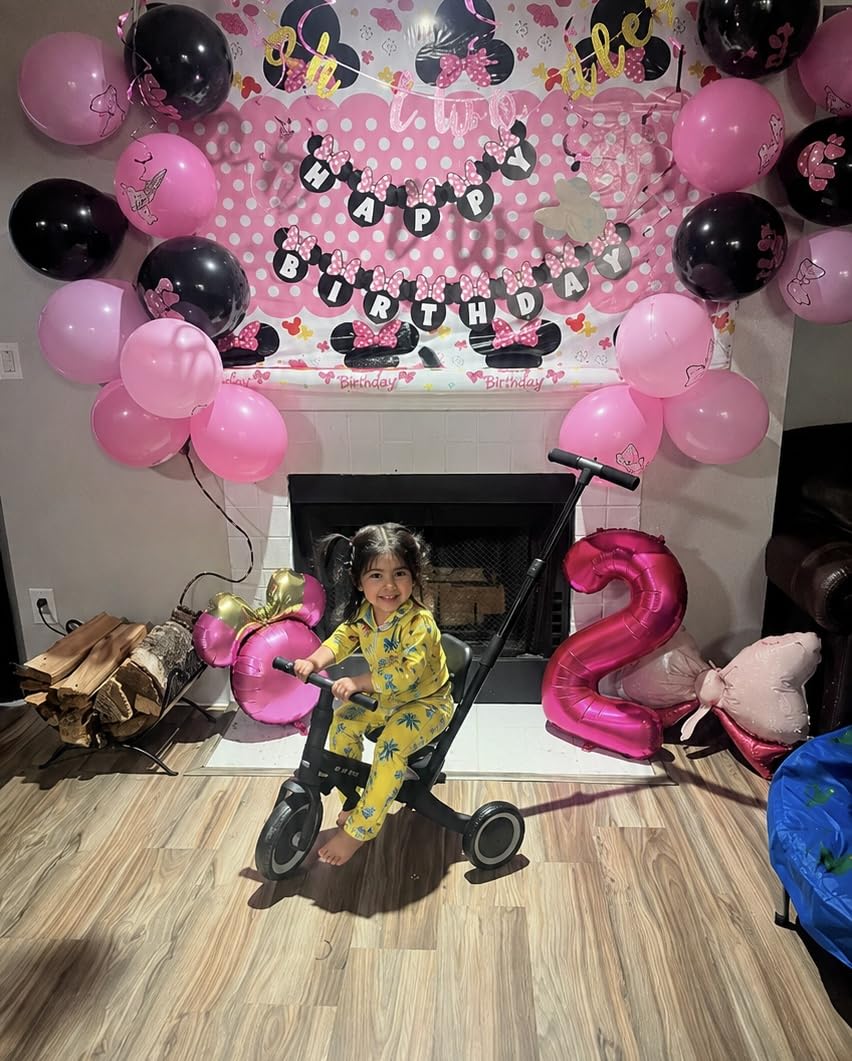
Adjustability is what makes it last. The handlebar, seat and three pedal positions all adjust, so the same frame grows with the child rather than being handed down. The carbon steel frame meets EN188 and ASTM approval, and the EVA wheels absorb bumps.
It sits at 4.5 stars from more than 5,300 reviews, and reviewers consistently describe the button-press conversion as faster than re-tooling bolts.

What to check before you buy
Two real trade-offs. It weighs 9.7 pounds and is bulkier than a simple push car, so it is harder to carry up stairs or store in a small flat. And the 35-pound weight limit is the lowest here, so a chunkier three-year-old will outgrow it earlier than the age range suggests. It suits children under 43.3 inches tall.
Where it works best
Outdoor paths, driveways and park routes where the parent handle gives you control. The heavier frame and steel construction handle rougher ground than the plastic options, but it is still not a gravel or mud toy.
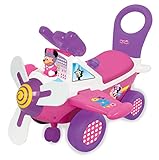
10. Kiddieland Disney My First Minnie Plane: The Best Ride-On With Lights and Music
Kiddieland Disney My First Minnie Ride-On Plane Toy with Music, Lights & Sounds, Steering Wheel, 360° Turning, Horn, Foot-to-Floor Toddler Vehicle
Music and LED lights
Ages 12-36 months
Weighs 1 kg
14 x 11 x 21 inch
Pros
- Music
- flashing lights and spinning propellers
- Steering wheel gives full 360 degree turns
- Low wide base suits new scooters
- Disney styling drives role play
Cons
- Compact seat is cramped for taller toddlers
- Replaceable batteries needed over time
- Built for hard floors
- not outdoor terrain
When the toy is as much about the sounds as the movement, this is the pick. Music, flashing LED lights, spinning propellers, takeoff and landing sounds, and a working horn. For a child who will not sit still on a silent ride-on, the sensory layer often is the thing that holds their attention.
The 360-degree steering wheel works properly, which sounds minor until you have watched a toddler lean on a wheel that does nothing. The low, wide foot-to-floor base is stable for a child still learning to scoot.
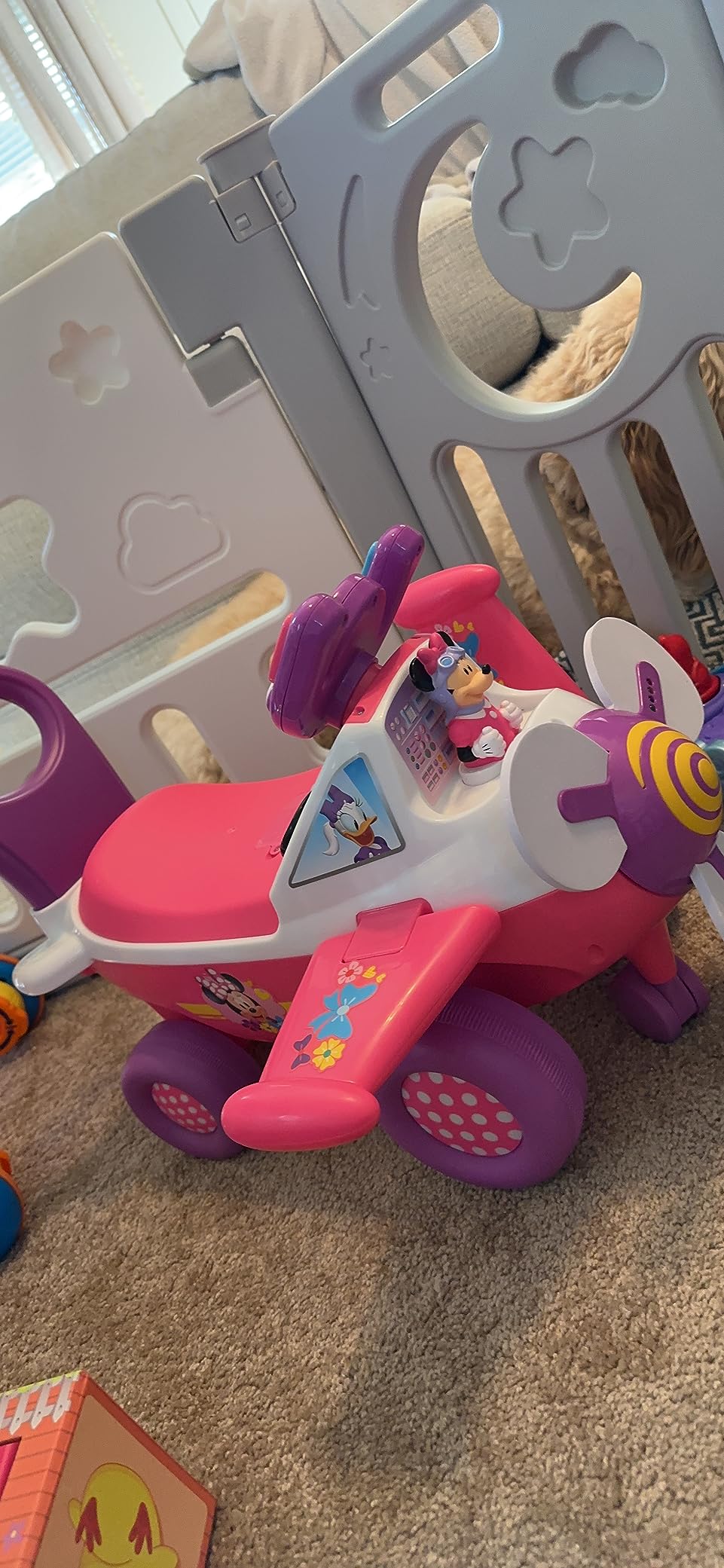
It is rated 4.8 stars from more than 2,700 reviews, which is the second-highest average in this roundup. Parents write about the lights and sounds being the reason play lasts, and the Minnie styling doing the same work the Harley branding does on the Tough Trike.
At 1 kilogram, it is light enough to move between rooms, and the 14 by 11 inch footprint is the smallest here, which matters in a small flat.
What to check before you buy
Two things. The small footprint is a real limit: parents note that taller toddlers run out of legroom before they outgrow the age label. And the lights and sounds take replaceable batteries, which is a running cost that the purchase price does not hint at.
Where it works best
Hard indoor floors and low-pile carpets, which is exactly what the manufacturer specifies. This is not an outdoor ride-on; there is no tread depth and no suspension for a path.
11. Radio Flyer Creativity Car: The Best Ride-On for Sensory Play
Radio Flyer Creativity Car, Toddler Ride On Toys, for Toddlers 1-3
Walker, ride-on and play
Ages 1-3 years
Max 42 lb
4.9 lb
21.5 x 10.5 x 16.3 inch
Pros
- Three modes including an anti-tip walker
- 17 interactive activities
- Arrives largely assembled
- Under-seat storage
Cons
- Steering wheel does not turn the front wheels
- Listing does not make that clear
- Light and sound features need batteries
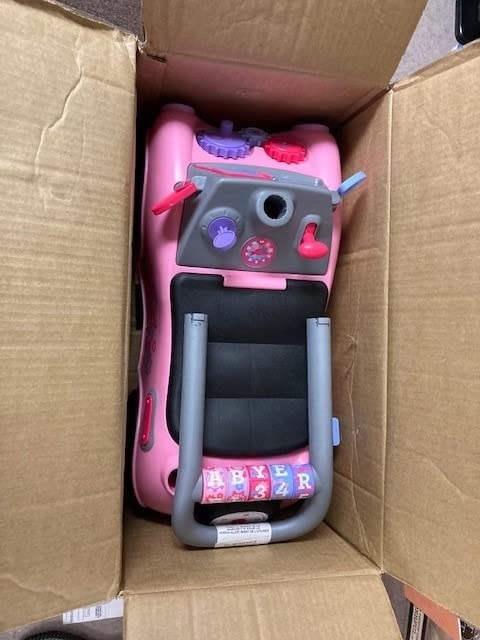
The Creativity Car is three toys in one: a push walker with an anti-tip base, a foot-powered ride-on, and a sensory activity panel with 17 features. Interlocking gears, sliding beads, a clicking spare tire, folding mirrors, a horn and an interactive dashboard give a one-year-old something to do before they are ready to move the car at all.
That three-in-one design is why it works across the 1-to-3-year window better than most. It also has a one-year manufacturer warranty and arrives largely assembled.
It holds 4.8 stars from more than 2,100 reviews, matching the highest average in the roundup. The flip-up seat opens into under-seat storage, which parents use to carry a favourite toy along on longer outings.
At 4.9 pounds it is one of the lighter options, so a parent can shift it between rooms without thinking about it. The 42-pound limit is at the lower end, so a big three-year-old will outgrow it.
What to check before you buy
Read this one carefully: the steering wheel does not link to the front wheels, so you tilt the car to turn it. Reviewers say the listing does not make that clear, and it is the single most repeated complaint. Once you know, it stops mattering, but it surprises people on delivery day.
Where it works best
Indoor floors and smooth paths, especially during the walker phase. The lights and sounds depend on batteries that need replacing, which is a small ongoing cost for a toy used daily.
12. Radio Flyer Scoot About: The Budget Pick for Confined Scooters
Radio Flyer Scoot About Ride On, Toddler Ride On Toys, for Toddlers 1-3
Foot-to-floor
Ages 1-3 years
Max 42 lb
23.5 x 17.5 x 18 inch
Pros
- Wide-set front wheels give real stability
- Furniture-friendly front bumper
- Adjustable seat extends the range
- Easy-glide wheels roll quietly indoors
Cons
- Narrow rear wheels struggle on grass and gravel
- Not a true scooter for older children
- No parent push handle
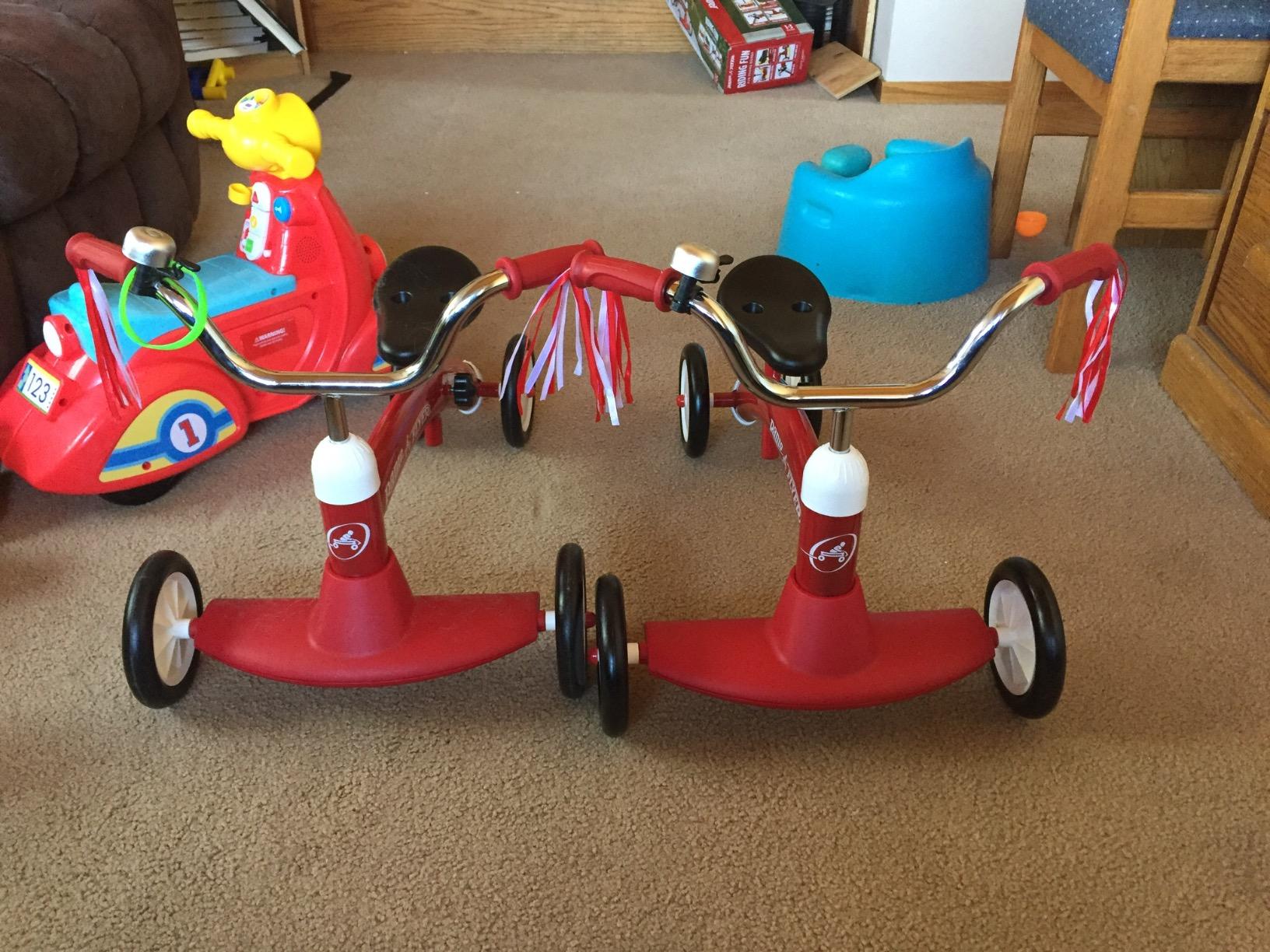
The Scoot About is a straightforward foot-to-floor ride-on for a child who is already walking confidently. The wide-set front wheels are what make it work: they give a new scooter real stability, while the narrow rear wheels leave a clear path for a toddler to push off with their feet.
Working steering is standard here, and there is a front bumper designed to be furniture-friendly, which is the detail that makes it usable in a living room without decorating the skirting board.
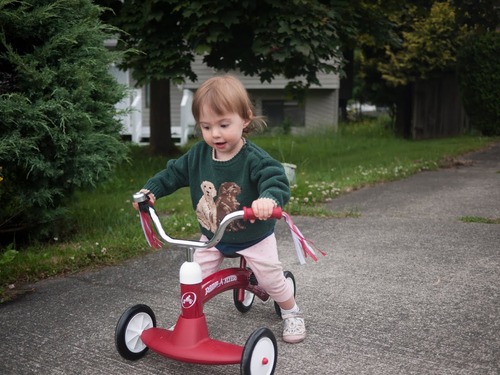
It holds 4.7 stars from more than 2,000 reviews. The adjustable seat is the quiet win, extending the usable age range so the toy does not end up outgrown within months.
Easy-glide wheels roll smoothly on indoor floors and pavements, and a ringing bell plus handlebar streamers add a bit of play value for a child who has moved past the sensory stage.
What to check before you buy
Two limits are worth being honest about. The narrow rear wheels are built for smooth, hard surfaces and struggle on grass or gravel, so it is an indoor and pavement toy. And with no parent push handle, it only suits a child who is already walking on their own.
Where it works best
Hard floors, corridors and paved paths. It is a good second toy for a child who has already mastered a balance bike and wants something with a steering wheel and a bit more presence.
How to Choose a Ride-On Toy by Age and Milestone
Age labels on ride-on packaging are close to meaningless without knowing what your child can already do. Milestones work far better. Sit with your child and ask four questions in order: can they sit upright without support, can they pull themselves to stand, do they walk independently, and can they steer a toy while walking alongside it?
If the answer to the last two is still no, start at a push buggy or a balance bike. A child with independent walking and no steering tends to do well with a foot-to-floor ride-on, because the whole job is scooting, which they already know how to do. Independent walking plus confident steering opens up pedal trikes, and a child pushing off the ground with one foot while running is usually ready for that stage.
Beyond about three, the categories change again. The toy becomes a balance bike or a pedal bike rather than a ride-on car, and children start using them in ways the manufacturer never tested. If you are also shopping for that age group, our electric ride-on cars guide covers the battery-powered side in more depth.
Two other variables matter as much as the milestone. Where the toy will live decides everything about wheel type, and how much storage you have decides which push cars are realistic at all. A Step2 Whisper Ride II is 45.5 inches long; a Kiddieland Minnie Plane is 14 inches. That is the difference between a dedicated corner and a spot by the sofa.
12V vs 24V Ride-Ons: What Toddlers Actually Need
Short answer: for a toddler, neither. Every powered ride-on in this roundup is child-powered, and for good reason. A 12V car is a step up for a child around three or four, and a 24V car is aimed at five to eight year olds. The fastest 24V ride-ons reach about 3 MPH, which is a running speed for an older child and a genuine problem for a two-year-old.
That question comes up constantly, and a recent Facebook group thread about whether to get 12V or 24V for a two-to-three-year-old on a hilly lawn drew more than 20 comments. The recurring answer is that the hill is not the deciding factor, the child is. Parents on that thread reported buying a car their toddler could not reach the pedals on comfortably, which is a far more common problem than motor power.
Typical age: 12V suits roughly 3 years and up; 24V is aimed at 5 to 8 years.
Top speed: about 2 to 3 MPH for a 12V car, about 3 MPH for a 24V car.
Terrain: 12V handles paved surfaces and light grass; 24V copes with grass, gravel and slopes.
Parental remote: usually 2.4GHz on both, which is the feature that actually matters.
Child controls: 12V gives steering and speed limits; 24V adds gears and more power.
There is no such thing as a flat lawn in most of these discussions. Parents buying for a sloped yard usually report that a small powered car simply bogs down and stops, and the fix is not a higher voltage. It is a wider wheelbase, deeper tread, and being honest about how much of the yard is genuinely usable.
If you are planning ahead for a powered car, the parental remote is the feature that matters most, not the voltage. A 2.4GHz remote lets an adult slow or stop the car before a child reaches a road, a dog, or water. Soft start, which ramps the motor over a second or two instead of snapping to full power, is the second one to check for.
Safety Checklist Before the First Drive
Five things to verify before your child uses any of these for the first time. Check the weight capacity against your child, not their age label; most in this roundup cap out at 50 to 55 pounds and two cap at 42.
Second, fit the seat belt or harness properly. Only some of the push cars here come with one, and it should sit at armpit level rather than across the stomach. Third, look at the wheelbase: a wider base is more stable and harder to tip, which is why the trike and the balance bike are safer choices for a beginner than a narrow-footprint ride-on.
Fourth, check the surface. Smooth indoor floors, level paths and pavements are safe. Gravel, steep slopes, steps and driveways with cars are not, regardless of the toy’s rating. Keep the toy away from water, and keep it out of reach of any younger sibling who is still walking.
Fifth, remember these are outdoor toys without exception, apart from the balance bike and the Minnie plane. A ride-on parked in a sunlit garage or a hot porch ages faster than the warranty covers, and the tires degrade. If you need indoor play in a small space, the ball pit options we cover here take up far less room and a fraction of the noise.
Buying Used: What to Check on a Hand-Me-Down Ride-On
Secondhand ride-ons are everywhere, because a plastic car or trike that a child has outgrown still works perfectly for the next one. Check these things before you commit, and most secondhand problems are mechanical rather than cosmetic.
For a pedal trike or a balance bike, check the wheels spin freely, the axles are tight, and the seat adjustment mechanism still locks. A loose axle is the single most common complaint in reviews of new models too, and it is the easiest thing to fix on a used one. Look for cracks around the wheel mounts and at the base of the seat post.
For a powered ride-on, the battery decides whether the deal is worth anything. A sealed lead-acid pack that has been left flat for a year or more will often be close to finished, and a replacement pack plus charger can cost more than a new small car. Ask whether the car was stored indoors, whether the charger is included, and whether it has ever been left in a freezing shed.
Finally, check for a missing screw. This is the most commonly reported issue across the push cars in this roundup, on new units as well as used ones. Count the hardware against the toy before you pay.
Off-Season Storage and Battery Care
Ride-on toys take up a lot of vertical space, and most families give up on them after a wet winter. A few things keep them in condition and make them easier to bring out again in spring.
Wash the plastic with warm water and a mild detergent, and let it dry fully before storing it. Grit trapped in a wheel axle is what wears bearings, and grit under a seat collects faster than you would expect. Wipe the steering wheel and any audio panels too, and take the batteries out of sensory ride-ons so they cannot leak.
Store it upright in a dry, ventilated space rather than flat in a damp garage, and keep it out of direct sunlight. If you have a powered ride-on, remove the battery pack for long storage and recharge it fully before you put it away, then top it up every couple of months. A battery kept at full charge in a cold garage will still lose capacity faster than one kept at partial charge indoors.
Finally, inflate or check tire pressure before the first ride of the season. A flat tire sitting under a car’s weight for three months can develop a permanent set, and it is the easiest thing in this whole roundup to fix yourself.
Frequently Asked Questions
What is the best ride-on toy for a 2-year-old?
The Step2 Whisper Ride II and the Little Tikes Cozy Coupe are the safest all-round choices at 2, because both work as parent-pushed cars first and convert to child-powered riding once your toddler is walking well. Both are rated for 18 months to 5 years and cap at 50 pounds. Skip pedal trikes at this age, since a two-year-old usually cannot reach the pedals yet.
Can a 1-year-old use a ride-on toy?
Yes, but only the non-pedal types. A balance bike such as the SEREED four-wheel model, or a push-bar walker ride-on such as the Little Tikes Push and Ride Racer, works from about 9 to 12 months because the child sits and is pushed rather than steering. Anything with pedals or a motor should wait until the child is walking independently and can sit up without support.
Is 24V too fast for a toddler?
For most toddlers, yes. The fastest 24V ride-ons reach about 3 MPH and are designed for children aged 5 to 8, which makes them a poor fit below age four. Even 12V cars run at roughly 2 to 3 MPH and suit a child closer to three. A parent-controlled 2.4GHz remote matters far more than voltage, so look for that instead of chasing a higher number.
Do I need a parental remote control for a toddler ride-on?
Only for a battery-powered ride-on, and yes it is the feature to prioritise if you are buying one. A 2.4GHz remote lets an adult slow or stop the car before a child reaches a road, water or a dog. None of the push, balance-bike or foot-to-floor ride-ons in this roundup need one, because the child supplies all the power.
What are the key differences between 12 volt and 24 volt kids’ cars?
The real differences are age fit, power and terrain. A 12V car runs at about 2 to 3 MPH and suits children from around age three on paved surfaces and light grass. A 24V car runs at about 3 MPH, carries more power, handles slopes and gravel better, and is aimed at children aged 5 to 8. Neither belongs in front of a two-year-old.
Can my toddler use a ride-on toy on a hilly lawn?
Only on the flat parts, and this is where most returns happen. Parents who bought small powered cars for sloped yards report that they bog down and stop. A pedal trike with a wide wheelbase and rugged tread handles a gentle incline far better, and on a real slope a child-powered toy is safer than any motor because the child sets the pace.
Final Verdict: Which Ride-On Fits Your Toddler
If you take one recommendation from this roundup of the best ride on toys for toddlers, make it the one that matches your child’s walking stage rather than the one with the most features. A child who is not walking yet needs a push bar or a balance bike. A confident new walker needs a foot-to-floor or push car. A child who can already pedal needs a trike.
Within that stage, the Fisher-Price Tough Trike is our overall pick for a confident toddler because it is sturdier, more heavily reviewed and more generously weighted than anything else here. The Step2 Whisper Ride II wins on long walks, the Little Tikes Cozy Coupe wins on two-mode versatility, and the SEREED balance bike wins outright at the youngest end.
Whatever you choose, check the weight capacity, fit the harness properly and set the rules about surfaces before the first drive rather than after. Most of the disappointment in this category comes from a tyre meeting gravel, not from a disappointing toy.