
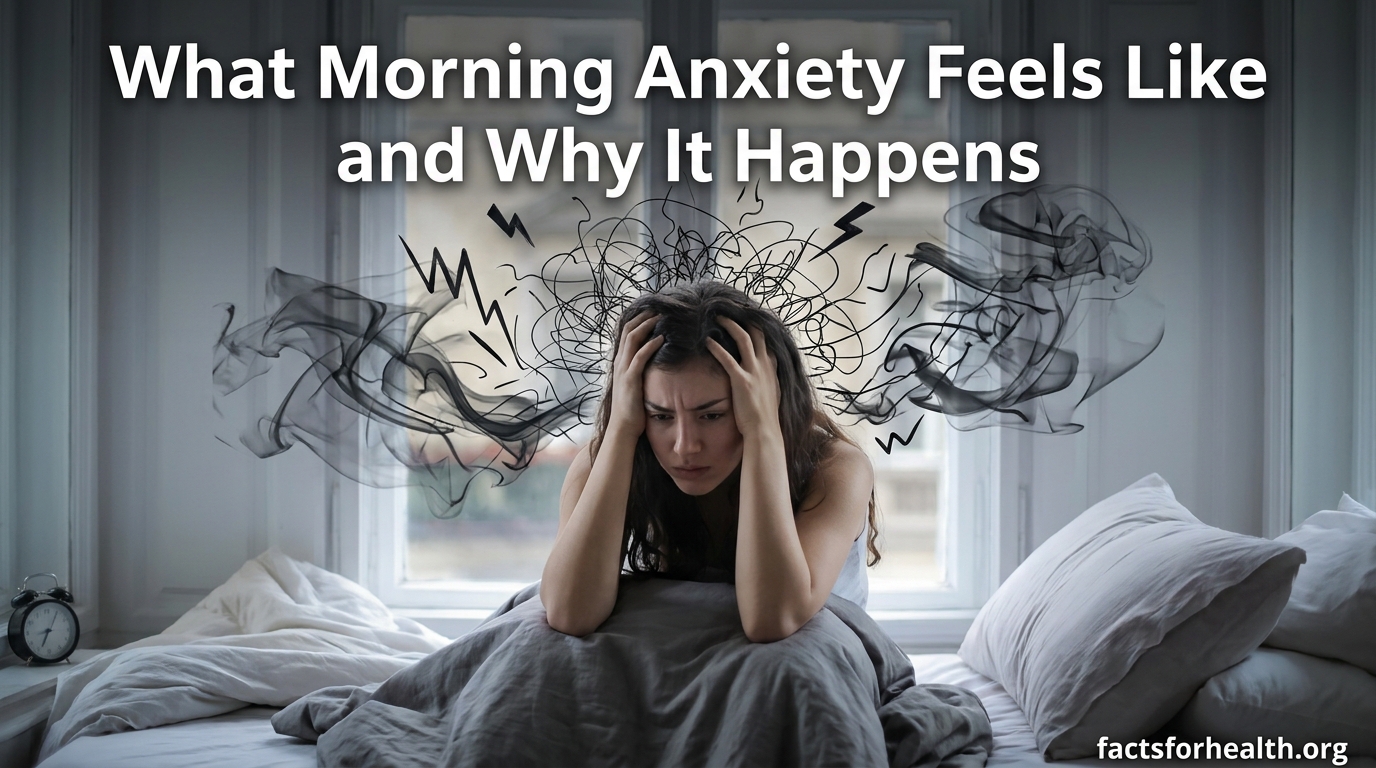
You open your eyes, and before you have even fully woken up, your heart is pounding. Your mind is already racing through everything you need to do today, everything you did not finish yesterday, and a vague sense that something is wrong. If this sounds familiar, you are dealing with morning anxiety.
Morning anxiety is a specific type of anxiety that hits the moment you wake up or within the first few minutes of becoming conscious. It comes with a rush of physical and mental symptoms that can make getting out of bed feel impossible. You might feel a knot in your stomach, tension across your chest, or a sense of dread that has no clear cause.
In this guide, we will break down exactly what morning anxiety feels like, why it happens, and what you can do about it. Whether you experience this occasionally or every single day, understanding the biology behind it can help you feel less alone and more in control.
Table of Contents
What Morning Anxiety Feels Like
Morning anxiety feels different from the anxiety you might experience later in the day. It hits hard and fast, often before you have had a chance to think clearly or even orient yourself to your surroundings. Many people describe it as an adrenaline dump that happens the second consciousness returns.
The experience usually combines physical sensations with a flood of worried thoughts. You might wake up with your mind already in overdrive, mentally rehearsing problems, dreading the day ahead, or feeling a generalized sense of doom that does not attach to any specific threat. Some people describe it as feeling like they are bracing for impact before anything has even happened.
On Reddit forums like r/Anxiety, users frequently describe the experience in vivid terms. One common thread is the feeling of literally sensing the cortisol release when waking. People say it feels like a wave washing over them, a sudden jolt of energy that has nowhere to go. Others describe a heavy, weighted dread in their chest that makes the thought of facing the day feel overwhelming.
For some, morning anxiety feels like a panic attack that builds gradually. It starts as a subtle unease, then grows into full-body tension, shallow breathing, and a racing heart. For others, it arrives all at once, the moment the alarm goes off or the moment they surface from a dream. Either way, the common thread is that the anxiety is waiting for you before your feet even hit the floor.
What makes morning anxiety especially frustrating is that it often improves as the day goes on. Many people report that their symptoms peak in the first 30 to 60 minutes after waking and then gradually subside. This pattern can make you feel like you are starting every day from a deficit, having to climb out of an emotional hole before you can even begin your routine.
It is also common for morning anxiety to create a cycle of dread around sleep itself. People who experience it regularly may start fearing bedtime because they know what is coming in the morning. This anticipatory anxiety can interfere with falling asleep and staying asleep, which in turn makes the next morning’s anxiety worse.
Physical Symptoms of Morning Anxiety
The physical symptoms of morning anxiety are real and measurable. Your body is responding to an internal alarm system, and the sensations can be intense enough to make you wonder if something is medically wrong. Understanding these symptoms can help you recognize what is happening and reduce the fear that often amplifies them.
Here are the most common physical symptoms people experience with morning anxiety:
- Racing heart or heart palpitations – Your heart rate spikes, sometimes feeling irregular or pounding in your chest. This is one of the most frequently reported symptoms.
- Chest tightness – A feeling of pressure, constriction, or heaviness across the chest that can mimic the sensation of a heart problem.
- Shaking or tremors – Your hands, legs, or entire body may tremble as adrenaline floods your system.
- Sweating – You might wake up already sweating or start perspiring heavily within minutes of waking.
- Nausea and stomach issues – Many people feel a knot in their stomach, queasiness, or even the urge to vomit. Some experience diarrhea or other digestive distress.
- Difficulty breathing – Shallow, rapid breathing or a feeling that you cannot get a full breath is common.
- Headache – Tension headaches can develop quickly, especially if you wake up clenching your jaw or tightening your neck muscles.
- Dizziness or lightheadedness – A sense of being off-balance or feeling faint, often tied to rapid breathing patterns.
- Hot flashes or chills – Your temperature regulation can feel off, with sudden waves of heat or cold.
- Muscle tension – Tightness in the neck, shoulders, jaw, or back that may have been present all night.
These symptoms are driven by your autonomic nervous system. When your body perceives a threat, whether real or imagined, it activates the sympathetic nervous system. This is the same fight-or-flight response that would help you run from danger. The problem with morning anxiety is that the threat is internal, not external, so there is nothing to run from and nowhere for that energy to go.
Forum users frequently mention the intensity of these physical sensations. People describe checking their pulse, wondering if they are having a medical emergency, or feeling frustrated that their body is reacting this way when nothing is actually wrong. This fear of the symptoms themselves can create a feedback loop that makes the anxiety worse.
If you experience these symptoms every morning, it is a good idea to talk with a healthcare provider. They can rule out underlying conditions like thyroid issues, blood sugar problems, or cardiac concerns that may be contributing to what you are feeling.
Why Morning Anxiety Happens: The Causes
To understand why morning anxiety happens, you need to understand what your body is doing while you sleep and in the moments after you wake up. The short answer is hormones. The longer answer involves a complex interaction between your stress response system, your sleep cycle, and the thoughts you carry into each day.
The Cortisol Awakening Response
The single biggest driver of morning anxiety is the cortisol awakening response. Cortisol is your body’s primary stress hormone, and it follows a daily rhythm. Levels are lowest around midnight, then begin rising in the early morning hours. They typically peak between 6:00 and 8:00 AM, which is your body’s natural way of preparing you to wake up and face the day.
This cortisol spike is completely normal. In fact, it is essential. Without it, you would not have the energy or alertness to get out of bed. But if you already have an overactive stress response, anxiety disorder, or chronic stress, this normal cortisol increase can feel overwhelming. Your body interprets the hormone surge as a signal that something is wrong, and your nervous system shifts into fight-or-flight mode.
Many people on anxiety forums describe this exact phenomenon. They say they can physically feel the cortisol release happening. One user described it as feeling like a switch flips the moment they wake up, and suddenly their heart is racing and their mind is flooded with worry. This is the cortisol awakening response interacting with an already sensitized nervous system.
The HPA Axis and Chronic Stress
The cortisol awakening response is controlled by a system called the hypothalamic-pituitary-adrenal axis, or HPA axis. This is the command center for your body’s stress response. When you experience chronic stress, whether from work, relationships, financial pressure, or unresolved trauma, your HPA axis can become dysregulated.
A dysregulated HPA axis does not just affect your morning cortisol. It can keep your baseline stress levels elevated around the clock. This means that when the normal morning cortisol spike hits, it lands on an already heightened foundation. The result is a more intense anxiety response than someone with a well-regulated system would experience.
Chronic stress also affects how your brain processes threats. The amygdala, which is your brain’s alarm system, becomes more reactive. At the same time, the prefrontal cortex, which helps you think rationally and calm yourself down, becomes less effective. This combination makes you more vulnerable to anxiety in general and especially in the vulnerable transition period between sleep and wakefulness.
Sleep Quality and Morning Anxiety
There is a strong connection between sleep problems and morning anxiety. Poor sleep does not just make you tired. It disrupts the systems that regulate your stress response. When you do not get enough deep sleep or REM sleep, your cortisol rhythm can become irregular, your nervous system stays on high alert, and your emotional regulation takes a hit.
Insomnia is particularly linked to morning anxiety. If you spend the night tossing and turning, or if you wake frequently, your body never fully settles into the restorative sleep phases. By morning, your nervous system is already primed for reactivity. Add the normal cortisol spike, and you have a recipe for intense anxiety.
Interestingly, some people experience worse morning anxiety after nights when they sleep poorly but do not realize it. They might think they slept fine, but their sleep was fragmented or too shallow. This is why tracking sleep quality, not just sleep duration, can provide useful insights if morning anxiety is a recurring problem.
Blood Sugar and Morning Anxiety
Your blood sugar drops overnight because you are not eating. By morning, some people are in a mild hypoglycemic state. Low blood sugar triggers the release of adrenaline and cortisol as your body tries to raise glucose levels. For people prone to anxiety, this additional hormone release can amplify the morning cortisol spike and intensify symptoms.
Forum users frequently mention blood sugar as a factor. Some recommend eating something small immediately upon waking, before even getting out of bed. A handful of nuts, a piece of fruit, or a cracker can help stabilize blood sugar and reduce the adrenaline response. This simple step makes a noticeable difference for some people.
Anticipatory Anxiety and Thought Patterns
Not all morning anxiety is purely hormonal. Your thoughts play a significant role too. If you go to bed dreading the next day, those thoughts do not simply disappear when you sleep. They can resurface the moment you wake up, sometimes before you are even fully conscious.
Anticipatory anxiety is the dread you feel about something that has not happened yet. If you have a stressful job, a difficult relationship, or upcoming events you are worried about, your brain may start processing those concerns the moment it transitions from sleep to wakefulness. This mental activity triggers the same stress response as the cortisol spike, creating a double effect.
Some people also experience anxiety related to the act of waking up itself. If you have trauma history, emotional flashbacks can surface during the vulnerable transition from sleep to consciousness. The brain is in a state where defenses are lowered, and difficult emotions or memories can emerge before you have the cognitive resources to manage them.
Lifestyle Factors That Worsen Morning Anxiety
Several lifestyle factors can amplify morning anxiety. Caffeine consumed late in the day can disrupt sleep and keep your nervous system elevated. Alcohol, while it may help you fall asleep, leads to fragmented sleep and a rebound cortisol spike in the early morning hours. This is why many people report their worst anxiety after a night of drinking.
Irregular sleep schedules also contribute. If you go to bed and wake up at different times every day, your body never establishes a stable cortisol rhythm. Shift workers and people with inconsistent routines often report more intense morning anxiety than those with regular schedules.
Finally, chronic stress that goes unaddressed builds over time. If you are not actively managing stress through exercise, social connection, therapy, or other outlets, it accumulates. Your baseline anxiety level rises, and the morning cortisol spike lands on an increasingly unstable foundation.
How to Cope With Morning Anxiety
Learning how to stop morning anxiety does not happen overnight, but specific strategies can reduce both the intensity and frequency of symptoms. The key is to build a toolkit that addresses both the physical and mental aspects of what you are experiencing.
Here are practical steps you can take to break the cycle of morning anxiety:
- Do not reach for your phone. The moment you check messages, news, or social media, you flood your brain with information and potential stressors. Give yourself at least 10 to 15 minutes before engaging with any screens. This allows your nervous system to settle before you introduce new stimuli.
- Practice slow, deliberate breathing. Box breathing is particularly effective. Inhale for four counts, hold for four, exhale for four, hold for four. Repeat this cycle for two to three minutes. This activates your parasympathetic nervous system, which counteracts the fight-or-flight response.
- Eat something small immediately. If blood sugar is a factor, a few bites of food can help stabilize glucose levels and reduce the adrenaline response. Keep something simple by your bed, like crackers or a banana, so you do not have to get up to access it.
- Try cold exposure. Several forum users recommend applying a cold pack to the chest or splashing cold water on your face. This stimulates the vagus nerve, which helps calm the nervous system. The mammalian dive reflex slows your heart rate and can interrupt an anxiety spiral.
- Get sunlight exposure early. Natural light helps regulate your circadian rhythm and cortisol cycle. Step outside or sit by a bright window within the first 30 minutes of waking. Even five minutes of sunlight can help signal to your body that it is time to transition into daytime mode.
- Take a short walk. Physical movement helps discharge the adrenaline that has built up in your system. A 10-minute walk around the block can burn off excess stress hormones and help you feel more grounded. Light walks are especially helpful when combined with sunlight exposure.
- Use grounding techniques. The 5-4-3-2-1 method works well in the morning. Name five things you can see, four things you can touch, three things you can hear, two things you can smell, and one thing you can taste. This pulls your attention out of your racing thoughts and into your body.
- Keep a consistent sleep schedule. Going to bed and waking up at the same time every day helps regulate your cortisol rhythm. Consistency matters more than the specific times you choose. Aim for seven to nine hours of sleep and try to maintain your schedule even on weekends.
- Write down your worries the night before. A brain dump before bed can help prevent anticipatory anxiety from carrying into the morning. Write down everything on your mind, then tell yourself you will address it tomorrow. This can reduce the mental load your brain processes during the night.
- Limit alcohol and late caffeine. Both disrupt sleep quality and can intensify the morning cortisol spike. If morning anxiety is a recurring problem, try cutting out alcohol for two weeks and see if your symptoms improve. Switch to decaf or herbal tea after noon.
Beyond these daily strategies, some people benefit from professional support. Therapy approaches like cognitive behavioral therapy can help you identify and change the thought patterns that fuel morning anxiety. A therapist can also help you work through underlying stress, trauma, or unresolved emotions that may be contributing to your symptoms.
In some cases, medication may be appropriate. Beta blockers, which block the physical effects of adrenaline, are sometimes prescribed for situational anxiety. Antidepressants and anti-anxiety medications can also help regulate the systems involved. This is a conversation to have with a healthcare provider or psychiatrist who can evaluate your specific situation.
When to Seek Professional Help for Morning Anxiety
Occasional morning anxiety is normal. Everyone has mornings where they wake up stressed or worried. But if morning anxiety is happening frequently, interfering with your ability to function, or getting worse over time, it may be time to seek professional help.
Here are some signs that morning anxiety may warrant a conversation with a mental health professional or doctor:
- You experience morning anxiety most days of the week for several weeks or longer.
- The anxiety is severe enough that it prevents you from getting out of bed, going to work, or starting your day.
- You are losing sleep because you dread the morning, creating a worsening cycle.
- You experience panic attacks in the morning that feel out of control.
- The anxiety is accompanied by other symptoms like persistent sadness, hopelessness, or loss of interest in activities.
- Physical symptoms are severe enough that you are concerned about a medical condition.
- Your anxiety is affecting your relationships, work performance, or overall quality of life.
Morning anxiety can be a symptom of generalized anxiety disorder, panic disorder, or another anxiety-related condition. A professional can help you understand what you are dealing with and develop a treatment plan tailored to your needs. There is no shame in seeking help. In fact, reaching out is one of the most effective steps you can take.
If you are having thoughts of self-harm or feeling like you cannot cope, reach out immediately. You can call or text a crisis line at any time. In the United States, dial 988 to reach the Suicide and Crisis Lifeline. Help is available 24 hours a day, and you do not have to face this alone.
FAQs
Why do I feel anxious in the morning?
You feel anxious in the morning primarily because of the cortisol awakening response. Cortisol, your body’s main stress hormone, naturally spikes between 6 and 8 AM to help you wake up. If your nervous system is already sensitized from chronic stress, poor sleep, or an anxiety disorder, this normal hormone surge can trigger a full fight-or-flight response, causing anxiety symptoms.
Is it normal to wake up with anxiety every morning?
Occasional morning anxiety is common and normal. However, waking up with anxiety every single morning for weeks or months is a sign that something deeper may be going on. It could indicate chronic stress, an anxiety disorder, poor sleep quality, or a dysregulated stress response system. If it happens daily and affects your functioning, talk to a healthcare provider.
How do I break my morning anxiety cycle?
To break the morning anxiety cycle, start by avoiding your phone for the first 15 minutes after waking. Practice slow breathing exercises like box breathing to calm your nervous system. Eat something small to stabilize blood sugar. Get sunlight exposure early in the day. Maintain a consistent sleep schedule and write down your worries before bed to reduce anticipatory anxiety. Over time, these habits help regulate your cortisol rhythm.
What hormones cause morning anxiety?
The primary hormone behind morning anxiety is cortisol. It follows a daily rhythm, peaking between 6 and 8 AM through a process called the cortisol awakening response. Adrenaline also plays a role, especially if blood sugar drops overnight or if your nervous system is sensitized. Together, these hormones trigger the physical symptoms of morning anxiety like racing heart, sweating, and shaking.
Can morning anxiety be cured?
Morning anxiety can be significantly reduced and managed with the right combination of strategies. Many people see improvement through lifestyle changes like consistent sleep schedules, stress management, and morning grounding techniques. Therapy and, in some cases, medication can also help. While there may not be a single cure, most people can dramatically reduce the frequency and intensity of morning anxiety symptoms over time.
How long does morning anxiety last?
For most people, morning anxiety peaks within the first 30 to 60 minutes after waking and gradually subsides as the day progresses. This aligns with the natural cortisol curve, which rises sharply after waking and then declines. However, the duration can vary depending on your stress levels, sleep quality, and whether you use coping strategies. Severe cases may last several hours if left unmanaged.
Conclusion
Morning anxiety is a real, physical experience driven by the cortisol awakening response, nervous system sensitization, and the thoughts you carry into each day. Understanding what morning anxiety feels like and why it happens is the first step toward managing it effectively.
The symptoms, from racing heart and chest tightness to nausea and racing thoughts, are your body responding to a normal hormone surge in an exaggerated way. This is not a personal failing. It is a physiological response that can be regulated with the right approach.
Start with small changes. Try box breathing, morning sunlight, and a consistent sleep schedule. Write down your worries before bed and avoid your phone first thing. If symptoms persist or worsen, reach out to a healthcare provider or therapist. Morning anxiety does not have to define your days. With the right tools and support, you can take back control of your mornings.