
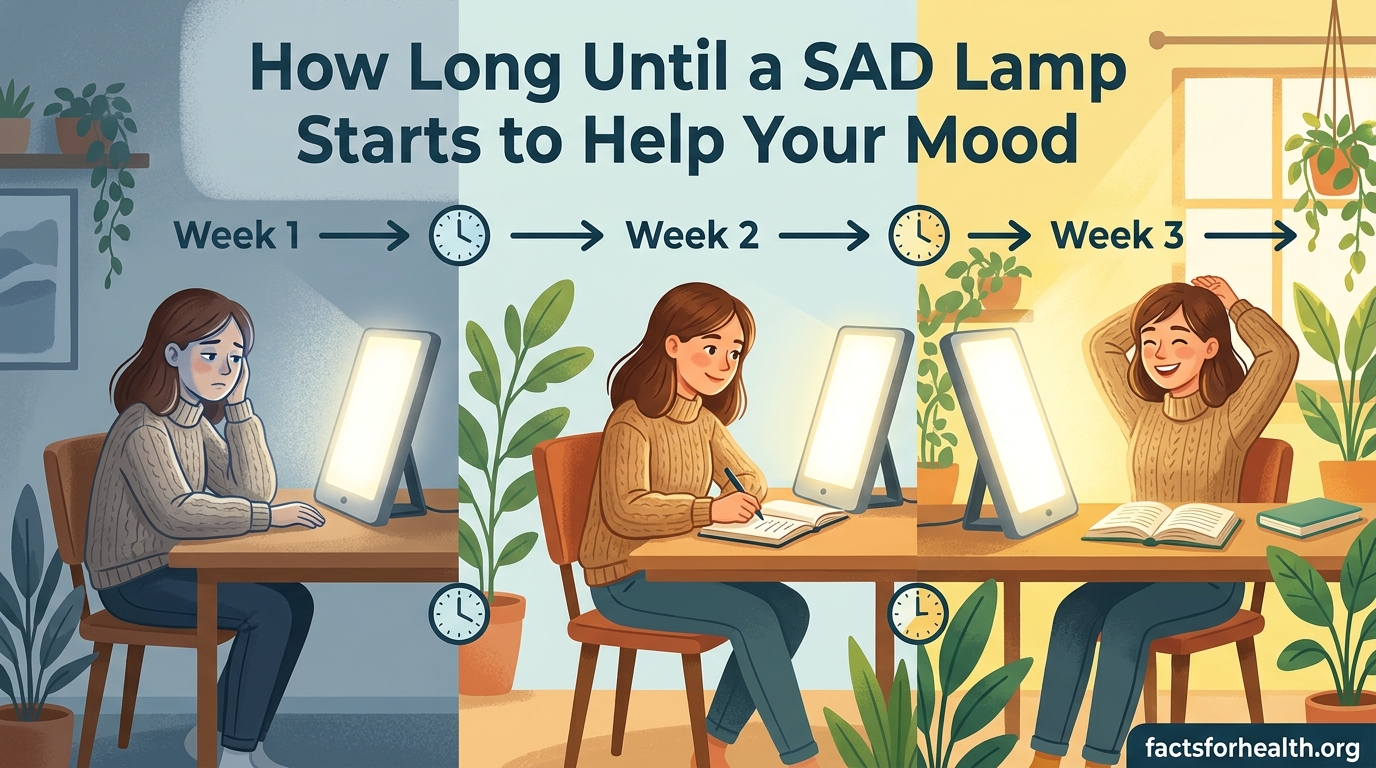
Most people begin feeling mood improvement from a SAD lamp within a few days, and by two weeks of daily use, symptoms should be noticeably better. Full benefit typically arrives between three and five weeks of consistent morning sessions. If you have been wondering about the SAD lamp how long to work question, the short answer is: faster than you might expect, but only if you use it correctly every single day.
Seasonal Affective Disorder affects millions of people each year, bringing low energy, mood dips, and mental fog during the darker months. Light therapy offers a drug-free approach that has been studied for decades, and understanding the expected timeline helps you stay motivated through the process. Here is what you can realistically expect, broken down day by day and week by week, along with practical tips for getting results as fast as possible.
Table of Contents
How Long Until a SAD Lamp Starts to Help Your Mood: The Timeline
The SAD light therapy timeline follows a fairly predictable pattern for most people. Response usually starts within the first few days of treatment, builds through the first week, and reaches noticeable relief by the end of week two. By weeks three to five, most users experience the full benefit of their light box.
That said, individual responses vary. Some people in online forums report feeling effects on day one, while others need a full two weeks before anything shifts. Your experience depends on factors like how consistently you use the lamp, the intensity of the light, how close you sit, and whether your symptoms are truly seasonal.
First 1 to 3 Days: Early Signals
In the first one to three days, changes are usually subtle. Many users describe a slight lift in morning energy or feeling slightly less heavy when getting out of bed. You might notice it is a little easier to start your day without that overwhelming sense of dread that winter mornings can bring.
Some forum users report feeling a difference almost immediately. One user on Reddit’s SeasonalAffective community shared that they see effects on day one when sitting as close to the lamp as the instructions recommend. Distance matters a lot, and sitting further away noticeably reduces the effect.
Do not expect a dramatic transformation in the first 72 hours. Think of this window as your brain starting to recalibrate. The light is beginning to influence your circadian rhythm and neurotransmitter activity, even if you cannot feel it yet.
Days 4 to 7: Building Momentum
By the end of the first week, most people start to notice more tangible changes. Mornings feel easier to face. Energy levels throughout the day may feel more stable rather than crashing by mid-afternoon. Mental fog often begins to lift, making concentration and focus sharper.
This is also when sleep patterns may start to shift. If your body clock has been off, you might find yourself getting sleepy at a more reasonable hour at night or waking more naturally in the morning. These are signs that your circadian rhythm is responding to the consistent light exposure.
Some users with ADHD have reported that light therapy helps with mood regulation and focus during this window. While SAD lamps are not an ADHD treatment, the boost in alertness and energy can have secondary benefits for attention and productivity.
Week 2: Noticeable Relief
By the end of week two, symptoms should be clearly improving. This is the benchmark that most clinical sources point to. The UBC Mood Disorders Centre states that by two weeks, symptoms should be definitely improving if the treatment is working for you.
At this stage, the changes are harder to dismiss. You likely feel a meaningful difference in your overall mood, energy, and outlook. Tasks that felt overwhelming in week one may seem more manageable. The heaviness that characterizes seasonal depression should feel lighter.
If you reach the two-week mark and notice zero improvement, it is worth reviewing your setup. Are you sitting close enough? Using the lamp at the right time of day? Getting enough daily exposure? Small adjustments can make a big difference.
Weeks 3 to 5: Full Benefit
Between weeks three and five, most people who respond to light therapy reach their full benefit. This does not mean you stop treatment. It means you have reached the level of improvement that ongoing daily use will maintain.
At this point, the routine should feel natural. Your morning light session becomes a habit rather than a chore. The mood lift stabilizes, and you experience more consistent energy throughout the day. Many users continue treatment through the entire winter season and taper off as natural daylight increases in spring.
It is worth noting that light therapy does not work for everyone. A minority of people do not respond to treatment at all, even with perfect adherence. If you fall into this group, there are other options worth exploring with your healthcare provider, including talk therapy, medication, and vitamin D supplementation.
How Light Therapy Works in Your Brain
Understanding the mechanism behind light therapy helps explain why the timeline looks the way it does. A SAD lamp does not just brighten your room. It triggers real chemical changes in your brain that affect mood, energy, and sleep.
The key is that bright light entering your eyes sends signals to parts of the brain that regulate your internal clock and mood-related neurotransmitters. This is why simply turning on regular household lights does not have the same effect. The intensity matters.
Brain Chemistry and Serotonin
Bright light exposure is thought to increase the availability of serotonin, a neurotransmitter associated with mood regulation. During winter months, many people produce less serotonin due to reduced sunlight exposure. This drop is one of the leading theories behind why seasonal depression occurs.
By using a 10,000 lux light box daily, you are giving your brain a signal similar to natural morning sunlight. This helps compensate for the shorter, darker days of winter. Over the first few days and weeks of treatment, serotonin levels gradually adjust, which is why mood improvement builds over time rather than happening instantly.
Light exposure also affects melatonin production. Melatonin is the hormone that makes you feel sleepy. In winter, your body may produce melatonin at the wrong times or in amounts that leave you feeling sluggish during the day. Morning light therapy helps shut down melatonin production earlier in the day, making you feel more alert when you need to be.
Circadian Rhythm Alignment
Your circadian rhythm is your body’s internal 24-hour clock. It tells you when to wake, when to feel alert, and when to sleep. This clock is heavily influenced by light exposure, particularly morning sunlight.
In winter, many people’s circadian rhythms shift out of alignment. Without strong morning light, your body clock can drift, leading to difficulty waking up, daytime fatigue, and poor sleep quality at night. This misalignment is a core driver of seasonal affective disorder symptoms.
Morning light therapy essentially resets this clock. By exposing yourself to bright light shortly after waking, you send a clear signal to your brain that the day has started. This helps lock your sleep-wake cycle into a healthier pattern, which is one of the reasons users report better sleep within the first week or two of treatment.
Why the 10,000 Lux Standard Matters
The 10,000 lux standard is not arbitrary. Research has shown that this intensity, used for 20 to 30 minutes per day, produces the most reliable results for seasonal depression. Lower intensities can work, but they require longer exposure times.
For context, a typical indoor office environment has about 500 lux. A bright sunny day outdoors can have 50,000 to 100,000 lux. A 10,000 lux light box sits in between, delivering enough brightness to trigger the brain’s light response pathways without requiring you to sit outside in the cold.
If you use a lamp with 5,000 lux, you would need roughly double the exposure time, around 45 to 60 minutes. At 2,500 lux, you might need one to two hours. This is why most clinical recommendations and user experiences center on the 10,000 lux standard. It gets the job done efficiently in about half an hour.
How to Use a SAD Lamp Correctly for Faster Results
Getting the timing right matters as much as having the right lamp. Using your light box incorrectly can delay results or produce no effect at all. Here is how to set up your routine for the best chance of feeling better within that first two-week window.
Step-by-Step Morning Routine
Step 1: Set up your light box on a table or desk at about eye level. You want the light source positioned slightly above or at your natural line of sight.
Step 2: Sit about 12 to 18 inches from the lamp. This distance delivers the intended lux intensity. Sitting further away dramatically reduces the amount of light reaching your eyes.
Step 3: Turn the lamp on within the first hour of waking up. The ideal window is between 6:00 AM and 9:00 AM. This timing aligns with your body’s natural cortisol rhythm and reinforces a healthy circadian pattern.
Step 4: Keep your eyes open but do not stare directly into the light. You can read, eat breakfast, work on your computer, or scroll your phone. The light needs to reach your eyes indirectly, not through forced staring.
Step 5: Stay in position for 20 to 30 minutes. Set a timer so you do not have to keep checking the clock.
Step 6: Turn the lamp off and go about your day. One session per day is sufficient for most people.
Step 7: Repeat every single day, including weekends. Consistency is what makes this treatment work.
Distance and Positioning
Distance is one of the most common mistakes people make with light therapy. Forum users repeatedly note that perceived effectiveness drops sharply when they sit too far from the lamp. The 10,000 lux rating assumes a specific distance, usually around 12 to 18 inches depending on the model.
If you place the lamp across the room on a shelf, you are getting a fraction of the intended light intensity. It would be like standing under a cloudy sky and expecting the same effect as a sunny day. Check your lamp’s instructions for the recommended distance and stick to it.
Positioning also matters. The light should enter your eyes from above or at eye level, not from below. Think about how natural sunlight reaches you outdoors. Mimic that angle as closely as possible.
Consistency: The Make-or-Break Factor
If there is one factor that determines whether light therapy works, it is consistency. Skipping days, using the lamp at random times, or stopping after a week will undermine your results. The brain needs regular, predictable light signals to make lasting changes to neurotransmitter levels and circadian timing.
Think of it like any other daily health habit. Brushing your teeth once a week does not prevent cavities. Exercising sporadically does not build fitness. Light therapy works the same way. The daily commitment is what allows the cumulative effect to build over those first few weeks.
Many users find it helpful to build the light session into an existing morning habit. Place the lamp where you have breakfast. Use it while checking morning emails. Pair it with coffee or journaling. The more it becomes an automatic part of your morning, the less willpower it requires.
What Early Improvement Actually Feels Like
Knowing the timeline is one thing. Knowing what improvement actually feels like is another. One of the biggest content gaps in existing resources is the absence of real-world descriptions of what getting better looks and feels like day to day. Here is what users commonly report.
In the early days, improvement often shows up as small, easy-to-miss changes. You might hit snooze one fewer time. The thought of getting out of bed might feel slightly less heavy. You could catch yourself having a moment of genuine motivation rather than dragging through the morning on autopilot.
As the first week progresses, many users describe a reduction in mental fog. Thoughts feel clearer. Conversations take less effort. Tasks that required enormous willpower start to feel more routine. One forum user described it as the volume being turned down on the constant background noise of winter depression.
Energy changes are also common. Rather than feeling wired or jittery, most people report a steadier, more even energy level throughout the day. The afternoon crash becomes less severe. You might find yourself needing less caffeine or feeling less depleted by the end of the workday.
Sleep improvements are another early sign. Even if your sleep does not change dramatically at first, you may notice it becoming easier to wake up in the morning. Some users report falling asleep more easily at night once their circadian rhythm starts to stabilize. This creates a positive feedback loop: better sleep leads to better daytime energy, which reinforces healthier sleep the following night.
Mood improvements are often gradual rather than sudden. You might not wake up one morning feeling great. Instead, you may realize after a week or two that the heaviness has been lifting incrementally. It can be helpful to keep a simple daily log rating your mood and energy from 1 to 10. Looking back after two weeks can make the improvement more obvious than experiencing it day by day.
What to Do If Your SAD Lamp Is Not Working After 2 Weeks
If you have been using your lamp consistently for two weeks and feel no improvement, do not give up immediately. There are several adjustments worth trying before concluding that light therapy is not for you.
First, check your distance. Are you sitting close enough? Try moving a few inches closer for the next week. Second, check your timing. Are you using the lamp within the first hour of waking? Late morning or afternoon use is less effective and can even disrupt your sleep schedule. Third, check your duration. If you are only doing 10 to 15 minutes, try increasing to a full 30 minutes daily.
If you have optimized all of these factors and still see no change after three to four weeks, it is worth talking to your doctor. Light therapy does not work for everyone, and some people may need a different or combined approach. Your healthcare provider can help determine whether a different treatment, a combination of therapies, or further evaluation is appropriate.
Side Effects and Safety Precautions
Light therapy is generally safe, but side effects can occur, especially in the first few days of use. The most commonly reported side effects include mild headaches, eye strain, and slight nausea. These usually resolve on their own as your body adjusts to the treatment.
If side effects persist, try shortening your sessions. Start with 10 to 15 minutes per day and gradually increase. You can also try sitting slightly further from the lamp, though this will reduce the effective lux intensity. If headaches or eye strain continue, consult your healthcare provider.
People with bipolar disorder should exercise particular caution. Light therapy can trigger manic episodes in some individuals with bipolar disorder. If you have any history of mania, hypomania, or bipolar diagnosis, talk to your psychiatrist before starting light therapy. They can help you determine whether it is safe and how to monitor for warning signs.
Certain medications can increase light sensitivity, including some antibiotics, anti-inflammatory drugs, and acne medications. If you take prescription medications, check with your doctor or pharmacist about potential interactions before starting light therapy. Additionally, if you have any eye conditions, particularly retinal disease, consult an eye doctor first.
FAQs
How long does it take to see results from a SAD lamp?
Most people begin noticing mood improvement within the first few days of daily use, with clearly noticeable relief by the end of week two. Full benefit typically arrives between weeks three and five of consistent morning sessions of 20 to 30 minutes at 10,000 lux.
Does a SAD lamp improve mood?
Yes, for most people who respond to light therapy, SAD lamps improve mood by increasing serotonin availability and resetting the circadian rhythm. Clinical research supports bright light therapy as an effective treatment for seasonal affective disorder, though it does not work for everyone.
Do you get vitamin D from a SAD lamp?
No, SAD lamps do not produce vitamin D. Light therapy boxes use visible light to affect brain chemistry and circadian rhythms, not UV light. Vitamin D production requires UVB exposure from actual sunlight. If you are concerned about vitamin D levels, talk to your doctor about supplementation.
When should I start using my SAD lamp?
Start using your SAD lamp in early fall, before symptoms typically appear. Most experts recommend beginning in September or October for those in the Northern Hemisphere. Starting before symptoms set in can help prevent seasonal depression from taking hold rather than waiting to treat it after it starts.
Can you use a SAD lamp too much?
Yes, overuse can cause side effects including headaches, eye strain, irritability, and sleep disruption. Stick to 20 to 30 minutes per day unless your healthcare provider recommends otherwise. Using the lamp too late in the day can interfere with sleep by suppressing melatonin production in the evening.
The Bottom Line on SAD Lamp Timelines
For most people, a SAD lamp starts helping mood within a few days, delivers noticeable relief by week two, and reaches full benefit by weeks three to five. The key variables are morning timing, proper distance, 10,000 lux intensity, and unwavering daily consistency. If you follow the steps outlined above and still see no improvement after three to four weeks, talk to your healthcare provider about other options. Light therapy is a proven tool for seasonal depression, but it works best as part of a broader approach to mental health.