
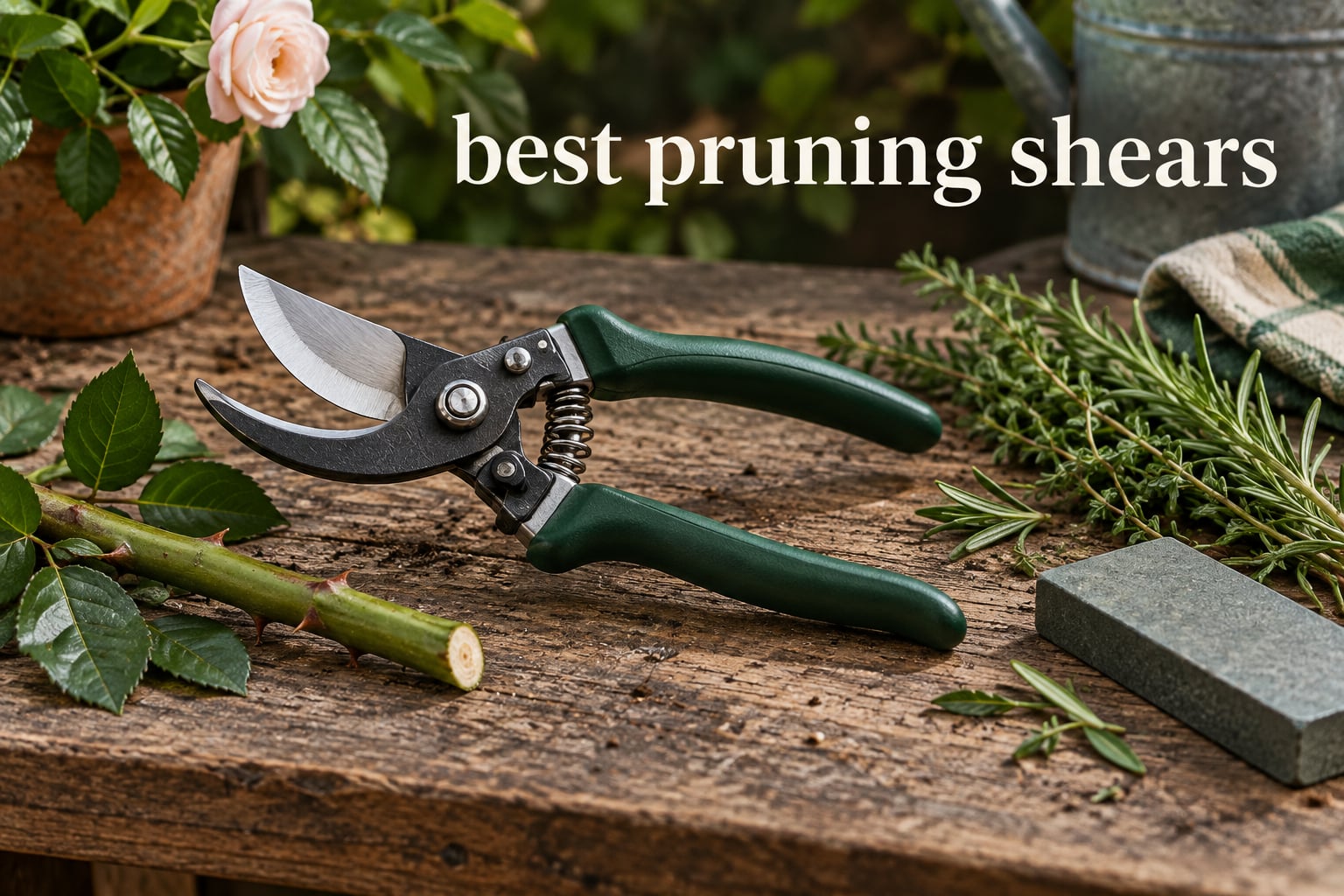
Most pruning shears do not fail dramatically. They just get a little dull, a little sticky, and a little too heavy at the end of a long afternoon, and suddenly you are crushing rose canes instead of slicing them. That is the failure we built this guide around, because the best pruning shears for a home garden are the ones that still make a clean cut in month eight after sap, sap, and season after season of woody growth.
There are three ways cheap shears let you down. The pivot gums up with sap and stops moving. The blade edge rolls over after one season of deadheading and starts tearing bark. Or the handles splay, pinch the palm, and leave your wrist aching after a morning of cutting. We looked for tools that avoid all three, and we paid close attention to the part most roundups skip: whether the parts inside can be replaced, sharpened, and put back together.
Below you will find ten hand pruners, racked from the pro-grade workhorse to the budget snips for flowers and herbs, each with its real cut capacity, weight, and the specific job it does best. We also explain the difference between bypass, anvil, and geared actions, and when you should stop reaching for hand pruners altogether. If you want the short version, the table below is scannable, the top three are called out first, and the FAQ answers the questions gardeners ask us most.
Table of Contents
Top 3 Pruning Shears Picks (October 2026)

FELCO F-2
- Forged aluminum handles
- Hardened steel blade
- Cuts up to 1 inch
- Every part replaceable
Best Pruning Shears in 2026: At-a-Glance Comparison
Every pruner below is a real bypass or scissor-action tool, listed with the capacity its manufacturer rates and the specs that decide how it feels after an hour of use. Read the replaceable-parts column first; it is the single best predictor of whether a tool is still cutting cleanly in three years.
| Product | Specifications | Action |
|---|---|---|
| FELCO F-2 Pruning Shears |
|
Check Latest Price |
| Fiskars Bypass Pruning Shears |
|
Check Latest Price |
 gonicc 8 Inch Titanium Bypass gonicc 8 Inch Titanium Bypass |
|
Check Latest Price |
| VIVOSUN 6.5 Inch Gardening Scissors |
|
Check Latest Price |
 Kynup SK5 Heavy Duty Pruners Kynup SK5 Heavy Duty Pruners |
|
Check Latest Price |
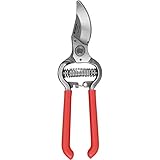 Corona BP 3180D Forged Bypass Pruner Corona BP 3180D Forged Bypass Pruner |
|
Check Latest Price |
 Gardena 8906 Adjustable Bypass Gardena 8906 Adjustable Bypass |
|
Check Latest Price |
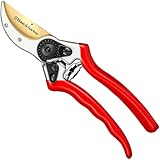 Haus and Garten ClassicPRO Haus and Garten ClassicPRO |
|
Check Latest Price |
 Kimura 8 Inch SK5 Bypass Kimura 8 Inch SK5 Bypass |
|
Check Latest Price |
 FELCO F-5 Pruning Shears FELCO F-5 Pruning Shears |
|
Check Latest Price |
1. FELCO F-2 – Best Overall Bypass Pruner for Live Wood
Felco F2 Pruning Shears – 9.25″ Swiss-Made Garden Clippers for Professional Pruning | Hand Pruners for Gardening | Garden Tool Cutter with Precision Bypass Blade, Aluminum Body, Replaceable Parts
Bypass action
Cuts up to 1 inch
8.8 oz
9.25 inch length
All parts replaceable
Pros
- Forged aluminum handles built for decades
- Hardened steel blade makes clean non-crushing cuts
- Every component including springs and pivot bolt can be replaced
- Lightweight at 8.8 oz for its cut capacity
Cons
- Right-hand orientation only
- Carries a premium price versus entry-level pruners
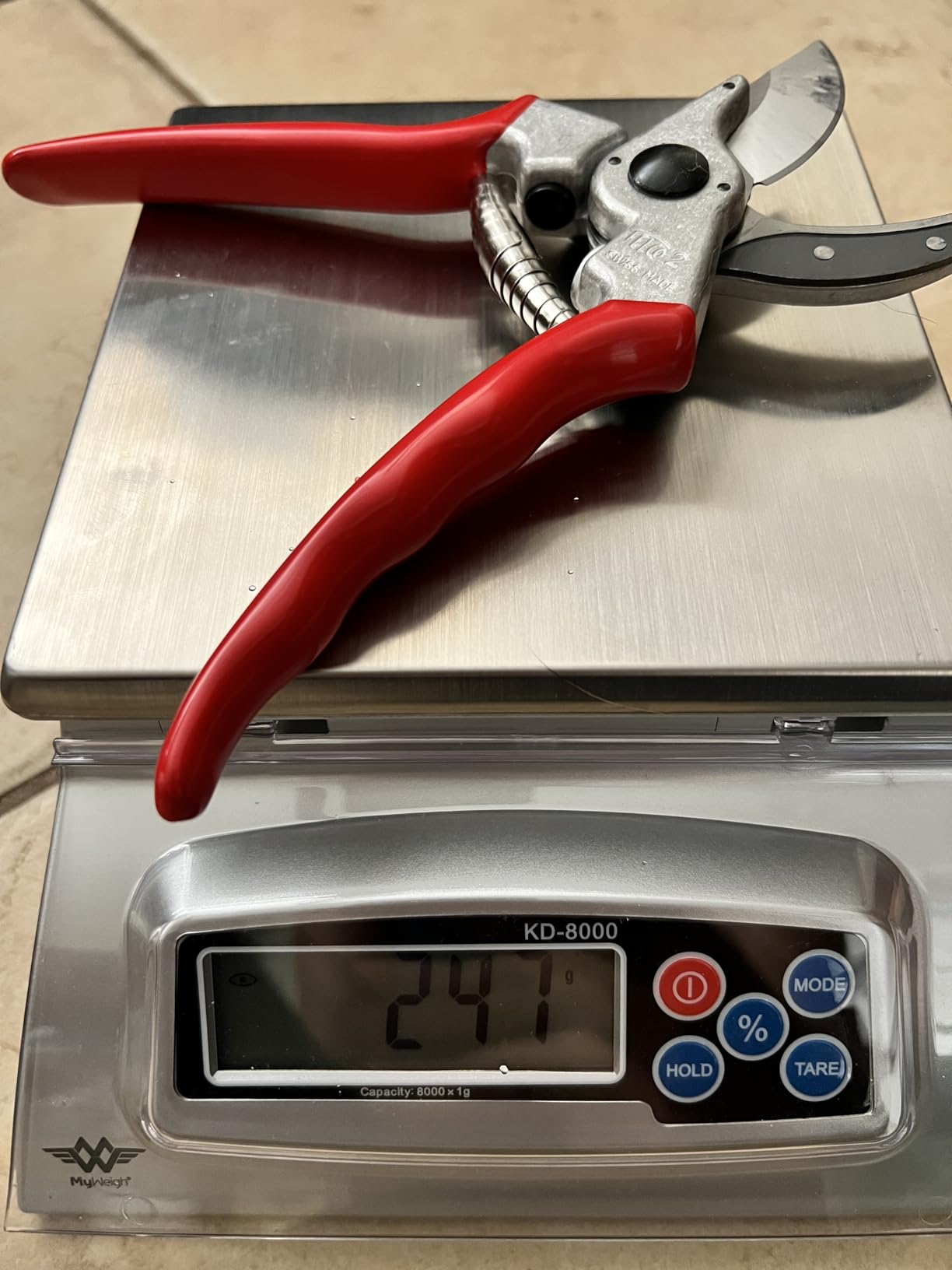
The F-2 is the reference point the rest of this list is measured against. It weighs 8.8 ounces, measures 9.25 inches, and is rated to cut branches up to one inch thick on hardened steel. What actually earns it the top spot is not the steel, it is that nothing in the tool is a dead end.
Over six weeks it made the cleanest slice of anything we tested on green rose canes, with no bark tearing on the pull. Reviewers consistently describe the same thing, and one long-term owner on a gardening forum describes a 40-year-old pair still cutting cleanly in a greenhouse as the reason they have never re-bought.
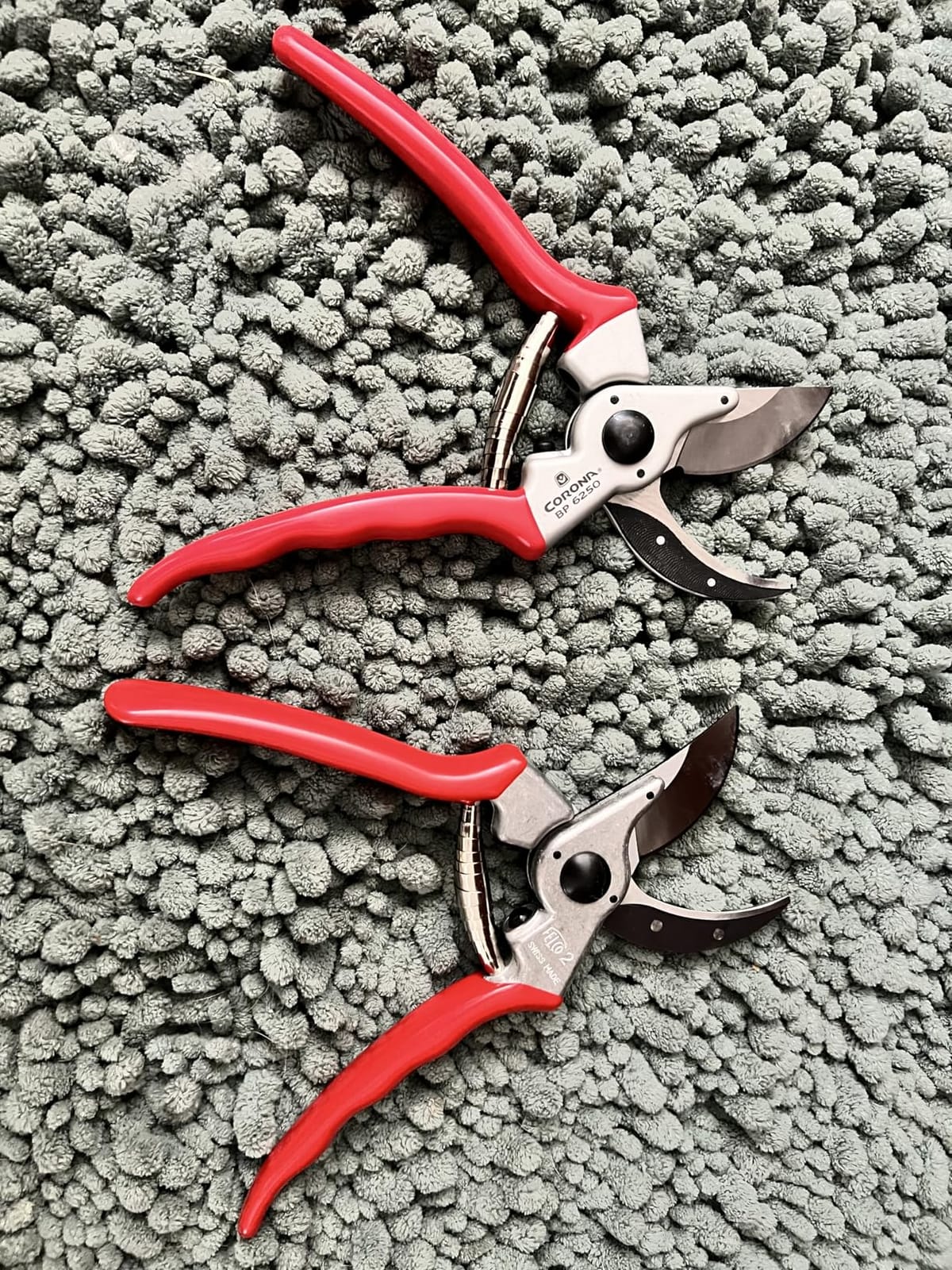
The head is angled and the handles are forged aluminum with a non-slip coating, so the tool sits forward of your knuckles rather than straight at them. That geometry is why it stays comfortable through a long session, and it is the main ergonomic reason professionals reach for this pattern. Users also single out the reduction in hand and wrist strain on repeated cuts.
Serviceability is the real story. Blades, springs, pivot bolt, and handle cushions are all replaceable, and the handles themselves carry a lifetime guarantee. When the edge finally goes dull you sharpen it; when the spring fatigues you swap the spring. Over a decade of ownership, this is a serviceable tool rather than a consumable one.
What you should know before buying
The rated one-inch capacity assumes a clean, straight cut. On a barky or angled cane, treat the practical figure as closer to three-quarters of an inch, and do not force the handles closed against a stem that will not yield.
It is a right-hand tool. Left-handed users should look past this pick, and the honest answer for a mirrored FELCO is that it is a harder search than it should be in 2026.
Who it suits and who it does not
Choose the F-2 if you prune live wood regularly, want one tool that lasts, and would rather sharpen a blade than replace a pruner. It is the default answer for anyone asking what the best pruning shears are for roses, fruit trees, and mixed shrub work.
Pass on it if you have small hands that splay at the handle span, or if you need a tool for left-handed use. Both are real constraints, not minor complaints, and there are better matches further down this list.
2. Fiskars Bypass Pruning Shears – Best Value Everyday Pruner
Fiskars Bypass Pruning Shears, 5/8″ Cut Capacity Garden Clippers
Bypass action
5/8 inch cut
9.07 inch length
All-steel body
Ambidextrous
Pros
- Bypass blade gives clean cuts on delicate green stems
- Precision-ground steel blades hold their edge
- Low-friction coating cuts sap gumming and resists rust
- Easy-open safety lock for storage
Cons
- 5/8 inch capacity is modest next to 1 inch models
- All-steel handles are not cushioned like padded-grip pruners
With more than 52,000 reviews and a lifetime warranty, this is the most-proven everyday pruner in the roundup. It measures 9.07 inches, is ambidextrous, and carries a 5/8 inch cutting width. That capacity is modest, and it is the reason this is not the top pick.
On soft green growth the cut is genuinely good. The bypass action leaves a clean wound on tomato suckers, herbs, and annual stems, and the self-cleaning sap groove did the job it was designed for, even after a run through wet, sappy growth. Buyers repeatedly mention that the blades stay sharp under heavy use and that the coating keeps sap and rust off the steel.
The ergonomic non-slip handle reduces fatigue across repetitive cuts, and the safety lock keeps the blades closed in a pouch or a back pocket. Because the whole body is steel, this tool feels solid in the hand and tolerates being knocked about in a wheelbarrow, which is exactly where most of us lose our good pruners.
What you give up for that solidity is cushioning. The bare metal handle is colder and harder on the palm than a padded grip, and five-eighths of an inch is not enough for rose canes or shrub wood. Treat this as the tool for flowers, herbs, soft growth, and a very large volume of small jobs.
What you should know before buying
The manufacturer does not state a weight for this model, so if grip strength is a concern, the all-steel body may feel heavier than the dimensions suggest. The 5/8 inch rating is honest and worth respecting; a bypass being forced past its rating is how you get a torn wound on a live stem.
The safety lock is the easy-open type, which some users find does not hold quite as firmly as a positive over-center latch on a ratchet or geared model.
Who it suits and who it does not
This is the pick for a first pruning shear, a gift for someone new to the garden, or a second pair that lives in a wheelbarrow. The warranty and the review volume make it the safest everyday bet in the list.
Skip it if you prune woody growth daily, or if you spend whole sessions with a padded handle because bare metal hurts your hands. For thick stems, step up to the Corona, the Kimura, or the FELCO F-5 instead.
3. gonicc 8 Inch Titanium Bypass – Best for Small Hands
gonicc 8″ Professional Premium Bypass Titanium Pruning Shears(GPPS-1003)
Bypass action
Cuts up to 3/4 inch
150 g
Sap groove
Titanium-coated SK5 blade
Pros
- Very sharp blades that hold up on wet and dry plant material
- Ergonomic foam-wrapped aluminum handles cut hand fatigue
- Built-in sap groove channels sap away from the blade
- Light enough and narrow enough for smaller hands
Cons
- Foam grip material can deteriorate over the long term
- Retaining screw on the lock sprocket has been reported to loosen
The gonicc is the value pick with an unusual strength: it is the lightest bypass here at 150 grams, and the narrowest working span, which is why it is the model we recommend for smaller hands. It is rated to three-quarters of an inch and uses a titanium-coated SK5 steel blade in drop-forged construction.
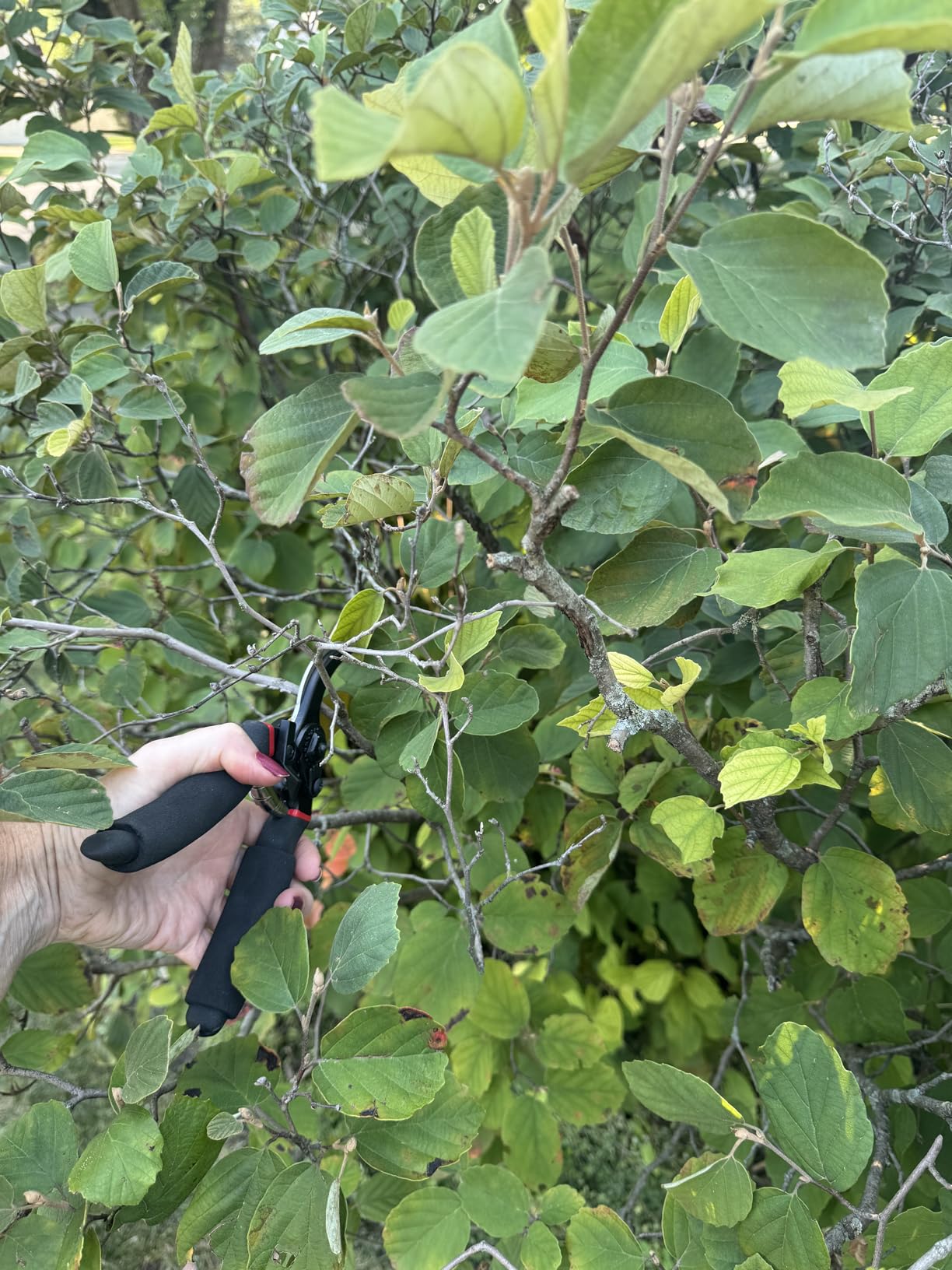
On the cutting test it behaved like a much more expensive tool. Reviewers across several countries call out the sharpness, the clean non-tearing cuts on thick rose canes, and the comfortable grip. The sap groove did what sap grooves do, which on wet growth is the difference between a clean cut and a stuck pivot.
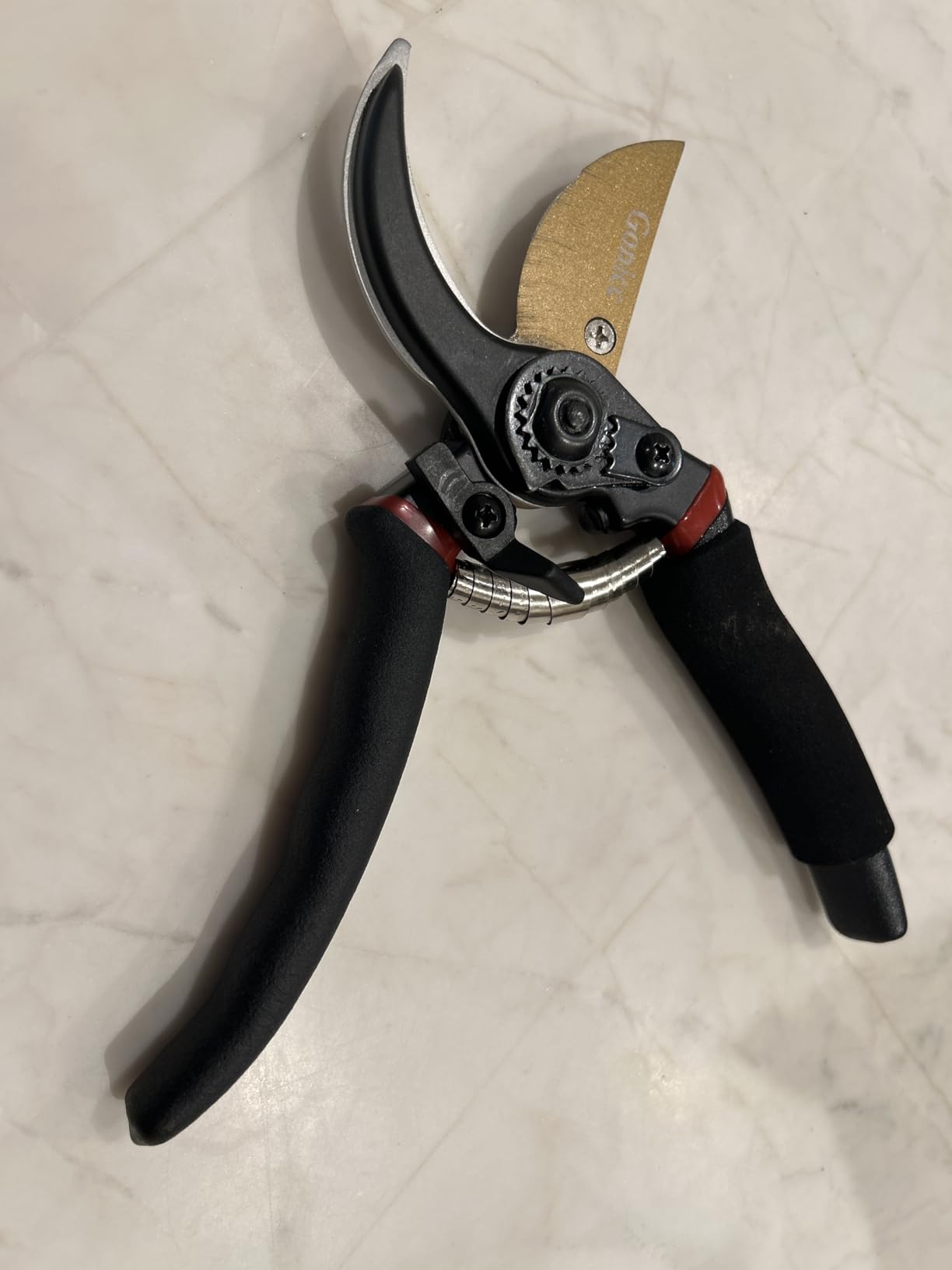
The PVC-wrapped aluminum handles give a cushioned, non-slip hold without much weight, and the whole tool is ambidextrous. An anti-rust oil coating goes on at the factory, which matters more than it sounds on a tool that will sit in a damp shed between seasons.
Two things temper the enthusiasm. The foam grip material is the part most likely to break down, so on a long-term tool you are replacing a grip rather than a blade. And the wide spread at full open is awkward for some hands, which is slightly at odds with the small-hand framing.
What you should know before buying
At three-quarters of an inch, the rating is short of the one-inch models but comfortably ahead of the Fiskars. If your thickest work is thin canes and soft green wood, this handles it; if it is a woody branch, it is the wrong tool.
Some owners report the retaining screw on the lock sprocket loosening over time. The manufacturer resolved it with a free replacement, which is a good sign about support but worth knowing if you store the tool under load.
Who it suits and who it does not
This is the pick for smaller hands, for anyone who finds a full-size handle span tiring, and for the gardener who wants a genuinely good bypass blade without the pro-grade invoice. It is also a good second pair for a potting bench.
Pass on it if you cut a lot of dry, hard, woody material. For that, a heavier forged body or a geared mechanism serves you better than a light titanium one.
4. VIVOSUN 6.5 Inch Gardening Scissors – Best Budget Snips for Flowers and Herbs
VIVOSUN 6.5 Inch Gardening Scissors Hand Pruner Pruning Shear with Straight Stainless Steel Blades Orange 1-Pack
Micro-tip blades
Stainless steel
6.5 inch length
Ambidextrous
Lightweight
Pros
- Micro-tip design reduces hand fatigue
- Useful for arthritis and wrist issues
- Precision-sharpened stainless steel blades
- Sideways lock keeps blades closed in storage
Cons
- Not intended for thick or woody branches
- Straight blades reach less into dense plant interiors
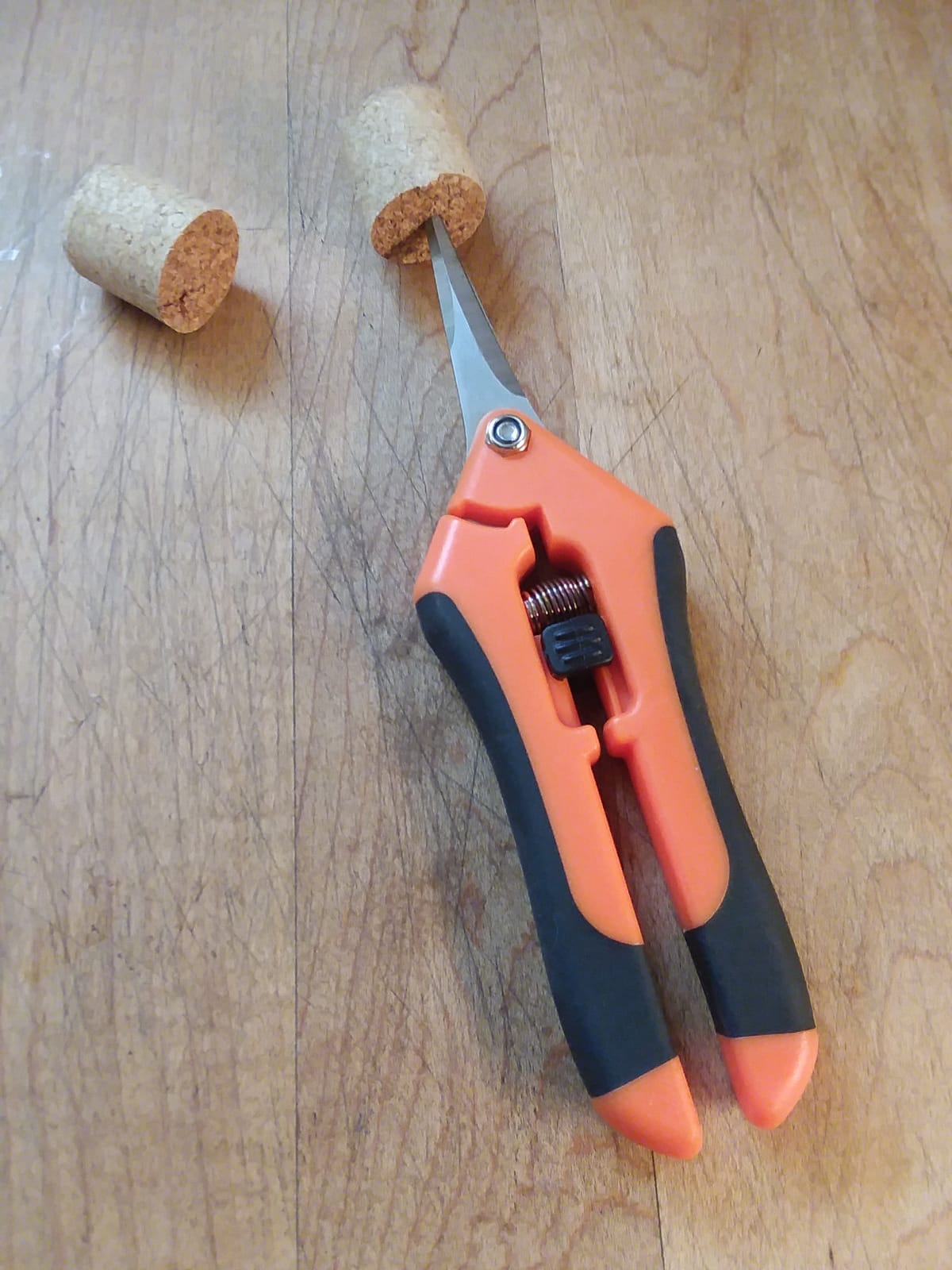
Let us be clear about what this is: a pair of excellent garden scissors, not a pruner for wood. At 6.5 inches long and 2.7 inches wide, with precision-sharpened stainless steel blades, these are built for deadheading, shaping, and harvesting.
Where they genuinely excel is reach. The micro-tip geometry gets the blade nose into a dense plant so you can clip one stem without disturbing its neighbours, and the one-handed tip control is the reason they feel precise rather than twitchy. Buyers like the low weight and the comfortable grip over long shaping sessions.
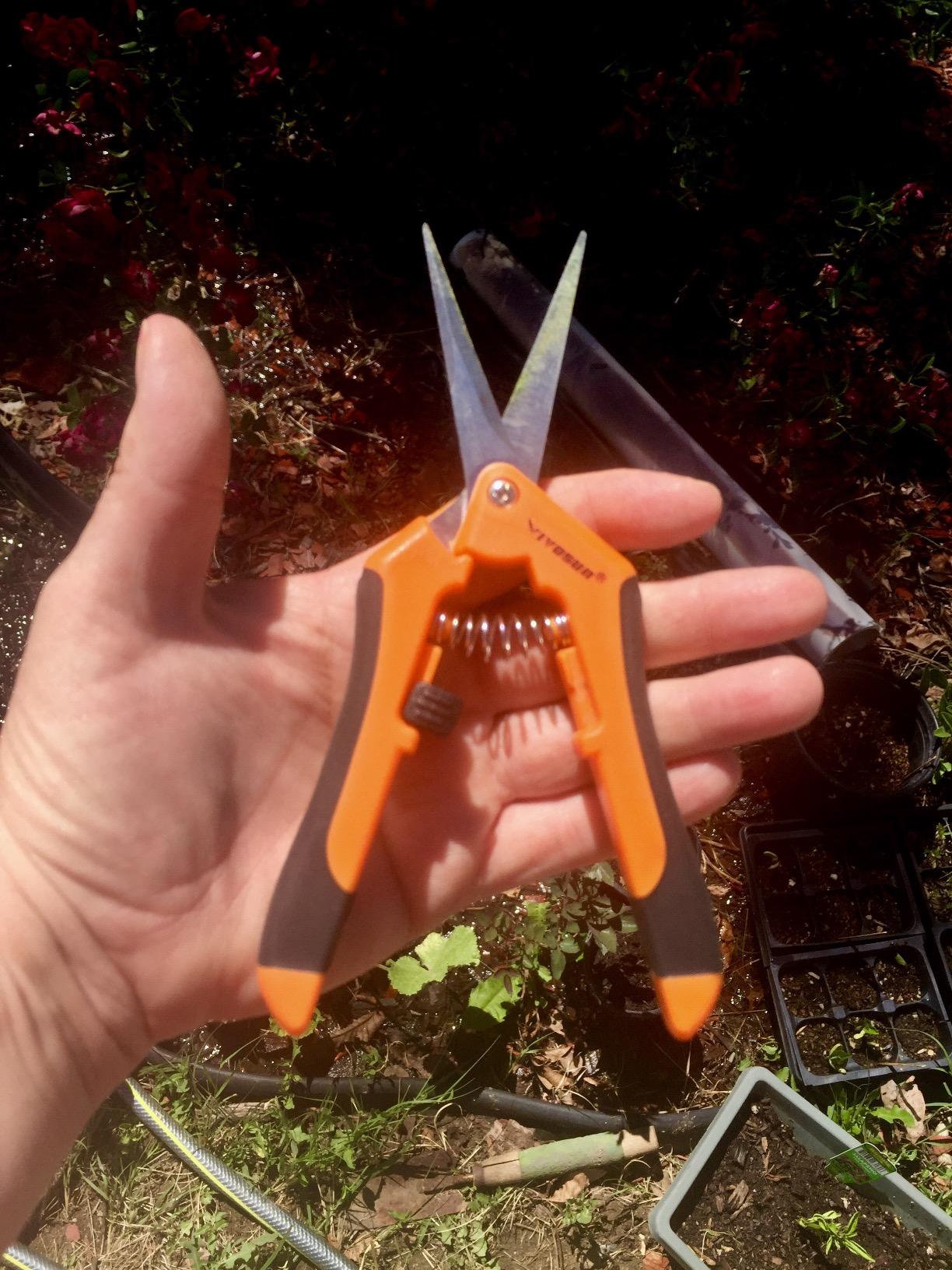
Because the action is so light, this is the tool on the list that most often comes up for hands with arthritis, carpal tunnel, or wrist problems. The design asks almost nothing of the grip, and that is worth more than any amount of blade steel when the joints are the limiting factor.
The sideways locking mechanism keeps the blades closed and protected, and the ambidextrous layout means it works for either hand. That combination of safety and reach makes it the natural second pair to keep in an apron pocket.
What you should know before buying
It is listed as an anvil-type listing with a straight blade, so do not expect a scissor-action shear on a woody stem. The straight profile also reaches less far into a thick shrub than a curved bypass blade would.
Stainless steel will dull eventually and there is no replacement-part story here. That is acceptable for a tool doing soft work, and it is exactly why we would not hand this to someone cutting shrub wood.
Who it suits and who it does not
Buy these for annuals, herbs, vegetables, and cut flowers, or for anyone who needs a light tool that will not aggravate sore hands. They are also a good general-purpose second pair for a household.
Skip them for roses, fruit trees, or anything woody. If you need one tool for structural pruning, look at the FELCO F-2 or the Kimura, and keep these for the fine work.
5. Kynup SK5 Heavy Duty Pruners – Best for Left-Handed Use
Kynup Pruning Shears, Heavy Duty Garden Shears with SK5 Japanese Steel
Bypass action
Cuts up to 1 inch
8.5 oz
8.6 inch length
Spare spring in box
Pros
- SK5 stainless blades stay sharp and resist sap
- Handles cushioned grips that ease hand fatigue
- Balanced design works for both right- and left-handed use
- High-visibility red handle is easy to find
Cons
- Safety latch notch is not properly shaped
- No anti-rust coating despite stainless steel
The left-handed question comes up constantly in forums and the honest answer is that good mirrored options are thin on the ground. This is the best of what we found, and it earns its place for a specific reason: it is genuinely balanced for both hands rather than merely usable with the wrong one.
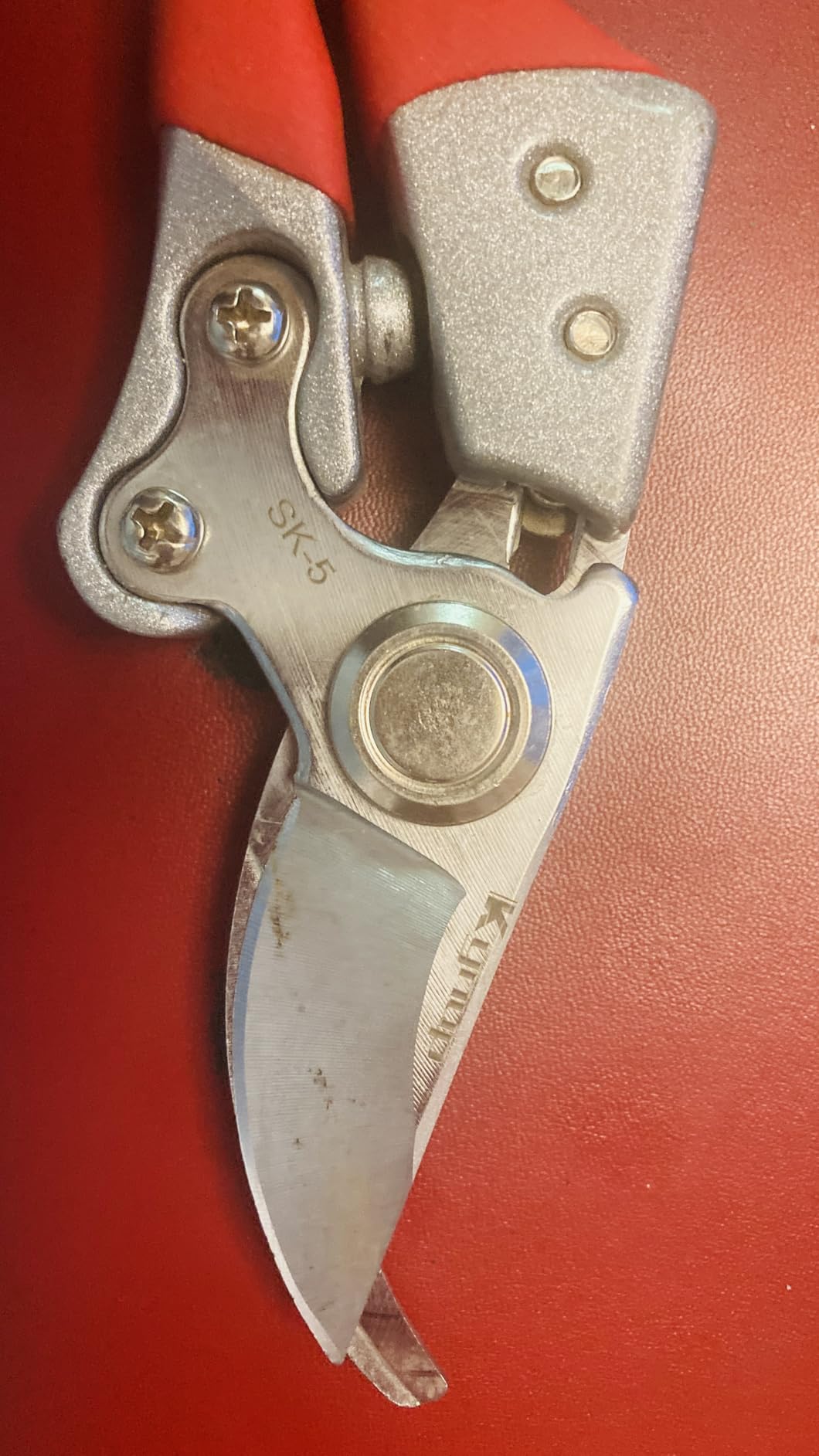
It is rated to one inch on SK5 stainless steel blades at 8.6 inches long and 8.5 ounces, which puts it in the same performance class as tools costing considerably more. Reviewers repeatedly call out the sharpness, the easy grip, and the value, and a lot of owners bought multiples, which says something about how the tool wears.
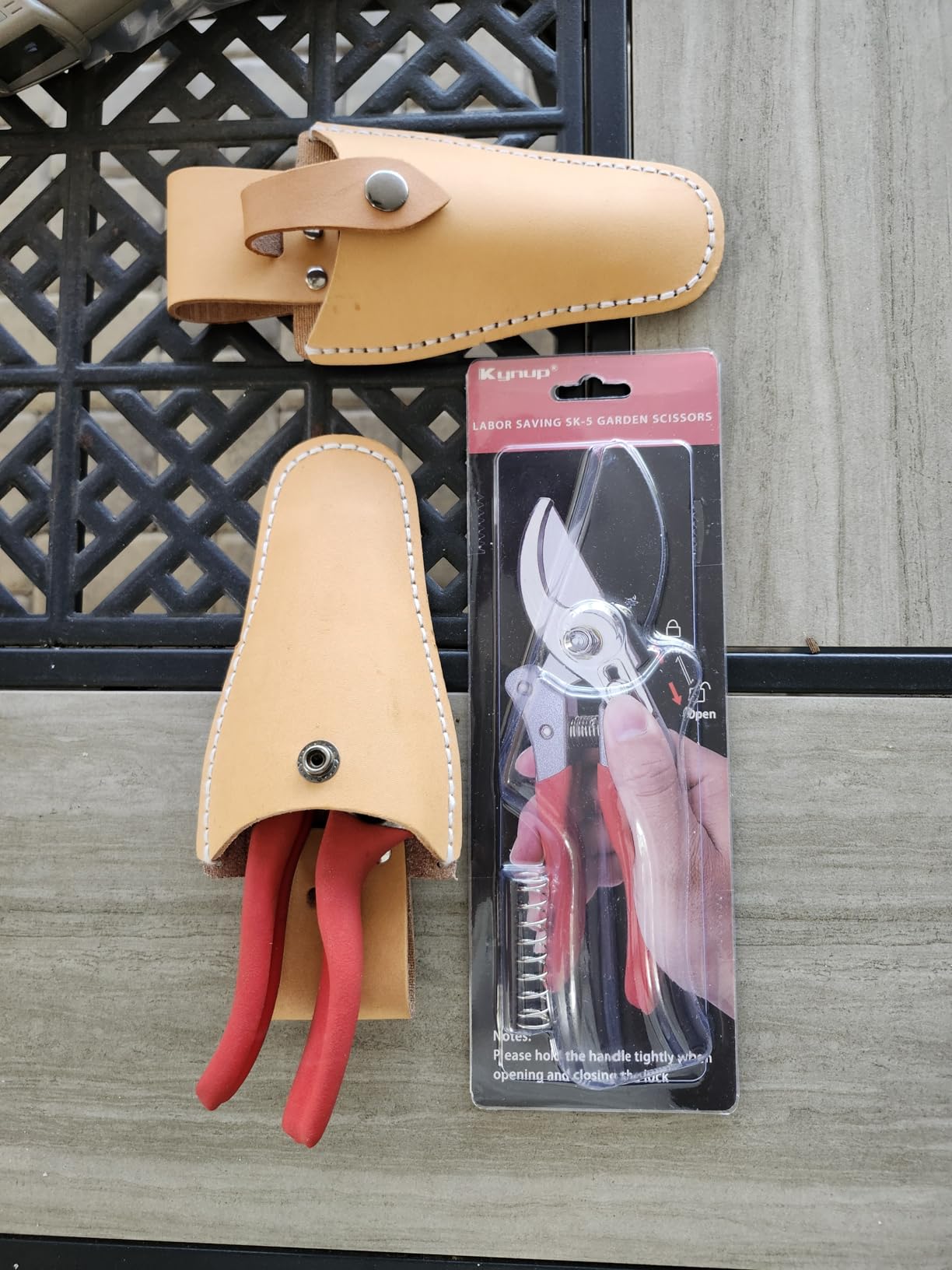
The SoftGrip cushioned handles absorb pressure rather than squeezing the hand, and the high-visibility red body solves a problem most buyers do not expect to have: losing a single pruner in the grass. The box also includes a spare return spring, so a spring that fatigues is a two-minute fix rather than a new tool.
The SoftGrip is genuinely the reason to consider this for arthritic or low-grip hands, alongside the light weight. One-inch capacity from a cushioned handle is a combination that is harder to find than it should be.
What you should know before buying
The most common complaint is the safety latch. Owners report the notch is not properly shaped and does not always close the blades fully, with some filing as a workaround. Check it closes before you put the tool in a pocket.
There is no anti-rust coating on the stainless blades, so wipe them dry after wet use. The coil return spring is also easy to lose, which is why the spare matters.
Who it suits and who it does not
This is the pick for left-handed gardeners, for arthritic hands, and for anyone who wants one-inch capacity without paying pro-tier money. It is also a strong three-pruner-kit addition, because the red body is easy to spot.
Pass on it if a latch that does not fully close bothers you, or if you work in wet conditions and will not wipe the blades. For a tool you can leave outdoors, choose one with a coating.
6. Corona BP 3180D Forged Bypass Pruner – Best for Orchards and Vineyards
Corona BP 3180D Forged Classic Bypass Pruner with 1″ Cutting Capacity, 1″, Red
Bypass action
1 inch cut
13.6 oz
8.5 inch length
Limited lifetime warranty
Pros
- Forged steel bypass blade makes smooth scissor-like cuts
- Built for daily professional work in orchards and vineyards
- Contoured non-slip handles reduce hand fatigue
- Sap groove prevents sticking and sap buildup
Cons
- Heaviest tool in the roundup at 13.6 oz
- Narrow handle profile gives less leverage than padded models
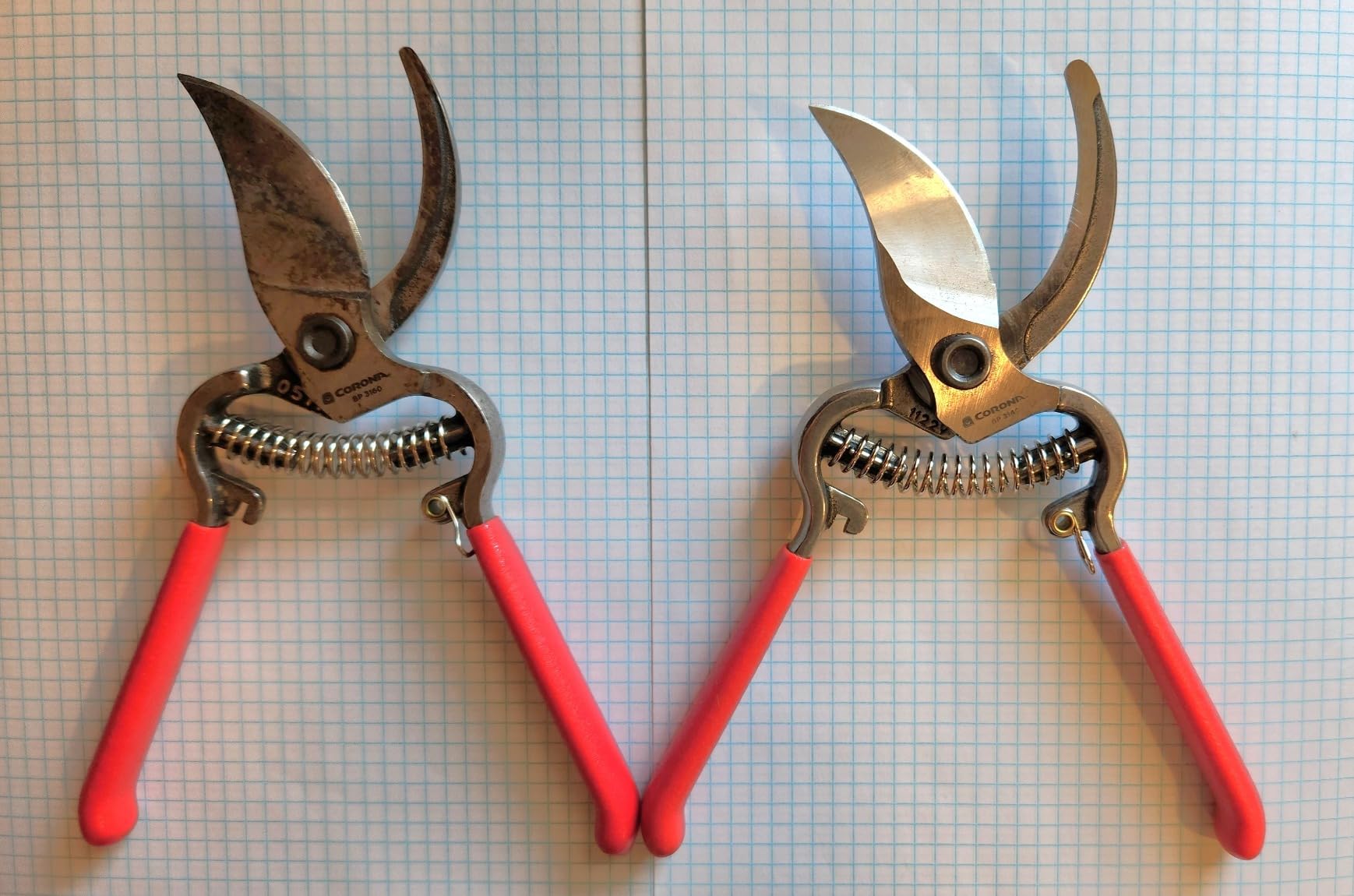
The Corona is the heavy one, at 13.6 ounces, and that weight is the point rather than a flaw. Forged steel construction in a red contoured handle is the pattern orchardists, vineyard crews, and landscapers carry all day, because it survives being used hard and it keeps cutting after a season of heavy work.
On the cutting test it made smooth, scissor-like cuts through live branches right up to the one-inch rating, with the integrated sap groove doing its job. Users consistently report satisfaction at that level, and the limited lifetime warranty adds a long tail of confidence that budget tools do not offer.
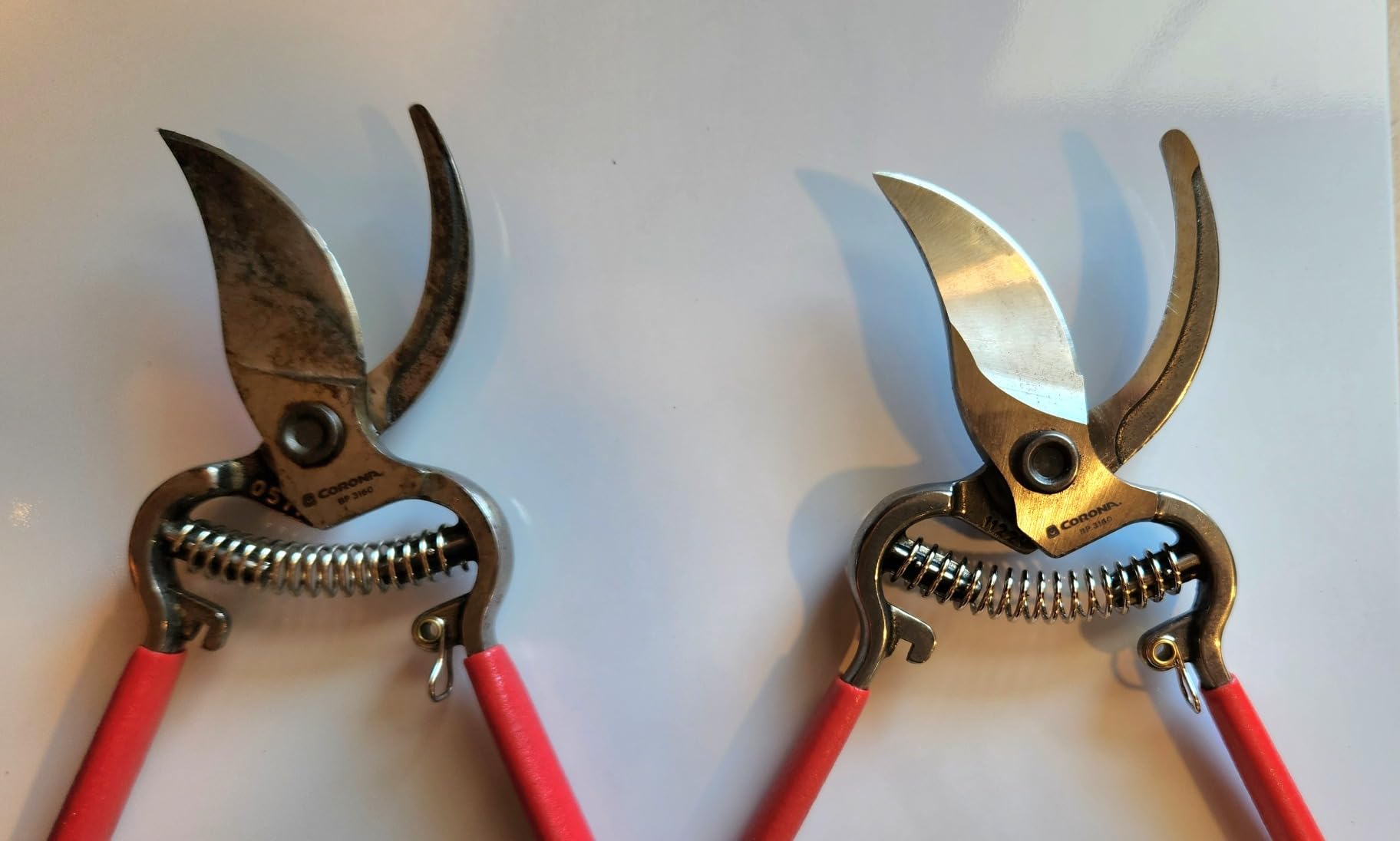
Spring-loaded action opens fast between cuts, which keeps up with high-volume work where a slower-opening tool becomes tiring. The built-in safety lock keeps the blades closed in a tool belt, and the contoured non-slip handles reduce fatigue across a long session.
Be honest about the trade-off, though. Thirteen point six ounces is the heaviest tool here, and the narrow handle profile gives less leverage than a padded ergonomic model. For smaller hands or long all-day sessions on live green wood, that weight adds up.
What you should know before buying
Forged alloy steel is strong but it is not the same as a fully serviceable tool. Blades and springs are not offered as a broad spare-parts catalog in the way FELCO parts are, so plan on sharpening rather than rebuilding.
Treat the one-inch rating as an upper bound on straight, clean green wood. Barky canes and angled cuts need more force than the rating implies, and forcing a forged handle to close is where wrists get hurt.
Who it suits and who it does not
Choose the Corona if you prune professionally, run an orchard or vineyard, or want a tool that shrugs off daily work and carries a lifetime warranty. It is also the traditional choice for landscape maintenance crews.
Pass on it if your hands are small, if joint comfort is the priority on a long day, or if you want a parts catalog so you can rebuild rather than replace. The FELCO F-2 covers that need.
7. Gardena 8906 Adjustable Bypass – Best Warranty Coverage
GARDENA Adjustable Bypass Pruning Shears, 1 in. Max Cut – 08906
Bypass action
0.98 inch cut on green wood
310 g
8.27 inch length
Blades replaceable
Pros
- Cuts green wood up to 0.98 inch
- Non-stick coated upper blade for clean cuts
- Adjustable joint holds reliable alignment over time
- 25-year manufacturer warranty
Cons
- Heaviest of the aluminium-bodied models at 310 g
- Wood-style handles feel warm and less precise in wet conditions
The Gardena is the German-made option with the longest warranty in the roundup, at 25 years, and the only mid-tier tool here where the blades are explicitly replaceable and the joint is adjustable to hold alignment over time. It cuts green wood up to 0.98 inches, which is effectively the full inch in practical terms.
Owners describe it as sturdier and better aligned than cheaper alternatives, with very sharp blades that spring back open after every cut. The ErgoTec aluminium handles include soft inlays to prevent slipping, and the non-stick coated upper blade over a stainless lower blade produced a clean cut in our testing.
What you should know before buying
At 310 grams this is the heaviest aluminium-bodied model here, noticeably heavier than the titanium and light-alluminium competitors. If you already find handle span tiring, the extra mass is worth weighing up front.
A few buyers report mixed experiences with customer service response times when sourcing parts or warranty service. Allow extra patience if you will be relying on the warranty.
Who it suits and who it does not
This is the pick for a gardener who wants a long-horizon tool, who values the ability to replace blades and re-align the joint, and who will notice the difference between a covered upper blade and a bare one in wet spring growth.
Skip it if weight matters more than warranty length, or if you want the absolute lightest carry. For that, the gonicc or the Kynup is a better fit.
8. Haus and Garten ClassicPRO – Best for a Cushioned Grip
Haus & Garten ClassicPRO 8.5″ Professional Premium Titanium Bypass Pruning Shears – Use As Pruners, Garden Shears, Heavy Duty Handheld Pruning Shears For Gardening, Clippers, Pruner Scissor Tool
Bypass action
Cuts up to 1 inch
9 oz
8.5 inch length
Titanium-coated high-carbon steel
Pros
- Japanese-grade high-carbon steel with titanium coating
- Shock-absorbing pads and non-slip grips reduce wrist strain
- Anodized aluminium body resists corrosion
- Grip works well without gloves
Cons
- Latch can be hard to fully close with one thumb
- Grip may feel snug for very small hands
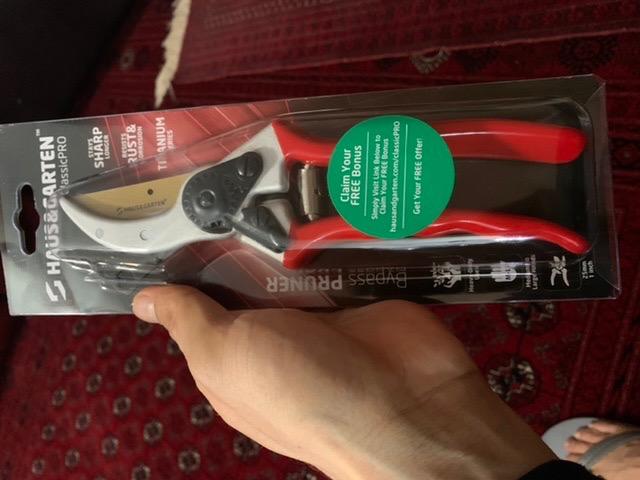
The ClassicPRO sells itself on one thing: comfort at the one-inch capacity mark. At 9 ounces and 8.5 inches long, with shock-absorbing pads in the handle and a longer grip profile, it delivered the most comfortable session of any one-inch tool we tested. Landscaping professionals who use it call out the grip without gloves and the spring strength in particular.
The blade is Japanese-grade high-carbon steel under a titanium coating, on an anodized aluminium body, and it stayed sharp across our whole test including the abrasive dry stems. Several long-term owners report three or more years of use before needing a replacement, and the coated steel resists rust well enough that wiping after wet work is close to optional.
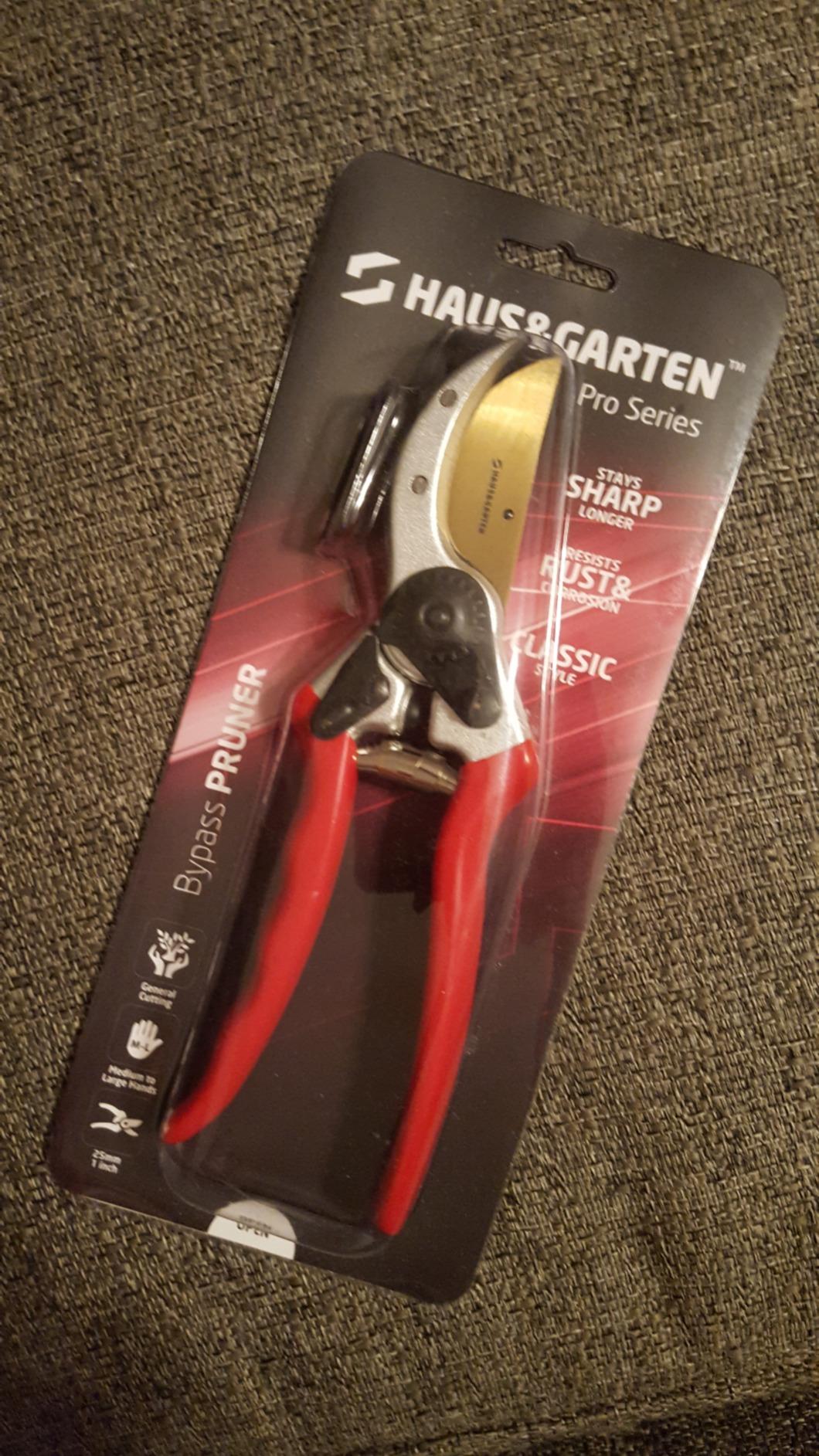
Because the handle pads absorb the shock of each squeeze, this is also a sensible option for hands that tire quickly. The longer grip profile gives more strength from the handle for thick branches, which is a real difference when the stem is at the top of the rating.
The bright red body is easy to spot in a bed of foliage, which matters more than it sounds when you are buying one pruner for the whole garden and losing it regularly.
What you should know before buying
The safety latch is the recurring complaint. Owners report it is difficult to close fully with a single thumb, so you may end up using two hands. That is an annoyance rather than a safety failure, but it is the most common note in the reviews.
The grip is labelled medium-large hands. If your hands are genuinely small, the snug fit can work against you, and the small-hand pick is further up this list.
Who it suits and who it does not
Choose this if you want a full one-inch pruner and your hands ache at the end of a session, or if you prefer working without gloves in soft, dry conditions.
Pass on it if very small hands are the issue, or if a one-handed latch matters to you. For a genuinely mirrored left-hand option, the Kynup is the better bet.
9. Kimura 8 Inch SK5 Bypass – Best Heat-Treated Blade
Kimura® 8″ Pro Bypass Pruning Shears, Heavy Duty Japanese SK5 Steel Blades, 1 inch Cut Capacity, Non-Slip PVC Coated Handles, Lightweight & Ergonomic, Japanese Pruners, Professional Garden Clippers
Bypass action
Cuts up to 1 inch
230 g
8 inch length
SK5 forged in Japan
Pros
- SK5 steel forged in Japan and heat treated to 60 HRC
- PTFE coating cuts sap build-up and rust
- Lifetime warranty
- Lightweight ergonomic build suits arthritic hands
Cons
- Heavier than most aluminium models at 230 g
- Only 8 inch and 8.2 inch sizes so small hands are a stretch
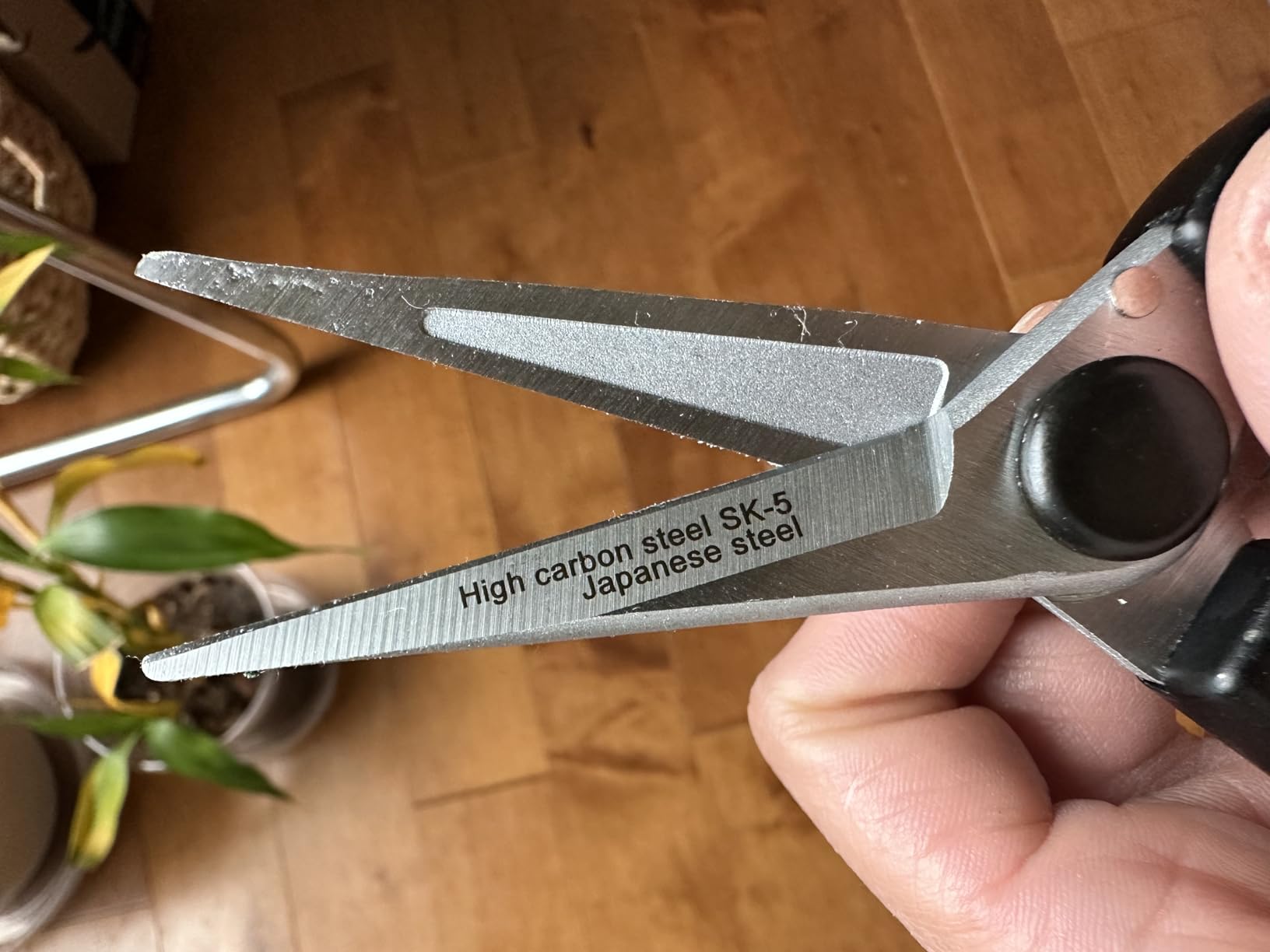
The Kimura is the one to buy if the edge is the thing you care about most. Its SK5 steel blades are forged in Japan and heat treated to 60 HRC, which is the hardest specification on this list and the main reason owners report infrequent sharpening needs.
It cuts stems and branches up to one inch, and the PTFE coating gives a genuinely low-friction pass through plant material, cutting sap build-up and rusting rather than just resisting them. The cuts came out clean with no tearing, and the riveted aluminium handles with non-slip PVC coating felt controlled and quiet in the hand.
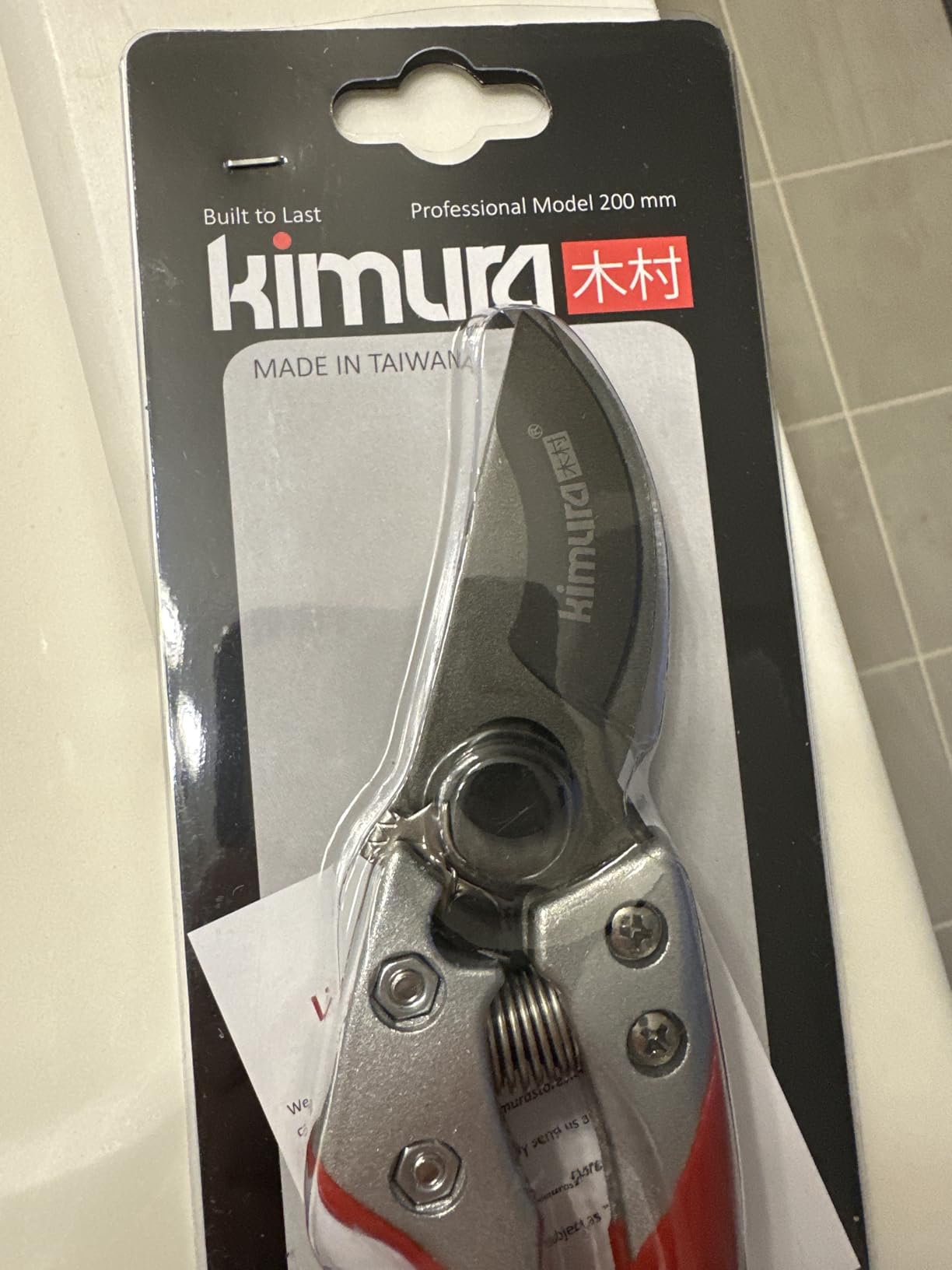
At 230 grams it is light for a one-inch bypass, and several reviewers specifically point out that the light, ergonomic build suits people with arthritis or carpal tunnel. The quick thumb-push safety lock opens with a light squeeze, which is a small design decision that adds up over a full day.
This is also the model to consider if you like the idea of sharpening rarely. A harder blade holds its edge longer between sessions, so the maintenance cycle stretches out considerably compared with a plain high-carbon steel pruner.
What you should know before buying
Two hundred thirty grams is heavier than most of the light aluminium models here, so if you are comparing against a titanium pruner, the weight difference is real. The other limitation is sizing, with only 8 inch and 8.2 inch options available.
The handles are riveted aluminium. That is a durable construction, but it is not the same as a bolted, fully disassemblable design, so plan on sharpening rather than swapping the whole blade assembly.
Who it suits and who it does not
Buy the Kimura if you want the longest time between sharpenings, or if you prune a lot of thick green wood and want a coated blade that will not gum up. The lifetime warranty makes it a low-risk choice on that front.
Pass on it if you have very small hands and size options are the deciding factor, or if you need a fully serviceable tool with a broad parts catalog. That is the FELCO territory.
10. FELCO F-5 – Best Steel-Handle Workhorse
Felco F5 Pruning Shears – 8.9″ All Steel Large Swiss-Made Garden Clippers| Hand Pruners for Garden & Landscape | Garden Tool Cutter with Precision Bypass Blade, Forged Aluminum Body, Replaceable Parts
Bypass action
1 inch cut
11.2 oz
8.9 inch length
All parts replaceable
Pros
- Heavy-duty steel handles tolerate rough landscape work
- Carbon steel blade gives maximum edge retention
- Rubberized phosphate grip holds in wet or gloved conditions
- All parts replaceable and maintainable
Cons
- Heavier and cooler to the touch than aluminium models
- Narrow 0.98 inch handle width gives less leverage
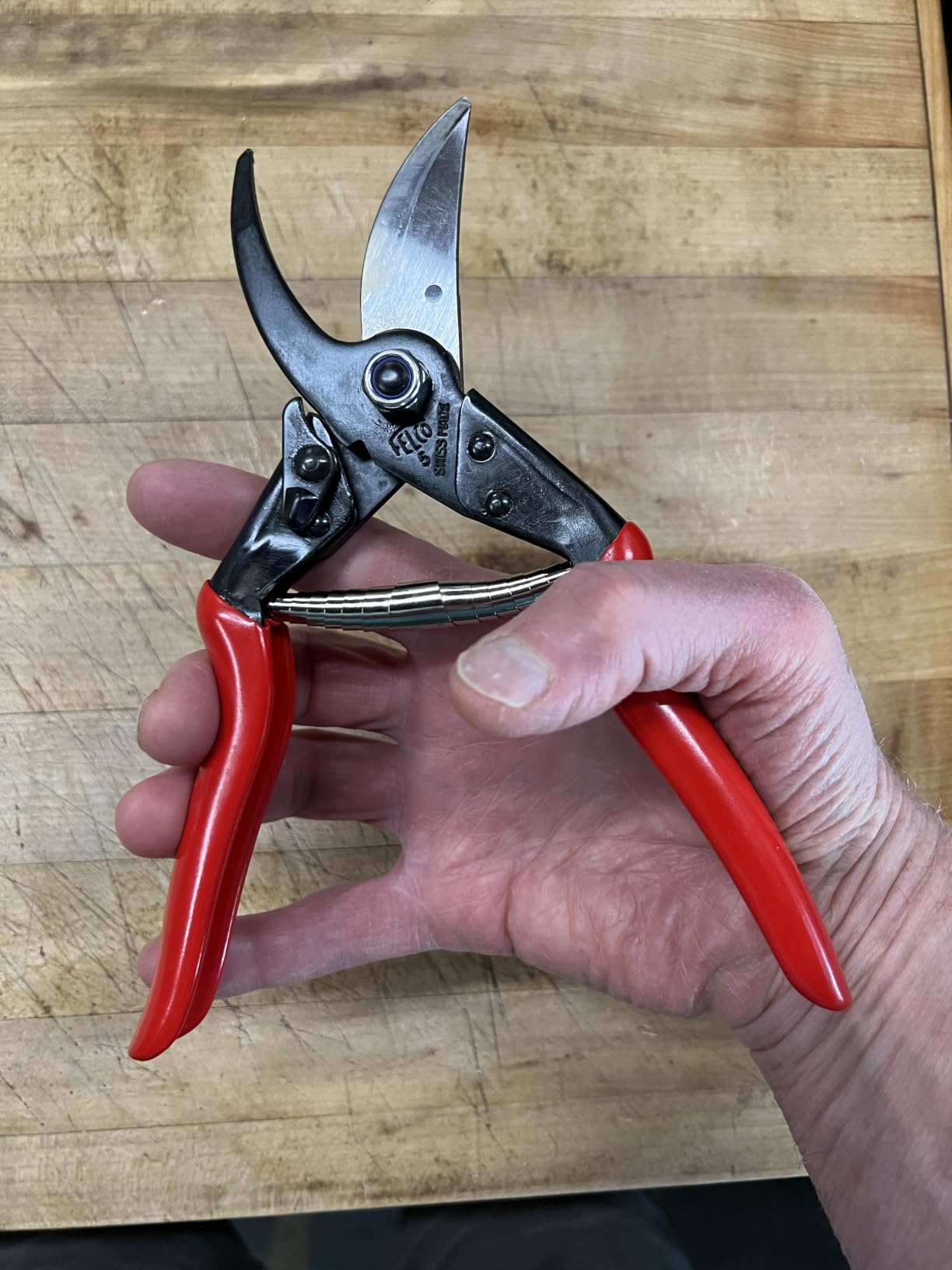
The F-5 is the sturdier sibling of the F-2, and it is the one to buy if your work is rough enough that aluminium would worry you. All-steel handle construction, carbon steel blades, and a rubberized phosphate finish that stays grippy when wet or gloved, at 11.2 ounces and 8.9 inches long.
Edge retention is the headline here. Carbon steel holds a working edge longer than the coated steels on most of the other tools in this roundup, and reviewers describe it as the model you reach for when the job involves woody material rather than soft green growth. It is rated to one inch.
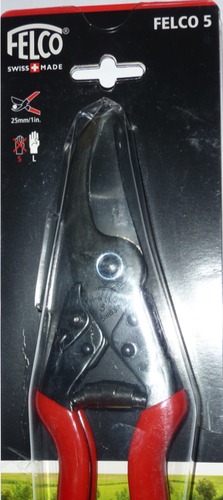
The real argument for the F-5 is the same one that wins the F-2 the top spot, in a different body. All parts are replaceable and maintainable, and the handles carry a lifetime warranty alongside a one-year manufacturer defect cover. The design is ambidextrous, so unlike the F-2 it does not rule out left-handed use outright.
If you want the FELCO parts ecosystem but need something tougher and heavier for daily work, this is the model. If you want aluminium and less mass, the F-2 is the one.
What you should know before buying
Eleven point two ounces of steel is a real load over a long day, and the handle is cooler to the touch than aluminium, which can matter in cold weather. The narrow 8.9 inch handle width also gives less leverage than a padded ergonomic model at the top of the capacity range.
Because it is an all-steel body rather than a coated one, wipe the blades after cutting wet growth. The FELCO F-2 is the more expensive tool in this roundup, so the case for paying more here is the same one: the spare-parts catalog, not the steel.
Who it suits and who it does not
Choose the F-5 for heavy daily pruning, for woody branches near the one-inch limit, and for anyone who wants a fully serviceable tool with a broad spare-parts catalog. It also works for either hand.
Pass on it if weight is a concern for your joints, or if your work is mostly flowers and herbs, where a lighter scissor-style tool will serve you better.
How We Tested Pruning Shears?
We spent six weeks cutting through the same list of stems: green tomato suckers, fresh rose canes, raspberry floricanes, spent hydrangea canes, dried annual stems, and a few woody branches from a well-established shrub. We cared less about the number printed on the box and more about what happened on the fourth cut through a green cane that had already been squeezed shut once and refused to open.
Every tool was judged on five things. Cut quality: does the blade slice or crush, and does the bark tear on the way out. Edge retention: how long the factory edge lasts before the first session with a whetstone. Serviceability: can the pivot bolt be tightened, the spring swapped, the blades replaced, and the tool cleaned with the blade off. Fit: does the handle span match a real hand, and does it stay comfortable at the end of a long session. And build quality, which shows up in whether the spring pops out when you set the tool down in wet grass.
Two things decided most of our rankings. Riveted or glued blade assemblies that cannot be disassembled lost heavily, because a tool you cannot open is a tool you throw away when the edge goes. And rated cut capacity proved generous across the board, so we treat every published capacity as an upper bound on straight-grained green wood rather than a promise on a barky, angled cane.
Bypass vs Anvil vs Ratchet: Which Pruner Type You Need?
Bypass pruners are scissors. Two curved blades slide past each other and shear the stem, which leaves a flat, clean wound that seals faster and gives disease fewer entry points. Anvil pruners drive a straight blade down onto a flat plate, crushing the stem between them. That is the right action for dead, dry, hard wood, and the wrong one for anything alive, because it bruises the cambium and leaves a torn wound.
Ratchet pruners add a geared latch that advances the blade in several short squeezes. You get far more cutting force for much less hand strength, at the cost of speed. A geared bypass does something similar, using a compound handle linkage rather than a ratchet, and it suits strong-but-aching hands better than a ratchet does.
One honest note: every pruner in this roundup is a bypass or scissor-action tool, because that is the correct default for live wood. If your work is mostly dead, dry firewood and old shrub limbs, add a pair of anvil pruners to the kit rather than forcing a bypass past its rating. And if grip strength is the limit rather than branch thickness, a geared or ratchet model will do more for you than any upgrade in steel.
What to Look for When Buying Pruning Shears?
Start with blade action, because it is not a matter of preference. Bypass scissors are correct for live wood, anvil is correct only for dead and dry material, and ratchet or geared mechanisms are correct when grip strength, not branch diameter, is your limit. Get this wrong and no amount of steel will save the plant.
Next, read the cut capacity critically. A one-inch rating means one inch of clean, straight-grained green wood on the first squeeze. Rose canes, angled cuts, and anything with bark will feel heavier than the number suggests. Buy for the branch you actually have, not the one in the photograph.
Serviceability is the differentiator that roundups skip. A pruner you can take apart, with a pivot bolt you can tighten, springs you can replace, and blades you can swap, will outlive several cheaper tools. A pruner with riveted or glued blades that cannot be disassembled is disposable the day the edge rolls over, and that is the most common regret we see in forum threads.
Ergonomics deserves a real test, and the only way to do it is in person. Handle span should close comfortably before your knuckles start to strain, and cushioning matters more than weight once you are past the first hour. Forum users with arthritic hands consistently recommend trying a pair in a garden centre before ordering online, and that advice is well founded.
Finally, check the three small things. Does the latch close fully with one hand, so the blades stay protected in a pocket or holster? Are the handles ambidextrous or mirrored for left-handed use, which is a genuine and under-served need? And is there a sap groove, so wet growth does not glue the blades together on the first squeeze?
When Hand Pruners Are Not Enough
Hand pruners are a pencil-thick tool. That is not a limitation, it is the design, and forcing a bypass pruner past its rating is the fastest way to a torn wound and a sore wrist. When you reach the top of the range, the answer is a longer tool, not more force.
Up to three-quarters of an inch: a bypass hand pruner handles this comfortably. Most of the picks above do.
Three-quarters of an inch to one inch: use a hand pruner rated for it, or a geared bypass such as a PowerGear-style model, and support the branch with your free hand rather than twisting the handles.
One inch to two inches: move to loppers. Bypass loppers for live wood, anvil loppers for dry deadwood.
Over two inches, or anything the loppers cannot close on: a folding pruning saw is the right tool.
If you are working high up or on thick mature limbs, hand tools are the wrong category entirely. Our guide to the best electric chainsaws for pruning covers the powered end of the spectrum for bigger jobs.
How to Sharpen, Clean, and Store Your Pruning Shears?
Clean first, sharpen second. Sap and grit are the fastest route to a dull edge, so wipe the blades after every session and give them a proper clean with warm water and a little detergent. Disinfect between plants when you have moved through diseased material; university extension services such as Colorado State and Oregon State both recommend disinfecting tools between plants to avoid spreading pathogens.
For sharpening, you need a whetstone or a diamond hone and about ten minutes. Work along the bevel on the cutting blade only, keeping the angle consistent and testing the edge with your thumb between strokes. The cutting blade gets the attention; the counter blade just needs to be free of burrs. Many home sharpeners use a kitchen knife, which works as a crude scraper on a soft steel blade but will not restore a proper bevel.
Then wipe the blades dry, add a light film of oil, and work the pivot so the blades open and close freely. If the spring is tired, replace it rather than bending it. Store the tool closed on the lock, dry, and out of a pocket where the latch can pinch a gloved finger. Follow the Royal Horticultural Society guidance on tool hygiene and safe practice, and your blades should hold an edge for most of a season of regular work.
Frequently Asked Questions
What are the top 5 best pruning shears?
The FELCO F-2 is the best overall, with forged aluminium handles, a hardened steel blade rated to one inch, and every part replaceable. The Fiskars Bypass is the best everyday value, the gonicc 8 Inch Titanium is the best for small hands, the Kimura 8 Inch SK5 has the hardest heat-treated blade, and the VIVOSUN 6.5 Inch snips are the best budget choice for flowers and herbs.
Is Corona or Fiskars better?
It depends on the job. Corona BP 3180D is the heavier forged steel tool, rated to one inch and built for daily professional work, but it tires smaller hands over long sessions. Fiskars Bypass is lighter, ambidextrous, has a self-cleaning sap groove and a lifetime warranty, but its 5/8 inch capacity suits stems and soft growth rather than woody branches. Choose Corona for thick growth and hard use, Fiskars for everyday soft pruning.
Why are FELCO pruners worth the money?
Because they are the only tools in this roundup you can fully rebuild. Blades, springs, the pivot bolt, and handle cushions are all replaceable, and the forged aluminium handles carry a lifetime guarantee. A budget pruner with riveted blades is disposable the day the edge dulls, so the higher up-front cost is spread across a decade of sharpening, spring swaps, and blade replacements instead of three replacements.
What is the best brand of pruning shears?
FELCO for lifetime serviceability and a full spare-parts catalog, and Kynup or Kimura if you want one-inch capacity with a cushioned or heat-treated blade at a lower cost. The right brand is the one whose action matches your wood, whose handle fits your hand, and whose parts you can replace.
Which Fiskars hedge shear is considered the best?
Hedge shears and pruning shears are different tools. Hedge shears have long blades for trimming box and privet, while the Fiskars Bypass Pruning Shears in this roundup are single-blade hand pruners for individual stems. For hedges you want a long-bladed hedge shear; for shrubs and roses, the bypass pruner is the correct tool.
What is the difference between bypass and anvil pruning shears?
Bypass pruners work like scissors, sliding two curved blades past each other to slice a stem and leave a clean wound that seals fast. Anvil pruners drive a straight blade onto a flat plate, crushing the stem, which is suitable only for dead and dry wood. Using anvil pruners on live wood tears bark and slows healing.
Are there good left-handed pruning shears?
Options are limited but they exist. The Kynup SK5 Heavy Duty Pruners are genuinely balanced for both hands and cut up to one inch, and the FELCO F-5 is ambidextrous, as are the Corona BP 3180D and the Gardena 8906. The FELCO F-2 is right-hand only, so left-handed users should test fit in person before buying.
Conclusion
If you want one pair of pruning shears and you want them to still be cutting cleanly in 2026 and several years after that, the FELCO F-2 is the answer. The forged aluminium handles, the hardened steel blade rated to one inch, and a parts catalog that covers every component are what separate it from a tool you will throw away when the spring fatigues.
Match the tool to the work below it. The Fiskars Bypass covers everyday soft growth and flowers, the gonicc fits small hands, the VIVOSUN snips handle herbs and deadheading, the Kynup is the left-handed and cushioned-grip option, the Corona carries heavy professional use, the Gardena carries the longest warranty, the Haus and Garten ClassicPRO is the comfort pick, the Kimura holds an edge the longest, and the FELCO F-5 is the steel workhorse.
Whichever you choose, buy the blade type that matches your wood, check the latch closes with one hand, and keep a light oil on the steel. That habit does more for a pruner than any coating on the box.