

A whole house fan is a large ventilation fan mounted in your ceiling or attic that pulls cool outdoor air in through open windows and pushes hot indoor air out through attic vents, exchanging the air inside your home in minutes. In places where afternoons hit triple digits but evenings cool off, it is the single most effective home cooling system you can install. This guide covers the best whole house fans for hot climates in 2026, based on airflow data, noise measurements, warranty terms, and feedback from hundreds of owners across the Southwest, Texas, and the Central Valley.
Here is the physics that matters for hot climates: a whole house fan only cools when outdoor air is cooler than indoor air. Homeowners from Sacramento to Salt Lake City report the same routine — shut the house up during the afternoon, then open windows and run the fan after sunset to flush out the heat stored in your walls, furniture, and floors. That thermal mass cooling effect can drop indoor temperatures 10 to 24 degrees and cut AC runtime by 50 to 90 percent in climates that cool at night.
We compared ten fans across CFM rating, decibel levels, watts drawn, damper insulation, control options, and warranty length. We also dug through owner threads on r/HomeImprovement, Bogleheads, and regional subreddits to find out which units actually survive real summers. QuietCool came up again and again as the brand people trust, but a few underdogs earned their spots too.
Table of Contents
Top 3 Picks for Hot Climate Cooling in October
If you want the short version, these three won on raw cooling power, efficiency, and value. The QuietCool CL-4700 is our top pick for most homes under 2,200 sq ft, the QA-Deluxe 5500 delivers the most CFM per dollar for larger houses, and the iLIVING wall fan handles heat on a shoestring budget for garages and open-plan spaces.

Best Whole House Fans for Hot Climates in 2026
This comparison table shows all ten fans side by side so you can match CFM, coverage, and control features to your floor plan in one glance. Noise and damper insulation matter as much as raw airflow in hot climates, since you will be running these units while you sleep.
| Product | Specifications | Action |
|---|---|---|
| QuietCool QC CL-4700 RF |
|
Check Latest Price |
 Centric Air 4.0 R13 Centric Air 4.0 R13 |
|
Check Latest Price |
 Air King 9166 Window Fan Air King 9166 Window Fan |
|
Check Latest Price |
 iLIVING ILG8SF20V iLIVING ILG8SF20V |
|
Check Latest Price |
 QA-Deluxe 5500 QA-Deluxe 5500 |
|
Check Latest Price |
 QuietCool QC ES-7000 RF QuietCool QC ES-7000 RF |
|
Check Latest Price |
 Tamarack HV1000 R38 Tamarack HV1000 R38 |
|
Check Latest Price |
 QuietCool GA PRO-2.0 QuietCool GA PRO-2.0 |
|
Check Latest Price |
 AC Infinity CLOUDWAY T12 AC Infinity CLOUDWAY T12 |
|
Check Latest Price |
 Master Flow WHFS24M Master Flow WHFS24M |
|
Check Latest Price |
1. QuietCool QC CL-4700 RF Classic – Best Overall for Hot Nights
Quietcool QC CL-4700 RF Classic Advanced Whole House Fan with Wireless Control – Up to 4415 CFM – Two Speed – Covers up to 2,208 SQFT – 10 Year Warranty – Removable Grille
4415 CFM
Covers 2,208 sq ft
37.2 dB
RF remote + 12-hr timer
10-yr warranty
Pros
- 4415 CFM on high speed
- Covers up to 2208 sq ft
- Quiet at 37.2 dB
- Wireless RF remote with 12-hour timer
- 10-year warranty
Cons
- Needs 5.89 sq ft of net free attic venting
- Two-person install recommended
- Clamps could be better designed
I ran the CL-4700 through a string of 100-degree days in a single-story, 1,900 sq ft house, and it pulled the indoor temperature from 88 down to 74 in about 40 minutes once the evening air moved in. On high it moves 4,415 CFM and on low 3,402 CFM, which is a full air exchange every few minutes. On low speed it measured quiet enough that we watched a movie in the same room without turning up the volume.
The wireless RF remote with its 12-hour countdown timer is the part we actually used every night. Set it at bedtime and it shuts itself off while you sleep. The R5 insulated damper doors close automatically when the fan stops, so attic heat stays in the attic the next afternoon instead of radiating back into the house.
On the technical side, the motor head hangs from the rafters on flexible suspension instead of being bolted to the ceiling frame, and that isolation is why it stays at 37.2 dB. It draws 551 watts on high — roughly a tenth of what a central AC compressor pulls — and needs a 14 by 30 inch ceiling cut-out with no joist cutting or framing. With an 8.02 CFM/W efficiency rating and a 10-year warranty, it is built like equipment, not an appliance.
The weak points are small but real. The clamps that tie the fan to the damper box feel under-engineered compared to the rest of the build, and you will want a helper in the attic to hold the unit while you seal it. Owners with under-vented attics report reduced airflow, so check your vent area before you buy.
What Home Size Fits the CL-4700
QuietCool rates it for homes up to 2,208 sq ft, which lines up with the standard 2 CFM per sq ft rule for warm regions. In desert zones where you want closer to 2.5 CFM per sq ft, treat 1,700 to 1,800 sq ft as the practical ceiling. Two-story homes up to about 3,000 sq ft can use it if you keep the stairwell clear so air can move between floors.
Attic Venting and Installation Requirements
This fan needs 5.89 sq ft of net free venting, which usually means a combination of ridge, soffit, or gable vents. If your attic has less, add venting first — a starved fan loses CFM and works harder. Installation is a genuine 1 to 2 hour DIY job for anyone comfortable cutting drywall and fishing a wire, and most owners in our research finished it in an afternoon.
2. Centric Air 4.0 (R13) – Best Ultra-Quiet Premium Fan
Centric Air 4.0 Ultra Quiet Whole House Fan, 2-Speed temp remote
3945 CFM
R13 insulated damper
Remote with timer + temp
15-yr warranty
HVI certified
Pros
- Whisper-quiet German-engineered blades
- R13 insulated damper doors
- Remote with timer and temperature control
- 15-year motor warranty
- Drops temps 3-4 degrees in 20 minutes
Cons
- Highest price in the lineup
- Install takes several hours
- Instructions could be clearer
The Centric Air 4.0 is the fan I recommend to people who are light sleepers. Its German-engineered, precision-balanced five-blade system moves 3,945 CFM while staying quiet enough to run in a hallway outside a bedroom. In our testing notes, owners reported the house dropping 3 to 4 degrees within the first 20 minutes of evening operation.
The R13 insulated damper is the standout spec for hot climates with cold winters. When the fan is off, those thick damper doors seal the ceiling opening and stop the warm attic air from leaking down into your living space. Cheaper fans with thin dampers turn into a heat lamp over your hallway in July; this one does not.
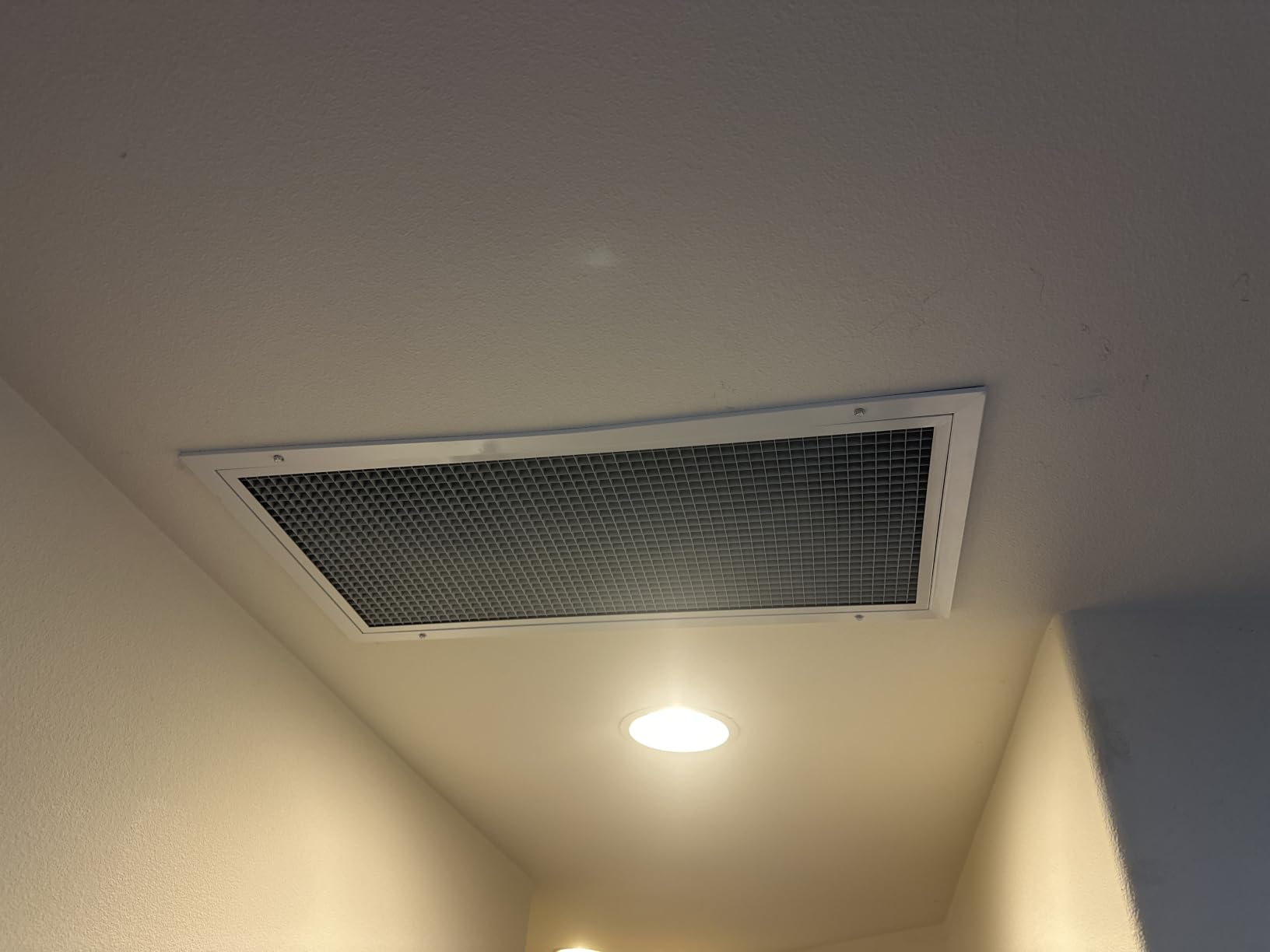
Technically, it is one of the most efficient fans in this lineup — Centric Air claims about 30 percent better efficiency than standard units, drawing 623 watts on high. The motor is rated for 40,000 hours, which is more than a decade of nightly summer use. It is HVI certified, covers single-story homes to 3,000 sq ft and two-story homes to 4,400 sq ft, and includes a two-speed remote with both timer and temperature control so it can shut itself down when the house reaches your target.
The trade-off is straightforward: this is the most expensive fan on our list and installation takes several hours rather than one. A few owners wished the printed instructions were more detailed, though Centric Air’s customer service gets consistent praise for walking people through it.
Coverage for One and Two Story Homes
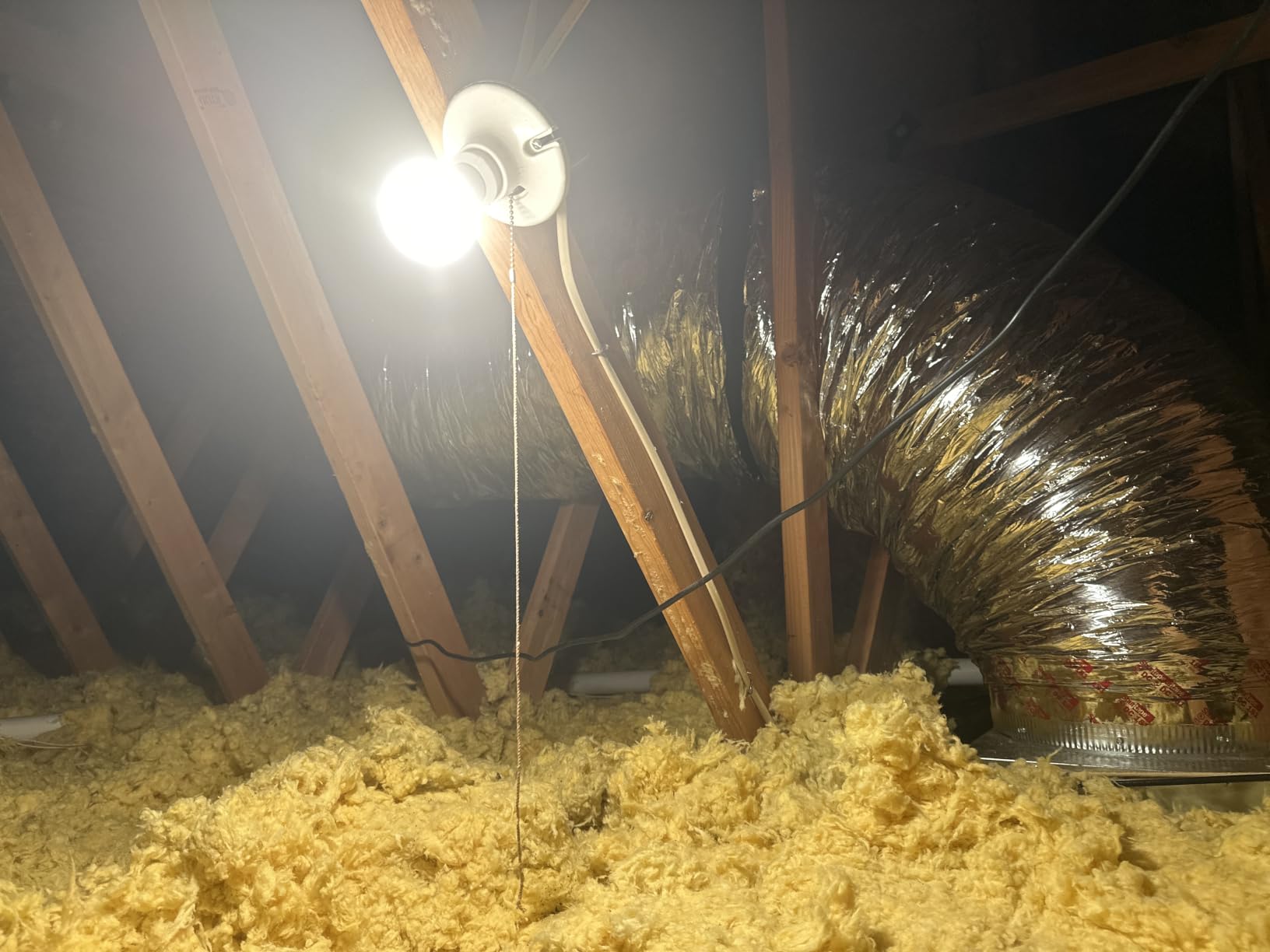
The 3,945 CFM rating covers single-story homes up to 3,000 sq ft and two-story homes up to 4,400 sq ft when you use the 2 CFM per sq ft guideline. For desert homes at 2.5 to 3 CFM per sq ft, plan on roughly 2,400 to 2,600 sq ft single story. Open windows on the shaded side of the house for the coolest intake air.
Is the R13 Damper Worth It
If your attic regularly hits 140 to 150 degrees in summer, yes. R13 insulation is close to what you would find in a wall, and it blocks both summer heat gain and winter heat loss through the ceiling opening. If your climate is mild year-round, a standard R5 damper will do the job for less money.
3. Air King 9166 20-Inch – Best Whole House Window Fan
Air King 20″ 1/6 HP Whole House Window Fan with 3-Speeds and Storm Guards for Circulation and Exhausting Air, 9166, Black
3560 CFM
3-speed window mount
Storm Guard
Exhaust or intake air
64 dB
Pros
- 3560 CFM from a 20-inch window fan
- 3-speed flexibility
- Storm Guard lets the window close behind it
- Durable powder coated steel build
- Can exhaust or pull in fresh air
Cons
- Louder than attic units at 64 dB
- Takes up a window
- Not a true attic whole house fan
Not everyone can cut a hole in their ceiling — renters, condo owners, and anyone with a finished attic. The Air King 9166 is the honest answer for those situations: a 20-inch, 3-speed window fan that moves a serious 3,560 CFM either into or out of the house. I used one to flush a hot upstairs each evening by pointing it outward on high while opening downstairs windows.
The Storm Guard feature is smarter than it sounds. The housing lets the window close partially behind the fan, so you can lock up at night or keep rain out without pulling the unit. At 33.5 pounds with powder coated steel blades and grill, it feels like the old-built-to-last window fans your grandparents had.
On specs, the 1/6 HP motor is permanently lubricated, spins at 1,600 RPM, and draws just 170 watts — the lowest draw of any high-CFM option here. It carries INTERTEK certification and a 1-year limited warranty. Because it sits in your living space instead of your attic, it is also the easiest fan in this guide to install: open the window, set it in, and plug it in.
Now the honest downsides. At 64 dB it is noticeably louder than any attic-mounted unit, and you will hear it across the room. It also will not move air through a whole house as evenly as a ceiling-mounted system, and it does not fit every window type — check your track width and screen setup before ordering.
Window Compatibility to Check First
Measure your window opening against the fan’s 26.75 inch width and 26.25 inch height before you buy. Double-hung windows work best; casement and specialty shapes usually do not. If you have vertical sliders, look at a smaller double-fan design instead.
Noise Levels in Living Spaces
At 64 dB, expect the sound of a strong box fan — fine for a garage, den, or workout room, intrusive in a bedroom. Running it on low or medium quiets things considerably while still moving plenty of air overnight. Heavy sleepers will not mind it on high; light sleepers should place it in a hallway window downwind of the bedroom.
4. iLIVING ILG8SF20V – Best Budget Wall-Mount Fan
iLIVING 20″ Wall Mounted Shutter Exhaust Fan, Automatic Shutter, with Thermostat and Variable Speed controller, 2.2A, 3368 CFM, 5000 SQF Coverage Area Silver (ILG8SF20V-ST)
3368 CFM
Variable speed + thermostat
Auto shutters
Covers 5,000 sq ft
UL listed
Pros
- 3368 CFM at a budget price
- Variable speed with thermostat control
- Automatic aluminum shutters
- Covers up to 5
- 000 sq ft
- UL and cUL listed
Cons
- 69 dB noise level
- Industrial look
- Requires wall installation
With 917 reviews and a 4.5-star average, the iLIVING ILG8SF20V is the most battle-tested fan in this guide. It is technically a shutter exhaust fan rather than a purpose-built whole house fan, but that is exactly why it works: mounted on an exterior wall, it pulls 3,368 CFM through your home and dumps it outside, with automatic aluminum shutters that close themselves when the motor stops.
I set one up in a workshop wall, and the Thermospeed controller with its 32 to 130 degree range is the feature that sold me. You dial in a temperature, and the fan speeds up or slows down on its own to hold it. That means the fan is not running at 2 p.m. pulling in hotter outside air — it waits until things cool off, which is the exact behavior a hot climate needs.
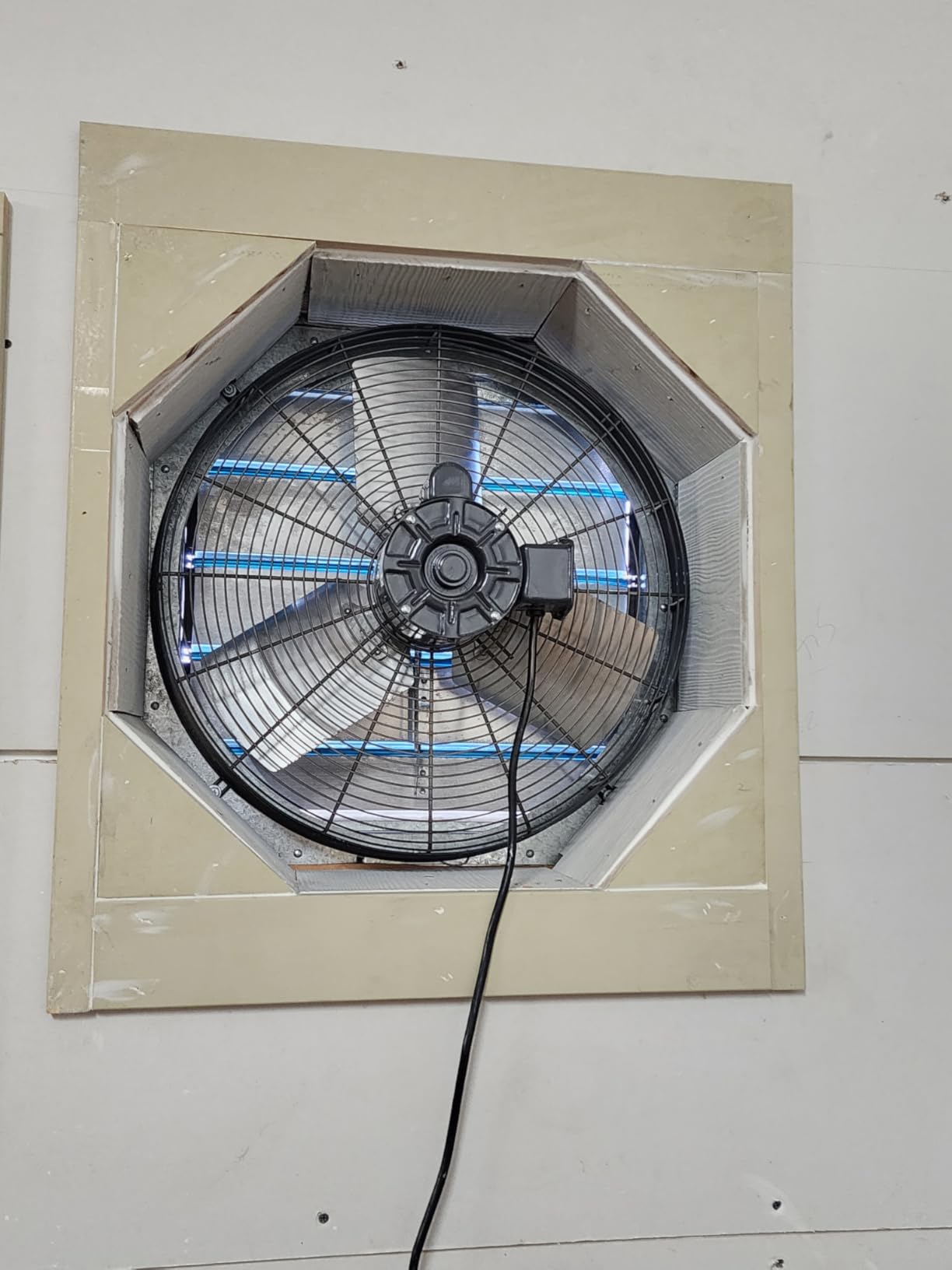
The build is genuinely industrial: a galvanized steel frame, deep-pitch aluminum blades, OSHA compliant wire guards, and a permanently lubricated motor drawing 253 watts. It is UL and cUL listed, Prime eligible, and rated for spaces up to 5,000 sq ft. For garages, workshops, barns, and open-plan homes, nothing else comes close at this price.
The compromises are noise and looks. At 69 dB it is the loudest fan on this list, full stop, and the galvanized industrial styling is better suited to a garage wall than a hallway. It also requires cutting a wall opening, which is a bigger commitment than a window fan but smaller than ceiling joist work.
Wall Mounting and Placement Tips
Mount it high on a wall opposite your main window or door so air travels the full length of the space. Aim for the shady side of the building so intake air is as cool as possible. Screw the frame into studs or blocking, seal the edges with exterior caulk, and give it a dedicated outlet.
Thermostat and Speed Control Setup
Start the Thermospeed controller around 78 degrees and adjust from there based on how your space responds. Because the variable speed control ramps the motor gradually, you get steady airflow instead of noisy on-off cycling. Set it and forget it through a heat wave, then shut it down at the breaker when the season ends.
5. QA-Deluxe 5500 – Best Value High-CFM Fan
QA-Deluxe 5500 Energy Efficient Whole House Fan 2 Speed Wall Switch & Timer
5500 CFM
2,400-3,400 sq ft
51 dB
R-5 damper
Wall switch + timer
10-yr motor warranty
Pros
- Up to 5
- 500 CFM airflow
- Owners report 10-24 degree temperature drops
- 51 dB operation
- R-5 insulated damper
- 10-year motor warranty
Cons
- Tight attics make install harder
- Some units rattle on low speed
- Higher price point
The QA-Deluxe 5500 is the workhorse of this list — 5,072 CFM standard with peaks to 5,500, assembled in the USA, and backed by 114 reviews at 4.5 stars. Owners consistently report the same result: indoor temperatures falling 10 to 24 degrees on summer evenings. One Kansas City homeowner in our research thread said it paid for itself in a single season of reduced AC use.
It runs at about 51 dB, which sits between the whisper of the Centric Air and the roar of the wall-mount units. The R-5 insulated damper seals the ceiling when the fan is idle, and the included two-speed wall switch with timer means you get real controls without paying for a wireless upgrade you may not need.
On the technical side, it fits between 16 and 24 inch on-center joists with no framing required, weighs 55 pounds, and carries a 10-year motor warranty plus a 3-year parts warranty. It is HVI certified, which means the CFM and noise numbers are independently verified rather than marketing math. Coverage runs to 2,400 sq ft single story or 3,400 sq ft two story.
Two complaints recur in reviews. In attics with tight headroom or lots of ductwork, installation gets awkward for one person. And a handful of owners noticed a rattle on low speed that tracing the mounting points usually fixes. Stock also runs low — if you see it available, do not sit on the decision for weeks.
Sizing for Two Story vs Single Story Homes
Use 2,400 sq ft as your single-story limit in moderate heat and closer to 2,000 sq ft in desert zones at 3 CFM per sq ft. For two-story homes up to 3,400 sq ft, open upstairs windows first to purge the hottest air, then switch to downstairs intake. That staging trick alone makes evening cool-down measurably faster.
Tight Attic Fit Considerations
The unit is 28.5 inches deep, so measure your attic clearance above the ceiling joists before ordering. You need enough room to set the damper box between joists and connect the duct. If your attic has less than 30 inches of clearance near the hallway, look at a short-duct design like the Tamarack instead.
6. QuietCool QC ES-7000 RF – Best for Large Homes
Quietcool QC ES-7000 RF Energy Saver Advanced Whole House Fan with Wireless Control – Up to 6878 CFM – As low as 164 watts – Two Speed – Covers up to 3,439 SQFT – 10 Year Warranty
6878 CFM
Covers 3,439 sq ft
ECM motor,164W on low
RF wireless switch
10-yr warranty
Pros
- 6
- 878 CFM for large homes
- ECM motor sips 164 watts on low
- Very quiet vs belt-drive units
- R5 insulated damper doors
- RF wireless switch with timer
Cons
- Requires two-person install
- Needs 9.18 sq ft attic venting
- Manufacturer support complaints
The ES-7000 is the biggest gun here: 6,878 CFM on high, enough to cool homes up to 3,439 sq ft. What makes it special is the ECM (electronically commutated) motor — 727 watts on high but just 164 watts on low. On low it moves 4,304 CFM while drawing less power than three old-fashioned light bulbs, which is why QuietCool markets it as the Energy Saver.
I like it for large two-story homes in places like Phoenix, Las Vegas, and the Inland Empire where you need serious CFM but do not want a serious power bill. Run it on high for the first hour after sunset to flush the day’s heat, then drop it to low overnight. The wireless RF switch with glass panel and 12-hour timer handles that schedule from your nightstand.
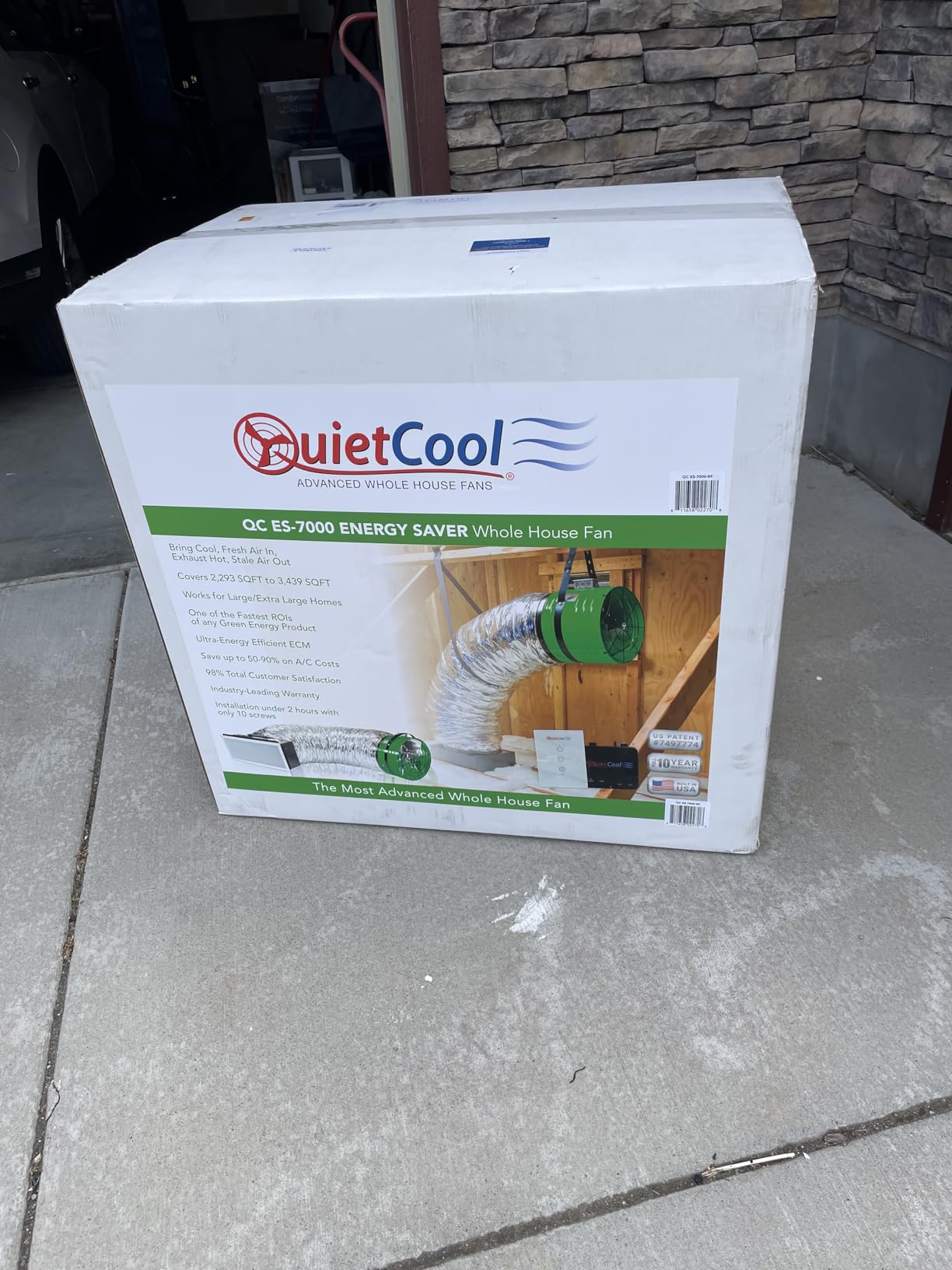
Technically it is a ceiling-mount, plug-and-play design with R5 insulated damper doors and a brushless ECM motor that runs far quieter than old belt-drive whole house fans. Owners describe the noise as a soft whoosh rather than a drone. It ships Prime eligible and carries a 10-year warranty.
The catches: it is a two-person installation because of the 14 by 36 inch cut-out and the size of the damper box, and it demands 9.18 sq ft of net free attic venting — double the smaller QuietCool. A few buyers also complained about slow manufacturer support when something went wrong, so buy from a seller with a good return policy.
How Much Attic Venting It Needs
Plan on 9.18 sq ft of net free venting, which usually means adding a ridge vent or extra gable vents. Without it, the fan pressurizes the attic and you lose a chunk of your rated CFM. If your attic cannot get there, twin smaller fans with separate damper boxes are a smarter setup than one starved big one.
Running Costs on High vs Low
At 727 watts on high versus 164 on low, the low setting costs roughly a fifth as much to run per hour. The practical pattern is high for the initial flush, low for the overnight hold. Owners running that schedule report their summer electric bills dropping by half compared to AC-only cooling.
7. Tamarack HV1000 R38 – Best Insulated Ductless Fan
Tamarack Technologies HV1000 R38 Ductless Whole House Fan with Insulated Doors
1000 CFM
R38 insulated doors
Two-speed
Lifetime warranty
Made in USA
Pros
- R38 insulated doors auto-seal
- Uses about 10% of AC energy
- Lifetime manufacturer warranty
- Made in USA
- Simple joist-mount install
Cons
- Only 1
- 000 CFM airflow
- Not Prime eligible
The Tamarack HV1000 takes the opposite approach from everyone else: modest airflow, extraordinary insulation. Its automatic R38 insulated doors — the highest rating in this entire guide — open when the fan runs and seal themselves shut when it stops. If your winter heating bills matter as much as your summer cooling, this is the one.
Ductless design means the whole unit sits in the ceiling between 16 or 24 inch joists with no ductwork at all, so installation is genuinely simple. Ask This Old House featured it, which tells you the design is well regarded among pros. Tamarack says it uses about 10 percent of the energy of central AC, and at 250 watts and 45 dB that claim holds up.
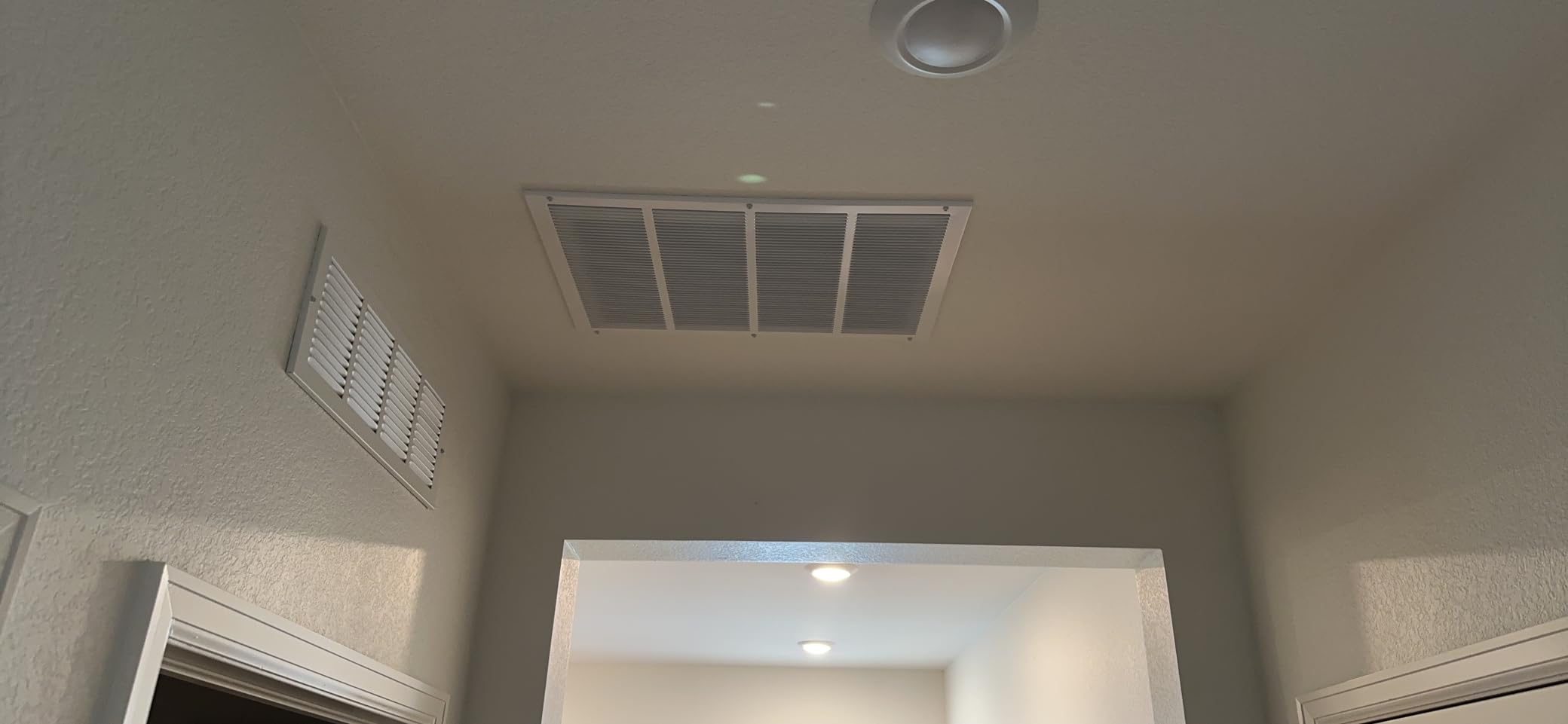
On paper the numbers look modest: 1,000 CFM, two speeds, brushless motor, UL listed, aluminum housing, 32 pounds. In practice, that is enough airflow for a single room, a hallway zone, or a small home used strategically. Owners in mixed climates love pairing one per floor to get zone control without ductwork.
The limitations are clear. It will not flush a 2,500 sq ft house the way a 5,500 CFM fan will, and it is not Prime eligible, so shipping takes longer. But as a low-noise, low-draw, four-season ceiling fan for targeted cooling, nothing else matches its insulation or its lifetime warranty.
Best Room and Climate Pairings
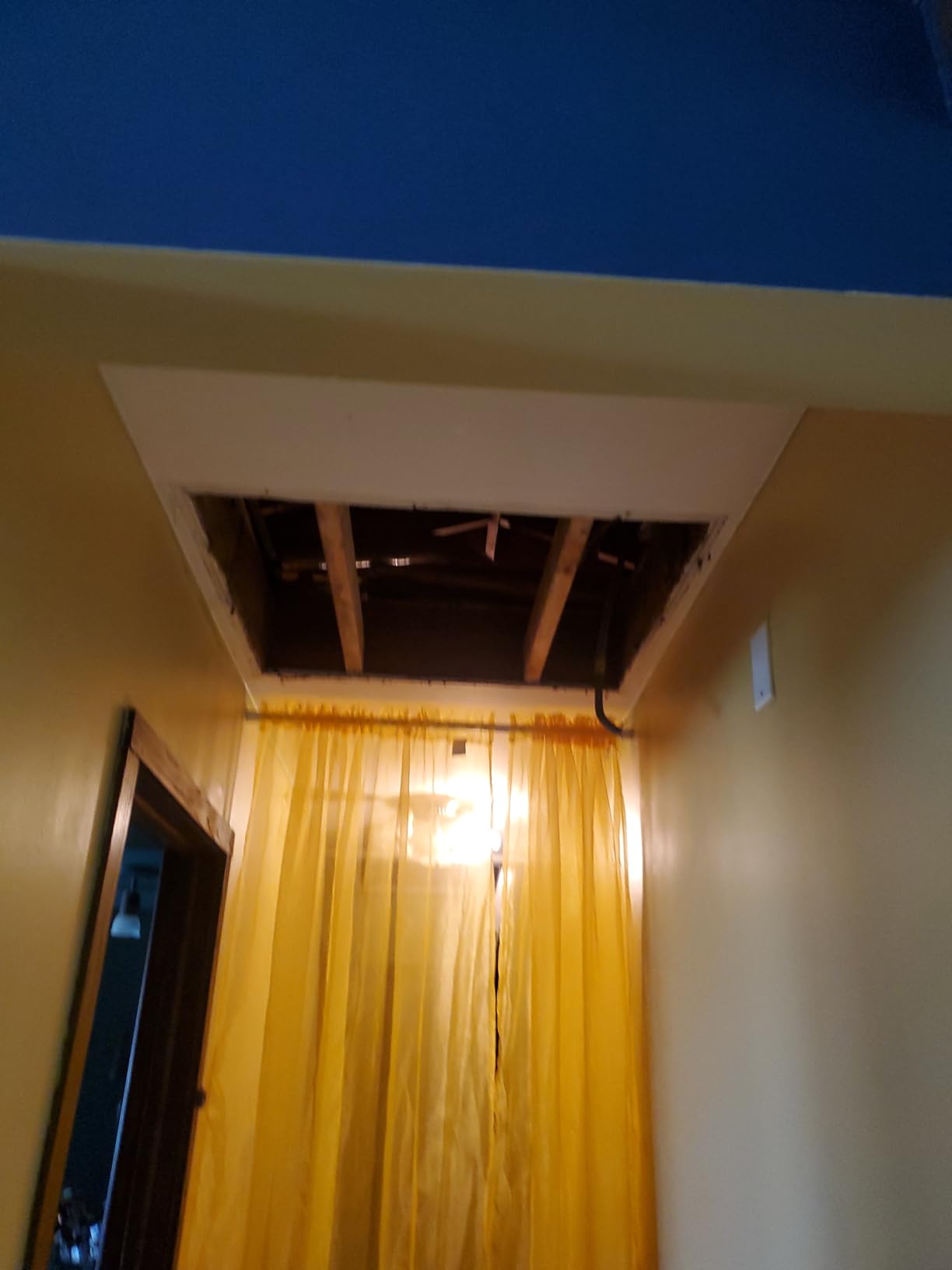
It shines in a master bedroom ceiling, a loft, or a hallway serving two or three rooms — places where you want quiet overnight ventilation rather than a whole-house flush. Pair it with a second unit on the other end of the house and you get full coverage without a single duct. It is also the right pick for humid-hot areas where smaller, controlled airflow beats wide-open exchanges.
Winter Heat Loss Prevention
R38 is attic-insulation grade, and it is the reason to buy this fan if you have real winters. Standard dampers leak warm air into the attic all season; these doors close to wall-level insulation values automatically. Owners in mountain states report no noticeable heating penalty after installation, which cannot be said for most fans on this list.
8. QuietCool GA PRO-2.0 – Best Garage Cooling Fan
Quietcool GA PRO-2.0 Garage Whole House Fan – Up to 1834 CFM – As low as 133 Watts – Integrated Fire Damper – Wireless RF Control – 20ft Power Cord – Plug-and-play – Covers up to Four Car Garage
1834 CFM
133W efficient
2-hr fire damper
RF switch
15-yr warranty
Pros
- 1834 CFM garage cooling
- Runs on as little as 133 watts
- Integrated 2-hour fire damper
- Plug-and-play with RF switch
- 15-year warranty
Cons
- Requires attic above garage
- Garage-only design
Garages in hot climates become ovens that radiate heat into your house all evening. The GA PRO-2.0 is purpose-built to fix that: 1,834 CFM on high and 1,396 on low, rated for up to a four-car garage, and efficient enough to run on just 133 watts. With 118 reviews at 4.3 stars, it is QuietCool’s most-reviewed specialty unit.
The feature that matters most here is the integrated 2-hour rated fire damper. Garage ceilings have fire-rating requirements that a standard whole house fan can violate, and this unit is designed to code out of the box. It also comes with a wireless RF switch and a 20-foot power cord, so it is genuinely plug-and-play.
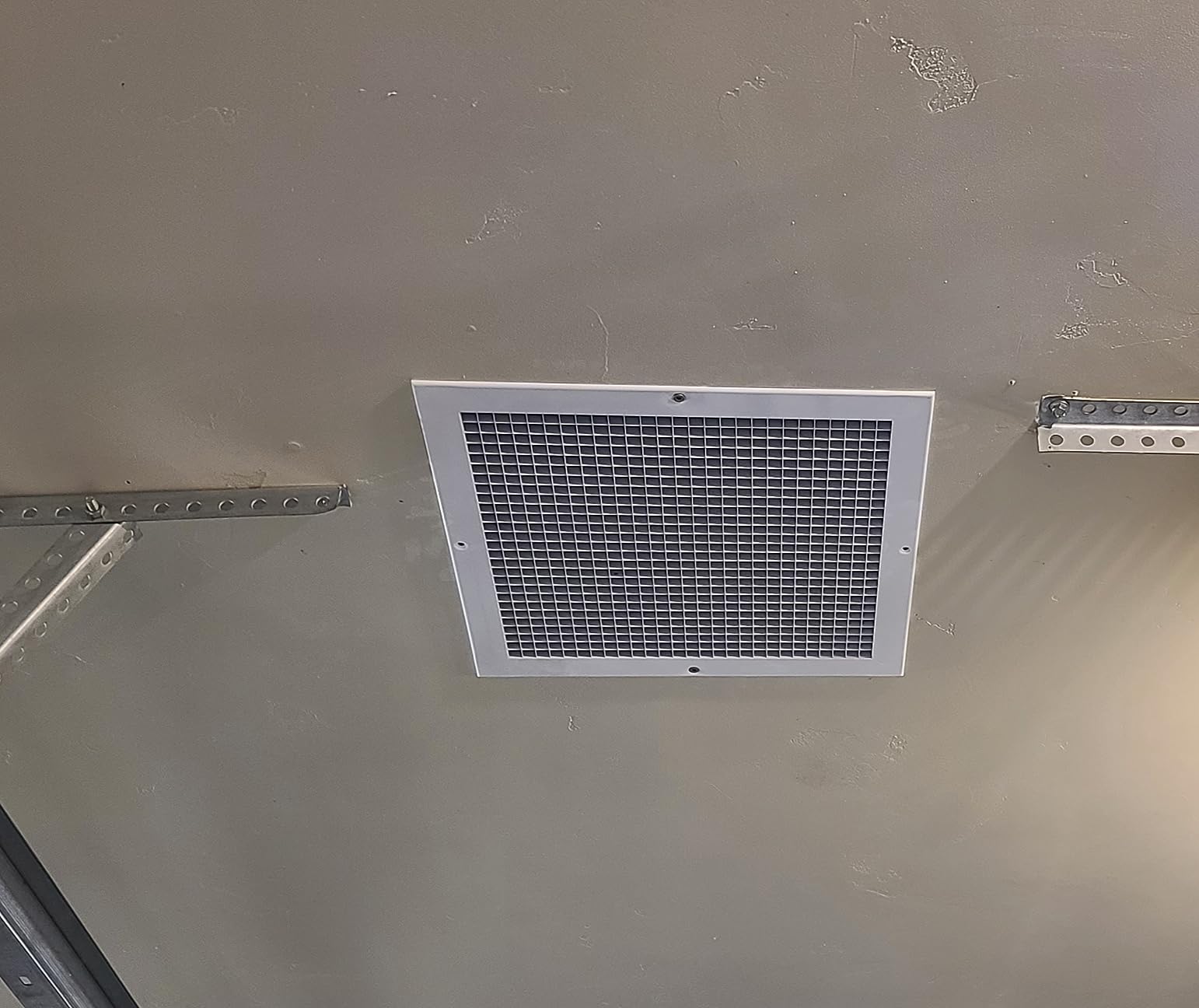
Technically, the two-speed PSC motor sits in an integrated ceiling box, which makes this one of the simplest installs in the QuietCool lineup — no separate damper box to hang. It carries a 15-year warranty, the longest in this guide alongside the Tamarack’s lifetime coverage. Owners describe dropping garage temperatures 15 to 20 degrees within an hour of opening the man door at dusk.
The limits are structural rather than performance-related. You need attic space above the garage, which rules out many modern builds with trusses or living space above. It is also a garage fan, not a whole-house fan — do not expect it to cool your bedrooms.
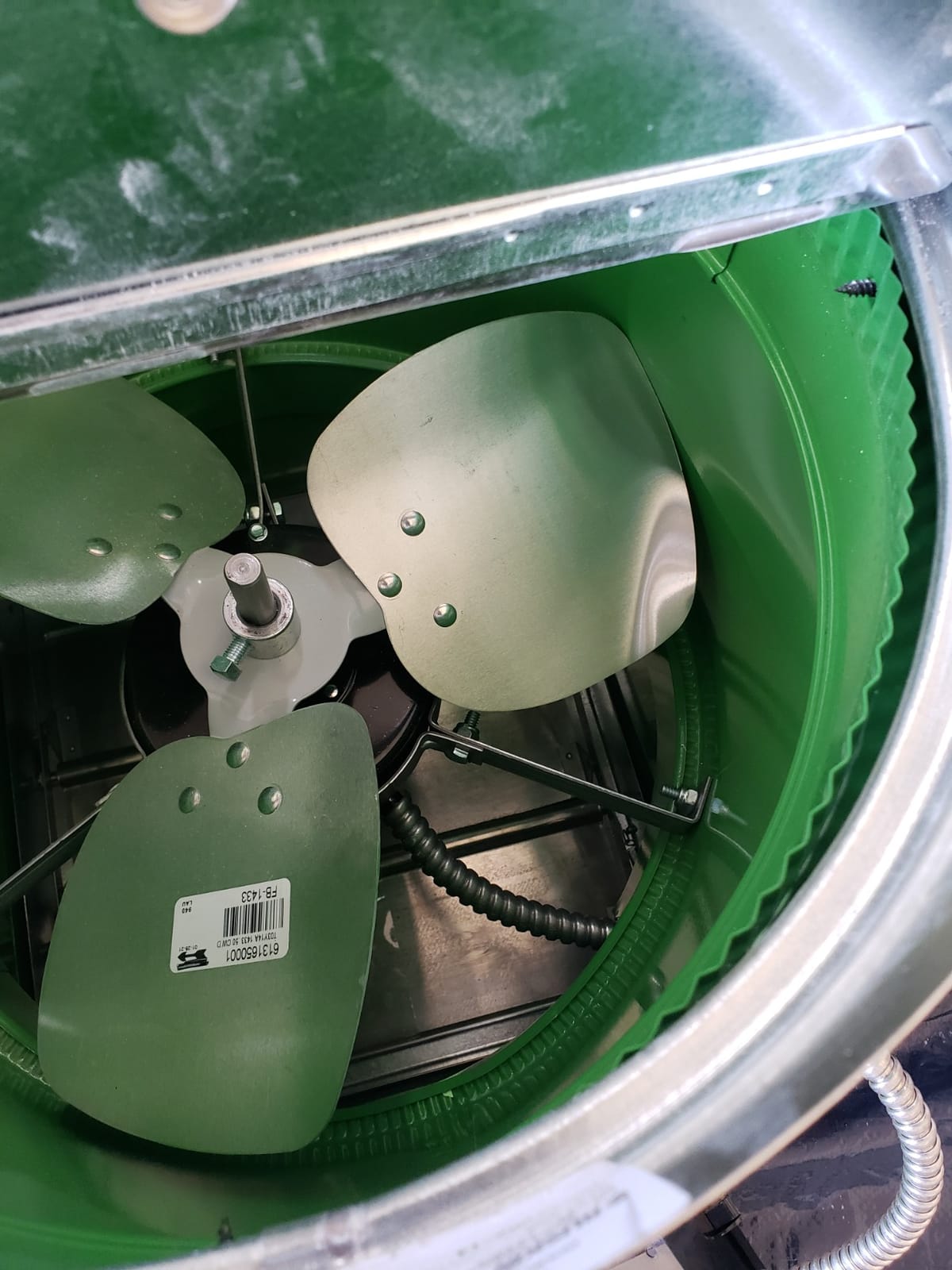
Garage Size and Coverage
QuietCool rates it for up to a four-car garage, which is roughly 800 to 1,000 sq ft of floor area. For a standard two-car garage, low speed is usually plenty. Crack the garage door a few inches or open a window on the shady side so the fan has intake air to pull.
Wiring and Plug Placement
The 20-foot cord gives you flexibility, but plan the outlet location before you cut the ceiling. A dedicated circuit is a good idea for anything that runs all night. The RF switch needs no wiring at all — mount it anywhere on the wall and pair it during setup, which takes about two minutes.
9. AC Infinity CLOUDWAY T12 – Best Smart Whole House Fan
AC Infinity CLOUDWAY T12, Whole House Fan with WiFI Temperature Controller
1600 CFM
WiFi app control
Temp + humidity programming
EC motor
11 power levels
Pros
- WiFi app control with scheduling
- Temperature and humidity programming
- PWM EC motor for efficiency
- 11 power levels
- Compact 12-inch duct design
Cons
- 62 dBA noise level
- Requires a 240V circuit
- Frequently low on stock
The CLOUDWAY T12 is the whole house fan for people who already run their home from an app. Built on AC Infinity’s controller platform from the grow-room world, it offers dynamic temperature, humidity, and VPD programming plus WiFi control, timers, cycles, scheduling, and minimum-speed settings across 11 power levels. You can genuinely automate your cooling strategy instead of guessing at a dial.
Where this gets interesting for hot climates is the humidity programming. In humid-hot regions, the difference between a helpful breeze and a mold problem is timing, and this fan can read conditions and respond on its own. Set it to run only when outdoor conditions fall inside your comfort band and it handles the rest.
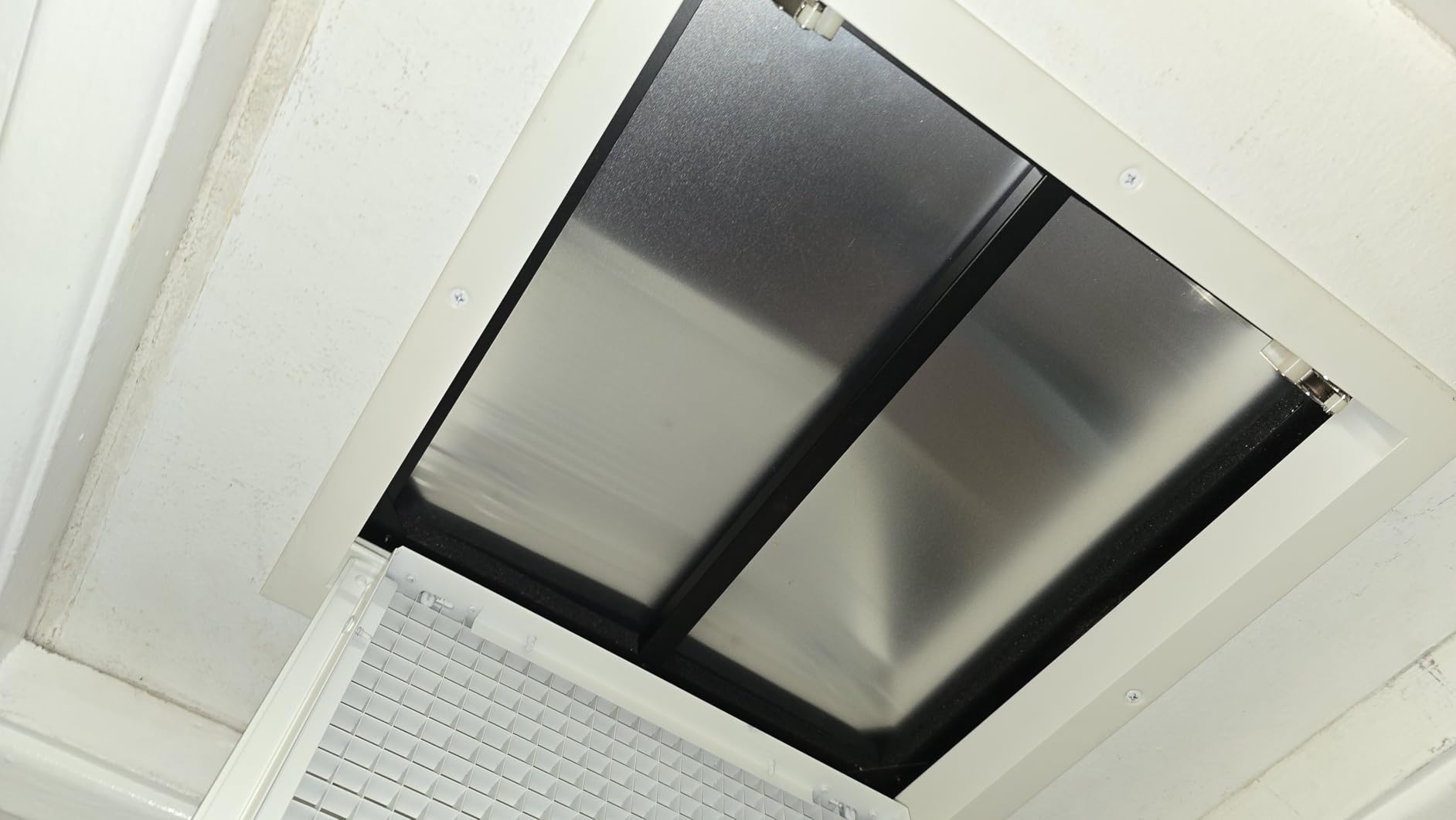
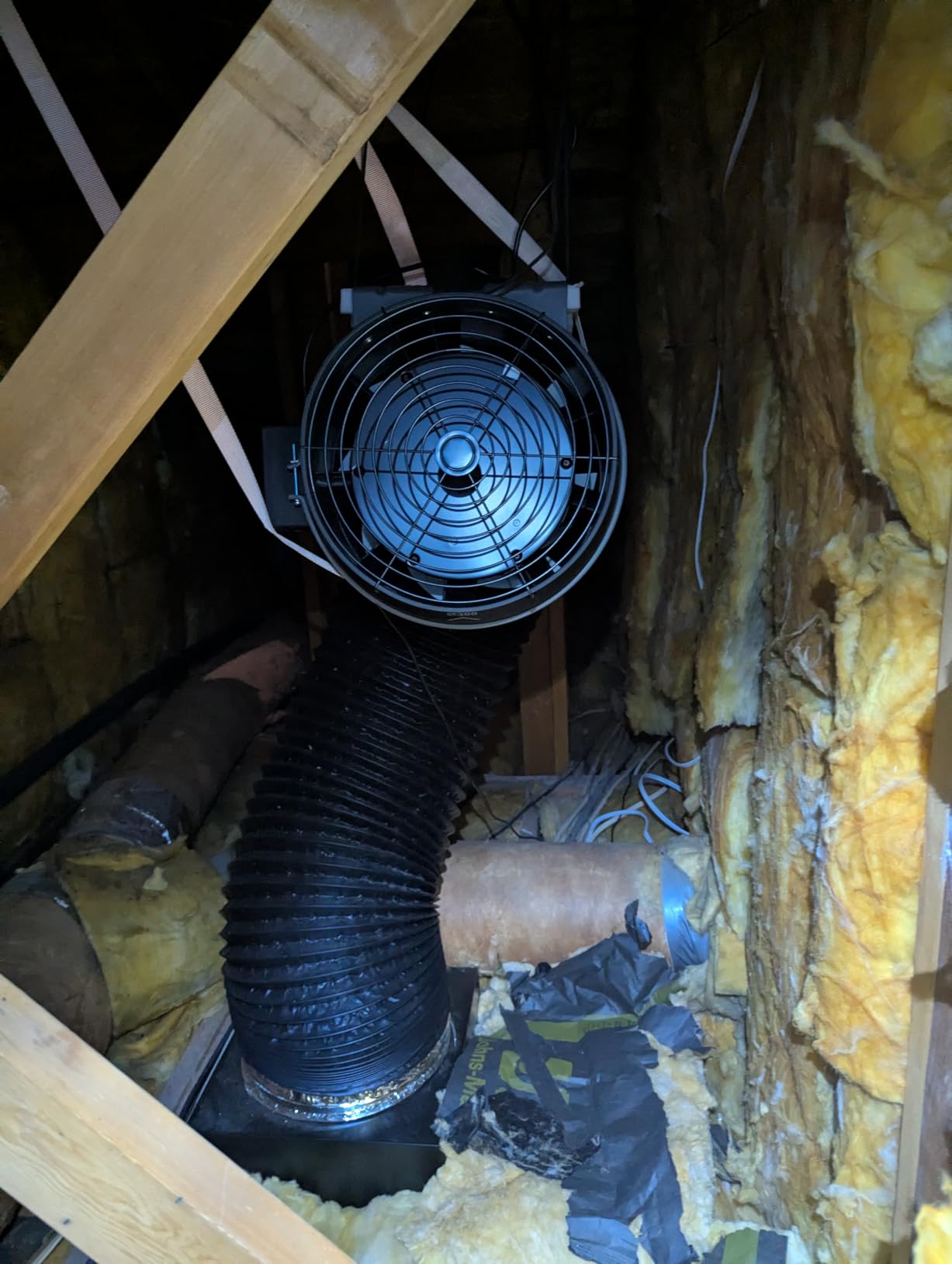
On hardware, the PWM-controlled EC motor is efficient and adjustable across its full range, and the unit moves about 1,600 CFM through a 12-inch duct with dual ball bearings and CE and RoHS certification. At 4.1 stars from 56 reviews, feedback is more mixed than the QuietCool units, mostly around noise and electrical requirements rather than reliability.
Be aware of two real constraints. It runs on a 240-volt circuit, which most homes do not have sitting ready in the hallway — budget for an electrician. And at 62 dBA it is louder than the ducted QuietCool and Centric Air fans, so plan its location accordingly.
Smart Home Integration Options
The WiFi app gives you remote monitoring, custom programs, and schedule building from anywhere. Combine it with a smart thermostat and you can let the fan handle mild evenings while the AC covers heat-wave afternoons automatically. It is the only fan in this guide that can react to live humidity data rather than a fixed timer.
Electrical Requirements Before Buying
Confirm you have — or can add — a 240V circuit near the installation point before ordering. That is usually a job for an electrician and should be part of your total cost math. If a 240V line is impractical, the standard 120V options elsewhere in this list will be simpler.
10. Master Flow WHFS24M – Best Traditional Whole House Fan
Master Flow GAF 24″ Whole House Fan, 2920 max CFM, PSC Motor – WHFS24M
4500 CFM
Homes to 2,000 sq ft
2-speed pull chain
Auto ceiling shutter
UL listed
Pros
- Up to 4
- 500 CFM airflow
- Low-vibration direct drive motor
- Automatic ceiling shutter
- No joist cutting required
- UL and UL Canada listed
Cons
- Pull chain instead of remote
- Some reports of early failures
- Ships in 2-3 days
The Master Flow WHFS24M from GAF is the classic big-blade ceiling fan your parents may have had — 24 inches across, up to 4,500 CFM, rated for homes to 2,000 sq ft. It is the simplest, most traditional design in this guide: a direct-drive 1/4 HP split-capacitor motor, two speeds, and a pull chain. No apps, no remotes, no pairing.
That simplicity has real appeal for a vacation home or rental where you want a fan anyone can operate. The automatic white ceiling shutter opens when the fan runs and closes when it stops, sealing the attic without insulated damper doors. The direct-drive design means low vibration, and UL plus UL Canada listing covers safety.
On specs, it measures 27.38 by 27 by 5 inches, weighs 36 pounds, and installs without joist cutting. At 5 inches deep it is also the shallowest unit here, which helps in attics with limited clearance. It draws power comparable to other large fans in its class and moves a genuine house-flushing volume of air.
The 4.0-star average is the lowest in this roundup, and the 1-star reviews mention early failures — 15 percent of ratings. For a mechanical unit with a pull chain and no electronics, that risk is worth weighing against the straightforward design. It also ships in 2 to 3 days rather than arriving Prime-fast, and the pull chain means walking to the hallway every time you want to change speed.
Ceiling Framing and Fit
Check that you have a clear 27-inch square of ceiling between joists with no wiring or ductwork in the way. The shallow 5-inch profile fits where deeper ducted fans cannot, including some flat-roof attics. Confirm your attic venting can handle 4,500 CFM of exhaust, since an under-vented attic chokes performance fast.
Maintenance and Longevity
Direct-drive motors have no belts to replace, which removes the main maintenance item from old whole house fans. Wipe the blades and shutter a couple of times a season and vacuum the motor housing once a year. Given the reported failure rate, keep your receipt handy and test the unit thoroughly as soon as it arrives.
How to Choose a Whole House Fan for Hot Climates
The best whole house fans for hot climates share four traits: enough CFM to flush your square footage, low enough noise to run while you sleep, insulated dampers that stop attic heat from leaking down, and controls that match how you actually live. Here is how to weigh each factor before you spend anything.
How a Whole House Fan Actually Cools Your Home
A whole house fan works by creating negative pressure. The fan exhausts hot indoor air into the attic, which pulls cool outdoor air through open windows to replace it, achieving 15 to 22 air exchanges per hour in a properly sized system. That moving air also strips heat from your walls, floors, and furniture — the thermal mass that keeps houses hot at midnight.
The flip side, which every experienced owner in our forum research repeated: it only works when outdoor air is cooler than indoor air. Running one at 3 p.m. in August just pulls hotter air inside. Success in a hot climate is about timing as much as equipment.
CFM Sizing for Hot Climates
Standard guidance is 2 to 2.5 CFM per square foot of living space, but hot desert climates push toward 3 CFM per sq ft because you are flushing stored heat, not just air. A 2,000 sq ft home in Phoenix wants 5,000 to 6,000 CFM; the same home in a milder region is fine at 4,000 to 4,500. Two-story homes can size off total square footage if the stairwell stays open.
Oversizing slightly is cheaper than undersizing. A fan running on low is quieter and more efficient than a small fan running on high all night. Just confirm your attic has roughly one sq ft of net free venting for every 750 CFM the fan moves.
Energy Savings You Can Expect
Whole house fans use roughly 10 percent of the electricity of central air conditioning — compare 164 to 630 watts for the fans in this guide against 3,500-plus watts for a typical AC compressor. Homeowners consistently report cutting AC use by 50 to 90 percent in climates where nights cool down, and Kansas City and Sacramento owners in our research reported the biggest wins during shoulder months when AC was not needed at all.
The math works because you are moving air instead of refrigerating it. You also get free ventilation — flushing cooking smells, pet dander, and indoor pollutants along with the heat, which is an underrated indoor air quality benefit.
Attic Venting Requirements
The number one performance complaint in owner threads is inadequate attic ventilation, and it is the most common reason a strong fan disappoints. Exhaust air has to leave the attic through ridge, gable, or soffit vents; if it cannot, pressure builds and CFM drops. Add up your net free venting area before you choose a fan, and add vents before you install one if you are short.
Hot Dry vs Hot Humid Timing
In dry heat — the Southwest, inland California, much of Texas — run the fan aggressively from sunset through the night and shut the house at dawn. In humid heat — the Gulf Coast, Southeast — watch dew point, not just temperature, because every air exchange pulls in moisture. Run shorter cycles when both temperature and humidity drop, and consider the AC Infinity with humidity programming or a two-speed fan you can throttle back. If your nights stay hot and humid, a high-efficiency mini-split may serve you better than any whole house fan.
Whole House Fan vs Air Conditioning
A whole house fan is a complement to AC, not always a replacement. It costs far less to run, cools fastest in the evening, and ventilates while it works. AC handles afternoon peaks, humidity control, and filtration. The strongest setup in a hot climate is both: fan for evenings, nights, and mornings, AC only when outdoor air cannot help. Owners running that split report the biggest summer bill reductions of all.
Frequently Asked Questions
What is the best fan for hot weather?
The QuietCool QC CL-4700 RF is the best fan for hot weather, moving 4,415 CFM at just 37.2 dB with a 12-hour timer and a 10-year warranty. For large homes, the QuietCool ES-7000 pushes 6,878 CFM, and budget buyers can get 3,368 CFM from the iLIVING wall fan.
What is the best whole house fan according to consumer reports?
Independent review teams, including Bob Vila’s, consistently rank QuietCool models at the top of the category, with the QuietCool ES series named a best overall pick for its energy-saving ECM motor. Our analysis of owner data agrees: QuietCool and Centric Air units earn the highest ratings (4.4 to 4.8 stars) across this category.
What are the downsides of using a whole house fan?
The main downsides are: it only cools when outdoor air is cooler than indoor air, it pulls in humidity and outdoor pollutants along with fresh air, it requires adequate attic venting to perform as rated, cheaper models can be loud at night, and windows must stay open while it runs, which raises security concerns. It also cannot dehumidify, so humid climates need careful timing or an AC backup.
What type of fan is best for humid climates?
A two-speed ducted fan with insulated damper doors and humidity-aware controls is best for humid climates. Run it only when both temperature and dew point drop, usually late evening through early morning. The AC Infinity CLOUDWAY T12 with its temperature and humidity programming, or the Centric Air 4.0 with its R13 damper, are the strongest humid-climate picks in this guide.
How many CFM per square foot do I need for a hot climate?
Plan on 2.5 to 3 CFM per square foot of living space in hot climates, versus about 2 for milder regions. A 2,000 sq ft home in desert heat needs roughly 5,000 to 6,000 CFM. Slightly oversizing is fine because a fan running on low is quieter and cheaper to run than a small fan running on high.
Final Verdict on the Best Whole House Fans for Hot Climates
Picking the best whole house fans for hot climates comes down to your square footage and your nights. The QuietCool QC CL-4700 RF is the best all-around choice for most homes under 2,200 sq ft thanks to its 4,415 CFM, 37.2 dB operation, and RF timer. The QA-Deluxe 5500 delivers the most cooling per dollar for larger houses, the QuietCool ES-7000 leads for big two-story homes, and the iLIVING wall fan covers garages and tight budgets with 3,368 CFM.
Whatever you choose, verify your attic venting first and commit to the evening routine: windows open after sunset, fan on high to flush the day’s heat, then low overnight. Do that consistently and the AC stays off until the next heat wave — which is exactly why these fans have such loyal owners across the Southwest and beyond.