
When my mother started leaving the stove on overnight, I knew we had a problem. Learning how to keep someone with dementia safe at home is not a one-time project. It is an ongoing process of watching, adapting, and sometimes making very difficult decisions about what comes next.
About 6 million Americans are living with Alzheimer’s disease and related dementias, and the vast majority want to remain at home for as long as possible. I understand that desire. Home is familiar. Home is comfort. But dementia changes how a person sees, moves, and understands their environment, and that means the home itself can become dangerous in ways you might never expect.
This guide walks you through everything I have learned and what experts recommend. You will find a room-by-room safety checklist, strategies for wandering and nighttime safety, technology recommendations, medication management tips, and an honest section on the warning signs that home may no longer be safe. My goal is to give you practical, step-by-step instructions you can act on today, not vague theory.
Adults with dementia fall at nearly three times the rate of older adults without cognitive impairment, according to the CDC. Falls are the leading cause of injury death for adults aged 65 and older. Wandering, medication errors, kitchen fires, and scalding injuries add to the danger. The good news is that most of these risks are preventable with the right modifications.
Whether you are just starting to notice changes in a loved one or you are deep in the daily reality of caregiving, this guide will meet you where you are. Let us start with the five most critical actions you can take right now.
Table of Contents
Quick Reference: 5 Things to Do Today to Keep Someone With Dementia Safe at Home
If you only have time for five things today, do these. They address the most common and most dangerous risks for someone with dementia living at home.
1. Secure all exits. Install door alarms or chimes on every exterior door, and consider placing locks out of the normal line of sight. Wandering is one of the leading causes of injury and death in dementia, and it can happen in seconds.
2. Eliminate tripping hazards. Remove throw rugs, secure loose carpets with double-sided tape, clear walkways of clutter, and tape down electrical cords. Falls are the number one injury risk, and most are caused by things you walk past every day without noticing.
3. Lock up medications and chemicals. Move all prescription drugs, over-the-counter medicines, cleaning supplies, and hazardous chemicals into locked cabinets. Confusion can lead to accidental overdose or poisoning.
4. Make the kitchen safe. Install stove knob covers, remove flammable items near the range, and consider an automatic shut-off device. Kitchen fires are one of the most common home accidents for people with dementia.
5. Improve lighting everywhere. Install night lights in hallways, bathrooms, and bedrooms. Add motion-sensor lights along staircases and walkways. Shadows and dark areas increase confusion, falls, and fear.
These five actions will dramatically reduce the most immediate risks. The rest of this guide goes deeper into each area of the home and each stage of the dementia journey.
How Dementia Changes Safety: Understanding the Risks
Before we get to specific modifications, you need to understand why they are necessary. Dementia is not just memory loss. It affects the brain in ways that change how a person perceives and interacts with their entire environment.
Judgment and Decision-Making
Dementia damages the frontal lobes, which control reasoning, planning, and impulse control. A person who once handled tools safely might forget how to use a knife properly. Someone might leave the house in pajamas in winter, or try to cook with the burner on high and walk away.
This loss of judgment means you cannot rely on the person to recognize danger the way they used to. They may insist they are fine to drive, cook, or use power tools long after it has become unsafe. Your job is to quietly reduce risk without stripping away their dignity.
Senses and Perception
Depth perception changes are common in dementia. A person may have trouble distinguishing a step from flat floor, or misjudge the height of a chair when sitting down. Visual processing problems can make patterned carpets look like holes in the ground, or make dark floor mats appear to be obstacles.
Hearing and sensitivity to temperature can also shift. Someone might not realize water is scalding until they are burned, or fail to hear a smoke alarm. These perceptual changes explain why modifications like solid-color flooring, anti-scald devices, and improved lighting make such a difference.
Memory, Time, and Place Confusion
As dementia progresses, people lose track of time and place. They may wake at 3 AM thinking it is morning and try to leave for work. They might wander into a neighbor’s house believing it is their own from decades ago. This disorientation is not stubbornness or confusion you can simply correct by explaining. The brain is no longer processing context accurately.
This is why environmental cues matter. Labels on drawers, clocks that show whether it is day or night, and familiar objects in consistent locations all help anchor the person in reality.
Sundowning and Behavior Changes
Sundowning refers to increased confusion, agitation, and anxiety that typically worsens in the late afternoon and evening. It affects up to two-thirds of people with Alzheimer’s disease. During sundowning episodes, a person may pace, try to leave the house, become aggressive, or become frightened by shadows.
Sundowning makes nighttime the highest-risk period for many families. I will cover nighttime safety strategies in detail later, including environmental changes, lighting, and behavioral approaches that caregivers on Reddit and in support groups say actually work.
How to Keep Someone With Dementia Safe at Home: General Home Safety Principles
Before we go room by room, here are the universal safety principles that apply throughout the entire house. Address these first, then move on to room-specific modifications.
Lighting
Good lighting is the single most effective safety modification you can make. Aim for bright, even illumination with minimal shadows. Replace burned-out bulbs immediately, use daylight-spectrum bulbs to reduce confusion, and add night lights along every path from bedroom to bathroom.
Motion-sensor lights are especially helpful because they turn on automatically. Install them in hallways, stairwells, bathrooms, and at all exterior doors. They eliminate the need for the person to find and operate a switch, which can be confusing in the middle of the night.
Flooring and Tripping Hazards
Remove every throw rug in the house. I know they look nice, but they are a leading cause of falls. Secure carpet edges with double-sided tape, and replace any flooring that is buckling or torn. Avoid highly patterned carpets, which can look like steps or holes to someone with visual perception changes.
Tape down or reroute all electrical cords along baseboards. Keep walkways at least 36 inches wide to accommodate walkers or wheelchairs. One caregiver on Reddit mentioned replacing thick welcome mats with thin rubber-backed ones, which is a simple change that removes a major tripping risk.
Color and Contrast
People with dementia often lose the ability to distinguish similar colors, especially in low light. Use contrasting colors to define edges and surfaces. A dark toilet seat on a white base helps the person see where to sit. A colored plate on a contrasting placemat makes food easier to see. Paint door frames and light switches in colors that stand out from the walls.
Avoid dark floor tiles near thresholds or at the bottom of stairs. A dark area can look like a hole or a step down, causing the person to freeze or stumble. Solid, mid-tone colors are safest.
Reducing Clutter
Clutter overwhelms the brain. Keep surfaces clear, countertops tidy, and floors empty. Store unnecessary items in closed cabinets or remove them entirely. A minimalist environment is not just safer physically. It reduces cognitive overload and anxiety.
One caregiver shared that removing excess furniture and decorative items from the living room reduced their loved one’s daily confusion significantly. The person could move through the space more confidently without navigating around obstacles.
Room-by-Room Dementia Safety Checklist
This is the heart of the guide. I will walk you through every major area of the home, with specific, numbered actions for each. Print this section or keep it on your phone as you do your walkthrough.
Kitchen Safety
The kitchen is one of the most dangerous rooms for someone with dementia. Sharp objects, heat, chemicals, and electrical appliances all present serious risks, and the person may forget how to use them safely.
Here is your kitchen safety checklist:
Install stove knob covers or remove the knobs entirely when the stove is not in use.
Install an automatic stove shut-off device that cuts power if a burner is left on too long.
Keep a fire extinguisher within easy reach and check it every six months.
Store knives and sharp utensils in locked or out-of-reach cabinets.
Move all cleaning chemicals to locked storage, not under the sink.
Disconnect the garbage disposal if the person might reach into it.
Remove flammable items like towels, paper bags, and curtains from near the range.
Consider replacing a gas stove with an induction cooktop, which has no open flame.
Label cabinets with words or pictures so items are easy to find without searching.
Set the water heater to 120 degrees Fahrenheit or lower to prevent scalding.
Unplug small appliances when not in use, especially toasters and coffee makers.
Keep a night light on in the kitchen at all times.
One practical tip from caregivers: if your loved one tries to cook unsafely, fill the kitchen with alternative activities. A snack station with pre-portioned foods, or a simple task like folding napkins, can redirect the urge to be useful without exposing them to danger.
Bathroom Safety
The bathroom is where the most serious falls happen. Wet floors, hard surfaces, and the combination of water and electricity make it the highest-risk room after the kitchen.
Your bathroom safety checklist:
Install grab bars inside and outside the shower or tub, and next to the toilet. Towel racks are not grab bars and will not support weight.
Place non-slip mats or strips inside the shower and on the bathroom floor.
Install a raised toilet seat or a toilet safety frame for easier sitting and standing.
Add an anti-scald device or temperature-controlled faucet to prevent burns.
Consider converting a tub to a walk-in shower or installing a shower seat.
Install GFCI outlets to prevent electrical shock near water.
Remove or secure medicine cabinets with locks, and store all medications elsewhere.
Set the water heater thermostat to 120 degrees Fahrenheit maximum.
Use a handheld showerhead for easier washing and reduced movement.
Install bright lighting and a night light that stays on around the clock.
Remove locks from bathroom doors, or install ones that can be opened from the outside, in case the person falls or becomes trapped.
A caregiver on a dementia support forum shared that installing a simple shower bench and handheld showerhead was the single most impactful change they made. It allowed their father to bathe independently and safely for an additional eight months.
Bedroom Safety
The bedroom should be a calm, safe space for rest, but it also needs to address fall risks, wandering, and nighttime confusion.
Your bedroom safety checklist:
Place the bed against a wall if falls are a concern, and consider adding a low bed or floor-level mattress.
Install bed rails or a bed exit alarm if the person is at risk of falling out of bed.
Use a baby monitor or room camera to hear and see the person at night.
Keep a night light on at all times, and place motion-sensor lights along the path to the bathroom.
Remove clutter, especially near the bed and along walkways.
Secure or remove mirrors, which can cause confusion and fear when the person does not recognize their reflection.
Keep a phone or emergency call device within reach of the bed.
Use a clock that clearly displays whether it is day or night, such as a day-and-night clock.
Place familiar, comforting objects within sight to reduce nighttime anxiety.
Ensure the bedding is appropriate for the season to prevent overheating or chilling.
One caregiver on Reddit found that removing the bedroom mirror eliminated nighttime episodes of their mother talking to and arguing with her reflection. It was a simple change with a profound effect on nighttime safety and peace.
Living Areas, Dining Room, and Home Office
Common living spaces need attention too. These are areas where the person spends significant time and where visitors come and go.
Your living area safety checklist:
Remove or secure unstable furniture that could tip if leaned on.
Arrange furniture to create wide, clear pathways for walking.
Keep glass-top tables away, or replace them with solid, rounded furniture.
Remove small objects that could be swallowed, like coins, buttons, or batteries.
Secure or remove firearms and other weapons immediately. This is non-negotiable.
Use a baby monitor or camera to keep track of the person when you are in another room.
Lower the thermostat on the water heater serving these areas if applicable.
Keep remote controls, reading glasses, and frequently used items in consistent locations.
Remove toxic plants and replace with non-toxic varieties.
Label rooms and cabinets if the person has trouble finding their way.
Several caregivers I spoke with emphasized the importance of securing firearms early, before the person becomes agitated or confused about ownership. A local police department or sheriff’s office can often help with safe storage or removal.
Hallways and Stairs
Stairs are a major fall risk, and hallways are where nighttime wandering often occurs.
Your hallway and stair safety checklist:
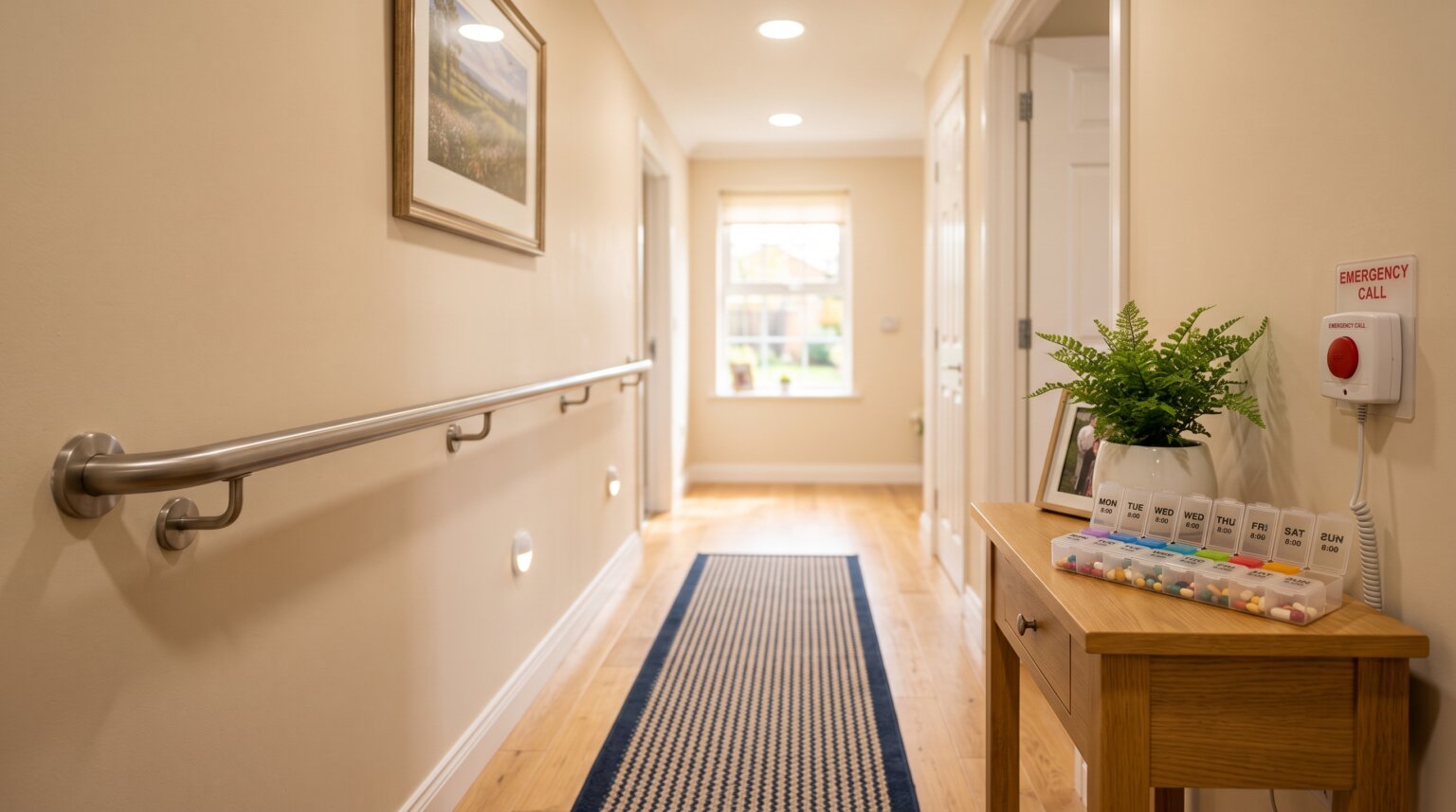
Install handrails on both sides of every staircase, extending beyond the top and bottom steps.
Add non-slip treads or grip strips to each step.
Install motion-sensor lighting on all staircases and in hallways.
Consider installing a stair lift if the person can no longer navigate stairs safely.
Add a safety gate at the top of stairs if the person might wander there at night.
Mark the edge of each step with contrasting colored tape for better visibility.
Keep hallways completely clear of furniture, boxes, and decor.
Ensure hallway lighting is bright and even, with no dark spots.
Remove thresholds or raised door strips that could cause tripping.
If stairs become impossible to manage safely, consider converting a downstairs room into a bedroom. This is a significant change, but it is often the safest option. A stair lift is another alternative, with costs typically ranging from 2,000 to 5,000 dollars for a straight staircase.
Garage, Basement, and Laundry Room
These utility spaces contain tools, chemicals, and equipment that pose serious risks. The simplest approach is to make them inaccessible.
Your garage and utility safety checklist:
Lock all tools, power equipment, and sharp objects in secured storage.
Store all chemicals, paints, solvents, and automotive fluids in locked cabinets.
Disable or lock away the car keys, and consider disabling the vehicle itself.
Install a lock on the garage door leading to the exterior.
Block access to the basement if it has stairs or is unfinished.
Lock the laundry room, or secure detergent and cleaning pods in locked storage.
Remove or secure firearms stored in these areas.
Install carbon monoxide detectors near the garage and furnace.
Ensure the water heater has a temperature lock to prevent scalding.
One caregiver mentioned that hiding the car keys was not enough. Their father found a spare set and drove for several miles before being stopped. Disabling the vehicle by removing the battery cable or a fuse is the safest approach once driving is no longer safe.
Outdoor and Entryway Safety
Outdoor spaces offer fresh air and a sense of freedom, but they also present wandering and fall risks. With the right modifications, a backyard or garden can remain a safe, enjoyable space.
Your outdoor safety checklist:
Install motion-activated lighting at all entryways and along walkways.
Fence the yard and use locked gates to create a safe outdoor area.
Remove or fence off swimming pools, hot tubs, and water features.
Apply glass door decals to sliding doors so they are visible and not walked into.
Repair uneven pavement, cracked walkways, and loose steps.
Install handrails on all outdoor steps and ramps.
Keep garden tools, chemicals, and pesticides in a locked shed.
Remove poisonous plants from the landscape.
Ensure the house number is clearly visible for emergency responders.
Install a video doorbell so you can see who is at the door and communicate remotely.
A fenced yard with a locked gate was a lifesaver for several caregivers I connected with. It allowed their loved ones to enjoy fresh air and a sense of autonomy without the risk of wandering into the street or a neighbor’s property.
Wandering Prevention and Exit Safety
Wandering is one of the most frightening aspects of dementia caregiving. Six in ten people with dementia will wander at least once, and many do so repeatedly. Wandering can lead to serious injury or death, especially in extreme weather or near traffic.
Here is how to prevent wandering and secure exits:
Door Alarms and Chimes
Install chimes or alarms on every exterior door, including the door to the garage. These alert you the moment a door opens. Simple battery-operated door alarms cost under 20 dollars. More advanced systems can send alerts to your phone or trigger a loud siren.
Place the alarm sensor high on the door, where it is less likely to be noticed and tampered with. Test it regularly to make sure the batteries are working.
Locks Out of Sight
Move door locks to unusual positions. A latch placed high or low on the door, or on the side away from the handle, can be invisible to someone with dementia who expects the lock to be in its normal place. Slide bolts installed at the top of the door are a common solution.
Avoid complex or tricky locks, as they can trap the person inside during an emergency like a fire. Any lock you install must be something you can open instantly in a crisis.
Disguising Exits
Some caregivers disguise doors by hanging a curtain across them, or by placing a stop sign or a black mat in front of the door. Many people with dementia interpret a black surface as a hole and will not step on it. A simple dark bath mat placed in front of a door can be enough to deter exit attempts.
You can also cover the door with a mirrored panel or a poster. The goal is to make the door look like a wall, not an exit.
GPS Tracking and Identification
Despite your best efforts, wandering can still happen. Prepare for it. Register your loved one with the MedicAlert program through the Alzheimer’s Association, which provides a wearable ID bracelet and a 24-hour emergency response service.
GPS tracking devices, including watches, pendants, and shoe inserts, can locate a person in real time. Keep a recent photo and a list of identifying information ready for emergency use. Alert neighbors and local police that your loved one has dementia and may wander.
Nighttime Safety Strategies for Dementia Caregivers
Nighttime is when most caregivers feel the most stress. Wandering, sundowning, falls, and sleep disruption all peak after dark. No major competitor dedicates a full section to this, but it is the number one concern caregivers raise in forums and support groups.
Preventing Nighttime Wandering
Start by securing the bedroom and all exits before dusk. Double-check door alarms, lock placements, and motion-sensor lights. If the person tends to leave the bedroom at night, consider a pressure mat alarm that sounds when they step out of bed.
A bed exit alarm, placed under the mattress or on the bed frame, alerts you the moment weight is shifted off the bed. These range from simple pad alarms at around 30 dollars to more sophisticated systems that connect to your phone.
Lighting the Night
Install motion-sensor night lights along every path the person might take from bed to bathroom to hallway. Avoid harsh white light, which can be disorienting. Warm, low-level lighting is best for nighttime. One caregiver recommended amber-colored night lights, which are less likely to disrupt sleep cycles.
Keep the bathroom light on all night, with the door slightly ajar so it serves as a beacon. A dark, closed door can look like a wall.
Managing Sundowning
Sundowning episodes can be reduced with environmental adjustments. Close curtains before sunset to prevent shadows, which can be perceived as intruders. Reduce noise and stimulation in the evening. Keep the home calm, quiet, and well-lit until bedtime.
Several caregivers on Reddit found that a weighted blanket helped their loved one feel secure and stay in bed longer. Others reported success with a consistent evening routine: dinner, soft music, dimming lights gradually, and a familiar activity like looking at photo albums.
Sleep and Bed Safety
To keep someone from falling out of bed, consider lowering the bed frame or placing the mattress directly on the floor. Bed rails can help, but they also pose entrapment risks, so use specifically designed dementia bed rails with gap-free construction.
A floor-level mattress with soft mats placed alongside it is the approach many memory care facilities use. It eliminates the fall risk entirely while still providing a comfortable sleeping surface.
Medication and Chemical Safety
Medication errors are a leading cause of preventable harm in dementia care. Confusion about dosages, timing, and what each pill is for can lead to dangerous overdoses or missed doses.
Medication Management
Take over medication management as early as possible. Use a pill organizer with daily compartments, and fill it yourself each week. Store all medications in a locked box or cabinet. Never leave pill bottles on a nightstand or kitchen counter where they are accessible.
Set up reminders using a phone alarm, a medication reminder app, or an automated pill dispenser. Some dispensers can be locked and programmed to release the correct dose at the correct time, sounding an alert when it is ready.
Household Chemicals
Move all cleaning products, laundry pods, pesticides, and automotive chemicals to locked storage. A person with dementia may confuse cleaning fluid for a beverage, or eat laundry pods thinking they are candy. Childproof locks are not sufficient for an adult who can apply force. Use keyed or combination locks.
Store alcohol out of reach, as it can interact dangerously with medications and worsen confusion.
Fire and Carbon Monoxide Safety
Install smoke detectors in every bedroom, hallway, and on every floor. Install carbon monoxide detectors near sleeping areas and near any fuel-burning appliances. Test them monthly and replace batteries twice a year.
Keep a fire extinguisher in the kitchen, garage, and near the furnace. Consider a monitored alarm system that automatically contacts the fire department, since the person may not respond appropriately to an alarm on their own.
Technology and Smart Home Devices for Dementia Safety
Smart home technology has opened up new options for keeping someone with dementia safe at home. None of these replace human supervision, but they add layers of protection and give caregivers peace of mind.
Smart Locks and Video Doorbells
A smart lock lets you control and monitor door access from your phone, even when you are not home. You can set the door to lock automatically, receive alerts when it is opened, and create temporary codes for caregivers or visitors. A video doorbell lets you see and speak to whoever is at the door without the person with dementia having to answer it.
Motion Sensors and Room Monitors
Wireless motion sensors can be placed in hallways, near exits, and in any room where you want to track movement. When motion is detected, you receive an alert. A baby monitor or WiFi camera in the bedroom and living room lets you check in visually at any time, day or night.
One caregiver shared their setup: a camera in the living room and bedroom, motion sensors on all exterior doors, and a chime on the bathroom door. The total cost was under 200 dollars, and it allowed them to sleep through the night knowing they would be alerted if their father got up.
Fall Detection
Wearable fall detection devices automatically call for help if a fall is detected and the wearer does not respond. Some smartwatches include this feature. There are also pendants and wall-mounted sensors that use radar or infrared technology to detect falls without requiring the person to wear anything.
Medical Alert Systems
A medical alert system, also called a personal emergency response system, provides a wearable button that connects the person to an emergency operator. Look for systems with GPS, fall detection, and two-way voice communication. The Alzheimer’s Association offers a MedicAlert system specifically designed for people with dementia, including a 24-hour wandering response service.
Emergency Preparedness
Disasters and emergencies are harder to manage when someone in the home has dementia. Preparation makes all the difference.
Emergency Contacts and Information
Post a list of emergency contacts near every phone and on the refrigerator. Include your number, the doctor’s number, poison control, and the local Alzheimer’s Association chapter. Create an information sheet for first responders that includes the person’s diagnosis, medications, allergies, and a recent photo.
Register with your local emergency management office to flag the address as having a resident with dementia. Many communities offer this as part of a Smart911 or similar service.
Evacuation Plan
Plan and practice an evacuation route from every room. Keep a go-bag packed with medications, medical records, identification, a change of clothes, and comfort items. If you need to evacuate, the person with dementia will need extra time, patience, and reassurance.
First Aid and CPR
Take a first aid and CPR course. The Red Cross and American Heart Association offer classes specifically for caregivers. Knowing how to respond in a medical emergency before paramedics arrive can save a life.
When Home Is No Longer Safe
This is the section no competitor writes, and it is the one caregivers need most. At some point, home care may no longer be safe, no matter how many modifications you make. Knowing the warning signs helps you make this decision with confidence rather than guilt.
Warning Signs That Home Is No Longer Safe
Watch for these indicators that the risks of staying at home outweigh the benefits:
Frequent falls or near-falls despite safety modifications.
Repeated wandering episodes that cannot be prevented.
The person is unable to perform basic daily tasks like eating, toileting, or dressing, even with assistance.
Caregiver burnout is severe, with chronic sleep deprivation, depression, or health problems.
The person becomes aggressive or agitated in ways that are unsafe for themselves or others.
You cannot afford or arrange enough supervision to keep them safe.
Medical needs exceed what can be managed at home.
One caregiver shared the moment they knew: their mother had fallen three times in one week, had begun wandering every night despite alarms and locks, and the caregiver had not slept more than three hours a night in months. The decision to move to memory care was painful, but it was the right one.
Care Options Beyond the Home
If home is no longer safe, several options exist. Adult day programs provide supervised care during the day while the person continues living at home. Assisted living with a memory care wing offers 24-hour supervision in a secured environment. Skilled nursing facilities provide medical care for people with advanced needs.
In-home care is another option if you need more support but want to delay a move. A home health aide can provide daytime or overnight supervision. However, 24-hour in-home care can cost twice as much as a memory care facility, so weigh the financial reality carefully.
Making the Decision
This is not a failure. Dementia is a progressive disease, and most people eventually need more care than home can provide. Talk with the person’s doctor, a geriatric care manager, and other family members. Visit facilities together if possible. Trust your observations and your gut.
You are not giving up on your loved one by moving them to a safer environment. You are protecting them. That is the deepest form of love.
Stage-by-Stage Safety Considerations
Safety needs change as dementia progresses. Here is a brief overview of what to focus on at each stage.
Early Stage
In early-stage dementia, the person is largely independent but may have occasional lapses. Focus on fall prevention, medication management, driving safety, and emergency preparedness. This is also the time to have honest conversations about future care wishes while the person can still participate in decisions.
Middle Stage
Middle-stage dementia is when most safety modifications become necessary. Wandering begins, judgment declines significantly, and daily supervision becomes essential. This is when you secure exits, lock up hazards, install technology, and consider additional care support. Most of the modifications in this guide apply to this stage.
Late Stage
In late-stage dementia, the person is typically bedbound or requires significant physical assistance. Focus shifts to preventing pressure sores, managing infections, ensuring proper nutrition and hydration, and providing comfort. Hospice or palliative care may become appropriate. Safety at this stage is largely about skilled physical care and comfort.
Paying for Home Safety Modifications
Safety modifications can be expensive, but help is available. Here are some resources to explore.
Medicare does not cover most home modifications, but Medicare Part B may cover some durable medical equipment like walkers or hospital beds if prescribed by a doctor. Medicaid waiver programs in many states cover home modifications for people who qualify financially.
The Veterans Affairs Aid and Attendance benefit provides funds for home modifications and care for eligible veterans and surviving spouses. Contact your local Area Agency on Aging for information about local grants and programs. The Eldercare Locator, at eldercare.acl.gov, can connect you with resources in your area.
Some nonprofit organizations, including Rebuilding Together and Habitat for Humanity, offer free or low-cost home modifications for seniors. Local Alzheimer’s Association chapters may also have information about financial assistance programs.
FAQs
How to treat dementia patients at home?
Treat someone with dementia at home with patience, consistency, and a calm environment. Establish daily routines, simplify choices, reduce noise and clutter, and approach tasks one step at a time. Secure safety hazards, manage medications yourself, and use positive communication. Do not argue with confused statements. Instead, redirect gently and validate their feelings. Involve their doctor regularly and seek caregiver support to avoid burnout.
How to keep an elderly person from getting out of bed at night?
To keep an elderly person from getting out of bed unsafely at night, use a bed exit alarm that alerts you when they leave the bed, install motion-sensor night lights along the path to the bathroom, lower the bed or place the mattress on the floor to reduce fall risk, and use a pressure-sensitive floor mat. Address underlying causes like pain, needing the bathroom, or sundowning confusion. A consistent bedtime routine and reducing daytime naps can also improve nighttime rest.
What to do when a dementia patient wants to go home but is home?
When a dementia patient says they want to go home but they are already home, do not argue or try to correct them. The feeling of wanting to go home usually means they are feeling anxious, insecure, or frightened. Acknowledge their feelings, offer comfort, and redirect with a pleasant activity like a walk, a snack, or looking at photos. You can say something like, I understand you want to go home. Let us have some tea first, and then see what we can do.
Where can I put my mom with dementia?
Care options for a parent with dementia include in-home care with a health aide or family caregiver, adult day programs, assisted living with a memory care unit, and skilled nursing facilities. The right choice depends on the stage of dementia, medical needs, finances, and family support. Talk with her doctor, visit local memory care facilities, and contact your local Area Agency on Aging for guidance and financial assistance programs.
How do you keep a dementia patient from falling out of bed?
To prevent a dementia patient from falling out of bed, lower the bed frame as far as possible or place the mattress directly on the floor. Install dementia-specific bed rails with gap-free construction. Place soft fall mats on both sides of the bed. Use a bed exit alarm to alert you when they attempt to get up. Consider a concave mattress or body pillows to create a natural barrier. Weighted blankets may also reduce nighttime restlessness.
How to calm someone with dementia?
To calm someone with dementia, reduce noise and environmental stimulation, speak in a soft and reassuring tone, use gentle touch like holding their hand, play familiar music, and remove triggers like clutter or shadows. Validate their emotions rather than arguing. Offer a simple, comforting activity like folding laundry or looking at photos. If agitation persists, check for physical causes like pain, hunger, thirst, or a soiled garment, as unmet needs often drive distressed behavior.
Do people with dementia wander around at night?
Yes, nighttime wandering is very common in dementia, especially during the middle and late stages. It is often linked to sundowning, which causes increased confusion and agitation in the evening. Other causes include disrupted sleep cycles, needing the bathroom, pain, medication side effects, and confusion about whether it is day or night. Securing exits, using door alarms, installing night lights, and maintaining a consistent evening routine can help manage nighttime wandering.
Conclusion: A Living Plan for Dementia Home Safety
Learning how to keep someone with dementia safe at home is not a checklist you complete once. It is a living plan that evolves as the disease progresses and as your loved one’s needs change. Start with the five critical actions, work through the room-by-room guide, and revisit your safety plan every few months.
Be honest with yourself about what is working and what is not. No modification can replace supervision, and no amount of love can stop the progression of dementia. What you can do is reduce risks, increase peace of mind, and create an environment where your loved one feels safe and respected for as long as possible.
Reach out for help. The Alzheimer’s Association offers a 24-hour helpline at 1-800-272-3900. Your local Area Agency on Aging can connect you with resources, support groups, and financial assistance. You are not alone in this, and you do not have to do it all yourself.
Take care of yourself too. Caregiver burnout is real, and your health matters just as much. A safe home for someone with dementia includes a caregiver who is rested, supported, and able to keep going.