
Have you ever wondered whether your preference for staying home on a Friday night is just who you are, or whether something deeper is going on? You are not alone in asking this question. The confusion between introversion and social anxiety is incredibly common, and understanding the difference can change how you approach your daily life.
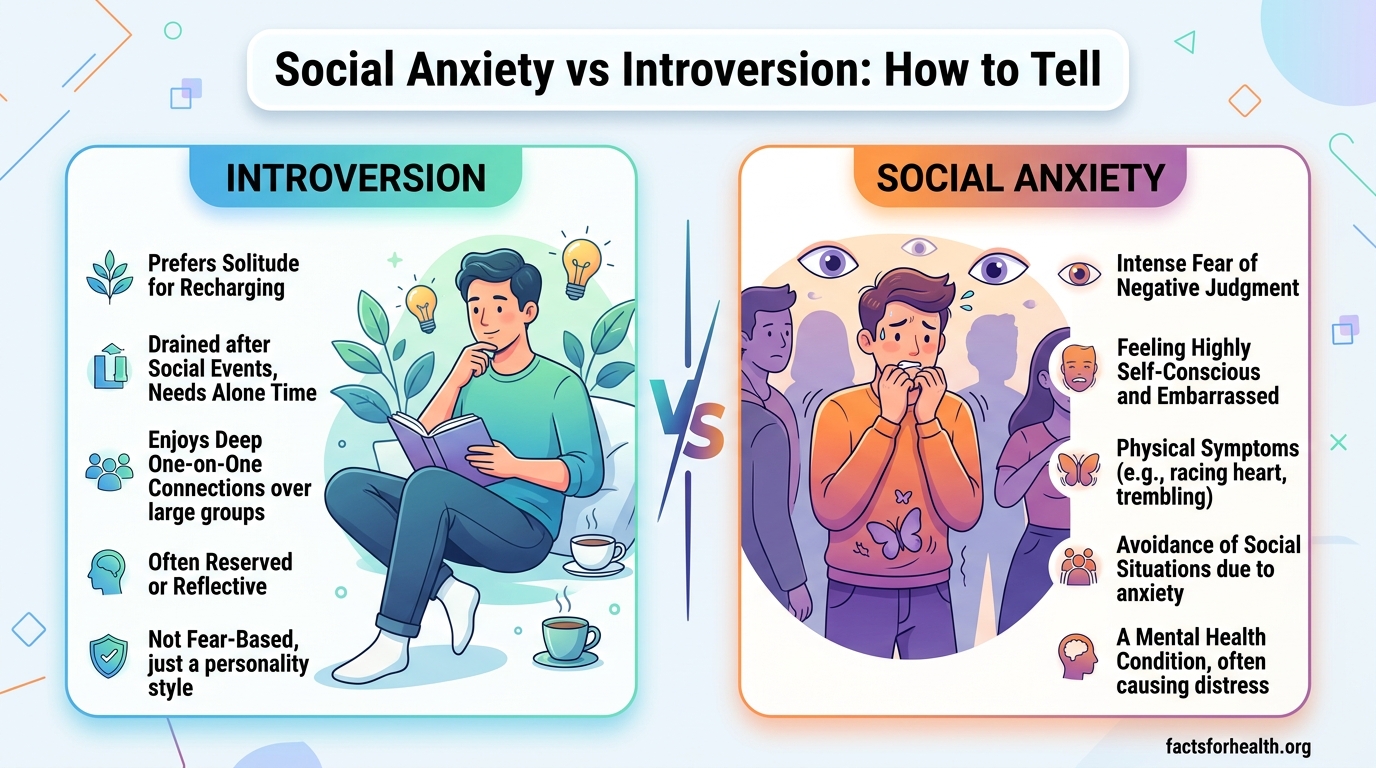
Here is the short version: introversion is a personality trait where you recharge your energy through solitude and feel drained after prolonged socializing. Social anxiety is a mental health condition marked by an intense fear of being judged, embarrassed, or negatively evaluated in social situations.
One is about energy management. The other is about fear. In this guide on social anxiety vs introversion, we break down exactly how to tell which one you are experiencing, what the physical symptoms look like, and when it makes sense to reach out for professional support.
Table of Contents
What Is Introversion?
Introversion is a personality trait, not a disorder or something that needs fixing. Introverts simply process social energy differently than extroverts do.
If you are an introvert, you likely enjoy social interaction but find that it drains your battery. After a gathering, a party, or even a long meeting, you need quiet time alone to feel like yourself again. This preference for solitude is about recharging, not about being afraid of people.
Key characteristics of introversion include:
- Gaining energy from within rather than from external stimulation
- Preferring deep, one-on-one conversations over large group settings
- Choosing solitude by preference, not out of fear or distress
- Feeling comfortable and content when alone
- Being able to socialize without experiencing panic or dread
Think of it like a phone battery. An extrovert charges up by being around people, while an introvert charges up by being alone. Neither is better or worse. They are just different ways of managing energy.
What Is Social Anxiety?
Social anxiety disorder, also called social phobia, is a recognized mental health condition. It goes far beyond normal nervousness or shyness. People with social anxiety experience persistent, intense fear about being watched, judged, or humiliated in social settings.
This fear can be so powerful that it interferes with work, school, relationships, and everyday activities. Someone with social anxiety might want to attend a social event but feels physically unable to do so because of overwhelming dread.
Common signs of social anxiety disorder include:
- Intense worry about social situations days or weeks in advance
- Fear of being negatively evaluated or embarrassed by others
- Avoiding social events entirely, even ones you want to attend
- Feeling lonely when alone rather than recharged
- Replaying conversations afterward and cringing at things you said
Unlike introversion, social anxiety is treatable. With the right support, many people see significant improvement and learn to manage their symptoms effectively.
How to Tell if You Have Social Anxiety or You Are Just Introverted: Key Differences
The core difference comes down to one question: Are you choosing solitude because you prefer it, or are you avoiding social situations because you are afraid of them? That single distinction separates a personality trait from a mental health condition.
Here are the key differences that help you tell them apart:
1. Preference versus fear. An introvert skips a party because they would rather read a book at home and feel perfectly happy about that choice. Someone with social anxiety skips the same party but feels upset, lonely, or relieved in a conflicted way because they actually wanted to go.
2. Exhaustion versus anxiety. Introverts feel tired after socializing. It is a physical and mental energy drain. People with social anxiety feel nervous, panicked, or dread-filled before, during, and sometimes long after social interactions.
3. Alone time outcome. When an introvert spends time alone, they feel recharged and content. When someone with social anxiety spends time alone, they may feel temporary relief but also experience loneliness, regret, or sadness about what they missed.
4. Avoidance patterns. Introverts do not avoid social situations out of fear. They simply choose smaller, quieter gatherings. Social anxiety drives avoidance behavior, where the person actively dodges situations that trigger fear, often while wishing they could participate.
5. Physical symptoms. Introversion produces no physical symptoms. Social anxiety can trigger sweating, trembling, a racing heart, nausea, dry mouth, and even panic attacks in social settings.
6. Social skills and enjoyment. Introverts can be socially skilled and genuinely enjoy interactions with close friends. Social anxiety creates a barrier that makes even enjoyable interactions feel threatening and exhausting in a fear-based way.
Quick Self-Assessment: 5 Signs Your Introversion May Actually Be Social Anxiety
Many people who identify as introverts actually have social anxiety and have simply never recognized the difference. If you are unsure where you fall, these five signs can help you figure it out.
Sign 1: You avoid social events but feel lonely when you stay home. True introverts feel content and energized in solitude. If you skip plans and then feel sad, isolated, or regretful about it, that points more toward social anxiety than introversion.
Sign 2: Social situations make you anxious, not just tired. If you feel dread, panic, or overwhelming nervousness before or during social interactions, that is anxiety. Introversion should feel like a preference, not a source of distress.
Sign 3: Avoidance is your default coping strategy. Do you consistently turn down invitations, avoid eye contact, or leave events early to escape discomfort? Avoidance is a hallmark of social anxiety, not introversion.
Sign 4: You rely on alcohol or other substances to socialize. If you need a drink or two before you can feel comfortable at a social gathering, this is a red flag. Introverts do not need substances to socialize. They just prefer smaller or shorter interactions.
Sign 5: You experience physical symptoms in social settings. A racing heart, sweating, trembling, blushing, or feeling nauseous before or during social interactions are physical signs of anxiety, not personality traits.
Physical Symptoms of Social Anxiety
Physical symptoms are one of the clearest ways to distinguish social anxiety from introversion. Introversion produces zero physical symptoms because it is simply a personality preference.
Social anxiety, on the other hand, activates your body’s fight-or-flight response. This can produce some or all of the following:
- Rapid heartbeat or heart palpitations
- Sweating, especially in the palms or face
- Trembling or shaking hands and voice
- Nausea or stomach upset
- Dry mouth or difficulty speaking
- Blushing or flushed skin
- Muscle tension and headaches
- Shortness of breath or feeling smothered
These symptoms can occur before, during, or even after a social event. Some people experience anticipatory anxiety that builds for days beforehand. Others replay interactions afterward and feel a fresh wave of physical distress.
Where Does Shyness Fit In?
Shyness is a third concept that often gets lumped together with both introversion and social anxiety, but it is distinct from both. Shyness is a temporary feeling of awkwardness or discomfort in new or unfamiliar social situations.
Unlike social anxiety, shyness typically fades as you become more familiar with the people and environment. A shy person might feel nervous at a party where they know no one but relaxes once they start chatting with someone. Social anxiety does not fade that easily.
Here is how the three differ:
- Introversion: A personality trait. You prefer solitude and recharge alone. No fear involved.
- Shyness: A temporary reaction. You feel awkward at first but warm up over time. It is situational.
- Social anxiety: A mental health condition. You feel persistent, intense fear of judgment that does not go away and may worsen over time.
You can be shy without being an introvert, and you can be an introvert without being shy. You can also have social anxiety alongside either or both.
Can You Be Both an Introvert and Have Social Anxiety?
Yes, absolutely. Being an introvert and having social anxiety are not mutually exclusive. In fact, they frequently overlap, which is exactly why so many people struggle to tell them apart.
Imagine someone who naturally prefers small, quiet gatherings because of their introverted personality, but who also experiences intense fear of judgment in any social setting because of social anxiety. For this person, socializing is doubly challenging. They get drained by social energy like any introvert, but they also feel dread and fear that a pure introvert would never experience.
Here is a real-world scenario that illustrates the overlap. Two people decline a coworker’s birthday party invitation. Person A stays home, watches a movie, and feels perfectly happy. That is introversion. Person B stays home, feels relieved initially, but then spends the evening feeling lonely, embarrassed, and worried about what coworkers think of their absence. That is social anxiety.
The combination can feel especially challenging because the energy drain of introversion and the fear of social anxiety reinforce each other. Recognizing both is the first step toward managing them effectively.
When to Seek Professional Help
Introversion does not require treatment because it is not a problem to solve. Social anxiety, however, is a condition that often benefits from professional support. The question is knowing when to reach out.
Consider talking to a mental health professional if any of the following apply to you:
- Your fear of social situations is interfering with work, school, or relationships
- You avoid social events that you genuinely want to attend
- You experience physical symptoms like panic attacks, sweating, or trembling in social settings
- You feel lonely, depressed, or distressed about your social life
- You rely on alcohol or substances to get through social situations
- Your anxiety has persisted for six months or longer
The most effective treatments for social anxiety include cognitive behavioral therapy (CBT), which helps you identify and reframe anxious thought patterns, and exposure therapy, which gradually helps you face feared situations in a controlled way. Many people benefit from a combination of therapy and, in some cases, medication prescribed by a psychiatrist or primary care doctor.
There is no shame in seeking help. Social anxiety is one of the most common anxiety disorders, and it responds well to evidence-based treatment. Reaching out to a therapist is a sign of strength, not weakness.
FAQs
Am I introverted or do I just have social anxiety?
The key distinction is preference versus fear. If you choose solitude because you genuinely enjoy it and feel content alone, you are likely an introvert. If you avoid social situations because you are afraid of being judged or embarrassed, and feel lonely or regretful when you stay home, that points more toward social anxiety. Introversion involves energy management, while social anxiety involves fear-based avoidance.
How do I know if I have social anxiety or I am just shy?
Shyness is a temporary feeling of awkwardness that fades as you get more comfortable in a situation. Social anxiety is persistent, intense fear that does not go away and often gets worse over time. If you warm up and relax after a few minutes in a new setting, that is likely shyness. If you feel dread for days beforehand, experience physical symptoms like sweating or a racing heart, and replay interactions with distress afterward, that is more consistent with social anxiety.
How do you get rid of social anxiety?
Social anxiety is treated through evidence-based approaches. Cognitive behavioral therapy (CBT) helps you identify and change anxious thought patterns. Exposure therapy gradually desensitizes you to feared social situations. Some people also benefit from medication such as SSRIs or beta-blockers prescribed by a doctor. Lifestyle changes like regular exercise, limiting caffeine, and practicing mindfulness can also help manage symptoms. Most people see significant improvement with consistent treatment.
What antidepressants are good for social anxiety?
SSRIs (selective serotonin reuptake inhibitors) such as sertraline, paroxetine, and fluoxetine are commonly prescribed for social anxiety disorder. SNRIs like venlafaxine may also be used. Beta-blockers like propranolol are sometimes prescribed for performance-based anxiety to manage physical symptoms. However, medication should only be started under the guidance of a psychiatrist or qualified medical professional who can evaluate your specific situation and monitor for side effects.
Conclusion
Understanding how to tell if you have social anxiety or you are just introverted comes down to one fundamental question: is your behavior driven by preference or by fear? Introversion is a natural personality trait where solitude energizes you. Social anxiety is a treatable condition where fear controls your choices and causes real distress.
If you recognize yourself in the signs of social anxiety, know that you are far from alone and that effective help exists. Therapy, particularly CBT and exposure-based approaches, has helped countless people reclaim their social lives. The first step is simply acknowledging what you are experiencing.
If this sounds like you, consider reaching out to a licensed therapist in 2026. You deserve to feel comfortable in your own skin, whether that means embracing your introverted nature or working through anxiety that has been holding you back. Either way, understanding the difference is where real change begins.