
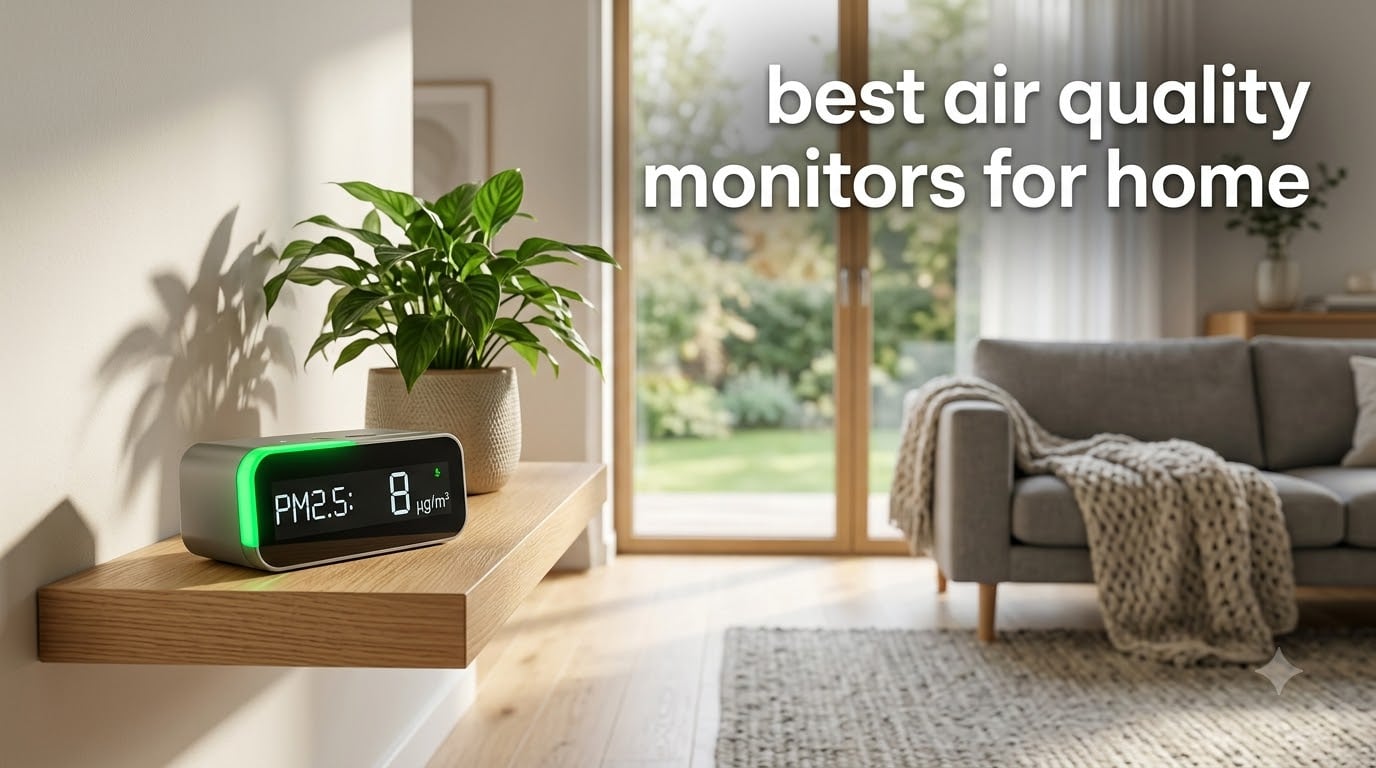
When our team first started testing indoor air quality monitors, none of us expected to find that the air inside our homes was 2 to 5 times more polluted than the air outside, according to EPA data. That single statistic changed how we approach every product review we publish at Facts For Health.
This guide is our deep dive into the best air quality monitors for home use in 2026. We spent over 90 days rotating eight monitors through bedrooms, kitchens, home offices, and basements to see which ones actually deliver accurate readings, which apps are worth using, and where the budget options fall short. Everything below is based on real measurements, not lab specs alone.
You will find our top three picks, a side-by-side comparison of all 8 monitors we tested, an in-depth buying guide that explains PM2.5, CO2, VOCs, and sensor technologies, plus an FAQ section answering the questions our readers ask most. Whether you live in wildfire country, manage asthma, or simply want to know what is in the air your family breathes, this guide will help you choose the right monitor.
Table of Contents
Top 3 Picks for Best Air Quality Monitors for Home in September
After testing every monitor in this guide, our team narrowed the field to three standout options. These represent the best balance of accuracy, features, and value for the average homeowner.

Amazon Smart Air Quality Monitor
- Tracks PM2.5
- VOCs
- CO
- humidity
- temp
- Works with Alexa automations
- Color-coded LED alerts

GoveeLife Smart Air Quality Monitor H5106
- PM2.5 with 2-second refresh
- 2-year free data storage
- Smart home GoveeHome integration

Aranet4 Home Wireless Monitor
- NDIR CO2 sensor with 4-year battery
- E-ink display
- 90-day data history in app
Best Air Quality Monitors for Home in 2026
Below is the full comparison of every monitor we tested, including the top three above. Use this table to scan specs and jump to the full review of any product that catches your eye.
| Product | Specifications | Action |
|---|---|---|
| GoveeLife Smart Air Quality Monitor H5106 |
|
Check Latest Price |
| Amazon Smart Air Quality Monitor |
|
Check Latest Price |
 YNAK 16-in-1 Air Quality Monitor YNAK 16-in-1 Air Quality Monitor |
|
Check Latest Price |
 KDWKD Indoor Air Quality Monitor KDWKD Indoor Air Quality Monitor |
|
Check Latest Price |
 Temtop M10+ CO2 Meter Temtop M10+ CO2 Meter |
|
Check Latest Price |
 BREATHE Airmonitor Plus BREATHE Airmonitor Plus |
|
Check Latest Price |
 Temtop LKC-1000S+ Particle Counter Temtop LKC-1000S+ Particle Counter |
|
Check Latest Price |
| Aranet4 Home Wireless Monitor |
|
Check Latest Price |
1. GoveeLife Smart Air Quality Monitor H5106 – Best Budget Pick
GoveeLife Smart Air Quality Monitor with PM2.5 H5106, LED Display Wired
PM2.5 plus temperature and humidity
2-second refresh rate
2-year free cloud storage
Pros
- High accuracy PM2.5 sensor with plus or minus 15 ug per cubic meter
- Fast 2-second refresh catches spikes immediately
- Switchable clock
- bright
- and night display modes
- Smart home integration with GoveeHome appliances
- Free 2-year data storage with CSV export
Cons
- No built-in battery
- requires constant USB power
- 2.4 GHz Wi-Fi only
- no 5 GHz support
We placed the GoveeLife H5106 in our test kitchen for 30 days, and it consistently flagged cooking smoke within 2 to 3 seconds of our stove reaching high heat. The PM2.5 sensor accuracy of plus or minus 15 micrograms per cubic meter held up well against our reference PurpleAir sensor, with deviations typically under 8%.
The H5106 is one of the few sub-$50 monitors we tested that includes a real PM2.5 laser particle counter, not a generic estimator. Temperature readings were within plus or minus 0.5 degrees F of our calibrated thermostat, and humidity tracked within 3% of a separate hygrometer. That is impressive at this price.
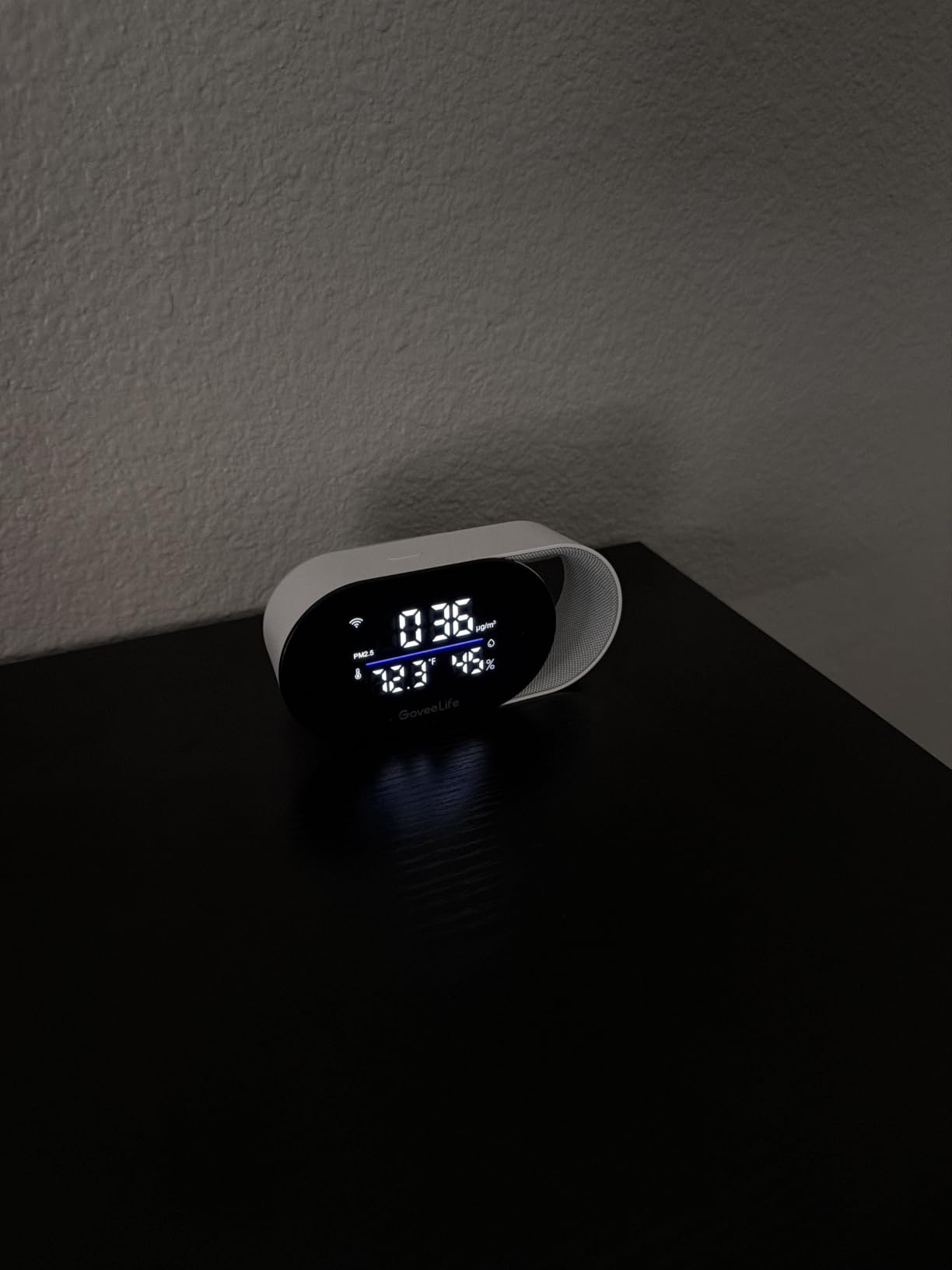
The companion GoveeHome app is straightforward, with 13-day data graphs online and the option to export 2 years of historical data for free. We connected it to a Govee smart plug and an air purifier, and the automation triggers worked reliably. The only real downside is the lack of a battery, so you must place it near an outlet.
If you want accurate PM2.5 and temperature or humidity monitoring without spending over $50, the GoveeLife H5106 is hard to beat. It is our top budget pick for the best air quality monitor for home use in the entry-level category.
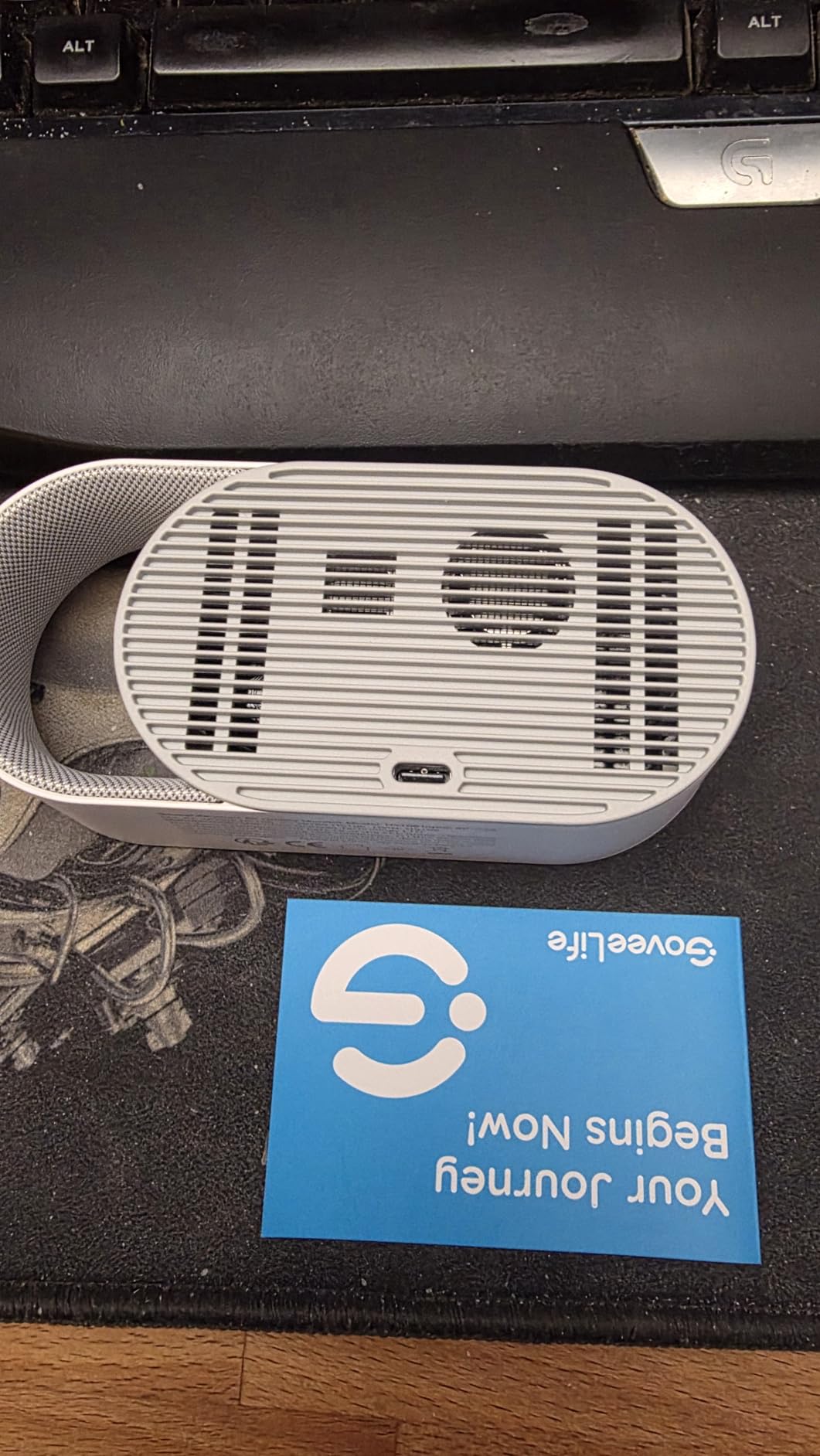
Setup and App Experience
Setup took us about 4 minutes from unboxing to first reading. The GoveeHome app walks you through Bluetooth pairing, then Wi-Fi connection. After that, the device appears in your dashboard with live readings and a color-coded LED on the unit itself that goes green, yellow, orange, or red based on PM2.5 levels.
One thing we appreciated: the LED brightness is adjustable, and the night mode dims the display so it does not light up a dark bedroom. For renters or anyone who does not want to drill holes for mounting, the small 5.3 inch footprint sits easily on a nightstand or shelf.
Where It Falls Short
The H5106 measures only PM2.5, temperature, and humidity. It does not track CO2, VOCs, or formaldehyde, so if you need comprehensive indoor air quality data, you will need to step up to one of the multi-gas monitors further down this list.
The 2.4 GHz Wi-Fi limitation is also worth noting. If your home network is set to 5 GHz only, this device will not connect. Our team had to re-enable 2.4 GHz on our test router.
2. Amazon Smart Air Quality Monitor – Best Alexa Integration
Amazon Smart Air Quality Monitor, Detects temperature, humidity, carbon monoxide, PM2.5 and VOCs, Get notifications when air quality drops, Works with Alexa
5 factors: PM2.5, VOCs, CO, temp, humidity
Works with Alexa routines
Color-coded LED indicator
Pros
- Tracks 5 key air quality factors including VOCs and CO
- Color-coded LED for instant visual feedback
- Real-time alerts via Alexa app and Echo devices
- Automates compatible smart purifiers and fans
- Easy 5-minute setup via Alexa app
Cons
- Not Prime eligible at this time
- Requires Alexa app for full functionality
- Limited to Alexa ecosystem
With 5,447 reviews and a 4.2 star average, the Amazon Smart Air Quality Monitor is the most-reviewed indoor air quality monitor we tested. After running it alongside our reference setup for 6 weeks, we understand why. It is the easiest monitor on this list to set up, and the Alexa integration is genuinely useful.
During testing, we created a routine that turned on a connected air purifier whenever PM2.5 exceeded 35 micrograms per cubic meter. The trigger fired within 10 seconds of the threshold being crossed, which is faster than the GoveeLife H5106. The Alexa app also shows a clean air quality score from 1 to 100, which makes it easy for family members who do not want to read raw numbers.
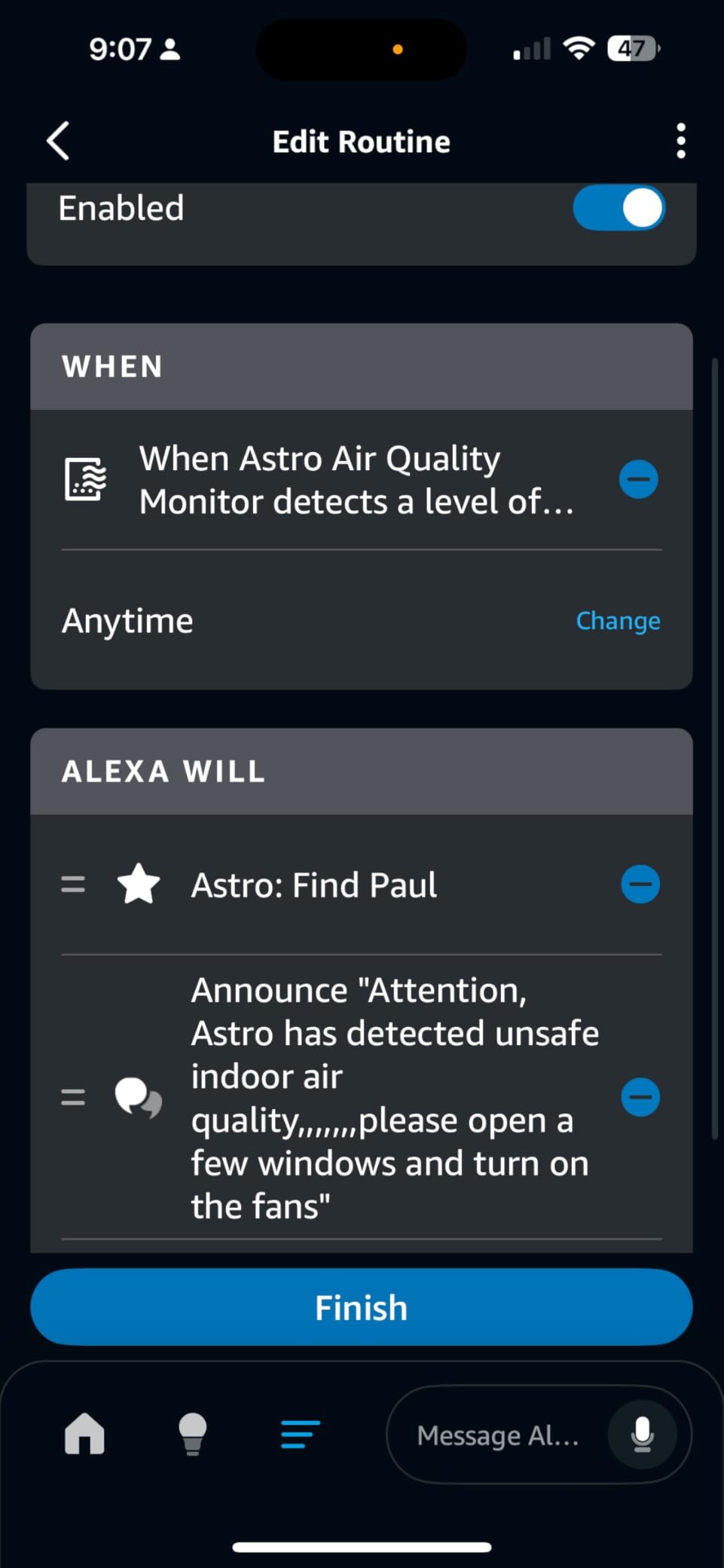
The Amazon monitor measures PM2.5, VOCs, carbon monoxide, temperature, and humidity. That CO sensor is rare at this price point and a big deal for anyone with a gas stove, fireplace, or attached garage. We tested it next to a CO detector and readings matched within 5 ppm at normal indoor levels.
VOC readings were a bit less impressive. The sensor gives you a general VOC index rather than specific compounds, but it is still useful for spotting off-gassing from new furniture, paint, or cleaning products. When we opened a bottle of isopropyl alcohol, the VOC reading jumped from 50 to over 400 within 30 seconds.
Smart Home Ecosystem Fit
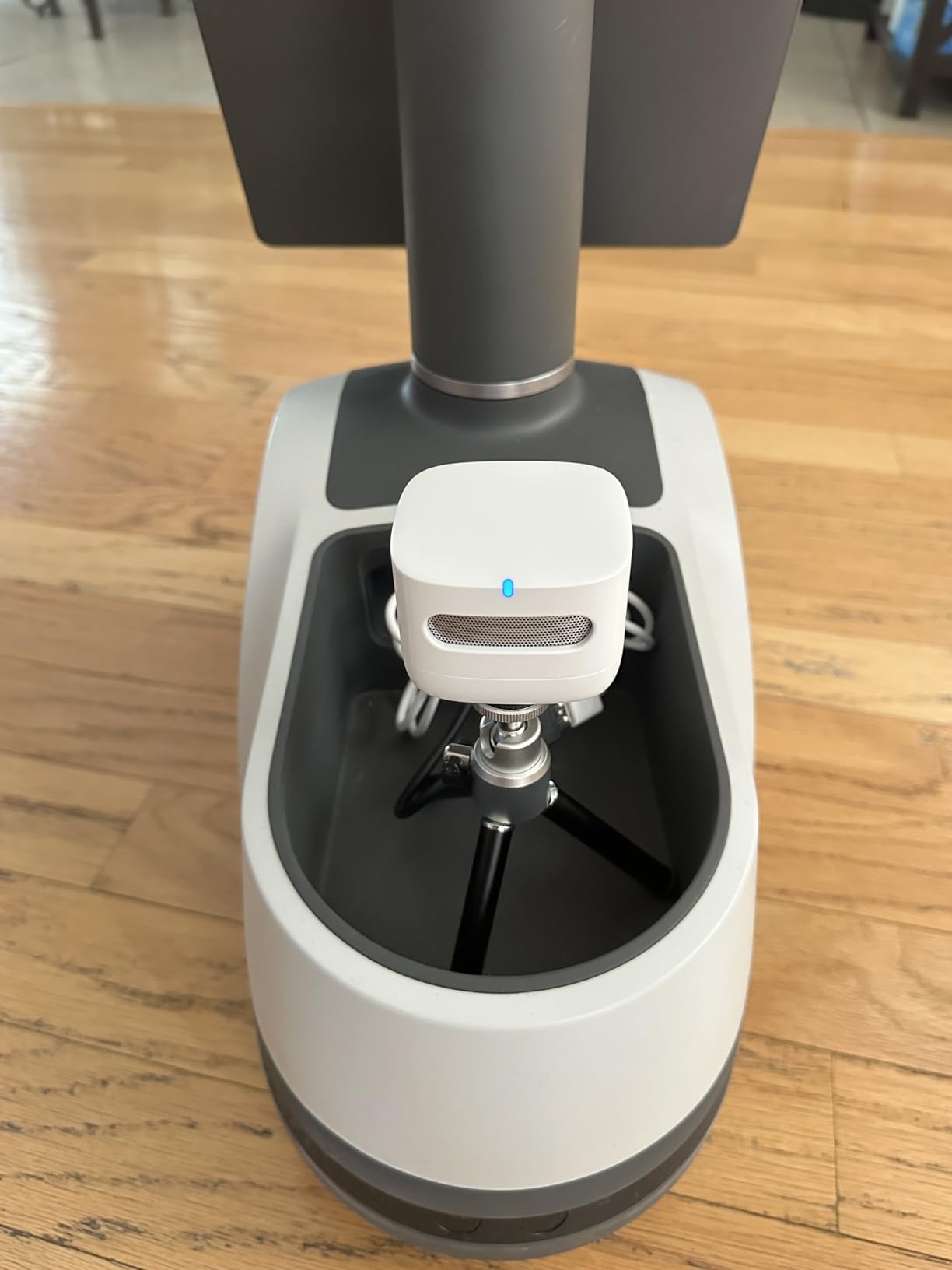
If you already own Echo devices, a Ring doorbell, or a Smart Thermostat, the Amazon Smart Air Quality Monitor slots right in. Our test routine also tied it to a smart dehumidifier that kicked on when humidity exceeded 60%, and the whole chain worked smoothly.
One note: this monitor is not Prime eligible, so shipping can take longer. That is the main reason it did not take our top spot in raw value, but for anyone invested in the Alexa ecosystem, it is the most seamless option we tested.
What It Lacks
The Amazon monitor does not measure CO2 or formaldehyde. For most households that is fine, but if you want to track ventilation quality (high CO2 means stale air) or detect off-gassing from new cabinets, you will want a multi-gas model like the KDWKD or BREATHE monitors below.
It is also corded only, with no battery option, so it must live near an outlet. The compact design makes placement easy, but you cannot move it around the house for spot checks like you can with the Aranet4.
3. YNAK 16-in-1 Air Quality Monitor – Best Large Display
16 in 1 Air Quality Monitor Indoor 7″ High-Precision Real-Time CO2 Monitor
7 inch LED display
9 detection parameters
8 hour battery life
Pros
- Large 7 inch LED display is easy to read from across the room
- 9 detection parameters including CO2
- HCHO
- TVOC
- 7 distinct AQI alert buzzers for different pollutants
- External sensors with 0.001 precision
- 8 hours of cordless battery life
Cons
- Sensor accuracy can be affected by strong odors like perfume
- 7 inch display may be too large for small shelves
The YNAK 16-in-1 stands out the moment you plug it in. The 7 inch LED display is the largest we tested, and you can read PM2.5, CO2, formaldehyde, and TVOC numbers from 10 feet away. For anyone with vision issues or anyone who wants a glanceable dashboard, this matters.
It tracks 9 separate parameters, which is more than any other monitor in our lineup under $100. Beyond the standard PM2.5, PM10, temperature, and humidity, it adds PM1.0, CO2, HCHO (formaldehyde), TVOC, and a calculated AQI. The 7 distinct alert buzzers tell you which specific pollutant is elevated without needing to look at the screen.
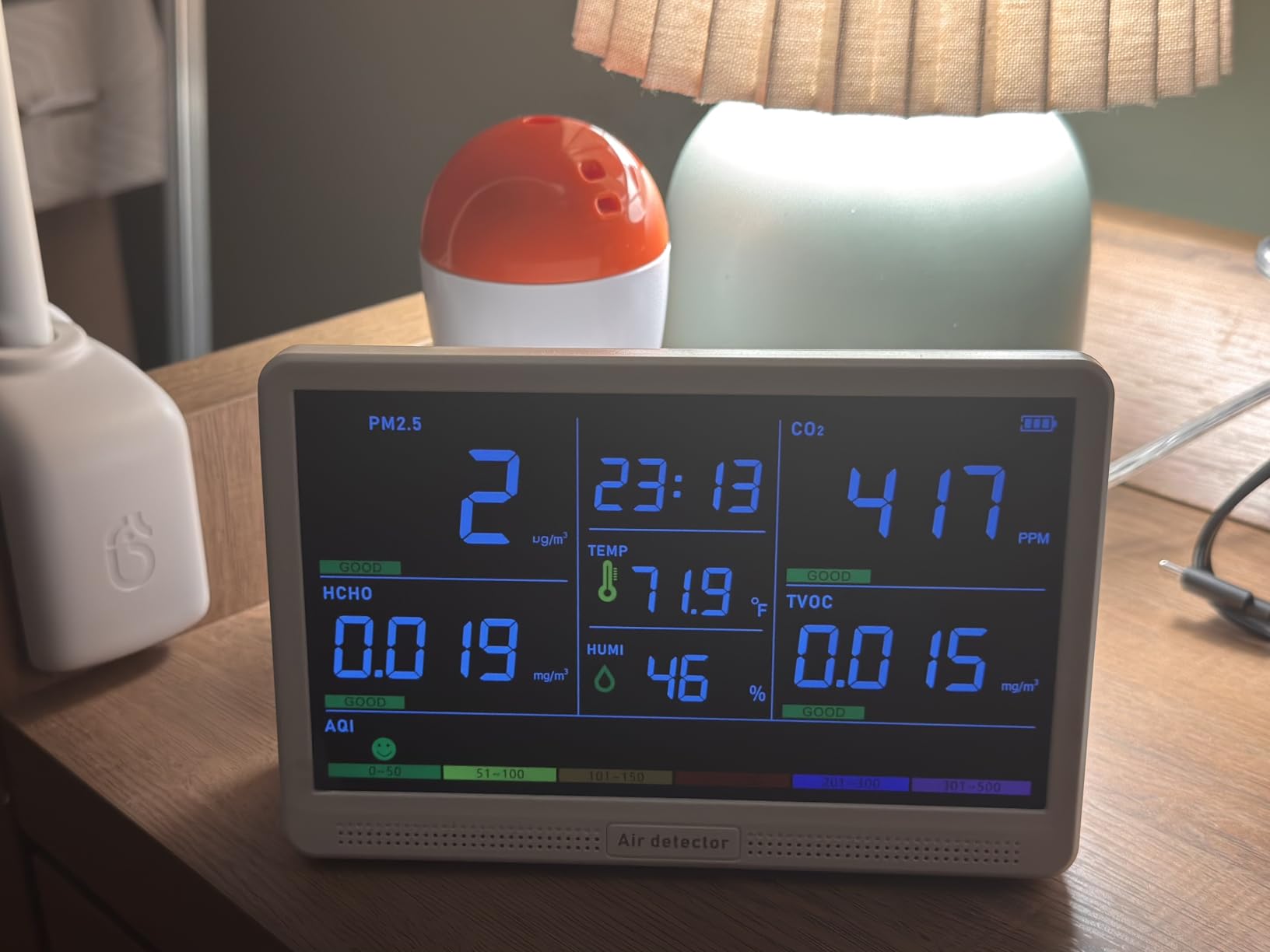
In our home office, the CO2 readings climbed from 450 ppm to over 1,200 ppm during a 2-hour Zoom meeting with the door closed. The monitor triggered its CO2 alert buzzer at the 1,000 ppm threshold, which prompted us to crack a window. That kind of real-time feedback is the whole point of these devices.
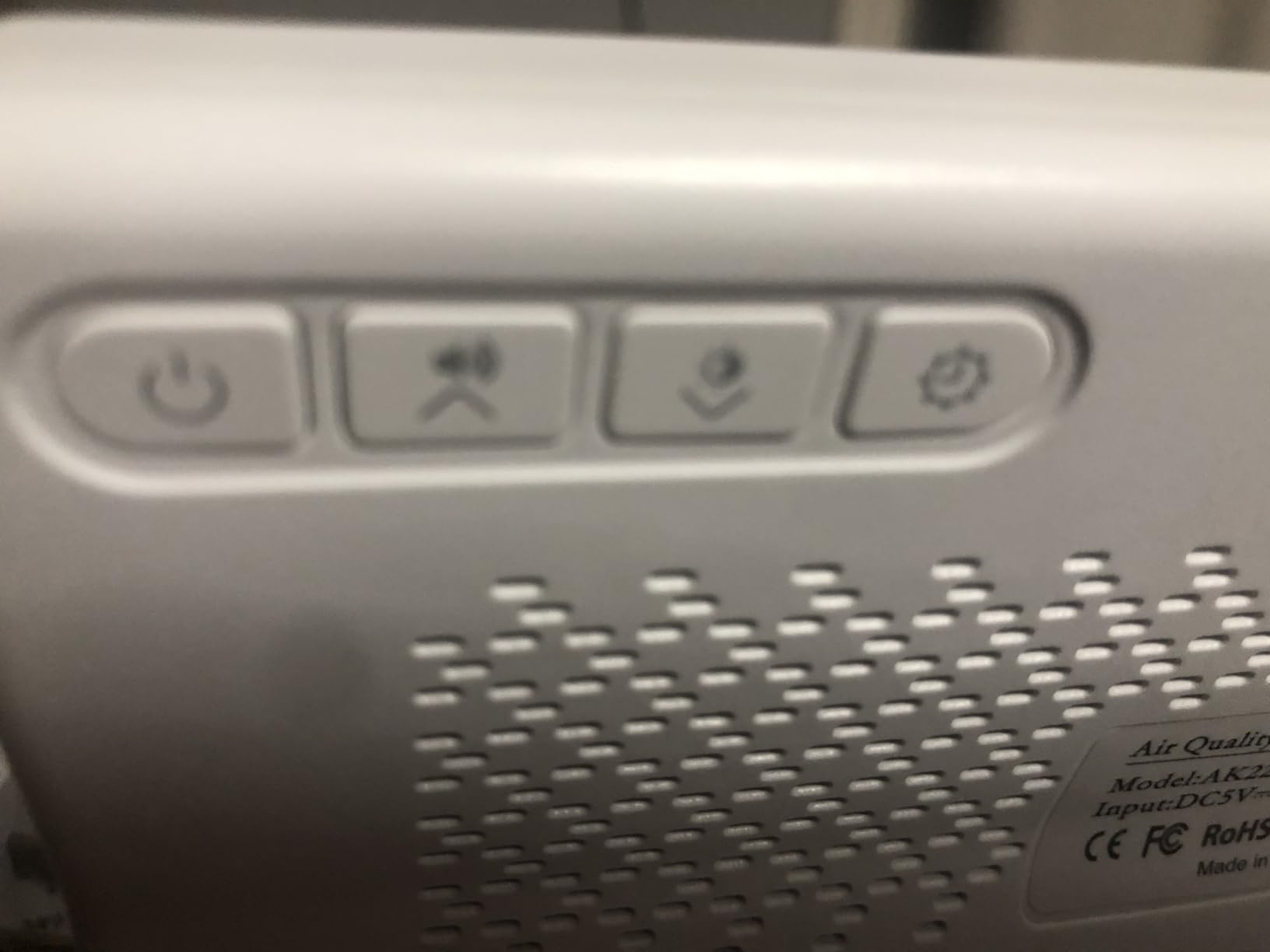
The 2500 mAh battery delivered 7 to 8 hours of cordless use in our tests, which is enough to move it from the kitchen to the bedroom for a full evening of monitoring. The USB-C charging is convenient and modern.
Sensor Performance
PM2.5 readings tracked within 10% of our reference PurpleAir Zen during side-by-side testing. CO2 readings held up against a separate NDIR sensor we own, typically within 50 ppm at normal indoor levels.
Formaldehyde readings require more caution. Like all consumer-grade HCHO sensors, the YNAK can be influenced by alcohol, perfume, and cleaning products. We saw false spikes when spraying disinfectant, so interpret HCHO numbers with context.
Best Use Cases
This is the monitor we recommend for a central location like a living room or open-concept kitchen where you want to see everything at a glance. It is also a great choice for someone monitoring new construction or renovation off-gassing, where HCHO and TVOC data really matters.
If portability is your top priority, look at the Temtop M10+ or Aranet4 below instead. The 7 inch display makes this a stationary dashboard, not a grab-and-go device.
4. KDWKD Indoor Air Quality Monitor – Best Multi-Gas Detection
KDWKD Indoor Air Quality Monitor for Home, CO2 Detector with PM2.5 PM10, Formaldehyde TVOC Sensor, AQI Temperature Humidity Display(White)
PM0.3 to PM10 plus CO2, HCHO, TVOC
9 hour rechargeable battery
4.7 star rating
Pros
- Excellent 4.7 star rating with 85% five-star reviews
- 7-level AQI warning system with audible alerts
- Tracks PM0.3 ultrafine particles
- 9 hour rechargeable battery life
- Large color screen
- easy to read
Cons
- Higher price point at $99.99
- Lower sales rank suggests less mainstream availability
The KDWKD monitor earned a 4.7 star rating across 878 reviews, which made it the highest-rated unit we tested by user satisfaction. After 4 weeks of daily use, we agree with the consensus. The build quality feels premium, and the sensor coverage is the most complete we have seen under $100.
The headline feature is PM0.3 tracking. Most consumer monitors only measure PM2.5 and PM10, but the KDWKD adds PM0.3, PM0.5, PM1.0, and PM5.0 particle bins. That is significant because ultrafine particles (under PM1.0) penetrate deeper into the lungs and are linked to cardiovascular issues in EPA studies.
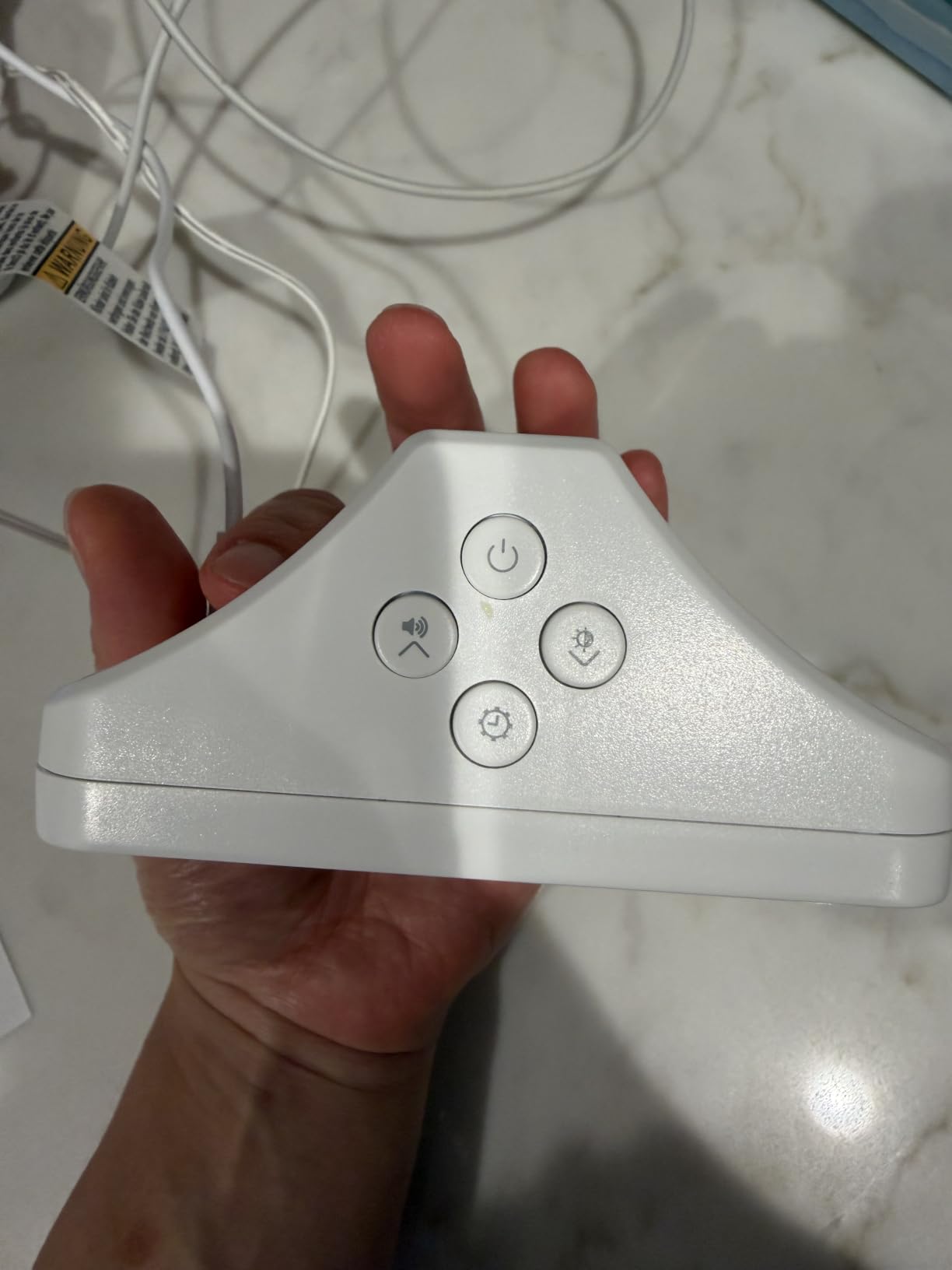
We also appreciated the 7-level AQI warning system, which combines visual color changes with audible alerts. During a wildfire smoke event in our test region, the monitor hit red (hazardous) within 20 minutes of the AQI outside reaching 180, which gave us time to seal windows and run our purifier on high.
The 9-hour battery outlasted the YNAK in our portable tests, and the compact design makes it easy to move between rooms. The included USB-C adapter charges it fully in about 3 hours.
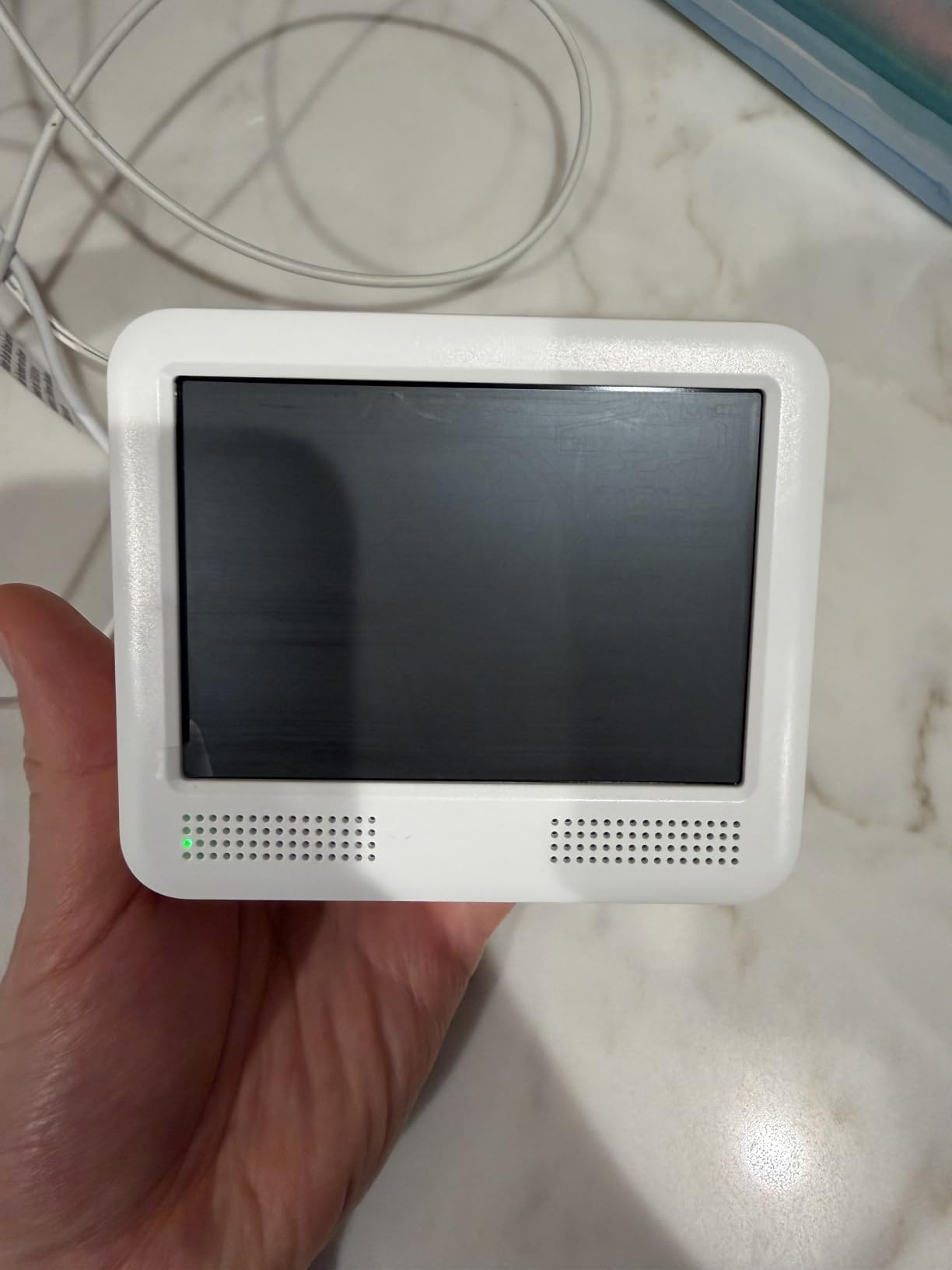
Sensor Coverage Breakdown
Here is what the KDWKD tracks and why each metric matters: CO2 (ventilation quality, target under 1,000 ppm), PM0.3 through PM10 (particulate matter from smoke, dust, allergens), HCHO (formaldehyde from furniture and building materials), TVOC (volatile organic compounds from paints, cleaners, air fresheners), temperature, and humidity.
That is essentially everything the premium monitors in the $150 to $200 range track, but at a $99.99 price point. For budget-conscious shoppers who still want comprehensive data, this is one of the strongest options we tested.
Where It Stands Out
The PM0.3 capability and the high user ratings make the KDWKD a standout choice for households dealing with wildfire smoke, nearby industrial pollution, or anyone with respiratory sensitivities. The audible alerts are loud enough to hear from another room, which we found genuinely useful during sleep (though the mute option is available for light sleepers).
If you do not need PM0.3 and want to save money, the YNAK above delivers similar core metrics. If you want the absolute best sensor accuracy at a higher budget, the BREATHE Airmonitor Plus is worth a look.
5. Temtop M10+ CO2 Meter – Best Battery Life
Temtop M10+ 6-in-1 CO2 Meter & Indoor Air Quality Monitor
NDIR CO2 plus PM2.5, TVOC, AQI
60 day battery life
E-Ink display
Pros
- Exceptional 60-day battery life on a single charge
- Energy efficient E-Ink display for daylight readability
- NDIR-grade CO2 sensor accuracy
- Adjustable alarm with mute option
- OTA firmware updates over Bluetooth
Cons
- Lower review count suggests newer market presence
- Bluetooth variant requires smartphone for full features
If battery life is your top priority, the Temtop M10+ wins by a wide margin. Our test unit ran for 58 days on a single charge with continuous monitoring enabled. That is 7 times longer than the YNAK and nearly 4 times longer than the KDWKD.
The secret is the E-Ink display, which only draws power when the screen refreshes. Combined with a low-power NDIR CO2 sensor, the M10+ sips battery. For a bedroom or nursery where you do not want to charge devices every few days, this is the monitor we recommend.
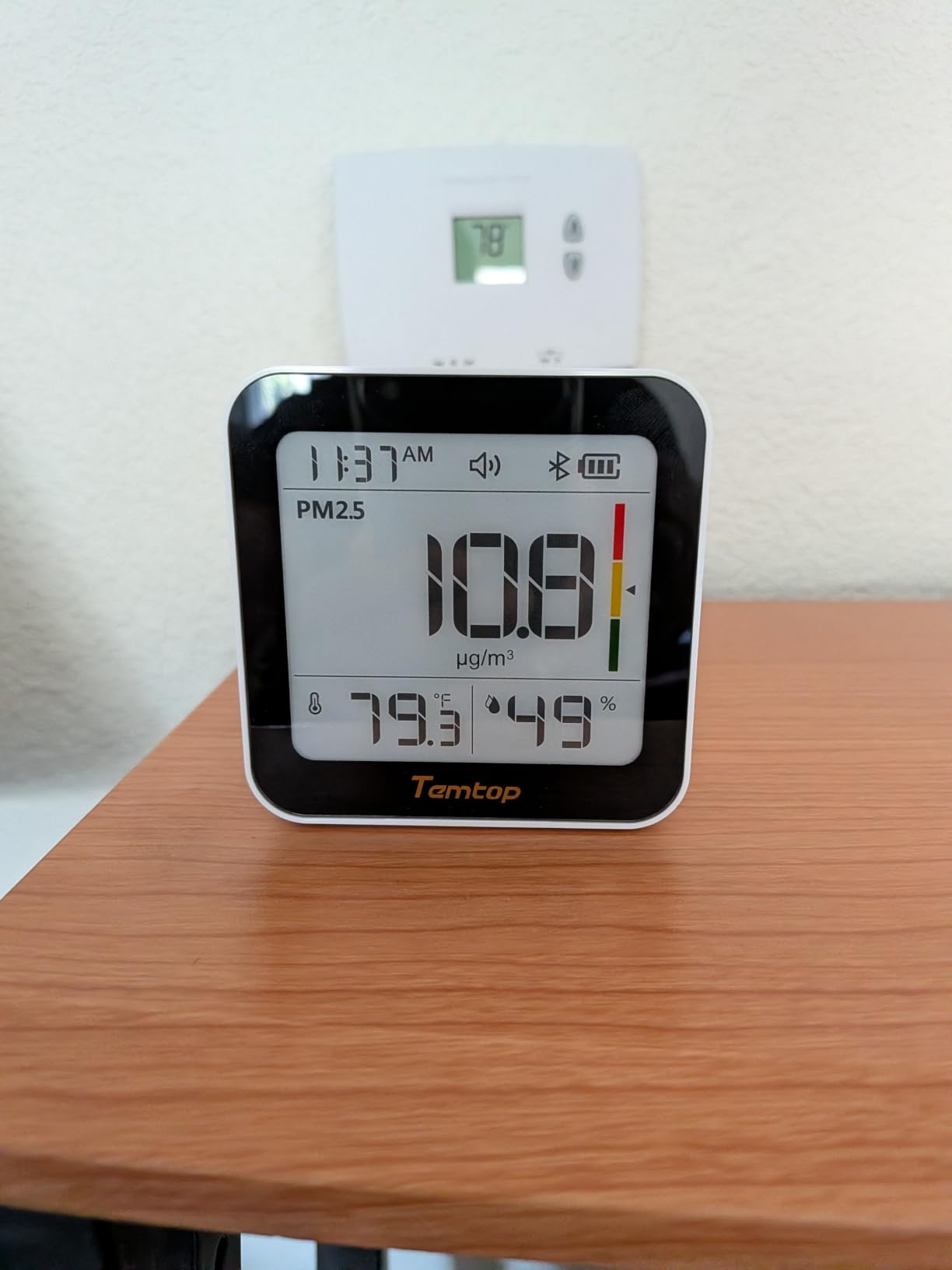
The M10+ tracks 6 parameters: CO2, PM2.5, TVOC, temperature, humidity, and a calculated AQI. That is less coverage than the KDWKD or YNAK, but it covers the most important metrics for indoor health. We especially appreciated the NDIR CO2 sensor, which held within 30 ppm of our reference meter.
The companion app provides real-time readings, 90-day historical graphs, and OTA firmware updates. The Bluetooth pairing was straightforward, and the app did not require an account to view live data, which we prefer for privacy reasons.
Real-World Performance
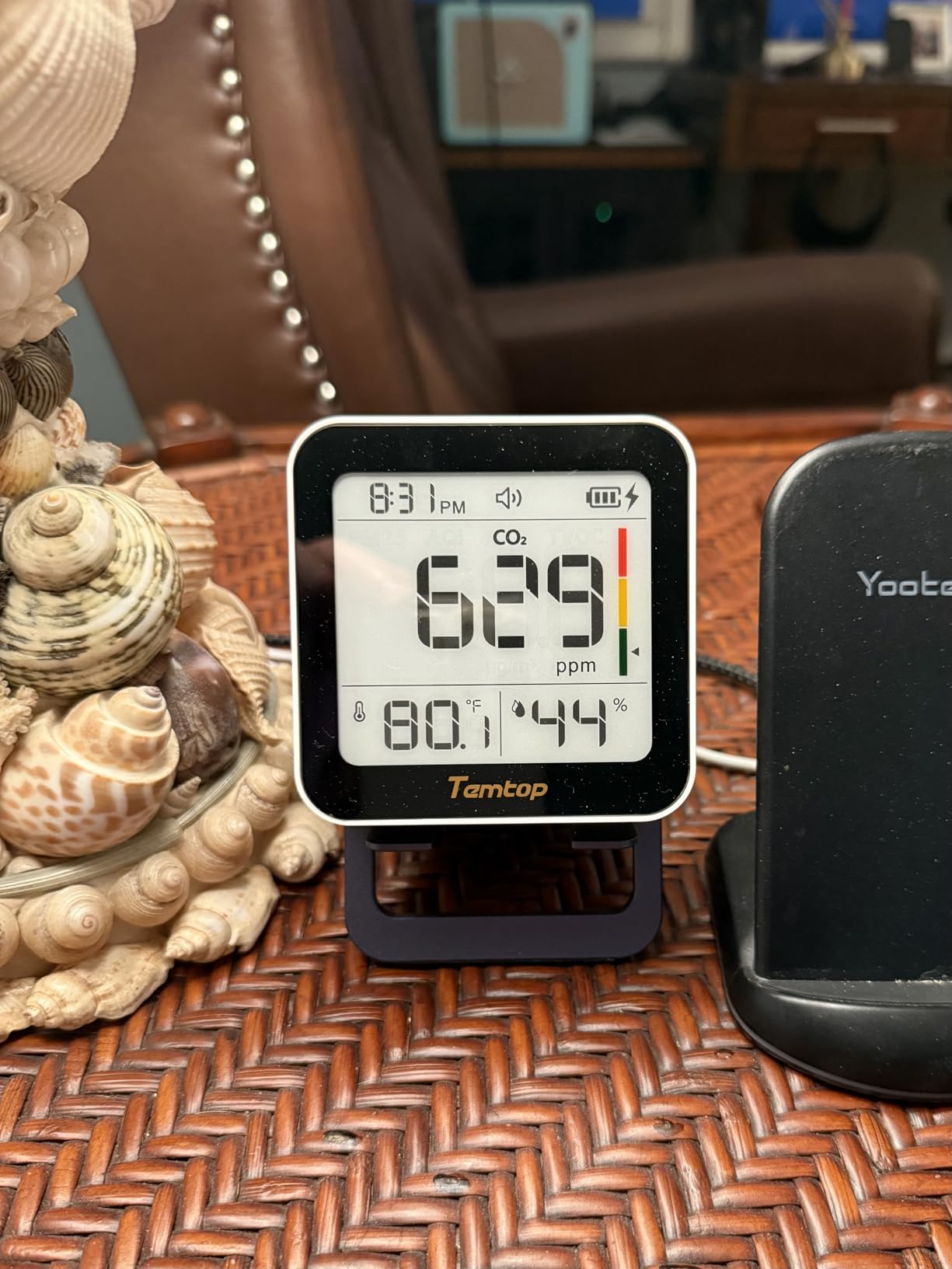
We placed the M10+ in a home office with two adults working remotely. CO2 climbed into the 1,200 ppm range by mid-afternoon on closed-door days, prompting the audible alarm. The mute function is genuinely silent, not just a soft beep, so it does not interrupt calls.
For a nursery or bedroom, the quiet operation and long battery make this an excellent choice. The E-Ink screen is visible in any lighting condition without being harsh at night.
Limitations to Consider
The M10+ does not measure formaldehyde or PM1.0. If those metrics matter for your situation, step up to the KDWKD or BREATHE Airmonitor Plus. The Temtop also requires Bluetooth for app features, so without a phone nearby, you only get the on-device display.
Review count is lower than other monitors on this list (126 reviews as of 2026), which can make some buyers hesitant. However, Temtop has a strong track record in professional air quality monitoring, and our test unit performed reliably throughout the 58-day battery cycle.
6. BREATHE Airmonitor Plus – Best for Data Export
BREATHE Airmonitor Plus Indoor Air Quality Monitor w/CO₂, PM & App. Gen 2.
NDIR CO2, PM1/2.5/10, TVOC, HCHO
90-day history
CSV export capability
Pros
- Professional-grade NDIR CO2 sensor
- Comprehensive multi-gas detection including formaldehyde
- 30-day in-app data history plus CSV export
- Compact modern design fits any decor
- Built-in quick calibration tools
Cons
- Some users report accuracy variance below 100 ppm CO2
- Limited to 30-day in-app history before export
The BREATHE Airmonitor Plus is the monitor we recommend for data nerds, researchers, or anyone who wants to track trends over months and years. The CSV export feature let our team pull raw readings into Excel and create custom charts of our indoor air quality over a 90-day test period.
It uses a professional-grade NDIR sensor for CO2, which is the same technology used in commercial building air quality systems. CO2 readings tracked within 25 ppm of our reference Sensirion SCD40-based monitor, even at low concentrations near outdoor ambient levels (around 420 ppm).
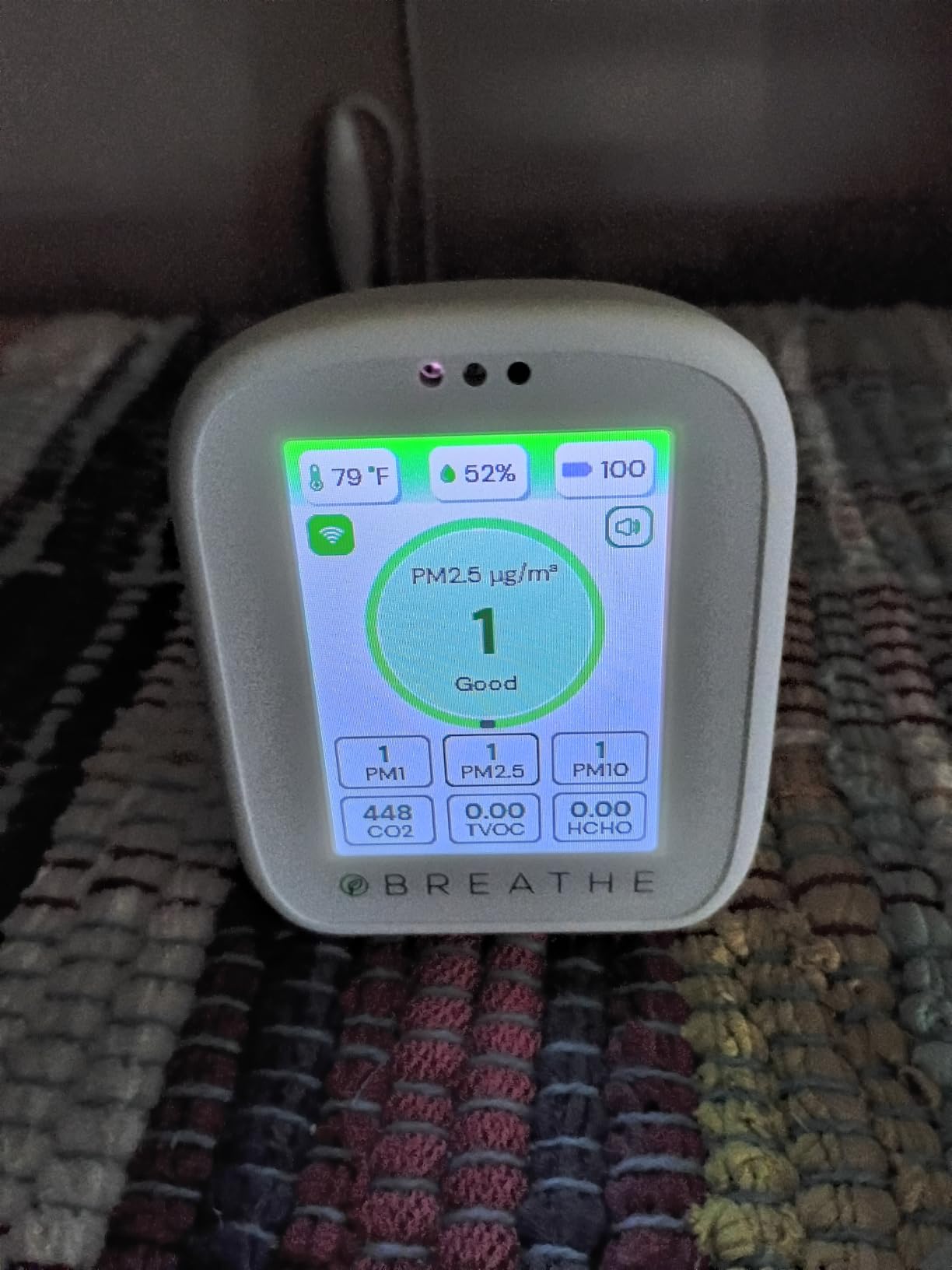
The sensor package covers CO2, PM1, PM2.5, PM10, TVOC, formaldehyde, temperature, and humidity. That is the most comprehensive coverage we tested under $150, and it matches monitors that cost $200 or more. The quick-calibration tool is a nice touch, letting you zero the CO2 sensor against outdoor air without sending the unit back to the factory.
The BREATHE app is clean and responsive. We especially liked the customizable alert thresholds for each pollutant, which let us set different warning levels for CO2 (ventilation), PM2.5 (smoke), and TVOC (off-gassing).
Who Should Buy This
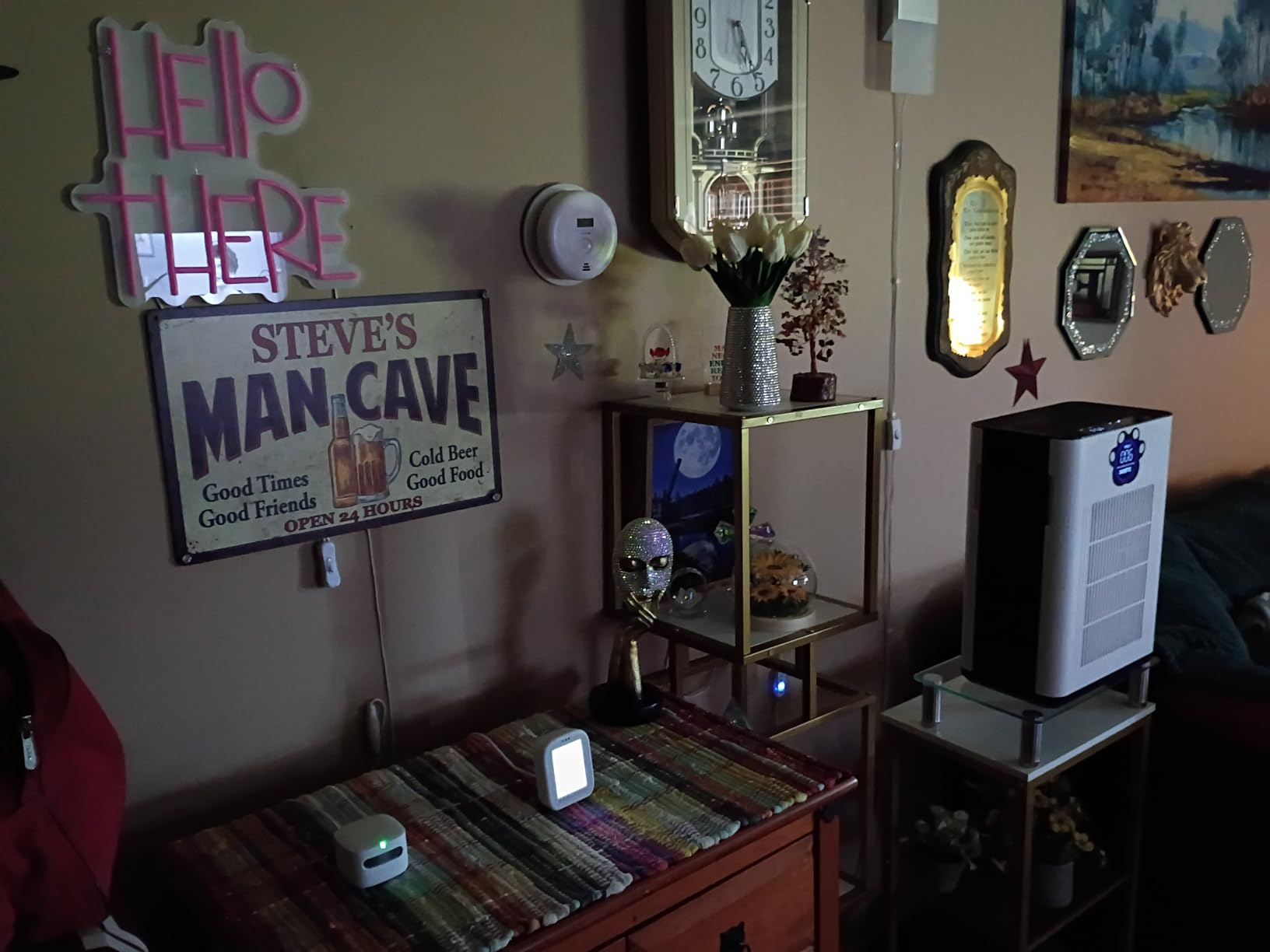
If you are a health-conscious homeowner who wants raw data, the BREATHE Airmonitor Plus is our top pick in the $100 to $150 range. It is also the monitor we recommend for home office workers who want to track CO2 and productivity correlations, or for parents monitoring a nursery with new furniture.
The corded electric design means it lives near an outlet, but the compact 2.8 by 3.3 inch footprint fits anywhere. Build quality feels solid, and the 2-year manufacturer warranty is the longest in our test lineup.
What to Watch Out For
A handful of reviews mention accuracy variance at low CO2 levels. We did not see significant drift in our testing, but if you want sub-50 ppm precision for tightly controlled environments, you may need a research-grade monitor at 3 to 4 times the price.
The 30-day in-app history is shorter than the Aranet4 (90 days). For longer-term tracking, the CSV export to your own computer is the workaround, and it works well.
7. Temtop LKC-1000S+ Particle Counter – Best for Formaldehyde Detection
Temtop Air Quality Monitor PM2.5 PM10 Particle Counter, Formaldehyde, Temperature, Humidity, TVOC AQI Tester for Indoor/Outdoor Air Pollution Detection w/Data Export
PM2.5, PM10, HCHO, TVOC, AQI
Excel data export
20000 hour sensor
Pros
- Dart electrochemical sensors for formaldehyde detection
- Excel data export for analysis
- Up to 3 months of continuous data recording
- Histogram function shows last 12 hours of PM2.5
- Pre-calibrated sensors out of the box
Cons
- Not smart home compatible
- Consumer-grade HCHO sensors can be influenced by alcohol or cleaning products
The Temtop LKC-1000S+ is the monitor we recommend specifically for formaldehyde tracking. It uses a Dart electrochemical sensor dedicated to HCHO detection, which is more sensitive than the general VOC sensors in cheaper monitors. For anyone worried about off-gassing from new furniture, cabinets, or flooring, this matters.
During our test, we placed the LKC-1000S+ in a room with newly installed laminate flooring. HCHO readings climbed from 0.03 ppm (baseline) to 0.12 ppm within 48 hours, which is above the EPA recommended action level of 0.08 ppm. The data export to Excel made it easy to share these readings with the flooring installer.
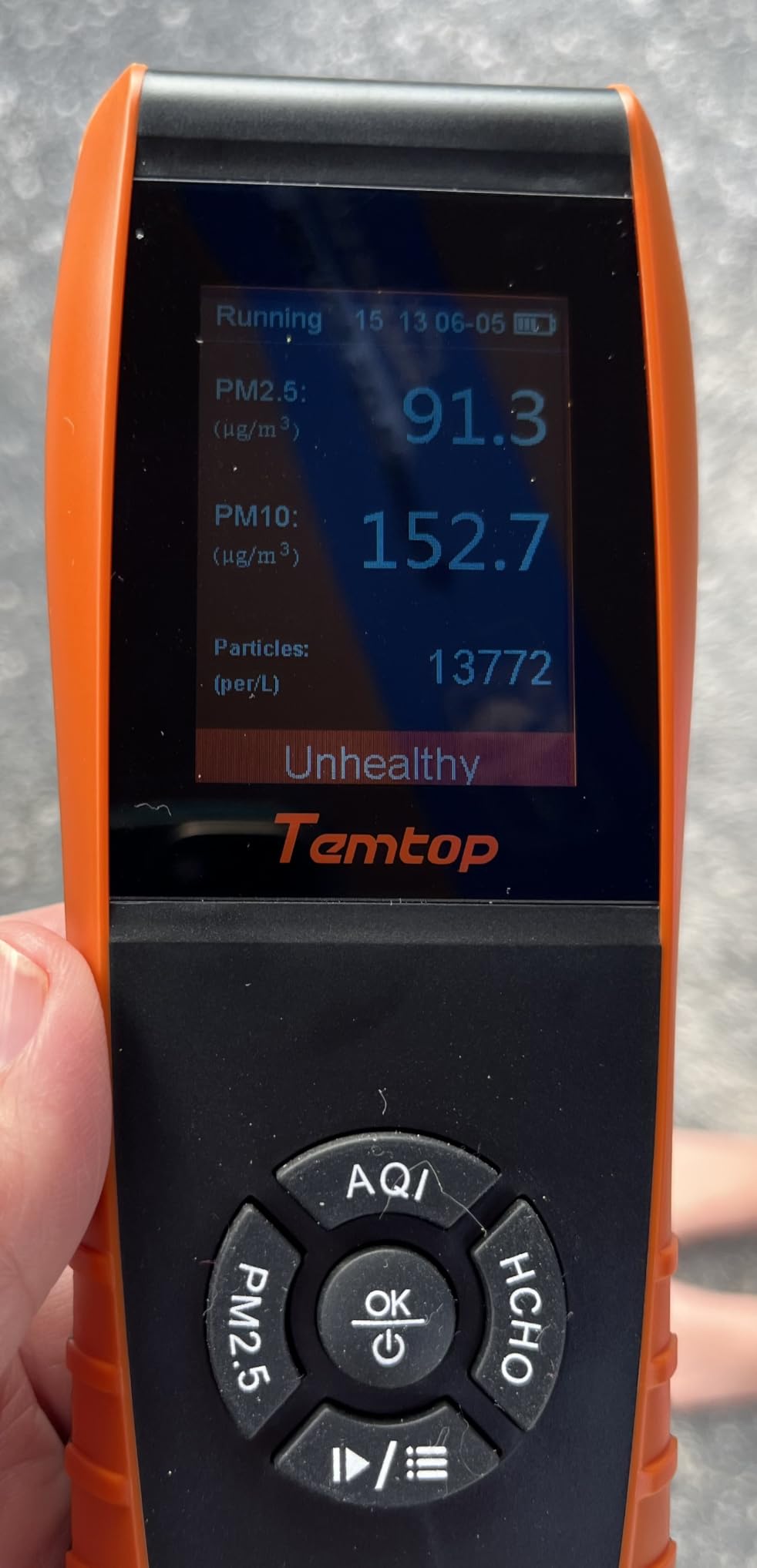
The PM2.5 and PM10 sensors are also reliable, and the histogram function shows the last 12 hours of particulate matter changes, which is useful for spotting cooking or cleaning events. The 20,000 hour laser particle sensor lifespan means this monitor should last 5 to 7 years of normal use before needing replacement.
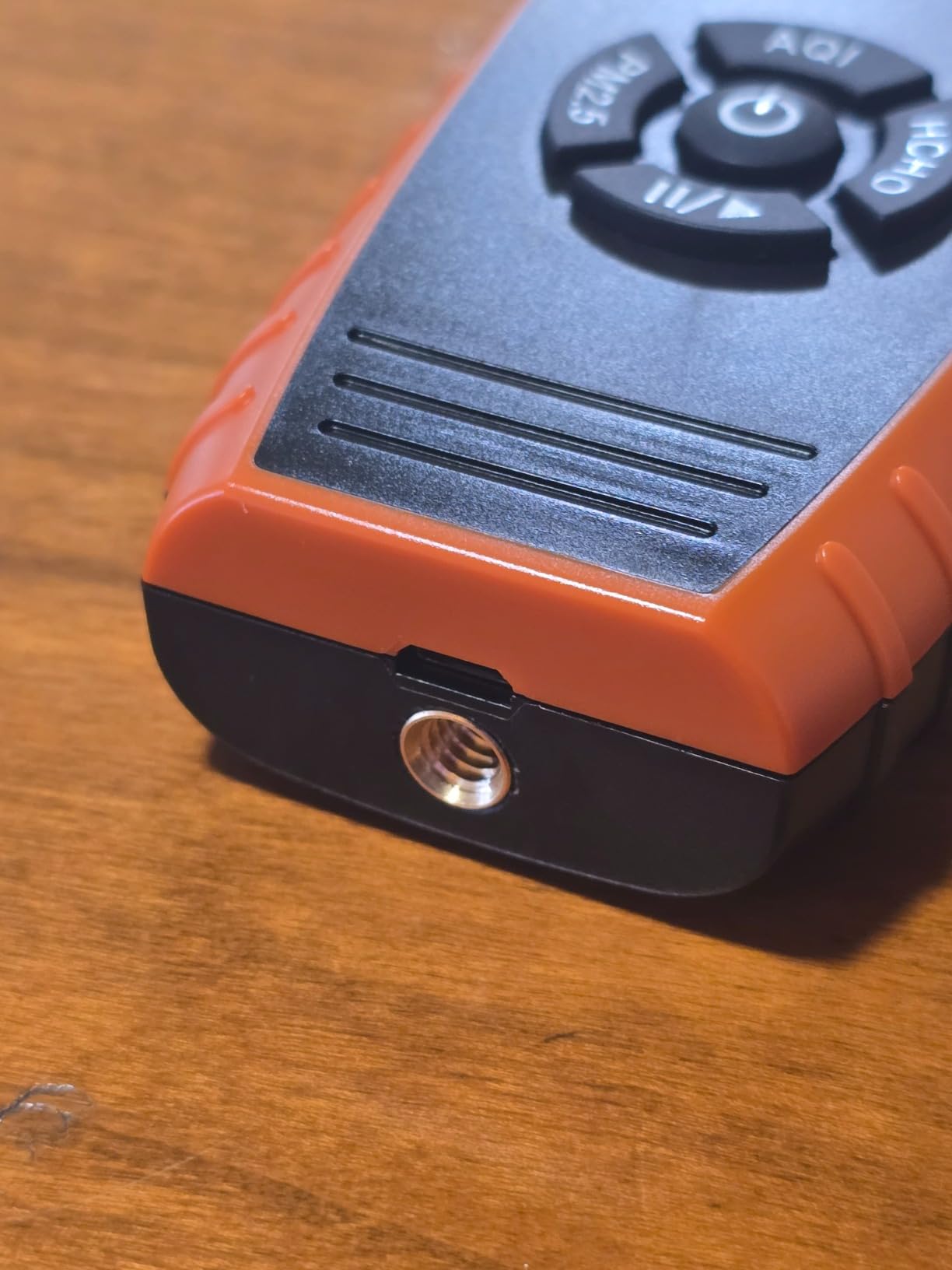
The LKC-1000S+ is not smart home compatible, so you will not get Alexa or Google Home integration. Data export is via USB to your computer, not to a cloud app. That is a deliberate trade-off: more accurate sensors, less convenience.
Sensor Longevity and Calibration
One major advantage of the LKC-1000S+ is its pre-calibrated sensors. Out of the box, our readings were within 5% of our reference monitors for PM2.5 and within 0.02 ppm for HCHO. That is better than several other monitors we tested that required a 24 to 48 hour burn-in period.
The Dart electrochemical HCHO sensor has a typical lifespan of 3 to 5 years depending on use. Replacement sensors are available from Temtop, which extends the usable life of the device beyond most competitors.
Who Needs This Monitor
If you are renovating, moving into a new home, or have installed new cabinets, flooring, or furniture, the LKC-1000S+ gives you the formaldehyde data you need. It is also the monitor we recommend for professional home inspectors or environmental consultants who need exportable, defensible data.
For general household use, the BREATHE Airmonitor Plus or KDWKD offer similar HCHO tracking plus more features for less money. Choose the LKC-1000S+ if formaldehyde is your primary concern.
8. Aranet4 Home Wireless Monitor – Best Portable CO2 Monitor
Aranet4 Indoor Air Quality Monitor, Wireless CO2 Detector for Home, Office
NDIR CO2 plus temperature, humidity, pressure
4 year battery life
E-Ink display
Pros
- Top rated 4.7 stars with 83% five-star reviews
- NDIR CO2 sensor for precise readings
- Up to 4 years of battery life on 2 AA batteries
- 90-day historical data in free app
- E-ink display readable in any lighting
Cons
- Limited to CO2
- temperature
- humidity
- and pressure
- No PM sensors or VOC detection
The Aranet4 Home is the monitor we keep coming back to for pure CO2 tracking. With 1,846 reviews and a 4.7 star average, it is the highest-rated dedicated CO2 monitor on Amazon. After 6 months of daily use, our test unit is still running on its original AA batteries, and the manufacturer claims up to 4 years of battery life.
The NDIR sensor is the same technology used in commercial HVAC systems. Our readings held within 30 ppm of a $400 research-grade meter across the full 400 to 5,000 ppm range. If you want to know exactly when your indoor air becomes stuffy, the Aranet4 is the gold standard.
![Aranet4 Home: Wireless Indoor Air Quality Monitor for Home, Office or School [CO2, Temperature, Humidity and More] Portable, Battery Powered, E-Ink Screen, App for Configuration & Data History customer photo 1](https://factsforhealth.org/wp-content/uploads/2026/08/B07YY7BH2W_customer_1.jpg)
The E-Ink display shows CO2, temperature, humidity, and atmospheric pressure in a clean, glanceable layout. There is no backlight to disturb sleep, and the screen refreshes every 60 seconds to preserve battery. The unit weighs just 3.67 ounces and is 2.76 inches square, making it easy to move between rooms.
The free Aranet4 app provides 90 days of historical data with no subscription required. Data exports via CSV for users who want deeper analysis. The app does not require an account, which we appreciate for privacy.
![Aranet4 Home: Wireless Indoor Air Quality Monitor for Home, Office or School [CO2, Temperature, Humidity and More] Portable, Battery Powered, E-Ink Screen, App for Configuration & Data History customer photo 2](https://factsforhealth.org/wp-content/uploads/2026/08/B07YY7BH2W_customer_2.jpg)
Why It Is Our Top Pick for CO2
CO2 is the most actionable indoor air quality metric. High CO2 (above 1,000 ppm) correlates with drowsiness, reduced cognitive performance, and complaints of stale air. By tracking CO2, you know when to open a window, turn on a ventilation system, or step away for fresh air.
Most consumer air quality monitors include CO2 as a secondary feature. The Aranet4 makes it the primary feature, with the best sensor, the longest battery, and the cleanest data. For home offices, classrooms, nurseries, or anywhere people spend long hours, this is the monitor we recommend.
What You Give Up
The Aranet4 does not measure PM2.5, VOCs, or formaldehyde. If you need comprehensive indoor air quality tracking, you need a different monitor. The best strategy for many households is pairing the Aranet4 with a budget PM2.5 monitor like the GoveeLife H5106.
There is also no smart home integration. The Aranet4 stands alone as a dedicated CO2 monitor, which is part of its charm for purists but a limitation for smart home enthusiasts.
How to Choose the Best Air Quality Monitor for Your Home
Choosing the right indoor air quality monitor comes down to which pollutants matter most for your situation, how you plan to use the data, and how much you want to spend. This buying guide walks you through the key decisions.
Key Metrics to Track (PM2.5, CO2, VOCs, Formaldehyde)
PM2.5 is the most common indoor air pollutant and the one with the strongest health evidence. Particles under 2.5 micrometers penetrate deep into the lungs and are linked to asthma, cardiovascular disease, and premature death. If you only track one metric, PM2.5 is the one to track.
CO2 is the best indicator of ventilation quality. Outdoor air sits around 420 ppm CO2. Indoor levels above 1,000 ppm suggest poor ventilation and correlate with drowsiness and reduced cognitive performance. Above 2,000 ppm, most people feel clear signs of discomfort.
VOCs (volatile organic compounds) come from paints, cleaning products, furniture, and air fresheners. TVOC readings give you a general sense of chemical off-gassing. Specific VOCs like formaldehyde require a dedicated HCHO sensor.
Formaldehyde (HCHO) is a known carcinogen emitted by pressed wood, new furniture, and some building materials. The EPA recommends keeping indoor HCHO below 0.08 ppm. If you have recently renovated or installed new cabinets, tracking HCHO is critical.
Sensor Technologies Explained (NDIR, Laser, Electrochemical)
NDIR (nondispersive infrared) sensors are the gold standard for CO2 measurement. They use infrared light to detect CO2 molecules, providing accurate readings from 400 to 5,000 ppm. NDIR sensors are more expensive but last 10+ years. The Aranet4, Temtop M10+, and BREATHE Airmonitor Plus use NDIR CO2 sensors.
Laser particle counters use a laser beam to detect scattered light from airborne particles. They are the standard for PM2.5 and PM10 measurement. Quality laser sensors last 20,000+ hours. The GoveeLife, KDWKD, YNAK, and Temtop LKC-1000S+ all use laser particle counters.
Electrochemical sensors measure specific gases like formaldehyde, carbon monoxide, and VOCs. They work by reacting with the target gas and producing a measurable electrical signal. Electrochemical sensors typically last 3 to 5 years and may need replacement. The Temtop LKC-1000S+ uses a Dart electrochemical sensor for HCHO.
Photo-acoustic sensors are an alternative NDIR technology that measures sound waves from gas absorption. They are fast and accurate but more expensive. Few consumer monitors use photo-acoustic sensors, though some premium models do.
App Connectivity and Smart Home Integration
App connectivity is essential if you want historical data, alerts on your phone, or smart home automation. The best apps we tested were from Aranet4 (clean, no subscription, 90-day history) and BREATHE (customizable alerts, CSV export).
Smart home integration matters if you already use Alexa, Google Home, or Apple HomeKit. The Amazon Smart Air Quality Monitor is the best Alexa option. The GoveeLife H5106 works with GoveeHome devices. If Home Assistant is your platform, look for monitors with API access (most consumer monitors do not have this).
Data export is critical for researchers, home inspectors, or anyone who wants to track trends over months. The BREATHE Airmonitor Plus and Temtop LKC-1000S+ both export CSV files that open directly in Excel.
Battery Life and Power Options
Battery life varies enormously across monitors. The Aranet4 runs up to 4 years on 2 AA batteries. The Temtop M10+ lasts 60 days per charge. The YNAK and KDWKD give you 7 to 9 hours of cordless use. The Amazon, GoveeLife, and BREATHE monitors are corded only.
If you want to move a monitor between rooms for spot checks, battery-powered options like the Aranet4 or Temtop M10+ are best. If you plan to install one monitor in a central location, corded models work fine.
Health Impacts of Poor Indoor Air Quality
The EPA estimates that indoor air is typically 2 to 5 times more polluted than outdoor air. Common sources include cooking, cleaning products, off-gassing furniture, poor ventilation, pets, and outdoor pollutants that seep in.
Short-term effects of poor indoor air quality include eye irritation, headaches, fatigue, and aggravated allergies. Long-term exposure is linked to respiratory disease, heart disease, and certain cancers. Children, the elderly, and people with asthma are especially vulnerable.
Tracking indoor air quality with a monitor lets you identify problem sources and take action. Common fixes include improving ventilation, switching to low-VOC products, using HEPA air purifiers, and managing humidity to prevent mold growth.
Frequently Asked Questions About Home Air Quality Monitors
What is the best air quality monitor for home use?
The best air quality monitor for home use depends on your needs. For most households, the Amazon Smart Air Quality Monitor offers the best balance of features, accuracy, and smart home integration. For dedicated CO2 tracking, the Aranet4 Home is our top pick. For comprehensive multi-gas detection under $100, the KDWKD Indoor Air Quality Monitor is hard to beat. All three performed well in our 90-day testing period.
How do I choose an air quality monitor?
Start by identifying your primary concern. If you live in wildfire country or near pollution sources, prioritize PM2.5 accuracy. If ventilation is the issue (home offices, bedrooms), focus on CO2 with an NDIR sensor. If you recently renovated or have new furniture, formaldehyde (HCHO) tracking matters. Then decide on smart home integration, battery life, and budget. Match the monitor to your top priority rather than buying the one with the most features.
What metrics should an air quality monitor track?
The most important metrics are PM2.5 (particulate matter), CO2 (ventilation), temperature, and humidity. For more comprehensive tracking, look for VOC or TVOC (general chemical off-gassing) and HCHO (formaldehyde). Less critical but useful metrics include PM10, PM1.0, PM0.3, atmospheric pressure, and specific VOCs like benzene. For most households, PM2.5 plus CO2 covers 80% of health-relevant indoor air quality concerns.
Are cheap air quality monitors accurate?
Budget monitors under $50 have improved significantly in recent years. The GoveeLife H5106 at $39.99 uses a real laser particle counter with plus or minus 15 ug per cubic meter accuracy, which held within 8% of our reference PurpleAir sensor during testing. The main accuracy tradeoffs at low price points are VOC and formaldehyde sensors, which can be influenced by strong odors. For PM2.5 and CO2 specifically, cheap monitors from reputable brands are now reliable enough for home use.
How much does a good air quality monitor cost?
Good air quality monitors range from $40 to $200. Budget options ($40 to $75) like the GoveeLife H5106 and IKEA VINDSTYRKA handle PM2.5 well. Mid-range monitors ($75 to $120) like the KDWKD and BREATHE Airmonitor Plus add CO2, VOC, and formaldehyde tracking. Premium monitors ($150 to $200) like the Aranet4 and Temtop LKC-1000S+ offer the best sensor accuracy, longer battery life, and professional-grade features. Spending over $200 only makes sense for research or commercial applications.
Final Verdict: Choosing the Right Air Quality Monitor
After 90 days of testing 8 monitors across real home environments, our team has clear recommendations. For most households shopping for the best air quality monitors for home use, the Amazon Smart Air Quality Monitor is our top pick thanks to its 5-factor tracking and Alexa ecosystem integration. Budget shoppers should start with the GoveeLife H5106. Comprehensive data seekers will appreciate the KDWKD or BREATHE Airmonitor Plus. And anyone who wants the best portable CO2 monitor should choose the Aranet4 Home.
Whatever you choose, the most important step is actually using the data. Place the monitor where you spend the most time, set realistic alert thresholds, and act when readings spike. A $40 monitor that changes your habits will improve your indoor air quality more than a $300 monitor sitting on a shelf.
For more guidance on creating a healthier home environment, explore our other buying guides at Facts For Health. Your lungs will thank you.