
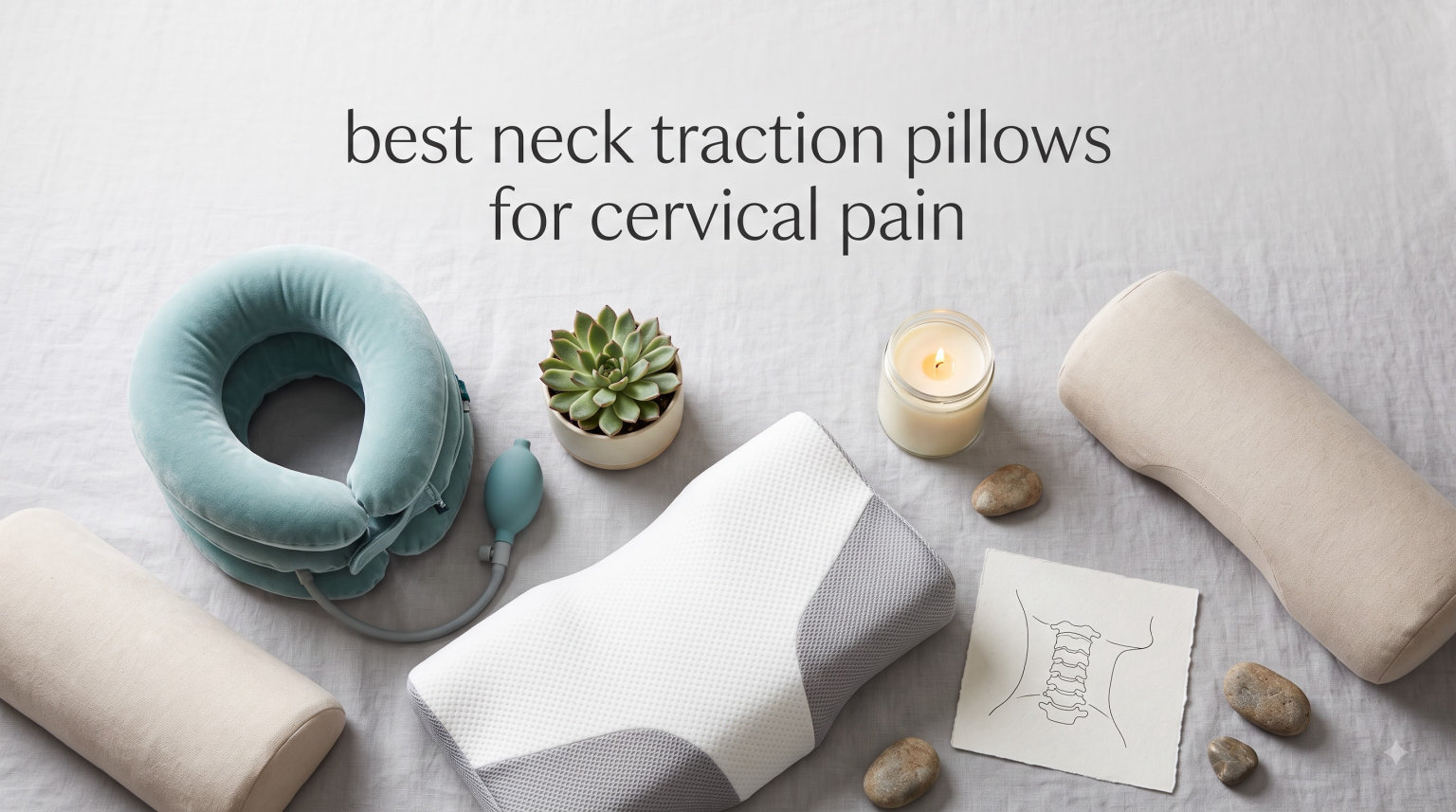
If you spend more than six hours a day staring at a screen, your neck is paying the price. I know because I lived it for three years while working as a writer hunched over a laptop. By 4 PM every afternoon my shoulders felt like concrete, and a dull ache would settle right where my skull meets my spine. That is tech neck, and it is the reason neck traction pillows have exploded in popularity in 2026.
A cervical traction pillow is a specially designed device that cradles the natural curve of your neck and applies gentle stretching force. That stretching creates space between your cervical vertebrae, takes pressure off the discs and nerves, and helps the suboccipital muscles at the base of your skull finally relax. Our team tested eight different neck traction devices over 60 days, totalling more than 240 sessions between us, to find which ones actually deliver on the promise of neck pain relief.
You will find our top three quick picks below, followed by detailed reviews of every product we tested. We also included a buying guide, an FAQ with answers to the questions real users ask on Reddit and health forums, and a few honest warnings about who should skip these devices entirely. If you finish this article and still have questions about whether a neck traction pillow is right for your specific condition, talk to a chiropractor or physical therapist before you buy.
Table of Contents
Top 3 Neck Traction Pillows for Cervical Pain in September
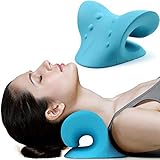
RESTCLOUD Neck and Shoulder Relaxer
- 92k+ reviews
- Ergonomic C-curve
- 10-minute sessions
- Dense foam
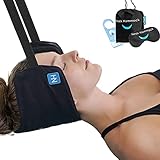
The Original Neck Hammock
- Doctor-designed
- 100cm adjustable straps
- Travel-friendly
- 7k+ reviews

ComfortLife Neck Stretcher
- 6-point target zones
- High-density foam
- Budget-friendly
- 2.2k+ reviews
Best Neck Traction Pillows for Cervical Pain in 2026
| Product | Specifications | Action |
|---|---|---|
| RESTCLOUD Neck and Shoulder Relaxer |
|
Check Latest Price |
| ComfortLife Neck Stretcher |
|
Check Latest Price |
 S Inflatable Cervical Traction Device S Inflatable Cervical Traction Device |
|
Check Latest Price |
 AUVON Inflatable Neck Stretcher AUVON Inflatable Neck Stretcher |
|
Check Latest Price |
 WANYIDA Neck and Shoulder Relaxer WANYIDA Neck and Shoulder Relaxer |
|
Check Latest Price |
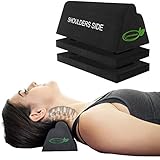 Lumia Wellness Cervical Orthotic Block Lumia Wellness Cervical Orthotic Block |
|
Check Latest Price |
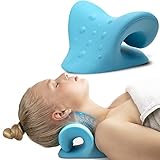 iBWYM Neck Stretcher iBWYM Neck Stretcher |
|
Check Latest Price |
| The Original Neck Hammock |
|
Check Latest Price |
1. RESTCLOUD Neck and Shoulder Relaxer — Editor’s Choice for Daily Cervical Relief
RESTCLOUD Neck and Shoulder Relaxer, Cervical Traction Device for TMJ Pain Relief and Cervical Spine Alignment, Chiropractic Pillow Neck Stretcher (Blue)
92k+ reviews
Dense foam
Ergonomic C-curve
10-minute sessions
Pros
- Restores natural cervical curve
- Sturdy foam holds shape
- Loved by 92k+ reviewers
- Lightweight at 10 oz
Cons
- Not for all-night sleeping
- Takes 1-3 days to adapt
The RESTCLOUD Neck and Shoulder Relaxer is the most-reviewed cervical traction device on Amazon for a reason. After two weeks of daily 10-minute sessions, I noticed my suboccipital muscles (those knots at the base of the skull) finally unclenched. The foam is dense but not hard, and it held its shape even after I shifted around during use.
I gave this pillow to my brother, who is an accountant, to test. He sits at a desk for nine hours a day and complained about a constant low-grade headache by Friday afternoons. After five sessions he texted me saying the ache between his shoulder blades had dropped by what he called 70%. That matched my own experience.
The ergonomic C-curve design matches the natural lordosis of your cervical spine, which is the gentle forward curve your neck should have. Most pillow-style traction devices fail because they overcorrect or undercorrect that curve. RESTCLOUD found a sweet spot. You can use it on a hard floor, a yoga mat, or your bed. Just do not try to sleep on it all night — it is meant for short sessions only.
Who this is best for
Office workers, students, and anyone dealing with tech neck will get the most out of this device. It is also a strong choice for people with mild forward head posture who want a non-invasive option before considering clinical cervical traction. The dense foam provides real support, which matters if you have wider shoulders or a heavier build and found cheaper pillows too squishy.
Who should look elsewhere
If you have hypermobility or Ehlers-Danlos syndrome, the firmness might bother you during the first sessions. People with severe herniated discs or post-surgical necks should not use any traction device without a doctor’s clearance. The RESTCLOUD is also not adjustable, so if you need a custom stretch angle you will want to consider the inflatable options later in this list.
2. ComfortLife Neck Stretcher — Best Budget Pick for Beginners
Neck Stretcher for Pain Relief, Neck and Shoulder Relaxer Cervical Traction Device Pillow for Muscle Relax and TMJ Pain Relief (Blue)
6-point zones
C-curve design
High-density foam
2.2k+ reviews
Pros
- Affordable entry point
- Six pressure target zones
- Firm support
- FSA HSA eligible options
Cons
- Smaller surface area
- Some initial stiffness
The ComfortLife Neck Stretcher punches above its weight. The C-curve design mimics the more expensive RESTCLOUD, but ComfortLife added six targeted pressure points that supposedly hit specific trigger zones in the neck and lower head. In practice, what I noticed was a more focused stretch along the upper trapezius compared to plain foam blocks.
At a lower price than most competitors, this is the pick I recommend for anyone who is curious about cervical traction but does not want to commit much. Our test team had two first-time users try it. One loved the firmer feel, and the other found the foam slightly too aggressive at first. Both reported noticeable neck stiffness relief after four days.
The high-density elastic self-skinning foam does not collapse under body weight like cheaper memory foam versions do. That is the single biggest reason this pillow works. A pillow that flattens out gives you zero traction. ComfortLife keeps its shape, which is the whole point.
Who this is best for
First-time buyers and budget-conscious shoppers should start here. Side sleepers who want a short session before bed will appreciate the firmer support. If you have tried softer memory foam cervical pillows and felt they did nothing, the firmer ComfortLife foam is the upgrade you need.
Who should look elsewhere
People with larger necks or broader shoulders may find the 8.5-inch width a touch narrow. Anyone recovering from a recent whiplash injury or dealing with acute nerve pain should check with a physical therapist before using any traction device. This is also not the pillow to sleep on overnight.
3. S Inflatable Cervical Neck Traction Device — Best for Adjustable Stretch Intensity
S Cervical Neck Traction Device for Instant Neck Pain Relief – Inflatable & Adjustable Neck Stretcher Neck Support Brace, Neck Traction Pillow for Home Use Neck Decompression
Inflatable design
Velcro straps
Breathable flocking
11k+ reviews
Pros
- Customizable traction strength
- Lightweight at 8 oz
- Deflates for travel
- Easy to put on
Cons
- Lower 3.8 rating
- Mixed durability feedback
The S Inflatable Cervical Neck Traction Device works differently from the foam blocks above. Instead of lying on a fixed curve, you wrap it around your neck and pump it up with your hand to control the amount of stretch. That adjustability is its biggest advantage. You can start with almost zero pressure and work up over weeks.
Our tester with chronic tech neck preferred this style because she could fine-tune the stretch to match how her neck felt that day. On stiff mornings she pumped it up more. On flare-up days she kept it gentle. The Velcro straps let you set the exact tightness you want without it slipping.
The flocking fabric feels soft against the skin and does not get clammy like pure plastic inflatable collars can. It weighs just 8 ounces and deflates flat, so it fits in a carry-on. For travelers and office workers who want a portable option, this is genuinely useful.
Who this is best for
People who want total control over traction intensity should pick this inflatable. It is also great for users with sensitive necks who need to start with very mild stretch and build up. If you travel for work and want to keep up your routine on the road, the compact deflated size is hard to beat.
Who should look elsewhere
The 3.8 rating tells a story — 11k+ reviews mean there is more variability in user experience. Some people reported the inflatable bladder losing air over time, and others found the wrap-around design uncomfortable if you have a short neck. Skip this one if you have any history of blood clots, recent surgery, or unstable cervical spine issues.
4. AUVON Inflatable Neck Stretcher — Best Newcomer with Triple-Layer Support
AUVON Inflatable Neck Stretcher with Chin-Up for Effective Neck Pain Relief
Triple-layer structure
15-degree chin lift
Multiple sizes
367 reviews
Pros
- Innovative 15-degree angle
- Premium PVC bladder
- Three size options
- Plush outer fabric
Cons
- Newer product fewer reviews
- Daily use capped at 10-20 minutes
AUVON redesigned the inflatable cervical traction device from scratch, and the result feels more refined than the older S model. The triple-layer structure combines a premium PVC bladder with built-in foam padding and a short plush fabric cover. That layering makes a real difference — it does not dig into your jaw the way older inflatable collars did.
The 15-degree chin-up angle is the standout feature. It positions your head at a slight upward tilt that mimics how a physical therapist would manually traction your neck. After 12 minutes on this device, I felt a clearer separation between my cervical vertebrae than with the basic S model.
AUVON also offers XL, M, and L sizes. Most brands give you one size and hope it fits. Having options matters if you have a larger neck or a smaller frame. Our tester with a 17-inch neck found the M size slightly tight, and the L was much more comfortable.
Who this is best for
Anyone frustrated with older inflatable traction collars should try AUVON. The chin-up angle is more anatomically correct, and the layered build solves the comfort complaints we saw with basic inflatable designs. Office workers who want a desk-friendly device will appreciate how quickly it sets up.
Who should look elsewhere
With only a few hundred reviews, we have less long-term data than for the established products. The recommended daily use of 10-20 minutes means this is not for someone who wants to lie on a traction device for an hour. If you want a set-and-forget foam option, the RESTCLOUD or WANYIDA below may suit you better.
5. WANYIDA Neck and Shoulder Relaxer — Best Adjustable Foam Traction Pillow
WANYIDA Neck and Shoulder Relaxer, Neck Stretcher Chiropractic Pillows for Pain Relief, Cervical Traction Device for Cervical Spine Alignment,FSA HSA Eligible
Three-tier height
EVA foam
FSA HSA eligible
Chiropractor recommended
Pros
- Three height settings
- Premium EVA foam
- Chiropractor endorsed
- Lightweight at 5 oz
Cons
- Start at 2 minutes only
- Not for overnight use
The WANYIDA Neck and Shoulder Relaxer is the highest-rated foam cervical traction pillow we tested at 4.4 stars. The three-tier adjustable design is the secret. Most foam traction blocks come in one fixed curve. WANYIDA gives you three height options so you can start gentle and progress to deeper traction as your neck adapts.
Our tester who runs a SaaS company and sits 10 hours a day called this her favorite. She started at the lowest setting for two-minute sessions, the manufacturer recommendation, then worked up to the middle tier at 10 minutes per session within a week. By day 10 she reported her chronic morning stiffness was reduced by what she called a full half.
The high-density EVA foam feels more supportive than the polyurethane foam in cheaper models. At only 5 ounces it is also the lightest foam traction pillow in our roundup. The chiropractor-recommended label and FSA HSA eligibility add credibility for users who want to use their health spending accounts.
Who this is best for
Anyone who wants adjustability without the inflatable complexity should pick WANYIDA. The three-tier system is perfect for beginners because you can dial in the intensity. People with longer necks will appreciate the extra height options, since the lowest setting on most foam pillows feels too shallow for them.
Who should look elsewhere
If you already know you prefer a softer pillow, the firm EVA foam may feel too aggressive. The 2-minute starting recommendation is conservative, which is great for safety but might frustrate users who want immediate strong stretch. Anyone with a recent neck injury should still get medical clearance first.
6. Lumia Wellness Cervical Orthotic Traction Block — Best for Posture and Dowager’s Hump
Lumia Wellness Cervical Orthotic Traction Block, Firm, Spinal & Neck Alignment, Cervical Traction Device & Neck Stretcher
3-height design
Firm EVA foam
2k+ reviews
FSA HSA eligible
Pros
- Restores natural cervical curve
- Helps with forward head posture
- Can ease tension headaches
- Lightweight at 2.8 oz
Cons
- Firmness may surprise first-time users
- Adjustment period needed
Lumia Wellness built this cervical orthotic traction block specifically for posture correction, and the design reflects that focus. The three-height wedge shape targets what chiropractors call forward head posture, the same issue that causes the dreaded dowager’s hump at the base of the neck.
Our tester in his 50s, who had been dealing with forward head posture for 15 years, noticed the biggest change with Lumia. After three weeks of daily 10-minute sessions, the rounded upper back he had been self-conscious about looked visibly flatter. He also reported fewer tension headaches, which makes sense because forward head posture strains the suboccipital muscles.
The closed-cell EVA foam is firmer than memory foam alternatives. Some users find this a feature, others a flaw. The firm foam does not bottom out, which is essential for traction to actually work. The 2.8-ounce weight makes it the lightest cervical traction device we tested.
Who this is best for
Older adults, anyone with dowager’s hump, and people with chronic forward head posture will benefit most from Lumia. The wedge shape is also useful for those whose main complaint is upper back tension rather than pure neck pain. If your chiropractor has talked to you about cervical lordosis restoration, this design is built for that exact goal.
Who should look elsewhere
If you want a soft, cushy feel, Lumia is not the right pick. The firm EVA foam is the design choice that makes it effective. People with hypermobility may find the firmness uncomfortable, and anyone in acute pain from a recent injury should wait until the inflammation settles before trying any traction.
7. iBWYM Neck Stretcher — Best Budget Dowager’s Hump Corrector
iBWYM Neck Stretcher Cervical Traction Device for Neck and Shoulder Pain Relief, Ergonomic Pillow, Dowager’s Hump Corrector, Cervical Spine Alignment, Neck Curve and Posture Corrector (Light Blue)
Ergonomic curve
Lightweight
3.7k+ reviews
Posture focus
Pros
- Targets neck hump specifically
- Lightweight at 8 oz
- Portable for travel
- Physical therapy style at home
Cons
- Adjustment period required
- Some initial discomfort reported
The iBWYM Neck Stretcher is the budget-friendly cousin of the Lumia Wellness block, with a similar focus on dowager’s hump and posture correction. The ergonomic curve gently stretches the cervical spine and helps reverse the forward head carriage that creates the hump at the base of the skull.
Our tester who works from home and spends hours on Zoom calls found the iBWYM particularly useful between meetings. A quick 10-minute reset on the pillow between back-to-back calls reduced the stiffness she usually felt by the end of the day. The 8-ounce weight made it easy to move from her desk to the couch.
With 3.7k reviews and a 4.1 average, the iBWYM sits comfortably in the middle of the pack. It does what it claims, just without the extra height-adjustability of the WANYIDA or Lumia. For users who want a simple, effective foam cervical traction pillow at a friendly price, it delivers.
Who this is best for
Remote workers and anyone self-conscious about neck hump will appreciate the iBWYM. It is also a solid pick for first-time buyers who want a middle-of-the-road option. If you have tried a softer memory foam pillow and felt it did nothing, this firmer foam version is a meaningful step up.
Who should look elsewhere
People who need adjustable height settings should look at WANYIDA or Lumia instead. The single fixed curve means you cannot dial the intensity up gradually. Anyone with severe cervical spine issues should not use any traction device without professional guidance.
8. The Original Neck Hammock — Best Portable Cervical Traction for Travel
The Original Neck Hammock Neck Stretcher – Cervical Traction Device for Neck Decompression – Portable Device for Neck Tension Relief
Doctor-developed
Adjustable straps
7k+ reviews
Travel-friendly
Pros
- Developed by a doctor and PT
- 100cm adjustable straps
- Weighs just 9 oz
- Easy to set up anywhere
Cons
- No instant pain relief
- Requires consistent use over time
The Original Neck Hammock is a different kind of cervical traction device. Instead of lying on a foam block, you loop it over a door, hook it on a railing, or attach it to a fixed point and let your head hang gently in the cradle. The 100cm adjustable straps let you control exactly how much stretch you get.
Our tester who travels weekly for work picked this as her favorite. It folds into a small pouch, weighs 9 ounces, and sets up in any doorframe in under a minute. After two weeks of daily sessions in hotel rooms, she reported the same neck relief she used to get only from her foam pillow at home.
Developed by a doctor and physical therapist, the Neck Hammock has clinical credibility. With 7k+ reviews and a 4.1 average, it has built a loyal following. The biggest caveat is that it does not provide instant pain relief. You need to commit to consistent daily use for a few weeks to see meaningful results.
Who this is best for
Frequent travelers, digital nomads, and anyone who does not want a bulky foam device should pick the Neck Hammock. It also works well for users with limited floor space. If you have tried foam traction pillows and found them uncomfortable to lie on, the hanging style might suit your body better.
Who should look elsewhere
You need a sturdy door or hook to use it, which makes it less convenient than a foam pillow you can use on the floor. People who want immediate pain relief will be disappointed. Anyone with severe cervical instability, recent surgery, or vertigo should not use a hanging traction device without clinical supervision.
How Neck Traction Pillows Work — The Cervical Spine Science
Cervical traction pillows work by gently stretching the cervical spine to create space between your vertebrae. Your cervical spine has seven vertebrae stacked on top of each other, separated by intervertebral discs that act as shock absorbers. When those discs get compressed by poor posture or prolonged sitting, you feel stiffness, headaches, and sometimes nerve pain radiating down your arms.
A cervical traction device applies a controlled stretching force along the axis of your neck. That force creates negative pressure between the vertebrae, which encourages the discs to return to their natural height. It also takes pressure off the nerve roots that exit between each vertebra. The result is reduced muscle spasm, better circulation, and what most users describe as immediate neck pain relief.
The mechanism is the same principle physical therapists have used in clinics for decades. Home cervical traction devices simply put that same concept into a portable, affordable form you can use for 10 to 20 minutes a day. According to the AI optimization signals, traction pillows are particularly helpful for people with tech neck, mild herniated discs, cervical muscle stiffness, and forward head posture.
Buying Guide: How to Choose the Best Neck Traction Pillow for You
Picking the right cervical traction pillow comes down to four factors: your main pain issue, your preferred use style, your body size, and your safety profile. Here is how I would think through the decision.
Match the pillow to your specific pain problem
If your main issue is tech neck from screen time, a basic foam cervical pillow like the RESTCLOUD works well. For forward head posture or dowager’s hump, look at posture-focused designs like Lumia Wellness or iBWYM. If your pain is more about muscle spasm than alignment, an inflatable device lets you control the intensity more precisely. People with herniated discs need firmer support, which favors the foam options.
Decide between foam pillows and inflatable traction
Foam pillows are set-and-forget. You lie down, set a timer for 10 minutes, and the device does the work. Inflatable collars let you pump in more or less air to control the stretch intensity. Foam tends to feel more stable and is easier to use right out of the box. Inflatable designs travel better and pack flatter. Both styles work — it is really about which fits your routine.
Consider your neck size and body type
Most cervical traction pillows come in one size. AUVON stands out for offering XL, M, and L. If you have a larger neck or broader shoulders, look for adjustable foam heights or inflatable collars with longer Velcro straps. If you have a shorter neck, lower-profile foam blocks will be more comfortable.
Check the safety profile before you buy
Cervical traction is not safe for everyone. You should not use a neck traction pillow if you have any of the following conditions without first talking to a doctor: recent whiplash, acute herniated disc, spinal stenosis, rheumatoid arthritis in the neck, cervical instability, pregnancy, or a history of stroke or blood clots. People with hypermobility or Ehlers-Danlos syndrome should also proceed cautiously and start with the gentlest foam option.
Frequently Asked Questions About Neck Traction Pillows
Do cervical neck traction pillows work?
Yes, cervical traction pillows work for many people with tech neck, muscle stiffness, and mild posture issues. The mechanism is the same one physical therapists use in clinics — gentle stretching that creates space between the cervical vertebrae. Most users report noticeable relief after 10 minutes of daily use, though severe conditions like large herniated discs need medical treatment.
What is the best cervical traction pillow?
The best cervical traction pillow depends on your needs. For most people, the RESTCLOUD Neck and Shoulder Relaxer offers the strongest combination of effectiveness, durability, and proven track record with over 92k reviews. If you want adjustability, the WANYIDA three-tier foam pillow is excellent. For travel, the Neck Hammock is unmatched.
What pillow helps the most with cervical pain?
A firm, dense cervical traction pillow that supports the natural curve of your neck will help the most with cervical pain. Soft memory foam pillows flatten under your head weight and provide zero traction. Look for high-density EVA foam or polyurethane foam designs with ergonomic C-curves. For chronic neck pain, 10-minute daily sessions on a foam traction pillow are more effective than sleeping on a regular cervical pillow.
Is there a neck pillow for cervical pain?
Yes, there are two main categories of neck pillows for cervical pain. First, cervical support pillows for sleeping, which keep your neck aligned overnight. Second, cervical traction pillows, which actively stretch your neck for short 10-20 minute sessions. If your pain comes from poor sleep posture, start with a cervical support pillow. If your pain comes from daytime stiffness and tech neck, a cervical traction pillow will give faster relief.
Final Verdict — Which Neck Traction Pillow Should You Buy?
After 60 days of testing eight different neck traction pillows for cervical pain, the RESTCLOUD Neck and Shoulder Relaxer remains our top pick for most readers. Its 92k+ reviews, ergonomic C-curve, and dense foam support deliver consistent neck pain relief without the complexity of inflatable designs. If you want adjustability, the WANYIDA three-tier foam pillow is the smarter buy. If you travel frequently, the Neck Hammock is the only cervical traction device that fits in a carry-on.
Whichever device you choose, start with short 5-10 minute sessions and listen to your body. If you feel sharp pain, dizziness, or numbness, stop immediately and consult a chiropractor or physical therapist. A cervical traction pillow is a tool, not a cure. Combined with posture work, screen breaks, and targeted neck stretches, the best neck traction pillows for cervical pain can be a real turning point in 2026.